




Abstract
In recent years, many states have loosened regulations regarding carrying a concealed firearm. Permit-less carry laws allow citizens who are legally allowed to own firearms to carry a concealed firearm in public without obtaining a permit. This trend is an evolution of right-to-carry legislation that swept the United States beginning in the late 1980s. Research tends to find that right-to-carry laws increase violent crime. This study examines the effect of permit-less carry laws, independent of right-to-carry laws, on violent crime rates in Alaska, Arizona, Arkansas, and Wyoming, the first states to adopt permit-less carry legislation, using a 50 state panel data set from years 1995 to 2019. The synthetic control method was employed to find that permit-less carry laws were associated with an increase in aggravated assault in Alaska but generally not associated with variations in violent crime rates in the other states. In sum, moving from right-to-carry to permit-less carry was not found to cause an additional increase in violence on top of existing right-to-carry laws.
Introduction
The United States has a vibrant gun culture. Gun ownership and prevalence in the United States is the highest in the world (United Nations Office on Drugs and Crime (UNODC), 2012). However, crime may be a consequence of the American gun culture. This begs the question of gun control and its effectiveness. If restricting gun freedoms increases victimization, then loose gun laws may be advisable. However, if lax gun laws increase crime then certain gun control measures may be warranted.
There are numerous types of gun control measures including bans on military-style weapons, bans on high capacity magazines, waiting periods, regulating cosmetic features on firearms, and several others. Germane to this study is the gun control measures related to gun carrying in the public arena. Right-to-carry (RTC) laws, also known as “shall-issue,” gained traction in the late 1980s beginning in Florida and quickly moved throughout the country (Kleck, 1997). These laws allow citizens to carry a firearm concealed granted they are legally allowed to own a firearm and have obtained a permit to do so. If a citizen wishes to carry a concealed handgun for self-defense, the state shall issue that citizen a permit once they have met the requirements of obtaining that permit; usually this includes an enhanced background check, submission of fingerprints/photos, paying fees, and taking/passing a class. RTC or “shall-issue” is differentiated from may-issue legislation. In the few states that still maintain may-issue laws, the state may-issue, but is not required to issue, an RTC permit to an applicant based on the local authority’s decisions to issue permits, which may or may not be rather arbitrary or subjective. The evolution of RTC laws has led to a loosening of gun carrying regulations. In recent years, there has been a trend in which many states have adopted permit-less carry or “Constitutional carry” laws that allow any citizen who is legally allowed to own a handgun to carry that firearm concealed without needing to obtain a permit first. The term Constitutional carry is a colloquial term used to reflect the belief among some that the Second Amendment of the Constitution prohibits any and all restrictions on gun ownership. As of this writing, 29 states have passed some form of permit-less or Constitutional carry legislation. 1 This trend has been rather stark with most states that have adopted a permit-less carry system doing so within the last decade suggesting that the move from shall-issue (which requires a permit) to permit-less carry has quickly spread across the United States recently. Passing such legislation does not eliminate RTC laws, however. Instead, when a state passes permit-less carry legislation, it simply extends current RTC laws but does not replace them and these states still offer RTC permits to their citizens even though they are not required for concealed carry. There are reasons to obtain a carry permit even though a state has passed a permit-less carry law. For example, most RTC states offer reciprocity to other RTC states. This means that a person who has obtained an RTC permit from their state can carry a weapon concealed in another state that formally acknowledges the legitimacy of that person’s carry permit and vice versa. Another reason to obtain an RTC permit in a permit-less carry state has to do with gun sales, either private party or at a gun store. It is often the case that when a gun owner wants to sell a firearm to another individual in states that allow private party sales and do not require universal background checks, the seller may prefer to sell to another individual who has an RTC permit. This provides an extra layer of security to the seller since the buyer has been through the process of acquiring a permit. In addition, sometimes a gun store will waive the background check fee when a buyer wishes to purchase a new firearm if the buyer has an RTC permit.
Pro-gun lobbies such as the National Rifle Association (NRA) and other Second Amendment activists argue that the only thing that stops a bad guy with a gun is a good guy with a gun, and that an armed society is a polite society. However, we can invoke deterrence theory and routine activities theory to make more refined arguments about how gun carrying may reduce or prevent criminal victimizations. Deterrence theory suggests that crime will be deterred when certain, severe, and swift punishments outweigh the benefits of committing a criminal act (Beccaria, 1963). Generally, this theoretical approach applies to formal criminal justice proceedings that makes a man fear the law above all else. However, modern day interpretations of deterrence may be extended to include perceptions of deterrence threats that exist outside of the criminal justice system. In the case of concealed gun carrying, an offender may be deterred from committing crime because they fear getting shot by potential victims who are armed. In this case, they perceive that anyone at any time could be armed and decide the costs of crime outweigh the benefits since they may be shot, and possibly killed, in self-defense. Citizens arming themselves for self-defense have been the primary driving motivation for gun ownership in the US for many years. Cohen and Felson’s (1979) routine activities theory (RAT) is another useful theory in this context. RAT states that crime is the result of a motivated offender, a suitable target, and a lack of a capable guardian converging in space and time. A motivated offender perceiving that a suitable target is armed no longer makes the target suitable. The concealed firearm could be thought of as offering some sort of guardianship. As such, the crime never occurs. Again, the recent trend of Americans carrying guns in public for self-defense applies here. But just how effective are lax gun carrying policies in reducing victimization?
Numerous studies have examined the effect of RTC laws on a variety of outcomes. The results of this literature are rather mixed where some studies find deterrent effects (e.g. Lott, 2010; Lott and Mustard, 1997), others find criminogenic effects (e.g. Donohue et al., 2019; Gius, 2019), and others find no effect (e.g. Aneja et al., 2011; Ayres and Donohue, 2009a, 2009b); what is missing from this body of research are studies that focus on permit-less carry laws independently. In prior research, permit-less carry laws and RTC laws have been lumped together to indicate a “less restrictive” state compared to a “more restrictive” state (regarding the restrictiveness of state laws regulating gun carrying) and/or have been included in a firearm restrictiveness scale to estimate the effects on violence (Hamill et al., 2019). However, there may be reason to believe that permit-less carry laws have differential effects than RTC laws. First, obtaining a concealed carry weapon (CCW) permit usually entails enhanced background checks, taking classes and passing tests, submitting photographs and fingerprints to the government, and paying fees. This may be a disincentive for some people from obtaining a CCW permit and there may be differences between the people who are willing to go through that process and those who are not. At the same time, it may be a good thing that not all gun owners be allowed to carry firearms concealed without going through an enhanced background check and taking classes on gun safety and gun laws because some individuals would fail the process to obtain a permit. Here, not requiring citizens to obtain a permit to carry a handgun concealed in public may cause an increase in violent acts independent of existing RTC laws. As such, there may be differential effects of RTC laws and permit-less carry laws, independently. The purpose of this study is to assess the independent effects of permit-less carry laws on violent crime rates separate from RTC laws and any possible violence inducing effects they may have. This study builds on gun carrying literature by analyzing up to 25 years of data using the synthetic control method to assess the effects of permit-less carry laws passed in Alaska, Arizona, Arkansas, and Wyoming on variations in violent crime rates. The current study is among the first to use multi-state longitudinal data on violent crime that employs a statistical approach used to estimate the causal effects of permit-less carry legislation on rates of violence independent of the effect of RTC laws.
Literature review
The RTC research is important because issuing concealed handgun permits may increase crime, decrease crime, or simply have no effect on crime. Although RTC laws were originally enacted to eliminate discretionary practices in order to make issuing permits more fair to citizens, it has become a heated debate about public safety, social costs and benefits, and crime in general. RTC (or “shall issue”) are laws that utilize a non-discretionary system that allows citizens to carry a concealed handgun in public places. Past may-issue systems issued permits based on moral character and permits were issued by the discretion of the agency issuing the permit. Concerns were raised that shootings would increase if citizens were allowed to carry a gun in public places, turning nonlethal citizen confrontations into lethal ones. With regard to crime, McDowall et al. (1995) found that crime increased when shall-issue laws were passed using time-series analysis. However, a pivotal study by Lott and Mustard (1997) claimed that RTC laws decreased homicide, rape, robbery, and aggravated assault by meaningful amounts. In particular, they claimed that if non-RTC states had enacted RTC laws in 1992, there would have been 1570 fewer murders, 4177 fewer rapes, and 60,363 fewer aggravated assaults. Such claims laid the foundation for a flurry of subsequent research.
Summary of findings
At the state level, research generally concludes that passage of RTC laws is associated with an increase in violent crime, although not all studies are supportive of such an increase. Some studies find a null effect; however, no studies at the state level find a net deterrent effect. (Kovandzic et al., 2005) examined 19 states that implemented a shall-issue carry permit system between 1980 and 2000 for all four major violent crime categories. Out of 76 estimates, they found that RTC laws were associated with 33 significant decreases in violent crime and 43 significant increases in violent crime and concluded that RTC laws were not influential on crime rates. Also at the state level, Donohue et al. (2019) employed the synthetic control method to examine the effects of RTC laws on crime using more recent data than previous studies. This counterfactual approach provided a different methodological strategy than previous studies that used traditional regression based approaches and overcame some confounding variable issues that are associated with the crime decline in the 1990s. Their study found that RTC laws caused a 13%–15% increase in violent crime in years subsequent to shall-issue legislation. Similarly, Gius (2019) used the synthetic control method and found that shall-issue legislation was associated with an increase in homicide in New Mexico. No effect was observed for any other state using the synthetic control method; however, fixed effects models found that shall-issue laws increased gun-related homicide by 12.3% and homicide in general by 4.9% nationally. Furthermore, Fridel (2020) recently found that permissive RTC legislation was associated with a 10.8% increase in the homicide incidence rate providing further evidence against the Lott and Mustard (1997) argument. Siegel et al. (2017) examined the relationship between permissive RTC laws and state-level homicide rates and found that such laws were associated with a 6.5% increase in overall homicide and an 8.6% increase in firearm homicide. Along similar lines, McElroy and Wang (2014) examined state panel data and also found that RTC laws increased violent crime. Turning to the workplace, Doucette et al. (2019) found that states with RTC laws experienced a 29% increase in workplace homicide and Sabbath et al. (2020) found that restricting gun carrying was associated with a 5.9% decrease in workplace homicide.
At the county level, similar findings result. RTC laws were generally associated with an either increase in violence or had no effect on violence; however, a couple studies did find a deterrent effect although the deterrent effects washed out when flaws in these studies were corrected. Aneja et al. (2011) used county-level data up to the year 2006 and estimated several regression models. They tried to replicate the crime deterring findings by Lott and Mustard (1997) by using those model specifications. They also ran models with some changes to those specifications, like controlling for state crime trends, using clustered standard errors, and controlling for the crack epidemic. They found no evidence for the “more guns, less crime” thesis proffered by Lott and Mustard (1997) and Lott (2010) and that RTC laws were not influential on crime rates. In fact, they argued that if RTC laws had any effect at all it was a slight increase in aggravated assault. Also using county-level data from 1977 to 2000, Moody and Marvell (2008) used a slightly different model specification than previous research. They lagged the dependent variables (crime rates for each index crime type) by 1 year, included a 10-year post law trend, clustered standard errors, and included a measure to control for the influence of the crack epidemic. They found that RTC laws were initially associated with a slight increase in crime immediately after passage, but as time went on the influence of RTC laws went the other way causing larger decreases in crime. Thus, a net benefit and cost savings to society was supported. However, their results were unduly influenced by Florida and had it been taken out of the equation Moody and Marvell’s argument would lose its strength. Ayres and Donohue (2009a, 2009b) responded to Moody and Marvell’s (2008) piece arguing that they made coding errors that lead to their findings supporting the effectiveness of RTC laws reducing violence. When Ayres and Donohue corrected the coding errors and ran a similar specification to Moody and Marvell’s the significant relationship between RTC laws and less violence washed out. The authors concluded that RTC laws, if anything, increased aggravated assault. More recently, Crifasi et al. (2018) examined data from urban counties (as opposed to all counties because crime clusters in urban areas) using time-series models and found that RTC laws were associated with a 4% increase in firearm homicide, further negating the “more guns, less crime” thesis.
The general trend of RTC having no effect was also observed in studies using cities as the unit of analysis. Moving from states to counties to cities, RTC laws are typically associated with an increase in violent crime or have null effect. At no level of analysis are RTC laws shown to reduce violence. La Valle (2007) examined city-level data to get around the heterogeneity problems of county and state-level data. The study found that RTC laws had no statistically significant influence on total homicide or gun homicide. Instead, both total homicide rates and gun homicide rates were driven by structural factors like race, poverty and alcohol availability. Similarly, Kovandzic et al. (2005) analyzed panel data from 189 US cities with populations of 100,000 or more from 1980 to 2000. This methodologically rigorous study is superior to others on the RTC topic in several regards. This piece used better data, looked at two way causality and announcement effects, and examined if crime was causing people to get concealed-carry permits. The authors found no support for a negative relationship between RTC laws and crime as suggested by Lott and Mustard (1997) and Lott (2010). They also found no evidence for an increased deterrent effect of RTC laws over time. There was also no evidence of simultaneity bias or an announcement effect. In sum, the evidence shows no support for any deterrent effect on RTC laws and any level of analysis. Instead, if RTC laws have any effect on violent crime, it is more likely to increase violent crime than reduce it.
Other means of examining the RTC law and crime rate relationship
During the 1980s, crime was increasing thus providing the impetus for states to pass RTC laws under a deterrence assumption. Then, during the early 1990s, crime began to decline rather drastically. It is possible that this increase then decrease in crime was an anomaly and that the decline in crime was simply a reversion to the mean level of violence. Grambsch (2008) looked into the possibility that the decline in violence rates at or around the time of RTC law passages throughout the country were simply a regression to the mean levels of violence instead of the effect of RTC laws. This study looked at the 5 years before and after RTC laws were passed in 25 states between 1981 and 1996. The study concluded that RTC laws did not influence the decrease in homicide rates.
The deterrence rationale behind the effectiveness of RTC laws is contingent on people in high-crime areas getting concealed-carry permits and carrying guns. Criminals would then resist the temptation of victimizing people because they do not want to come into contact with an armed person. Hood and Neeley (2009) surveyed citizens and permit holders of New Orleans to see what factors differentiate permit holders from non-permit holders. The authors found an inverse relationship between neighborhood crime and the number of permit holders. Also, they found that individual characteristics and theft victimization explained permit obtainment. In short, permit holders tended to be older, wealthier, white males who are not the most likely crime victims. These findings supported previous research by Kovandzic et al. (2005) that suggested people were not responding to crime by applying for concealed-firearm permits. However, gun carrying behavior seems to have changed in recent years as the prevalence of daily gun carriers has increased (Rowhani-Rahbar et al., 2022), although given the context of the proliferation of permit-less carry laws across the United States negates the need for obtaining a permit.
Permit-less concealed carry
Turning to permit-less research, the limited evidence amassed so far tends to show that adopting permit-less carry has no additional effect on gun violence to RTC laws or that doing so actually increases gun violence. Either way, empirical evidence up to this point does not find any reduction in crime or gun violence in general from adopting a permit-less carry system. Hamill et al. (2019) examined the effects of state-level gun carrying legislation on homicide and overall violence rates. In this study, they included measures for permit-less carry legislation. First, they created a scale to measure gun carrying restrictiveness where states that did not allow citizens to carry concealed weapons were coded as most restrictive on the scale. On the other end of the scale were states that allow permit-less carry. Second, they dichotomized the scale to create a “more restrictive” category and a “less restrictive” category where RTC and permit-less carry were lumped together in the “less restrictive” category. The results of their study were null, finding that indicators for permit-less carry were unrelated to homicide and violence rates. Although this study does incorporate permit-less carry legislation into its measures, it did not assess the effect of such laws independent of RTC laws.
One of the first studies to specifically examine the effect of permit-less carry assessed West Virginia adopting such legislation in 2016 (Lundstrom et al., 2023). Here, the researchers pulled data from the Centers for Disease Control (CDC) and calculated monthly firearm death rates. Employing a time-series analytical approach, the study found a meaningful step change in firearm mortality occurring in the post adoption period. Firearm mortality increased by 26% in West Virginia compared to a 1% decrease in firearm mortality nationally. In addition, the study found a 48% increase in firearm homicide after West Virginia adopted permit-less carry.
The current state of the literature examining the relationship between gun carrying and crime favors a “more guns, more crime” hypothesis as opposed to the “more guns, less crime” thesis proffered by Lott and others. The methods employed in this article are discussed in the paragraphs that follow.
Methods
Research assessing the effect of permit-less carry laws is currently underdeveloped. This study attempts to contribute to this literature by employing the synthetic control method to estimate the causal effects of permit-less carry laws on violent crime rates in Alaska, Arizona, Arkansas, and Wyoming. 2 These states passing permit-less carry legislation in 2003, 2010, 2013, and 2011, respectively, provide a natural experiment to assess the effects of these laws. It is important to study the effects of permit-less carry independent of the effects of RTC laws, since there could be differential outcomes. For example, the literature review established that RTC laws typically increase violence. States moving to a permit-less carry system in addition to their current RTC laws could either further increase violence, have no further effect on violence, or reduce observed violence.
Analytical strategy
This study took a counterfactual analytical approach to examine what the case would be had Alaska, Arizona, Arkansas, and Wyoming not adopted a permit-less carry law. The synthetic control method for comparative case studies developed by Abadie et al. (2010) was employed. The synth and synth runner commands in Stata 15 were used in this analysis. The synthetic control method is a useful counterfactual approach to examine the effects of policies enacted at the state level by creating a synthetic state from weighted data of other non-treatment states (states that have not adopted permit-less carry laws in this case) in a “donor pool” such that the synthetic state and the actual state can be compared. Although this approach is typically used to examine state-level effects, other units of analysis such as counties and cities may equally be analyzed using the synthetic control method (SCM). This approach approximates the randomized control trial through quasi-experimental methods using observational panel data. A synthesized control group (i.e. a synthetic state, county, or city) is created and compared to the experimental group (i.e. the actual state, county, or city). Using this method, the control group and experimental group are ideally balanced on a variety of predictors theoretically predictive of the outcome of interest with the exception of the treatment thereby creating a quasi-experimental condition. Trend lines of the outcome variable for both the synthetic state and actual state are then plotted alongside each other. In the pre-treatment period, both trend lines will ideally track closely together indicated by both lines essentially being lain upon each other or at least tracking very closely together. If the treatment has an effect on the outcome, there will be a divergence between these two trend lines in the post-treatment period such that the difference between the two trend lines begins at the treatment/intervention year and is unusually large, indicated by observing and comparing graphs and root mean squared percentage error (RMSPE) values produced by the model. Since the data are ideally balanced, any observed divergence between the synthetic trend and actual trend in the post-treatment period is said to be caused by the treatment or intervention (such as a law going into effect). SCM assumes that the data are panel data and that the dependent variable is continuously measured over time across aggregates. In addition, SCM assumes that the independent variable can be captured by a single year (or any other specific time-period the data represent) in which a certain policy or some other action can be attributed to. Required by the model are a number of theoretically relevant predictor variables that correlate with both the dependent and independent variables that the model can use to create the synthetic control. For more information on SCM, see Abadie (2021).
In this study, this method showed the actual violent crime rate trajectories of the treated units (i.e. Alaska, Arizona, Arkansas, and Wyoming) as well as the counterfactual trajectories of the treated units overlain the actual trajectories which allows for the estimation of the causal effects of permit-less carry laws in these states. As required by the statistical method used here, states that adopted permit-less carry laws after 2003 in the case of Alaska, 2010 in the case of Arizona, 2013 in the case of Arkansas, and 2011 for Wyoming, were dropped from the donor pool for each model, respectively. For synthetic control models examining Alaska, there were 35 states in the donor pool. For models examining Arizona, there were 37 states in the donor pool. For Arkansas, there were 39 states in the donor pool. There were 38 states in the Wyoming donor pool. RTC states that had not enacted permit-less carry laws were included in the donor pools. 3
The robustness of the findings was assessed by in-time checks, leave-one-out checks, and re-estimating models with unbalanced predictors removed (Abadie, 2021). For the in-time checks, the treatment period in synthetic control models were specified at 1 and 2 years post and prior to the actual intervention year per state. The results presented here are robust to this check. For leave-one-out, highly influential donor states were dropped and models were re-estimated. This was only necessary in the model estimating robbery in Wyoming. 4 The findings presented here are robust to this check. Finally, predictors that did not achieve balance were dropped and models re-estimated. The models presented here are robust to this check.
Data
A 50 state panel dataset covering years 1995 to 2019 was created and analyzed. Since permit-less carry laws are enacted at the state level, states were an appropriate unit of analysis. The data contain state-level information on crime rates, gun control legislation, criminal justice system activity, political climate, and demographics. All data were gathered from federal (e.g. UCR, BJS, and Census) and state government websites, The Giffords Law Center, and Internet searches. Some missing observations were present in this dataset. Only two variables in the dataset contained missing values and within these variables few observations were missing. Arrest rate missed 27 observations and incarceration rate missed 23 observations. These missing cases were coded identically as the prior year. For example, if the incarceration rate for Illinois in 2007 was missing, that observation was given the same value as the incarceration rate for Illinois in 2006. Doing so was necessary so that all of the theoretically important variables and all 25 years of data could be used in the analysis. Missing data points would cause the models to not converge given the desired specification. 5
Measures
The independent variable in this study was permit-less carry legislation and was captured dichotomously (0 = no, 1 = yes). This study indicated that the treatment group was Alaska, Arizona, Arkansas, and Wyoming, separately. Alaska’s permit-less carry law went into effect in 2003, Arizona’s law went into effect in 2010, Arkansas’ law went into effect in 2013, and Wyoming’s in 2011. Information regarding permit-less carry legislation was gathered from the state government’s websites and The Giffords Law Center. Table 1 below shows the states that have adopted permit-less carry laws during the study period. The dependent variables used in this analysis were murder rates, robbery rates, and aggravated assault rates. 6 The violent crime rate data were downloaded from each state’s Uniform Crime Report (UCR) program websites.
States that have adopted constitutional carry laws.
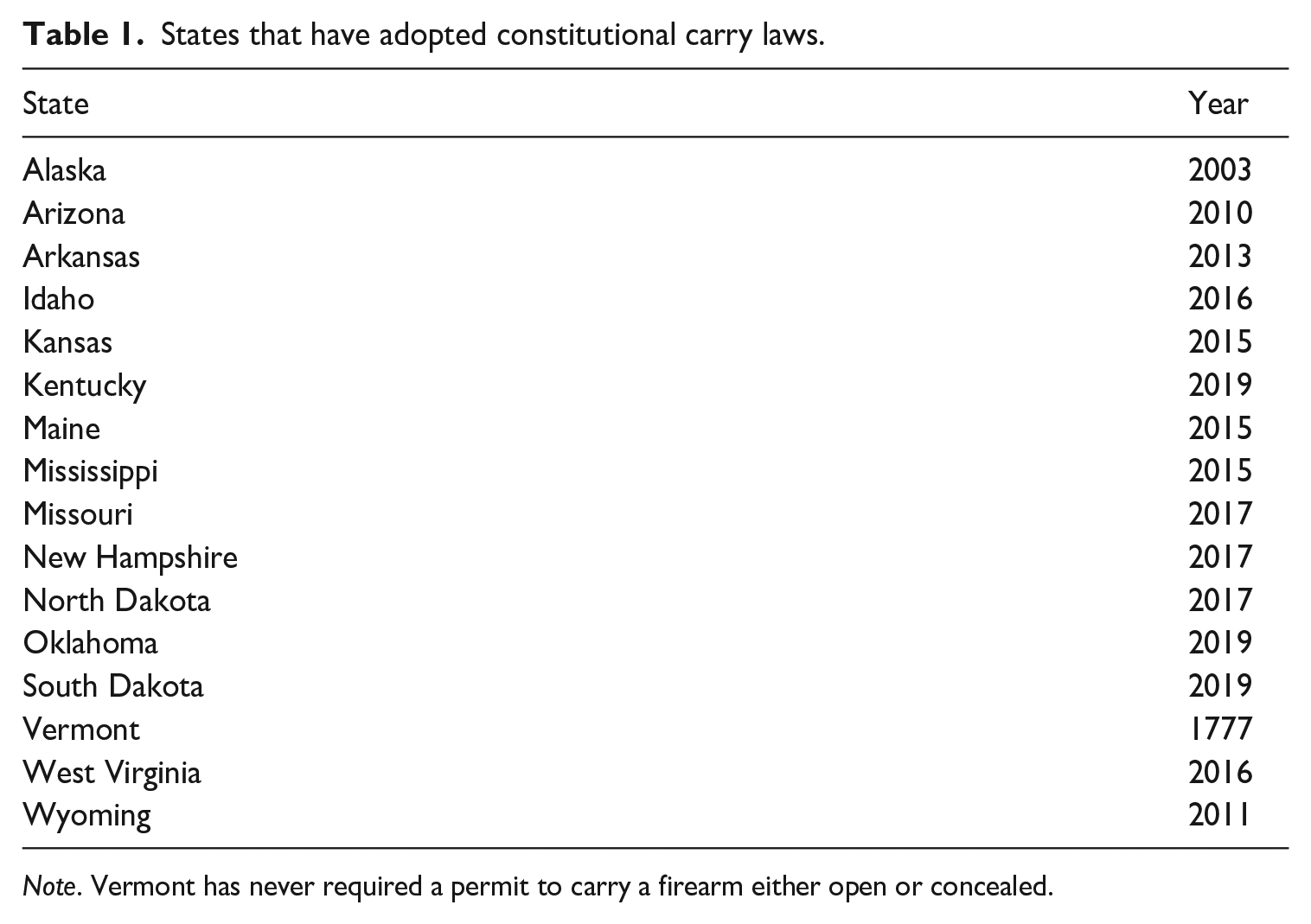
Note. Vermont has never required a permit to carry a firearm either open or concealed.
Predictor variables
Several predictor variables that are theoretically relevant and have been identified by prior research (see Donohue et al., 2019; Kovandzic et al., 2005) to be important in this line of research were used in this analysis to create the synthetic states. Crime trends were coded dichotomously 7 and indicated whether crime increased or decreased in a state during a given year (0 = decreased, 1 = increased). Law enforcement rates, arrest rates, and incarceration rates were all measured continuously. These data were gathered from the various Bureau of Justice Statics websites that publish this information. Gun control measures including RTC laws, universal background check laws, and assault weapons bans were measured dichotomously (0 = law not present, 1 = law present) and come from Lee et al. (2017). Gun prevalence was measured by the percentage of individuals who own a firearm in a given state. These data come from Kalesan et al. (2016). 8 The data measured 2013 gun ownership rates and were assumed to be rather stable across time during the study period and assigned all years for a given state the same value. Gallup data show that household gun ownership hovers around 40% plus or minus a few percentage points year to year across the study period 1995–2019. Political climate was captured by measuring the percentage of voters who voted for the Republican candidate during the last presidential election and whether the state’s electoral votes went to the Republican candidate (0 = no, 1 = yes) during the last presidential election. The same value was assigned for all 4 years in the election cycle. Demographic variables were measured continuously and include percentage of the population that is African-American, percentage of households that are female-headed, median income, poverty rate, population density, unemployment rate, alcohol consumption per capita, and percentage of the population ages 19–24. These dates come from the Census and National Institute for Alcoholism and Alcohol Abuse for alcohol consumption. Eight pre-treatment years of crime rates were included as predictors in the Alaska models (1995–2002), Arizona and Wyoming models (1995, 1997, 1999, 2001, 2003, 2005, 2007, 2009) and 9 years for Arkansas models (1995, 1997, 1999, 2001, 2003, 2005, 2007, 2009, 2011). Information on donor pool weights, pre-treatment RMSPE, post-treatment RMSPE, average p-value of post-treatment difference between actual and synthetic states, and predictor balance for each model is provided in the Appendix 1 (Tables 2 to 13).
Results
Results from the synthetic control models examining the effect of Alaska’s permit-less carry law on violent crime rates are shown in Figures 1 to 3. Alaska passed permit-less carry legislation in 2003 and was the first state in the nation to do so through the legislative process. 9 The findings show that permit-less carry was associated with an increase in aggravated assault rates but were generally not a reliable source of variation in the rates of other violent crimes. The synthetic Alaska murder rate and the actual murder rate tracked fairly well in the pre-treatment period seeing a slight divergence a few years after Alaska passed permit-less carry (pre-RMSPE = .991, post-RMSPE = 1.546). The placebo test shows that the divergence does begin to become unusually large until 10 years after the intervention. It is unlikely that permit-less carry has affected murder rates in Alaska. All predictor variables used in the synthetic control model were balanced with the exception of population density 10 which was also the case for robbery and aggravated assault. For robbery, the synthetic trend and actual trend tracked well in the pre-treatment period and then diverges in 2004 (pre-RMSPE = 2.902, post-RMSPE = 38.995). The divergence looks rather dramatic in the post-treatment period; however, the placebo test shows that the divergences does not become unusually large until about 10 years after the passing of the permit-less carry law. It is also unlikely that this law has affected robbery rates in Alaska. The synthetic and actual aggravated assault rate trends tracked well in the pre-treatment period and began to diverge in 2002, the year before Alaska passed permit-less carry legislation which could be evidence of an announcement effect (pre-RMSPE = 4.232; post-RMSPE = 157.795). The divergence became much larger over time during the post-treatment period and became unusually large shortly after the law passed in the placebo test. The results suggest that had Alaska not passed its permit-less carry law, the aggravated assault rate in the state would be much lower post 2003 with the state experiencing 100–250 fewer aggravated assaults per 100,000 people. Put another way, it is likely the case that permit-less carry caused a substantial increase in aggravated assault in Alaska.
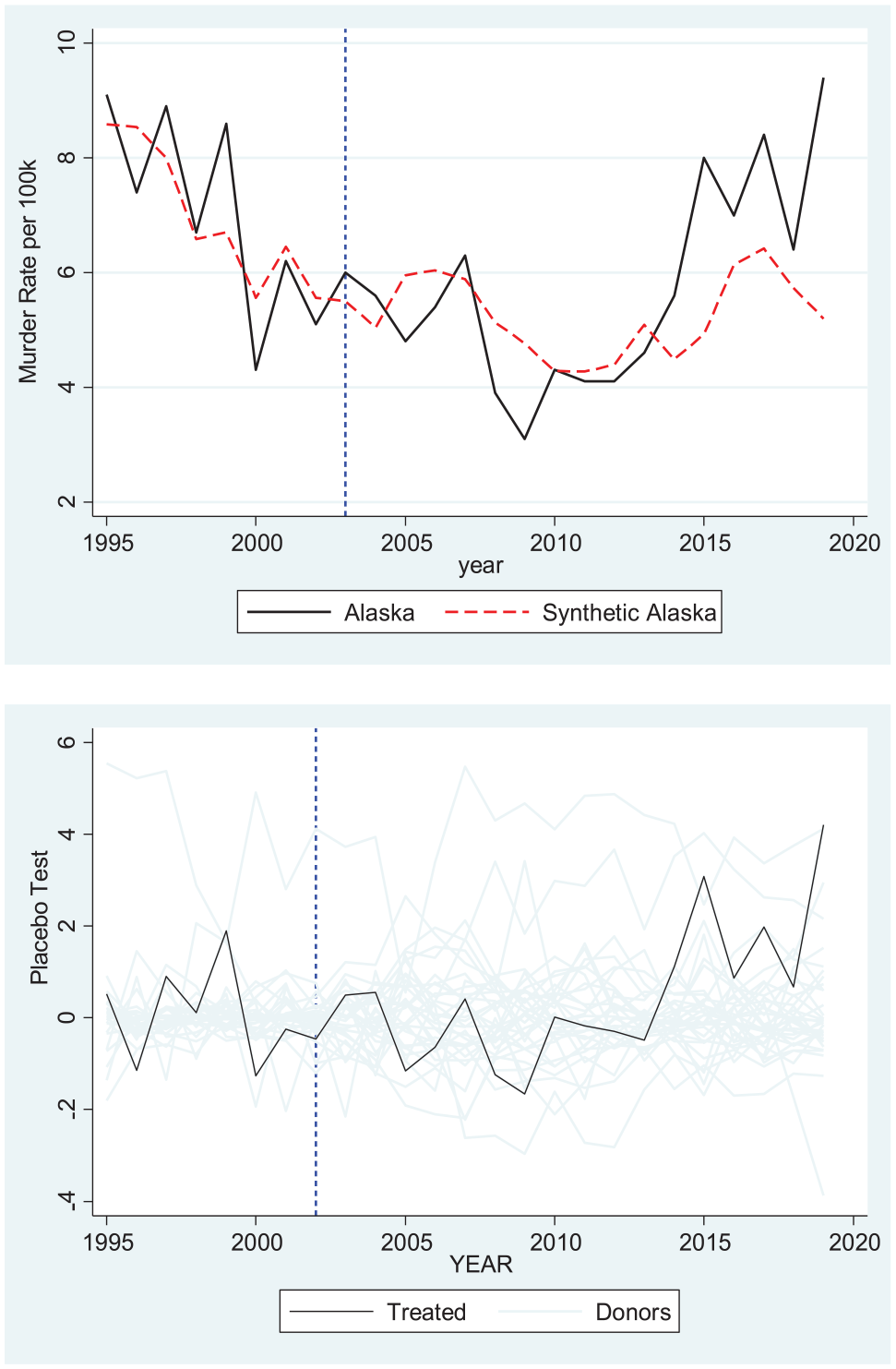
Alaska murder rate synthetic control model.
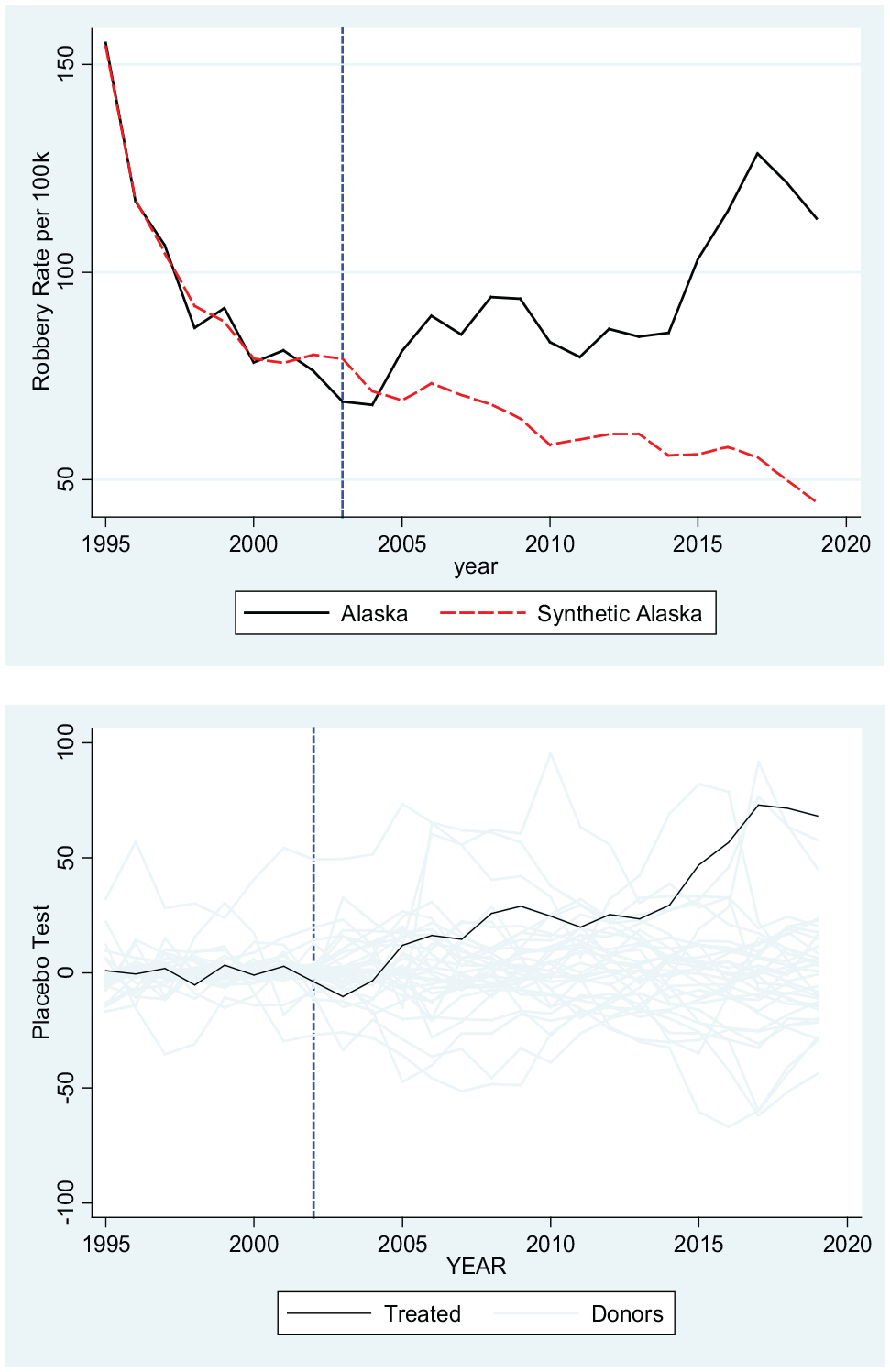
Alaska robbery rate synthetic control model.
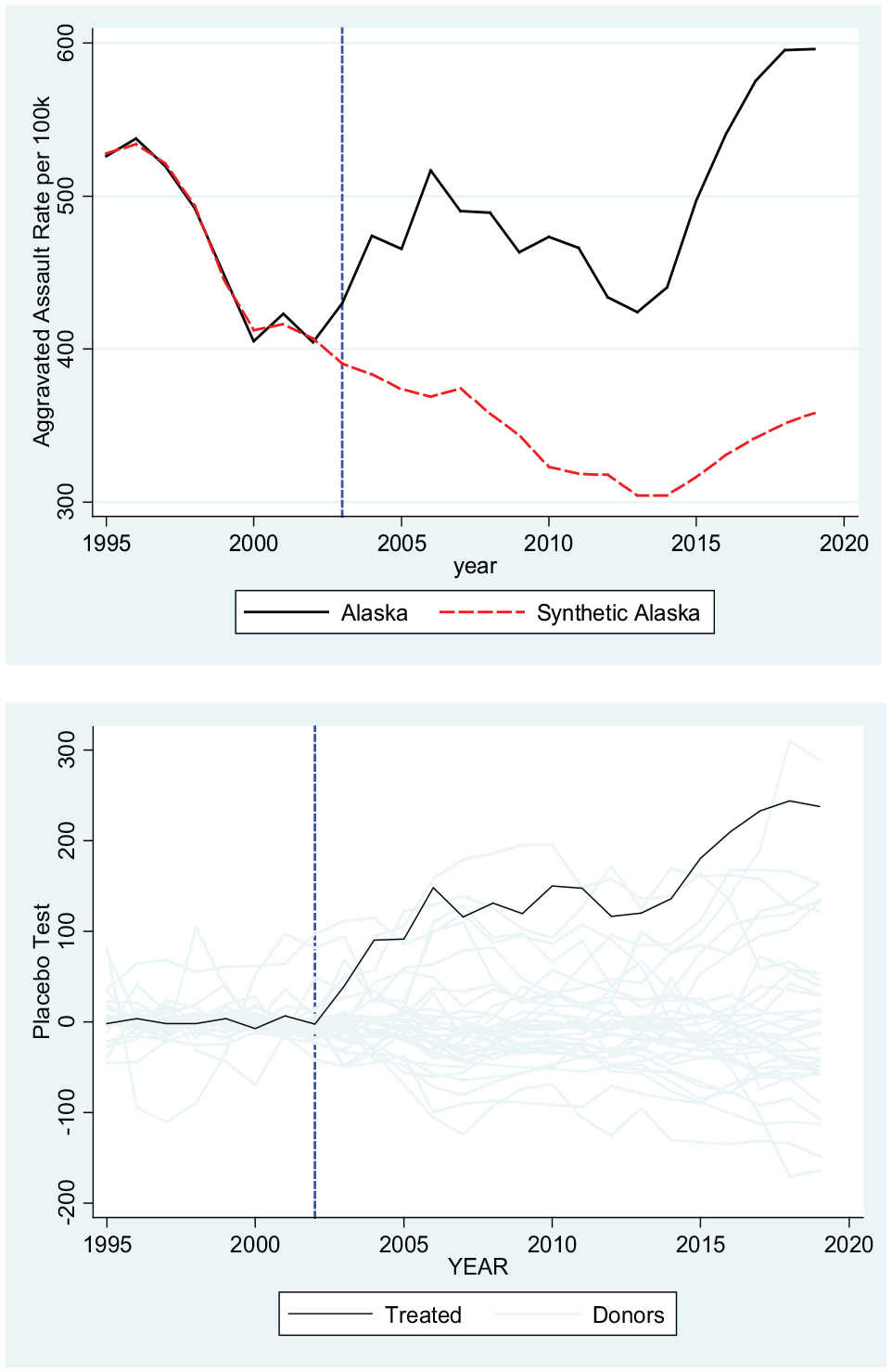
Alaska aggravated assault rate synthetic control model.
Results from the synthetic control models examining the effect of Arizona’s permit-less carry law on violent crime rates are shown in Figures 4 to 6. Findings indicate that Arizona adopting a permit-less carry law in 2010 was not associated with variations in any of the rates of violent crime studied here. The synthetic Arizona murder rate trend tracked the actual murder rate trend reasonably well during the pre-treatment period (pre-RMSPE = .728; post-RMSPE = .949). All of the predictors used to create this synthetic model were fairly well balanced with the exception of percentage of the population that is African-American, which was also the case for robbery and aggravated assault. There did seem to be a divergence between the synthetic Arizona murder rate trend and the actual murder rate trend during the post-treatment period indicating a deterrent effect of the permit-less carry law. However, the placebo test shows that the divergence did not become unusually large until 5 years after the intervention. It is not likely that the law caused a reduction in murder rates 5 years after the fact. Robbery rates in the synthetic Arizona tracked the actual robbery rates fairly well in the pre-treatment period (pre-RMSPE = 5.727, post-RMSPE = 14.431). The divergence observed in the post-treatment did not become unusually large in the placebo test. The synthetic control model examining aggravated assault rates were similar to that of robbery rates. The synthetic trend tracked the actual trend reasonably well, however, the differences observed between synthetic aggravated assault rates and actual aggravated assault rates were not unusually large in the placebo test (pre-RMSPE = 12.62, post-RMSPE = 45.889).
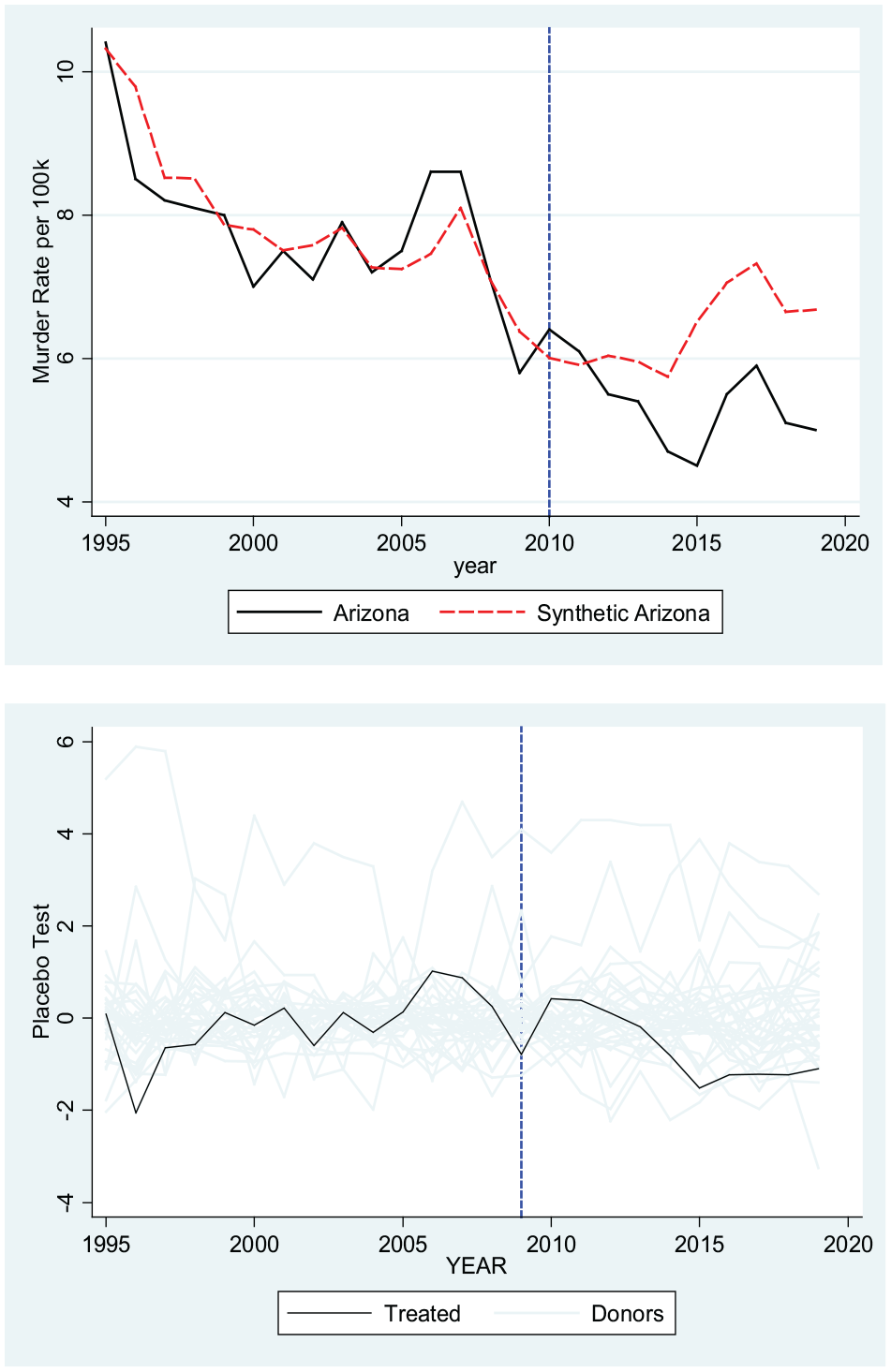
Arizona murder rate synthetic control model.
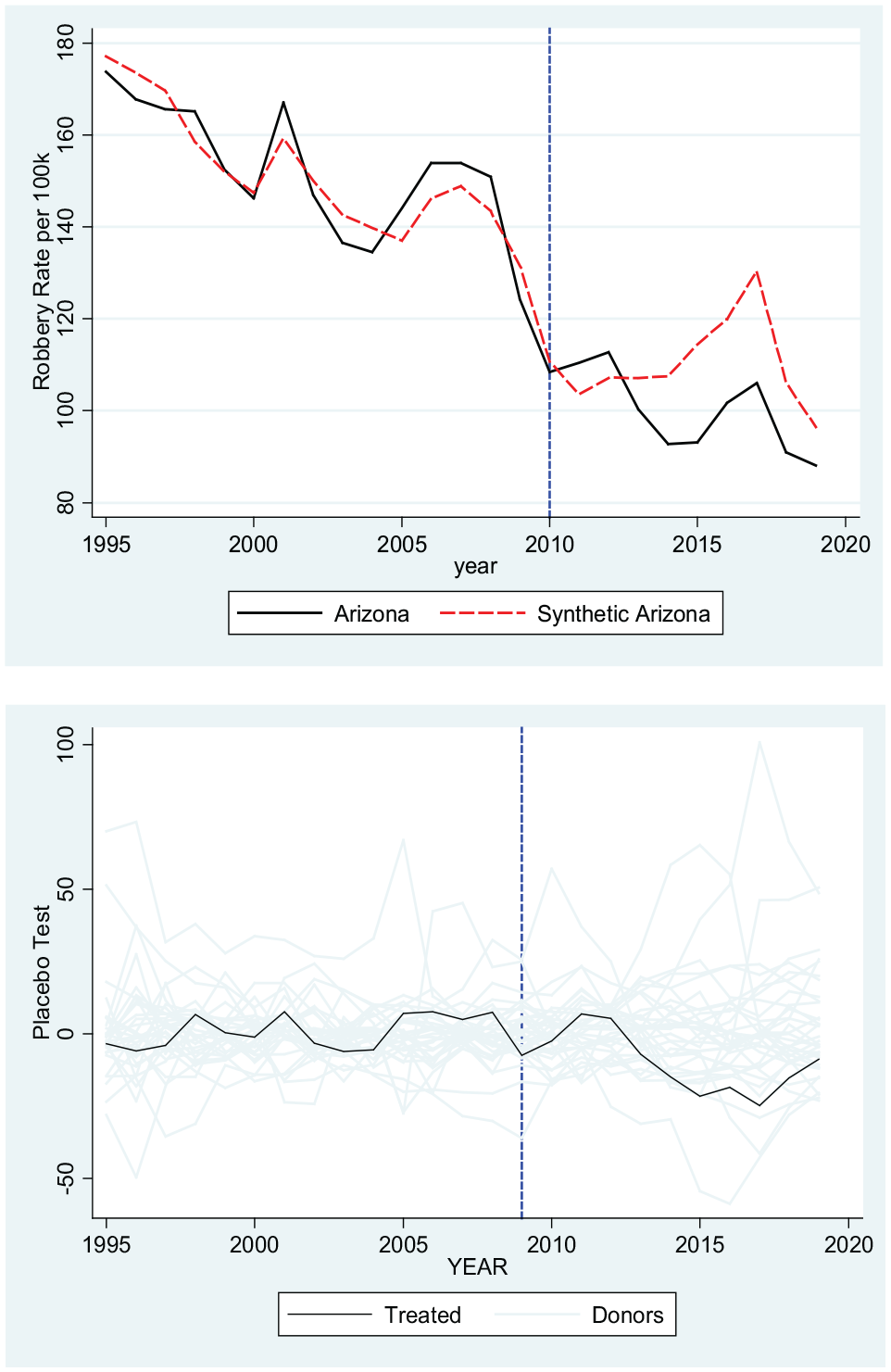
Arizona robbery rate synthetic control model.
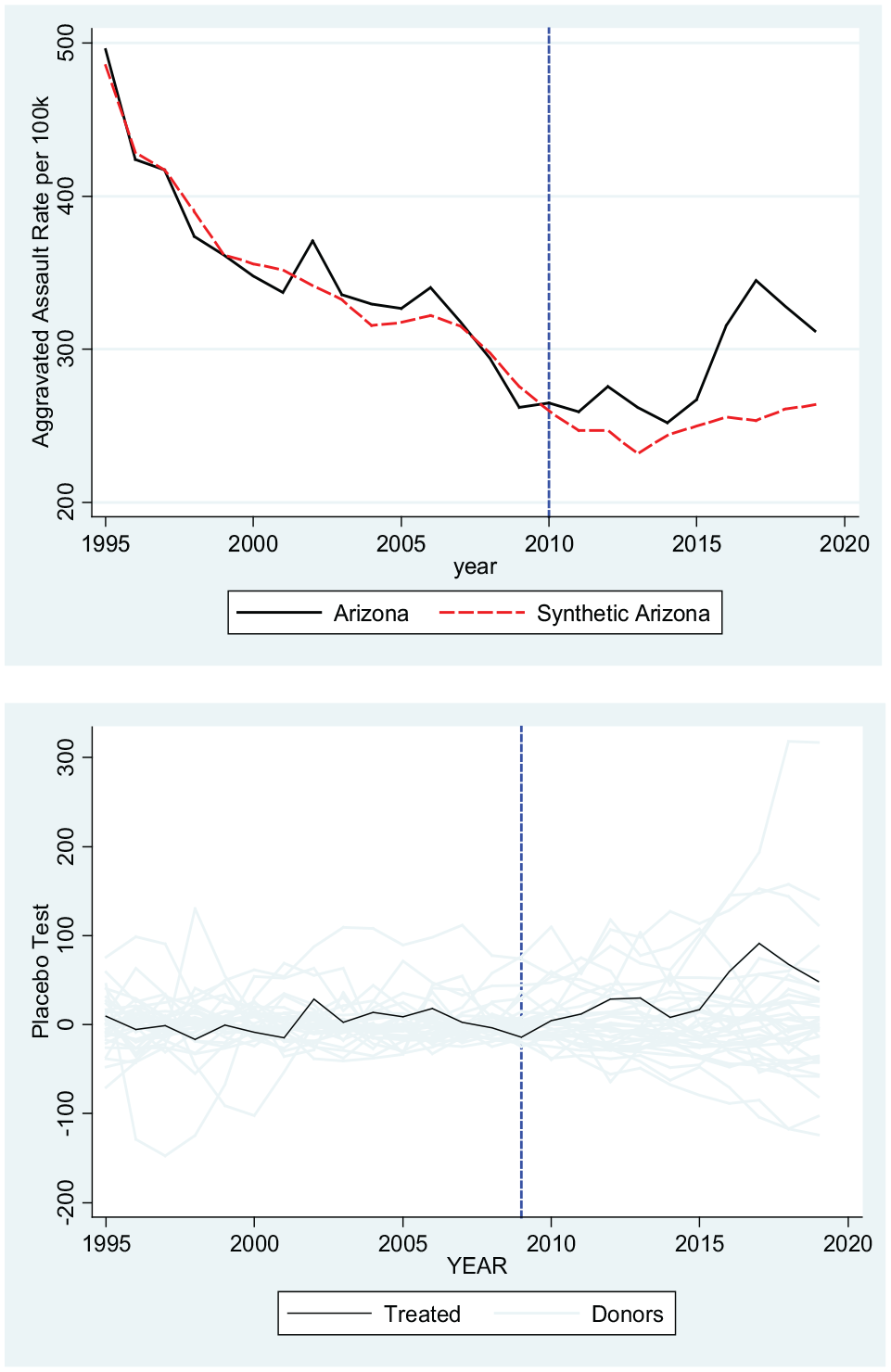
Arizona aggravated assault rate synthetic control model.
The results from synthetic control models examining the permit-less carry law in Arkansas are shown in Figures 7 to 9. There did not appear to be an association between adopting a permit-less carry law and violent crime rates in Arkansas. The synthetic Arkansas murder rate trend tracked the actual trend reasonably well but did not diverge from the actual murder rate until 2016, 3 years after Arkansas adopted a permit-less carry law (pre-RMSPE = .669, post-RMSPE = .959). However, the differences observed in the post-treatment period were not unusually large in the placebo test. In this model, the predictors used to create the synthetic state were all fairly balanced with the exception of population density. The synthetic robbery rate trend tracked the actual robbery rate trend well during the entire study period with no apparent divergence between trends during the post-treatment period and all predictors achieved balance (pre-RMSPE = 5.507, post-RMSPE = 4.879). Synthetic trends and actual trends tracked fairly well for aggravated assault during the pre-treatment period. The divergence between the two trends observed in the post-treatment period did not become unusually large until 7 years after the intervention (pre-RMSPE = 19.777, post-RMSPE = 55.439). It is unlikely that the law caused an increase in aggravated assault 7 years after passing.
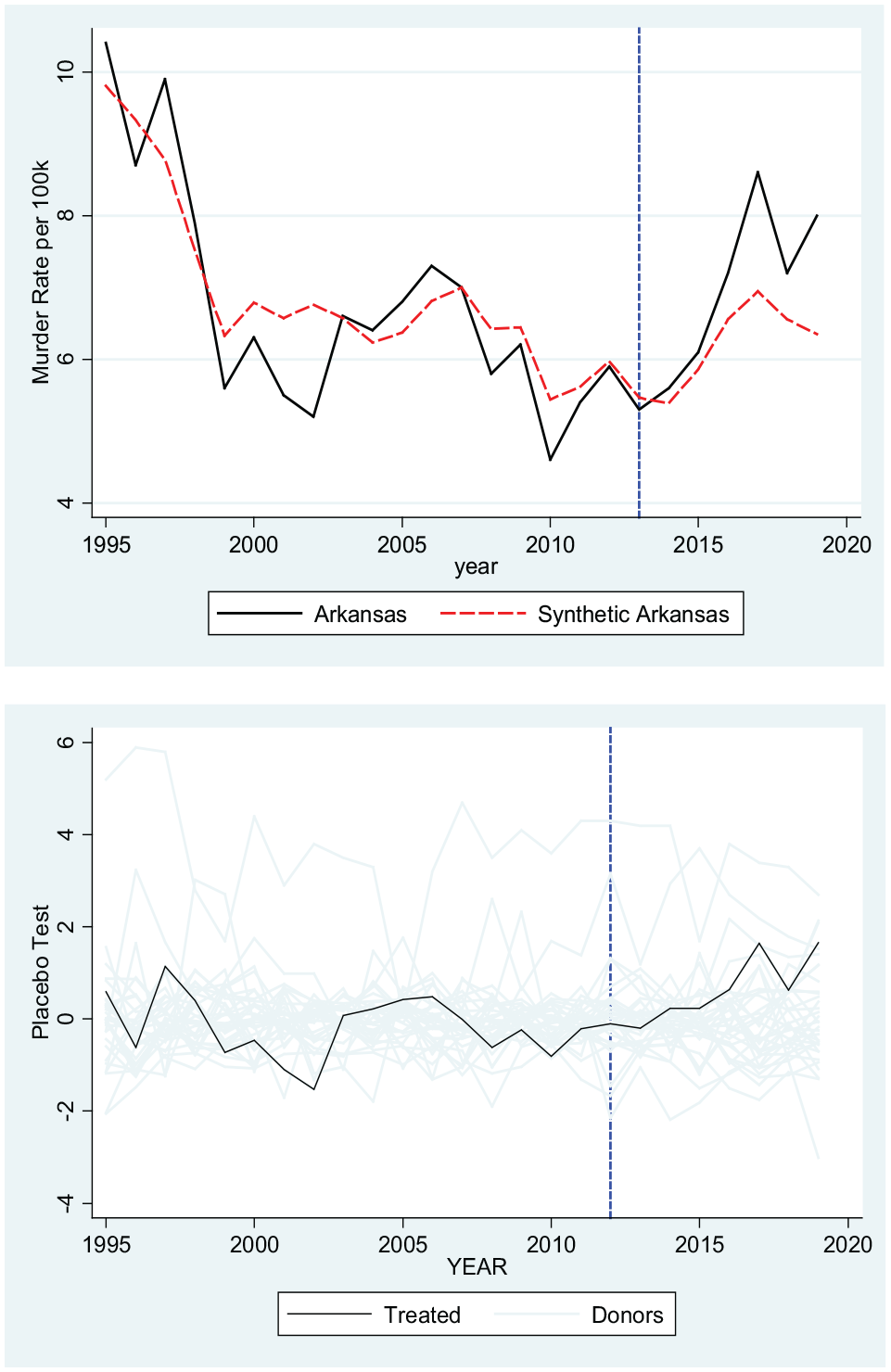
Arkansas murder rate synthetic control model.
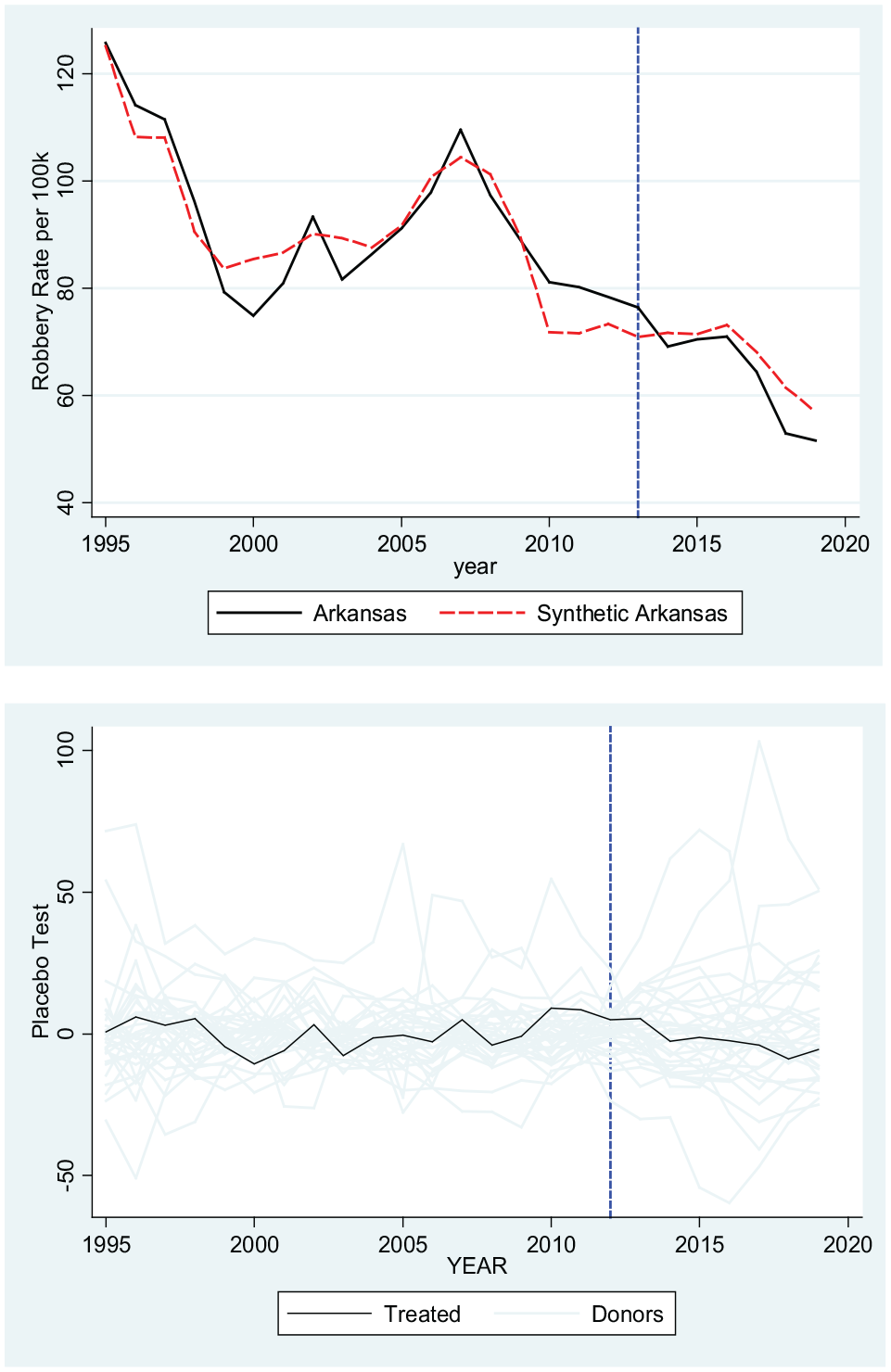
Arkansas robbery rate synthetic control model.
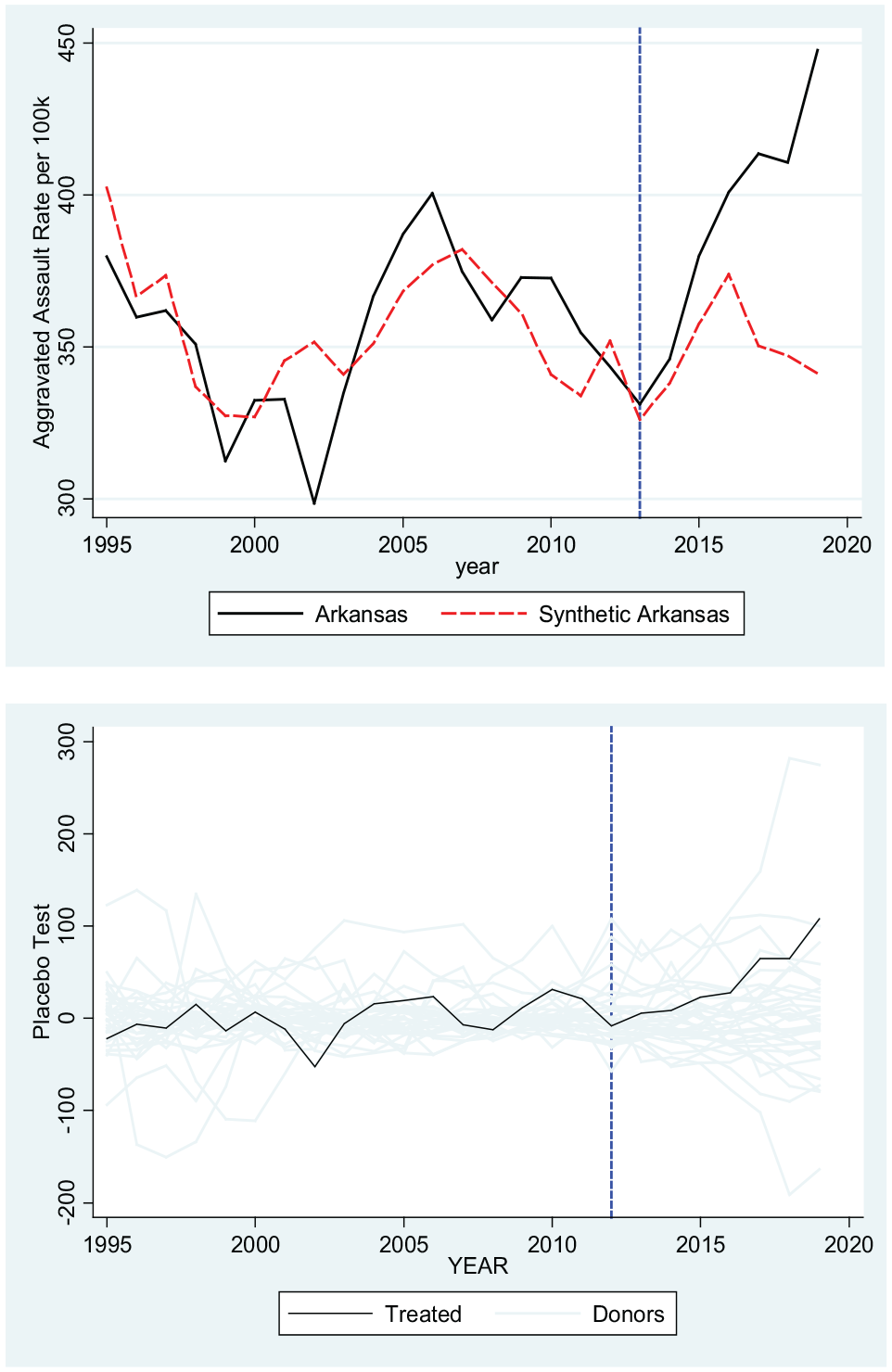
Arkansas aggravated assault rate synthetic control model.
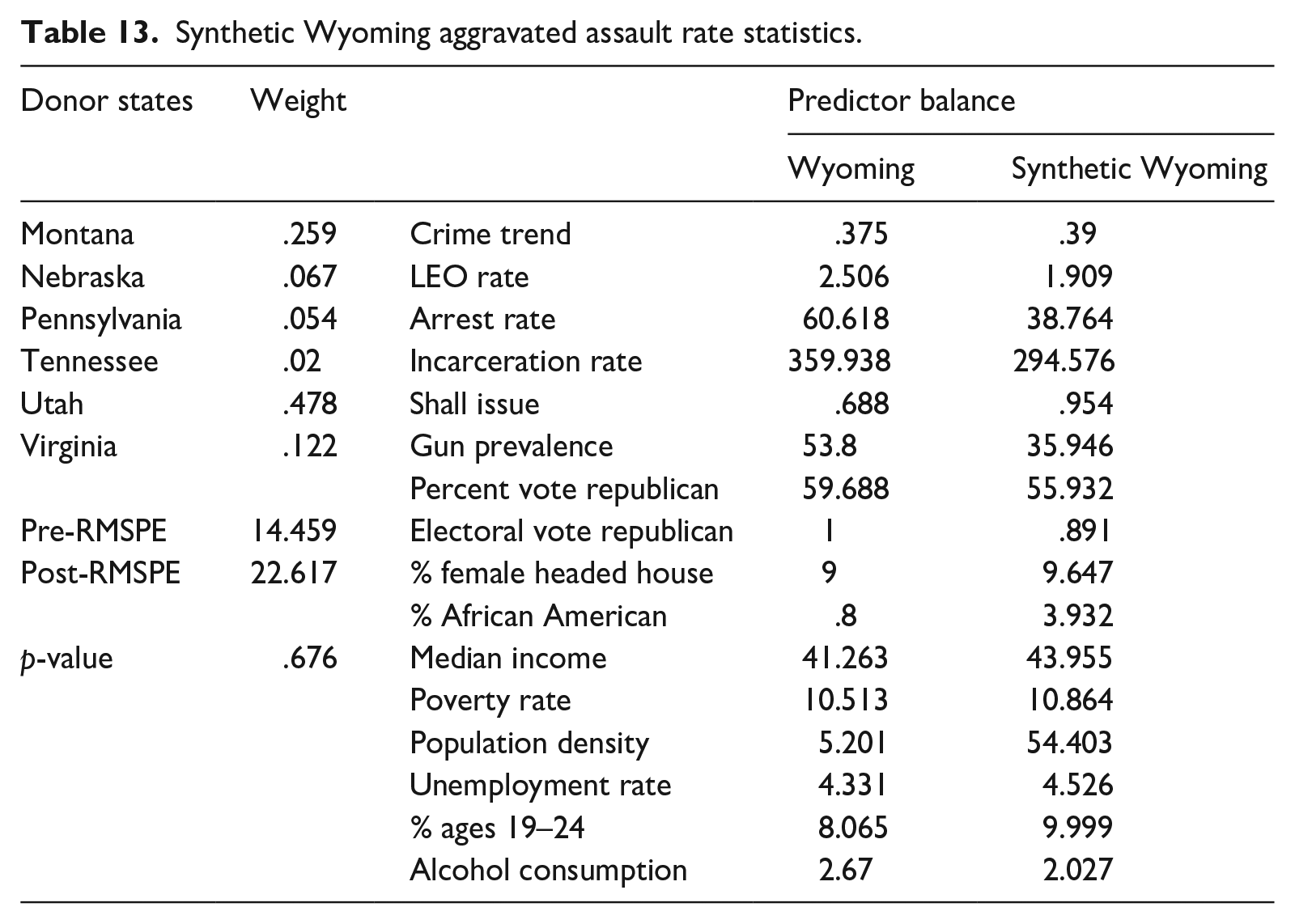
Figures 10 to 12 below show the results of the synthetic control models examining the effect of permit-less carry on violent crime rates in Wyoming. Findings show that permit-less carry was not associated with variations in violent crime rates in Wyoming. The synthetic homicide trend and actual homicide trend tracked fairly well in the later portion of the pre-treatment period (the first 5 years did not track well) and showed no meaningful divergence in the post-treatment period (pre-RMSPE = .789, post-RMSPE = .313). In this model, population density and percentage African-American did not achieve balance. 11 The model assessing robbery rate trends was poor and did not offer anything useful for interpretation. Synthetic aggravated assault rates and actual aggravated assault rates tracked fairly well during the pre-treatment period and seemed to substantially diverge in 2016, 5 years after Wyoming passed permit-less carry legislation (pre-RMSPE = 14.459, post-RMSPE = 22.617). This divergence did not become unusually large in the placebo test. Population density and percentage African-American did not achieve balance in this model.
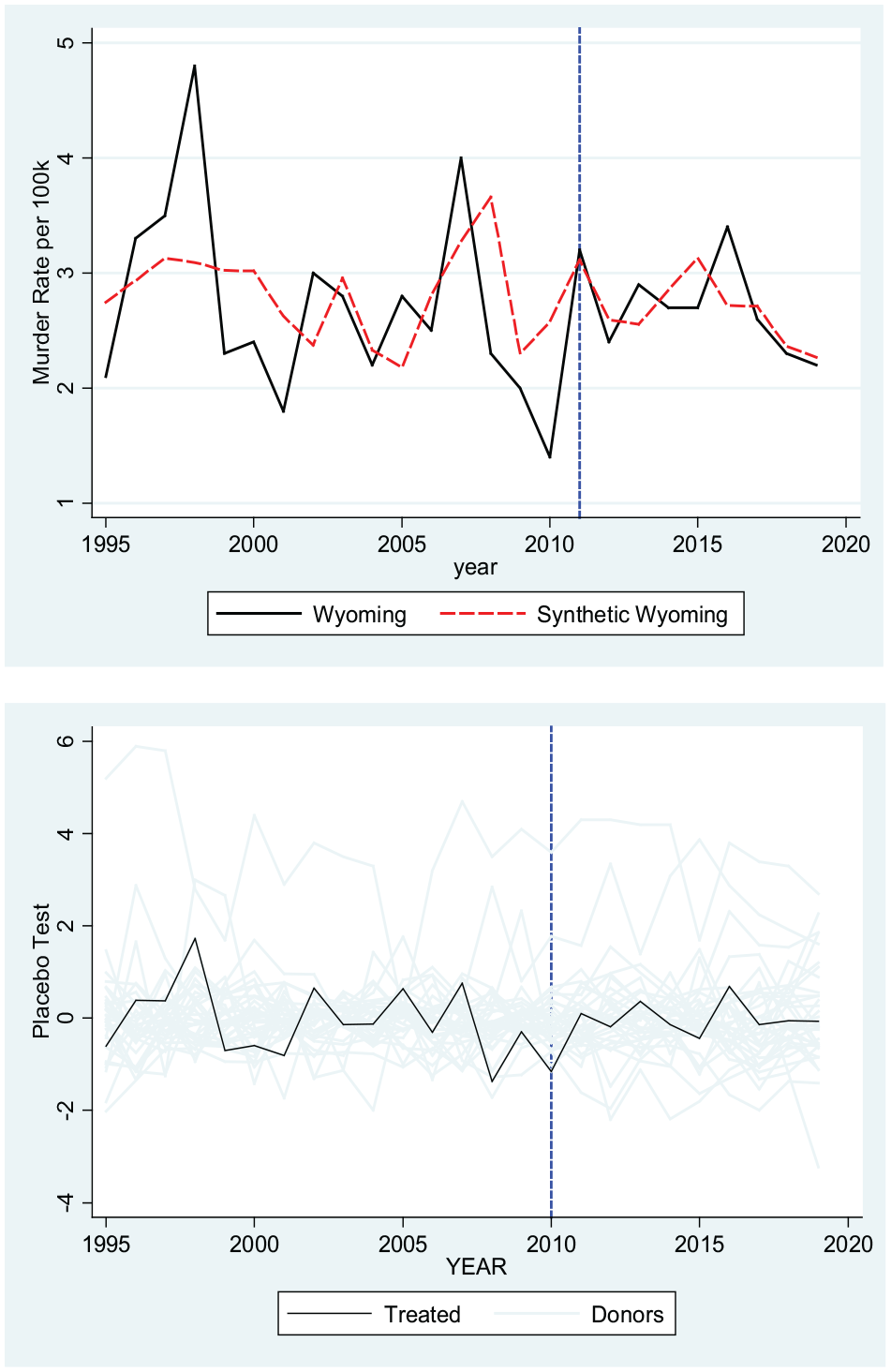
Wyoming murder rate synthetic control model.
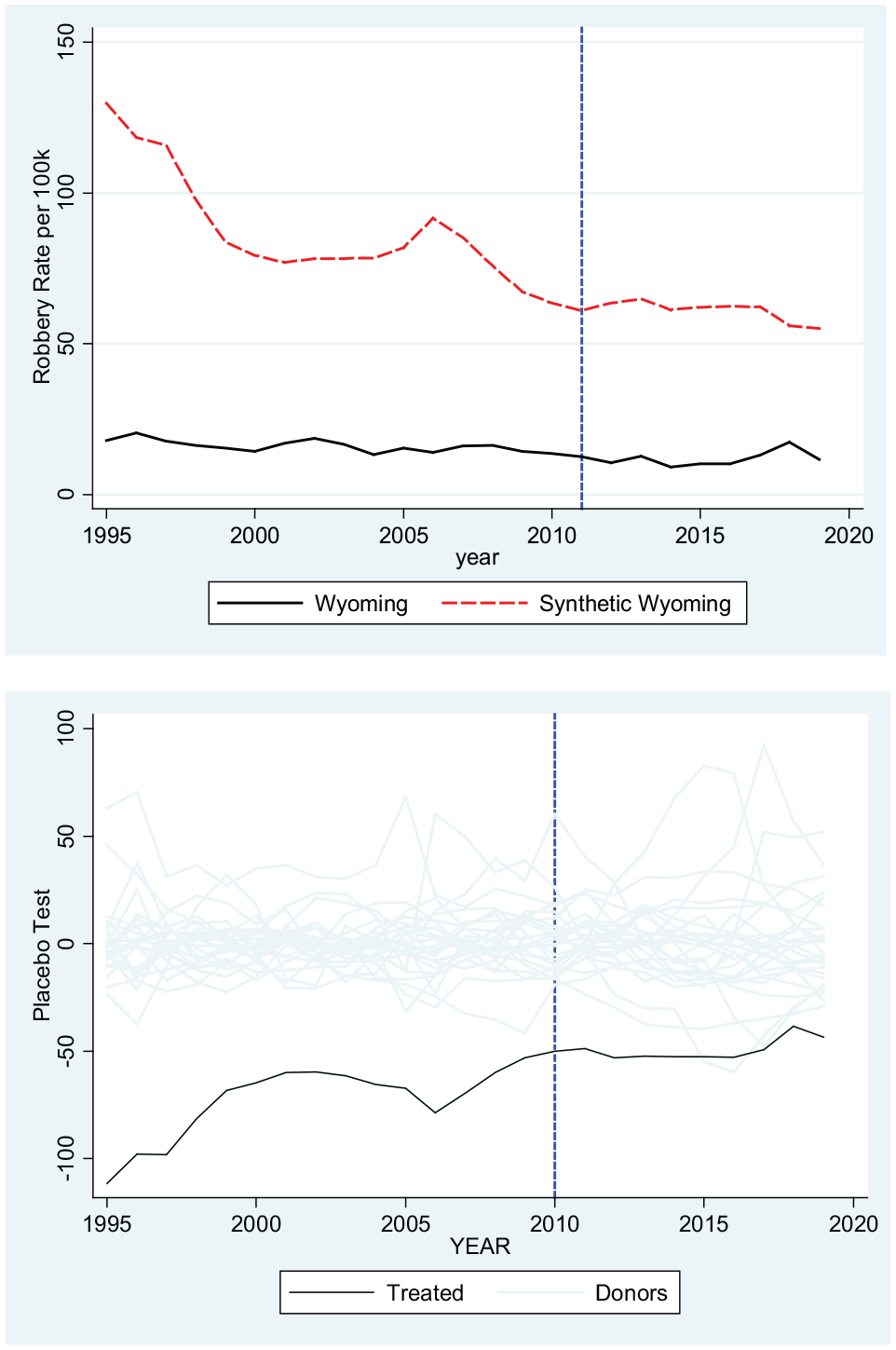
Wyoming robbery rate synthetic control model.
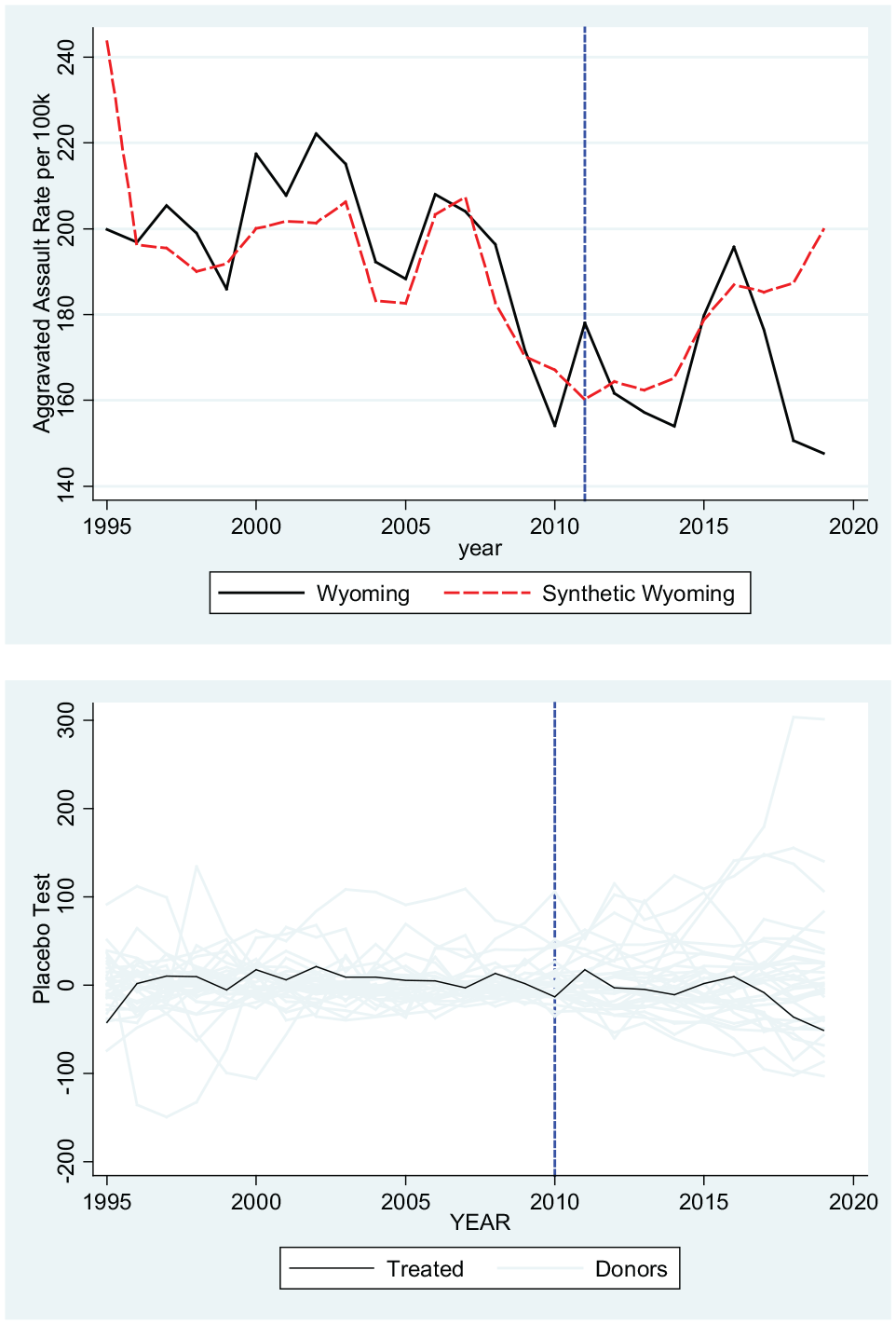
Wyoming aggravated assault rate synthetic control model.
Discussion
The findings from this analysis suggest that permit-less carry laws were generally not associated with variations in violent crime rates in Arizona, Arkansas, and Wyoming. However, aggravated assault rates in Alaska did increase after the state allowed permit-less carry which is consistent with extant research on the effect of RTC on crime. For aggravated assault, it is reasonable that allowing citizens to carry guns without a permit could cause this type of crime to increase. It may be the case that permit-less carry laws increase the prevalence of armed citizens misusing concealed firearms in a confrontation that ends with an aggravated assault. In such cases, an armed person may unjustifiably and illegally brandish a concealed firearm and threaten others.
The results above broadly substantiate the findings from Hamill et al. (2019) suggesting that permit-less carry laws generally have a null effect on variations in violent crime rates or that they did not have any additional violence inducing effects on top of existing RTC laws. Violent crimes tend to be more expressive while property crimes are more instrumental in nature (Miethe and Drass, 1999). Deterrence theory and routine activities theory are useful in explaining instrumental crimes. These types of crimes require more rational thought and a decision-making process. The perception that potential victims could be armed may be the deciding factor in the choice to not commit certain property crimes like burglary/home invasion or motor vehicle theft. This is consistent with the arguments made by perceptual deterrence, although the consequence is not delivered by the state in terms of legal sanctions but at the hands of an armed citizen in terms of perpetrators being shot and possibly killed (Paternoster, 2018). The American gun culture has shifted in recent decades such that the main reason why people own guns in recent times is for self-defense using guns in the case of an active victimization or in the hopes of deterring would be offenders. Accordingly, the number of people daily carrying a loaded handgun for self-defense has doubled from 2015 to 2019 (Rowhani-Rahbar et al., 2022). The presence of a gun may also serve as a capable guardian, thereby making a target less suitable. For violent crimes, however, this logic may not equally apply. Violence tends to be more expressive than instrumental, with robbery being the possible exception, however, robbery is likely part instrumental and part expressive. Several studies discussed in the literature review found that permissive gun laws were associated with an increase in violent crime, particularly gun homicide and aggravated assault. A possible explanation for the increase in violence associated with permissive gun laws is that the presence of a gun increases the likelihood of a violent or fatal outcome when conflict occurs, a phenomenon that Zimring (2020) calls “instrumentality.” In stressful situations, people are more likely to act instinctively and impulsively, no rational thought required because our limbic system takes control of our behavior (see generally, Jorgensen et al., 2016). When people feel threatened, the fight or flight response takes control of our actions and having a gun present during such an event could cause someone to unnecessarily and illegally use that gun impulsively. In short, the presence of a gun can turn an argument into an aggravated assault or even homicide. Possessing a gun may also cause a sense of empowerment and may lead to a good guy with a gun turning into a bad guy with a gun at a moment’s notice. This study did not see a meaningful relationship between adopting a permit-less carry law and an increase (or decrease) in violence in three of the states examined. It could be the case that such a relationship may be manifest in other states or at the national level, however. Also, a likely explanation for this null effect is that citizens did not respond to the legislation, meaning that people in these states did not opt to start carrying guns concealed more frequently nor did citizens perceive that more people were carrying guns.
Limitations
There were a few notable limitations in this study. An important variable or combination of variables may have been missing from the analysis. It is also serious to note that predictor imbalance may reflect an imbalance in unobserved variables. That said, researchers must do the best they can with what is available to them. In the synthetic control models presented here, it could be the case that the predictors used to create the synthetic states were absent of some other state level variable(s) that would have improved the fit of the synthetic control.
Some models did not track ideally well in the pre-treatment period thereby making the comparison between the synthetic state trend and actual state trend difficult to interpret. This may be due to these models being unbalanced on key predictor variables, although only few variables were unbalanced and it is unlikely that these unbalances drove the results since the vast majority of other variables were balanced and that findings did not change during robustness checks. In addition, this study relied on official reported data and assumed they were correct. However, official data often contain flaws and sometimes are inconsistent (see Comer et al., 2023), although it is generally accepted that official statistics on violent crime are quite accurate. Caution is warranted when interpreting the results found in this study until further research has replicated the findings. Future research should explore possible omitted variables and should include more years of data as they become available to assess the effects of permit-less carry laws in other states. Finally, the states studied here are not representative of the country as a whole and may not be representative of many other states. This is certainly the case for Alaska and Wyoming which are sparsely populated and not demographically diverse.
Conclusion
Research estimating the effect of permit-less carry laws on crime, thus far, has found a null effect generally, however some exceptions do exist. The findings from this study generally show that permit-less carry laws were not associated with an increase or decrease in violent crime rates with the possible exemption of an increase in aggravated assault rates which is consistent with research on RTC. Research on RTC laws generally show that these laws increase violence. This research finds that states extending their existing RTC laws to include permit-less carry are not likely to experience additional increases in violence, however, a possible increase in aggravated assault may result. That said, it may be the case that such legislation could cause an increase in other negative outcomes such as suicides, police killings, or accidental shootings. However, it may also be viewed by the public that permit-less carry laws are more about personal freedoms and political considerations rather than being about an effective crime reduction strategy.
Footnotes
Appendix 1
Synthetic Wyoming aggravated assault rate statistics.
| Donor states | Weight | Predictor balance | ||
|---|---|---|---|---|
| Wyoming | Synthetic Wyoming | |||
| Montana | .259 | Crime trend | .375 | .39 |
| Nebraska | .067 | LEO rate | 2.506 | 1.909 |
| Pennsylvania | .054 | Arrest rate | 60.618 | 38.764 |
| Tennessee | .02 | Incarceration rate | 359.938 | 294.576 |
| Utah | .478 | Shall issue | .688 | .954 |
| Virginia | .122 | Gun prevalence | 53.8 | 35.946 |
| Percent vote republican | 59.688 | 55.932 | ||
| Pre-RMSPE | 14.459 | Electoral vote republican | 1 | .891 |
| Post-RMSPE | 22.617 | % female headed house | 9 | 9.647 |
| % African American | .8 | 3.932 | ||
| p-value | .676 | Median income | 41.263 | 43.955 |
| Poverty rate | 10.513 | 10.864 | ||
| Population density | 5.201 | 54.403 | ||
| Unemployment rate | 4.331 | 4.526 | ||
| % ages 19–24 | 8.065 | 9.999 | ||
| Alcohol consumption | 2.67 | 2.027 | ||
Declaration of Conflicting Interests
The author(s) declared no potential conflicts of interest with respect to the research, authorship, and/or publication of this article.
Funding
The author(s) received no financial support for the research, authorship, and/or publication of this article.
