




Abstract
A total of 324 journalists have been killed in the world in the last decade. In Latin America and the Caribbean, the situation is alarming. Based on these statistics, this work presents an investigation with journalists from 10 countries. Based on in-depth interviews and the Delphi method, the study explores professionals’ perspectives about violence against journalists, pointing out the challenges for women, the role of independent media together with journalists’ networks and an increasing concern about governmental control over information.
Introduction
In the last decade, at least 324 journalists have been murdered worldwide and 85 percent of these cases have gone unpunished (Committee to Protect Journalists [CPJ], 2018). Most of them were local journalists covering topics such as corruption, crime, politics or human rights in countries where instability caused by conflict and violence by armed groups has fuelled impunity.
Literature often states that one factor associated with the violent murder of any population is the presence of armed conflict and/or internal conflict (Kalyvas, 2006). Following this line of thought, international evidence suggests that journalists often suffer lethal violence, or drastically increase their risk of being murdered when reporting from societies with internal conflict (Sambrook, 2016: 17–35).
This situation is not only a lethal threat to war correspondents, but also a rampant reality among many local journalists and investigative reporters working in developed regions, where the state’s efficacy to monopolize the means of violence faces severe limitations imposed by the presence of organized crime (Waisbord, 2007).
Further, Riddick et al. (2008) add some empirical evidence to this idea:
When considering the rate of homicides of media workers within all countries, it appears that the ability of governments to control armed groups may be a relatively important factor on the extent to which governments can establish safe working environments for the media. (p. 686)
During the past two decades, several studies indicate the existence of substantial variation in journalism professional conditions around the globe (e.g. Weaver, 1998), pointing out that societal conditions seem to have much more influence than individual or organizational variables (Berkowitz et al., 2004; Hallin and Mancini, 2004; Zhu et al., 1997).
More recently, based on the Worlds of Journalism Study’s data and case studies in Africa and Latin America, Hughes et al. (2017) proposed the concept of ‘insecure democracies’ and suggested that journalists working in these insecure democracies experience influences on their work more strongly than journalists in stable democracies. Standaert et al. (2019), in their study based on qualitative responses from journalists working in 67 countries, confirm these perceptions.
However, besides the admirable effort of the Worlds of Journalism Study led by Thomas Hanitzsch since 2006, the majority of the studies tend to use normative starting points where classic Western values are believed to be more professional than others (Josephi, 2005). For this reason, several scholars have questioned the excessive Westernization of journalism research (Park and Curran, 2000), underlining that it is imperative to address and compare differences to refine analytical frameworks and normative expectations (Waisbord, 2007).
Based on these assumptions, and acknowledging a lack of specific literature on conflict reporting in the Spanish language, our article presents the results of research into 33 leading journalists working on information coverage in conflict zones or issues related to corruption, crime or human rights, among others. The sample consists of Spanish and Latin American journalists who develop or have developed their journalistic work in different regions of the world, especially Asia, the Middle East, Africa, Latin America and the Caribbean.
To sum up, this article portrays the views of a balanced mixture of journalists that includes Spanish war correspondents, well-known journalists from legacy media or high-profile freelancers from Spain, that is to say journalists who live in a safe environment and travel to cover wars or conflicts and Latin American journalists who live their daily life and develop their journalistic tasks in ‘unsecure democracies’ (Hughes et al., 2017). The research establishes a comparative analysis of the in-depth interviews and the Delphi method that synthesizes the reflections of these professionals on working and safety conditions in contexts of violence.
The selection of the different countries was made taking into consideration the latest reports from organizations such as Reporters without Borders (2015, 2018) that have established country directors according to their level of violence and, especially, journalists who suffer in the performance of their work. In these cases, the concept of violence covers a wide spectrum of issues ranging from armed conflict to crime or gangs (El Salvador, Nicaragua and Honduras, due to the presence of the maras [local gangs] and as societies with a high level of violence). Based on these specifications, the study proposes a general description of how journalists – both foreign or war reporters and local journalists living in conflict zones – interpret their work in contexts of violence. Furthermore, a comparison is made between the reflections of correspondents or foreign correspondents who travel to conflict scenarios and journalists who permanently reside in these types of contexts.
Theoretical framework
Journalism in violent context
The violent death of journalists is a very critical issue worldwide; these deaths represent not only a public health problem but also a major threat to the establishment of open societies. According to the Committee to Protect Journalists (CPJ), a well-respected and independent news safety organization based in New York, more than 1,300 journalists and media workers worldwide have been killed when performing their duty in the last two decades (Brambila, 2017).
Scholars, such as Merchant (2018), have reflected on the particularities of the journalistic profession that, despite its low economic perception, must deal with a constant threat that puts professionals’ health, safety and lives at risk. Specifically, in countries where organized crime maintains a constant criminal activity, the work of journalists is exposed, vulnerable and even victimized. Organized crime, in fact, is able to censor and dictate journalists’ agenda (Cepeda Robledo, 2017). Fear for their personal safety can influence journalists’ daily work, impacting on their integrity (Valdivia, 2017) when they publish stories that may affect certain interests groups or powers. Self-censorship can also be imposed in the form of editorial policy, that is to say, journalists are forced to modify or omit information by the owners of the media.
Márquez-Ramírez and Hughes (2016a) indicate that journalists’ vulnerability is conditioned by a social environment that compromises the quality and objectivity of circulating information. Nine out of ten reporters in countries such as Mexico, for example, admit to being more careful in handling sensitive information and even admit to having opted for self-censorship on potentially sensitive issues.
In some newspapers in northern Tamaulipas (Mexico), criminal organizations actually tell news executives and reporters what to report and what not to cover (Relly and González, 2015) The risk that you run as a reporter in a violent environment is often unimaginable for journalists themselves. In the context of an environment and society threatened by constant danger, where the rates of violence are maintained or increased, the work of journalism is highly complex (Nicolás Gavilán, 2018).
Ganado (2012) and Márquez-Ramírez and Hughes (2016a) warn of the danger of this scenario for information professionals. According to Márquez-Ramírez and Hughes (2016b), the exercise of journalism in countries such as Mexico is carried out in precarious conditions, with low wages, a huge workload and multi-employment. In addition, Mexican journalists suffer a wide range of political, economic and violence pressures.
Studying Pakistan, Jamil (2017) shows a similar situation: local journalists view the government and military threats and pressure, impunity, the country’s socio-political situation and laws, religious extremism and social conservatism as most crucial in affecting their safety, concluding that Pakistani journalists are unable to carry out ‘objective and investigative reporting’ freely, truthfully and accurately because of diverse safety threats emerging from internal political and ethnic conflicts, pressure from the government, military and media owners, the law and order situation, religious extremism, conservatism and impunity.
In other words, achieving actual protection of journalists is still the greatest challenge in contexts of violence and impunity. The vast majority of attacks on journalists are not denounced due to the lack of trust in police authorities. Therefore, as Ganado (2012) points out, as long as the human rights violations against journalists continue unpunished and the actors involved are not sanctioned, effective protection will not be achieved, even within the existence of a regulatory framework. Other variables to be considered are impunity, injustice, corruption and violence, which have generated an increase in the levels of citizen insecurity in the areas most affected by organized crime. Accordingly, Harrison and Pukallus (2018) propose a new approach to understanding impunity – the ‘politics of impunity’ – a policy of governance whereby impunity is used as a political tool by the state and state-sponsored actors to achieve journalistic self-censorship. This is done through the deliberate deprivation of private autonomy brought about by the enforced exile of journalists into a ‘space of exception’ where they are both within and beyond the law. The exercise of the ‘politics of impunity’ in an increasing number of states creates an environment that only allows for politically compliant journalism.
The risk, in the view of Salazar (2014: 140), is
a feeling of greater exposure to insecurity, which is not reduced to the latent threat of practice in relation to events linked to organized crime or drug trafficking, but it permeates until reaching the level of the institutional, evidencing a scenario of abandonment before which the journalist actor is placed in a situation of vulnerability.
As for the attacks against journalists from power groups, these have been classified as: physical violence, intimidation and structural or systemic violence (Del Palacio, 2015). This distinction is useful for understanding that there are invisible structural aggressions for journalists, which come not only from news companies, but also from press–power relations (Salazar, 2014).
In this regard, the aggressions to which journalists are mostly exposed and face have three ways of presenting themselves (Merchant, 2018): (a) as an economic aggression through bribery; (b) as psychological aggression through intimidation by exclusion or defamation; and (c) as ethical aggression through subtle, non-authoritative censorship practices. These ethical aggressions are carried out in subtle ways through commercial relations that include contracts for the purchase and sale of advertising or through the maintenance of courtesy and friendship relationships between journalists and actors of the power groups.
In these terms, the vulnerable state in which journalists may find themselves is strengthened by a context of structural precariousness (Del Palacio, 2015; Márquez, 2014; Salazar, 2014), since it contributes to generating spaces, moments of physical aggression, psychological or economic, towards journalists by the actors of the power groups. According to Merchant (2018), this set of practices that emerges from client relations between journalists and government should be considered as aggressions of various kinds: economic, ethical and psychological because they are carried out to attack different areas of the professional life of journalists, without most of them realizing it.
In general, the majority of those journalists killed in peacetime were local journalists and investigative reporters working on politics, corruption, human rights abuses, or crime at the time of their murders (CPJ, 2015). Further, some recent evidence rightly suggests that the violent deaths of journalists in non-regular wars are more likely to occur in those societies that enjoy some degree of press freedom, which foster conditions for local journalists to pursue sensitive news stories in their communities, but where the state institutions systematically failed to guarantee the exercise of journalism and convict the perpetrators of those crimes (Asal et al., 2016).
Categories of journalists in risky situations
When journalists are in situations of armed conflict, they are protected by International Humanitarian Law (IHL) as civilians or non-combatants. For their part, according to the Geneva Conventions (ICRC, 1977), in the context of an international conflict, journalists are categorized as:
War correspondents: In an international war, they are the journalists who follow the Armed Forces who fight, without being part of them. They receive the protection given to civilians, although it is associated with the war effort, so they enjoy the same protection status as the military but are out of combat.
Journalists on a dangerous professional mission: The Geneva Convention establishes measures to protect journalists as civilians in international armed conflicts. In this context, journalists are protected both against the effects of hostilities and against the arbitrariness of a party in conflict when they fall to it, by capture or detention. Although the protection of journalists is only codified within the framework of international armed conflicts, journalists can also benefit from the provisions of Protocol II, concerning the protection of victims of non-international armed conflicts.
Journalists embedded, inserted or incorporated: These journalists travel with military troops in time of war, receive military survival training and travel in military vehicles. They run the same risks as the military vehicles in which they travel, which are legitimate targets. If these journalists are captured, they are conferred the status of a prisoner of war, which makes them subject to interrogations and allow the confiscation of their personal objects.
Conflict intensity can be classified on five levels of intensity (Heidelberg Institute for International Conflict Research [HIIK], 2008): latent conflict, manifest conflict, crisis, severe crisis and war. While latent conflict and manifest conflict might comprise verbal pressure, threatening with violence or the imposition of economic sanctions, they are still considered to be nonviolent. In contrast, crisis (at least one of the parties uses violent force in sporadic incidents), severe crisis (violent force is used repeatedly in an organized way) and war (violent force is used with a certain continuity in an organized and systematic way) are defined as violent stages. However, as seen previously, many journalists risk their life on a daily basis living in societies that are not necessarily involved in a formal war. Moreover, data (Sallie et al., 2017) prove that most of the ones killed or injured are part of the support team (fixers, crew, etc.).
For this reason, following the Worlds of Journalism (2020) definition, this article embraces a wider definition of risk intended as an array of existential threats to the viability and sustainability of journalism. Risks primarily emanate from four, partly interrelated sources: politics, economy, technology and culture. The forms (or manifestations) of these risks (e.g. eroding media freedom, violence against journalists and deteriorating labour conditions) and the perceived consequences associated with these risks (e.g. shrinking levels of editorial autonomy and journalists’ safety as well as growing precarity of journalistic labour) generate significant uncertainty among journalists. For this reason, this article aims to compare the perceptions of journalists who travel to conflict or violent zones with the perception of journalists who live in ‘insecure democracies’ (Hughes et al., 2017).
In particular, this work aims at understanding whether violence against journalists is a main issue for respondents; whether they consider that coverage is more complex for women; whether independent media can inform better; whether networks safeguard against bias; and whether they perceive that governments control information (Worlds of Journalism, 2020).
Methods
In accordance with these conditions, the research presents a comparative study based on the analysis of the vision of working and safety conditions in contexts of violence by 33 journalists who develop or have developed their journalistic work in different regions of the world, especially Asia, the East. Middle, Africa, Latin America and the Caribbean.
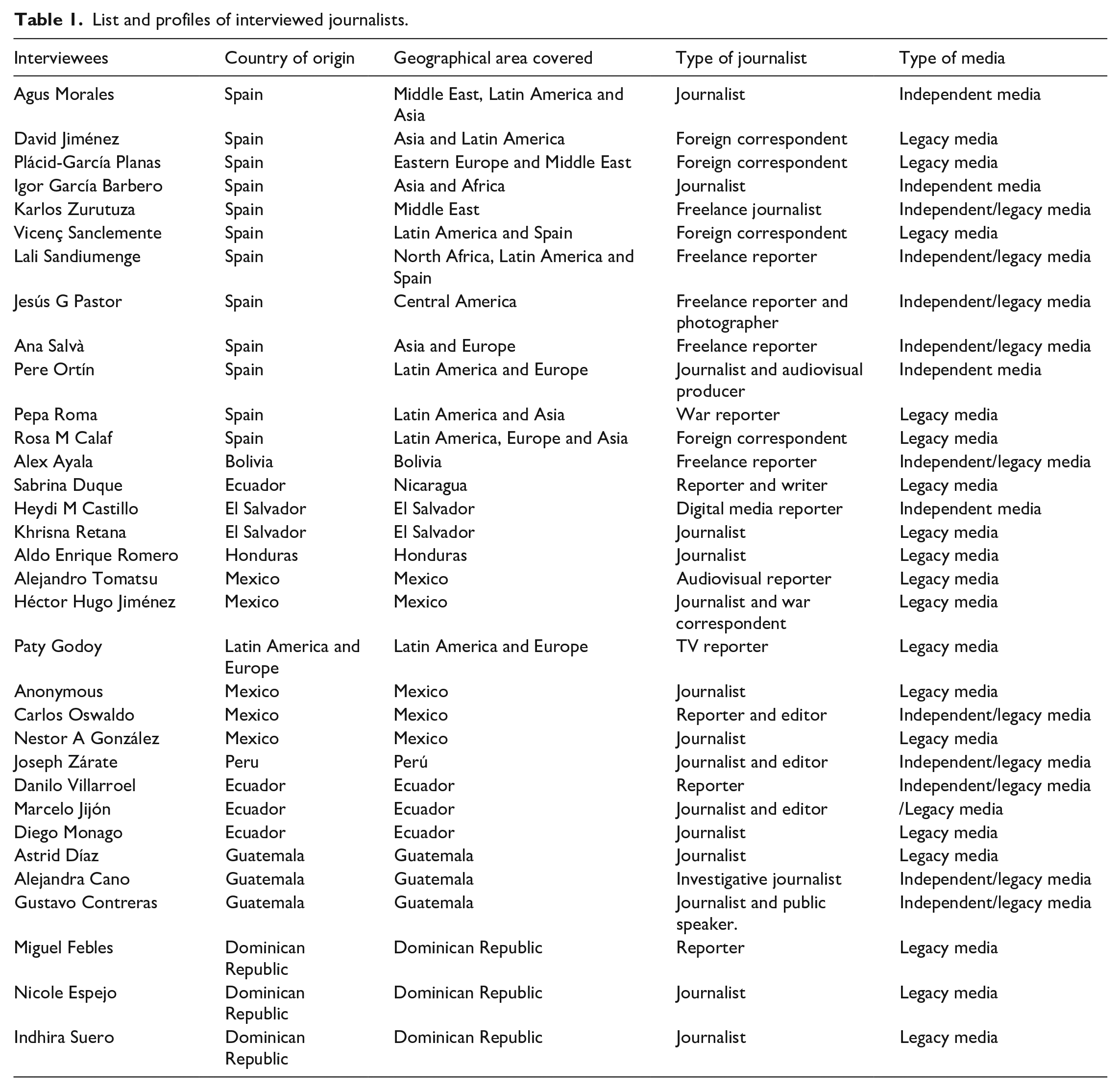
The sample of interviewees was conceived as the set of elements of the population that were asked to participate in the research (Del Rincón et al., 1995). The invited informants correspond to a group of professionals who work as reporters reporting from contexts of violence in the regions mentioned above (see Tables 1 and 2).
List and profiles of interviewed journalists.
List and description of interviewed journalists.
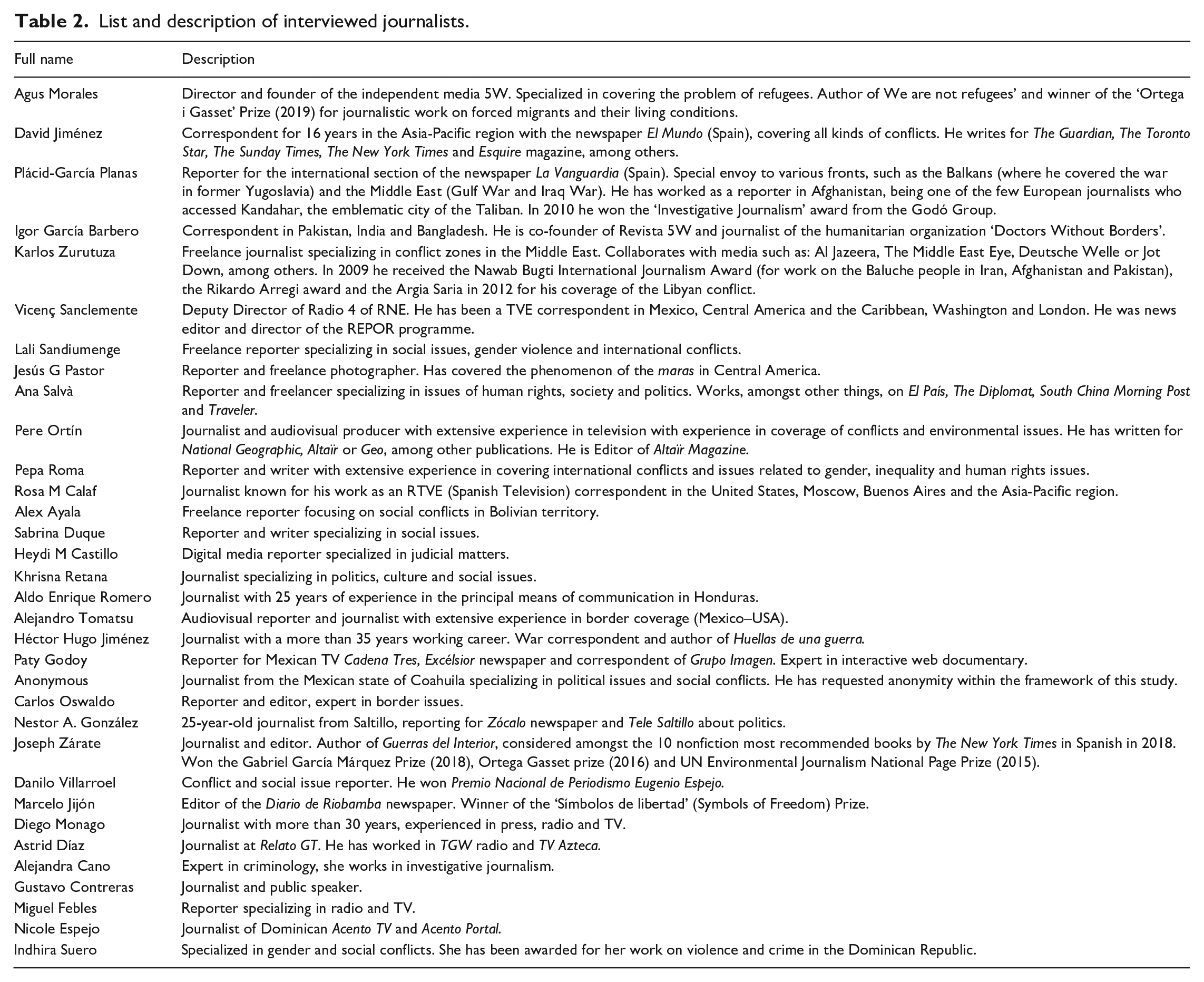
The list, which includes male and female journalists, includes various professional profiles whose common denominator is their experience, their specialization in the coverage of contexts marked by different types of violence, either because they are foreign correspondents experts in conflict/violet zones, or because they live in ‘insecure democracies’ (Hughes et al., 2017) . In this sense, the sample corresponds to an ad hoc selection of reporters and war correspondents who have accumulated more than 10 years of experience in the field.
In addition, the winners of the Ortega y Gasset Prize are included in their 2016 and 2019 editions. The Ortega y Gasset Awards were created in 1984 by the newspaper El País in memory of the Spanish thinker and journalist José Ortega y Gasset. They are awarded to the best works published in Spanish-language media around the world, giving priority to the defence of freedoms, independence, rigour, curiosity and passion of those who practise it, as essential values of journalism.
The methodological proposal has been designed from an exploratory perspective (Vilches, 2011) and has applied two research techniques: the in-depth interview and the Delphi method.
The in-depth interview, conceived as a structured technique in meetings between the researcher and the informants directed towards the understanding of their perspectives regarding various themes, experiences or situations (Del Rincón, 1995; Taylor and Bodgan, 1994), has allowed access to the unpublished testimonies of a group of journalists from 10 Latin American or Caribbean countries. This type of interview allows the researcher to approach the ideas, beliefs and assumptions held by other subjects to the extent that it allows a series of ‘free conversations in which the investigator gradually introduces new elements that help informants to behave as such’ (Rodríguez et al., 1996: 169).
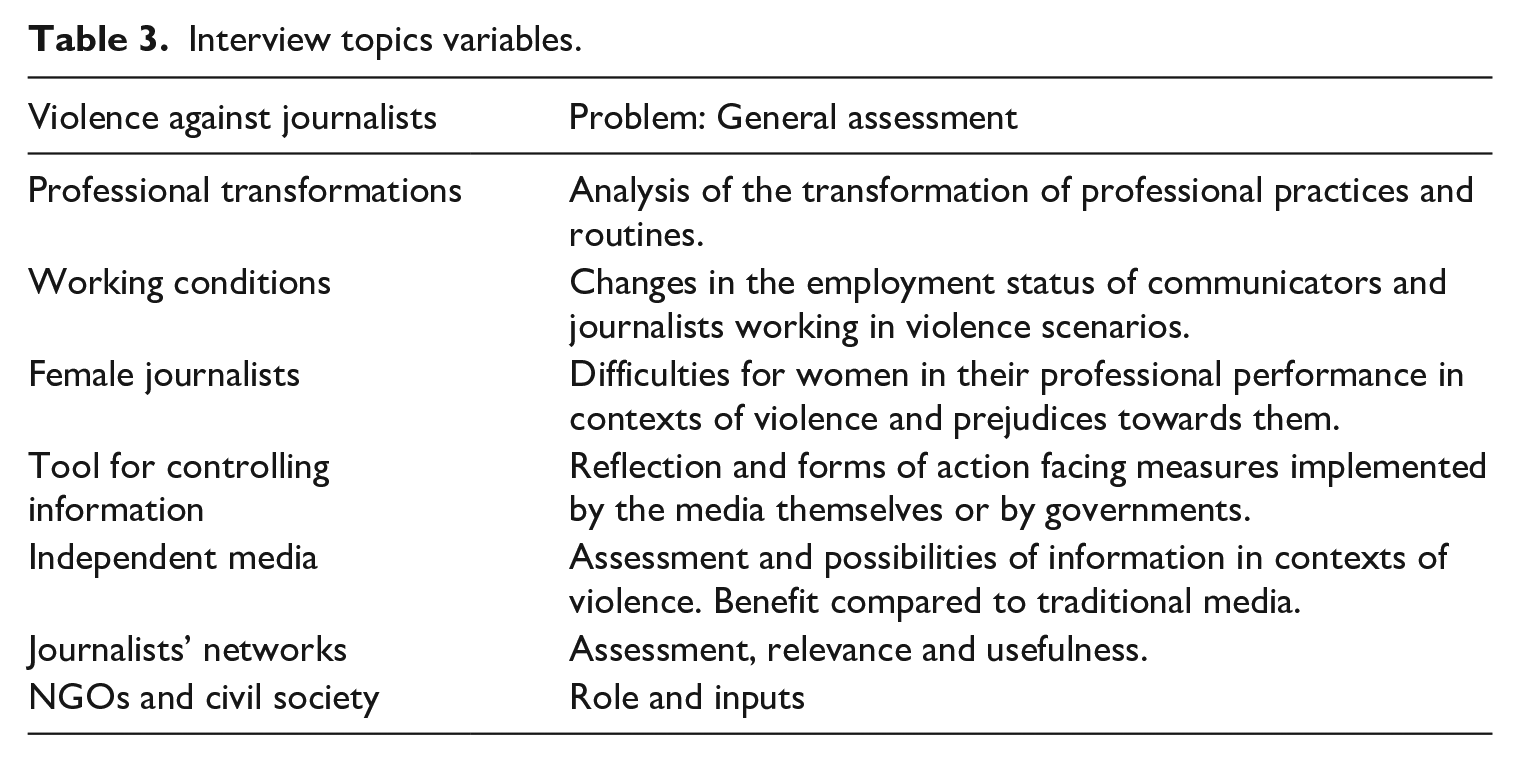
In the first stage or phase, the study gathered the reflections derived from 33 unpublished interviews that have been developed, exclusively, for the preparation of this research article. The interviews were formulated on the basis of a form of questions, both closed and open, designed mainly to encourage qualitative reflection. However, some results have been quantitatively processed to describe the vision of these professionals about the main aspects of their professional practice. The main thematic variables of the interview scripts, consisting of 16 questions, are shown in Table 3.
Interview topics variables.
The interview questionnaire was validated by a panel of experts (N = 10) in the field of journalism. The participants were informed of the study and their consent was requested to participate in it. In the closed questions, no exclusive nominal scales were applied for data collection. In all cases, respondents were offered the possibility of completing the response with a reflection.
In this sense, the predominance of open questions, which enable free writing, has responded to the need to know in detail the points of view of the interviewed journalists, offering them the possibility to expand around each of the issues addressed in the research framework. The process of conducting and processing the interviews took place between January and July 2019.
In the second stage of the study, out of the 33 interviews carried out, the Delphi method was applied with the objective of accessing a stage of greater reflection around the proposed topics. The Delphi method is defined as the structuring of a group communication process that is effective in allowing a group of individuals (conceived as a whole) to deal with a complex problem (Landeta, 1999). Specifically, it is a structured communication technique that, engaging a panel of experts, develops a systematic and dialogical method with a predictive component (Passig, 1997).
This prospective technique allows, from a group communication process, the obtaining of predominantly qualitative information from the continuous work with a group of informants that address a complex problem (Linstone and Turoff, 1975). In relation to this, the research has respected the demands of the Delphi method, which, according to Adler and Ziglio (1996), are specified in the following aspects:
Anonymity (no expert was aware of the identity of the rest of the participants).
Iteration and supervised feedback (participants, after sending several synthesis documents, were able to modify and profile their reflections).
A minimum participation of between 15 and 30 experts.
After the formulation of the problem and the definition of the study objectives, the selection of experts and the respective formation of the panel were carried out, informing them about the objectives of the study, the selection criteria, the calendar of the research and the results and uses expected.
Subsequently, the questionnaires were prepared, sent at different stages or phases (from the preparation of reports and summaries) and the final exploration of the results. In the framework of the work, two shipments were made with their corresponding cross-results. In fact, the 33 in-depth interviews and reports derived from the Delphi method allowed us to compile a set of unpublished reflections of great value for the preparation of a diagnostic analysis, on the one hand, and a predictive approach to the working and safety conditions of journalists in contexts of violence in Latin America and the Caribbean, on the other.
Of course the limited number of our interviewees does not allow us to reach universal conclusions; however, the heterogeneity of the group of journalists interviewed allows us to draw some qualitative conclusions and interesting considerations that might provide the basis for future research.
Results
Violence against journalists is a reality. A large majority, 57.75 percent of the sample considers that violence against journalists and the media is the main problem of current journalism (see Figure 1). However, it is important to note that 42.30 percent (combining those who do not agree, say that it depends on the country or prefer not to respond) believes that this is not the most serious problem of journalism today.
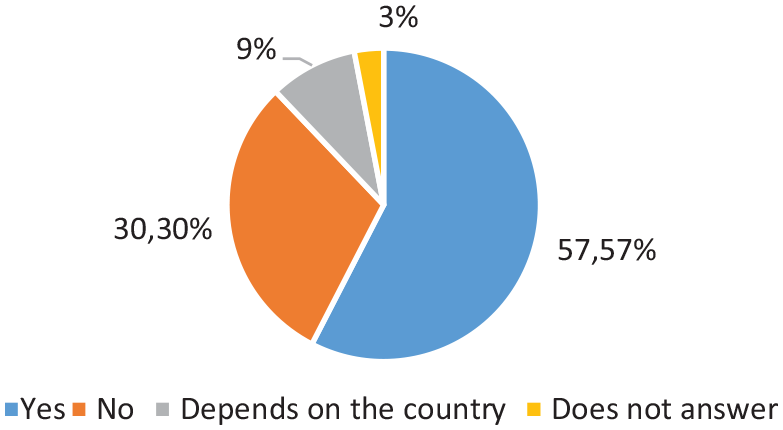
Do you consider violence against journalists and the media (murders, threats or aggressions) the main problem of current journalism?
In this case, the difference between ‘those who return home safely’ and those who live in a context embedded in violence is very clear. All the journalists living in violent contexts agree that violence is the main problem, stressing that violence is accompanied by a total lack of protection and impunity for perpetrators.
Most of them insist that, in their countries, the necessary protection for the union does not exist and therefore they are exposed to the wave of violence. In this aspect, the journalist David Jiménez points out that, in many countries, there is an increase in violence and harassment of the press, legitimized by the impunity of authorities that do not respond as they should and even by politicians who define the journalists as enemies of the people. For Jiménez, who has been a correspondent for 20 years in the Asia-Pacific region, ‘it was never as dangerous to report as in these days in some places’ (EP1).
Nonetheless, among those who do not consider violence to be the main problem – all of whom come from safe places – a majority identified the precariousness of the profession as the major and main problem that the profession is going through and that hinders the development of solvent and quality journalism. War correspondent Plàcid García Planas points out that violence against journalists or the media is not the main problem worldwide. According to García Planas, the main difficulty is the precariousness and bankruptcy of the business model (that is, the economic dependence of great powers that reduces freedom) (EP2).
Freelancer reporter Anna Salva agrees in this regard and points out that ‘the main problem of current journalism is the lack of means that journalists have in general, especially those who are freelance, lack of visas, lack of insurance, lack of income, lack of every type of protection after all’ (EP3).
Along the same lines, reporter Karlos Zurutuza, who specializes in Afghanistan, believes that the main problem is ‘the precariousness of the sector, which is throwing many of us to the gutter. The aggressions against journalists have always been there, they have a greater media impact today’ (EP4).
Only a minority declared that that difficulties in the exercise of journalism depend on geographical areas. Nonetheless, from a qualitative perspective, these answers are particularly interesting since they show a growing knowledge and consciousness about the difference between those journalists who can ‘return home safely’ and those who daily live in violent contexts.
Vicent explains this concept very clearly. In his own words:
In my experience, the journalists who are most at risk are not the international ones, or the ones from the big media or those who live in the big cities. They are local journalists, who have provided information on municipal, judicial and police issues and who have reported cases of contact between the authorities and organized crime groups. These colleagues work for local newspapers, for small radio stations, and finally end up expressing themselves on Facebook or on their web page and are the most vulnerable. The moment they publish something uncomfortable for the local authorities or ‘the bad guys’, they are already blacklisted.
In the same vein, Igor B Barbero, a reporter specializing in coverage in Asia and Africa, considers that:
In contexts of conflict, presence of armed groups and authoritarian and dictatorial regimes it is usually a fundamental and possibly the most important problem, but in other contexts there are more widespread problems that affect the journalist such as the precariousness of the trade and the lack of resources, which result in the precariousness of journalistic content, or the constant political interference, of economic powers and conflicts of interest, which result in bias or manipulation of journalistic content. (EP5)
Moreover, he adds that he would differentiate between two major contexts: countries at war (Syria) versus countries in free fall without declared war (El Salvador). In the case of war, the technological change experienced in the last 15 years has modified many practices but security was already a major axis in the daily routine. In contexts such as Central America, at the micro level, the problem lies in the individual security of the journalist:
Threats, blackmail, assaults, kidnappings, murders . . . which on many occasions generate more or less conscious self-censorship and on some occasions one works with balaclavas (like the police) for fear of reprisals. A journalist who works in a ski mask is a brutal metaphor that explains many things, including the impossibility of connecting with the protagonists of the reality he is narrating or photographing, the enormous distance and distrust that is imposed on a profession that, if anything, should have closeness and trust with the sources.
At a macro level, he adds:
More structural violence is so overwhelming in daily life that the media prioritize coverage of the specific event, the daily bleeding . . . and there is no time, no will or possibility of other types of coverage that seek and point out the causes and those responsible. It is always easier to point to the last link in the chain, the most worn, visible and poor.
Regarding the situation of women journalists who must report from these contexts marked by violence, 23 of the 33 respondents believe that women must face situations marked by greater difficulties and obstacles (see Figure 2).
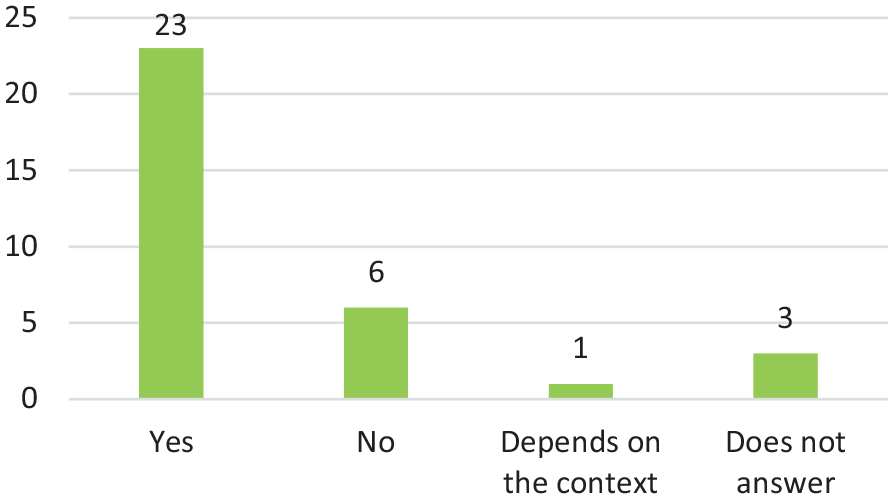
Is coverage in these types of scenarios more complex for women?
The journalist Lali Sandiumenge, who covered the revolts of the first Arab Spring in different countries of North Africa, believes that women must face ‘a type of violence that is not used as a strategy of repression/coercion/intimidation against their colleagues. It is about sexual and sexist violence. In this sense, being a woman implies an added risk’ (EP6).
The female reporter from Nicaragua agrees, adding that women are subject to greater verbal and physical abuse and, in reality, Nicaragua also has the only female journalist imprisoned on the American continent: Lucía Pineda.
However, many respondents point out that being a woman can also be beneficial. Igor Barbero, for example, states:
From my perspective as a man, I think that women have more pronounced vulnerabilities in some contexts in terms of sexual violence or abuse, although it is also true that women tend to have easier access to other women in contexts where religious rigorism, very conservative cultural practices and gender segregation prevail.
Ana Salva believes that ‘the advantage is that we have a female world open to us where men sometimes cannot access it, offering another perspective to the information. It is necessary that in journalism there are male and female voices, as well as male and female journalists.’
The majority of the interviewees (17 of 33) consider that the independent media are trained to inform better in contexts marked by violence (see Figure 3). It is striking that nine of the interviewees indicate that this type of media cannot improve reporting in these types of scenarios, an aspect that invites us to reflect on the conception that this type of media possesses and the existence of certain prejudices around their philosophy and methodology of work.

Do you think that independent media can inform better in contexts of violence?
However, the most widespread vision is of these media having more advantages in the journalistic coverage of contexts of violence. In this regard, the reporter Lali Sandiumenge points out that:
In general, independent media can better inform everything, provided they have sufficient resources to do so. Many are driven by journalists, believe in the social value of information, have no profit motive and are financed in alternative ways to guarantee their independence and avoid the influence of pressure groups. The problem often derives from the precarious employment of many journalists and the lack of protection by the media (life insurance, legal defence, etc.). In many cases, in addition, the person reporting is a freelancer, the most vulnerable professional modality and the one with the least support and protection measures. (EP6)
The journalist and founder of the journal 5W cybermedia and winner of the 2019 Ortega y Gasset Prize, Agus Morales, clarifies that:
Some independent so-called media fall into the error of reproducing the traditional media coverage model: in my opinion it is a mistake, because it means play something you don’t know how to play, or at least play something that others are better at. But there are independent media that make a different bet and focus on giving added value. (EP7)
Along these lines, David Jiménez points out that ‘generally, they have more freedom to report, but less means’. If they have these, they can report with less ties and develop less conditioned work’ (EP1). For his part, Karlos Zurutuza argues that independent media ‘have journalists who cannot fight in the field of breaking with the big agencies, but cover stories that provide context and face victims and executioners’ (EP4). Moreover, Pere Ortin introduces an interesting nuance by pointing out that:
It is not about coverage, but about ways of looking: the important thing, always, is what to look at and how to look at the issues of reality that we consider relevant as journalists. It is not about confronting traditional media vs independent media, but to claim both of them. (EP8)
Reporter and documentary filmmaker, Paty Godoy, believes that:
In relation to the coverage of violence and drug trafficking, the media and independent journalists in Mexico have focused more attention on following the stories of victims of violence, that is, they have given coverage and follow-up on the cases of the mothers of the disappeared, the stories of abuse and arbitrariness exercised by the police forces, the stories of the villages abandoned by the pressure of violence; to the stories of broken families, which, one by one, add up and create an immense photograph of a country broken by violence. On the other hand, for years, the traditional media have focused more attention on counting the dead and publishing statements by politicians and not so much on explaining causes and consequences of the so-called ‘war on drug trafficking’ that has only left death and destruction in the country. (EP9)
In the same vein, the Mexican journalist who decided to remain anonymous declares that in his own context there is no actual difference, since ‘Narcos have set up an efficient system to monitor the news that affects them and they have it in their traditional and independent media.’
Finally, the journalist Joseph Zarate considers that:
Independent media have greater scope for action. Unlike traditional media, they take risks and independence to investigate what those who exercise political and economic power do not want the public to know. A much freer coverage, independent, hardworking, creative, very connected with their audiences, but also limited because the resources they have many times are lower. (EP10)
Regarding the importance of networks of journalists to combat information bias, virtually all respondents (87.87%) consider that these types of organizations are decisive and their contribution is of great journalistic value (see Figure 4). There are, especially in the Latin American context, different networks whose prominence and value are decisive in the journalistic exercise of professionals working on stage marked by violence (in their different meanings and modalities).
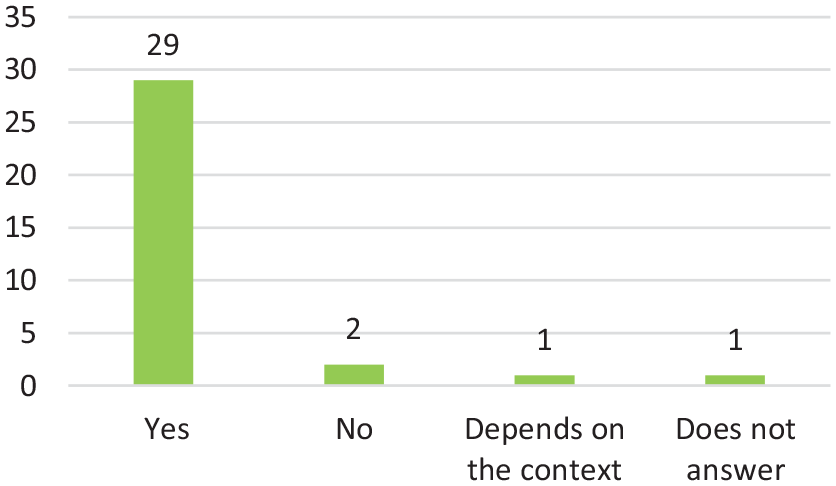
Do you consider networks of journalists necessary and useful against informational bias?
Together with the networks of journalists, the vision regarding the role of NGOs and civil organizations raises an interesting debate among the interviewees. Journalists and media managers such as David Jiménez believe that these types of entities ‘should be left out in terms of coverage, so as not to compromise the independence of the media, but they can be of help in education, the reinforcement of civil society and the defence of press freedom’ (EP1).
For her part, the reporter Heidi Marcela Castillo emphasizes that many professionals do not know where to turn for defence against any type of threat, extortion or violent attitude towards them. Meanwhile, Igor B Barbero states that:
In contexts with open conflicts or hermetic regimes in which sometimes violence has also undermined development and there are few infrastructures and great logistical challenges to move, journalists find it very complicated to make an adequate coverage, secure, independently and with their own means. Access to hot or volatile areas in these contexts is sometimes almost only possible with the support of NGOs or other organizations. The figure of the journalist is also essential for NGOs because often in these areas where they carry out humanitarian or other operations, public communication is very controlled by the authorities and leads to a great limitation of the message by the NGOs so as not to lose these operations and access to the population, while the journalist, with all his difficulties, can report with greater independence. (EP5)
The Spanish reporter based in Bolivia, Alex Ayala, warns of the risk of turning journalists into activists.
On the other hand, Joseph Zarate, awarded the Ortega y Gasset journalism award, points out that both NGOs and civil entities
should fulfill a role of accompanying and being attentive to what happens to feeling citizens. Journalism, when practised with responsibility and ethics, helps build a better democracy. In that sense, I think that NGOs and other civil organizations can collaborate on that goal because of their link with citizens. (EP10)
A total of 20 of the 33 journalists interviewed consider that there are means of informative control by the media that must make coverage in areas marked by violence (see Figure 5). Likewise, 25 of the 33 respondents indicate that there are currently control measures deployed by governments in relation to journalistic coverage of issues related to violence in their different modalities or typologies (see Figure 6).

Is there any information control by the media industry?
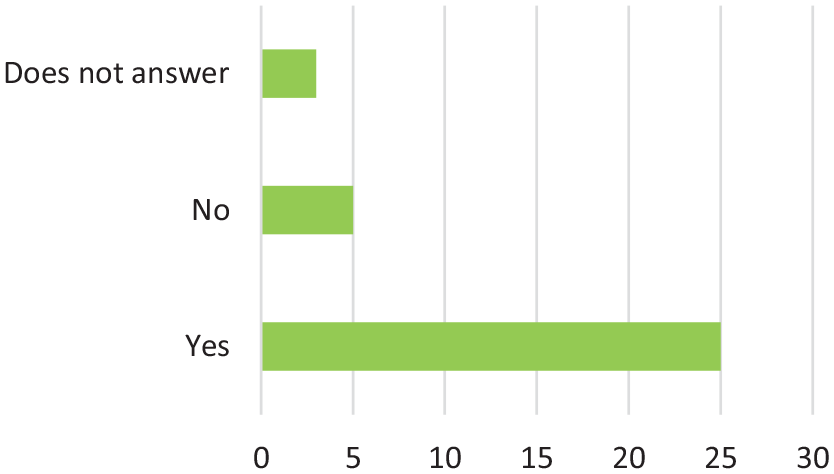
Is there any information control by governments?
Interestingly, most of the respondents see political interference as present in every context. In the words of Agus Morales:
In the 21st century, governments around the world have launched a campaign to cover up their embarrassments and prevent, sometimes by all means, journalists from working in the territory under their control. Censorship and persecution no longer have any masks and are restricting freedom of expression in more and more countries. (EP7)
In addition, several journalists warn about the dangerous connivance between political and economical powers. The former correspondent of Spain Radio Television (RTVE), Rosa María Calaf, points out that ‘there is currently a perverse tendency towards promiscuity among economic, political and media powers, which conditions good journalistic practice that, too often, is subject to interests far from the common good’ (EP11).
Jesus Pastor adds that ‘the line that separates media from their business groups, and these groups from the political parties that govern is too blurred to be able to assess who implements what measures.’
Conclusions
The limitation of our dataset does not allow us to reach universal conclusions; however, we can draw some interesting considerations that might provide the basis for future research.
First, even if the majority of the respondents agree that violence against journalists is the most important problem, journalists who live in safe places and only travel to violent zones tend to underline the precarious conditions more than violence itself.
As for the situation of female journalists, it is very interesting to point out that, even though most professionals acknowledge the ‘extra-risk’ involved in being a woman, some of them pointed out the importance and the opportunities that female journalists have by being able to enter women-only circles, specifically in particular contexts such as Muslim countries. In this sense, future research should be geared towards deepening this sort of ‘female benefit’, not only focusing on specific contexts, but extending it to all contexts, underlining the possibility of a gendered approach to violent context.
In addition, paraphrasing one of the interviewee’s answers, there is a growing recognition that the most endangered journalists nowadays are not international journalists working for ‘big media’, rather freelancers and especially local journalists who are forced to report about cases of contact between the authorities and organized crime groups. This result suggests, on the one hand, that more in-depth research is needed to explore the working conditions of professionals working in ‘insecure democracies’ (Hughes et al., 2017), together with the need for more investigation into those who work with journalists without being journalists (fixers, support teams, etc.) and, on the other hand, it raises the issue of the growing precariousness of the journalistic profession.
It is therefore important to highlight that the socioeconomic situation of media companies, conditioned by technical–technological acceleration, has contributed to re-signifying the traditional situation of journalists and their working environment. In addition, the combination of explicit violence and job insecurity forms a mixture that has weakened the professional performance of journalism not only in the most peripheral regions of the world.
In the same vein, there is a growing preoccupation about the growing ‘promiscuity among economic, political and media powers’ and governmental control over information, not just in conflict zones but worldwide. Accordingly, journalists tend to assess independent media very positively. In this scenario, journalists are aware of the important value of the network of organizations formed to defend their profession and the working of global efforts in a kind of activism that promotes the defence of their rights, as well as the claim of their demands. Future research should focus on this network of mutual help and discover how these organizations can improve journalists’ jobs and recommend best practices.
In conclusion, the situation of journalists facing the coverage of contexts marked by violence demands actions that range from legal components to the training of future professionals, as much research has already pointed out (Tejedor et al., 2020).
Footnotes
Funding
The authors received no financial support for the research, authorship and publication of this article, and there is no conflict of interest.

Author biographies
Address: Autonomous University of Barcelona, Edifici I, Campus de Bellaterra, Bellaterra, Catalonia 08193, Spain.
Email:
Address: Autonomous University of Barcelona, Edifici I, Campus de Bellaterra, Bellaterra, Catalonia 08193, Spain.
Email:
Address: Technical University of Machala, Loja Street, 25 June Avenue, Machala, El Oro 070201, Ecuador.
Email: