



Abstract
Frédéric Boissonnas’ album, Salonique et ses basiliques, captures the city at a very precise moment in its history. The album’s photographs were taken between 1912 and 1913, that is, just at the end of the Ottoman and the beginning of Greek rule, but before the great fire of 1917 that destroyed the city centre, removing virtually all traces of the Turkish and Jewish quarters. The album also predates the forced exchange of Muslim and Christian populations in 1923 that finally brought the transculturalism of the city to an abrupt end. Through a close reading of Boissonnas’ photographs, within the theoretical framework of past transnationalistic and present-day transcultural memories, this article argues that political and ideological allegiances directed the creation, dissemination and consumption of an artistic product. The article concludes with a reflection on the city’s return to its transcultural roots.
The French-Swiss photographer Frédéric (Fred) Boissonnas’ (1919) photograph album, Salonique et ses basiliques (Salonica and its Basilicas; 1912–1913), captures Salonica, today’s Thessaloniki, at a very precise moment in its history, on the cusp of momentous political and physical upheaval that would alter the city forever. 1 In setting this photographic survey within its historical, political, ideological and aesthetic contexts, this analysis will engage with the role of Boissonnas’ photographs and their paratexts (introductory text, captions, visual iconography) in the construction of a specifically European-Christian Greek identity and heritage in line with nationalist interests. Aleida Assmann (2004) states that while ‘individual and social memory cling to and abide with human beings and their embodied interaction; political and cultural memory [. . .] are based on the more durable carriers of symbols and material representations’ (p. 25). Thus, nations ‘do not “have” a memory, they “make” one for themselves with the aid of memorial signs such as symbols, texts, images, rites, ceremonies, places and monuments. Together with such a memory [they] “construct” an identity’ (Assmann, 2004: 26). Political memory, she goes on to say, is ‘emplotted in a narrative that is emotionally charged and conveys a clear and invigorating message’ which can be transmitted from generation to generation, with only those references to the past that strengthen a positive self-image and which support specific goals for the future being selected (Assmann, 2004: 26. See also Nietzsche, 1996: 39 on ‘active forgetting’ and the ‘usefulness’ of history, and Maurice Halbwachs, 1997 [1925]: 141–142). As Zygmunt Baumann (1991: 64) also posits, nations ‘do their best to discredit or suppress such stubborn memories as cannot be squeezed into shared traditions – now redefined in state-appropriate quasi-legal terms, as “our national heritage”’.
In the case of Boissonnas’ Salonique et ses basiliques album, the intended contemporary audience consisted of the Christian Greeks living throughout the Ottoman Empire but also, importantly, the Western Allies attending the World War I Paris Peace Conference of 1919. While other commentators have already highlighted the fact that Boissonnas’ project in photographing Greece was a propagandist one on behalf of the Greek state, this study will go further in examining Salonique et ses basiliques as a memorialist text that was specifically designed to travel ‘transnationalistically’ to further Greece’s irredentist agenda. As such, it will be seen that Salonica’s majority Jewish population had no place within Boissonnas’ photographic frame. While Ottoman Salonica could be termed a transcultural city, 2 with Jewish, Muslim and Christian populations having lived together and shaped the cityscape since the Ottoman conquest of the city in 1430, Boissonnas’ photographic intervention could in contrast be called ‘transnationalistic’, to coin a term. Transnationalistic memories are specifically garnered and (re)constructed by a given State and/or and its supporters to promote a particular image of the nation not just to its own people, but also within greater transnational formations.
Boissonnas’ own ‘Greek origins’ and support for the ‘Great Idea’
To begin with, it is important to note why Boissonnas felt so strongly about promoting Greece to the wider world and why he was even prepared to invest his own money in support of the Greek State’s aims. First, Boissonnas believed that he himself was descended from the Ancient Greeks who colonized the area of southern France near the River Rhone, and therefore his passion for Greece and his desire to get to know the country can be interpreted as a search for his own roots and identity (Vingopoulou, n.d.). Indeed, Ancient Greek tradition has it that Rhodians (from the island of Rhodes) gave the name Rodanos to what is now known as the Rhone River. Boissonnas may also have been aware, as archaeologists have long known, that the first residents of France’s oldest city, Marseille (Massalia in Greek), were Greeks who founded the city in 600 BCE. Massalia became the most important Greek colony in Western Europe. The city’s inhabitants came specifically from the ancient tribe of Phocaea, an ancient Ionian Greek city on the western coast of Anatolia. More recent archaeological findings from the Mycenaean period put the Greek presence in southern France even earlier, in 1600–1100 BCE (Gunstone, 2013; Kokkinidis, 2017; Tsatsou, 2012). Given his keen personal interest in Greece and his photographic project, which included Smyrna (today’s Izmir) as part of his L’Image de la Grèce (The Image of Greece) series (Wilson, 2019), Boissonnas would no doubt have also been acutely aware that the predominantly Greek population of the coastal town of Phocaea, north of Smyrna had been massacred by irregular Turkish troops in 1914.
Second, Boissonnas soon came to the attention of the Greek authorities following his first visit to the country in 1903, when he published a number of high-quality and expensive photographic albums of the Parthenon and other ancient Hellenic monuments in the Pictorialist tradition. He built up a close relationship with members of the Greek government and, in 1904, during an exhibition held in Savoy (France), Boissonnas was introduced to King George I of Greece (ruled 1863–1913) who later, along with his family, posed for the photographer in his Paris studio (Sohier and Crispini, 2013: 49). In total, Boissonnas published 14 albums on Greek subjects and during the inter-war years his photographs were to contribute greatly to the vision that Europe formed of Greece. For he was arguably the first photographer to turn his attention to the entire country, thereby expanding the Greek geographical and photographic horizon beyond a strictly Hellenist vision (Papaioannou, 2013: 149).
As a result of his influential connections and his evident love of Greece, Boissonnas was awarded a contract in 1919 for 60,000 Swiss Francs by the Greek Prime Minister, Eleftherios Venizelos, to produce a series of albums of the newly acquired Greek regions following the two Balkan Wars of 1912 and 1913, with an accompanying major exhibition in Paris of some 550 photographs, the intention of which was to promote Greek nationalist interests at the 1919 Paris Peace Conference (Papaioannou, 2013: 148–149). That same year, Venizelos also commissioned a further exhibition and albums on the subject of the ‘New Lands’, but his removal from office after the 1920 elections, put paid to these plans and, following the Greek military defeat against the Ottoman Empire in 1921, the Greek government was unable to honour the agreement with Boissonnas.
However, the photographer, as an ardent supporter of Greek nationalism, and by now having his own publishing company, forged ahead of his own volition, producing a photographic survey of the territories – Salonica and Macedonia, the Aegean islands, Epirus and Crete – that had recently been wrested from the Ottoman Empire during the Balkan Wars and incorporated into the Greek state. 3 This substantial number of photographs, taken between 1913 and 1920, eventually formed the series of albums entitled L’Image de la Grèce, collectively recording the landscapes, peoples, folk customs, and ancient and historic buildings of Greece. As part of this series, Salonique et ses basiliques comprises photographs taken in 1912, the year Greece took control of the city, and 1913, but the album was not published until 1919 (Figure 1). Other albums in the series are Smyrne (1919), Athènes moderne (1920), Athènes ancienne (1921), La Macédonie occidentale (1921) and L’Epire, berceau des Grecs (1914, reprinted in 1915 and 1920).
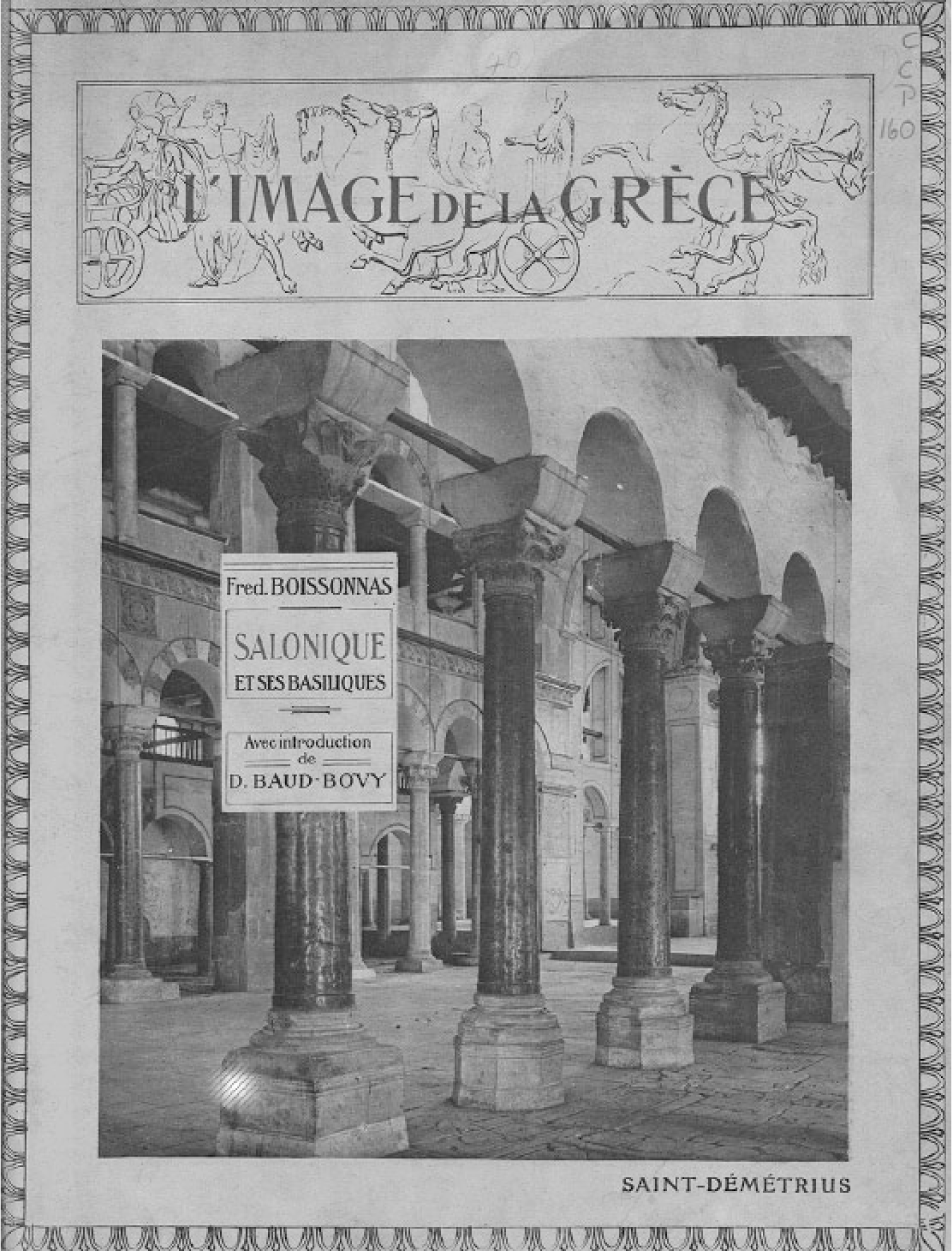
Front cover, Fred. Boissonnas, Salonique et ses Basiliques (Courtesy of the Warburg Institute, London).
While there is not the space in this short study to explain the historical background to the production of these albums in detail, it may prove helpful, briefly, to mention some of the key events that inspired them. On 18 October 1912, Greece, Serbia and Bulgaria all declared war on the Ottoman Empire. In November 1912, the Greeks captured Salonica a few hours ahead of the Bulgarians, who also had their eye on this important Mediterranean port (Clogg, 2002: 79). In June 1913, Greece concluded a treaty with Serbia in which both parties agreed to divide Macedonia between them at the expense of Bulgaria, resulting in the Second Balkan War (Mazower, 2000: 12–13). Greece’s overall territorial gains added about 70% to her territory, and the population increased from approximately 2.8 million to 4.8 million (Clogg, 2002: 81). Thus, by the summer of 1913, Greece had become a significant Mediterranean power (Clogg, 2002: 83). By 1915, as part of the irredentist ‘Great Idea’ (Megali Idea) to recreate a Byzantine empire, Greece was setting her sights even further, on the acquisition of territorial concessions on the coast of Asia Minor, including Smyrna and eventually Constantinople. 4
At the 1919 Paris Peace Conference, Greece, which had supported the Allies during World War I, saw an opportunity to gain international support for its ambitions and sought to distinguish itself from the rest of the Balkan region which was so keenly associated in the Western mind with violence. This was a perception made more acute by the events of the Second Balkan War (1913) when the victorious Balkan States, including Greece, had turned so brutally on each other. With his photographs, Boissonnas aimed to counter any criticism of Greece and thus ensured that the planned Paris exhibition and accompanying lectures went ahead in February–March 1919. In 1921, he wrote to the Ministry of Foreign Affairs in Athens pledging his support and recommending that copies of his albums on Epirus, Macedonia, Salonica and Smyrna be sent to all the illustrated newspapers across the world under the auspices of the French press agency, L’Argus de la presse (Sohier and Crispini, 2013: 52–53, and 53 n. 130). In all, 100 copies of Salonique et ses basiliques were initially produced, containing 40 heliogravures with captions and an introduction by the Swiss art historian Daniel Baud-Bovy. Boissonnas’ L’Image de la Grèce albums were published in French, English, and German for maximum distribution and, by means of L’Argus, reached c. 46,000 subscribers worldwide, including governments and imperial and royal courts (Dänzer-Kantof and Nanot, 2000: 73).
Photographic forgetting: Boissonnas’ selective representation of Salonica
In 1912, Ottoman Salonica became Greek Thessaloniki. However, while the city was home to a large number of Greek Christians as well as Turkish Muslims, along with an array of other ethnic groups and denominations including Bulgarians and Armenians, more than half the population were Jews, descendants of the Sephardi Jews who had been offered refuge by the Ottoman Empire when they were expelled from Spain and Portugal by the Inquisition in 1492. According to Richard Clogg (2002: 129), they worshipped in over 30 different synagogues in the city, while Kostas Theologou and Panayotis Michaelides (2010) claim that ‘from the sixteenth century to the fire of 1917 there were approximately 100 synagogues and bethels’ in the city (p. 315). By 1908, there were 48 Jewish schools. Over the centuries, the Sephardi Jews and small communities of Romaniot Jews, whose roots in the country went back to antiquity (Clogg, 2002: 129), were joined by Jews from other parts of Europe and collectively they formed part of every social stratum, from bankers and industrialists to porters and shoeshine boys. In fact, so Jewish was Salonica in this period, that it earned the soubriquet, ‘the Jerusalem of the Balkans’ (Theologou and Michaelides, 2010: 307). However, as we shall see, the Salonica presented to the world by Boissonnas, with its focus primarily on the city’s Byzantine-Christian treasures, obliterates the memory of this very active and prominent section of the population. Boissonnas was not alone in his omission. A similar photographic survey produced between 1912 and 1917 by the Greek architectural historian Aristotelis Zachos, also excludes any images of Jews or Jewish buildings and focuses primarily on Salonica’s Byzantine heritage (Benaki Museum, 2002). By contrast, the French photographer Léon Busy did produce autochrome images of Salonica’s Jews and other ethnic and religious groups in 1913 and 1918 (Musée Albert Kahn, 2000: 10, 20).
Like the Byzantine Empire before it, which saw itself as the heir to the Roman Empire of the East, the new Greek State similarly sought to create an identity by drawing on its Classical Greek cultural heritage and Greek Orthodox roots (Haldon, 2005: 252–253). The hallmarks of Byzantine-Greek culture were the Greek language, as spoken by the dominant elite, and a political ideology founded on an identification with the Christian Roman Empire of Constantine the Great. Not for nothing did the early Byzantines call themselves Romanaioi (Romans) before later referring to themselves as Hellenes (Greeks) (Haldon, 2005: 11, 252). Greek historiography has thus, until relatively recently, elided the fact that Salonica had been a Jewish city in 1912 and failed to produce a history of its Jewish past (Avdela, 2014; Theologou and Michaelides, 2010). As Edhem Eldem (2014) concludes, ‘while the Greeks had conquered the city and were redesigning its future, the Turks had lost it and had only its past left to reinvent’ (p. 432). Thus, neither the Greek nor Turkish nationalist narrative left room for the Jews.
If Boissonnas’ album omits to show the Jewish presence in Salonica, it does, however, include images of the city’s Muslim population. This is not as strange as at it may first appear as Venizelos’ initial policy after 1912 was to maintain good relations with the Turks for fear of reprisals against any Greek Christians still living in Ottoman lands. He calculated that he would succeed only if ‘we are not even subconsciously inclined to avenge our sufferings at the hands of the Turks’ and that, ‘we know how to treat them because we are the carriers of a higher civilisation’ (cited in Milton, 2008: 162, my emphasis). As an example of this policy, and as Baud-Bovy notes in his introduction, after the Greeks had taken Salonica, they let the city’s ‘Turkish’ (i.e. Muslim, as not all of Salonica’s Muslims were ethnically Turkish) peasants shelter under the cupola of St Sophia, in the naves of St Demetrius, and in various school buildings, and they urged the Cretan soldiers who helped liberate the city to maintain order.
The album is therefore of special interest because it predates the Greek defeat in the war against Turkey to regain Smyrna and Constantinople in 1921–1922, and the subsequent forced population exchange between Greece and Turkey in 1923, which resulted in the influx of 100,000 refugee Christians from Asia Minor, and after which the Jews of Salonica were no longer a secure majority (Loizos, 1999: 252; Mazower, 2000: 102). The photographs also predate the devastating fire of 1917, which destroyed large sections of the city, including the central, predominantly Jewish quarter (which does not appear at all in the album), and damaged some of the basilicas Boissonnas had photographed in 1912–1913. Following the reconstruction of the city after 1917, there was the opportunity to Hellenize Salonica which, up until that point, was not recognizable as a ‘typical’ Greek city. For while the lower town had been modernized in a Western-European style, the upper town remained traditionally Ottoman in appearance, with its ancient wells and narrow streets and alleyways of multi-coloured houses with wooden gable windows, Islamic grilles and shutters.
Venizelos is said to have welcomed the 1917 fire ‘almost as a gift of divine providence’, for it provided him with an excellent opportunity to push through what he considered to be much-needed aesthetic and hygienic improvements in the city (Mazower, 2005: 324). It was felt necessary to appropriate central districts from the Jewish community, though in fact the city divided much more along class rather than religious or ethnic lines, and there were no ghettos (Bugatti, 2013: 507–508). The new administrative centre of neo-Hellenic Salonica was thus located in what had been the Ottoman-era Jewish quarter, the last traces of which were eradicated to create a city deemed worthy of the progressive and modern nation Greece wished to become (Mazower, 2005: 324). Today, not even the outlines of the old, notoriously squalid streets can be traced beneath ‘the glitzy tree-lined shopping avenues that have replaced them’ (Mazower, 2005: 57).
The Boissonnas album, like many others of the period representing ancient cities, focuses on architectural and archaeological sites, scenes of ‘local colour’ in acceptably photogenic backstreets, and the ramshackle dwellings hugging the heights around the ramparts outside the city to the west, all of which represented a fast disappearing way of life. The album ignores Salonica’s modern commercial districts with their wide affluent streets lined with large mansions, many of them owned by Jews or Dönmeh (Jews who had converted to Islam in the seventeenth century) (Molho and Hastaoglou-Martinidis, 2009). Boissonnas’ photographs, in spite of, or because of their omissions, raise issues that still resonate in the region today as Greek Christian Thessaloniki finally acknowledges its Jewish and Ottoman past.
Picturing Greek-Christian-European Salonica
Boissonnas was accompanied in Greece by his long-term collaborator Daniel Baud-Bovy who authored the introduction to Salonique et ses basiliques, entitled Salonique la ville des belles églises (Salonica, City of Beautiful Churches). Such an introductory piece by an appropriate ‘expert’ in the field or eminent writer, was considered mandatory then, and often still today, to provide both an endorsement of the photographer’s art and ‘an authenticating background or polemical foundation for the images themselves’ (Scott, 1999: 84). Further endorsement legitimizing Boissonnas’ endeavour is evidenced by the album’s dedication to the Strasbourg-born French Byzantist and archaeologist, Charles Diehl. Baud-Bovy duly references Diehl et al.’s (1918) richly illustrated volume Les Monuments chrétiens de Salonique which, in contrast to Boissonnas’ album, contains a number of photographs of the Basilica of St Demetrius after its near total destruction by the 1917 conflagration.
Like the other albums in the L’Image de la Grèce series, Salonique is decorated on the front cover and on the first page of the introduction with a motif inspired by the friezes on the Parthenon in Athens. For example, a horseman with a flowing cape appears to be a line drawing copy of the photograph to be found in another album in the series, Athènes ancienne (Boissonnas, 1921: plate 15), while the central figure resembles Athena in her chariot, thereby referencing ancient and modern Greece, both of which adopted Athena as their symbol. In keeping with the Classical Greek iconography, at the end of Baud-Bovy’s introduction is another motif, a centaur, which similarly recurs throughout the series of albums. Centaurs are usually read as negative symbols, representing chaos and violence. However, it is likely the image is of Chiron, the wisest of the centaurs, who was revered by the Greeks and known as a teacher and father-figure to Achilles. Chiron, half-man, half-beast, his arms outstretched holding his lyre, thus suggests an optimistic outlook for the fledgling Greek state. Chiron represents the positive fusion of Man’s dual nature, the animal and the spiritual, and the use of this particular motif can be read as an indication of how far Greek nationalism was set on underlining its association with the Classical-Greek-Western-European-Judeo-Christian continuum. The album’s ‘packaging’, therefore, consisting of Classical Greek iconography alongside the Basilica of St Demetrius, Salonica’s patron saint, on the front cover, creates the entry paratext that would have carried the contemporary intended reader into the photographs and their captions, providing the necessary ideological and aesthetic frame through which to read and interpret them.
The 40 photographs that make up the Salonique album follow a conventional sequencing common to most photobooks depicting port cities (then and often still now), beginning with an image of the approach to the city by sea. The caption makes the point that the photograph was taken on 26 October 1912, the day the city was delivered from the Turks. Next, Boissonnas has included an image of Mount Olympus from across the Saronic Bay, thereby also adding a solid geographical as well as mythological-spiritual-cultural claim to the city’s Greekness.
Thereafter the album follows a broadly chronological structure beginning with the Roman part of the city, the northern city walls and the Citadel with its ancient crumbling ‘Turkish’ cemetery (again, more accurately, this should read Muslim cemetery). In addition to the architectural shots, we have some images of the inhabitants of the citadel and its surroundings.
There are Muslims with the Citadel in the background in the top right-hand image of Plate 11 (Figure 2), while the adjacent top left-hand photograph depicts the Pappara Mosque and its minaret. In the bottom-right corner image, we see some young Greek Christian girls (identified by their dress) with the Rotunda of St George at the foot of the Ottoman alleyway. Completing the images comprising Plate 11 (Figure 2) is a shot of another street in the old town with a well in the foreground and a crowd of people of different ethnicities going about their business in the background. Elsewhere in the album we also find a group of gypsies, for whom Boissonnas had a voyeuristic fascination, taking little account of their wretchedness and grinding poverty (Bouvier, 1983: 66).
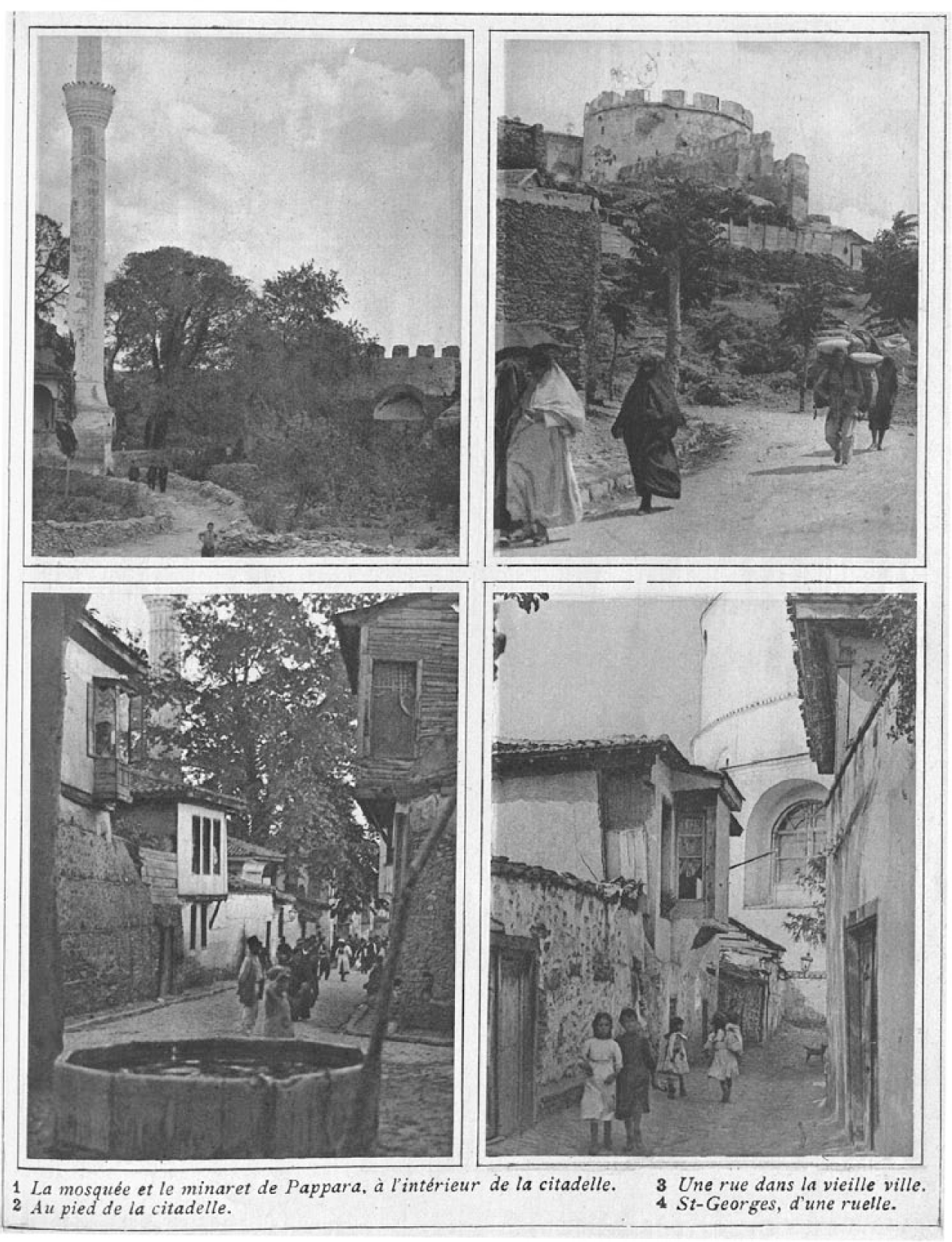
Plate 11, Fred. Boissonnas, Salonique et ses Basiliques (Courtesy of the Warburg Institute, London).
Next to feature in the album is the city’s Roman heritage in the form of the Galerius Arch located within the city centre, followed by Salonica’s principal basilicas, including the fourteenth-century Church of the Holy Apostles and several shots of the Church of St George, which began life as a Roman Rotunda. The first of these, Plate 13 (Figure 3), depicts the western entrance and, in line with Pictorialist conventions, Boissonnas uses the contrast between bright sunshine and shade to create a dramatic chiaroscuro effect. The three figures in the foreground appear perfectly posed in this narrow Ottoman street with its open drain, distinctive wooden balcony on the left and, in the background outside the Rotunda itself, an Islamic fountain and a man in a fez, adding further interest and local colour. The caption tells us that the Rotunda is in the Kalamaria Kapoussi quarter, which the Turks had renamed Ortadji Effendi, after the Dervish who had converted the church into a mosque. However, the now reclaimed Romano-Byzantine Rotunda, the Greek figures in the foreground (again identified by their clothes), and the prominent inclusion of the large Greek flag to the side of the Ottoman balcony, leave us in no doubt that this contested space is now firmly Orthodox Christian and Greek in support of the irredentist cause. The national flag symbolizing ‘the sacred character of the nation’ calls attention to itself and acts as a reminder that mere background space has been turned into homeland space (Billig, 1995: 39, 41, 43). By comparison, in Auguste Léon’s 1913 photograph of a similar street leading to the Rotunda, it is only just possible to discern a Greek flag mounted on the Rotunda’s spire, if indeed the viewer knows to seek it out (Musée Albert Kahn, 2000: 31), unlike the bold emblem displayed in Boissonnas’ photograph.
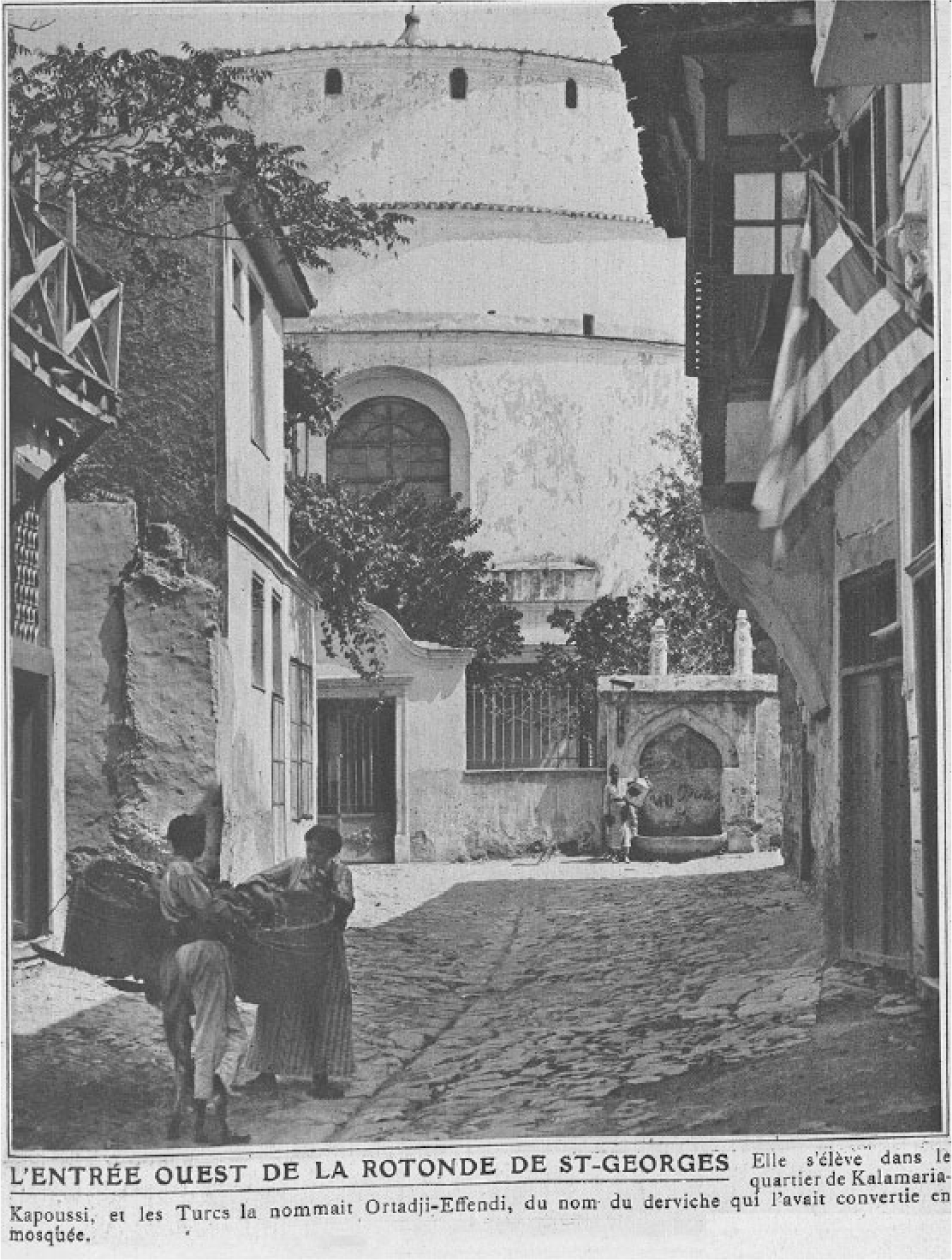
Plate 13, Fred. Boissonnas, Salonique et ses Basiliques (Courtesy of the Warburg Institute, London).
For any Greek, Boissonnas’ images are therefore loaded with cultural and nationalist markers. Salonica’s Byzantine basilicas, converted into mosques by the Turks and back again into churches after 1912, can be seen as symbolic of Greece’s struggle, resistance and ultimate victory against the Ottomans, and a means by which to obtain membership of the ‘European club’, deemed so necessary in 1919 if Greece was to achieve her expansionist ambitions. As Mazower (2000) explains, ‘nationalist passions and anxieties are [. . .] expressions of the effort to produce the kind of historical pedigree once – if not still – required by Europe itself’ (p. 15). Despite the inclusion of Muslims (erroneously always designated as ‘Turks’) in Boissonnas’ album, it is Byzantium, that ‘bastion of Christianity against Islam’, that is foregrounded, the ‘uncivilized’ Turks being perceived as having ushered in ‘a new Dark Ages for the region’ (Haldon, 2005: 254). As a consequence, according to Mazower (2000), ‘Greek historians and preservationists are much more likely to work on ancient, Byzantine or modern history than on the Ottoman period’ (p. 14).
The captions accompanying the interior shots of St George’s that follow, go on to point out the mosaics in the alcoves and above the windows but make no mention of the Islamic script giving the names of the caliphs that is clearly visible on the archway ceiling in, for example, Plate 15 (Figure 4).
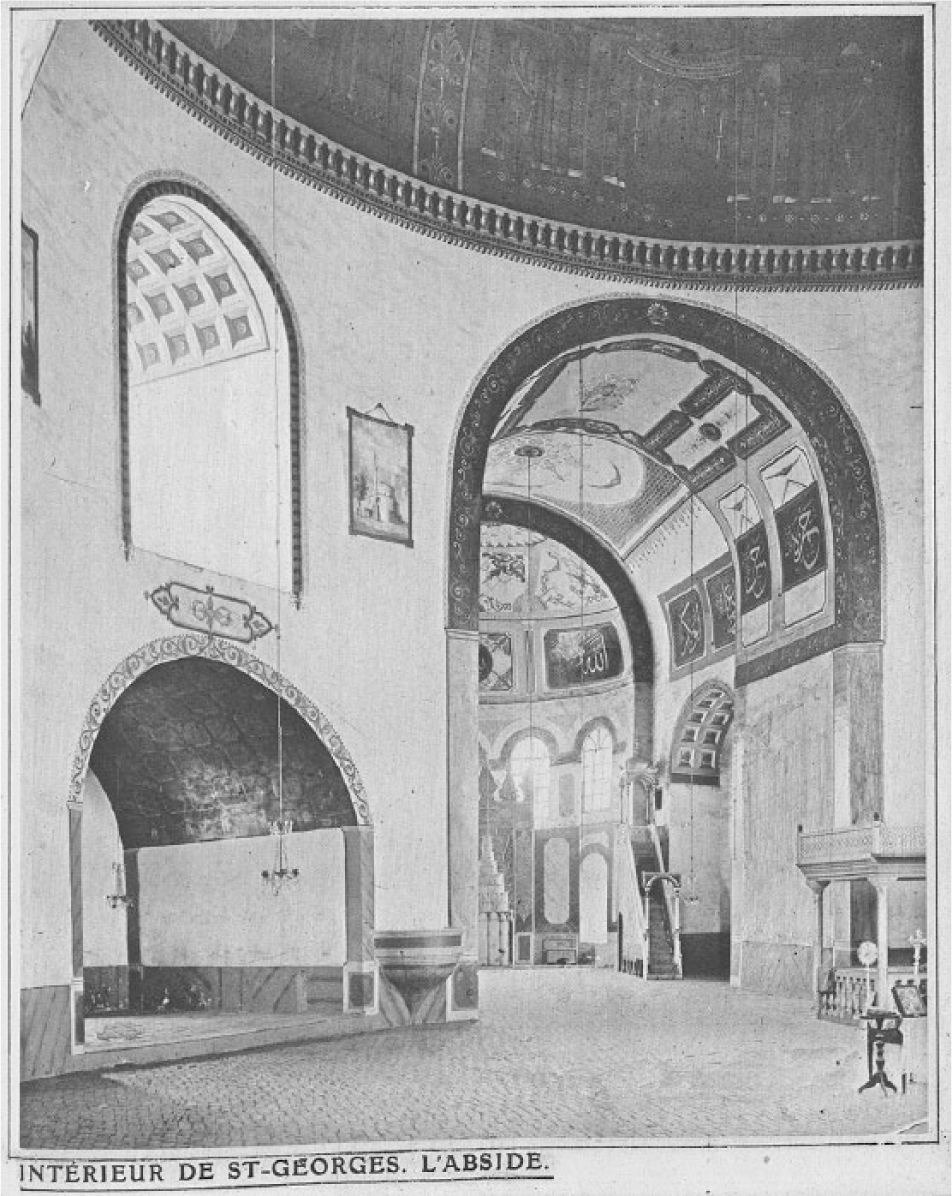
Plate 15, Fred. Boissonnas, Salonique et ses Basiliques (Courtesy of the Warburg Institute, London).
Photographs of the basilica’s eight ceiling frescoes are included next. These all depict figures of saints except for the first one because, as the caption tells us, early Christian artists were often reluctant to include religious iconography, preferring instead to depict pagan, purely decorative images. This hints at the perception of Byzantine-Greek Orthodoxy as an ancient, originary and more authentic form of Christianity. Baud-Bovy’s caption delights in describing the frescoes as creating a quiet, harmonious, sober and sacred, yet also sumptuous atmosphere. Such comments would no doubt have gone some way in changing long-standing Western European religious and political prejudices against the Byzantine Empire which, before the arrival of the Turks, was only marginally less despised than the Ottoman Empire (Mazower, 2000: 13). Tensions between the Roman Catholic and Orthodox Churches went back as far as the sacking of Byzantine Constantinople in 1204 with Catholics interpreting ‘the fall of Constantinople in 1453 as proof of the degeneracy of Orthodoxy, the ultimate failure of Byzantium as an imperial system, and a divine punishment for men’s sins’ (Mazower, 2000: 6–7). Boissonnas and Baud-Bovy, both Protestants, can thus be seen as attempting to overcome this ancient prejudice in the cause of Greek nationalism.
Following a total of 12 photographs of the St George Rotunda, the album then includes 12 images of the church of St Demetrius, Salonica’s patron saint. The captions explain that the church was all but completely destroyed by the fire of 1917, and that only the apse survived. However, we are told that rather than ‘complicate matters’, the photographs included in the album are those taken in 1913. We can surmise therefore, that the inclusion of St Demetrius in ruins was not deemed useful in promoting Greek nationalism. As noted earlier, an internal shot of St Demetrius also appears on the front cover and much is made by Baud-Bovy in his introduction about how the dome of St Demetrius dominates the skyline on the approach to the city from the sea. He also gives a potted history of the turbulent history of Salonica including the arrival of the Romans, Slavs, Saracens, Normans, Venetians and finally the Ottoman Turks in 1430. Throughout this long period, St Demetrius, Baud-Bovy tells us, ‘watched over the city’ until on 15 October 1912, Hassan Tashin Pasha, on behalf of the defeated Turks, surrendered the city to Crown Prince Constantine. The captions accompanying some of the internal shots of the Church of St Demetrius again omit any reference to the Arabic script, with the emphasis laid instead on the frescoes of St Sergius and St Demetrius.
In the introduction, however, Baud-Bovy does mention that many churches in Salonica were converted into mosques, and that the city had many minarets. In fact, minarets were very much a defining feature of the city’s landscape during the Ottoman period and even Boissonnas could not avoid photographing some of them. For example, the Pappara Mosque and a minaret glimpsed in one of the old town streets (Figure 2, album Plate 11), and, in another photograph, the minaret attached to the Rotunda of St George. There is no mention of any of these minarets in the accompanying captions, however. In Auguste Léon’s 1913 panoramic view of St Sophia, the emphasis by contrast is very much on the dual nature of such buildings as both churches and mosques (Musée Albert Kahn, 2000: 23). Boissonnas only includes an internal shot of St Sophia, hence no minaret is in view. The caption tells us instead that, according to Charles Diehl, this St Sophia is older than the one in Constantinople but also, interestingly, that the ‘church’ was restored by the Ottoman government after being damaged in an earlier fire. The 1890 wildfire burned a great deal of the city and in 1892 a new urban plan redesigned a large part of the city leading to systematic reconstruction of the city centre (Theologou and Michaelides, 2010: 316).
The final photograph, which brings the album to a close, is of an unidentified Turkish (Muslim) cemetery. The Muslim cemetery was a familiar orientalist trope for photographers and writers of the period. The ancient cemeteries of Constantinople and Cairo, for example, were popular locations for many professional photographers such as Jules Gervais-Courtellemont, as well as amateurs like the writer Pierre Loti (Batur et al., 2005; Quella-Villéger and Vercier, 2012: 212–311). Parts of Loti’s erotic novel Aziyadé (1888) are set in a cemetery in Salonica and in Constantinople’s cemetery on the site of the Eyüp Sultan Mosque, while his La Mort de Philae (1909) contains a long description of the City of the Dead in Cairo. Given Loti’s great popularity at the time, many readers of the Salonique album would have automatically made the connection between Boissonnas’ photograph and Loti’s written descriptions. However, by placing the Turkish cemetery at the end of the album, and St Demetrius, now a church once again, on the front cover, Boissonnas symbolically heralds the death of Ottoman rule and the resurrection of the Greek state. Thus, the aesthetic and political work together in harmony to create one consistent nationalist narrative.
However, as well as reading Boissonnas’ album as a means of helping the Greek State to join a ‘civilised European club’ through its construction of a Greece built on ancient classical, Graeco-Roman and Christian foundations, his images, fortuitously (or perhaps deliberately?) can also be seen to work in support of Western European expansionism and colonialism. For France, Britain and Italy, in this instance, were all seeking to claim a strong strategic and political foothold in a geographically conveniently placed Greece and Asia Minor. The date of publication of the album, 1919, is not insignificant in this respect. Before any agreement had been reached at the Paris Peace Conference of that year as to what the future of the Ottoman Empire, which had allied itself to Germany in World War I, would be, Italy (one of the Allies in World War I) landed troops in Asia Minor and advanced on Smyrna (today’s Izmir). Wishing to stop the Italian invasion, Britain, France and America agreed to let Greece, which had been lobbying the Allies at the Conference to support its irredentist agenda, land troops at Smyrna and subsequently occupy the city on 15 May 1919. Ostensibly to protect the local Greek population from any Turkish counterattack, British, French and American warships gathered in the Eastern Mediterranean and positioned themselves in Smyrna harbour. The Allies then stood by as the Greeks and Turks massacred each other and as Smyrna was consumed by flames. This was not because the Allies wished to remain neutral, as was claimed at the time, but because they had switched their allegiance to Turkey (Georgelin, 2005: 201–24, Wilson, 2019).
While the Jews are completely absent from Boissonnas’ photographs, they do make a brief appearance in Baud-Bovy’s introduction. On the night of 25 July 1913 when he and Boissonnas landed in the city, we are told that they ran into an Italian Lieutenant by the name of Ferrugio, whom they had previously met in Crete where he had been training Cretan troops at the invitation of the Greek government. Baud-Bovy recounts that Ferrugio told them of a number of crimes and atrocities perpetrated by the Bulgarians against the Greek population and that the Jews had initially supported the Bulgarians against the Greeks, fearing that they would lose their commercial dominance in the city if the Greeks took control of Salonica. In the end, however, even the Jews had cause to damn the Bulgarians. The concern felt by the Jews on the Greek takeover of the city is a fact corroborated by modern historians (Clogg, 2002: 81). The second mention relates to three Jewish women that Baud-Bovy and Boissonnas saw that day among the crowds along Salonica’s bustling quayside. In his introduction Baud-Bovy describes them in misogynistic, anti-Semitic terms as having heavy, uncovered breasts and speaking in sharp nasally voices as they walked by in their elaborate costumes (Trois Juives, à la gorge lourde et découverte, passaient, en riches costumes, échangeant des paroles aigues et nasillardes).
Baud-Bovy’s ultimate message in the introduction, having given a brief account of Salonica’s diverse population and turbulent history of conquest and reconquest, and finally the conflagration of 1917, is that the city’s real jewels (parure) are its churches and their mosaics. And he ends his piece with a final reference to St Demetrius, the warrior and protector who, along with the Prefect of the city to one side of him and the city’s Bishop on the other, was ready to rid Salonica of the Bulgarians. St Demetrius is finally also credited with inspiring St Paul’s holy words in his letter to the Thessalonians: ‘Be always joyous: examine all things, and keep what is good’ (Soyez toujours joyeux: éprouver toutes choses, et retenez ce qui est bon).
According to Hercules Papaioannou (2013), Boissonnas was the first photographer to have opened up his eyes to the entire country, laying the foundations for a more ‘balanced view’ than the traditional, idealistic representation of Greece’s Hellenic past, seeing it as a land that existed in the present (p. 149). While for Nina Kassianou (2013), The obvious love that [Boissonnas] nurtured for Greece never became blind chauvinism against the minorities who comprised the country’s population. The Greece of Boissonnas was the multi-ethnic and multicultural crossroad of the Eastern Mediterranean, not the shrunken Greece that was inevitably created after the Asia Minor catastrophe. The vision of Boissonnas for the positive promotion of Greece abroad, was utterly ‘pure’, and had nothing to do with the nationalistic photos of many Greek photographers of the decades that followed, notably the late twenties and thirties. (p. 165)
On the evidence of the Salonique album, however, Boissonnas’ ‘balanced view’ is questionable. For while his ‘utterly “pure”’ representation of Greece could be said to refer to his own emotional response to the land and its heritage, Boissonnas’ close relationship with the Greek State and the album’s conception would suggest otherwise. Papaioannou (2013: 148), for example, quotes a memorandum Boissonnas sent to the Greek government as far back as 1905 in which he suggested photographing the regions already forming part of the Greek state as well as those yet to be incorporated, actually using the word ‘propaganda’ to describe his aims. Papaioannou (2013: 149) further emphasizes that Boissonnas’ publications were indeed part of a ‘touristic projection of the country as well as providing an “optical” frame for the “Greek claims”’ (see also Stathatos, 2015: 36–37). Arguably, the Salonica album constructs and crystallizes a certain ‘Image of Greece’ that was specifically intended to travel ‘transnationalistically’ to all the Greek Embassies around the world and to every important political figure of the time, promoting the new Greek state as well as fostering national solidarity among the disparate Christian Greek populations themselves. The album emphasizes the cultural Greekness of the city, with its historical link to Ancient Greece and Rome and its Christian-Byzantine heritage, while at the same time marking the end of the Ottoman era but diplomatically acknowledging the presence of the Muslim community, which, in 1912–1913, was still considered part of the expanded Greek State. However, the political memory forged by Boissonnas’ images is one that erases completely the presence of the largest community in the city, the Jews. And it is this selective, transnationalistic memory that travelled, to the extent that even today, apart from scholars who have specifically made the Jews of Salonica their focus of study, or Holocaust historians who have focused on the virtual annihilation of this community in 1943, many people are unaware that Salonica was ever a Jewish city at all (Lewkowicz, 2006).
Baud-Bovy’s reference to St Paul’s exhortation to the Thessalonians to ‘examine all things’ and to ‘keep what is good’, therefore acquires further transnationalistic resonance, for those aspects of the nation’s past that are perceived not to fit the heroic pattern of what Greece considers itself to be, must be passed over and forgotten. Thus, the Jews of Salonica are actively forgotten and only the ‘good’ and ‘useful’ transnationalistic memory of a civilized, Christian and European Greece retained.
Conclusion
The late twentieth and twenty-first centuries, however, have seen a sea change in Thessaloniki. In 1997, a monument was erected in the centre of the city to commemorate the c. 50,000 of the city’s Jews, approximately one-fifth of the city’s population, murdered by the Nazis in 1943 (European Sites of Remembrance, n.d.). Greece’s Jewish community was all but wiped out and today only small communities remain in Athens, Thessaloniki and a few provincial towns (Clogg, 2002: 126–127, 206). Also in 1997, the small Jewish Museum of Thessaloniki (n.d.) was created within a building that is one of the rare Jewish structures to have survived the fire of 1917. Located in the very heart of Thessaloniki, this imposing building, renovated by the Cultural Capital of Europe Organization, once housed the offices of the Jewish French language newspaper L’Indépendent. The Museum’s website claims that the building stands as a silent witness to the great Jewish presence that once filled the city’s streets.
Since his appointment, Thessaloniki’s progressive mayor, Yiannis Boutari, has inaugurated a number of joint initiatives between the city and its small Jewish community. In 2013, Boutaris organized a public march to commemorate the passing of 70 years since the first deportations, the first such display by the Jewish community since the end of World War II. He also unveiled plans for the construction of a Holocaust Research Centre on the site of the city’s old railway station where the city’s Jews were deported to the Nazi death camps (Enfield, 2015; Haaretz, 2013). The agreement was signed by the Thessaloniki Jewish community, the City Council and the Greek Ministry of Transport. Boutaris has been instrumental in acknowledging the city’s rich Jewish history and the extent of its devastation and has stated that this initiative ‘is the fulfilment of a historic responsibility for Thessaloniki’ (cited by Haaretz, 2013). Tourism from Israel to Thessaloniki has been rising dramatically as a consequence, and on a visit to Berlin in May 2018, Boutaris declared that ‘the museum will be a beacon against racism and fascism’ (Smith, 2018). The Thessaloniki Jewish community has said that the project was a long-held dream and particularly important at a time when Greece is struggling to deal with the neo-Nazi Golden Dawn Party, now the third largest political force in the country. At his re-election swearing-in ceremony in 2014, Boutaris wore a Star of David as a protest against Golden Dawn taking a seat on the city’s council (Leach, 2014). With anti-Semitism and extremism on the rise generally in Europe, and with Golden Dawn known to be one of Europe’s most violent far-right organizations, Thessaloniki’s projects aim to inform and educate and ‘to combat the phenomena that in the past led humanity to its darkest era’ (Haaretz, 2013).
In 2012, as Thessaloniki celebrated the centenary of its liberation from Ottoman rule, the city equally embraced aspects of its Ottoman Turkish past, forging cultural and commercial links with Istanbul. Boutaris has referred to the Turks as ‘our brothers’ and, following his visit to Istanbul, Turkish Airlines was encouraged to set up routes to Thessaloniki. Nowadays some 100,000 Turkish tourists visit the city each year (Leach, 2014). The flights between Thessaloniki and Istanbul and Izmir have also been welcomed by the city’s Greek refugee community who fled Asia Minor during the exchange of populations in 1922. They, along with their descendants, regularly organize group trips back to their ‘homeland’ in Turkey.
Boutaris has been lauded by fellow liberals in Greece, described as ‘a beacon’ by European Commission officials, and credited by the European Central Bank and International Monetary Fund with having made Thessaloniki into an ‘island of hope’ and a ‘model for all of Greece’ (no mean feat given Greece’s reputation among Eurocrats!) (Leach, 2014). Boutaris’ celebration of the city’s religious pluralism, tolerance and diversity of cultures, however, has come at a cost. Verbal clashes with Golden Dawn have led to actual violent acts being perpetrated against him. On 19 May 2018, he suffered a physical assault at the hands of a group of nationalist extremists who began by heckling him and throwing bottles and then proceeded to punch and kick the 75-year-old mayor in the head, back and legs, forcing him to the ground at an event commemorating the massacre of Black Sea Greeks by the Turks during World War I (Smith, 2018). The attack was described as ‘fascist’ and ‘a direct threat to democracy and society’ by Giogos Kaminis, the mayor of Athens, who called for the municipal council to meet in an emergency session to discuss the violence (Smith, 2018). For his part, Boutaris, having recovered well after what he termed a ‘despicable attack’ which landed him in hospital, continues doggedly to promote Thessaloniki’s multiculturalism (Smith, 2018). For despite all the attempts to ‘purify’ and Hellenize Thessaloniki as part of the ‘Great Idea’, and despite the violence of twenty-first-century ultranationalists, the city continues, under Boutaris’ stewardship at least, as a mainstay of transcultural, rather than transnationalistic memories.
Footnotes
Acknowledgements
I would like to thank the AHRC, Gabriel Koureas, Jay Prosser, Giannis Epaminondas, Yorgos Koumaridis, Miguel Fernández Belmonte, Varvara Basdeki, Vangelis Ioakimidis, Stavros Stavrou Karayanni and Astrid Erll, who all in their various ways helped me and facilitated my research.