




Abstract
In classic Western movies, the good guy could be frequently identified by his trademark white Stetson hat, whereas the bad guy always wore black. James J. Gallagher wore many hats during his career that spanned over six decades; he too would be known as the “man in the white hat,”—trusted to do the right thing. From 1967 to 1970, chiefly during the Nixon Administration, Gallagher wore the hat of public servant in Washington, D.C. He served as the first chief of the Bureau for the Education of the Handicapped (BEH) and then as Deputy Assistant Secretary for Planning, Research, and Evaluation—Both the positions were within the United States Office of Education (USOE) and under the larger umbrella of the Department of Health, Education, and Welfare. This article outlines his federal contributions and their enduring impact on the fields of both special education and gifted education.
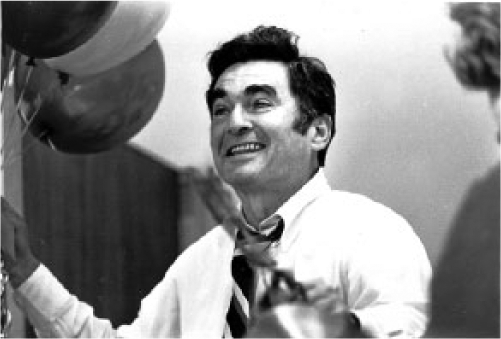
James J. Gallagher circa 1970, Washington, D.C.
In classic Western movies, the good guy could be frequently identified by his trademark white Stetson hat, whereas the bad guy always wore black. James J. Gallagher wore many hats during his career that spanned over six decades; he too would be known as the “man in the white hat,”—trusted to do the right thing. From 1967 to 1970, chiefly during the Nixon Administration, Gallagher wore the hat of public servant in Washington, D.C.
Gallagher found himself a resident of the federal district during the time of a momentous change in American education. Although Gallagher’s tenure was largely during the Nixon Administration, many of the policies he championed began with momentum established with the Lyndon B. Johnson Administration’s Great Society initiatives. The Elementary and Secondary Education Act (ESEA) was only recently passed in 1965 as part of Johnson’s War on Poverty, providing unprecedented federal influence in the education of every American school-aged child. During this period, Congress was also vested in advancing the interests of handicapped children. 1 For example, between 1965 and 1967, the following laws were passed: (a) P.L. 89-313, ESEA, Title I which provided support for the education of handicapped children (1966); (b) P.L. 89-258 which captioned films for the deaf (1966); and (c) P.L. 89-36 which established the National Technical Institute for the Deaf (1967; Kirk, 1993b), a collection of laws that greatly changed the way of life for many handicapped and disabled children and adults.
Gallagher served as the first chief of the Bureau for the Education of the Handicapped (BEH) and then as Deputy Assistant Secretary for Planning, Research, and Evaluation—Both the positions were within the United States Office of Education (USOE) and under the larger umbrella of the Department of Health, Education, and Welfare (HEW; Fox, 2014). The establishment of BEH represented a shift toward the education of handicapped children. According to Gallagher (1968), the BEH was created when “society . . . is no longer satisfied to provide a smothering care with fostered over-dependency. We now seek to bring each handicapped individual to the very limit of his potential” (p. 491). The Bureau was divided into three separate divisions—(a) research, (b) educational services, and (c) training programs—“to find ways to speed federal participation in the solutions of the educational problems of the handicapped” (Gallagher, 1968, p. 485). S. Gallagher (personal communication, March 23, 2014) also felt a strong moral and ethical responsibility to move the educational opportunity of these children forward.
Although his time in Washington was brief when compared with his tenure at the University of Illinois or the Frank Porter Graham Child Development Institute at the University of North Carolina, the impact of his federal work at the USOE has reverberated across generations of children in gifted, special, and early childhood education programs. James J. Gallagher wore many intellectual hats.
Invitation to the Party
Gallagher was summoned to Washington at the behest of Samuel Kirk. A giant in the field of special education, Kirk is widely recognized as the father of that field in the 20th century (Healey, 1993). Proposed at the Conference on Exploration into Problems of the Perceptually Handicapped Child, Kirk coined the term learning disabilities to describe “a group of children who have disorders of development, in language, speech, reading, and associated communication skills needed for social interaction” (Hallahan & Mercer, 2001, as cited in Kirk, 1993b, p. 108).
Beginning in 1953, Kirk and Gallagher began working together at the University of Illinois in the Institute for Research in Exceptional Children, a multidisciplinary center (Gallagher, 1993). The center produced research on the sociology of families of children with disabilities, the learning processes of exceptional children, the evaluation of children with intellectual disabilities, and the education of children with brain injuries (Gallagher, 1993). During the Eisenhower Administration, Kirk consulted with the federal government regarding policies to support the research for those with intellectual disabilities and again when funds were allocated to train personnel responsible for working with individuals with intellectual disabilities and the deaf (Kirk, 1993b). In 1963, President Kennedy enlisted Kirk to chair the Advisory Committee for the Handicapped and then the creation of the BEH (Kirk, 1993a).
This heightened level of attention from the federal government was a direct result of special education advocates lobbying Congress for a special administrative unit within the USOE as children with disabilities were being “shortchanged by agencies that were enforcing broader federal mandates” (Martin, Martin, & Terman, 1996, p. 27). Advocacy, in conjunction with the impetus from the Johnson Administration’s Great Society initiatives, resulted in Congress mandating the establishment of the BEH under Title VI of the ESEA with the Education of the Handicapped Act (EHA; P.L. 89-790) in 1966. Title VI also provided grants to states for educating children with disabilities. Title III funds from ESEA could also be used for educational innovation and development for special education programs (Weintraub & Ballard, 1982).
No Bureaucrats Allowed
S. Gallagher (personal communication, March 23, 2014) was hesitant to take the BEH position; “He loved teaching, loved his research, and he understood what three years in Washington was going to be because Sam [Kirk] told him what Washington was like.” Still, Gallagher did not feel he could refuse his mentor Kirk and began assembling a team of specialists. Edward Martin (2013), Gallagher’s Deputy Associate Commissioner, described the BEH as “not a bureaucracy in the classical sense of the general administrators with little background in the government programs they were managing” (p. 67). Instead, Gallagher recruited colleagues from the field of special education who were specialists—men and women who held PhDs and also possessed relevant field experience in higher education and at the state and regional level (Martin, 2013). He and Martin also held a series of seven conferences around the country to gain grassroots support for special education and for BEH. They met with local special educators to discuss ideas and priorities (Martin, 2013). Gallagher would draw upon these series of seven regional conferences [where] we have talked with school teachers, principals, superintendents, State departments of education personnel, college teachers, researchers, and others vitally interested in this area, about what they felt to be the most critically important needs for handicapped children. We asked these groups to help us develop our long-range planning efforts by giving us grassroots advice on the identification of priorities and suggesting strategies for meeting current problems. (Preschool and Early Education Programs, 1968)
These practitioners were also foremost in Gallagher’s mind when formulating policy, especially when considering how to move research into practice. He promoted the essential elements of educational transformation that included five distinct phases: (a) research, (b) development, (c) demonstration, (d) implementation, and (e) adoption, which would appear in time and again in Congressional testimony and reports. His understanding of advocacy and policy practices would be later offered to and would influence the field of gifted education as his opportunities to advocate for bright children emerged.
Preschool and Early Education for Handicapped Children
During the initial regional meetings that Gallagher and Martin held across the country, early childhood interventions were a reoccurring theme. In July of 1968, nearly 6 months into his tenure, Gallagher was called upon to testify regarding H.R. 17829, a bill to authorize preschool and early education programs for handicapped children. Initial research supported early childhood education and Gallagher argued, “there is probably no sounder proposition in education than the earlier the child is educated, the greater the return for the energy spent” (Preschool and Early Education Programs, 1968). He also noted that through early intervention, children could be returned to regular classrooms and “we can help the child accelerate his own rate of development” (Preschool and Early Education Programs, 1968). Gallagher sought to promote identified programs that were already operational and could be used as demonstration sites. He reasoned that “We want all areas to participate, one may be pilot but the other, in an operational phase” (Preschool and Early Education Programs, 1968).
Specific Learning Disability
Gallagher’s federal positions required him to offer his expertise to Congress on many occasions. He held a masterful gift of explicating and winnowing down complex ideas, concepts, and issues to the most important and salient aspects for those without the background to understand psychological and educational implications easily. This testimony was crucial during a period when special education legislation was exponentially expanding and legislators needed input from those with knowledge and experience. The Children With Learning Disabilities Act of 1969 is a prime example of Gallagher’s expert testimony on display. The EHA, which provided for the establishment of the BEH, also provided grants to states, planning for information dissemination, conducted research, and supported the preparation of special education professionals (Weintraub & Ballard, 1982). However, the EHA did not include learning disabilities as a disability category (Hallahan & Mercer, 2001).
In July of 1969, Gallagher testified to Congress on H.R. 8660 and H.R. 9065, which would provide educational services, teacher training, and research for children with specific learning disabilities (the term introduced by Kirk in 1963). Gallagher noted, While the term “specific learning disabilities” is relatively new, the problems it represents are not. When we knew little about medicine and pathology, a child was either sick or healthy. The more we learned, the more we subdivided “sick” into a multitude of specific diseases and disorders. Similarly, the more we learn about children who are educationally ill, the more we can identify specific problems. Thus, a child who in past time was labeled “dumb” or “lazy” now becomes identified as a child with specific needs requiring specific treatment. (Children With Learning Disabilities Act, 1969)
The BEH asked that an amendment to the definition of handicapped children include the term specific learning disabilities, which would then make these children eligible for provisions in all of the handicapped legislation to which this term would apply. Gallagher and his colleagues in BEH felt that the best way to aid this particular group of children was through an amendment to existing legislation rather than “through legislative maneuvers that will end up in no action for these children” (Martin, 2013, p. 41), as advocating for a new program seemed too risky and was vulnerable to the Bureau of the Budget (BOB). However, Gallagher’s pragmatism also was evident: I have to recommend to you an amendment of existing law, but I must caution you that, when you go that route, you are going to have to compete against eight or nine existing programs which now are trying to take care of 11 million children with a $30 million recommendation. (Children With Learning Disabilities Act, 1969)
He urged Congress to increase the level of funding to account for this additional group of students. As a result of the work done by individuals such as Kirk and Gallagher, children today with identified learning disabilities receive services that are partially funded by the federal government. Twice-exceptional children, those with identified disabilities and gifts and talents, also benefit from the federal commitment. Gallagher understood the actions needed to build on an existing option to leverage infrastructure.
Children’s Television Network
In his role as Deputy Assistant Secretary for Planning, Research, and Evaluation, Gallagher had the opportunity to promote and fund projects that were tackling educational problems with unique solutions, which presented the essential elements of educational transformation. One such project was “a quite different approach to the use of television, one which exploits the presence of TV sets in the vast majority of American homes including disadvantaged ones” (Needs of Elementary, 1969). The Children’s Television Network would provide high-quality programming using the medium of television for young children between the ages of 3 and 5 “for the express purpose of stimulating their cognitive development in a variety of ways” (Needs of Elementary, 1969). Building on the interest and increasingly strong research base for early interventions, “Sesame Street” premiered on November 10, 1969. S. Gallagher (personal communication, March 23, 2014) “was always proud that he had a piece in that”—the idea of using the very best creative and theatrical talent to produce programming that was on par or surpassed commercial programming to educate young children. That children’s programming was crafted with such creativity meant Gallagher’s legacy includes innovative avenues for early talent development—now a cornerstone of the field of gifted education.
Gifted Education
Gallagher first became interested in gifted children during his work at the University of Illinois. As a young academic, he was provided with the opportunity to lead a research project on high-ability elementary children and identified this experience as important in his interest in gifted education (National Association for Gifted Children [NAGC], 2009). Although special education was squarely on the radar of legislators and the administration in the 1960s, gifted education did not emerge as a concern until well into the late 1960s. In 1969, federal legislation was brought forward to advance the interests of gifted learners. Gallagher had already gone on the record to state that students learn at different rates. When Representative Quie (R-MN) asked whether “one could speed a learner up,” Gallagher replied, I think the answer is yes and I think the answer conversely is you can slow them down. . . . If the teacher presents one program, she almost has to focus it at the medium level where the majority of the youngsters are. That means that material that is being presented is too difficult for the youngster who is slow or needs remedial work. It means it is too easy, and too boring, for the youngster who is very bright. You have to develop a series of activities, which will allow each youngster . . . to progress at their own rate of speed. (Needs of Elementary, 1969)
Gallagher’s comments sound very similar to our commonly used descriptions of differentiated instruction today.
Not everyone was interested in advancing the needs of gifted children. S. Gallagher (personal communication, March 23, 2014) was directed to go to Congress and testify against the legislation that would eventually fund the Marland Report. He refused to do so, and the man in the white hat resigned his position shortly thereafter. In the United States, gifted education existed in a rather languid state and had no presence at the federal level. The proposed legislation would provide a legitimizing federal presence for gifted education. S. Gallagher (personal communication, March 23, 2014) would not abide by the request to speak against the legislation because “he knew it was going to move the field forward in some way. Without the language, nothing was going to happen.” Instead, Gallagher argued to Congress, this group of gifted and talented children do not cause immediate crises or emergencies in the schools. They do not usually dropout or fail, but their potential attainment may be substantially reduced, essentially unnoticed . . . their ultimate success or lack of success in our education programs influence our whole society. . . . So while they do not cause great immediate concern, or create a crisis, the way that a delinquent youngster or a youngster who is emotionally disturbed causes to the school system, we can say that particular attention paid to them has long-term benefits, not only for the individual, but also for the society. (Gifted and Talented Children, 1969)
Gallagher’s testimony to Congress and further consultation on the Marland Report helped to push the languishing field of gifted education forward. In fact, his resignation over this testimony was newsworthy and allowed him to further advance the educational causes he championed. Even after leaving the USOE, Gallagher would continue to influence the field through his position at the Frank Porter Graham Institute in Chapel Hill. At the federal level, he participated in the discussions that influenced and contributed to the 1993 report, National Excellence: A Case for Developing America’s Talent (Ross, 1993). He directed one of the earliest Jacob K. Javits demonstration projects, the Gifted Education Policy Studies Program, which focused on the implications of local and state policies on inclusive identification practices and the effects of educational reform efforts on services for gifted and talented learners (Coleman & Gallagher, 1992).
Unfinished Business
National Institute of Education (NIE)
Toward the end of his tenure as Deputy Assistant Secretary for Planning, Research, and Evaluation, Gallagher participated in several projects that did not come to fruition until several years after he left Washington. In March of 1970, Gallagher organized a conference to discuss the future of the NIE. A group of 28 scholars and researchers outlined the potential undertakings of the NIE. Their recommendations included an emphasis not only on research but also on the dissemination of findings to (a) create educational change in schools, (b) focus on evidence-based practices that could address educational inequalities, (c) plan research to meet national educational needs, (d) create a “Think Tank,” and (e) advocate for leadership that is more professional in nature rather than bureaucratic. Participants left the meeting with an “overall tone that was hopeful . . . [that the legislation] could become a key component in the education research efforts of the seventies” (Gallagher, 1970, p. 16). Despite Gallagher’s efforts to move the NIE forward, 2 more years would pass before the official establishment of the NIE in June of 1972. Ultimately, the NIE would be subsumed within the Office of Educational Research and Improvement.
Individual Education Plans
Gallagher is widely accepted as the engineer of the Individualized Educational Plans (IEPs; American Foundation for the Blind, 2014). The IEP was initially intended to support children with intellectual disabilities. Gallagher was concerned that children with intellectual disabilities would be permanently relegated to special classes without specific goals to progress. He began to lay the groundwork for this type of contract while at HEW. In 1972, he proposed a 2-year contract between parents and the teacher of students with disabilities, which was negotiated in an administrative hearing. In 1975, the IEP would become a cornerstone of the Education for All: The Handicapped Children’s Act and remains a central part of how special education functions in schools (Martin et al., 1996). For gifted student who reside in states such as Louisiana and New Mexico where gifted education falls under the special education umbrella, these students are also entitled to an IEP (Louisiana Department of Education, n.d.; New Mexico Public Education Department, 2011). While other states like Florida and Pennsylvania have developed Gifted Education Plans or Gifted Individualized Education Plans, respectively, which were constructed from the tenets of the original IEP (Florida Department of State, 2004; Pennsylvania Department of Education, n.d.).
Unyielding Nature of Bureaucracy
Eventually, the persistent dysfunctional nature of bureaucracy signaled to Gallagher that perhaps he could have a more satisfying impact on the education of exceptional children outside of the Beltway. His position was never intended to be permanent, and politicians, bureaucrats, and educators have always made for strange bedfellows. He resigned his position as Deputy Assistant Secretary for Planning, Research, and Evaluation in June of 1970 and joined the University of North Carolina’s Frank Porter Graham Child Development Institute as its director.
Soon after his resignation, he published a strongly worded analysis in Exceptional Children outlining the failings of the Washington political machine. Gallagher (1970) noted, “many of the problems are imbedded, rather, in failure within the organization and system of government itself” (p. 709). He went on to outline four areas of major frustration: (a) erosion of authority of the USOE, (b) the government’s uncertain commitment to research and development, (c) the credibility of the federal government to maintain long-term plans and goals, and (d) the government’s continued disregard of students with disabilities. Gallagher (1970) felt strongly that the federal government had a responsibility to support “general delivery of educational services to all students” (p. 715), but often did not lay the authority in the hands of those most capable of making those decisions. He argued, from the White House down, [they] seem willing to make education and educators the scapegoat for a multitude of societal problems not of their making, but at the same time are not willing to provide the high priority and necessary resources to get needed educational tasks accomplished. (Gallagher, 1970, p. 710)
Unfortunately, Gallagher’s words remain relevant to today’s federal dysfunction.
Conclusion
As President Johnson’s Great Society turns 50 this year, many of his initiatives remain in some facsimile. So too does Gallagher’s imprint on the lives of American children, partly due to the time he spent in the USOE. He helped steer legislation and policy for a group of children who had been largely marginalized in modern American schooling for the first half of the 20th century. From his early career opportunities at the University of Illinois, which led directly to his tenure in Washington, D.C., Gallagher was interested in and responsible for research studies that focused on children with exceptionalities. Simultaneously, he studied children with brain injuries and children with very high IQs, and, thus, understood the full spectrum of exceptionality. Influenced by his childhood experiences as the son of an innovative special education teacher and as an elementary school student accelerated twice himself, Gallagher was exposed to out-of-the-ordinary educational experiences from his earliest years (NAGC, 2009). Thus, both his childhood and his beginnings as a professional shaped his thinking and his moral commitment to children. In terms of his contributions to gifted education at the federal level, these were massive and spanned decades. He was “in the room” at the beginning, building a team of experts for the Washington, D.C., office, guiding the work, testifying to committees and subcommittees, and responding to questions in ways that ultimately led to policy decisions by Congress. Special education and gifted education profited from his expertise and leadership and the fact that he was not a bureaucrat, but rather a courageous visionary and master of policy. Critical incidents—such as his choice to testify in favor of legislation that what would become the Marland report rather than burying it—are milestones in the field of gifted education. His groundwork established the federal foundation from which the Javits legislation could build decades later.
Footnotes
Declaration of Conflicting Interests
The authors declared no potential conflicts of interest with respect to the research, authorship, and/or publication of this article
Funding
The authors received no financial support for the research, authorship, and/or publication of this article.