



Abstract
The internal/external (I/E) frame of reference entails high, positive association of mathematics and verbal achievements with matching academic self-concepts but negative or near-zero correlation with their nonmatching self-concepts. This study aimed to extend the traditional I/E model by contrasting the mathematics domain with two foreign languages (English and Russian). A total of 540 Azeri eighth-grade students participated in this study. Confirmatory factor analysis revealed distinct domain-specific self-concepts for two foreign languages and mathematics, indicating a negative or near-zero nonsignificant correlations between academic self-concepts and nonmatching achievement domains but high positive, significant correlation between academic self-concepts and matching achievement domains. This study revealed distinct domain-specific self-concepts for two foreign languages, indicating a negative or near-zero nonsignificant correlations between verbal self-concepts and nonmatching verbal achievement domains. It was difficult to form a single verbal domain. The findings could be used to inform the design of interventions to improve learners’ academic self-concept and achievement.
Historically, classical self-concept theories have conceptualized self-concept as a multidimensional and hierarchical construct, distinguishing between academic and nonacademic types of self-concept. Most researchers defined academic self-concept as students’ self-perceptions in an educational setting (Marsh, 1986; Shavelson et al., 1976) and focused on domain-specificity of academic domains. Despite substantial correlations between mathematics and verbal achievements, they found a nonpositive (near-zero) correlation between mathematics and verbal self-concepts (Marsh & Craven, 1997). Therefore, this peculiarity of academic self-concept resulted in the development of the internal/external (I/E) frames of reference model (Marsh et al., 2006; Marsh & Hau, 2004; Möller et al., 2011) and suggested strong distinction between mathematics and verbal self-concepts. Most studies have assumed that verbal self-concept should be determined by students’ native tongues which can be well-defined with monolingual students but have disregarded the multidimensional nature of the verbal self-concept.
Although quantitative studies (e.g., Marsh et al., 2001; Xu et al., 2013; Yang et al., 2014 studied English as foreign language with only Chinese sample; Möller et al., 2006 studied it with German sample) extended academic self-concept to nonnative languages; there is a shortage in research that studied English as a foreign language, particularly, Russian in the I/E model. Extending the I/E model to mathematics and nonnative languages, this study can reveal that students may distinguish each foreign language domain and possess separate verbal self-concept for each foreign language and school domain. Student who performs well in English, will not have negative verbal self-concept in Russian. Similarly, if student shows high achievement in Russian, this student’s English self-concept will not be affected negatively. Moreover, two foreign language achievements may show differences in mathematics self-concept prediction.
The I/E Frame of Reference Model
Despite positive correlations between mathematics and verbal achievements, there are weak or no relations between the corresponding domains (Marsh & Shavelson, 1985). To investigate this significant relationship between subject-specific self-concepts and achievements, researchers developed the I/E frame of reference model to understand how students evaluate their academic self-concept. Most cross-sectional and longitudinal studies (Marsh et al., 2001, 2012, 2014; Marsh & Köller, 2004; Möller et al., 2011; Möller & Köller, 2001) have supported the validity of the I/E frame of reference model. The paths leading from achievement to academic self-concepts are central to the I/E model assuming that corresponding domains of academic self-concept will have a high, positive correlation with the corresponding domains of achievement, while noncorresponding domains of academic self-concept will have near-zero, negative correlations with noncorresponding domains of achievement.
The theory posits that in an external frame, students compare their achievements in specific domains with other students in the same educational setting, and using this information, they form their self-concepts in the corresponding domains.
In the internal frame, students compare their achievements in one subject with those in another to form their self-concept for each subject (Xu et al., 2013). Therefore, to obtain strong support for discriminant validity external comparisons would entail positive, predictive associations between achievement (mathematics and verbal) and self-concept in the corresponding domains and internal comparisons would involve negative, predictive associations between nonmatching domains. In this case, verbal self-concept would be correlated positively with verbal achievement but correlated negatively with mathematics achievement, and mathematics self-concept would be correlated positively with mathematics achievement but correlated negatively with verbal achievement. This would indicate that students perceive their ability levels differently in different school subjects.
Past studies (Eccles et al., 1993; Midgley et al., 2001) on gender differences in self-concept research found that boys tend to have higher competence beliefs than girls, even though such self-beliefs of abilities may not correspond their real abilities (Yeung et al., 2012). Boys and girls show different levels of competence beliefs in different school subjects. Studies (Klapp Lekholm & Cliffordson, 2009; Kurtz-Costes et al., 2018) revealed that boys had higher perceptions in mathematics and science-related school domains, while girls showed higher self-concepts in language and verbal-related school domains. Similarly, Dai (2001) found that girls had higher verbal self-concept and lower mathematics self-concept compared with boys. Chiu and Klassen (2010) revealed that mathematics self-concept had a stronger relationship with mathematics achievement for boys than girls. Han (2019) studied Australian primary school students enrolled from Grade 3 to Grade 6 and found that boys had higher ratings on the cognitive component of mathematics self-concept than girls.
Domain-Specificity of Academic Self-Concept and Extension to Foreign Language
Although most studies have focused on traditional domains (English and mathematics) of academic self-concept, certain studies (Möller et al., 2006, 2009) have provided empirical support for extending the model within academic self-concepts. Recently, Abu-Hilal et al. (2013) supported extension of the I/E model of academic self-concept by studying it within mathematics and science. By extending the academic self-concept to mathematics, Spanish, English, and achievements in these domains, Marsh et al. (2001) reanalyzed Bong’s (1998) study and revealed clear support for classic I/E predictions. Their analysis found positive effects of verbal achievement on English, history, and global verbal self-concepts, contrasting with negative effects on Spanish, algebra, geometry, and chemistry academic self-concepts while mathematics achievement negatively predicted English, history, verbal, and Spanish self-concepts, but positively predicted algebra, geometry, global, mathematics, and chemistry. Studying self-concept in mathematics, physics, German as a native language, and English as a foreign language, Möller et al. (2006) found negative paths from German and English achievements to mathematics and physics self-concepts, and from mathematics and physics achievements to German and English self-concepts.
Yeung and Wong (2004) studied teachers’ self-concepts in Chinese, Mandarin, and English, and revealed weak correlations between self-concepts in these language domains. Moreover, they recommended modification of the traditional self-concept model emphasizing consideration of self-concepts in different languages separately. Xu et al. (2013) studied academic self-concepts and achievement measures in mathematics, English, and Chinese, and supported a traditional two-subject I/E model. English and Chinese demonstrated more similarities to each other. While mathematics achievement had positive correlations with mathematics and English self-concepts but had no correlation with Chinese self-concept, English achievement had a positive correlation with English self-concept but had no significant correlations with Chinese or mathematics self-concepts. Chinese achievement had positive correlations with English and Chinese self-concepts but had no significant correlation with mathematics self-concept.
Based the theoretical framework on the hierarchical and multidimensional nature of the academic self-concept; this study uses predictions from the classic I/E model to examine the assimilation and contrast effects from achievement to self-concepts in two target languages and mathematics domains. Hypothesizing a continuum of academic self-concept domains (Marsh et al., 1988), the Marsh/Shavelson (Marsh & Shavelson, 1985) model suggests that academic self-concept can be organized along a mathematics and verbal continuum, indicating mathematics and native language as the two endpoints of this continuum. Following the theoretical rationale for the I/E model, associated with the Marsh/Shavelson model; this study predicts the contrast effect will be stronger between nonmatching domains and assimilation effect between matching domains. Consistent with classical predictions (Möller et al., 2006), this study expects to find the negative path from contrasting domains (English and Russian achievements to mathematics self-concept; mathematics achievement to English and Russian self-concepts) and the positive path from assimilating domains (English achievement to English self-concept; Russian achievement to Russian self-concept; mathematics achievement to mathematics self-concept).
Being situated between Western Asia and Europe, the culture of Azerbaijan was influenced by cultures of both continents (Lapidus, 2002; Olsan et al., 1994). The culture of Azerbaijan evolved under the influence of Iranian, Turkic, and Caucasian heritage, as well as Russian impact was substantial as being a former member of USSR. Today, western culture and its influence are prevalent. Although westernized culture, the eastern historical influence remains its influence on culture, everyday life, especially on education, suggesting that socialization process in the school and family led to Azerbaijani students, especially boys to be less critical of themselves and had higher self-concepts than might be expected from their achievements.
Education System in Azerbaijan
Education in Azerbaijan is subdivided into two phases: Basic education (primary first–fourth grades and general secondary fifth–ninth grades) and complete secondary (10th–11th grades) education. Basic education is compulsory in primary and general secondary phases, after which they have chance to choose among different opportunities such as entry into complete secondary, vocational education and training, distance learning, or direct entry to employment (Ministry of Education of Azerbaijan Republic, 2010).
In recent years, language education has changed its shape in Azerbaijan. A new conception of general secondary education (National Curriculum) for all districts and regions was launched in 2006 (CoM [Cabinet of Ministries], 2006). The new curriculum of state standards of specific subject programs was introduced in 2010 (Ministry of Education of Azerbaijan Republic, 2010). But it was modified for improvement of details of after two years in 2012. Starting in 2012, the second foreign language is taught from the fifth grade (Ministry of Education of Azerbaijan Republic, 2012). Teaching in two foreign languages is mandatory but in different grades. First foreign language (English) is taught 3 hr per week at the first grades, but second foreign language (Russian) is instructed an hour per week at the fifth grade. Regarding socioeconomic background, Programme for International Student Assessment (2018) reported a similar level of staff and material shortages across schools as well as indifference in staff shortages between advantaged and disadvantaged schools in Baku (Azerbaijan). Low- and high-performing students are clustered in the same schools.
The Present Study
Considering the traditional I/E model that entails negative effects of high achievement in one school subject on contrasting domain of academic self-concept, this prediction has been limited to traditional domains (mathematics and native language) of academic self-concepts (Marsh & Shavelson, 1985). Moreover, few studies extended academic self-concept to one nonnative language (English); it is overreaching question whether two nonnative (English and Russian) languages act as a verbal-like school domain that both of languages self-concepts contrasted with mathematics self-concept or one of them. This study examines the following:
The structure of academic self-concept, comparing first-order models in English, Russian, and mathematics self-concepts which indicated as separate constructs, and a second-order model in which English and Russian self-concepts are examined for a single domain representing a general verbal domain; The traditional I/E models, including two academic subjects, in mathematics versus English, mathematics versus Russian, and English versus Russian; The juxtaposition of English, Russian, and mathematics subjects through a first-order I/E model where these three subject self-concepts are predicted by achievements both in their corresponding and noncorresponding domain; The juxtaposition of English, Russian, and mathematics subjects through higher order factor I/E models. Incorporating English and Russian self-concepts in a single domain, verbal self-concept is assumed to be predicted by the mathematics achievement and matching verbal achievement factor based on English and Russian achievements. Similarly, mathematics self-concept is assumed to be predicted by the matching mathematics achievement and nonmatching verbal achievement; and The invariance test of the I/E model of first-order factors based on three subjects across gender. This analysis assesses the extent to which the I/E model differs across gender, if factor loadings and item intercepts constrained to be equivalent across gender.
Method
Participants
The total sample consisted of 540 Baku secondary school students (boys 48.9%, girls 51.1%) in Grade 8 (16 schools of 12 districts) who completed online tests in mathematics and both two languages (English as a first and Russian as a second foreign language) and a questionnaire in Azerbaijani. The eDia (Electronic Diagnostic Assessment System, see Csapó & Molnár, 2019) online platform for online assessment was utilized to embrace all (12) administrative districts. Schools were randomly selected by Baku Educational Department.
Procedure
Regardless of background characteristics, students were selected randomly. Therefore, considering socioeconomic background, the sample is representative. Participation in the proficiency tests was mandatory for participants, while participation in the survey was voluntarily and parental consent was obtained. In addition, although the explanation of the main aim of this study was performed by the author, supplementary and explanatory information was included to facilitate student comprehension. Before administration of achievement tests and questionnaire, each student was provided passwords to access the online platform. Students used the same password for each target language and questionnaire. First, English achievement tests were administered, lasting about 45 min for all students. Similarly, after a 15-min break, Russian achievement tests were administered lasting about 45 min. The same process was repeated for mathematics achievement tests. Afterward, questionnaires in verbal and mathematics self-concepts were completed in about 30 min. Despite administration of proficiency tests and questionnaires, school officials participated without involvement in the data collection process, but guaranteed objectivity and safeguarded students’ discipline and contribution. All students were assured of the anonymity and confidentiality of their responses.
Instruments
Achievement
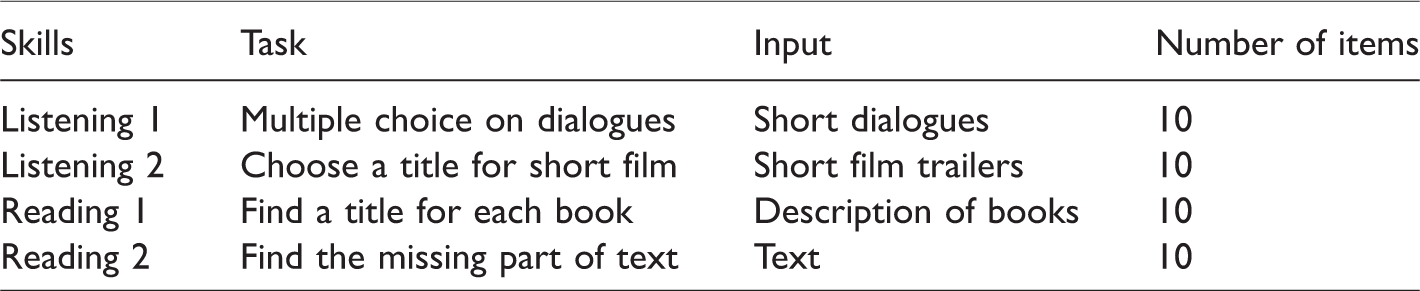
First, language proficiency tests were administered that consisted of two listening and two reading tasks. To obtain student achievement in two target language domains, two skill-specific skills (listening and reading) were combined. As adapted tests were skill-specific and students were assessed in listening and reading (not vocabulary and grammar), listening and reading skills were combined to represent language achievement (Cényelvi mérés, 2013/2014) (for a detailed description of the test and their psychometric properties, see Nikolov & Szabó, 2015). Proficiency tests were created by experts and constructed to correspond to the 6-point scale determined in the Common European Framework of Reference for Language (Council of Europe, 2001). Achievement tests in mathematics were adapted from TIMSS (Trends in International Mathematics and Science Study, 2011).
The Structure and Content of Language Tests.
The Content of Mathematics Tests.

The total WLE reliability for English was .88 and for Russian was .91. A pilot test was conducted before the main study to examine the adequacy of the proficiency tests. Proficiencies in two receptive skills were combined to represent the language (English and Russian) achievement domain.
Self-concept
Correlations of Internal Structure for Model 4, Figure 2D.

Note. Correlations are significant at the .01 level (two-tailed).
Mean Values, Standard Deviations, Standardized Factor Loadings and Uniqueness Values of Each Item for Model 4, Figure 2D.
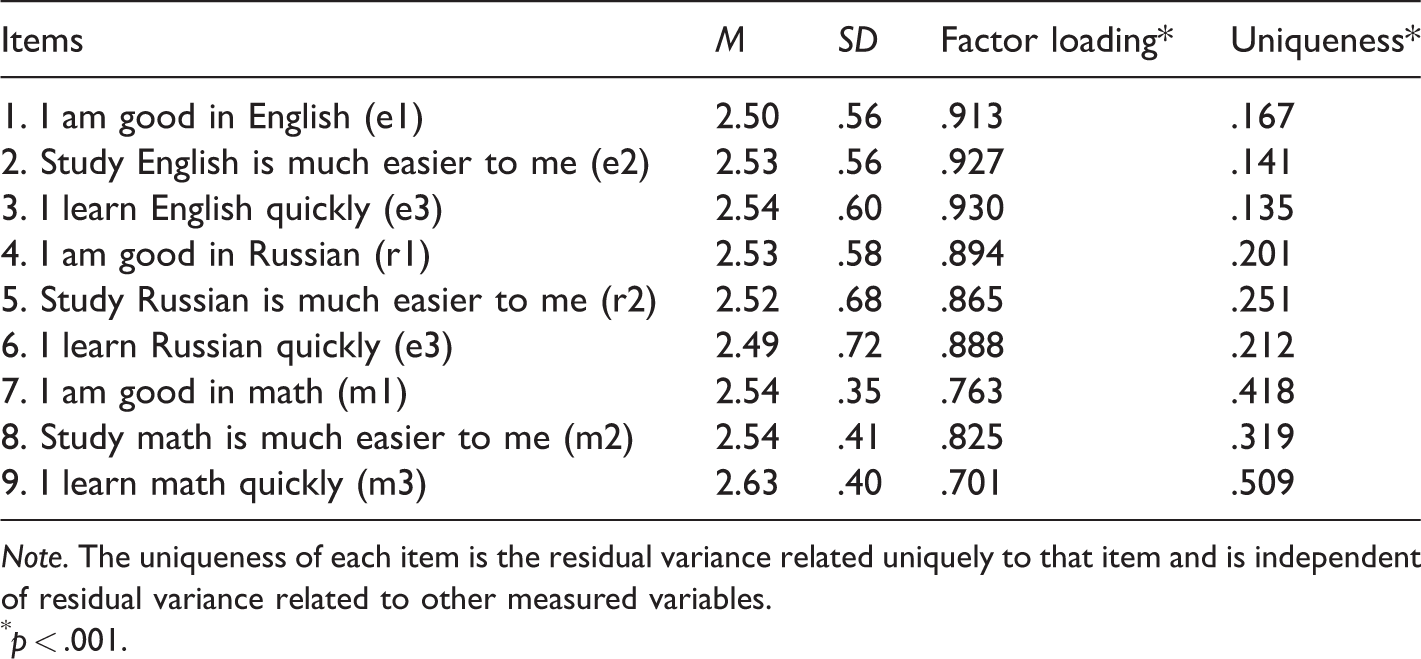
Note. The uniqueness of each item is the residual variance related uniquely to that item and is independent of residual variance related to other measured variables.
p < .001.
Descriptive Statistics.
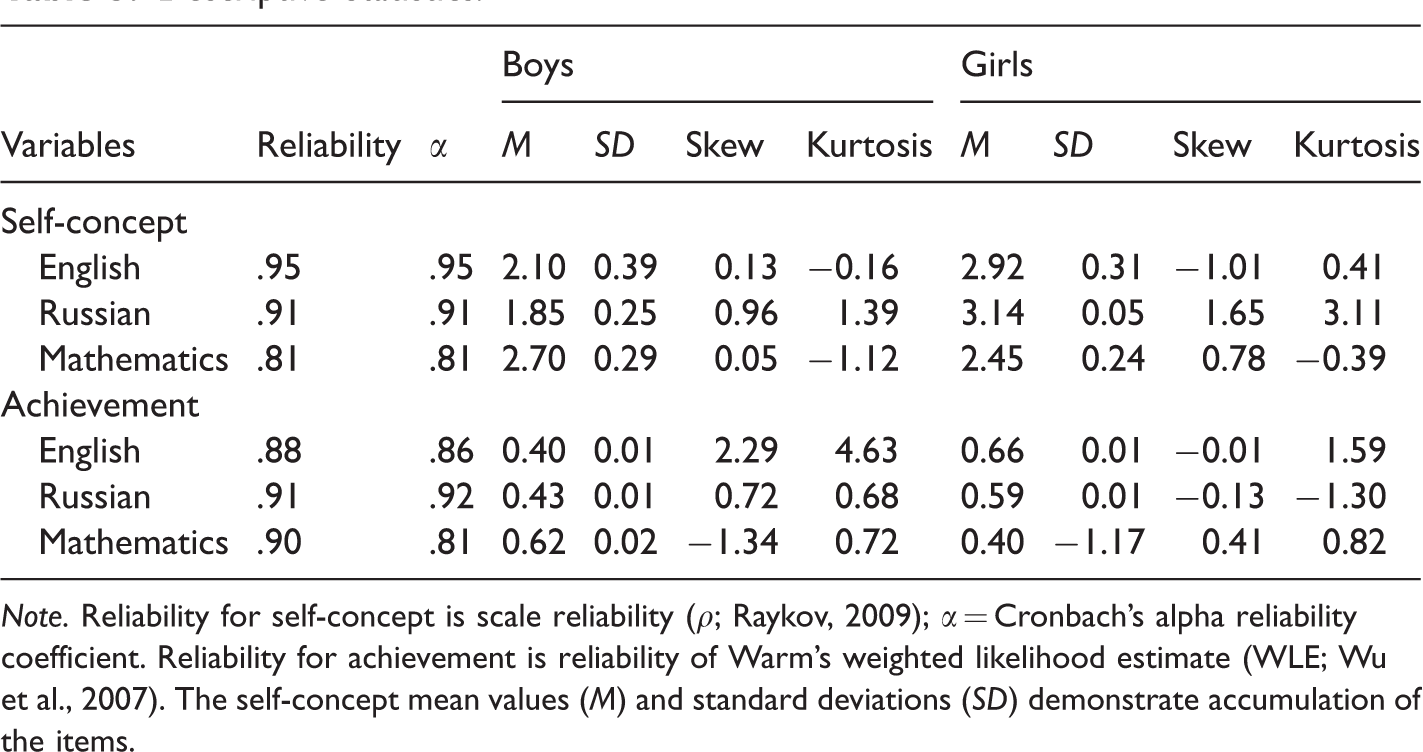
Note. Reliability for self-concept is scale reliability (ρ; Raykov, 2009); α = Cronbach’s alpha reliability coefficient. Reliability for achievement is reliability of Warm’s weighted likelihood estimate (WLE; Wu et al., 2007). The self-concept mean values (M) and standard deviations (SD) demonstrate accumulation of the items.
Statistical Analysis
As SEM is recognized as a more adequate method than partial least squares (PLS) modeling to analyze theoretical models, several sets of models were developed using Mplus7.3 software (Muthén & Muthén, 1998–2015). PLS has limitations and drawbacks that Hwang and Takane (2004) revealed a lack of consistency when it is used to estimate structural models. Because of observed skewness and kurtosis (Table 5), the robust maximum likelihood estimator (MLR) was selected to compensate for any violations of normality assumptions and appropriately analyze the scales using four categories (Beauducel & Herzberg, 2006). To show different aspects of the I/E framework within two target languages and mathematics, CFA was performed. The model based on first-order factors for mathematics, English, and Russian was specified to test this assumption. Because the scales contained parallel wording such as “I am good in English,” the model fit might have been susceptible to reduced adequacy and the parameter estimates might have been biased, leading to invalid results (Marsh & Hau, 1996; Xu et al., 2013). Therefore, correlated uniqueness was recommended in the models (Marsh & Hau, 1996).
Because measurement invariance of academic self-concept was assessed across gender, multiple group analysis was conducted. As investigating the invariance of self-concept factor structure across gender, studies (Byrne, 1998; Marsh, 1993a, 1993b) found support to the factor structure invariance across gender groups; it is important to examine the construct validity of academic self-concept measurement with Azerbaijani sample. Considering the validation of academic self-concept structure with Azeri sample, this assessment was planned.
Regarding dependency of chi-square statistics on sample size, we used the most commonly suggested goodness-of-fit indices such as the comparative fit index (CFI), Tucker–Lewis index (TLI), root mean square error of approximation (RMSEA), and standardized root mean square residual (SRMR) for comparison of models (Byrne, 2012; Kline, 2011; Marsh et al., 2005; Schumacker & Lomax, 2016; Tabachnick & Fidell, 2006). While the stricter cutoff value above .95 has been suggested as a criterion of good fit for CFI and TLI (Hu & Bentler, 1998, 1999), for RMSEA and SRMR, values below .05 indicate a good fit (Hooper et al., 2008).
Results
First students’ abilities were assessed in three subject domains. One-parameter Rasch analyses were performed to gain more detailed insight about the tests in English, Russian, and mathematics. The expected a posteriori estimation based on plausible values (EAP/PV) reliability was good (.88) for English, and was excellent (.91) for Russian and (.90) for mathematics (Table 5). The analysis found that there were some items that were below students’ level and some items were above students’ level (Figure 1A and 1B). Both languages tests had moderate difficulty for eighth-grade students. The analysis revealed the same pattern to mathematics achievement and found that there were also some items that were below students’ level, and Item 15 was the most difficult item that was above students’ ability level (Figure 1C).
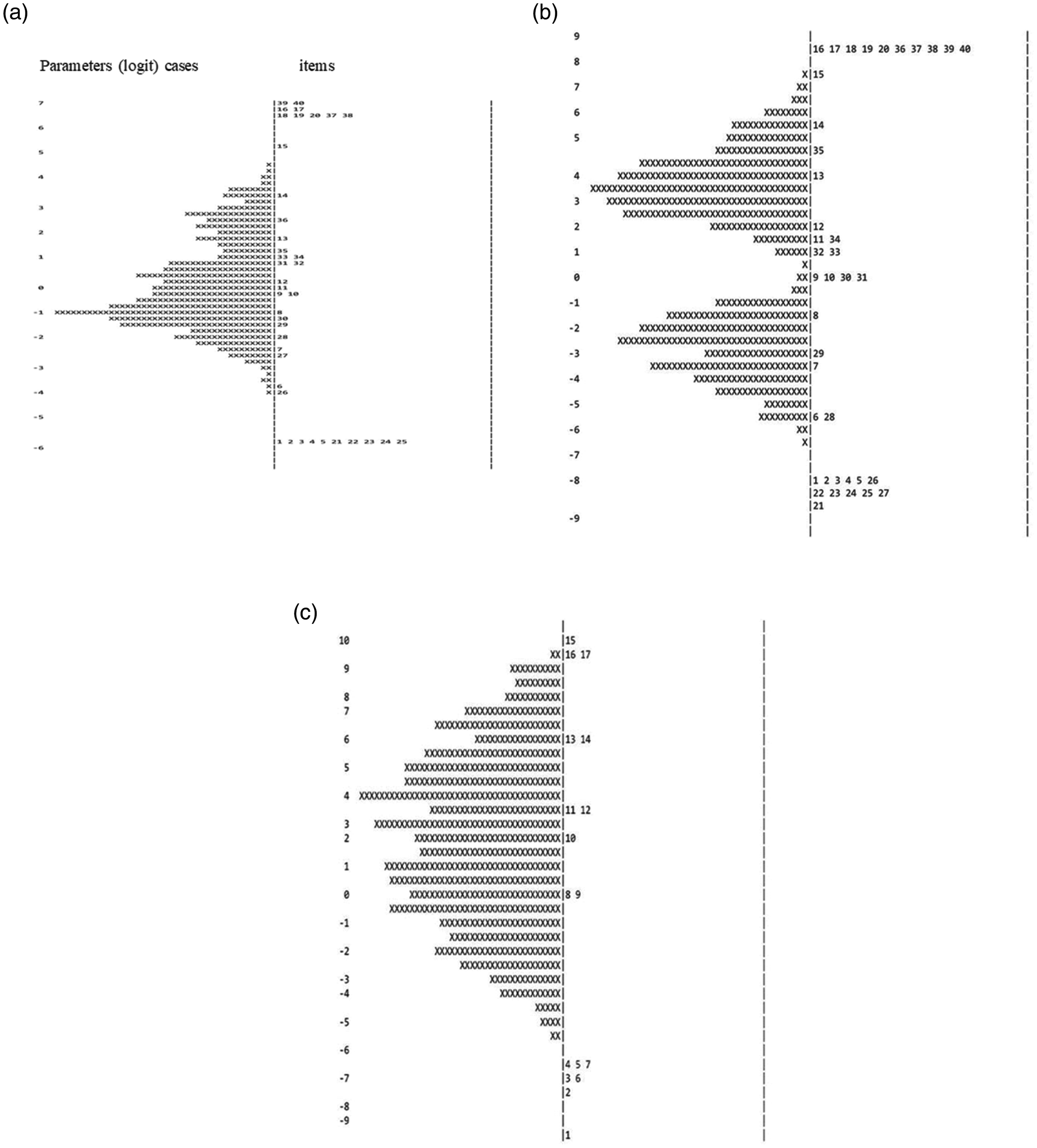
Person-item maps for the English (a), Russian (b), and mathematics (c) proficiency tests.
Goodness-of-Fit Indices for Models.
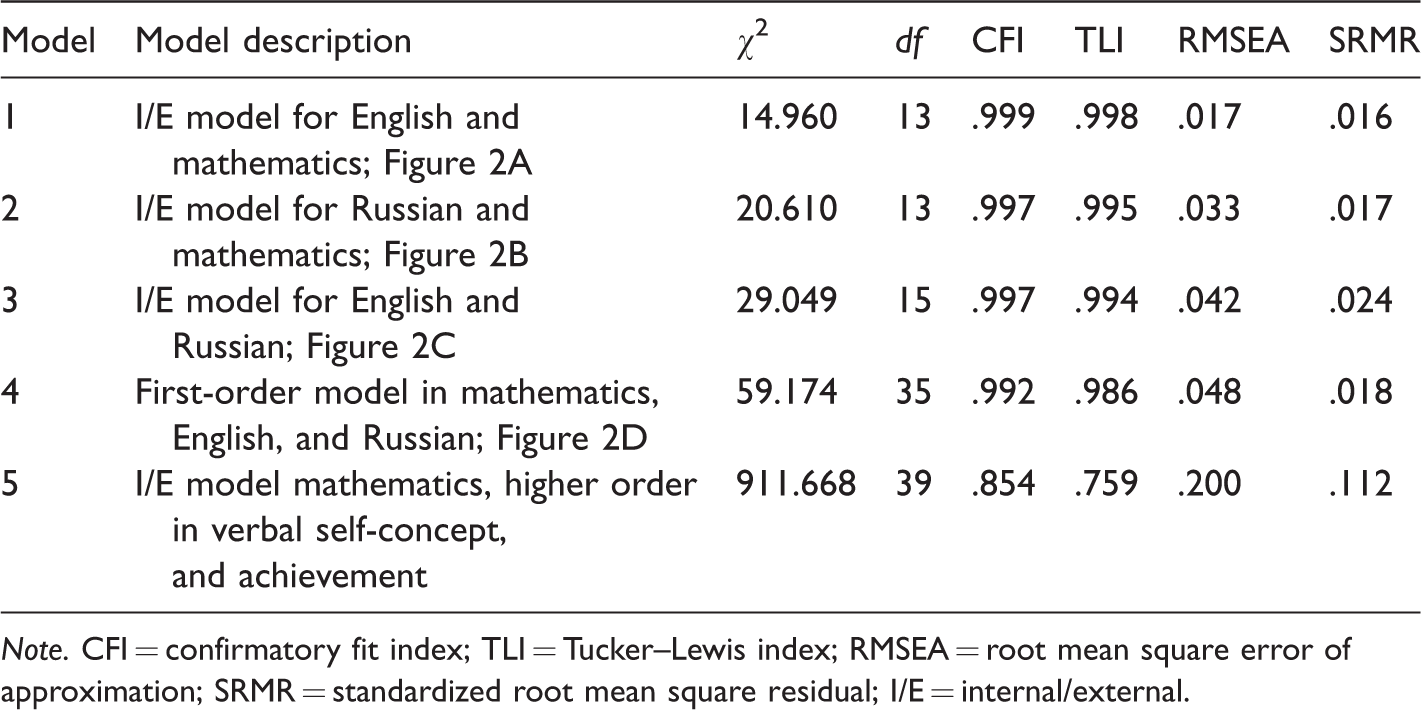
Note. CFI = confirmatory fit index; TLI = Tucker–Lewis index; RMSEA = root mean square error of approximation; SRMR = standardized root mean square residual; I/E = internal/external.
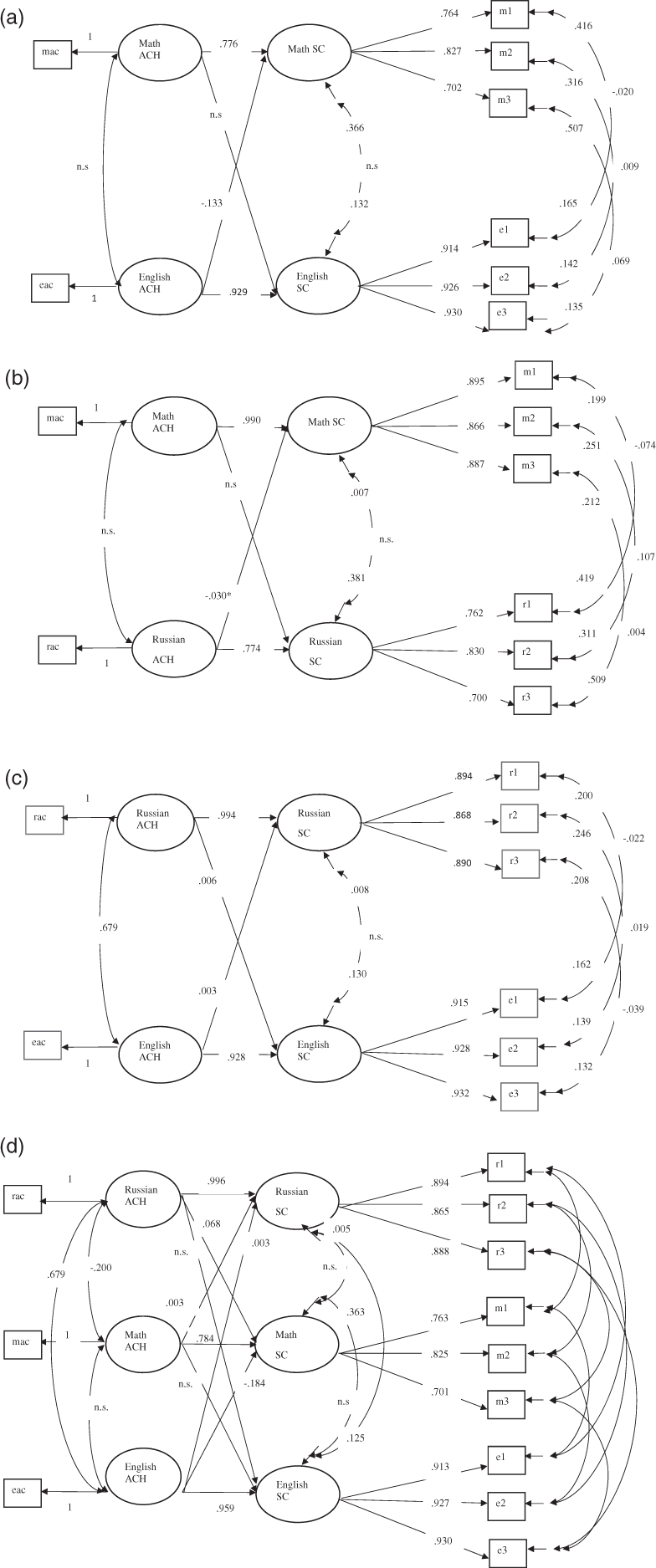
I/E models in mathematics, English, and Russian (all parameters are standardized). The covariances for self-concept item residuals were correlated uniqueness for the parallel worded items.
Standardized Latent Factor Correlations for Model 4, Figure 2D.
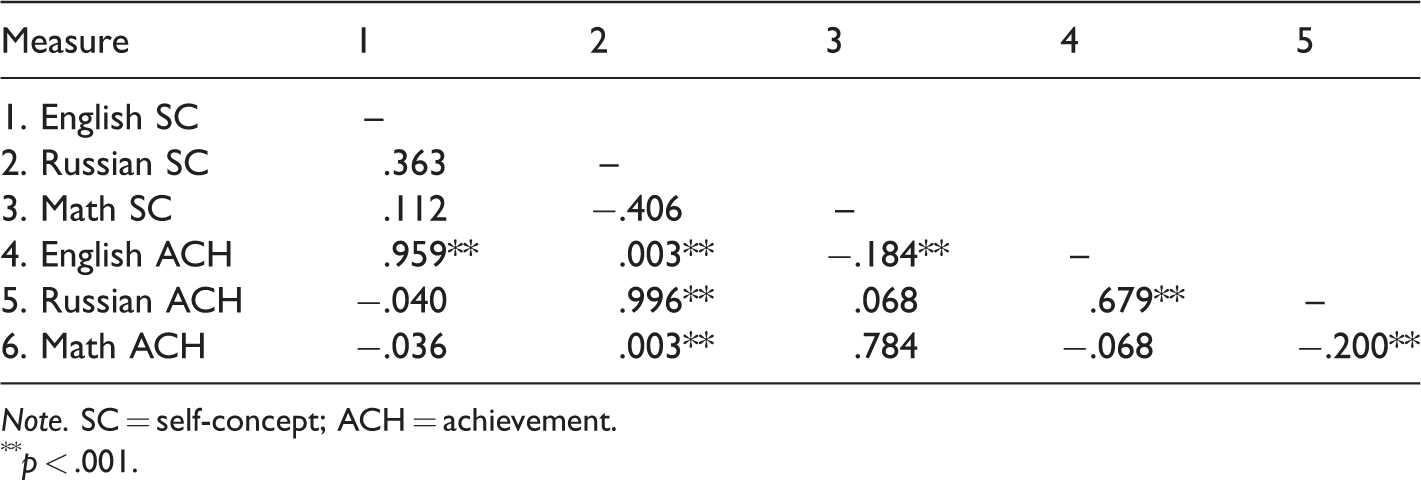
Note. SC = self-concept; ACH = achievement.
p < .001.
To test question whether verbal self-concept structure is multidimensional or unidimensional, this study examined a higher order factor of verbal self-concept. The higher order verbal self-concept factor that represents a common factor based on English and Russian first-order academic self-concept factors showed a poor fit to the data (Model 5 in Table 6). The correlations between the two academic self-concept factors showed that students not only differentiate between two languages but also possess different verbal self-concepts for each language indicating that single verbal self-concept cannot represent multilingual learners (Figure 2C, Table 7). As they possess distinct self-concept for each target language, student’s good performance in English will not influence on Russian academic self-concept. Similarly, student’s achievement in Russian will not influence on English academic self-concept. Therefore, it was difficult to integrate them into a higher order verbal factor (Model 5 in Table 6).
Model 4 (Table 6, Figure 2D) involved all three school domains in a single model and showed good fit to the data as the fit indices were above criterion values (CFI = .992, TLI = .986). For analysis relationships between self-concepts in three domains and their achievements, the standardized factor correlations resulting from Model 4 were provided. There mathematics achievement had low, negative correlations with two foreign language achievements, r = − .200 and r = −.068, respectively. The paths from English achievement to English self-concept (r = .959), from Russian achievement to Russian self-concept (r = .996), and from mathematics achievement to mathematics self-concept (r = .784) were strong, positive, and significant, respectively. However, the cross path from mathematics achievement to English self-concept was negative and nonsignificant (r = −.036), and to Russian self-concept was near-zero but significantly positive (r = .003). Russian achievement had a positive, nonsignificant, near-zero correlation with mathematics self-concept (r = .068) but had a negative, nonsignificant, near-zero correlation with English self-concept (r = −.040). English achievement correlated negatively with mathematics self-concept (r = −.184), but had a significant positive, near-zero relation to Russian self-concept (r = .003).
In conclusion, Russian achievement had nonsignificant relations with mathematics and English self-concepts while English and mathematics achievements had significant positive relations with Russian self-concept. However, the path from English achievement to mathematics self-concept was significantly negative, but the path from mathematics achievement to English self-concept was nonsignificantly negative.
Goodness-of-Fit Indices of Measurement Invariance Across Gender for Model 4.

Note. CFI = confirmatory fit index; TLI = Tucker–Lewis index; RMSEA = root mean square error of approximation; SRMR = standardized root mean square residual.
Discussion
The purpose of this study was to investigate the traditional mathematics/verbal I/E model of academic self-concept while integrating two foreign languages (English and Russian). This study adapted one of the most empirically validated instruments measuring academic self-concept. The original English version of the Self-Description Questionnaire II (SDQII) items designed to measure three academic domains (mathematics, verbal, and school) was used in the evaluation of self-concept in 26 countries, the Program of Student Assessment conducted by the Organization for Economic Co-Operation and Development (Marsh & Hau, 2004). Item correlations among factors ranged from .06 to .86, support for the distinct nature of each factor. From the item correlations of internal consistency of the instrument, this study reported following findings: (a) item correlations were higher within three academic factors and (b) item correlations were near zero between three academic factors.
To define the structure, different latent variable models were specified. First, first-order factors in English, Russian and mathematics self-concepts were analyzed, then English and Russian self-concepts were combined in a second-order factor to distinct from mathematics self-concept. Results did not support the notion that a combined English and Russian self-concept represents a single verbal domain, which is consistent with Yeung and Wong’s (2004) findings that indicated that verbal self-concept constructs can be very different and unrelated to each other. Furthermore, despite the substantial correlation (.36) between English and Russian achievements is consistent with the previous study following Xu et al. (2013); the results of incorporation of English and Russian achievements to second-order factor that could not be modeled through with a single verbal achievement contradict the findings of Xu et al. (2013) study. Therefore, the findings support not only the multidimensionality and domain-specificity of academic self-concepts but also verbal self-concept.
To examine the foreign language extension on the I/E model relationships, both the traditional two-subject models and with three subjects were investigated. The two-subject I/E models were supported in this study. Including all three school subjects (Model 4) in the I/E model, mathematics, English and Russian showed weak frame reference on each other. Incorporated English and Russian first-order factors in second-order verbal factor did not represent a unified verbal domain, and the expected (contrast effect) frame of reference effect was found between the verbal and mathematics domains. In the first-order I/E model for three subjects, the negative cross-domain path coefficients leading from achievements to self-concepts were similar to those observed in the first-order I/E model for two subjects. However, Xu et al. (2013) study found higher, negative cross-domain path coefficients in the higher order I/E model that based on English and Chinese first-order self-concept factors than in the first-order I/E model, indicating higher order verbal self-concept may be better representation for close relationship for native and nonnative languages. This study found that nonnative languages (English and Russian) could not be incorporated into a higher order verbal self-concept, indicating differences between nonnative languages. As there is a shortage in the studies to examine an I/E model that is based on a higher order verbal self-concept incorporating nonnative languages, future studies needed to replicate this finding. Moreover, this study is in line with Möller et al. (2006) which reported almost no effect from English (German) achievement to German (English) self-concept. Nonetheless, the contribution of this study was to combine two foreign language subjects. This extension showed support for the original suggested I/E model. To find the best model that represents the data, it should be emphasized that four models (Models 1, 2, 3, 4) are consistent with the Marsh/Shavelson (Marsh & Shavelson, 1985) hypothesis and with the I/E models predictions considering mathematics and verbal self-concepts
As academic self-concept is a hypothetical and multidimensional construct that must be validated, using a construct validity approach. The invariance of the factor structure across gender implies equal validity of given indicator measures the same component of academic self-concept for boys and girls. Measurement invariance tests (configural and metric) of the academic self-concept demonstrated that the structures of academic self-concepts were invariant across gender while scalar and strict invariance tests showed that there was a difference between genders when error correlations of factors and all parameters on the model were restricted. The findings of this study are in line with Marsh (1993b), which reported invariance of factor loadings, implying SDQII responses are equal for boys and girls. But as scalar and strict invariances did not meet, results did not fully support gender invariancy.
In this study, correlations among self-concepts of mathematics and the two target languages were very small (mathematics and English, r = −.036; mathematics and Russian r = .003), which were smaller but in line with the correlations between mathematics and verbal self-concepts (r = −.07 to r = .13) reported by Marsh et al. (2001). However, these correlations were not significant. The findings that indicated a statistically significant near-zero correlation (r = .003) path from English achievement to Russian self-concept and a nonsignificant, negative path from Russian achievement to English self-concept entailing distinct self-concept constructs for each language and implying that performance in one language will not affect a student’s self-concept in another language. This finding supports previous studies (Marsh et al., 2001; Möller et al., 2006; Yeung & Wong, 2004).
Limitations, Future Research, and Practical Implications
Despite contribution of this study to the traditional I/E model of academic self-concept and its extension to two different foreign languages, several limitations should be indicated. First, the study is cross-sectional and to obtain a profound comprehension of the academic self-concept of secondary Azeri students, longitudinal studies are needed to examine the development of students’ abilities of in different languages and how self-concepts in these languages are related with each other. Regarding verbal self-concept, only the foreign language domain was examined in this study. The most interesting findings were very strong correlations between matching domains and very weak (near-zero) correlations between nonmatching domains. This indicates a very distinct self-concept structure for each school subject. However, from standard deviation, it is clear that there is too little variation in the relevant variables, which led to strong correlation between achievement and language self-concept. Therefore, research with a large sample is needed to increase variance in the data.
To examine the five paradoxical frame of reference (social comparison theory and frame of reference, dimensional comparison theory, cross cultural self-concept paradox and big-fish-little-pond effect) and contextual effects in academic self-concept formation that occur at different levels (Marsh et al., 2020) can be integrated into future studies on the ground that psychological comparison processes influence on self-perceptions and their relations to distal outcomes. Moreover, researchers should be encouraged by investigating the relation of more domain-specific self-concepts with achievements of corresponding domains. Future studies could explore this by obtaining responses from students at different levels of education which would provide clear evidence.
Throughout the years, research on the relation of academic self-concept and achievement has been extended and has revealed high association between the two variables. Therefore, the main purpose of different types of education should be to encourage and support students’ positive academic self-concept. This study extends previous research on the I/E model of academic self-concept by integrating foreign languages. The results supported the multidimensionality and domain-specificity of academic self-concept and revealed that a single verbal self-concept cannot represent multilingual learners in the same way that verbal self-concept has been assumed to represent students’ self-concept in their native tongue.
The results of this study address significant implications for research on the I/E model considering that existing literature has been essentially based on traditional domains of the I/E model (Marsh & Hau, 2004; Möller et al., 2009). Extending the I/E model to Azeri students who learn English and Russian as foreign languages, this study provides evidence that internal processes in the formation of students’ academic self-concept can also be applied to these students (Möller et al., 2009). This result contributes to the existing literature on the classic I/E model of academic self-concept by extending it two target languages.
The findings also have significant practical implications for the design of interventions for improving learners’ academic self-concept and achievement. With respect to the reciprocal relation between academic self-concept and achievement (Marsh & Craven, 2006), effective interventions should consider learners’ self-concept and achievement. Extending academic self-self-concept to nonnative languages, it is of paramount importance for educators to possess clear understanding of the I/E model and its implications for educational practice to improve students’ academic skills. General perceptions of domain-specific academic competencies of teachers differ from students’ perceptions indicating that students’ competencies in different domains are based on external assessment and do not distinguish between domains (Marsh & Craven, 1997). Teachers tend to assume that if a student is good in mathematics, he or she would also be good at verbal subjects. If students possess low interest in learning subjects in which they are weak, teachers should intervene to support students’ learning by improving their academic competencies and by strengthening their academic-self-concept in the weaker domain. Moreover, the findings of this study are also conducive to curriculum developers to create strong connections among various school subjects and to foster the growth of students’ confidence and interest in learning all their school subjects.
Extending of academic self-concept to two foreign languages (English and Russian), the findings of this study imply that students possess distinct self-concept for each foreign language. Students’ high self-concept in English will not be affected by Russian achievement. Similarly, if a student performs well in English, this student’s Russian self-concept will not be influenced by English achievement. Language instructors tend to assume that if a student is good/bad in one foreign language, he or she would also be good/bad in another foreign language and would possess high perception about their ability. Moreover, students contrasted both English and Russian with the mathematics domain, indicating generalizability a mathematics-verbal continuum as the two endpoints of this continuum for both foreign languages.
Declaration of Conflicting Interests
The authors declared no potential conflicts of interest with respect to the research, authorship, and/or publication of this article.
Funding
The authors disclosed receipt of the following financial support for the research, authorship, and/or publication of this article: This research was supported by the Stipendium Hungaricum Scholarship Programme launched by the Hungarian Government, for which I am extremely grateful, and the program was managed by Tempus Public Foundation.
