



Abstract
Background
Despite the many clinical benefits of Eat, Sleep, Console (ESC) to manage infants with neonatal abstinence syndrome (NAS), a recent article theorized that ESC may place infants at an increased risk of excessive postnatal weight loss. The objective of this study was to compare weight changes in the early postnatal period among infants exposed to opioids in utero and managed using 1) the Finnegan Neonatal Abstinence Scoring System (FNASS) or 2) ESC.
Methods
Pre-post analysis of medical records for opioid-exposed infants born July 1, 2017-May 31, 2023. Type of feeding (exclusive breastfeeding, formula only, combination) and weight changes were compared between the FNASS (n = 45) and ESC (n = 25) groups.
Results
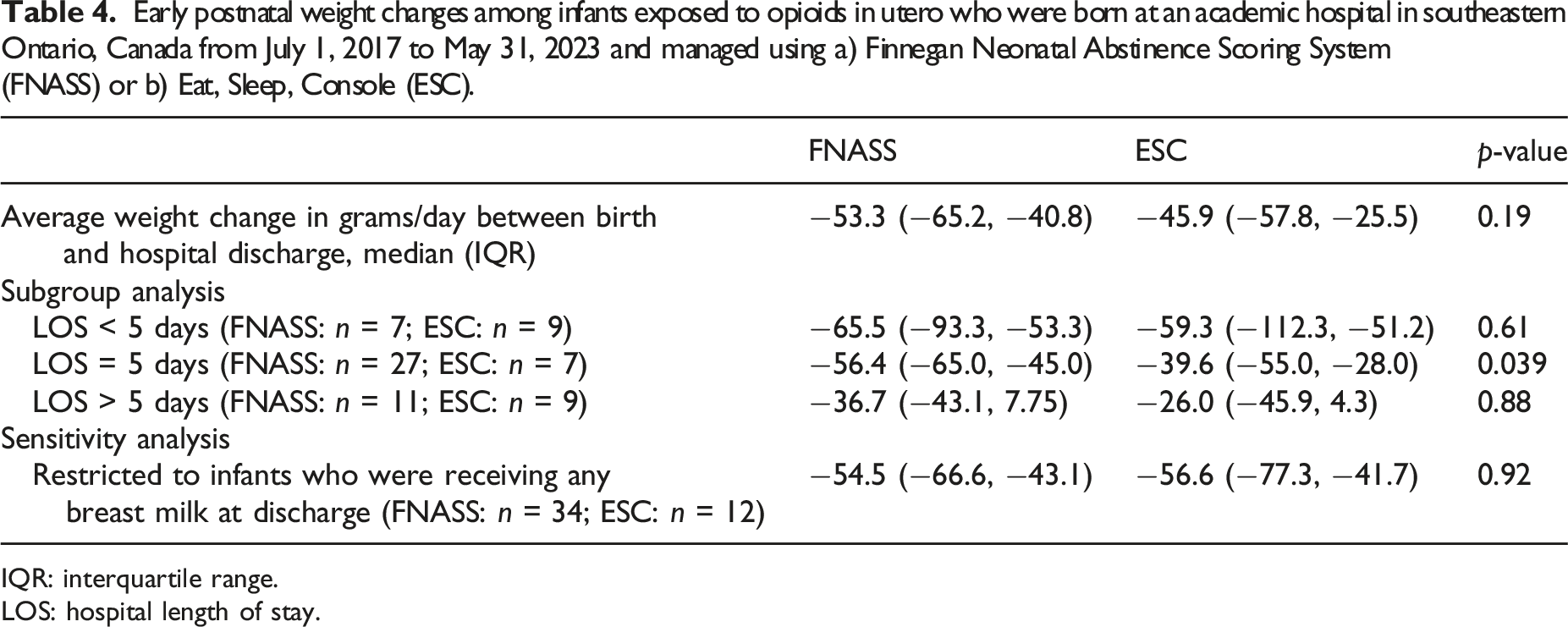
Type of feeding differed significantly between the groups during the first 5 days of life and at discharge: higher proportions of the FNASS group were exclusively breastfed and higher proportions of the ESC group received formula. There were no significant differences in daily weight changes over the first 5 days of life when we controlled for type of feeding. The average daily weight change during hospitalization did not differ significantly between the two groups (FNASS: median = −53.3 grams/day [IQR: −65.2, −40.8]; ESC: median = −45.9 [IQR: −57.8, −25.5]; p = 0.19).
Conclusions
We found no evidence of excessive weight loss in the early postnatal period among opioid-exposed infants managed using ESC as compared to FNASS. However, our findings suggest that breastfeeding should be more actively promoted and supported when centers transition from the FNASS model to ESC.
Introduction
Infants exposed to substances in utero may experience symptoms of withdrawal, known as neonatal abstinence syndrome (NAS) or neonatal opioid withdrawal syndrome (NOWS) for prenatal exposure to opioids specifically. 1 The Finnegan Neonatal Abstinence Scoring System (FNASS) has historically been a common approach for monitoring and managing withdrawal symptoms. However, it has been criticized for poor interrater reliability, lengthy administration time, and a lack of emphasis on the functionality of the newborn.2–4
Another approach, known as Eat, Sleep, Console (ESC), was pioneered at Yale New Haven’s Children’s Hospital. 5 ESC focuses on non-pharmacological management and involves a clinical assessment of the severity of withdrawal symptoms based on an infant’s ability to eat, sleep, and be consoled. 6 Current literature has demonstrated that the pharmacological intervention rate for infants exposed to opioids in utero (“opioid-exposed infants”) decreases significantly after implementation of ESC, as reviewed by Nicholson and Waskosky (2022). 6 A 50% reduction in both average length of stay and variable cost per stay has also been documented.7,8
Despite strong evidence for the clinical benefits of ESC, the authors of a recent study theorized that this approach may place infants at an increased risk of excessive postnatal weight loss due to less aggressive nutritional and pharmacological management. 9 Growth failure is already a serious concern among opioid-exposed infants. 10 They experience hyperphagia and greater weight loss in the early postnatal period compared to non-opioid-exposed infants because of neurologic excitability and gastrointestinal dysfunction. 11 Due to poor growth parameters in early infancy, opioid-exposed infants are at higher risk of long-term complications, which may include neurodevelopmental delay, physical developmental delays, ischemic heart disease, hypertension, and metabolic complications.12,13
It is critical, therefore, to empirically evaluate whether the ESC approach is associated with a greater risk of growth failure. We compared weight changes in the early postnatal period for opioid-exposed infants managed with FNASS versus those managed with ESC.
Materials and methods
The study protocol was reviewed for ethical compliance by the Queen’s University Health Sciences and Affiliated Teaching Hospitals Research Ethics Board (#6038467). The need to obtain parental consent was waived.
Design and setting
In this pre-post study, we reviewed the charts of opioid-exposed infants who were born at the Kingston Health Sciences Centre in southeastern Ontario between July 1, 2017 and May 31, 2023, inclusive. The Kingston Health Sciences Centre is a tertiary-care academic hospital with approximately 2000 births per year.
In 2013, the hospital implemented rooming-in for infants with NAS. This allowed mothers and babies to bond through skin-to-skin contact and to breastfeed in a private room rather than being admitted directly to the NICU, as was standard prior to this practice change. 14 Under the rooming-in model, infants are only admitted to the NICU if they require pharmacological treatment for withdrawal symptoms (or for some other medical reason). As per the hospital’s guidelines, opioid-exposed infants generally are not discharged until day 5 of life to allow sufficient time to monitor them for withdrawal symptoms. Infants with NAS were monitored and managed using FNASS up until July 19, 2020. The ESC model was implemented on July 20, 2020.
Study cohort
Potentially eligible patients were identified by requesting a list of chart numbers from the hospital’s Decision Support Services Unit for infants born between July 1, 2017 and May 31, 2023 who had an ICD-10 code of P04.1 (Newborn affected by other maternal medication), P04.49 (Newborn affected by maternal use of other drugs of addiction), or P96.1 (Newborns experiencing withdrawal symptoms from maternal drugs of addiction) in any diagnostic field of the Discharge Abstract Database. Patients were excluded if they were admitted directly to the NICU after birth or if they were born prior to July 20, 2020—the date the ESC approach replaced FNASS at the Kingston Health Sciences Centre—but were still hospitalized on that date. Infants were also excluded if there was no chart-confirmed exposure to opioids during the pregnancy.
The FNASS group comprised all eligible infants who were born from July 1, 2017 to July 19, 2020; eligible infants born from July 20, 2020 to May 31, 2023 formed the ESC group.
Outcomes
Daily weight changes over first 5 days of life: The difference in weight (grams) between days 1 (=date of birth) and 2, days 2 and 3, days 3 and 4, and days 4 and 5 was calculated by subtracting each previous day’s weight from the following day’s weight.
Average daily weight change between birth and hospital discharge: Each infant’s birth weight was subtracted from their weight at discharge. The result was divided by their hospital length of stay to derive an average daily weight change in grams.
Data collection
One member of the team (ED) abstracted the chart data into a REDCap database. We collected maternal information (age, parity, prescription and illicit drug use during pregnancy, tobacco use in pregnancy, prenatal care, prenatal attendance at an opioid use disorder clinic, caesarean delivery, and pregnancy complications); infant characteristics (sex, gestational age, birth weight, head circumference at birth, and length at birth); whether the infant was admitted to the NICU after initially rooming-in with the mother and the reason for admission; length of stay in the hospital and in the NICU, if admitted (where length of stay equals the number of nights in hospital or in the NICU, such that infants with a hospital length of stay of 5 days, for example, were discharged on day 6 of life); weight on day 2 up to day 5 of life and at discharge; and type of feeding on days 1–5 of life and at discharge (exclusive breastfeeding, formula feeding only, and combination). Weights were measured at standard intervals by the nursing team. For this study, we extracted the weights that were recorded at 24-hour intervals. The discharge weight was the last weight recorded before the infant was discharged from hospital and was generally measured by the night staff during the evening preceding the discharge date. We were unable to measure caloric intake for babies who were breastfed. This is further discussed in the limitations section.
Analysis
The data were analyzed using SPSS v. 29.0.1.0 (IBM Corporation, Armonk, NY). We compared the FNASS and ESC groups on baseline and other characteristics that may have had an impact on infant growth using the Fisher’s exact test for categorical variables and the independent samples t-test for normally distributed variables or the Mann–Whitney U test for skewed distributions.
We fit linear regression models to examine the association between management approach (ESC or FNASS [reference group]) and weight changes over the first 5 days of life while controlling for type of feeding. The models’ residuals were not normally distributed and therefore we used 1000 bootstrap samples (case resampling) to estimate the 95% confidence intervals.15,16
The average daily weight change between birth and hospital discharge was non-normally distributed. Accordingly, we summarized this outcome using medians and interquartile ranges and performed group comparisons using the Mann–Whitney U test. Because the average daily weight change was significantly correlated with the hospital length of stay (p < .001), we further examined this outcome (average daily weight change) within length of stay subgroups (<5, 5, and >5 days). We also conducted a sensitivity analysis where we examined the average daily weight change among only those infants who were breastfed (partially or exclusively) at discharge.
The reported p-values are based on two-sided tests and statistical significance was defined as a p-value of <0.05.
Results
Demographic and clinical characteristics of infants exposed to opioids in utero who were born at an academic hospital in southeastern Ontario, Canada from July 1, 2017 to May 31, 2023 and managed using a) Finnegan Neonatal Abstinence Scoring System (FNASS) or b) Eat, Sleep, Console (ESC).
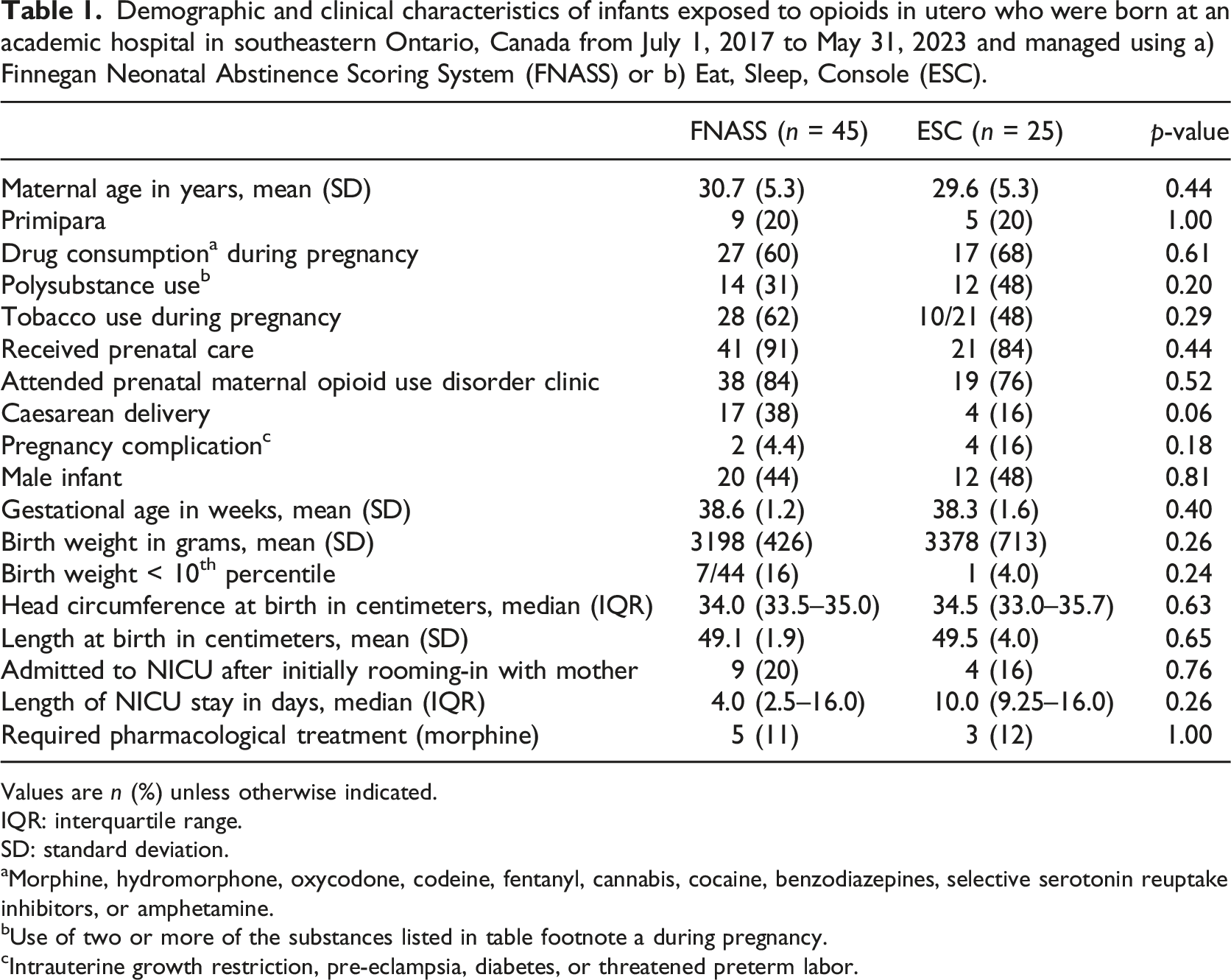
Values are n (%) unless otherwise indicated.
IQR: interquartile range.
SD: standard deviation.
aMorphine, hydromorphone, oxycodone, codeine, fentanyl, cannabis, cocaine, benzodiazepines, selective serotonin reuptake inhibitors, or amphetamine.
bUse of two or more of the substances listed in table footnote a during pregnancy.
cIntrauterine growth restriction, pre-eclampsia, diabetes, or threatened preterm labor.
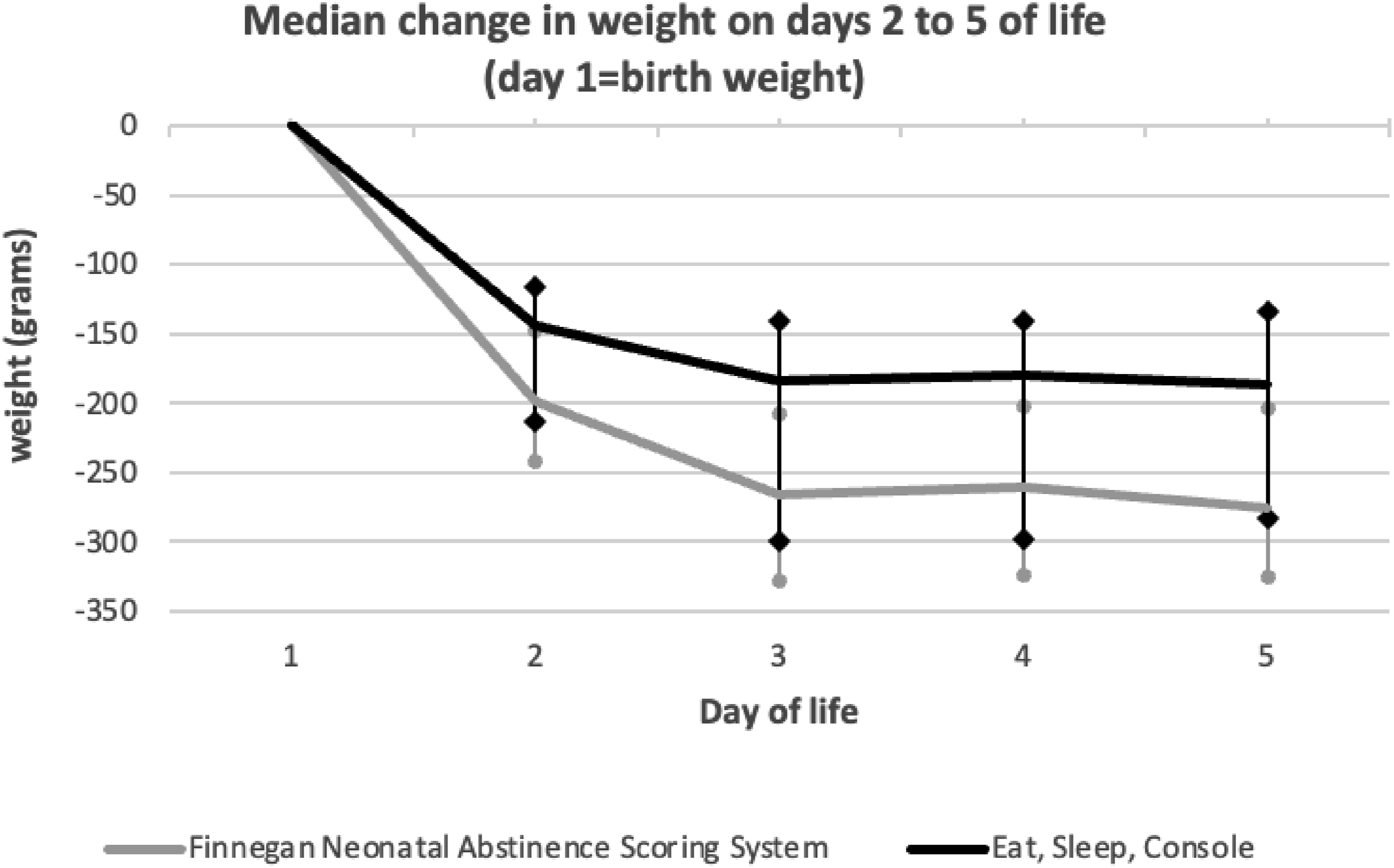
Comparison of median change in weight on days two to five of life among infants exposed to opioids in utero who were born at an academic hospital in southeastern Ontario, Canada from July 1, 2017 to May 31, 2023 and managed using (a) Finnegan Neonatal Abstinence Scoring System (FNASS) or (b) Eat, Sleep, Console (ESC). Vertical bars show the interquartile range.
Type of feeding over first 5 days of life and at hospital discharge among infants exposed to opioids in utero who were born at an academic hospital in southeastern Ontario, Canada from July 1, 2017 to May 31, 2023 and managed using a) Finnegan Neonatal Abstinence Scoring System (FNASS) or b) Eat, Sleep, Console (ESC).
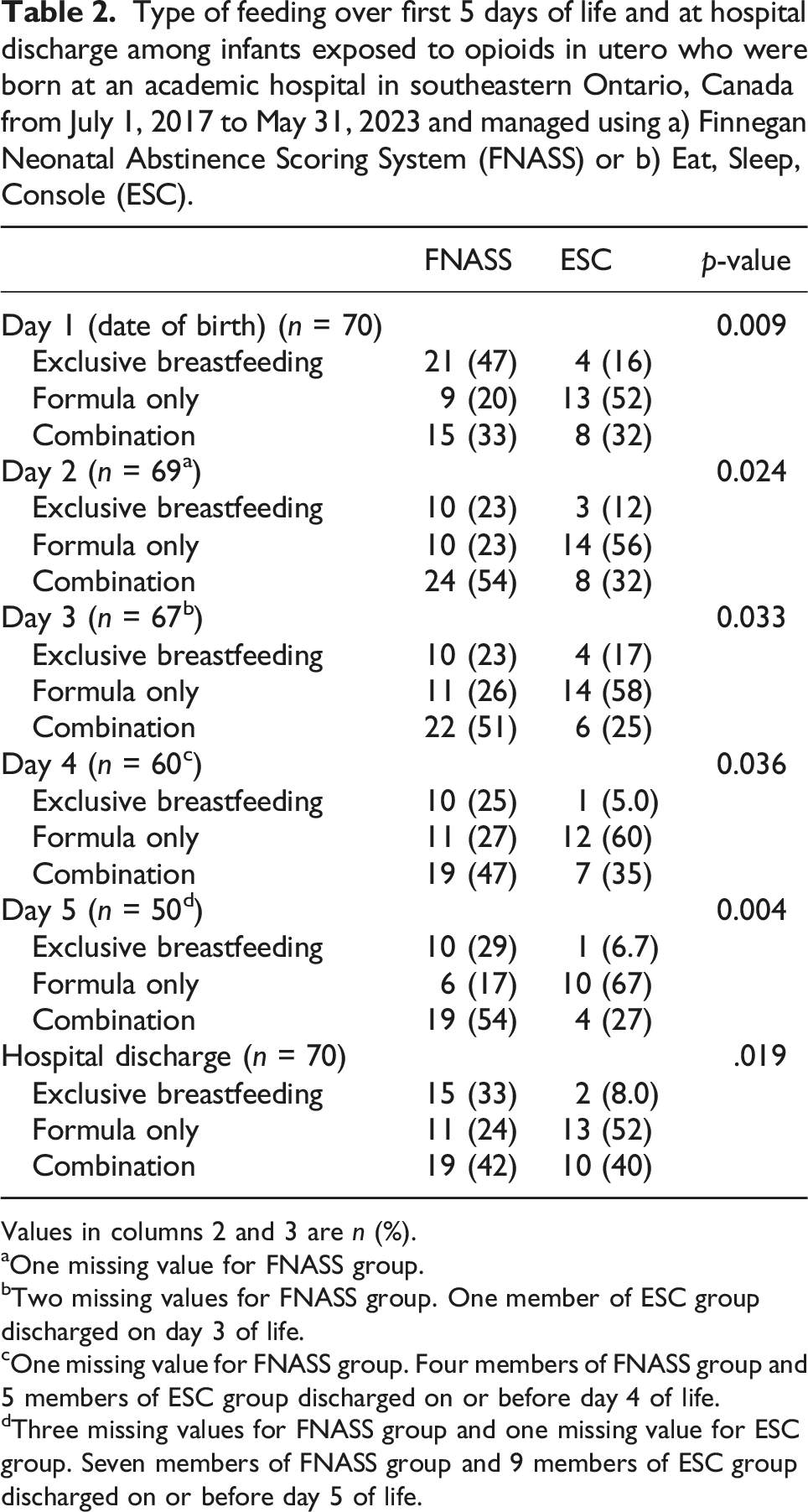
Values in columns 2 and 3 are n (%).
aOne missing value for FNASS group.
bTwo missing values for FNASS group. One member of ESC group discharged on day 3 of life.
cOne missing value for FNASS group. Four members of FNASS group and 5 members of ESC group discharged on or before day 4 of life.
dThree missing values for FNASS group and one missing value for ESC group. Seven members of FNASS group and 9 members of ESC group discharged on or before day 5 of life.
Weight changes during days 1–5 of life among infants exposed to opioids in utero who were born at an academic hospital in southeastern Ontario, Canada from July 1, 2017 to May 31, 2023 and managed using a) Finnegan Neonatal Abstinence Scoring System (FNASS) or b) Eat, Sleep, Console (ESC).
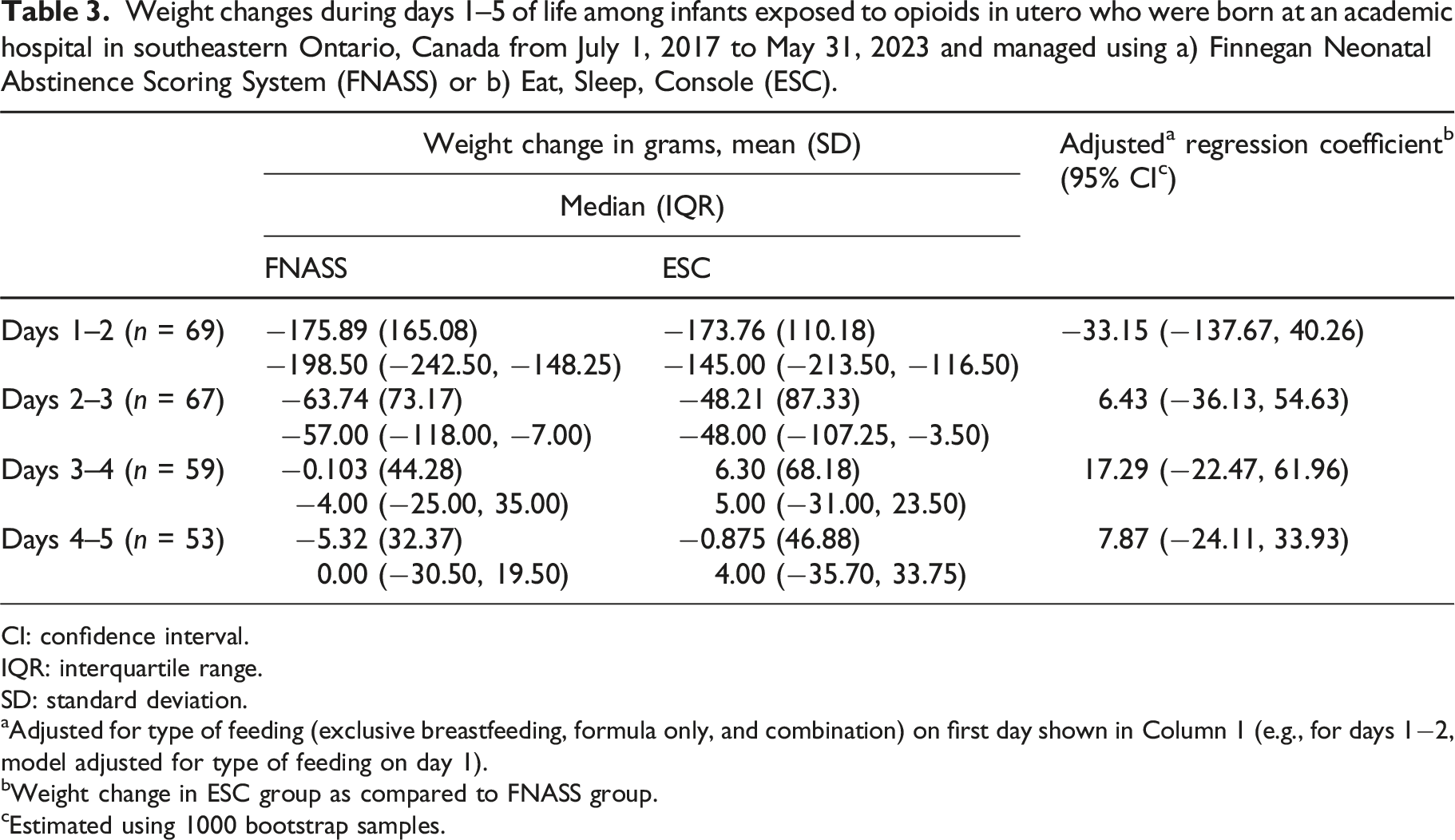
CI: confidence interval.
IQR: interquartile range.
SD: standard deviation.
aAdjusted for type of feeding (exclusive breastfeeding, formula only, and combination) on first day shown in Column 1 (e.g., for days 1−2, model adjusted for type of feeding on day 1).
bWeight change in ESC group as compared to FNASS group.
cEstimated using 1000 bootstrap samples.
Early postnatal weight changes among infants exposed to opioids in utero who were born at an academic hospital in southeastern Ontario, Canada from July 1, 2017 to May 31, 2023 and managed using a) Finnegan Neonatal Abstinence Scoring System (FNASS) or b) Eat, Sleep, Console (ESC).
IQR: interquartile range.
LOS: hospital length of stay.
Discussion
There have been limited investigations into the growth parameters of infants managed with FNASS versus ESC. Our findings do not support the theoretical concerns raised by Favara et al. around ESC and excessive weight loss in the early postnatal period. 9 Rather, our findings are consistent with those of Miller et al., who also conducted a pre-post study of infants managed using FNASS and ESC. They did not observe a significant difference in weight loss on the fifth day of life between the groups. 17 Our findings also align with those of Haaland et al., who conducted a similar evaluation in infants who did not receive any pharmacological treatment for NAS. 18 In fact, in our sample, the ESC infants who were hospitalized for 5 days experienced significantly less average daily weight loss than their FNASS counterparts. This may have been due to a higher rate of formula feeding in the ESC group, although it is also possible this was a chance finding.
In contrast to what we observed, investigators reported a significant increase in breastfeeding rates after their centers transitioned to the ESC model to manage opioid-exposed infants 19 or no change in the proportions of infants who were breastfed. 20 It is concerning that fewer than half of the infants in our ESC group were being breastfed at the time they were discharged, as an increased use of formula feeding in the early postnatal period has been linked to growth modulation and chronic disease in adulthood, including diabetes. 21 It is possible that the COVID-19 pandemic may have partly contributed to the lower breastfeeding rates in the ESC group, as a study by Matthews et al. reported decreased exclusive breastfeeding rates in infants born during the pandemic as compared to those born before the pandemic at one hospital in Ontario. 22 However, the absolute difference was small and therefore our findings may indicate a need to provide greater personalized nutritional care and support when centers transition to the ESC model.
Multiple reports have demonstrated the clinical advantages of ESC. One multicenter cluster-randomized controlled trial that compared “usual care” to the ESC approach among 837 infants showed a statistically significant reduction in the mean length of time from birth until medical readiness for discharge in the ESC group (8.2 vs 14.9 days; adjusted mean difference = 6.7 days [95% CI: 4.7–8.8]). 23 Pharmacological treatment for withdrawal symptoms was also significantly lower in the ESC group (19.5% vs 52.0%, relative risk = 0.38 [95% CI: 0.30–0.47]). 23 While pharmacotherapy and length of stay were not target outcomes in our study, we did not observe any statistically significant differences in pharmacological treatment and length of stay between the FNASS and ESC groups, contrary to the findings of Grossman et al. and Young et al.5,23 This could be attributable to our hospital’s management practices for opioid-exposed infants, which include recommendations to monitor these patients for 5 days before discharge and to allow them to room in with their mothers. When the rooming-in program was implemented at the Kingston Health Sciences Centre, the median length of stay decreased from 24 days (IQR: 12.0–35.5) to 5 days (IQR: 4.0–7.0) (p < .001) and the proportion of infants who required pharmacotherapy decreased from 83% to 15% (p < .001). 14 Thus, rooming-in may have produced a “floor effect” such that it would be difficult to demonstrate any noticeable effects of further interventions on length of stay or need for pharmacological treatment.
Limitations
A limitation of this study was the small sample size, particularly in the ESC group. This may have prevented us from detecting significant weight change differences between the groups, should they exist. We did not examine daily caloric intake. Although this information would be useful to interpret growth patterns, it is a challenge to quantify the volume of milk ingested by breastfed infants, and the number of calories in breast milk. The literature has described several methods to measure caloric intake among breastfed infants, including test weighing, where the child’s weight is taken before and after breastfeeding to estimate intake, or radioactive isotope measurements using saliva and urine samples.24–27 However, these methods do not provide accurate or precise estimates of breast milk volume or caloric intake. Even if we had undertaken a prospective study, then, we would not have attempted to estimate caloric intake.
A higher proportion of infants in the ESC group were exclusively formula-fed during the first 5 days of life and at hospital discharge. While this could explain the generally more favorable point estimates around weight changes in the ESC group (Tables 3 and 4), our results did not provide any evidence of excessive weight loss in the ESC group when we controlled for type of feeding in the regression models. We could not account for temporal or other factors that may have been associated with the outcomes of interest, although no system-level changes in practice that would have affected infant growth were implemented during the study’s time period. Another limitation of the pre-post design concerns potential differences in the groups being compared. We could not control for the sizeable number of factors that may influence infant growth due to the small sample size. However, we observed no group differences in the baseline characteristics listed in Table 1. We did control for type of feeding in the regression models because of the significant differences we observed in that variable.
Finally, because this was a single-site study and other centers may employ different management practices for opioid-exposed infants, the generalizability of our findings is unknown.
Conclusions
ESC is a family-centered approach that emphasizes and supports the involvement of family members in infant care. It facilitates a therapeutic relationship between the hospital providers and family/caregivers and allows for a softening of opioid use disorder stigma. 20
A growing body of evidence supports the benefits of ESC in reducing length of stay and pharmacological treatment of opioid-exposed infants. However, at least one group of investigators raised the theoretical concern that the ESC approach may have a negative impact on infant growth. 9 Our study found no evidence to support this concern, at least in the early postnatal period. More evidence needs to be gathered on the short- and long-term growth of opioid-exposed infants managed using ESC. Our findings also suggest that breastfeeding should be more actively promoted and supported when centers transition from the FNASS model to ESC.
Statements and declarations
Footnotes
Acknowledgments
We thank Yang Ran Cheng for her assistance in preparing this manuscript.
Conflicting interest
The author(s) declared no potential conflicts of interest with respect to the research, authorship, and/or publication of this article.
Funding
The authors received no financial support for the research, authorship, and/or publication of this article.
Ethical considerations
Ethical approval was provided by the Queen’s University Health Sciences and Affiliated Teaching Hospitals Research Ethics Board in advance of implementation and in accordance with the Declaration of Helsinki.
