




Abstract
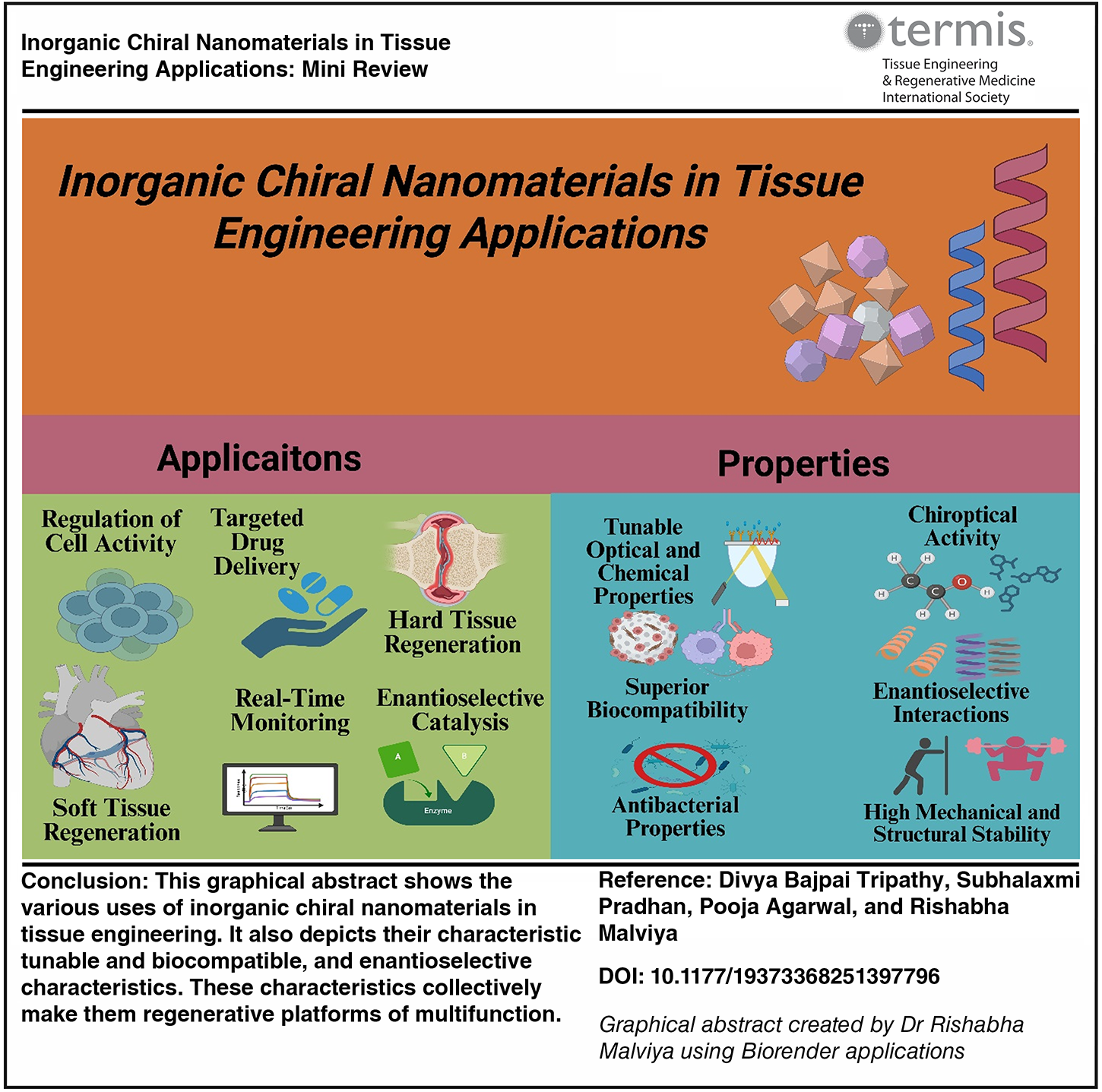
All inorganic nanomaterials such as gold, silica, and cobalt oxide nanoparticles are transforming tissue engineering by providing enantioselective properties with unique characteristics that are mimicking the chirality of biological systems, allowing the precise modulation of cellular behaviors like differentiation and alignment. It is essential for the regeneration of complex tissues such as bone, cartilage, and neural networks, but their clinical application is being obstructed by considerable challenges such as the inability to sustain consistent chirality during synthesis. There are limited means to characterize their molecular structure, the high cost of their production, which constrains their scalability, and the long-term biocompatibility. There are different concerns of these materials in physiological environments, which call for novel solutions such as machine learning-aided synthesis, bioinspired mineralization, and interfacing with cutting-edge technologies such as 3D and 4D bioprinting to design biomimetic scaffolds that facilitate enhanced tissue regeneration. The personalized strategies that are modifying nanomaterial properties to match the distinct requirements of individual patients have the promise of enhancing therapeutic outcomes, and collaborations among materials science, bioengineering, and clinical expertise are needed to standardize protocols, overcome regulatory barriers, and tap the full potential of these nanomaterials. This review is hence a critical appraisal of their revolutionary potential, present limitations, and future promise in enhancing regenerative medicines.
Impact Statement
The research on inorganic chiral nanomaterials in tissue engineering, as presented in the mini review, highlights their unique ability to mimic biological chirality, enhancing cell-scaffold interactions and tissue regeneration. These nanomaterials offer precise control over cellular behavior, improving biocompatibility and functionality in applications such as bone, cartilage, and neural tissue engineering. Their potential to revolutionize the field lies in tailoring chirality for specific tissue responses, advancing personalized medicine and regenerative therapies. This work underscores the need for further exploration into scalable synthesis and clinical translation, paving the way for innovative solutions in tissue engineering and regenerative medicine.
Keywords
Introduction
Tissue engineering integrates scaffolds, cellular components, and bioactive moieties to repair damaged organs or tissue, thereby treating conditions such as bone defects, cardiovascular disease, and neural trauma. Scaffolding design is most important as scaffolds offer a three-dimensional (3D) framework that supports cell adhesion, proliferation, and differentiation. Nanomaterials have transformed scaffold design as they offer a high surface-to-volume ratio, tunable properties, and the capacity to mimic the nanoscale organization of the extracellular matrix (ECM). Inorganic nanomaterials such as gold nanoparticles (AuNPs), quantum dots (QDs), and magnetic nanoparticles (NPs) improve scaffold functionality by offering enhanced mechanical strength, biocompatibility, and bioactivity. The materials can also be used for drug delivery, imaging, and real-time monitoring of tissue regeneration processes. The addition of chirality to inorganic nanomaterials further increases their applications by providing stereospecific interaction with the biological environment, thus enabling accurate control of cellular response and tissue growth. 1
Chirality is a ubiquitous feature of biological systems, occurring at the cellular, tissue, and molecular levels. Most biomolecules, including amino acids, sugars, and DNA, are chiral with homochirality (e.g., L-amino acids and
Chiral inorganic nanomaterials such as chiral gold nanocrystals, semiconductor QDs, and magnetic NPs have been of special interest in biomedicine due to their chiroptical, physical, and chemical properties. In contrast to organic chiral materials, inorganic nanomaterials possess high dissymmetry factors (g-factors), broad spectral ranges, and high stability, which make them usable for biosensing, drug delivery, and therapeutics (Fig 1). In tissue engineering, chiral inorganic nanomaterials can control cell fate, increase scaffold bioactivity, and induce tissue-specific regeneration. For example, chiral AuNPs have exhibited enantioselective effects on cell adhesion and differentiation, and chiral QDs have been investigated for imaging and targeted therapy.4,5
Nanomaterial chirality is a lack of mirror symmetry at the nanoscale, resulting in the existence of enantiomeric forms of left- and right-handed morphologies and distinct physical and chemical properties. Chiral nanomaterials exhibit chiroptic activity in the form of optical rotatory dispersion (ORD) and circular dichroism (CD) effects due to differential interaction with circularly polarized light (CPL).6–8
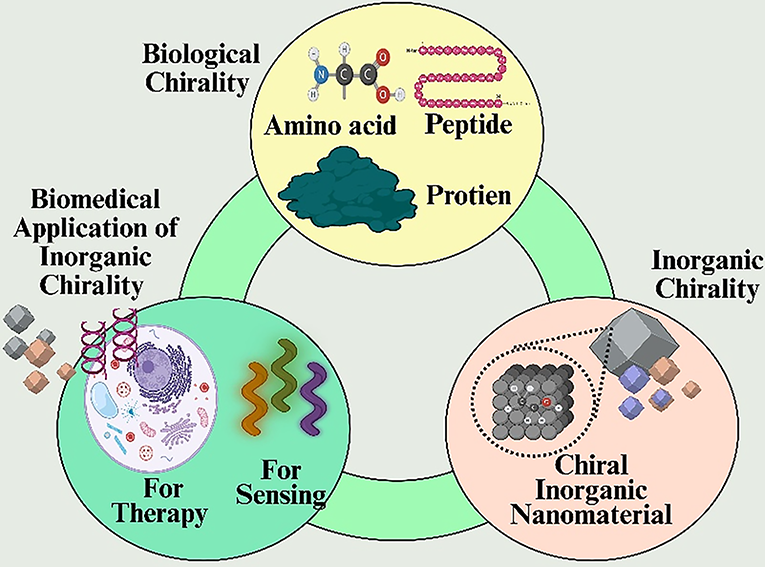
Diagrammatic representation of chirality evolution from biological systems to therapeutic applications.
The current review discusses synthesis and characterization of chiral inorganic nanomaterials to their enantioselective interactions with cell constituents and application in scaffolding design for the regeneration of hard and soft tissues. Some examples such as modulation of cellular behavior, enantioselective catalysis, and drug delivery are explained, and some of the issues such as scalability, biocompatibility, and clinical translation are also discussed. 1
Chiral inorganic nanomaterials classification
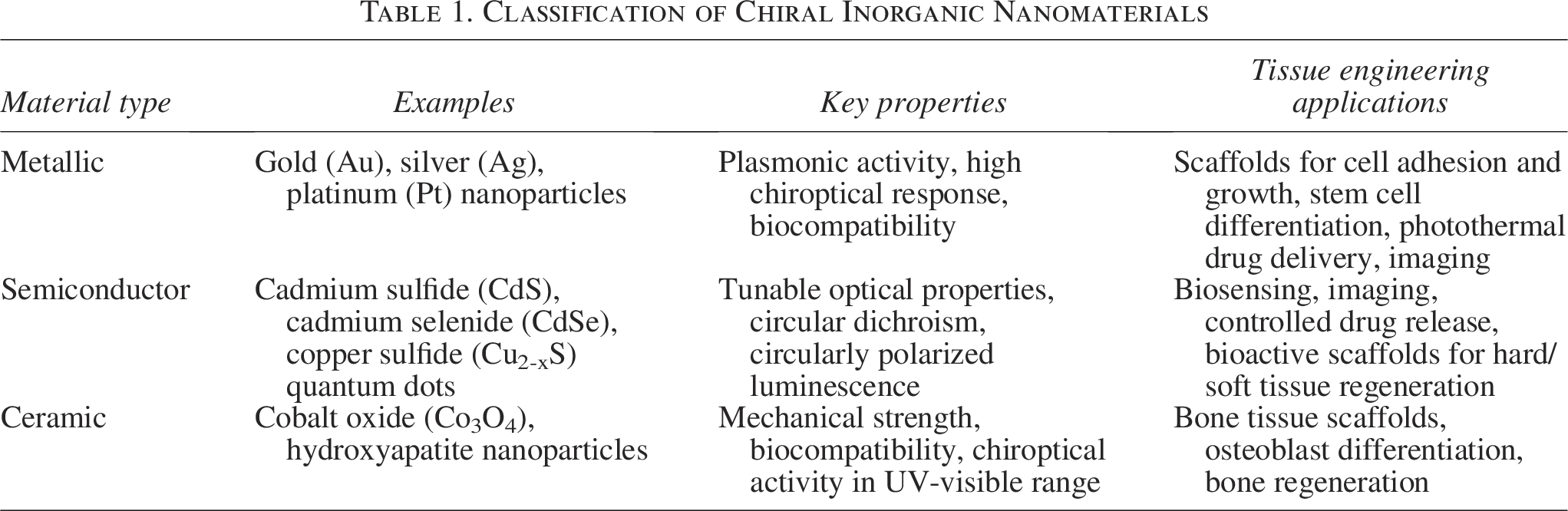
Three general categories of nanomaterials according to material composition are metallic, semiconductor, and ceramic (Table 1).
Classification of Chiral Inorganic Nanomaterials
Metallic chiral nanomaterials
Metallic chiral nanomaterials such as gold (Au), silver (Ag), and platinum (Pt) NPs are widely studied for their plasmonic and high chiroptical activity based on chirality induced by surface ligands or intrinsic lattice distortion. AuNPs, for example, can be prepared with chiral morphologies by employing chiral ligands like
Semiconductor chiral nanomaterials
Semiconductor-derived chiral nanomaterials, such as cadmium sulfide (CdS), cadmium selenide (CdSe), and copper sulfide (Cu2-xS) QDs, are distinguished by chirality through lattice deformations or by functionalization with chiral ligands. They are characterized by their tunable optical properties, including CD and CPL, necessary for biosensing and imaging in tissue engineering. 6 For instance, chiral CdSe/CdS QDs have been employed to monitor cellular processes due to their enantioselective binding with chiral biomolecules, thus facilitating the construction of bioactive scaffolds. Also, penicillamine-derived chiral Cu2-xS QDs are photocatalytic under the action of CPL, and they can be utilized for drug-controlled release in tissue repair. 10
Ceramic chiral nanomaterials
Chiral ceramic nanomaterials such as chiral cobalt oxide (Co3O4) and hydroxyapatite (HAP) NPs are of considerable importance for their mechanical strength as well as their biocompatibility, and hence they find application in bone tissue engineering. NPs of chiral cobalt oxide, synthesized from chiral peptides such as Tyr–Tyr–Cys, possess intense chiroptical properties in the UV–visible region, and hence they find application in being incorporated in scaffolds that favor the differentiation of osteoblasts. 11 Chiral HAP thin films have been shown to possess enantioselective interaction of cell structure, thereby enhancing bone regeneration by replicating the chiral structure of the natural bone matrix. 3
Comparative analysis with organic chiral nanomaterials
Chiral nanomaterials, whether inorganic or organic, play a pivotal role in tissue engineering due to their ability to mimic the stereospecific interactions of biological systems. Chiral nanomaterials that are inorganic, such as Au, silica, and cobalt oxide NPs, will behave much differently than chiral nanomaterials made of organic matters, which can be chiral carbon dots or polymeric scaffolds. Chiral nanomaterials that are inorganic, such as gold, silica, and cobalt oxide NPs, will perform differently from chiral nanomaterials made of organic matter, which are chiral carbon dots or polymeric scaffolds. Organic chiral nanomaterials also have the biomimicry and biocompatibility benefits of being closer to the molecular structures of biological systems than inorganic chiral nanomaterials are. Therefore, a side-by-side comparison of these chiral nanomaterials is important to evaluate their respective merits and shortcomings. Table 2 provides a comparison of inorganic chiral nanomaterials to organic chiral nanomaterials including characteristics, synthesized representations, biological interactions, and tissue engineering applications.
Comparison of Inorganic and Organic Chiral Nanomaterials in Tissue Engineering
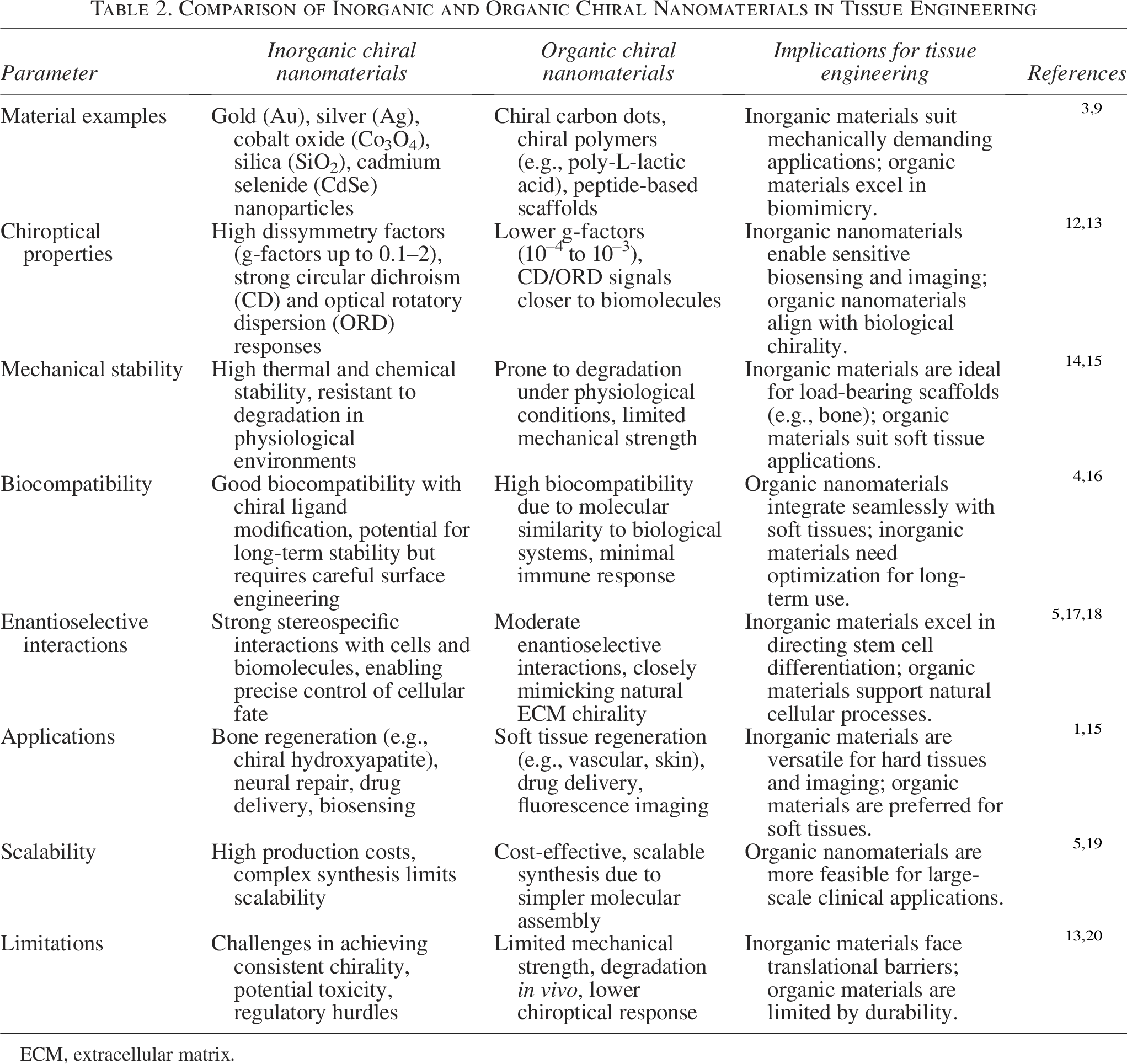
ECM, extracellular matrix.
Mechanisms of Chirality Induction
Chirality in inorganic nanomaterials can be induced by various mechanisms, which apply different physical, chemical, or biological principles to incorporate handedness. Understanding these mechanisms is relevant for the synthesis of nanomaterials with a desired set of chiroptical and biological characteristics for tissue engineering.
Biomolecule-driven induction
The chirality of the biomolecules, such as amino acids, peptides, and nucleic acids, can be used as chiral ligands/templates to develop chiral nanomaterials from inorganic nanomaterials. For instance, the conjugation of L/D-amino acids with AuNPs approves the enantioselective cell or protein interactions, which is very essential in the building of tissue engineering scaffold. 21 Peptide bonds’ hydrogen bonding and chiral centers of the protein molecules control torsional twist of the organometallic moieties in order to obtain helical chirality in the ferrocene–dipeptide conjugates. 22
Light-mediated induction
Helical electric field that characterizes CPL allows it to have specific interaction with achiral precursors creating chiral structures. 23 For example, in this method, the enantioselective polymerization can be achieved simply by irradiating CPL of 980 nm in sodium yttrium fluoride up conversion NPs, thus giving chiral polymer chains of optimized handedness.24,25
Template-based and structural induction
Chiral template or catalyst-directed synthesis of chiral nanomaterial is the structural induction. For example, chiral covalent organic frameworks can form from the utilization of (R)- or (S)−1-phenylethylamine as a chiral catalyst to deliver homochiral structures of a propeller-type conformation. 26 The same way, inorganic nanomaterials, for instance, CdTe QDs could be chiral if they are synthesized using chiral ligands or templates.27,28
Synthesis and Characterization of Chiral Inorganic Nanomaterials
Synthesis routes
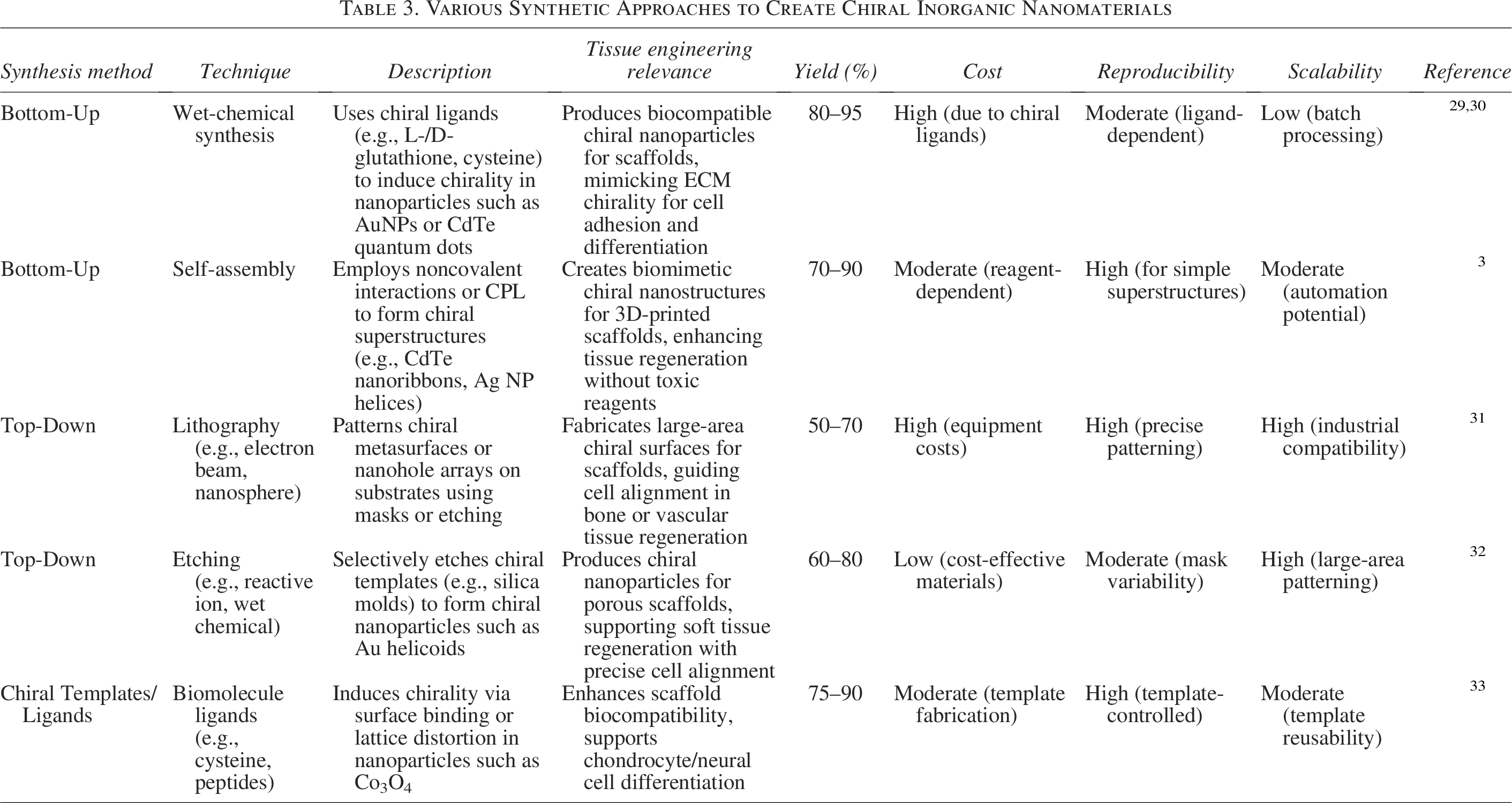
Chiral inorganic nanomaterials could be produced through numerous top-down or bottom-up methods, which each carry different strengths and weaknesses as described below (Table 3). Direct comparisons between all these different methods in a quantitative sense with yield, cost, reproducibility, and scalability are very important to enable their practical use in tissue engineering and beyond. As another example, bottom-up approaches such as wet-chemical synthesis can encompass high-yielding (e.g., 80.95% yield on chiral AuNPs) synthesis but use chiral ligands that incur a high cost and thus are difficult to scale.29,30 In contrast, the top-down methods, such as the electron beam lithography (EBL) provide good reproducibility and scalability to industry; however, they are more expensive to perform, have lower yield (e.g. 50.70% of chiral nanohole arrays) because material is lost during the fabrication process carried out.31,32 This trade-off is restated in Table 3 to inform selection of methods depending on its practicability.
Various Synthetic Approaches to Create Chiral Inorganic Nanomaterials
Bottom-up methods (wet-chemical, self-assembly)
Bottom-up synthesis techniques synthesize chiral inorganic nanomaterials from atomic or molecular building blocks, providing size, shape, and chirality control in precise detail, which are essential for tissue engineering. Wet-chemical synthesis is a basic technique, employing chiral ligands to impose enantioselective growth. Chiral AuNPs, for instance, are synthesized through gold salt reduction with chiral thiols like L- or D-glutathione achieving yields of 80–95% under optimized conditions.29,30 However, the high cost of chiral ligands (e.g., glutathione at $100–200/g) and batch-to-batch variability can limit scalability and reproducibility. 29 They can embed these chiral QDs in hydrogels to construct stem cell differentiation scaffolds used to recreate complex tissues such as cartilage tissue or neuronal tissue. These chiral QDs can be cast into hydrogels to create scaffolds that guide stem cell differentiation, necessary to regrow complex tissues such as cartilage or neural tissue.
Self-assembly, another bottom-up approach, organizes NPs into chiral superstructures via noncovalent interactions, with yields typically ranging from 70–90% depending on the system. 3 CPL is an advanced technique for creating chirality in nanoparticle dispersions. This photoinduced process is useful for tissue engineering because it does not use noxious reagents, providing nontoxic biocompatible chiral nanostructures, which can be filled into 3D-printed scaffolds for optimizing tissue regeneration. Just as peptide-directed self-assembly of metal NPs (such as Ag NPs) also forms helical superlattice, depicting the chiral morphology of collagen and transporting scaffold bioactivity for promoting bone or skin regeneration. 3
Top-down techniques (lithography, etching)
Top-down approaches build chiral nanomaterials by converting bulk materials into nanoscale geometries through advanced micro and nanofabrication techniques, thus obtaining scalability and reproducibility for tissue engineering. EBL is widely utilized to pattern chiral plasmonic meta-surfaces. 31 Nanosphere lithography is a cost-effective alternative, which utilizes self-assembled polystyrene spheres as masks to pattern chiral nanohole arrays on silicon or metal substrates with yields of 60–80% and lower costs ($10,000–100,000 for equipment) but moderate reproducibility due to mask variability. 32 Ha et al. synthesized chiral Au helicoids by selectively etching metal films from chiral silica templates to form NPs with strong CD signals in the visible region. 33
The chiral template and ligand role
Chiral biomolecules, for example, amino acids (e.g., L-/D-cysteine and penicillamine) or peptides, serve as ligands that bind to the surface of NPs, and chirality is introduced via asymmetrical interactions at the surface or lattice distortions. Co3 O4 NPs coated with L- and D-cysteine show yields of 75–85% and high reproduction in controlled synthesis conditions. 19 These NPs may be integrated with hydrogels to form chiral microenvironment and preferentially promote those chondrocyte or neural cell differentiation of nerve or cartilage regeneration. Large-scale production is, however, possible due to the cost of chiral ligands (cost of e.g., cysteine is $50–100/g). 19 Li et al. observed enantioselective rearrangement of cysteine-derived chiral carbon dots-supercoiled DNA, which showed 80–90% yields and moderate scalability by virtue of the wet-chemical methodology (Fig 2). 34
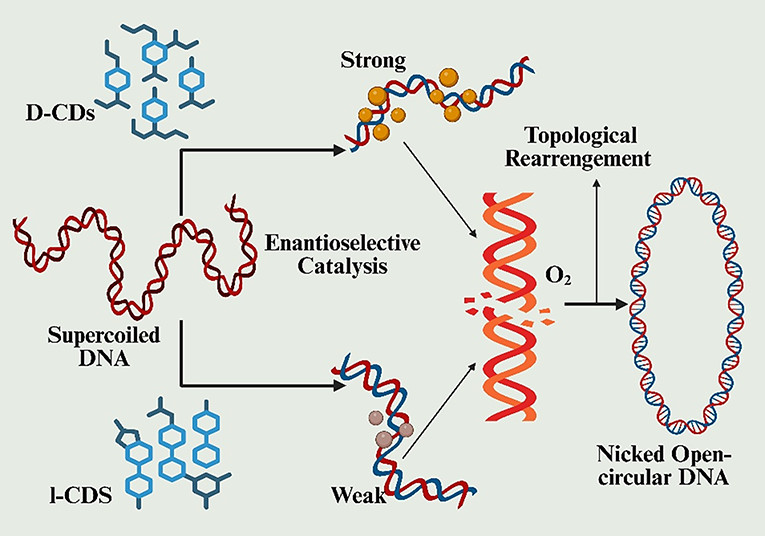
Schematic representation of the enantioselective topological rearrangement of supercoiled DNA utilizing chiral carbon dots.
Chiral templates, such as silica molds or polymer scaffolds, provide enclosed environments for the synthesis of intricate chiral nanostructures. Ha et al. successfully employed chiral silica molds, which were produced through etching chiral Au helicoids, to synthesize Ag, Pd, and Pt helicoids with preserved chirality. 33 Metallic helicoids from these metals are prospective candidates for tissue engineering due to their antibacterial properties and enantioselective interactions. Noncontact templates, such as CPL, are also significant. Cho et al. demonstrated that CdTe NPs can be ordered by CPL into helical assemblies, yielding chiral nanostructures in the absence of physical templates. 3
Characterization methods
Chiroptical analysis (CD, ORD)
Chiroptical techniques, that is, ORD and CD, are crucial in assessing the optical activity of chiral inorganic nanomaterials and their suitability for application in tissue engineering. CD measures quantitatively the differential absorption of right- and left-handed circularly polarized light and provides information on chirality. Chiral Au nanooctopods, for example, fabricated from
Structural analysis (TEM, SEM, X-ray diffraction)
In order to validate the exploitation of chiral inorganic nanomaterials, precise information related to their morphology, dimensions, and other crystallographic characteristics is required. Hence, specific structural characterization procedures are essential to assure their application in tissue engineering scaffolds. In tissue engineering, TEM is also very vital in order to confirm the retention in structural integrity of chiral NPs after they are applied on scaffolds, thus justify the homogenous cellular interaction. Similarly, various scanning electron microscopy (SEM), enable the analysis in respect to the surface morphology, for example, homogeneity of chiral gold nanoplate arrays prepared by lithography.30,31
Quantitative chirality analysis (3D electron tomography)
3D electron tomography is particularly helpful for complex chiral morphologies, such as twisted or helical NP assemblies, hard to detect by 2D imaging. For instance, 3D TEM tomography of CPL-induced CdTe NPs ascertains their helical nanoribbon morphologies with parameters being pitch, twist angle. 14 3D electron tomography in tissue engineering confirms the chiral nanomaterial is holding the target chirality in scaffolds, and this is essential in enantioselective cell signal and tissue regeneration. 33
Properties of Chiral Inorganic Nanomaterials in Alignment to the Tissue Engineering (Continued)
Chiral inorganic nanomaterials, characterized by their nonsuperimposable mirror-image structure, have unique properties that make them attractive candidates for tissue engineering. Some of these are chiroptical responses, enantioselective interactions, mechanical stability, and biocompatibility, each of which supports the accurate control of cellular behavior and mechanisms during tissue regeneration 36 (Table 4 and Fig. 3).
Properties of Chiral Inorganic Nanomaterials for Tissue Engineering
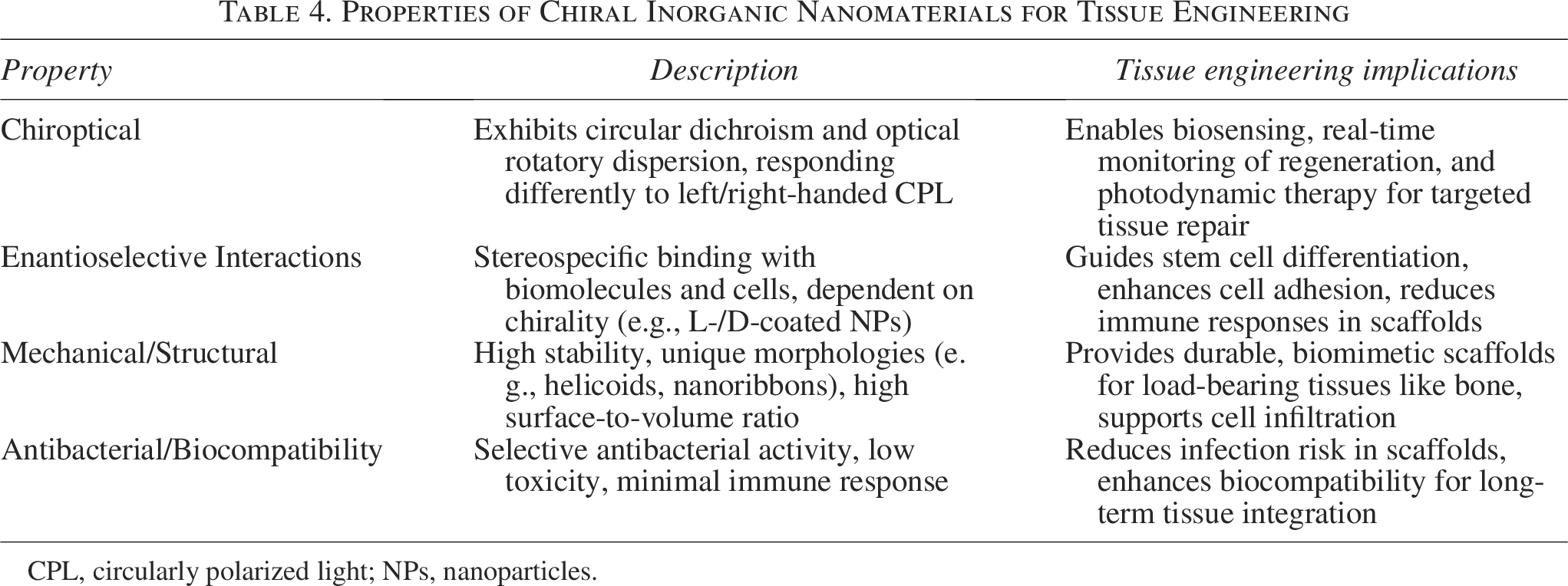
CPL, circularly polarized light; NPs, nanoparticles.
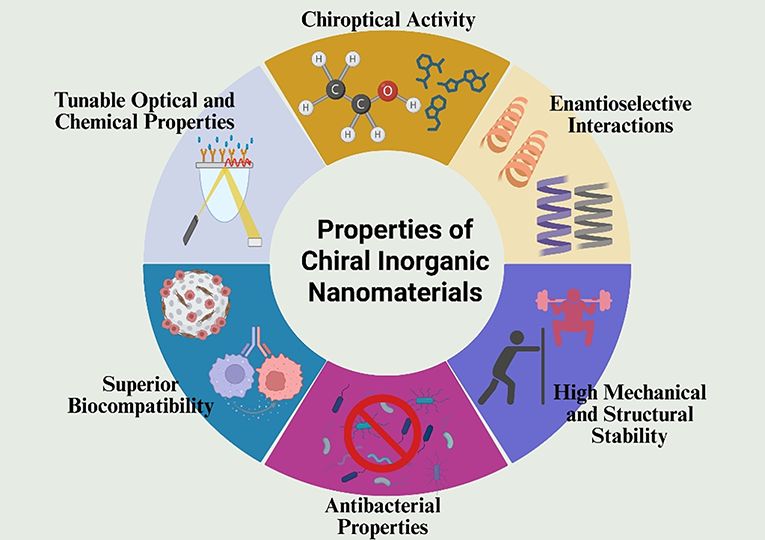
Unique chiral properties of inorganic nanomaterials.
Chiroptical properties and their biological implications
Chiroptical properties in tissue engineering facilitate sensitive biosensing and real-time monitoring of biological processes. The intense CD signals of chiral NPs can be utilized to detect chiral biomolecules, such as proteins or nucleic acids, with high selectivity, allowing for the identification of biomarkers related to tissue regeneration. 37 These aspects highlight the potential of chiroptical nanomaterials in diagnostic and therapeutic applications in tissue engineering. 38
Enantioselective cell and biomolecule interactions
Chiral NPs, such as L- or D-amino acid-coated NPs, have handedness-dependent biomolecule binding to proteins and DNA, affecting cellular uptake, adhesion, and signaling. The above interactions are especially significant for cellular fate control in tissue scaffolds. Chiral nanomaterials have the potential of influencing the direction of stem cell differentiation by mimicking the chiral ECM, thus providing the opportunity for lineage commitment to specific lineages. 39
Mechanical and structural properties
Inorganic chiral nanomaterials are distinguished by their improved mechanical and structural properties, which are desirable for tissue engineering scaffolds. The chiral lattice structures, typically synthesized with biomolecule templates or circularly polarized light, lead to unique morphological features, such as helicoids or twisted nanoribbons, that improve mechanical strength and porosity, allowing cell infiltration. 40 These morphological characteristics enable the creation of scaffolds that are biomimetic of the mechanical properties of the original tissue.14,25,41
Antibacterial and biocompatibility properties
Enantioselective interactions enable chiral NPs to have selective antibacterial activities, which affect the bacterial membranes without affecting the mammalian cells. Additionally, chiral inorganic nanomaterials, especially those ligand-modified with biocompatible ligands such as peptides, are less toxic to cells and induce minimal immune response. Their chiral selectivity in their interactions with chiral biomolecules reduces nonspecific adsorption, thus enhancing biocompatibility.
Application in Tissue Engineering
Chiral inorganic nanomaterials, with their superior optical, chemical, and biological properties, have emerged as new tools for functional organ and tissue regeneration. These materials leverage enantioselective interactions, high biocompatibility, and tunable properties to resolve challenges in scaffold design, control of cell behavior, catalysis of tissue healing, and drug delivery and imaging 42 (Table 5, Fig. 4 and Fig. 5).
Applications of Chiral Inorganic Nanomaterials in Tissue Engineering
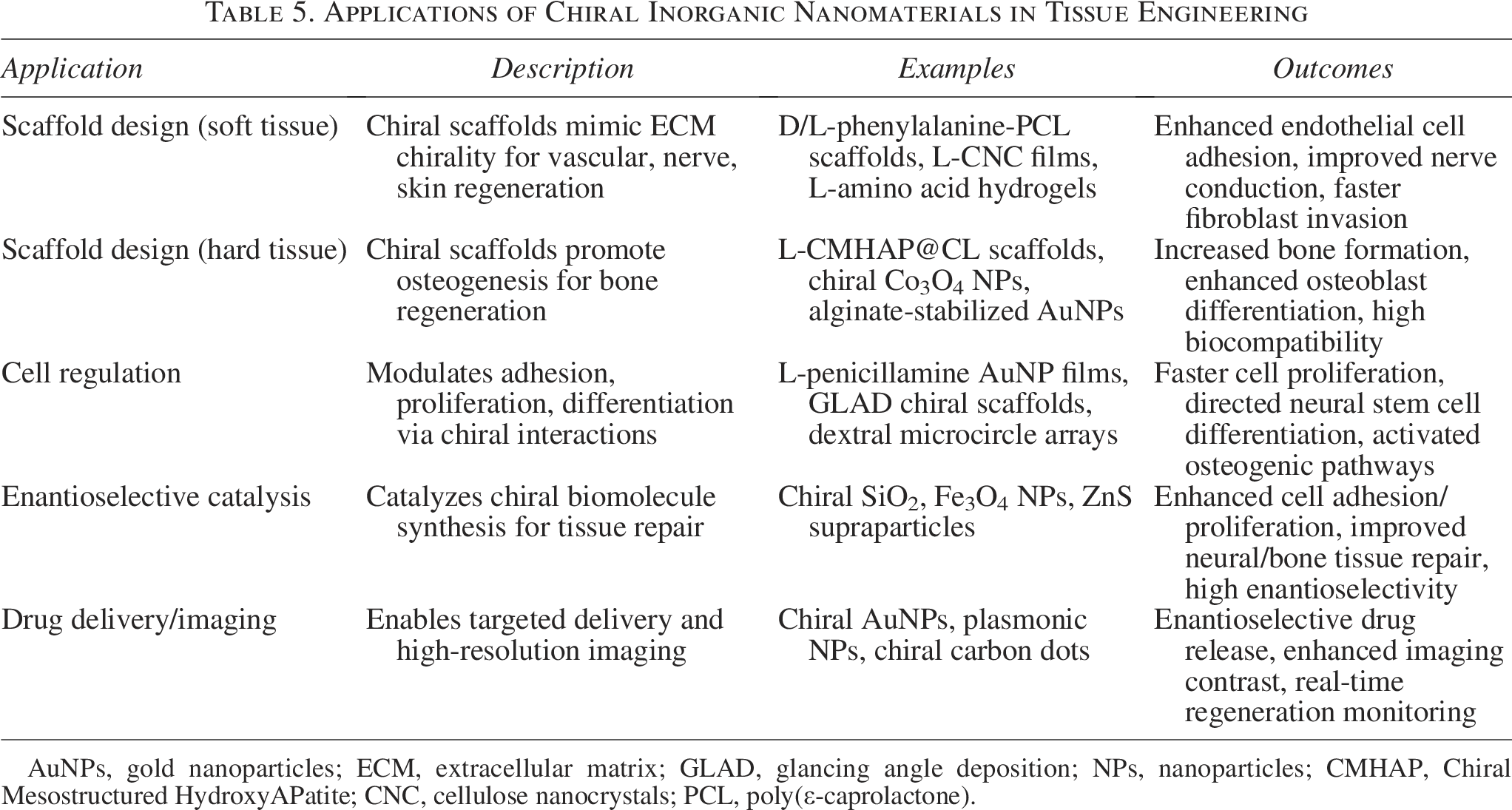
AuNPs, gold nanoparticles; ECM, extracellular matrix; GLAD, glancing angle deposition; NPs, nanoparticles; CMHAP, Chiral Mesostructured HydroxyAPatite; CNC, cellulose nanocrystals; PCL, poly(ε-caprolactone).
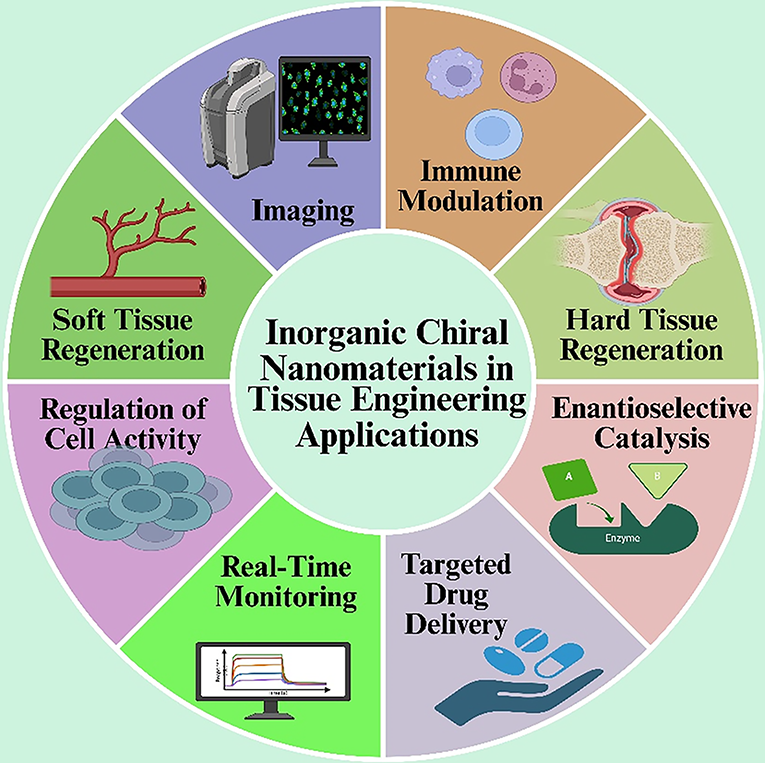
Diagram of illustrating multifunctional applications of chiral inorganic nanomaterials revolutionize tissue engineering through targeted regeneration, immune modulation, and precision therapy.
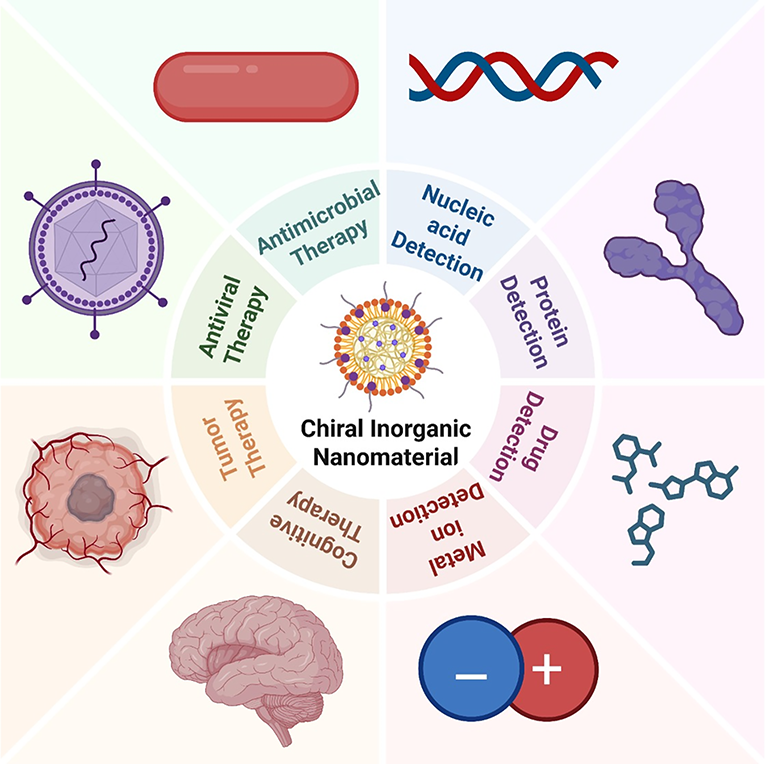
Tissue engineering applications of inorganic chiral nanomaterials.
Chiral nanomaterials in scaffold design
Chiral scaffolds can selectively interact with cells by enantioselective interactions, thus influencing processes such as mechanotransduction, integrin signaling, and gene expression.8,16,43
Chiral scaffolds for soft tissue regeneration
Biological heterogeneity of chiral nanomaterial responses between various cell types and tissue microenvironments necessitates deep in vivo studies, which are not yet available.
4
In tissue engineering, in which cellular fate must be controlled stringently, these translational problems turn into impediments to developing effective therapeutic interventions. Sun et al. (2018) performed a preclinical study, in which they used chiral AuNPs coated with L-cysteine in the targeted repair of neural tissue using a hydrogel scaffold.
44
When compared with achiral controls, the motor functional recovery was also found to have been improved by 20% at week 8 owing to the neuronal stem differentiation and axonal organization of the
Chiral scaffolds for hard tissue (bone) regeneration
Chiral inorganic nanomaterials have also been used widely in the regeneration of hard tissues, including bone tissue engineering, where bioadaptivity to the scaffold and osteogenesis are of key importance. In vivo experiments proved that L-CMHAP@CL scaffolds, prepared with L-tartaric acid, greatly improved angiogenesis and osteogenesis relative to D-CMHAP@CL or achiral scaffolds. The L-CMHAP@CL scaffolds showed enhanced bone formation, evidenced by higher values of integrated optical density (IOD/area of 0.25 compared with 0.20–0.24 for D- and achiral scaffolds) and histological measurements after 24 weeks.
11
Another preclinical study led by Yang et al. (2025) also investigated chiral HAP NPs added to collagen scaffolds on bone regeneration in a rabbit model of the femur defect. The HAP scaffolding modified with
Besides, chiral cobalt oxide nanoparticles L- and D-Tyr-Tyr-Cys ligand-functionalized have been employed in the development of scaffolds with superior chiroptical activity, hence promoting osteoblast differentiation through enhanced biochemical interactions. 42 The inherent chirality of such scaffolds influences intracellular signaling pathways, for example, p38/mitogen-activated protein kinase (MAPK), that control stem cell fate toward osteogenic lineages.29,46
Regulation of cell activity (adhesion, proliferation, differentiation)
Chiral materials with their nonsuperimposable mirror-image conformation interact stereospecifically with biological systems, thus regulating cellular outcomes by multiple mechanisms such as modulation of adhesion receptors, intracellular signaling pathways, and gene expression profiles.
17
For instance, thin films of
Enantioselective catalysis to tissue repair
Inorganic chiral nanomaterials are a revolutionary paradigm in tissue engineering and have received attention based on their capability to induce enantioselective catalysis that can be tailored for application in tissue regeneration.28,48
Tetrahedral SiO4 units-bearing chiral silica (SiO2) nanomaterials as a solid support for enantioselective catalysis can be designed to inherit chirality from organic templates and thus facilitate the synthesis of chiral biomolecules to support cell adhesion and proliferation towards tissue repair. 49 In addition, chiral metal oxide NPs such as poly(amino acid)-modified Fe3O4 have been found to show an enantioselective catalytic activity. 50
In tissue regeneration, the enantioselective activities of these nanomaterials are more concerned about the regulation of cellular function. These chiral nanomaterials engage with cells and biomolecules to regulate adhesion receptors, intracellular signaling pathways, and gene expression, factors critical for the regulation of stem cell differentiation and tissue repair.51,52 Chiral HAP modifies enantioselective implant-bone interaction toward controlling osseointegration and for assisting bone tissue repair for treatment of osteoporosis. 45
Inorganic chiral nanomaterials are synthesized for enantioselective catalysis via chiral ligand-supported synthesis, chiral molecule-directed postmodification, or chiral template-controlled in situ synthesis.28,53 Recently, 3D chirality recognition cavities can be generated in the supraparticles of self-assembled ZnS, thus overcoming these limitations as demonstrated by enhanced catalytic activity and enantioselectivity. 28
Chiral inorganic nanomaterials for drug delivery and imaging applications for tissue engineering
Inorganic chiral nanomaterials such as chiral metal NPs, semiconductors, and carbon nanostructures possess enantioselective interactions that maximize their performance in biological systems (Fig. 6). 1 In drug delivery, stereospecific interactions between chiral nanomaterials and biomolecules maximize targeted delivery and therapeutic performance. For instance, chiral AuNPs with chiral ligand modification have been shown to maximize cellular uptake and enable enantioselective drug release, a function that is very crucial for accurate tissue regeneration. 54 Chen et al. (2023) conducted a preclinical study of chiral SiO2 NPs as drug carriers of intestinal tissue repair in a mouse model setting. 54 The enantioselectivity of the L-penicillamine-functionalized SiO2 NPs in interacting with intestinal mucosa increased the oral adsorption of insoluble drugs by 25% over the D-penicillamine- functionalized NPs and tissue repair in investigated models of inflammatory bowel disease.
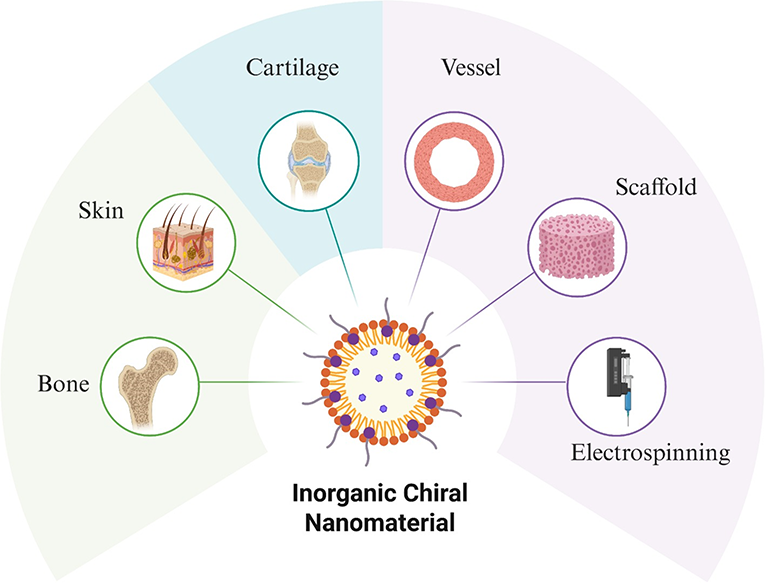
Diagnostic and therapeutic applications of chiral inorganic nanomaterials.
In imaging, inorganic chiral nanomaterials utilize their robust CD and CPL to offer high-resolution bioimaging. Chiral plasmonic NPs, such as those of gold or silver, offer improved contrast in imaging modalities such as fluorescence and photoacoustic imaging to facilitate real-time monitoring of tissue regeneration processes. 4 Hou et al. (2020) conducted a preclinical experiment in an Alzheimer’s mouse model where they imaged the mice using a chiral AuNP. The AuNPs with the L-cysteine coating demonstrated enantioselective binding to amyloid-beta plaques, which made the high-point photoacoustic imaging performed with them exhibit 15% increase in contrast as compared with the achiral NPs due to their ability to compensate their usage in the real-time monitoring of the tissue regeneration. 52
Their catalytic activity is also exploited to replicate enzymatic activity for the purpose of triggering cell proliferation and differentiation. Chiral cobalt oxide NPs, for example, have been reported to induce osteogenesis by selectively stimulating bone cells for scaffold-guided regeneration of tissue. 1
Challenges and Limitations
One of the biggest challenges of synthesizing inorganic chiral nanomaterials is the accurate control of chirality in synthesis. 20 In tissue engineering, where chiral recognition is needed to guide stem cell differentiation or perform tissue-specific functions, inconsistent chirality can lead to uncontrollable biological responses. 28
Another limitation is related to the characterization of chiral nanomaterials at the nanoscale and the molecular length scales. While techniques such as CD spectroscopy and electron microscopy are helpful in collecting information about chiral properties, identifying the exact mechanisms by which chirality is transferred from organic templates or ligands to inorganic frameworks is a major challenge.3,19
The majority of the synthesis pathways, including those involving chiral biomolecules or complex lithographic methods, are accompanied by high cost and prolonged times, making large-scale production economically unfeasible. 5
Chiral inorganic nanomaterials such as gold, cobalt oxide, and silica NPs exhibit promise of biocompatibility, but their long-term stability and safety in biological systems remain to be explored in their entirety. Nanomaterials, in tissue engineering, must be stable in their chirality and structural integrity under physiological conditions without eliciting unwanted immune responses or toxicity. 4
The existing literature indicates that in vitro research shows good levels of biocompatibility of chiral nanomaterials, such as AuNP surfaces covered with biocompatible ligands, yet substantial in vivo data are lacking to confirm that these results are true. As an example, there have been studies into chiral AuNPs, which have revealed minimal cytotoxicity in cell studies, although little is known about their long-term in vivo behavior, especially in relation to biodistribution, clearance, and the possibility of chronic effects and immune activation. 55 Likewise, the chiral silica NPs have also demonstrated some potential in drug delivery because of the enantioselective interaction, but the long-term safety including a possible tissue or organ accumulation has not been investigated. 56 That discrepancy in in vivo data falsifies their translational value because unexpected interactions with complex physiological environments may cause negative effects, for example, inflammation or organ dysfunction. Long-term in vivo research is essential to determine the capacity of these nanomaterials to maintain chiral properties under normal biological conditions as well as to scrutinize whether these nanomaterials will directly trigger unwanted immune interactions or toxicity with time. 57
The clinical translation of chiral nanomaterials is also faced with the severe challenges of regulatory and ethical concerns in tissue engineering. Regulatory agencies, including the U.S. Food and Drug Administration (FDA) and the European Medicines Agency (EMA), demand strict safety and efficacy data; these are absent at present since use of chiral nanomaterials is still new. These materials have no standardized protocols of synthesis, characterization and preclinical testing, making it complex to have such medical devices or diagnostic therapies passed through the regulatory processes. Ethical considerations are possible health complications in people due to accumulating nanomaterials in the body over a long period, which may come with unknown adverse health impacts, and the necessity of granting equitable access to such advanced therapies, lest resulting in health care disparities. To deal with these problems, the development of interdisciplinary knowledge will be essential in providing a clear set of regulatory standards and frameworks of ethical conduct to help keep patients out of harm and society at large. 58
The clinical translation of chiral nanomaterials is also faced with the severe challenges of regulatory and ethical concerns in tissue engineering. Regulatory agencies, including the U.S. FDA and the EMA, demand strict safety and efficacy data; these are absent at present since the use of chiral nanomaterials is still new. These materials have no standardized protocols of synthesis, characterization and preclinical testing, making it complex to have such medical devices or diagnostic therapies passed through the regulatory processes. Ethical considerations are possible health complications in people due to accumulating nanomaterials in the body over a long period, which may come with unknown adverse health impacts, and the necessity of granting equitable access to such advanced therapies, lest resulting in health care disparities. To deal with these problems, the development of interdisciplinary knowledge will be essential in providing a clear set of regulatory standards and frameworks of ethical conduct to help keep patients out of harm and society at large.
The chiral nanomaterials do not have standardized methods of synthesis and characterization making them unrecognizable as a medical device and difficult to obtain clinical approval. In addition, the biological heterogeneity of chiral nanomaterial interactions due to cellular variation and tissue microenvironments requires extensive in vivo studies, which have yet to be done. 4 Challenges to translational research are even more prevalent in tissue engineering, where cellular behavior must be tightly controlled.
Future Prospects
The application of chiral inorganic nanomaterials for tissue engineering stands at the precipice of gigantic strides, with the push arising from progress through synthesis, coordination with frontier technologies, and transdisciplinary.
Advanced synthesis and chirality control
New methods, such as Machine Learning (ML)-augmented synthesis and high-throughput screening automation, should be able to provide atomic-level control over chirality by 2030 to potentially enable the fabrication of nanomaterials with consistent handedness and characterized functionality. 5 As another example, ML algorithms can be used to model optimal chances of synthesis of chiral AuNPs, and this can improve their selective associations with the biological systems. 59 Research is also in progress to develop bioinspired or biomimetic methods to achieve cost-effective and environmental friendly chiral nanomaterials, where natural phenomenon such as mollusk shell formation is being used. It is reasonable to expect that these approaches will be commercially scalable within 10 years and increase the availability to clinical use. 60
Enhanced cellular interactions
The use of specific geometry nanomaterials such as the helical silica nanoparticle is currently being experimented on to facilitate the osteogenic differentiation of bone repair and the alignment of nerves. Research into the potential impact of chiral graphene oxide scaffold has shown that differentiation by mesenchymal stem cells after their exposure to the scaffold has occurred up to 25% faster than the achiral counterparts with potential clinical trials expected to take place in 2028. 61 In the same way, carbon nanotubes that are chiral have demonstrated a possibility in directing the alignment of nerve cells and the speed of nerve repair procedures is likely to happen within 5–7 years. 34
Integration with 3D and 4D bioprinting
The use of chiral nanomaterials in 3D bioprinting is rapidly increasing, whereby chiral gold or silica NPs incorporated into hydrogels can recapitulate chiral cues of the extracellular environment and dictate the orientation of cells and directed cell differentiation. As an example, chiral silica NPs demonstrated an increase in the biofunctionality of a scaffold by 30%, in regard to cell adhesion and proliferation. 62 With the introduction of 4D bioprinting, the structures formed are not set, but are formed over time, and will likely utilize the dynamic chirality under physiological conditions, that is, movement in pH or temperature, to allow the formation of adaptive tissues. By 2032, research groups are aiming at a functional 4D-printed chiral scaffold to be used in the soft tissue engineering process.
Personalized modeling and bioinformatics
There is also the need to develop patient-tailored modeling and advanced bioinformatics to enable the design of biocompatible chiral nanomaterials according to the immune profile of an individual patient. Computation platforms involving single-cell RNA sequencing in combination with molecular dynamics simulations will have the ability to predict nanomaterial-immune interactions with 90% accuracy and help to cut down adverse effects by 2035. 63 The future will be anchored in implementing algorithms to design chiral nanomaterial surface chemistry with an aim of facilitating its tailored tissue engineering applications. 64
Interdisciplinary collaboration between bioengineering, materials science, clinical research, and computational modeling is necessary to realize the full potential of chiral nanomaterials. Such areas of research are the standardization of protocols and measuring chiral nanomaterials by 2027 and regulatory standards of clinical translation in 2030. Combined efforts, including chiral nanomaterials in the context of gene editing-based neutropenias, are proposed to optimize the final result of tissue regenerations. These efforts are expected to yield breakthroughs in scalable, clinically viable applications within the next 10–15 years.
Conclusion
Advancements in synthesis and characterization technologies position chiral NPs as essential components of next-generation tissue engineering techniques. Key areas necessitating increased focus include the development of scalable and cost-effective synthesis protocols, the optimization of characterization protocols to elucidate chirality mechanisms, and the execution of comprehensive in vivo studies to assess long-term biocompatibility and efficacy. Translational studies must also be conducted to establish standardized methodologies and effectively navigate regulatory pathways for clinical translation. Interdisciplinary collaboration is essential to tackle these issues and to translate chiral nanomaterials from laboratory advancements to significant clinical applications.
Authors’ Contributions
All authors contributed equally with no competing interests.
Footnotes
Author Disclosure Statement
No competing financial interests exist.
Funding Information
No funds received for this work.