




Abstract
Tooth regeneration is an exciting frontier in regenerative medicine, yet comprehensive cross-disciplinary analysis of its research landscape remains limited. This study presents the bibliometric analysis, integrating data from Web of Science (WOS) and Scopus, to quantify publication dynamics, journal influence, thematic structure, and translational priorities. Following PRISMA guidelines, we conducted a comprehensive search using keywords related to tooth regeneration, dental tissue engineering, and regenerative dentistry. After systematic screening and quality assessment, 925 articles were analyzed using descriptive statistics to identify publication trends, the most active and cited journals, and VOSviewer co-occurrence analysis to visualize the thematic mapping. The analysis revealed robust field growth. Among the 395 journals that published articles, the top 10 contributed 20% of publications, with the Journal of Dental Research (n = 35) and the Journal of Endodontics (n = 31) leading in productivity. The journals Scientific Reports and Biomaterials achieved the highest Eigenfactor score, while the Science Translational Medicine demonstrated the greatest journal prestige (SJR = 6.722). Co-occurrence analysis identified 384 unique keywords, revealing the presence of four research clusters: Biomaterials and Advanced Scaffold Design; Cellular and Experimental Foundations; Clinical Endodontics and Periodontal Regeneration; Developmental Biology and Tooth Morphogenesis. Stem cell dynamics emphasizes three groups of stem cells: dental-derived cells, specialized cell types and non-dental derived cells. Our bibliometric analysis provides a comprehensive review of the tooth regeneration landscape. Thematic synthesis of stem cells led to an understanding of the field's current limitations, challenges, and cutting-edge trends. This manuscript represents the first dual-database bibliometric and visualization-driven analysis of tooth regeneration research. It quantifies global publication dynamics, highlights the pivotal contributions of leading journals, and delineates four critical thematic clusters: Biomaterials and Advanced Scaffold Design, Cellular and Experimental Foundations, Clinical Endodontics and Periodontal Regeneration, and Developmental Biology and Tooth Morphogenesis. By systematically mapping stem cell applications into dental-derived, specialized, and non-dental populations, this study provides a novel cellular framework for evaluating translational readiness. Furthermore, it underscores emerging frontiers such as 3D bioprinting, bioactive scaffolds, exosome-based therapies, and genetic modulation, while identifying persistent challenges in vascularization, innervation, enamel regeneration, and clinical scalability. Collectively, this analysis offers clinicians, researchers, and policymakers a strategic roadmap for advancing functional tooth regeneration from laboratory innovation to clinical application.
Impact Statement
This article represents the first dual-database bibliometric and visualization-driven analysis of tooth regeneration research. It quantifies global publication dynamics, highlights the pivotal contributions of leading journals, and delineates four critical thematic clusters: Biomaterials and Advanced Scaffold Design, Cellular and Experimental Foundations, Clinical Endodontics and Periodontal Regeneration, and Developmental Biology and Tooth Morphogenesis. By systematically mapping stem cell applications into dental-derived, specialized, and nondental populations, this study provides a novel cellular framework for evaluating translational readiness. Furthermore, it underscores emerging frontiers such as three-dimensional bioprinting, bioactive scaffolds, exosome-based therapies, and genetic modulation, while identifying persistent challenges in vascularization, innervation, enamel regeneration, and clinical scalability. Collectively, this analysis offers clinicians, researchers, and policymakers a strategic road map for advancing functional tooth regeneration from laboratory innovation to clinical application.
Introduction
Regenerative medicine has developed therapeutic approaches across multiple medical fields, 1 with tooth regeneration having evolved as a specialized field addressing the unique challenges of dental tissue regeneration. Tooth loss remains a global challenge, impacting oral function, esthetics, and overall well-being, leading to detrimental effects such as digestive issues, altered facial appearance, speech impediments, and various psychological effects. 2 Current treatment modalities for tooth damage and loss often rely on synthetic materials that, while restoring structural integrity, lack the biological functions of natural dental tissues, such as the capacity for nerve and blood supply.3,4 The limitations of these traditional approaches, including potential biocompatibility issues, underscore the necessity for innovative strategies like tooth regeneration that aim to reconstruct lost dental tissues biologically.
Recent progress in dental tissue engineering, utilizing stem cells, 5 advanced biomaterials, 6 and three-dimensional (3D) bioprinting, 7 shows promise for functional tooth regeneration. While periodontal tissue and partial tissue regeneration are progressing well, 8 the complete clinical restoration of the whole tooth remains an aspirational goal.
Bibliometric reviews are a widely used research method that provides valuable snapshots of specific subdomains in regenerative periodontics, 9 dental pulp regeneration, 10 regenerative endodontics,11B12 -14 and dental stem cells, 13 tracing publication growth, citation networks, and research impact within these specific areas. 12 However, previous bibliometric reviews have primarily focused on isolated topics within the field, which limits the ability to make cross-disciplinary comparisons and hinders a comprehensive understanding of the evolution of tooth regeneration as a unified research domain. In addition, a notable limitation has been the risk of single-source dataset bias, as most data have been obtained from either Web of Science (WOS) or Scopus, potentially overlooking significant segments of literature. Previous bibliometric studies lacked comprehensive keyword mapping to identify which research disciplines contribute to tooth regeneration across the entire field. As highlighted by previous studies, research on dental regeneration encompasses an extraordinarily diverse range of methodologies and results, spanning experimental techniques, materials, preclinical and clinical progress, target sites, and molecular mechanisms. Recognizing this diversity, our study aims to integrate these fragmented perspectives into a single, holistic bibliometric framework to provide a comprehensive overview of the entire field.
To address these limitations, our study presents the first dual-database (WOS and Scopus) bibliometric analysis, offering a unified and cross-disciplinary perspective on the entire field of tooth regeneration research.9B10 -14 This study aims to address gaps by conducting a comprehensive bibliometric analysis of the tooth regeneration field, applying transparent vocabulary normalization. This approach aims to integrate insights from more focused studies and map the interdisciplinary connections that shape this rapidly evolving field. Specifically, this analysis will address the following research questions (RQs): What has been the publication growth trend focused on the tooth regeneration field? Which journals are currently the most active in publishing research related to tooth regeneration? Which journals are currently the most cited in the tooth regeneration field? What are the main themes that constitute the thematic map of the tooth regeneration field?
These RQs are addressed by constructing a sample dataset of publications, applying transparent vocabulary normalization, and integrating descriptive and co-occurrence analyses.
Methods
Bibliometric analysis was used to systematically evaluate the scientific landscape of tooth regeneration research, following the Preferred Reporting Items for Systematic Reviews and Meta-Analyses (PRISMA) protocols for rigor and reproducibility. 15 The methodology was designed to ensure comprehensive coverage, data integrity, and analytical robustness, drawing on best practices from recent bibliometric studies in regenerative medicine fields. 16 Ethical considerations do not apply to our bibliometric analysis, which utilizes only public, peer-reviewed articles.
Data source and search strategy
The primary data sources used for this study were the Scopus and WOS databases, recognized for their extensive coverage and reliability in bibliometric research. 17 To formulate an effective search strategy, we conducted a preliminary analysis of keywords extracted from the titles and abstracts of articles relevant to our research field. This process enabled us to compile a comprehensive search query-(“tooth regenerat*” OR “teeth regenerat*” OR “dental regenerat*” OR “bioengineered tooth” OR “dental stem cells” OR “dental tissue regeneration” OR “regenerative dentistry” OR “tooth regeneration transplantation” OR “tooth tissue engineering”). By using this careful approach, we aimed to include studies that are most relevant to our research.
The PRISMA flow diagram was constructed to detail the data identification, screening, eligibility, and inclusion. We conducted our search on February 12, 2025. Using inclusion criteria, we identified 3318 records in both databases (see Fig. 1). The review protocol was registered on September 19 on the Open Science Framework (OSF) platform (DOI10.17605/OSF.IO/45MGJ), and no amendments were made during the study.
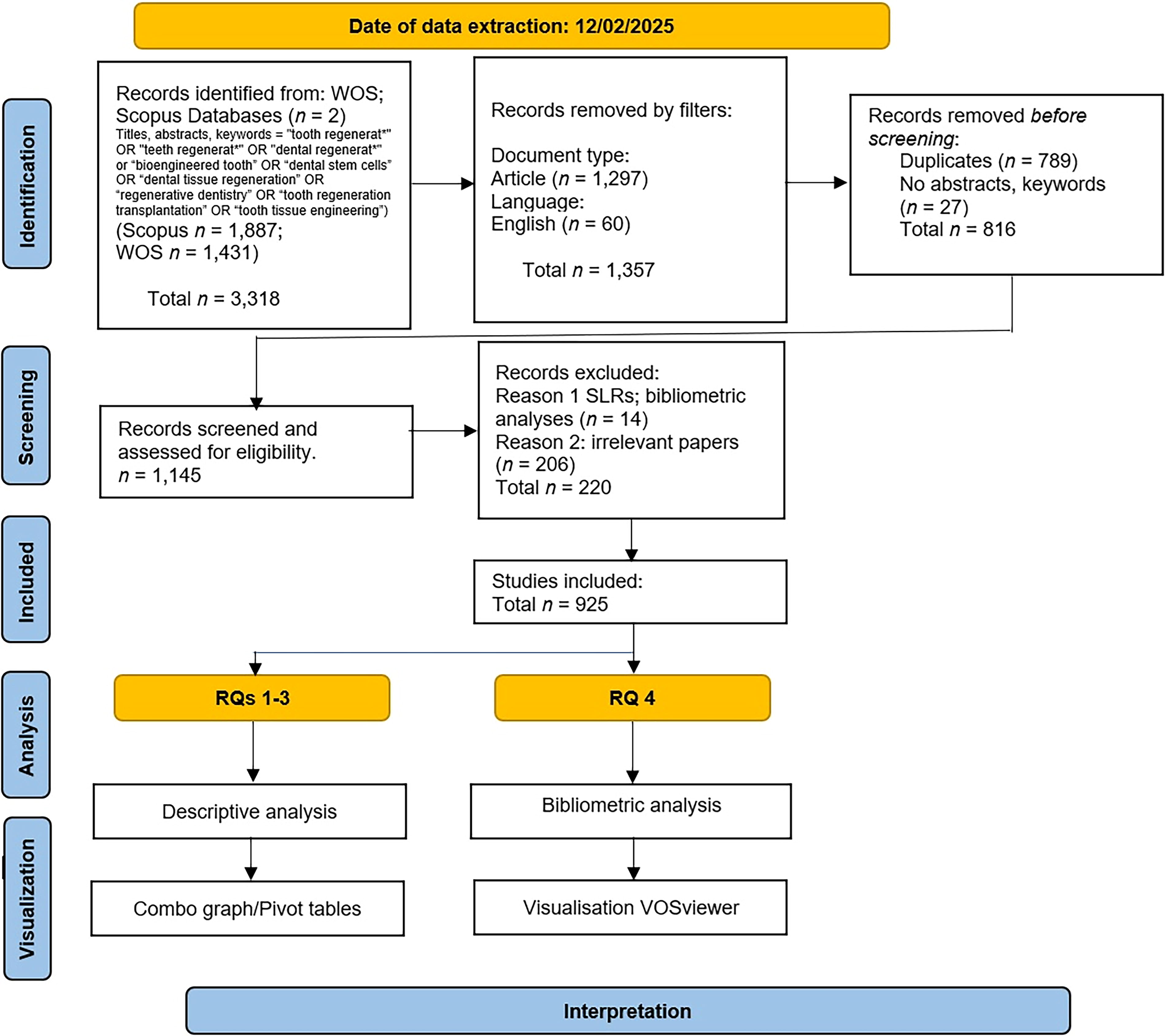
PRISMA flow diagram and methods. PRISMA, Preferred Reporting Items for Systematic Reviews and Meta-Analyses; RQ, research question; SLRs, systematic literature reviews; WOS, Web of Science. Sources: Figure created by authors.
Data processing
We applied exclusion criteria using filters. The first filter was applied by document type, allowing us to select only articles to ensure that our database contained the highest quality peer-reviewed documents for drawing accurate findings. Then, we filtered by language, focusing on English, to facilitate our content analysis during the screening stage. These filters enabled us to eliminate 1357 records. Next, we removed duplicates and incomplete bibliometric records lacking abstracts and keywords necessary for content and co-occurrence analyses. This crucial step led to the exclusion of 816 records. As a result, 1145 bibliometric records were eligible for screening. During the content analysis, we excluded all types of literature reviews, as they are considered secondary research. We also removed any irrelevant publications that did not align with our research interests. Selected publications were independently assessed by two authors, with disagreements resolved by consensus. They also reviewed titles and abstracts, reading the full text when needed. Thus, 925 articles were included in the sample dataset. At all stages of the PRISMA process, the researchers consistently followed procedures to double-check the results obtained.
Methods
Descriptive analysis: Publication volumes, top active, and cited journals were assessed using Pivot Tables in MS Excel 365 and visualized with Combo graphs and tables.
Co-occurrence analysis: VOSviewer software (version 1.6.20, Leiden University 18 ) was used to perform co-occurrence analysis of author keywords, revealing the thematic mapping of the field. A thesaurus file was prepared to unify synonyms and plurals. Keywords appearing at least five times (by default) were included, and network visualization was used to identify clusters and thematic areas within the research 18 field.
Results
Publication growth trends
Figure 2 illustrates the evolution of publications related to tooth regeneration from 2002 to 2024, based on data from Scopus and WOS. The annual publication counts highlight marked fluctuations, with pronounced peaks in 2011, 2015, and 2021. In contrast, the dips in publication activity were observed in 2012, 2016, and 2023.
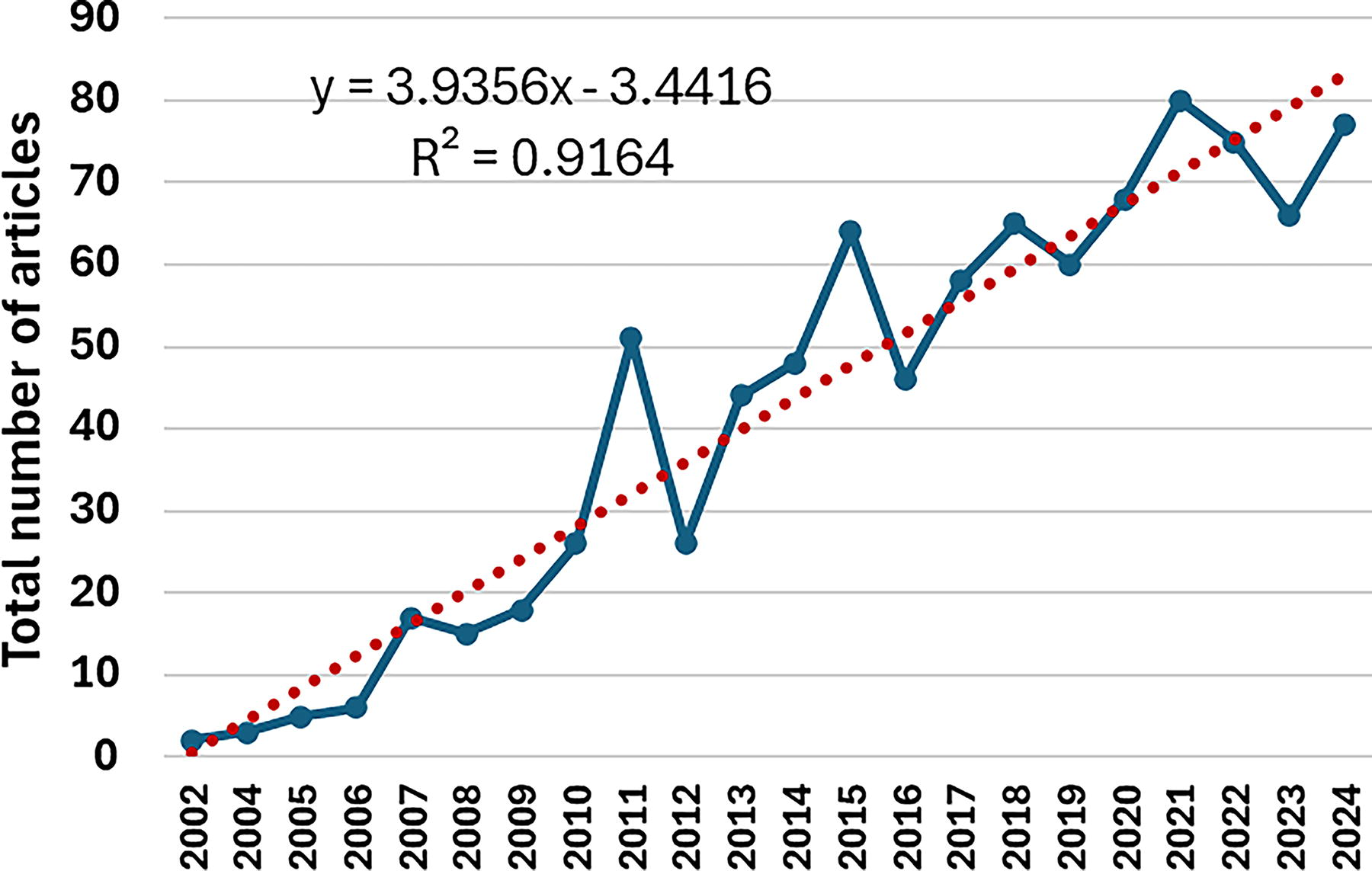
Evolution of publications in the tooth regeneration field. Sources: Figure created by authors.
The linear trend line with a high coefficient of determination (R2 = 0.9205) signifies a strong linear correlation between time and publication output, affirming the robustness of the observed upward trajectory. On average, the number of articles has increased by approximately four publications per year.
The most active journals in the tooth regeneration field
Figure 3 shows a comprehensive analysis of the journals contributing to the literature on the field of tooth regeneration from 2002 to 2025. This visualization highlights the total volume of publications and the role of the top 10 active journals as critical platforms for advancing and consolidating knowledge in the field, collectively publishing 185 articles that constitute 20% of the total output.
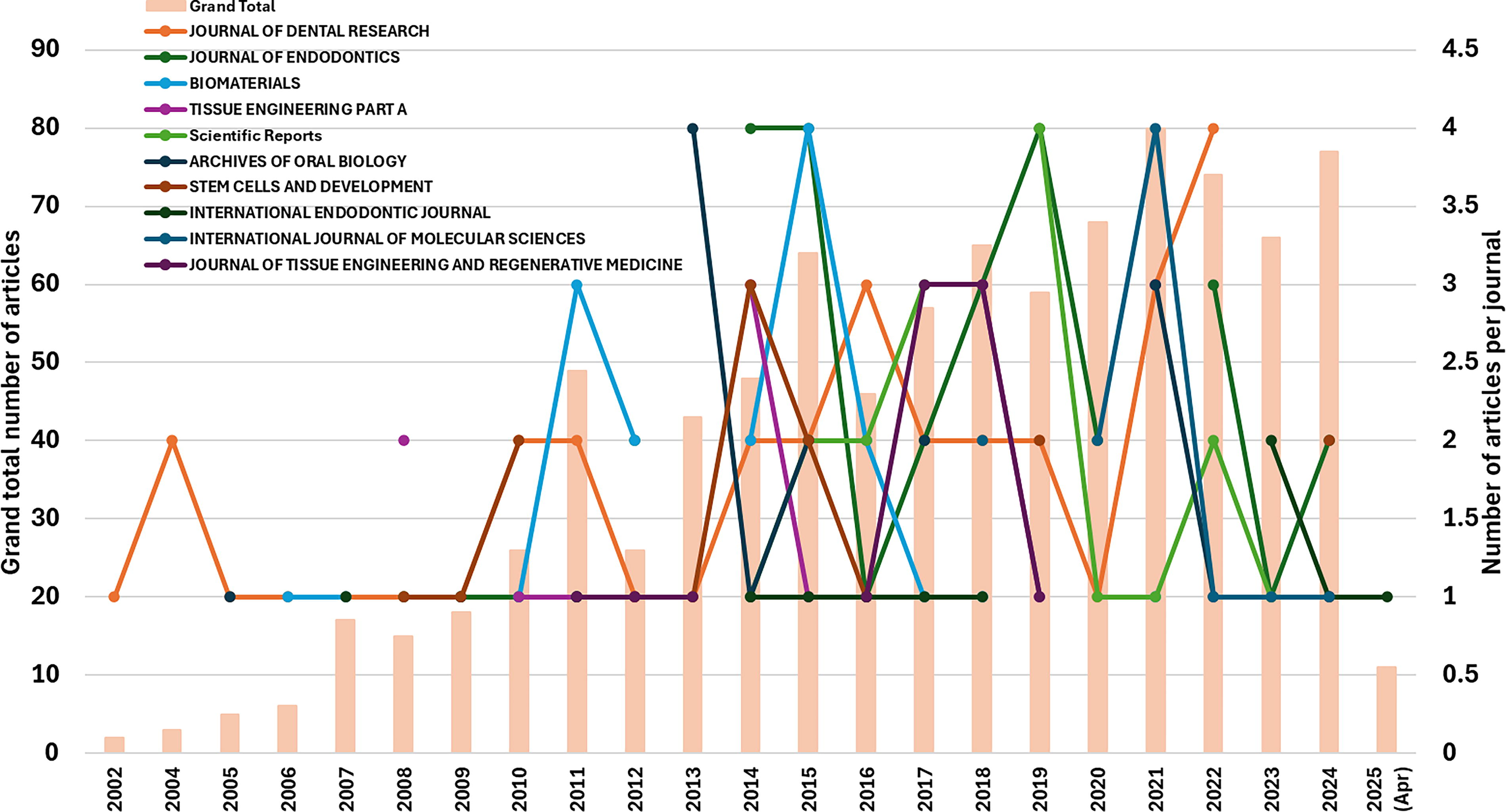
The top 10 most active journals and their contribution to the evolution of publications in the tooth regeneration field. Sources: Figure created by authors.
Among the 395 journals identified in the sample dataset, the Journal of Dental Research and the Journal of Endodontics stand out as the most consistent and prolific. The Journal of Dental Research has published a total of 35 articles, demonstrating steady output nearly every year. Similarly, the Journal of Endodontics has accumulated 31 articles. Other significant contributors include Biomaterials (n = 19), Tissue Engineering Part A (n = 18), Scientific Reports (n = 17), and both the International Journal of Molecular Sciences (n = 16) and Stem Cells and Development (n = 16). While the annual publication rates for these journals may exhibit greater variability compared with the leading two, their cumulative contributions remain substantial. The distribution of outputs across venues displays strong Bradford-type scattering: 19 a small core of journals accounts for the majority of publications, whereas 92% of journals contribute fewer than five articles over the entire period. This pattern indicates broad interdisciplinary diffusion and a still-consolidating set of primary outlets.
The most cited journals in the tooth regeneration field
This part of the results identifies and evaluates the top 10 most-cited journals in the field of tooth regeneration and regrowth. Our analysis of influential journals incorporated Eigenfactor score and SCImago Journal Rank (SJR) metrics as they provide a more comprehensive understanding of a journal’s impact and authority by assessing both the quantity and quality of citations (Table 1).
Top 10 Most Cited Journals
Bold values indicate the maximum value within each column, representing the journal with the strongest performance on that specific metric.
SJR, SCImago Journal Rank.
The Journal of Dental Research is a preeminent publication in dental research. Its impressive citation counts of 2225, Eigenfactor score of 0.023, and SJR of 1.839 validate its substantial impact. The Science Translational Medicine leads with the highest SJR score of 6.722 and 249 average citations, highlighting its transformative research. The Proceedings of the National Academy of Sciences of the USA, despite having a limited number of articles in the sample dataset, boasts an exceptional SJR (3.414) and H-index (896), signifying groundbreaking contributions. Similarly, the Tissue Engineering has an average of 158.8 citations from four articles, primarily due to a few highly cited articles.
The Journal of Endodontics similarly exhibits a noteworthy Eigenfactor of 0.016 and an SJR value of 1.229, underscoring its pivotal role in endodontic science, despite publishing fewer articles. In contrast, the Biomaterials journal stands out with remarkable citation count of 1,386, indicating a high impact. Its significant Eigenfactor (0.149) and SJR (2.998) establish it as an authoritative source in biomaterials, especially for dental regeneration applications. Clinical Oral Investigations bridges laboratory research with clinical applications, enhancing practical understanding of dental regeneration. Scientific Reports, an open-access journal, ensures the widespread dissemination and accessibility of its content. Its strong Eigenfactor (0.209) and H-index (347) underscore its influence across diverse fields.
Among the youngest influential journals are the Stem Cells and Development, the Tissue Engineering Part A, and the Science Translational Medicine.
Thematic mapping of the tooth regeneration research field
Thematic mapping is a technique used to investigate the connections between themes found in the sample dataset, typically by examining how often various topics appear in conjunction with one another. Via VOSviewer co-occurrence analysis, 4508 keywords were identified in the sample dataset. The network visualization contains 384 unique keywords (labeled “nodes”) organized into clusters with the largest red cluster (n = 110) and the smallest purple cluster (n = 82) (Fig. 4).
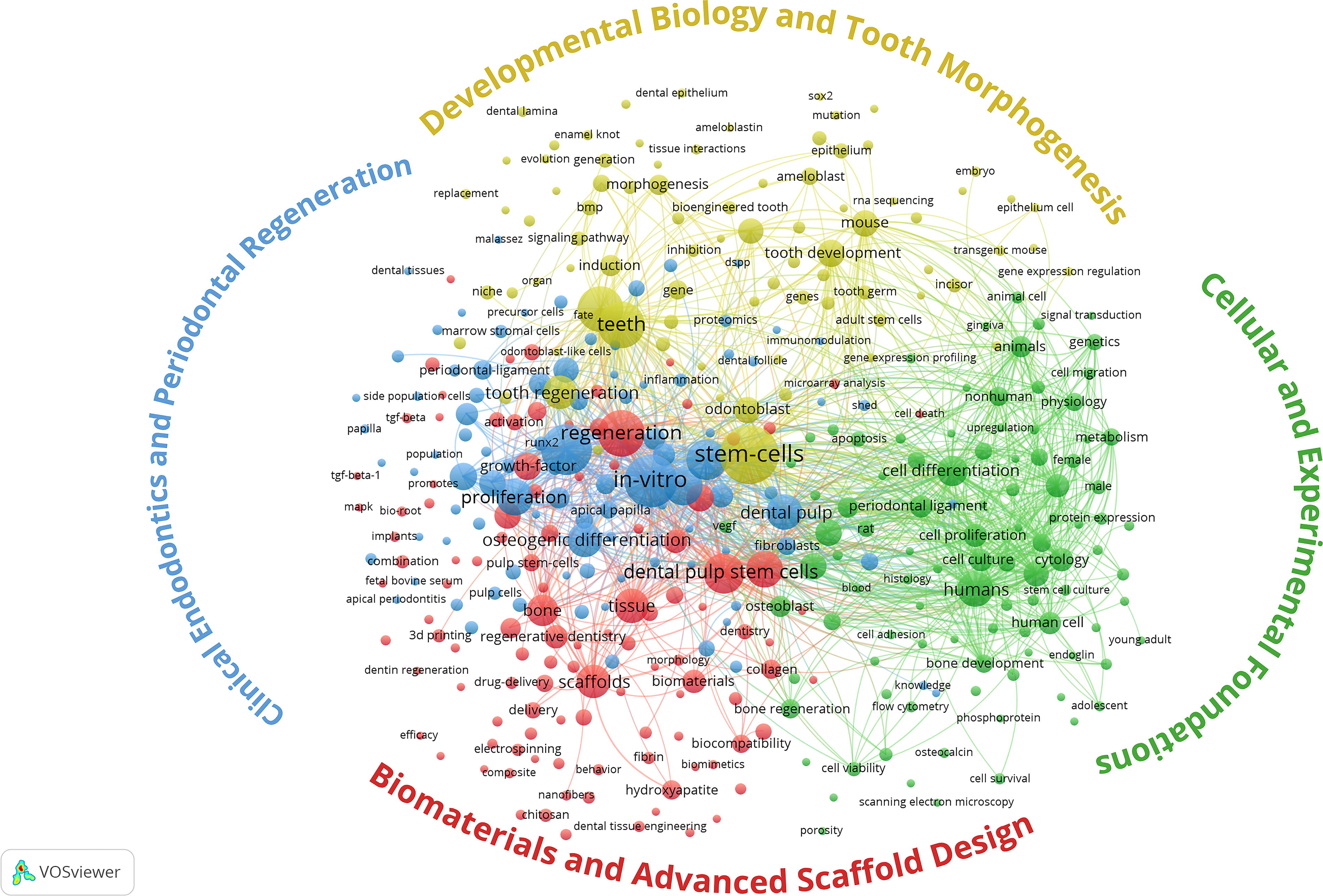
Network visualization of four clusters in the tooth regeneration field. Sources: Figure created by authors.
Analysis of clusters
The thematic mapping revealed by these clusters demonstrates a multidimensional approach to dental regeneration, integrating biomaterial innovation, cell biology, clinical translation, developmental science, and practical implementation.
Cluster red: Biomaterials and advanced scaffold design
This cluster (Fig. 4) represents research at the intersection of materials science and regenerative dentistry, with a central focus on “tissue engineering.” It highlights the role of “biomaterials” and scaffolding systems designed to facilitate the regeneration of dental and craniofacial tissues. The cluster is characterized by high-frequency keywords such as “hydrogel,” “chitosan,” “bioactive glass,” “collagen,” “calcium-phosphate,” and “hydroxyapatite.” These materials serve as foundational “scaffolds,” engineered to mimic the native extracellular matrix and promote mineralization, thereby supporting cell-based repair and regeneration of dental tissues, particularly for “bone” and “dentin.”
Advanced fabrication techniques, including “3D printing” and “electrospinning,” are prominent, reflecting a growing interest in precise scaffold architecture and the creation of complex, “biomimetic” structures. These technologies enable the integration of functional additives such as “nanoparticles,” “antibacterial” agents, and bioactive components, which enhance both the mechanical properties and infection resistance of engineered tissues, while also improving regenerative outcomes.
Frequently mentioned cell types, such as “dental pulp stem cells” (DPSCs), “human dental pulp cells,” “human dental pulp stem cells,” “pulp stem-cells,” and “stem cells from human exfoliated deciduous teeth” (SHED) are commonly studied for their ability to populate scaffolds, differentiate, and drive tissue regeneration. The articles concentrated in this cluster directly address how these “biomaterials” are designed not only for structural support but also to actively guide cell fate and tissue-specific regeneration, including “odontogenic differentiation.”
The inclusion of terms like “pulp regeneration,” “bone tissue engineering,” and “dentin regeneration” directly connects to the cluster’s core. “Biomaterials” and “scaffolds” serve as the foundational platforms for these regenerative processes. Research in this cluster is driven by the need to develop materials that can create the right environment for stem cells and progenitor cells to regenerate complex dental tissues. Success in these areas depends on the interplay between material properties and biological responses, making this cluster a pivotal hub for interdisciplinary innovation in dental regeneration. These are among the most challenging and clinically relevant targets in dental tissue engineering.
Key material properties under investigation include “biocompatibility,” “cytotoxicity,” and “degradation,” pointing to ongoing efforts to optimize scaffold safety and longevity. Terms like “controlled-release” and “drug-delivery” indicate a parallel focus on targeted delivery of growth factors or therapeutics. The underlying mechanisms of activation of regenerative processes, sometimes involving signaling pathways such as “mapk” or “tgf-beta”, are also explored.
Clinical translation is reflected by the presence of terms like “in-vivo,” “restoration,” and “efficacy,” suggesting that many of these biomaterial strategies have advanced to preclinical or early clinical testing for various “tooth root” applications. While promising, challenges remain, as highlighted by keywords such as “toxicity” and “mechanical properties,” which underscore the ongoing need for refinement to ensure both safety and functional integration in the oral environment.
Green cluster: Cellular and experimental foundations
This cluster (Fig. 4) highlights the pivotal role of cellular and experimental approaches in advancing dental tissue engineering, with a strong emphasis on “cell culture” and “cell differentiation.” This cluster represents the core of cellular science, focusing on elucidating fundamental regenerative mechanisms through precise cellular manipulation, characterization, and functional assessment.
The keywords within this cluster underscore a comprehensive effort to comprehend and optimize cellular behavior within their “microenvironment.” Key concepts, including “cell culture techniques,” “cell viability,” “cell proliferation,” “cell migration,” “cell survival,” and “cell adhesion,” and the study of “cell structure” and the cellular “microenvironment” are central. This emphasizes the critical need to optimize in vitro conditions for stem cell expansion and functional investigations.
The inclusion of terms like “human cell,” “animal cell,” “multipotent stem cell,” and “stem cell culture” highlights a significant focus on sourcing, isolating (“cell isolation”), and characterizing diverse cell populations suitable for dental regeneration as well as their expansion for research or therapeutic applications. Understanding cell fate decisions is paramount, as evidenced by keywords like “apoptosis” (programmed cell death) and “metabolism,” both crucial for tissue remodeling and survival, especially under various physiological and experimental conditions.
Rigorous experimental methodologies are central to the research within this cluster, including “gene expression” and “gene expression profiling” for assessing cellular activity patterns. This is evidenced by keywords such as “dentin sialophosphoprotein” and the focus on directing cells to form new dentin, directly involving “dental pulp” and “tooth pulp cells,” aiming to restore the tooth’s inner vitality.
The cluster also addresses “alveolar bone,” “bone development,” and “osteogenesis,” crucial for supporting dental structures. This includes the study of “alkaline phosphatase,” “osteoblast,” “osteocalcin,” and “osteopontin” as markers of bone formation. Through the study of “angiogenesis,” “vascularization,” “endothelial cells,” “endoglin,” and “vegf,” conditions are created to ensure blood supply to all regenerated tissues. The role of “cd146” and “vasculotropin” are also explored in this context. The cluster encompasses “periodontal ligament” and “periodontium,” essential for the tooth’s supporting structures. The inclusion of “animal model,” “animal experiment,” and “nonhuman” alongside “human tissue” and “human cells” demonstrates the critical translation of cell-based findings to preclinical models, bridging laboratory research with real-world applications.
Blue cluster: Clinical endodontics and periodontal regeneration
The blue cluster (Fig. 4) represents the applied and translational heart of regenerative dentistry, deeply rooted in “regenerative endodontics” and “periodontal” regeneration. This cluster is dedicated to bridging laboratory findings with real-world dental practice, emphasizing the “regenerative medicine” and healing of vital tooth tissues and their supporting structures.
Key terms such as “dental pulp,” “apical papilla,” “apexification,” and “immature permanent teeth” reflect the drive to restore the vitality and structure of compromised teeth, particularly in cases of “apical periodontitis.” This involves conditions like “periodontal-ligament,” “cementum,” and “guided tissue regeneration,” underscoring the integration of regenerative principles into established dental specialties to restore the integrity of the tooth’s support system. A significant theme is the use of stem cells and progenitor cells, highlighting the clinical potential of various dental-derived sources. This includes “dental stem cells,” “mesenchymal stem cells,” “marrow stromal cells,” “dental follicle stem cells,” and cells from “exfoliated deciduous teeth.” These cell populations are explored for their ability to facilitate the regeneration of both pulp and periodontal tissues.
The application of clinical biomaterials such as “biodentine” and “calcium hydroxide” is also prominent, emphasizing their role in vital pulp therapy and tissue repair. Furthermore, the cluster addresses the crucial aspects of management of inflammation and healing, with keywords like “inflammation,” “immunomodulation,” and “cytokines” indicating a growing interest in the immunological and pathological context of dental regeneration. This cluster consistently delves into clinical procedures and translational research.
Yellow cluster: Developmental biology and tooth morphogenesis
This cluster (Fig. 4), prominently labeled as developmental biology (“tooth development”) and “tooth morphogenesis,” is fundamentally dedicated to understanding the intricate genetic, molecular, and cellular mechanisms that govern the natural formation of teeth during embryonic (“embryo”) and postnatal “development.” This cluster serves as the bedrock for future advancements in whole-tooth “regeneration” and “bioengineered tooth” research.
The dominant keywords and cell types in this cluster reflect a deep dive into the orchestrated processes of tooth development. Keywords such as “ameloblast,” “ameloblastin,” “amelogenin,” “enamel organ,” and “enamel knot” highlight the study of the epithelial cells and proteins critical for the development of the tooth crown shape and enamel. The cluster emphasizes the roles of “dental lamina,” “dental epithelium,” and “epithelial-cells” as the early epithelial tissues giving rise to tooth germs. Crucially, the fundamental process of “epithelial–mesenchymal interaction” is central, as it underpins the communication between epithelial and mesenchymal tissues that drives proper tooth morphogenesis. “mesenchyme cell” and “neural crest cells” signify the importance of these mesenchymal cells and their neural crest origins, which differentiate to form the dental papilla and dental follicle, ultimately giving rise to dentin, pulp, and supporting periodontal tissues. “odontoblast-like cells” are investigated for their “dentinogenesis” potential, with a focus on how developmental cues guide their differentiation.
The cluster extensively utilizes advanced molecular and genetic techniques, with keywords such as “gene expression regulation” and “transcription factor,” highlighting efforts to unravel the regulatory networks of tooth development. Specific signaling pathways and matrix proteins like “bmp,” “fgf8,” “sox2,” “wnt,” “pitx2,” and “amelogenin” are central to understanding tooth morphogenesis. Furthermore, this cluster explores the application of stem cell biology to model and potentially recreate developmental processes. The presence of “pluripotent stem-cells,” “induced pluripotent stem cell” (iPSC) and general “stem-cells,” “adult stem cells,” “embryonic stem cells,” and “odontoblast-like cells” indicates their use for investigating gene regulatory networks and attempting the “bioengineering” of whole teeth. The terms “bioengineered tooth” and “generation” signal an emerging interest in leveraging developmental principles for the creation of fully functional dental structures.
Thematic synthesis of stem cell dynamics
These clusters primarily explore the isolation, characterization, and application of various stem cell populations (average publication years: 2016.7–2016.8).22,23 We identified three main cell groups such as dental-derived cells, specialized dental cells, and nondental derived cells, which play a key role in the tooth regeneration field. In Table 2, stem cell characteristics and therapeutic applications are shown.
Stem Cells in the Tooth Regeneration Field: Characteristics and Applications
Our analysis identifies several key dental-derived cell populations that form the cornerstone of regenerative strategies. Primary dental stem cells and dental-derived stem cells (“dental stem cells”) are sourced directly from dental tissues and are central to tooth regeneration due to their odontogenic (tooth-forming) potential. The main cell types in this group are: DPSCs (“human dental pulp stem cells”) the most extensively studied population with 124 occurrences, SHED, “periodontal ligament stem cells” (PDLSCs), “dental follicle cells” (DFCs)/dental follicle progenitor cells, and “stem cells from apical papilla” (SCAP).
Specialized dental cell types are crucial for the “epithelial–mesenchymal” interactions that drive natural tooth development and are indispensable for successful tooth regeneration: “ameloblasts,” “odontoblasts,”23,64 “odontoblast-like cells,” “ameloblast-like cell,” and “dental pulp cells.”
Main non-dental-derived cell types14,67,68 used in tooth regeneration are iPSC-derived “mesenchymal stem cells” 23 reprogrammed from “adult somatic cells” to an “embryonic stem cell,” “epithelial cells,” “endothelial cells,” “fibroblasts,” “osteoblast,” and “neural crest cells.”
For instance, despite their established role in tooth part regeneration, specific cell types such as gingival fibroblastic stem cells 69 and cementoblasts (cells responsible for forming cementum) 70 did not emerge as high-frequency keywords in our dataset, which could lead to an underrepresentation of research focused on these critical components.
The research extensively investigates fundamental cellular processes, including differentiation processes (189 occurrences): osteogenic differentiation (92 occurrences), odontogenic differentiation (54 occurrences), and neuronal differentiation, 64 “proliferation” and “migration” mechanisms essential for tissue regeneration, 23 cell “adhesion,” “apoptosis,” and metabolic functions supporting tissue homeostasis.
Discussion
This comprehensive bibliometric analysis reveals the evolution and thematic mapping of tooth regeneration research, demonstrating a field that has experienced substantial growth with specialization into distinct research clusters. The findings indicate that tooth regeneration research has transformed from a nascent field into a mature scientific direction characterized by interdisciplinary collaboration, technological innovation, and clinical translation efforts.
Growth trends in the tooth regeneration field
The temporal analysis demonstrates an upward trajectory in tooth regeneration publications, with the field experiencing growth particularly after 2010. This growth, characterized by a strong linear trendline, reflects the field’s transition from experimental curiosity to a legitimate research priority. These findings align with broader trends58,62,71 in tooth regenerative-related research, which have shown similar exponential growth patterns during the same period. 72 Previous bibliometric studies in periodontal regeneration have documented comparable publication increases, particularly following the establishment of tissue engineering as a distinct discipline around 2010.9,73
Journal landscape
Compared with previous bibliometric studies in periodontal regeneration, our analysis reveals a broader journal distribution spanning materials science, cell biology, and clinical medicine.9,73 This interdisciplinary publishing pattern reflects the inherently multifaceted nature of the tooth regeneration field, requiring expertise from diverse scientific domains. The presence of both established dental journals and emerging open-access publications, such as the Scientific Reports, indicates the field’s commitment to both traditional peer review processes and broader knowledge dissemination. The citation analysis provides a more nuanced understanding of journal impact beyond publication counts. The Journal of Dental Research and Biomaterials achieves the highest citation counts, whereas Science Translational Medicine leads in journal prestige SJR metrics. The findings suggest that tooth regeneration research benefits from both specialized dental journals for community building and high-impact interdisciplinary journals for breakthrough discoveries.
Thematic mapping of tooth regeneration research
This bibliometric analysis of the tooth regeneration field reveals the multidisciplinary field, characterized by four clusters. These clusters collectively address diverse aspects of tooth regeneration (Fig. 5), ranging from the fundamental mechanisms of tooth 74 “vascularization” (essential for blood supply restoration),75-77 “revascularization,”76,78 “bone regeneration” and “bone-formation” for alveolar and maxillofacial bone restoration, “dentin regeneration”(including “biodentine” applications 64 ), “periodontal regeneration,” 74 “pulp regeneration,” 22 “bioroot” development, and ultimately, comprehensive “tooth regeneration.”22,68,79 However “Enamel regeneration” remains largely absent from current research clusters, given enamel’s inability to regenerate naturally and its importance for tooth function.53,54,80,81
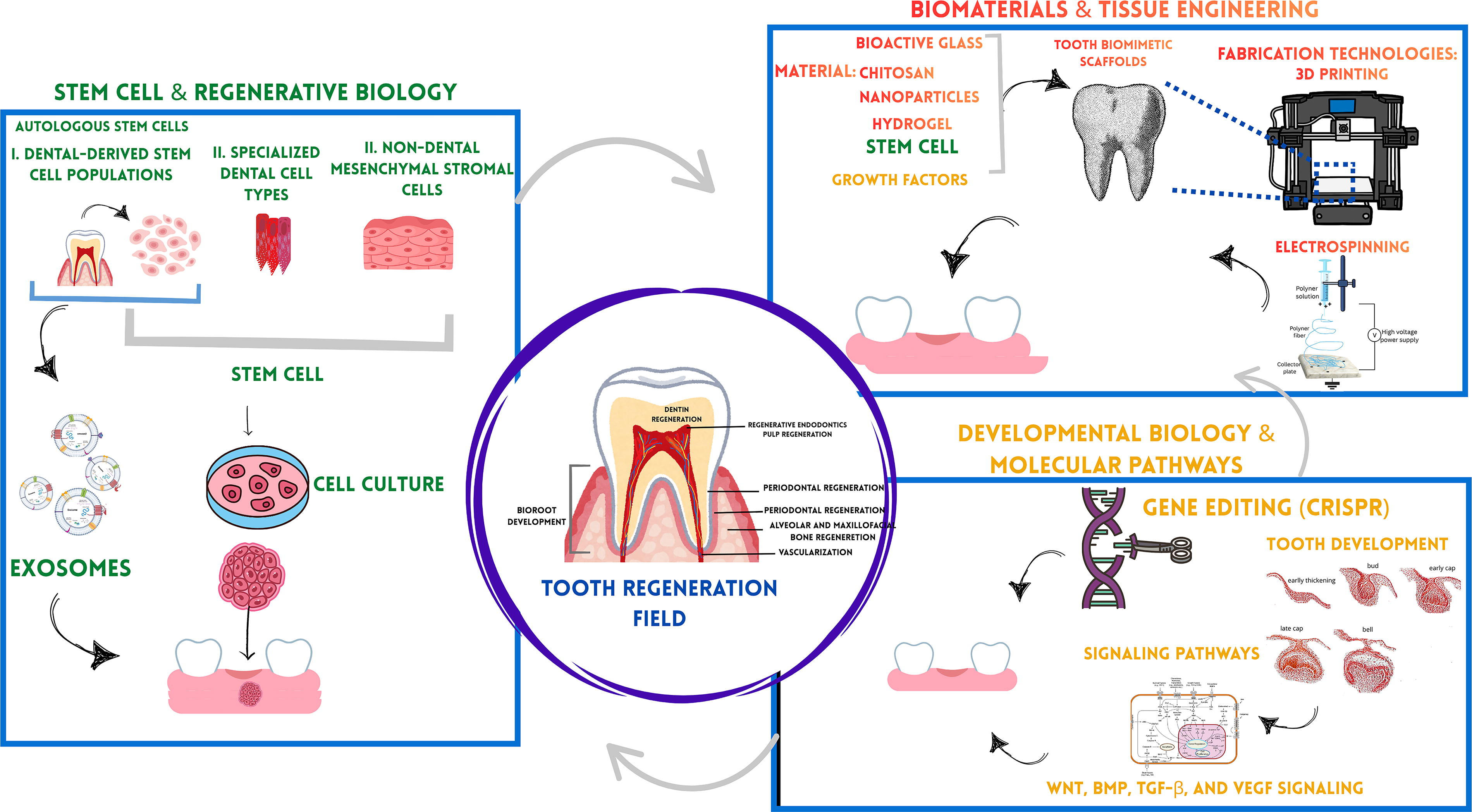
Integrated schematic of core cellular groups, research axes, and emerging trends driving tooth regeneration. The diagram summarizes three primary cell groups: dental-derived, specialized dental, and non-dental-derived cells, each contributing to key regenerative processes such as vascularization, bone and dentin regeneration, periodontal and pulp repair, and complete tooth regeneration. Surrounding these cellular cores are three dominant research axes driving the field: (1) Biomaterial innovation, focusing advanced scaffolds, nanocomposites, hydrogels, and electrospinning or 3D-bioprinted matrices that support cell adhesion, differentiation, and structural integration; (2) stem cell dynamics, encompassing the isolation, culture, and application of dental-derived, specialized dental, and nondental stem cells for regenerating pulp, dentin, and periodontal tissues, with trends including autologous and iPSC-derived cells, and exosome-based therapies; and (3) developmental biology, focusing on the genetic, molecular, and signaling mechanisms (BMP, Wnt, TGF-β, VEGF) underpinning tooth morphogenesis and gene-edited regeneration strategies. Interconnections between these axes highlight growing interdisciplinary collaboration bridging cell biology, materials science, and developmental genetics to advance biomimetic and clinically translatable tooth regeneration approaches. 3D, three-dimensional; iPSCs, induced pluripotent stem cells; VEGF, vascular endothelial growth factor. Source: Figure created by authors.
Our findings across these four clusters highlight three dominant research axes driving tooth regeneration science: (1) biomaterial innovation (focusing on novel materials for scaffolds and delivery), (2) stem cell dynamics (emphasizing the isolation, characterization, and application of various stem cell populations), and (3) developmental biology (elucidating the intrinsic processes of tooth formation)22,68 (Fig. 5). These interconnected axes provide the foundational and applied strategies necessary to address the multifaceted challenges of dental regeneration.
This study shares several key similarities with existing bibliometric analyses in the field of tooth regeneration and broader dental research. Consistent with previous findings,9,12 our study confirms a substantial growth trend in publications from the early 2000s onward, reflecting increased global research interest driven by advances in regenerative medicine technologies. The identification of leading journals such as the Journal of Dental Research and Journal of Endodontics 12 aligns closely with prior reports.
Regarding thematic clusters, our study uniquely presents a holistic and integrated visualization of the tooth regeneration landscape, combining biomaterials, stem cell biology, clinical endodontics, and developmental biology into a unified framework. Previous bibliometric analyses often focused on these clusters in isolation, for example, separate studies on regenerative endodontics, 12 stem cells, 82 or biomaterials 83 without encompassing the full interdisciplinary map. Thus, while the centrality of these topics has been recognized individually in the literature, our work is among the first to demonstrate their interconnectedness within a single comprehensive network, addressing the fragmented scope observed in earlier studies.
Methodologically, our dual-database approach addresses the common limitation of single-source bias prevalent in previous research,9,12,73 enhancing the representativeness and depth of coverage. Advanced co-occurrence and network visualization tools further enable the detailed mapping of emerging methodologies, such as 3D bioprinting, exosome-based therapies, and genetic editing (CRISPR), which earlier studies either mentioned only cursorily or omitted. 1
Through shared reference analysis and co-occurrence mapping, we were able to trace how earlier foundational studies on dental stem cells and biomaterials have influenced the rise of recent innovations such as bioprinting and gene-based regeneration, thus visualizing the field’s progressive knowledge connections.
Similar to prior bibliometric research, we underscore persistent challenges like inadequate enamel regeneration, issues in vascularization and innervation, and hurdles in clinical translation. 84 However, our article advances the discourse by more clearly articulating how these challenges are being tackled through emerging technological and biological innovations, offering a refined understanding of the research’s translational trajectory.
Research challenges in the tooth regeneration field
Research challenges in the field of tooth regeneration are multifaceted and complex. Cluster analysis has elucidated several key obstacles that researchers must address to advance this innovative area of regenerative medicine.
A primary challenge lies in the precise selection and differentiation of cellular sources necessary for effective tooth regeneration.85,86 Understanding the biological signals that govern cell development remains an area of ongoing investigation. Moreover, achieving functional formation of enamel and dentin poses a significant hurdle.
Vascularization and innervation are critical for the viability of regenerated teeth, as they require proper blood supply and sensory connections. 87 The absence of these elements can lead to tissue failure and compromised sensory perception.
Structural replication of the tooth, encompassing the appropriate shape, size, and architecture,85,86 is another significant challenge. Current biomaterials and scaffolds must be engineered to accurately mimic the natural extracellular matrix, thereby facilitating practical cell guidance.
Furthermore, the risk of immune rejection and potential tumorigenicity associated 14 with stem cell usage necessitates rigorous safety assessments. Beyond these biological considerations, practical hurdles such as the absence of standardized protocols,14,24,88,89 high costs, and scalability issues90,91 impede the translation of these therapies into clinical practice.24,90,92
Addressing the scientific and practical challenges of tooth regeneration is essential for future advancements in the field.
Cutting-edge trends
The integration of cellular biology, biomaterials science, and bioengineering has positioned tooth regeneration at the frontier of translational regenerative medicine. Current trends, including the application of autologous and iPSCs, the use of bioactive and nanocomposite scaffolds, and the emergence of 3D bioprinting and exosome-based therapeutics, demonstrate a clear shift toward more biomimetic and patient-specific regeneration strategies (Fig. 5). However, despite these advances, several research gaps persist. The functional reconstruction of enamel, vascularization, and innervation remains incomplete, and long-term biocompatibility and safety of stem cell-based and genetically modified constructs require further validation. In addition, the absence of standardized methodologies, limited scalability of biofabrication techniques, and variable clinical protocols continue to hinder translation to clinical practice.
Usage of a patient’s own cells and advanced cell sources for regeneration. A major trend is the shift toward autologous stem cells,27,93,94 which are cells harvested from the patient themselves. This minimizes the risk of immune rejection and ethical concerns. Dental tissues, such as wisdom teeth and deciduous teeth, are prime sources for these cells due to the ease of harvesting.
The expanded use of various dental-derived stem cells, including DPSCs, SHED, PDLSCs, SCAP, and dental follicle cells. These cells are being used for targeted regeneration of specific tooth components like the pulp, dentin, periodontal ligament, cementum, and alveolar bone. 95
In addition, there is an emerging application 96 of iPSCs, which are patient-specific and can differentiate into multiple dental and nondental lineages. It is noted that the important role of immunomodulation by dental stem cells is to help reduce inflammation and to avoid fibrosis, thereby facilitating successful regeneration. An innovative trend is the development of cell-free therapies, using things like stem cell-derived exosomes97-99 to deliver bioactive molecules and promote tissue repair without direct cell transplantation.
This trend focuses on the technological and material aspects of rebuilding tooth structures. The integration of 3D printing 100 technology for creating biomimetic scaffolds 101 and organoids. These structures are designed to precisely replicate the complex architecture of a tooth, including the pulp, dentin, enamel, and root. Hydrogels and other biocompatible materials are being combined with stem cells to form “bio-roots” with controlled morphology. The development of advanced biomaterials such as nanocomposites 102 and bioactive glasses is also a key trend, as they are crucial for supporting cell growth, differentiation, and tissue integration within the oral environment.
This category focuses on the underlying biological mechanisms and aims for full functional restoration. There is highlighted progress toward whole tooth regeneration using organoid techniques and bioroot constructs. However, a more immediate and achievable trend is the regeneration of specific tooth components, such as the pulp, dentin, or periodontal ligament.
A significant focus is on deciphering key molecular pathways, such as Wnt, BMP, TGF-β, and vascular endothelial growth factor (VEGF) signaling, to guide cell differentiation and the formation of functional vasculature and innervation, which are critical for restoring a tooth’s vitality. The application of genetic editing 62 (like CRISPR), enhancing the regenerative potential of stem cells and promoting tissue formation, is important.
Translational and commercialization perspectives
Tooth regeneration research is progressing steadily toward translational implementation. The convergence of stem-cell biology, advanced biomaterials, and 3D bioprinting technologies has initiated a shift from preclinical experimentation to early clinical feasibility. Autologous dental-derived stem cells, exosome-based cell-free therapies, and bioactive scaffold systems are beginning to attract attention from biotechnology startups and dental biomaterial industries. However, large-scale manufacturing, regulatory approval, and long-term safety validation remain key bottlenecks. Strengthening collaborations between academic researchers, clinicians, and commercial partners will be essential for transforming current laboratory advances into clinically deployable and commercially viable regenerative dental solutions.
Limitations of our study
Our bibliometric analysis, while providing valuable insights into the field of tooth regeneration, is vital to acknowledge several limitations up front.
First, our study’s reliance on the Scopus and WOS databases, although comprehensive for peer-reviewed literature, inherently limits the breadth of the surveyed publications. This approach may have inadvertently excluded relevant studies indexed in specialized, niche databases or those published exclusively in non-English language journals, potentially introducing a geographic and linguistic bias into our findings.
Second, our keywords-based analysis, while employing a comprehensive set of terms, might have inadvertently missed research utilizing alternative terminology or nascent concepts not yet widely adopted or reflected in standardized vocabularies.
Ultimately, by recognizing these limitations, we emphasize the need for ongoing updates and expansions of bibliometric analyses. Such iterative evaluations, incorporating new data, methodologies, and diverse perspectives, are crucial for accurately reflecting the ongoing advancements and challenges in the dynamic field of tooth regeneration research.
Conclusion
Dual-database integration: Unlike most bibliometric studies, which rely on a single source, our study combines data from WOS and Scopus up to February 2025, providing a more comprehensive and representative view of the tooth regeneration research landscape.
Holistic field coverage: While prior studies focus on narrow areas, such as dental pulp, periodontal, or endodontic regeneration, ours is the first to provide a unified, cross-disciplinary analysis across all major subfields of tooth regeneration.
Novel thematic mapping: We identified four thematic clusters and three dominant research axes, revealing the field’s organization beyond keyword frequency: biomaterial innovation, stem cell dynamics, and developmental biology.
Cellular mapping framework: We applied classification of cell types into three application-driven categories, with quantified occurrence data: dental-derived stem cells, specialized dental cells, non-dental-derived cells, and clinical applications.
Quantitative trend analysis to identify limitations and challenges and cutting-edge trends in the field of tooth regeneration.
Reliance on these two databases and predefined keyword queries can introduce biases, potentially missing relevant studies in specialized databases or using different terminology. Future bibliometric studies should expand database coverage and use more adaptive search strategies for inclusivity.
Footnotes
Authors’ Contributions
N.K.M.: Conceptualization, validation, data curation, visualization, and writing—original draft. G.D.: Methodology, software, formal analysis, visualization, and writing—review and editing.
Data Availability
The datasets are available on Zenodo repository 10.5281/zenodo.17556650
Consent for Publication
All authors consent to the publication of this article.
Disclosure Statement
The authors declare that they have no competing interests.
Funding Information
No funding was received for this article.