



Abstract
Purpose:
The purpose of this exploratory study was to capture the influence of artwork in the hospital corridors within cardiothoracic inpatients.
Background:
This study builds on previous research to determine the preferred types of artwork (landscape vs. abstract) in the hospital setting as well as the influence of the art itself.
Methods:
Participants engaged in surveys with predefined single-choice responses and semistructured one-on-one interviews.
Results:
Data were obtained from 45 participants, 15 from each of the units (Landscape, Abstract, or Mixed). A higher percentage of participants reported a positive impact on the Landscape Unit; however, the positive responses on the Abstract and Mixed Units were also notable. Eighty-two percent of responses from patients on the Abstract Unit were positive, as were 82% from the Landscape Unit and the Mixed Unit.
Conclusions:
Although landscape was preferred, abstract and mixed art also had positive responses and abstract did not have a negative effect. All genres of art have a place in a hospital; however, strategies should be developed that include more education, engagement, and interpretation of the artwork.
A growing number of hospitals purposefully integrate visual art in the design of their space, based on the premise that being exposed to art enhances the well-being and quality of life of patients, caregivers, and visitors (All-Party Parliamentary Group, 2017; Lankston et al., 2010). However, evidence supporting this hypothesis remains scarce as it is difficult to quantify the impact of art within a healthcare facility. The subjectivity in viewing and experiencing visual art is qualitative by nature, and empirical evidence is gathered mostly through the observations and reporting by the individuals exposed to art. There have been few preference studies that focus on actual images that patients have been exposed to and fewer studies in an inpatient setting.
Several studies on preference have either been conducted outside of the hospital setting or included individuals who were not inpatients. These have included a study where subjects were shown a stressful movie and then shown pictures of natural and urban settings, with the response to the natural settings being more positive (Ulrich et al., 1991). The determination that natural settings have a positive effect would support the use of landscape art within a hospital setting as it would be expected to have a positive effect there as well. Another example is a study that surveyed interior design students, hospital patients, and architecture students (Nanda et al., 2008). These individuals were asked to rate the images they saw based on emotional responses as well as if they would put the images in their rooms (Nanda et al., 2008). This study helps inform the use of images in patient rooms and hallways in order to promote positive emotional responses. Hartig et al. (1991) looked at the restorative effects of nature, urban environments, and passive relaxation in individuals outside of the hospital environment, and they found that natural environments were the most restorative. Although this study was conducted outside of the hospital environment, it supports previous research and suggests that landscape art would be restorative for hospital inpatients.
The studies that have been conducted in the hospital setting have focused on several different things. These have included the effects of having a window from which the patient could view nature (Ulrich, 1984); the effects of nature, daylight, and acoustics (Ulrich et al., 2008); the effects of four different nature scenes (Vincent et al., 2010); the effects of positive distraction and colors on emotions (Lankston et al., 2010); and single versus multiple occupancy rooms, flooring materials, sunny rooms, arrangement of furniture, nonwindows versus windows, and noise (Ulrich, 2001). Once again, this supports the use of landscape art as well as the architecture and design of the rooms in the hospital. S. M. L. Nielsen and Mullins (2017) and S. L. Nielsen et al. (2017) had individuals rank paintings as well as the aesthetic experience of each work. This study demonstrates that individuals have different aesthetic experiences based on the different paintings. These studies in particular inform the current study in the decision to curate three inpatient hospital units with three different combinations of art—abstract, landscape, and a mixture of the two.
For the purpose of this study, fine art and artwork are defined as original artwork, meaning authentic examples of an artist’s work as opposed to reproductions. Fine art and artwork in the study refer to a unique one-off piece or small edition hand-pulled print from the artist’s own hand, for example, an oil, acrylic, watercolor painting, etching, or drawing. This does not include a machine-driven process like a poster or giclée. Artwork is defined as many different media including photography, prints, drawings, paintings, works on paper, collages, and mixed media. Sculpture and video art are included in this particular collection; however, those works were not installed in patient corridors.
A variety of research techniques have been utilized to study the effects of art, nature, landscape art, figurative art, and abstract art. These have included anthropological methods, mixed methods, case studies, quantitative studies, literature reviews, reviews of research, interviews, and observations (Lankston, 2010; S. L. Nielsen et al., 2017; S. M. L. Nielsen & Mullins, 2017; Ulrich, 1984, 2001; Ulrich et al., 1991, 2008; Vincent et al., 2010). These studies utilized a variety of measures to assess effect, including such things as length of stay, analgesics, nurses’ notes, heart rate, self-rated affective states, blood pressure, muscle tension, pulse, skin response, interviews, observations, thermal cameras, mood, pain, anxiety, and calm (Lankston, 2010; S. L. Nielsen et al., 2017; S. M. L. Nielsen & Mullins, 2017; Ulrich, 1984; Ulrich et al., 1991; Vincent et al., 2010). The various research techniques and measures utilized in previous research were taken into consideration when designing this current study. After reviewing previous research, and determining was what would be feasible for our situation and organization, it was determined that conducting interviews and utilizing surveys about patients’ mood, comfort, stress, overall satisfaction, and experience would be the best approach for this particular study at this point in time.
What specific genre of art is “acceptable” in a hospital has been the topic of research since Ulrich’s (1984) early study that was conducted in the 1970s and 1980s. This seminal study found that patients looking out their hospital bed window at nature had shorter stays and took less pain medications than those looking out their window to a brick wall (Ulrich, 1984). Subsequent studies continued this line of inquiry, making the case that images of nature are healing, and, thus, landscape as a genre has become the industry standard (Hartig et al., 1991; Ulrich & Gilpin, 2003; Ulrich et al., 1991 , 1993; Vincent et al., 2010). Not only is nature art the standard, but researchers have shown that patients recovering from heart surgery who were exposed to abstract art had higher levels of anxiety than nature art (Ulrich et al., 1993). Furthermore, Hathorn and Nanda (2008) claimed that while abstract art was not preferred by patients, abstract art generated the most comments. Hathorn and Nanda (2008) concluded that “bestsellers by different art vendors” may not be appropriate or “restorative” for patients. The authors of the present study chose to build on this literature to not just focus on landscape art but to include abstract art to investigate its influence on patients.
Research is often theory-based; however, the majority of the studies reviewed here were not theory-based. That being said, two theories did emerge. One is the theory of emotional congruence that was utilized by S. M. L. Nielsen and Mullins (2017). This theory suggests that abstract art is not suitable for hospitals because it would reinforce negative moods and cognitive states (S. M. L. Nielsen & Mullins, 2017). The other theory that emerged was the theory of supportive healthcare design, which provides guidelines for design to address environmental issues in healthcare (Ulrich, 2001). Although these bring up interesting points, neither these nor any other specific theories were used to inform this current study.
Past literature has shown that patients respond positively to nature art or representational depictions of nature (Ulrich et al., 2008). For example, a 2008 preference study of hospital inpatients concluded that nature art is appropriate for hospital settings because patients consistently preferred nature and realistic content over abstract of stylized content for their rooms (Nanda et al., 2008). More recently, studies have shown that abstract art can have positive effects as well (S. L. Nielsen & Mullins, 2017; S. M. L. Nielsen et al., 2017). Once again, the current study builds upon this previous literature as it investigates the influence of landscape art and abstract art as well as a combination of the two.
In 2012, individuals from a voluntary email list were invited to self-report their experience with the diverse collection of contemporary art at a large metropolitan hospital in the Great Lakes region based on recollection of their hospital stay, which could have been up to 1 year from the time the survey was emailed (Karnik et al., 2014). The results showed that a majority of the 826 respondents noticed the artwork, associated improved mood and stress level with exposure to the artwork, and reported that the art collection positively impacted their overall satisfaction and impression of the hospital (Karnik et al., 2014). The findings suggested that patients may respond positively to the diversity of the collection, specifically subject matter, media, and imagery, and to other types of art in addition to nature art. However, that study did not allow a direct comparison of the impact of various genres of art, particularly abstract versus landscape, and involved retrospective recall. To the best of the knowledge of the authors, no published study has compared inpatients’ reactions to landscape-based art versus abstract art or a mix of both genres.
To address this gap in evidence, and to take previous research a step further, an exploratory study using a comparative case study research strategy was designed to capture the immediate effect of artwork within patients who remained on three cardiothoracic surgery hospital units and who were actively experiencing the artwork displayed in the corridors in their clinical environment. Part of the postoperative process includes walking the corridors for physical activity; therefore, the nursing staff indicated that it was believed that it would be a helpful way to study the patients’ reactions to the fine art that is installed in the corridors and day rooms where the patients were walking. One-on-one interviews were conducted about the artwork in the corridors on their unit using a mixed methods approach. Further, the authors sought to compare the experience generated by landscape versus abstract art, by curating each unit with a different type of art (landscape-based, abstract, or a mixture of landscape-based and abstract). The purpose of this exploratory study was to capture the influence of three different types of artwork (landscape, abstract, or mixed) in the hospital corridors with cardiothoracic inpatients. The research questions included the following: (1) What is the influence of the artwork on the patients and (2) What is the impact of the various genres of art related to patient preferences? We hypothesized that visual art in general will have a positive influence on most patients, landscape-based art will generate more positive comments than abstract art, and a mix of landscape-based and abstract works would be preferred over abstract art alone.
Method
This was an exploratory study using a comparative case study research strategy in patients admitted to one of three inpatient cardiothoracic surgery units. This was considered to be a cross-sectional study because there was no specific intervention, no time dimension, the design relied on variations in the independent variables that already existed, there was no randomization to groups, and at least two categories were present (de Vaus, 2001). Interviews and surveys were chosen because they were determined to be a good method to use with patients recovering from surgery. In addition, the Art Program utilized the services of the Market Research Department. This was done to allow for objectivity, so the curators would not potentially add bias to the study if they conducted the interviews themselves. The hospital where this study was conducted treats some of the most acute cardiac cases, with patients coming from over 100 countries. The three inpatient units were chosen due to similarity in patients’ diagnoses and associated medical acuity, duration of hospital stay, floor plans, and ability to install works on unit walls. The study was conducted from June 22, 2015, through July 14, 2015, and from February 12, 2016, through March 23, 2016. The staggered timing of the study was due to challenges that occurred once the study was underway. A short hiatus was taken to reevaluate the low enrollment that was occurring on one of the units. Based on this lack of participants, artwork was reinstalled on another cardiac unit with similar patient demographics. The gap in time reflects the time taken to install the artwork on the new unit and to have personnel to support the activity.
Subjects
Patients were recommended for participation in the study by the unit nurses if they remained in the unit for at least 3 days, spoke English, had walked the corridors of their unit with or without a physical therapist, were aware of their surroundings, and recalled at least one piece of artwork. They were excluded if they were unaware of their surroundings, were in too much pain, were heavily medicated, or were incoherent. A majority of patients interviewed in this study were first-time patients at this hospital.
Procedures
The hospital where the study was conducted has a patient-centered curatorial practice as it is understood that artwork in the hospital can assist in the well-being and healing process of patients and visitors. Therefore, the curators meet regularly with architects, administrators, and caregivers to assess the needs of various patient populations (Karnik et al., 2014). The curators consider each piece of art on an individual basis, and they also take into account the patient’s length of stay, purpose of the visit, demographics, and health conditions in order to exhibit diverse artworks that support a restorative patient experience (Karnik et al., 2014). Other considerations included a balance of colorful, bold works to subtle, quiet works. In addition, the curators thought about the artists represented and tried to present a balance of those artists who identified as male and female as well as a mix of local, national, and international artists. Artwork in the corridors of three units were recurated specifically for the purpose of the study, with contemporary artworks, defined as artwork that has been produced within the last 30 years, that fit in particular genres. The units averaged 29 pieces of art and were curated in the following manner: abstract artwork—30 pieces of art, mix of landscape-based and abstract artwork—28 pieces of art, and landscape-based artwork—29 pieces of art. In essence, each unit represented a snapshot of the diversity represented in the larger collection. Certain curatorial themes also ran through the artwork such as the human condition, global connections, popular culture, and innovation. Therefore, even within each category of landscape and abstract, there was diversity. The artwork for each category, as well as its placement, had to be agreed upon by three in-house curators, with agreement being necessary among them in order to obtain reliability. For details of the artworks, please see Online Appendix 2.
Abstract was defined as nonrepresentational, whereas landscape-based was defined as both representational imagery and abstracted landscape imagery. Landscape-based art included images of trees, flowers, mountains, oceans, water, and strata as well as different interpretations of landscape. Within the larger category of landscape-based art, there exists artwork that is straightforward representational and landscape-based, which can also be defined as abstracted landscape. To break it down further, landscape and landscape-based artworks are representational; however, there are nuances. Representational art in the truest sense is that which represents a thing such as a tree or figure that is clearly identifiable as something that exists in life or nature. At the same time, representational art is not always a realistic depiction of the subject. There can be varying levels of abstraction within representational art. Some artists will abstract the landscape by breaking it down into simple colors and shapes as in Figure 1. Thus, the collection of landscape and landscape-based artwork as viewed by patients on the landscape unit consisted of both representational works in the truest sense as well as images that had subtle, gradient departures from reality. Media for the various selections included prints, photographs, paintings, and mixed media. Examples of the artwork for each unit included Jason Martin’s (2010) Untitled Plates III-IV, Sarah Crowner’s (2013) Spotlights A and B, and William O’Brien’s (2007) Untitled (Figure 2) on the abstract unit; Lena Wolff’s (2007a) White Owl Branch, Lena Wolff’s (2007b) Red Flowers Gathering, and Kiki Smith’s (2000) Flower With Bee (1) (Figure 3) on the mixed unit; and Naoki Honjo’s (2004) Hong Kong, China, João Penalva’s (2007) London Planes I-III, Massimo Vitali’s (2006) #1997 Almadores 2, and David Dupuis’s (1997) Morning Strata (Figure 1) on the landscape-based unit.
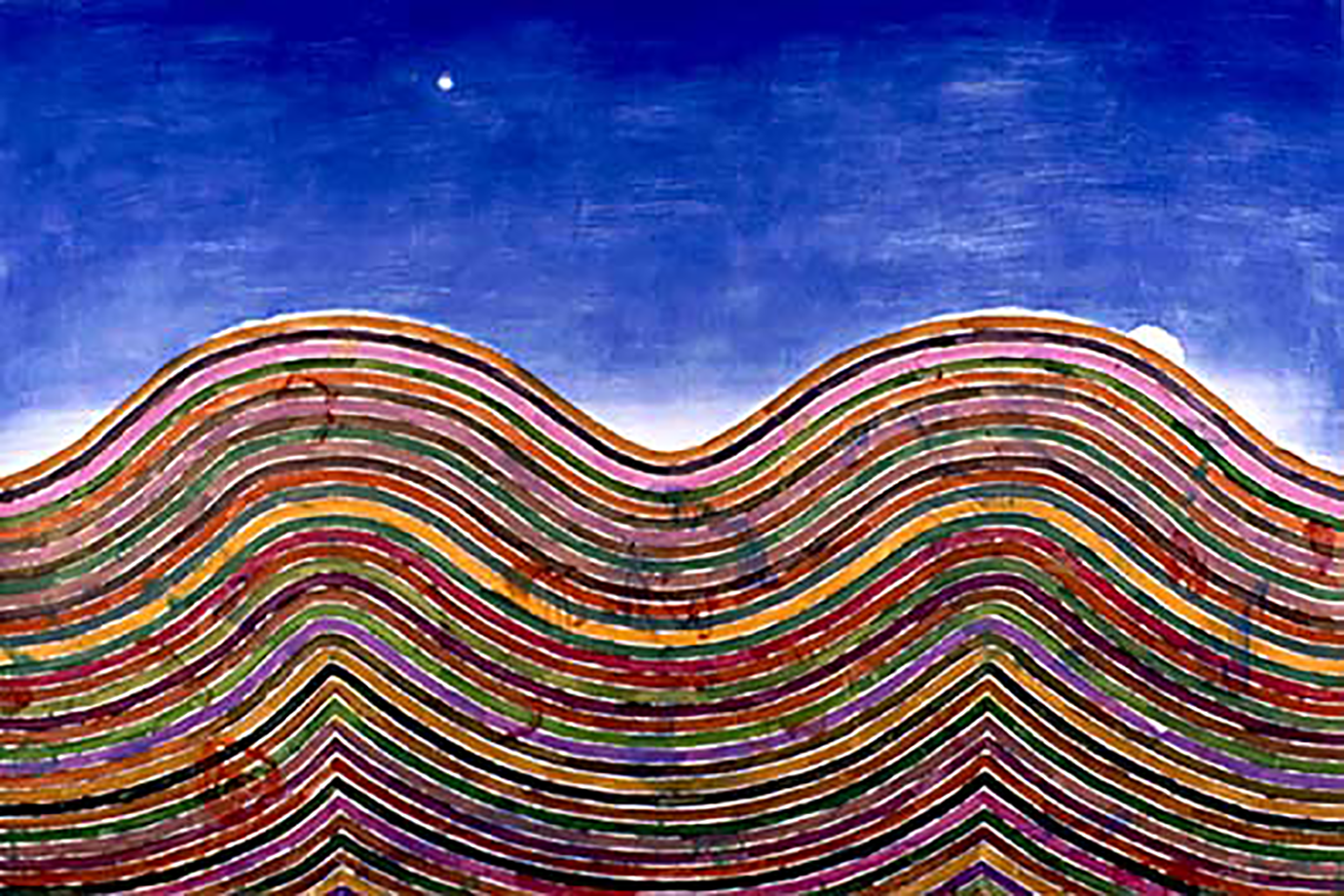
Dupuis—Morning Strata (1997). Image courtesy of David Dupuis, published by Pelavin Editions.

O’Brien—Untitled (2007). Image courtesy of William J. O’Brien.

Smith—Flower With Bee (1) (2000). © Kiki Smith, image courtesy Pace Gallery.
Each work of art, regardless of genre, included a similar didactic label that included information about the artwork and the artist. See Figure 4 for an example of a typical floor plan for the hospital unit that demonstrates the placement of the art.

Sample floor plan.
Waiver of informed consent and waiver of Health Insurance Portability and Accountability Act (HIPAA) authorization were approved by the hospital’s institutional review board. Market research staff informed patients of the purpose and voluntary nature of the study as well as the opportunity to decline involvement. One-on-one interviews were conducted in patient rooms by Market Research staff and included a survey with predefined single-choice responses and a semistructured interview with printed images of each piece of artwork on the individual units in a binder that patients could refer to if needed. Conversations were recorded with the written authorization of patients. The length of the interviews varied depending on the time it took for completion and the talkativeness of the patient or family member; however, the intention was that the interview would take no more than 30 min to complete.
Data Collected
Demographic data collected included unit number, gender, ethnicity, age, pre- or postoperative status, place of living (local vs. out of town), and history of prior hospitalization at this institution. The survey and interview guide (see Online Appendix 1) were initially created by Market Research and the curatorial team, with later input provided by the Arts and Medicine Institute’s Medical Director and research program manager. The survey instrument was then fine-tuned by the Market Research team, based on the software used to capture data in an open-answer response interview rather than a written survey tool. Survey intercepts with patients were elicited in a semiscripted and standardized fashion by three trained staff. A total of 21 questions were asked with additional probing questions to identify the underlying rationale for patients’ ratings. Some of these questions involved the following descriptive adjectives of healing, calming, stark/bare, inviting/welcoming, inspiring, and depressing. These were chosen because when reviewing previous patient testimonials at this hospital, they were the top terms used by patients when describing the overall environment (Karnik et al., 2014). Recorded conversations were later transcribed to ensure fidelity of comments and quality of survey results. After completion of the interviews, patients were offered a US$5 gift card as a token of appreciation for their participation.
Statistical Analysis
Descriptive statistics were generated as appropriate. Categorical data were compared using Fisher’s exact test or the χ2 test as appropriate. Numerical data were compared using the Kruskal–Wallis test. Nonparametric methods were used due to the small sample size and inability to assume the data were normally distributed.
Results
Participant Sample
Sixty-three (63) patients were enrolled, and 45 completed the interviews (15 patients from each of the three units). Interviews were conducted between June 22 and July 14, 2015, and between February 12 and March 23, 2016. The characteristics of the study participants are presented in Table 1. Consistent with the expected demographics of patients on a cardiothoracic unit, a majority were male and aged 45 or above. Most participants were interviewed during the postoperative period, and this was the first inpatient stay at this hospital for 60% or more.
Patient Demographics.

Note. N = 63.
Quantitative Results
Participants generally associated positive adjectives with the atmosphere on the main campus of the hospital or on the inpatient unit, and there were no statistically significant differences between groups (Tables 2 and 3). More participants (10%–47%) responded “not sure” regarding the atmosphere on the main campus, compared to the atmosphere on the unit (0%–8%), likely because they had less time to explore the campus versus their immediate surroundings.
Perception of Overall Atmosphere on Campus.

Note. N = 63; 5 = completely describes; 1 = does not describe at all.
Perception of Overall Atmosphere on the Inpatient Unit.

Note. N = 63; 5 = completely describes; 1 = does not at all describe.
Between 20% and 25% of participants on each unit stated that they did not recall the art displayed on the unit at all. About half of those who noticed the artwork read at least some of the labels. Responses were not significantly different between units. Those who noticed the artwork were more likely to report their race as White/Caucasian (91.11%, p = .0054) and were more likely to be in postoperative status (91.11%, p = .0045). No other statistically significant differences were noted.
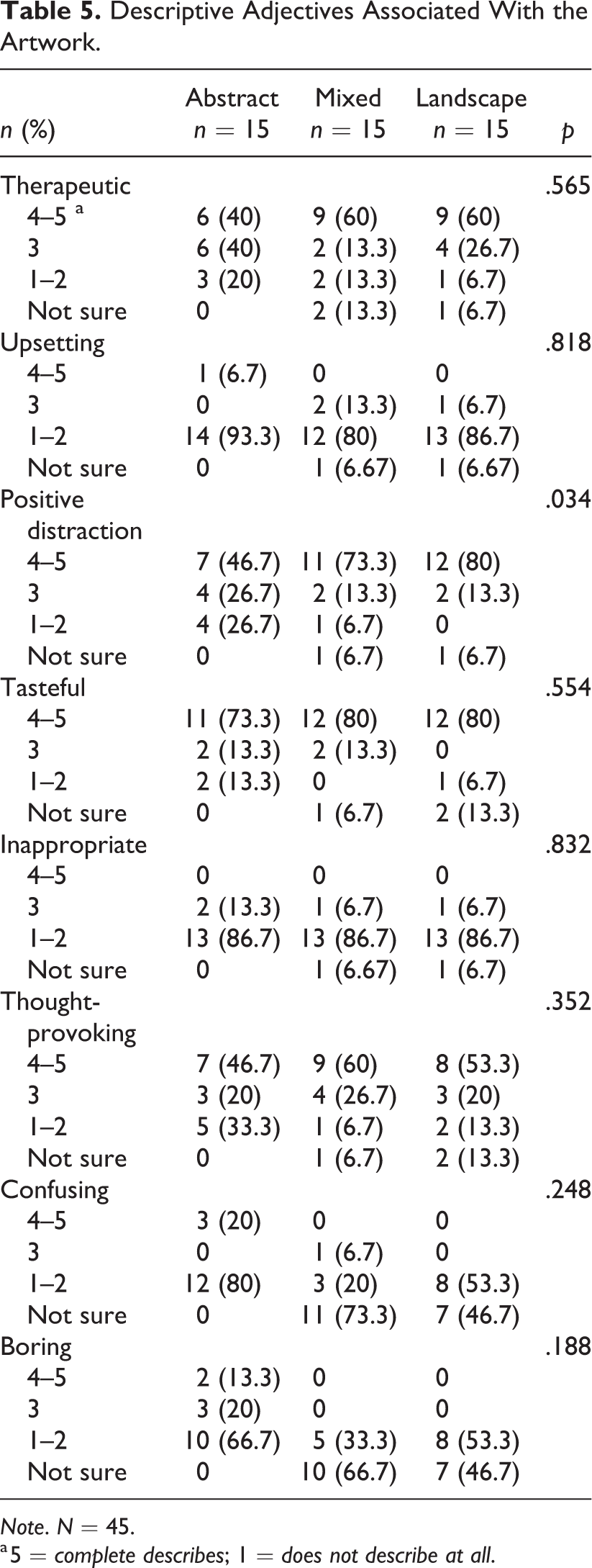
The impact of the artwork was assessed only among the 15 participants on each unit who completed the interviews (Tables 4 and 5). While there was a trend for a higher percentage of participants reporting a positive impact on the Landscape Unit, none of the differences reached statistical significance, and reports of negative impact were no more frequent for the Abstract or Mixed Units. A similar trend was seen in the adjectives associated with the artwork, and the percentage of participants agreeing with the descriptor “positive distraction” was significantly higher on the Landscape Unit compared to the Abstract Unit (p = .034). A strikingly high percentage of participants on the Mixed and Landscape Units responded “not sure” to the descriptors “confusing” and “boring.”
Impact of Art on Each Unit.

N = 45.
Descriptive Adjectives Associated With the Artwork.
Note. N = 45.
a 5 = complete describes; 1 = does not describe at all.
Qualitative Results
There were 74 (82%) positive and three (3%) neutral response/comments from patients on the Abstract Unit, 70 (82%) positive and four (5%) neutral responses/comments from patients on the Landscape Unit, and 75 (82%) positive and six (7%) neutral responses/comments from those on the Mixed Unit. When utilizing NVivo (QSR NVivo 10) to help analyze the qualitative information, it was found that the most common words across units were “nice” (57 times), “good” (55), “artwork” (49), “clean” (34), “pictures” (28), “environment” (26), “calming” (19), “friendly” (17), “atmosphere” (14), “interesting” (12), and “impressed” (11) as well as other positive terms that included “comfortable” (10), “relaxing” (10), “warm” (9), “helpful” (8), and “inspiring” (7). The following are some of the specific questions that were asked as well as the responses received.
How would you describe the atmosphere/overall environment of the unit you are currently staying on? This would include your room as well as the outside hallways in your unit.
The majority of responses to this question were as follows: it is clean (15%–All Units); liked the pictures and art, it’s well decorated (11%—All); it’s nice, good, great, I like it (8%—All); the people are nice and friendly (8%—All); it is calming, warm, soothing, relaxing, quiet, and comforting (6%—Mixed and Abstract); the colors, wood, and lighting are soothing (5%—Mixed and Abstract); it is welcoming, inviting, accommodating (4%—All); it is supportive and caring (4%—Mixed and Abstract); it is well-designed (3%—Abstract); and it is modern (3%—Mixed and Abstract). See Table 6 for other comments.
Open-Ended Responses to Questions.
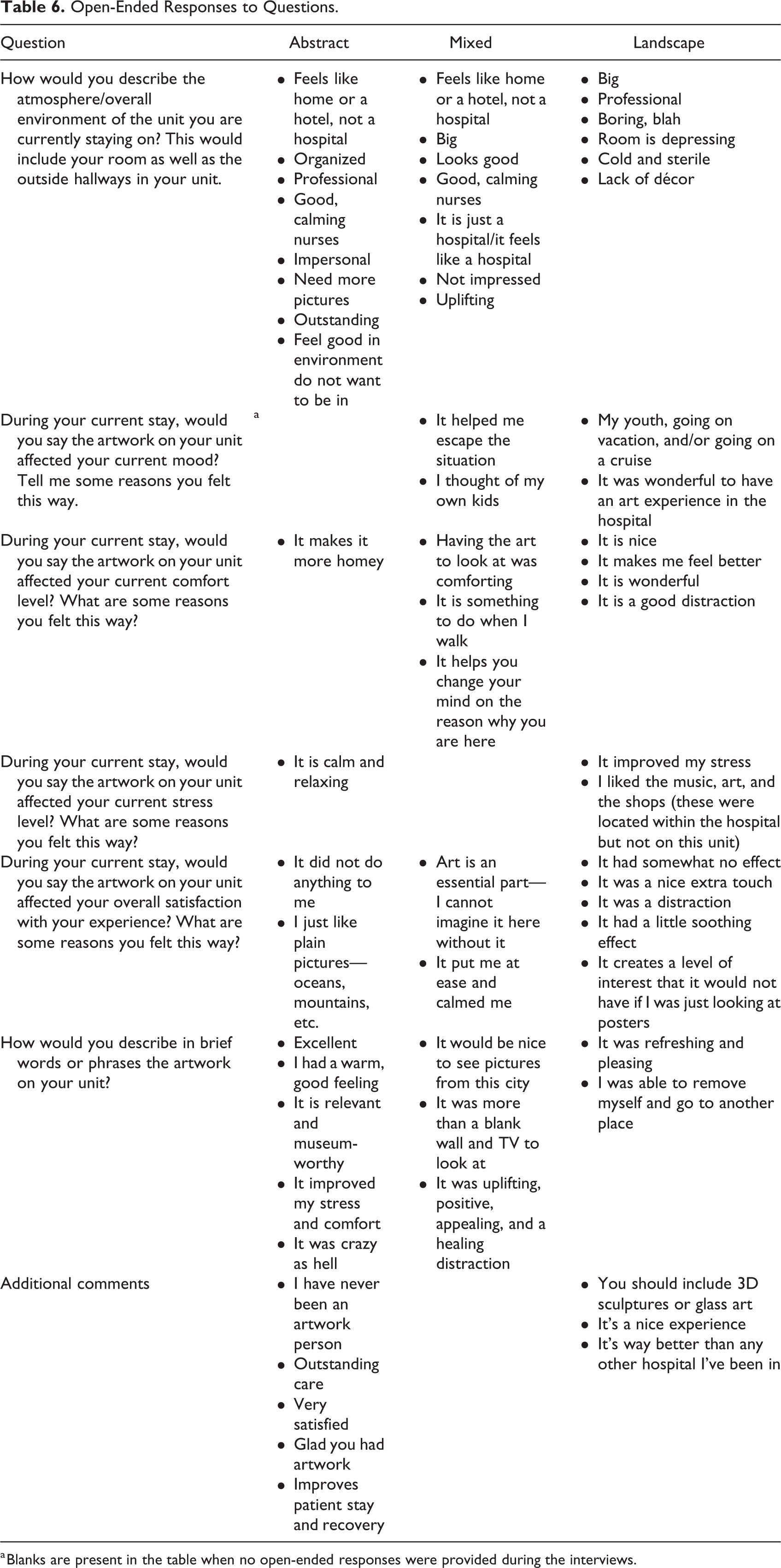
a Blanks are present in the table when no open-ended responses were provided during the interviews.
Specifically, which pieces of artwork on this unit stand out to you, if any?
The pictures that stuck out the most on the Mixed Unit were Jessica Backhaus’s (2004) Raindrops and Kiki Smith’s (2000) Flower With Bee series (Figure 3), on the Abstract Unit were William J. O’Brien’s (2007) Untitled (Figure 2) and Jason Martin’s (2010) Untitled (Plate IV), and on the Landscape Unit were Massimo Vitali’s (2006) #1997 Amadores 2 and David Dupuis’s (1997) Morning Strata (Figure 1). Negative responses included do not like any of them, was not impressed, and I could do that. Positive responses included relaxing and calming and like the media used. One patient even reported that the art inspired her younger son to draw and that he was at the hotel with sketchpads.
During your current stay, would you say the artwork on your unit affected your current mood, comfort level, stress level, and overall satisfaction? Tell me some reasons you felt this way
A total of 18% (Mixed and Abstract) said their mood got better/improved and that they enjoyed the art, 9% (Landscape) said that it was nice to not just see bland walls, 9% (Mixed) noted no change in mood, and 9% (Mixed and Landscape) indicated that their mood worsened because they did not like the art. Specific comments are listed in Table 6. There were only single responses as only eight people responded to the question regarding the effect on comfort level. These were all positive comments, and they are listed in Table 6. Only seven people responded to this question regarding the effect of the artwork on stress level. A total of 57% (Mixed and Abstract) said that the art had no effect on their stress. Other open-ended comments are found in Table 6.
Fifteen people responded to the question regarding the effect on overall satisfaction and experience. A total of 13% (Abstract and Landscape) of participants said the walls would be cold and bare without the artwork. Positive and negative comments are found in Table 6.
How would you describe in brief words or phrases the artwork on your unit?
There were 56 different responses to this question. When asked this question, 18% (All Units) of patients responded that it was relaxing, calming, therapeutic, comforting, peaceful, and restful; 7% (All) said it was interesting; 7% (All) indicated it was inspiring; 5% (All) were intrigued; 5% (Abstract) thought it was excellent and they had a warm, good feeling; and 4% (Mixed and Abstract) said it was not good nor bad but was just there. Other positive and negative comments as well as suggestions are listed in Table 6. Sixteen additional comments were made by patients, and some of these are found in Table 6.
Overall Observations
Comments regarding the atmosphere/environment of the hospital itself included those surrounding several aspects of the art, including specific pieces of art; the music performances and overhead music; the caring, friendliness, and helpfulness of the staff; the calming environment; and the overall design of the buildings. In looking at the qualitative comments that were made by participants regarding the atmosphere/environment of the unit, it appeared that those on the Landscape Unit were less satisfied with the atmosphere/environment of the unit than those on the other units. Although they made some positive comments, the majority of their comments included phrases such as need more pictures, blah, room is depressing, neutral, lack of décor, cold, and sterile. Common themes that occurred among at least two of the units included comments regarding the cleanliness of the unit; the professionalism of the staff; the friendliness and helpfulness of the employees; the supportive, caring environment; a big room that feels more like a hotel than a hospital; and the soothing, calming, and relaxing environment.
Common themes that emerged among those who commented on whether or not the art helped to change their mood included taking their mind off their situation or pain, bringing back memories, and taking them somewhere else such as on a vacation. Regarding satisfaction, it seemed that overall participants felt the art had some positive effect and that the type of art was important (fine art as compared to posters). Descriptions of the art on the various units ranged from crazy as hell; to healing distraction, relaxing, calming, therapeutic, comforting, and peaceful; to relevant, modern, and museum-worthy.
Discussion
The results of the quantitative and qualitative analysis show that all the genres of art considered in this study, primarily landscape-based and abstract, enhanced the hospital environment.
By thematically dividing types of artworks into different geographical units, this study investigated how patients might respond to specific genres. In the current study, although landscape had the greatest number of respondents who reported that their mood, comfort, stress, overall satisfaction, and experience had significantly or somewhat improved, abstract art also generated a high number of positive responses (Table 4). Additionally, abstract was associated with “no effect” responses rather than “negative effect.” In fact, there was no indication from the quantitative or qualitative results from the Abstract or Mixed Units that patients had experienced any anxiety or discomfort in viewing the art on their respective units. When asked on a questionnaire whether the artwork affected their current mood, 40% of those on the Abstract Unit and 73% on the Mixed Unit reported that it somewhat or significantly improved, but when asked in the open interview, 18% in the Mixed and Abstract Units said that their mood got better/improved and that they enjoyed the art. While the results show that landscape is preferred, the positive responses on the Abstract and Mixed Units are notable.
For the most part, patients on the Landscape and Mixed Units were able to describe in more detail the artwork and how it affected them. Inpatients on the Abstract Unit mostly appreciated that the artwork was there to enhance the atmosphere of the unit but also had trouble understanding the artwork or describing it. The responses suggest a need for more education, enticement, and an invitation to engage with contemporary art and specifically abstract art. Recognizing that exposure to abstract art may not be part of the general culture and as such there is a limitation in knowing how to approach and discuss it, it is necessary to find ways to make it more approachable. Ideas for this include interactive electronic applications (apps), conversational wall labels, audio content, and other experiential material.
The percentage of patients who noticed the art after spending at least 3 days on the unit (75%–80%) is consistent with findings from the previous study by Karnik et al. (2014) in which a survey was given to patients who had been to the hospital within the past year and were asked to comment on the art in public spaces (Karnik et al., 2014). Results of that study showed the longer the patients were at the hospital, the more they noticed the art. Respondents who had been at the hospital for 2–3 days said that the artwork positively affected their mood (91%) and stress (72%; Karnik et al., 2014). For this reason, we chose to interview patients who had spent at least 3 days in the hospital as they were likely more receptive to considering their environment and the effects of art on their well-being. Patients who are in the hospital longer stand to benefit the most by the artwork, such as needing an escape or positive distraction, but this hypothesis needs to be tested in future studies.
One of the challenges of the study was that there were initial challenges with enrollment. Patients were not randomized to each unit since their assignment was solely decided based on bed availability at admission. In addition, patients were recommended for the study by the nursing staff, therefore representing a convenience sample. Patients were expected to have walked the units for physical activity; however, this was not a strict inclusion criterion, and it was discovered that some participants in the survey had not regularly walked around the unit, presenting a limitation to the study. As there were issues getting enough patients on the initial Mixed Unit to complete the study, another Mixed Unit was curated mid-survey in order to meet the enrollment goal. In addition, detailed clinical data that could have provided further information about the patient population was not collected. Another limitation to the study is that although a mixed method, qualitative and quantitative, and prospective study design was attempted, there was the potential for recall and recency bias. This was mitigated; however, by presenting participants with images from the halls. Finally, the small sample size could be considered a limitation to the study, and an error of sampling could have occurred. It is important to be cautious when generalizing the results because the statistics do not necessarily support this.
It would be useful to replicate this study with other patient populations to see whether there is variance with preference for different artistic styles and genres. Furthermore, it would be interesting to replicate the study for employees and staff who work in the hospital, as there is increasing interest in the impact of the physical environment on caregiver satisfaction. Comments from survey participants suggest that education about abstract artwork may impact the patients’ perceptions about abstract art and may generate more positive reactions. As an example, the hospital where this study was conducted has recently unveiled an app that features selections of artwork from the collection, provides didactic information, and has an interactive augmented reality component. It is a fun and engaging way to experience and interact with the art. A future study on the usage of the app, how it affects the patient and visitor experience, and a patient’s engagement with the art digitally would be a natural follow-up study.
Based on the results of this study, it is believed that a mixed methods approach is optimal to capture the whole experience of the patient. The forced choice survey seems to have primed the participants for the open-response interview, which provided insight into the reason for the initial responses. It should be noted that attributing categories to an artwork does not necessarily reflect the interaction between an individual and a particular artwork. Avoiding the naming of genres on labels or other educational materials may avoid predetermined reactions based on personal beliefs (e.g., “I do not understand abstract art; therefore, I do not like it”), which could affect a person’s willingness to fully experience the artwork.
Based on the above, implications for practice include five different points. The first is that although landscape had the greatest number of respondents who reported that their mood, comfort, stress, overall satisfaction, and experience had significantly or somewhat improved, abstract art also generated a high number of positive responses. Therefore, a diverse collection of contemporary artwork has a valuable place in a hospital as it may enhance a patient’s experience of the hospital environment during a stressful time. The second is that artwork in hospital corridors can be used to help encourage patients to walk as part of their recovery, while also having a positive influence on patient mood, stress, comfort level, and overall satisfaction. The third is that the use of abstract art has a place in a hospital within a diverse collection of contemporary art that contains both representational and nonrepresentational styles. This should be considered in conjunction with landscape and curations of mixed types of art. The fourth implication is that it is important for curators to work together with architects, administrators, patients, and coworkers in order to better understand how the environment affects patient experiences, including their physical, mental, and emotional health and well-being. Finally, strategies should be developed in hospitals that include more education, engagement, and interpretation of the artwork in order to enhance the patient’s experience and to assist in improving their mood, stress, comfort level, physical and mental well-being, and overall satisfaction.
Conclusions
In summary, the findings suggest that both abstract and landscape genres of art may enhance a patient’s experience of the hospital environment during a stressful time. In addition, results demonstrated improved mood, stress, and comfort. This study adds to the literature and supports the findings of our previous study (Blinded reference). Although positive responses were more prevalent with landscape art, a majority of participants reacted positively to both genres, and none reported that abstract art had a negative effect. Therefore, it is proposed that abstract art has a place in a hospital within a diverse collection of contemporary art that contains both representational and nonrepresentational styles; however, a strategy should be developed that includes more education, engagement, and interpretation of the artwork. Quality of care is important. If an institution can afford it and make it a priority to have visual art in the corridors, as well as didactic information, patients can engage in the hospital environment in a different way. Hospitals can even put posters in the hallway and include narratives that engage the patients. It was found that overall, it was not the type of art that had the effect on the patient, it was the fact that art was available. Therefore, it is believed that having a diversity of art and artists can make the environment more interesting, leading to a positive patient experience that allows them to believe their experience and well-being are being considered beyond just the medical issue that brought them to the hospital in the first place.
Implications for Practice
Although landscape had the greatest number of respondents who reported that their mood, comfort stress, overall satisfaction, and experience had significantly or somewhat improved, abstract art also generated a high number of positive responses. Therefore, a diverse collection of contemporary artwork has a valuable place in a hospital as it may enhance a patient’s experience of the hospital environment during a stressful time.
Artwork in hospital corridors can be used to help encourage patients to walk as part of their recovery, while also having a positive effect on patient mood, stress, comfort level, and overall satisfaction.
The use of abstract art has a place in a hospital within a diverse collection of contemporary art that contains both representational and nonrepresentational styles. This should be considered in conjunction with landscape and curations of mixed types of art.
It is important for curators to work together with architects, administrators, patients, and coworkers in order to better understand how the environment affects patient experiences, including their physical, mental, and emotional health and well-being.
Strategies should be developed in hospitals that include more education, engagement, and interpretation of the artwork in order to enhance the patient’s experience and to assist in improving their mood, stress, comfort level, physical and mental well-being, and overall satisfaction.
Supplemental Material
Supplemental Material, sj-pdf-1-her-10.1177_1937586720973581 - Patient Perceptions of Landscape and Abstract Art in Inpatient Cardiac Units: A Cross-Sectional Survey
Supplemental Material, sj-pdf-1-her-10.1177_1937586720973581 for Patient Perceptions of Landscape and Abstract Art in Inpatient Cardiac Units: A Cross-Sectional Survey by Jennifer Finkel, Bellamy Printz, Lisa M. Gallagher, Adrian Au, Kelly Shibuya and Francois Bethoux in HERD: Health Environments Research & Design Journal
Supplemental Material
Supplemental Material, sj-pdf-2-her-10.1177_1937586720973581 - Patient Perceptions of Landscape and Abstract Art in Inpatient Cardiac Units: A Cross-Sectional Survey
Supplemental Material, sj-pdf-2-her-10.1177_1937586720973581 for Patient Perceptions of Landscape and Abstract Art in Inpatient Cardiac Units: A Cross-Sectional Survey by Jennifer Finkel, Bellamy Printz, Lisa M. Gallagher, Adrian Au, Kelly Shibuya and Francois Bethoux in HERD: Health Environments Research & Design Journal
Footnotes
Acknowledgment
The authors wish to acknowledge Joanne Cohen, Executive Director and Curator, for her support with this project and Michelle Gandolf and Jordan Zivoder for their assistance with the surveys.
Declaration of Conflicting Interests
The authors declared the following potential conflicts of interest with respect to the research, authorship, and/or publication of this article: There is no conflict of interest except for Lisa Gallagher who is an advisor/consultant for Novartis. However, this does not have any impact on this study.
Funding
The authors received no financial support for the research, authorship, and/or publication of this article.

Supplemental Material
The supplemental material for this article is available online.
References
Supplementary Material
Please find the following supplemental material available below.
For Open Access articles published under a Creative Commons License, all supplemental material carries the same license as the article it is associated with.
For non-Open Access articles published, all supplemental material carries a non-exclusive license, and permission requests for re-use of supplemental material or any part of supplemental material shall be sent directly to the copyright owner as specified in the copyright notice associated with the article.
