




Abstract
Customer loyalty is paramount for hospitality businesses, and social media communication is becoming a powerful way to increase touchpoints with customers. However, scant research evaluates the impact of social media behavior on program loyalty. Thus, the goal of our study is to determine the impact of social media communication on hotel program loyalty. We present a quantitative model of the differential impact of various forms of social media word of mouth (WOM) and verify it with a random sample of 575 participants. Our results suggest that hotelier social media communication style and information quality significantly affect consumer social media behavior; this leads to increased loyalty toward hotel reward programs. Combined with other findings, the friendly dimension of communication style has the highest impact, whereas interactive and professional display the lowest scores. In other words, study respondents are more likely to participate in friendly social media environments; such participation is more limited with regard to those that are simply interactive and professional. Therefore, this study adds to the body of knowledge on loyalty, WOM, social media communication, and rewards programs by proposing and testing an integrative model between social media communication style, information quality, social media behavior, and all of their ultimate impact on program loyalty.
Keywords
Introduction
Customer loyalty is vital to the success of many businesses and achieving long-term loyalty can give companies a competitive edge. Companies no longer rely on merely being product centric; instead, they strive to become more customer centric by incorporating various customer relationship management systems and focusing on customer-attentive business approaches (Zahay, Peltier, and Krishen 2012). Loyalty programs are implemented by companies to retain their best customers, gather information about customers to meet their needs more effectively, and to deter customers from defecting to the competition (O’Malley 1998). Loyalty programs seek to add value to the customer experience and cultivate enduring relationships, with the ultimate goal of increasing repeat purchase behavior and share of wallet (Mayer-Waarden 2008).
Hospitality businesses recognize that it is equally if not more important to keep a customer base than to add new customers. Therefore, loyalty marketing has become the cornerstone of success for service industries (Lam et al. 2004). Due to the increasing focus on loyalty, most hospitality companies have implemented loyalty rewards programs, and they are a virtual requirement for major hotel chains.
We extend previous loyalty research by exploring the critical role that marketing and communication play in achieving loyalty to hotel reward programs rather than to the hotel brand itself. The goal of our study is to determine the impact of social media communication on hotel program loyalty. In our study, social media includes Facebook, TripAdvisor, Flyertalk, and similar platforms that foster user-generated content. We contend that hotelier social media communication style and information quality will affect consumer social media behavior which will in turn lead to increased loyalty toward hotel reward programs.
Theoretical Framework and Hypotheses
Customer Loyalty
Customer loyalty is an important construct that has been investigated and pursued by hospitality businesses and academics alike. A widely accepted definition of customer loyalty is that of Oliver (1999, 34), who described it as
. . . a deeply held commitment to rebuy or re-patronize a preferred product/service consistently in the future, thereby causing repetitive same brand or same brand set purchasing, despite situational influences and marketing efforts having the potential to cause switching behavior.
Other descriptions not only define loyalty as repeat purchase behavior, but also consider favorable attitudes toward the service provider, including emotional commitment and trust (Baloglu 2002; Mattila 2006; McAlexander, Kim, and Roberts 2003; Tanford and Baloglu 2013). It has further been suggested that loyalty involves a positive attitude that follows from the customer’s repeat purchase behavior (Jacoby and Kyner 1973). As a whole, research supports the premise that customer loyalty is a composite construct that contains both behavioral and attitudinal components (Dick and Basu 1994). The behavioral dimension includes static outcomes such as consumption, repeat purchase, spending amount, duration, frequency, share of wallet, and willingness to pay. The attitudinal dimension is more dynamic and involves affection toward a brand developed through emotional commitment, psychological attachment, and trust (Baloglu 2002; Bowen and Shoemaker 2003; Mattila 2001, 2006; Tanford, Raab, and Kim 2011).
Early research focuses on loyalty as repeat purchase behavior and emphasizes the value that loyal customers provide to businesses. For example, repeat patrons make more frequent visits, spend more, contribute a greater share of wallet, and spend larger amounts per visit. Repeat customers spread positive word of mouth (WOM) about the business, recommending it to others and expressing favorable opinions. This “free advertising” can reduce the amount spent on marketing campaigns and save resources for other purposes. Furthermore, repeat customers can act as informal information channels that influence the purchase decisions of their friends, relatives, and associates (Petrick 2004). Therefore, repeat patrons are valuable because they engage in actions that provide positive financial outcomes to the business. The benefits of repeat customers are magnified by the well-documented adage that it can cost a company up to six times more to attain new customers than to retain the existing clientele by cultivating customer loyalty.
Researchers have not reached a consensus as to which factors actually determine loyalty (Agustin and Singh 2005), but the hospitality literature has obtained support for a variety of antecedents, including service quality, value, satisfaction, commitment, communication, trust, and switching costs (Bowen and Shoemaker 2003; Gracia, Bakker, and Grau 2011; Tanford and Baloglu 2013; Wilkins, Merrilees, and Herington 2010). In addition, considerable research suggests that psychological attachment is a key element of loyalty to a service provider or brand. For example, Gracia, Bakker, and Grau (2011) find that positive affect mediates the relationship between perceptions of service quality and customer loyalty. Hendler and LaTour (2008) use the Zaltman metaphor elicitation technique to uncover customers’ unconscious reasons to be loyal to a casino’s reward programs. Their research highlights differences between locals and tourists in terms of their emotional connections toward reward programs. Because customer loyalty is a major source of competitive advantage, loyalty marketing is now vital to the success of the service industry, which leads to the implementation of carefully designed loyalty campaigns and programs (Lam et al. 2004).
Shoemaker’s Loyalty Circle indicates that to maintain customer loyalty, businesses must continuously balance three components, namely, process, value, and communication (Shoemaker 2003; Shoemaker and Lewis 1999). Thus, the goal of marketers is to increase value and reduce perceived costs in both current and future transactions. Likewise, all business processes must be managed flawlessly to maintain the customer’s perception of value. In addition, the concept of the Loyalty Circle emphasizes the role of communication in preempting loyalty at the same level as value and process. Nevertheless, new technologies and innovations, including social media channels, are progressively leading to a market in which communication plays an imperative role in customer experience (Fearis 2012; Gupta 2012). The present study evaluates social media aspects of communication and their impact on program loyalty, including those identified by Berezan et al. (2015). Berezan and colleagues suggest that perceived knowledge of program benefits and rules, ease and enjoyment of acquiring information, and program experience maximization through both program-sponsored and unofficial means are important variables to be considered with respect to program loyalty. Examples of unofficial means include program loopholes shared by customers (customer-to-customer [C2C] know-how exchange), such as ways to reap program benefits without following official program rules or taking advantage of program mistakes.
Communication
Communication affects all aspects of customer–firm relationships, especially loyalty, which ultimately increases customer retention (Peltier, Zahay, and Krishen 2013). Effective relationship marketing communication requires the provision of trustworthy and accurate service information, the fulfillment of promises, and the timely delivery of information in case of service delivery problems (Ball, Coelho, and Machas 2004). Communication for hotel loyalty programs may include accurate and timely information regarding program benefits, promotions, and regulations. Constantly changing communication channels, expanded customer touchpoints, and the need to obtain accurate and customized information directly impact the ability to meet customer expectations (Parasuraman and Colby 2001; Ray, Muhanna, and Barney 2005). Company-managed websites, social media applications, and database marketing are now the norm, as are customer-created communications, such as online forums that provide service ratings and C2C know-how exchanges (Zahay, Peltier, and Krishen 2012).
The literature defines communication effectiveness to include both information quality and communication style (Ball, Coelho, and Machas 2004; Ganesan 1994; Morgan and Hunt 1994). The information quality dimension includes accuracy, accessibility, clarity, continuity, helpfulness, proactivity, timeliness, trustworthiness, thoroughness, and usefulness. Communication style dimensions are based on participants’ agreement or disagreement with the following descriptions: attentive, customized, friendly, interactive, and professional. Even though some literature argues that there are several components that determine loyalty, including process, value, and communication, much of the existing research mentions communication as one of the most important aspects (Shoemaker and Lewis 1999), largely because of technological changes such as the internet. Channels, including corporate websites, blogs, and microblogs, in combination with consumer devices such as smart phones, tablets, and phablets, allow consumers to communicate more readily than was ever previously possible. The dynamic nature of reward program membership enhances the need for effective company-created communication, whereas inadequate or untimely communication could lead to negative WOM expressed through online forums. However, even though hotels struggle with consumer adoption issues regarding social media (Noone, McGuire, and Rohlfs 2011), scant hospitality research examines the impact of customer-created communication via social media on program loyalty. Therefore, this study explores customer-created communications centered on electronic WOM (eWOM), specifically focusing on C2C knowledge exchange on social media. Hence, we present the following hypotheses:
Social Media as WOM
As with traditional WOM, eWOM is a critical element of the marketing mix. eWOM is a form of customer-created communication and is defined as “. . . any positive or negative statement made by potential, actual, or former customers about a product or company, which is made available to a multitude of people and institutions via the Internet” (Hennig-Thurau et al. 2004, 39). Online forums have become popular platforms for sharing customer experiences with products and services (Seraj 2012) as well as consumer policy discussions (Krishen et al. 2014). These customer-driven communication sources can have a powerful impact on a consumer’s decision-making process.
Electronic WOM involves C2C know-how exchange (von Hippel 1988), which has practical value to customers by conveying, “. . . the skills necessary to better understand, use, operate, modify and/or repair a product” (Hennig-Thurau et al. 2004, 43). Many customers who provide this know-how experience enjoyment achieved by helping others (Hennig-Thurau et al. 2004). C2C know-how exchange can influence customer perceptions of the products being sold by a business (Gruen, Osmonbekov, and Czaplewski 2006). In essence, the perceived value of the product is influenced through interactions with other customers who patronize the business. With respect to loyalty programs, customer interactions provide knowledge that enables members to maximize loyalty program benefits and gain more value from program experiences. According to Gruen, Osmonbekov, and Czaplewski (2006), eWOM is considered a reliable source of information by customers. These authors reached this conclusion by evaluating the influence of motivation, ability, and opportunity on engagement in C2C information exchanges. Online travel forums such as Yelp.com and Tripadvisor.com provide customer reviews and ratings that are powerful influences on consumer decisions. Other sites such as Cruise Critic provide interactive discussion forums where members can share their travel experiences. One site in particular, Flyertalk.com, is a popular discussion forum that focuses primarily on hospitality loyalty programs. Members share their experiences with loyalty programs and discuss ways to increase program benefits, points, or miles.
Online customer reviews play a crucial role in the customer’s hotel selection process, giving businesses a compelling reason to attend to social media (Noone, McGuire, and Rohlfs 2011). Noone and colleagues indicate that user-generated comments from social media can assist short-term objectives, such as filling rooms during slow periods. In the long run, data collected from social media can provide a richer understanding of the firm’s target markets, which can facilitate a customer-focused revenue management approach. Many companies are attempting to infiltrate customer-created communication channels by assigning official representatives as active members in these and other online communities, who are often welcomed by existing customers. Wyndham Hotels successfully launched WynReview, a proprietary system allowing owners/operators to manage customer reviews from online sites such as TripAdvisor. In fact, Wyndham now features a balanced selection of positive and negative TripAdvisor reviews on its website to keep site visitors from leaving the hotel company’s website (Mayock 2012). Similarly, Starwood Preferred Guest (SPG) is currently testing SPG Social, an integration of Facebook activity with their Starwood Hotels experience, in an effort to provide a more personalized customer experience.
Both customer-created and company-created communications in the form of customer education likely have an impact on loyalty. The more educated the consumer, the more involved he or she can be with the product. Because it is often necessary for consumers to participate in the actual production process of many services, businesses can increase loyalty by educating customers and imparting knowledge of the service process, thereby increasing service quality (Aubert, Khoury, and Jaber 2005). Ongoing, relevant communication is essential for program loyalty, whereas poor communication can produce dissatisfaction that will be conveyed through online forums.
Technological advances increasingly cause communication to play a more important role in the experience of customers by advancing both company-managed and customer-created efforts (Fearis 2012; Gupta 2012; Parasuraman and Colby 2001; Ray, Muhanna, and Barney 2005). Therefore, it is proposed that communication has a larger impact on program loyalty than previously thought. This study posits that the communication style and quality of information provided by C2C social media channels affect member interaction with these channels and ultimately, the loyalty of reward program members who use these channels to communicate about their hotel rewards programs. Therefore, we propose the following hypothesis:
Method
Participants, Procedure, and Measures
To test the hypotheses and overall model depicted in Exhibit 1, we first conducted a pilot study with a random sample of two hundred participants, followed by our main study with a random sample of 575 participants. Participants were required to have a preferred loyalty program and have stayed at a hotel two or more times in the past six months. The sample included members from all loyalty program tiers. Sampling was performed by eRewards (ResearchNow), an online research company agency with a panel of more than six million qualified members, including a large number of hotel reward program members. eRewards reflects the characteristics of the study population because it targets active members of hotel loyalty programs. The study proposes a model to explain the impact of social media communication style on perceived information quality and loyalty to hotelier programs through members’ social media experience; we are especially interested in understanding the components of social media behaviors and showing their differential impacts. Structural equation modeling (SEM) is used to evaluate the proposed relationships and the degree of connection they have with each other. Variables and scales for all constructs include multiple items from previously validated scales that were modified to fit the study context (Hue, Huang, and Chen 2010; Mattila 2006; Sirgy et al. 1997; Yi and Jeon 2003). Through the use of SEM, goodness-of-fit indices, path coefficients, and explanatory power are used to determine the overall model fit. This method results in a better understanding of the relationships between information quality, communication style, and, ultimately, the loyalty of members to their chosen hotel reward programs. SEM is a suitable method for this study as it is a combination of factor analysis and multiple regression that can simultaneously examine a set of relationships among one or more independent variables and one or more dependent variables, whether continuous or discreet (Tabachnick and Fidell 2007).
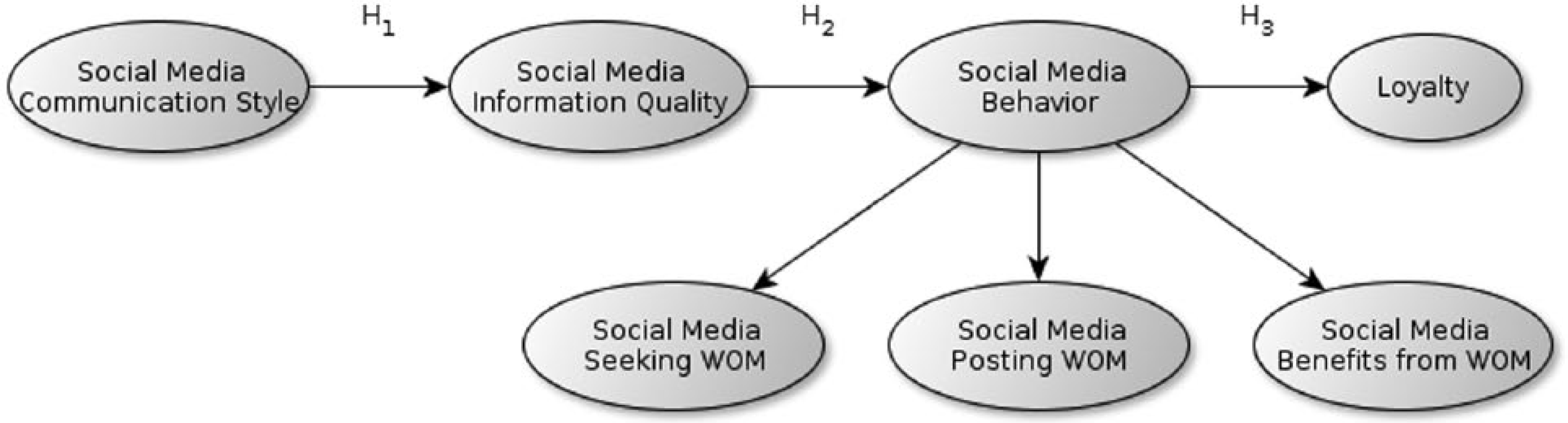
Conceptual Model.
The actual study involved 575 respondents, all of whom were U.S. residents who belonged to one or more hotel loyalty programs. The demographics of the final sample are depicted in Exhibit 2. The study uses a structured survey questionnaire, designed with previously validated constructs, as detailed in Exhibit 3. For consistency, all constructs were presented with 7-point Likert-type scales with anchors of 1 = strongly disagree and 7 = strongly agree.
Demographic Profile of the Respondents (N = 575).

Confirmatory Factor Analysis Statistics.
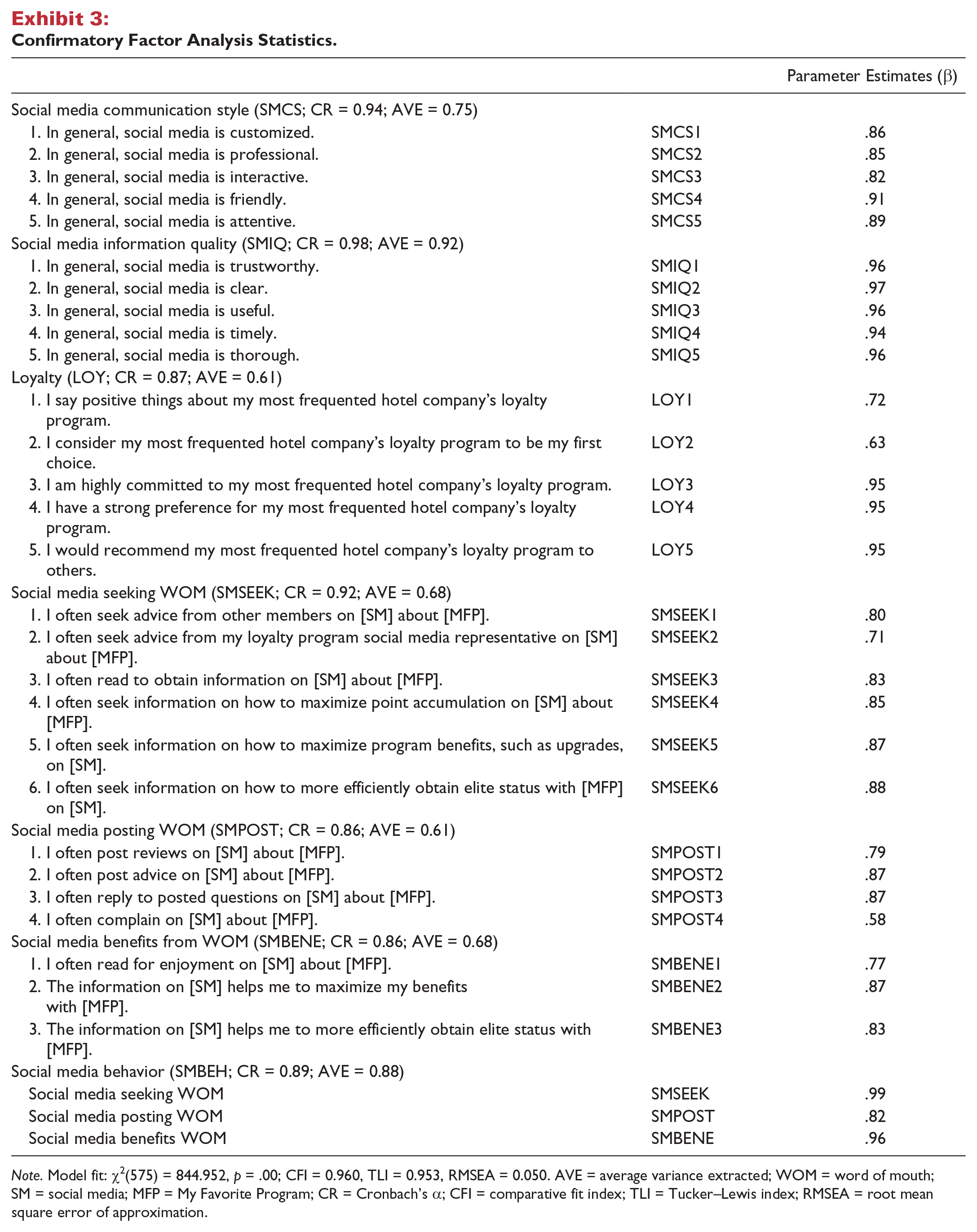
Note. Model fit: χ2(575) = 844.952, p = .00; CFI = 0.960, TLI = 0.953, RMSEA = 0.050. AVE = average variance extracted; WOM = word of mouth; SM = social media; MFP = My Favorite Program; CR = Cronbach’s α; CFI = comparative fit index; TLI = Tucker–Lewis index; RMSEA = root mean square error of approximation.
Refinement of Scales and Structural Model
Although the use of existing measures provides some confidence with reliability and validity (Babbie 2001), the previously discussed pilot study was conducted to check the measures for the constructs of information quality and communication style, as well as constructs such as social media behavior and program loyalty. The pilot study helped to ensure appropriate wording as well as check for internal consistency of scales using Cronbach’s alpha measures. After collecting the pilot study responses, the questionnaire items for the four main constructs as well as the three sub-constructs were subjected to an exploratory principal components factor analysis. During this process, items with low and/or multiple factor loadings were removed from the assessment (details follow), and items of each construct were carefully reviewed to ensure that all items were loaded based on the theoretically grounded model. During the next step, the items that remained were subjected to an item to total correlation analysis, and this process resulted in the elimination of items with low item to total correlations. The pilot test showed that all scales were reliable, and they were thus used for the actual study.
Social media information quality
The social media information quality construct is composed of five items as given in Exhibit 3. “Accurate,” “helpful,” “continuously provided,” and “proactively provided” were removed due to their similar meanings with other items. During the scale refinement pretest, “easy to access” was also removed as it was deemed by two experts that this is not a dimension of information quality. After deleting the five items from the scale, the construct exhibited acceptable reliability (Cronbach’s α = .98).
Social media communication style
Communication style is also comprised of five items; it was initially comprised of eleven items. The following items were deleted due to their similarity in meaning to other items: “positive,” “personalized,” “easy,” “pleasant,” “courteous,” and “responsive.” After deleting the six items from the scale of the construct, it displayed appropriate reliability (Cronbach’s α = .95).
Social media behavior
The social media behavior construct is composed of three sub-constructs, namely, social media seeking WOM (Cronbach’s α = .92), social media posting WOM (Cronbach’s α = .86), and social media benefits from WOM (Cronbach’s α = .86). The items in each of those sub-constructs are provided in Exhibit 3, and all three sub-constructs displayed adequate reliability.
Loyalty
Finally, the loyalty construct initially included eight items. Three items were deleted due to similarity in meaning to other items: “I have a great deal of emotional commitment,” “[Brand’s] rewards program gives me a great deal of personal meaning,” and “I like [brand’s] rewards program more than other programs.” The final five-item program loyalty construct had appropriate reliability (Cronbach’s α = .94).
Exhibit 4 shows the final structural model, in which every construct has three or more items.
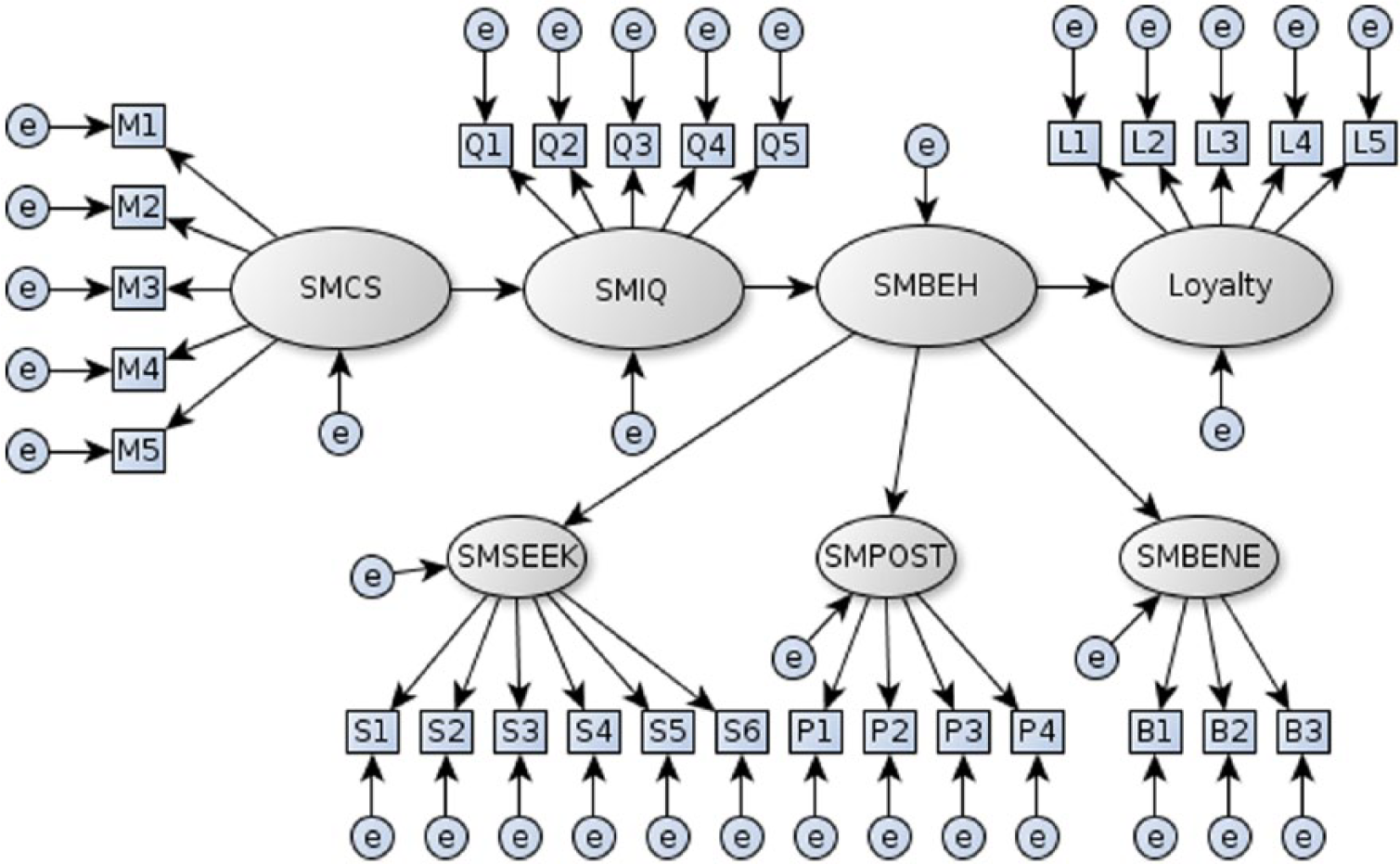
Structural Model.
Structural Model and Hypothesis Testing
AMOS 19 was used to evaluate and test the proposed structural equation model using a confirmatory modeling approach (Kline 2011). The structural model indicated a good fit to the data: p = .00, comparative fit index (CFI) = .960, Tucker–Lewis index (TLI) = .953, root mean square error of approximation (RMSEA) = .050. All factor loadings of the indicators were statistically significant, ranging from .15 (p< .05) to .67 (p< .005). To ascertain the extent to which variances in the constructs could be explained by the model, R2 values of the dependent constructs were calculated and found to be significant. To verify the reliability and validity of the model, Exhibit 3 shows loadings for each construct, composite scores, and average variance extracted (AVE) per construct. All items are significant at .05 levels and indicate acceptable loadings (.4 or higher); this displays convergent validity for the model (Fornell and Bookstein 1982). All constructs indicate acceptable levels of reliability with composite reliability measures which range from .86 to .98 (Nunnally 1978). The AVE values, which provide the variance of each indicator in relation to the measurement error and examine the convergent validity of each construct (Fornell and Larcker 1981), should be greater than .50. As the data given in Exhibit 3 show, the cutoff AVE value is achieved for all five constructs, with AVE values ranging from .61 to .92.
The cross factor loadings of construct items are provided in Exhibit 5; all items loaded more heavily on their respective constructs than on others, which suggest discriminant validity for the measures in the model. The mean, standard deviation, and correlations are given in Exhibit 6, and the diagonal values represent the square root of the AVE. As seen in Exhibit 7, all three hypotheses of the structural model were supported by the analysis of the data. First, social media communication style had a strong significant impact on social media information quality (β = .67, p< .005). Next, social media information quality had a significant effect on social media behavior (β = .31, p< .005). Finally, social media behavior had a significant impact on program loyalty (β = .15, p< .05). Overall, the magnitude and significance of the loading estimates indicate that the dimensions of communication style, information quality, and social media behavior are significant in predicting program loyalty. Furthermore, the dimension of communication style is relevant in predicting perceived information quality, the dimension of perceived information quality is relevant in predicting social media behavior, and social media behavior has a significant impact on program loyalty. The friendly dimension of the communication style construct received the highest score, whereas the interactive and professional dimensions displayed the lowest scores. In addition, the clear dimension of information quality construct showed the highest score, whereas the timely dimension indicated the lowest. Finally, the social media behavior construct displayed several results for the dimensions of its sub-constructs (social media seeking WOM, social media posting WOM, and social media benefits from WOM). For the social media seeking WOM sub-construct, the item “I often seek information on how to more efficiently obtain elite status” received the highest score, whereas the “I often seek advice from my loyalty program social media representative” item displayed the lowest score. For the social media posting WOM sub-construct, the items “I often post reviews on social media” and” “I often post advice on social media” received the highest scores, whereas the “I often seek advice from my loyalty program social media representative” item displayed the lowest score. The sub-construct social media benefits from WOM showed the highest estimate for the item “The information on social media helps me to maximize my benefits with my favorite program,” while respondents rated the “I read for enjoyment on social media about my favorite program” item lowest. Finally, for the overall social media behavior construct, results showed that respondents use social media seeking WOM most often, and social media posting WOM least often.
Cross-Factor Loadings.
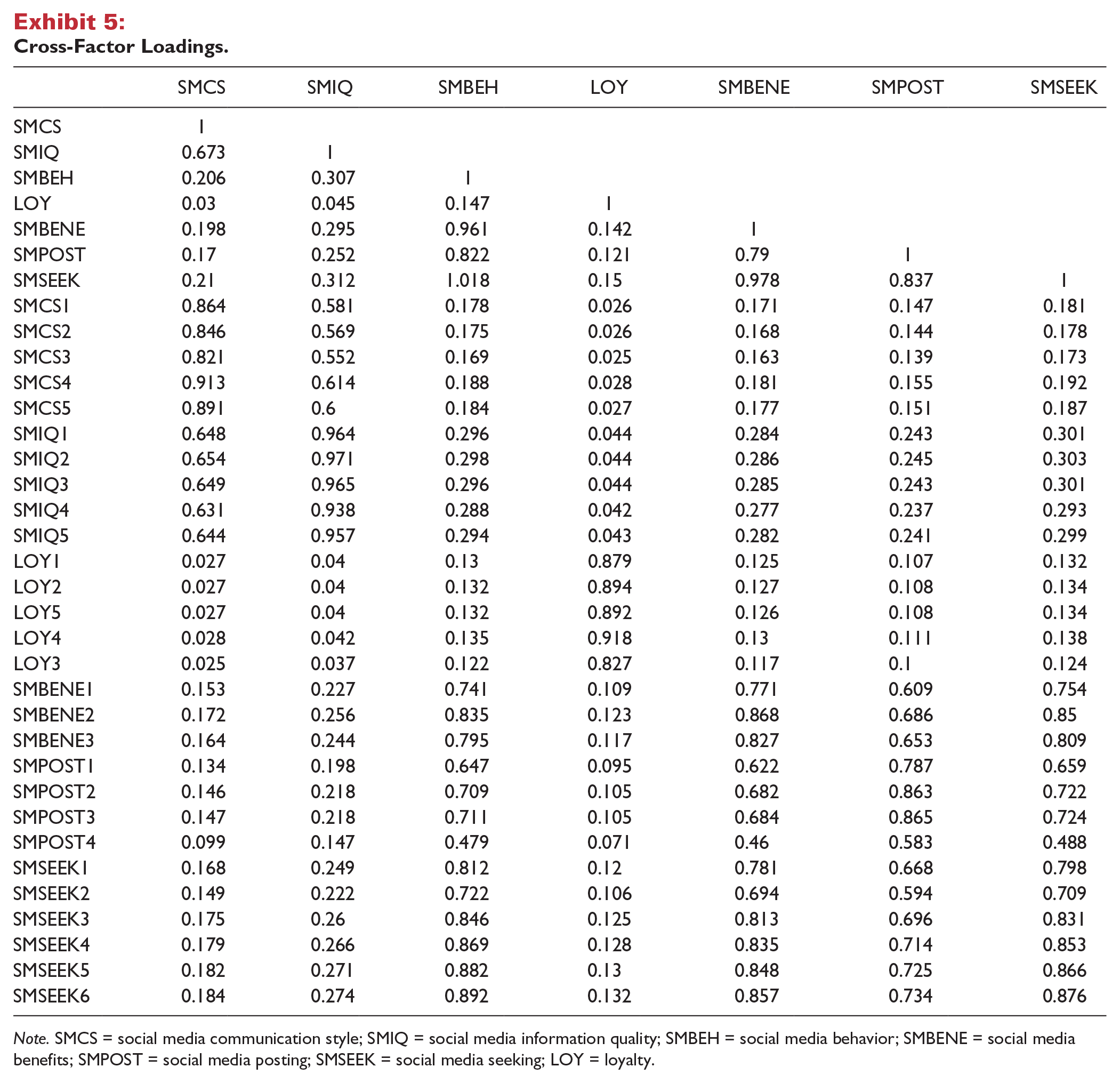
Note. SMCS = social media communication style; SMIQ = social media information quality; SMBEH = social media behavior; SMBENE = social media benefits; SMPOST = social media posting; SMSEEK = social media seeking; LOY = loyalty.
Mean, Standard Deviation, and Correlations.

Note. SMCS = social media communication style; SMIQ = social media information quality; SMSEEK = social media seeking; SMPOST = social media posting; SMBENE = social media benefits; Loy = loyalty.
AMOS Path Model Results.
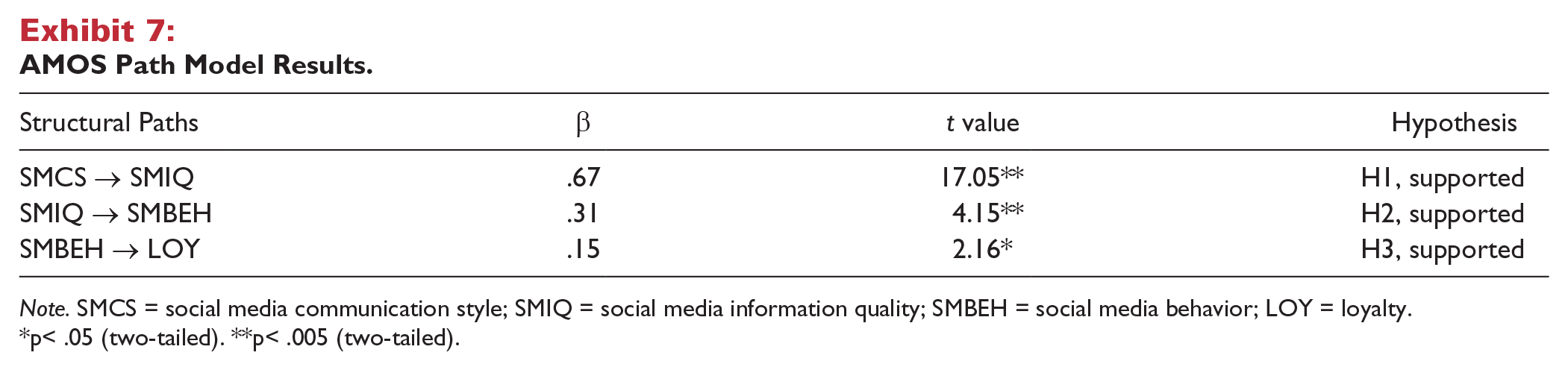
Note. SMCS = social media communication style; SMIQ = social media information quality; SMBEH = social media behavior; LOY = loyalty.
p< .05 (two-tailed). **p< .005 (two-tailed).
Discussions and Implications
Several important managerial implications emerge from this research. Given the importance of customer loyalty for hospitality businesses and the prevalence of social media communication, the present study is the first to parse the various types of social media behaviors and their differential impact on hotel program loyalty. To develop a better community of loyal rewards program members, management must further understand its target markets and their social media behaviors. This study, therefore, shows that hotelier social media communication style and information quality are important in affecting consumer social media behaviors and, ultimately, in fostering hotel program loyalty.
Overall, this study finds that when the social media communication style is more customized, personalized, professional, interactive, friendly, and attentive, participants will be more likely to rate the information quality as higher and therefore increase their loyalty to the program. In our study, the communication style dimension “friendly” receives the highest score, whereas “interactive” and “professional” display the lowest scores. Thus, consumers are more likely to participate in social media environments that are friendly, however, to a lesser degree interactive and professional. This may imply to management that if the majority of members of its target markets are well established with professional jobs, as is the case in this study, those markets may prefer a style of communication that allows them to efficiently obtain information without further engaging in conversations. This is useful information for managers, who are advised that they should become privy to the behaviors of certain demographic groups of their target markets. Perhaps, more importantly, this offers management an opportunity to gain a competitive advantage in the aggressive world of social media by enhancing the interactivity and professionalism of their social media communications. Finally, management should also realize that communication style expectations may change continuously as technology and society evolve.
In addition, it was observed that all dimensions of hotelier social media information quality generally are perceived as high, and as positively influencing consumer social media behavior. Management is therefore challenged to conform to high standards of information quality. Although social media communication quality is already perceived as high, management must be assertive and creative to maintain and improve communication quality when interacting with customers on social media. Moreover, as with communication style, management has to be very vigilant to observe trends and expectations.
In this study, social media information quality also positively influences social media behaviors. The social media seeking WOM sub-construct reveals that respondents use social media mainly to maximize their benefits such as obtaining elite status. Furthermore, the results show that respondents seek advice most often from other program members (C2C) and least often from official social media hotel representatives. Therefore, hotel rewards program representatives may need to increase their presence. If members seek advice mostly from other members, the information they receive may not be appropriately professional or accurate. This may influence members’ perception of social media communication style and social media information quality, and ultimately impact their social media behavior and program loyalty. This presents a vital opportunity for management, particularly in this case, where communication styles are ranked second lowest in professionalism. In addition, rewards program representatives should search for unanswered questions and provide responses to them in a timely manner. Furthermore, the social media posting WOM sub-construct indicates that most of the consumer posting activity includes advice, reviews, and information sharing. According to our results, it is notable that considerably less of the posting activity is used to complain, which is of importance to management. Complaints are crucial feedback, and management may want to find ways to encourage them through social media channels to create opportunities for service recovery. Finally, the social media benefits from WOM sub-construct shows that hotel reward members mostly use social media to maximize reward program benefits and seek assistance to achieve elite status more efficiently. Management can participate in C2C forums by providing communication to enhance the information members are seeking on social media. Such knowledge can provide the set of steps by which members can maximize their program experience and achieve higher perceived-program value; our model shows that such increased value perception will ultimately drive increased involvement and loyalty to the program. Finally, participants express that they not only use social media mostly to seek WOM advice but also to read posts for enjoyment. Management can enhance the hedonic value provided by social media forums by participating in an entertaining manner.
This study also contributes to the loyalty literature by emphasizing the importance of communication on program loyalty. Communication can cultivate a sense of community among members by providing opportunities to interact, discuss loyalty program benefits, and thereby build attachment to the program and its members (Rosenbaum, Ostrom, and Kuntze 2005). Social media communication channels provide a mechanism for companies to benefit by embracing such communities (particularly C2C know-how exchange and other forums). McCall and Voorhees (2010, 49) stress the importance of future research to evaluate factors that “. . . drive a sense of community in a program.” This study adds to the literature by suggesting that style of communication, information quality, and social media behavior are, indeed, predictive of customer loyalty toward rewards programs. In terms of virtual communities, communication style and information quality are drivers of the sense of community to which McCall and Voorhees (2010) refer.
In addition, this study supports Shoemaker and Lewis’ (1999) concept of a Loyalty Circle by highlighting the importance of communication on loyalty. This research also extends the research of Shoemaker and Lewis (1999) by proposing that in today’s technological environment, it is possible that communication has increased prominence, contrary to the concept that all Loyalty Circle components (processes, value, and communication) have equal weights of impact on loyalty. Future research can examine hotel brand loyalty as an outcome variable as well as reward program loyalty; our findings suggest that reward loyalty should be a positive predictor of brand loyalty, but this can be verified in empirical studies.
Furthermore, this study extends McCall and Voorhees’ (2010) qualitative study, addressing one of their future research suggestions, which inquires about processes members apply to assess their fit with a loyalty program. Although such non-transactional behavior is difficult to measure, our study demonstrates that social media behavior is indicative of a member’s fit with a loyalty program. For example, members often champion the program, share information on how to maximize benefits, and make suggestions for program improvement through social media channels.
Moreover, as suggested by Hendler and LaTour (2008), this study provides a means by which hospitality firms can show loyalty to their customers. Our results emphasize the importance of using social media successfully to improve communication in ways that increase the program’s loyalty to members and provide high-quality and customized information. Ultimately, a program can foster loyalty by using social media as an evolving channel of collaboration, which helps to create a mutually beneficial relationship and thereby a sense of loyalty toward members. Furthermore, this research extends the Berezan et al. (2015) qualitative study on hotel loyalty programs using a quantitative model. The results of this study use primary data to confirm the finding obtained with secondary customer data by Berezan and colleagues (2015) that both communication style and information quality affect program loyalty.
Conclusion, Limitations, and Future Directions
Despite the apparent influence that communication has on loyalty (Berezan et al. 2015) and the recent prominence of social media, scant research evaluates the impact of hotelier social media communication style and social media information quality on consumer reward program loyalty. This research addresses this gap by evaluating how the quality of the information provided and the style in which it is communicated influences behaviors and, ultimately, program loyalty. Management should also partake in C2C forums and augment the information that members are seeking on social media. These actions will result in increased perceived-program value, member involvement, and, thereby, loyalty.
This study has certain limitations that should be addressed in future research. First, the data were collected using an online survey, which was only accessible to customers that use the internet. Therefore, it is not necessarily representative of all hotel loyalty program members. Future research can extend the ecological validity of the study by including consumers through a telephone interview, mall intercept, or focus group study. In addition, the results only apply to existing reward program members, because the sample did not contain any non-members. Therefore, the findings may not be useful in attracting new members but may rather apply more readily to a program in which the current membership base needs to be retained. Another possible venue for future research would be an international or cross-cultural study that segments consumers by their cultural variables and then determines if there are additional cultural moderators to include in the model. Likewise, future studies can parse the various components of loyalty to determine their differential impact on our model, for example, including behavioral, attitudinal, and other types of loyalty (Baloglu 2002; Mattila 2006). In conclusion, our model contributes to, and extends, the interdisciplinary loyalty literature by studying various types of social media behavioral communication mechanisms, including seeking, posting, and benefits, and their differential impacts on program loyalty.
Footnotes
Declaration of Conflicting Interests
The author(s) declared no potential conflicts of interest with respect to the research, authorship, or publication of this article.
Funding
The author(s) declared the following financial support for the research, authorship, and/or publication of this article: This research was partially funded by the William F. Harrah College of Hotel Administration and the Caesar’s Foundation.