




Abstract
The concept of cumulative impacts has long influenced California’s statutory environmental framework. In 2017, the passage of Assembly Bill (AB) 617 created a cumulative exposure monitoring and emissions reduction program that applies these methods to improve air quality at the community scale. As in other areas of public policy, environmental justice leaders associated with AB 617 reject the narrow framework of traditional risk assessment and instead emphasize the lived experience of cumulative impacts as influenced through the ongoing legacies of redlining and structural racism. The AB 617 Blueprint, which guides implementation of the policy by the California Air Resources Board and the state’s regional air districts, and the subsequent Blueprint 2.0 were developed with significant influence from environmental justice community leaders. A significant body of research has identified race as one of the strongest predictors of poor air quality. A cumulative impact assessment framework that recognizes structural and systemic racism as the root cause of environmental injustice, in concert with an innovative legal tool, such as AB 617, that requires a focus on communities affected by a high cumulative exposure burden, can result in more just outcomes. Our objective in this article is to use a case study of AB 617 implementation in West Oakland to examine how key elements of AB 617, such as cumulative impacts analysis, co-governance, a whole-of-government approach, community-centered strategies and actions, and equitable resource allocation, have resulted in important gains for overburdened communities. Along with these important achievements, lessons learned include the need for improved regulation of land use and inter-agency collaboration to advance and sustain meaningful reductions in cumulative environmental disparities.
Keywords
INTRODUCTION
Despite several decades of dedicated effort and some important successes, in the mid-2000s, the state of California recognized that traditional environmental regulations were inadequate to address the complex nature of pollution in historically disadvantaged communities. 1 Concerns by environmental justice and other advocates that the state’s market-based cap-and-trade climate change policies might further disadvantage already overburdened communities added to this urgency.2,3 As one response, in 2017, the legislature passed Assembly Bill (AB) 617, which directed the California Air Resources Board (CARB) to develop a statewide strategy, known as the Program Blueprint, to reduce air pollution in communities “affected by a high cumulative exposure burden.” Guidance provided through the Blueprint reinforced the law’s requirement that regional air districts consult with communities by establishing Community Steering Committees as the forum through which air districts would co-create local-scale air quality monitoring and protection plans.
The equity framework of AB 617 and the Blueprint require CARB and air districts to use a range of approaches to implement the air pollution reduction strategies included in the plans to reduce or eliminate racial disparities in air quality and health disparities. 4 Recent research calls out such approaches as highly effective in reducing disparities. 5
To date, 19 communities have been selected for the Community Air Protection Program, as a part of AB 617, to develop a CARB-approved Community Emissions Reduction Program (CERP). These communities are selected by CARB’s governing board each year, a requirement from the AB 617 legislation, through recommendations from California’s many air districts. Some of these recommendations are through the support of a local community-based organization, but this is not required. After selection, the selected community and its air district develop a CERP, or a community air monitoring plan (CAMP), with funding that CARB and the state provide to the air districts for the AB 617 program.
The 19 selected communities include a population of over 4 million people. This number accounts for ∼25% of the population that has been identified as disadvantaged under the state’s primary environmental justice mapping platform CalEnviroScreen 4.0. While regional approaches to air quality monitoring and management have been the basis of implementing the Clean Air Act, more recent research shows that a locally focused approach is important because location-specific emissions reduction strategies are more effective and efficient than sector-based or source-specific regulatory actions.
AB 617 has adopted a cumulative impacts approach to monitoring and seeking to improve air quality in overburdened communities. Cumulative exposure to pollution refers to the combined impact of multiple pollution sources—such as vehicles, agriculture, port and rail, industrial facilities, and social stressors—on community health over time. The broader cumulative impact assessment framework includes both chemical and nonchemical—or social—stressors. 6 Cumulative impacts, defined by the California Environmental Protection Agency (CalEPA), are the “exposures, public health or environmental effects from the combined emissions and discharges, in a geographic area, including environmental pollution from all sources, whether single or multi-media, routinely, accidentally, or otherwise released.” 7
The California Office of Environmental Health Hazard Assessment, an office within CalEPA and developer of the state’s cumulative impacts screening tool known as CalEnviroScreen, has emphasized the need to move beyond simply assessing cumulative impacts and incorporate this definition into environmental policy and decision making. California’s AB 617 approach to confronting environmental justice issues involves using this cumulative impact assessment framework. For example, regional air districts have used CalEnviroScreen and other data sources to identify communities facing high cumulative burdens to nominate for inclusion in AB 617.
AB 617 increasingly uses a co-governance model, in which community members and leaders take joint decision-making roles in defining and acting to reduce these impacts. This is a promising strategy to both successfully reduce emissions and build more democratic and equitable environmental governance. While accomplishing much, the implementation of AB 617 has also experienced a range of setbacks and challenges as government and community partners navigate and negotiate new roles, relationships, and governing processes. 8
This article will explore the successes and challenges of applying a cumulative impacts approach with a co-governance model through the lens of the West Oakland experience implementing AB 617 and highlight the important steps taken to pursue AB 617’s ambitious goals. West Oakland, which is a neighborhood in the northwestern edge of the city of Oakland, is a fitting case study as it was one of the first selected AB 617 communities and is often referred to as exemplary of the successes of AB 617. 9 Nonetheless, residents, community organizations, and regulators faced multiple challenges in their implementation processes. We intend this analysis to help community leaders, policymakers, regulatory agencies, and others in California and beyond to derive lessons learned that can be useful to establish or improve their own environmental justice strategies. The key stakeholders and related programs mentioned in this study are illustrated in Figure 1.
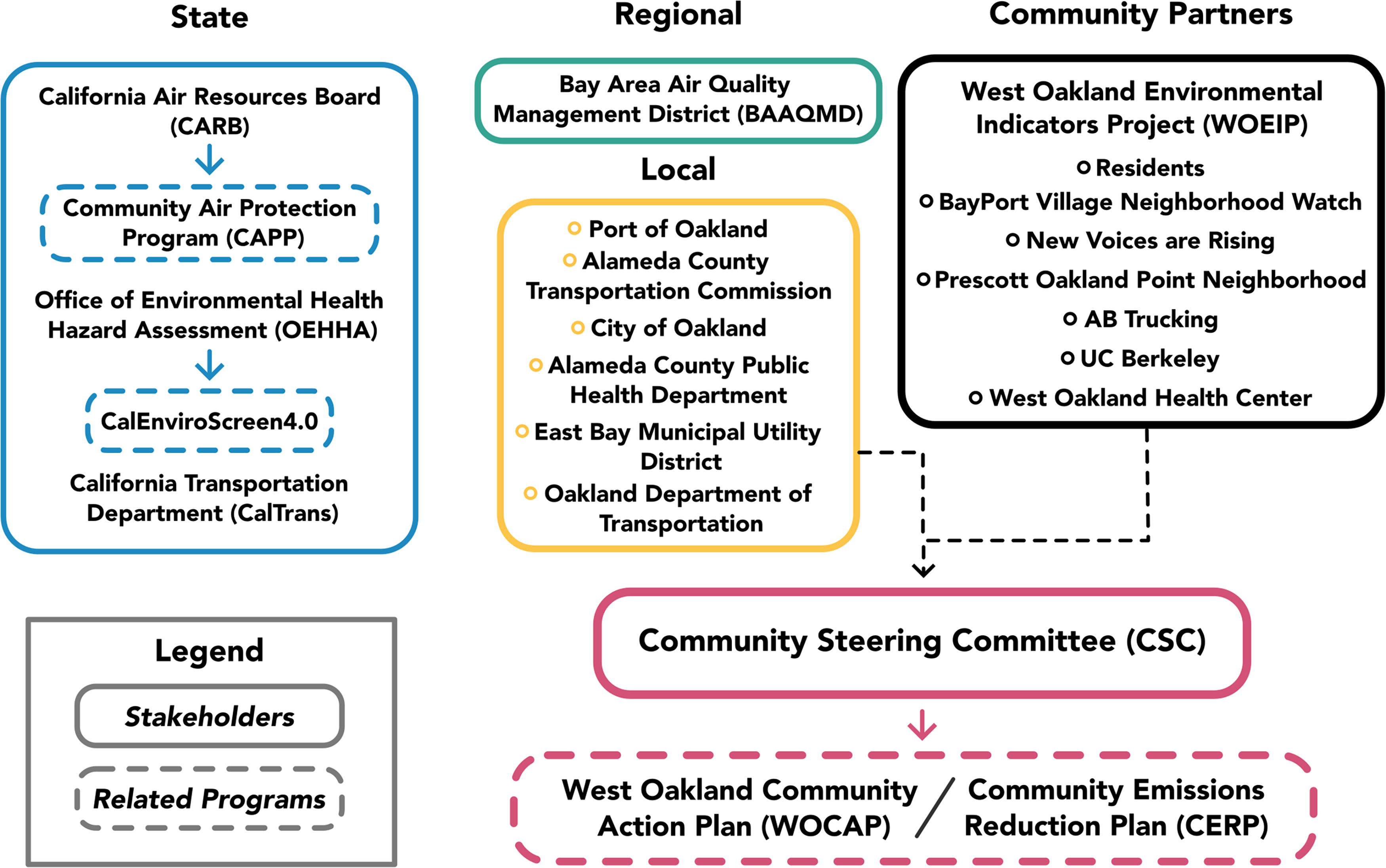
Diagram of the stakeholders and related programs mentioned in this article. Stakeholders include state, regional, and local governments and community partners and related programs involved in the authority, production, or support of the Community Emissions Reduction Plan (CERP) of West Oakland—also known as the West Oakland Community Action Plan (WOCAP). Not pictured here includes the California State Legislature and California Environmental Protection Agency (CalEPA), which both provide authority to the Community Air Protection Program (CAPP) but do not necessarily take part in it. Solid-lined boxes refer to stakeholders and dash-lined boxes refer to related programs.
In particular, the cumulative impact assessment process in West Oakland had several important characteristics that can be illustrative for community leaders and government agencies elsewhere in California and around the country. These are the following. West Oakland was one of the first communities in the country to use a cumulative impacts approach in a community-driven planning process as early as 2003. 10 Over the decades and accelerating in 2018 with the advent of AB 617, the community-based process promoted by local environmental advocates sought to address the historical distrust between residents, local organizations, government agencies, and industry. Local environmental advocates prioritized action on the nonchemical, social vulnerability factors within the neighborhood-built environment, which are largely unaccounted for in air modeling and air monitoring methodologies used by the public agencies to address health harms from exposure to air pollution. Coupled with this mutual trust-building work was bidirectional education and capacity development through which residents learned about the technical dimensions of air quality science and management, and agencies improved their ability to engage with diverse communities through an environmental justice framework. 11
Public agencies also began to transform their practice by adopting a whole-of-government response, including improved communication and collaboration across physical and regulatory jurisdictions. AB 617 explicitly sought to change historical environmental injustices in the community and used a social determinant of health lens to identify the patterns and levers to reduce health disparities. It also integrated a wide range of chemical and nonchemical (e.g., social) stressors in its assessment of cumulative impacts. These stressors have been illustrated in Figure 4. Chief among the social factors was land use as a driver of and potential response to environmental and health disparities. Such examples can be seen in the ubiquitous placements of polluting industries in neighborhoods like West Oakland, as shown in Figure 2.
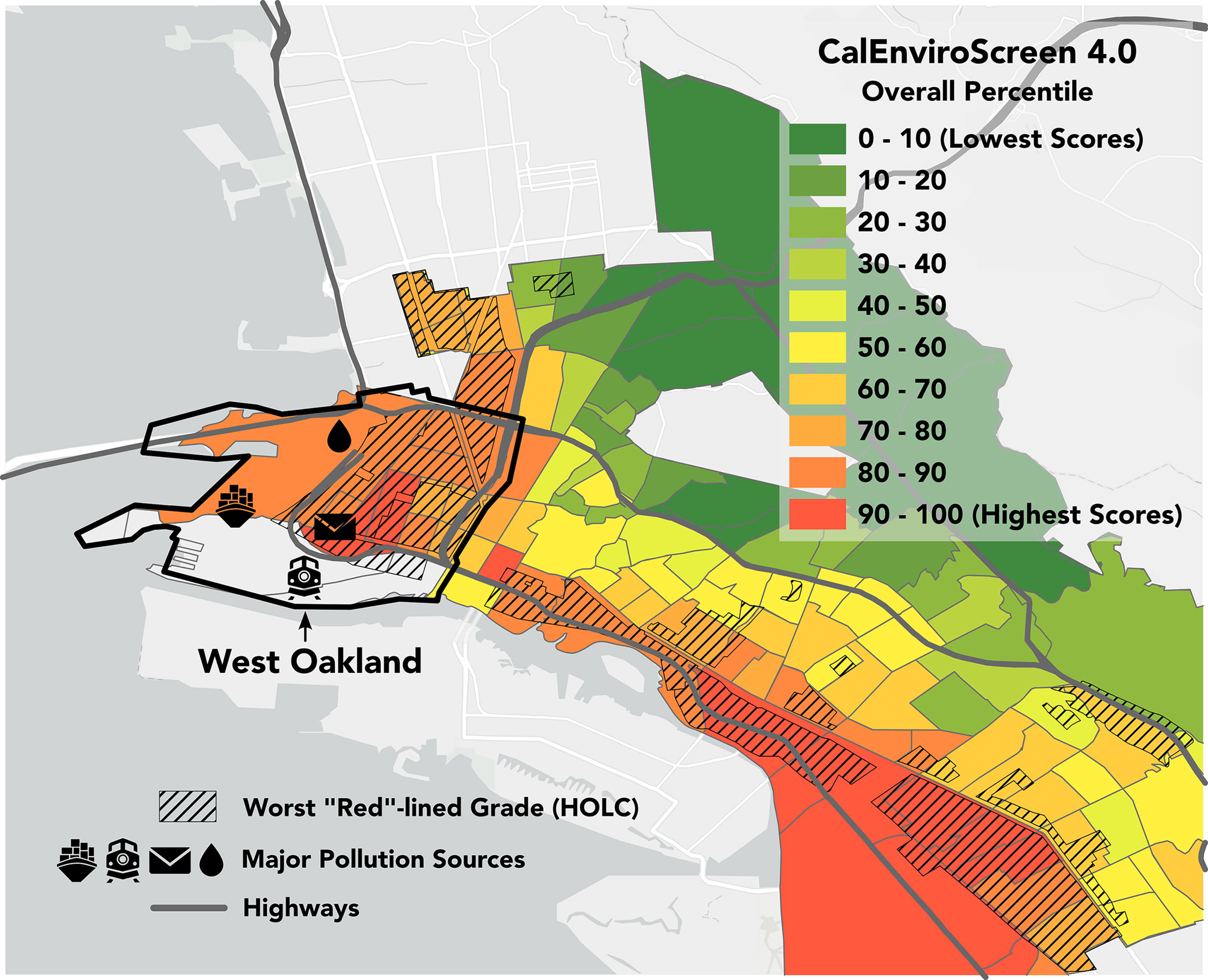
Partial map of the East Bay Region of the San Francisco Bay Area in California, USA. West Oakland’s Assembly Bill (AB) 617 community boundaries are outlined in black. The areas graded as the worst categories according to the Home Owners Loan Corporation areas are depicted with diagonal black lines. Major highways are shown in solid gray. Major pollution sources, identified by the WOCAP, in West Oakland are highlighted with black icons, which include (roughly from left to right): The Port of Oakland, a railyard, a postal distribution center, and a wastewater treatment plant. CalEnviroScreen4.0’s overall percentile scores are shown in a color grading from green to red to depict scores from 0 to 100, respectively. The CalEnviroScreen highest scores, above 70, are shown to heavily correlate with the formerly redlined communities.
Placing cumulative impacts in West Oakland
West Oakland’s industrial past is evident in its current land use patterns; industrial and commercial areas abut and impact residential neighborhoods. To make matters worse, the city of Oakland has continued to approve housing in high-polluted areas without sufficient protective designs. Studies have shown that significant elevations of health risk are closely tied to the siting of incompatible and polluting land uses close to residential areas. 12 The area is surrounded by four interstate highways, railyards, and rail lines. Historical government decisions have exacerbated West Oakland’s pollution burden, such as the building of interstates I-580 and I-880, which straddle the community on each side. 13 The banning of heavy trucks on I-580, which ran along more privileged neighborhoods, in 1963 reduced pollution for wealthier communities but redirected and increased heavy truck traffic in West Oakland and other communities of color. The Port of Oakland, a large U.S. Post Office distribution center, and numerous industrial and commercial businesses contribute to a high volume of truck traffic—leading to high freight-related activities and associated hazardous air pollution emissions. This dense mix of uses adjacent to residential dwellings has led to a heavy air pollution burden for people living in West Oakland.
Past and current data in both the United States and California consistently show that race and ethnicity are among the strongest predictors for disproportionate air quality, where Black, Latino, Native American, and Asian communities are consistently and disproportionately exposed to harmful pollutants while being marginalized from policy decision making.14,15 In West Oakland, environmental injustice has been a persistent fact in the lives of residents—the vast majority of whom are low-income people of color. 16 The neighborhood is in the 91st percentile in total pollution burden, 98th percentile in diesel particulate matter exposure, and 97th percentile in residents with asthma-related incidents compared with other communities in California, according to CalEnvironScreen 4.0.
The pollution burden in West Oakland results from a long series of discriminatory practices and injustices from historical federal, state, and local government decisions such as discriminatory zoning, land use, housing, economic development, and policing policies.17,18,19 An example of this is the federal policy, through the Home Owners’ Loan Corporation, called “redlining,” in which color-coded maps identified “high-risk” neighborhoods, occupied by low-income people, immigrants, and people of color. 20 These “high-risk” neighborhoods were excluded from the Federal Housing Administration, Veterans Administration, and business loans. These exclusion zones were color-coded in red, thus coining the term known as “redlining.” Redlined communities continue to face environmental and social disparities even though the policy was outlawed through the 1964 Civil Rights Act. 21 This can be seen in Figure 2, which shows the overlap between the Home Owners’ Loan Corporation graded-redlined neighborhoods (including West Oakland) and the areas with the highest scores on CalEnviroScreen 4.0.
West Oakland has also been a dynamic hub of community resistance to these and other racialization injustices, where groups such as the Black Panthers, The Unity Council, Oakland Community Organization, Intertribal Friendship House, and many more have organized over many decades for social and racial justice.22,23 Set in this rich but troubled social, political, and economic context, the West Oakland Environmental Indicators Project (WOEIP), along with the Bay Area Air Quality Management District (BAAQMD), CARB, and others, has used AB 617 to produce one of the state’s first community air protection implementation plans for reducing pollution emissions and exposure in the community.
WOEIP has worked as a resident-led, community-driven organization for over 20 years. WOEIP engages residents as active participants in gathering air quality data, peer education, and participating as equal partners to the government in Collaborative Problem-Solving processes to create policies, strengthen policy enforcement, and write community air plans. The Collaborative Problem-Solving has become a nationally recognized collaborative model that shares decision-making power between agencies, industry, and the community. 24 The model was developed in a process bringing together the U.S. Environmental Protection Agency and a grassroots community effort—led by WOEIP—called the West Oakland Toxics Reduction Collaborative in 2003. 25 WOEIP’s other achievements with Collaborative Problem-Solving include leading the Port of Oakland’s 2009 and 2020 Maritime Air Quality Improvement Plan, and the Oakland A’s ballpark community benefits development process. The Collaborative Problem-Solving is a defining component of WOEIP’s work because it puts community members in a position of authority that can shape policy and thus make real change for their neighborhood.
Because of their prominence as a community representative in West Oakland, established relationships with local and state agencies, and a relatively long history in research projects with universities such as UC Berkeley, WOEIP was approached by the Bay Area Air Quality Management District to apply for and then co-lead the AB 617 process in the neighborhood. Since then, WOEIP has applied the Collaborative Problem-Solving to the development of the WOCAP, the name for West Oakland’s CERP developed under AB 617. With WOEIP’s guidance, the West Oakland AB 617 process used the Collaborative Problem-Solving method in which community members play co-leadership roles in the design and implementation of the program. This also involved the reconciliation of conflicting agendas through consensus-based decision making, neutral facilitation, and a partnership agreement that outlined power-sharing via defined roles, expectations, and responsibilities for all parties involved. Ms. Margaret Gordon, widely known as Ms. Margaret and a co-director of WOEIP, said that the Collaborative Problem-Solving process allows for “[…] spaces and places to build trusting relationships.” Brian Beveridge, the other co-director of WOEIP, mentioned that the Collaborative Problem-Solving method “reduces conflict that commonly arises in multi-stakeholder decision making.”
The construction of a WOCAP steering committee brought diverse stakeholders to the table, including representatives from the community, business sector, and government, to the process. Ms. Margaret emphasized the importance of the existing long-term relationship between BAAQMD and WOEIP as well as the participation of diverse stakeholders, saying, “Part of the process was to get agencies at the table to write the CERP…part of the process was to do engagement to get people at the table.” Another key to WOCAP’s success, Ms. Margaret noted, was that “[f]or the first two years we had consistent staff from BAAQMD [in the WOCAP process]. Consistent staff is a good thing. And senior staff involvement was very important.”
The WOCAP contains strategies on land use, transportation, and business practices that all support a vision for a healthy neighborhood. WOEIP’s efforts to influence land use in the context of AB 617 can be traced back to the West Oakland Specific Plan planning process in 2014, in which community demands to reduce truck-related business in the neighborhoods were not sufficiently included in the final plan. The final plan only rezoned a few business properties, thus making no systemic changes to how the city of Oakland employs zoning to reduce air pollution from industrial and commercial businesses. The WOCAP represented a new opportunity to achieve these earlier unmet goals. The city of Oakland has now agreed that land use strategies informed by the WOCAP (of which nine strategies were included) should be implemented not only in West Oakland but city-wide and incorporated into their General Plan Update completed in 2023.
DISCUSSION
Legal authority and an Equity-Centered approach
To varying degrees, sites in the AB 617 program are advancing a “whole-of-government” approach toward improving air quality in which local, regional, state, and federal government agencies collaborate toward common ends. This has also been referred to as the AB 617 “implementation ecosystem”. 26 While implementing the CERPs requires California’s air districts to work across these multiple levels of government, the authorizing legislation does not legally require or fund all of these parties to engage. Thus, some communities, such as West Oakland with the leadership of WOEIP, have been vital in bringing their local governments and other state and regional agencies into this program.
Three rationales drive this integrated approach. First, it acknowledges that complex historical political, economic, social, and environmental patterns drive current injustices and that these systems are not under the jurisdiction of any one government entity. Second, it recognizes the necessity of active and empowered community participation in partnership with local, state, and federal governments and representatives of the industrial sources of local pollution. Finally, it reflects the understanding that successfully reducing pollutant emissions in overburdened communities requires multidisciplinary knowledge and multiple initiatives from multiple government sectors, AB 617 requires California’s air districts to consult with CARB, residents, community-based organizations, affected industries, and local governments when developing CERPs. The law also required the CARB to consult with environmental justice groups and other parties in developing the original AB 617 Blueprint. One crucial element of the current version, Blueprint 2.0, is its explicit attention to racial justice through reference to Title VI of the 1964 Civil Rights Act, and its commitment to ending racial disparities and discrimination. This is a direct reflection of demands by environmental justice organizations over many years and incorporated into the People’s Blueprint that critically informed the agency’s final document. 27 This focus on environmental and racial justice is central to AB 617’s equity approach.
Centering community power
In addition to centering racial and environmental justice, AB 617’s approach to social equity prioritizes building and applying community power. A significant portion of AB 617’s success and many of its challenges can be attributed to the intentional efforts to not merely solicit community input in the case of many policy processes but to explicitly include community members in decision making on co-equal terms with agency staff. This progression from merely informing communities about government decisions toward community leadership and ownership is represented by Figure 3. This also requires government agencies with public-facing positions staffed by personnel with the appropriate levels and kinds of capacities to engage with diverse communities on environmental justice issues.
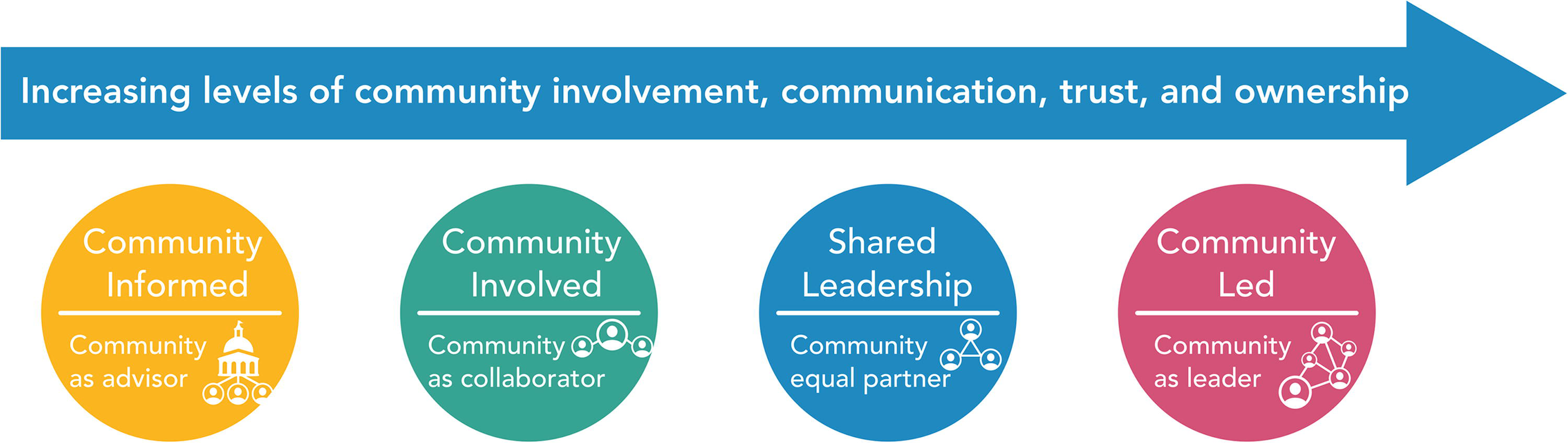
Spectrum of community involvement in project planning and decision-making processes. Adapted from National Opinion Research Center (NORC) at the University of Chicago, “The Community-Engaged Research Framework.”
In the case of West Oakland, shifting toward community leadership required BAAQMD to provide relevant information and education on technical topics to support the Community Steering Committee, also known as a CSC, decision making. Ms Margaret said, “Many of the scientists and engineers from the air district did not have the ability to engage the citizens from a place of citizen science and using popular education. They could not explain how this [CERP] was going to make real changes in West Oakland around health. How do health issues like respiratory hospitalizations relate to air pollution? Measuring these things is not the same way they [BAAQMD] measure cancer risk. People want to see tangible things; it was hard to have that kind of evidence in the plan’s implementation.”
While challenging, the increase in transparency and community capacity-building required of agencies provided community members with the knowledge and skills to effectively participate in the decision-making processes equally and to advocate for their priorities. At the same time, this process across California has been challenged by agencies’ uneven recognition of community power, as the law’s requirements for community decision making are not explicit: there is no legal enforcement mechanism to ensure equal power-sharing with the community—only to involve the community in some way. 28 However, Blueprint 2.0 calls for the community and agencies to move in the direction of shared leadership. 29
With regard to West Oakland, a specific set of conditions, such as the presence of a strong community-based organization (i.e., WOEIP) and receptive air district (i.e., BAAQMD), each with sufficient organizational capacity, led to a more co-equal relationship. Regulatory bodies at the state level, looking to replicate this relationship should go beyond just providing a legal enforcement mechanism for an emissions reduction or monitoring program. One potential solution is first understanding the capability of the community and regional districts involved and developing programs to build the necessary agency and community capacity and joint decision making.
The roles of WOEIP as an anchor institution
While the WOCAP development process used the Collaborative Problem-Solving with its power-sharing mechanisms with public agencies, WOEIP had final decision-making authority on many aspects of the WOCAP process. This was useful as one central organization representing a community in an air planning and implementation process was convenient for the BAAQMD due to its one-point-of-contact characteristic. Furthermore, a community-based organization such as WOEIP can reflect and advocate for local issues and needs of the community and provides consistency in community advocacy, and messaging, as well as the long-term maintenance of the many relationships with stakeholders, like government agencies, necessary for a successful Collaborative Problem-Solving process. Yet, there is an inherent difficulty in having a central community-based authority. It raises the question of whether one organization can ever represent a community as diverse as West Oakland. To address this challenge, continued community education, mobilization, and movement building will be needed. This was a tension navigated throughout the development of the WOCAP process.
Addressing multiple jurisdictions and land use
One of the key challenges that all government-related initiatives face when addressing air pollution is the need to address and coordinate multiple jurisdictions related to the “drivers” of that pollution. Such examples include ports, transportation, and land use—which are each regulated by a diversity of state, regional, and local agencies and governments. It is this jurisdictional complexity that demands collaboration and partnership in the context of AB 617.
The complexity of air quality management in West Oakland is represented in Figure 4. This illustrates the overlapping authorities of state, regional, and local governments and agencies in ways that impede effective strategies for air quality protection and, therefore, demand skillful collaboration. It is essential to recognize that these are only “ideal” relationships, while in practice, the reality is more contested, complex, and shifting.
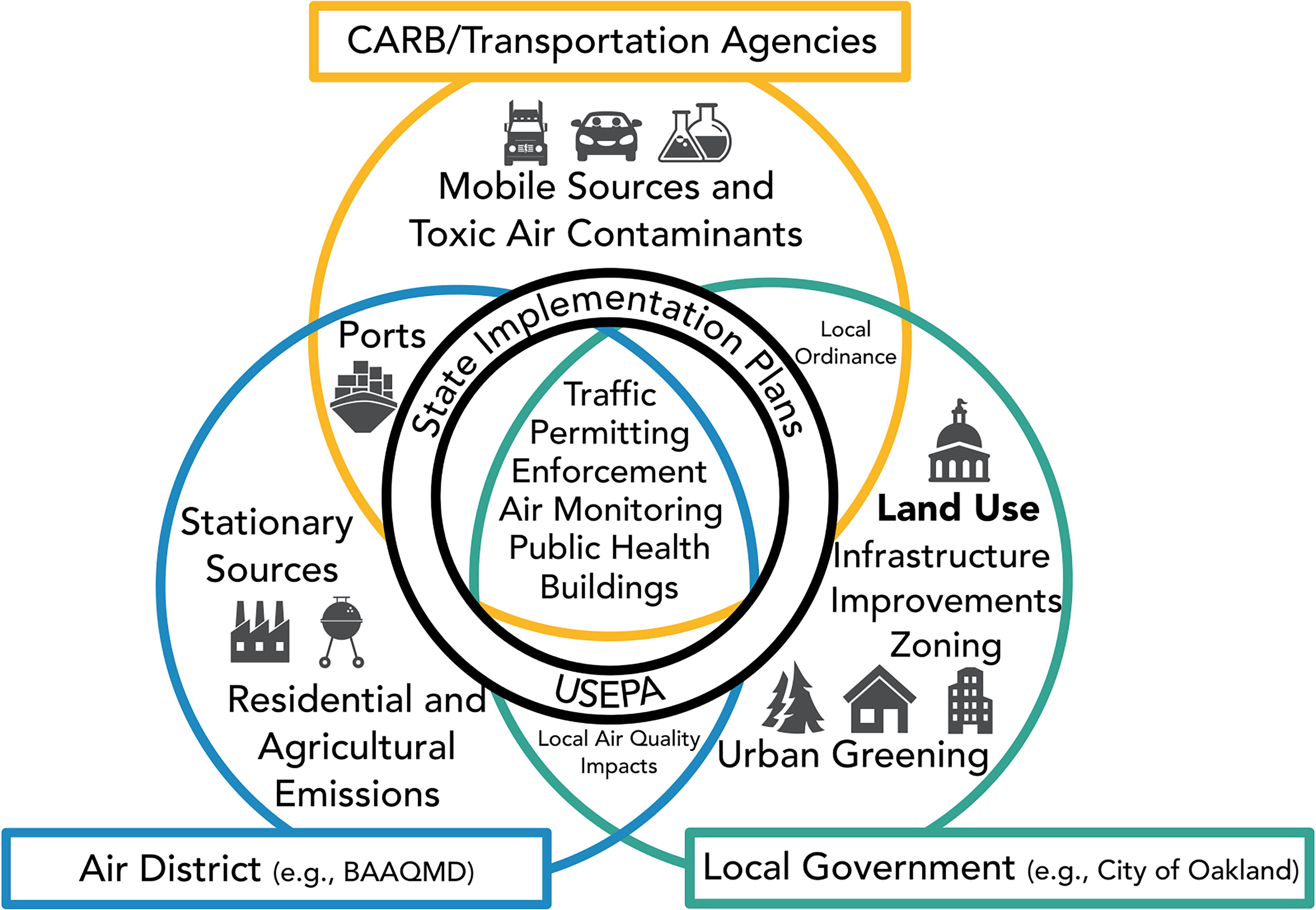
Summarized representation of the air quality-related regulatory tools and their overlapping jurisdictions between agencies. For simplicity’s sake, the figure does not include the role of the California Environmental Quality Act (CEQA).
While land use decision making falls under the jurisdiction of local governments, there are multiple intersecting policies to consider. For instance, Senate Bill 1000, signed into law in 2016, in California requires local governments to incorporate environmental justice policies into their General Plans, “which serve as a local government’s long range roadmap for how the city and/or county will grow and develop.” 30 In addition to this, while not shown in Figure 4, Senate Bill 375, signed into law in 2008, calls for local governments to build sustainable community strategies as part of their regional transportation plans to meet greenhouse gas targets set by CARB. In the CERP process, many air districts have worked with the cities and counties to collaborate on land use actions associated with their CERPs.
WOEIP was tenacious in highlighting how land use decisions can contribute to cumulative impact issues, even in the face of mixed responsiveness of public agencies and the limited extent of land-use authorities by the BAAQMD and CARB, AB 617’s primary implementing agencies. WOEIP was instrumental in identifying the importance of involving multiple government constituents in reducing emissions and exposure to air quality and engaged agencies such as the city of Oakland, Port of Oakland, Alameda County Public Health Department, and Alameda County Transportation Commission in the WOCAP planning process. Diverse stakeholder collaboration achieved vital successes, including informing the city of Oakland’s updates to their truck management plan to minimize residents’ exposure to diesel exhaust, relocating recycling companies away from neighborhoods, improving building standards to reduce indoor pollution exposure, and adding critical zoning updates to their recent general plan update (City of Oakland 2023).
It is important to note that WOCAP implementation has not yet addressed the removal of existing polluting businesses. The city of Oakland has only implemented zoning and business permitting updates that disallow new polluting businesses and discontinue nonconforming business permits that need to be renewed. These approaches do not actively target nonconforming polluting businesses for removal or relocation. Currently, no major polluting heavy industrial businesses, such as large recyclers and their facilities, have relocated out of West Oakland through public policy efforts. These recycling companies are, reportedly, willing to move and create indoor facilities, but to date, the city of Oakland has not sold them the available land parcels. Advocates continue to push for the removal of large polluting businesses from their communities, an effort that has been ongoing for over 20 years.
Cumulative impact assessment
Cumulative impacts are defined as the totality of exposures to combinations of chemical and nonchemical stressors and their effects on health, well-being, and quality of life outcomes (see Fig. 5). 31 Cumulative impact assessment is a process of evaluating both quantitative and qualitative exposure data representing considerations that affect lived experiences, which is more accurate than traditional chemical risk assessment. In recent years, renewed efforts have been made to advance both cumulative risk assessment and cumulative impacts assessment. Cumulative impact assessment methodology requires a systematic approach to characterize the combined effects from exposures to both chemical and nonchemical stressors over time across the affected population group or community. Cumulative exposures are particularly important to improve understanding of cumulative impacts because of known effect modifications, which are the interactions of chemical and nonchemical stressors, in people’s lived experiences. Housing, education, health care access, and land use decisions also inform a community’s cumulative impact assessment. As land use decisions are hard to change, the Port and West Oakland must address newer logistics and environmental conditions. Creative solutions are needed to address the complexity of emissions and exposures. Systems biology, which is an interdisciplinary approach to understanding genetic and environmental interactions within biological systems, is one way to advance understanding of cumulative exposures’ contributions to health outcomes. 32 Cumulative impact assessment also aligns with the intentions of AB 617, namely to center a community role throughout the process, including identifying problems and potential intervention decision points to improve community health and well-being.
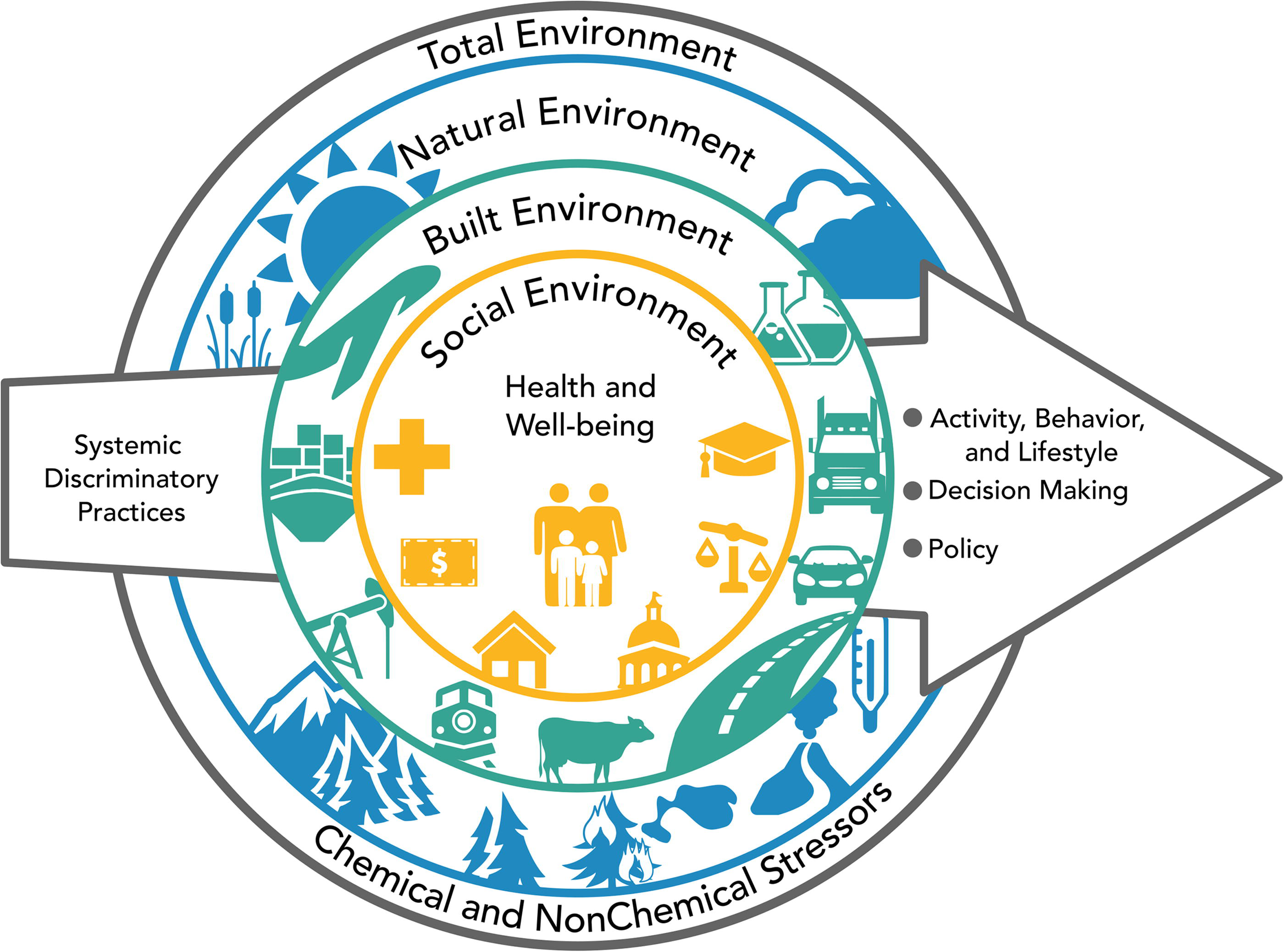
The total environment represented by components that contribute to human health and well-being. Adapted from the U.S. Environmental Protection Agency’s (EPA) Total Environment figure used to describe cumulative impacts.a aBAAQMD, WOEIP, and WOCAP Community Steering Committee, “Owning Our Air: West Oakland Community Action Plan: Fifth Year Annual Report,” October 9, 2024, <https://www.baaqmd.gov/∼/media/files/ab617-community-health/west-oakland/fifth-year-report-files/five-year-report_v3-pdf.pdf?rev=f7643d088570420c89c96d6cf78681b8&sc_lang=en> (Accessed on January 31, 2025).
Community-based air protection regulation is needed by public agencies to address place-based health disparities that result from complex exposures. Several local and state government agencies have provided technical expertise in exposure and health risk assessment, and air monitoring in the context of AB 617 based on the Collaborative Problem-Solving model led by WOEIP. Community participation and stakeholder involvement can provide an increased understanding of local emissions, exposure, and other factors that affect risk. 33
Within this cumulative impacts assessment framework, WOEIP provided the community’s institutional knowledge that contributed greatly to understanding the complex air pollution exposures unaddressed by air modeling and air monitoring data produced and collected by regulatory agencies. WOEIP ensured that the community’s institutional knowledge added critical context to understand the structural factors shaping the outcomes that community members experience from nonchemical/social stressors. 34 The cumulative impacts framework used in West Oakland requires that decisions that impact the community must be centered on community knowledge and power. This was explained by Ms. Margaret, who said, “We know cumulative impacts in pollution exposure, zoning, land use, proximity, and enforcement have to be a package. I think we [community members] are still speculating from lived experience. Cumulative impacts is a bigger picture than looking at localization of problems.” This advances common practices in which issues such as poor air pollution are viewed as isolated from social and political contexts by academics, regulatory scientists, and government agencies. The WOCAP air planning process also required the engagement of many agencies other than BAAQMD, which were not required by statute or financially incentivized to participate. This made addressing the holistic set of air pollution sources and necessary planning and policy responses difficult.
To address cumulative impacts, the AB 617 program also included requirements for agencies to accelerate the retrofit of pollution controls on industrial sources, increase penalty fees, and provide greater transparency and availability of air quality and emissions data. While there are many monitoring technologies to measure the criteria air pollutants (such as PM2.5, ozone, and four others), there are very few monitoring methodologies to measure toxic air contaminants, of which there are 189 pollutants that are federally known as hazardous air pollutants.35,36
Project participants recognized the need for a more robust framework for the whole-of-government approach to support (administratively via CARB) or require, through state legislative statute, other agencies and local government participation in clean air planning and implementation. Normally, air district funds set aside for incentives and implementation for the AB 617 communities pay for things such as contracting, equipment monitoring, inspections, heavy-duty diesel vehicle and equipment replacements, and incentives to address CERP strategies—to name a few. To respond to stakeholder requests and learning from earlier phases of implementation, in 2024, CARB created financial incentives for local and state agency partnerships for certain projects included in CERPs that support the whole-of-government implementation. 37 Though this financing does not pay for staff time in the overall planning process, it has advanced the program’s ability to bring local agencies to the table—an essential element for comprehensive and CI-oriented decision making. As exemplified by West Oakland, but seen in some other AB 617 communities, one the central lessons from West Oakland and some other AB 617 communities is that incorporating cumulative impacts requires not just financial support or legal requirements but also the presence of a strong liaison or senior staff member who can foster collaboration across agencies and with communities in a meaningful and consistent manner. That is, cumulative impacts analysis is not only a technical methodology but also a social process.
CONCLUSIONS
Short-term impacts
There have been a multitude of short-term impacts that have been either the result of or indirectly tied to California’s Community Air Protection Program. In a CARB Board Hearing in July 2024, BAAQMD Executive Officer Dr. Phil Fine stated that “the CERPs are really the cornerstone of the community air quality improvements that we’re getting out of AB 617.” 38 Rulemaking around expedited Best Available Retrofit Control Technology, a provision in the AB 617 legislation and an emissions limitation state rule for stationary sources, led to significant decreases, on the order of hundreds of tons per year in the Bay Area, in criteria pollutants like PM2.5, NOx, and more. In nearby Richmond and San Pablo, AB 617 monitoring efforts and engagement with community groups has also led to a multimillion-dollar settlement from two Bay Area refineries, where “close to 80% of the funds collected from large settlements to be set aside for local community benefits.”
Similar advancements have been made in West Oakland, where the CERPs have driven rulemaking for metal shredders and wood-burning devices. In the case of metal shredding, the WOCAP included a CERP strategy for the local air district to reduce fugitive PM emissions from metal recycling and shredding operations. This resulted in an investigation and newly recommended amendments to Regulation 6, Rule 4 in BAAQMD to codify best practices for fire prevention, reduce trackout emissions (e.g., vehicles tracking pollutants from indoors to outdoors), and more. Amendments to this rule will give West Oakland and other Bay Area communities tools to drastically decrease toxic fugitive emissions from local metal shredding industries, as well as establish stronger standards for fire prevention. From the beginning of the WOCAP, in 2018, to the end of the 5-year implementation process, BAAQMD emissions inventory shows a 31% drop in diesel particulate matter—a large win for a community that ranks as one of the most burdened for diesel particulate matter exposure in the state of California. In BAAQMD’s 5-year report for West Oakland, utilizing emissions inventories, this was translated into an estimated 28% reduction in cancer risk-weighted emissions for the community. 39 A sustainability subcommittee between the port electrification committee (Port of Oakland) and WOEIP and other community leaders/residents has also been recently formed, thanks in part due to formed relationships during the WOCAP. This cooperative relationship is seen as very productive due to a share in leadership and authority (see Fig. 3) and is the first time residents have been allowed to collaborate with the Port regarding how climate is addressed with their available funding.
West Oakland’s contributions to developing and applying an environmental justice approach to cumulative impacts
The severe environmental injustices facing the diverse residents of West Oakland are not coincidental or the product of only recent and discrete decisions. Instead, they are a legacy of systemic racism and intentional decisions, such as freeway placement, redlining, land use, and zoning, that have produced an inequitable riskscape for the predominantly Black, Indigenous, and People of Color populations of these neighborhoods. To address this legacy, an equally systemic strategy is needed to provide reparations for these historical harms and proactively redesign land use, transportation, housing, facility siting, provision of environmental amenities, and economic and educational opportunities. A cumulative impacts approach can focus attention on these structural factors through the concept of historically grounded social stressors. This approach will also require addressing the influences of structural racism and power disparities as the roots of distrust between government agencies such as BAAQMD and the West Oakland community.
The cumulative impacts framework, coupled with environmental justice, whole-of-government, and community empowerment approach developed in the West Oakland AB 617 process, offers many lessons learned that can be useful to other agencies and community organizations around the state and country. These lessons learned include the following.
The need for a whole-of-government approach
Addressing cumulative impacts requires spanning multiple jurisdictions. The WOCAP process has demonstrated that the conventional linear model of delegation from the legislature to CARB to air districts to develop regional air quality plans is insufficient. Likewise, because no neighborhood is an island, pollution sources from broader scales of the city and region must be accounted for and addressed. Therefore, a holistic and networked model is needed, in which CARB and the air districts actively collaborate with other state agencies (e.g., the California Department of Transportation), local governments (e.g., the City of Oakland, Alameda County Department of Public Health), quasi-governmental entities (e.g., Port Commissions) as well as Federal agencies (e.g., US Environmental Protection Agency, Federal Highway Administration). In this model, these agencies must also collaborate with community residents and organizations.
Importance of local government in land use decisions
One critical part of this whole-of-government approach is the importance of incorporating local government agencies to implement land use decisions. Changes in land use regulations, such as zoning and permitting, are key factors in lowering pollution emissions and lowering residents’ exposure to air pollutants. In most cases, in the United States, land use decisions fall under the local government. The experience of the AB 617 program in West Oakland shows us that the limited land use authority of state and regional air agencies reduced the efficacy of the CERP. Integrating a CERP into local land use planning, such as the city of Oakland’s General Plan, shows the value of expanding air quality policies. Specifically, because Senate Bill (SB) 1000 requires cities and counties with disadvantaged communities to incorporate environmental justice policies into their General Plans, this integration provides a way to connect community air quality improvements with land use decisions. 40 Programs looking to learn from this experience may look into mechanisms to provide funding to local agencies in these partnerships, help the local agencies build capacity to engage successfully in the AB 617 program, or even explore the amortization of non-conforming and polluting land uses.
Framing community air protection as community power for a thriving democracy
CARB and the BAAQMD made significant strides in moving beyond a conventional model of community engagement based on collecting community input to inform agency decision making to one based on co-governance and shared decision making. While the legislation still recognizes the agencies as the formal and legal decision makers, in practice, the West Oakland CSC, using WOEIP’s Collaborative Problem-Solving method, has exercised significant power over the development and initial implementation of the WOCAP. Designing processes that require and further enhance community power is a critical dimension of environmental justice policy.
Cumulative impacts based on social determinants of health and environmental justice approach
Recognizing the legacies of historical and continuing racism also identifies the need to include both chemical and social (nonchemical) stressors in the cumulative impacts and analysis and response approach. Taking into account the multiple types, sources, routes of exposure, and health end-points of chemicals in the neighborhood environment is crucial, as is integrating the impacts of social stressors such as racism, poverty, violence, and inequities in ecosystem services. California’s Health In All Policies is another way to integrate environmental and social factors. Bringing together interdisciplinary scientific teams along with community organizations and residents is needed to implement local community improvements. Ms. Margaret’s observation that, “[Y]ou cannot rely only on BAAQMD’s modeling—their inventories do not cover everything, especially when the air pollution relates to health issues in the community. The air pollution data (modeled and monitored) cannot be related to the health data. For example, the BAAQMD inventories say that some emissions have reduced by 31%, but there are still issues with asthma at local schools. You cannot say the modeled data causes different illnesses and still they use it as a measurement.” This underscores a crucial limitation of traditional air quality management. By moving beyond narrow risk assessments and integrating these cumulative impacts into analysis and action, environmental justice programs can strive to achieve more equitable outcomes.
Place-based models
West Oakland is just one of 19 communities selected to date under AB 617. Its successes can be credited in part to the overall innovation of AB 617 and in part to the unique alignment and capacity of leaders from community organizations such as WOEIP and public agencies such as BAAQMD. However, while some version of a Collaborative Problem-Solving model can be used in every community, it is crucial that the West Oakland example does not become a cookie-cutter imposed on other communities with different social, political, economic, and ecological conditions.
One way to assess the success of other AB 617 communities is the extent to which their CERPs respond to unique local characteristics and priorities. The recent 2024 “Path to Clean Air” CERP from Richmond/North Richmond/San Pablo has cutting-edge strategies that address land use (including amortization), mobile sources of air pollution, fuel refining, and public health in innovative ways. 41 The tailoring of incentive programs to address CERP priorities, such as the need for truck rerouting studies in the San Joaquin Valley, the creation of a Community Benefits Agreement for polluter fines, the extensive use of transformative rule-making on refineries and warehouses as well as an Indirect Source Rule for rail and refineries in the South Coast/Los Angeles region, the redesign of air quality governance based on environmental justice principles as well as a land use amortization policy to remove non-confirming and two polluting land uses in San Diego, are just a few of these innovations.42,43
Reflecting California’s exceptionally diverse social, political, economic, and ecological landscape, the range of models used in AB 617 should serve as encouragement to other agencies in California and nationally to adopt a bottom-up and whole-of-government approach to not only assess but also reduce cumulative impacts and associated environmental and social inequities. This approach is centered on a process and the structure in which clean air plans are designed through a place-based and participatory process. The federal Clean Air Act and states’ efforts to attain health-based standards have made significant gains through a conventional top-down approach of regulatory limits and bans.44,45 These gains, however, are unlikely to repair persistent disparities in air quality and the resulting health impacts without focused equity-driven intervention—such as those required by AB 617.
Future applications
In the context of uncertain federal resources and regulations, inspiration and lessons learned for state and regional governments can be drawn from programs such as California’s AB 617. State and regional governments have important roles to play in supporting effective air pollution control and mitigation programs at the local level. This is reflected in the Clean Air Act, where it states that “the prevention and control of air pollution at its source is the primary responsibility of States and local governments.” 46 In partnership with local communities and organizations, this state and regional scale of governance can be effective in addressing the cumulative environmental and health impacts in overburdened communities. Similar cumulative impact-related programs have been implemented by New Jersey’s Department of Environmental Protection, New York’s Department of Environmental Conservation, Colorado’s Department of Public Health and Environment, and Massachusetts’s Department of Environmental Protection, to name a few.47,48,49,50 Drawing on these policy innovations is an effective way to advance the core goals of protecting environmental quality and community well-being, in collaboration with local communities and organizations and reflect promising strategies for regional and state governments across the country.
AUTHORS’ CONTRIBUTIONS
M.R.A.: Conceptualization (equal); writing—original draft (equal); and visualization (lead). M.G.: Conceptualization (equal) and writing—review and editing (equal). J.H.: Conceptualization (equal) and writing—review and editing (equal). L.M.: Conceptualization (equal) and writing—original draft (equal). J.K.L.: Conceptualization (equal) and writing—original draft (equal). L.W.: Conceptualization (equal) and writing—review and editing (minor).
Footnotes
ACKNOWLEDGMENTS
The authors would like to acknowledge the support and review of this article from the entire team, as well as for their support and resources. The authors would also like to acknowledge the West Oakland community, as their history and lived experiences were vital in making this study possible.
AUTHOR DISCLOSURE STATEMENT
M.R.A. is an employee of the California Air Resources Board and L.W. is an employee of California Office of Environmental Health Hazard Assessment. M.G. and J.H. work for non-profits that are recipients of state grants. J.K.L. is a professor at the University of California, Davis. The authors declare that there were no funding sources that could have a role in the design, execution, interpretation, or writing of the study. The academic and community authors have independently reviewed and approved the final article.
FUNDING INFORMATION
No funding was received for this article.