




Abstract
Recognizing that there is power in visibility, the Agents of Change Fellowship was launched in 2019 to amplify the voices of early-career researchers whose work-centered environmental justice. To date we have trained 57 fellows from 38 different U.S. based institutions. The goal of the fellowship was to increase diversity of thought and help shape the public dialogue on environmental health sciences, policy, and justice. The 65 essays and 108 podcast episodes produced have reached nearly 2 million people. In addition to increasing visibility, the fellowship program aims to deepen fellows’ familiarity with the movement-building praxis. In this case study we present how this innovative academic-media organization partnership is an important initiative for uplifting the voices and stories of emerging environmental justice leaders. We share the history of the partnership, the design of the curriculum, the program profile, and the barriers to sustaining the program. Overall, we conclude with recommendations for sustaining initiatives and share our vision for future training programs.
Keywords
INTRODUCTION
Academia has long favored traditional metrics of scholarly contributions, such as the number of peer-reviewed articles published in scientific journals and “objective” measures of publication impact (e.g., journal impact factor and citations). However, unless the media reports on specific scientific publications, they are unlikely to be absorbed by the public eye. Academia also faces a persistent lack of diversity among thought leaders driving conversations about science in the media and popular culture.1,2 The Agents of Change (AOC) Fellowship was developed as one solution to address these problems by emphasizing storytelling as a tool to amplify neglected and underrepresented voices in the public sphere. We developed this program to not only provide a platform specifically for early-career scientists but also to increase the diversity of thought and help shape the public dialogue on environmental health sciences, policy, and justice.
Initially, the program sought to highlight the work of early-career scientists who were working on key environmental health equity issues. One of the themes that emerged was that the fellows in the program had a desire to do translational work. Given that many non-health disciplines contribute to policy, advocacy, and equity, key components of environmental justice, the decision was made to focus on early career scientists whose work-centered environmental and climate justice from a range of disciplinary perspectives (e.g., urban planning, public health, and sociology). Historically, there have not been academic programs that grant a degree in environmental justice; thus, determining who is doing this work from a higher education standpoint presented a challenge. While practitioners, researchers, and educators might all approach environmental justice from different epistemologies, at its core, environmental justice attempts to not only characterize environmental injustices but also provide solutions to remedy harms. The program’s ethos was that enduring solutions will not be driven by the individual but instead the movement; therefore, the program focused on providing spaces to empower individuals, increase their sense of belonging, and contribute to the overall movement praxis.1,2,3,4,5
Environmental justice as a movement has been tied to community; as such, both lived experiences and formal training (i.e., academic degrees) should be valued in interdisciplinary programs for emerging environmental justice leaders. Historically, most of the environmental justice work has been led by individuals with intersecting marginalized identities, but their innovative work is often not promoted in academia nor picked up by mainstream news media.3–5 Through the program, we wanted to overcome this diversity-innovation paradox in science6, which is the continued problem that while underrepresented people innovate at higher rates, their novel contributions are discounted and less likely to earn them academic accolades. In conceptualizing the program, we expected to have a difficult time identifying, recruiting, and retaining diverse scholars.7–9 We have found the opposite, as 100% of the applicants and fellows share intersecting marginalized identities. The fellowship received a total of 304 applications, with only 57 fellows being selected across all cohorts—this represents an 18% acceptance rate. It is clear that not only is there a great demand for the program but that creating programs that center these voices is of utmost importance.
A critical gap has been the lack of case studies that can shed insight into best practices for building and sustaining programs for emerging leaders in the environmental justice space. In this case study, we present how this innovative academic-media organization partnership is an important initiative to uplift the voices and stories of emerging environmental justice leaders. Our program has four major goals: (1) increase environmental and social justice literacy in the general population; (2) advance the careers of emerging environmental justice leaders; (3) build a network of diverse and forward-thinking leaders in environmental justice; and (4) make environmental health information more accessible to diverse communities. Through the AOC Fellowship we aim to increase the social impact of the work of early-career researchers by providing training in science communication and storytelling, as well as policy translation. We also aim to provide a vibrant and diverse community for fellows to be their authentic self and increase their networking opportunities. While the programming and home institution have changed over the years, our mission remains the same: to empower emerging leaders from historically excluded backgrounds in science and academia and to reimagine solutions for a just and healthy planet.6,7,8,9,10
Agents of change history: How it came to be
The AOC Fellowship is a joint initiative between Columbia University Mailman School of Public Health and Environmental Health News (EHN). The program began in Fall 2019 as a sabbatical project of the director and founder, Dr. Zota, when she was an associate professor (with tenure) at the George Washington University Milken School of Public Health. In 2022, Dr. Zota joined the faculty at Columbia University Mailman School of Public Health as an associate professor with tenure in environmental health sciences, and the AOC program moved to Columbia University Mailman School of Public Health. Throughout her career, Dr. Zota often found herself being one of the only women of color who was talking to the media about scientific research findings. During her sabbatical, Dr. Zota met with Brian Bienkowski, senior editor of EHN10 at the time, to discuss how scientists from underrepresented backgrounds could get training in science communication. The goal was to increase diversity of thought and help shape the public dialogue on environmental health sciences, policy, and justice. With initial seed funding from a private foundation, the AOC Fellowship was conceptualized. The first cohort consisted of 8 early career scientists (doctoral students, postdoctoral trainees, and research staff) from historically underrepresented backgrounds who were training at various institutions across the country. These early-career scientists had either previously been connected or were currently connected to Dr. Zota’s network (i.e., former student or mentee). One of the main goals of the program was to create public-facing science communication material that was accessible, engaging, summarized the science, and would highlight the fellows’ unique expertise and lived experiences. Through the essays, fellows have been able to discuss upstream drivers of environmental injustice while embedding their ideas and contributing to overall public environmental justice scholarship. The essays blend personal narratives with scientific and policy analysis. By sharing their lived experiences, the fellows are centering the perspectives of communities of color, who often live on the front lines of environmental harm. To ensure reach and accessibility, all essays were translated into Spanish and freely available on the EHN website.
Characteristics of the fellows
The initial cohort consisted of individuals who had previously worked with Dr. Zota. This was done to show proof of concept and to accommodate a short timeline to execute the first cohort with minimal resources. At the start of the program, it was difficult to gain traction, but then halfway through the first cohort, the COVID-19 pandemic started. At first the program took a pause, but then the murder of George Floyd and Breonna Taylor occurred, the nation began to protest for a racial reckoning, and the essays got traction as there was a hunger for equity content. The program began receiving inquiries about future cohorts; Dr. Zota also received many messages asking her to present about the program to various organizations. As the first cohort began receiving an overwhelmingly positive response, funding for a second and third cohort was secured. In the summer of 2020, we put out a formal call for applications for the second and third cohorts. Applicants responded to questions about their identity, their research, and what topics they would want their essay to focus on. No letters of recommendation were required, and applicants were asked to keep their responses between 350 and 500 words. With each cohort the number of interested applicants has grown. In cohort 2/3 there were 83 applicants, in cohort 4 there were 90 applicants, and in cohort 5, we had 131 applicants. The increase in applicants has subsequently resulted in a decrease in acceptance rate. In cohort 2/3 it was 27.7% (23/83), in cohort 4, the acceptance rate was 15.5% (14/90), and in cohort 5 the acceptance rate was <10% (12/131).
The program has now completed its 5th cohort. A total of 57 emerging environmental justice leaders from 38 different U.S. universities and agencies have completed the program. The AOC program has always been conceptualized as a program for historically excluded scholars in science and academia. Of the 173 PhDs conferred from 2019 to 2020 in Environmental Health Sciences, only 27% of those were conferred by those racialized as Latine/o/a/x, Black, Indigenous, Asian, or more than one race. In comparison, all 57 fellows (100%) that have been part of AOC are from historically excluded backgrounds and encompass many intersecting identities (Table 1).
Profile of Fellows
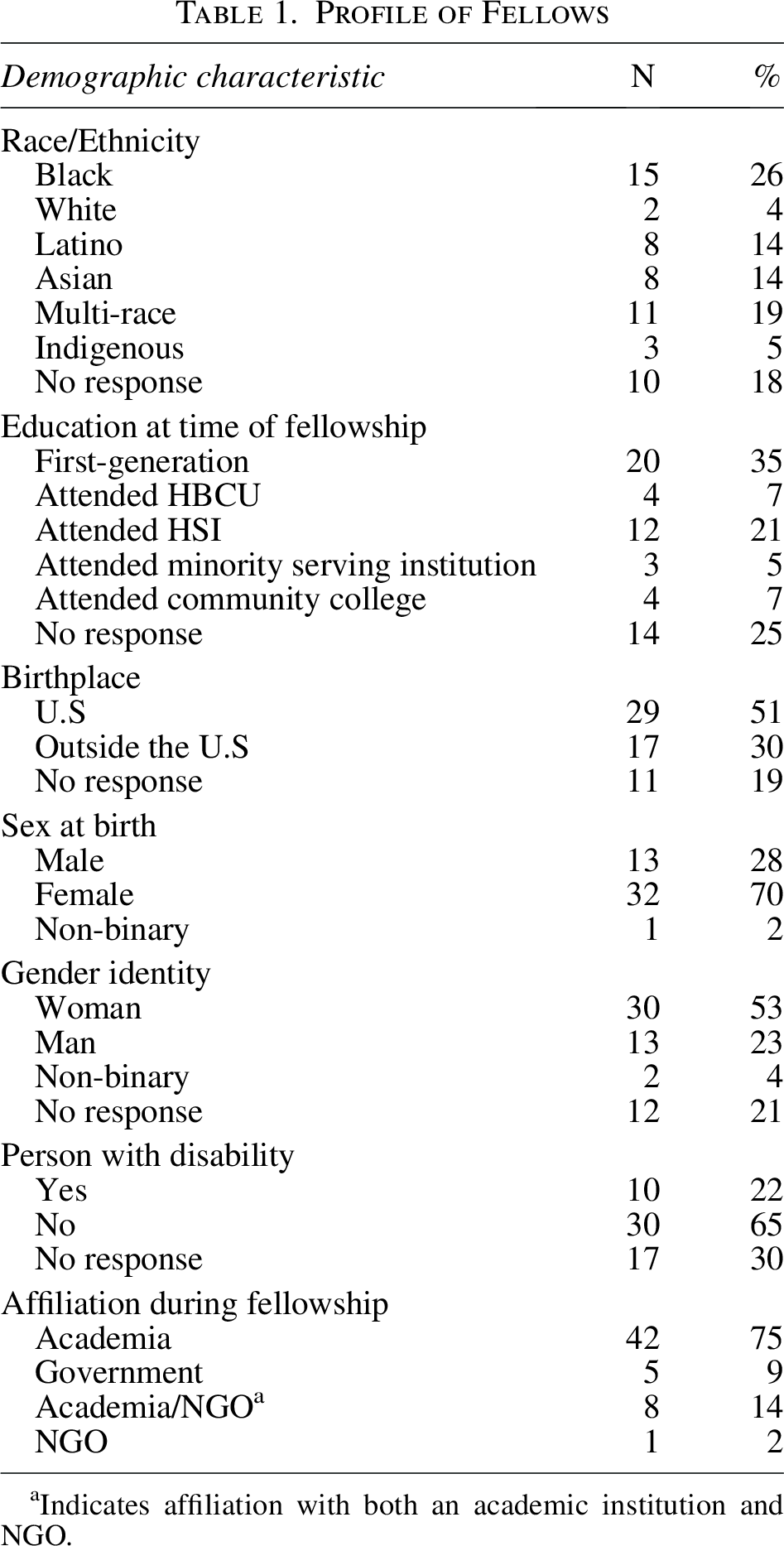
Indicates affiliation with both an academic institution and NGO.
Program structure
The program takes place primarily virtually over a 9-month period. Since its inception, the main deliverable of the AOC fellowship has been an essay written in a narrative story format integrating fellows’ lived experiences with research and policy interests that is published through EHN. The fellows meet monthly for 90 minutes to provide feedback on each other’s essays or attend career development workshops. At each meeting devoted to essay feedback, fellows are divided into two groups; these groups are the same throughout the fellowship and serve as their main peers for feedback on their essays. Each group has one fellow who leads the feedback session and another who takes notes. The lead is responsible for beginning the discussion of the essay. The notetaker summarizes feedback for the fellows who are presenting their essays, which allows them to be fully engaged in the discussion. Additionally, we also have fellows fill out a digital form with the following questions and provide this feedback to the presenting fellow: (1) what part of the essay did you find most compelling as a reader, (2) describe if there is a part of the essay that you think can be strengthened through clarification and/or additional information/context, (3) describe the potential impact that this essay may have on external readers, especially communities affected by the topic, and (4) describe anything new that you learned from this work or how it may have shifted how you think about a topic or problem. The fellow then meets with one of the senior editors to discuss the feedback and next steps for incorporation. Subsequently, each fellow works through 2–4 revisions with the senior editor before the essay is finalized and published. Throughout the 9 months we also have a series of workshops on various topics. In the past, our workshops have covered the following: (1) careers outside academia, (2) the importance of branding and social capital, (3) how to be an effective scholar-activist, and (4) a panel with previous AOC fellows on how to make the most of the fellowship and network. At the completion of the program, fellows receive a stipend, which we have been able to increase from $1000 to $1500 in cohort 4.
We introduced the podcast at the beginning of cohort 2 (Fig. 1) as a second deliverable. The podcast, led by Brian Bienkowski at EHN, is an interview with each fellow. It focuses on the fellow’s career trajectory and current research and dives into their motivations for the work. In addition to featuring the fellows, we have also featured prominent environmental justice leaders such as the Executive Director of the Deep South Center for Environmental Justice and the Federal Chief Environmental Justice Officer at the White House Council on Environmental Quality. At the end of cohorts 2–3, we sent a short evaluation survey to fellows and learned that they wanted more opportunities to interact or work with each other during the fellowship. To achieve more interaction between the fellows in cohort 4, we introduced an in-person retreat and the community science deliverable. This day-and-a-half retreat served as the launch of the new cohort, where fellows would get the opportunity to interact with each other, listen to a panel of previous fellows, and be given detailed explanations of deliverables and timelines, and answer any questions they may have.11,12
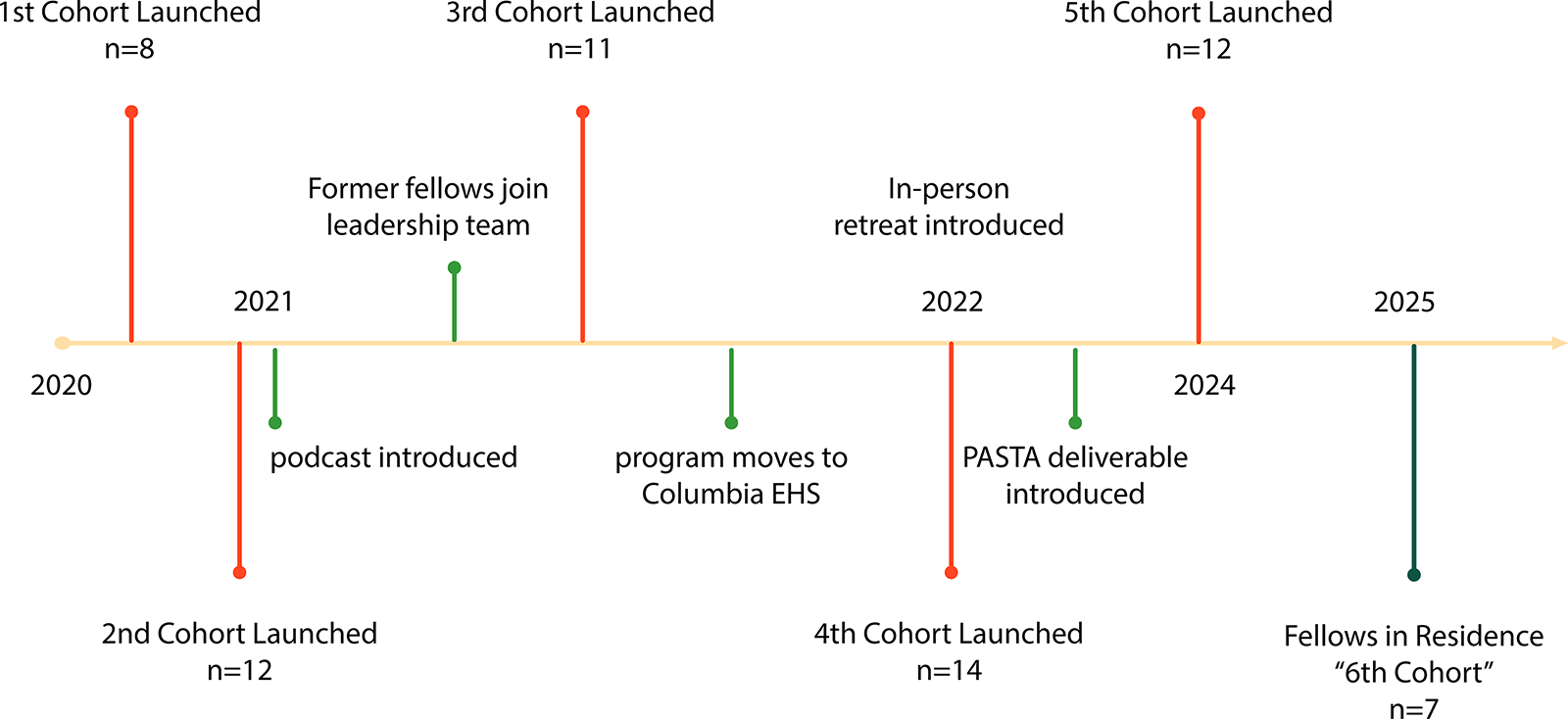
Timeline and progression of the AOC program.
The idea of the community science deliverable was for groups of 3–4 fellows to work together to support the work of a community organization or EJ-focused coalition. Four organizations, two, which were founded and led by AOC fellows, were chosen to work with the fellows on a deliverable. At The Aya Research Institute Inc.11, fellows helped support the, “The Future of Technology in the Just Transition Symposium.” The event brought together communities, scientists, engineers, and leaders who work on environmental, climate, and energy justice projects from across the world. At Black Belt Citizens Fighting for Health and Justice in Uniontown, Alabama, fellows provided technical assistance on a grant focused on providing water filters to address water quality issues. At IRRIGaTE12 (a non-profit focused on understanding and communication between tribes, cities, and the state of Arizona on agriculture & irrigation policy), fellows provided data analysis support on a project focused on communicating new USDA guidelines to Indigenous farmers. Finally, four fellows provided recommendations to the White House Environmental Justice Advisory Council (WHEJAC) Climate Resilience workgroup on how to strengthen environmental justice components in climate adaptation and resilience plans. While each deliverable was fully executed, the main feedback we received was that the timeline of the fellowship was not sufficient to allow for the natural growth of these partnerships. Additionally, as the fellows were all located in different time zones, it was difficult to coordinate and carve out space for each group to work in unison.
The leadership team then decided to revamp the community science deliverable and refocus on the mission of the program, which is meant to be fellow-centered. In cohort 5, we introduced the idea of the Policy Analysis for Science Translation and Action (PASTA) deliverable. The goals of the PASTA were to: (1) provide training in linking each fellow’s research to informing policy and (2) provide hands-on experience in policy analysis. Each fellow was responsible for completing a policy roadmap on a topic of their choice that outlined the background of their topic and the relevant policies, identified relevant stakeholders, and proposed policy-relevant goals and activities to pursue in their work. Similar to the essay feedback approach, the fellows also had dedicated time during workshops to present their PASTA materials and seek feedback from their peers as well as the leadership team.
Early signs of success and impact
The 65 essays produced by fellows through the program have collectively been read more than 1,421,889 times in English and 176,240 times in Spanish. The 108 podcast episodes produced have reached over 98,000 listens. Three of our essays are being republished in a textbook for Colorado State University. Not only is the research of the fellows published in high-impact journals that are influential in the scientific conversation—such as Environmental Health Perspectives, Nature Medicine, American Journal of Public Health, and BMJ Global Health but the work of the fellows has also appeared in major media publications—such as The New York Times, The Guardian, and Grist. Since Fall 2021, the leadership staff and fellows have been invited to speak at prominent institutions such as the National Institute of Environmental Health Sciences, the Society of Advancement of Chicanos and Native Americans in Science, the International Society of Exposure Science, and various academic institutions. While we do not have an accurate number, there are several essays that have been integrated into course syllabi at various undergraduate and graduate public health courses at U.S. universities. The AOC Leadership also established a partnership with the Collaborative for Health and Environment to host annual joint public webinars highlighting fellows’ research and professional experiences, spanning topics such as community-engaged research, multi-sector efforts to address chemical pollution, and climate change and health. To date, there have been seven webinars with a combined YouTube viewership of over 1200 views (Table 2). Lastly, several fellows have reported an increase in speaking engagements and invitations to join work groups, and 14 have secured junior faculty positions at academic institutions.
CHE Webinars and Views a
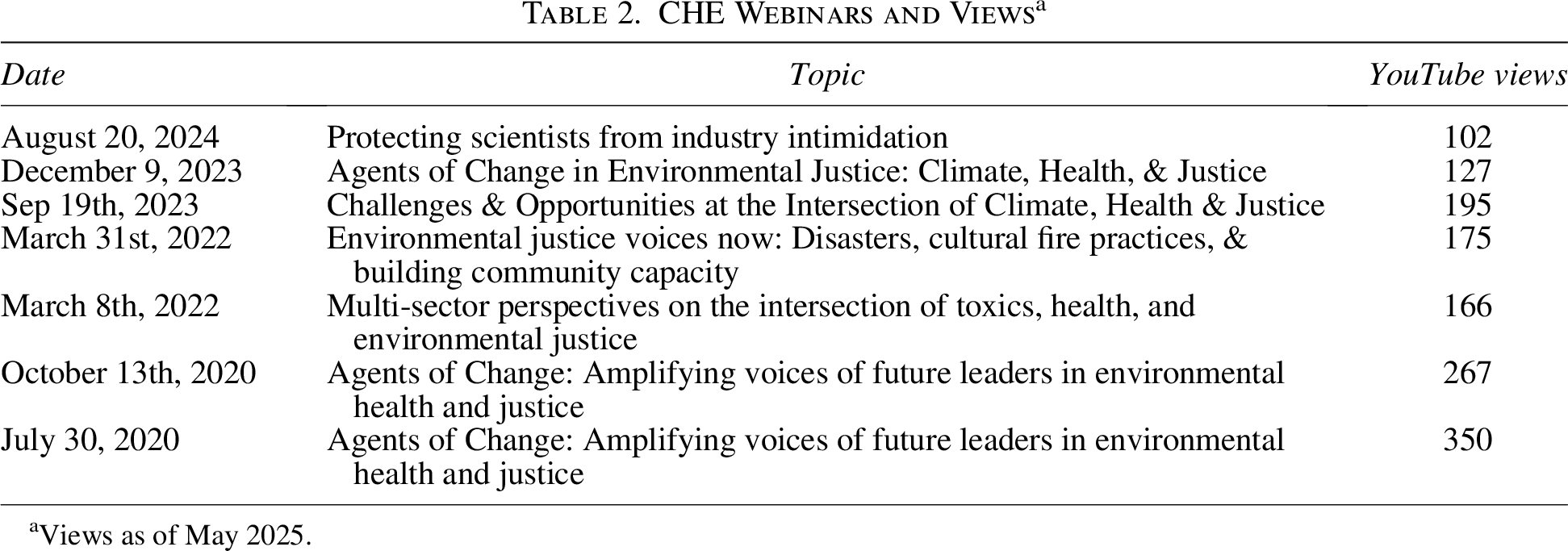
Views as of May 2025.
Program evaluation
After the completion of cohort 1, the fellows were asked a series of open-response questions to document their reflections on the program. Starting in cohort 2, a refined evaluation survey was implemented; fellows were sent a short survey on what they thought the most valuable aspects of the program were. All 57 fellows who were sent the survey or asked to respond to open-ended questions (cohort 1) completed the task. As the cohort 1 evaluation questions vary from cohorts 2 to 5, the following responses from the survey are thus based on only the 49 fellows from cohorts 2 to 5. The top three most valuable aspects of the program were: (1) fellows getting to know each other/being part of a community of justice-oriented scholars (42/49 [85.7%]), (2) hearing about other’s ideas and work and providing feedback on others’ writing (cohort 2–3) (11/23 [47.8%]) or attending the in-person retreats (cohorts 4–5) (21/26 [80.8%]), and (3) the opportunity to publish their ideas on EHN (29/49 [59.2%]). Fellows were also asked to rank their favorite deliverable. Most fellows picked the essay (24/49 [49%]), followed by the podcast (12/49 [24.5%]), and the remainder picked one of the other deliverables (e.g., PASTA, second audio deliverable).
In reviewing the written comments and responses to the following questions: “Are there specific opportunities or new connections that have resulted from this fellowship (and/or the publishing of your essay or podcast)? Can you provide a few examples?” and “How have you grown personally and professionally through this program?” Three clear themes emerged; the first theme is on confidence (Table 3). Overwhelmingly, fellows shared their appreciation for being able to find their voice both personally and professionally. They mentioned feeling that this was an open and accepting space to build confidence in speaking about their research and how their personal backgrounds and identities influenced their decision to research environmental health and justice. A fellow from cohort 3 stated, “I feel empowered to share my voice and challenge the status quo in research.” The second theme that emerged was that of increased career opportunities. The fellowship served as a way to discover more career options in environmental justice. A fellow from cohort 2 wrote: “I was able to point to my podcast and article during a job interview as an example of my work and dedication to environmental health. I was offered and accepted a position…”. There were also many comments on appreciating the improvement in their science communication skills and being able to turn their research into something more digestible to the public, as well as being able to practice public speaking. The third theme that emerged was on networking opportunities. A fellow from cohort 5 mentioned: “The program has enhanced my networking and collaboration skills, connecting me with like-minded individuals, mentors, and organizations that share my passion for environmental justice.”
Selected Quotes from Each Cohort by Theme
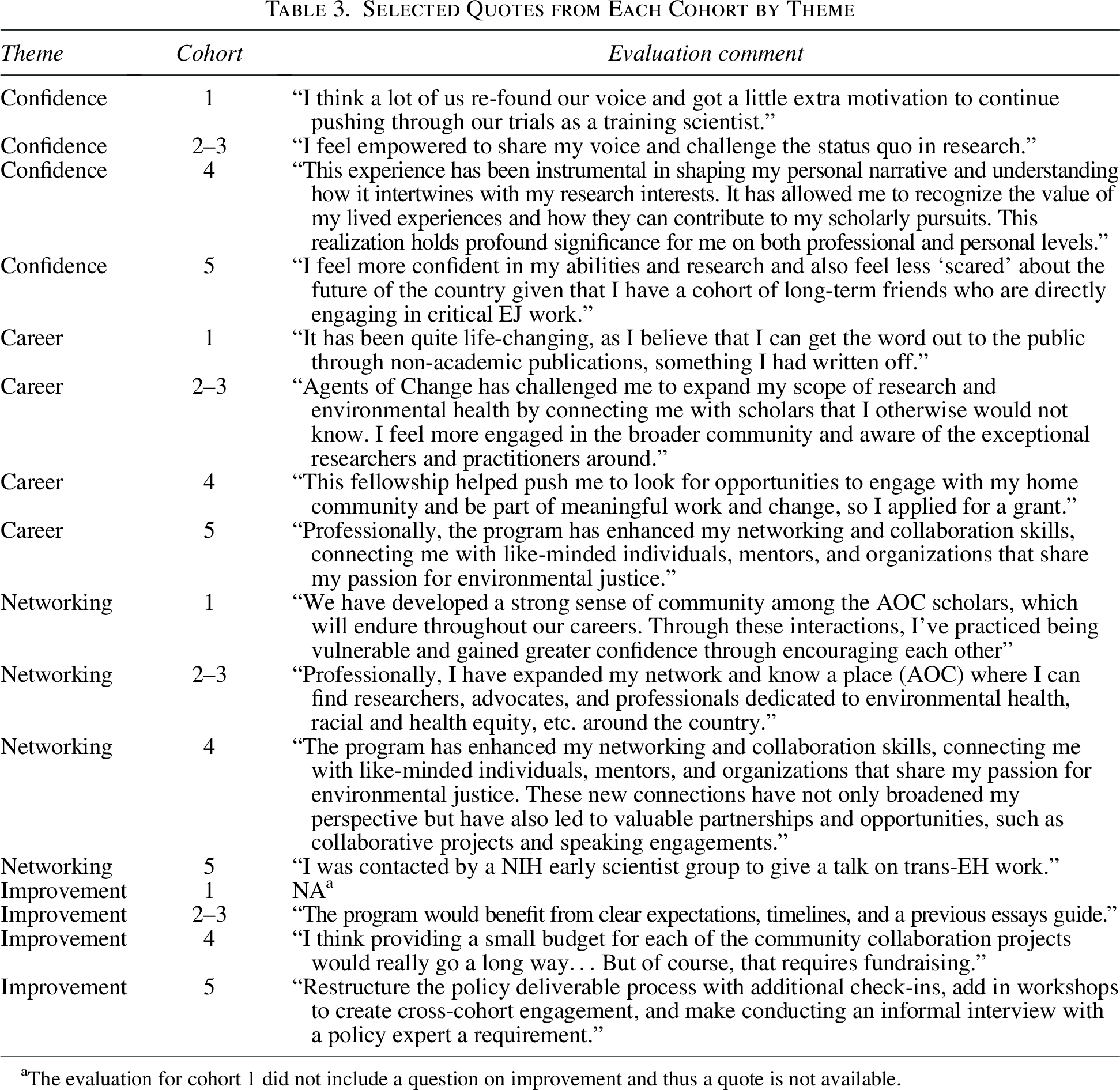
The evaluation for cohort 1 did not include a question on improvement and thus a quote is not available.
Suggestions for improvement
Part of the evaluation also included a question asking fellows for suggestions on how to improve the program (Table 3). The feedback received centered around improving the process and logistics of the essay, podcast, and policy deliverables. With regard to the essays, the first few cohorts (cohorts 1–3) mentioned wanting clearer deadlines, a “typology” of previous essays for fellows to get a sense of expectations for the editing process. Fellows had mixed suggestions regarding the timeline, with some feeling like there was a lot of time between drafts and the final product. This feedback was used to refine the process, and fellows are now given an in-depth run-through of the essay process at the retreat and sent calendar invites with essay deadline reminders. For the podcast deliverable, the fellows suggested being given questions ahead of time, being able to be part of the editing process, and a recommendation to switch the style from an “interview”-style podcast to a “conversation”-type style. Although we were able to improve the logistics as we added a full-time coordinator to the leadership team, we did not provide fellows with questions ahead of time because we wanted to give the fellows practice on how to do impromptu interviews. Furthermore, we did not want the fellows involved in the editing process because we wanted to keep certain professional boundaries between the producer and the fellows. Lastly, with regard to the policy deliverable, fellows wanted more structured check-ins and a mandatory interview with a policy expert as part of their policy roadmap deliverable. As the policy deliverable was only introduced in cohort 5, the leadership team was cognizant of the 9-month timeline and did not want to overwhelm the fellows with having the interviews be a requirement.
Emergence of science communication programs
Programs aimed at training early-career scientist in science communication under the environmental and climate justice umbrella range in their programming, goals, eligibility, and deliverables. While a complete evaluation of similar programs is beyond the scope of this case study, we do find similarities with other programs offered across the U.S. We identified seven programs that have a similar eligibility criterion (e.g., professionals with a terminal degree or early career researchers [PhD students or postdocs]), a cohort-style programming (e.g., fellows are trained as a cohort and not as individuals) and geared toward having a public-facing science communication deliverable (Supplementary Table S1).13,14,15,16,17,18,19 Similar to the AOC program, the Mobilize Green, SP2ARK, IMSI, Switzer, and Indigenous Correspondents Program all have a time commitment of a year or less and focus on creating a non-research deliverable (e.g., written essay, podcast, blogpost, and roadmap). The Smithsonian and EJ Disrupt Design fellowships differ from the AOC program in that they require a research- or action-oriented deliverable and have a 2-year commitment. The most established fellowship is the Switzer Fellowship, which began in 1986; however, it is unclear when the focus on science communication was introduced. Compared to most of the science communication fellowships we identified, which began around the time of the Justice40 initiative 20 , where investment in environmental justice was a priority, the AOC program started before the Covid-19 pandemic. The main distinguishing feature of the AOC program appears to be the academic-media partnership built with EHN, along with our evolving emphasis on social impact through science communication, policy translation, and community engagement. These distinguishing features have allowed the program to gain “visibility” and resulted in the fellows having a wider reach than would be possible through traditional academic pursuits.
Infrastructure, logistics, and hurdles
Programs such as AOC sit in the unstructured learning space between research, communication, and professional development. This means that they are not programs that qualify for traditional research grants such as those typically available through governmental granting agencies. The lack of funding is an issue that has long plagued environmental organizations that are led by marginalized leaders. Of the 30,248 grants awarded between 2015 and 2017 by philanthropic organizations, over 80% of the general support grants went to White-led organizations. 21 Most of the funding for AOC has come from foundations, which have allowed the program to maintain its independent identity while being situated within a higher education institution. In 2019, the first year of the program was supported through a $25,000 foundation grant. One of the biggest misconceptions about training programs, such as AOC, is that they are low-cost programs to operate. At face value, it may seem that the program only costs $18,000 to run, based on the monetary stipend provided to fellows. However, the program requires significant funds to invest in a full-time coordinator to assist with logistics, staff, and travel for staff and fellows for our in-person retreats. It also requires infrastructure support to issue stipends, editing services, and a web developer for website maintenance. Additionally, as the number of fellows and the scope of their deliverables increased, we have also grown the leadership team. As the program has grown, we have shifted to covering part of our staff’s salaries rather than paying staff through stipends. This salary coverage means allocating for fringe benefits and indirect costs as required by universities. Ensuring that everyone from fellows to staff is compensated for their involvement in the program is integral to the mission of the fellowship. Today, the annual budget ranges from $250,000 to $400,000 per year. Given the state of funding, historical exclusion of marginalized individuals, and lack of appreciation for environmental justice work, creating spaces where the work of individuals can be uplifted is warranted.
Vision for the future
From 2021 to 2024 we saw a renewed interest in environmental justice. Most notably through President Biden’s Executive Order 14096 (Revitalizing Our Nation’s Commitment to Environmental Justice for All). This executive order was the first executive order since Clinton’s 1994 Executive Order 12898 aimed at advancing environmental justice across the nation. Despite the renewed interest during this time, there was still a need to better uplift the stories of early-career scientists whose work centers on environmental justice. With the change in administration come new priorities and new executive orders. Most recently, Executive Order 14151, titled “Ending Radical And Wasteful Government DEI Programs And Preferencing,” calls for the termination of “environmental justice” programs. For those who have worked in the environmental justice space, we know that regardless of funding or executive orders, the work has and will continue. Our current mission as a program is to continue to empower emerging leaders from historically excluded backgrounds in science and academia to reimagine solutions for a just and healthy planet. This mission will not only be accomplished by continuing to train new fellows but also by strengthening the bonds and collaborations across cohorts. During this time of uncertainty, the AOC program has decided to reinvest in senior fellows and will be launching the 6th cohort called “Fellows in Residence.” With the “Fellows in Residence” cohort, the program aims to deepen the work of fellows and expand the policy and impact of the work. We look forward to continuing nurturing and growing our community and increasing the impact of our collective work on science, policy, and civic engagement.
AUTHORS’ CONTRIBUTIONS
All authors contributed to the conceptualization of the study. Y.O.V.H. performed the literature search and assembly of the first written draft of the article. A.R.Z. and S.A., contributed to project administration. A.R.Z. contributed to the supervision of the article. All authors contributed to the review and editing of the article. A.R.Z. secured the funding. All authors read and approved the final article.
Footnotes
ACKNOWLEDGMENTS
The AOC program has been supported by funding through Beautycounter, Forsythia Foundation, Rachel’s Network, Broad Reach Fund, Marisla Foundation, Passport Foundation, The JPB Foundation, Natural Resources Defense Council (in-kind support), Lerner Center for Public Health Promotion (Columbia University Mailman School of Public Health) the JPB Environmental Health Fellowship, and the SuLan Ling Foundation. We are thankful to all the fellows who participated and continue to support the program.
AUTHOR DISCLOSURE STATEMENT
A.R.Z. currently serves as an associate editor for the Environmental Justice journal. All other authors report no conflict of interest.
Supplemental Material
Supplementary Material
Please find the following supplemental material available below.
For Open Access articles published under a Creative Commons License, all supplemental material carries the same license as the article it is associated with.
For non-Open Access articles published, all supplemental material carries a non-exclusive license, and permission requests for re-use of supplemental material or any part of supplemental material shall be sent directly to the copyright owner as specified in the copyright notice associated with the article.
