




Abstract
This article examines the barriers and opportunities associated with the adoption of digital soil monitoring technologies in the Ecuadorian Andean region, focusing on their implications for environmental justice and agricultural sustainability. Based on fieldwork carried out between November and December 2024, this study draws on interviews with 83 smallholder farmers and 22 agricultural experts in Cotopaxi. The findings show important barriers, including high upfront costs, limited tailored technical training, and restricted connectivity in rural areas. These factors reinforce structural inequalities and limit smallholders’ ability to benefit from these innovations. Even with these difficulties, farmers who have partially incorporated digital soil monitoring tools reported productivity gains of 20%–30% in crops such as corn and potatoes. Public policies should prioritize targeted subsidies, culturally adapted training programs, and investments in technological infrastructure to reduce existing gaps. It is also necessary to create regulatory frameworks that protect farmers’ rights over the data generated on their farms. This research highlights the need for an inclusive approach to agricultural digitalization, showing that these technologies can improve the agricultural sector in Ecuador when the current inequalities are addressed.
INTRODUCTION
In recent decades, digital technologies have transformed various sectors, including agriculture, by providing tools that optimize resource use, increase productivity, and support more sustainable practices.1,2,3 Innovations such as digital soil monitoring systems have emerged as direct responses to growing global challenges related to food security, land degradation, and climate change.4,5,6 However, the implementation of these technologies in rural and small-scale contexts faces significant barriers, especially in developing countries where structural inequalities affect equitable access to the benefits of digitalization.
The Andean region of Ecuador is one of the most significant agricultural areas in the country, not only because of its contribution to food security, but also due to its unique biodiversity and cultural legacy.7,8
On these lands, smallholder farmers have maintained traditional practices that, although resilient, face increasing pressure from climate variability and soil degradation.9,10 Digital technologies have the potential to complement and strengthen these practices by improving input management and reducing environmental impacts.11,12,13 Yet their adoption is conditioned by economic, social, and technical factors that limit their reach, particularly among smallholders.
Access to these innovations is also unevenly distributed. Economic, technical, and infrastructural inequalities in rural Ecuador constrain the ability of smallholder farmers to adopt digital tools. Recent studies14,15,16show that high acquisition costs, a lack of training adapted to local needs, and limited connectivity are key barriers that perpetuate existing inequalities in the agricultural sector. In addition, perceived inequities in access to these tools intensify tensions between small and large producers, as larger farms generally have more resources and better conditions to benefit from these technologies.
At the same time, Ecuador’s Constitution, which recognizes nature as a subject of rights,17,18,19 offers a distinctive framework for analyzing how digital agricultural technologies can align with principles of sustainability and equity. This framework signals the country’s commitment to sustainable development and positions Ecuador as a relevant case for examining how emerging technologies interact with traditional practices and environmental rights. By studying these dynamics in Ecuador, it is possible to draw lessons that may be relevant for other developing regions facing similar challenges.
Against this background, the main purpose of this article is to analyze how the introduction of digital soil monitoring systems in the Andean region of Ecuador interacts with existing socioeconomic inequalities and environmental justice concerns among smallholder farmers. From an environmental justice perspective, the study pays particular attention to distributive and procedural dimensions of access to digital technologies. The working hypothesis is that, in the absence of targeted public support and inclusive governance arrangements, digital soil monitoring tools tend to reinforce pre-existing inequalities in access to information, resources, and opportunities for smallholder farmers.
Building on this hypothesis, this research contributes to the literature in three ways. First, it provides empirical evidence on the adoption of digital soil monitoring technologies in a smallholder context that has been underrepresented in previous empirical work.1,4,5 Second, it connects debates on digital agriculture with the specific constitutional framework that recognizes nature’s rights in Ecuador,17,18 highlighting how this context shapes the discussion on technological inclusion and sustainability. Third, using a qualitative approach based on semi-structured interviews and direct field observation in the Andean region, the article identifies concrete barriers and opportunities for an inclusive and sustainable integration of digital soil monitoring systems in smallholder farming.
CONTEXT
Ecuador, recognized for its status as a megadiverse country, possesses a natural and cultural wealth that positions it as a key territory in the fight against global sustainability challenges.20,21 The Andean region, characterized by its fertile soils and diverse microclimates, plays an important role in the national economy as one of the country’s main agricultural areas.22,23 However, this wealth is under threat due to climate change, overexploitation of resources, and the limited use of sustainable practices. In particular, soil degradation, which affects approximately 25% of the country’s agricultural land, has become a critical problem that threatens the food security of millions of people. 24
Agriculture in the Andean region of Ecuador is dominated mainly by smallholders, who face historical barriers that limit their access to resources, technologies, and markets.10,25,26,27 These communities rely heavily on traditional methods that, although resilient, are not always able to respond to growing demands for sustainability and productivity. 28 In this setting, digital technologies such as soil monitoring systems have emerged as innovative tools to optimize resource use, increase yields, and reduce environmental impacts. Nevertheless, these tools have not been uniformly adopted, and their uneven diffusion reflects and amplifies structural inequalities in access to technology and information.
Recent governments have launched various initiatives to promote agricultural modernization, including policies for the implementation of precision technologies. 29 However, these strategies are often designed with a centralized approach that benefits large producers and regions with better infrastructure. Rural areas, especially those inhabited by indigenous and peasant communities, face specific challenges such as a lack of connectivity, limited resources for initial investment, and insufficient training.30,31,32 This has contributed to a dual agricultural model in which gaps between large technified producers and small traditional farmers deepen, perpetuating social, economic, and environmental inequities.
At the same time, global dynamics in agricultural markets, where sustainability and traceability are gaining importance, are putting pressure on Ecuadorian producers to adopt more technological practices.33,34 Without structured support that takes local conditions into account, these pressures can become exclusionary for small farmers, who may lack both the financial means and the technical assistance required to comply with new standards. In this context, digital soil monitoring systems are promoted as instruments to improve productivity and environmental performance, but they also raise questions about who has access to these benefits and under what conditions.
This combination of high environmental vulnerability, a dual agricultural structure, and increasing market pressures makes the Andean region of Ecuador a relevant case for examining the relationship between digital technologies and environmental justice in smallholder farming. The structural barriers described above are directly related to the objectives of this study, which seek to understand how smallholders experience the introduction of digital soil monitoring systems, what obstacles they face in accessing and using these tools, and how these dynamics interact with existing inequalities. This contextual background also provides the basis for interpreting the empirical results and for discussing which types of public policies are needed to ensure that the transition to digital agriculture is inclusive and fair.
METHODOLOGY
The objective of this study is to analyze the barriers and opportunities associated with the adoption of digital soil monitoring technologies in the Ecuadorian Andean region, with emphasis on their implications for environmental justice and the sustainability of small-scale agriculture. This objective guides the methodological approach, which focuses on capturing the experiences and perceptions of the key actors involved in this process.
A qualitative approach was adopted because it allows for an in-depth exploration of how smallholder farmers and agricultural experts understand, experience, and evaluate the introduction of digital soil monitoring technologies in their territories. In a context marked by historical inequalities, diverse cultural backgrounds, and unequal access to information, semi-structured interviews are particularly suitable for documenting participants’ perceptions and identifying barriers that vary across communities. 35 This method also allows the study to capture context-specific issues that standardized survey instruments would not reflect adequately. The flexibility of semi-structured interviews makes it possible to follow a common set of guiding questions while also allowing participants to introduce issues they consider important, which is indispensable when working with indigenous communities and farmers with different levels of familiarity with digital tools.
The study area is the Cotopaxi province in the Andean region of Ecuador (Fig. 1). Fieldwork was conducted between November and December 2024 in three localities: Latacunga, Saquisilí, and Pujilí. These areas were selected because they are representative of small-scale agriculture in the region and because pilot initiatives related to digital agricultural technologies have begun to be implemented there. Purposive sampling was used to identify 105 participants, of which 83 were small farmers with different levels of experience in traditional agricultural practices and 22 were agricultural experts, including extension technicians and representatives of local NGOs working on projects related to agricultural modernization. The sampling criteria sought to include farmers with different farm sizes, crop combinations (including corn and potatoes), and varying degrees of exposure to agricultural technologies, as well as experts with direct experience in advising smallholders in the study area.
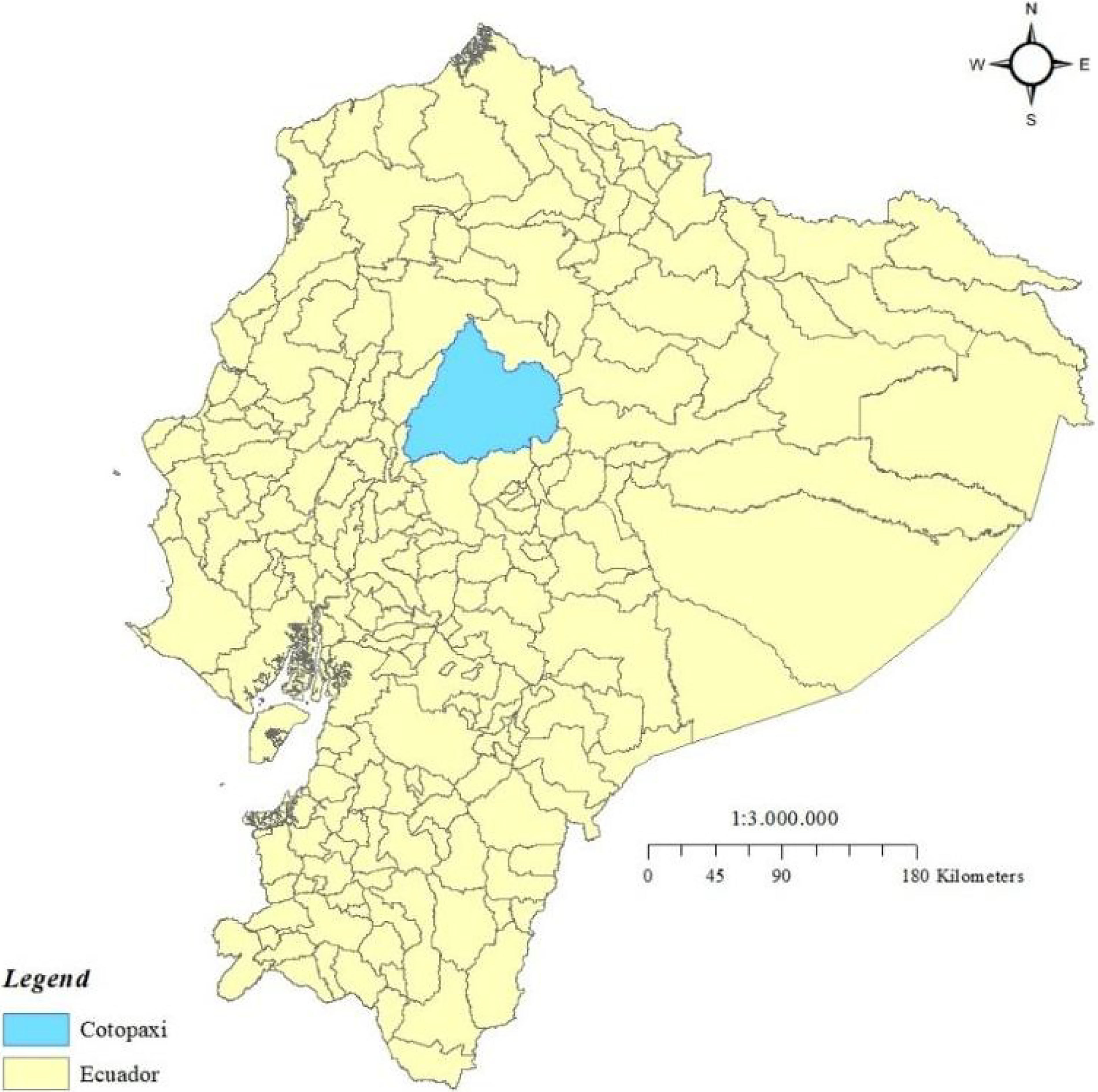
Study area.
The interviews were designed in a semi-structured manner, combining a set of guiding questions with the flexibility to allow participants to express their views freely and in detail. Topics covered in the interviews included previous experiences with agricultural technologies, perceptions of the benefits and limitations of digital soil monitoring systems, economic and technical barriers faced, and perceived impacts on sustainability and productivity. Each interview lasted on average 45 minutes and was conducted in spaces where participants felt most comfortable, such as their farms or community centers. This helped to create an atmosphere of trust that encouraged open and honest responses. The interviews were conducted in Spanish and, when necessary, translators were used to facilitate communication with Quichua speakers.
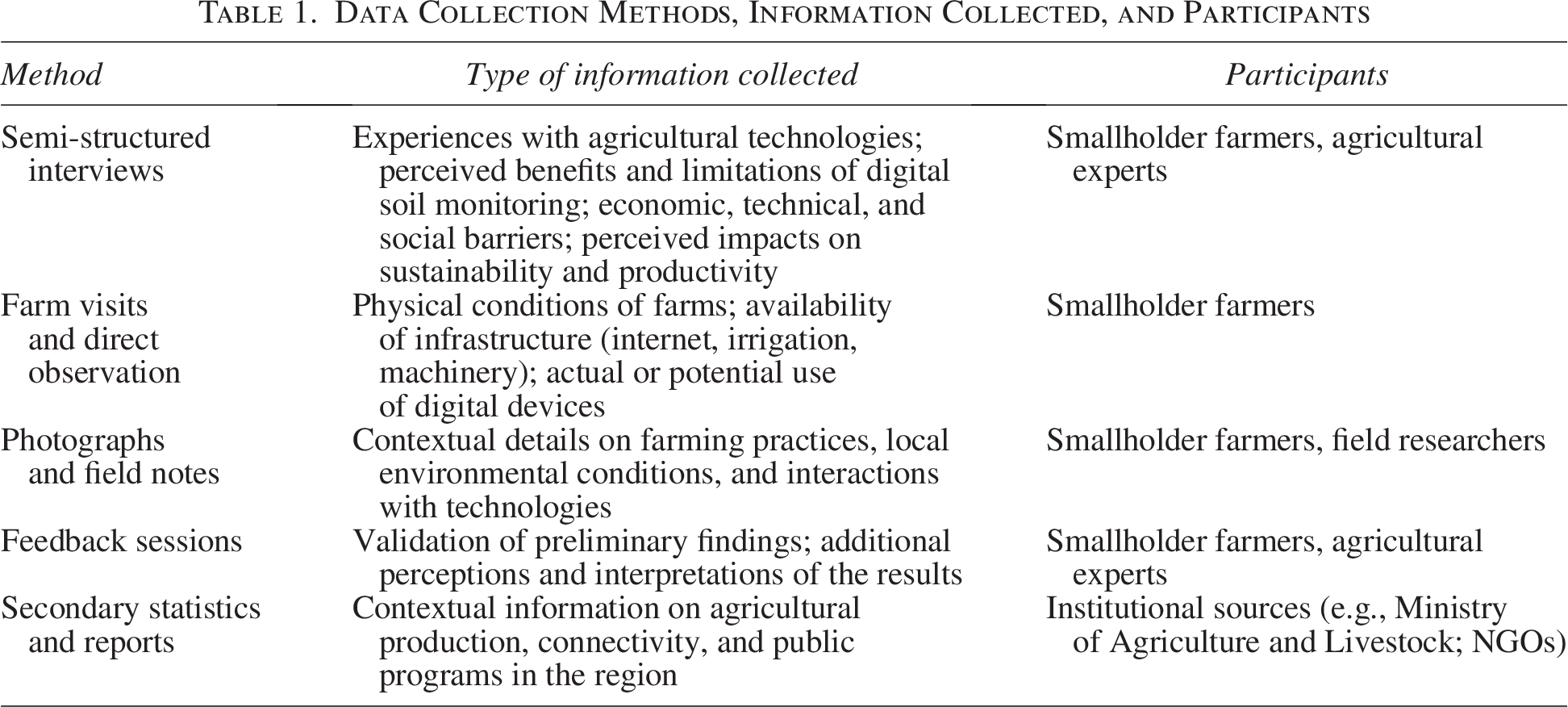
Data collection also included repeated visits to the farms of small farmers, which allowed direct observation of the conditions in which they carry out their agricultural activities and how they interact with digital technologies, where these were already present. These visits included detailed records of the infrastructure available, such as internet access, irrigation systems, and agricultural machinery, which complemented the information obtained in the interviews. In addition, photographs and field notes were used to document relevant aspects of everyday practices, local environmental conditions, and the presence or absence of digital devices. Table 1 summarizes the different data collection methods, the types of information obtained, and the groups of participants involved.
Data Collection Methods, Information Collected, and Participants
To ensure that the interviews were inclusive, specific protocols were designed for working with indigenous farmers and farmers with varying levels of literacy. This included the use of visual materials, such as diagrams and illustrative examples, which facilitated understanding of the topics discussed. In addition, the interviews were conducted by facilitators who received prior training in cultural sensitivity in order to respect local norms and traditions.
Data analysis was conducted using thematic coding. The interview transcripts and field notes were read several times to gain an overall understanding of the material, and then coded to identify recurring themes related to economic, technical, and social barriers, as well as perceived opportunities associated with digital soil monitoring technologies. In a first stage, open coding was used to capture participants’ own terms and concerns. In a second stage, related codes were grouped into broader categories that reflect key dimensions of the research, such as costs, connectivity, training, and perceptions of inequality. In a third stage, these categories were examined using the environmental justice framework adopted in the article, with a focus on distributive and procedural aspects of access to digital technologies. Throughout the analysis, the information from interviews was triangulated with field observations, feedback sessions, and local statistics provided by institutions such as the Ministry of Agriculture and Livestock of Ecuador and NGOs working in the region. This triangulation helped to check the consistency of the findings and to place the qualitative evidence within a broader contextual framework.
Finally, preliminary findings were shared with small groups of farmers and experts in feedback sessions organized at the end of the fieldwork. These sessions served to validate the main interpretations, identify possible misunderstandings, and incorporate additional perspectives that enriched the analysis. The active participation of local stakeholders in this process strengthened the relevance and practical applicability of the study’s findings.
RESULTS
The analysis of interviews and direct observations conducted in Latacunga, Saquisili and Pujili involved 83 smallholder farmers and 22 agricultural experts, strategically selected to ensure diversity in terms of farming practices, farm sizes, and access to previous technologies. This approach allowed capturing a comprehensive view of the dynamics and challenges related to the adoption of digital technologies in the Andean Region. The findings revealed a variety of structural and social barriers, as well as specific opportunities that could guide future policies and support programs (Table 2).
Barriers and Opportunities Identified
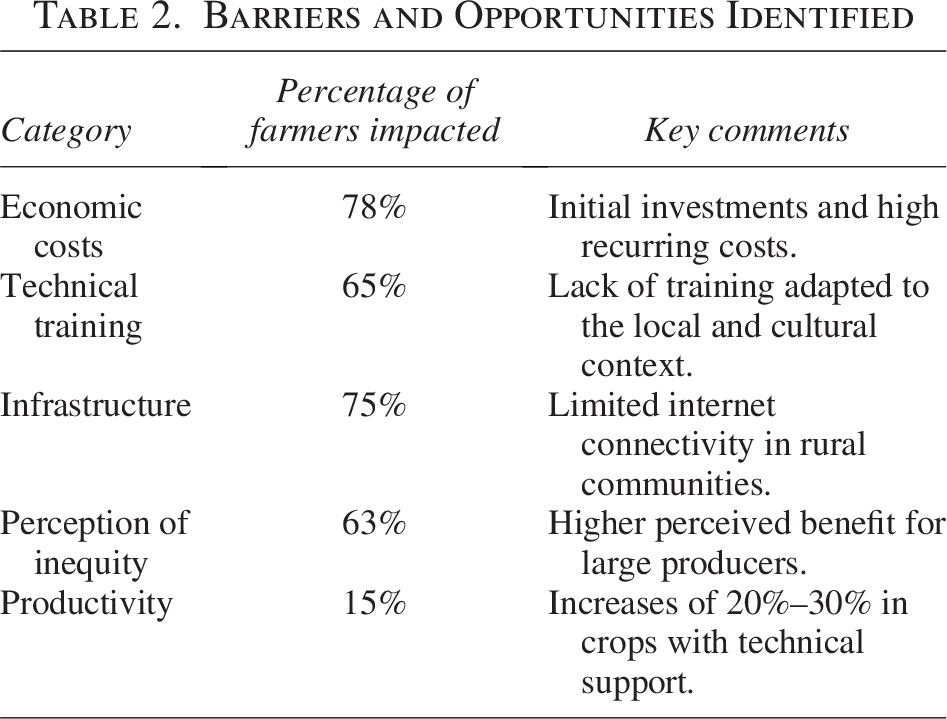
A critical finding was that 78% of farmers perceived the initial costs of digital technologies as prohibitive. These devices, which range in price from $500 to $1,000 per unit, represent an investment that far exceeds the average monthly income of $300 in the rural communities studied. Seventy percent of participants mentioned that even if they were successful in acquiring the devices, the associated recurring costs, such as subscriptions to digital platforms (ranging from $15 to $30 per month), would represent an unsustainable challenge. This perception was consistent across all reported income levels, underscoring the magnitude of the economic barrier. A small percentage (12%) indicated having received financial assistance from NGOs for the acquisition of sensors; however, these programs did not cover maintenance costs, resulting in several devices being out of use following technical failures.
In terms of technical training, significant shortcomings were identified in the training offered to farmers. Sixty-five percent of the interviewees reported not fully understanding how to interpret and apply the data generated by soil sensors. The training courses were seen as overly technical and not well-suited to the educational and cultural levels of rural communities. One agricultural extension technician noted that “most farmers need clear examples and practical applications that directly connect the data to specific farming decisions.” In addition, only 10% of farmers indicated having participated in trainings that included visual tools or materials in Quichua, which significantly limited the effectiveness of the programs in indigenous communities. This aspect highlights the urgent need to design culturally relevant trainings.
Technology infrastructure was another significant obstacle. Seventy-five percent of farmers indicated that their communities lack reliable internet connectivity, which affects the real-time functionality of monitoring technologies. In several cases, farmers shared that they had to travel between 2 and 5 km to access connection points, which not only increased their operating costs, but also led to delays in data-driven decision-making. Under these conditions, farmers relied mainly on disconnected solutions, which, while useful, do not maximize the potential of digital technologies.
In terms of perceptions of inequity, 63% of farmers expressed that these technologies mainly benefit large producers, who have economic resources and access to more advanced infrastructure. On the other hand, only 22% considered that these tools could be integrated into their operations if adequate technical and financial support programs were designed. Agricultural experts emphasized that large producers have used these technologies to obtain sustainability certifications, gaining access to international markets that demand more technological and ecological practices. This phenomenon contributes to consolidating existing inequalities in the agricultural sector.
Despite the barriers identified, there were positive experiences. Some 15% of farmers reported that, after partially integrating digital monitoring technologies, they experienced 20%–30% increases in the productivity of crops such as corn and potatoes. These farmers attributed their success to optimizing the use of inputs such as water and fertilizers, guided by the data provided by the sensors. In addition, some experts indicated that these technologies enabled farmers to better manage climate risks, such as periods of drought or excessive rainfall, by providing accurate information on soil, moisture, and environmental conditions.
DISCUSSION
The aim of this study was to analyze the barriers and opportunities associated with the adoption of digital soil monitoring technologies in the Andean region of Ecuador, with a focus on smallholder farmers and environmental justice. The results show that the introduction of these technologies is shaped by persistent structural constraints and by a dual agricultural structure in which small and large producers do not face the same conditions.
Economic constraints are a central element of the findings. For many smallholders in Cotopaxi, the cost of sensors and digital services clearly exceeds their average monthly income, which helps explain why these tools are perceived as inaccessible. This pattern is consistent with studies that highlight the importance of affordability and access to credit for the adoption of digital and precision agriculture technologies in developing countries.14–16 The evidence suggests that, in low-income rural settings, the potential of digital technologies cannot be separated from broader questions about rural finance and the design of targeted support instruments.
The findings on technical training also resonate with the literature on digital agriculture and local knowledge systems. Many farmers reported difficulties in interpreting sensor data and linking it to specific management decisions, and only a small share had access to training that used visual materials or local languages. This situation reflects concerns raised by authors who stress the need to recognize farmers’ knowledge and to adapt interventions to their cultural and educational context.10,28 Training programs that rely mainly on technical jargon and standardized formats are unlikely to support sustained use of digital tools among smallholders with diverse literacy levels.
Infrastructure-related barriers, particularly limited connectivity, further restrict the effective use of digital monitoring systems. The need to travel several kilometers to access an internet connection increases the time and costs associated with real-time data use. This pattern fits with broader territorial inequalities in digital infrastructure documented in rural areas of Ecuador and other countries.30–32 Under these conditions, farmers tend to use devices in a fragmented or offline way, which limits many of the advantages usually associated with precision agriculture.
Perceptions of inequity between small and large producers add another layer to the analysis. Smallholders frequently see digital soil monitoring technologies as tools that primarily benefit larger farms, which are better positioned to obtain sustainability certifications and comply with the demands of export markets. This perception aligns with the dual agricultural model described in the context of Ecuador, where technified large-scale producers coexist with small traditional farmers25–27 From an environmental justice perspective, these findings point to distributive and procedural imbalances: larger producers have more access to technological benefits and more influence over how standards and certification schemes are defined and implemented.
The analysis also needs to be read in light of Ecuador’s constitutional framework, which recognizes nature as a subject of rights.17–19 This framework raises questions about how digital agricultural technologies should be governed in territories where environmental and community rights are central. The experiences documented in Cotopaxi suggest that, without explicit safeguards, digital soil monitoring systems can reinforce productivity-oriented objectives while paying limited attention to equity and territorial rights. At the same time, positive cases of higher yields and better management of climatic risks indicate that these technologies can support more sustainable practices when they are introduced through participatory processes and accompanied by technical support.
POLICY IMPLICATIONS
This study points to several concrete policy actions to make the adoption of digital soil monitoring technologies more inclusive in the Andean region of Ecuador. Rather than assuming that these tools will diffuse spontaneously, public interventions need to address the specific barriers identified in the empirical analysis.
First, targeted financial instruments are needed to reduce the burden of initial investment and recurrent costs. Given that many smallholders view sensors and subscriptions as unaffordable, subsidy schemes and concessional credit lines should be designed for lower-income farmers and communities. These mechanisms could cover both acquisition and maintenance, with repayment conditions aligned with agricultural cycles and the income patterns of small-scale producers.
Second, technical training should be adapted to farmers’ educational and cultural backgrounds. The evidence suggests that many existing initiatives are not well-aligned with local realities. Training programs can be strengthened by using practical exercises, field demonstrations, and visual materials, as well as by incorporating local languages such as Quichua. Linking training directly to everyday decisions on irrigation, fertilization, and risk management can increase farmers’ confidence in using digital information.
Third, investments in rural connectivity are essential to enable the effective use of real-time monitoring tools. Extending internet access through community networks, satellite solutions, or other alternative models can help reduce territorial inequalities in digital infrastructure. These efforts could be supported by incentives for private providers that invest in underserved areas and by coordination with local governments and community organizations.
Fourth, a clear framework for agricultural data governance is required to protect farmers’ rights over the information generated on their plots. Rules are needed to define who can access the data, under what conditions, and how benefits derived from data use are shared. Developing open and transparent platforms, comanaged with farming communities, can strengthen trust and ensure that digitalization does not lead to new forms of dependence or exclusion.
Fifth, pilot projects can play a useful role in showing the potential benefits of digital soil monitoring under real farming conditions. Initiatives that combine devices, tailored technical assistance, and systematic follow-up can help identify what works and what does not in specific territories. Scaling up such pilots should include mechanisms for monitoring and evaluation, so that policies can be adjusted over time.
Finally, sustainability certification schemes that link digital technologies to access to international markets should be reviewed to make them more accessible to smallholder farmers. Simplifying procedures, reducing administrative costs, and providing support for compliance can help smallholders participate in higher-value chains. Otherwise, there is a risk that digital requirements in certification processes will further widen the gap between large and small producers.
CONCLUSIONS
This study examined how the introduction of digital soil monitoring technologies interacts with structural inequalities and agricultural practices in the Andean region of Ecuador. The findings show that, although these tools have the potential to improve resource use and support more sustainable production, their adoption by smallholder farmers is constrained by economic, technical, and infrastructural barriers. These constraints affect not only the pace of technological uptake but also the distribution of benefits within a dual agricultural system.
The research contributes to broader debates on environmental justice, sustainability, and technological equity by documenting how smallholder farmers and agricultural experts in Cotopaxi perceive and experience digital soil monitoring. The qualitative evidence provides a detailed picture of the conditions under which digital technologies can either reinforce existing inequalities or open new opportunities for more sustainable and inclusive forms of production. The analysis also underscores the importance of governance issues, including data rights and the design of support schemes that are sensitive to local contexts.
At the same time, this research has limitations. The qualitative design, based on 83 farmers and 22 experts in a specific region, restricts the generalizability of the findings to other territories within Ecuador or to other countries. The research does not include a comprehensive quantitative assessment of the impact of digital soil monitoring on yields, income, or environmental indicators. In addition, the environmental effects of large-scale adoption of these technologies were not examined in detail.
These limitations point to several directions for future work. Quantitative studies could measure the direct effects of digital soil monitoring on agricultural production, household income, and environmental performance. Further research could also explore how digital technologies affect social relations within rural communities, including the distribution of labor, decision-making processes, and access to shared resources. Finally, comparative analyses of successful and unsuccessful adoption experiences in other regions or countries could provide lessons that might be adapted to the Andean context and to other areas with similar agricultural structures.
Footnotes
AUTHOR DISCLOSURE STATEMENT
The author declares that there are no known competing financial interests or personal relationships that could have appeared to influence the work reported in this article. No interests to disclose.
FUNDING INFORMATION
No funding was received for this article.