



Abstract
Introduction:
Biobanking is a crucial foundation for biomedical research, allowing for the collection, storage, and study of biological samples and related data. In Africa, expanding biobanks offers a chance to investigate the continent’s rich genetic diversity and tackle local health challenges. Yet, infrastructure shortcomings, inconsistent regulations, and varied ethical standards continue to hinder the sustainable growth of biobanking efforts across Africa. The Pan-African Biobanking Network (PABNet) is an initiative of African biobankers that provides information and services for the African biobanking community. The study was aimed at evaluating the current status of biobanking in Africa.
Methods:
From February 2024 to January 2025, a structured online survey questionnaire was dispatched to African biobanks through such networks as Biobank and Cohort Building Network and Medical Biorepositories of South Africa. The three main areas were general biobank characteristics, systems of ethics and regulation, and Strengths, Weaknesses, Opportunities and Threats assessment. The questionnaires were scrutinized by top African biobanking experts to be properly contextualized. The questionnaires were then interpreted as a tool for establishing maturity in operation, resources available, and engagement in professional networks.
Results:
A total of 22 biobanks from 11 countries took part. Most were fairly new, with a median staff size of six and a wide range of sample types. Although 77% had quality management systems and 91% used unique specimen identifiers, only 43% had formal accreditation. Main strengths included diverse sample collections (77%) and participation in professional networks (68%). However, major obstacles included weak legal frameworks (82%), regulatory delays (73%), funding shortages (91%), and gaps in consent procedures.
Conclusion:
This preliminary survey reports significant results of African biobanking showing willingness to cconductand urgent needs for harmonized ethics, explicit procedures for accreditation, and aligned policies. The PABNet is well-positioned to fill these gaps through promoting local use of international standards, launching training programs, and facilitating improved governance. These measures will help build a robust, internationally integrated biobanking system fitting Africa’s research setting.
Introduction
Biobanks are infrastructures that play a crucial role in advancing biomedical research worldwide, and Africa is increasingly becoming a key player in this field. The growth of biobanks across the continent offers exciting opportunities to explore Africa’s unique genetic diversity and address health challenges specific to the region.1–5 In a few cases, this development in biobanking infrastructures has even allowed for the creation of national biobank associations, for example, the Egyptian Biobank Alliance 6 and the Medical Biorepositories of South Africa (MBiRSA), 7 created to coordinate and support biobanking activities.
As the biobanking sector progresses worldwide, biobanks continue to face significant challenges, including variations in ethical and legal frameworks. For example, in Sub-Saharan Africa, differing regulations pose particular difficulties to collaboration.8–10 Existing guidelines often fail to address the ethical complexities of biospecimen storage and data reuse, highlighting the need for harmonized policies that reflect local cultural values and reuse, highlighting the need for harmonized policies that reflect local cultural values.2,11,12 Additionally, limited funding, inadequate infrastructure, and a shortage of trained personnel pose serious challenges to the sustainability of biobanks in low- and middle-income countries (LMICs).11,13 Inadequate governance systems can further compound these issues, sometimes leading to exploitative practices that erode trust between researchers and communities. 5 Therefore, strengthening regulatory frameworks and ensuring ethical practices are upheld is essential to address these concerns.
African biobanking is at a critical but complex stage of development. Numerous new initiatives have the potential to significantly improve health outcomes through research, but key issues must be resolved for these biobanks to succeed. This would not only contribute to global health advancements but also ensure that the benefits of research are shared equitably. 14 For example, by strengthening African biobanks through FAIR-aligned standards (Findable, Accessible, Interoperable, Reusable), the continent can shift from being a biospecimen and data source to an equal partner in global research ensuring samples collected in Africa benefit African health priorities first.15–18 This approach counters historical inequities by embedding ethical safeguards like standardized consent and reciprocal data-sharing agreements.19,20 Such systemic upgrades will not only advance global science but also create local value through retained talent, innovation, and sovereignty over biological resources.20,21
Biobanking activities in Africa are under-represented, with research labs and hospital sample collections engaging in operations but not technically referred to as biobanks, necessitating policy and awareness initiatives. Despite its growing importance, biobanking in Africa has fewer publications than other regions, limiting global visibility and understanding. 22 Initiatives such as the Pan-African Biobanking Network (PABNet), established in 2024, serves as a centralized platform, providing biobankers and stakeholders with the resources needed to establish and manage biobanks effectively while fostering collaborations.
However, the distinct requirements for biobanks in Africa, which differ significantly from those in high-income countries and even vary across African nations, highlight the urgent need for more research, publications, and shared knowledge to drive the field forward and ensure its sustainable growth.8,23
The PABNet is a developing initiative in its early implementation phase, established to strengthen biobanking infrastructure, governance, and ethical harmonization across Africa. This survey was conducted as part of these efforts, to assess the current biobanking landscape and guide PABNet’s bottom-up approach, to building collaboration, regulatory alignment, and sustainable biobanking capacity across the continent.
Guided by the vision that PABNet is for African biobankers, by African biobankers, the network’s bottom-up, participatory development model is rooted in the experiences, needs, and capacities of individual biobanks rather than externally imposed standards. Evidence from low- and middle-income settings shows that such network-based, participatory approaches promote sustainable capacity building by strengthening local ownership, stakeholder engagement, and iterative improvement, particularly in health research systems and biobanking infrastructures. 24
Methods
The first step in creating this survey involved determining the domains of interest the questionnaire would measure. We conceptualized relevant constructs (underlying theme or subject matter) from the existing literature and previously published questionnaires from which to develop an item pool, as implemented in previous biobanking-relevant studies.23,25 The survey questions were organized into three main sections: (i) general information about the biobank and its operations, (ii) ethics and regulations, and (iii) a SWOT (Strength, Weakness, Opportunity, and Threat) analysis of the biobanking community in Africa. 26 The specific objectives were to (i) assess the current strengths of African biobanks, (ii) identify weaknesses and challenges in infrastructure, governance, and training, (iii) highlight opportunities for capacity building, policy development, and collaboration, and (iv) outline potential threats to sustainability and growth. This framework was chosen to systematically capture respondent insights and provide a basis for actionable recommendations. The questionnaire was subjected to a review process by the authors and four senior biobanking colleagues based in Africa. This review was undertaken to ascertain the questions’ relevance to the African context. Focus was given to alignment and complementarity with existing studies on the African context, for example, findings from the H3Africa Consortium have consistently highlighted significant infrastructure and resource limitations in African biobanks, while also recognizing their strong emphasis on community engagement and ethical governance 27 and were supported by International Agency for Research on Cancer/WHO ethical clearance and under the No. 22–37) code number.
The questionnaire was distributed from February 2024 to January 2025 among established biobanks through networks such as Biobank and Cohort Building Network and MBirSA, via newsletters, LinkedIn posts, and member emails. The biobanks were asked to have their most knowledgeable representative complete the survey and were encouraged to forward it within their local networks to increase participation. Further participants were sourced both from direct contacts of management staff and by snowball methodology.
Ethical approval for this study was obtained from the International Agency for Research on Cancer/WHO under ethical clearance No. 22–37.
Results
This pilot survey received 22 responses from 11 African countries, predominantly in sub-Saharan Africa (Fig. 1). Fifty-five percent of participating biobanks were located in Nagoya Protocol member states, that is, ratified member states signed the treaty and recessed did not sign but are bound by the protocol. Most biobanks were relatively recent, with a median establishment age of 9 years range (2–66) and operated with a median staff size of six full-time equivalents (range: 0–40). Among staff, 68% (15/22) had received biobanking training (Table 1).
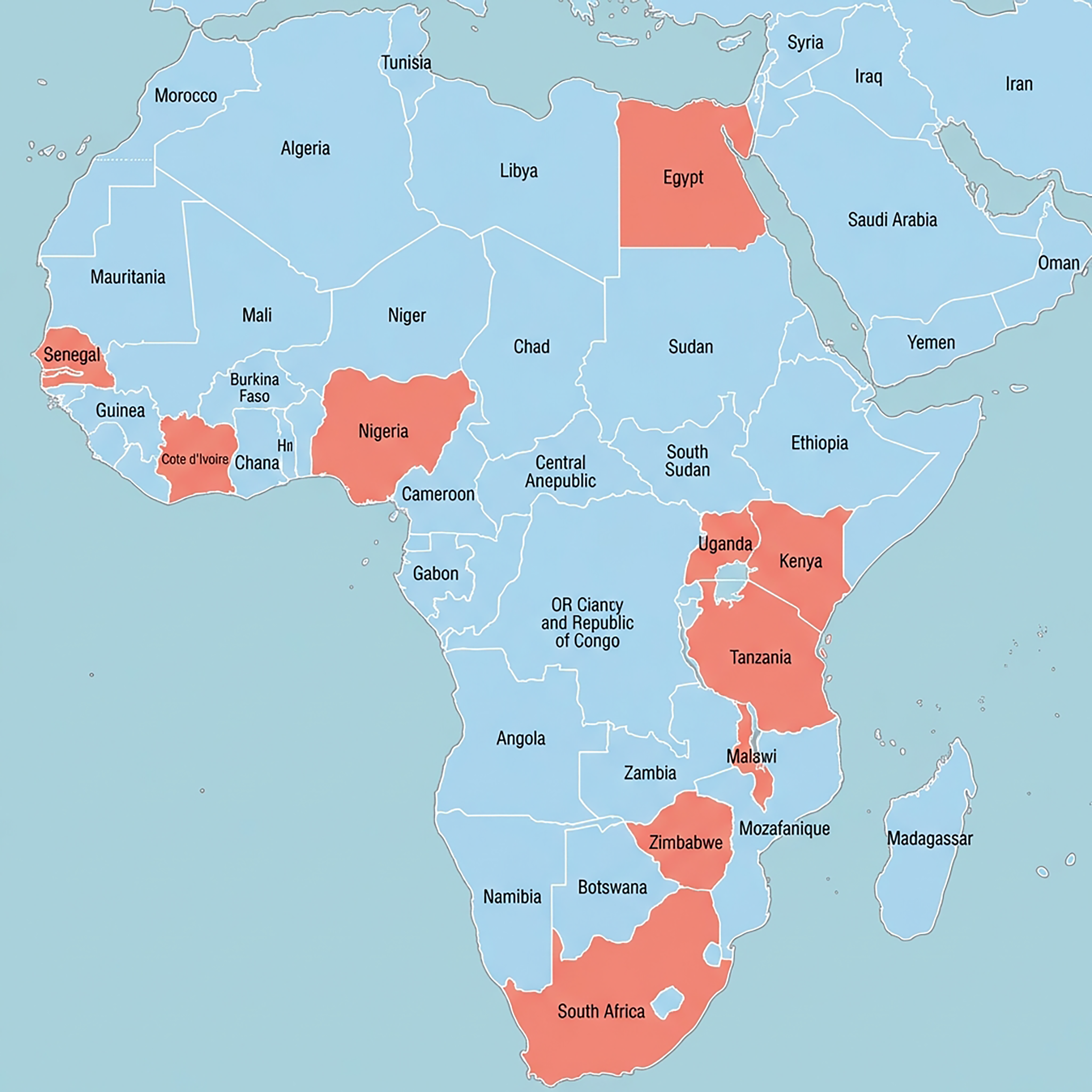
Shows the countries that participated in the survey: Uganda, Kenya, South Africa, Nigeria, Cote d’Ivoire, Egypt, Malawi, Zimbabwe.
Biobank Characteristics and Type
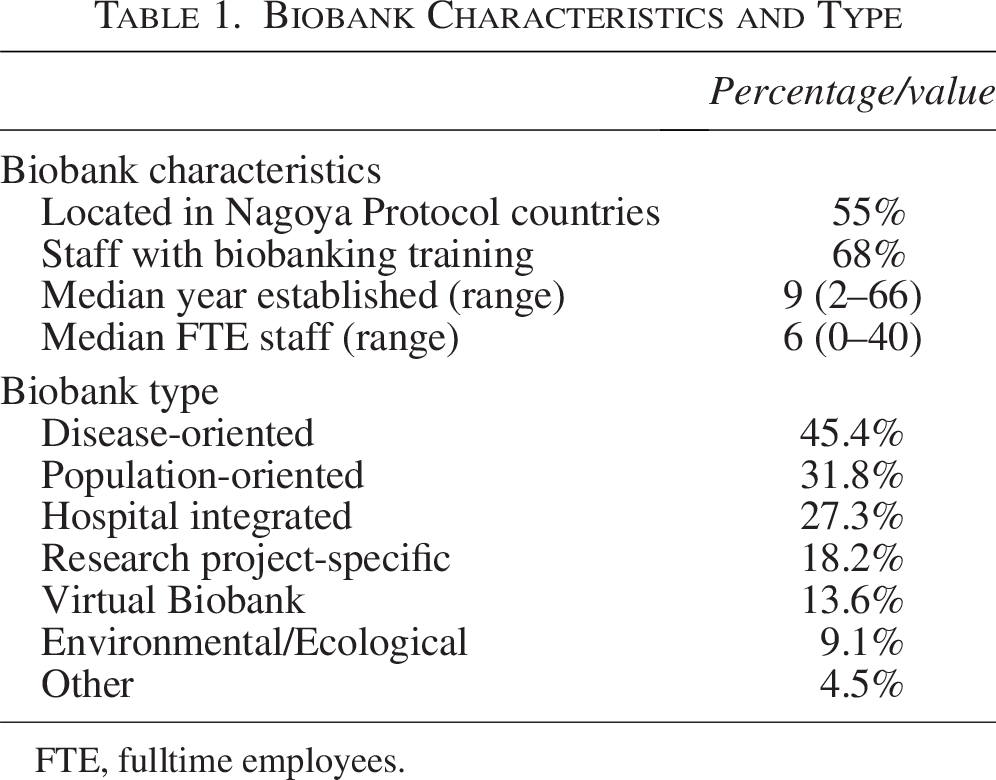
FTE, fulltime employees.
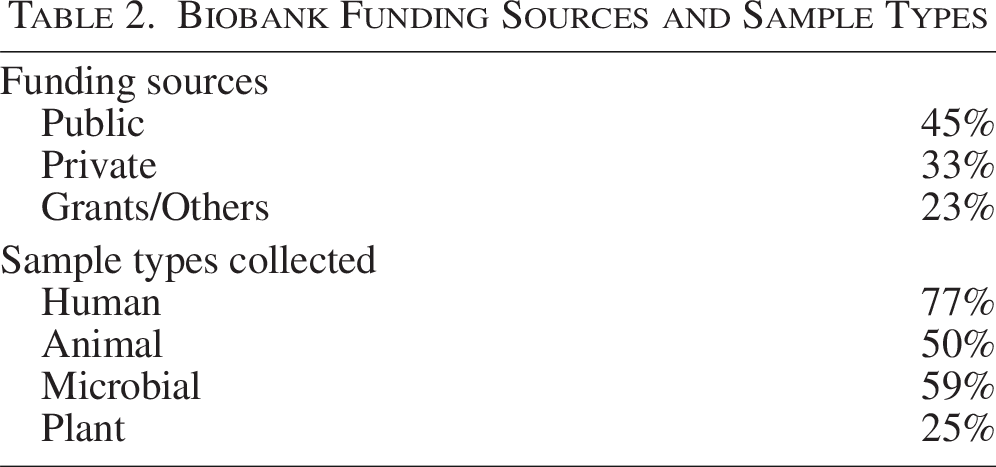
Biobank types were diverse, spanning disease-oriented (45.5%; 10/22), population-based (31.8%; 7/22), and hospital-integrated (22.7%; 5/22) models (Table 1). Specimen collections also reflected broad research needs, including human (77%; 17/22), microbial (59%; 13/22), animal (50%; 11/22), and plant (23%; 5/22) samples (Table 1). Funding sources were distributed across public institutions (45%; 10/22), private sources (33%; 7/22), and grants or other funding mechanisms (23%; 5/22) (Table 2).
Biobank Funding Sources and Sample Types
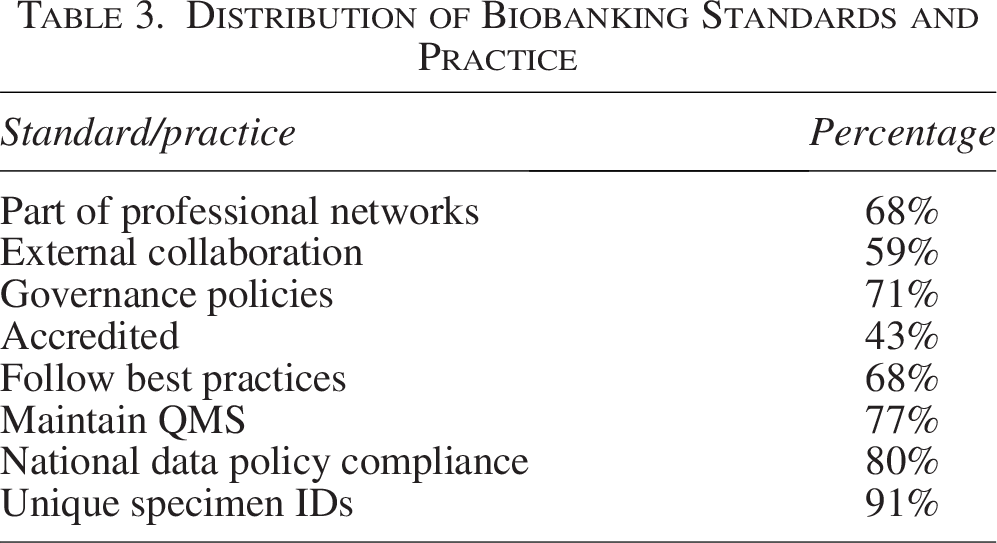
Most respondents reported engaging in core biobanking activities. Sixty-eight percent (15/22) participated in professional networks, and 59% (13/22) reported external collaborations. Governance systems were in place for 71% (15/21) of biobanks, with 43% (9/21) reporting formal accreditation/certification, for example, ISO 9001, National Health Research Ethics Committee (NHREC), Canadian Tissue Repository Network (CTRNet). Seventy-seven percent (17/22) maintained a Quality Management System, 68% (15/22) followed best practices, for example, ISBER, GCP, IACUC, ISO 9001, ISO 20387, GGBN, 71% (15/21) implemented additional standards, and 91% (20/22) used unique specimen identifiers (Table 3).
Distribution of Biobanking Standards and Practice
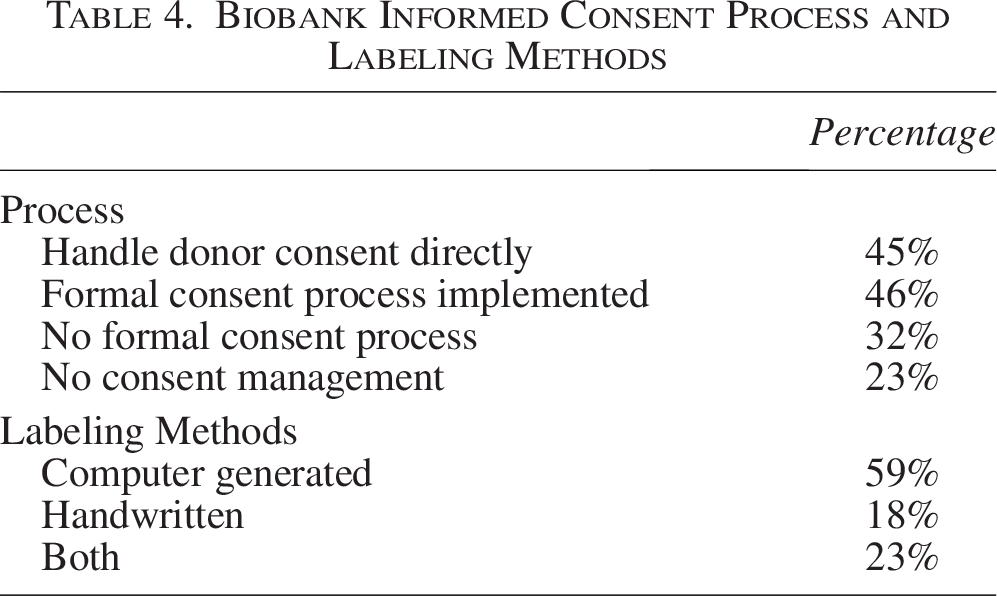
Biobanks self-rated their visibility at 62% of the maximum scale, as extrapolated by an average of 3.1 on a scale range of 1–5. Consent management practices varied: 46% (10/22) had formal consent processes, 32% (7/22) lacked them, and 23% (5/22) reported no consent system at all. Donor consent was handled directly in 45% (9/20) of cases. For labeling, 59% (13/22) used computer-generated methods, while 18% (4/22) relied on handwritten labels, and the rest used both (23%) (Table 4).
Biobank Informed Consent Process and Labeling Methods
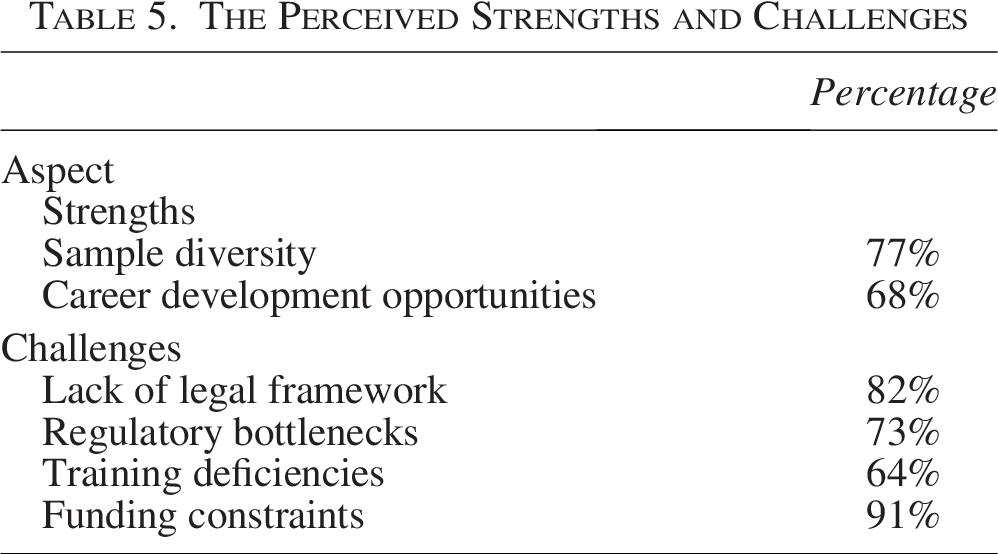
Respondents identified sample diversity (77%; 17/22) and career development opportunities (68%; 15/22) as key strengths. Major challenges included inadequate legal frameworks (82%; 18/22), regulatory bottlenecks (73%; 16/22), training deficiencies (64%; 14/22), and funding constraints (91%; 20/22) (Table 5).
The Perceived Strengths and Challenges
The SWOT analysis provides a structured overview (Fig. 2) of the most frequently reported SWOTs facing African biobanks, capturing perspectives on sample diversity, training, policies, funding, and infrastructure.
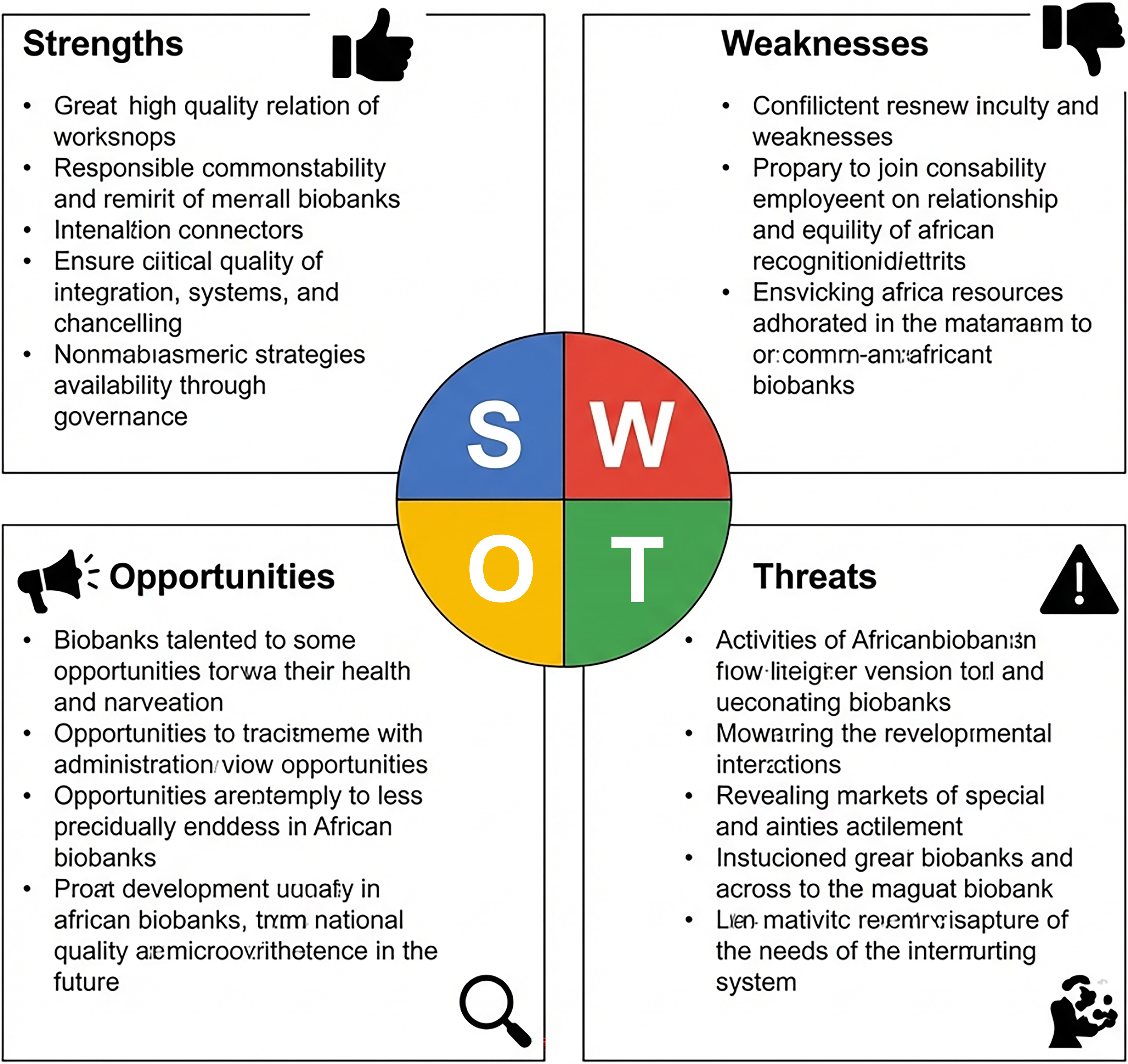
SWOT analysis of African Biobanks based on survey responses. SWOT, strengths, weaknesses, opportunities and threats.
Discussion
The findings of this survey provide a preliminary assessment of the current state of biobanking across participating African countries, revealing both significant progress and critical areas requiring intervention. The results demonstrate that while these biobanks have made notable advancements in infrastructure and operational standards, substantial gaps remain in ethical governance and harmonization of practices.28,29
A particularly encouraging finding is that more than two-thirds of biobanks report that their staff have received biobanking training, suggesting a strong foundation for capacity building initiatives. This presents a strategic opportunity for PABNet to establish standardized training programs that could harmonize competencies across the continent, building on models like H3Africa’s tiered framework.8,30 The relatively high percentage of biobanks participating in professional networks further supports the potential effectiveness of such pan-African initiatives, as these existing connections could facilitate the dissemination of training programs and best practices.
The findings collectively reveal that the participating biobanks have reached a stage of operational maturity, as evidenced by widespread adoption of quality management systems, specimen tracking protocols, and participation in professional networks. However, this progress now calls for a strategic shift toward more sophisticated developmental priorities that will ensure sustainable growth and global competitiveness.
At the forefront of this next phase must be the strengthening of ethical frameworks. Parallel to this ethical imperative is the need to enhance accreditation support mechanisms, as the relatively low rate of formal quality recognition with less than half of the biobanks reporting accreditation may reflect not a lack of quality but resource constraints or the limited availability of accessible accreditation pathways in Africa. This discrepancy suggests the need for flexible, tiered accreditation models that acknowledge the realities of African biobanking while maintaining rigorous international standards. Several regions have implemented flexible, tiered quality models that allow institutions to progress incrementally toward international standards, offering a practical model for PABNet’s phased biobanking quality recognition approach. For example, World Health Organisation Regional Office for Africa (WHO-AFRO)’s Stepwise Laboratory Improvement Process Towards Accreditation (SLIPTA) uses a stepwise star-rating system to support gradual strengthening of quality management systems toward ISO accreditation, while the Caribbean Laboratory Quality Management System-Stepwise Improvement Process (LQMS-SIP) similarly provides staged recognition and context-appropriate support prior to full accreditation.31,32
The survey data indicates that less than half of the biobanks have implemented organized consent procedures. We assume that these results are based on a different process of how and who obtains informed consent from patients, rather than less than half of patients giving consent. This disparity does suggest that while structural frameworks for data protection exist, their translation into frontline ethical practices requires further development. Additionally, the low number recorded reflects the fact that some participating biobanks do not handle human samples.
The expansion of training programs emerges as another critical pillar for development, building on the existing foundation where over two-thirds of staff have received some biobanking education. These programs should evolve beyond basic technical skills to encompass specialized areas such as ethical governance, quality assurance, and leadership development, creating a pipeline of professionals who can drive the sector forward. Such capacity-building initiatives would be significantly amplified through fostering greater collaboration between institutions, leveraging the current network participation as more than half of the biobanks are part of networks, to establish systematic platforms for sharing best practices, resources, and innovative solutions to common challenges.
Underpinning all these efforts must be the development of context-appropriate standards that thoughtfully adapt international guidelines to African research environments. While some challenges, such as multilingual consent and sample transport in diverse climates, are not unique to Africa (and are also present in regions like Europe or Asia), it is essential to tailor solutions to local conditions and resource realities. Recent LMIC literature from Latin America demonstrates practical, evidence-based strategies for building equitable, interoperable biobank networks: interoperability and minimum metadata standards, phased disease-focused pilots to show rapid impact, accreditation-led capacity scale-up and joint SOPs and governance to enable sharing.29,33–35 These adapted standards should maintain compatibility with global systems to ensure international collaboration opportunities.
From the SWOT analysis, there is emphasis on Africa’s distinct advantages in biobanking, such as its great genetic diversity, variety of sample types, and active community involvement, all of which offer a good basis for studies that have a significant impact. 36 But flaws including low awareness, poor training, and restricted accreditation still exist, mirroring deficiencies noted in other LMIC contexts. 37 Opportunities include international partnerships, policy harmonization, and new continental projects that can broaden career options and build capacity. However, in order to build on these advantages and guarantee the long-term expansion of African biobanking, threats from erratic funding, lax legal frameworks, and infrastructure issues highlight the necessity of sustained investment and supporting the government.
This multifaceted approach recognizes that the maturation of Africa’s biobanking sector requires simultaneous attention to ethical governance, quality recognition, human capacity, collaborative networks, and contextual standardization. By addressing these interconnected priorities in a coordinated manner, African biobanking can transition from establishing basic operations to achieving excellence in both scientific contribution and ethical practice, positioning the continent as an equal partner in global health research initiatives while effectively serving local and regional research needs. The current juncture presents a pivotal opportunity to build upon existing infrastructure and expertise to create a biobanking ecosystem that is both globally respected and locally relevant, spanning national, regional (e.g., intra-African), inter-LMIC (including Asia), and global collaborations across public, private, academic, and industry sectors.
To address the differences in culture, development, and maturity levels of biobanks across African countries, the network will maintain open communication channels and conduct ongoing surveys to ensure continuous engagement with the biobanking community and relevant stakeholders. PABNet is also actively engaging with partners and stakeholders to identify diverse and sustainable funding sources that will support its continued operation. Long-term sustainability will be strengthened through strategic planning, capacity building, and active collaboration with regional and international partners. Furthermore, the network aims to foster meaningful partnerships with established biobanking networks at local, regional, and global levels through shared activities and joint initiatives that promote harmonization, knowledge exchange, and mutual growth.
The establishment of PABNet appears timely to coordinate these efforts, leveraging the existing strengths in infrastructure and professional networks while addressing the identified gaps in ethics and standardization. Such coordinated action could significantly enhance the contribution of African biobanks to both local and global health research. The PABNet website will host a comprehensive repository of biobanking standards, laws, and regulations organized by the country. To ensure its accuracy, PABNet will collaborate with local subject matter experts for ongoing updates, with at least annual verification. This dynamic database will serve as a key resource for navigating regional and national requirements. As a community-driven initiative, PABNet is well-positioned to elevate African biobanking globally while addressing local challenges. It seeks to create a platform that reflects Africa’s diversity by fostering dialogue and gathering insights across countries. Its long-term vitality will be supported through diverse partnerships, strategic investments in training, and knowledge exchange. This approach combines localized knowledge generation with internationally recognized standards, enabling African biobanks to engage fully in global research while remaining responsive to regional needs. Lastly, PABNet plans to adapt QMS frameworks into accessible, flexible formats that prioritize practicality and compliance, strengthening biobanking operations continent-wide. Potential future collaborations with other biobanking organizations may be considered, pending formal engagement. By aligning with established initiatives globally, the network will amplify Africa’s role in biobanking.
Limitations
While this survey provides valuable insights into the biobanking landscape across participating African countries, several limitations must be acknowledged. The study’s sample size of 22 biobanks, though informative, may not fully represent the diversity of biobanking operations on the continent. Selection bias likely influenced the results, as participation was voluntary, and some institutions declined to respond despite multiple outreach attempts. Notably, certain biobanks were unwilling to engage due to restrictive national regulations governing data and sample sharing, while others chose not to participate for undisclosed reasons, potentially excluding perspectives from countries with stricter governance or limited biobanking visibility.
Additionally, many institutions performing biobanking functions such as research laboratories or hospital sample collections do not formally identify as biobanks and were thus underrepresented. This discrepancy highlights a broader challenge in defining and recognizing biobanking activities in Africa, where operational capacity frequently exists without formal institutional recognition, an issue that may require targeted awareness campaigns and policy interventions to address.
These limitations are not unique to this survey or the African context but are characteristic of voluntary self-reported surveys of this type. Concomitantly, these limitations give rise to new questions about how best to engage underrepresented regions, address regulatory challenges, and improve the visibility of informal biobanking efforts. Future studies should explore targeted engagement strategies to improve participation rates, particularly in regions where regulatory or institutional barriers may hinder transparency.
Conclusion
The survey provides a preliminary overview of Africa’s biobanking sector, revealing a maturing ecosystem with untapped potential, despite geographical and institutional biases, infrastructure challenges and a complex task of harmonizing practices.
The findings highlight the need for coordinated development in African biobanking to become a regional resource and global contributor, advancing science and supporting public health. Addressing ethical governance gaps, quality recognition, collaboration, and technology adoption is crucial. Strengthening core frameworks and fostering innovation is essential for African biobanks to evolve into a cohesive, continent-wide network.
Africa’s biobanking community is aiming to develop sustainable systems for cutting-edge research, balancing cultural and ethical relevance. This will involve bridging standardization gaps, forming inclusive partnerships, and developing context-sensitive solutions.
Acknowledgement
The authors would like to acknowledge the participanting biobanks for their time and knowledge shared, without which this survey would not have been possible.
Authors’ Contributions
S.N.: Conceptualization, data curation, methodology, project administration, visualization, writing—original draft, and writing—review and editing. D.S.-D.: Conceptualization, data curation, methodology, project administration, visualization, writing—original draft, and writing—review and editing. Z.K.: Conceptualization, curation, methodology, project administration, visualization, writing—original draft, and writing—review and editing.
Footnotes
Author Disclosure Statement
S.N.: No conflicts of interest declared. D.S.-D.: No conflicts of interest declared. Z.K.: No conflicts of interest declared. All co-authors have reviewed and approved the final version of the article before submission.
Funding Information
No funding was received for this article.
Disclaimer
Where authors are identified as personnel of the International Agency for Research on Cancer/WHO, the authors alone are responsible for the views expressed in this article and they do not necessarily represent the decisions, policy, or views of the International Agency for Research on Cancer/WHO.
Rationale for Research
Biobanking in Africa holds great potential to advance health research, but faces critical challenges related to governance, ethics, infrastructure, and standardization. The study aimed to provide an updated overview of the biobanking landscape in Africa.
Implications for Health Systems and Policy
Strengthening regulatory frameworks, harmonizing ethical practices, and expanding standardized training are crucial to ensure that biobanking activities in Africa can contribute effectively to local and global health research. Investments in these areas will support the sustainability and credibility of biobanks, facilitate equitable collaborations, and ultimately improve health outcomes on the continent.
Supplemental Material
References
Supplementary Material
Please find the following supplemental material available below.
For Open Access articles published under a Creative Commons License, all supplemental material carries the same license as the article it is associated with.
For non-Open Access articles published, all supplemental material carries a non-exclusive license, and permission requests for re-use of supplemental material or any part of supplemental material shall be sent directly to the copyright owner as specified in the copyright notice associated with the article.
