



Abstract
Self-disclosure (SD) in interpersonal interaction is essentially a verbal behavior. The present study focused on this behavior and examined how it is related to two other aspects of SD, namely, subjective SD and SD as judged by others (JSD). Participants were interviewed, and their recorded responses were presented to judges who rated their JSD levels. Analysis of speech content and speech fluency of participants’ responses significantly correlated with JSD but not with subjective SD. Regression analysis revealed that linguistic parameters provided good prediction of JSD, whereas self-reported SD measures failed to predict the judges’ ratings. These findings highlight the close relationship between linguistic measures and JSD while suggesting that the subjective SD is poorly correlated with these measures. Future research exploring the gap between subjective and judges SD may highlight situational factors that affect SD and pave the way for better understanding of the dynamics of SD in interpersonal interactions.
The communication of personal thoughts and feelings with another person, termed by Jourard (1971) as self-disclosure (SD), is a beneficial behavior having a positive impact on mental and physical health (Derlega, Winstead, Lewis, & Maddux, 1993). SD has been conceptualized in various ways, but it is commonly regarded as a stable personality trait. Accordingly, most of the studies that investigated SD employed self-report ratings (e.g., Jourard, 1971; Kahn & Hessling, 2001) characterized by subjectively perceived retrospective evaluation of SD. However, to a large extent, the dynamics of interpersonal interaction is modulated by the SD behavior as it is realized in a particular interaction and by the way it is perceived by the other partner. In this article, we propose a novel approach adopting a wider perspective on SD than the stable personality-trait approach. We posit that SD has various facets including the subjective self-perceived SD, the behavioral SD, and SD as judged by others (JSD). Thus, the current study focused on the situation-related aspects of SD, namely, SD behavior as reflected in speech content and speech fluency of speakers and the way they are perceived by independent judges. We further examined how these situationed aspects of SD are related to the self-perceived SD.
Despite its theoretical and applied importance, various definitions of SD have highlighted different aspects of this concept (e.g., Ignatius & Kokkonen, 2007; Omarzu, 2000), making it difficult to construct psychological tools to evaluate it. The early approach to SD assumed that, like other personality traits, it is a relatively stable faculty. Accordingly, the tools developed to evaluate it required participants to rate themselves with regard to their general tendencies (e.g., Jourard, 1971). Such self-report questionnaires are aimed to appraise the generalized and lasting SD tendency rather than its transient nature; hence, by definition, their context sensitivity is low. Moreover, self-report ratings of SD have been shown to differ from verbal behavior of SD (Pedersen & Breglio, 1968), hence they seem to reflect the subjective self-perceived SD. These shortcomings in assessing the transient nature of SD have led to the pursuit of more dynamic evaluation techniques which are more sensitive to situational fluctuation (e.g., Antaki, Barnes, & Leudar, 2005).
Assessment of SD in Interaction
Evaluating SD in interaction constitutes a considerable challenge. The theoretical definitions of SD do not provide an adequate description of SD in actual interpersonal interaction and how the depth, breadth, and width of the disclosure can be measured. The earliest attempt to develop tools for evaluating situated SD within an actual interpersonal interaction was reported by Pedersen and Breglio (1968) who used total word counts as an index of SD breadth and judges’ ratings as an evaluation of SD depth. Critically, however, their findings suggest that the total number of expressed words reflects only one aspect of verbal SD, neglecting other important aspects. Practically, they employed a systematic quantitative analysis of particular word classes used in interpersonal interaction for psychological evaluation. This approach has proved to be an effective diagnostic tool for various psychological purposes (Tausczik & Pennebaker, 2010) including SD (e.g., Joinson, 2001). For example, Tausczik and Pennebaker (2010) counted specific word classes, such as first-person pronouns and emotion words. Evidence from recent years demonstrates that linguistic parameters based on such word counts are sensitive to situated factors that moderate SD (e.g., Barak & Gluck-Ofri, 2007).
However, apart from Pedersen and Breglio’s (1968) study, the relationship between such measures and other measures that reflect the different facets of SD was not thoroughly investigated. They found high correlations between self-report SD measures and two measures of SD in interaction, one based on judges’ ratings of participants’ written responses and the other based on the total word count in these responses. Surprisingly however, most of the self-report SD measures showed insignificant correlations with the judges’ ratings of SD and word counts. These results may suggest that various measures of SD could highlight different and not less informative aspects of SD. Moreover, measures derived from the actual interaction may reveal the situated facets of SD and provide a tool for investigating the dynamics of SD within an actual interpersonal interaction. Critically, despite the important discrepancies identified in Pedersen and Breglio’s (1968) findings, the development of evaluation tools for SD in interaction has been neglected. Most of the more recent studies that used linguistic parameters as indexes of SD have not gone beyond employing the simple “total word count” (e.g., Joinson, 2001). The current study aims to extend the investigation of the relationship between situated aspects of SD as measured by linguistic parameters and JSD and subjective SD as reflected in self-report questionnaires. Exploring the linguistic parameters of SD and their relationship to other facets of SD will pave the way for the development of more advanced tools for evaluating SD behavior in interpersonal interaction.
The Current Study
The present study examined the feasibility of using novel linguistic measures to evaluate verbal SD and analyzed the relationship of these measures with JSD and subjective SD. In particular, we focused on SD in interpersonal interaction and examined to what extent linguistic measures of SD predicted SD as perceived by independent judges and as self-reported. To simulate such interaction, participants were interviewed, and their verbal responses were analyzed. Several linguistic parameters that reflect the what you say and the how you say it were derived from this analysis.
The parameters related to the what you say consist of various speech content measures, including general word count, self-referencing terms, and emotion word counts. Importantly, we further introduced novel measures related to how you say it, including speech rate and silent pauses that combine speech fluency. These measures are expected to reflect the difficulty in speaking and disclosing information regarding intimate issues and topics and serve to characterize SD behavior of individuals who are not highly verbal. Hence, the combination of content and fluency is expected to be informative about the verbal SD behavior in interpersonal interaction in complementary ways. In addition, participants were asked to complete the Jourard self-report SD questionnaire as a measure of their stable subjective SD and rate their experience during the interview as a measure of their situated subjective SD. Critically, since the dynamics of SD within actual interpersonal interaction is modulated by the way it is judged, we presented participants’ verbatim responses to independent judges and asked them to rate the speakers’ level of SD. We examined to what extent JSD can be predicted from the linguistic measures derived from the actual interpersonal interaction and from the subjective measures of SD.
Method
Participants
The study sample included 100 native Hebrew speakers (56 women, 44 men; Mage = 27.58, range 21–34). Participants were students sampled from various departments in a higher education institute in Israel. For their participation in the study, they were granted either course credit or payment.
Sample size was determined based on power analysis. Assuming α = 0.05, power analysis indicated that in order to detect a medium effect size, f 2 (0.20), 97 participants would be needed to provide 85% power with nine predictors, fc(9, 86) = 1.99, λ = 19.40. Data collection was discontinued at 102 participants, allowing 5% redundancy. Two participants who did not complete all the questionnaires were excluded from the sample. Thus, all statistical analyses were carried out with 100 participants.
Procedure
Participants were invited to the laboratory for a study described as an investigation of individual differences carried out by means of a personal interview conducted in Hebrew. When participants arrived at the lab, they were further informed that the study requires a short, recorded interview, following which they will be asked to complete several questionnaires. The session began with an interview designed to elicit free conversation. The interview included three questions, beginning with two questions designed to initiate the conversation and to enable the participants to acquaint themselves with the interviewer, the interview setting, and the recording equipment. The first question was what do you think about the reality shows on television? It was followed by a somewhat more personal question, can you tell me about the place where you grew up—What was it like? Can you describe how it looked? What kind of people lived there? Following these warm-up questions, the interviewer presented the target question, can you tell me about a significant relationship? Choose someone who is a significant figure in your life and tell me about your relationship. The topic of the target question was designed to allow participants to disclose personal information to the degree they choose.
Self-report measures
Traditional SD self-report measures
The Jourard Self-Disclosure Questionnaire (JSDQ; Jourard, 1971) was used to assess SD as a stable trait. This is a self-report questionnaire, covering six areas of self-knowledge: personality, attitudes and opinions, interests, preferences, finance, and work. Subjects were asked to rate how much they shared these areas in their life on a 5-point scale ranging between 1 (I do not share at all) and 5 (I share everything). In the present study, a short version of this questionnaire was used, comprising 40 items and two target individuals: a close person and a stranger. The internal reliability (α) of the short version was .93. Due to a very high correlation between scores on both target individuals (r = .98), we combined them and calculated the stable self-report SD measure by averaging the ratings across all items and both target individuals.
Situated self-report measures
A set of three self-report questions designed to reflect the participants (a) situated SD at the interview: To what extent did you feel you disclosed yourself during the interview? (b) situated comfort: How comfortable did you feel during the interview? and (c) situated emotional involvement: To what extent were you emotionally involved in the interview? Participants rated their feelings on a 1–10 scale (1 = not at all, 10 = very highly). The internal reliability (α) of the three questions was .63.
Linguistic measures
Speech content measures
The recordings of the target question were transcribed, and the following measures were computed: (a) total word count—the total number of words produced by participants in response to the target question, (b) self-referencing terms count—the number of all single first-person pronouns (I, me, my, myself, in me, at my, for me, to me, with me, and on me) and self-person verbs, 1 and (c) emotion word count—the number of all emotion words including verbs, nouns, adjectives, and adverbs (e.g., loved, love, sad, and sadly). 2 A list of emotion words was compiled from several previous studies in Hebrew. A total of 287 words 3 were selected from this list based on a pretest, in which five of the research team members rated the emotion valence of each word on a 7-point scale, ranging from −3 for an extremely negative emotion to 3 for an extremely positive emotion. As zero reflected neutral emotionality, words rated zero were excluded. These variable counts allowed us to capture the quantity of the verbatim response that reflects self-orientation and emotional orientation.
Fluency measures
The verbal recordings were analyzed using the PRAAT software (Boersma & Weenink, 2014), calculating the following speech fluency measures: (a) speech rate—the total word count divided by the duration of the spoken response, excluding the total duration of all pauses of 0.3 s or longer. We excluded these pauses so that the speech rate measure would be independent of the pauses and would be reflective only of the actual speaking time and (b) silent pauses count—the number of silent pauses of 0.3 s or longer. These two measures reflect two complementary aspects of fluency––on the one hand, how fast the speakers talk and, on the other, to what extent do they deliberate in their speech.
Judged SD
The participants’ responses to the target question were transcribed and presented to independent judges who were behavioral sciences students not participating in the study itself. The judges were informed that they would be presented with messages extracted from a conversation between two people and that each message was the response of a different participant to a question regarding a significant relationship. The judges were then asked to evaluate the SD conveyed in the messages. For each target response, the judge was required to assess SD on three scales: (a) To what extent do you feel that the speaker disclosed himself/herself in this message? (b) To what extent do you feel that the speaker expressed emotions in this message? and (c) What extent of intimacy emerges from this message? For each of these questions, judges rated their evaluations on a 1–5 scale (1 = not at all, 5 = very high). The intercorrelations among the three questions ranged between .86 and .92. In all, 60 judges were recruited, with each judge being presented 12–28 different responses, each produced by a different participant, so that each target response was assessed by 10 independent judges.
Results
The Relationship Between Subjective SD, Linguistic Parameters of SD, and JSD
Table 1 presents the intercorrelations for all variables as well as their means and standard deviations. As can be seen, the stable subjective SD (JSDQ) correlated with the situated subjective SD but not with the linguistic parameters nor with the JSD ratings. Moreover, the results show no correlation between situated subjective SD measures and neither the linguistic measures nor the JSD ratings. These findings are consistent with our first hypothesis. By contrast, the linguistic measures correlated significantly with JSD: The speech content measures were all positively correlated with JSD, while the fluency measures showed an interesting pattern; The number of silent pauses positively correlated with JSD, while the speech rate negatively correlated with it such that fast speech was associated with low JSD and slow speech with high JSD. When we looked at the correlation between linguistic measures, we found an interesting result: While all the speech content indices were highly correlated with silent pauses, no significant correlations were found between these measures and speech rate.
Correlations, Means, and Standard Deviations of the Study Variables.
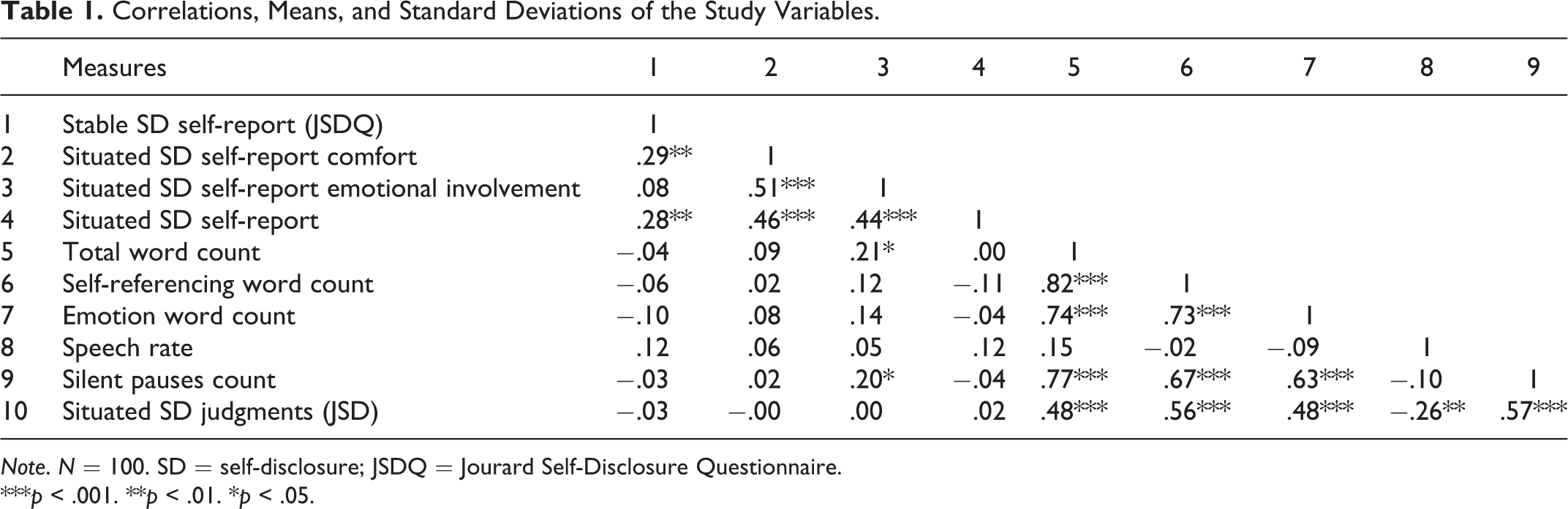
Note. N = 100. SD = self-disclosure; JSDQ = Jourard Self-Disclosure Questionnaire.
***p < .001. **p < .01. *p < .05.
What Facets of SD Best Predict JSD?
To determine whether self-report and linguistic measures can predict JSD, a hierarchical regression analysis (Cohen, Cohen, West, & Aiken, 2003) was applied. To examine the contribution of the subjective SD to the prediction, the stable SD self-report measure (JDSQ scores) was entered into the equation in the first step, and in the following step, the situated SD self-report measures were entered. Next, the main effects for the linguistic measures were entered into the equation, first the effect of the speech content parameters and then the effect of the fluency parameters. This specific order of steps helped us to better interpret the variance explained by each of the linguistic measures separately. In view of the low correlation between the two parameters of speech fluency, namely, number of silent pauses and speech rate, we created two 2-way interactions terms—(a) Content × Speech Rate and (b) Content × Silent Pauses. Hence, in the last step, these two interaction products were entered into the equation.
Overall, the total set of variables explained 56% of the variance for JSD, F(10, 89) = 11.42, p < .000. As can be seen in Table 2, the subjective self-report SD measures did not predict JSD in the first and second steps. Specifically, the stable subjective SD accounted for 0% of the variance and the situated subjective SD (combined of the comfort, emotional involvement, and SD self-report ratings) accounted for 6% of the variance and was not significant. Of these three ratings, the emotional-involvement self-report ratings had a unique specific partial correlation with JSD, partial r (pr.) = .28, t(92) = 2.43, p < .02. In the following step, the main effect of the speech content parameters significantly predicted JSD, F(3, 92) = 14.20, p < .00, and accounted for another 30% of the total variance. First-person word count was highly correlated with JSD, pr. = .48, t(92) = 2.74, p < .03. The fluency parameters, entered in the next step, were also significant in predicting JSD, F(2, 90) = 8.44, p < .00, and added 10% to the total variance, beyond the contribution of the speech content parameters. Both the speech rate and the silent pauses count were significantly correlated with JSD, although in opposite directions, pr. = −.20, t(90) = −2.27, p < .02 and pr. = .33, t(90) = 2.46, p < .01, respectively. In the last step, the interactions entered to the regression accounted for another 11% of the total variance, F(1, 89) = 17.39, p < .00. From the two interactions, only the interaction between speech content and silent pauses reached significance level in predicting JSD beyond all other variables, pr. = −.88, t(89) = 4.51, p < .00.
Summary of Hierarchical Regression Coefficients of Judged SD by Perceived Trait Measures and Situated Self-Report Linguistic Measures.
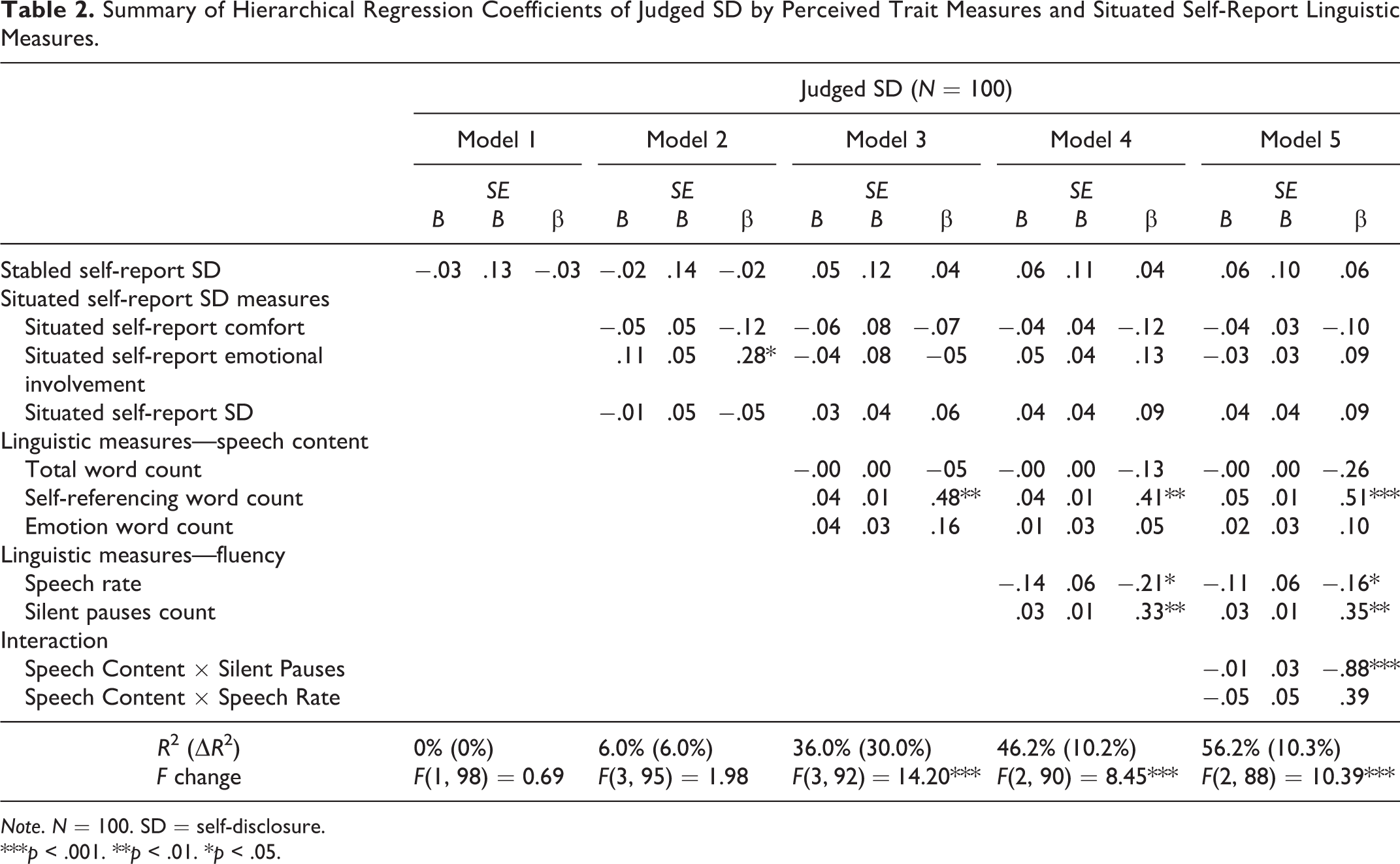
Note. N = 100. SD = self-disclosure.
***p < .001. **p < .01. *p < .05.
To probe the significant interaction between speech content and silent pauses, a simple slopes analysis was conducted. As described by Aiken and West (1991) using the PROCESS macro for SPSS Version 21 (Hayes, 2012), this analysis was conducted for silent pauses parameters at high, average, and low levels of speech content. Figure 1 shows the interactive moderating effects of silent pauses on speech content in the prediction of JSD. Although all three slopes were in the same direction, only two of the slopes were significant, reflecting the differences in the steepness of the slopes. At low levels of speech content (0.5 SD below the mean), a high significant positive relationship was found between silent pauses and JSD, simple slope coefficient β = −.52, t = 5.07, p < .001. Likewise, a significant positive relationship was found between silent pauses and JSD among individuals at the mean level of speech content, β = .29, t = 3.28, p < .01. However, at high levels of speech content (0.5 SD above the mean), no correlation was found between silent pauses and JSD, β = .05, t = .55, not significant. Thus, whereas the number of silent pauses was significantly and positively correlated with JSD ratings for participants with medium and low levels of speech content measures, no correlation was shown for participants with high speech content measures. Notably, the messages characterized by the combination of low speech content measures and a relatively small number of silent pauses were evaluated by judges as the lowest on SD, compared to all other types of messages.
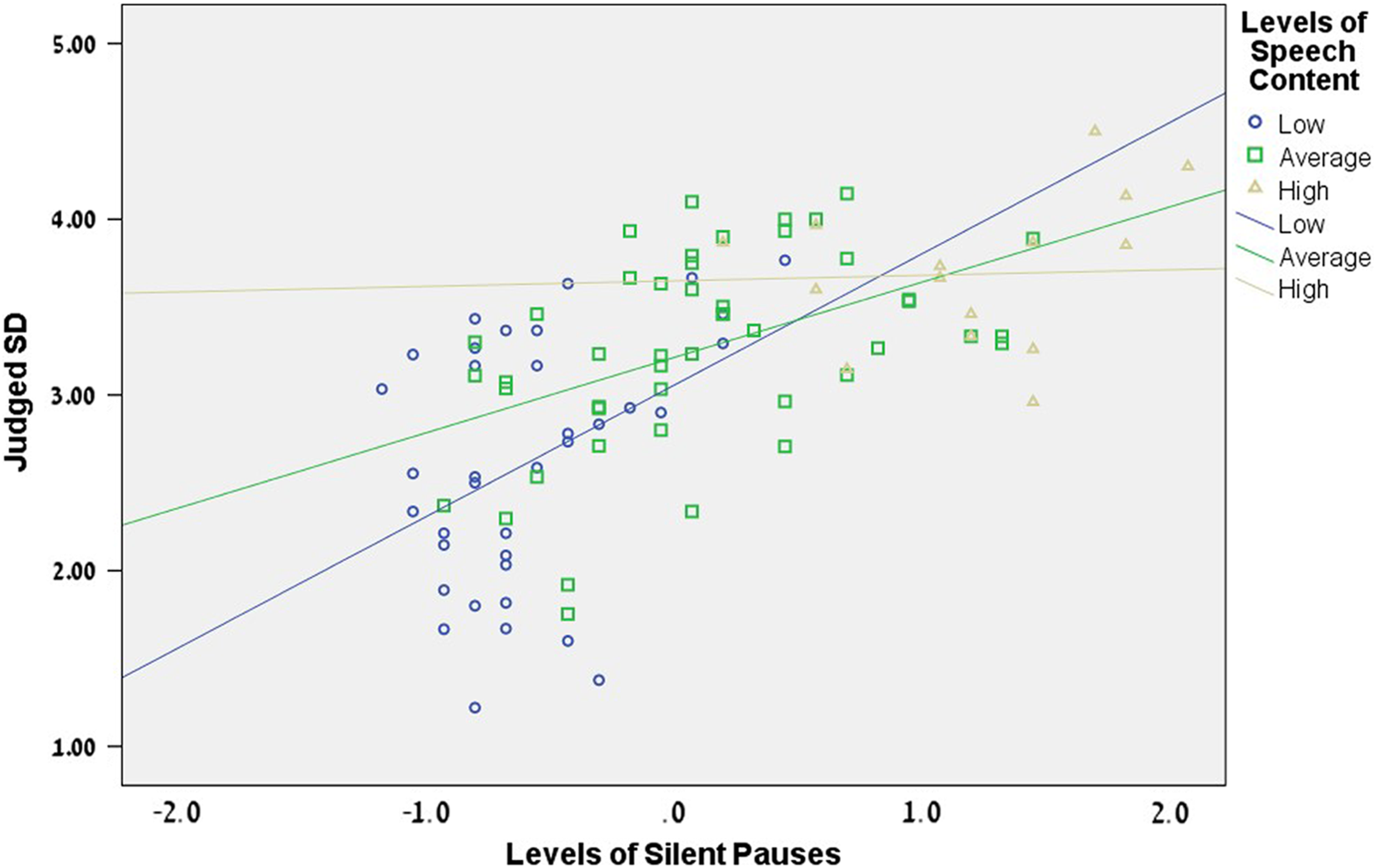
Scatterplot of judged SD as a function of speech content and silent pauses (N = 100).
Discussion
The main aim of the present study was to examine SD in interpersonal interaction and explore the relationship between different facets of SD including the subjective SD, the behavioral–verbal aspects of SD, and the SD as perceived by others. We employed three groups of measures to evaluate these aspects of SD, namely, subjective self-report measures of both stable SD and situated SD, linguistic measures of content and fluency recorded in actual interaction, and SD ratings of independent judges based on transcripts of interviews. The study further examined to what extent these different parameters allow us to predict JSD. In doing so, we focused on the feasibility of using novel linguistic parameters as a tool for evaluating JSD.
We begin our discussion with the relationship of subjective SD with the other facets of SD investigated in the present study, we then move to discuss the central role of linguistic parameters to the prediction of JSD and the implications of these findings for diagnostic and clinical purposes.
Subjective SD
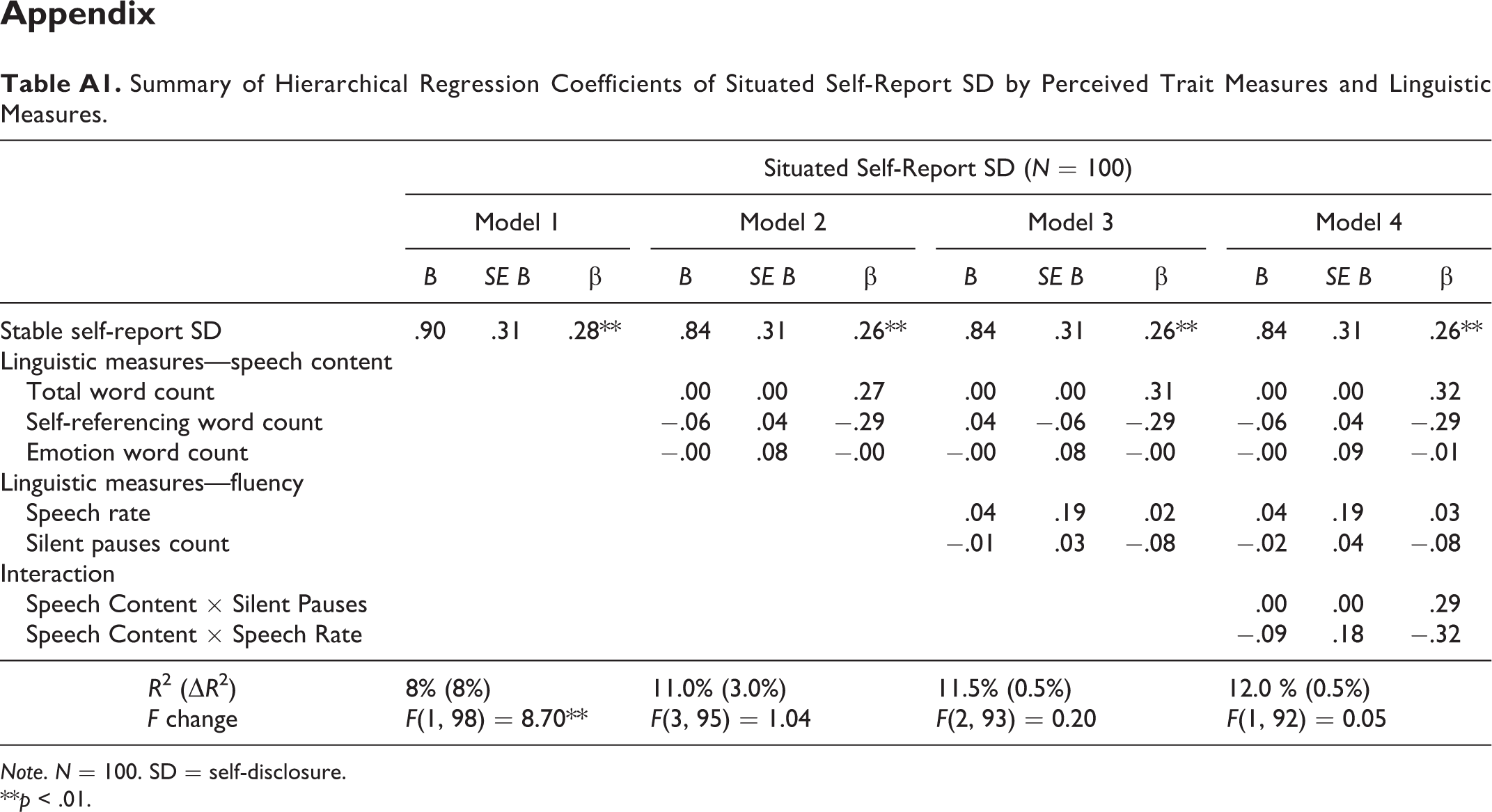
Both the correlational and the regression analyses show that the stable subjective SD measure was not correlated with the nonsubjective situated evaluations of SD, namely, the linguistic parameters and the JSD. These findings are consistent with previous findings (Pedersen & Breglio, 1968), indicating that self-report measures of SD based on subjective and long-term evaluations, such as JDSQ, do not correlate either with SD as reflected in verbal behavior or with SD as perceived by others (JSD). More surprising is the finding that although participants were asked to rate their own SD in the actual interview, these ratings showed no correlations with most of the linguistic parameters or with the JSD ratings (see also Appendix). By contrast, both of the subjective self-report measures are highly correlated with one another, suggesting that even when rating their situated subjective SD participants tend to be consistent with their long-term subjective evaluations, rather than with their actual verbal behavior. This finding is consistent with our approach, suggesting that the subjective SD is one aspect of SD that has very little overlap with SD verbal behavior or with the perceived aspects of SD.
These findings join previous findings from different domains that highlight the discrepancies between self-report measures and behavioral measures. For example, in a study that investigated communication skills, comparing self-report measures, trained observers’ ratings, and behavioral measures, Carrell and Willmington (1998) did not reveal significant correlations between self-report measures of communication apprehension and actual communication competence, as measured behaviorally. Thus, our findings join previous findings, suggesting that subjective self-report measures often reflect different aspects of the evaluated psychological trait that seem to have little overlap with the behavioral evaluation of that trait.
These findings further suggest that the self-report SD methodology, which is commonly employed in studies of personality characteristics and social interaction, only partially reflects the complex nature of SD. Critically, it seems to reflect SD facets which are not sufficiently effective for predicting the perceived SD as reflected in JSD ratings based on interpersonal interaction. This observation is consistent with the fact that Jourard’s questionnaire was designed to measure the stable aspects of SD as a personality trait and hence it is relatively resistant and insensitive to situational fluctuations of SD. This leaves open the question about how SD in actual interaction can be evaluated. As the evaluation of SD in actual interpersonal interaction is highly important for diagnostic and therapeutic purposes, the current study further investigated linguistic measures as a behavioral proxy of SD in actual interaction and examined whether SD as perceived by independent judges corresponds to these measures.
Linguistic Measures
The primary innovation of the present study is the finding that linguistic measures highly correlate with JSD, consequently they provide good prediction of the JSD. Two types of linguistic measures were examined—speech content measures and speech fluency measures. The speech content measures showed a high and significant contribution to the prediction of JSD, which seems to be driven mostly by the frequent use of first-person words. Interestingly, the fluency measures had an additional and unique contribution to the prediction of JSD. Both fluency measures significantly predicted JSD, although the correlations had opposite signs. Higher JSD was correlated with both fluency measures, as reflected both in slower speech rate and in more frequent silent pauses. Finally, the findings show an interaction between the fluency parameter of silent pauses and the speech content measures.
As for individuals with average and low speech content, the contribution of fluency, and specifically, of silent pauses count, seems to be prominent to the prediction of JSD (see Figure 1). In contrast, individuals with high speech content are predicted to have high JSD, independent of their speech fluency. Thus, individuals who say very little (low level of speech content) very fluently (less pauses) were judged as low disclosures, whereas those who say very little with more pauses were judged as high disclosers. This pattern seems consistent with daily experience. For example, imagine a social meeting at the university cafeteria. If a person is asked “how are you,” and she or he isn’t inclined to discuss their feeling, she or he might answer fluently and briefly “I am fine, thank-you very much for asking, and how are you today?” By contrast, if she or he are more willing to disclose their thoughts or feelings she or he might start slowly with “I’m fine,” than pause, than say, “but I didn’t sleep well,” than take their time to consider how much more she or he would like to disclose, and after another pause continue “I’m concerned about the revision of a paper.” This example demonstrates how sometimes more inhibited speech and more silent pauses evoke the feeling that this is genuine disclosure rather than a trivial ready-made response, even when a person doesn’t actually speak more in terms of number of words.
Hence, this pattern suggests that JSD is sensitive to two different aspects of linguistic communication: How much you say? and How do you say it? While previous studies have shown that how much you say predicts JSD, our findings demonstrate that how you say it is not of lesser consequence: Individuals who say less but speak with many silent pauses were rated as high on JSD, equally to those with high level of speech content. In view of the sparse research regarding the psychological aspects of speech acoustics and, in particular, speech fluency, we can only hypothesize concerning the mechanism underlying this interaction. It seems that for people with low verbal content measures, low fluency is perceived to be the result of self-reflection that may lead to deeper SD, whereas high fluency is perceived as relatively trivial, ready-made, responses.
Our study is innovative in several ways. Although Pedersen and Breglio (1968) employed total word counts as a measure of JSD more than 40 years ago and showed the discrepancies between subjective self-report SD and verbal and perceived SD, to the best of our knowledge, no other studies have addressed this challenge. Our study addresses this challenge in two original ways. First, we adopted a novel approach assuming that SD is a complex faculty with multiple facets and that in order to promote the investigation of SD novel methods evaluating the different facets of SD need to be applied that will reveal the commonalities versus discrepancies between these facets. Hence, aiming to develop a better evaluation for the verbal–behavioral aspect of SD, we used in addition to the total word counts, a greater variety of word count measures. Importantly, we further demonstrated the contribution of measuring the acoustic aspects of speech that reflects a different dimension of verbal SD, which was associated with physiological processes controlled by the autonomic nervous system (Rochman, Diamond, & Amir, 2008). The diversity of linguistic measures helps us map how different characteristics of the verbal behavior, such as self-orientation and emotion, relate to JSD. Apart from Pedersen and Breglio’s study (1968) none of the previous studies employing linguistic measures (e.g., Barak & Glouk-Ofri, 2007) actually examined the measures’ contribution to the prediction of JSD in social interaction as rated by independent judges.
The current study carries both theoretical and practical implications. At the theoretical level, our findings highlight the discrepancy between individuals’ self-perception and their actual behavior in social interaction. Exploring this discrepancy may extend the theoretical conceptualization of SD. Moreover, our findings reveal the dynamic nature of SD and pave the way for further investigation of situational factors that affect it. At the practical level, novel measures, such as those proposed in our study, offer new ways to understand the factors related to SD in vivo. Potentially, such means can be computerized and provide real-time evaluation that reflects the dynamics of an ongoing interaction. Being that SD comprises a fundamental element in therapy, linguistic measures of SD as realized in an actual therapeutic session may shed light on the manner in which various therapeutic approaches facilitate SD in a clinical setting.
We end by noting that we welcome future replications of this study. We have reported how we determined our sample size, all data exclusions (if any), and all measures in the study. Hence, we believe the findings are replicable in similar conditions. In particular, similar findings should be expected with native Hebrew speakers living in Israel. Although we believe that the essential pattern may be replicated in similar western cultures, we cannot stipulate to what extent it will be replicable in very different cultures.
Footnotes
Appendix
Summary of Hierarchical Regression Coefficients of Situated Self-Report SD by Perceived Trait Measures and Linguistic Measures.
| Situated Self-Report SD (N = 100) | ||||||||||||
|---|---|---|---|---|---|---|---|---|---|---|---|---|
| Model 1 | Model 2 | Model 3 | Model 4 | |||||||||
| B | SE B | β | B | SE B | β | B | SE B | β | B | SE B | β | |
| Stable self-report SD | .90 | .31 | .28** | .84 | .31 | .26** | .84 | .31 | .26** | .84 | .31 | .26** |
| Linguistic measures—speech content | ||||||||||||
| Total word count | .00 | .00 | .27 | .00 | .00 | .31 | .00 | .00 | .32 | |||
| Self-referencing word count | −.06 | .04 | −.29 | .04 | −.06 | −.29 | −.06 | .04 | −.29 | |||
| Emotion word count | −.00 | .08 | −.00 | −.00 | .08 | −.00 | −.00 | .09 | −.01 | |||
| Linguistic measures—fluency | ||||||||||||
| Speech rate | .04 | .19 | .02 | .04 | .19 | .03 | ||||||
| Silent pauses count | −.01 | .03 | −.08 | −.02 | .04 | −.08 | ||||||
| Interaction | ||||||||||||
| Speech Content × Silent Pauses | .00 | .00 | .29 | |||||||||
| Speech Content × Speech Rate | −.09 | .18 | −.32 | |||||||||
| R2 (ΔR2) | 8% (8%) | 11.0% (3.0%) | 11.5% (0.5%) | 12.0 % (0.5%) | ||||||||
| F change | F(1, 98) = 8.70** | F(3, 95) = 1.04 | F(2, 93) = 0.20 | F(1, 92) = 0.05 | ||||||||
Note. N = 100. SD = self-disclosure.
**p < .01.
Acknowledgments
The authors wish to thank Tamar Nachmani, Denis Riftin, and Noy Nishry for their assistance in collecting data used in this study.
Declaration of Conflicting Interests
The author(s) declared no potential conflicts of interest with respect to the research, authorship, and/or publication of this article.
Funding
The author(s) received no financial support for the research, authorship, and/or publication of this article.
Notes

References
Supplementary Material
Please find the following supplemental material available below.
For Open Access articles published under a Creative Commons License, all supplemental material carries the same license as the article it is associated with.
For non-Open Access articles published, all supplemental material carries a non-exclusive license, and permission requests for re-use of supplemental material or any part of supplemental material shall be sent directly to the copyright owner as specified in the copyright notice associated with the article.
