



Abstract
The present research examined whether women’s daily experience of social identity threat in science, technology, engineering, and math (STEM) settings is triggered by a lack of acceptance during workplace conversations with male colleagues that then predicts daily experiences of burnout. To test these hypotheses, participants from two samples (N = 389) rated their daily interactions with colleagues across 2 weeks. Results revealed that (1) women reported greater daily experiences of social identity threat on days when their work conversations with men cued a lack of acceptance, (2) these daily fluctuations of social identity threat predicted feelings of mental burnout, and (3) these effects were not found among men or for nonwork-relevant conversations. Additional analyses showed that these results were not driven by highly hostile workplace conversations between men and women, nor were they accounted for by individual differences in women’s sensitivity to perceiving gender bias, status differences, or by women being explicitly undermined by colleagues.
A key contributor to psychological well-being is one’s daily experience in the workplace (Caza & Wrzesniewski, 2013). In the past half century, workplaces have become increasingly heterogeneous, and this diversity can have benefits at the individual and organizational level (Apfelbaum, Phillips, & Richeson, 2014). However, employees in diverse workplaces may also suffer from higher levels of negative interpersonal experiences (e.g., Herring, 2009; Jackson, Joshi, & Erhardt, 2003; King, Hebl, & Beal, 2009). Although some of these negative interactions might be overtly hostile, social identity threat theory suggests that cross-group interactions can involve a more subtle social friction stemming from implicit biases that prevent members of marginalized groups from fulfilling their potential. In the present research, we examined whether certain aspects of men’s daily interactions with women in a male-dominated workplace raise concerns about being evaluated on the basis of their gender identity that then predict mental burnout. Given that burnout is a key predictor of attrition (Maslach, Schaufeli, & Leiter, 2001), this work contributes to our broader understanding of the reasons women might disproportionately leave science, technology, engineering, and math (STEM) fields where they are highly underrepresented (Fouad, Chang, Wan, & Singh, 2017).
We examine this question through the lens of social identity threat theory. Social identity threat is broadly defined as the threat that people experience in situations where they feel devalued on the basis of a social identity (Steele, Spencer, & Aronson, 2002). Such threats can undermine intellectual performance and threaten one’s broader sense of belonging (e.g., Steele & Aronson, 1995). Although these effects are presumed to have implications for the educational and career outcomes of underrepresented groups, most research on social identity threat has been conducted in lab settings among student populations (Sackett & Ryan, 2012). In response, there has been a call for a deeper examination of social identity threat’s place in the real world and in organizational settings (Aronson & Dee, 2012; Casad & Bryant, 2016; Kalokerinos, von Hippel, & Zacher, 2014).
The first step in understanding how social identity threat might constrain experiences in the workplace is to pinpoint when it might occur. Professional contexts, unlike academic domains, do not include formal tests of one’s abilities. Rather, in collaborative workplaces, one’s ideas and abilities are critically evaluated during daily interactions. Socially devalued groups in these contexts run the risk of experiencing ambiguity concerning whether they are accepted by majority group members (Steele et al., 2002). Based on this reasoning, we hypothesized that women (but not men) would experience social identity threat when their work conversations with male (but not female) colleagues signal a lack of acceptance and respect, and that this threat would be minimized by cross-sex interactions that cue acceptance and respect.
Our focus is on how relatively subtle signals in their environment make women aware of how they might be perceived on the basis of their gender. Such effects are distinct from overt experiences of workplace harassment, explicit sexism, or conflict (Berdahl & Raver, 2011). In workplace interactions with men, women experience significantly higher instances of these overt experiences such as aggression (Baron & Neuman, 1996), bullying (Rayner & Hoel, 1997), incivility (Andersson & Pearson, 1999), social undermining (Duffy, Ganster, & Pagon, 2002), sexism (Cortina, 2008), and sexual harassment (Berdahl & Raver, 2011). Such harassing behaviors are distinct from social identity threat in that they are motivated by attempts to degrade women’s status in the workplace (Berdahl, 2007) and do not stem from the subtle verbal and nonverbal behaviors that can arise from more implicit gender biases. Yet subtle signals can have profound consequences. In one line of studies, female engineering undergraduates underperformed on an engineering test after interacting with a male partner who held implicit gender biases (Logel et al., 2009). These impairments were predicted by slight changes in men’s nonverbal behavior that signaled a more assertive interaction style and not by overtly negative things men said or did.
We suspect that these tacit interpersonal signals of nonacceptance might be more prevalent if not more predictive of women’s experiences than overtly hostile interactions with male colleagues. Yet women’s general feelings of acceptance in their daily interactions with male colleagues have received relatively little attention. In one study that included nonobtrusive measures of workplace conversations, women reported feeling more disengaged with their careers as academic scientists to the degree that their conversations with male colleagues were often about research; conversely, for men, talking research with male colleagues predicted less disengagement (Holleran, Whitehead, Schmader, & Mehl, 2011). In follow-up research, Hall, Schmader, and Croft (2015) used a daily diary paradigm to examine female engineers’ fluctuating experiences of social identity threat as a function of their daily conversations with male and female coworkers. Results revealed that (1) women (but not men) reported greater daily experiences of social identity threat on days when their conversations with men (but not women) cued a lack of acceptance and respect and (2) these daily fluctuations of social identity threat predicted daily feelings of mental burnout, consistent with a capacity deficit model of stereotype threat (Schmader, Johns, & Forbes, 2008).
The study by Hall et al. (2015) provided initial evidence linking professional women’s fluctuating experience of social identity threat to their daily interactions with men. However, several methodological limitations precluded key theoretical tests. First, because the study included no measure of overt hostility, it is unclear whether the effects captured women’s extreme experiences with harassment or conflict or more subtle signals of nonacceptance consistent with social identity threat theory. Second, because only work-relevant conversations were analyzed, it’s unclear whether the effects are specific to interactions where women feel their abilities could be evaluated or are a more general feature of women’s experiences with men at work. If women in engineering encounter explicit sexism and harassment from male colleagues, we might expect this effect to be equally, if not more, present in their interactions of a social nature. However, based on social identity threat theory, we expected only work-related conversations with men (and not women) to trigger women’s concerns with being negatively stereotyped. Because conversations with female colleagues and about nonwork-relevant topics are both low base rate events, Hall et al. (2015) did not have the statistical power to adequately test whether effects were moderated by conversation topic and partner gender.
Overview of Studies and Analytic Strategy
The present work sought to replicate and extend the results reported by Hall et al. (2015) in two larger samples of women and men working in STEM. Across 2 work weeks, using daily diary surveys, we assessed within-person variation in feelings of acceptance and hostility during workplace conversations and tested models predicting daily social identity threat and psychological burnout. Within each sample and in a mega-analysis combining across samples (including data from Hall et al., 2015), we used multilevel modeling to test several core hypotheses.
Our primary hypothesis derived from social identity threat theory is that women (but not men) will experience greater social identity threat on days when their work conversations with male (but not female) colleagues engender a lack of acceptance. We contrast this primary prediction to two key alternatives: (1) women’s daily fluctuations of social identity threat are instead predicted by having hostile work conversations with men, more so than by conversations that signal a lack of acceptance; and (2) feelings of acceptance during conversations with male colleagues will predict women’s daily social identity threat regardless of the conversation topic.
In line with a working memory deficit model of social identity threat (Schmader et al., 2008), our next key hypothesis was that daily variation in social identity threat will predict greater daily psychological burnout for women (but not for men). Here, too, we also tested the alternative possibility that women’s daily feelings of burnout are instead predicted by having hostile conversations with male colleagues that engender social identity threat, more so than by having conversations that signal a lack of acceptance.
Social identity threat theory assumes that environmental triggers cue a subtle sense of identity devaluation that is distinct from individual differences in one’s sensitivity toward feeling stigmatized or other nonidentity-based stressors. Thus, we also tested alternative hypotheses that the effects above could be driven either by women who are dispositionally sensitive to perceiving bias, women who report high workplace incivility, or the fact that women might be in lower status positions than their male coworkers. Support for any of these hypotheses would undermine a social identity threat interpretation for key effects.
Method
Participants and Procedure
Sampling strategy
Our goal for each sample was to match or exceed the sample size from Hall et al. (2015, N = 96). Recognizing that eligibility and attrition would be an issue, in both samples, we continued recruitment until at least 400 people had completed an initial screening survey. This strategy maximized sample size, while recognizing the constraints placed on data collection of this unique and difficult to recruit sample. Details on recruitment and attrition are available in the Supplemental Online Materials (SOM).
Sample 1 included a final sample of 148 women and 121 men (N = 269, average age = 35.10) working in 28 different engineering companies across Canada. 1 They completed surveys on company time and received a CAD$10 gift card for completing the final survey.
Sample 2 included a final sample of 64 female and 56 male graduate students (N = 120, 59 master’s degree, 61 PhD) in engineering (n = 71), physics (n = 28), computer science (n = 20), or math (n = 1), all disciplines with <25% women. Participants were recruited through e-mail LISTSERV from 23 different universities across North America and received up to $30 (CAD/USD) for completing all surveys.
Measures
Unless otherwise stated, participants in both samples responded to the same self-report items using a 7-point scale (e.g., 1 = strongly disagree, 7 = strongly agree).
Conversational measures
As in the study by Hall et al. (2015), participants made ratings of their three most significant conversations for each of 10 consecutive work days. Feelings of acceptance were captured by five semantic differential items (all rated on 1–7 scales) that were most predictive of social identity threat (Hall et al., 2015): not respected–respected, not accepted–accepted, not authentic–authentic, not friendly–friendly, and anxious–relaxed (αs ranged from .84 to .93). Two additional items assessed feelings of hostility: polite—condescending; argumentative—agreeable (reverse scored; rs ranged from .57 to .79).
Daily social identity threat
Participants completed a 2-item measure of social identity threat (Hall et al., 2015, e.g., “Today at work, I was concerned that, because of my gender, my actions influenced the way other people interacted with me”; rs ranged from .60 to .84).
Daily burnout
Burnout was assessed with 5 items adapted from Demerouti, Bakker, Nachreiner, and Schaufeli (2001, e.g., “Today, I felt emotionally drained during work”) that correlate with social identity threat (Hall et al., 2015; αs ranged from .84 to .91).
Confounding variables
We tested three possible confounding variables: Stigma consciousness and partner status were measured in the same way as in the study by Hall et al. (2015). Workplace incivility was assessed with 4 items from Cortina, Magely, Williams, and Langhout (2001; αsample1 = .82, αsample2 = .75). See SOM for more details.
Demographic variables
Demographic variables included age, gender, ethnicity, marital and parental status as well as indicators of work or educational status/success (see SOM).
Results
Analytic Strategy
All models were estimated using R’s multilevel model lme4 package (Version 1.1.12; Bates et al., 2015) under restricted maximum likelihood. Multilevel models were specified with both day-level (Level 1) and person-level effects (Level 2). Day-level predictor variables were person mean–centered and person-level variables were grand mean centered. In each model, random effects for the intercept and the slope of within-participant relationships were estimated as variance components with standard deviations.
Analyses were run separately for each sample, but because we had access to the Hall et al.’s (2015) data, we mega-analyzed effects on a combined data set (Hox & Leeuw, 2003). In a mega-analysis, the raw data from multiple samples using parallel measures and methods are combined into a single data set and focal models are fit using multilevel models to estimate the overall effect size and how much it varies across studies. Mega-analysis is a recommended analytic strategy to pool multiple small samples to boost power (Schimmack, 2012) and is preferable to an internal meta-analysis when one has access to the raw data and when the number of samples is low (Costafreda, 2009; Steinberg et al., 1997; Sung et al., 2014). A sensitivity analysis suggests that with a combined N for female participants of 264, we should be able to detect effects of at least r = .17 with 80% power and α = .05. Because initial analyses revealed no study-level variation in effects, we did not include study as a factor in the models.
Descriptive Information for Focal Daily Measures
Descriptive statistics for key variables are summarized in Tables 1 and 2. Initial analyses replicated Hall et al.’s (2015) study by generally finding that women reported greater experiences of daily social identity threat than did men but did not report significantly higher burnout (see Table 1). The mega-analyses on conversation variables revealed only a main effect of partner gender for both feelings of acceptance and hostility (see Table 2). There was no main or interactive effect of participant gender. Although the partner effect was not significant in Sample 2 (ps > .17), there was an overall tendency, regardless of participant gender, to report feeling less accepted and more hostility during conversations with male colleagues. Our primary analyses, however, concern how variation in these conversations predict women’s and men’s experiences.
Descriptive Statistics for Social Identity Threat and Psychological Burnout.
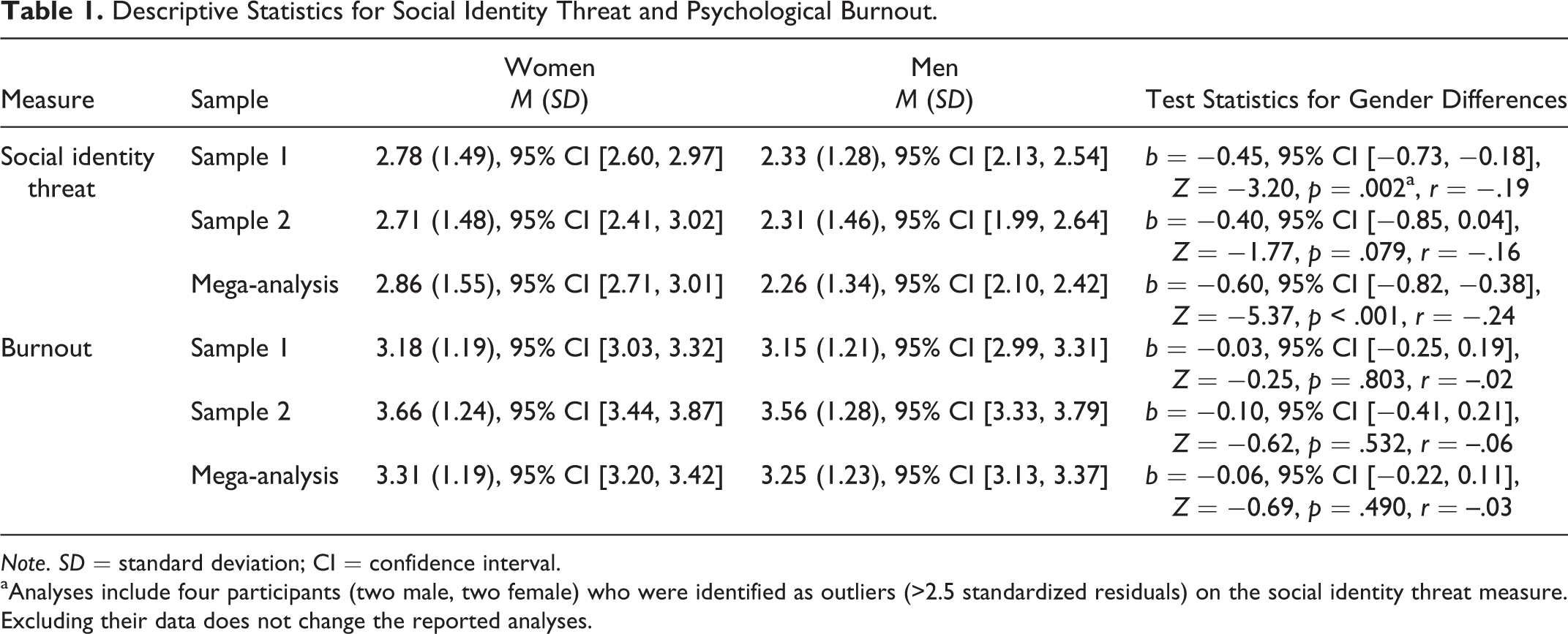
Note. SD = standard deviation; CI = confidence interval.
aAnalyses include four participants (two male, two female) who were identified as outliers (>2.5 standardized residuals) on the social identity threat measure. Excluding their data does not change the reported analyses.
Descriptive Statistics for Conversational Acceptance and Hostility.
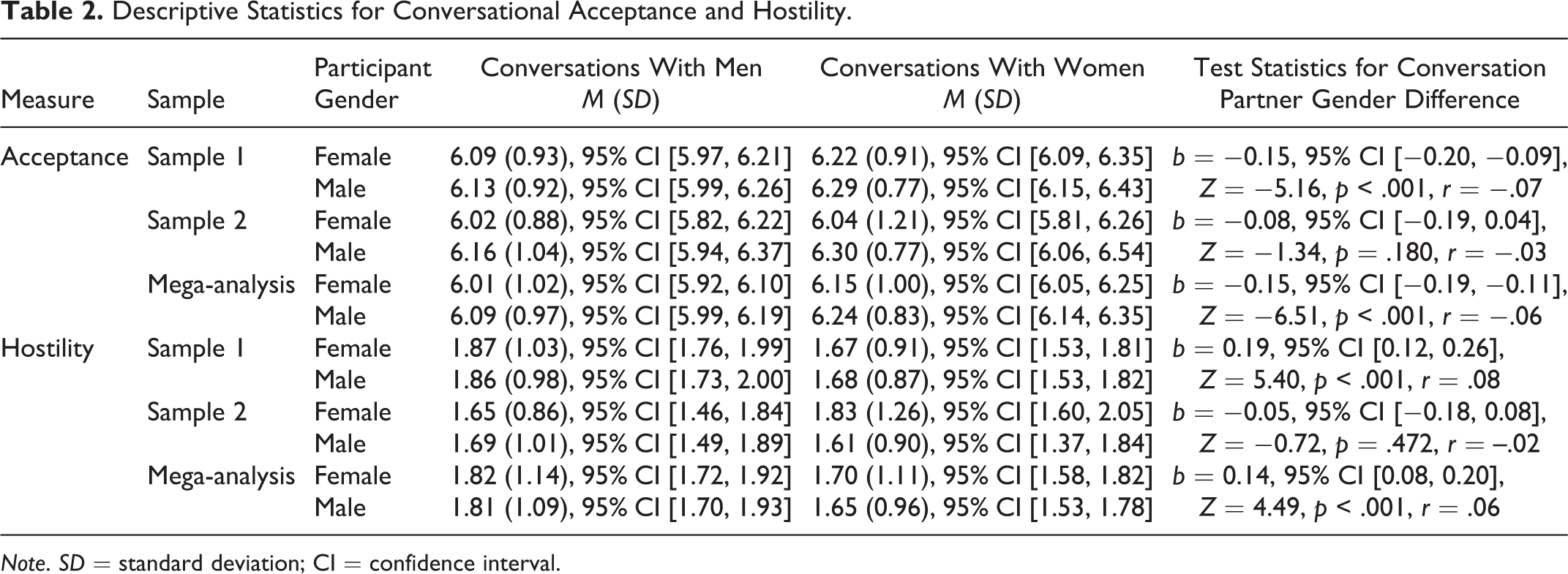
Note. SD = standard deviation; CI = confidence interval.
Do Nonaccepting Work Conversations Predict Women’s Social Identity Threat?
Multilevel models testing the predictive effects of conversational acceptance on daily experiences of social identity threat replicated Hall et al.’s study (2015). In both samples, there was a significant interaction between feeling accepted during work conversations with men and participant gender predicting daily social identity threat (see Table 3).
Results of Multilevel Modeling Analyses Predicting Daily Social Identity Threat From Conversational Acceptance With Male and Female Colleagues During Work Conversations.
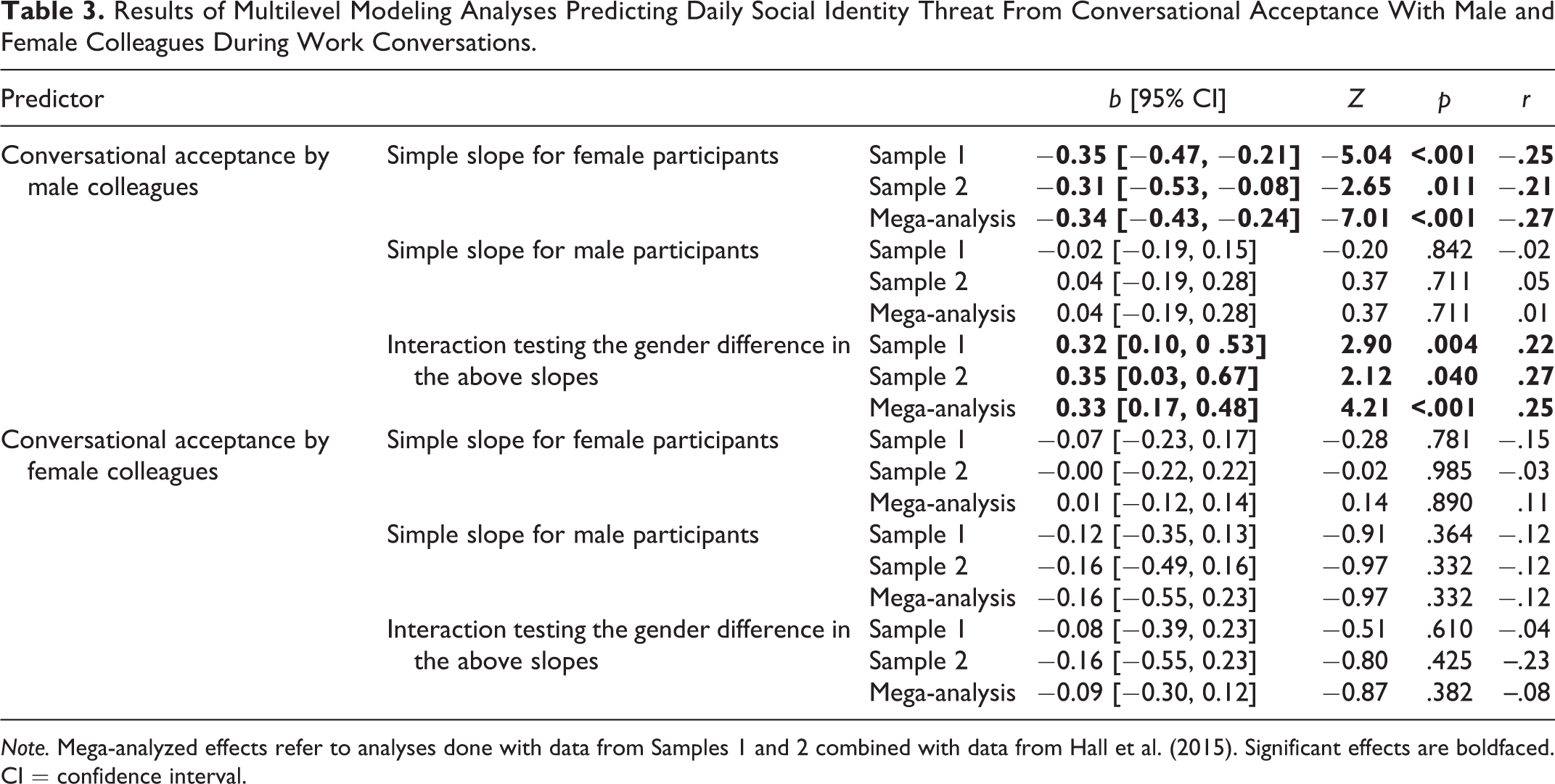
Note. Mega-analyzed effects refer to analyses done with data from Samples 1 and 2 combined with data from Hall et al. (2015). Significant effects are boldfaced. CI = confidence interval.
Among women, feeling accepted during work conversations with male colleagues predicted significantly lower daily social identity threat, but this simple slope was not significant among male participants. In conversations with female colleagues, conversational acceptance during work-related interactions did not predict social identity threat for male or female participants, and there was no significant interaction with participant gender. Figure 1 illustrates the consistency of these effects.

The simple slopes for conversational acceptance predicting daily social identity threat across all three samples and mega-analysis.
The additional statistical power provided by combining data sets allowed us to test more focused theoretically relevant comparisons than was possible in the study by Hall et al. (2015). For example, tests of the simple slopes for gender of conversation partner revealed that women reported greater social identity threat when they felt low levels of acceptance (−1 SD from mean) from male rather than female colleagues (b = 0.31, 95% confidence interval [CI] [0.12, 0.49], Z = 3.23, p = .001, r = .15). Similarly, women’s reports of social identity threat were significantly lower when they felt high levels of acceptance (+1 SD from mean) by male rather than female colleagues (b = −0.30, 95% CI [−0.48, −0.12], Z = −3.35, p < .001, r = −.15). Furthermore, the gender difference in social identity threat mentioned earlier was largest when women’s conversations with male colleagues signaled low levels of acceptance (−1 SD, simple of gender b = −0.88, 95% CI [−1.06, −0.70], Z = −9.57, p < .001, r = −.40). In contrast, when conversations with men were high in acceptance (+1 SD), the gender difference in social identity threat, although still significant, was attenuated (b = −0.28, 95% CI [−0.46, −0.09], Z = −2.97, p = .003, r = −.14).
Are Conversational Effects on Social Identity Threat Due to Hostile Interactions With Men?
A limitation of Hall et al. (2015) was the inability to tease apart explicit experiences of hostility from subtle signals of nonacceptance. We suspected that subtle signals of nonacceptance might be more predictive of women’s experiences than overtly hostile interactions with male colleagues. To test this alternative, we first conducted parallel analyses predicting men’s and women’s social identity threat from daily hostility during interactions with male and female colleagues. Variation in hostility during conversations with male (but not with female) colleagues significantly predicted women’s (but not men’s) daily social identity threat (see Table 4).
Results of Multilevel Modeling Analyses Predicting Daily Social Identity Threat From Hostility During Conversations With Male and Female Colleagues During Work Conversations.
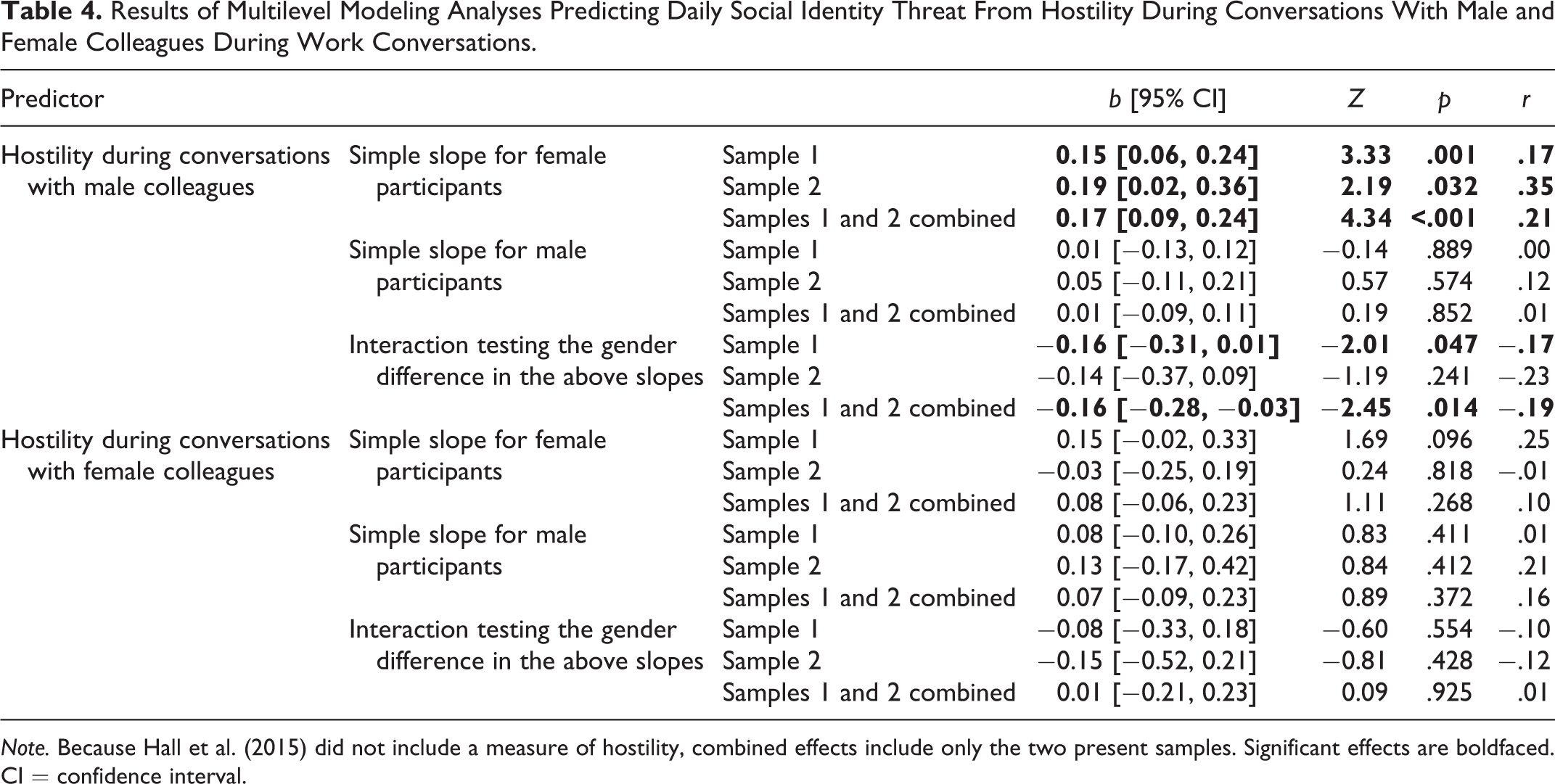
Note. Because Hall et al. (2015) did not include a measure of hostility, combined effects include only the two present samples. Significant effects are boldfaced. CI = confidence interval.
However, it is notable that effect sizes for these significant simple slopes of hostility (b = 0.17) were half those for lacking acceptance (b = −0.34). Furthermore, only 2.78% of conversations were rated as high in hostility (above the scale midpoint). As summarized in SOM, excluding these conversations did not alter any results. Furthermore, leverage analyses provide no indication that the above results are unduly influenced by conversations that were overtly hostile or condescending.
Are the Conversational Effects on Social Identity Threat Specific to Work and Not Social Topics?
Another key limitation of prior research by Hall et al. (2015) was the scarcity of nonwork-related conversations assessed, which precluded analyses by conversation topic. In the combined sample, we have 3,783 days of data; 44% of these included at least one social conversation. A multilevel model tested whether the slope of the relationship between conversational acceptance from male colleagues and women’s social identity threat differed significantly depending on whether the topic of conversation was work or social. Results of this analysis yielded a significant three-way interaction between conversation type (work vs. social), participant gender, and feelings of acceptance from men, b = −0.47, 95% CI [−0.80, −0.14], Z = −2.78, p = .005. The more focused acceptance by topic interaction was significant for women (b = 0.38, 95% CI [0.16, 0.60], Z = 3.34, p < .001) but not for men (b = −0.09, 95% CI [−0.33, 0.15], Z = −0.73, p = .468). Feeling accepted during conversations with male colleagues only predicted women’s social identity threat when the topic of the conversation was work related (b = −0.34, 95% CI [−0.43, −0.24], r = −.27), and not when it was a social topic (b = 0.04, 95% CI [−0.12, 0.20], r = .07).
Does Daily Social Identity Threat Predict Daily Psychological Burnout for Women?
Our next hypothesis was that daily social identity threat would predict daily fluctuations in psychological burnout, more so for women than for men. We tested this hypothesis with a multilevel model in which participant gender, social identity threat, and the interaction between these variables were considered as predictors of daily burnout (see Table 5 and Figure 2). The test of the gender by social identity threat interaction was significant in Sample 1, marginal in Sample 2, but significant when mega-analyzed along with the data from the earlier study (Hall et al., 2015).
Results of Multilevel Modeling Analyses Predicting Psychological Burnout From Social Identity Threat.

Note. Mega-analyzed effects refer to analyses done with data from Samples 1 and 2 combined with data from Hall et al. (2015). Significant effects are boldfaced. CI = confidence interval.

The simple slopes for daily social identity threat predicting daily psychological burnout across all three samples and mega-analysis.
Does Social Identity Threat Mediate the Link Between Conversational Acceptance and Burnout
Mediating effects of acceptance
In our next set of analyses, we tested whether social identity threat statistically mediates the relationship between negative conversations with male colleagues and self-reported workplace burnout for women in STEM. Using multilevel modeling, we tested a moderated mediation model in which all paths were moderated by gender (see Figure 3). This allowed us to estimate the indirect effect separately for men and for women, while also testing the omnibus moderated mediation analysis and extending the study by Hall et al. (2015) who lacked the statistical power to detect moderated mediation. Results are summarized in Table 6.
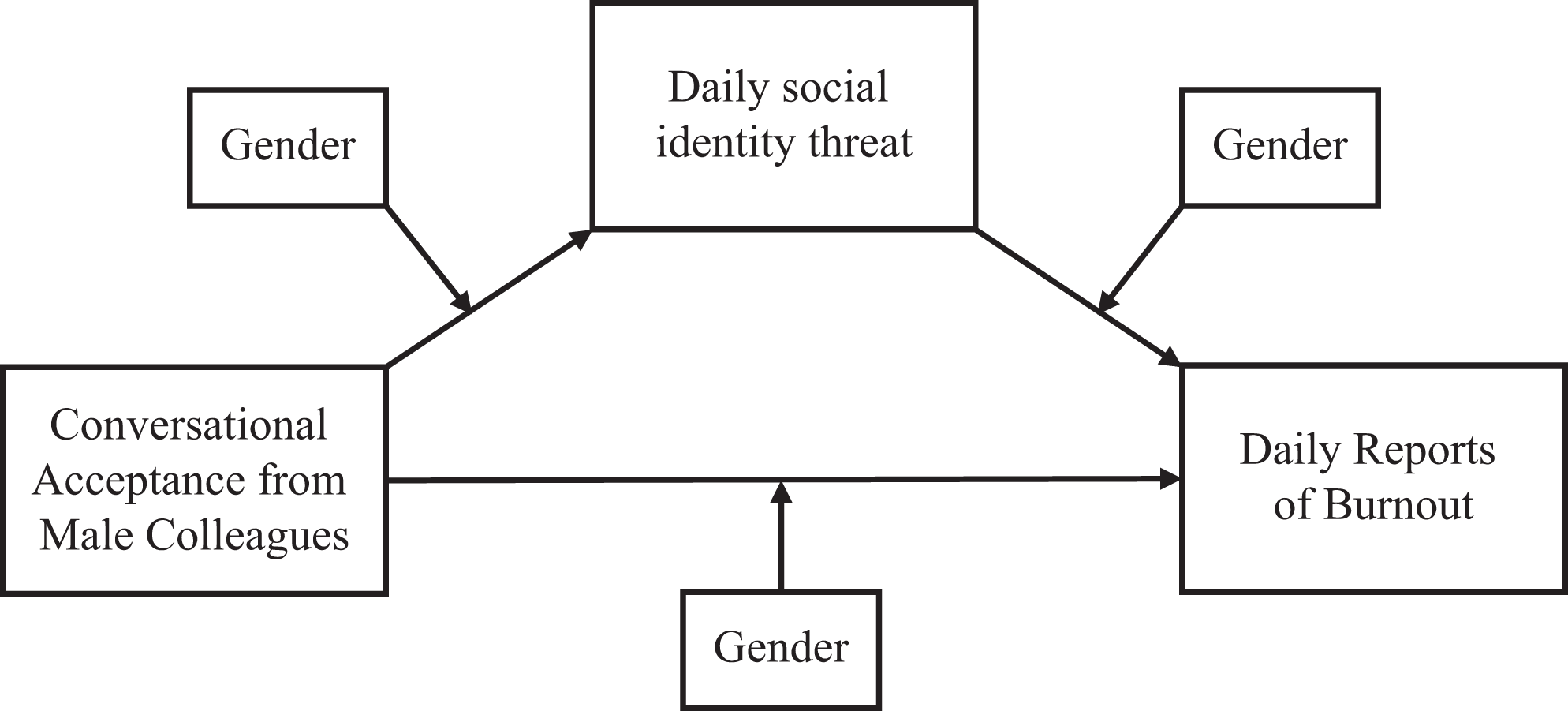
The relationship between conversational acceptance with male colleagues and daily psychological burnout as mediated by daily social identity threat, with all paths moderated by participant gender.
Results of Multilevel Modeling Analyses Testing the Relationship Between Conversational Acceptance With Male Colleagues During Work Conversations and Daily Psychological Burnout as Mediated by Daily Social Identity Threat.

Note. Mega-analyzed effects refer to analyses done with data from Samples 1 and 2 combined with data from Hall et al. (2015). Significant effects are boldfaced. CI = confidence interval.
As expected, the test of the indirect effect among female participants revealed a significant path between conversational acceptance from men and social identity threat (Path a) and a significant path between social identity threat and burnout (Path b) in the two samples and mega-analytically. Although the indirect effect was significant in Sample 1 but not in Sample 2, the mega-analytic test of the indirect effect on the combined sample was significant.
The same model estimated for men yielded nonsignificant paths for a and b, and nonsignificant indirect effects in Samples 1 and 2 and when tested mega-analytically. When the omnibus test of moderated mediation was assessed mega-analytically, there was significant evidence of moderated mediation, ab = −0.04, 95% CI [−0.08, −0.01], Z = −2.24, p = .030 (this moderated mediation was nonsignificant in the smaller sample tested by Hall et al. [2015]). These analyses show that for women, but not for men, social identity threat partially explains the relationship between varying levels of conversational acceptance by men and fluctuations in daily workplace burnout.
Mediating effects of hostility
Using only the combined sample, we next tested the alternative hypothesis that hostility during conversations with men predicts women’s daily burnout via social identity threat. We first note that the direct path between hostility and burnout (b = 0.15, Z = 4.04, p < .001) was again only half the size as the direct path between acceptance and burnout (b = −0.33, Z = 7.01, p < .001). There was a significant indirect effect of hostility on burnout via social identity threat for female participants, ab = 0.03, 95% CI [0.01, 0.05], Z = 2.78, p = .010, but not for male participants, ab = 0.00, 95% CI [−0.01, 0.01], Z = 0.22, p = .820. However, the test of moderated mediation was not significant, ab = 0.02, 95% CI [0.00, 0.05], Z = 1.57, p = .120. Thus, the mega-analytic effects provided only partial support for this alternative hypothesis; conversational hostility from men did relate to women’s daily burnout via social identity threat, but this indirect effect was smaller in size and was not statistically unique to women.
Are Key Effects Explained or Moderated by Stigma Consciousness, Workplace Incivility, or Status Confounds?
Given the correlational nature of this study, in a final set of analyses, we wished to examine the degree to which the above effects might be explained by other confounding factors. Using the mega-analytic data set, analyses were rerun controlling for each of three variables (see SOM for detailed results). Results of key analyses predicting women’s social identity threat and burnout from nonacceptance by male colleagues were unaffected when controlling for person-level variation in stigma consciousness, reported workplace incivility, 2 or relative status of one’s conversation partner. In additional analyses, there was also no evidence that any of these variables moderated key effects. These results suggest that the above patterns are likely not driven by women who are especially susceptible to seeing themselves as stigmatized or who report high incivility in their workplace, nor can they be better explained by possible status difference between conversation partners that might be confounded with gender. Rather, aspects of the conversational dynamics themselves, and not women’s interpretations of them, are more likely to be driving these effects.
General Discussion
This research demonstrates that social identity threat is experienced among professional engineers and graduate students in STEM as predicted by the nature of their workplace interactions. Results revealed that women experience greater social identity threat on days when their conversations with male (but not female) colleagues cue a lack of acceptance. There was no evidence that these results were explained by having extremely hostile conversations with male colleagues but are instead linked to more subtle feelings of a lack of acceptance and respect. This finding is consistent with past theorizing suggesting that identity threat is often the product of ambiguity concerning treatment from a majority group member (Major & Crocker, 1993; Steele et al., 2002). These patterns of identity threat were specific to work-related conversations and were not experienced during social conversations, congruent with the notion that women might be most susceptible to these experiences in situations where a negative stereotype could be applied or confirmed (Holleran et al., 2011). Finally, for women, but not men, daily fluctuations in social identity threat significantly predicted day-to-day variability in feelings of psychological burnout. This finding is consistent with other experimental evidence that cues to social identity threat can be cognitively and emotionally draining (Inzlicht, Tullett, Legault, & Kang, 2011; Schmader et al., 2008). Thus, the present findings extend prior laboratory evidence by showing convergent support through women’s self-reported experiences in a workplace setting.
Limitations and Future Directions
There are several limitations to the conclusions that can be drawn from these data. First, although the daily diary method provides insight into women’s workplace experiences, the data are correlational and relies on self-report. Findings are consistent with a social identity threat framework, where negative cross-group conversations elicit identity threat. However, it is also possible that on days when women are more conscious of their gender, they perceive their conversations with male colleagues to be more negative. In the current studies, we are unable to determine whether effects are driven by men’s behavior during conversations, women’s fluctuating interpretations of these conversations, or some dynamic combination of both. In future studies, event sampling methods could be used to identify experiences of identity threat immediately after an interaction. Not only would this method reduce memory biases, but it could also yield greater detail about the conversations themselves. Additionally, it will be important to complement this field research with lab studies that can explore microlevel features of these interactions and experimentally manipulate the nature of cross-group conversations to causally identify downstream effects on women’s feelings of social identity threat and burnout.
Second, the reliance in these samples on assessing social identity threat with self-report raises the possibility that we are only tapping into identity threatening events that are consciously recognized. Women might be unwilling or unable to report other types of subtle identity threatening but psychologically impactful experiences (Johns, Inzlicht, & Schmader, 2008). For example, research on stereotype threat has specifically focused on how situational reminders of a stereotyped identity can impair performance. Future research with work-related measures of performance and productivity will provide a better indication of the downstream consequences for women’s success in these fields.
Finally, our findings suggest that academic success or entry into a profession does not inoculate women in STEM workplaces and graduate school against social identity threat. However, it is an open question as to whether women in other male-dominated professions, or even those earlier in the pipeline of their STEM careers, would similarly experience identity threat during conversations with men. Future work should examine the degree to which these findings generalize to the experiences of other marginalized groups when interacting with members of more advantaged groups in stereotype-relevant domains.
Conceptual and Practical Implications
This research builds on other empirical work, considering identity threat as an important factor in marginalized individuals’ experiences in the workplace (Hall et al., 2015; Purdie-Vaughns, Steele, Davies, Ditlmann, & Crosby, 2008; von Hippel, Sekaquaptewa, & McFarlane, 2015). Beyond the scope of the present findings, these types of experiences could potentially have important broader consequences. Specifically, the aversive nature of identity threat in STEM workplaces could lead some women to avoid situations or behaviors that could potentially confirm a negative stereotype about their group (e.g., Davies, Spencer, Quinn, & Gerhardstein, 2002). As suggested by an anonymous reviewer, such experiences could result in women diverting their attention at work away from technical or leadership roles (where identity threat is more salient) and toward more service, teaching, or administrative roles (where identity threat is less likely to be experienced). In extreme cases, identity threat might lead women to leave their organization or drop out the field entirely.
The present work provides a deeper understanding of how identity threat is experienced during interpersonal interactions. Extending prior work by Hall et al. (2015), we were able to show that, for female engineers, identity threat is not contingent upon experiences with harassment or conflict but is instead predicted by more subtle signals of nonacceptance. A positive frame on these results is that men might play a unique role in shoring up feelings of acceptance and eliminating women’s experience of social identity threat. Indeed, when acceptance from men was high in these samples, women expressed very low levels of concern with being evaluated based on their gender.
Social identity threat offers one reason why women leave STEM settings at a higher rate than do men (Fouad et al., 2017). By highlighting the protective nature of supportive contact with men, the present findings might inform workplace policies and practices designed to foster inclusive interpersonal interactions that create identity safe environments for women in STEM. Future research is needed to test the efficacy of interventions that promote more positive interpersonal norms in the workplace (Green & Kalev, 2007) as a means to combat workplace burnout (Maslach et al., 2001). This is especially important, given that increasingly diverse workplaces can be beneficial to organizations (Apfelbaum et al., 2014) but can also lead to increased interpersonal conflict (Eagly, 2016; King et al., 2009). Drawing from research on intergroup contact theory (Allport, 1954; Pettigrew & Tropp, 2006), workplaces might consider implementing peer networking programs designed to encourage feelings of acceptance and trust between male and female colleagues. By creating a culture of inclusivity, we can recover human potential that would otherwise be lost under the weight of identity threat.
Supplemental Material
Supplemental Material, SPPS772582_suppl_mat - Decoding the Dynamics of Social Identity Threat in the Workplace: A Within-Person Analysis of Women’s and Men’s Interactions in STEM
Supplemental Material, SPPS772582_suppl_mat for Decoding the Dynamics of Social Identity Threat in the Workplace: A Within-Person Analysis of Women’s and Men’s Interactions in STEM by William Hall, Toni Schmader, Audrey Aday and Elizabeth Croft in Social Psychological and Personality Science
Footnotes
Authors’ Note
This research was conducted as part of the first author’s dissertation.
Acknowledgments
The authors thank Sara Ahmadian, Yegee Chun, Sarah Harrington, Angela Mann, Jennifer Pelletier, Trish Smith, Nicole Wilson, and participating companies and organizations who assisted with recruitment and data collection. They also thank Jeremy Biesanz who provided help and advice with statistical analyses.
Declaration of Conflicting Interests
The author(s) declared no potential conflicts of interest with respect to the research, authorship, and/or publication of this article.
Funding
The author(s) disclosed receipt of the following financial support for the research, authorship, and/or publication of this article: The research reported in this article was supported in part by a Social Sciences and Humanities Research Council Grant awarded to William Hall, a Social Sciences and Humanities Research Council Insight Grant (#435-2013-1587) awarded to Toni Schmader, a Social Sciences and Humanities Research Council Partnership Grant (#895-2017-1025) awarded to Toni Schmader, and a Social Sciences and Humanities Research Council Partnership Development Grant (#890-2012-0037) awarded to Elizabeth Croft.

Supplemental Material
The supplemental material is available in the online version of the article.
Notes
References
Supplementary Material
Please find the following supplemental material available below.
For Open Access articles published under a Creative Commons License, all supplemental material carries the same license as the article it is associated with.
For non-Open Access articles published, all supplemental material carries a non-exclusive license, and permission requests for re-use of supplemental material or any part of supplemental material shall be sent directly to the copyright owner as specified in the copyright notice associated with the article.
