




Abstract
When people imagine welfare recipients, research indicates that they often imagine lazy, Black Americans who are perpetually dependent on government assistance. In the present work, we investigate the last assumption—perpetual dependence. We hypothesize that providing information about recipients’ ability to obtain financial independence may reduce racial biases in support for welfare policies. In Study 1, when given no information about recipients’ ability to obtain independence, White participants reported less support for the program and a greater desire to monitor recipient spending, when the majority of recipients were Black (vs. White). However, learning that most recipients gained independence (i.e., they obtained jobs and exited the program) eliminated or reversed these racial biases—an effect associated with reduced negative work ethic stereotypes of welfare recipients (Study 2). We conclude that perceived independence of welfare recipients may shift work ethic stereotypes and increase support for welfare policies, regardless of recipient race.
Historically, high levels of income inequality in the United States have had both overt and subtle negative consequences for residents (Piketty & Saez, 2014). For example, controlling for median income, greater inequality in the United States is associated with greater political polarization (Enten, 2016; McElwee, 2016), reduced happiness and interpersonal trust (Oishi, Kesebir, & Diener, 2011; Uslaner & Brown, 2005), and greater mortality and illness from a wide range of diseases (Pickett & Wilkinson, 2015; Wilkinson & Pickett, 2006). Wealth redistribution policies represent one method that could decrease income inequality (Bar-Yam, Langlois-Meurinne, Kawakatsu, & Garcia, 2017; Chetty et al., 2017). And, although the majority of Americans would prefer a more equitable distribution of wealth (Norton & Ariely, 2011), wealth redistribution policies remain controversial (Bartels, 2005).
Wealth redistribution programs, such as cash assistance programs to needy families (commonly called “welfare programs”), are intended to be a safety net for the poor, regardless of the recipient’s race. These programs, however, have a long history of racial discrimination. Initially, White American politicians often worked to restrict Black Americans’ access to federal cash assistance programs (Fox, 2012; Katznelson, 2005; Lieberman, 2001; Quadagno, 1996). And, after this practice of discriminatory preference for poor White Americans was ended, politicians fostered negative attitudes toward wealth redistribution programs in the minds of the citizens by claiming that the majority of recipients were lazy, Black Americans who were looking for a handout, not a hand up (Gilens, 1995). After years of politicians and the media associating Black Americans with cash assistance programs, citizens’ mental images of cash assistance recipients have become racially biased (e.g., Brown-Iannuzzi, Dotsch, Cooley, & Payne, 2017; Gilens, 1995; Lei & Bodenhausen, 2017).
Importantly, the “typical” welfare recipient highlights several assumptions: assumptions of race, work ethic, and independence (or lack thereof). In the present work, we investigate the last assumption—perpetual dependence on government assistance. Personal independence is part of the cultural and moral fabric of the United States (G. B. Markus, 2001; H. R. Markus & Kitayama, 1991). As a result, assumptions about perpetual government dependence and racial bias may lead people to dislike not only welfare recipients but also welfare policies. In an attempt to decouple racial bias from assumptions about perpetual government dependence, we investigated whether learning that a cash assistance program led to future independence would increase White participants’ support for governmental cash assistance programs. Given unprecedented levels of income inequality in America, and the myriad negative effects that inequality has on the experiences of both those at the bottom and top of the hierarchy (DeCelles & Norton, 2016; Greenberg, 1990), understanding factors that influence support for policies aimed at reducing inequality are particularly important.
Background
Although attitudes toward cash assistance programs are driven by many factors, the narrative surrounding cash assistance recipients commonly highlights two themes: the perceived race of the recipient and independence (or lack thereof) of the recipient. For example, in his 1976 presidential campaign, Ronald Regan vividly described a Black American woman who funded her luxurious lifestyle through defrauding government assistance programs. Importantly, this speech highlighted both the race of the recipient and the desire of the recipient to remain on government assistance indefinitely. Further, this speech merged these two themes into a term—“welfare queen” (Levin, 2013). Political campaigns and the media added to the popularity of this label by using it to describe Black Americans who would prefer to receive a government check instead of work for income. Decades later, these stereotypes still linger in the language of politicians (e.g., Rep. Robert Pittenger, Washington Post, September 22, 2016), media depictions (e.g., Dixon, 2016), and, perhaps, in the minds of citizens.
Research across several academic disciplines indicates that opposition toward welfare policies may still have roots in racial prejudice (e.g., Fox, 2012; Gilens, 1995; Harell, Soroka, & Iyengar, 2016). For example, one of the strongest predictors of opposition toward welfare is negative attitudes toward Black Americans (Gilens, 1995). Further, when participants were asked to create mental images of a welfare and nonwelfare recipient using a perceptual task, the image generated of a welfare recipient was rated as more typical of Black Americans and more representative of negative stereotypes associated with Black Americans (e.g., lazy, incompetent) by a separate sample of participants (Brown-Iannuzzi et al., 2017). Moreover, the perception that the welfare image was more representative of Black Americans than the nonwelfare image predicted lower perceived deservingness and support for providing welfare benefits to individuals in need. These findings suggest that racialized perceptions of welfare recipients can lead to the perception that cash assistance programs serve undeserving, Black Americans.
In addition, research suggests that opposition toward welfare may have roots in beliefs about independence. American culture places a high value on independence and has strong norms regarding independence (G. B. Markus, 2001; H. R. Markus & Kitayama, 1991). These beliefs may conflict with welfare benefits on principle (e.g., Hasenfeld & Rafferty, 1989; Williamson, 1974). For example, people who believe that individuals should be self-sufficient tend to have more negative attitudes toward welfare policies (Gilens, 1995). Further, those who believe the system is fair and that hard work is rewarded tend to believe poverty is caused by personality traits (as opposed to situational circumstances; Rodriguez-Bailon et al., 2017). In turn, these individuals are less supportive of redistributive policies. Together, these findings suggest that the belief Americans should be independent of the government may also lead to negative attitudes toward welfare policies.
Given that the perceived race and independence of welfare recipients are related to attitudes toward welfare policies, we investigated whether manipulating the perceived independence of the recipient can overcome racial biases associated with attitudes toward welfare. Specifically, if White Americans learn that cash assistance helps recipients obtain jobs and exit cash assistance programs, then, will they be supportive of this program and have a reduced desire to monitor recipients’ spending regardless of the race of recipients? Additionally, we examined whether work ethic stereotypes mediated the relationship between support for cash assistance programs and the desire to monitor recipients’ spending. If so, describing successful recipients of welfare may minimize racial biases in overt support for wealth redistribution, shift stereotypes that welfare recipients are lazy and unmotivated, and, thus, reduce the desire to monitor recipients’ spending, a subtle bureaucratic bias.
Overview of Present Research
In Study 1, participants were randomly assigned to learn a cash assistance program was either highly effective at helping recipients gain financial independence (by obtaining full-time jobs) or they received no information (leaving them to rely on their stereotypes). In addition, participants were randomly assigned to learn the majority of the recipients were Black or White.
In the no information condition, we hypothesized participants may be less supportive of the cash assistance program and more supportive of monitoring recipients’ spending when the majority of recipients were Black (vs. White). However, when given independence information, we predicted these racial biases in program support would diminish. In Study 2, we investigated whether the influence of independence information on overt support for the cash assistance program translated to reductions in subtle bias (i.e., the desire to monitor recipients’ spending) through shifting stereotypes about the work ethic of welfare recipients. Both studies were preregistered (Study 1: http://aspredicted.org/blind.php?x=9u9ee2; Study 2: http://aspredicted.org/blind.php?x=ca8rm2), and we report all measures, conditions, and participant exclusions below.
Study 1
Participants reported their attitudes toward a purportedly real cash assistance program (Supporting Persons in Need [SPIN]). We manipulated both the perceived race of the majority of recipients (Black vs. White) and recipients’ modal outcomes (no information control vs. learning most obtained financial independence after a year). We expected to see racial biases in support for SPIN when no information was provided about outcomes; however, we expected these racial biases would diminish when recipients were described as obtaining independence.
Method
Participants
An a priori power analysis revealed we would need 250 participants to ensure adequate power (1 – β ≥ .80) to detect a small-to-medium effect (f = .18; G*Power; Faul, Erdfelder, Lang, & Buchner, 2007). To account for attrition and the fact that our hypotheses were specific to Monoracial White Americans, we recruited 500 workers on Amazon Mechanical Turk (MTurk). Our final sample was 380 Monoracial White American MTurk workers (167 men, 212 women, and 1 other) who were on average, 36 years old (SD = 11.27).
Procedure
First, participants learned about a cash assistance program called “Support Persons in Need (SPIN).” Participants were randomly assigned to learn that the majority of SPIN recipients were Black families or White families (see Figure 1). In addition, we manipulated information regarding the outcomes of recipients. Some participants did not receive any information about recipients’ outcomes (no information control), whereas others learned that the majority of recipients tend to obtain full-time, well-paying jobs within a year of assistance and, thus, exit the program (independence condition).
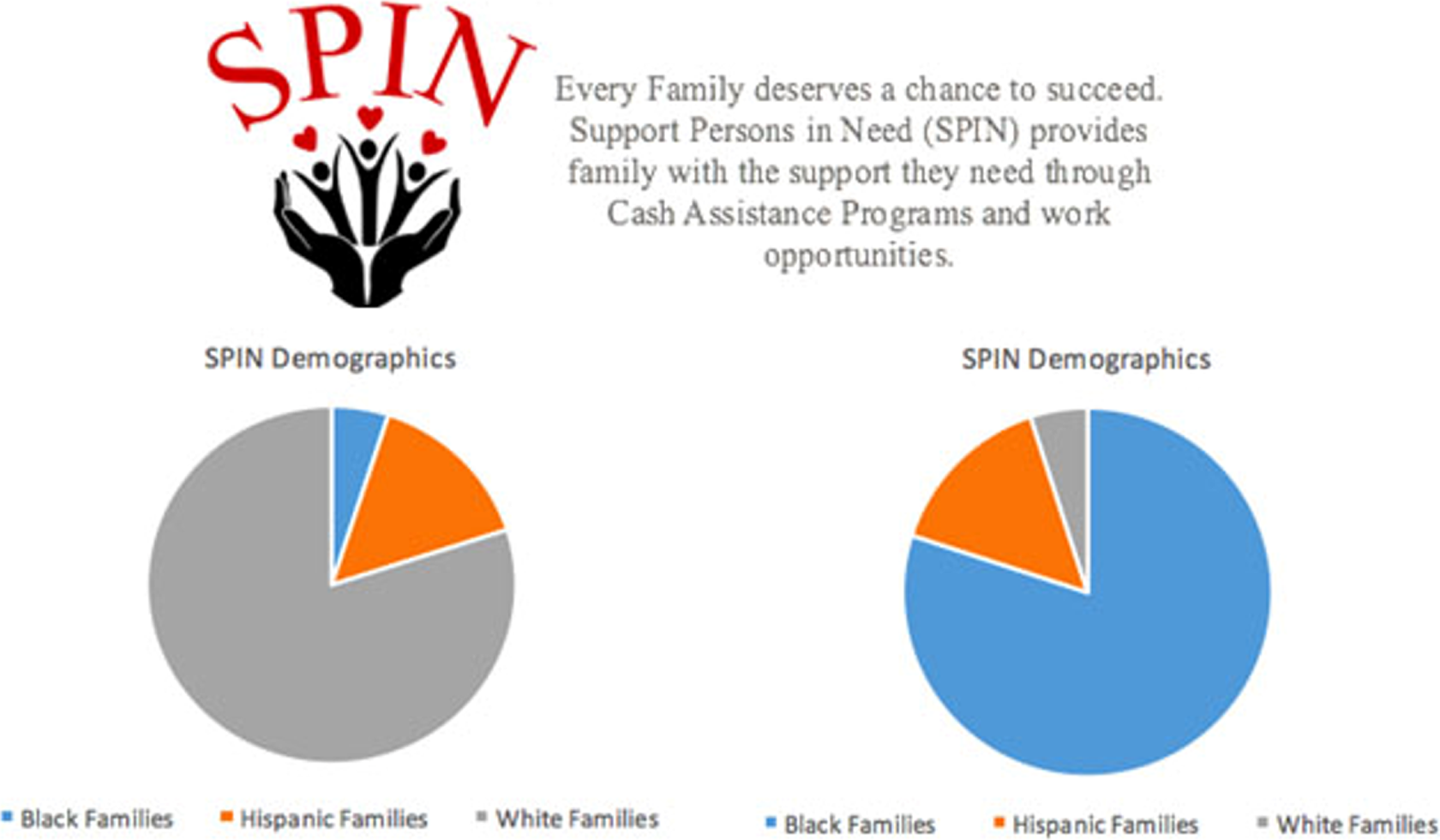
Study 1 demographic information of SPIN recipients in the majority White American recipients condition (left graph) and majority Black American recipients condition (right graph).
Next, participants reported their perceptions that SPIN recipients are “successful” (i.e., “Based on the information you have, to what degree do you think SPIN recipients are successful?”). 1 Participants also reported overt support for cash assistance programs (i.e., “I support programs such as SPIN”). Next, to assess subtle bureaucratic bias, participants reported their desire to monitor recipients’ spending (i.e., “I believe SPIN should closely monitor and regulate recipients’ spending”). Participants also reported whether they perceived SPIN as designed to primarily benefit minorities, but as these analyses are tangential to the main analyses, they are reported in the Supplemental Materials. All responses were made on 0 (strongly disagree) to 100 (strongly agree) scales.
Finally, subjects provided demographic information and completed measures of motivations to respond without prejudice (Plant & Devine, 1998), feeling thermometers toward a variety of racial groups, and social dominance orientation (Ho et al., 2015). These scales did not moderate our findings (see Supplementary Materials).
Results
We predicted that the race of the majority of SPIN recipients and information about recipients’ independence would influence: (1) perceived success of SPIN recipients, (2) support for welfare programs (i.e., overt attitudes), and (3) the desire to monitor recipient spending (i.e., subtle attitudes). To investigate these questions while accounting for the correlation between the dependent variables, we conducted a 2 (recipients’ demographics: majority Black vs. majority White) × 2 (recipients’ independence: no information vs. independence) multivariate analysis of variance. 2
Perceived Success of SPIN Recipients
First, we examined perceived success of SPIN recipients. Results revealed a main effect of recipients' demographics such that participants thought recipients were significantly less successful when the majority of recipients were Black (M = 66.47, SD = 22.20; 95% confidence interval [CI] = [63.93, 69.02]) versus White (M = 71.16, SD = 19.04; 95% CI [68.64, 73.69]), F(1, 376) = 6.61, p = .011,
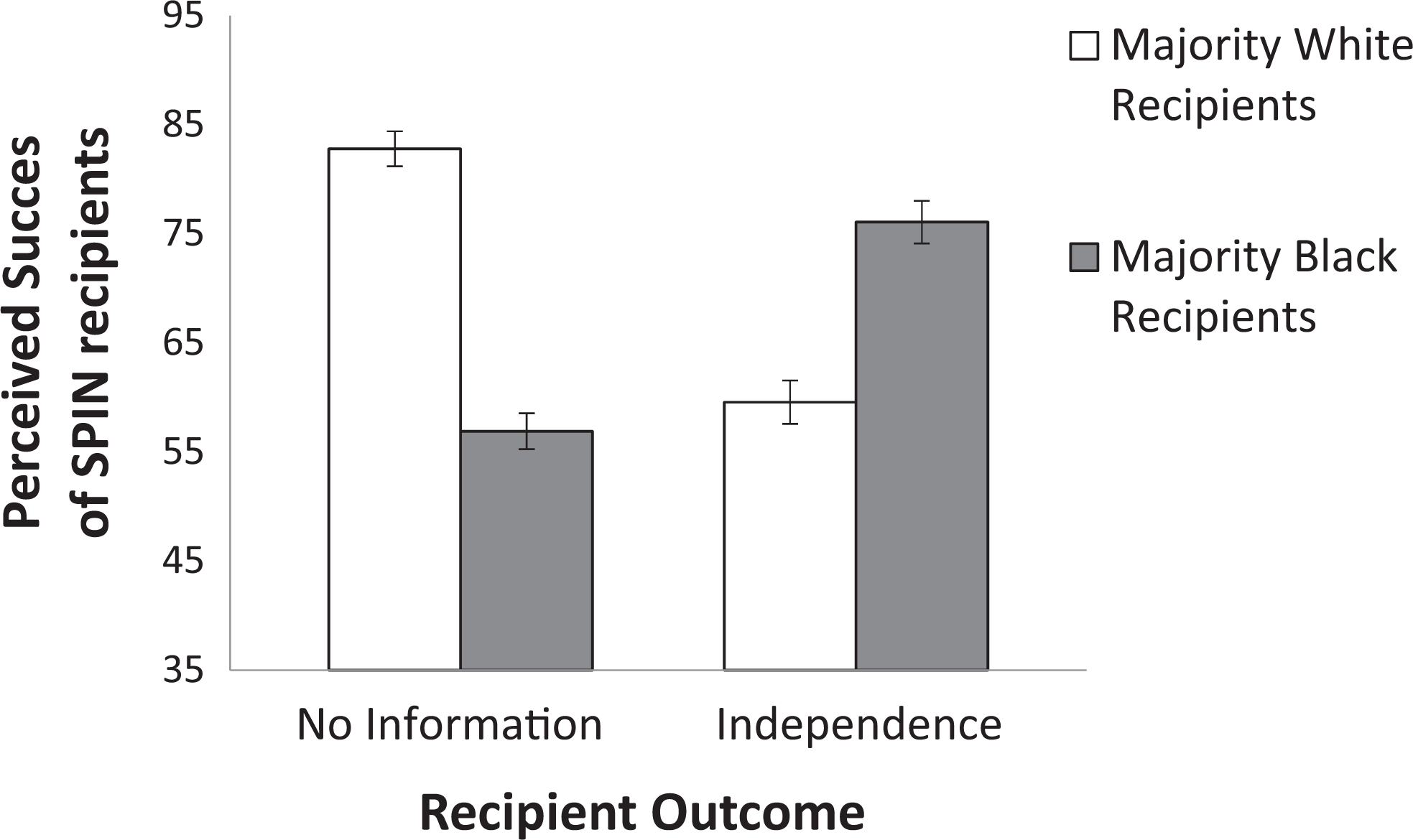
The effect of condition on perceived success of SPIN recipients. Error bars represent ±1 standard error.
To probe this interaction, we examined the effect of recipients’ demographics separately by recipients’ independence information. Among those in the no information control condition, there was racial bias in perceived success of recipients. In particular, participants perceived SPIN recipients as significantly less successful when the majority of recipients were Black (M = 56.89, SD = 19.64; 95% CI [53.64, 60.13) versus White (M = 82.78, SD = 9.68; 95% CI [79.63, 85.94]), F(1, 177) = 127.31, p < .001,
Support for Cash Assistance Programs and Desire to Monitor Recipient Spending
Next, we examined the influence of our manipulations on overt and subtle attitudes toward SPIN—both of which showed a similar pattern of effects. When predicting support for programs like SPIN, there was not a main effect of recipients’ independence, F(1, 376) = 2.48, p = .116,
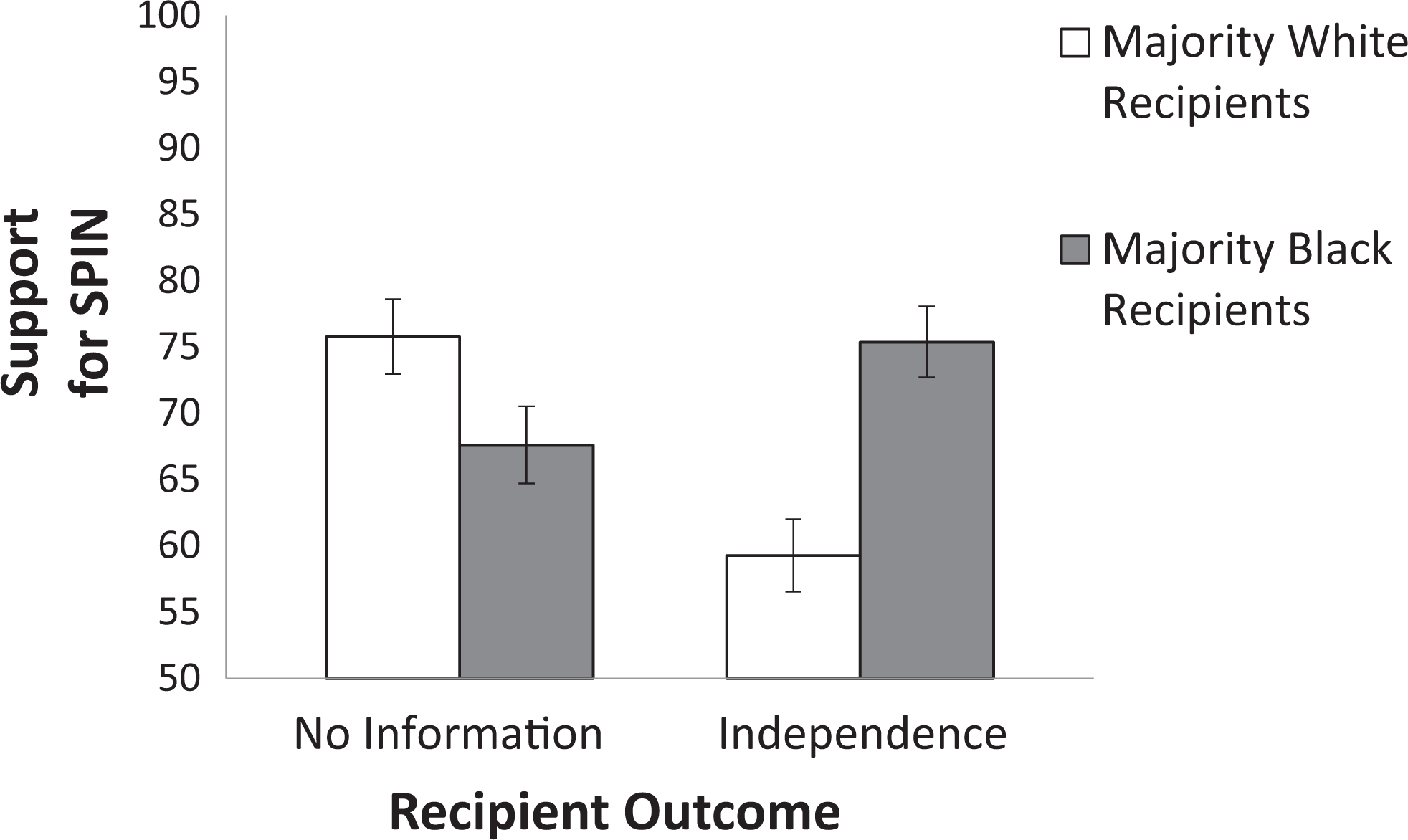
The effect of condition on overt support of programs like SPIN. Error bars represent ±1 standard error.
To probe this interaction, we examined the effect of recipients’ race separately by recipients’ independence conditions. Among those who received no information about program effectiveness, participants were less supportive of SPIN when the majority of SPIN recipients were Black (M = 67.63, SD = 28.52; 95% CI [62.06, 73.20]) versus White (M = 75.78, SD = 24.06; 95% CI [70.37, 81.20]), F(1, 177) = 4.29, p = .04,
Next, we examined the desire to monitor recipient spending—a subtle, bureaucratic form of bias toward wealth redistribution. There was no main effect of recipients’ demographics on the desire to monitor, F(1, 376) = 2.73, p = .099,
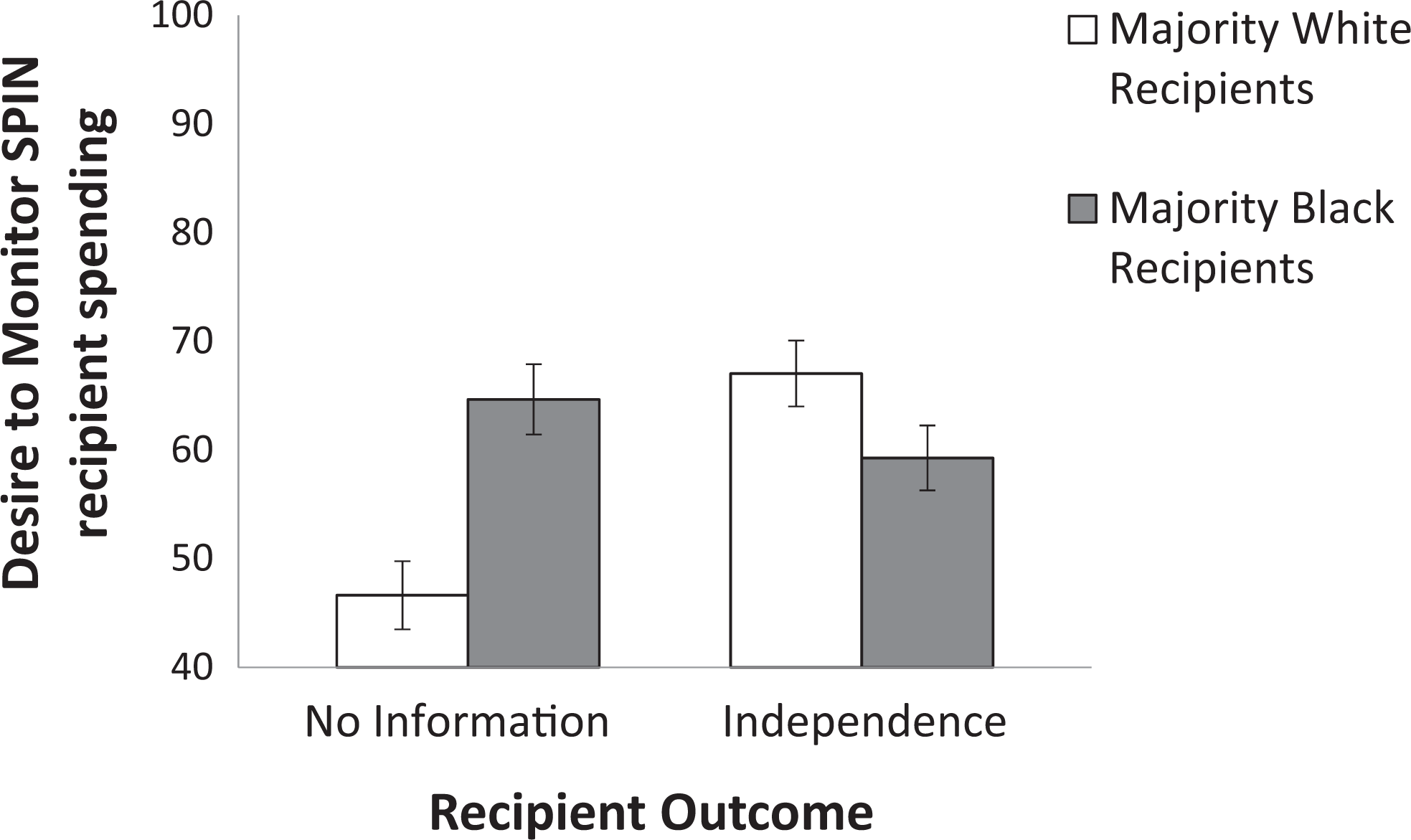
The effect of condition on desire to monitor recipient spending. Error bars represent ±1 standard error.
Replicating the patterns for overt support, in the no information condition, participants reported a greater desire to monitor recipient spending when the majority of recipients were Black (M = 64.66, SD = 30.86; 95% CI [58.30, 71.01]) versus White (M = 46.64, SD = 32.05; 95% CI [40.46, 52.82), F(1, 177) = 14.65, p < .001,
Moderated Mediation Analysis
Finally, we investigated whether the interactive effect of recipients' demographics and independence information on the desire to monitor recipient spending was mediated by shifts in support for programs like SPIN. To test this moderated mediation model, we used the PROCESS Macro with 5,000 bootstrapped resamples (Model 7; Hayes, 2017). Continuous variables were standardized prior to entering the model. Results revealed a significant moderated indirect effect, b = −.28, 95% CI [−0.47, −0.13] (see Figure 5). When there was no recipient outcome information, participants who learned the majority of SPIN recipients were Black (vs. White) were less supportive of programs like SPIN and, in turn, reported a greater desire to monitor recipient spending, indirect effect: b = .09, 95% CI [0.004, 0.202]. However, when success information was provided, participants who learned the majority of SPIN recipients were Black (vs. White) were more supportive of programs like SPIN and, in turn, reported a lesser desire to monitor recipient spending, indirect effect: b = −.16, 95% CI [−0.27, −0.07]. 3
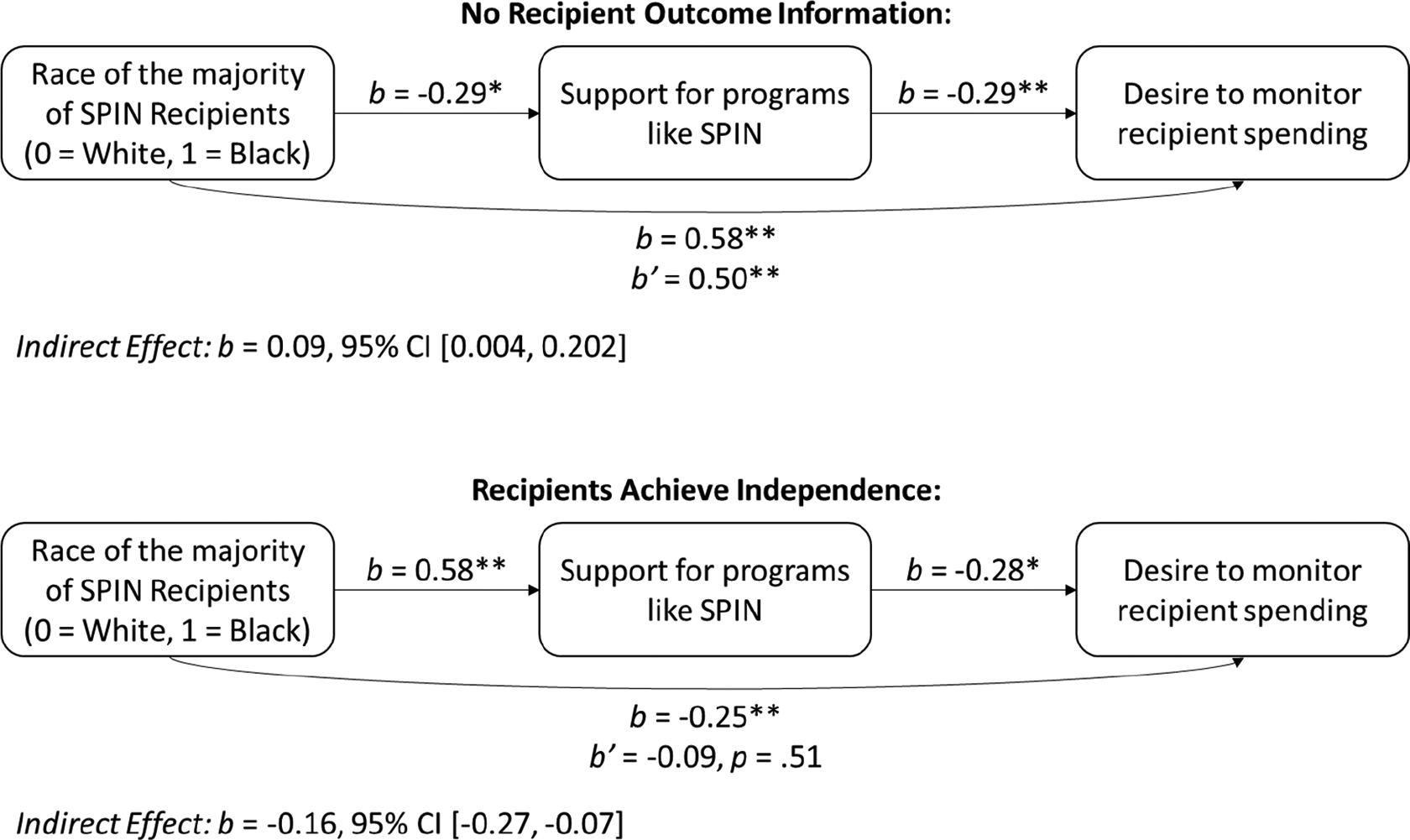
Results from Study 1: moderated mediation model in which the indirect effect of race of the majority of SPIN recipients on the desire to monitor recipient spending differed as a function of recipient outcome information (no information on the top panel versus independence information on the bottom panel) and was mediated by support for programs like SPIN. *p < .05. **p < .001.
Discussion
Together, these results indicated that both recipients’ racial demographics and recipients’ ultimate financial independence uniquely and interactively predict overt and subtle biases toward cash assistance programs. In particular, when participants received no information about recipients’ ability to obtain financial independence, and thus were left to rely on their existing stereotypes about welfare recipients, they demonstrated racial biases in overt support for SPIN and the desire to monitor SPIN recipient spending (i.e., subtle bias). Critically, these racial biases were eliminated, or even reversed, when participants learned that most recipients obtained full-time jobs, thus successfully exiting the program. Moreover, the interactive influence of majority recipient race and recipients’ ability to obtain financial independence as a result of cash assistance influenced subtle biases in the desire to monitor recipient spending through shifts in overt support for programs such as SPIN. This suggests that independence information may be particularly important to reduce the impact of both overt and subtle racial bias on judgments of welfare recipients. In Study 2, we sought to replicate and extend upon the current findings by investigating a mechanism through which these effects may occur—work ethic stereotypes of welfare recipients.
Study 2
In Study 2, we focused our design by dropping the manipulation of recipients’ racial demographics to further probe (and replicate) the role of independence information when the majority of recipients were described as Black. We again expected that independence information should increase overt support for cash assistance programs and, thus, reduce more subtle bias in the form of reducing the desire to closely monitor recipient spending—as we demonstrated in Study 1. However, in Study 2, we also measured work ethic stereotypes of welfare recipients after our manipulation. This enabled us to investigate whether the link between increased support for cash assistance and the reduced desire to monitor recipient spending might be driven by shifts in work ethic stereotypes of welfare recipients. In particular, more positive attitudes toward cash assistance might function to decrease stereotypes that recipients of cash assistance are lazy. If so, this would make monitoring recipients of cash assistance feel less necessary.
Method
Participants
We recruited 600 participants to ensure adequate power (1 − β ≥ .80) after accounting for attrition. Our final sample was 393 Monoracial White American MTurk workers (141 men, 250 women, and 3 reported “other”) who were on average 33.37 years old (SD = 10.80).
Procedure
Identical to Study 1, participants were first randomly assigned to the no information condition or the independence condition (i.e., most recipients are able to gain employment and exit the program). Dissimilar to Study 1, we dropped recipients’ racial demographics as a factor so that all participants learned that the majority of SPIN recipients were Black.
Then, participants reported their attitudes toward SPIN and welfare recipients. We utilized 5 items to assess support: (1) “I feel negatively toward programs such as SPIN,” (2) “I support programs such as SPIN,” (3) “I feel positively toward programs such as SPIN,” (4) “I do not support programs such as SPIN,” and (5) “I think programs such as SPIN can be effective at helping people get back on their feet and succeed” (0 = strongly disagree; 100 = strongly agree; averaged such that higher numbers indicate more support; Cronbach’s α = .93). Extending upon Study 1, participants also reported their stereotypical views of welfare recipients’ work ethic on 5 items: (1) “welfare recipients tend to be lazier than nonwelfare recipients,” (2) “welfare recipients tend to be less motivated than nonwelfare recipients,” (3) “welfare recipients tend to work less hard than nonwelfare recipients,” (4) “welfare recipients often use welfare support as an excuse to be lazy”; and (5) “welfare recipients often use welfare support to get back on their feet and succeed” (1 = strongly disagree; 7 = strongly agree; averaged together such that higher numbers indicate more perceived laziness; Cronbach’s α = .93). Finally, identical to Study 1, we measured subtle, bureaucratic bias toward recipients of cash assistance: “I believe SPIN should closely monitor and regulate recipients’ spending” (0 = strongly disagree; 100 = strongly agree). We also dropped measures of internal motivations to respond without prejudice and social dominance orientation given non-significant moderation effects in Study 1.
Results
Perceived Success of SPIN recipients
Replicating Study 1, results revealed that participants perceived recipients of SPIN as significantly more successful when they learned that the program was effective at helping most recipients obtain financial independence (M = 78.75; 95% CI [76.34 81.15]), than when they received no information about recipients’ outcomes (M = 57.84; 95% CI [55.39, 60.29]), F(1, 391) = 142.91, p < .001,
Serial Mediation Analysis
Next, we examined whether the effect of the independence information (X) on subtle biases expressed through the desire to monitor recipients’ spending (Y) was mediated by shifts in overt support for cash assistance (M1) and corresponding changes in general stereotypes of welfare recipients as lazy and unmotivated (M2). In particular, we thought that independence information would increase support for programs like SPIN which, in turn, would reduce negative work ethic stereotypes about SPIN recipients and would lead to a reduced the desire to monitor recipient spending. Although there is no direct effect of condition on the desire to monitor recipients’ spending (Y), mediation can occur in the absence of a direct effect for a variety of reasons (e.g., Hayes, 2009; Shrout & Bolger, 2002). Moreover, in a conceptual replication, we replicated the serial indirect effect and, this time, did observe a significant direct effect on desire to monitor (see Supplementary Materials).
To test this serial mediation analysis, we utilized the PROCESS macro (Model 6; Hayes, 2017) with 5,000 bootstrapped resamples. All continuous variables were standardized prior to entering the model. Results revealed two significant indirect effects (see Figure 6). First, replicating Study 1, there was a significant indirect effect of financial independence information on desire to monitor recipient spending through shifts in support for cash assistance programs, b = −.03, 95% CI [−0.081, −0.002]. Critically, however, there was a significant serial indirect effect, b = −.07, 95% CI [−0.129, −0.020]. 4 This serial effect suggests that information about the majority of recipients obtaining financial independence increased participants’ positive attitudes toward cash assistance, which in turn shifted work ethic stereotypes about recipients to be more positive (e.g., more hardworking and less lazy), which resulted in reduced subtle, bureaucratic bias toward recipients of cash assistance (i.e., the desire to closely monitor/regulate their spending).
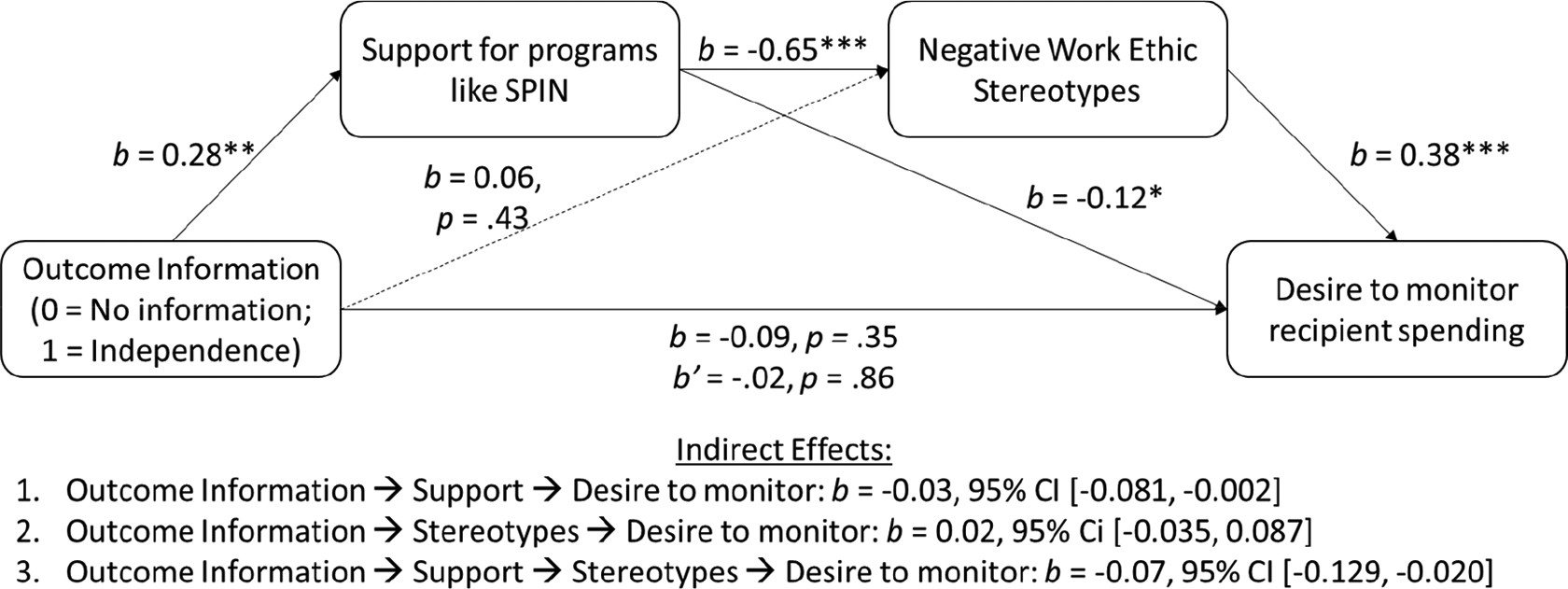
Serial mediation pattern suggests that learning about recipients obtaining financial independence (X) reduced the desire to monitor recipient spending (Y) by increasing overt support for cash assistance programs (M1) which shifted negative work ethic stereotypes of recipients (M2). *p < .05. **p < .01. ***p < .001.
Discussion
Study 2 replicates and extends the findings of Study 1. First, replicating Study 1, White Americans supported cash assistance that primarily benefited Black Americans significantly more when they learned that most recipients obtained financial independence, compared to when no independence information was provided. Second, independence information increased support for wealth redistribution programs which, in turn, shifted work ethic stereotypes and resulted in a reduced desire to monitor recipient spending (i.e., a subtle, bureaucratic bias). Thus, one way to reduce racial biases in welfare attitudes may be to communicate the ability of these programs to foster financial independence.
General Discussion
Across two high-powered, preregistered studies, we found that stereotypes regarding recipients’ lack of independence led to racial biases in support for welfare programs. Participants who were not given any information regarding the independence of the welfare recipients were significantly less supportive of welfare programs when they thought the majority of recipients were Black (vs. White). And, these overt racial biases had downstream consequences for more subtle bureaucratic bias as well: White participants who learned no financial independence information also wanted to monitor recipient spending significantly more when the program primarily benefited Black versus White people. These patterns are consistent with research that indicates attitudes toward cash assistance are racialized (e.g., Brown-Iannuzzi et al., 2017; Gilens, 1996).
Critically, however, racial biases were eliminated, and in one case reversed, when independence information was provided. When told that the majority of welfare recipients gained financial independence within a year, racial biases flipped such that White participants reported more support for the program when it benefited Black versus White people; moreover, these shifts in overt support were associated with participants no longer reporting racial biases in a desire to monitor recipient spending. This suggests that independence information may be particularly important to reduce the impact of racial bias on judgments of welfare recipients and welfare policies.
Next, in Study 2, we again found that White Americans reported significantly more overt support for cash assistance programs after reading about a program (i.e., SPIN) that served primarily Black recipients who were able to obtain financial independence (vs. no independence information). Also replicating Study 1, increased support for cash assistance predicted reduced subtle biases in the desire to monitor recipient spending. Moreover, independence information seemed to shift subtle biases as a result of reducing stereotypes (i.e., laziness) that are commonly associated with both Black Americans and welfare recipients (Brown-Iannuzzi, McKee, Cooley, & Lei, under review; Devine & Elliot, 1995; Fiske, Cuddy, Glick, & Xu, 2002; Gilens, 1995). This suggests that shifting work ethic stereotypes may provide an important pathway to mitigating racialized attitudes toward cash assistance programs—especially the types of subtle biases that could easily be justified as race irrelevant.
Given that modern norms of tolerance can discourage the overt expression of prejudice (Dovidio & Gaertner, 2004; Plant & Devine, 1998), it is noteworthy that the effect of our manipulations on attitudes toward cash assistance were not moderated by motivations to respond without prejudice (Plant & Devine, 1998; see Supplementary Materials). Thus, it is unlikely that the independence information effect was driven solely by social desirability concerns. In fact, our manipulations also showed systematic influences on a subtler measure of bias: Support for policy aimed at monitoring the spending of recipients of cash assistance. Because restrictive policy is a subtle way to express racial bias (Chow, Lowery, & Hogan, 2013; Esses, Jackson, & Armstrong, 1998), greater monitoring may provide a way for White Americans to reinforce the existing racial hierarchy, while still maintaining a view of themselves as egalitarian (Kraus & Park, 2017; Salvatore & Shelton, 2007). Consistent with this reasoning, research indicates that thinking about increased immigration to America leads to decreased support for policies aimed at empowering immigrants (i.e., subtle bias), while support for direct assistance remains unchanged (i.e., overt bias; Esses et al., 1998). Thus, although White Americans sometimes respond with overt prejudice in the face of learning about increasing racial diversity (Craig & Richeson, 2014; Outten, Schmitt, Miller, & Garcia, 2012), perhaps more problematic are the subtle mechanisms through which White Americans can reinforce the existing racial hierarchy (e.g., Cooley, Brown-Iannuzzi, Brown, & Polikoff, 2017). Critically, in the present studies, independence information eliminated racial biases in both subtle and overt prejudice toward cash assistance.
Limitations
Although not central to our hypotheses, another interesting pattern emerged in Study 1 that is worth noting. In particular, independence information seemed to reduce racial biases among White participants in two ways—(1) by decreasing support for cash assistance when SPIN was described as helping majority White SPIN recipients gain independence and (2) by increasing support for cash assistance when SPIN was described as effectively helping majority Black SPIN recipients. One possible explanation for this pattern is that learning that other White people are obtaining well-paying jobs as a result of cash assistance (as described in the independence condition) might be perceived as threatening to White participants. In other words, success experienced by fellow White people may seem like a more relevant threat to White participants than success experienced by Black people. Future research could examine this interesting possibility more directly.
In addition, future research should investigate whether independence is possible given a specific welfare program. Because funding to welfare programs has not shown commensurate growth with individuals’ need (Moffitt, 2015), it may be unlikely that cash assistance would be substantive enough for recipients to become competitive for full-time, well-paying jobs. One way to circumvent this limitation and still reduce racial biases in attitudes toward welfare would be to manipulate the proposed mechanism through which our data suggest perceived independence shifts welfare attitudes—in particular, the work ethic of the recipients.
Conclusion
Growing inequality in America, thus far, has not led to corresponding shifts in support for wealth redistribution (Stokes, 2013; Wetts & Willer, 2016). One reason people may oppose wealth redistribution through welfare policies may be their stereotypes of welfare recipients. People may assume welfare recipients are Black Americans who are dependent on the government and have little ambition to gain independence (Levin, 2013). These racialized stereotypes might be a persistent barrier to shifting attitudes toward cash assistance—even in the face of rising inequality. The present work indicates that highlighting recipients’ potential independence may play a powerful role in reducing racial biases associated with attitudes toward welfare policies.
Supplemental Material
SPPS829062_suppl_mat - Shifting Stereotypes of Welfare Recipients Can Reverse Racial Biases in Support for Wealth Redistribution
SPPS829062_suppl_mat for Shifting Stereotypes of Welfare Recipients Can Reverse Racial Biases in Support for Wealth Redistribution by Erin Cooley, Jazmin L. Brown-Iannuzzi and Caroline Boudreau in Social Psychological and Personality Science
Footnotes
Authors’ Note
Erin Cooley and Jazmin L. Brown-Iannuzzi contributed equally.
Declaration of Conflicting Interests
The author(s) declared no potential conflicts of interest with respect to the research, authorship, and/or publication of this article.
Funding
The author(s) received no financial support for the research, authorship, and/or publication of this article.
Supplemental Material
The supplemental material is available in the online version of the article.
Notes
References
Supplementary Material
Please find the following supplemental material available below.
For Open Access articles published under a Creative Commons License, all supplemental material carries the same license as the article it is associated with.
For non-Open Access articles published, all supplemental material carries a non-exclusive license, and permission requests for re-use of supplemental material or any part of supplemental material shall be sent directly to the copyright owner as specified in the copyright notice associated with the article.
