



Abstract
Much of organizational behavior research looks at how social context influences individuals’ experiences and behaviors. We add to this view by arguing that some individuals create their own contexts, and do so in a way that follows them across dyads, groups, and organizations. We call these individual-specific contexts “personal ecosystems,” and propose that they are created when an actor consistently engages in visible behaviors that trigger similar and visible reactions across targets of that behavior. We attribute the formation of personal ecosystems to social inertia, and identify three individual traits that increase the likelihood that an individual’s behavior is consistent across people and situations: low self-monitoring, implicit beliefs, and low levels of emotional intelligence. Finally, we discuss why understanding personal ecosystems is important for organizations, identify managerial implications of this phenomenon, and strategies for diminishing the likelihood of having personal ecosystems.
Keywords
Much of organizational behavior research looks at how social context influences individuals’ experiences and behaviors. Examples include work on procedural justice climate (Ehrhart, 2007), team culture (Shin et al., 2016), and ethical, innovation, empowerment, self-determination, and leadership climates (Kuenzi & Schminke, 2009). An additional view that we develop in this paper is that some individuals create their own contexts, and do so in a way that follows them across dyads, groups, and organizations.
Because individuals can sometimes shape their own context, they may experience a social context that is distinct from the shared environment that is experienced by others within the same group, team, or organization. We call these person-specific contexts personal ecosystems. While the impact of context on individuals is well-established, we add an additional perspective—that individuals can in some cases create such strong, personal reactions that they, in effect, live in a unique context. Even though such a person is in the same group as others, the interplay generated between them and others is so strong, persistent, and different that this person—in effect—lives in a different world.
The idea that individuals may inhabit unique—personalized—contexts runs counter to the presumption that a team or group develops an environment that is shared and is reasonably consistent across people in that context. Current methods focus on interclass correlation (ICC) as a tool to show that responses are shared more within a group than across groups, suggesting a common “climate.” We argue that, even in groups with high ICC scores, there can be a particular individual who has a very different lived experience within that group because that person triggers such strong and consistent reactions from other. When person A and person B paint very different pictures of a group’s climate, they may each be quite accurate, since behavioral reactions toward person A and B may really be different. Moreover, this difference may go beyond just the lack of “climate uniformity,” proposed by Gonzalez-Roma and Hernandez (2014), to include a kind of climate isolation—with one person in a group living in a distinct—and self-generated—social environment that is not shared by others. Averaging masks divergent views, and may miss an important predictor of team performance (e.g., Carton & Cummings, 2013). In this paper we develop the concept of “Personal Ecosystems,” and examine how they come to exist, what factors create them, what effects the existence of personal ecosystems may have, and how to intervene to reduce the likelihood of personal ecosystems.
A visual that can help convey the idea that some people bring their own context with them is the American cartoon character “Pig Pen.” Pig Pen is a happy child but refuses to bathe, and as a result walks around surrounded by a cloud of dust. Pig Pen brings his cloud of dust with him wherever he goes, he is always surrounded by dust, and others’ reactions are constantly shaped by the dust cloud he brings with him. They react to him differently than they react to others, and that unique reaction occurs for all the people Pig Pen meets. Pig Pen is surrounded by people reacting differently to him because of his cloud of dust. Pig Pen lives in a Personal Ecosystem.
We should note that our argument is distinct from the “constructivist” idea that every individual within a social system constructs unique dyadic relationships with each other individual. We are not just making the constructivist argument that individuals shape how others react to them—they certainly do—but rather that, for some people, their behaviors are so strong and consistent that they trigger reactions from others that are also strong and consistent. That is, they trigger reactions that are so pervasive as to create a personal environment (ecosystem) for themselves, rather than the mosaic of varied dyadic experiences that one would expect from a constructivist view.
We expect this phenomenon to be initiated by consistently negative behaviors from an individual. Although prosocial behaviors by an individual can foster prosocial behaviors in others (Chancellor et al., 2018; Porath et al., 2015a), they are less likely than negative behaviors to elicit the strong and consistent responses that create and sustain personal ecosystems. The first reason is that, by virtue of being negative, these behaviors are more salient. Given that we are biased to notice negative behaviors more than positive ones (Baumeister et al., 2001), they stand out to others in ways that prosocial behaviors do not. While it might be noticed if someone is consistently kind to others, all heads will turn toward a person who consistently snaps at people with derision and sarcasm. Second, prosocial behaviors are normative—they do not violate our expectations about interpersonal interactions in the same way that negative behaviors violate these expectations. As a result, negativity does not just create more attention, it also creates stronger reactions. As Parker et al. (2013, p. 110) write, “while de-energizing ties may represent a relatively small proportion of ties, they have a disproportionately potent effect on people”—they demotivate others, engender negative interpersonal perceptions, and create the need for emotional and social distance (Parker et al., 2013). While people react positively to the person who is consistently kind, they react even more strongly to the person who is consistently derisive. And, while all people shape how others react to them (as constructivists point out), we are saying that a few people have behavioral patterns that are so disruptive that their peers distance themselves from these individuals
Those with personal ecosystems are likely to be painful to live with, and it is likely to be a difficult life for the those with a personal ecosystem. Individuals who inhabit personal ecosystems are peripheral members of their team, effectively outsiders. In social network terms, they have low centrality within their teams, and even a kind of self-triggered ostracism from the team. This exclusion has negative consequences for the individual and, because even one disruptive team member can trigger team-level dysfunction (Felps et al., 2006), it also has negative consequences for the team. The impact on both the individual and others will affect how effectively people are able to do their work in organizations.
Personal ecosystems: A case study
Here we provide a real-life example of a personal ecosystem about a university professor named John. This example came from the personal experience of one of the paper’s authors. The name and exact details have been changed, to preserve confidentiality. John seemed quite unhappy, and often expressed suspicion about others’ motives. One day, when John seemed to be moving slowly, his colleague asked if he was feeling OK. John snapped “Why? Aren’t you tired some days?” Another day, when John had a publication, a colleague went to congratulate John, and John replied “Yea, a lot more than you’re publishing.” Each interaction, no matter how well-meaning, was met with an undermining comment. When new people arrived at the department, they reached out to John as a new colleague, but after three or four interactions like this, they learned to keep their distance. It was just too unpleasant. To John, the department was a lonely place, filled with people who rarely interacted. And he was right—people did rarely interact with him. His day-by-day experience was of people keeping their distance. For others, though, it was a department where people had friends and talked about ideas.
If you were to ask John and others about the culture of the department, they would give starkly different answers—and both would be accurate. The department was a cold environment for John but a more welcoming environment for everyone else. If one were to do a survey of department members, there might be a very strong inter-rater reliability in a measure of the group climate (with all but John seeing the department as friendly), yet any ICC-justified summation of the culture of the department would not be accurate for John. Moreover, John’s style of lashing out at people produced similar reactions by faculty and staff who were not in John’s department; John faced an alienating social environment not just within the department, but throughout the school. While many faculty had a person or two who they did not get along with, John’s environment was filled with people unwilling to engage. John was living in a personal ecosystem.
The effects on John were plainly visible. He was unhappy and disengaged. He gave up on any effort to improve his teaching, and mostly complained about students. He rarely contributed during faculty meetings. The effects on his department were also plain to see. He was not cooperative at meetings, and unwilling to do anything extra to help (in other words, there was no “citizenship behavior” to be found). The department mostly functioned through informal discussions, where others in the department worked well with each other, but not in the presence of John. John was actually a brilliant scholar, but the department was only able to function when John was not present. If you measured the “climate” of the department in terms of ICC, there was enough cohesion among everyone else but John that you might be able to document that there was a positive group climate, even though there was clearly a fracture that undermined the ability of the department to work in a fully coordinated way, and undermined their ability to recruit new faculty members (John’s behavior was widely known), putting more pressure on those already in the department.
Our short case study identifies the three critical features of a personal ecosystem: (a) consistent enactment of (b) highly visible behaviors by the actor which (c) elicit highly similar reactions across recipients of that behavior (targets). In our example, there is little cross-situational variability in how John responds to others -- he is consistently quarrelsome when others initiate social interactions. His behavior is also highly visible to others in his social environment—John’s quarrelsomeness is hard to miss. Without visibility, John’s actions would not elicit a visible reaction from others. Finally, the type of action taken by John is of a nature that predominantly elicits a similar response—withdrawal—from most people in John’s social environment. Combining these three factors, John finds himself in a social ecosystem that he has triggered himself.
John’s experience is not the only example of a personal ecosystems. A highly competitive individual who invariably responds to others in an aggressive and exploitative way is likely to elicit reciprocal competitiveness as a form of self-protection (Friedman et al., 2000). Such a person experiences an environment in which everyone behaves toward them in a highly competitive way. As another example, there might be an individual who is so highly distrusting that they constantly check on colleagues to ensure that they meet their obligations. This excessive control may elicit high levels of resistance across targets of the behavior. This person experiences an environment where everyone is unresponsive and uncooperative. In these cases, as in the case of John, consistent negative behaviors by the individual elicit consistent responses from colleagues that are unique to that individual, creating a personal ecosystem.
What we hoped to convey is that John (or Pig Pen) are not common. We do not expect that all (or even many) people live in personal ecosystems—for most people, one of these conditions is not present. Still, it is important to understand that personal ecosystems can occur, and under what conditions.
Theoretical model: Building blocks of a personal ecosystem
The Social Relations Model (SRM, Kenny, 1994) provides a useful language for developing our model of personal ecosystems. Within the SRM model, an “actor effect” is the way a person acts toward multiple others, while the partner effect is the behavior that the actor tends to elicits from their partner. The actor’s behaviors are determined by the actor’s dispositions, such as self-concept or temperament. Those behaviors provide cues for the partners to read, and partners use them to assess the actor and determine a response. The partner’s responding behaviors, in turn, provide cues that are read by the actor. This model (unlike Kenny’s Actor-Partner Interdependence Model; Kenny & Ledermann, 2010) goes beyond identifying dyad-specific relationships, allowing us to assess if there is convergence across partners in the way a given actor acts and is perceived, and to assess if there is convergence of partner actions and cues in response to the actor. In a simplified representation of the SRM (see Figure 1), the actor takes actions toward partners (signified as Partners “i” through “j”), these actions are perceived as cues by their partner. These cues shape (to some degree) each partner’s responding action, and these actions are in turn perceived by the actor through cues. We next elaborate on the four factors that, together, create a personal ecosystem: actor behavioral consistency, visibility of actor behaviors, partner behavioral consistency, and visibility of partner behaviors. Note that, in order for a personal ecosystem to exist, all four of these factors must exist—no single factor alone is enough to generate a personal ecosystem.
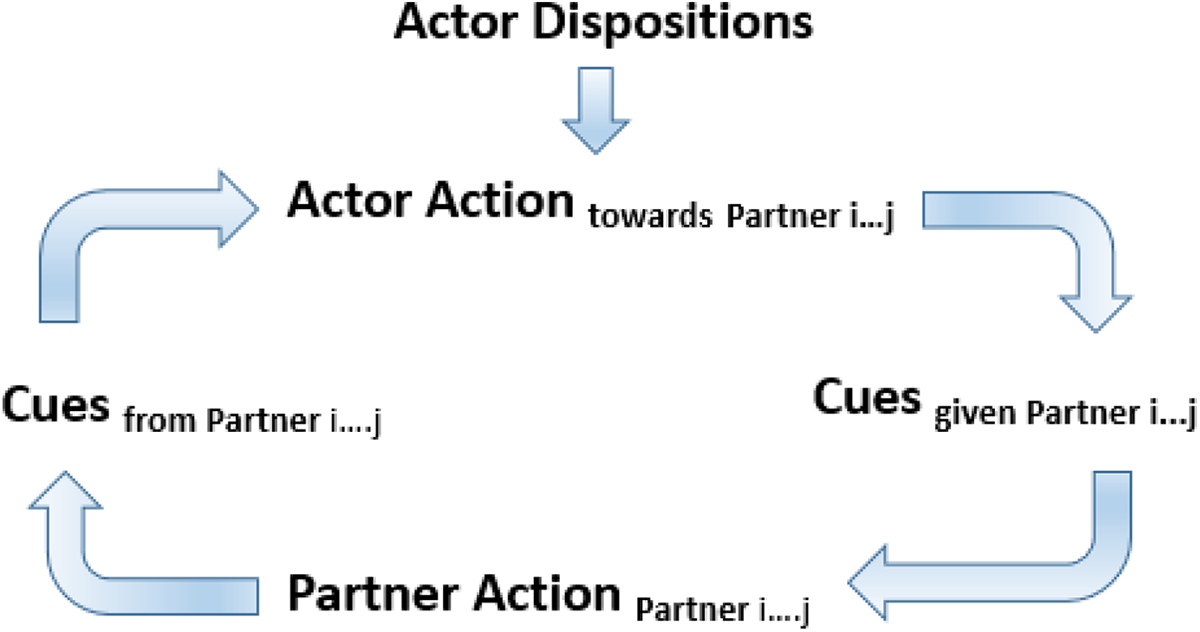
Framework for explaining elements of personal ecosystems.
Actor behavioral consistency
If person A’s behavior toward all others is the same, then there is a strong actor effect. We might add that if A’s behavior is also the same across time and situation, then there is an even stronger actor effect. The strongest actor effect is when a person’s behavior is thoroughly consistent—across time, situations, and people. This extreme case of an actor effect is likely to be highly dysfunctional. If someone is unerringly happy-go-lucky, that person might be enjoyable company over dinner, but dismissed during a business presentation. If someone is unerringly aggressive, that may prove helpful during some types of negotiations, but blow up deals in other types of negotiations. For most people, the actor effect is not so strong—most people do vary their behaviors based on situation and need.
Since the behavior of others toward the actor is, at least in part, shaped by the actor’s behavior toward them, the actor effect provides the first step in understanding how personal ecosystems are created. A very weak actor effect implies that someone is chameleon-like, changing their actions and image totally to match the situation. A very strong actor effect implies a person is totally unresponsive to social and situational context, driven totally by personal dispositions. In a sense, one is an “over-socialized” view of behavior, and one is an “under-socialized view” of behavior. If a person has an actor effect in what we might call a “normal” range, we propose, their behaviors will vary enough that they will not trigger the consistent reactions toward them that can create a personal ecosystem. In our case, John is not sensitive to the difference between a colleague expressing concern, and a colleague trying to put him down—he responds in a quarrelsome way to most people who interact with him, and he does so when they are challenging him or expressing concern. John has a very strong (in fact, abnormally strong) actor effect.
Proposition 1
A personal ecosystem requires the presence of a strong actor effect, where the actor behaves abnormally consistently across time, place, person, and situation.
Visibility of actor behaviors
In addition to acting consistently, the action needs to be of a type that is seen by the partners, providing cues to those partners about the actor. That is, the action must be perceived. There might be actions that occur consistently, but are so normal and expected that they pass unnoticed. Perhaps someone consistently asks “how are you” or consistently looks at people when they speak. These behaviors may be consistent, but are unlikely to be noticed. In our case, John’s behavior is not just consistent—it is strikingly inappropriate and tension creating, making it impossible not to notice. We will discuss more below about which types of behaviors tend to be noticed, and why, but for now we state 1 :
Proposition 2
A personal ecosystem requires the presence of a strong actor effect, for behaviors that are highly visible to partner.
Consistency of partner behaviors
So far, we have focused on the “self-triggering” element of a personal ecosystem, that is, the way that the actor enacts excessively stable behaviors toward others that are seen and noticed. We next turn to the “social environment” element of a personal ecosystem—that is, the way that the actor is surrounded by a set of consistent behaviors from others such that actors live in a unique social environment. Imagine two types of consistent actor behaviors and cues: one set is behaviors that tend to create positive reactions from some, but negative reactions from others, while another set of behaviors tend to only create negative reactions from others. As an example of the first set, we can imagine someone who is consistently bold. Being bold might create reactions of respect from some partners, but wariness from others. If that were to happen, there would not be (in Kenny’s terms) a true “partner” effect. Yes, the actor will have triggered behaviors from partners, but those responding behaviors would vary quite a bit, making for a complex mosaic of reactions rather than a clearly identifiable environment. An example of the second set is John’s actions: being constantly quarrelsome, with nearly every one of John’s partners responding negatively. Partner’s reactions were not exactly the same—some responded to John with avoidance and some with expressions of anger or disgust—but across most people the reactions to John were consistently some form of negative reaction, making the social environment for John quite bleak.
Proposition 3
A personal ecosystem requires the presence of a strong actor effect, for behaviors that are highly visible to the partner, and which generate consistent behavioral responses from the partners.
Visibility of partner actions
Once you have partners acting similarly in response to the actor’s visible behaviors, there is the potential for a personal ecosystem, but (like the actor’s behaviors) the partners’ actions need to be visible and seen in order to create a personal ecosystem. There might be partner actions that are similar, but are not of such consequence that they are seen, or which are so normal and expected that they pass unnoticed. In the case of John, it was quite apparent that he was not being welcomed or sought out in the department—these reactions to John were highly visible, shaping his environment in important ways. We will discuss more below about which types of behaviors tend to be noticed, and why.
Proposition 4
A personal ecosystem requires the presence of a strong actor effect, for behaviors that are highly visible to the partner, and which generate consistent behavioral responses from the partners that are highly visible to the actor.
The consequence of this loop is that the actor and partners inhabit a highly stable and invariant social environment. The predictability of both the actor’s and partners’ behaviors over time creates a highly stable social environment, one that “invites” each person in the interaction to behave in a particular way. The social affordance construct captures the idea that social environments can prescribe behaviors, rendering them highly stable and predictable (Dworkin & Goldfinger, 1985; Reis & Holmes, 2012). We conceptualize personal ecosystems as a special case of social affordances, one that creates an invariant social affordance for both actor and partners. For the actor, all interactions become an affordance for the same actor behavior. Because an actor’s behavior is invariant across situations, it is highly predictable and “invites” a similar response from all partners. As a result, the actor also encounters an invariant social affordance. A key difference between actor and partner social affordances is that, for the actor, the social affordance resides at the group level (the actor sees all people in the group acting the same way) whereas for partners it resides at the individual level (many partners each see this particular actor behave the same way). Actors do not vary their response to targets, but partners’ responses are unique to the actor. 2
Personal ecosystems become highly stable because they represent a closed system—a system that has impermeable boundaries and limits exchange with the “outside” world. Unlike people in systems with boundaries that are permeable (open systems) those in closed systems fail to adapt their behavior based on feedback from the external environment (see Mele et al., 2010, for a review of concepts). Individuals who inhabit personal ecosystems fail to recognize their role in triggering partners’ reactions, and consequently fail to recognize the role their behavior plays in sustaining a personal ecosystem. John’s invariant behavior is premised on his inability to recognize or adapt to external signals. And John’s colleagues come to hold a group-level schemata of John as a “difficult” person and ultimately display the same social inertia toward him that they experience from him. And, because negative impressions are more enduring than positive impressions, the group-level schema is resistant to change. In Gersick and Hackman’s (1990) terms, the team-level system displays a habitual routine in its interactions with the actor. Thus, personal ecosystems are self-sustaining: they support consistent behavior on the part of individuals and consistent patterns of social interaction between an actor and their peers (partners). As will be discussed in a later section, any interventions intended to break the loop requires changing the system from one that is closed to one that is open.
Predicting conditions that make personal ecosystems possible
In this section we delve more deeply into each of the four components of personal ecosystems defined in the last section. First, we explore factors that might contribute to overly consistent behaviors. Second, we look at factors that enhance visibility (of either the actor’s actions or the partner’s reactions). Third, we look at factors that make it more or less likely that partners will react similarly to an actor’s behavior.
Consistent enactment by actor
As we mentioned in the section above, actions are shaped by actor dispositions. While there are a wide range of dispositions that affect behavior, what we are looking for are aspects of disposition that enhance consistency in particular, since this is the first step needed for a personal ecosystem (Proposition 1). We propose that consistency increases as an actor’s responsiveness to the social environment and targets’ behavior decreases. Acknowledging that our list may not be exhaustive, we focus on three individual traits—low self-monitoring, low emotional intelligence, and holding an entity theory—that predict low social responsiveness and are therefore likely to contribute to excessive consistency of behaviors.
Self-monitoring
Self-monitoring is one characteristic that shapes how consistently an individual acts toward others. In a recent review, Kudret et al. (2019) defined self-monitoring as “an individual’s observation, regulation, and control of his or her expressive behavior and self-presentation guided by social and situational cues)” (p.193). High self- monitors, sometimes described as chameleons, adapt their behavior to their context whereas as low self-monitors display the same behaviors across contexts. In organizations, high self-monitors benefit from their social adaptability to move up the career ladder whereas low self-monitors display behavioral consistency (Day & Schleicher, 2006; Leone, 2006). The tendency for low self-monitors to display behavioral consistency across situations suggests that they will reciprocally elicit similar behaviors across social partners in a variety of settings. They are thus more likely to take their environment with them.
Emotional intelligence
Emotional intelligence captures individuals’ ability to recognize and use emotional information (Cote, 2014). Of the three branches of emotional intelligence described by Cote (2014), the most relevant for our purposes is the perceiving emotions branch and, specifically, the ability to recognize the emotions that others display (also Pekaar et al., 2018). Lack of recognition of others’ emotions can lead to consistency of behavior in two ways. The first is that others’ emotions should trigger different responses to different targets. However, if the actor cannot notice those emotions, the actor is less likely to vary their behavior across targets. A second is that, over the course of an interaction, seeing the targets’ emotional reactions to the actor’s behavior should encourage adjustment of behaviors across the duration of that interaction. If the actor does not notice those emotions, the actor is less likely to vary their behaviors across the duration of an interaction. We contrast low emotional intelligence with self-monitoring: whereas low self-monitors behave overly consistently because they don’t see how others see the actor, low emotional intelligence actors behavior overly consistently because they don’t see how others experience the actor’s behavior. There is thus both a perceptual and a behavioral component to excess consistency.
Implicit beliefs
Implicit theories of others will also affect whether an actor’s behavior toward others is consistent. First described by Dweck (2006) and her colleagues in relation to intelligence, implicit theories vary in terms of the stability individuals attribute to their own and others’ behaviors. Whereas individuals who hold an incremental theory of personality believe that behavior is malleable and shaped by situations, those who hold an entity theory believe that behavior is fixed and shaped by stable traits. Those with entity beliefs are more likely to act uniformly toward others, since they are less capable of adjusting themselves: they are less likely to engage in self-regulation (Ommundsen, 2003), less likely to adapt to well-being interventions that require self-change (Howell et al., 2016), and less likely to be able to engage in cognitive reappraisal of situations (King & dela Rosa, 2019). In these ways, they are more likely to be stuck in set patterns of behavior. Moreover, an entity theorist would be less likely to engage in self-change because it would not be useful: if one believes that others behave in ways that are set, there is little point in adjusting one’s own behavior to their actions. And if, as documented by Kwon and Nayakankuppam (2016), entity theorists assume greater uniformity and less diversity among other people than incrementalists, there should be less motivation for entity theorists to carefully observe others, making it harder for them to adjust their behaviors to match the needs expressed by others. For these reasons we expect entity theorists to act more uniformly across time and situation than incrementalists.
Visibility of behaviors
A key element in our theoretical model of personal ecosystems is that the precipitating actor behaviors needs to not just be applied consistently across people and situation, but also be highly visible and noticeable (Proposition 2)—an unnoticed behavior does not generate reactions in others. In this section we discuss three factors that are more likely to make behaviors highly visible—expectancy violations, negativity, and relevance. These factors contribute to the behavioral cycle that underpins personal ecosystems, and they apply to noticeability of the partners’ behaviors as well as the actor’s behaviors. Thus, it is relevant to Proposition 4, as well as Proposition 2.
Expectancy violations
Expectations about others’ behavior make our world more manageable and interpretable by establishing a baseline for what should and will happen (Garfinkel, 1967), including expectations about others’ goals in social interactions (Holmes, 2002). We further assume that individuals in our social environment have expectations that are similar to ours. When their actions imply that they do not share these expectations, they draw attention to their behaviors. Social psychologists, for example, show that people turn their attention to “schema-inconsistent” behaviors (such as a selfish action by someone who is known to be unselfish) rather than focus on “schema-consistent” behavior (White & Carlston, 1983). In advertising, surprise breaks from what is expected have been shown to draw attention (Burgoon et al., 2002; Dahl et al., 2003). An actor’s behavior becomes visible and noticed because it is violation of the taken-for-granted.
Expectancy Violation Theory (EVT; Burgoon & Hale, 1988) formalizes the idea that violating expectations about social interactions grabs attention. In an interpersonal context, social norms lead us to expect a certain level of interpersonal civility and politeness; in an organizational context, we may further expect emotion management, such that interactions are dominated by positive affect. Behaviors that violate normative expectations (such as those associated with how individuals behave in social interactions) are subject to greater scrutiny than those that do not (Burgoon et al., 1995). As well as drawing attention, these unexpected behaviors are likely to elicit a range of reactions from anger to bewilderment and shock (Garfinkel, 1967). For example, Garfinkel found that, when a family member acted as a stranger, they were accused of being “mean, inconsiderate, selfish, nasty, or impolite” (p. 47). When an actor violates expectations about social interactions, their behavior is more likely to attract attention.
Negativity
A critical distinction, relevant to the creation of personal ecosystems, is between positive violations in which others’ social behavior is better than expected and negative violation in which others’ behavior is worse than expected. Theory and research show that we more strongly orient to negative behaviors and, we propose, to negative expectancy violations. Because individuals cannot absorb all information that they are exposed to, they function as “cognitive misers who carefully conserve scarce mental resources” (Fiske, 1980, p. 890). Importantly, for the formation of personal ecosystems, they are more likely to give weight to negative information (Anderson, 1974). This effect can be attributed, in part, to a positivity bias in perceptions that makes negative information be rare so that it stands out (it is more extreme). Fiske (1980) found that both greater weight and greater visual attention were place on negative cues because negative cues are more informative than positive ones. She says “attention to negativity is…literally adaptive in the sense that one survives better by avoiding negative contacts” (p. 904). As a result, when individuals enact behaviors that negatively violate normative expectations about the implicit rules that underlie social interactions, they grab attention.
Pratto and John (1991) expand on this idea, showing that stronger responses to negative social information are nearly automatic and pervasive: losses loom larger than gains (Kahneman & Tversky, 1984), and negatively toned communication grabs more attention (Frodi et al., 1978). In a qualitative review, Baumeister et al. (2001) showed that this negativity bias—the phenomenon that negative events loom larger and are more salient than positive events—is observed across a broad range of contexts, including social interactions. Interestingly, they suggest that even when diagnosticity is controlled for, negative information has greater salience than positive information. Integrating the idea of negativity bias with our earlier discussion of expectancy violations suggests that the actor is most likely to garner attention when the actor’s social behavior creates a negative violation of the implicit rules that underlie social interactions. Indirect evidence for this relationship is provided by the finding that individual traits, including low emotional intelligence, predict interpersonally deviant behaviors such as aggression and counterproductive work behaviors (Miao et al., 2017), and that a lack of agreeableness predicts ostracism (Howard et al., 2020). We expect that John’s behavior, which negatively violates expectations, will attract more attention than the behavior of colleagues who conform to, or exceed, expectations for workplace social interactions.
To be more specific about the range of behaviors we refer to as “negative” we examined circumplex models of emotions and behavior. The dominant model has two dimensions—activation and pleasure (Yik et al., 2011). Emotions can be seen as being more or less active (for example, frenzied is highly active, while placid is inactive) and more or less pleasureful (for example, satisfied is high on pleasure, while gloomy is low on pleasure). Given our discussion of the role of negativity in gaining visibility, we expect that emotions expressed on the displeasure side of the circumplex will be noticed more than those on the pleasure side. We also expect that emotions that are more active are ones that are expressed more clearly in an outward way, making them more visible. Taken together, we expect the types of behaviors that are in the Displeasure/Active quadrant to be most visible.
In this quadrant, we can see the core emotions of distress, unhappy, frenzied, jittery, and these are highly associated with hostility, fear, and tension (Yik et al., 2011). In another version of the circumplex, we see the adjectives arrogant-calculating, coldhearted-unsympathetic, vindictive-self-centered (Horowitz et al., 2006). And in yet another version we see the words arrogant-calculating and cold-quarrelsome (Gifford & O’Connor, 1987). The strength of the impact of this quadrant can be seen in the way that “cold-quarrelsome” has the strongest association with maintaining interpersonal distance (r = .50) of any interpersonal behavior (Gifford & O’Connor, 1987). In another study that emphasizes naturally occurring behaviors, Carney and Colvin (2010) identify the following as high-arousal, negatively-valenced behaviors: express hostility, blame others, says negative things about self, and acts irritated.
Relevance
Wentura et al. (2000) identified another dimension that influences attention to social information. They argue that it is not just positive-negative, but also whether the social information about a person is “possessor-relevant” (that is, it affects primarily the person who has that trait) or “other relevant” (that is, it affects people other than the person who has that trait). They argue that if the driver of attention is the need to be wary of dangers, it should matter whether the person being observed is helping/hurting others, or just themselves. Approach/avoidance is much more likely to be informed by another person’s aggressiveness than by another person’s shyness—the first will have a consequence for the observer, but not the latter. Combining positivity with relevance produces four categories of traits—Wentura et al. (2000) provide examples of each: “tolerant, generous, empathetic (positively other-relevant), intolerant, selfish, untrustworthy (negatively other-relevant), powerful, ambitious, self-confident (positively possessor-relevant), weak, unambitious, shy (negatively possessor-relevant)” (p. 1025). While Wentura et al. (2000) argue that it is really relevance that grabs attention more than positivity, the strength of the evidence about the greater focus on negative information in many domains suggest both relevance and negativity matter. Thus, we would suggest, the kind of behaviors that are most likely to grab attention of others are ones that are both relevant and negative—such as behaviors exhibiting intolerance, selfishness, and untrustworthiness.
Similarity of reactions across targets
So far, we have talked about patterns of action taken by the actor—consistent behaviors that are highly visible. Next, we turn to targets’ reaction. In response to the actor’s consistent, visible actions, the targets must a) react, and b) react similarly for a personal ecosystem to be created. In the case of John, if his consistent behavior was to always express extreme shyness, the behavior should be noticed (there is an expectancy violation), but reactions of targets are likely to vary, with some people reaching out to John and others tiring of the effort. By contrast, there is likely to be more uniform aversion to his quarrelsome behavior—avoiding John is likely to be the predominant response. As another example, imagine what a police officer sees when cruising the streets in a marked police car. Most people who see a police car when driving instinctively worry they might be driving too fast, and tap on their brakes, even if they are not actually speeding. As a result of such a predominant reaction to their presence, a police officer experiences a very different driving context than other drivers.
The question, then, is to identify those behaviors that create predominant reactions in others. Work by Eisenkraft and Elfenbein (2010) is helpful. They ask if certain people create emotional reactions that are uniform across people they work with. They call this “trait affective presence” or “whether individuals consistently lead others to experience the same affective response” (Eisenkraft & Elfenbein, 2010, p. 505). They then examine if there are different levels of trait affective presence for positive versus negative affect. For positive affect (such as happy and enthusiastic), people’s affective state is mainly influenced by their own personality and only slightly shaped by others around them. By contrast, for negative affect (such as anger and being irritated), people’s affective state is influenced just as much by others around them as by their own personality. In other words, people who consistently express negative affect are likely to trigger others around them to also feel negative affect, while consistent positive affect is not as likely to trigger others around them to also feel positive affect.
This study is different than our analysis in several ways. First, it starts with an actor’s emotions, not behaviors. However, it is certainly the case that the transfer of emotions involves actions or expressions by the actor. This point is shown in the association Eisenkraft and Elfenbein (2010) found between negative affective presence and the personality dimensions of low agreeableness and high extraversion. The extraversion finding suggests that negative affective presence comes not just from being disagreeable, but from acting out that disagreeableness in social settings. Second, the study references the emotional reactions of observers, not their behaviors. However, since emotions often trigger behaviors (Bagozzi et al., 2000; Tamir & Bigman, 2018), we should expect that those emotional reactions are often matched by actions. In that case, their results suggest that negative actions are most likely to create similar, strong reactions across people the actor encounters. As an example, Eisenkraft and Elfenbein (2010) cite work by Scott and Judge (2009) showing that “people eliciting more negative emotions in their colleagues were more likely to be targets of counterproductive workplace behaviors such as rudeness and teasing” (p. 509).
Organizational relevance of personal ecosystems
In this section, we explore some of the organizational impacts that may come from personal ecosystems. As we have seen, those who develop personal ecosystems experience the social world of an organization differently than others. In social network terms, they have a peripheral role in their teams and other organizational social networks. Their world is characterized by de-energizing ties, that is, relationships in which others hold negative impressions and negative behavioral intentions toward them (e.g., Parker et al., 2013). Their peers maintain social distance, and their experience is of a hostile environment.
To further develop specific hypotheses about the impact of personal ecosystems, we draw on findings from research on ostracism, since ostracism is closely related to the outcomes predicted in H9. A recent meta-analysis showed that ostracized employees perform more poorly, are less like to help others, and display higher levels of deviance (Howard et al., 2020). Individuals who lack centrality perform more poorly in the context of high performing teams (Carboni & Ehrlich, 2013), suggesting that a poor relationship with high performing team members limits their performance. Co-workers are less willing to assist others in ways that would enhance job performance when friendship ties are weak, and negative ties increase social distance (Bowler & Brass, 2006; Parker et al., 2013; Porath et al., 2015a). Ostracized individuals also report higher burnout (Howard et al., 2020). Like individuals living in personal ecosystems, ostracized employees are on the periphery of their teams. Because, like ostracized and low centrality individuals, those living in personal ecosystems are peripheral to their teams we expect that these negative outcomes also accrue to them.
In addition to predicting poor individual outcomes, individuals who have developed personal ecosystems set the scene for poor team and organizational outcomes. At the broadest level, team communication is likely to be impeded. Dysfunctional team behavior, which can be seeded by one disruptive team member (Felps et al., 2006), predicts poorer team performance (Cole et al., 2008). To the extent that team interactions are dysfunctional, team productivity is reduced and may reduce organizational success (Kauffeld & Lehman-Willenbrock, 2012).
Personal ecosystems also undermine the core function of leadership, which is to build organizational and team norms (Taggar & Ellis, 2007; Thomas et al., 2004). For example, open-mindedness norms are critical for knowledge creation (Tse & Mitchell, 2010), emotional display norms affect burnout among nurses (Diefendorff et al., 2011), and workplace safety norms affect accidents and injuries (Dunn et al., 2016). The role of leaders is to build these norms, and through that, to establish climates of trust, engagement, ethical behavior, and psychological safety. The presence of a personal ecosystem means that at least one person is out of reach of those shared understandings, that leaders may be unaware of this divergence from group norms, and the individual in a personal ecosystem may act in ways that undermine the broader group’s norms and culture. It is essential that leaders know that personal ecosystems exist, rather than be blindsided by them, and that they be equipped to intervene when a personal ecosystem exists.
Social contexts where personal ecosystems are more likely
We expect that personal ecosystems will be more likely in some cultural contexts than others. The key factor is the degree to which the culture tolerates deviance from established norms. According to Gelfand et al. (2011), some cultures are “tight,” meaning that they “have strong norms and a low tolerance of deviant behavior” while other cultures are “loose,” meaning that they have “weak norms and high tolerance of deviant behavior” (p. 1100). What is permissible is much more narrow in tight cultures, and this can be seen in what behaviors are allowed in everyday settings, and in severity of government controls and severity of punishment for criminal behavior. Most importantly for our purpose, self-control is internalized: …individuals’ psychological processes become naturally attuned to, and supportive of, the situational demands of the cultural system. Individuals who are chronically exposed to stronger (versus weaker) situations in their everyday local worlds have the continued subjective experience that their behavioral actions are limited, their actions are subject to evaluation, and there are potential punishments based on these evaluations. Accordingly, individuals in nations with high situational constraint will have self-guides that are more prevention-focused and thus will be more cautious (concerned with avoiding mistakes) and dutiful (focused on behaving properly), and will have higher self-regulatory strength (higher impulse control), a higher need for structure, and higher self-monitoring ability. (Gelfand et al., 2011, p. 1101)
In addition to the general dimension of tight/loose norms, it also matters what the content of those norms are. A personal ecosystem is much less likely if the strong norms are ones that encourage open discussion, civility, and feedback. Work by Porath et al. (2015b) suggests that some organizations and groups establish clear expectations of civil treatment of others, which would minimize tolerance for the kinds of negative actor behaviors that we have discussed. Also, teams as well as individuals can have prevention and promotion mindsets, so that the presence of a strong group promotion mindset discourage the kind of entity mindset that predisposes some actors to be overly consistent (Shin et al., 2016). Of course, the very idea of personal ecosystems is that some individuals create their own distinct environments, despite the presence of more helpful group cultures experienced by the group as a whole. So, these specific beneficial group norms would also need to very strong, to have any chance of breaking through to the person with a personal ecosystem.
Another cultural factor that can affect personal ecosystems is locus of control (Rotter, 1966), which suggests that people vary in the degree to which they see themselves in control of their external world, or see the external world in control of them. Smith et al. (1995) showed that some societies are higher on external control (e.g., China, Hungary) than others (e.g., US, Spain). In cultural contexts where people are reminded to see the world around them determining their fate, they are much less likely to ignore signals from the world around them, and less likely to develop personal ecosystems.
While we expect that some cultures may provide more space for personal ecosystems to form, we might also expect that those in personal ecosystems might be seen as disruptive and disliked, making it more likely for them to less effective, more isolated, and more likely to leave the organization (either due to being pushed out, or due to a search for more attractive pastures). This raises the question of why personal ecosystems would persist. On the individual side, the person in a personal ecosystem is not likely to see better alternatives given the fact that personal ecosystems—because they are self-triggering—will follow them to other teams or organizations. On the organizational side, we expect that personal ecosystems are tolerated when the person with a personal ecosystem has some degree of power. This may come from the organization being dependent on the person due to that person’s special skills or connections, due to the person being in a position of authority, or due to some form of worker protections. In these cases, the effects of personal ecosystem may not be good, but it may be tolerated due to the company’s needs or other situational constraints.
Breaking the loop: Individual-and organization-level interventions
The disruptive impact of personal ecosystems cannot be ignored, and without interventions teams may at best lose effectiveness and at worst experience a breakdown of relationships between the actor and partners. To ensure a team’s survival, the closed loop created by a personal ecosystem needs to be disrupted. The critical feature, according to Gersick and Hackman (1990), is that the disruption is extraordinary (or abrupt, Wiltshire et al. (2018)). We describe individual- and organization-level interventions that can disrupt the individual’s perceptions of a highly invariant social environment, and organization-level interventions that may change the actor-partner interaction.
Individual-level interventions
The person most trapped in a personal ecosystem is the actor. Therefore, in this section we focus on how actors can be motivated to change and the tools that might help disrupt their personal ecosystem. The change process could start with the individual, but it more likely to be triggered by an external agent: if actors had the necessary level of self-awareness to reflect on how their behaviors contribute to creating a personal ecosystem, they likely would not be inhabiting one. In this section, we describe strategies that can motivate change and disrupt personal ecosystems.
Simply increasing an actor’s awareness of what is happening might provide the necessary motivation to change their circumstances. Awareness is difficult to achieve, since their personal ecosystem provides the actor with perpetual evidence that the “environment” is the problem. In his book The Executive and the Elephant, Daft (2010) highlights the need for managers to become more self-aware in order to understand how their own behaviors influence the people around them. By highlighting the impact of the actor’s behaviors on team climate and effectiveness, a third party may increase awareness of a self-discrepancy for the actor, that is a discrepancy between an actor’s actual and ideal self, or actual and ought self (that is, the obligations that the actor has toward others) (Higgins, 1987). Third-parties could provide concrete examples of the actor’s impact on their team, for example by showing the person videos of how their group interacts when the person is away from the group (Porath & Pearson, 2013). That would make them realize a) that the group culture is different, and b) that what the actor experiences in their personal ecosystem occurs only when they are present in the group. 3
Developing emotional intelligence
There has been a great deal of work on enhancing emotional intelligence. While there is some debate about whether EI can be developed only in childhood or also later in life (Goleman, 1996), accumulated evidence shows that EI is developable (Dulewicz & Higgs, 2004; Groves et al., 2008; Hopfl & Linstead, 1997). But it appears that, within the construct of EI, some elements are more malleable than others. According to Higgs and Dulewicz (1999), “enablers” are more amenable to change than other components of EI. Enablers include self-awareness and interpersonal sensitivity, which are central to avoiding the kind of consistency that can create personal ecosystems. Groves et al. (2008) documented improvements in EI by having participants examine their initial EI scores, and then develop goals around those scores, to be achieved through dialog with peers, coaches, spouse, and boss. Clarke (2010) provides a team-focused intervention, where members of a work team received training but then were asked to focus on EI skills during the course of a 14-week project.
Developing self-monitoring capabilities
Another intervention that may help avoid or disrupt personal ecosystems is to ensure some level of self-monitoring by actors, that is, to develop their ability to see themselves as they are seen by others. While the effects of self-monitoring have been widely studied, there have been few efforts to manipulate or train for self-monitoring. One study, showing that low-self-monitors could interact better with others if their interaction partner was higher in self-monitoring (Dabbs et al., 1980), suggests that exposure to high self-monitors could possibly enhance self-monitoring among low self-monitors. There have been efforts to manipulate “self-complexity” by asking participants to describe their own personality (Margolin & Niedenthal, 2000). And there has also been a great deal of work in school settings to have students self-monitor their own actions (Sheffield & Waller, 2010). When trying to disrupt personal ecosystems, keeping an emotion diary (as described by Shapiro, 2006) may prove especially helpful in highlighting patterns of strong negative responses to team members and colleagues.
Challenging habitual cognition
Because actors inhabit a very stable world, they may come to believe that the actions of others (who we have called targets) represent an environment that is outside of their control. This belief may, in turn, lead to the belief that the situation is not amenable to influence through changes in their own behavior. One way of challenging this belief is to ask actors to engage in counterfactual thinking. Focusing on their workplace relationships, actors could be asked to generate either subtractive or additive counterfactuals: “what am I doing that disrupts team performance” or “what could I do to enhance team performance?” In a clinical setting, Strauman et al. (2015) show that counterfactual thinking of this kind can reduce negative affect. In the context of personal ecosystems, counterfactual thinking has the potential to identify avenues for reducing self-discrepancies.
Actors’ habitual cognitions may also be amenable to mindset interventions, specifically a shift to a growth mindset that sees behavior as malleable (Dweck, 2006). Adopting a growth mindset challenges the perception that situations and behaviors are fixed, and increases awareness of the impact that actor may have on targets. Research has identified several interventions for establishing a growth mindset: writing a letter emphasizing that a specific skill is not fixed but can be developed (Aaronson et al., 2002), combining a writing task with messages that re-iterate the importance of effective learning strategies for success (Burnette et al., 2018), or reading articles reporting that specific skills can be learned (Kray & Haselhuhn, 2007).
Managing negative emotions
If the actor repeatedly engages in negative behaviors, it is likely that these behaviors are driven by underlying emotions (Diener et al., 2020). As a result, one way to minimize negative behaviors is to enhance the ability of the actor to manage their emotions. Of course, as discussed above, the first step is to create the motivations for a person with a personal ecosystem to see that there is a problem, and to see that self-change is needed. Once that is done, if they are open to change, they can be taught reframing practices, including positive rumination and savoring (Bono et al., 2013) and reappraisal and social sharing (Brans et al., 2013) that build positive emotions. These positive emotions can lead to changes of behaviors since “positive emotions lead individuals to engage in novel and larger behavioral repertoires” (Deiner et al., 2020, p. 456).
Organization-level interventions
Although we identified several individual-level interventions that could disrupt personal ecosystems, they are unlikely to be effective unless they are supported by organizational norms about behavior. We make this claim because we based our individual-level analysis on the assumption that interventions create a self-discrepancy, specifically a discrepancy between an actor’s actual self and their perceived obligations to others (other/ought). In an organization, these obligations will be defined by organizational culture, and the behavioral norms established by that culture. Not only will these norms clearly identify an actor’s obligations to their organization, including their colleagues, they will legitimize and make it easier for targets to call out an actor’s dysfunctional behaviors.
Rowland and Parry (2009) show that organizational design plays a crucial role in managing team dynamics: teams with cross-organizational responsibilities and relationship-oriented leaders reported higher levels of commitment to consensus-based decisions. Building on this finding suggests that organizations may be able to design organizational units and jobs in ways that facilitate—if not require—high levels of social awareness and attention to the quality of organizational relationships. Porath et al. (2015b) similarly argue for organization level interventions to combat disruptive behaviors such as incivility.
Organizations can set the behavioral tone through the norms and values that they convey to their employees, starting with their mission statement. In the same way that incivility can trickle down (Simons et al., 2007), so can positive behaviors such as interpersonal courtesy and respect. As well as making a clear statement about appropriate interpersonal behaviors, organizations can recognize and reward these behaviors. Porath et al. (2015b) give examples of organizations that have formed a Civility Council, have a Civility Wall of Fame, or that use meetings to tell stories about exemplary behaviors. To combat personal ecosystems, organizations might embrace the value of being versatile and inconsistent (Kaplan & Kaiser, 2003; Skinner & Sasser, 1977)—that is responsive to situations—as a means for disrupting personal ecosystems. While we might think that interpersonal courtesy should be the norm, these strategies shine a continuous light on positive examples and license calling out negative examples.
Personal ecosystems: Conclusion
Organizational implications
Although personal ecosystems may be relatively infrequent, recognizing their existence and intervening in the dysfunctional dynamic that they create is important for individual and organizational well-being.
First, acknowledging the existence of personal ecosystems can stimulate individuals to analyze whether the dysfunctional or toxic social environment that they experience is self-triggered or other-triggered. 4 The recognition that it may be self-triggered gives individuals greater control over their environment: if an environment is self-triggered, it can also be self-changed. This recognition may prevent a cycle of high turnover that might occur repeatedly as individuals strive to escape what they perceived to be a dysfunctional team or organizational climate, only to re-live the experience with each move. Such moves are costly for both individuals and their organizations, and may be avoided through the identification of personal ecosystems. Correctly diagnosing the cause of a dysfunctional environment results in more effective actions, and enables individuals to decide whether changing their environment or modifying their behaviors will effectively address a problematic social environment. Misdiagnosis can lead to misdirected energy.
Second, it is essential to understand what types of behaviors are more likely to generate personal ecosystems, since only then can we identify ways to improve the situation. We have argued personal ecosystems are most likely to be generated by behaviors that not only violate expectations, but that are negative and relevant to targets. Understanding these key features of trigger behaviors narrows the diagnostic scope for individuals seeking to determine whether they inhabit personal ecosystems and to change them. It implies that individuals should focus on changing those behaviors that convey a generalized negative mindset. Because personal ecosystems are sustained by others’ reactions, it is equally important that peers and managers have a framework for identifying the behaviors most likely to generate personal ecosystems. Revisiting our systems perspective, this recognition by others is important not only so they can help pinpoint the behaviors that trigger personal ecosystems but also so that they can identify and break the action-reaction pattern that sustains them. This recognition is critical for those who want to provide executive coaching (Kilburg, 2007), as well as those who simply want to help a colleague at work.
Third, the false belief—by both actor and targets—that their experience of the environment is shared may lead to overconfidence about the nature of the team climate that reinforces and even strengthens the personal ecosystem. Especially if the group has high consensus about its overall climate, group members may fail to identify outliers who do not share their perception. At best, the failure to recognize these different experiences can result in the actor and other group members talking past each other (Echterhoff et al., 2017). In cases where the gap in world views is recognized, group members may respond with derision rather than empathy, and they may even amplify in their own minds how different their views really are (Robinson et al., 1995). The absence of a shared view about the groups’ climate will likely erode relationships within the group: the actor is likely to be distrusted by the group (Higgins, 1992), and tension between the actor and other group members is likely to escalate. The group will experience a more harmonious and productive environment to the extent that a personal ecosystem can be modified and the group can arrive at a shared mental model of its climate (Krauss & Fussell, 1991; Liu et al., 2012). By identifying the existence of personal ecosystems, we provide a trigger for the counter-factual thinking that we described in the previous section. Individuals and groups can self-regulate and challenge personal ecosystems by asking “What if….?”.
Future lines of research
We have presented a new construct, a Personal Ecosystem, which we hope provides new avenues of research. The first task is to document personal ecosystems, which requires documenting that an individual reports that the group climate or culture is very different than is reported (and agreed upon) by others in the group. This can be done with existing measures of climate (e.g., ethical, innovation, empowerment, self-determination, Kuenzi & Schminke, 2009). It may be that the group shows evidence of agreement about the group climate, even though one member’s view is quite different. This is more likely in larger groups. It may also be the case that, for a smaller group, there is evidence of agreement about the climate if the one person with a personal ecosystem is excluded from the analysis.
Once you have seen that a person lives in a unique social environment, there remains the question of whether it is self-triggered. It may be that an individual experiences a unique social environment due to factors other than actor’s own behavior—in particular, animus toward the actor due to their being in a demographic group associated with negative stereotypes. It may be the case that some women, African-Americans, religious minorities, or members of immigrant groups live in unique social environments, but this is other-triggered, not self-triggered. One approach is to make an operating assumption that, if the person living in a unique group environment is in a demographic minority, that unique environment is other-triggered, while if the person is not in a demographic minority, their unique environment is self-triggered. Another approach would be to collect information from all members of a group, to have them describe the most prominent behaviors of others in the group. For a person living in a personal ecosystem, we would expect there to be high levels of similarity in how others describe that person’s behavior, and that behavior will be seen as negative (e.g., hostile, cold, quarrelsome, etc.).
This first step of looking for the possibility of a personal ecosystem provides a check on the overly-quick assumption that a high ICC confirms that everyone in a group shares the same environment. For practitioners, it may be especially important to take this additional step, since the existence of an initially-hidden personal ecosystem in the workplace may be causing disruptions that need to be addressed. The next step is to look at whether, as we proposed at the start of this paper, personal ecosystems are associated with worse individual outcomes (that is, lower performance, lower job satisfaction, lower organizational identification, higher turnover, lower trust), and worse organizational outcomes (that is, lower team performance, worse workplace safety, more negative affective tone within the team).
We have also provided hypotheses about factors that contribute to individuals having the conditions that (when they co-occur) lead to personal ecosystems. So, for example, while overly consistent behavior, alone, is not going to produce personal ecosystems, it does make a person more vulnerable to living in a personal ecosystem. This may help identify those at higher risk of personal ecosystems, by looking at measures of self-monitoring, implicit beliefs, and emotional intelligence. And, as we discussed in the individual-level intervention section, knowing that these factors enhance the risk of personal ecosystems, we can provide guidance for practitioners who want to address the presence of personal ecosystems. Similarly, while negative behaviors, alone, are not going to produce personal ecosystems, it does make a person more vulnerable to living in a personal ecosystem. This will help identify those at higher risk of personal ecosystems, by looking at measures of negativity in behaviors, and expectancy violations. And, as we discussed in the organization-level intervention section, we can provide guidance for practitioners who want to address the presence of personal ecosystems.
Our theory also suggests avenues for cross-cultural and cross-organizational research on personal ecosystems. Researchers can examine whether, as we predict, personal ecosystems are more likely in national and organizational cultures that are loose, rather than tight, and in cultures that emphasize internal locus of control. They can also examine whether, as we predict, personal ecosystems exist more among employees who have more power, due to their position or due to having unique and highly-needed skills. In fact, this observation suggest some new avenues for research by power scholars. High power may, through personal ecosystems, produce an environment that isolates those in power from a group’s shared experiences. To be clear, we do not expect this to happen often (since we do not expect personal ecosystems to be very common), but the combination of being in a personal ecosystem and holding power may be an especially bad combination, worth keeping an eye on.
In summary, much of the person-environment fit literature (Cable & Judge, 1994; Chuang et al., 2013; Van Vianen, 2018) is built on the idea that one’s environment is outside of one’s control—the only realistic way to improve the situation is to exit one job or company (where there is poor fit) and move to another job or company (where there is good fit). In this view, there is little that can be done to change the current situation. Our identification of personal ecosystems suggests an alternative cause in some cases for poor person-environment fit, one that resides in the action-reaction patterns of actors and targets. We identify ways in which these patterns can be changed, benefiting both individuals and organizations and avoiding costly turnover spirals.
Footnotes
Acknowledgements
We would like to thank the anonymous reviewers whose comments and recommendations were extremely helpful, and the following people for their feedback on earlier versions of the paper: Bruce Barry, Hillary Elfenbein, Dawn Iacobucci, Jessica Kennedy, Kendall Park, Ranga Ramanujam, Bart Victor, and Tim Vogus.
Authors’ note
All authors contributed equally to this article.
Funding
The author(s) received no financial support for the research, authorship, and/or publication of this article.
