



Abstract
Primary fragmentation from detonation of high-explosive metal-cased munitions imposes significant risks to the safety of related personnel and the public. Barricades or other protective structures are commonly used to stop fragments and reduce casualty risks caused by detonated munitions when a sufficient safety distance cannot be guaranteed. This study aims to provide decision support for the positioning of barricades that can reasonably mitigate primary fragmentation hazards from the detonation of large calibre munitions using a probabilistic risk assessment approach. This approach enables a stochastic characterization of fragment ejections, stacking effects, fragment trajectories, human vulnerability and fragment hazard reduction by barricade. In a case study, the assessments of casualty risks and effectiveness of barricades were conducted for a single and a pallet of 155 mm projectiles. It was found that barricades with heights exceeding the height of munitions can significantly reduce the hazardous fragment densities and casualty risks beyond the barricade. The benefit of increasing the barricade height becomes marginal when it exceeds the height of munitions.
Keywords
Introduction
Accidental detonation of high-explosive munitions may occur during an activity of operation and deployment such as storage, transport and removal (Crull et al. 1996; DDESB 2009), which poses significant safety risks to personnel. Casualties are mainly caused by primary fragments when the detonation occurs in an open space. The probabilistic modelling of primary fragmentation hazards and the consequent casualty risks accounts for uncertainties involved in fragment ejections, trajectories and human vulnerability, which is essential for the determination of quantity distance (the minimum distance from the explosive to where people are at an acceptable safety risk) and risk reduction measures to mitigate fragment-induced safety risks (e.g. Van Der Voort and Weerheijm 2013; Stewart and Netherton 2019).
Several studies have adopted probabilistic and statistical approaches to assess safety risks from fragmentation hazards. Häring et al. (2009) proposed a quantitative assessment method for casualty risks from missiles exploding in the air. Crull and Hamilton (2012) and the SAFER model (DDESB 2009) used empirical equations to calculate quantities of interest such as fragment final velocities and density probabilities from high-explosive munitions that implicitly capture the uncertainty and stochasticity associated with fragment ejections and trajectories. Sielicki et al. (2021) conducted a probabilistic analysis considering the variability of launch angle, initial velocity and drag coefficient based on explosive field trial data of person-borne improvised explosive devices to predict casualty risks. Qin and Stewart (2021) proposed a probabilistic approach to assess casualty risks induced by the detonation of a single metal-cased cylindrical munition in an open space. The statistical fragment densities and casualty risks obtained from this study can be used to determine the quantity distance to prevent and mitigate safety risks induced by fragmentation hazards. While the quantity distance often cannot be satisfied to ensure safety during operation and deployment, barricades can be used to mitigate fragmentation hazards and reduce casualty risks (IATG 2015), and therefore, the positioning and sizing of the barricade need to be determined. In addition, rather than a single munition, munitions are often grouped in pallets during operation and deployment. The stacking effects due to sympathetic detonation and interactions between adjacent munitions result in different fragment distributions and initial launch conditions from those ejected by a single explosive munition (Powell et al. 1981; Crull and Hamilton 2012). Therefore, the probabilistic fragmentation and casualty risk assessment models need to consider stacking effects.
This study assesses the effectiveness of the positioning and sizing of barricades in mitigating fragmentation hazards from detonation of a single or a pallet of 155 mm M107 munitions using a probabilistic risk assessment approach. This type of munition is similar to that widely used in NATO countries. This risk assessment method enables a stochastic characterization of fragment ejections, stacking effects, fragment trajectories, human vulnerability and fragment hazard reduction by barricades. The barricade effectiveness is evaluated based on the hazardous fragment densities and casualty risks behind the barricade considering various heights and intercept angles of the barricade. This study provides decision support for mitigating safety risks induced by fragmentation hazards from high-explosive munitions by using barricade.
Fragmentation modelling
Fragment mass and shape
The fragment mass distribution (FMD) has been commonly modelled by the Mott distribution (Mott 1943). Another widely used model is the Held FMD (Held 1990a). Both agree well with the fragmentation experimental data and can reasonably model fragment mass distributions with acceptable accuracy (Held 1990b; Crull and Hamilton 2012). For the convenience of mathematical manipulation, Held FMD is used in this study. Other FMDs (e.g. Grady & Kipp 1985) may also be used and the differences of accuracy among these commonly used FMDs are deemed marginal with limited effects on the fragmentation hazard modelling.
The number and mass of primary fragments naturally generated by the detonation of a single cylindrical metal-cased munition, modelled by the Held FMD, is given by


Fragments from the detonation of cylindrical metal-cased munitions generally have irregular shapes. The mean presented area, A (m2), of the fragment is a key parameter for the characterization of air drag and fragment trajectory, which is calculated by (Zaker 1975)

Initial velocity
The initial velocity of fragments calculated by the Gurney equation (Gurney 1943) is

Launch angle
The Taylor angle (Taylor 1963) is widely used to model the polar launch angle α (e.g. elevation angle relative to the horizontal axis for a standing cylindrical munition, see Figure 1) of a fragment. However, the Taylor angle has some discrepancies with the observations in experiments (e.g. Anderson et al. 1985; König 1987). The actual launch angle is a complex function of charge-to-case weight ratio, type of explosive and length-to-diameter ratio of the cylindrical casing (König 1987). Based on the experimental data, analytical and numerical solutions from Giroux (1971), Anderson et al. (1985) and König (1987), and cognizant of keeping the model easy to use, the polar launch angle α of fragments for a single or a pallet of upright cylindrical shells is assumed to be uniformly distributed (i) from −20◦ to 0◦ for 20% of fragments, (ii) from 0◦ to +10◦ for 60% of fragments and (iii) from +10◦ to +80◦ for 20% of fragments. This also considers the influence of the curved geometry of the munition as those experimental data, analytical and numerical solutions are for perfect cylindrical cases. Polar (α) and azimuthal (φ) launch angles.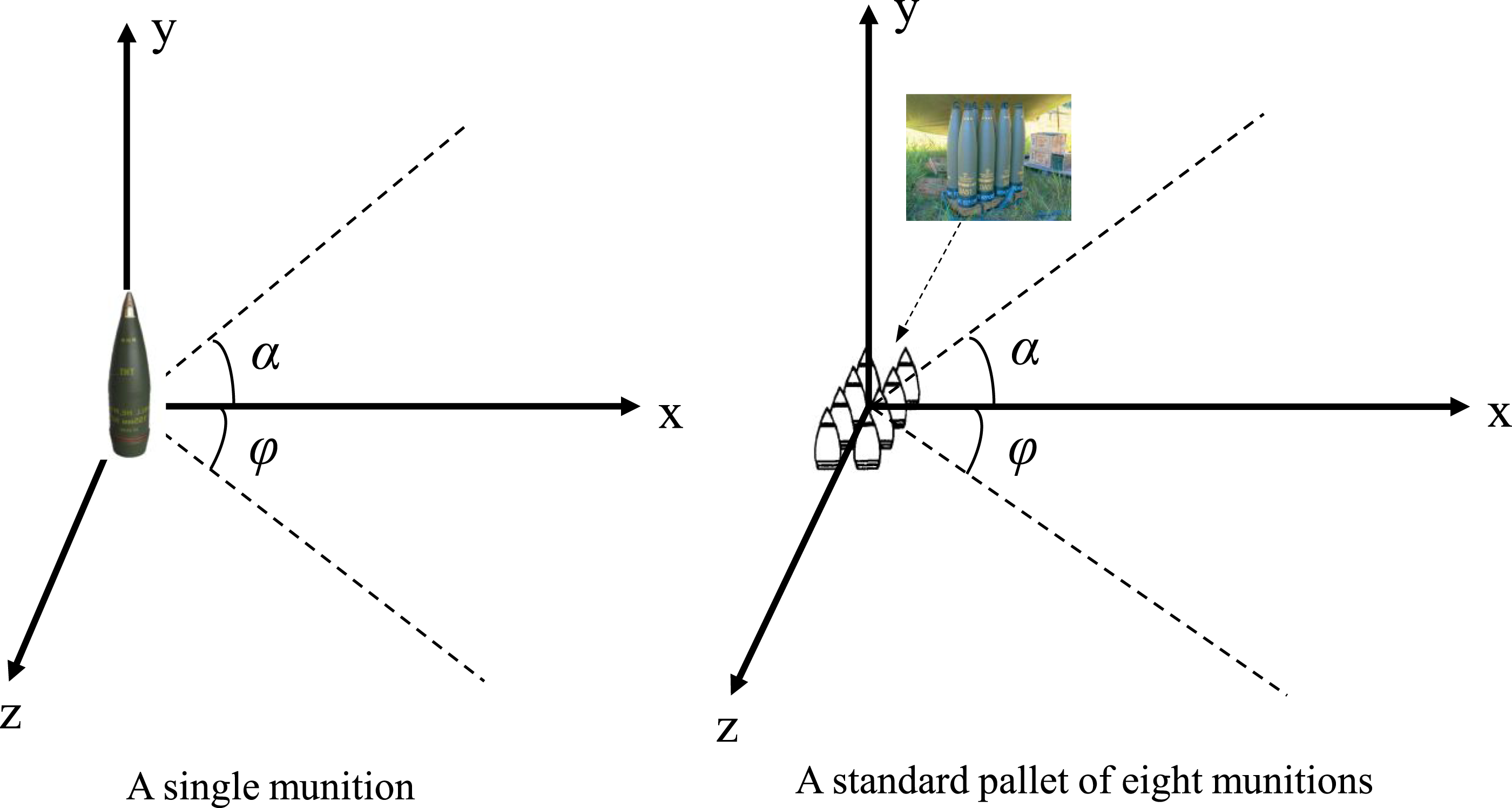
The azimuthal launch angle φ (see Figure 1) for a single upright cylindrical shell is assumed to be uniformly distributed over all azimuthal directions (i.e. 0◦ to 360◦). As inferred from the test data by Powell et al. (1981), most fragments from the detonation of a standard pallet of eight upright 155 mm projectiles are concentrated within narrow azimuthal ranges over the long sides of the rectangular stack (see Figure 2), and hence the casualty risks are the highest for personnel in the directions facing the long side of the stack. The quantity (or safety) distance for a pallet of munitions is also governed by the hazard fragment density in these directions. The azimuthal launch angle for fragments ejected from the top long side of the pallet in Figure 2 is approximately modelled as uniformly distributed (i) from 0◦ to 20◦ and 340◦ to 360◦for 80% of the fragments, and (ii) from 20◦ to 45◦ and 315◦ to 340◦ for 20% of the fragments for a pallet of 155 mm projectiles based on the test data from Powell et al. (1981). One standard pallet of eight cylindrical munitions (top view).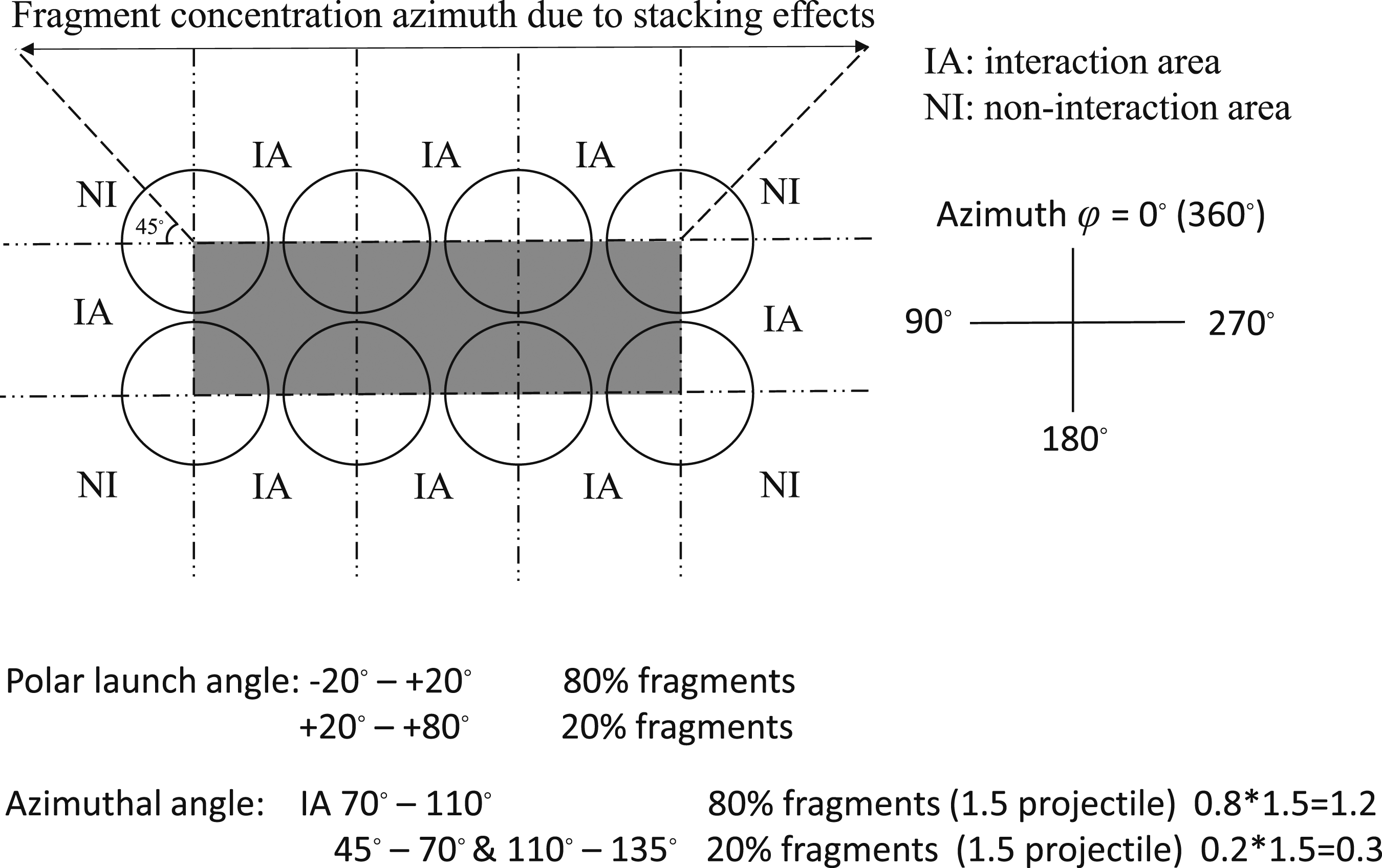
Stacking effects
For a pallet of munitions (see Figure 2), only the outside surface of the rectangular stack of cylindrical shells substantially contributes to the density of hazardous fragments, while fragments generated within the shaded area are contained within the stack and not ejected to the field (DDESB 2009; Crull and Hamilton 2012). The initiation of a donor munition, the interactions between munitions in a stack and the effects of sympathetic detonations result in different mass distributions and initial velocities from those corresponding to a single munition. Compared to fragments from a single munition, the average fragment mass resulted from the detonation of a stack of munitions may increase by about 50% with reduced number of fragments, while the initial velocity of fragments may increase up to two folds (Zaker 1975; Powell et al. 1981; Crull and Hamilton 2012). Two multipliers are assumed to model the stacking effects on fragment mass distribution and initial velocity. The first multiplier M stack is applied to the fragment masses from a single munition, while the number of fragments is divided by M stack . The second multiplier V stack is applied to the initial velocities for fragments generated from a single munition. Based on the knowledge and test data from Powell et al. (1981) and Crull and Hamilton (2012), M stack is assumed to follow a truncated normal distribution with a mean of 1.50 and a COV of 0.20 (truncated to ensure positive values), while V stack follows a truncated normal distribution with a mean of 1.60 and a COV of 0.10 (truncated between 0 and 2.0).
The space between two adjacent shells on the side of a stack is defined as the interaction area (Powell et al. 1981) where the stacking effects will apply. The fragment concentration within a certain azimuthal range described in Section 2.3 results from fragments ejected from the three interaction areas on the long side. For one long side, the number of fragments from these interaction areas in the outer surface of an 8-projectile pallet in Figure 2 is assumed to be equivalent to the number of fragments from 1.5 projectiles (i.e. 0.5 projectile for each interaction area) in a stack. Fragments from 0.5 projectiles in the two non-interaction areas also contribute to the fragment densities on the long side of the pallet. The stacking effects on fragment shape factors and azimuthal launch angles are described in Sections 2.1 and 2.3.
Trajectory modelling
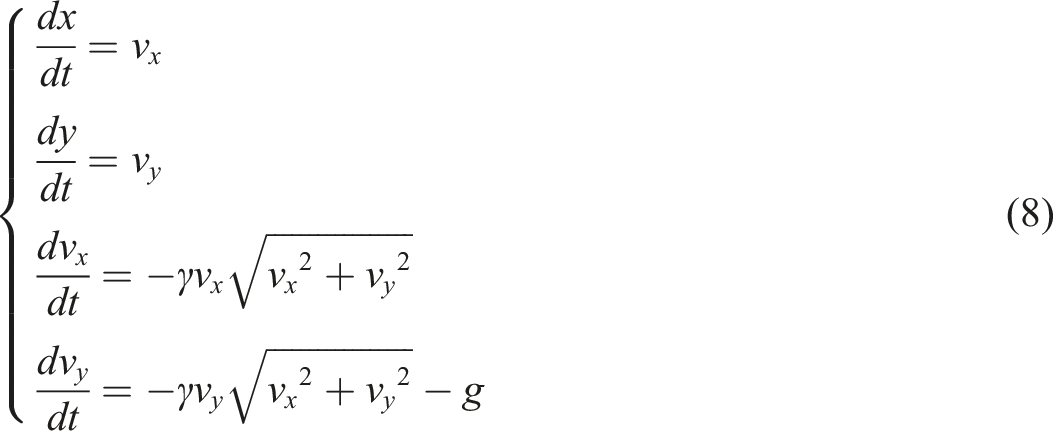
For a given azimuthal launch angle, the two-dimensional trajectory of a fragment after ejection is modelled by the equation of motion considering air drag force and gravity. The effects of lift, spin and wind-induced side drift of fragments are not considered. The equation of motion is then expressed as Drag coefficient versus Mach number (McCleskey 1988a).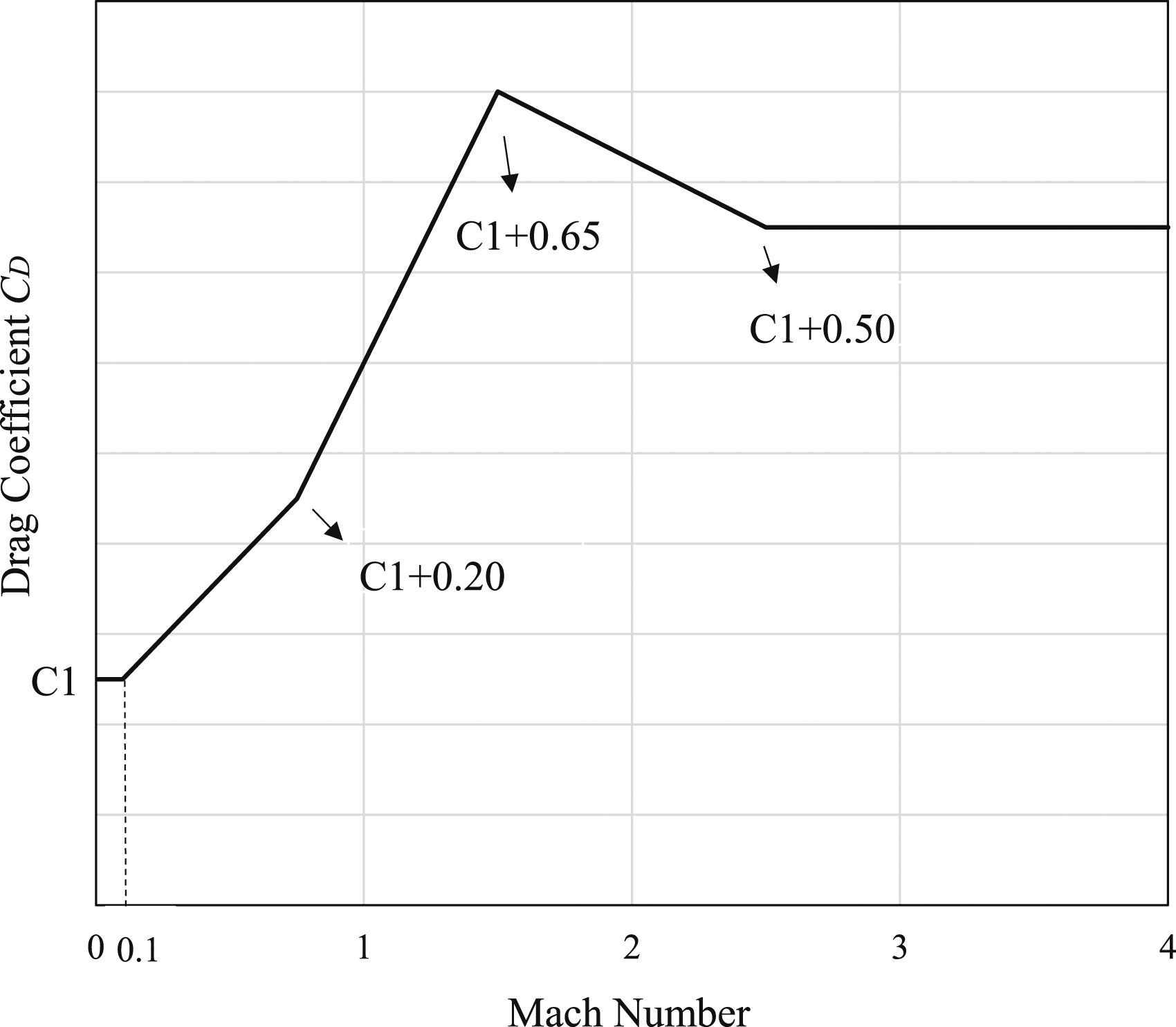




The ricochet after a fragment hits the ground is also considered for the fragment trajectory modelling. Depending on the angle of impact, ricochet may or may not occur when a fragment hits the ground (McCleskey 1988a). If ricochet occurs, the fragment velocity and launch angle after ricochet for a given surface ground type (e.g. clay soil, sand) can be assessed by the empirical approach given by McCleskey (1988a) and Qin and Stewart (2021).
Given the initial conditions (i.e. location coordinates at fragment ejection, fragment initial velocity and launch angle), the trajectory of each fragment, modelled by the system of ordinary differential equations (ODEs) given by equation (8), can then be numerically solved by the fourth order Runge-Kutta method (Butcher 2016). By using reasonably small time steps, the location coordinates and velocities of each fragment can be obtained at each discrete time step. If ricochet occurs when a fragment hits the ground, the trajectory of fragment ricochet can also be obtained using the ODEs and the Runge-Kutta method with updated initial conditions (i.e. location coordinates at the point of impact, and the ricochet angle and velocity).
Casulty risk and quantity distance
Human vulnerability
Consider an average standing person (i.e. body height H
T
= 1.75 m, exposed body area A
M
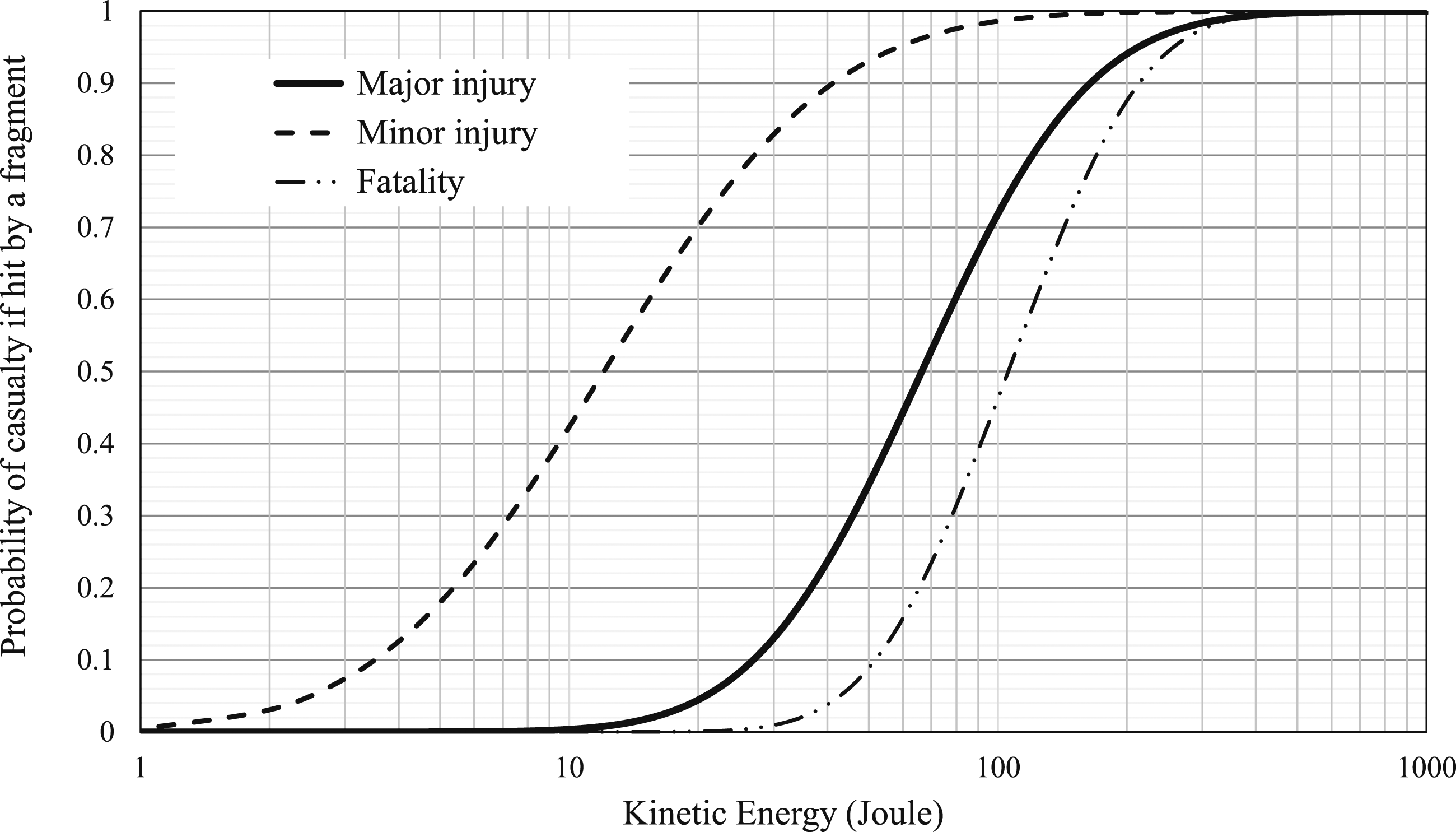
= 0.50 m2) facing the detonation point of a single munition or a pallet of munitions (the person standing within the fragment concentration azimuth and facing the long side of a pallet) as shown in Figure 4. The probabilities of fatality, major and minor injuries as a function of the kinetic energy (KE) of the fragment hitting an average standing person (i.e. human vulnerability) are modelled by a lognormal function An average standing person facing the detonation point at a standoff distance of R. Vulnerability curves for an average standing person if hit by a fragment.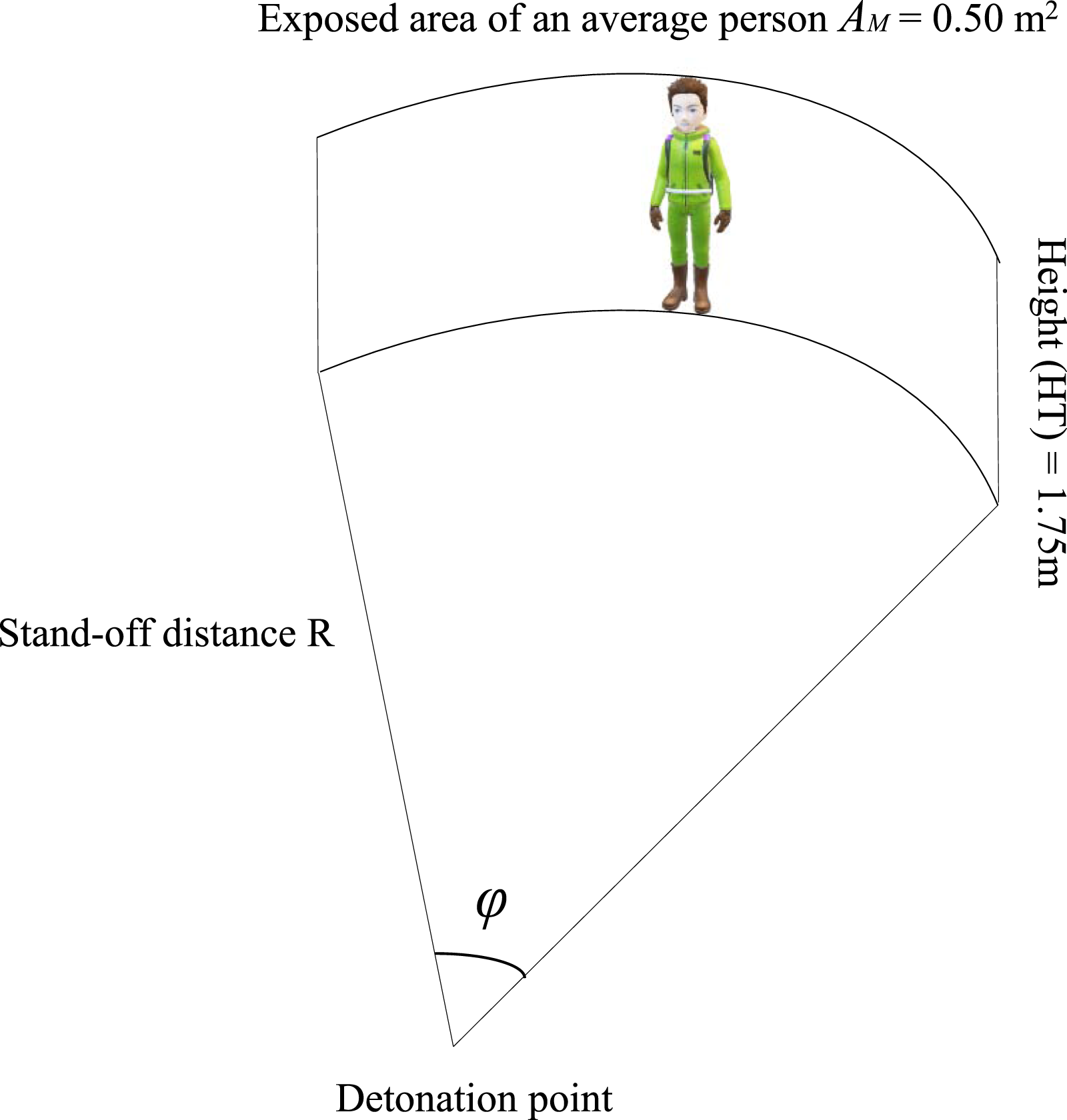

Risk estimation
At a standoff distance of R, the number of potential impacting fragments (N
R
) with location coordinates satisfying x = R and 0 ≤ y ≤ H
T
for the standing person can be obtained from the trajectory model described in Section 2.5. The corresponding kinetic energy (KE = mv2/2) can also be obtained for each fragment. The probability of fatality, P
j
(Fatality), due to impacting fragment j (j = 1, 2, 3, …, N
R
) each with a given KE
j
is


The fatality risk for the person with a standoff distance of R, P
Fatality
, is then given by

Similarly, the major injury risk (P MajInjury ) and the minor injury risk (P MinInjury ) for a standing person can be obtained using the same approach for fatality risks, just replacing the vulnerability function for fatality with those for major and minor injuries.
Hazardous fragment density
Fragments with kinetic energy over 79 J are deemed as hazardous by UN (2015) and NATO (2015). The quantity distance is typically defined as the distance that ensures there is no more than one hazardous fragment per 56 m2, that is, 0.0179 fragment/m2 (UFC 2014; NATO 2015; UN 2015). For a pallet of munitions shown in Figure 2, the quantity distance is governed by the hazardous fragment density in the directions within the fragment concentration azimuth and facing the long side of a pallet. The hazardous fragment density at a standoff distance of R, F
D
(R), is calculated by

Barricades
Barricades reduce fragment hazards primarily by stopping high-velocity low-angle fragments ejected from accidentally detonated single munition or a stack of munitions. This study considers using a wall-type barricade standing vertically. It is assumed that the material and thickness of the barricade are designed to guarantee that any fragment hitting the face of barricade will be stopped, and the barricade will not be destroyed due to the explosion before the hitting by fragments. This assumption may be slightly nonconservative as there might exist some fragments with very high energy impacting the barricade and exiting with reduced kinetic energies and altered trajectories. Since this is beyond the current modelling capacity and has a low occurrence probability for a properly designed barricade, its effects on the quantity distance and barricade size are not considered here but left for future research. The barricade design in this study is mainly to determine the height and separation distance of the barricade or the barricade intercept angle as shown in Figure 6. It is expected that both the hazardous fragment density and casualty risks will be reasonably reduced at standoff distances beyond the appropriately positioned barricade. Barricade size and position.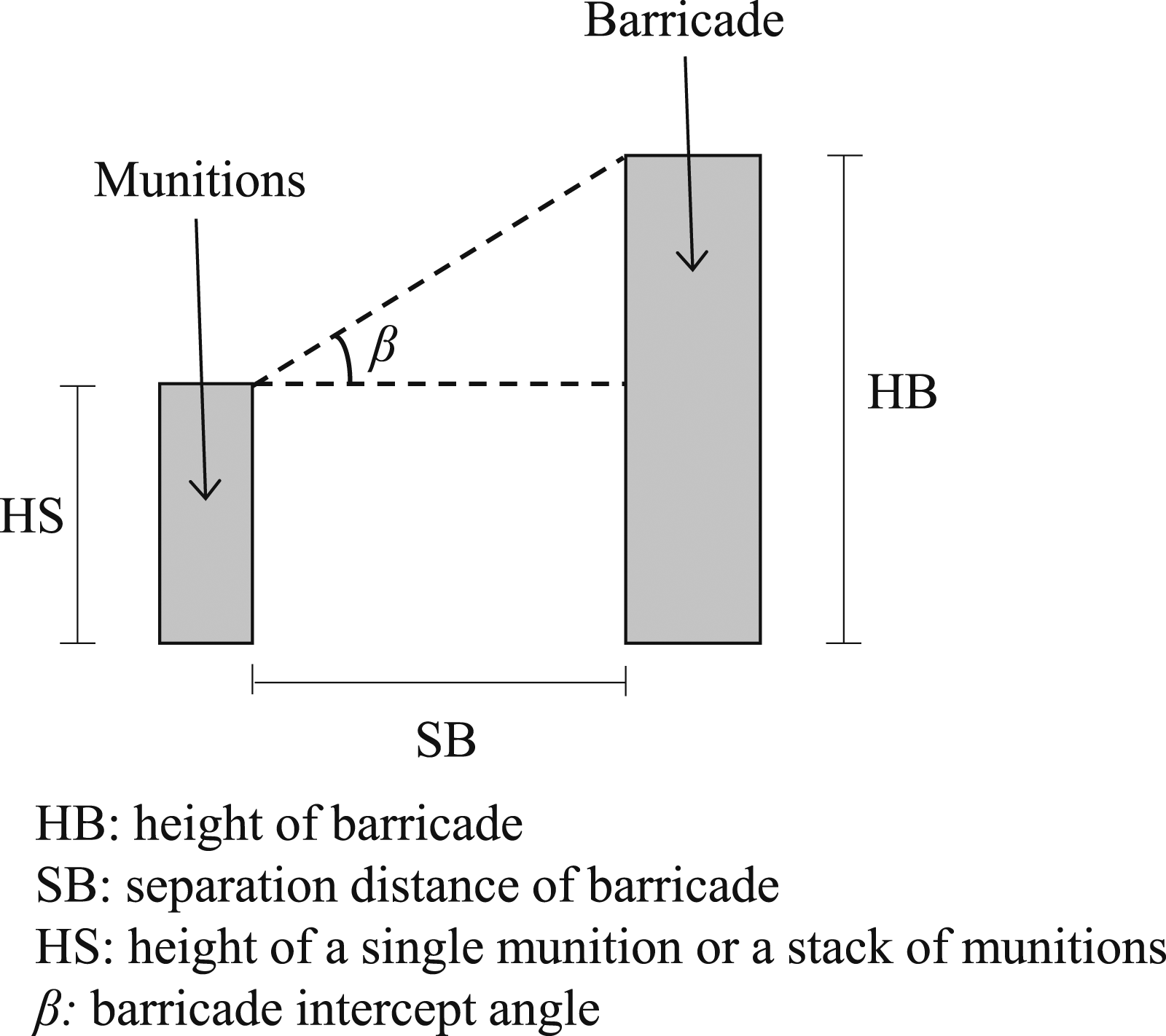
Monte Carlo simulation
Monte Carlo simulation (MCS) is employed to probabilistically assess the hazardous fragment density and casualty risks for a single munition or a stack of munitions. Barricades with different heights are also considered in the simulations to evaluate their effectiveness in mitigating fragment hazards. The outputs from the simulation are samples and statistics of hazardous fragment densities, fatality and injury risks for an average person standing at various distances from the detonation point as shown in Figure 4. Figure 7 shows a flowchart for the simulation procedures. Flowchart of the Monte Carlo simulation.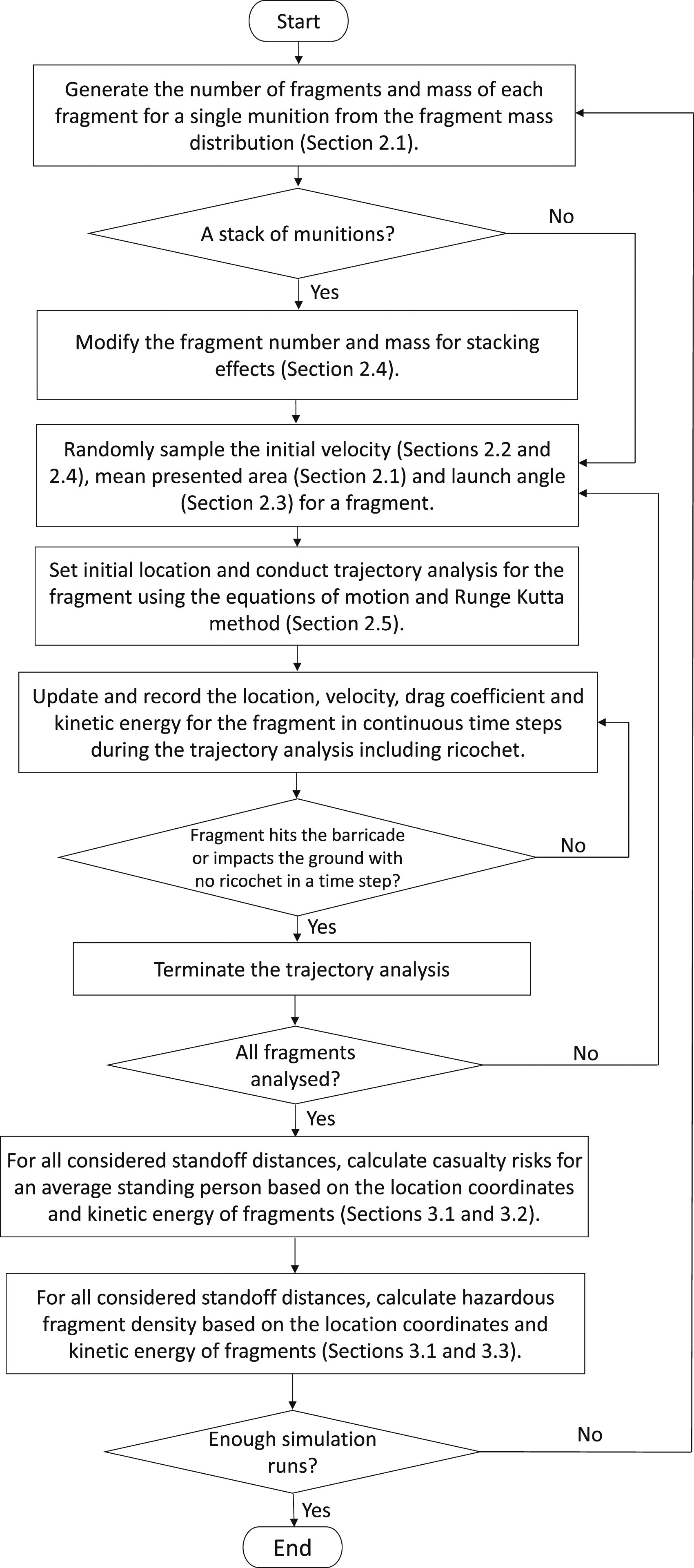
Casualty risk assessment and mitigation
The casualty risk assessments were conducted considering the detonation of a single and a pallet of 155 mm M107 projectiles vertically placed as shown in Figure 1. It is assumed that an average person in a standing position facing the detonation point is subjected to primary fragmentation hazards and without taking any evasive action. For a pallet of 155 mm M107 projectiles, the standing person is considered within 90◦ azimuth of the long side of the pallet.
The fragment mass distributions for a single and a pallet of 155 mm munitions were generated by the Held FMD considering stacking effects as described in Sections 2.1 and 2.4. The fragment mass was generated from the heaviest in a descending order by equation (2). The mass of each fragment and the cumulative fragment mass for a single and a pallet (for the azimuthal concentration area facing one long side of the pallet) of 155 mm munitions are shown in Figure 8, which reflects the modelled feature that the average fragment mass considering stacking effects is generally greater than that for a single munition (Section 2.4). Mass of each fragment and cumulative fragment mass generated by Held FMD.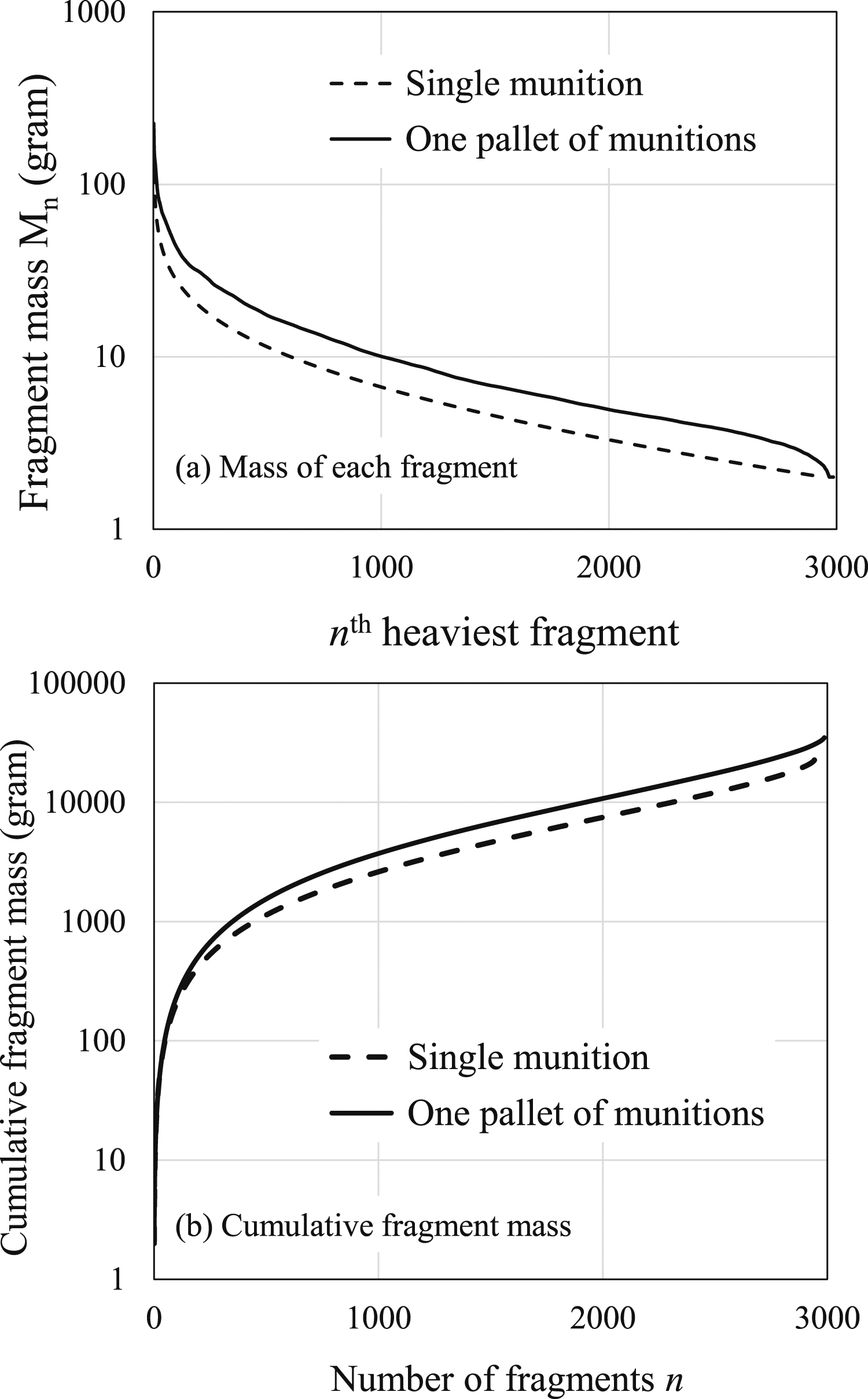
The fragment initial velocities considering stacking effects, launch angles, fragment shapes and drag coefficients can be generated based on the fragmentation modelling described in Section 2 that enables the trajectory analysis. The stochastic analysis was then conducted using the Monte Carlo simulation approach as outlined in Figure 7. Figure 9 shows the probability densities of fragment initial velocity that illustrates the high velocities and their variabilities as well as the stacking effects on initial velocities described in Section 2.4. Figure 10 shows the average fragment kinetic energies impacting a standing person. It illustrates how the average fragment kinetic energy decreases with increasing standoff distance and the differences between those corresponding to a single and a pallet of munitions. Probability densities of fragment initial velocity for a single and a pallet of 155 mm projectiles. Average kinetic energy of impacting fragments for a single and a pallet of 155 mm projectiles.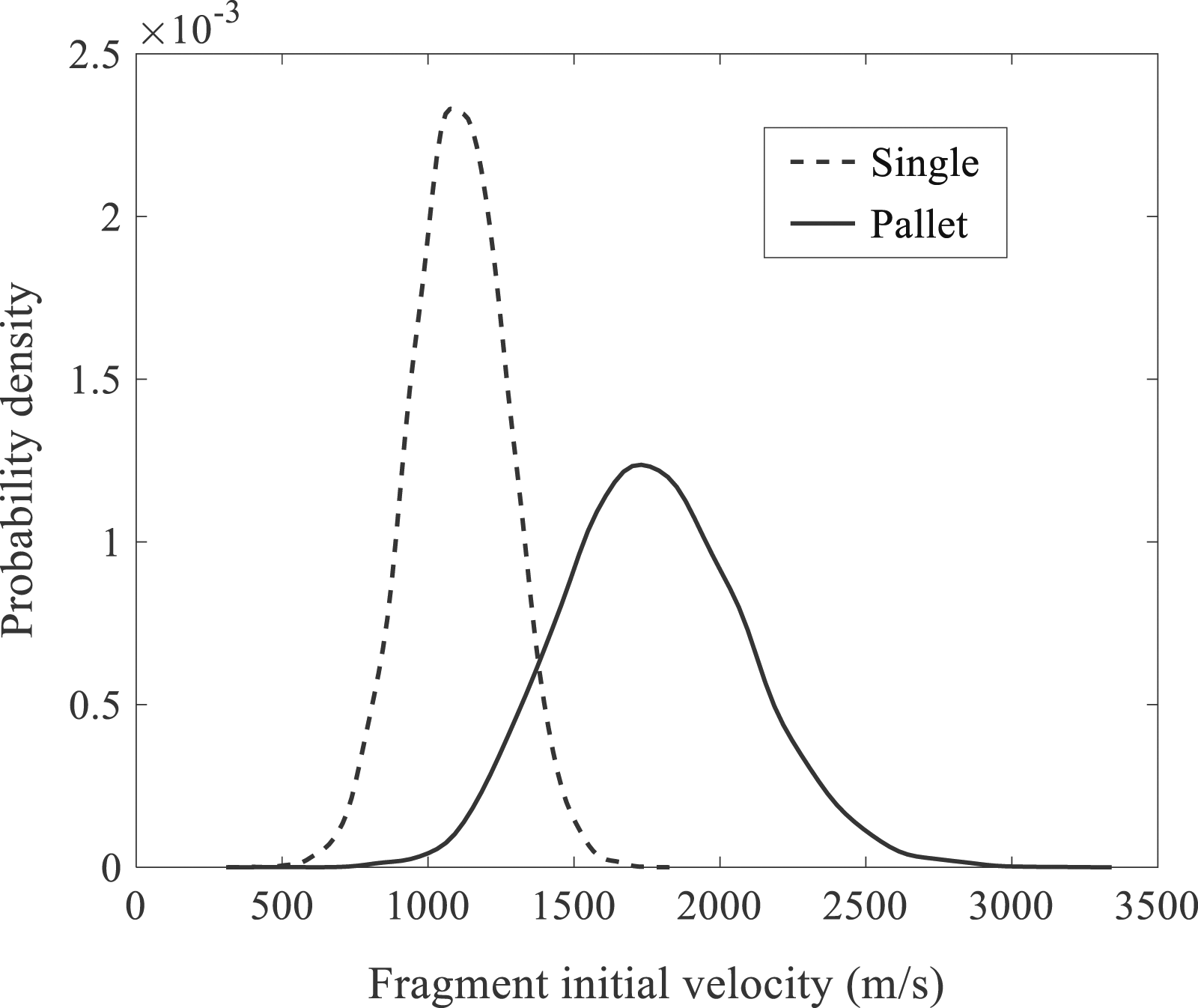

Fragment density
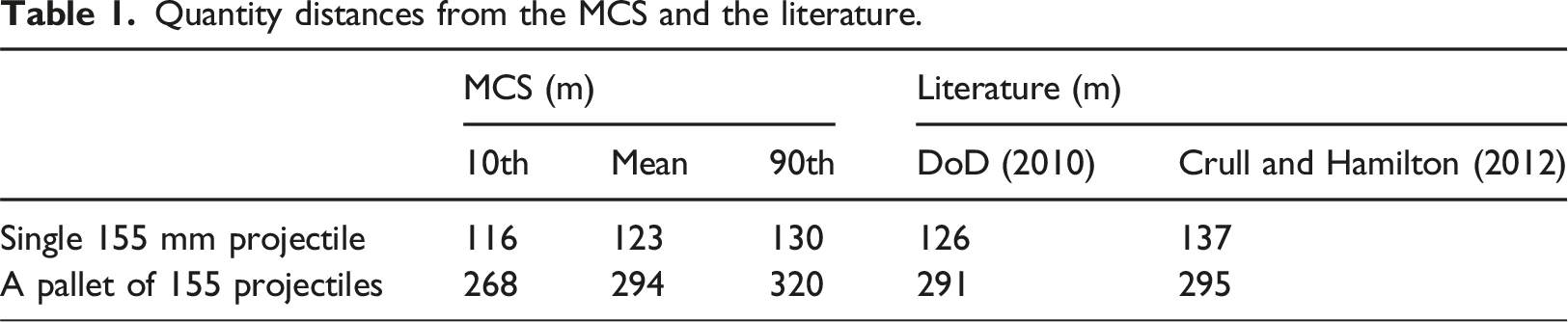
The hazardous fragment densities were obtained for a single or a pallet of 155mm projectiles. For a single munition, the hazardous fragment density is uniform over all azimuths, while for a pallet of munitions, the density is that in the direction within the fragment concentration azimuth and facing the long side of the pallet. Figure 11 shows the mean, 10th and 90th percentiles of the hazardous fragment density as a function of the standoff distance for a single or a pallet of 155 mm projectiles. The quantity distance criterion, that is, 0.0179 hazardous fragment/m2, is also shown in this figure. It is suggested that there is a slightly higher variability for fragmentation hazards from a pallet of munitions. The quantity (or safety) distances determined by the mean, 10th and 90th percentiles of the hazardous fragment density are 116 m, 123 m and 130 m, respectively, for a single munition, and 268 m, 294 m and 320 m, respectively, for a pallet of munitions (see Table 1). The quantity distance for a single 155 mm projectile matches well with that given by the U.S. Department of Defense (DoD 2004) which is 126 m and less conservative than that given by Crull and Hamilton (2012) which is 137 m. The quantity distances for a pallet of 155 mm projectiles the Monte Carlo simulation (MCS) in this study which also aligns well with those given by DoD (2004) and Crull and Hamilton (2012) which are 291 m and 295 m, respectively. A major benefit of the current stochastic model is its ability to quantify the uncertainties involved in the assessment of the hazardous fragment density and quantity distance. Hazardous fragment densities for a single or a pallet of 155 mm projectiles. Quantity distances from the MCS and the literature.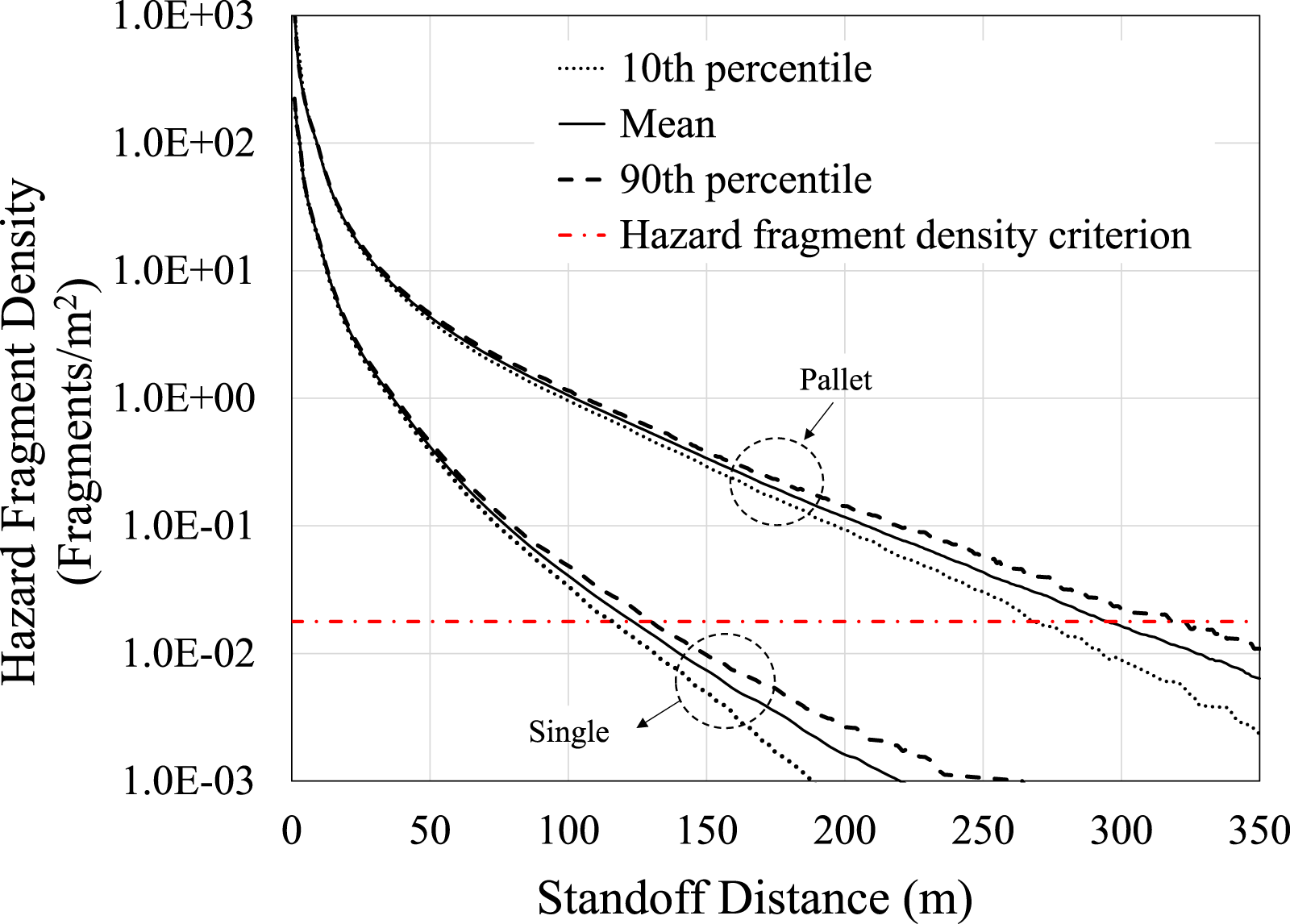
Casualty risks
Figure 12 shows the casualty risks where major injury risk is the likelihood of an individual subjected to at least a condition of major injury (i.e. major injury or fatality), and minor injury risk is the likelihood for an individual experiencing a minor injury or worse (i.e. minor injury, major injury or fatality). As expected, the individual fatality and injury risks decrease with an increasing standoff distance. The casualty risks from the detonation of a pallet of 155 mm projectiles are much higher than those from a single 155 mm projectile, which is consistent with the hazardous fragment density results shown in Figure 9. The curves for fatality, minor and major injuries corresponding to a pallet of projectiles are less smooth than those for a single munition because more uncertainties are involved to model fragments from a pallet of munitions while the number of simulation runs remains the same. According to Crull and Hamilton (2012), an alternate criterion for quantity distance is the distance to ensure a 1% probability of being struck by a hazardous fragment that results in incapacitation (i.e. major injury or worse). Based on this criterion, the quantity distance is 123 m for a single 155 mm projectile and 310 m for a pallet of 155 mm projectiles that are close to or consistent with those determined based on the hazardous fragment density in Table 1. It helps demonstrate the credibility of the stochastic analysis described herein. Casualty risks corresponding to the detonation of a single or a pallet of 155 mm projectiles.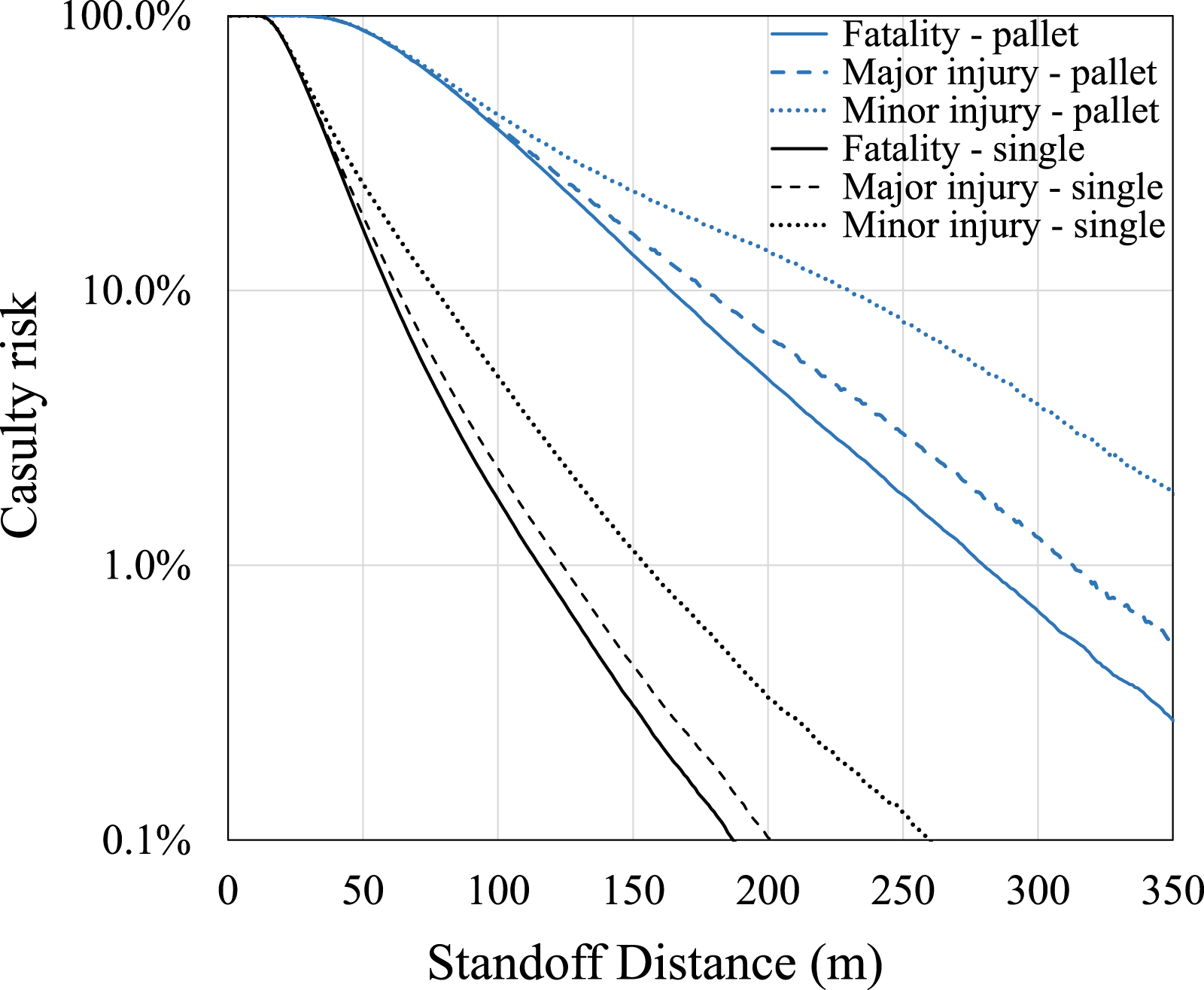
Figure 13 shows the likelihood of the average standing person experiencing a fatality only, major injury only and minor injury only (‘only’ means the person exclusively experiences a fatality, a major or a minor injury). The figure suggests that the probability of major injury only is the lowest for both a single and a pallet of 155 mm projectiles. As fatality and injury are mutually exclusive, the probability of injury only is relatively low when the standoff distance is small with a high fatality risk. There is a threshold distance beyond which the person more likely suffers a minor injury rather than fatality. For a single 155 mm projectile, this distance is 76 m, while 179 m for a pallet of 155 mm projectiles. Probability of fatality only, major injury only and minor injury.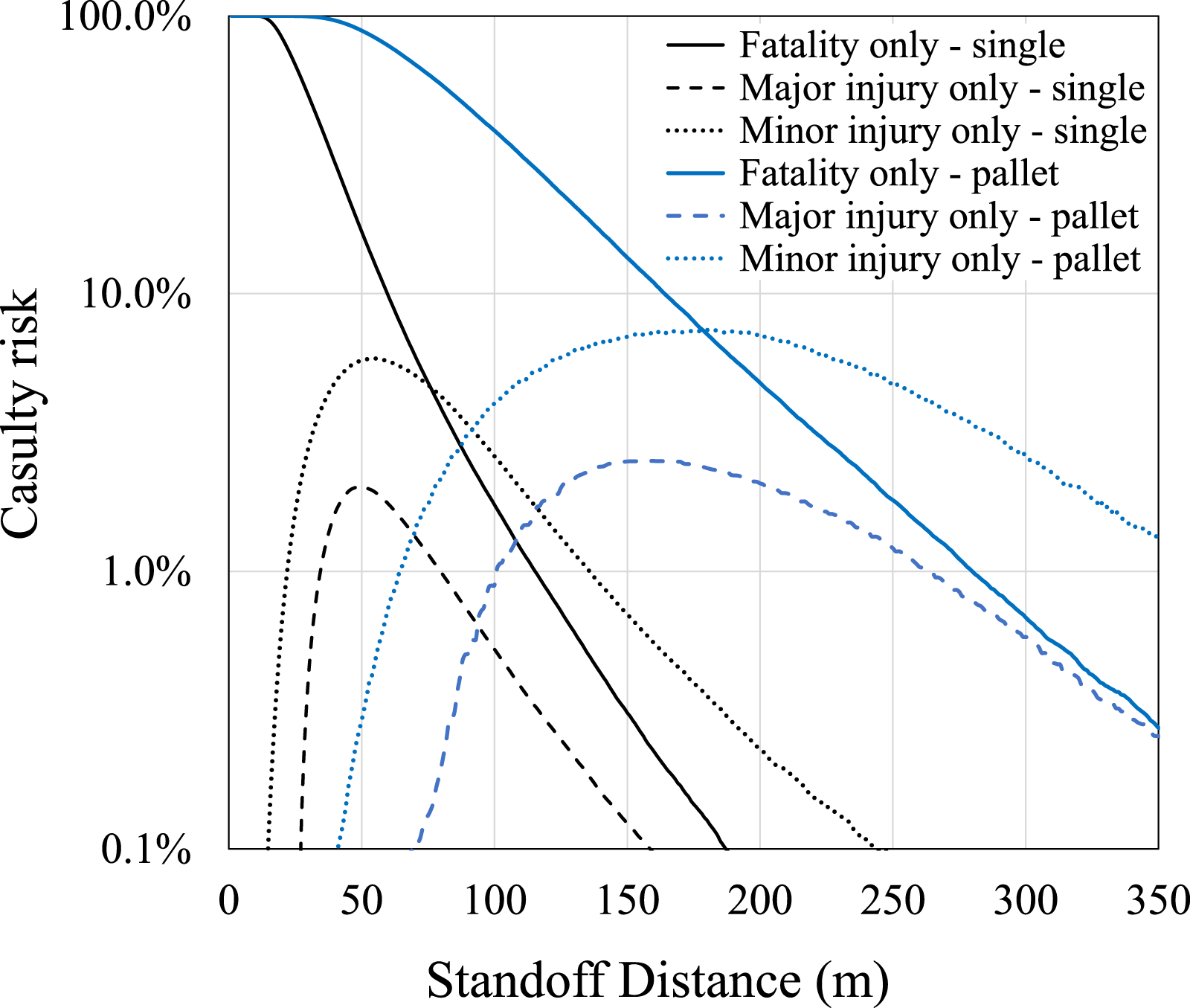
Risk mitigation by barricades
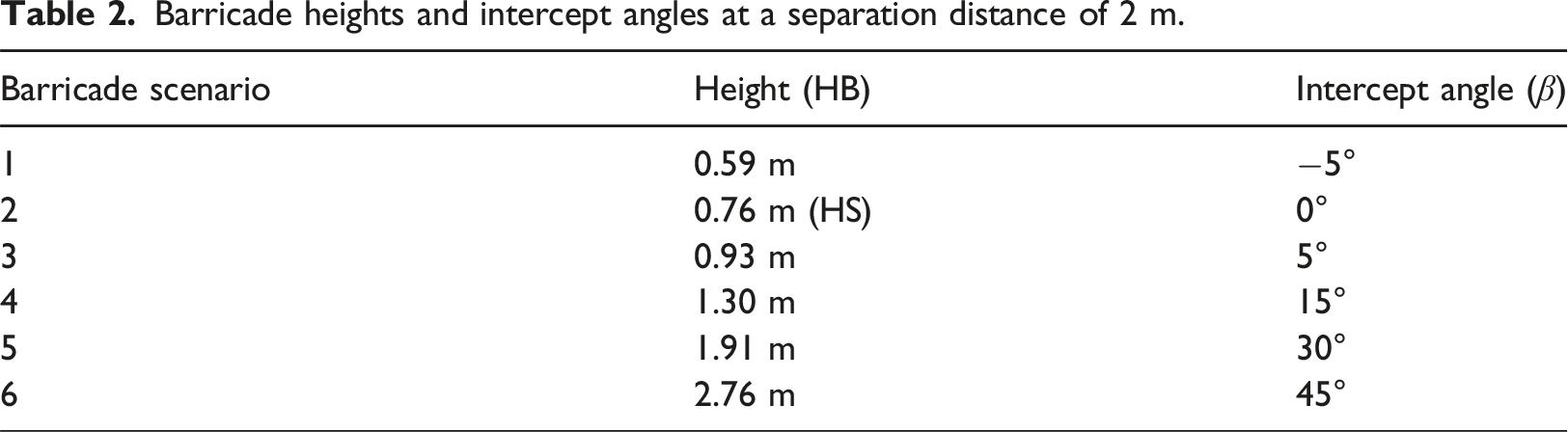
Barricade heights and intercept angles at a separation distance of 2 m.

Mean hazardous fragment densities considering various barricade scenarios. (a) Single, (b) Pallet.
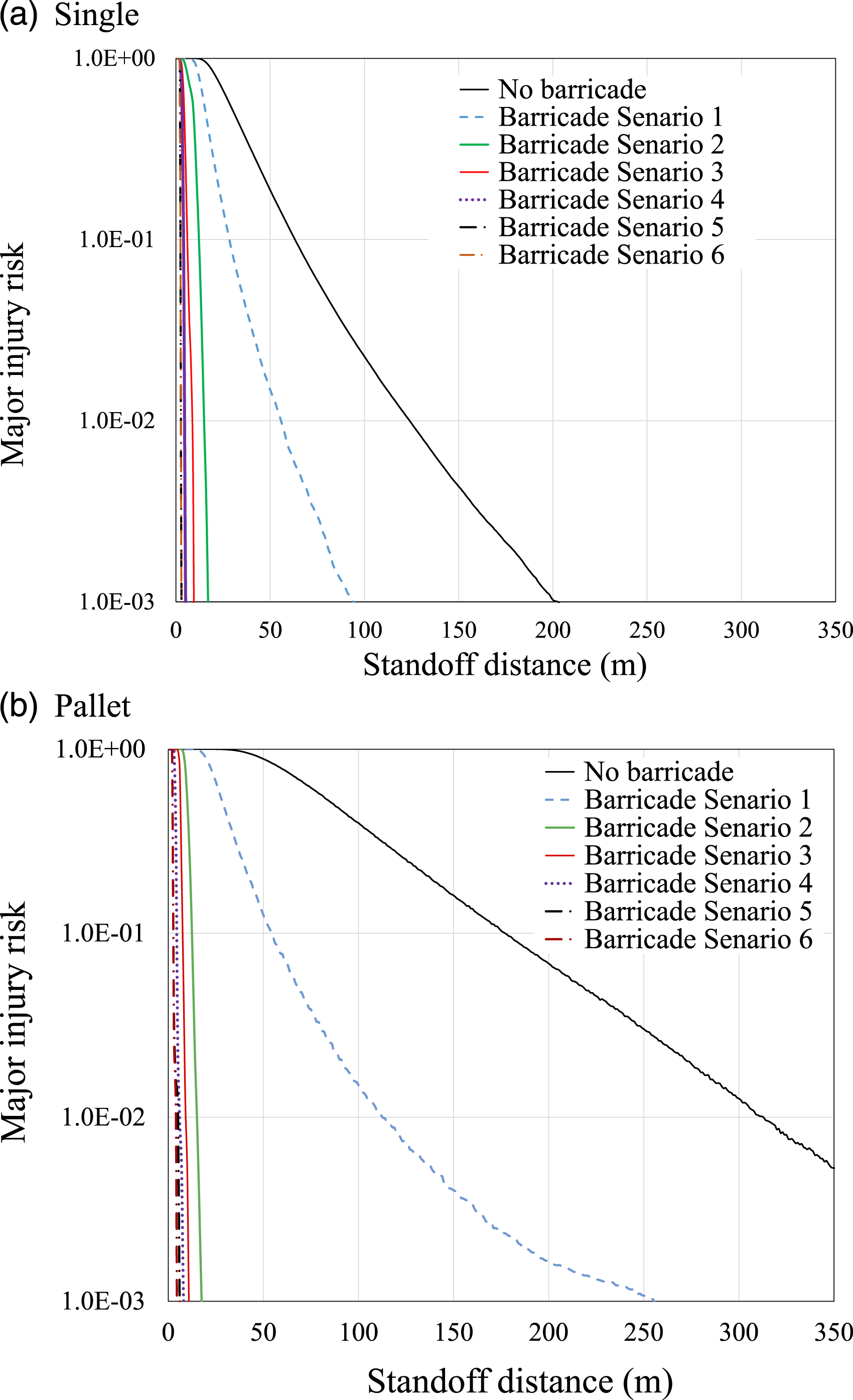
Incapacitation risks (major injury risks) considering various barricade scenarios. (a) Single, (b) Pallet.
Note that a flat ground is considered for all above analyses in Sections 6.1–6.3. Fragment trajectories can be shortened up-hill and elongated down-hill if a constant slope is considered. In principle, more complex terrains (terrains with spatially varying elevations) may be considered in the model, however, the effects of terrain on assessing and mitigating casualty risks from fragmentation hazards are left for future study.
Conclusions
This study developed a probabilistic risk assessment (PRA) approach to provide decision support for the positioning of barricades that can reasonably mitigate primary fragmentation hazards from the detonation of large calibre munitions. This PRA approach enables a stochastic characterization of fragment generations, stacking effects, fragment trajectories, human vulnerability and fragment hazard reduction by barricade. The quantity distances obtained from the present PRA for unbarricaded single and a pallet of 155 mm projectiles align well with those quantity distances from existing standards and literature, which demonstrates the model capacity for predicting hazardous fragment densities and casualty risks. Barricades with various heights were then introduced. It was found that barricades can significantly reduce the hazardous fragment densities and casualty risks beyond the barricade for both a single and a pallet of 155 mm projectiles. The benefit of increasing the barricade height becomes marginal when it exceeds the height of munitions. The choice of the barricade height depends on whether it is required to eliminate casualty risks immediately behind the barricade or whether a very short distance with intolerable casualty risks is allowed beyond the barricade.
Footnotes
Declaration of conflicting interests
The author(s) declared no potential conflicts of interest with respect to the research, authorship, and/or publication of this article.
Funding
The author(s) disclosed receipt of the following financial support for the research, authorship, and/or publication of this article: The support of the Australian Research Council grant DP210101487 is gratefully acknowledged.
