




Abstract

© Press Association

The Tories have been called the most successful party in the democratic world. But Brexit has exposed deep divisions within Conservatism.
The Conservative party is regularly cited as the oldest and most electorally successful political party in history. At various points in its long genealogy, Conservatives have mobilised a well-oiled party machine that has proved adept at winning votes. The Tories dominated British governance between 1886 and 1997, but will the divisive business of managing Brexit impact on the party’s ability to win future elections? How healthy is the Conservative party of today? If we were to examine under the bonnet of the contemporary Conservatives will we find that it needs a tune-up? Or does it require an entirely new driver?
Since the run-up to the EU referendum, the British news media has taken particular interest in reporting a range of dramas from inside the Tory party. However, one outlet has particular relevance when examining the contemporary internal mechanisms of the Conservative party – the blog ConservativeHome (ConHome). ConHome is an understudied and underused resource that acts as a silo for diverse internal and external perspectives on the state of the Tory party and British conservatism. Informed by an archive of ConHome newsletters as well as wider media and scholarly sources, this article examines the state of the Conservative machine. It includes comparisons of the party pre- and post- EU referendum 2016, ‘and analysis of its factions, leadership, organisation and supporters.
Conservative factions
ConHome was founded by Conservative journalist Tim Montgomerie in the run-up to the 2005 Tory leadership election to act as a voice for the party’s grassroots. It fast became a digital window, offering a degree of transparency, into the inner workings and debates of the Conservative party. The evolution of ConHome as an unofficial yet influential component of Conservative machinery in the digital age could be likened to the origins of the 1922 Committee of MPs. In October 1922, a cadre of Tory MPs met at the Carlton Club, in London. The group subsequently contributed to ending the coalition with the Liberals and forcing a general election. After winning the election, Conservative MPs formed a committee, named in honour of the Carlton Club meet. Nowadays, the 1922 Committee is a powerful, organised voice for backbench Tory MPs.
The Conservatives’ evolution can help inform the tensions evident in the party of today. Since its early prototypes, the Conservative party has been constituted by historical ebbs and flows of parliamentary groupings. Unity and schism between different factions has often centred on debates around British trading relations, from Tories and Whigs and Conservatives and Peelites, through to protectionists and free traders and imperialists and economic liberals, and, today, Leavers and Remainers. The fraught debate about ‘hard’ versus ‘soft’ Brexit is the latest iteration of a long-running trend.
Conservative (dis)unity
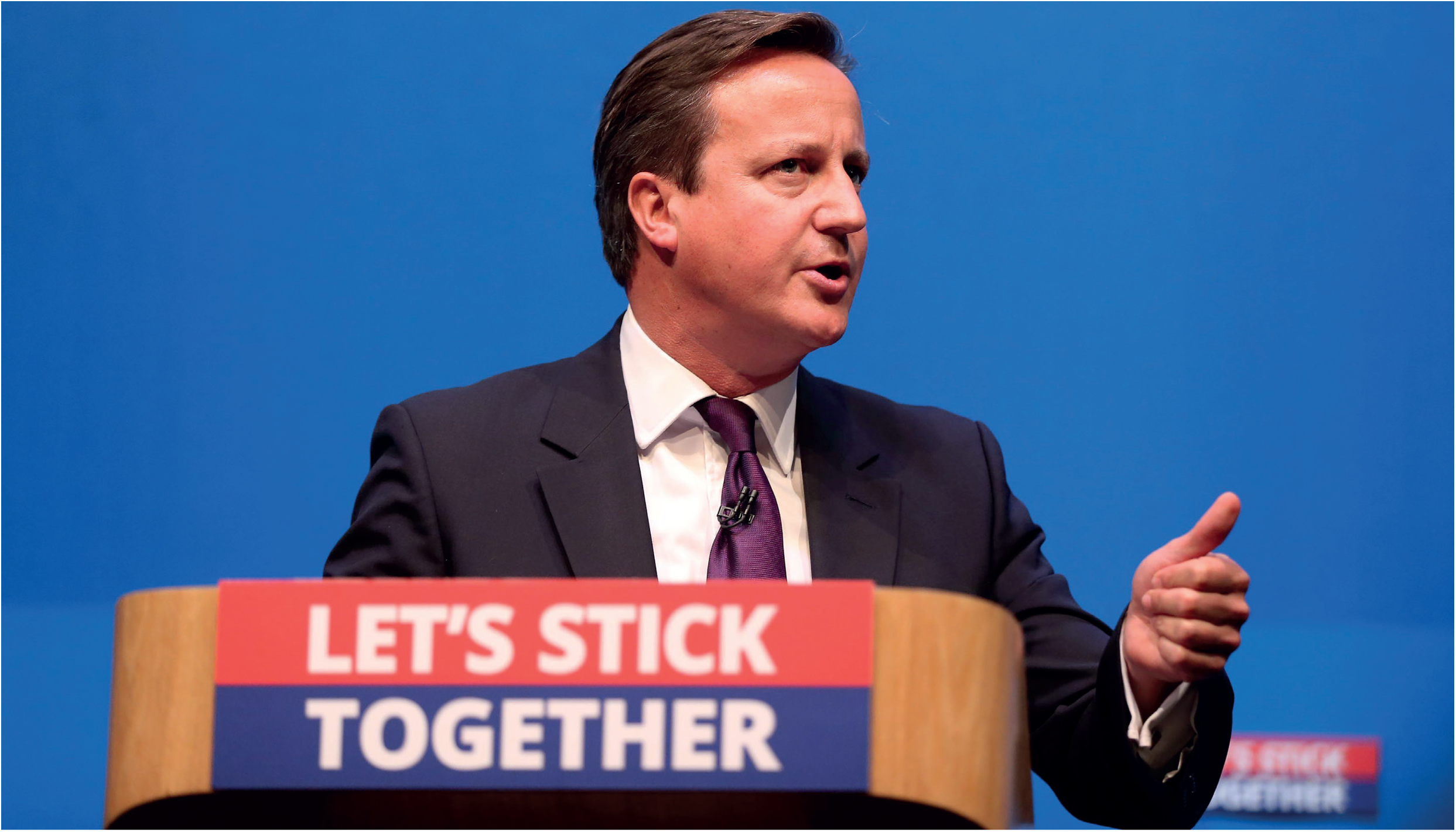
Ahead of the EU referendum in 2016, a Daily Telegraph article likened David Cameron’s Brexit legacy to the Conservative party split under Sir Robert Peel. As Prime Minister from 1841 to 1846, Peel led a Conservative party that was deeply divided over the repeal of the Corn Laws, a debate catalysed by famine in Ireland. This debate highlighted clear ideological differences within the Conservative party, between protectionist and free trade factions. The former were in favour of maintaining tariffs on imported grain. The latter group, and Peel himself, favoured repealing the tariffs. Like Brexit, the event symbolised the disunity in the Conservative party and was soon followed by Peel’s departure from office. Like Peel, Cameron acted and split the Conservative party, was forced to resign, and bequeathed a legacy of Conservative governments that struggled to win an overall majority in the House of Commons. After Peel, a Conservative majority in the Commons was not seen again until almost 30 years later in 1874, under Benjamin Disraeli.
Given the historical similarities with current events, it begs the question: will deep divisions over Brexit blight the Conservatives’ future in the same way? Certainly, since the EU referendum, there has been an unexpected yet sustained upsurge in support for the Labour party under Jeremy Corbyn. Will the present, but long held, Eurosceptic-Europhile divisions in the Conservative party provide Corbyn’s Labour with an easy ride to 10 Downing Street? This is something many Tories fear. Yet, some Conservative MPs seem to be taking a hammer to the party’s public face. Prominent Remainer Anna Soubry MP has been regularly denting the party with her repeated criticisms of Brexit. Soubry – who has threatened to resign from the party if a Leaver succeeds Theresa May – has suggested that her own personal brand of thought is ‘proper conservatism’. ConHome’s editor, Paul Goodman, unpacks the notion of proper conservatism and argues that there is no such thing, suggesting Soubry has no more or less right than any other Tory to define what is meant by conservatism in Britain. However, the fact that Conservatives are openly questioning what conservatism is in relation to Brexit is evidence that the party is having a post-referendum identity crisis.
Conservatives perform best electorally when the party exhibits unity through the maintenance of strong discipline. The Remainer rebellion in December 2017, led by Dominic Grieve MP, the former Attorney General in Cameron’s government, placed the appearance of party unity in long-term jeopardy with growing divisions being reported across the media. This rebellion saw prominent Tories join with opposition parties to defeat the government and gain a legal guarantee of a parliamentary vote on any final UK EU exit deal. The mutiny was symbolic of the struggles in the party since the EU referendum and a demonstration that under May’s premiership, the party’s ability to enact discipline in the Brexit context is significantly curtailed. These intensifying divisions demonstrate that the contemporary party is deeply divided over Brexit, without signs of reconciliation.
© Press Association
Theresa May has struggled as premier. There was the ‘weak and wobbly’ 2017 election campaign, her accident-prone second term, a slew of ministerial scandals, attempts by MPs to remove her from office and seemingly endless headlines about her failure to lead the party. But she has continued in office regardless. The Remainer Justine Greening MP, who notably declined the offer of a new role in May’s New Year 2018 cabinet reshuffle, suggested on BBC Question Time that the party ought to get behind the Prime Minister. Similarly, after leaving the Celebrity Big Brother house, former Tory MP and Leave supporter Ann Widdecombe said that Theresa May has shown great resilience in an unenviable position and, again, that the party should get behind her.
These public votes of confidence in May suggest the potential for common ground between prominent Leave and Remain supporters in the party. Interestingly, where there is room for accommodation between the two sides, it tends to be about supporting May’s premiership. However, whether the party is able to pull itself together and demonstrate a united front on an issue as divisive as Brexit remains a huge ask given its historical tendency for division, particularly on the issue of trade.
Tory leadership
As Richard Hayton argues, the Brexit divisions running through contemporary conservatism are the outward face of an ingrained ideological gulf deep in the party’s DNA. Ultimately, Brexit highlights the failure of ‘project Cameron’ to modernise successfully the party from its inherent factional characteristics. Moreover, Cameron’s EU referendum acted as a trigger, bringing to the surface latent Tory disunity, which now flashes visibly like a warning light for all to see.
History will judge May on her ability to deliver Brexit and keep her party together in the process. Indeed, it is a benchmark she has repeatedly set herself, most notably, in the Lancaster House speech of January 2017. If the Conservatives are to avoid the kind of electoral difficulties that followed the resignation of Peel – and are to mend not only a divided party but, also, a divided nation and union – then the outcome of the Brexit negotiations must offer the type of catch-all appeal that has been at the root of Conservative electoral successes over the centuries. However, as Andrew Gamble points out, delivering a Brexit that pleases such a broad swathe of popular opinion seems a ‘Herculean task’.
Conservative support
Robert Ford and Matthew Goodwin suggest that the origins of the Brexit outcome can be found in the leanings of a nationalistic and socially conservative generation. These traditional Conservative supporters, particularly in England, became disaffected by decades of socially liberal change, which came into conflict with their own values. In the decade or so leading up to the EU referendum, the Tories, in particular, lost segments of their supporters, members, activists and politicians, to the right-wing populist party Ukip (United Kingdom Independence party). The rise of Ukip and Cameron’s decision to hold the Brexit vote is further evidence that the more liberal Tory policies under Cameron’s leadership failed to inspire segments of traditional Conservative supporters. However, as Ford and Goodwin point out, since the referendum Britain has become increasingly polarised and split across voting groups divided by age, geographical location (urban/rural), and levels of education. There has also been a decline in support for smaller parties and what appears to be a return to two party politics with greater policy distance between left and right.
Since the late 1990s, the Conservative machine has struggled to drive the types of electoral successes witnessed under Thatcher and Major 1979-97, during which time the two sides of the European integration debate were alive and kicking in the Parliamentary Conservative party. In the contemporary context, in acting to strengthen parliamentary sovereignty, through securing a vote in Parliament on any Brexit deal with the EU, Conservative rebel MPs could have risked trust in the Tory party for a generation. Should any parliamentary vote lead to an abandonment of Brexit altogether, it seems plausible that scores of unforgiving Conservative Leave supporters could shift indefinitely to Ukip or another right-wing alternative.
Obstacles ahead
According to media reports, growing campaigns against the Tory government aim to stop Brexit in its tracks and ‘bring down the government’. One potential hazard on the horizon is the rise of groups opposed to Brexit, such as Best for Britain, which is bankrolled by billionaire financier George Soros. Meanwhile, Brussels is intensifying strategic tactics in order to strong-arm May’s government and reach EU objectives, which, in Britain, is increasingly framed as the EU punishing the UK for voting for Brexit. Political powers at home have also created further complications for the Conservative government. The Scottish government has called for immigration powers, which would likely be an inflammatory prospect south of the border.
Nonetheless, possibly the greatest Brexit obstacle for the government to overcome is the question of the European customs union and its implications for a border/less relationship between the Republic of Ireland and the UK. The Conservatives’ minority government partners, the Democratic Unionist party, demonstrated the power to halt Brexit negotiations when, in December 2017, DUP leader Arlene Foster refused to support any deal that would see Northern Ireland leave the EU on different terms to the rest of the UK. May eventually signed an agreement that ‘in the absence of agreed solutions, the United Kingdom will maintain full alignment with those rules of the Internal Market and the Customs Union which, now or in the future, support North-South cooperation, the all-island economy and the protection of the 1998 Agreement.
The December talks showed how the contemporary Conservative machine could stall at the most crucial of Brexit crossroads. Consequently, at times, May’s government has appeared to be headed for Brexit without a compass. If the Conservative government is to reach a destination that delivers on the democratic will of the people, a clearer strategic road map should be a major priority – albeit a seemingly insurmountable task.
The Tory machine
The Tory machine is looking broken and in need of a major overhaul. In September 2017, ConHome reported that Conservative party membership was ‘down by a quarter’. This followed an upsurge in membership after the EU referendum, which evidently was not fertilised. It suggests that since Cameron’s resignation, the party’s central operations have been neglected and that the party organisation is in poor health. In many respects, Brexit has meant crisis for the Conservative party. This could, perhaps, have been avoided if, firstly, Cameron had stayed on to clean up the mess he started, and, secondly, May had resisted hubris and the urge to call a snap election, the decision for which seems largely based on her early popularity and positive opinion polls.
The Conservatives’ future success sits on a knife-edge. No matter how fit the Conservative party machine, given the complex political dynamics in the post-referendum context, the task before the party, and its leader, is undeniably one of the greatest challenges the UK has faced in decades. Theresa May’s ‘Brexit means Brexit’ mantra, which was significantly weakened following the outcome of the 2017 election, must have generated frustration for the Leave camp in the party. Yet, the Leavers have largely protected May’s position – perhaps because, aside from the famous mishaps, Brexit milestones are being reached, albeit slowly. For Tory Remainers, a change of leader, at this stage, is also risky – especially when the alternative leadership favourites seem to be ardent ‘Brexiters’ like Boris Johnson and Jacob Rees-Mogg. In this sense, Theresa May’s premiership is keeping the party in some form of stasis. Moreover, she has demonstrated formidable endurance in what is proving to be an endurance race.
The final act
If Theresa May can utilise such strength to deliver a meaningful Brexit and heal her party, history might after all liken her to Margaret Thatcher, the first female prime minister. The stage management of the final act in the Brexit negotiations will be central to the Conservatives’ future electoral fortunes. The Government’s ‘Road to Brexit’ speeches by key Brexit ministers are an attempt to begin a recovery of a united Tory brand. However, for it to be effective, the party needs to present a united front and silence key dissenters, like Soubry; and divert attention from anachronistic figures, like Rees-Mogg, who continue to highlight deep rifts in the party. The government’s ability to deliver a Brexit acceptable to a broad church in the party and the country is the most crucial criterion for the future of Conservative success. If divisions continue to grow, then a Conservative electoral calamity looks evermore likely.
Footnotes
Anthony Ridge-Newman is co-convenor of the PSA Conservatives and Conservatism Specialist Group. He is a Lecturer at Liverpool Hope University. His books include: ‘Cameron’s Conservatives and the Internet (2014); The Tories and Television (2016); Reporting the Road to Brexit (2018).