



Abstract

© Press Association
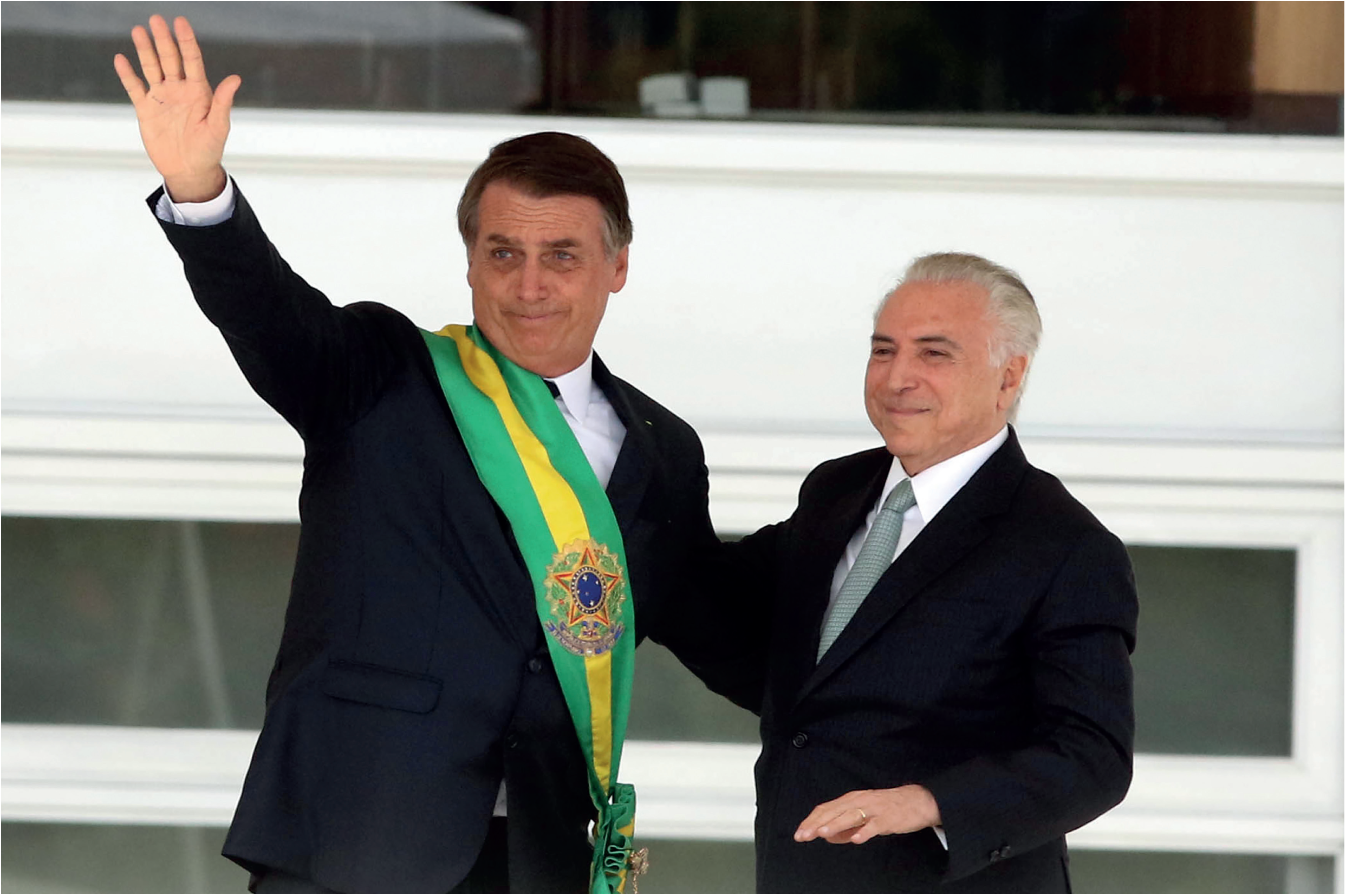
Jair Bolsonaro won a surprise victory in last year’s Brazilian presidential election on a promise of radical right-wing change. But can the ‘Tropical Trump’ tackle Brazil’s economic and political crises?
On 28 October 2018, the right-wing candidate Jair Messias Bolsonaro received 55 per cent of valid votes in a second round run-off election for the Brazilian presidency. His victory shook the political establishment and signalled that voters were fed up with the corruption associated with the ‘old politics’ in Brazil’s relatively new democracy.
Bolsonaro’s victory has raised numerous questions for Brazilian politics. Why did an outsider from the fringe win? What are the political challenges facing Bolsonaro’s government? What is the likelihood that he achieves the reforms promised to voters? And, finally, to what extent do elections in Brazil reflect those elsewhere?
Bolsonaro’s victory
The explanation for Bolsonaro’s success can be found in both long-standing structural features of Brazilian society and the political and economic crises that framed the run-up to October’s election. Additionally, the international context mattered. The perception that a president with Bolsonaro’s profile and positions – he was dubbed the ‘Tropical Trump’ – was an internationally acceptable option that helped seal his victory.
© Press Association
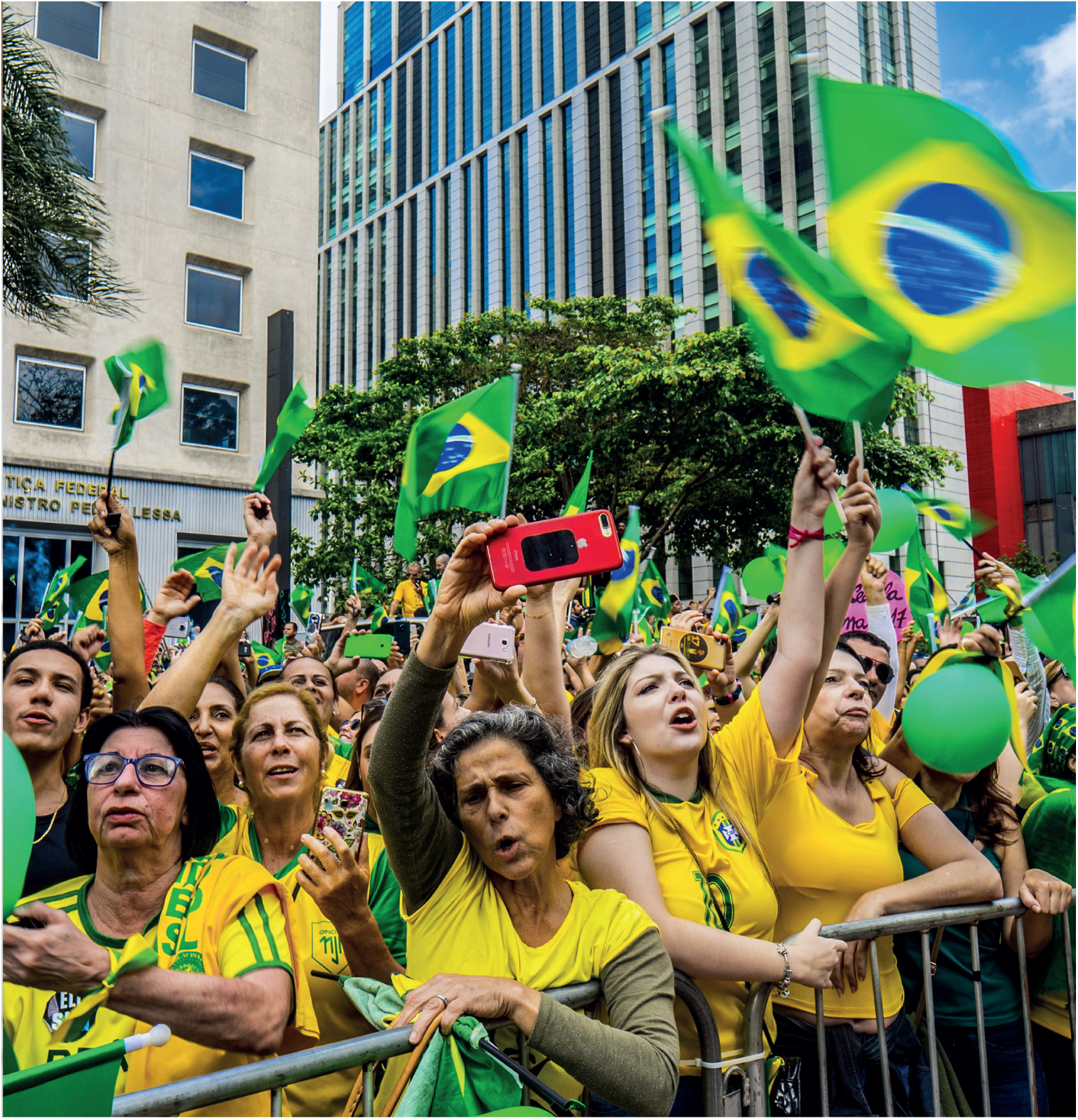
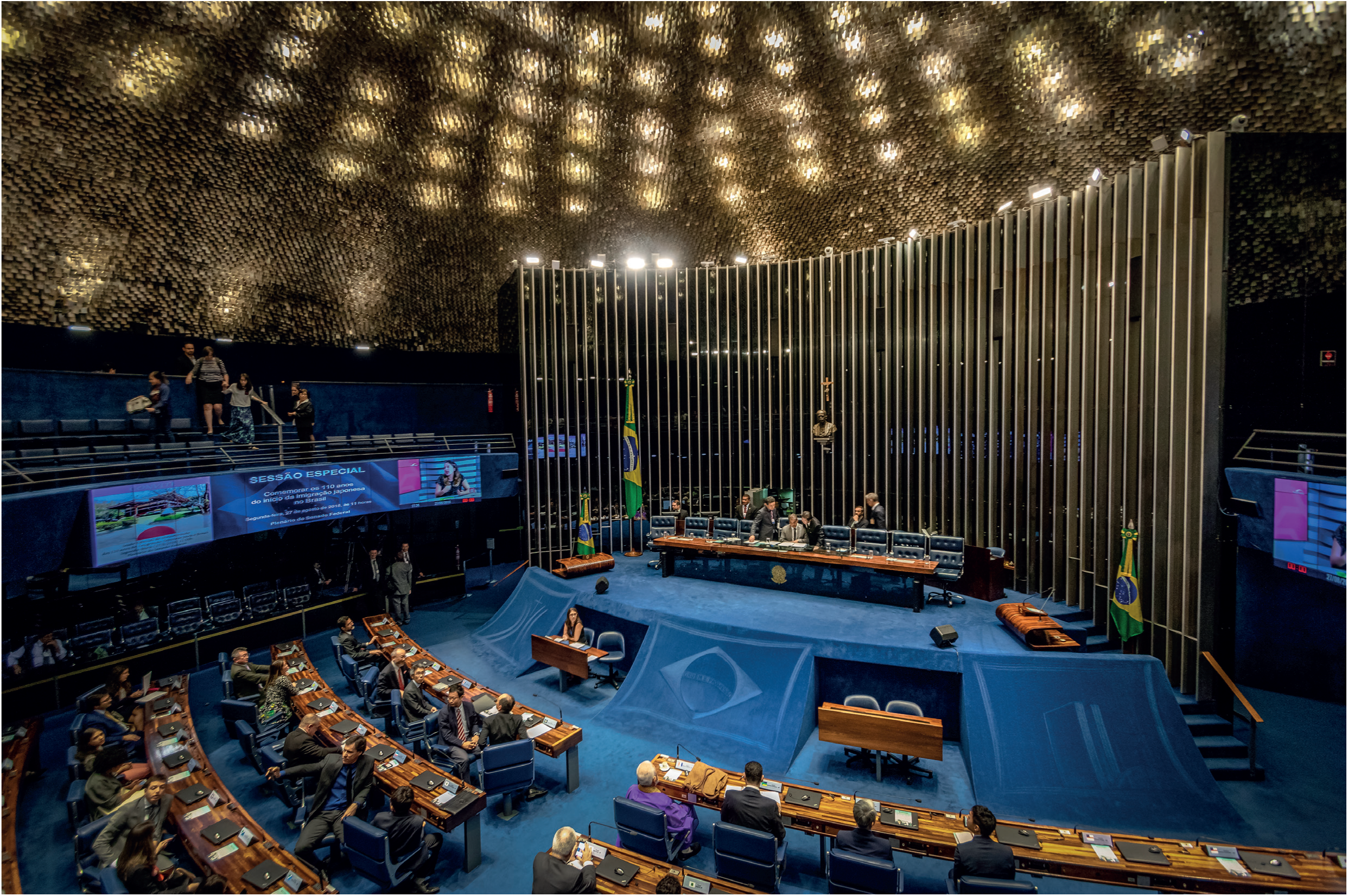
Brazil’s presidential system, set out in the 1988 Constitution, created a popularly elected majoritarian executive, but with a bicameral legislature where the Chamber of Deputies is elected via open list proportional representation. This typically results in a highly fragmented Congress (some 30 parties won seats in 2018) and a permanent situation of divided government. Previous presidents managed to deliver governability to the extent that they were able to pull together multi-party supportive coalitions, referred to as coalition presidentialism. However, corruption was often the underlying mechanism used to achieve the necessary legislative support, as revealed by recent police investigations and judicial rulings. Moreover, the president’s agenda typically received pragmatic rather than programmatic support, putting a premium on good negotiating skills within the executive to ensure smooth relations with Congress.
High levels of economic inequality as well as social marginalisation of large parts of the Brazilian population created an extremely unequal society, where many citizens were excluded from having any political voice. In 2018, Brazil was among the top ten most unequal countries on the planet, according to the World Bank. Oxfam found that the six richest Brazilians had more wealth than the bottom half of the population, i.e. 100 million people. The Brazilian statistics agency, IBGE, reported that some 55 million Brazilians lived in poverty, over 12 per cent were unemployed, and white workers earned on average about 72.5 per cent more than black and mixed-race workers. According to the Inter Parliamentary Union, Brazil ranks 133rd for women’s participation in the legislature. Just 15 per cent of Brazil’s legislators and only one out of 27 governors are women. Although black women make up some 27 per cent of the population, they hold only about 1 per cent of all elected offices, at all levels of government.
Thus, coalition presidentialism and high levels of economic and social inequality resulted an increasingly polarised polity and society. According to Latinobarometro’s 2017-2018 survey, Brazilians reported the lowest levels of approval for their government (6 per cent) and satisfaction with democracy (nine per cent) in the region. Only two in five said they preferred democracy over authoritarianism). This dismal picture was the setting for presidential, gubernatorial and legislative elections in Brazil in October 2018. The deteriorating economic and political conditions further dented the legitimacy of the incumbent regime.
Economic and political crises
The economic and political crises that provided the backdrop for Bolsonaro’s victory had been brewing for a number of years. In late 2014, the Brazilian economy entered into an unprecedented two-year recession where gross domestic product fell by a cumulative 8 per cent. Unemployment rose above 12 per cent – 23 per cent if the underemployed are included – and investment stalled. Alongside the recession, public debt levels rose, and the fiscal accounts were clearly unsustainable. (More than half of the federal budget went on paying pensions alone.) The post-recession recovery has been very slow. The economy grew by only 1.1 per cent in 2017, and a similar amount the following year. Austerity policies continue to have a harsh impact on ordinary citizens’ lives.
Arguably, however, it was the ongoing political crisis that had the most decisive electoral influence. The political crisis had two prongs that gradually converged in the mind of the electorate. First, in March 2014, an investigation was launched into corruption, initially involving Petrobras, the national oil company. ‘Operation Car Wash’ ensnared leaders and senior figures in various political parties in the governing coalition. Gradually, the investigation exposed and implicated a much wider web of companies and politicians in Brazil and abroad in a range of illegal activities, involving over US$ 10 billion. In the next four years, over 1,000 search and arrest warrants were issued to individuals in some 14 political parties of both government and opposition. More than 125 people were convicted, including former President Luiz Inacio Lula da Silva. The corruption scandals discredited the ruling Workers’ Party (PT), but also tainted most of Brazil’s political elite.
Second, the Workers’ Party faced an impeachment crisis that shook its support among Brazil’s emergent middle classes. Although President Dilma Rousseff narrowly won re-election in 2014, the PT’s credibility evaporated as the economy nose-dived into recession and the party became mired in corruption. The burgeoning middle class, created by the PT’s earlier economic and social policy successes, felt its new status threatened and bitterly turned against the party, especially Rousseff. The recession also saw the business sector turn away from the government and soon it was openly calling for the President’s impeachment. After an acrimonious process, Rousseff was impeached in August 2016. Instead of addressing citizen protests and business concerns in the run up to the 2018 elections, the PT wallowed in pointless self-righteousness, insisting the impeachment was a coup. It also wasted time and political effort by insisting on nominating imprisoned leader, Lula, as the PT’s 2018 presidential candidate. (Fernando Haddad only replaced Lula on the day before ballots were to be finalised.) Another misjudgement was the PT’s refusal to accept any blame for the political and economic crises engulfing the country, further alienating many voters.
The corruption scandals and the impeachment crisis severely weakened trust in the traditional political class. Ordinary citizens were outraged and disgusted with establishment politicians of all stripes. To make matters worse, public security deteriorated rapidly. Fear escalated as homicides reached record levels, with over 63,000 in 2017. Demands for a tough approach to violence and crime grew. Unsurprisingly, the 2018 elections saw voters turn against establishment parties and candidates: there was an unprecedented 52 per cent turnover in membership of the Chamber of Deputies, and voters rejected presidential candidates from all the traditional governing parties. In effect, voters not so much voted for Bolsonaro as voted against the PT and others associated with the ‘old politics’.
Political challenges ahead
The twin economic and political crises fed off each other and created the perfect moment for a candidate like Jair Bolsonaro to catch the attention of voters and win the presidential election. A retired army officer, he had been a rather politically inept deputy for the previous 28 years – in this sense he was neither an insider nor a complete outsider. On the rare occasions he came to national attention, it was more often than not for his outrageous remarks. He once called a female deputy ‘too ugly to rape’ and dedicated his impeachment vote to the military officer who had tortured Rousseff when she had been a political prisoner during the military dictatorship.
Bolsonaro’s informal style, speaking directly to his social media followers, turned traditional campaigning on its head. His strident anti-corruption and tough-on-crime message resonated strongly with the electorate. His support for conservative cultural and social positions helped court the evangelical caucus in Congress, while his tough stance on violence and crime and connections with the military broadened his appeal. Bolsonaro’s lax views on protecting the environment and preserving indigenous populations and land found favour with certain sections of agribusiness and the rural economy. On the campaign trail he promised that he would eschew old-style political bargaining and horse-trading with political parties, and instead focus on issue-based interests of different sections of Brazilian society (dubbed the ‘Bibles-Bullets-Beef’ caucus). It was a message that appealed to an electorate disenchanted with the old system. Decisively, his intention to institute more market-friendly economic policies boosted business support and popular hopes for economic recovery.
The stagnant economy and polarised dysfunctional political system presented four immediately identifiable political challenges for Bolsonaro: First, given his reluctance to work with political parties in Congress, how did the new President intend to pass the legislation required to deliver his reforms and policy agenda? It is unlikely that the sectional interests in parliament will provide enough votes, especially on the structural reforms that require super-majorities in Congress to approve any necessary constitutional amendments.
Second, how did he plan to balance the nationalist preferences of his military backers with the liberalisation and privatisation message sold to markets? Business in Brazil has long relied on an interventionist state to support it, and a pro-market liberal agenda is not necessarily seen as a pro-business one in Brazil. Moreover, the military cannot be expected to support privatisation of key national assets, and is likely to hinder any such moves.
Third, given his campaign promises to rural constituencies and negligent stance on environment and climate change issues, how was he going to balance demands for immediate economic growth with environmental concerns and longer-term sustainable development goals? This issue generated the most international attention, and could have significant implications for Brazil’s competitiveness in commodity markets, particularly for agriculture and minerals.
Fourth, given the high levels of unemployment, low investment and almost stagnant growth, how did the government hope to balance the promises of economic growth with the needs for austerity to allow for the much-needed fiscal adjustment? The population expects economic activity and employment prospects to pick up quickly, but capital markets are waiting for signals indicating progress on the reform agenda before committing to any investment. Unsurprisingly, these four challenges with their contradictions and tensions manifested themselves almost immediately, and the government struggled in its first months in office.
Underwhelming performance
After a loud and flashy campaign, Bolsonaro’s performance in his first hundred days in office was rather underwhelming, to say the least. Indeed, the government admitted that it did not achieve even half of its self-set goals in its opening period in office. The first weeks were taken up with political infighting, conflicting policy agendas, policy flip-flops, unnecessary foreign policy confrontations, and confusingly contradictory statements between the President and his ministers. The involvement of Bolsonaro’s sons and allies in corruption allegations and investigations did not help matters.
The first three months seem likely to set the tone for the Bolsonaro presidency. The timetable for progress on the top policy priority, pension and social security reform, has already slipped, not least because of poor relations with Congress, specifically the Speaker and party leaders. By April there had already been two resignations from the Cabinet, including Education Minister Ricardo Velez who wanted to change school textbooks to delete references to Brazil’s military government as a dictatorship. There were also confrontations between Bolsonaro’s family members and political allies. The President’s lack of executive experience and the minimal political knowhow among his advisors and ministers often make matters worse. The many retired military generals, who hold key Cabinet posts, have often stepped in to play a stabilising role in the government.
The President seems keen to use random populist initiatives to rally his base, particularly on social media. Following President Trump, Bolsonaro breezily announced that he planned to move the Brazilian Embassy in Israel from Tel Aviv to Jerusalem. The proposed switch demonstrated his foreign policy team’s ignorance of the fragile balance achieved by Brazilian diplomacy in the complex politics of the Middle East, not to mention his lack of understanding of the extensive trade interests of his country’s agribusiness sector in Arab states. This key constituency in Bolsonaro’s coalition prevailed, and he was forced to reverse his decision on the eve of an official visit to Israel in April. Even more embarrassingly, after visiting Jerusalem’s holocaust museum, he insisted that Nazism was a leftist movement (an argument defended by Foreign Minister Ernesto Araujo, a critic of so-called ‘cultural Marxism’).
Bolsonaro’s election reflects growing popular disenchantment with democracy, or at least disappointment with the political establishment and party politics. Brazilian voters, like voters from the US to Italy to Ukraine, have deliberately turned to non-traditional candidates and political mavericks who criticise the current system and effectively voice voters’ frustrations. They successfully play on voters’ disillusionment and precarious economic situation to garner electoral support, typically via savvy use of social media. It is too early to predict where this will all end. However, one thing is certain, Brazil’s story is not, and will not be, unique.
Footnotes
Mahrukh Doctor is a Reader in Political Economy at the University of Hull.