




Abstract
This article analyzes the phenomenon of single candidates in Indonesia's 2020 local elections, where the number increased compared to the previous local elections. Although initially local elections with single candidates were not intended, by a ruling of the Constitutional Court a local election must still be carried out even if there is only a single pair of candidates. The number of single candidates has increased, as it becomes an easier and cheaper way to ensure victory, particularly for incumbents. This condition is strengthened by the culture of political parties that tend to provide support to candidates who possess a greater chance of winning in order to take control of the government and form political cartels. Although presently it has not been indicated that single candidates are a form of oligarchic rule and political dynasty, it may become an easy way to obtain political power.
Introduction
One of the manifestations of democratization in Indonesia is the decentralization of power, in the form of providing regional autonomy. Local or regional governments are no longer situated solely as the extension of the central government, but as the organizers of governance in regions. Regions constitute legal units of society that possess autonomy. This is expressed in Article 18 Paragraphs 1, 2, and 5 of the 1945 Constitution, which provides a guarantee of local government organization based on the principle of the broadest autonomy.
The organization of local governments must be conducted democratically. Article 18 Paragraph 4 of the 1945 Constitution states that Governors, Regents, and Mayors as the chiefs of local governments should be elected democratically. The phrase “elected democratically” was translated by lawmakers as direct elections by the people. This has been expressed starting from Law No. 32 of 2004 on Local Governments up to Law No. 1 of 2015 that has been amended several times. Direct elections by the people were temporarily replaced by elections by the local parliament (DPRD) based on Law No. 22 of 2014. However, strong reactions from the people caused Law 22 of 2014 to be in effect for only three days, and it was repealed and replaced by Government Regulation in Lieu No. 1 of 2014, which was then enacted as a law through Law No. 1 of 2015.
Direct local elections of the Head of Local Government (Local Election) were first organized in 2005 based on Article 233 of Law No. 32 of 2004. Up to the execution of the 2020 local elections, there have been various dynamics from both organization and execution practices. Dynamics in organization among others are related to direct and indirect mechanisms, the legal regime of Local Elections, the authority to resolve disputes of results, and time of organization and simultaneity of execution (Kelliher et al., 2019). From the standpoint of execution practices, some of the problems that have occurred are money politics, political dynasties, and the phenomena of incumbents and single candidates.
This article will analyze the phenomenon of single candidates in the 2020 local elections. Local elections with single candidates have increased in number, but not many studies have presented data and analyses. In the 2015 local elections, there were only three regions with single candidates out of the 269 regions that organized local elections. The number of single candidates has continued to increase to nine in 2017, 15 in 2018, and 25 in 2020. Table 1 shows a list of local elections in 2020 with single candidates.
Local elections with single candidates in 2020.

Source: KPU Data, processed.
This article has the objective of first describing the quantitative and qualitative data for the phenomenon of single candidates, specifically in the 2020 local elections. This analysis is intended to explain the context for the appearance of single candidates. Second, in general, the phenomenon of single candidates has been stated as the manifestation of oligarchy in regions (Damanik, 2020; Hakim, 2017; Pratama et al., 2019; Romli, 2018). However, there is no presentation and explanation of empirical data on how actors of oligarchy utilize local elections as the means of maintaining the domination of wealth. Single candidates could indeed become a path for forces of oligarchy, but cannot be said to be a manifestation of oligarchy itself. Single candidates may also become a way for the rule of political dynasties to ensure victory. Interests of oligarchies and dynasties converge with the mainstream of political cartels from political parties to control government policies and resources.
The final part of this article will present regulatory ideas in order to reduce the potential of single candidates. The explained policy alternative is the reduction of support requirements for candidate pairs from political parties or independent figures.
The analysis was carried out using doctrinal and empirical methods. The doctrinal method is used to analyze the laws related to single candidacy and formulate ideas for improving the rules to prevent it. The empirical method uses secondary data, i.e based on that of the General Elections Commission (KPU), previous research and publications, and information from the mass media. The data is analyzed to find patterns of using a single candidate to ensure victory in local elections.
Regulations on single candidates
Stipulations for Local Elections were initially designed to necessitate that they involve two or more pairs of candidates. The law does not intend that Local Elections only involve a single pair of candidates. Article 61 Paragraph (1) of Law No. 32 of 2004 that was last amended by Law No. 12 of 2008 affirms that after conducting research on candidate requirements, the Regional General Elections Commission (KPUD) establishes at least two pairs of candidates. There are no further stipulations on the mechanism that is to be conducted if in fact there is only one pair of candidates that registered or fulfilled requirements. This law instead anticipates the possibility of single candidates occurring after pairs of candidates have been established, by forbidding pairs of candidates to withdraw from the elections and political parties to retract the established pairs of candidates (Article 62 of Law No. 32 of 2004). This law also anticipates the possibility of candidates being permanently unavailable. Article 63 Paragraph (3) of Law No. 32 of 2004 establishes that if a pair of candidates is permanently unavailable, the execution of local elections is postponed for at most 30 days and political parties must propose a replacement pair of candidates.
Stipulations that are more detailed are found in Article 27 of KPU Regulation No. 7 of 2007 that has been replaced several times with KPU Regulation No. 15 of 2008, KPU Regulation No. 68 of 2009, and KPU Regulation No. 13 of 2010. However, the substance on the necessity of two pairs of candidates and the postponement mechanism if this is not fulfilled has not changed.
If the number of candidates that registered or fulfilled requirements is less than two pairs, the KPUD returns responsibility to political parties or coalitions of political parties to propose pairs of candidates that fulfill requirements within a time of 14 days until the requirement of at least two pairs of candidates are fulfilled. If two or more pairs of candidates that fulfill the requirements are still not present, the execution of local elections is postponed and the time will be established by a Presidential Decree (Article 149 of Government Regulation No. 6 of 2005). The absence of two or more pairs of candidates is categorized as a form of “other disruptions” that may become one of the reasons for postponing a local election. Based on these stipulations, only one local election was postponed due to only one candidate being present, which was for the City of Pekalongan that was originally planned to be held on April 7, 2010 (Ant/fid, 2010).
Law No. 32 of 2004 and its amendments were replaced by Law No. 22 of 2014 that changed the election of the Head of Local Government to be by the DPRD. This law gained strong reactions from the people, leading the President to issue Government Regulation in Lieu of Law No. 1 of 2014 that returned the election of the Head of Local Government to be directly by the people. This regulation was approved by the parliament (DPR) and enacted as Law No. 1 of 2015, which was then amended by Law No. 8 of 2015 (the Law on Local Elections). Stipulations that ruled out the possibility of local elections being conducted with a single candidate were not changed. Articles 51 and 52 of Law No. 1 of 2015 as has been amended by Law No. 8 of 2015 established that local elections may be conducted if they involve at least two pairs of candidates. This stipulation was further regulated with KPU Regulation No. 9 of 2015 and postponement was regulated in KPU Regulation No. 12 of 2015.
This new Law on Local Elections also regulated the simultaneity of execution. Local elections are to be held in 2015, 2017, 2018, 2020, 2022, 2023, and simultaneously nationally in 2027 (Article 201 Law on Local Election). In the 2015 local elections, several regions were under threat of having theirs postponed due to only having a single pair of candidates. Some of these regions were Minahasa Utara Regency, City of Surabaya, Pacitan Regency, Blitar Regency (Wibowo, 2015), and Tasikmalaya Regency (Chahyati, 2015).
The potential for local elections to be delayed compelled Effendi Gazali, a scholar and social activist, to file a request to review the norms that required local elections to involve two pairs of candidates in the Law on Local Elections to the Constitutional Court (CC). This request was registered as case number 100/PUU-XII/2015. The request was based on the phenomenon of a number of political parties that intentionally did not propose pairs of candidates in order to postpone local elections. On the other hand, the requirements for independent candidates are very steep. This situation has the concern that it may lead to many local elections being postponed in organization.
In making a Decision on this request, the CC considered two matters. First, local elections comprise the execution of popular sovereignty in regions. The Law on Local Elections must ensure the execution of popular sovereignty. Second, the 1945 Constitution contains the mandate that the Head of Local Government must be “elected” democratically. This necessitates the presence of a space or opportunity for the people to vote and be voted for (Paragraph 3.10, the CC Decision No. 100/PUU-XII/2015).
The CC stated that the norms in the Law on Local Elections show that the lawmakers intended to ensure that competition occurs in the organization of local elections by requiring that they involve at least two pairs of candidates. However, the lawmakers did not provide a solution if the requirement was not fulfilled. The CC saw that a legal void exists, which results in the postponement of or inability to organize local elections. Yet, local elections comprise the execution of popular sovereignty, and thus the legal void threatens popular sovereignty and violates their right to vote and be voted for (Paragraph 3.13, the CC Decision No. 100/PUU-XII/2015).
As the institution that guards the Constitution, the CC had the opinion that violations of the constitutional rights of citizens cannot be allowed to occur, particularly in relation to popular sovereignty. The CC was to provide a resolution for the deadlock that resulted from the law that was being reviewed (Paragraph 3.14, the CC Decision No. 100/PUU-XII/2015).
The postponement regulated by KPU Regulation No. 12 of 2015 was judged unable to resolve the issue based on two reasons. First, postponement to the next period of local elections is the same as depriving the right of people to vote and be voted for in the local elections at that time. Second, even if the postponement may be justified, there is still no guarantee that there would be two or more pairs of candidates in the next period of local elections. There is no guarantee that the right of people to vote and be voted for would be able to be fulfilled (Paragraph 3.14 the CC Decision No. 100/PUU-XII/2015).
The CC needed to find a way in order that the constitutional rights of citizens and popular sovereignty could still be fulfilled without being constrained by the requirement that local elections must involve at least two pairs of candidates. Local elections must continue to be executed even if there is only one pair of candidates after all earnest efforts have been made to obtain at least two pairs of candidates (Paragraph 3.14 the CC Decision No. 100/PUU-XII/2015).
Local elections involving only one pair of candidates should be considered as a last resort. In local elections that involve only one pair of candidates, the manifestation of competition is more precisely equivalent to a plebiscite that asks the people (voters) to make the choice between “For” and “Against”. If more people voted “For”, the candidate pair is established as the elected Head and Vice Head of Local Government. Conversely, if more people voted “Against”, the local election is postponed to the next period of local elections. This postponement is not against the Constitution because the people have decided on the postponement by voting “Against” (Paragraph 3.15 the CC Decision No. 100/PUU-XII/2015).
The CC stated that Article 49 Paragraph (9) of the Law on Local Elections that regulates that “The Provincial KPU reopens registration for pairs of Governor and Vice-Governor Candidate at most 3 (three) days after the postponement of stages as stated in paragraph (8)” must be understood as “including the establishment of one pair of Governor and Vice-Governor Candidate as election participants in the case that after having exceeded the stated period of three days there is still only one pair of Governor and Vice-Governor Candidate”. Also, stipulations of Article 50 Paragraph (9) of the Law on Local Elections that states that “The Regency/City KPU reopens registration for pairs of Regent and Vice-Regent Candidate as well as Mayor and Vice-Mayor Candidate at most 3 (three) days after the postponement of stages as stated in paragraph (8)” must be understood as “including the establishment of one pair of Regent and Vice-Regent Candidate as well as Mayor and Vice-Mayor Candidate as election participants in the case that after having exceeded the stated period of three days there is still only one pair of Regent and Vice-Regent Candidate as well as Mayor and Vice-Mayor Candidate” (Paragraph 3.16.3 the CC Decision No. 100/PUU-XII/2015).
To follow up on the CC Decision, the KPU created Regulation No. 14 of 2015 that specifically regulated local elections with one pair of candidates. In the following year, Law No. 10 of 2016 was created that amended the Law on Local Elections. The primary change was related to the execution of local elections with one pair of candidates according to the CC Decision. This change was followed by KPU Regulation No. 5 of 2016 that amended KPU Regulation No. 14 of 2015.
The victory requirement for local elections with single candidates is different from local elections with two or more pairs of candidates. For local elections with two or more pairs of candidates, electability is established with a simple majority system. The candidate with the greatest number of votes is established as the elected candidate. Meanwhile, for independent candidates, a stipulation applies that they must obtain 50% plus one of the total votes.
Single candidates: Ensuring victory
According to the CC Decision, local elections with single candidates with the plebiscite model began to be applied in the 2015 local elections. Since then, the number of local elections with single candidates has increased although the number of regions that held local elections has decreased. This is even in comparison to the number of local elections that involved incumbent candidates.
Figure 1 shows the increase of local elections with single candidates, being three in 2015, nine in 2017, 15 in 2018, and 25 in 2020. The number of single candidates kept increasing in 2017 and 2018, although the number of local elections in 2017 was for 101 regions and in 2018 was for 171 regions, in comparison to the 2015 local elections with 269 regions and the 2020 local elections with 270 regions.

Single candidates in local elections. Source: KPU Data, processed.
Figure 1 also shows that the electability of single candidates is nearly 100%. There was only one single candidate that was not elected, in the 2018 City of Makassar local elections. Initially, the City of Makassar local elections was in fact planned to involve two pairs of candidates, one of them supported by political parties and the other being independent. The candidate pair supported by political parties, in the organization process, was disqualified by the Election Supervisory Agency (Bawaslu), which was reaffirmed by a Supreme Court verdict, for having committed administrative violations that were structured, systematic, and massive (Febrian et al., 2019).
The electability rate of single candidates is very high in comparison to pairs of incumbent candidates overall, which are only between 50% and 60%. In 2015, there were 96 elected pairs of incumbent candidates out of 167 candidates (57.49%); in 2017, 37 candidate pairs out of 61 were elected (60.66%); in 2018, 64 candidate pairs out of 128 were elected (50%); and in 2020, 139 candidate pairs out of 230 were elected (60.43%) (Figure 2).

Background of single candidates.
In the 2015, 2017, and 2018 local elections, all single candidates were incumbents, except for the City of Makassar. In 2020, the number of incumbent candidates were 21 out of 25 single candidates, or 84%. Of the others, two were local parliament members and two were entrepreneurs. The votes gained by single candidates (affirmative votes) in the 2020 local elections were very high. Only one candidate obtained less than 60% of votes, while nine candidates gained over 90% of votes. This affirms the view that the incumbent is the side that can gain the greatest advantage if a single candidate could participate in elections (Luo, 2018).
The highest number of votes was for the single candidate pair of Arfak Regency, Papua, with 99.86% of votes. The percentages of votes for single candidates in local elections are presented in Figure 3.
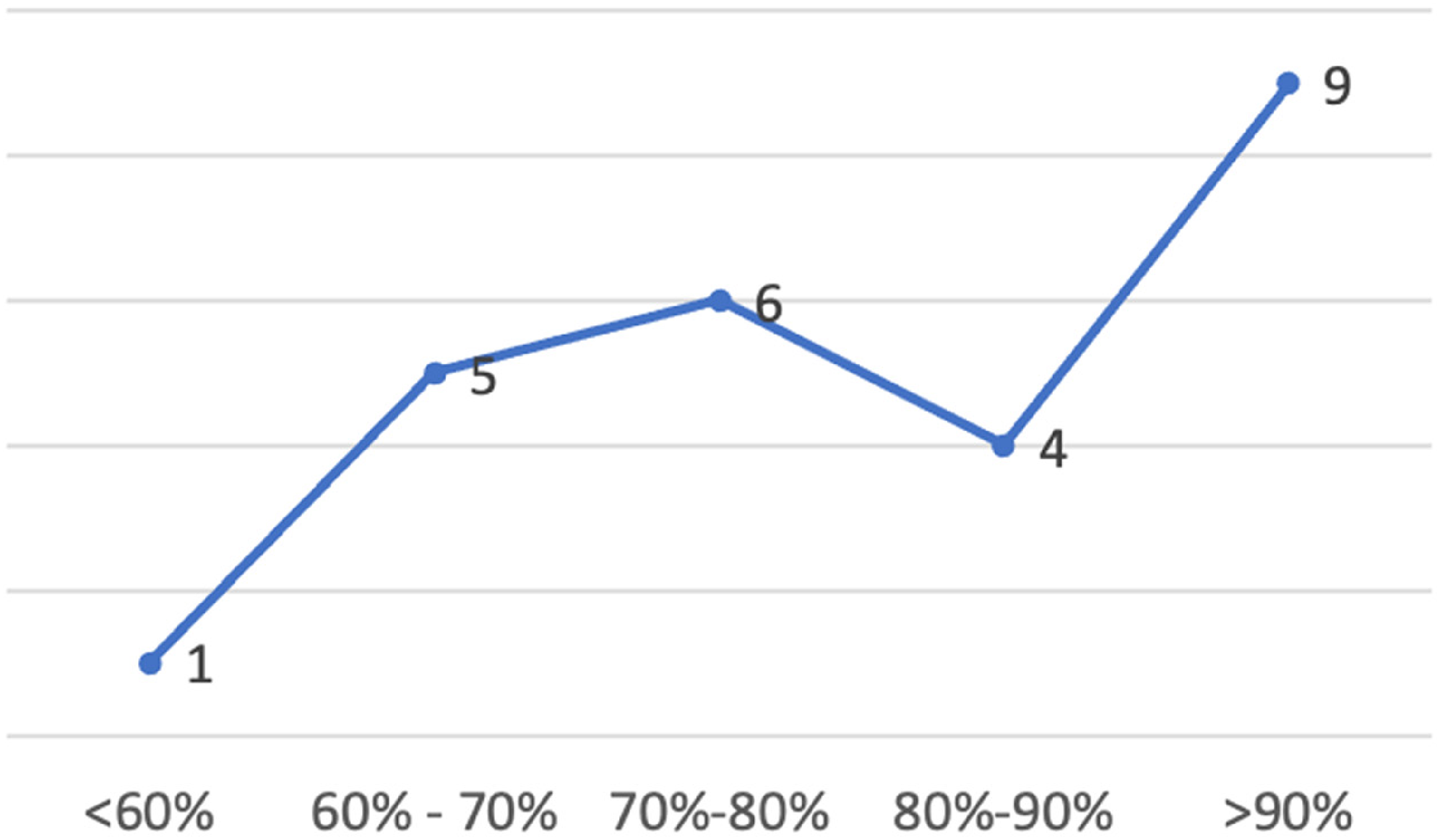
Winning votes.
Single candidates become a way of ensuring victory in local elections, particularly for incumbents. This can be seen from the local elections with single candidates in 25 regions in the 2020 local elections, which occurred not because there were no other potential candidates, but because only one candidate fulfilled the requirements of support.
There are two ways to become a pair of candidates for regional chiefs: being proposed through a political party or a coalition of political parties, or as an independent candidate. This requirement is burdensome and becomes one of the reasons for the appearance of single candidates (Rustandi, 2016).
To be able to propose a pair of candidates, a political party or a coalition of political parties must possess 20% of the number of seats in the local parliament or have obtained 25% of votes in the general elections for the local parliament (Article 40 of the Law on Local Elections). Independent candidates must obtain support from voters that is calculated based on population percentages. In the case of governors, the required amount of support is 10% of total voters for provinces with populations up to 2 million people, 8.5% for provinces with populations from 2 million to 6 million, 7.5% for provinces with populations from 6 million to 12 million, and 6.5% for provinces with populations over 12 million. The support must be distributed across more than 50% of the number of regencies/cities in the province (Article 41 paragraph (1) of the Law on Local Elections and the CC Decision No. 60/PUU-XIII/2015).
Independent candidates for regents or mayors must also obtain support based on population. The required amount of support is 10% of total voters for regencies/cities with populations up to 250,000 people, 8.5% for regencies/cities with populations from 250,000 to 500,000, 7.5% for regencies/cities with populations from 500,000 to 1 million, and 6.5% for regencies/cities with populations over 1 million. The support must be distributed across more than 50% of the number of sub-districts in the regency/city (Article 41 paragraph (2) of the Law on Local Elections and the CC Decision No. 60/PUU-XIII/2015).
The way that single candidates have appeared since 2015 is through a candidate pair that bought out support from almost all political parties that possess seats in the local parliament. Of the 25 regions with single candidates, 16 regions in fact initially had other pairs of candidates that were proposed by political parties and two independent candidates, but none of them fulfilled the support requirements. Political parties that proposed pairs of candidates who do not fulfill support requirements will usually shift their support to a single pair of candidates that has fulfilled requirements.
The number of political parties that participated in the 2019 General Elections was 16. For local parliament elections, the political parties that earned seats were on average from seven to 10 parties. Single candidates in the 2020 local elections on average obtained support from seven political parties, but one candidate obtained support from up to 12 political parties. There was one single candidate that only obtained support from one political party, in Boyolali Regency. However, this occurred because their supporting party of PDIP is a party with absolute majority; therefore, other parties preferred not to propose a candidate, and instead in their progression supported the single candidate (Figure 4).
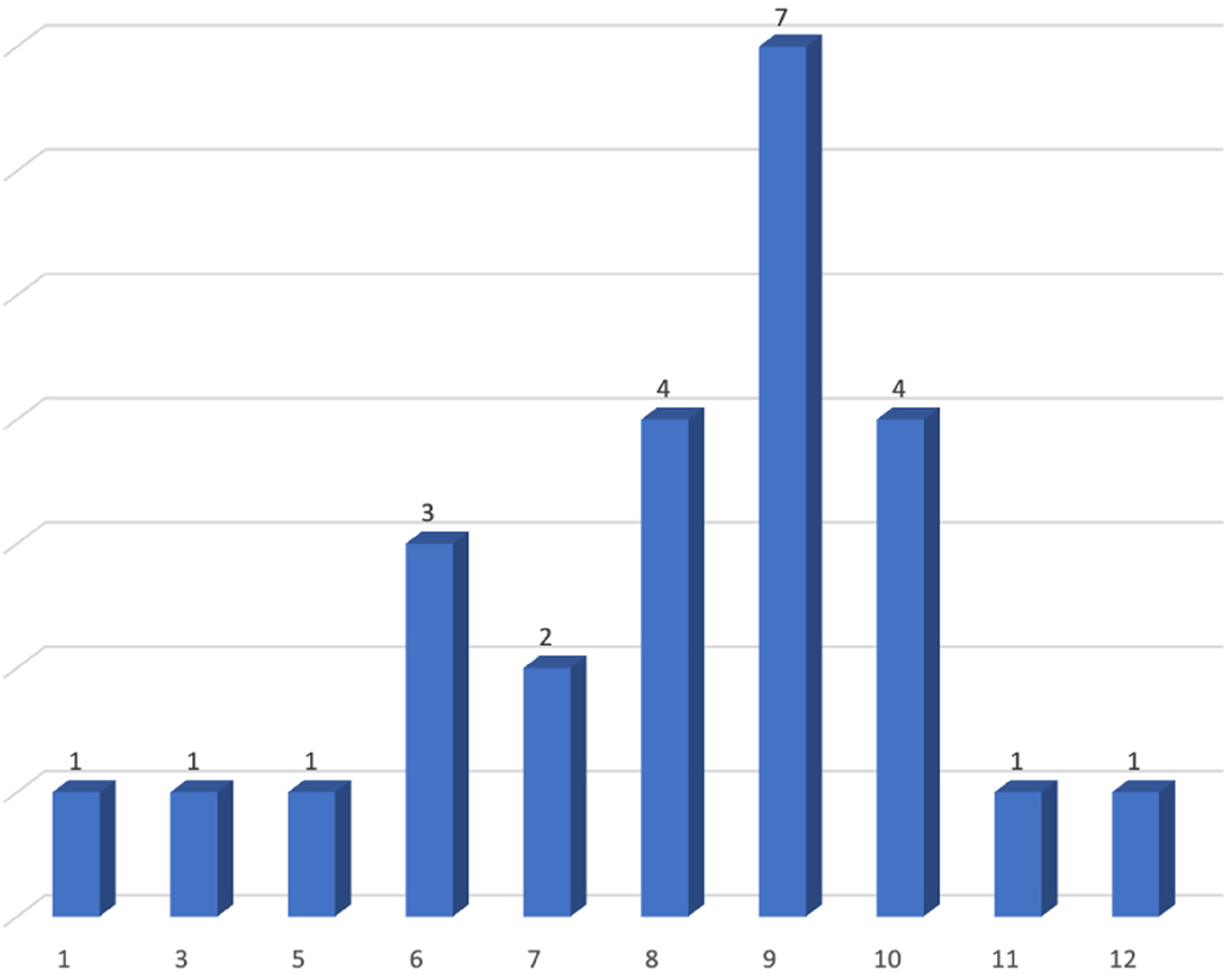
Number of supporting parties.
Political parties have a tendency to support candidates with the greatest potential to win a local election. Even in Pemantangsiantar Regency, the incumbent did not receive support from political parties and therefore could not become a candidate because all the political parties had given their support to the one candidate that in the end became a single candidate that according to political calculations had the greatest potential to win the election. The political parties gave their support to an entrepreneur who eventually became elected with 77.40% of votes.
Oligarchy, political dynasties, and political cartels
The phenomenon of single candidates in local elections may be analyzed from at least three theoretical perspectives that are interrelated. The first perspective is the oligarchy theory. Single candidates are explained as the efforts of oligarchs to maintain wealth by occupying the positions of regional chiefs. The second is the perspective of political cartels, as the tendency of political parties to control the government in order to obtain benefits, both material and electoral. The third is the perspective of political dynasties, in the form of political control by dynasties based on kinship ties.
These three theoretical perspectives overlap because empirically, oligarchy at the same time may take the form of a political dynasty. The control of political positions by certain families is required to maintain wealth. However, there is still a possibility that oligarchies do not directly control political positions, but do so through pairs of candidates who at the same time comprise a political dynasty. For oligarchs, what is important is to maintain wealth by providing capital assistance to all pairs of candidates that have the potential for victory. Certainly, interests of maintaining wealth will be ensured further by generating single candidates who can be easily ensured to win local elections. Furthermore, political costs for local elections with single candidates are certainly smaller compared to local elections with two or more pairs of candidates.
The interests of oligarchy and political dynasties with all their variations at the same time come together with the interests of political parties to control all branches of government. A greater potential for victory for a candidate pair also means a greater potential for the candidate to be supported by all political parties, because as such, assurance of control by parties toward local governments also becomes greater.
The theory of political cartels explains the tendency of political parties to bring their interests closer toward state policies and resources, or even to take them over. Parties attempt to control public positions to obtain benefits from state budgets, internal structuring of parties, and assurance of government positions (Enyedi, 2014). The political cartel thesis is that political parties have functions that further resemble cartels, as the utilization of state resources to limit political competition and ensure electoral victory (Katz and Mair, 2009). Through control or access to positions in local government, political parties gain electoral and financial benefits. Electoral gains are obtained by capitalizing on policies and developments that benefit the people as the work of political parties to attract voter support. Financial benefits are obtained from financial contribution from government officials as well as from private parties who get projects from local government budgets.
In the 2020 local elections, political parties attempted to obtain benefits from support for candidates who had a good chance of victory. However, overall, political parties have not been able to limit competition by abandoning other parties that possess the same interests. This is because in the 2019 General Election there was no political party that had majority power. If there are any parties with majority power, the tendency is that other parties will be abandoned to limit political competition. This can be seen in the local elections in Badung, which was dominated by three major parties (PDIP, Demokrat, and Gerindra), and in Boyolali, which was only dominated by PDIP.
Conversely, candidates who possess great potentials for victory, who are usually incumbents or from a political dynasty, can control and affect the internal structure of parties. With the possessed social and power capital, regional chiefs or candidates for them may buy out support from a majority of parties. The figure of a candidate has a stronger influence toward voters in comparison to political parties. Presently, fewer and fewer people are identifying themselves as being associated with certain political parties (Mujani and Liddle, 2010). Candidates possess a relatively autonomous power, and thus if conflicts occur with supporting parties, they may change membership to other parties (Durado, 2018), or be taken over by other parties (Mashadi, 2019).
The tendency of political cartels has changed the normative construction of the role of political parties in the process of local elections. The Law on Local Elections situates political parties as the subject that proposes pairs of candidates, but the practice of single candidates indicates that what happens is that parties prefer to wait for them to apply while observing the level of electability of candidate pairs (Hidayat, 2018). Many parties even set a very high price for the support to be given to a pair of candidates, which not all pairs of candidates can fulfill as a result. This matter is what encourages the appearance of single candidates, as there is a convergence of the interests of the incumbent or political dynasty with the interests of the cartel of political parties (Taher, 2018).
Oligarchy is different from various other models of elite minority power, such as political elites or political dynasties. The basis of oligarchic rule is the power over materials that must be kept from efforts of distribution or equalization through state policies. At the same time, a very large wealth in the hands of a small group creates political power. Oligarchs are actors who control the concentration of material resources that may be utilized to maintain and increase wealth itself and social positions (Winters, 2011).
Based on the profiles of single candidate pairs, none of them possess great amounts of wealth. None of the single candidate pairs occupied the top 10 candidates with the greatest wealth (Ramadhan, 2021). Only one candidate pair had an entrepreneurial background, Asner Silalahi and Susanti Dewayani in Pemantangsiantar Regency, but the total amount of wealth is no greater than that of other single candidates.
The profiles of candidate pairs did not indicate the presence of oligarchs who directly participate in power grabs in order to maintain wealth. Research by Jatam showed that investors play a large role in the competition for local elections. Investors possess interests, as ease of and concessions in doing business to maintain and increase the wealth they possess (As’ad, 2016). They are oligarchs, although they do not directly hold political positions. One of the single candidate pairs that has been identified to possess a relationship with oligarch investors is that of Kutai Kertanegara Regency (Jatam, 2020).
The execution of local elections is also influenced by the phenomenon of political dynasties, as the occupying of political positions by certain families in a continuous manner in certain regions (Kartika, 2015). This phenomenon is marked by the many incumbents in local elections, whose victories are very much affected by power networks and family influence toward society (Susanti, 2017). In the context of local elections with single candidates, although the majority of single candidate pairs are incumbents (21 candidate pairs or 84%), the number of single candidate pairs that are part of political dynasties is much fewer, being only eight pairs. Single candidate pairs that are linked to political dynasties are in Ogan Komering Ulu Selatan (Muhtadin Serai family), Sragen (Untung Wiyono family), Kediri (Pramono Anung family), Ngawi (Budi Sulistyono family), Balikpapan (Mas’ud family), Gowa (Yasin Limpo family), Soppeng (Andi Soetomo family), and Mamuju Tengah (Aras family).
Based on the above analysis, it may be concluded that the phenomenon of single candidates is not entirely a manifestation of oligarchy that directly controls local government or political dynasties. However, in some cases of local elections, oligarchs play by supporting the candidate with the highest chance of winning, including the single candidate. The two primary factors that affect occurrences of single candidates are party interests to form cartels by taking over the government, which converges with the second factor of the political culture that places preference on the figure of candidates rather than political party identification. The single candidate is most likely in a region with a political dynasty culture. When a single candidate appears, the oligarchs will provide full support to ensure the security of their wealth.
Reducing the opportunities of single candidates
Single candidates were initially not intended as such because they reduce democratic competition in the organization of local elections. Although there is still a choice for voters with the plebiscite model (declaring yes or no), there are no alternative figures and programs. As local elections with single candidates further increase in number, political cartels become more dominant and the potential to become a tool of power for oligarchs and political dynasties becomes ever greater. This will encourage a regression of democracy that further casts aside and alienates the role of the people (Aspinall et al., 2019). Single candidates that are proposed by few parties will eliminate political competition, while those that are proposed by a majority or even all parties will eliminate the presence of an opposition. The presence of an opposition is required to ensure the progression of government supervision (Linberg, 2006). Indeed, democracy cannot be reduced to merely a competition, but should include participation in the form of an opposition (Shapiro, 2003). Without competition, there can certainly be no democracy.
In line with the CC Decision, the presence of single candidates must not hinder the execution of popular sovereignty in the organization of local governments and must not eliminate the right to vote. An effort that may be conducted is the reduction of the potential for single candidates.
There are several alternatives of legal policies that may be utilized to reduce single candidates. The first is to implement a maximum limit of political parties that may propose candidate pairs while at the same time requiring political parties to propose their own candidate pairs. The limit is created to prevent blocking by one pair of candidates through buying out support from all parties. For example, the maximum limit of parties that support one pair of candidates is equal to 30% of seats in the local parliament. Political parties are required to propose other candidate pairs if one of the pairs of candidates that is to be supported has obtained support from parties that possess 30% of seats in the local parliament. In this way, there is the potential for the appearance of at least three candidate pairs.
This first alternative has weaknesses from the standpoints of limitation of rights and the possibility of appearance of puppet candidates. The maximum limit for and requirement to propose candidates constrains the right to propose candidates. This constraint is not proportional because it forbids parties from declaring certain candidates and requires them to propose other candidates. This alternative also has the potential to result in puppet candidates simply to fulfill the requirement of there being more than one pair of candidates.
The second alternative is to reduce the support requirement percentage, both for candidates proposed by political parties and for those proposed as independent candidates. The requirement for political parties or a coalition of political parties may be reduced to 10% (of seats in the local parliament or votes obtained in the last general election). The support requirement percentage for independent candidates may be reduced to between 1% and 5% based on the total population.
This second alternative does not hinder or eliminate the freedom of political parties to propose candidates. This alternative is appropriate to the reality of local elections with single candidates in 2020, which indicates that there were actually other alternative candidates to be proposed through political parties or independently. However, the candidates or the declaring parties could not fulfill the support requirements. The ability to be declared by certain political parties not only involves communicating visions and programs for regional development, but also the political costs that must be given to political parties as a determinant (Helen, 2020).
Conclusion
The phenomenon of single candidates is not entirely a realization of oligarchies or political dynasties, although they are certainly a influence. The two primary factors that predominantly affect the appearance of single candidates are the interests of parties in forming cartels through taking over the government, converging with the second factor of the political culture that emphasizes more the candidate figure than political party identification. Regardless, single candidates become an easy path for oligarchies and political dynasties in ensuring victory.
Single candidates surely reduce democratic competition in the organization of local elections. Although the people still vote, they can only choose to affirm or deny. The people are not given alternative figures and programs. Two alternatives of legal policies may be utilized to reduce the potential for single candidates. The first is to determine a maximum limit of support for candidates from political parties as well as the necessity of political parties to propose other candidate pairs if the candidate to be supported has already obtained maximum support. The second is to reduce the support requirement percentage for candidates who are proposed by political parties or as independent candidates.
Footnotes
Declaration of conflicting interests
The author(s) declared no potential conflicts of interest with respect to the research, authorship, and/or publication of this article.
Funding
The author(s) received no financial support for the research, authorship and/or publication of this article.
