



Abstract
This article explores the effectiveness of political parties in relation to political finance and intra-party democracy in Pakistan. The aim of the article is to offer an objective understanding of these variables and suggest a model for the effectiveness of political parties. Primary data was collected from a sample of 1000 respondents from eight different but politically relevant parties. The respondents have diverse socio-political backgrounds and positions in parties hailing from all the provinces of Pakistan and Azad Jammu & Kashmir – a semi-autonomous territory under the administration of Pakistan. The instrument was developed and its validity and reliability were ensured. For empirical verification, extensive statistical tests were carried out, including validity and reliability analysis, standard regression and correlation, to test the assumptions of the research. Statistical analysis established that the independent variables are very significant in explaining the relationship with the dependent variable. Overall, most of the political parties are not internally democratic as they do not follow laid-down democratic processes in electing leadership and candidate selection, the findings revealed. Political parties are monopolized by personalities with weak organization and are institutionally fragile and compromise on their ideological foundation by preferring political expediency while decision making. Likewise, parties also rank poor in political finance as they rarely follow legal and administrative requirements laid down by the Election Commission of Pakistan on political finance. This has a direct bearing upon party effectiveness, as poor intraparty and weak political finance hinder party development as effective institutions aiming to aggregate the interests of the masses. The parties must ensure inclusiveness in choice making, build formal democratic decision-making structures and reinforce the key procedures for political financing. Moreover, political parties should be transparent and responsive towards democratic values and institutional practices to increase their effectiveness.
Introduction
Political parties are formal organizations that have clearly been established for the purpose of gaining or retaining legitimate control over workers and the real or expected independent state government policy, either individually or collectively or in competition with other similar organizations (Coleman and Rosberg, 1964). The effectiveness of a political party, arguably, takes place through a cluster of interests (Almond and Powell, 2001; Poguntke, 2000, 2002), the merger and congregation of people (Brivati and Heffernan, 2000; Tanner et al., 2000) and, when in power, formulation of public policies (Joenniemi, 1978). Systematic training of workers is important for political parties to enhance their effectiveness, besides creating a bulwark against interest groups. Political parties are primarily concerned with securing democratically elected posts in government in order to carry out their agenda or policies, and they are crucial to governance and state affairs under the modern concept of democracy. Theorists and academicians take pains to underline their role as a bridge between citizens and their elected representatives. However, these parties may even endanger their very rationale and effectiveness as a strong entity, if marred by institutional and structural challenges.
Reforms and restructuring of party institutions are long overdue in developing countries and Pakistan is no exception. For instance, they are required to capacitate themselves to perform their societal roles that include increasing the participation of citizens in political processes, increasing integration of various political interests and facilitating the transfer of political power in an orderly and democratic manner. Part of this is to promote accountability of government, and to transfer legitimacy to the political system. To conduct these functions in a true sense, political parties have no choice but to establish a strong foundation of intra-party democracy and political communication. Intra-party democracy is a yardstick to gauge the strength and functioning of a political party. It is predicated on the participation of party members, leadership and aspiring candidates in the decision-making process (Wanjohi, 2005) and the institutional structures developed or introduced within the party mechanisms which influence and determine it. It is also subservient to the degree of coordination between formal and informal structures existent within a party.
Added to it, intra-party democracy is deemed crucial to develop a stable and sustainable democratic institution, predisposed to promote debate and collective decision-making on issues of vital interest. The process leads to an enhanced sense of ownership and unity within a party and increases the effectiveness of political parties. The scope of intra-party democracy is quite wide and multi-dimensional; this article, however, focuses on the methods and procedures which ensure the participation of members both at the level of leadership and the candidate selection. In addition, it investigates the opportunities and mechanisms offered by parties so that each citizen can influence the parties to offer voters options that ultimately determine the type of law or government implemented (Scarrow, 2005). The research underlines that the existence of a transparent mechanism for the selection of leadership and candidates for different positions directly determines the degree of intra-party democracy within a political party.
Similarly, the relationship between politics and money is a pivotal determinant for the success or failure of political parties in democratic governments. Pollock (1932) studied the election campaigns in Britain, Germany, Ireland and France in his pioneering quest to explore regulatory practices for political finance, making the case for a democratic system of funding for political parties in order to secure healthy politics in a country. Political finance holds prime importance in parties’ decision making and is often referred to as the Achilles’ heel of democracy. The efficiency of a party depends largely on the funds procured by the public or state funding systems (Zamora, 2005). Over the past few decades, the notion of publishing data on party and candidate finance has been gaining popularity among democracies around the globe. Much of this data is either partial or misleading; nevertheless, it has opened up new avenues for policy researchers to explore the role of political funding in electoral performance and political outcomes of a party (Scarrow, 2007). This research investigates the importance of intra-party democracy and political finance in the effective functioning and deliverance of political parties in Pakistan. Moreover, this article explores the relationship of effective political parties with key variables, political connections and party democracy in eight major Pakistani parties. The following are the main objectives of the article:
Determining the functioning of political parties and the degree to which they are effective in terms of their features Identifying and discovering in eight major Pakistani parties a relationship between political party effectiveness, political finance and intra-party democracy.
The theoretical foundation, technique, sample and measures and our analytical approach are all detailed in the following parts, followed by the study findings.
Theoretical framework and hypotheses development
Effectiveness of the political parties
The five essential responsibilities of political parties, according to Bartolini and Mair (1990), are citizen consolidation and integration, expression and unification of interests, creation of public policy, selection of political leaders and integration of parliament and government. Citizens’ consolidation and mobilization mean that citizen groups provide an effective conduit for citizens to raise their views through protests, referendums and protests against government policies. Between political parties and civil society organizations, there are essential relationships. As a result, active political parties such as Green parties or right-wing parties represent the combined interests of social groupings and engage in environmental movements while the left-wing parties demonstrate trade and commerce with the business community as a whole. In addition, political parties have valid reasons to combine demands to facilitate the mediation process and negotiations between the various stakeholders, to urge the policy to rally the public and to legislate and oversee policy implementation.
The political party serves as an active venue for public accountability of elected officials. Political parties, according to Diamond and Gunther (2001), connect government and citizens through expressing and consolidating public interests that can diversify, mobilize and prepare potential candidates, ensure participation in election campaigns, design and build an agenda for other public policies and run effective campaigns. As a result, groups and people are integrated into a democratic system. Huntington recognizes the work of integrating the interests of political parties, moving different social groups and interests into one social and political sphere and thus providing a stabilizing effect on the divided society (Manning, 2005).
Political parties, according to Maiyo (2008), are both a vehicle for participation in administrative processes and a broader political field and rivalry. Dahl (1971) claims that political parties evolve and are influenced by social and economic reality. The role of political parties has been considered as going beyond what modernization entails. Huntington (1996) states that political parties are an important institution for creating a politically stable order to ensure modernity and development and their role is beyond their control and seizing political power. Modern theory portrays a political party as a unifying force that binds society to the existence of racism, religion and diversity by providing a solid foundation (Huntington, 1996). Political parties as an institution can be seen to be effective on the basis of party democracy, political financing and political ties. Political parties, according to Bryce (1921: 119), are unavoidable, and no representative government can exist without them.
Intra-party democracy and the effectiveness of political parties
In the form of a democratic government, political parties play a creative and decisive role. Intra-party democracy is crucial to the division of power between political parties and not only to allow fair participation and inclusion of all party members but also to hold party officials accountable for the fight against oppression, corruption and maladministration. The vision and structure of the political party vary from country to country. The majority of parties claim to give their members the opportunity to elect a party leader as opposed to the past when the party executive council or party congress had the authority to play a role and ensure party democracy. According to Maiyo (2008), political parties can leave a negative and fearless view of democratic change. The decision-making power of political parties lies at the very top where the behaviour of officials governs decision making and the general public is not very familiar with these decisions. In contrast, the downward spiral is approaching change as a possible long-term process. The function of public power and its interaction with political leaders is particularly significant in social and political strife.
intra-party democracy supports the concept of fair party elections, inclusive and communal party methods and a joint action agent that negates the control of a single authority, according to Saleh (2006). Furthermore, Saleh claims that diminishing ethnic and religious issues can never ensure internal democracy in a political organization. According to him, tolerance is also a difficulty for political parties in emerging nations which adds to the issues of internal democracy. He also highlighted the troubles parties face with accountability, low-level non-disclosure and discrimination based on kinships, business relationships and family ties. Wauters (2009) claims that in order to raise their reputation and vision, organizations are attempting to bring in more people under the banner of participation, release and inclusion. Even the flexibility of party politics, according to him, alters as individuals focus on policies such as participation and divergence from party standards. The mechanisms for selecting or electing a political party's leadership are a source of tremendous worry. Wauters argues that efficient party governance requires the turnover of party leadership.
According to Punnett (1992), the two main methods of transferring leadership to political parties are legitimate and illegitimate among elected or unelected people. According to him, voter formation is a requirement since party leadership might be elected by a vote of all members or a small decision-making body. Political parties all around the world employ and accept the prior system of electing leadership (Denham and O’Hara, 2007; Hazan and Voerman, 2006; LeDuc, 2001). The foundations that liberate and strengthen party democracy are pre-election requirements that include the provision of qualified candidates and the availability of voters when choosing who is nominated; election, the ultimate phase in determining which nominees will be elected to a legal office; and certification, which comprises electoral legislation, party regulations and informal public procedures describing the criteria for conducting a proper election. ‘Internal party democracy is not the same as the supremacy of the party's most organized, coordinated, and institutional policies‘, writes Michels (1915). Oligarchic political parties tend to have one-size-fits-all and inclusive decision-making processes and therefore no internal democracy. ‘The foundations of democracy necessitate that leadership at all levels be constantly regenerated, united in character, and weak in authority‘, according to Duverger (1964: 6). The party is not well positioned to confront politics in this form. Party democracy is crucial, according to Maiyo (2008), but it should be represented in broader societal reforms, and the democratic process of the party may differ from community to community. Maiyo uses intra-party democracy as the standard for elections and elected leadership.
Democracy, according to Joseph (1997), encourages and guarantees self-determination, empowers citizens, develops and improves public policy and ensures constitutional compliance. Internal democracy in political parties, according to van Biezen (2004b), is a requirement for having a democratic party. With the support of the pyramidal system, McPherson (1977) established the notion of internal party democracy, with a centralized and delegatory democracy at all levels, and the same view is consistent with the model of contending political parties (Teorell, 1999). Intra-party democracy is best exemplified by the ideology of intentional democracy, which holds that all human beings are equally free, that rational people are the product of democracy and that democracy is seen positively by all citizens. Hirschman believes that by ensuring intra-party democracy in the collective discourses of the party it can be affirmed that the party encompasses an important element of democracy (Hirschman, 1970). Political parties that practise internal party democracy, according to Scarrow (2005), are more likely to elect competent and appealing leaders, have responsive policies and, as a result, have higher electoral success and promote the democratic culture in general.
Pakistan with its chequered history of democracy has a bicameral parliament, with political parties largely confined to provinces such as the Pakistan Peoples’ Party in Sindh, the Pakistan Muslim League N in Punjab province and Pakistan Tehreek-e- Insaf in Khyber Pakhtunkhwa and to some extent in Punjab province. The intra-party democracy has emerged as a key area in Pakistan, as the country has witnessed three martial law regimes that have deeply influenced the political parties as public institutions. The weak structures and institutional issues within political parties, including favouritism, nepotism and politics, served as enabling factors for undemocratic interventions. Issues of leadership include party heads being appointed from close family or relatives, promotion of family interests and nomination and removal of the party leadership that has weakened intra-party democracy (Shah et al., 2017). For that reason, we hypothesize that:
Political finance and effectiveness of political parties
Political party funding has the potential to skew elections and is a major source of corruption in both developed and poor countries. According to Hopkin (2004), political finance attempts to efficiently support a political party's activity. According to Poiré (2006), political financial support is mostly utilized for campaigning and election promotion, but it is also used for a variety of internal operations such as research, organizing registration campaigns, and boosting awareness and participation. The broad debate of the authors is aimed at exploring the impact of spending a lot of money on election performance and the benefits of expenditure from direct or indirect losses, whether the benefits of the participant's and the opponent's spending are the same; if they are different, whether the difference is owed by a different ‘cut’ or the first place, or that you owe a different ‘slope’ or each unit of the expenditure result; and if these varied benefits exist, what is the underlying cause of them. These authors have studied the regions of Japan (Cox and Thies, 2000), Brazil (Samuels, 2001), Ireland (Benoit and Marsh, 2003), the United Kingdom (Pattie et al., 1995), Russia (Treisman, 1998), and France (Palda and Palda 1998; Pattie et al., 1995).
The creation of Duverger's (1964) ‘mass party’, as cited by Diwakar (2007), emphasizes the non-material incentives such as intentional or ‘solid‘ motives noted by Wilson (1973). Non-monetary incentives, according to Schlesinger (1965), may not be sufficient in stabilizing the group over time, resulting in a loss of motivation, negative involvement and alleviated influence. In the past, such non-profit practices, as reported by Mair and van Biezen (2001), lowered membership tendencies in Western Europe. Indeed, the data suggests that these types of benefits are no longer successful in fostering political affiliation, as evidenced by an increase in electoral instability in many Western European countries in the 1980s and 1990s. Political financing mechanisms are also guaranteed by externally funded groups. With the advent of modern tools and information technology for digital media, along with experts, teams are reaching out to more voters (Farrell and Webb, 2000). Such organizations are referred to as ‘contemporary cadre groups‘ by Koole (1994), and according to Farrell and Webb (2000), such groups have rising costs and rely largely on outside support. According to Katz and Mair (1995), the Cartel Party receives government assistance as a cooperative ally, which has resulted in a drop in the size of the larger party and elevated party confidence in the government. After reviewing many books, it is established that the effectiveness of the party can be guaranteed by its finances.
Pakistan's electoral system is based on the principle of simple majority; however, the lack of transparency and accountability props up the confinement of political leadership to the rich people of Pakistan. Candidates need a substantial amount of money to recruit election workers, run election campaigns and get voters; therefore, political parties in Pakistan always search for wealthy candidates with a fortune to spare (Shah et al., 2017). Thus, the availability, flow and employment of financial resources matter a lot in the success of a political party as well as in its functioning. For that reason, we hypothesize that (see Figure 1):

The theoretical framework for the article.
Depending on diversity, the effectiveness of a political party consists of the following: empowering members to vote for candidates, ensuring gender participation in candidate elections, conducting free and fair party elections and avoiding discriminatory party membership selection. It also includes establishing transparency in the decision-making process, encouraging regular member participation in leadership elections, providing regular members with internal policy discussions, engaging primaries at the regional level in leadership elections and taking into account internal disagreements. External party norms have good impacts; they ensure intra-party democracy, participation of interest groups, efficient decision-making, established organizational values, political power in divisions, participatory decision-making in divisions, fair judgement in the party processes and conflict management inclusiveness. Based on literature highlights, we have made projections to ensure that political parties run smoothly for the purpose of establishing and strengthening democracy and good governance in the country. Party democracy and political party finances are two different variations of this subject, each with their own magnitude. Based on these, the theoretical framework of this study describes the effectiveness of political parties in the context of intra-party democracy and political finance. This article takes into account the influence of intra-party democracy by the virtue of methods and procedures which ensure the participation of members both at the level of leadership and the candidate. In addition, it investigates the influence of political finance on the effective functioning of political parties and the opportunities offered by parties so that each citizen can influence the parties to offer voters options that ultimately determine the type of law or government implemented.
Methodology
The research context
Based on past research, a model provides a more symbolic approach to representing variables (Akhtar, 2016). As a result, the Model PPE (Performance of Political Parties) in Pakistan was created to show how the two predictions of Political Finance and Intra-party Democracy, as well as the diversity of outcomes, can be combined and related. The data was collected from all over Pakistan. Specifically, it was collected from eight major political parties with respect to their representation and potential in the political landscape of Pakistan. The Pakistan Muslim League Nawaz (PML-N), the Pakistan People's Party (PPP), Jamat-e-Islami (JI), Pakistan Tehreeh-e-Insaf (PTI), the Muttahida Qaumi Movement (MQM), the Awami National Party (ANP), Jamiat-e-ulema Islam- Fazul-ur-Rehman Group (JUI-F) and the Azad Jammu Kashmir Muslim Conference (AJKMC) were the political parties chosen for research.
Sample and procedure
A stratified proportionate sampling method was used in sample selection in the study. For this purpose, eight major political parties were grouped (clubbed) into eight different strata (parties) which were selected for data collection. The selected political parties’ proportion of the sample was assigned based on their representation in National and Provincial Assemblies from 2002 to 2013. During sample selection, issues such as the availability of party infrastructure, outreach and employees were also taken into account. On the basis of the previous three general elections, their worker strength and infrastructure, parties like the Pakistan Muslim League Nawaz (PML-N), the Pakistan People Party (PPP) and Pakistan Tehreek-e-Insaf (PTI) were classified as mainstream political parties. Both JI and AJKMC were categorized as medium parties based on their past performances in elections and the number of workers, while remaining parties like the Muttahida Qaumi Movement (MQM), the Awami National Party (ANP) and the Jamiat-e-ulema Islam- Fazul-ur-Rehman Group (JUI-F) were considered as small parties. MQM has been in parliament, but it has largely been centred and remained limited to Urban Sindh (Karachi). On this premise, a total of 60 percent of the sample was drawn from PML (N), PPP and PTI. The remaining 40 percent of the sample was equally distributed to medium parties (JI and AJK Muslim Conference) and 5 percent each to small parties i.e. JUI (F), ANP and MQM. The detail of the sample proportion is given in Table 1.
Sample of study (according to stratified proportionate technique).
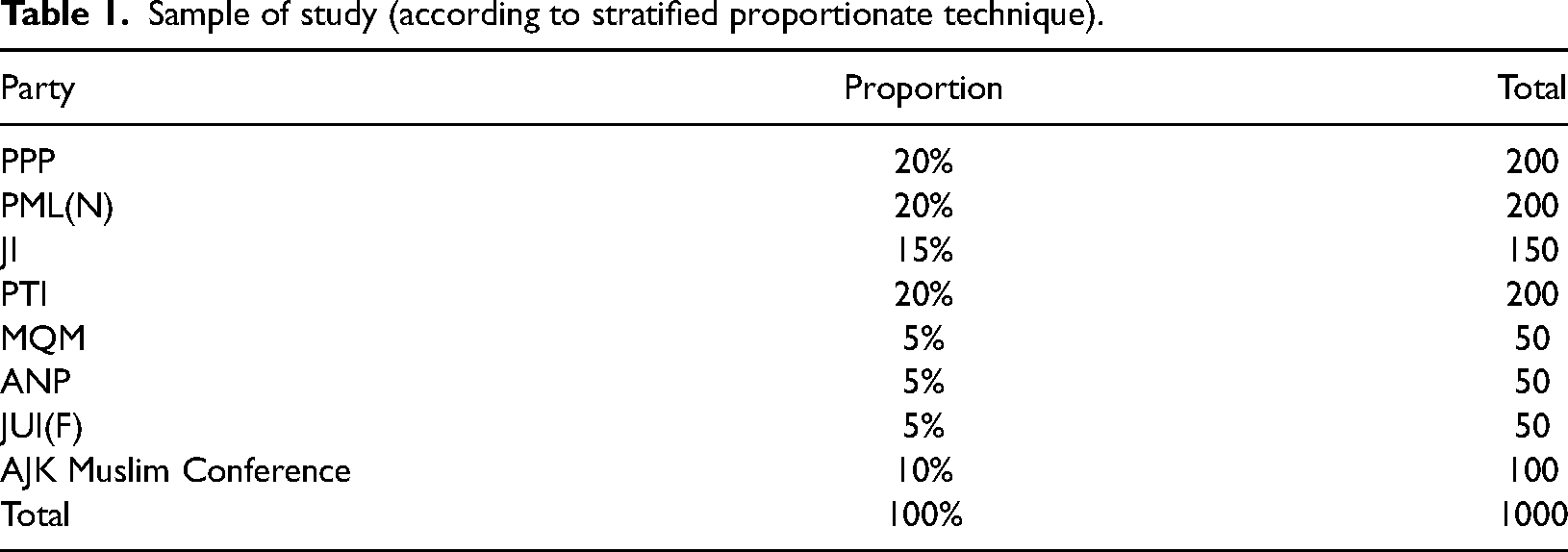
The data regarding the independence of opinion in the party, leadership-choosing mechanisms, collection and utilization of party finance and overall functioning of the party was collected from the representatives of political parties in order to explore the subject under study. The assigned proportion to political parties is further scattered by region-wise distribution into Punjab, Sindh, KPK, Baluchistan, Islamabad and AJ&K. The details of further distribution by region in percentage are given in Table 2.
Sample of the study (%).

Measures
The model was validated based on similar findings obtained from the comprehensive literature analysis and interviews with four political experts, four academics and development experts. All of the questionnaires were created using a literature study. We have clearly seen the magnitude of all the variables after a comprehensive review of the literature. The test tool is influenced by the following scholars: Benoit and Marsh (2003); van Biezen (2004b); Carothers (2006); Denham and O’Hara (2007); Farrell and Webb (2000); Hazan and Voerman (2006); Joseph (1997); Katz and Mair (1995); Mair and van Biezen (2001); Maiyo (2008); Pinto-Duschinsky (2002); Poiré (2006); Scarrow (2005); Teorell (1999); Wauters (2009); Weingrod (1968). The respondents were given numerical options ranging from strongly disagree (1) to strongly agree (5). The analysis of the collected data was performed by applying statistical tools i.e. SPSS (version 23.0) and Amos. The analysis also included data preparation, validity and reliability, correlation, regression analysis and testing of hypotheses H1 and H2.
Findings and results
The findings of this study are presented below.
Reliability and validity
The measure of Cronbach's Alpha was used to determine the reliability of the instrument used to collect data and it had a value of around 0.9 (i.e. > 0.70), indicating that the instrument to collect data had high internal consistency and thus was reliable for conducting this research. Cronbach's Alpha was measured to be 0.932 for items measuring political parties, 0.898 for items measuring political finance and 0.951 for items measuring intra-party democracy, which demonstrates that the questionnaire items designed to measure the respective variables under study were internally consistent. The reliability analysis is shown in Table 3.
Summary of reliability analysis.

The content validity of the data was ensured through three academic experts and three political party experts. Based on their valuable feedback, the instruments were further rephrased or customized and all the necessary changes were applied. For the current research, face validity was ensured simultaneously with content validity by analysing the instrument which measures the characteristics of interest. The researchers ensured that the selected questionnaire strictly measures what it was intended to measure and a pilot study of the instrument was conducted to serve this purpose. The validity of the adjustments was evaluated using a factor analysis for the same sample size or a factor analysis for each variable (dependent and independent variables) and utilized as the Main Component Analysis by Varimax Factor Rotation. The findings of the material analysis, as well as the overall and decreased size of the study, are shown in Table 4. The feature is examined using the policy component method. According to Table 4, a political party's efficacy is determined by 22 elements, with 18 full items in the feature analysis and just four items not loaded in the feature analysis. Only six factors are unloaded in political finance, and only 24 are unloaded in internal party democracy.
Summary of the factor analysis.

Model fitness
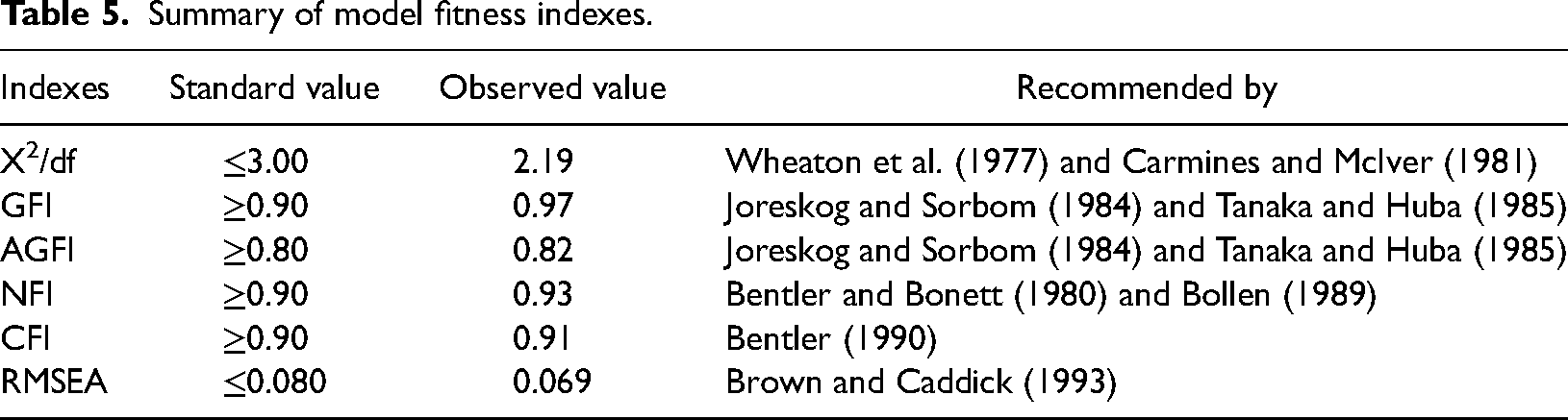
The degree of freedom value (42–32) was recorded as 10, the value of the Chi-square was measured to be 21.9, the value of Chi-square divided by the degree of freedom is 2.19 and the value of p. 000 (indication significance value) is less than 0.05. RMSEA (root mean square error of approximation) is an absolute fit index by Brown and Caddick (1993) and for this research model it has the value of 0.069 **. Joreskog and Sorbom (1984) designed the GFI (goodness of fit index) for measurement, and Tanaka and Huba (1985) standardized it as 0.97 for other measurements. The AGFI (adjusted goodness of fit) addresses standards of the freedom available for testing. The values of all these tests have been represented in Table 5.
Summary of model fitness indexes.
Correlation among variables
Pearson correlation test was used to draw conclusions about the relationship between intra-party democracy, political finance and political party efficacy, as shown in Table 6. The results demonstrate intra-party democracy, political finance and political party effectiveness to be closely linked for the data collected from Pakistan's mainstream political parties.
Summary of the results of Pearson correlation.
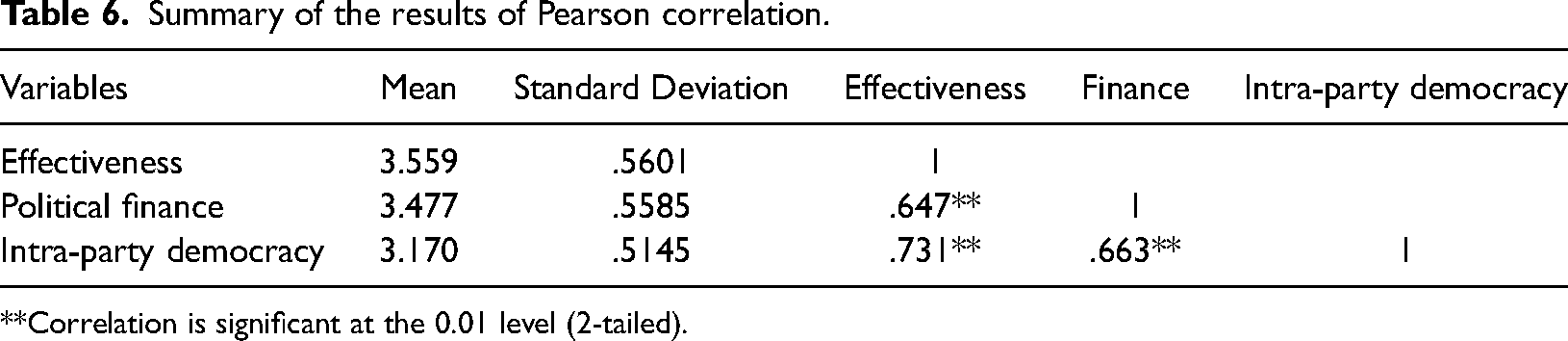
**Correlation is significant at the 0.01 level (2-tailed).
Regression analysis
Multi-collinearity, General Data Distribution, Linearity and Homoscedasticity were all taken into account. Multicollinearity test was performed to determine the intercorrelation among the variables and homoscedasticity test was used to ensure that the results are not biased or skewed. There are two steps that can help a researcher find Multi-collinearity: the Varian Inflation Factor (VIF) and Tolerance. VIF and Tolerance were found to be within acceptable limits. In addition, data was generally distributed. The line curve also verifies the data line. The retrospective analysis’ final consideration is homoscedasticity, which denotes a dispersed distribution of data. The data must be in the same format before the regression analysis can begin. We have analysed community retrospective analysis of partnerships, community organizations, community engagement and community participation.
Equation:

Model summary
Adjusted R-square and influence of independent variables on dependent variables
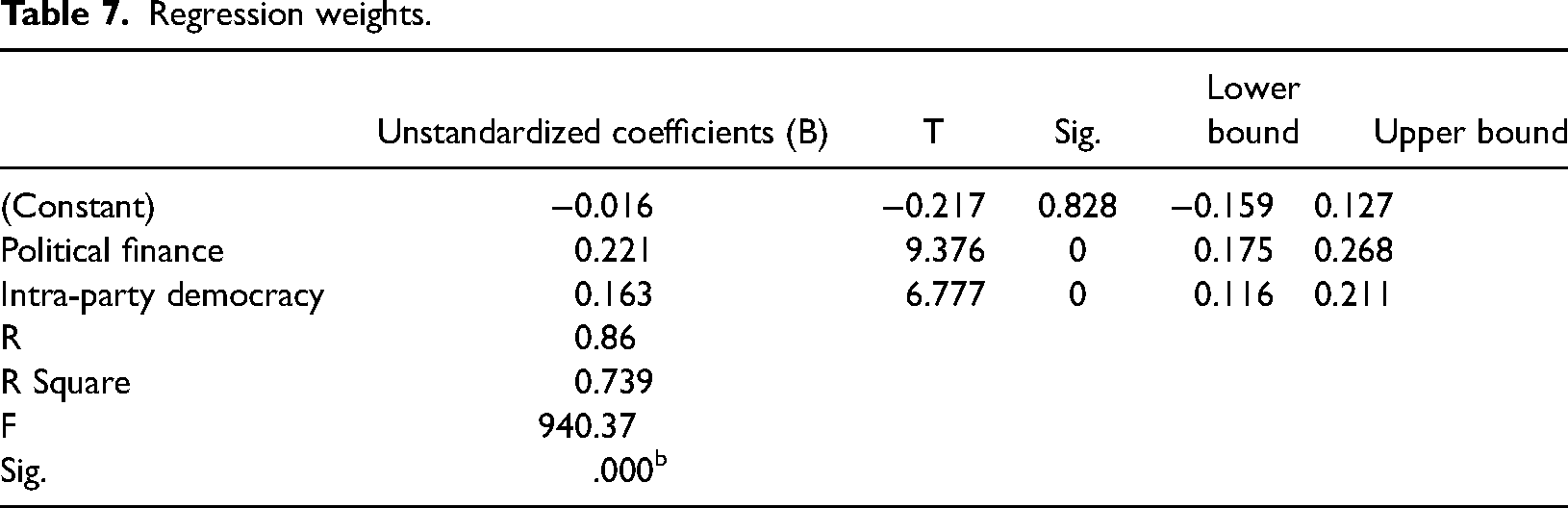
The number R (86%) indicates a close relationship between independent and dependent variables. The R square number implies that there is a 73 percent variability in outcome (performance) as described by assumptions such as political money and party democracy.
Based on the data, the Beta B value is 0.221 and the t value is 9.37, with the p-value (value is 0.000 less than 0.05) indicating a significant contribution to political financing in bringing success to the political party at a 95% confidence level. One of the most crucial elements is political finance, which is seen as the uniting factor of political leadership and citizenship. Political funds are essential to the effective functioning of the party and governance, as the role of political money has always had a profound impact on politics. Political finance is governed by accountability for better and more effective party governance. Submitting a consolidated account statement, asset disclosure, disc loss of election expenses, accounting and inventory, accounting/expense accounting, professional staff to keep records, keeping financial records, disclosing all resources for reporting, reporting through the election of candidates, monitoring public financial and political institutions is always effective in preventing the unknown origin of the donations. Similarly, the internal democratic process is also considered to be the most important variant, with a value of b and t respectively and the p-value is .000 at a 99 percent confidence level. The size of the internal party democracy allows members to nominate candidates, ensuring equal gender participation in the election of candidates who conduct free and fair elections, avoiding discriminatory elections of party members and a transparent decision-making process for ordinary member participation in leadership elections that provide regular members’ internal debate processes. Intra-party democracy ensures the inclusion of interested parties in a party's decision-making. Standards of detrimental influences of political parties on intra-party democracy ensure the democratic sharing of power within the party. Multi-stakeholder engagement in participatory decision-making processes is divided to hold equitable (fair) justice in the process of conflict management involving all parties. Table 7 gives an overview of regression analysis.
Regression weights.
Hypothesis testing
The analysis is performed to predict the number of dependent variables defined by a set of independent variables.
To test the assumptions that internal party democracy (widespread and inclusive institutional processes, electoral leadership and candidates) has a significant impact on dependent dynamics (political party success) through general retrospective analysis and basic retrospective ideas such as sample size. Line, homoscedasticity and standard data for dependent variables were tested in the previous chapter. Dependent diversity (the functioning of a political party) is a reversal of independent dynamics (internal party democracy) and it is considered that internal party democracy is essential to the smooth functioning of a political party. The beta effect of regression regarding dependent diversity (performance of a political party) reflects the positive effect of independent diversity (internal party democracy) on dependent diversity (efficiency of a political party). The direct results of the retreat analysis show that the magnitude of the independent reforms (intra-party democracy) such as universal inclusion and democracy in electoral elections, inclusion and democracy in electoral leadership, institutional planning, policy formulation, decision-making and conflict resolution have a major impact on interdisciplinary interests such as consolidation, policymaking and the success of political party training. The findings of the independent dynamics (internal democracy) analysis, which have a beneficial impact on the political party's operation, support H1. For the H2 hypothetical assessment (finance having a significant impact on the performance of a political party), a general retrospective analysis was used. Basic conceptual hypotheses such as sample size of multi-linearity, homoscedasticity, line and standard data of dependent variables were investigated. Dependent divergence (the success of a political party) is a reversal of the independent variable (political finance) which means that a political party with clear and systematic processes of political finance has effective functioning. The beta effect of regression regarding dependency variance (political party performance) indicates a significant effect on independent variance (political funding) of dependent variance (political party performance). A more accurate analysis of retreat shows that the magnitude of independent variations such as disclosure, bookkeeping, reporting, public administration and prevention has a major impact on interdependent factors such as consolidation of interests, consolidation and integration, community policy formulation and political training for party success. The result of the analysis of independent dynamics (political funding) significantly and positively influences the performance of a political party that affirms the ideals of the H2 hypothesis.
Discussions of the findings
With regard to hypothesis 1, it can be argued that the IDP can be developed through the process of institutional establishment, involvement and distribution. As mentioned above, the study follows a process-focused approach and the IDP is not analysed as a single outcome but as a continuous process. As a result, an ontological relationship can be established between the four dynamics of institutional establishment – policy formulation, membership participation, leadership and candidate election – to determine individual suffrage, but it is not necessarily used collectively to achieve interest flexibility. Intra-party democracy focuses on well-founded theoretical ideas of participatory democratic theory and debates. Van Biezen (2004a) believes that democracy can be called for and established if people participate successfully in its various processes. Participatory democracy emphasizes citizens’ full participation in political processes and their social responsibilities. McPherson (1977) adds to this argument by proposing a ‘pyramidal intra-party democracy system with direct democracy at the bottom and delegatory democracy at every level above’, as well as a rival political party structure (Cross and Pilet, 2015; Teorell, 1999: 368). In view of different factors, such as diverse populations and expanded societies, it is almost impossible to establish a truly participatory system, or in other words, direct democracy in any country. Political parties, hence, provide an alternative intra-party democracy platform to close the gap between citizens and government. Contrarily, proponents of Competitive Model Democracy (Dahl, 1971; Tyler, 2021) consider intra-party democracy as threatening to the team's performance and believe that it threatens the competition as well. Furthermore, considerable intra-party democracy research has been conducted in Switzerland (Ladner and Brändle, 1999), the United Kingdom (Anstead, 2008) and Australia (Gauja, 2006) which also mentions its weakening effects. Gauja (2006) states that intra-party democracy has its own constraints and complexities for decision-making and the chances of popular and appealing leaders are reduced due to these structured processes. But the significance of empowering citizens and permitting accountability is also important for political competition.
The statistical analysis cited above establishes a strong link between intra-party democracy and party effectiveness. Intra-party democracy is a complicated process that is influenced by both internal and external factors such as socioeconomic factors, cultural settings and electoral systems. National and ethnic identity, as well as religion, have an impact on the status and functioning of political parties as well as the question of internal democracy in Pakistan. Apart from these variables, one of the most significant factors is the acceptance of a country's political system from its foundation which shapes political processes. Effective intra-party democracy is a broader concept, encompassing key principles, convincing ideology and unique policies to mobilize party members. In return, it builds strong and vibrant political institutions and organizational structures to enhance membership, inclusiveness and internal accountability mechanisms. Pakistan has a parliamentary form of government, which, over a period of time, has received many disruptions at the hands of the military under one pretext or the other. Consequently, the political system it adheres to is not adequately developed to embrace diversity and heterogeneity, having a negative impact on intra-party democracy as well. Political parties in Pakistan are confronted with a myriad of challenges keeping in view the absent, or for that matter, weak institutional structures. This institutional fragility, characterized by poor organization, discouragement of dissenting voices and a flawed leadership mechanism, gives way to rift and factionalism in political parties. The lack of a strong and workable intra-party mechanism raises concerns from various stakeholders and concerned corners of a political party. Consequently, it creates the need for the formation of a new faction or party, within an existing political party structure; a phenomenon largely visible in the mainstream political parties. The study establishes that the policymaking process in political parties is highly centralized, which leaves little, if any, space for sustained interaction and debate at different levels. The research also brought it to the spotlight that political parties in Pakistan had failed to create sustainable institutional mechanisms for intra-party democracy. Dereliction of duty on this count automatically insinuated the centralized party system at the expense of general members of the party. Inchoate institutions and political parties have a strong inclination towards regionalism, centralized decision-making and factionalism. The process for selecting a candidate to contest elections for public offices again has a strong link with intra-party democracy. A competitive and flawless process of selection draws due legitimacy from the masses and party members alike, but any deviation from this principle always yields disenchantment and aloofness at different levels in the party. There is no fixed rule as far as candidate selection is concerned. Direct primaries or direct balloting is recognized as a very open, transparent and inclusive process of candidate selection where party members select candidates through direct voting (elections).
As far as hypothesis 2 is concerned, political parties around the world are considered to be the least successful organizations, especially when it comes to fundraising and spending. Though a strong pillar of democracy, they seldom meet the desired level of transparency, disclosure and accountability, which affects their effectiveness as well as integrity and unity. Until now, neither political parties nor the public at large has given due attention to this issue in Pakistan. While reflecting upon different dimensions of this aloofness, it becomes clear that politics has developed a strong nexus with business in the country and many people take part in elections only to maximize and protect their ill-gotten money. The phenomenal increase in the assets of many prominent politicians in a short span of time after getting elected gives credence to this assertion. The last two years, however, have seen a positive change in this regard as a result of the enhanced role of the Election Commission of Pakistan (ECP), media agencies and public outcry for transparency and accountability. With no real external and internal audit plans in place, each political party maintains a simple accounting system for general activities and election campaigns. The team treasurer is responsible for managing the accounts. In fact, few senior leaders have been notified of the party's support. Though it is mandatory for each registered party to submit its annual audit report to the ECP, the latter has largely failed to enforce such rules and regulations in the country. It can also be gauged from the fact that the ECP has never in its history asked any party to clarify the expenditure report it submitted. This clearly indicates its inability to control the political finance of parties registered with it. This is partly because of the weakness of the legal provisions and their application, and partly because of the low level of internal democracy in the parties as they face real internal pressure to ensure transparency. Without detailed and accurate knowledge of income and expenses, including the amount and names of subsidies, loans, liabilities and assets, it is very difficult to determine the reliability of the reports. The research indicates that alongside much-needed improvements in ECP working, the active participation of civil society is the key to ensuring transparency in electoral finance. Furthermore, collaboration between ECP and civil society organizations is imperative for the effective monitoring of political finance.
Conclusion
It can be concluded that all the parties studied face issues in retaining party membership and weak intra-party democracy, and are unable to ensure democratic values in their parties and society at large. Parties have no defined and structured democratic practices and are unable to provide avenues of democratic debate and encourage dissent and critique generating substantive narratives on pressing issues in Pakistani society. Parties are dominated by a personality cult; their weak intra-party structures do not offer any space for internal accountability, compromising the party loyalty of workers and diminishing possibilities of party institutionalization and overall democracy. Political parties do not promote group unity by reducing group divisions or devising and creating legitimate internal conflict management mechanisms. Parties, as organizations, do not carry better organizational structures and their political finance mechanisms are ineffective, therefore resultant parties could not evolve as true modern democratic institutions. Although the political parties of Pakistan, they are the products of different historical, socio-political and political contexts, and research shows that they share certain organizational similarities with each other in their oligarchic tendencies, authorization and declining membership. Moreover, political mobilization is influenced by ethnicity and regionalism in Pakistan.
The survey results reveal a varied trend in terms of the presence of inter-party democracy and political financing indicators. This research also reveals that intra-party democracy and political funding have a significant impact on a political party's effectiveness. According to the statistics, all of the assumptions are supported and they stem from the fact that, while holding symbolic and pre-planned party-level elections, many parties fail to capture internal leadership and candidate selection procedures. In terms of political finance, most of the parties do not have formal processes and structures to conduct and carry out financial matters, including bookkeeping and keeping records of finances and accountability. Moreover, they are marred with corrupt practices and they still fluctuate between the first and second phase of political communication in resource, thematic and technical development. This has largely contributed to the disengagement of educated and civically engaged citizens from political parties.
Footnotes
Declaration of conflicting interests
The author(s) declared no potential conflicts of interest with respect to the research, authorship, and/or publication of this article.
Funding
The author(s) received no financial support for the research, authorship, and/or publication of this article.
