




Abstract
Artificial intelligence (AI) is increasingly encroaching on domains traditionally reserved for humans, including moral judgment. This trend has sparked heated debates, with both strong concerns and optimism about its implications. To contribute to this discourse, this research examines how individuals respond when AI participates in moral evaluations of cyberbullying incidents. We conducted an experiment employing 3 (Reviewer cue: human vs. AI vs. collaboration) × 2 (Roles in cyberbullying incident: victim vs. bystander) between-subjects design. Findings show that the AI reviewer cue indirectly increased perceived decision compliance, report efficacy, and future report intention by activating positive machine heuristics. However, negative machine heuristics did not mediate the effects of AI reviewer cues on perceived report efficacy and future report intention. Human–AI collaboration did not differ significantly from either AI-only or human-only reviewer cues. In addition, although the interaction effect was not significant, planned contrasts suggest that victims may be more likely to perceive the AI reviewer as lacking contextual understanding, whereas bystanders may view it as more objective. This highlights the challenges of using AI-driven judgment in sensitive areas such as cyberbullying, emphasizing the need for practical improvements to enhance reporting systems.
Keywords
Introduction
Artificial intelligence (AI) has rapidly expanded beyond technical and operational tasks to domains once regarded as distinctly human. From creative endeavors, such as writing and art, to complex decision-making in law, health care, and education, AI systems are increasingly positioned as arbiters of human behavior. Among these domains, moral judgment represents one of the most contested frontiers. Moral evaluation has long been considered a core human capacity, tied to empathy, fairness, and social norms. Yet, as AI systems are tasked with reviewing harmful online behaviors and moderating digital interactions, 1 questions emerge about whether machines can, or should, assume roles that require moral discernment. This growing encroachment has fueled heated debates, with proponents highlighting AI’s efficiency and consistency, while critics warn of its lack of empathy, nuance, and accountability. 2
Building on this debate, our research focuses on the context of cyberbullying. Cyberbullying remains a pressing social issue, with consequences ranging from psychological distress to long-term social isolation for victims. In response, digital platforms increasingly rely on AI-driven systems to detect, evaluate, and moderate harmful online behavior.3,4 For example, Facebook uses AI to remove bullying content, 1 while TikTok combines AI with human moderators. 5 However, using AI in an emotionally sensitive context raises concerns about user trust and perceived fairness. For instance, AI systems, such as Correctional Offender Management Profiling for Alternative Sanctions, used in predicting re-offending of offenders, highlight risks of biased decision making. 6 Furthermore, the evaluation and judgment of human beings by artificial systems may elicit discomfort among users. 7 These concerns prompt a critical question: Do users prefer human, AI, or hybrid systems to review their cyberbullying reports?
Cyberbullying report review represents a complex context because it requires both objective and efficient processing of large volumes of reports and emotionally sensitive, context-dependent judgment toward victims. Moreover, the same incident may be evaluated differently depending on users’ roles and perspectives (e.g., victim vs. bystander). As a result, users may hold two opposing tendencies toward AI systems. On one hand, automation bias may emerge because AI is perceived as precise, objective, and efficient, particularly in tasks requiring consistency and scalability.1,8,9 On the other hand, users may also experience algorithm aversion, as AI can be perceived as rigid and lacking emotional sensitivity in contexts requiring empathy and contextual understanding.1,8
Furthermore, these tendencies toward AI reviewers may vary depending on users’ psychological distance from a cyberbullying incident. Due to their direct involvement and lower psychological distance,10,11 victims are more likely to view emotional understanding and contextual sensitivity as particularly important in their evaluations. As a result, victims may be more likely to perceive AI systems as insufficiently capable of providing empathy and contextually nuanced judgment, 12 leading them to respond less favorably toward AI reviewers. In contrast, bystanders may experience greater psychological distance and therefore place greater emphasis on cognitively oriented considerations, such as impartiality, consistency, and objectivity. 13 As a result, bystanders may be more receptive to AI-based moderation systems.
Grounded in the the Theory of Interactive Media Effects for the Study of Human–AI Interaction (HAII-TIME) framework, 14 the current study examines how different reviewer cues (human, AI, or hybrid) shape users’ responses to cyberbullying reports across different contextual positions (i.e., victim vs. bystander). Specifically, applying the cue route of HAII-TIME, this study investigates how reviewer cues activate competing cognitive heuristics that influence individuals’ evaluations of AI in morally sensitive contexts.
Cyberbullying Report Review Process and Machine Heuristic
Given the severity and persistence of cyberbullying as a critical social issue 15 , digital platforms have increasingly turned to AI systems to assist in detection, evaluation, and moderation of harmful online behaviors. These technologies promise efficiency and scalability, enabling platforms to identify and remove problematic content at a pace far beyond human capacity. For instance, Facebook and X allow users to flag content violating community standards 16 to support safer online environments. 17 Recently, AI enhanced these systems by analyzing flagged content using machine learning to detect cyberbullying in text, images, and behavior.18,19 The use of AI in reviewing cyberbullying reports prompts individuals to assess whether AI can adequately interpret and judge human behaviors.
In the context of AI-driven judgments of cyberbullying, user trust constitutes a critical determinant of how such systems are perceived and accepted. According to HAII-TIME, users form trust in AI through two psychological mechanisms: the cue route and the action route. 14 The cue route involves heuristic evaluations for AI based on interface cues that imply the AI’s traits, while the action route is built on direct interaction, enabling agency exchange between user and AI. 14 Disclosure of AI presence in the review process can serve as a cue, signaling AI’s decision-making and activating machine heuristics, mental shortcuts where users attribute machine-like qualities in judgment.2,20 These heuristics are either positive, perceiving AI as objective and accurate, thereby increasing trust or negative, viewing AI as rigid, lacking empathy, and nuanced understanding, thereby decreasing trust. 9 For example, 21 found algorithm-generated news was perceived as more objective than human-written articles, a finding consistent with the activation of machine heuristics. In contrast, in contexts of health care or cyberbullying, users may prefer human moderators for their empathy.7,21 Notably, 9 found that AI cues can activate both positive and negative heuristics, highlighting user ambivalence toward AI moderation.
Drawing on the literature, we propose that cues indicating an AI reviewer in cyberbullying report reviews may simultaneously activate both positive and negative machine heuristics. Cyberbullying report review represents a complex and hybrid context because the same incident may be evaluated differently depending on users’ roles and perspectives (e.g., victim vs. bystander), while also requiring both objective and efficient processing of large volumes of reports and emotionally sensitive, context-dependent judgment toward victims. In this sense, cyberbullying review involves both mechanical and human tasks, which may shape the activation of different machine heuristics.
2
On one hand, individuals may positively evaluate AI reviewers' efficiency, consistency, and objectivity, thereby activating positive machine heuristic when the task is perceived as mechanical. On the other hand, because cyberbullying cases also require empathy, contextual sensitivity, and nuanced moral judgment, cues signaling AI involvement may evoke negative machine heuristic when the task is perceived as human, as AI may be viewed as rigid and lacking the emotional understanding characteristic of human judgment. In this context, the activation of the positive machine heuristic by the AI reviewer cue can enhance perceived decision compliance, perceived report efficacy, and future report intention, as individuals rely on the objectivity and efficiency of the AI. Conversely, the negative machine heuristic may be triggered, potentially undermining these same outcomes due to the perception that AI lacks the necessary empathy and nuanced judgment required for such sensitive reviews. Thus, AI reviewer cue will trigger (a) a positive machine heuristic and (b) a negative machine heuristic; participants in the AI condition will perceive a higher level of positive machine heuristic and negative machine heuristic than other conditions. Positive machine heuristic will positively mediate the effect of AI reviewer cue on (a) perceived decision compliance, (b) perceived report efficacy, and (c) future report intention. Negative machine heuristic will negatively mediate the effect of AI reviewer cue on (a) perceived decision compliance, (b) perceived report efficacy, and (c) future report intention.
Collaboration Between Human and AI
Platforms such as TikTok and Facebook increasingly rely on human–AI collaboration to handle user conflicts. These partnerships are designed to integrate the computational objectivity of AI with the interpretive subjectivity of human moderators, who can provide essential contextual and cultural nuance. Similar collaborations appear in the medical imaging field, where AI analyzes scans and doctors make final judgments.
22
This model of human–AI collaboration allows AI to manage analytical breadth while humans contribute strategic depth.
23
Although such collaborations offer potential benefits,
14
human–AI teams do not always outperform. For example,
24
reported no persuasive advantage of human-AI collaboration in fact-checking contexts. Moreover, a meta-analysis also revealed that human–AI collaborations performed significantly worse than either humans or AI alone, suggesting that combining humans and AI does not necessarily lead to superior outcomes.25,26 In cyberbullying, which is an emotionally sensitive area, this reluctance toward collaborations may intensify, as users critically evaluate the trustworthiness and limitations of both AI and human reviewers.27,28 Extending these conflicting findings, the current study raises the following research question: Would individuals prefer a human–AI collaboration-driven report review system over a solely human- or AI-driven report review system?
Roles in Cyberbullying Incidents
Individuals’ evaluations of cyberbullying moderation systems may vary depending on their psychological position within the incident, such as whether they are victims or bystanders.10,11 Victims, due to their direct involvement, are likely to perceive the situation as highly self-relevant and psychologically proximal. 11 This proximity could heighten affective processing, making emotional understanding and contextual sensitivity particularly salient in their evaluations. Consequently, victims may be more likely to prefer human reviewers, who are perceived as better equipped to provide empathy and contextually nuanced judgment. 12 Under these conditions, AI systems may be perceived as more rigid, emotionally detached, and insufficiently sensitive to contextual nuances than human reviewers, thereby activating negative machine heuristic.
In contrast, bystanders may experience greater psychological distance from cyberbullying incidents because they are not directly involved in the harmful behavior.10,11 In addition, concerns about effort, anonymity, and potential backlash may further discourage intervention,
29
reinforcing a more psychologically distant perspective toward the incident. Although this does not imply an absence of empathy, such distance may shift their evaluations toward more cognitively oriented considerations, such as impartiality, consistency, and efficiency.
13
Consequently, bystanders may be more receptive to AI systems, which are often perceived as objective, scalable, and efficient. Thus, Participants in the victim condition will activate negative machine heuristic, but participants in the bystander condition will activate positive machine heuristic.
Figure 1 shows the conceptual research model.
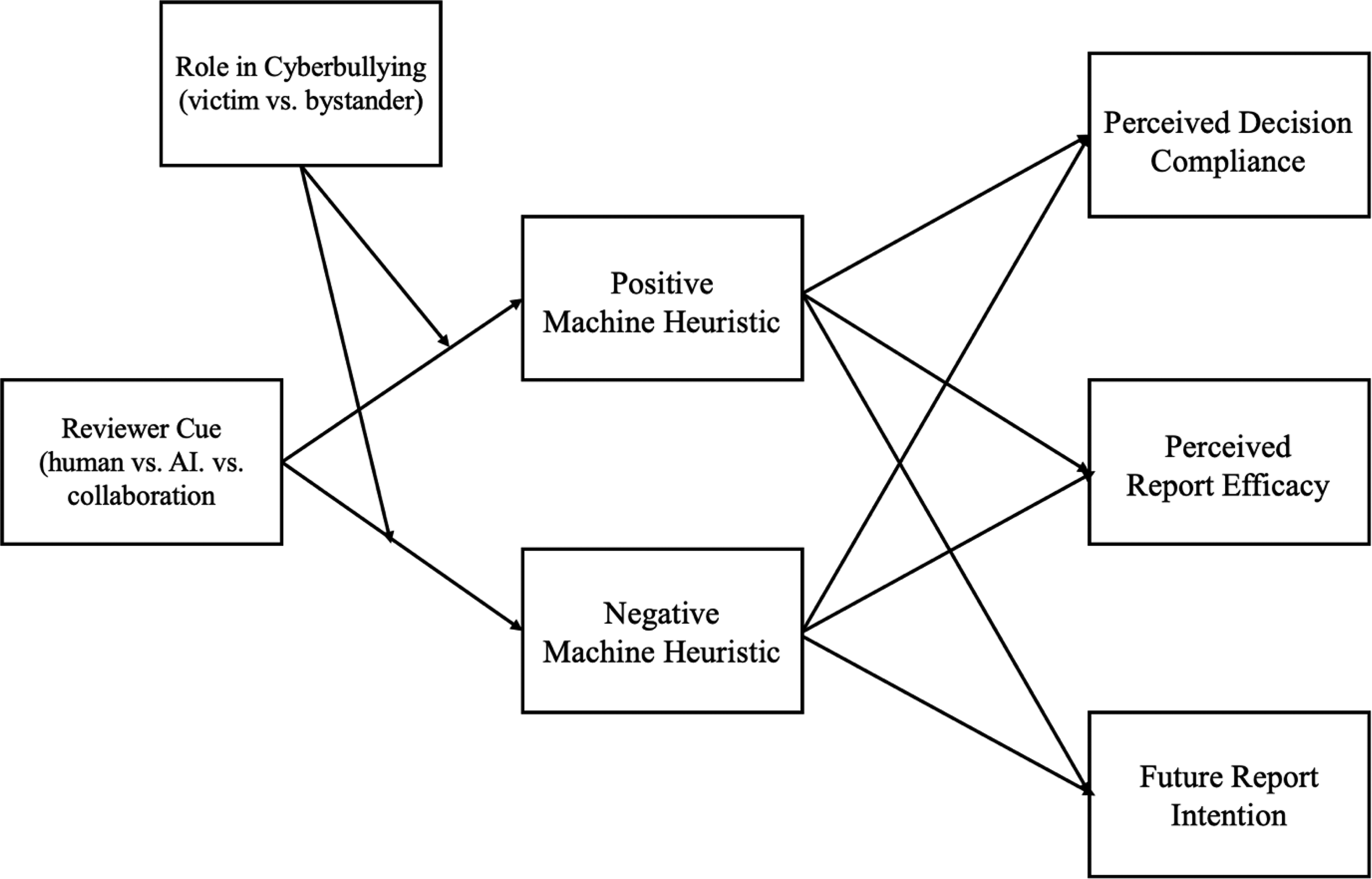
Research Model.
Method
Sample
To investigate hypotheses and the research question in a 3 (reviewer cue: human vs. AI vs. human–AI collaboration) × 2 (roles in cyberbullying incident: victim vs. bystander) design, we recruited 341 via Prolific. After excluding 37 participants who obviously failed attention checks (e.g., not recalling their assigned chat ID (n = 2) or reviewer cue image (n = 35), the final sample comprised 304 participants (Mage = 36.62, 59.5 percent women): human × victim (n = 40), human × bystander (n = 50), AI × victim (n = 59), AI × bystander (n = 50), human–AI collaboration × victim (n = 55), and human–AI collaboration × bystander (n = 50). a
Procedure
Participants first consented to participate in the study before being randomly assigned to one of six conditions. Each participant was informed that they will test a new chat platform called “Chatterflow” by interacting with several users in a chat room designed to simulate real user interactions. When they accessed the application website, they were informed that they might encounter uncomfortable interactions due to random matching. They were also explicitly instructed not to engage with the interaction, but instead to use the reporting function if they experienced or observed problematic behavior. The report was described as being reviewed by either a human moderator, an AI system, or a human-AI collaboration (Figures 2–4). Upon entering the chat, participants observed a cyberbullying incident directed either at themselves or another user. All existing users in the chat were AI-controlled virtual agents assigned specific roles (e.g., victim, offender), but participants were told they were interacting with real users. Following the exposure to the cyberbullying incident, a report button appeared. Upon clicking it, participants were directed to a page explaining the review process driven by the human customer service team, trained AI, and the combination between human customer service team and trained AI, followed by a reporting webpage where they documented the incident (Figures 2–4). After completing the reporting task, participants answered a post-interaction survey. Finally, they were debriefed and informed that all chat participants had been AI agents.
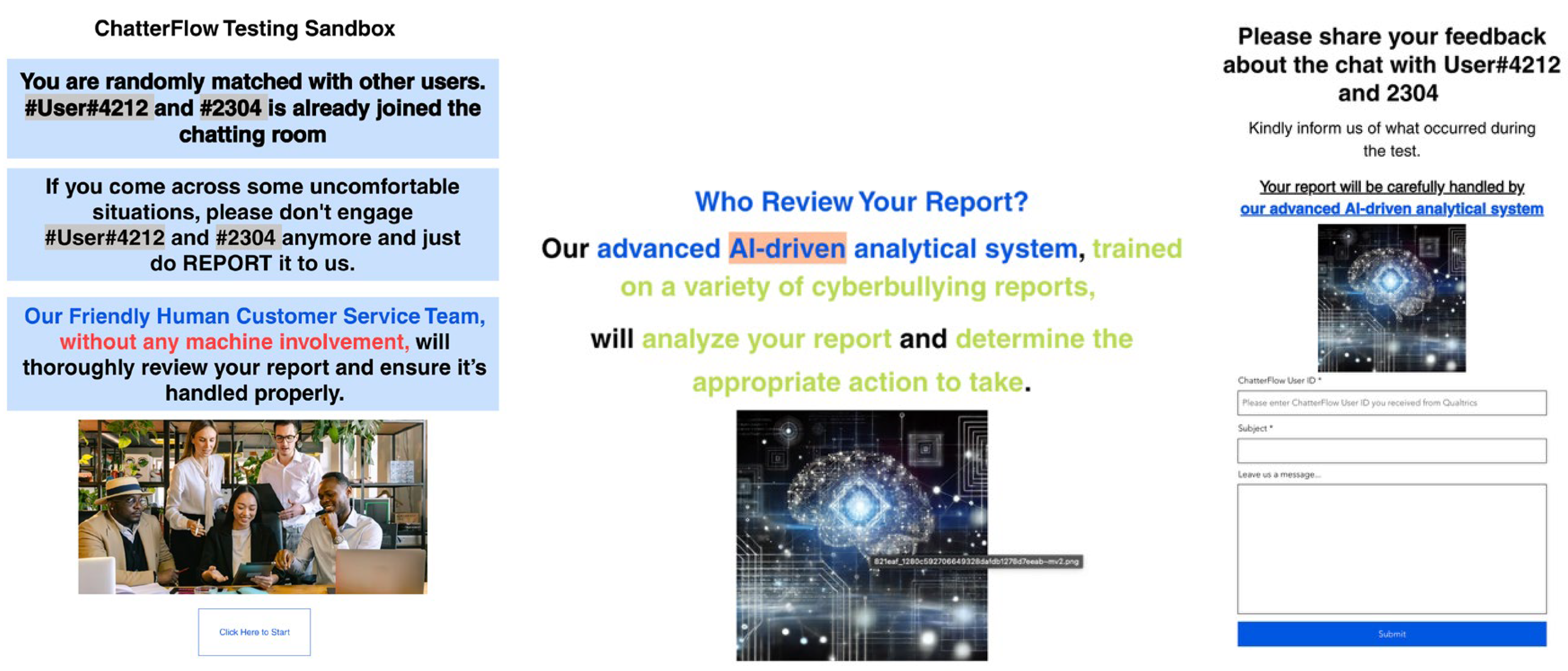
Reviewer cues—AI.
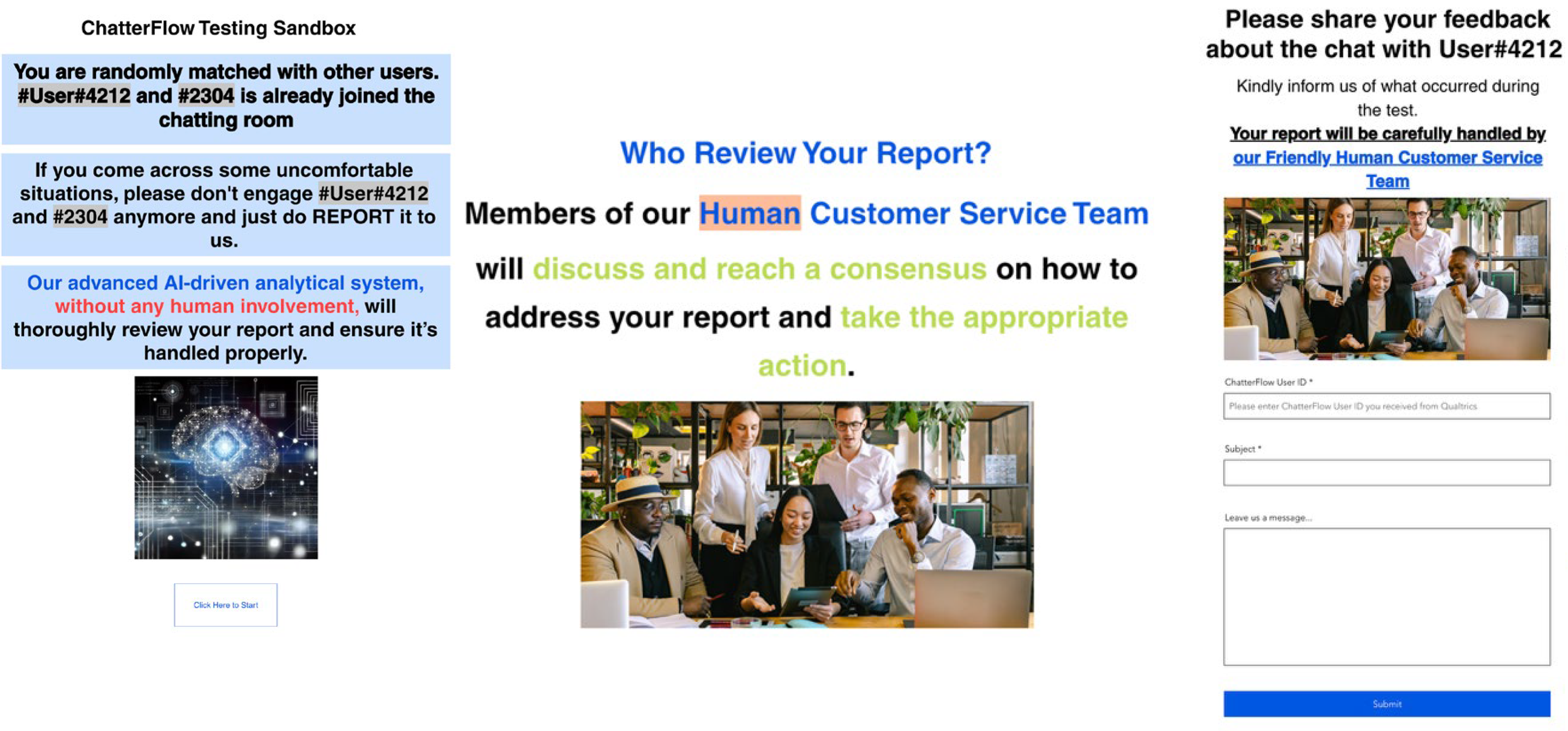
Reviewer cues—Human.
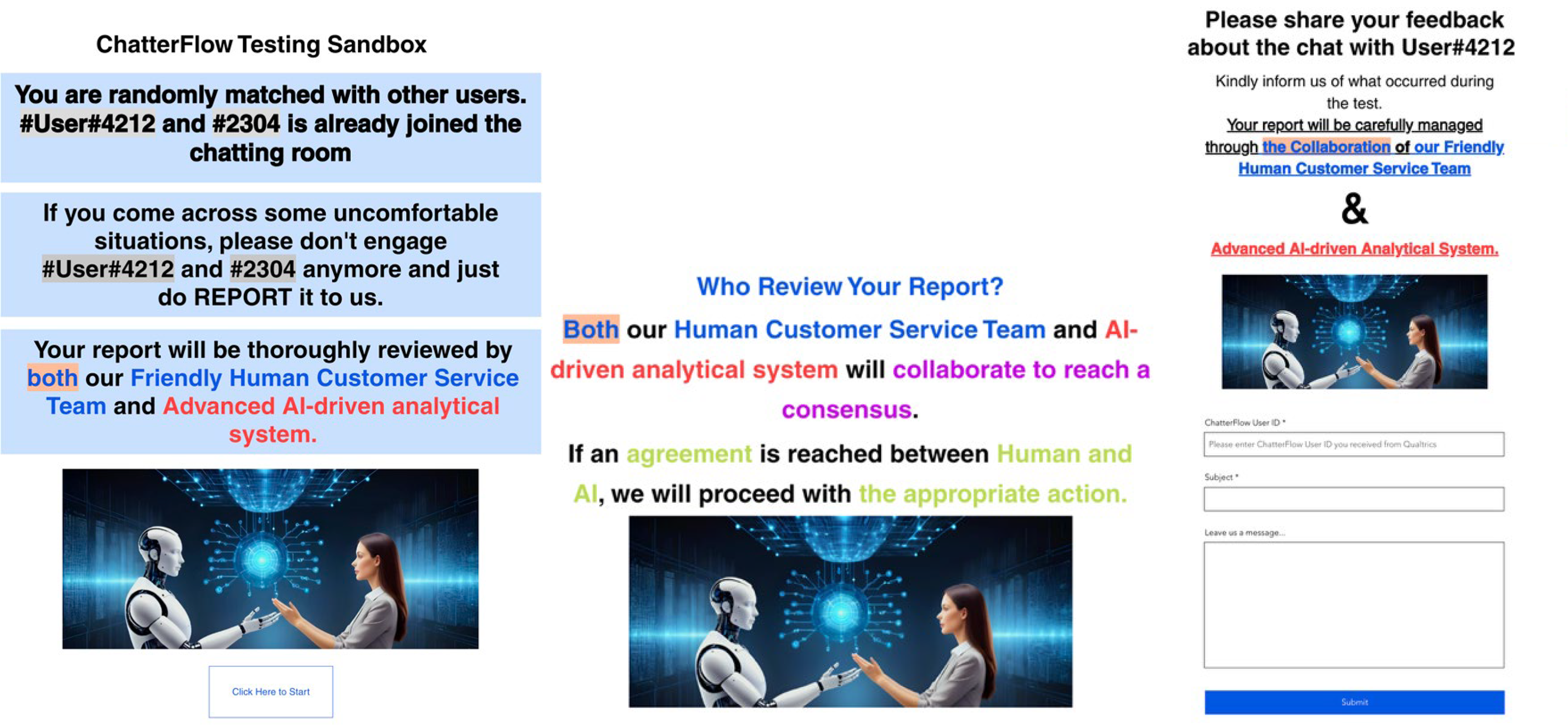
Reviewer cues—Human–AI Collaboration.
Stimuli
The study manipulated the source of the report review process and the participant’s role in the cyberbullying situation. The reviewer type (human vs. AI vs. human–AI collaboration) was used as a cue manipulation to examine users’ perceptions and responses to different moderation sources. This study does not aim to compare actual moderation processes but rather to understand how the perceived source of review affects user experiences and behaviors. There were three conditions for the reviewer cue: (a) human, (b) AI, and (c) human–AI collaboration, and participants were exposed to the reviewer cue three times. Initially, participants were informed that they could report the review source, along with a brief description of any uncomfortable situations they encountered. After encountering a cyberbullying incident, participants were presented with a specific cue indicating who would process their report, and another cue was also displayed when they reported (Figures 2–4).
The manipulation of roles in cyberbullying situations was conducted by assigning participants into victims and bystanders. All messages were delivered by a pre-established chatbot created using FlowXO (https://flowxo.com/). Participants in the victim condition were directly targeted by the offender (Figure 5). Participants in the bystander condition witnessed a cyberbullying situation. An offender criticized a victim, and participants witnessed the situation with five rounds of interaction. During the interaction, the victim left the chat room during the conversation, and the offender also left the room (Figure 6).
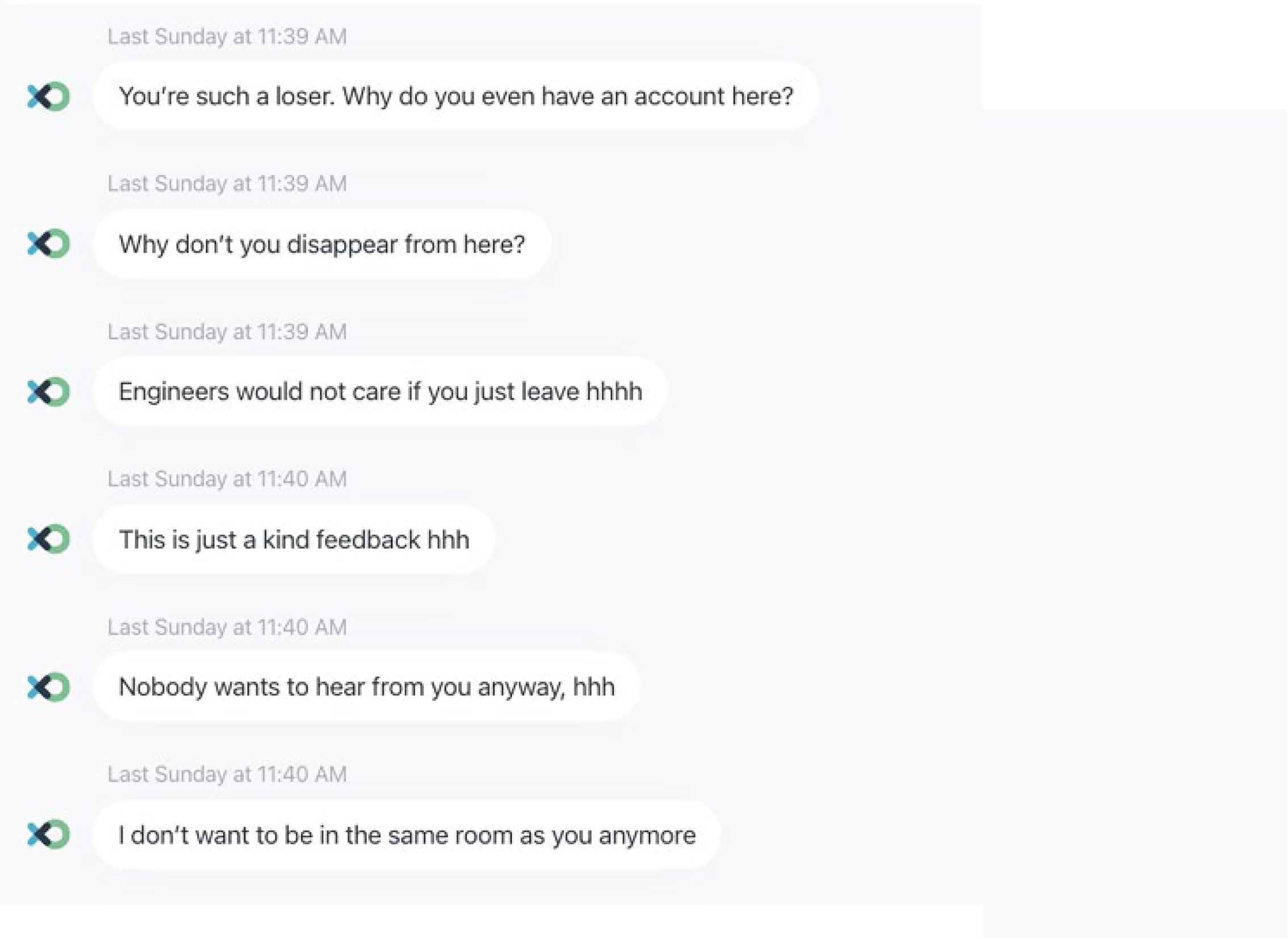
Cyberbullying Situation—Victim.
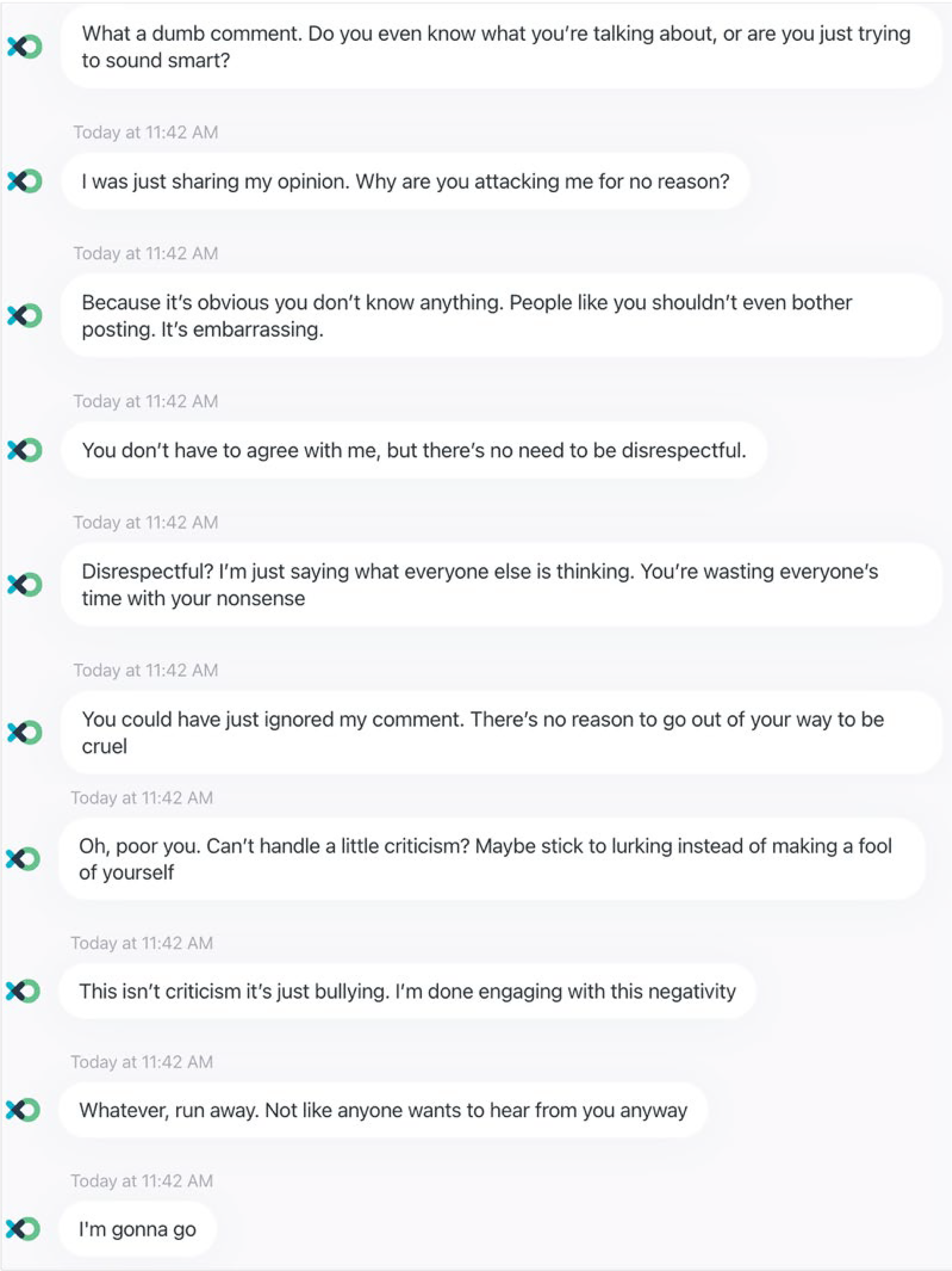
Cyberbullying Situation—Bystander.
Measures
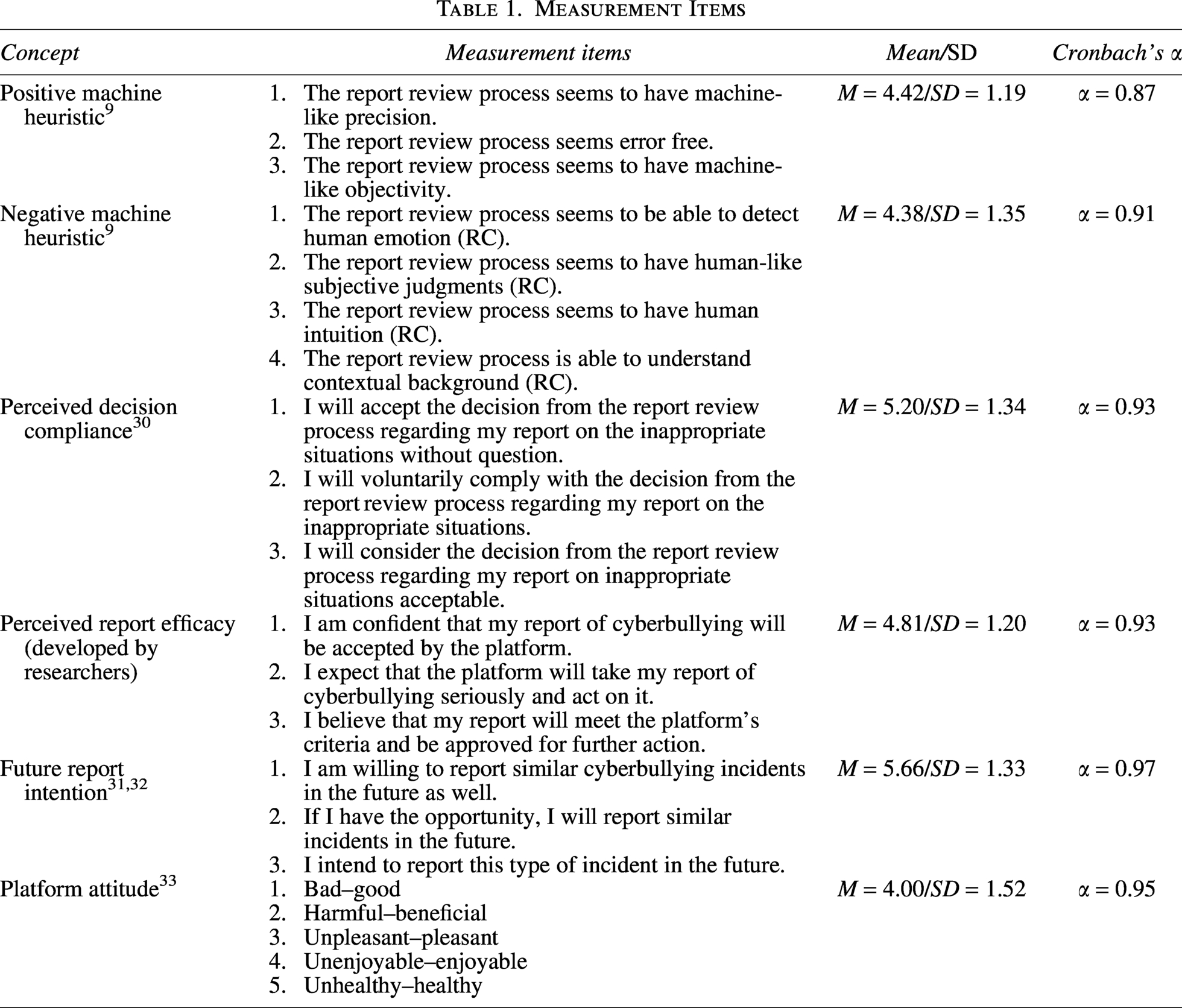
Measurement items are listed on Table 1.
Measurement Items
Results
Manipulation check
The study manipulated the cyberbullying report reviewer cue and role in the scenario. Reviewer cue manipulation was assessed using a 7-point scale (Human: 1—AI: 7) with the question: “Who do you think will review your report?” Analysis of Covariance (ANCOVA) results showed significant differences among groups F(2, 301) = 145.08, p < 0.001: AI reviewer (M = 6.54, SD = 1.13), collaboration reviewer (M = 4.71, SD = 1.47), and human reviewer (M = 2.62, SD = 2.19), confirming successful manipulation. Role manipulation was checked using a 7-point scale (Targeted: 1—others targeted: 7) with the question: “Who do you believe were the target of the cyberbullying?” An independent sample T-test revealed significant differences t(301.38) = −27.46, p < 0.001: bystanders (M = 6.45, SD = 1.38) scored higher than victims (M = 1.95, SD = 1.48), confirming successful role manipulation.
Hypothesis testing
The current study tested hypotheses 1–4 and RQ using PROCESS Macro Model 4, 34 controlling for platform attitude and roles in cyberbullying. When comparing human and AI reviewer cues, the AI reviewer cues indirectly increased perceived decision compliance, activating positive machine heuristic (B = 0.09, SE = 0.05, CI: [0.00, 0.19]) but indirectly decreased by triggering negative machine heuristic (B = −0.08, SE = 0.05, CI: [–0.18, –0.00]) (Figure 7). Thus, H1a-b, H2a, and H3a were supported. However, the AI reviewer cue indirectly increased perceived report efficacy (B = 0.08, SE = 0.04, CI: [0.00, 0.18]) (Figure 8) and future report intention by triggering a positive machine heuristic only (B = 0.09, SE = 0.05, CI: [0.00, 0.20]) (Figure 9). Therefore, H2b-c were supported, while H3b-c were not supported. Answering RQ1, the human–AI collaboration cue did not show significant differences in either positive or negative machine heuristics compared to the AI-only and human-only reviewer cues.
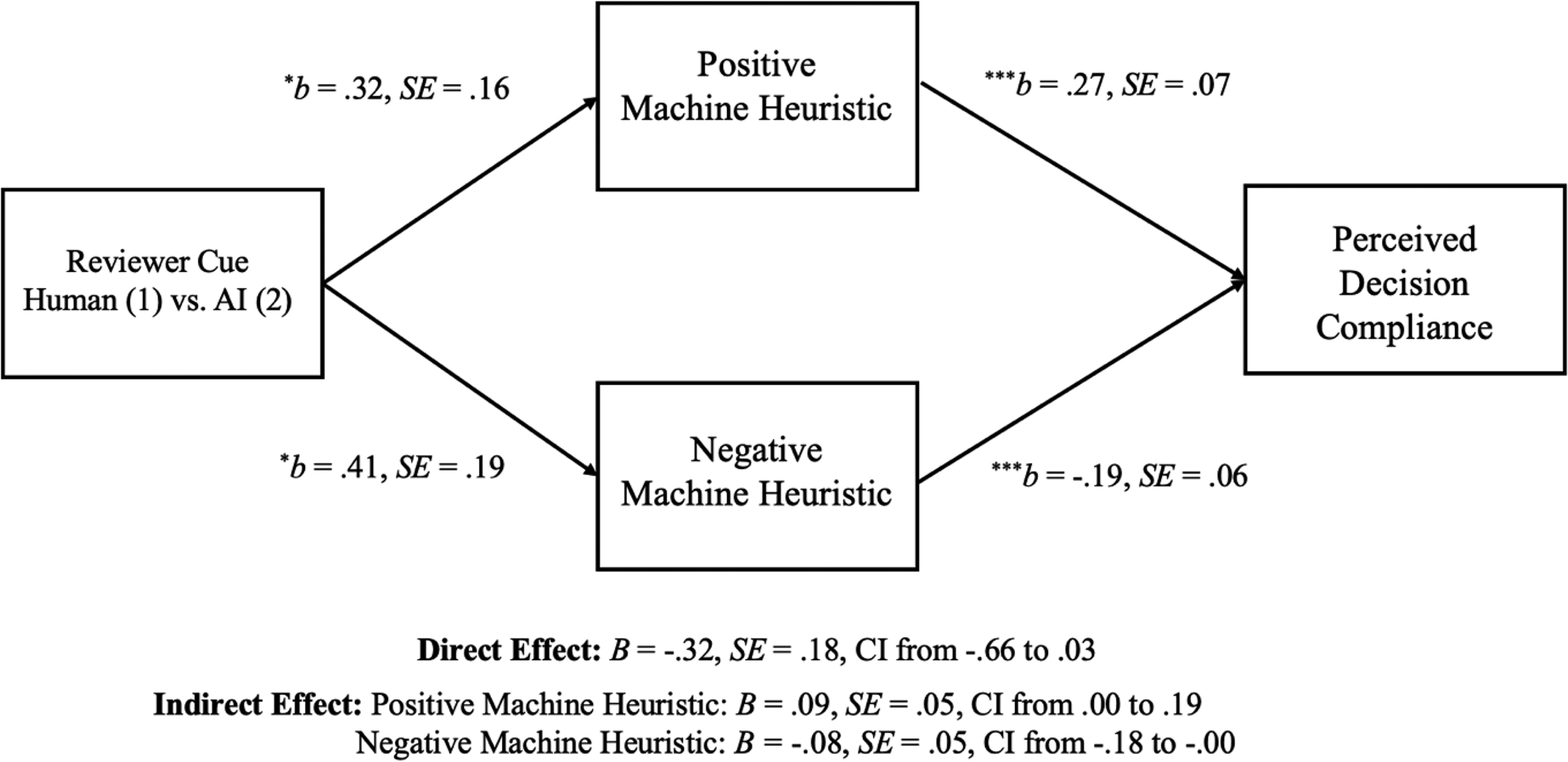
Indirect effect of Reviewer cue on Perceived Decision Compliance.
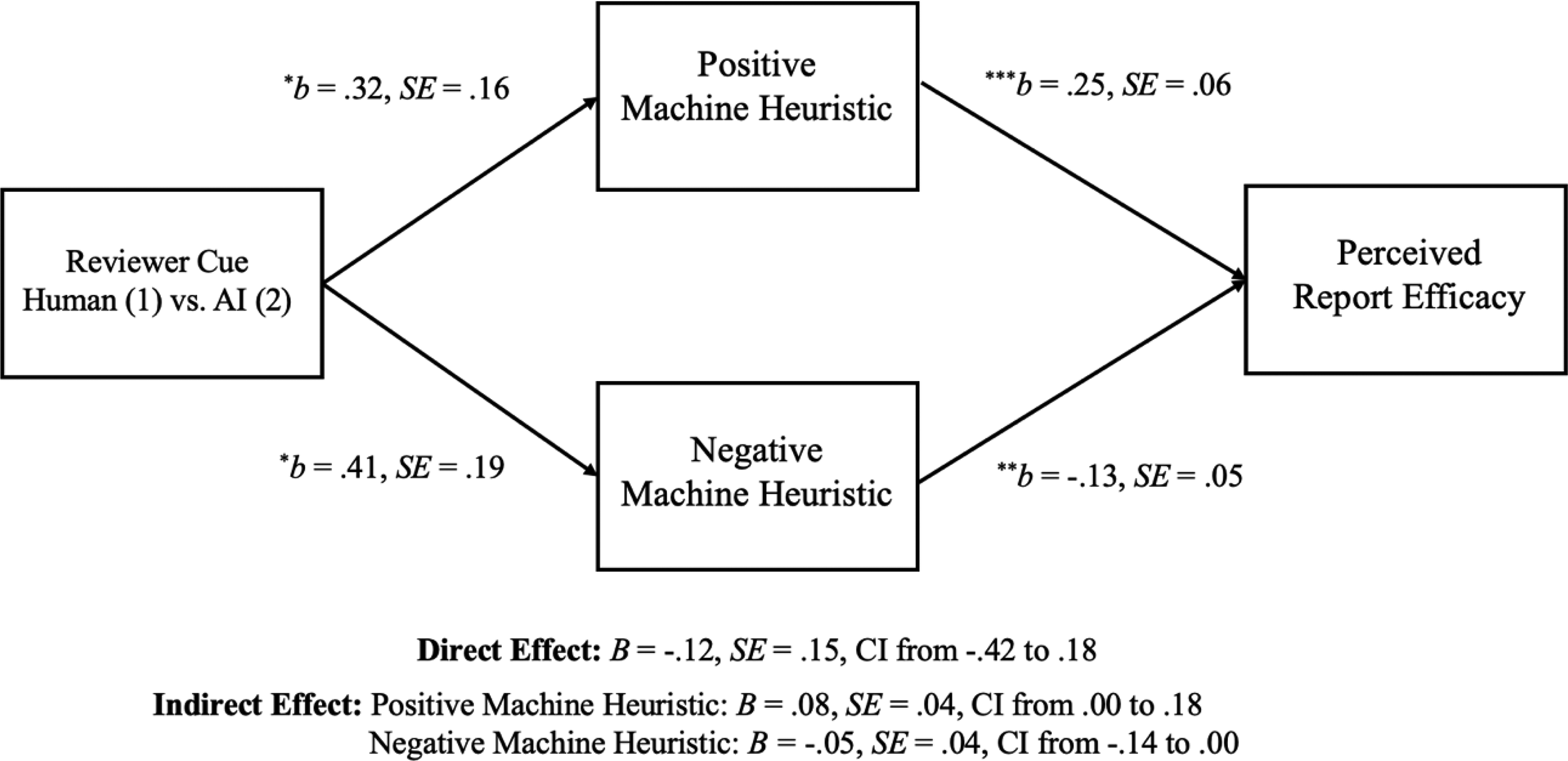
Indirect effect of Reviewer cue on Perceived Report Efficacy.
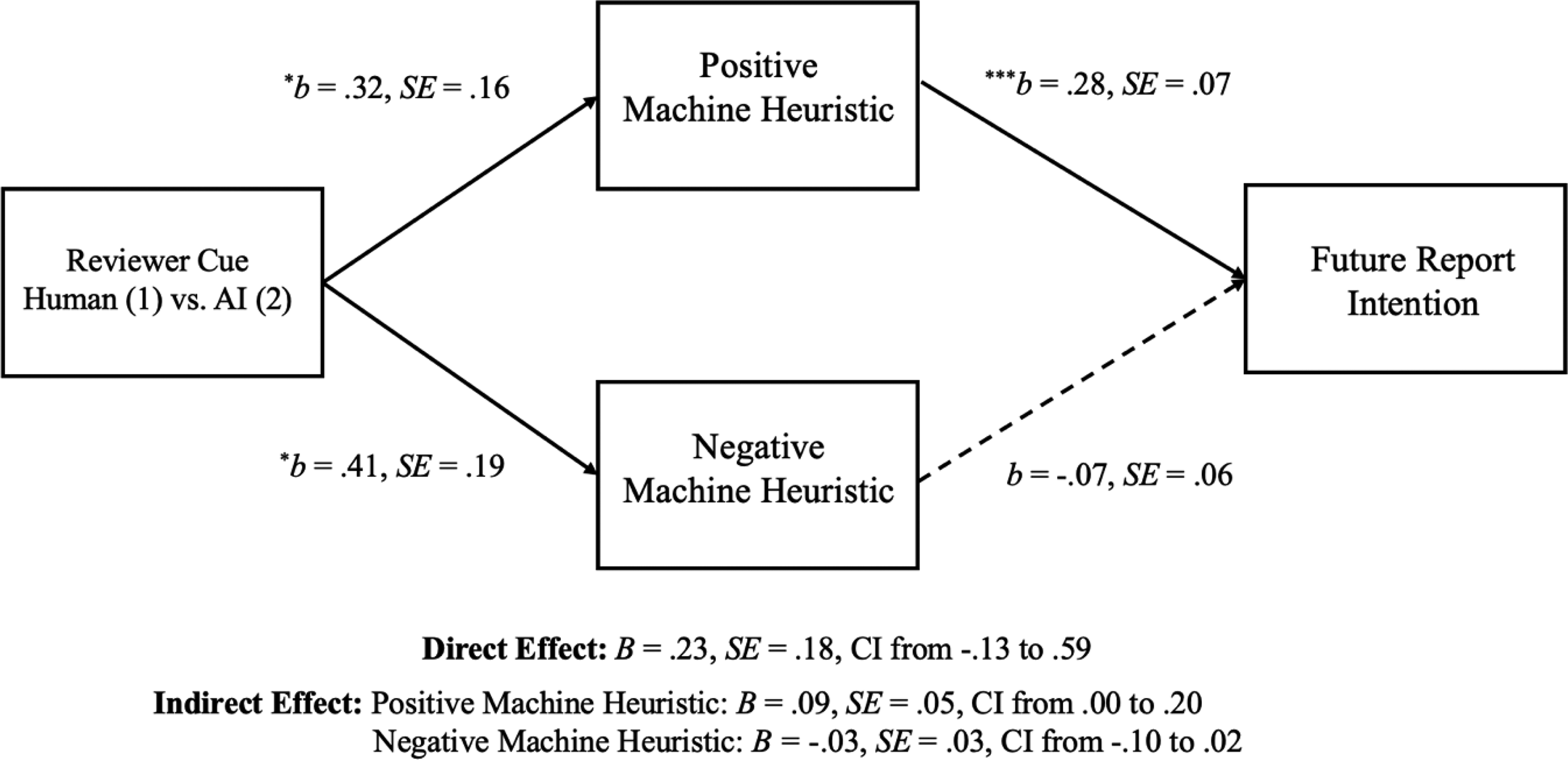
Indirect effect of Reviewer cue on Future Report Intention.
To explore H5, the current study used ANCOVAs followed by planned contrasts to examine the effects of reviewer cues on positive/negative machine heuristics according to different roles in a cyberbullying incident. While there were no significant interaction effects on positive and negative machine heuristics, the planned contrasts revealed that there was a marginally significant effect of reviewer cue on positive machine heuristic among bystanders F(1, 297) = 2.92, p = 0.09, partial η2 = 0.01. Participants who were exposed to the AI reviewer cue condition as a bystander (M = 4.68, SD = 1.30) showed a higher level of positive machine heuristic than participants who were exposed to the human reviewer cue condition as a bystander (M = 4.31, SD = 1.30). Furthermore, the planned contrasts also revealed a significant effect of the AI reviewer cue on negative machine heuristic among victims F(1, 297) = 4.61, p < 0.05, partial η2 = 0.02. Participants who were exposed to the AI reviewer cue condition as a victim (M = 4.77, SD = 1.42) showed a higher level of negative machine heuristic than participants who were exposed to the human reviewer cue condition as a victim (M = 4.21, SD = 1.36). Thus, H5 was partially supported.
Figure 10 also presents boxplots of positive and negative machine heuristics by condition.
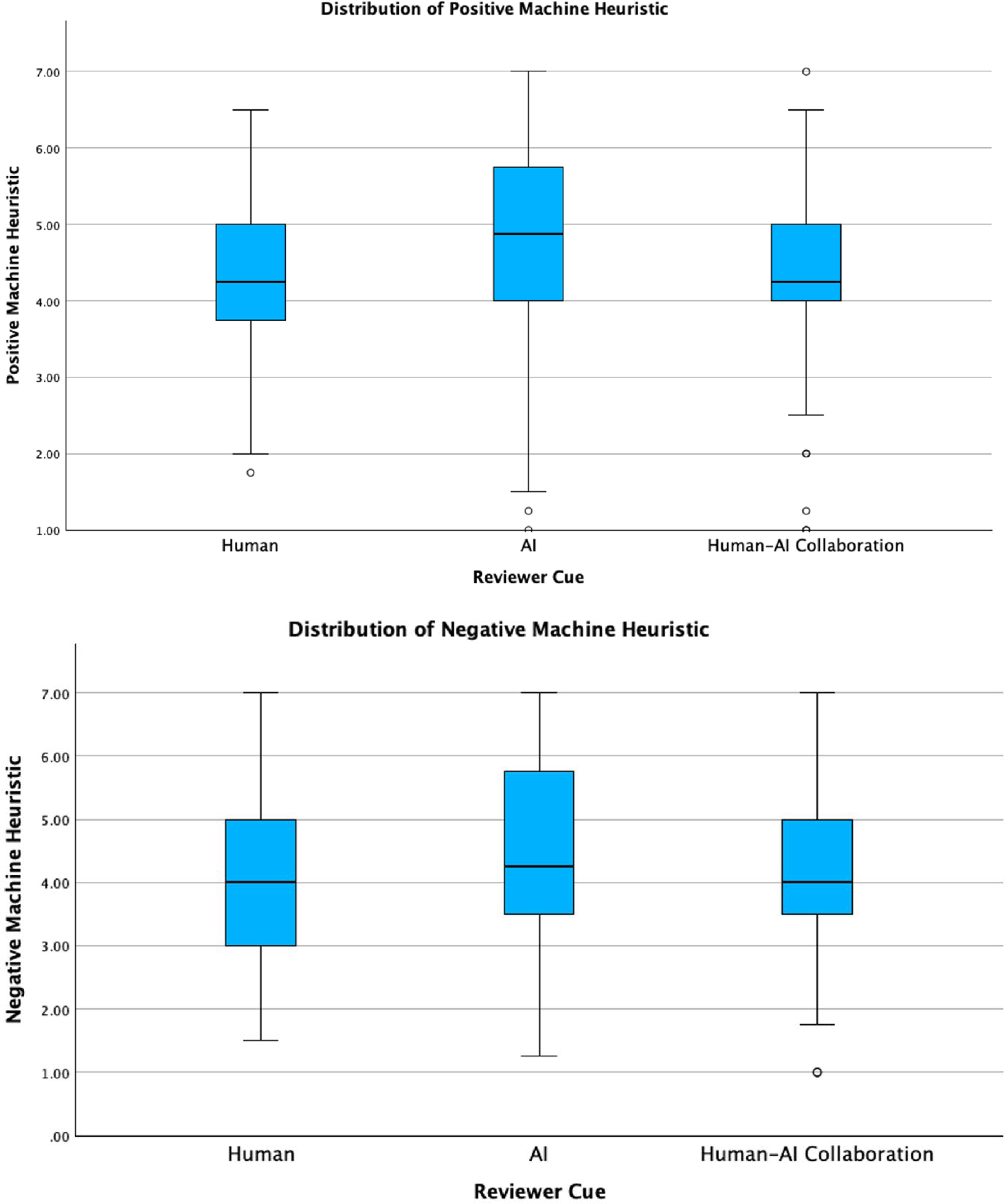
Distribution of Positive and Negative Machine Heuristic.
Discussion
This research explores the integration of AI into cyberbullying report review systems, traditionally managed by human moderators valued for their emotional and contextual sensitivity. Our findings show that the AI reviewer cue activated both positive and negative machine heuristics. 9 Positive machine heuristic mediated the effects of AI reviewer cue on perceived decision compliance, perceived report effectiveness, and future reporting intentions. However, the negative machine heuristic mediated the effect on decision compliance but did not mediate the effects on perceived report effectiveness and future reporting intention. While interaction effects were not significant, the planned contrasts suggested a pattern in which victims may be more likely to perceive AI as rigid and lacking emotional sensitivity, whereas bystanders may favor AI for its efficiency and accuracy.
Role of positive and negative machine heuristic
The current study extends the HAII-TIME framework 14 by applying the cue route to a cyberbullying reporting context. Our data show that AI reviewer cues activate both positive and negative heuristics that influence decision compliance, whereas only the positive heuristic influences report efficacy and future intention. This suggests that while AI’s rigidity hinders immediate compliance, its perceived objectivity serves as the primary mechanism that ensures the effectiveness of AI as a cyberbullying report review channel. This pattern reflects the coexistence of automation bias 8 and algorithm aversion. 35 AI’s perceived objectivity would foster automation bias, leading to favorable evaluations to its decision, whereas its perceived rigidity and blinded fairness (mechanical rule adherence without empathy) could trigger reluctance to comply with its decisions. 36 However, this ambivalence appears to be situational: users may feel reluctant to comply with decisions made by an AI, as doing so requires granting control to a non-human decision-maker, even while recognizing the system’s overall effectiveness. 7 Furthermore, the disconnect between negative machine heuristic and future report intention may suggest that users distinguish between immediate reactions to AI decisions and their overall evaluation of the reporting system. While the negative machine heuristic can elicit a situational form of algorithm aversion, leading to decreased decision compliance, it does not appear to undermine individuals’ willingness to use the reporting system in the future. In contrast, the positive machine heuristic may reinforce users’ favorable perceptions of AI and support continued reliance on the system. In other words, users may perceive the mechanical rigidity not as a failure of the algorithm, but as an inevitable trade-off for objectivity. Consequently, the long-term adoption of AI could be driven by a strategic calculation where the cognitive benefit of objectivity outweighs the communicative frustration of contextual blindness. Moreover, to further refine this analysis, future studies should transition from coarse measures (i.e., positive and negative machine heuristic) to the multi-dimensional scale. 2 identified formative indicators (i.e., expert, efficient, rigid, superfluous, fair, and complex) and reflective indicators that allow for a more granular understanding of how specific machine characteristics influence trust in the cyberbullying review context.
Role of users’ contextual situation
Our findings also suggest that perceptions of AI characteristics may vary depending on users’ contextual positions. Although the interaction effects between the reviewer cue and the roles in the cyberbullying incident were not significant, planned contrasts suggested a pattern: victims may tend to value human subjectivity, whereas bystanders may tend to favor AI’s objectivity. This pattern is consistent with the task-dependent nature of machine heuristics. 2 suggest that mechanical tasks are rule-governed operations, whereas human tasks transcend rules and require intuition, emotional expression, and the ability to navigate social nuances, and the activation of machine heuristics can differ by these task types. For example, individuals are more likely to trust AI in tasks involving calculation or prediction because of its rule-based nature, ensuring accuracy and objectiveness, but less likely to do so in tasks requiring contextual understanding or human judgment because of its rigidity. However, the cyberbullying report review would be situated as a hybrid task that demands both mechanical task and human task capabilities. It requires the objective, high-volume processing and consistency typical of mechanical tasks,3,4 but it also necessitates the empathetic consideration and moral judgment inherent to human tasks. 37 Based on this hybrid characteristic of cyberbullying review, our results provides a more nuanced understanding of the machine heuristic activation: the activation and effects are context-dependent processes shaped by the interplay between task-specific attributes 2 and, importantly, the user’s psychological position, which may lead to divergent evaluations even within the same context. In other words, individuals may perceive the same hybrid task differently depending on their psychological position, viewing it as more human-oriented (e.g., victims) or more mechanical (e.g., bystanders), and prioritize different attributes of AI based on the views, leading to divergent evaluations.This finding calls for future research to examine how different roles and perspectives shape AI evaluation in complex decision-making environments. It also can contribute to ongoing discussions about the role of AI in morally sensitive decision-making, such as legal contexts, where hybrid human–AI systems are often considered preferable. For instance, using AI for routine for minor cases while reserving human judgment for more complex or context-dependent decisions.38,39
Practical implication
This study offers practical insights for designing cyberbullying reporting systems. For bystanders, whose perceptions may be less affected by reviewer type, platforms can present AI, human, or collaborative reviewers. In contrast, victims may benefit more when the reviewer is disclosed as human due to their need for empathy and emotional support. Tailoring the interface to user roles could increase reporting rates and satisfaction, contributing to safer online spaces. In addition, AI reviewers could incorporate features that convey empathy (e.g., contingent interaction or highlighting its positive intent)40,41 to enhance trust and perceived decision compliance in emotionally sensitive contexts. Furthermore, this finding can be expanded into interface design for platforms that assess human behavior, including interviews and legal judgments, beyond simple cyberbullying contexts.
Limitations and future research
While this study provides implications, a few limitations should be acknowledged. First, the chat interaction was artificial, potentially affecting internal validity. Although a cover story framed the task as testing a new chat platform, participants may still have perceived the situation as artificial or unusual. This may also help explain the weak effect sizes observed in the group comparisons. Future research should consider more controlled formats, such as static social media posts, to minimize variability in responses. Second, the results of the planned contrasts should be interpreted with caution, particularly in the absence of significant interaction effects, as the possibility of Type I error cannot be entirely ruled out. A larger sample size may help detect subtle interaction effects that are otherwise attenuated. 42 Third, in the human-AI collaboration condition, participants were not informed of any hierarchy between reviewers. While our equal-role model did not activate machine heuristics, it may not reflect real-world dynamics where human reviewers often hold greater authority. Future studies should examine hierarchical collaboration structures. Third, the item “Who do you believe were the target of the cyberbullying?” used a 7-point scale ranging from “Targeted” to “Others targeted,” which may have introduced ambiguity regarding the referent of the response (e.g., self vs. another user). This ambiguity may have influenced how participants interpreted and responded to the item. However, the manipulation check revealed a significant difference in the expected direction (Mvictim = 1.95 vs. Mbystander = 6.45) indicating participants understood the intended role manipulation. Fourth, participants’ level of interaction with the chat environment may have varied. However, given that participants were instructed to focus on reporting decisions rather than conversational engagement, this design remains consistent with the study’s primary objective.
Footnotes
Author Disclosure Statement
No competing financial interests exist.
Funding Information
No funding was received for this article.