



Abstract
The current study employs the theory of reasoned action to examine factors that correlate with the behavioral intentions of watching eSports. A structural equation modeling analysis is performed to examine the relationship between intentions to watch eSports, attitude toward watching eSports, subjective norms, behavioral beliefs, and normative beliefs. The results suggested that three behavioral beliefs-related factors (aesthetics, drama, and escapism) and subjective norms were positively related to attitude toward watching eSports. Normative beliefs positively influenced subjective norms. Finally, attitude toward watching eSports positively influenced behavioral intention.
The industry of competitive electronic sports (eSports) is booming. The U.S. market generates more than 900 million dollars in revenue in 2018 (Newzoo, 2018). More than half of the U.S. population (18 years or older) have watched an eSports game on television or on their connected devices (Statista Survey, 2017). Among all eSports viewers, more than 35% of older millennial consumers (25–34) have watched or live streamed an eSports game, making them the main viewer group behind the screen (The Nielsen Company, 2017). Twitch, a video game and eSports streaming platform, has become the most watched game streaming site in the United States (Streamlabs, 2018). A new trend in the U.S. professional sports industry is that professional sports teams, such as the New York Yankees, the Philadelphia 76ers, and the New England Patriots, are acquiring professional eSports teams to expand their businesses into the digital realms (Badenhausen, 2017; Huddleston, 2017). Even the International Olympic Committee is considering whether to add eSports as an Olympic sport in the near future (Olympic, 2018). The increasing popularity of eSports attracts not only marketers but also academic scholars’ attention.
A considerable amount of research studies about traditional sports viewership has been developed (James, Kolbe, & Trail, 2002; Pritchard & Funk, 2006; Yoshida, Gordon, Nakazawa, & Biscaia, 2014). However, the amount of studies about eSports viewership is limited possibly due to the short history of the eSports market (Wagner, 2006; Weiss & Schiele, 2013). Within the existing literature of eSports, qualitative studies have been prevalent (Brock, 2017; Conway, 2010; Taylor, 2016). Hamilton, Garretson, and Kerne (2014) conducted an ethnographic investigation on why Twitch viewers watch the gameplay of the others. According to the study, Twitch viewers regard the streaming platform as the “virtual third place” where they socialize and exchange information with other fans of the game who share a similar social identity (Hamilton, Garretson, & Kerne, 2014). On the other hand, Cheung and Huang (2011) analyzed the comments from viewers of a StarCraft (a real-time strategic eSports game) live event. Their findings suggest that the need for information is in high demand among viewers of StarCraft, and there is a symbiotic relationship between involvement and understanding about the game (Cheung & Huang, 2011).
A viewer of eSports is usually a video gamer. Empirical research studies have investigated behaviors of playing video games from many theoretical perspectives such as self-determination theory (Przybylski, Rigby, & Ryan, 2010), the technology acceptance model (Hsu & Lu, 2004), and uses and gratifications (U&G) theory (Lucas & Sherry, 2004). The behavior of playing video games and watching eSports are similar in some aspects, but the two are different activities in essence—playing video games is a more active behavior, while watching eSports is a more passive behavior like watching television programs.
Traditional sports and eSports are similar in their competitive nature, in the rigorous training process for athletes/players to hone their skills, and in the fervent fandom (Brown, Billings, Murphy, & Puesan, 2017). However, eSports is different from traditional sports in that eSports players control their virtual characters to compete vicariously with opponents in a virtual arena. Hence, the motivations for eSports viewers in watching eSports may be different from those of traditional sports fans in watching traditional sports events. To study why individuals watch eSports is theoretically meaningful in that it contributes to scholars’ understanding of the psychology of eSports viewers. Findings from such studies will serve as the foundation to help future scholars develop new lines of research about eSports spectators. To sports marketing practitioners, to study why individuals watch eSports is valuable because it helps sports marketers develop new eSports-related products or services such as broadcast content or eSports online communities (Hamari & Sjöblom, 2017).
The current study uses the theory of reasoned action (TRA) as the main theoretical framework to investigate factors related to eSports viewership. In contrast to common belief, human behavior is not a mere product of attitude or motivators alone but rather a collective outcome of a series of correlated factors. The power of TRA lies in its ability to incorporate an array of factors that work jointly in influencing one’s behaviors in a linear and sequential way. According to TRA, behaviors are results of behavioral intentions, while behavioral intentions are determined by attitude and subjective norms, and at the very fundamental level, individual beliefs about the behavior and social norms influence the formation of attitude and subjective norms (see Figure 1). Fishbein and Ajzen (1975) considered these beliefs as one’s behavioral or normative outcome expectations. That is, beliefs are formed because the person believes that the performance of the action can bring him or her a desired outcome such as relaxation or social recognition. This mechanism proposed in TRA is similar to the need-gratification mechanism proposed in U&G theory. However, if one constructs a model that directly associates motivators with the actual behavior, one may have missed several steps or elements, such as attitudes and subjective norms, in the decision-making process that leads to the performance of an action. By following the framework of TRA, researchers can examine these crucial antecedents of human behavior in a comprehensive and sequential manner. Findings from this study will contribute to researchers’ understanding of eSports viewership from motivational, attitudinal, and normative perspectives.

Illustration of the theory of reasoned action model.
Literature Review
Definition of eSports
Multiplayer online battle arena games, such as League of Legends, first-person shooter games, such as Counter Strikes, and real-time strategy games, such as StarCraft, are some of the typical examples of eSports games. Regarding the definition of eSports, academic scholars have not reached a consensus. In fact, some media practitioners even doubt the legitimacy of calling eSports as a genre of sports. For example, John Skipper, the president of ESPN, does not consider eSports as a real sport, but a competition just as chess and checkers (Tassi, 2014). Perhaps the lack of physical contact in eSports matches leads the president of ESPN to reach his conclusion (Witkowski, 2012). In contrast, some of the scholars disagree with the notion of dismissing eSports as a genre of sports. Based on the definition of traditional sports, Wagner (2006) defines eSports as “an area of sport activities in which people develop and train mental or physical abilities in the use of information and communication technology” (p. 3). Hamari and Sjöblom (2017) define eSports as “a form of sports where the primary aspects of the sport are facilitated by the electronic system; the input of players and teams, as well as the output of the eSports system, are mediated by human-computer interfaces” (p. 221). Their definition focuses on the difference between the outcome generated by traditional sports and eSports. Specifically, athletes who play traditional sports, such as football or basketball, create real-world outcomes (e.g., physical contact), while professional gamers create virtual outcomes (e.g., computer-mediated interactions).
eSports have become a popular topic among communication scholars in recent years. Bowman, Weber, Tamborini, and Sherry (2013) investigated how audiences of videos games may influence the performance of the player of the game in a laboratory experiment. Using social facilitation theory as the theoretical framework, Bowman et al. found a positive correlation between the presence of audiences and high-skilled players’ performance, while the presence of audiences negatively affected low-skilled players’ performance. Findings from their study suggest the presence of viewers has a significant influence on the performance of a gamer, while the performance of a gamer affects the enjoyableness of viewing the game in return. In a research study that is more aligned with the goal of the current study, Brown, Billings, Lewis, and Bissell (2018) found that competition, passing time, and Schwabism (i.e., a feeling of having superior knowledge) were factors motivating eSports fans to participate in eSports competitions, while fanship, camaraderie, and arousal were factors leading fans of eSports to be satisfied with the eSports-related media consumption experience. Their findings indicate that the reasons for one to participate in eSports consumption are similar to the reasons for one to select which media to consume (Brown, Billings, Lewis, & Bissell, 2018). Several extant studies of eSports have directly related motivators with actual behaviors of watching or playing eSports games (Brown et al., 2017; Brown et al., 2018; Hamari & Sjöblom, 2017). However, this may oversimplify the correlations between motivators and behaviors because the analytic process has missed essential elements (e.g., behavioral beliefs, attitude, and subjective norm), as well as the linkage between attitude, behavioral intentions, and behaviors. To advance our knowledge of eSports, the current research study examined a different set of eSports consumption motivators, situated the motivators in the theoretical framework of TRA as behavioral beliefs, and utilized structural equation modeling (SEM) as the data analytic approach to uncover correlations between variables.
TRA and the Intention to Watch eSports
TRA is often used to explain how different factors predict a person’s behavior (Ajzen & Fishbein, 1980; Fishbein & Ajzen, 1975; Sheppard, Hartwick, & Warshaw, 1988). According to TRA (see Figure 1), behavioral intention is a reliable predictor of actual behavior; one’s attitude toward certain behaviors and one’s perceived social pressure (i.e., subjective norms) are two of the main factors that directly correlate with one’s intention to perform an action; additionally, one’s attitude and subjective norms are influenced by behavioral beliefs and normative beliefs (Ajzen & Fishbein, 1977 , 1980). Empirical research studies suggest that behavioral intention can be a reliable predictor of various behaviors such as coupon use (Bagozzi, Baumgartner, & Yi, 1992; Shimp & Kavas, 1984), condom use (Albarracín, Johnson, Fishbein, & Muellerleile, 2001), class attendance (Ajzen & Madden, 1986), and knowledge sharing (Bock, Zmud, Kim, & Lee, 2005). In the context of a research study about eSports viewership, it is likely that a person with a strong intention to watch eSports may actually watch a match. Given the pivotal role of behavioral intention in the TRA framework and the intention’s predictive power of actual behavior, the current study focuses on examining factors that relate to behavioral intention.
Sports Consumption Motivators and Behavioral Beliefs
Attitude, an essential part of the TRA framework, is determined by behavioral beliefs (Fishbein & Ajzen, 1975). Behavioral beliefs are one’s outcome expectancy of a behavior (Ajzen & Driver, 1991). If an individual deems the behavior of watching eSports can bring him or her the desirable outcome (e.g., relaxation), he or she is more likely to regard the behavior of watching eSports as a valuable behavior and develop a positive attitude toward the behavior. This expectancy-value logic proposed by Fishbein & Ajzen (1975) for TRA is akin to the need gratification rationality proposed in U&G theory (Blumler, 1979) to explain media consumption behaviors and attitudes.
U&G theory focuses on audiences of a medium and assumes that audiences’ expectation of using a medium to gratify their needs is the key to motivate them to use the medium (Haridakis, 2002; Papacharissi & Mendelson, 2007). In the U&G-related studies, motivators are often operationalized as latent constructs or variables, reflecting consumers’ desired outcomes that they wish to see or experience after using a medium (Rubin, 2009; Sundar & Limperos, 2013). Thus, motivators can be seen as the equivalent to the behavioral outcome expectation, just as behavioral beliefs function in the TRA framework. Given the similarity between motivators and behavioral beliefs as reflections of behavioral outcome expectancies, it is likely that expectancy-value model can be used to explain how motivators influence attitude formation (Ajzen & Driver, 1991; Fishbein & Ajzen, 1975).
In research studies, behavioral beliefs are operationalized by combining the strength of the beliefs and the evaluation of the outcomes (Ajzen, 2001
, 2002; Fishbein & Ajzen, 1975). For example, the strength of beliefs can be measured by an item in the questionnaire on a 7-point agreement scale such as “Using coupons help me save money.” The corresponding outcome evaluation item can be “Saving money to me is (1) bad…(7) good” (Shimp & Kavas, 1984). Then, the strength of beliefs will be multiplied by the evaluation of outcomes to form a composite item. If there are 3 composite items to measure the construct, all 3 composite items will be added up to form a behavioral belief construct. The mathematical expression of the process is
The behavior of watching eSports shares common traits with the behavior of watching traditional sports. For example, both eSports and traditional sports matches can be very competitive and suspenseful (Brown et al., 2017; Hamari & Sjöblom, 2017). Sometimes, the result of a game cannot be determined until the very last second. Given the similarity between eSports and traditional sports, it would be helpful for the researcher to first identify motivations of sports consumptions. When these motivations are identified, they can be used as behavioral belief constructs in the study of eSports under the guidance of the TRA.
Yoshida, Gordon, Nakazawa, and Biscaia (2014) discussed sports consumption from the perspective of fan engagement. In Yoshida et al., fan engagement positively associated with intentions of buying tickets and team merchandise, while basking in reflected glory (BIRGing) and team identification were more influential factors than positive affect in influencing fan engagement. Findings from this study emphasize the sequential correlation between team identification, performance tolerance, and purchase intention. From a sports media consumption perspective, Pritchard and Funk (2006) uncovered a media-dominant patronage model: Heavy sports media consumers, not frequent live event attendees, are more involved with the sports, more likely to purchase team-related merchandise, and more tolerant to view sports-related advertising. Findings from this study reveal the significant role played by the media in influencing a team’s fan base and fandom behaviors.
In research studies about traditional sports consumption, Trail and James (2001) have developed the Motivation Scale for Sport Consumption (MSSC) based on existing research studies of sport sociology. The scale is an integration and expansion of two scales developed by Wann (1995) and Milne and McDonald (1999) about motivations of being sports fans. Wann’s (1995) scale is based on the conceptual literature of sports sociology, and Milne and McDonald (1999) developed their scale based on Sloan (1985) and Maslow (1943). The MSSC contains constructs that are similar to U&G theory but specifically designed for studying gratification of needs in sports consumption. As discussed earlier, both motivators and behavioral beliefs are reflections of one’s behavioral outcome expectations. Thus, motivators can be utilized as behavioral beliefs in TRA to study the formation of attitude. An individual can hold an infinite number of behavioral beliefs, but they can only attend to a limited amount of them at a moment for a specific action (Miller, 1956). This study identified six relevant traditional sports consumption motivators from the MSSC and used them as behavioral beliefs to explore how these factors may correlate with the formation of the attitude toward watching eSports.
Achievement is a viewer’s sense of relatedness to a team or player when the team or player wins. Empirical research suggests that sports spectators experience a sense of achievement through BIRGing (Wann, Schrader, & Adamson, 1998). Sports fans vicariously related themselves with the victory of a sports team/athlete for a purpose of maintaining or enhancing their self-images (McDonald, Milne, & Hong, 2002). In the study conducted by McDonald, Milne, and Hong (2002) about sports spectators and participant markets, achievement was positively associated with the viewership of all types of sports (e.g., baseball, basketball, bowling, football, tennis). The finding suggests that sports spectatorship is inherently achievement oriented (McDonald et al., 2002). A fan of eSports may watch eSports games for the same reason. The person may believe that one of the outcomes of watching eSports games is to experience a sense of achievement vicariously. The stronger the belief, the more likely the person will have a positive attitude toward watching eSports.
Aesthetics is related to the beauty or gracefulness inherent in sports games. Stylistic sports, such as figure skating and gymnastics, are often the ones that attract viewership through artistic beauty in an athlete’s movements. Wann, Grieve, Zapalac, and Pease (2008) compared motivators of sports consumption between different types of sports. Their findings revealed that aesthetics is a key motivator differentiating stylistic sports consumption motivations from the others. In their research study, the measurement scores for aesthetics motivation to watch figure skating and gymnastics were much higher than the scores of the same constructs for nonstylistic sports. However, one should note that aesthetics is not an exclusive motivator for stylistic sports consumption as those who watch nonstylistic sports, such as golf, often talk about their appreciation for the aesthetic execution of movements (Sargent, Zillmanm & Weaver, 1998). In eSports, a game with well-designed graphics is likely to provide viewers with an aesthetically appealing experience. A professional eSports player who controls the in-game character and executes a movement can trigger visually appealing special effects. Thus, the viewers of eSports games who have seen such visual effects may find the experience aesthetically satisfying, and the viewers may perceive eSports games that provide them such experience in a positive way.
Acquisition of knowledge is the degree to which media consumption enables one to acquire information about a specific type of sports. Learning the information of a specific team or player is cognitive motivation for some spectators to watch traditional sports (Gantz & Wenner, 1995). James, Kolbe, and Trail (2002) surveyed 507 season ticket holders of a new Major League Baseball franchise to examine what motivated this group of sports fans to watch baseball matches. The results of the study suggest that acquisition of knowledge is an important driver for fans who have a strong psychological connection with the team and who purchase season tickets. Hamari and Sjöblom (2017) conducted an online survey and sampled eSports viewers from the platforms of Reddit, Facebook, Twitter, and other game-related forums. The acquisition of knowledge was found to be one of the positive predictors of eSports viewership in their study. This indicates that, for eSports viewers, watching eSports games is a way to acquire information about teams/players and learn their ways of play (Hamari & Sjöblom, 2017). Therefore, eSports viewers may regard the behavior of watching eSports positively, if they believe that watching eSports helps them learn useful knowledge about the game, player, and player’s style.
Drama is about the enjoyment of uncertainty and suspense that happened in sports games. Trail and Kim (2011) surveyed club members of National Collegiate Athletic Association (NCAA) basketball teams (i.e., fans of collegiate basketball teams in the United States) to investigate why they attend women’s basketball games at the university. Drama, together with achievement, escape, social interaction, aesthetics, role model, and support for women’s sports, was found to be an internal motivator that explained 5–22% variance in club members’ intention to attend a women’s basketball game. Knobloch-Westerwick, David, Eastin, Tamborini, and Greenwood (2009) used suspense theory to investigate the formation of perceived suspense in college football games. They found that positive affect (e.g., excitement and joyfulness) and negative affect (e.g., frustration and angriness) influenced the level of suspense a spectator of the game experienced when the person’s favorite team was winning or losing. Their findings are meaningful in that they investigated and revealed psychological affects as sources of perceived suspense in a sports game. In another study conducted by Trail, Fink, and Anderson (2003), the researchers surveyed university students and employed MSSC as the survey instrument. The study by Trail et al. was among one of the few early endeavors that used MSSC motivators to investigate sports spectatorship. They found that drama, as well as other MSSC motivators, is an indicator of potential future sports consumption behaviors. Similar to traditional sports, the results of many eSports matches cannot be determined until the last few seconds of a match. Thus, the belief that watching eSports games will bring an individual the thrill of suspense may not only motivate the individual to watch eSports but also influence one’s attitude toward watching eSports in a positive way.
Escapism stands for the escape of an individual from one’s stress and other bothersome daily activities in life. Haugh and Watkins (2016) examined motivators of social media sports consumption. According to the findings from Haugh and Watkins (2016), affective motivations, such as escapism, were related to frequent usage of Instagram and Snapchat for sports, while informational motivators were related to Facebook and Twitter usage for sports. Weiner and Dwyer (2017) investigated motivators of fantasy sports consumption. The study categorized fantasy sports consumers in three categories: daily users, season-long users, and traditional users (i.e., traditional demographics of fantasy sports users such as males). Only daily fantasy sports users (i.e., heavy users) considered escapism as an important motivator behind their usage behaviors. In eSports, Weiss and Schiele (2013) used semistructured interviews and survey to examine hedonic (e.g., escapism, social relationship, fun) and competitive motivators (competition and challenge) that influence eSports usage. The finding revealed escapism as the only hedonic determinant of eSports usage. Hamari and Sjöblom (2017) also found escapism as a positive predictor of eSports viewership in their study. In contrast, Brown, Billings, Murphy, and Puesan (2017) did not discover a similar pattern between escapism and fandom in the context of both eSports and traditional sports. However, one should note that fandom and viewership are conceptually different constructs. In fact, the survey respondents rated escapism with a higher score in the eSports condition than in the traditional sports condition (Brown et al., 2017). It is likely that viewers of eSports may consider the behavior of watching eSports games as a way to help divert their attention from problems in their life. Those who value the sense of escapism provided by watching eSports are likely to develop a positive attitude toward the behavior.
Social interaction represents the need of sports fans to interact with other fans when they are consuming sports. Individuals are likely to regard sports viewership as a social activity because watching sports provides conversational topics and helps them bond with others (Gantz & Wenner, 1995). Empirical studies using MSSC suggest that sports fans are likely to interact with other fans when they consume sports-related content or attend live events (Trail, Fink, & Anderson, 2003
; Trail & James, 2001
; Trail & Kim, 2011). McDonald et al. (2002) found social interaction as one of the factors motivating sports fans to watch sports on television or to attend live events. In eSports, Brown et al. (2017) compared eSports consumption motivators with traditional sports consumption motivators and reported similarities and differences between motivators of eSports and traditional sports consumption. Brown et al. (2017) discovered that social interaction is a significant motivator for both eSports and traditional sports consumption, indicating eSports consumption and traditional sports consumption are quite similar in the social–motivational aspect. Hence, the person who believes that watching eSports is a good social opportunity will perceive the behavior in a positive way.
Two original MSSC constructs, physical attractiveness and physical skills, were not examined in the current study. The physique of the athlete and the athlete’s physical ability to perform an action are at the center of the traditional sports broadcasts. In contrast, eSports spectators’ focus is on the video game but not the professional eSports player. As a reflection of viewers’ preference, the broadcast of eSports is usually game centered. Although the television or online broadcast may show the face of the player occasionally in full screen or in a small corner on the screen, viewers’ foci may remain on the game. For a similar reason, it is not common to see a broadcast of eSports with cameras focusing on the hand of a professional eSports player to display how this person controls the in-game characters.
Attitude Toward eSports Viewership
TRA postulates behavior as a function of perceptions relevant to the behavior (Ajzen, 1991; Ajzen & Fishbein, 1977). Ajzen and Fishbein (1980) proposed that the more positive one’s attitude toward the behavior, the more likely one behaves in a certain way; however, a less favorable attitude might reduce the likelihood of one to perform a given behavior (Fishbein & Ajzen, 1975). Kim and Hunter (1993) conducted a meta-analysis on attitude–behavior research and found a strong and positive correlation between attitude and behavioral intention. In traditional sports, a sports fan’s attitude toward sports teams has an impact on his or her decision to watch sports games (Mahony & Moorman, 2000). Respondents in the study of Mahony and Moorman (2000) expressed their preferences for watching their favorite teams’ games, as well as their preference to watch the game featuring their liked and disliked athletes. The findings suggest that sports practitioners can market an athlete by eliciting either positive or negative attitudes from fans since both attitudes lead to an increased likelihood to watch a game. Drayer, Shapiro, Dwyer, Morse, and White (2010) interviewed 13 fantasy sports fans. They found a reciprocal relationship between fantasy sports participation and fans’ attitude toward the National Football League (NFL). Fantasy sports participation positively correlates with fans’ attitude toward the NFL, while the attitude toward the NFL further influences future fantasy sports participation. The results of the study suggest that fantasy sports experience enhances one’s NFL-related consumption experience. Funk and James (2001) categorized sports fans’ psychological connection with sports in four dimensions from a low level of awareness to higher levels of attraction, attachment, and allegiance. A positive attitude toward sports is at the attachment and allegiance level, representing a unique psychological value attached to the sports in the eyes of sports fans. If such positive attitude would persist, the fan might be attitudinally loyal to the sports, which is likely to influence fans’ behavioral intention to keep watching the sports (Funk & James, 2001). In a similar vein, if a person has a positive attitude toward eSports games, he or she may intend to watch more games in the long term. Therefore, the following hypothesis is proposed.
Subjective Norms, Normative Beliefs, and Attitude
In addition to attitude, the subjective norm is another factor that correlates with behavioral intentions under the TRA framework. Ajzen and Fishbein (1980) defined subjective norms as an individual perceived social pressure of performing or not to performing a behavior. The correlation between subjective norms and behavioral intention has been extensively discussed in research studies (Ajzen, 1991; Hansen Jensen, & Solgaard, 2004; Ryan & Bonfield, 1980; Vermeir & Verbreke, 2006). Ryan and Bonfield (1980) found a positive correlation between family, friends, and neighbors’ influence on one’s purchase intention of a product. Empirical research also reveals that perceived social norms (social pressures) directly related to consumers’ intention to buy sustainable food (Vermeir & Verbreke, 2006). In the domain of online grocery shopping, researchers find a positive and direct association between subjective norms and purchase intentions (Hansen et al., 2004). Regarding sports merchandise consumption, group norms are believed to be a significant predictor of purchase intentions among college football fans (Madrigal, 2000). The findings from Madrigal’s (2000) study implicate an association between social pressure and one’s group identity, and how the pressure and identification positively influence in-group behaviors such as buying team-related merchandises. For a behavior such as watching eSports, social pressures or subjective norms may influence one’s decision on which eSports game he or she needs to watch because the individual wishes to assimilate to the social group and avoid of being left out in the group. Thus, the subjective norms’ correlation with behavioral intention may be positive. Hence, the following hypothesis is posited.
On the other hand, normative beliefs are about one’s beliefs in whether the important referent individuals would support or disapprove the behaviors that they intend to perform (Ajzen & Driver, 1991). Similar to how behavioral beliefs affect one’s attitude, normative beliefs are determinants of one’s subjective norms (Ajzen & Fishbein, 1977). In operationalization, normative beliefs are the products of the multiplication between the strength of beliefs and motivation to comply
Empirical research findings suggest that subjective norms relate to attitude formation (Bock et al., 2005; Chang, 1998; Ryan, 1982; Shepherd & O’keefe, 1984). For example, if one’s social connections, such as friends, hold a positive attitude toward buying organic food, the person may develop a similar positive attitude toward the behavior (Tarkiainen & Sundqvist, 2005). Peer-pressure has proven to be one of the predictors of opinion formation (Asch, 1955; Zimbardo & Leippe, 1991). These significant others in one’s life may exert a greater influence on the formation of one’s attitude or opinion than strangers examined in some of the laboratory experiments (Asch, 1955). Furthermore, individuals obtain some of the behavioral beliefs from their significant others that these beliefs also affect the formation of one’s attitude (Chang, 1998). In the context of eSports, an individual may learn from their friends about an interesting eSports game that he or she should play and watch. Group members’ opinions are likely to influence this individual. If everyone in this person’s social circle considers the game is good, the person may as well develop a similar positive attitude toward this eSports game. Likewise, if all group members consider that the behavior of watching eSports is socially acceptable, the individual will also hold a positive attitude toward the behavior of watching eSports.
Method
Data Collection
The researcher administered an online survey on Amazon’s Mechanical Turk (MTurk) to investigate factors influencing the behavior of watching eSports. A pilot study (n = 41) was first carried out to ensure the validity and reliability of constructs in the survey. The wording of some of the questions was refined based on the feedback of pretest. A total of 341 respondents were reached in the survey. Forty respondents who failed the screening question (whether they have watched eSports before) were removed. Additionally, those who were over 60 years old (n = 6) were removed as they are not falling in the typical demographics of eSports viewers (GlobalWebIndex, 2018; The Nielsen Company, 2017 , 2016). The final sample size was n = 295. The participants were rewarded with a monetary incentive (US$1) after the completion of the survey. All participants were from the United States since the researcher selected the geographic limitation as one of the requirements before dispatching the MTurk request. This is helpful to prevent bots and other suspicious MTurkers from completing the survey because U.S. MTurkers have to input their social security numbers when creating the account, and their financial gains on MTurk are monitored by the Internal Revenue Services of the United States. The requirement for the Human Intelligence Task (HIT) approval rate was greater than 95%, and the requirement for the number of HIT approved was greater than 1,000.
Sample
Male respondents (79%, n = 233) outnumbered female respondents (21%, n = 62). The respondents were mostly White (64.1%, n = 189), following by Asian (16.6%, n = 49), Black (9.5%, n = 28), Hispanic/Latino (7.1%, n = 21), and Native American (1.4%, n = 4). About 56.8% of respondents (n = 167) held a bachelor’s degree or above, and 31.9% of respondents (n = 94) had some college experience or held a 2-year associate degree in college. The average annual household income of respondents fell in the range from US$ 40,000 to US$ 49, 999. The age of respondents ranged from 18 to 54 (M = 31, SD = 7.62) with 77.6% of respondents 34 years old or younger. The sample of the survey is representative of the eSports viewer demographics, as eSports viewers are predominantly male (71%), under 34 years old (73%), and mostly with mid or below mid-level income (71%; GlobalWebIndex, 2018; The Nielsen Company, 2017 , 2016).
The survey also asked respondents to rate how much do they like to use different media devices or platforms to play or watch eSports on a 7-point scale. The result suggested that computer (M = 5.04, SD = 1.76) was respondents’ favorite device to play or watch eSports games. YouTube (M = 5.05, SD = 1.73) was respondents’ favorite media platform to watch eSports matches, and the Call of Duty series (M = 3.89, SD = 2.19) were among the favorite games of respondents.
Measures
Intention to watch eSports was measured on 3 items adapted from Ajzen and Fishbein (1980). All items were measured on a 7-point scale, ranging from extremely unlikely (1) to extremely likely (7; α = .905). Attitude toward watching eSports was measured on 4 semantic differential items adapted from Ajzen (2002; α = .867). In total, 4 items adapted from a study of smartphone app usage and technology adoption were used to measure digital communication related subjective norms (Verkasalo, López-Nicolás, Molina-Castillo, & Bouwman, 2010). The items were measured on a 7-point scale ranging from strongly disagree (1) to strongly agree (7; α = .840).
The behavioral belief items were developed based on Trails and James’s (2001) MSSC. The strength of individuals’ perception of each belief was measured on a 7-point scale from strongly disagree (1) to strongly agree (7). Then, items measuring the strength of behavioral beliefs were revised to measure outcome evaluations (Vallerand et al., 1992). The outcome evaluation items were measured on a 7-point scale ranging from very bad (1) to very good (7). As demonstrated earlier in the literature review, the strength of each behavioral belief (b) was multiplied by its corresponding outcome evaluation (e), following the operationalization guidance of TRA (Ajzen, 1991; Fishbein & Ajzen, 1975). The resulting products were summed over n items that measure a behavioral belief. The mathematical expression of the process is
The strength of normative beliefs was measured on items adapted from Ajzen and Fishbein (1980) and Lee, et al. (2013). Motivation to comply items were revised based on the items measuring the strength of normative beliefs. All items were measured on a scale from 1 to 7 (strongly disagree to strongly agree; Ajzen & Fishbein, 1980; Vellerand et al., 1992). The composite normative belief variable was processed in a similar way as how the researcher processed behavioral beliefs (Ajzen & Driver, 1991; Ajzen & Fishbein, 1980; Wigfield & Ecceles, 2000). Specifically, the strength of each normative belief item (n) was multiplied by the motivation to comply item (m), and the resulting products for each reference group (friends/family/people whose opinion I value) were summed to create a normative belief construct (
Descriptive Statistics Measurement Items.
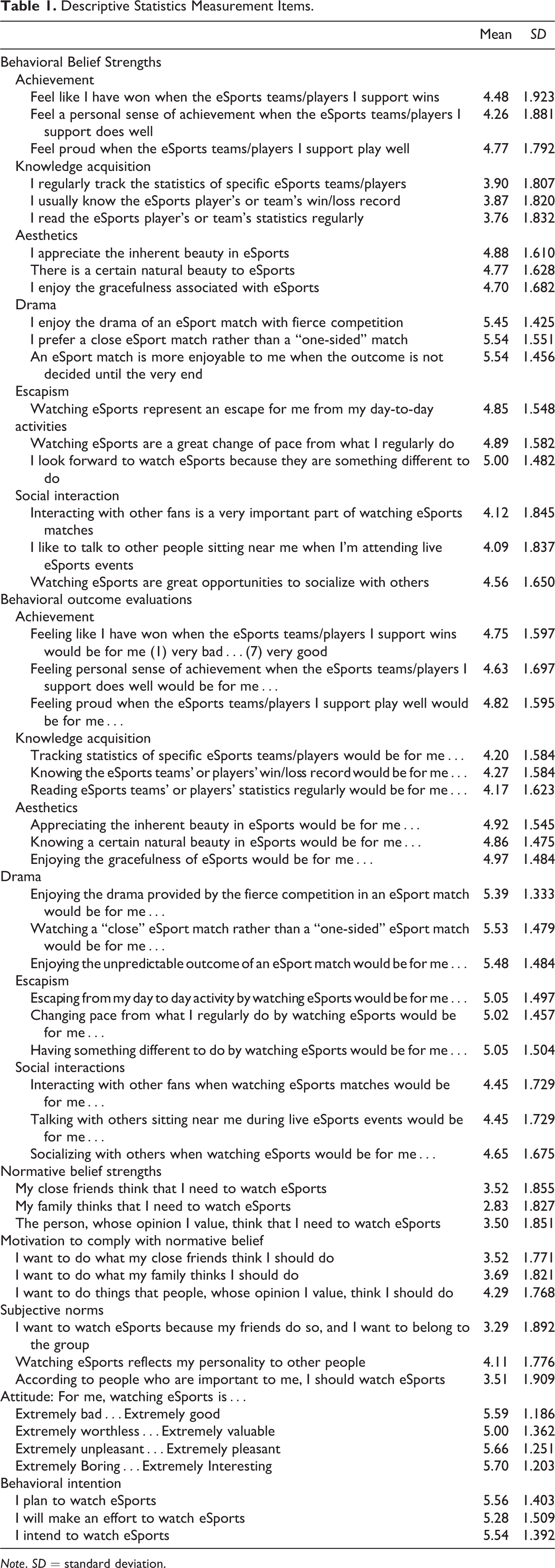
Note. SD = standard deviation.
Data Analysis
MPlus 7 (version 7.4) was used to process the data by implementing linear SEM. After the removal of six outliers who were over 60 years old, no new outliers were identified. The Variance Inflation Factor (VIF) scores for all variables were between 1.95 and 3.26, which were well below the threshold of 5, indicating the absence of multicollinearity (Hair, Black, Babin, & Anderson, 2014). Parameters of models were estimated using maximum likelihood estimation with robust standard errors (MLR) method. This method is robust to data nonnormality; thus, the impact of data nonnormality on analytic results should be mitigated (Muthén & Muthén, 2018). No missing data was reported. The χ2 test, root mean square error of approximation (RMSEA), comparative fit index (CFI), and standardized root mean square residual (SRMR) were tested and inspected as model fit indices. According to Kline (2016), these model fit indices are the ones that reported by most studies because this group of indices offers researchers a comprehensive view on model fit. The researcher followed an absolute-fit data analytic philosophy. Hence, the researcher’s decision of retaining or rejecting a model was largely based on two absolute-fit indices, RMSEA and SRMR, while other fit indices were also considered during the evaluation of model fit. Hu and Bentler (1999) proposed the two-index evaluation rules and suggested that RMSEA with a value of .06 or lower and the SRMR with a value of .08 or lower were signs of very good model fit.
Results
Measurement Model
The overall model fit indices suggested a good fit of the measurement model. The χ2 test value was χ2 = 704.845, p < .001, df = 389, while the RMSEA = .052 with a 90% CI [.046, .059], which indicated a good fit of the model (Hooper, Coughlan, & Mullen, 2008). The CFI value was .948 and the SRMR = .068, which suggested a good fit of the model (Hu & Bentler, 1999). Confirmatory Factor Analysis (CFA) results showed that behavioral beliefs and other TRA-related dimensions were well identified. All indicators were confirmed as the measurement of corresponding latent variables, and all standardized factor loadings were significant and sizable (average λ standardized = .848; see Table 2). Furthermore, the analysis showed that all measured constructs were reliable with Cronbach’s α values ranging from .803 to .927. In general, the measurement model was confirmed and could be used in the test of the model.
CFA Result of Measurement Model for Watching eSports.
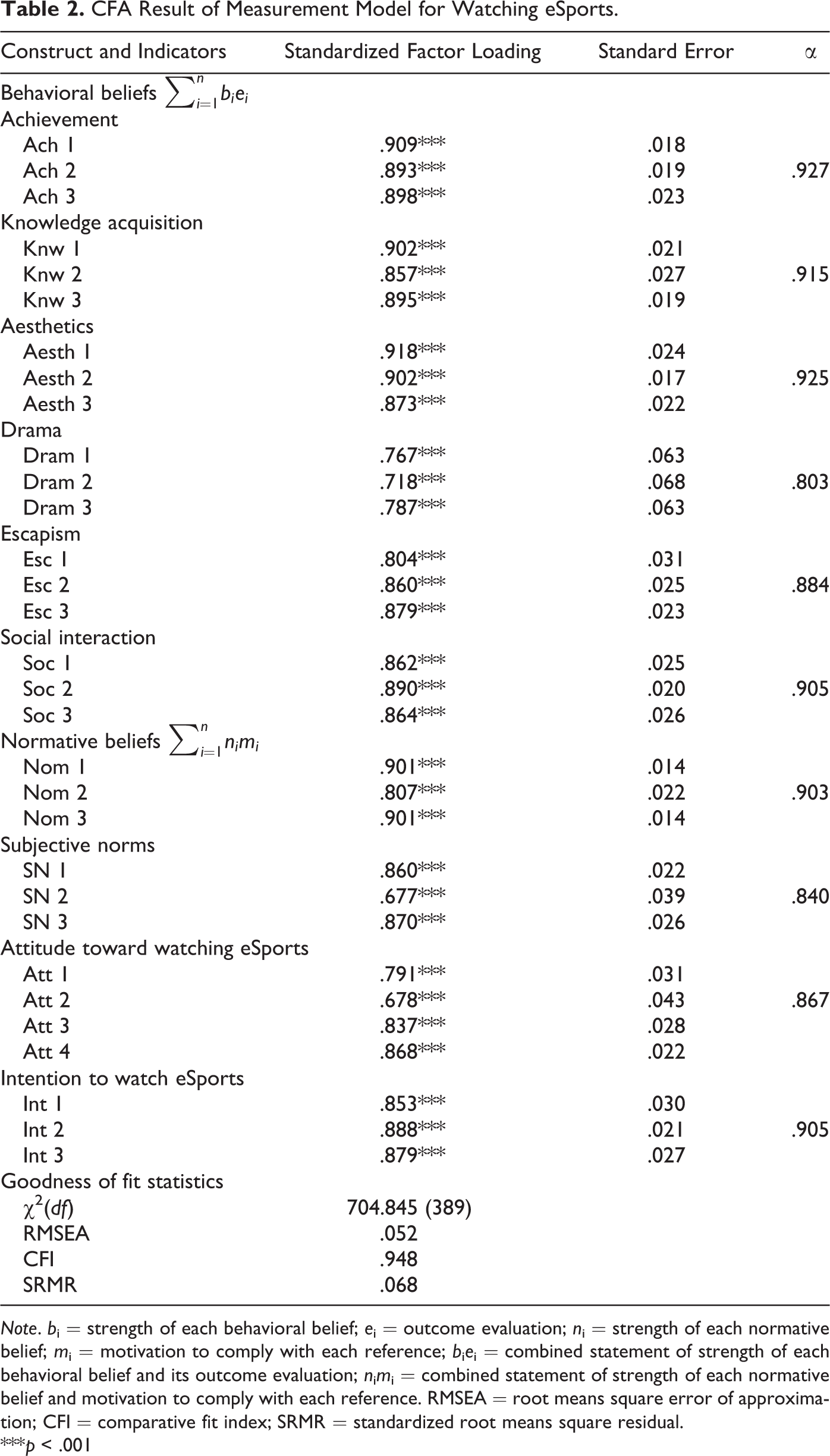
Note. b i = strength of each behavioral belief; e i = outcome evaluation; n i = strength of each normative belief; m i = motivation to comply with each reference; b i e i = combined statement of strength of each behavioral belief and its outcome evaluation; n i m i = combined statement of strength of each normative belief and motivation to comply with each reference. RMSEA = root means square error of approximation; CFI = comparative fit index; SRMR = standardized root means square residual.
***p < .001
Structural Model
For the SEM model, the fit indices showed a good model fit (χ2 = 756.502, p < .001, df = 403; RMSEA = .055, 90% CI [.049, .060]; CFI = .942; SRMR = .071). Hypotheses were then tested. The results were reported in Figure 2, and construct correlations were reported in Table 3. Hypotheses 1–6 posited that beliefs of achievement, aesthetics, acquisition of knowledge, drama, escapism, and social interaction have a positive correlation with attitude toward watching eSports. Results demonstrated that aesthetics (γ = .163, SE = .068, p < .05), drama (γ = .469, SE = .099, p < .001), and escapism (γ = .242, SE = .091, p < .01) had a statistically positive relationship with attitude. Thus, Hypotheses 2, 4, and 5 were supported. Hypothesis 7 postulated that the attitude toward watching eSports has a positive correlation with the intention to watch eSports. The result indicated a statistically significant correlation between the attitude toward watching eSports and intention to watch eSports (β = .832, SE = .031, p < .001). Hypothesis 9 proposed that normative beliefs positively correlate with subjective norms. The result supported the hypothesis (γ =.921, SE = .022, p < .001). Hypothesis 10 postulated a positive correlation between subjective norms and attitude. The analytic result (β = .242, SE = .063, p < .001) confirmed the hypothesized correlation in Hypothesis 10. Hypothesis 8 predicted that subjective norms positively correlate with intention to watch eSports. However, the result did not support Hypothesis 8 (β = .073, SE = .047, p > .05). No other significant correlations were discovered (see Figure 2).
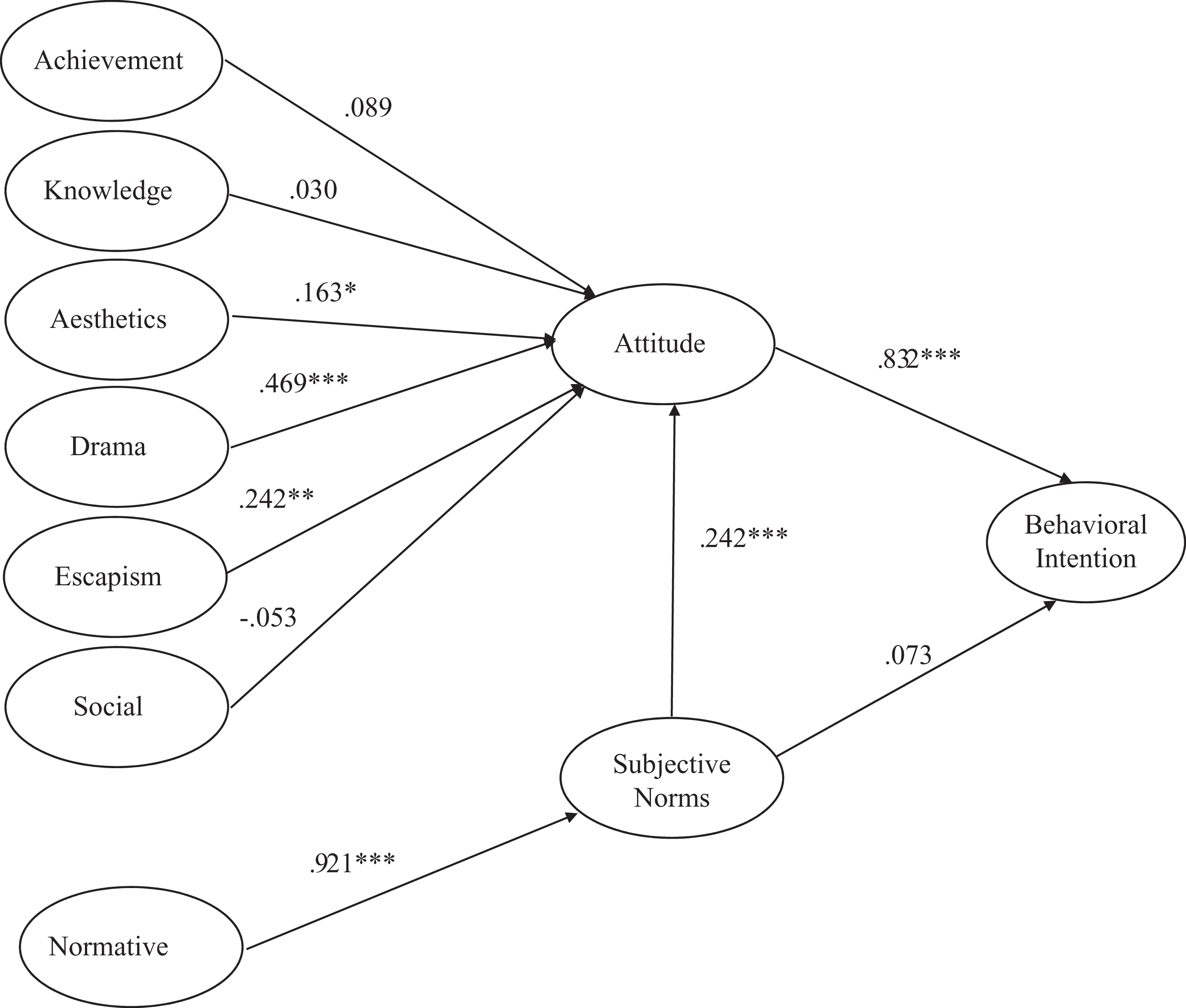
The results of the hypothesized model. *p < .05 **p < .01 ***p < .001; χ2 = 756.502, p < .001, df = 403; RMSEA = .055; CFI = .942; SRMR = .071
Means, Standard Deviations, and Correlation Coefficient of All Constructs.
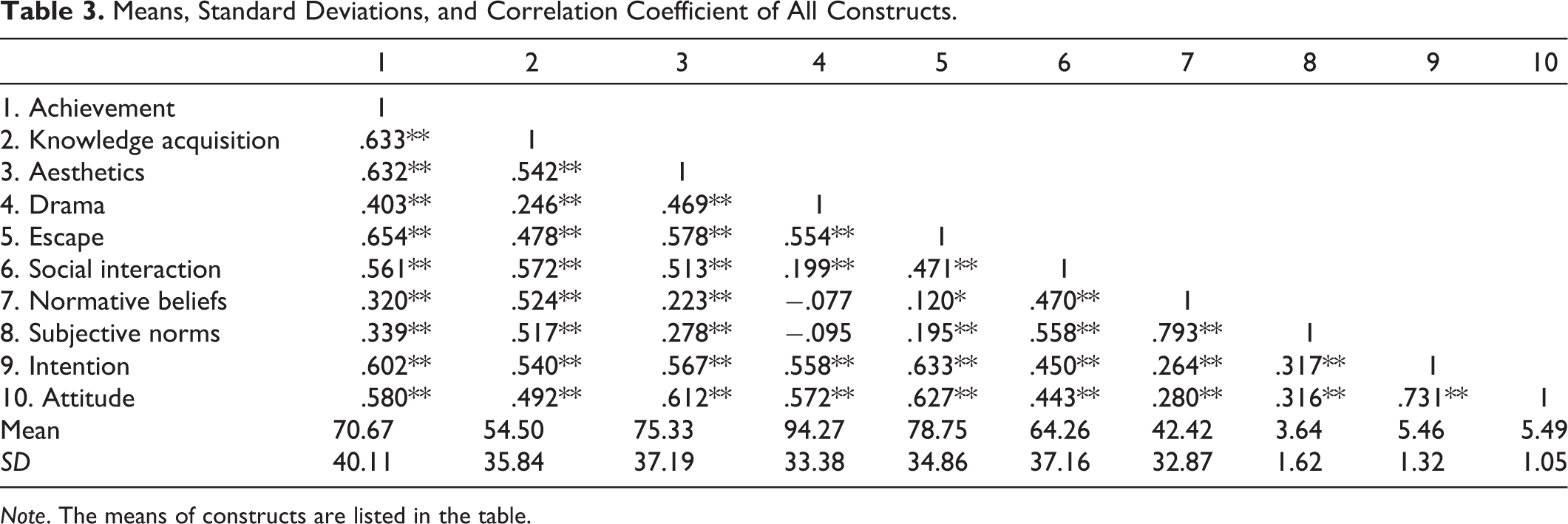
Note. The means of constructs are listed in the table.
Discussion and Conclusion
This study aims to understand the psychology of eSports viewers by examining related factors of behavioral beliefs, normative beliefs, attitude, subjective norms, and behavioral intention. Findings revealed a positive correlation between drama, escapism, aesthetics, and attitude toward watching eSports. The results also indicate positive correlations between normative beliefs and subjective norms, subjective norms and attitude, as well as attitude and behavioral intention.
Similar to traditional sports events, neck and neck competitions are common in eSports matches. Sometimes, the result of the match cannot be determined until the very last minute. Uncertainty about which side would win the game generates suspense (Comisky & Bryant, 1982). Once the outcome of sports games becomes certain, the feeling of suspense would stop (Knobloch-Westerwick et al., 2009). The ability of traditional sports and eSports to generate suspense also reflects the similarity between the two in their competitive nature (Brown et al., 2018). Findings from the current study are resonating with extant research on traditional sports consumption, indicating the drama or suspense motive is a key element in attracting spectatorship for both traditional sports and eSports (Bryant & Raney, 2000; Trail et al., 2003; Trail & Kim, 2011). The results of the current study also suggest that eSports viewers enjoy the suspense or drama generated in eSports games and consider it as a core value or behavioral outcome associated with eSports viewing experience.
Escapism has long been associated with video games as a consumption motivator (Jansz & Martens, 2005; Klimmt, Schmid, & Orthmann, 2009; Yee, 2006). Given that video gaming experience is usually very immersive (Yee, 2006), playing or even watching others play video games (e.g., watching eSports matches) is good distraction for individuals to help them forget about difficulties and unhappiness in life. Hamari and Sjöblom (2017) and Weiss and Schiele (2013) reached a similar conclusion on escapism’s impact on eSports viewership. In their studies, the researchers directly related the behavior of watching eSports with the motivators and did not examine the dimension of attitude nor behavioral intention. According to TRA, a behavior is a result of a multidimensional and sequential process of decision-making (Albarracín et al., 2001). Behavioral beliefs, attitude, and behavioral intentions are important and relevant cognitive steps that one should take before performing the action. The results of the current study suggest that individuals who consider watching eSports as a good diversion from their life are usually the ones who hold a positive attitude toward the behavior.
The significant and positive correlation between aesthetics and attitude toward watching eSports indicates that individuals appreciate the aesthetic beauty in eSports games similar to how sports fans appreciate such beauty in traditional sports (Sargent et al., 1998; Wann, Grieve, Zapalac, & Pease, 2008). For instance, figure skating and gymnastics are visually appealing because of the way athletes execute the movement (Wann et al., 2008). On the other hand, eSports’ beauty also lies in the visual aesthetics; however, the difference between eSports and figure skating (or gymnastics) is that the beauty in eSports is vicariously presented to the viewers in the form of beautifully crafted graphics effects. The eSports player’s deft control of in-game characters is likely to trigger visually appealing special effects in the game. For those individuals who consider the aesthetics aspect of watching eSports as a desirable outcome, they usually perceive the behavior of watching eSports in a more positive way.
Contradictory to several key qualitative research findings about social aspects in eSports consumption (Cheung & Huang, 2011; Hamilton et al., 2014; Seo, 2013), the insignificance of social interaction in the current study demonstrates that eSports spectators may prefer to watch the event alone and do not consider it as a social occasion. Notwithstanding the lack of face-to-face communication, it is likely that viewers interact with other anonymous viewers through online bulletin boards or chat rooms through computer-mediated channels. The result also indicates a unique difference between eSports and traditional sports as social interactions are frequently associated with traditional sports consumption (Clavio & Walsh, 2014; Trail et al., 2003; Trail & James, 2001), while in this study about eSports, no correlation can be established between social interaction and attitude. Hamari and Sjöblom (2017) discovered a similar insignificant relationship between social interaction and the frequency of watching eSports. They argued that the level of social interaction offered by watching eSports was inadequate for gratifying viewers’ social needs.
The dissociation between achievement and attitude toward watching eSports may reveal that eSports spectators generally do not develop a personal sense of association between themselves and the professional eSports teams/players. Unlike football or basketball fans who can identify themselves as enthusiasts of a specific athlete or team, eSports spectators may consider themselves as a fan of a game rather than a fan of a specific team or player. Compared to professional NFL or National Basketball Association (NBA) teams, a lack of marketing effort to brand professional eSports players or teams perpetuates this problem. From the perspective of knowledge acquisition, the type of knowledge people need to gain from watching eSports is very different from their informational needs for watching traditional sports. Thus, using a scale designed for investigating traditional sports consumption may not be ideal in the context of eSports. Future studies need to employ more tailored measures regarding knowledge acquisition in eSports or video games to further explore the relationship between the construct and attitude.
Consistent with the notion proposed in the theoretical framework of TRA, normative beliefs positively correlate with subjective norms, and attitude positively relates to behavioral intention. The finding resonates with many existing empirical research studies. Attitude and normative belief are almost always related to behavioral intention and subjective norms, respectively (Albarracín et al., 2001; Shimp & Kavas, 1984). However, empirical research produces mixed results regarding how subjective norms correlate with behavioral intention, which suggests that subjective norms’ influence on behavioral intention is context dependent, and personal attitude toward behaviors may surpass the influence of subjective norms on behavioral intention on many occasions (Ajzen, 1991). In the current study, no direct correlation exists between subjective norms and behavioral intention in the context of eSports consumption.
In contrast, subjective norms positively and directly predict attitude toward watching eSports and vicariously influence behavioral intention. A possible explanation is that social environmental factors, such as norms and ethics, are related to the process of attitude formation (Chang, 1998; Hsu & Chiu, 2004). eSports viewers may have learned some of the behavioral beliefs from their significant others such as friends (Chang, 1998). Individuals befriend others based on shared interests or commonalities (McPherson, Smith-Lovin, & Cook, 2001). Many people become friends because they share a similar interest in playing or watching eSports games. As friends with a shared interest, people in this social circle will share with each other various types of information including interesting new games, rumors about a legendary eSports player, and what they can get from watching an eSports game. A person is likely to learn from their friends that watching eSports games (e.g., League of Legends) is worthwhile because the game is full of suspense and excitement. As discussed earlier, if the person considers suspense as something they wish to experience from viewership, he or she is likely to develop a positive attitude toward watching suspenseful eSports games.
On the other hand, social interaction has no correlation with attitude, while subjective norms positively correlate with attitude in the current study. To understand this phenomenon, one should understand the difference between social interaction and subjective norms. Social interaction emphasizes the interaction and communication between sports fans during the sports consumption experience (Brown et al., 2017; McDonald et al., 2002). On the contrary, subjective norms are about perceived social pressures and social approvals of behavior (Ajzen & Fishbein, 1980). Playing or watching video games can be somehow stigmatized in the eyes of one’s significant others, such as parents, as a cause of subpar academic performance or violent behaviors (Ferguson, 2007). Thus, if one’s significant others can acknowledge the behavior of watching eSports and do not consider it as a socially deviant behavior, the individual will feel more positive about watching eSports.
Implications and Limitations
This study has followed the analytic approach proposed by the creators of TRA theory (Ajzen & Fishbein, 1977) and examined the influence of six possible behavioral beliefs, obtained from traditional sports consumption motivators, on the attitude toward watching eSports games. Findings related to these behavioral beliefs will be the foundation to help future scholars develop new lines of research to understand the psychology of eSports viewers. The behavioral beliefs identified in the study will serve as bridges that connect the expectancy-value model with the need-gratification mechanism proposed in TRA and U&G theory. Furthermore, findings from this study provide significant theoretical value to academia by uncovering a unique correlation between attitude, subjective norms, and behavioral intention. In the context of eSports, personal considerations (i.e., attitude) outdo social norms (i.e., subjective norms) in influencing behavioral intention, while social norms are still relevant in shaping one’s attitude.
The findings from the current study will help video game producers and sports marketing practitioners create eSports-related services and products. For video game designers or programmers, they need to consider using a design mechanism that elicits suspense as much as possible when designing competitive eSports games. For example, a well-balanced gameplay mechanism ensures eSports players that their skills of playing a game will be the only factor influencing the outcome of the competition. Top professional eSports players are very skillful players of the game. Under a well-balanced game design mechanism, the competition between these players can be fierce, and the result of competition will be unpredictable. Game designers can also set a rigid time frame for each round of the game to expedite the competition process and create suspense. Furthermore, game designers should associate each move performed by players in the game with unique audio and visual effects to attract viewers’ attention, since many fans of eSports would find the aesthetic beauty of games an important aspect of watching eSports games. To sports marketers, they can market an eSports game as a great escape from one’s daily routine and design their advertising messages accordingly. Sports marketers can develop a multiplatform marketing campaign to lessen society’s misunderstanding of video games and eSports. With more people accepting the behavior of playing video games or watching eSports, the viewers of eSports will feel more comfortable watching eSports games.
Future studies are needed to address four limitations of the study. The current study has not measured actual behaviors of watching eSports. Future research can include actual behaviors in the model to improve the model’s explanatory power. Secondly, the adaptation of knowledge acquisition measures needs to be refined to better reflect the nature of eSports viewership in order to study eSports and video gaming related behaviors. Third, this study did not include attention check questions in the survey. These questions are necessary to ensure the quality of responses. Fourth, the requirements for the approval rate and the number of HIT approved were relatively lenient compared to more rigid standards used by many researchers today. Future studies should use greater than 97% approval rate and more than 5,000 submitted HIT as new requirements to select MTurkers for the study.
Footnotes
Declaration of Conflicting Interests
The author(s) declared no potential conflicts of interest with respect to the research, authorship, and/or publication of this article.
Funding
The author(s) received no financial support for the research, authorship, and/or publication of this article.
