



Abstract
The concept of luxury is relative in nature and the perceived luxuriousness of a brand is influenced by a number of subjectivities.
In the Indian context, the history of colonization and the dominance of Western cultures for the past many decades have created a preference for luxury brands of Western origin, which is reflected in the perceptions of luxuriousness of the brand. However, the ‘Westernization’ of the Indian society is intertwined with a milieu of traditions and cultures which are strongly embedded in ‘Indian-ness’, where, consumptions linked to the Indian cultural traditions and celebrations create a distinction between products that have their origins in Indian culture versus those that stemmed from the Western world.
This study compares the perceived luxuriousness of Western brands (LV and Hermes) to Indian luxury brands (Sabyasachi and AND) and examines the effect of the cultural origins of a product in the context women’s fashion, where a saree is seen as a product that originates from Indian culture, vis-à-vis evening dresses, which are perceived as a primarily Western concept.
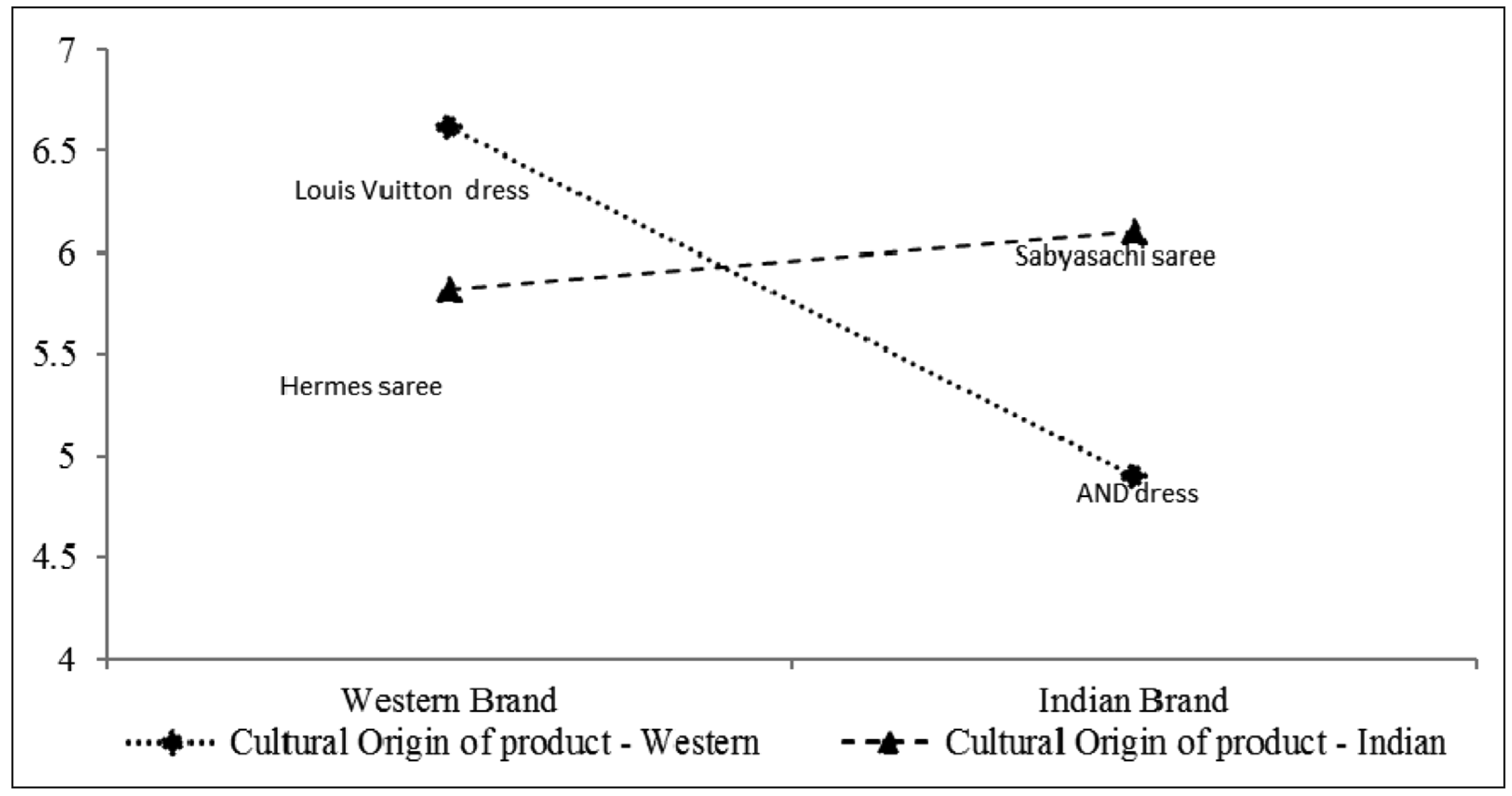
The results of the study reveal that though the perceived luxuriousness of Western brands is higher than those of Indian origin, there is a clear moderating effect of the cultural origin of the product. Western brands attempting to occupy the luxury space in products which have their cultural origins in India (example Hermes marketing sarees) are perceived as being less luxurious than Indian brands present in the same product category (Sabyasachi sarees). The reverse was also found to be true, where Indian luxury brands attempting to create a space for themselves in products which are considered to be of Western origins were perceived to be less luxurious than brands their Western counterparts.
Introduction
The term ‘luxury market’ extends itself to describing a whole range of products and services, from super cars to nail-art, from holiday packages at a private island to an Ayurvedic cream in a jar. Luxury brands have always been a fascinating space and luxury brand marketing one of the most complicated and challenging. The luxury market in the context of India is garnering more attention than ever before as it has been growing at a tremendous pace in the past two decades, fueled by increasing brand awareness and growing purchasing power of the upper class in Tier II and Tier III cites. India’s Ultra High Net Worth Individuals (UHNWI) count rose by 340 per cent (to 6,020 persons), whereas global growth was 61 per cent (to 187,468) (Knight Frank Wealth Report, 2016). The report also says that India will account for 5 per cent of the total UHNWI population and 6 per cent of the billionaire population across the world by 2025. In a nation that has more luxury consumers than the adult population of several countries, it is no surprise at all that international luxury brands are seen hotfooting into India, and most of the global luxury brands have already arrived or are expected to enter soon.
The Concept of Luxury
Conceptualizing luxury is tricky as it is elusive, where the term ‘luxury’ can be used to define anything or nothing. While a car from Skoda may be a luxury from a student’s perspective, even a Mercedes S-Class may not cut the bill as ‘luxury’ for a billionaire heir. Adding to this confusion is the trend where a number of marketers launch products and brands with the promise of ‘affordable luxury’ or ‘masstige’ products (Royo-Vela & Voss, 2015; Truong, McColl, & Kitchen, 2009). On the other hand, we have many luxury brands which refrain from calling themselves ‘luxury’ (Han et al., 2010).
The consequence of the subjectivity in the term ‘luxury’ renders it difficult to differentiate it from the ordinary (Phau & Prendergast, 2000b). The perception of what is (or not) a luxury brand is thus context-driven and people-dependent, making it hard to categorize products or brands as luxury or non-luxury. Vigneron and Johnson (2004) contend that even though a brand may be perceived as luxurious, not all luxury brands are deemed equally luxurious. For example, while both a Cadillac and a Rolls-Royce may be perceived as luxury cars, the Rolls-Royce could be considered to be more luxurious than the Cadillac. Kapferer (1992) points out that what counts in luxury is not the absolute price, but the price differential between luxury products and the products with comparable functions. Nueno and Quelch (1998) define luxury brands as ‘those whose ratio of functionality to price is low, while the ratio of intangible and situational utility to price is high’. These approaches to defining the concept indicate that luxury is a continuum of ‘levels of luxury’ rather than a categorical variable. This can be observed by how some brands are considered luxury in one product category, while non-luxury in another. A case in point is Rolls-Royce, which is considered as a luxury in cars, and non-luxury in jet engines (Kapferer & Bastien, 2012). There are brands that have created extensions, enabling them to occupy multiple points on the luxury continuum. Armani, for example, is considered an upper-range luxury brand, whereas the Emporio Armani brand, which has been crafted to cater to the larger luxury market, is not considered as luxurious as the Armani brand, neither is Emporio Armani perceived as a non-luxury brand (Atwal & Williams, 2009). While a Porsche is considered as a sporty brand which is high on technical features, the less expensive Jaguar, with fewer functionalities to offer, is perceived as being more ‘luxurious’ (Kapferer, 1992).
Recognizing luxury as a continuous variable, Vigneron and Johnson (2004) developed a scale to measure the ‘level of luxury in a brand’ by considering non-personal perceptions (conspicuousness, uniqueness and quality) as well as personal perceptions (hedonic and extended self). Kapferer’s (1992) approach to the various levels of luxury is to break the continuum into three categories of luxury and having a fourth category that is outside the luxury consideration (non-luxury). This model labels a brand that is at the bottom rung of the pyramid (characterized by mass series, cost pressure and the spiral of quality) as ‘non-luxury’. The upper rungs of the pyramid are formed by three levels of luxury products: (a) upper-range brand (characterized by mass production in a factory and has the highest quality); (b) the luxury brand (produced in a much smaller series at a workshop and is usually a hand-made work with fine craftsmanship) and (c) Griffe (which is a pure creation and a unique work that can be described as materialized perfection). The subjectivity involved in what is considered as luxury leads to a brand being judged on its ‘luxuriousness’ rather than the luxury tag being attached to it nominally (Vigneron & Johnson, 2004). As a continuous variable, the definition for luxury is elusive and the only consensus in management literature is that there is actually no consensus about the definition of luxury products and brands (Christodoulides, Michaelidou, & Li, 2009; de Barnier, Falcy, & Valette-Florence, 2006; Kapferer, 1997; Vigneron & Johnson, 2004; Yeoman & McMahon-Beattie, 2006).
While a definition for luxury remains inconclusive, two distinct approaches for understanding the concept of luxury are discerned from extant literature: the characteristics-based approach and the consequences-based approach. Brand image—often born out of the creator’s aura, ancestral heritage and personal history (Bruce & Kratz, 2007; Dias & Ryab, 2002; Dubois & Laurent, 1994; Dubois, Laurent, & Czellar, 2004; Fionda & Moore, 2009; Fuchs, Prandelli, Schreier, & Dahl, 2013; Jackson, 2004; Kapferer, 2008; Kapferer & Bastien, 2009; Okonkwo, 2009; Phau & Prendergast, 2000b); high quality products—catering to the aesthetic sensibilities of the discerning few and created in a studio or a workshop rather than being mass produced Moore & Birtwistle, 2005); very high price—high ratio of the price to the product’s functional benefits (Jain, Roy, & Ranchhod, 2015; Nueno & Quelch, 1998; Park, Jaworski, & Maclnnis, 1986; Royo-Vela & Voss, 2015); and exclusivity and uniqueness developed by managing demand—achieved by maintaining a high price and supply-scarcity created by the production methods (Erickson & Johansson, 1985; Jackson, 2004; Kapferer, 2008; Keller, 2009) are the characteristics associated with luxury. While the characteristics-based approach aids the identification of luxury, it is the consequence of these characteristics that gives important consumer insights. The consequence of luxury consumption as gleaned from literature may be summarized as something that signals and accords status (Kleine, Kleine, & Kernan, 1993; Levy, 1959; Liu, Li, Mizerski, & Soh, 2012; Muniz & O’Guinn, 2001; Sirgy, 1982; Vigneron & Johnson, 1999; Wernerfelt, 1990; White & Dahl, 2006, 2007), thus creating vertical social stratification along with an enhancement of self-image and social-image (Belk, 1988; Levy, 1959). The consequence of the high quality and craftsmanship in luxury is credited with providing hedonistic pleasure (Dhar & Wertenbroch, 2000; Hirschman & Holbrook, 1982; Kapferer & Bastien, 2009; Sheth, Newman, & Gross, 1991), which unlike other identified consequences is an internal motivation, rather than social.
The social consequences of luxury consumption are a stronger driver of luxury value (Dubois & Laurent, 1994; Escalas & Bettman, 2005; Levy, 1959; White & Dahl, 2007) which is interwoven with the sociocultural fabric of a nation. Luxury goods consumption patterns thus need to be examined in light of the cultural backdrop in which the consumption takes place (Wong & Ahuvia, 1998) as it is influenced by the national culture as well as global consumer culture through emergence of global brands (Eng & Bogaert, 2010). There is no consensus in literature on what constitutes luxury across cultures. The meanings of luxury consumption of non-Western consumers may not be similar to the Western consumers (Brannen, 1992). The conceptual models of luxury have mainly been built on the individual construct and in the context of Western society. A few studies have compared the difference in luxury consumption and luxury perceptions between Western cultures and the Eastern Asian consumers (Chadha & Husband, 2007; Christodoulides et al., 2009; Hennigs al., 2012; Shukla, 2011; Wong & Ahuvia, 1998). However, research on luxury consumption from the Indian context so far is sparse (Gupta, 2009; Eng & Bogaert, 2010; Shukla, 2012; Shukla & Purani, 2012) and consequently, the trends in the Indian luxury consumption demand to be examined from closer quarters.
Luxury in the Indian Context
While the consumption-based orientation to happiness seeking has commonly been labelled as a Western characteristic (Ger & Belk, 1996), luxury consumption as a means of signalling social status and class is evidenced in Eastern cultures like India and China since time immemorial (Atwal & Jain, 2012; Chadha & Husband, 2007; Shukla, 2012). Some of the ancient Indian texts, such as the Mahabharata, are set in the times of prosperity and describe opulent lifestyles. Continuing with this tradition, the magnificent lifestyles of Maharajas and Nawabs in the 18th and 19th centuries have been described in detail by historians. The royal palaces converted to present-day uber-luxurious heritage hotels like the Oberoi Udaivilas in Udaipur serve as fine examples of Indian luxury.
The rich craftsmanship of India produced many of the famous princely silken robes and drapes, complemented by jewellery crafted with diamonds, sapphires, rubies and more (Atwal & Jain, 2012). On the other hand, the penchant for Western representations for luxury amongst the maharajas and nawabs is well chronicled (Eng & Bogaert, 2010; Jain, 2012). The maharajas, nizams and sultans commissioned custom designed cars, jewellery, extraordinary works of art from Cartier, Van Cleef & Arpels, Boucheron, Harry Winston and others (Jaffer et al., 2006). Indian royalty’s love for luxury and lavish lifestyle intensified as the British Raj gained supremacy in India (Jain, 2012), where the maharajas and the British would socialize as the political relationship between them forged deeper roots. By the 1940s, the relationship between Indian royalty and the British became interdependent (Copland, 2002).
The glory of the maharajas started its downward spiral after India’s independence, when most of the princely states signed the Instrument of Accession with either India or Pakistan and settled for ‘privy purse’ doled out by the democratic institutions that were formed (Das, 2008). However, the income disparity in post-independence India was stark and the attitudes towards luxurious consumption of the few elites who controlled majority of the wealth remained unchanged. A number of hired helps were required to do housework; chauffeurs were required to drive around the men and ladies of the house and urban Indians still got their clothes stitched to measure (Jain, 2012).
India is thus no stranger to luxury, what is new though is the birth of the famed ‘great Indian middle class’ as mainstream consumers (Brosius, 2012). The economic reforms, which started in 1991, transformed India into a globalized economy. This encouraged the entry of multinational companies from various sectors, which provided dream jobs with attractive salaries, capturing the attention of the ambition-led youth. These economic reforms also encouraged the development of a consumer society (Venkatesh & Swamy, 1994). The upper class was no longer ashamed of conspicuous consumption.
Luxury has been considered a natural accompaniment of the ruling classes and India’s colonial past has resulted in the idea of Westerners being an embodiment of ‘aristocracy’ and ‘luxury’ being a route to preserve the aristocrat’s social ideal continues to reign in India (Pels, 1997; Renner, Ramalingam, & Pirta, 2014). The middle class thus viewed consumption of luxury as an opportunity to climb up the social ladder. Higher income gave way to mid-budget fashion brands such as Gap, Mango and Levi’s. These ‘ladder’ brands slowly made way for higher brands such as Dior, Burberry and Louis Vuitton (LV), thus aiding the growth of India’s luxury industry (Atwal & Jain, 2002).
While there is a growing trend of Indian consumers accepting Western fashion and styles, one cannot generalize Western perceptions of luxury in the Indian context without consideration of cultural factors (Godey et al, 2012; Wong & Ahuvia, 1998). Luxury continues to be conceptualized in the Western context and ex-colonies like India have exhibited preference for Western luxury brands (Eng & Bogaert, 2010; Kinra, 2006). At the same time, having shaken off colonial rule over 70 years back, India is also waking up to ‘luxury’ as defined in its own culture (Lowther, 2005).
As an economy that is characterized by internationality and globalization, the Indian luxury market is unique as marketing managers must deal with a complex and dynamic demand side and address multifaceted customer perceptions of value (Hennigs et al., 2012). Chadha and Husband (2007) have conceptualized the evolution of the luxury consumer as progression of economic and social development in five stages—‘the subjugation’, ‘the start of money’, ‘the show-off’, ‘the fit-in’ and ‘the way of life’—and describe the Indian market as being at ‘the start of money’ stage. While this may be said of the Indian society at large, it would be erroneous to assume the non-existence of consumers at other stages of luxury consumption cycle. For example, the ‘old rich’, who are global travellers and exposed to luxury consumption in the international context, may be expected to be in the later stages of the luxury consumption cycle. The stages of luxury consumption cycle in the Indian market may thus be viewed as a successive gradation from ‘subjugation’ to ‘way of life’.
The success of Western brands in China and most parts of South-East Asia (Bain & Company, 2018; Chandran, 2014; Walley & Li, 2015) has encouraged Western luxury brands to consider India as their next big destination as academics and practitioners draw parallels between India and China, touting India as the ‘next China’. However, the Indian sociocultural fabric makes it unique and the parallels drawn are often misplaced (Chadha & Husband, 2007; Kumar & Paul, 2018). The communist ideals of China are in contradiction of the Indian feudal aristocracy, which has always coexisted alongside extreme poverty, and while private enterprise was snuffed out in China, India’s socialist route allowed industrialist families to flourish alongside state-owned enterprises, creating a sizable vault of old money with suitably refined tastes (Atwal & Bryson, 2017). Also, the economic resurgence of India is credited to its knowledge economy, creating ‘educated new money’ that behaves differently from China’s garment-and-toy-manufacturing new money (Hubacek, Guan, & Barua, 2007). Another significant difference is the multitude of religions followed in India, which lead to a potpourri of festivals, customs and dresses (Lowther, 2005). Therefore, while in China, the Western luxury brands had to enter and fill a near vacuum, in India, these brands have to jostle for space or blend with local traditions.
Country of origin effect has been a widely discussed topic in the marketing literature for many years (Laroche et al, 2005; Elliot & Cameron, 1994; Piron, 2000) where research may be further split into subcategories of country of manufacturing (COM), country of assembly (COA), country of design (COD) and country of brand (COB) (Nebenzahl, Jaffe, & Lampert, 1997; Samiee, 1994; Srinivasan, Jain, & Sikand, 2004). Phau and Prendergast (2000a) propose that the COB concept is an appropriate tool for evaluation in the case of luxury brands because luxury customers tend to perceive the brand through its name, origin, personality and country ethnicity (Stoimenova, 2013). In the context of this research, a Western brand refers to a brand that has its origins in the Western part of the world, while Indian brands to brands where the country of origin is India.
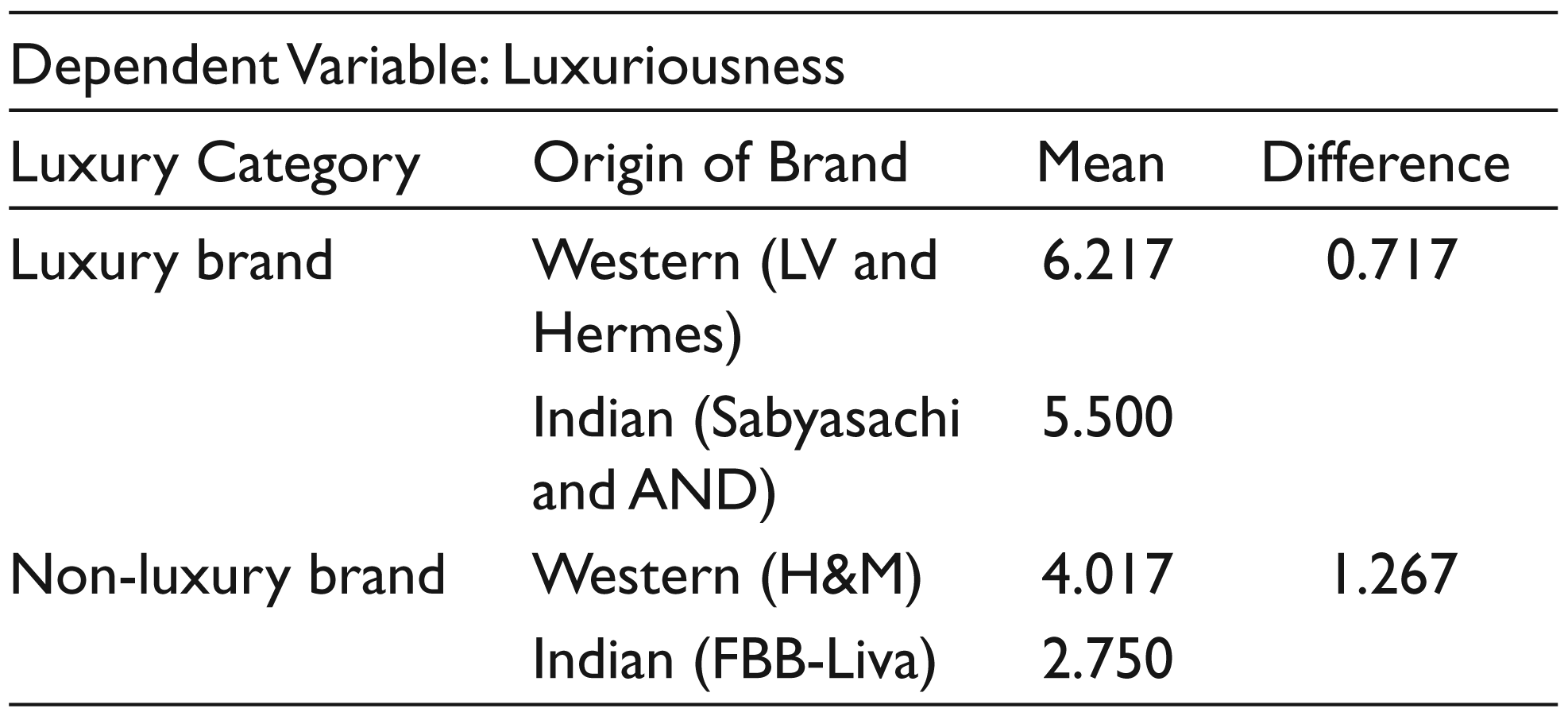
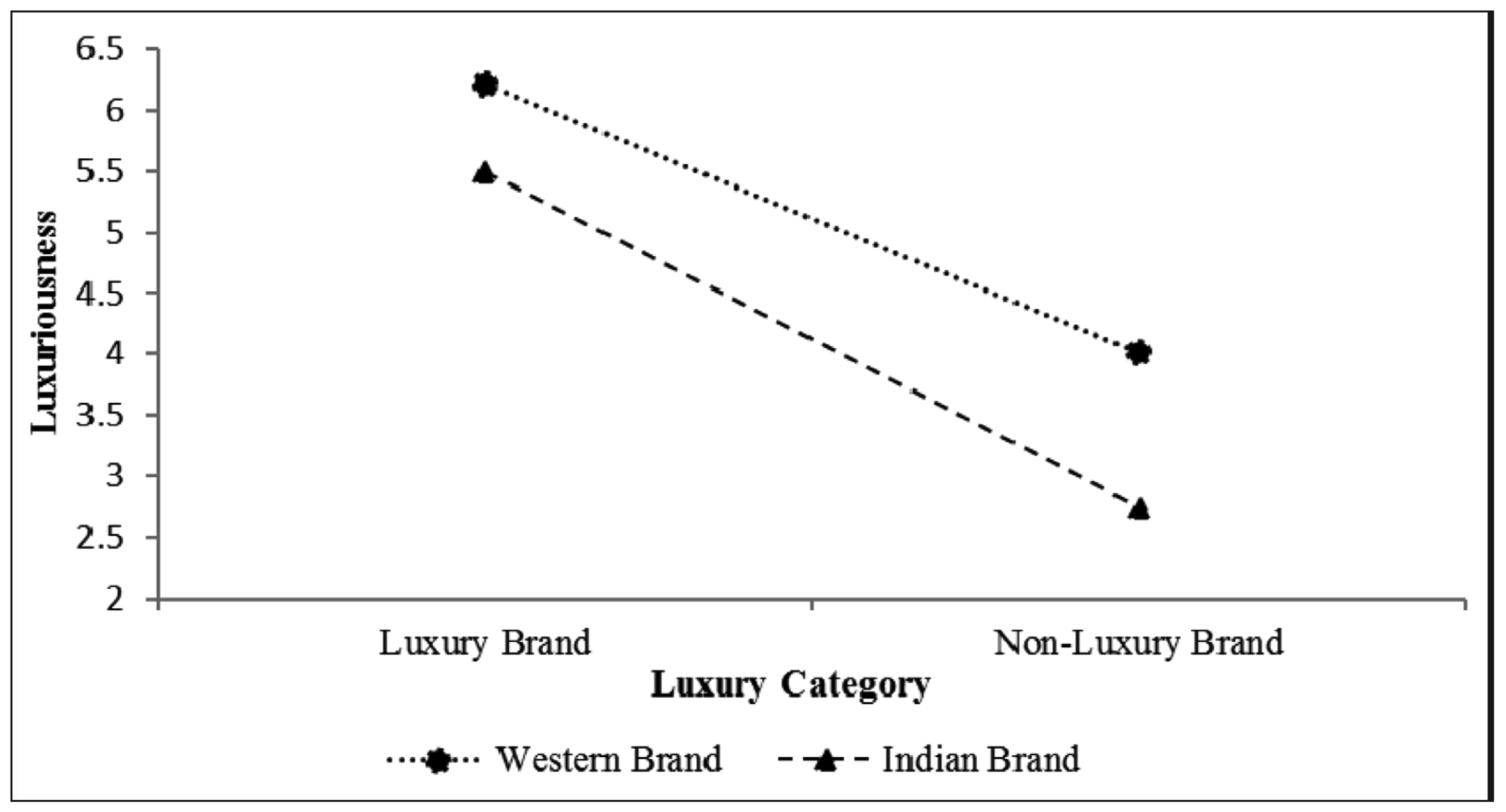
The Westernization of India due to the colonial past (Srinivas, 1956), and the presence of well-travelled ‘old money’ and ‘educated new money’ with international tastes, suggests that Western brands are considered more luxurious than brands of Indian origin. I therefore predict that the brands of Western origin would be considered as more luxurious than brands of Indian origin. The difference in the luxuriousness perceptions is expected to be starker when the Indian brand is positioned as non-luxury and pitted against a non-luxury Western brand, than in the case of an Indian luxury brand in comparison to a Western luxury brand.
H1: Indian consumers perceive Western brands to be more luxurious than Indian brands.
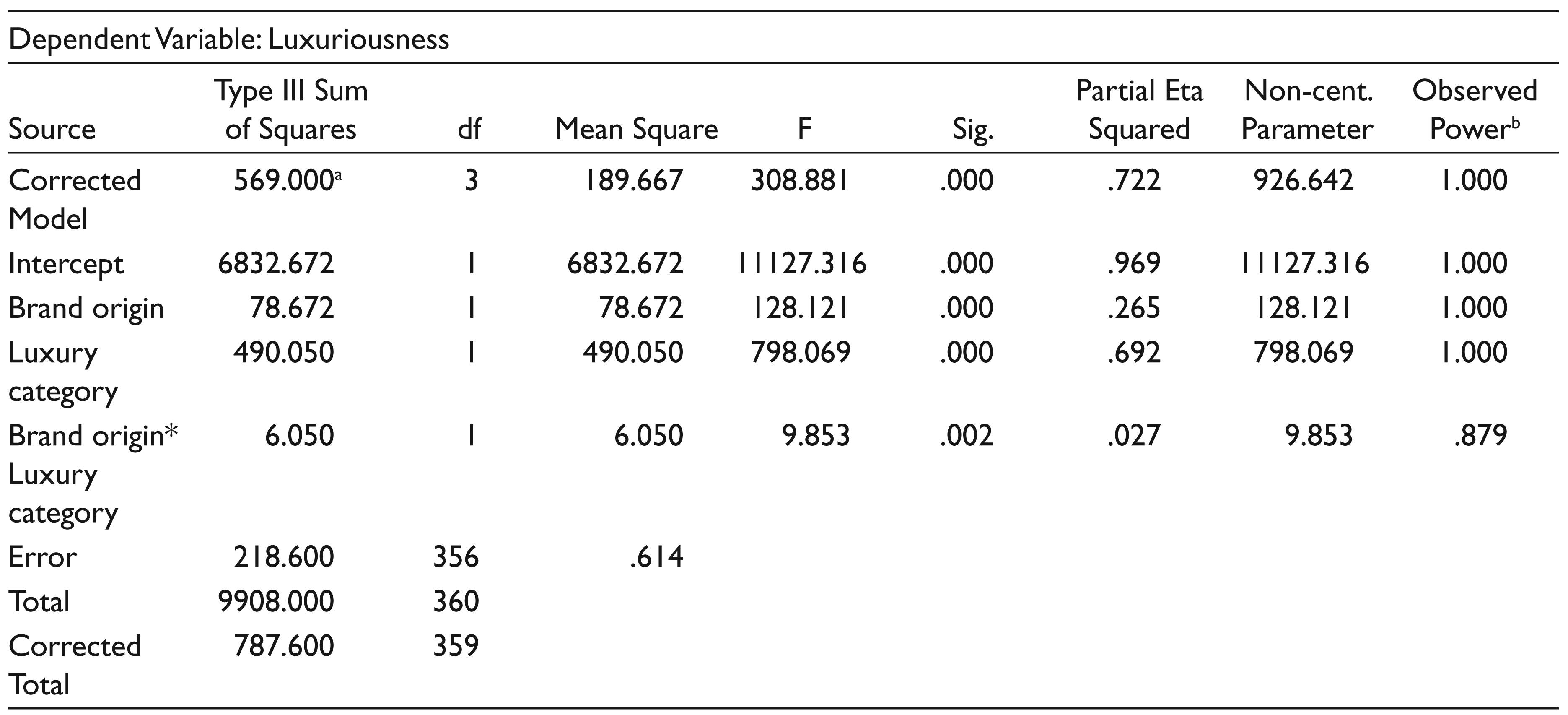
H1.1: The luxury categorization of a brand has a moderating effect on the luxuriousness perceptions of Western vs. Indian brands.
The Indian consumer’s affinity to Western brands is not complete or absolute in the complex sociocultural fabric of India. For example, Indian consumers show a continued preference for ethnic outfits as well as a predilection for foreign brands. Rao (2010) points out how Bollywood movies have reflected the Indian consumer’s mindset, where stars are accepted in Western outfits (representing the ‘globalized’ Indian), while still wanting the ‘Indian-ness’ to be clearly marked by the female lead wearing Indian outfits like saree and salwar kameez at least sometimes during the narrative. The vast biosocial diversity in India nests a milieu of cultural traditions, and the ostentatious celebratory occasions are marked with specific dress codes which are adhered to by the old and new rich alike. This sociocultural backdrop leads to a prediction that Indian consumers pride products which have their origins in Indian culture and would not perceive these products as less luxurious than product categories which reflect Western culture. Extending this argument, it is also predicted that the cultural origin of the product (Nakata & Sivakumar, 1996) would be a strong moderating variable, where Indian luxury brands dealing with products which have their origins in Indian culture would be considered as more luxurious than the same products from Western brands.
H2: There is no difference in the perceptions of luxuriousness of products which are culturally of Indian origin vis-à-vis products which are culturally from Western origins.
H3: The cultural origin of a product moderates the perceptions of luxuriousness of Indian vs. Western luxury brands.
Research Method
The study examines the relationship between the perceptions of a brand’s luxuriousness and its relationship to the origins of the brand (brands with a Western origin in comparison to brands from India). The interaction effects of the cultural origins of the product have been studied across two product categories in fashion: (a) saree 1 (steeped in Indian culture) and (b) evening dress (a primarily Western concept).
The characteristics-based approach has been used to identify LV, Hermes, Sabyasachi and AND as ‘luxury’ brands for the study, and for the purpose of control, H&M and FBB-Liva were included as ‘non-luxury’ brands. The choice of the brands also took into account the product categories offered by the brands. Hermes had included sarees as a part of its product offerings in 2011 (Tulshyan, 2011), while Anita Dongre, a successful Indian designer is known for her AND brand of Western outfits.
Six independent judges were split into two groups, and were asked to rate each brand and product category on a seven-point scale for:
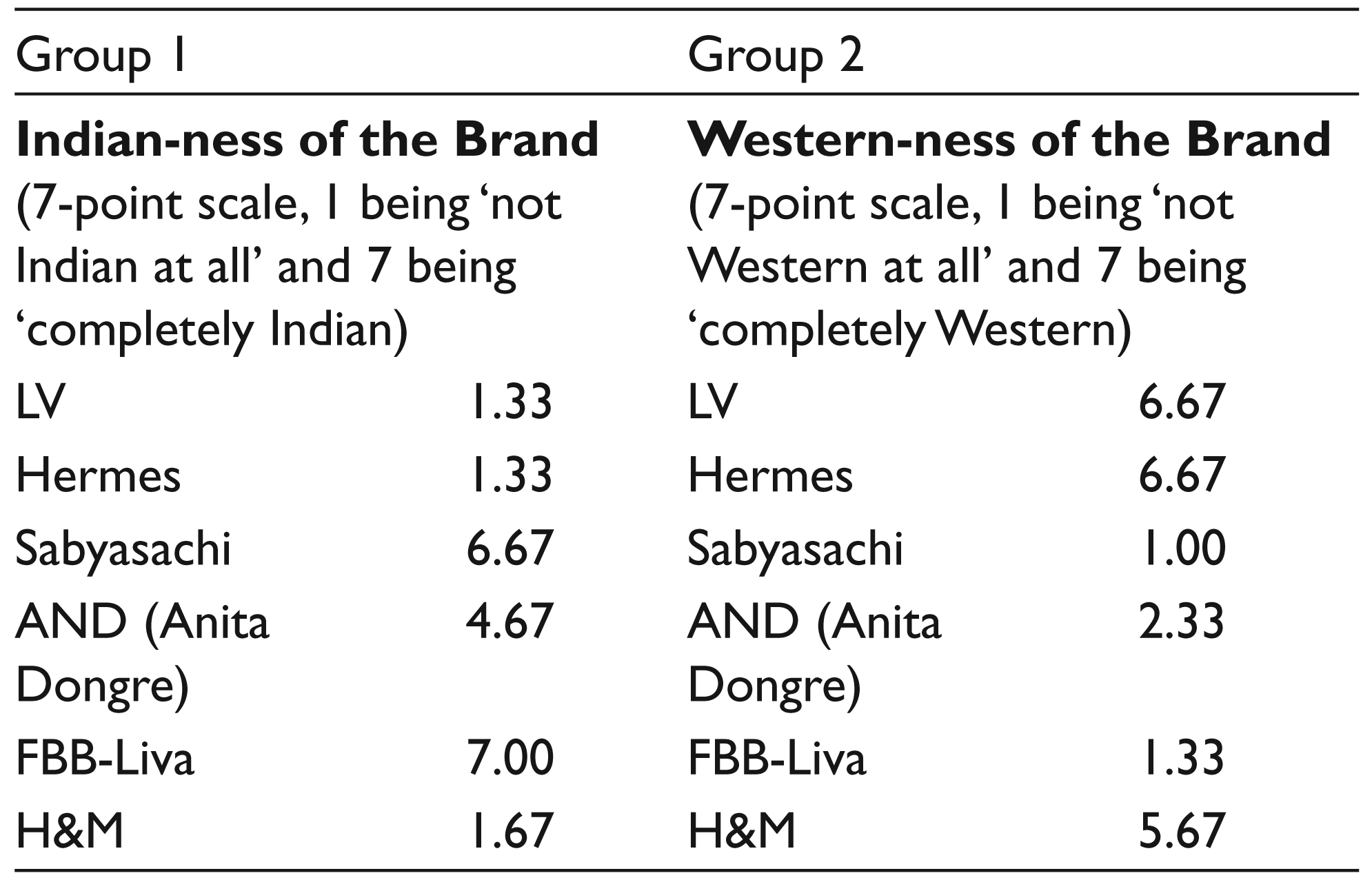
How ‘Indian/Western’ was the brand (anchored on either extreme by ‘completely Indian/Western’ and ‘not Indian/Western at all’)? (Table 1) To what extent is the product’s origin from the Indian/Western culture (anchored on either extreme by ‘completely Indian/Western’ and ‘not Indian/Western at all’)? (Group 1 was asked about the ‘Indian-ness’ of the products and brands, while Group 2 was asked about the ‘Western-ness’ of the products and brands) (Table 2). Both groups were asked to categorize the brands into ‘luxury brand’ or ‘non-luxury brand’ (Table 3).
Indian-ness/Western-ness of Chosen Brands
Cultural Origin of the Chosen Products

Chosen Brands and Product Categories

The judges’ composite scores were consistent with my judgement, where Sabyasachi and AND were rated as brands with clear Indian origins and LV and Hermes as Western brands. Also, sarees were identified as a product category with origins in Indian culture, while evening dresses were considered as stemming from Western culture. There was a near consensus in categorizing Sabyasachi, AND, Hermes and LV as luxury brands, while H&M and FBB-Liva were categorized as non-luxury brands.
Respondents were shown photographs of the six products, along with the brand name and logo prominently displayed. The prices of the exhibits were not revealed, to exclude the influence of the price as factor on the perception of the luxuriousness (Zeithaml, 1988).
Respondents were asked to rate each exhibit on its ‘luxuriousness’ on a scale of 1 to 7 (anchored on either extreme as ‘least luxurious’ to ‘most luxurious’).
Results and Discussion
Indian vs. Western Brands
Perceptions of Luxuriousness: Indian vs. Western Brands

bAdjustment for multiple comparisons: Bonferroni.
Perceptions of Luxuriousness: Indian vs. Western Brands (Moderating Effect of Luxury Categorization)
Tests of Between-Subjects Effects (Moderating Effect of Luxury Categorization on Origin of Brand)
bComputed using alpha = .05.
Products of Indian and Western Cultural Origins
Perceptions of Luxuriousness – Products of Indian origin vs. Western origin

bAdjustment for multiple comparisons: Bonferroni.
Univariate Analysis of Variance: Products of Indian Origin vs. Western Origin
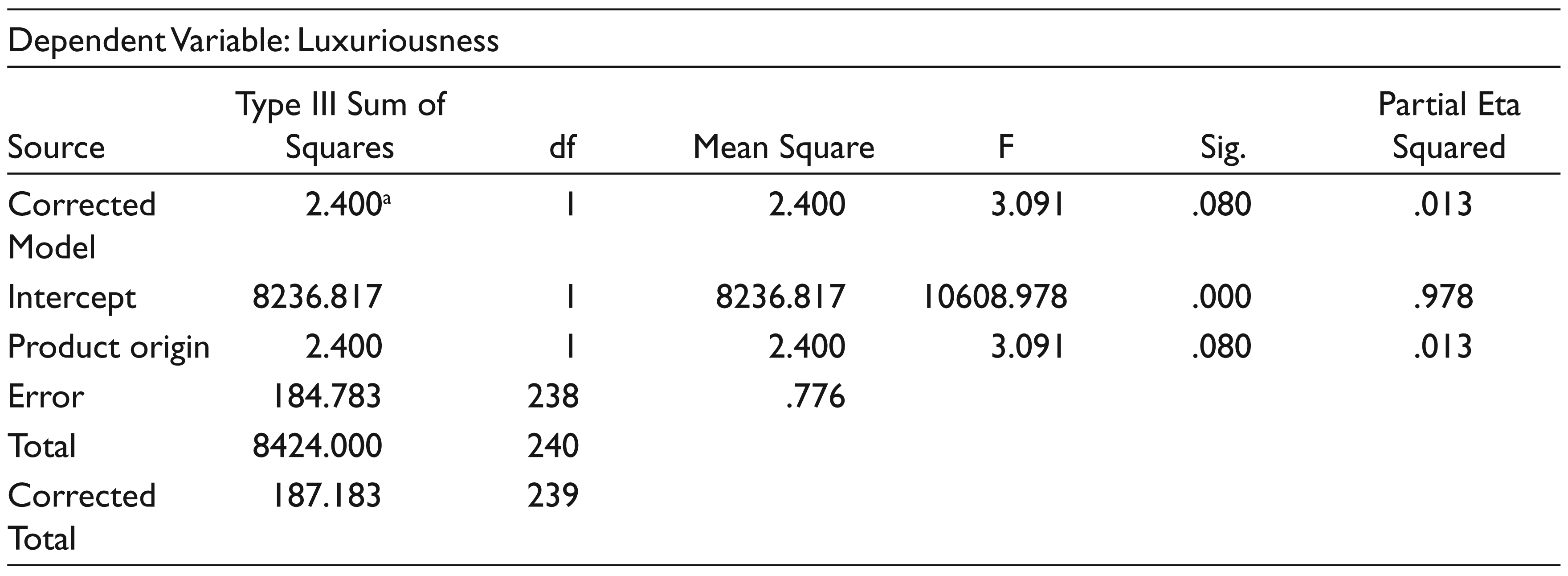
Perceptions of Luxuriousness – Indian vs. Western luxury brands (Moderating Effect of Cultural Origin of Product)
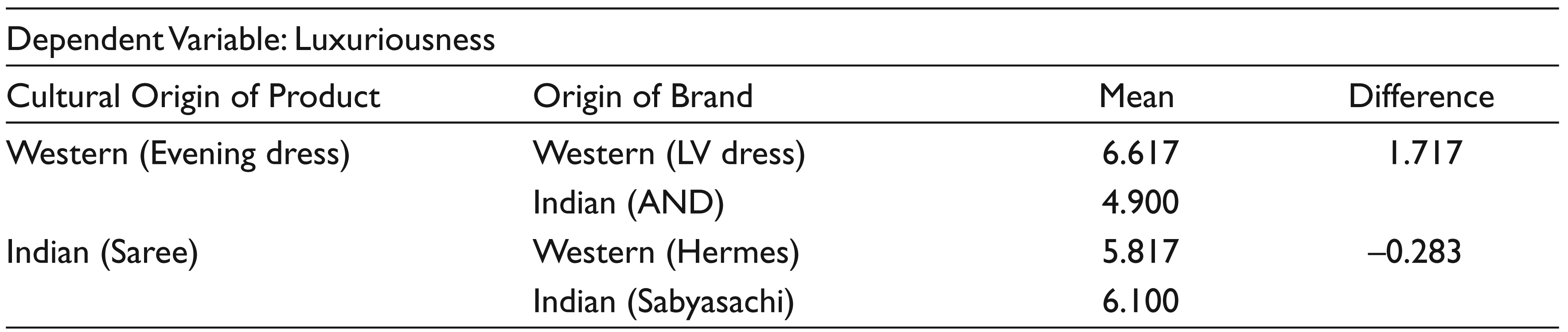
Tests of Between-Subjects Effects (Moderating Effect of Cultural Origin of Product)

bComputed using alpha = .05.
Conclusions and Managerial Implications
The findings of this study offer actionable strategies for luxury marketers of Indian and Western brands. The intricate fabric of Indian society has ensured that its consumers do not get engulfed into the Western culture, as Indians pride the ‘global citizen’ tag while fiercely protecting aspects of the Indian culture and customs. Indian marketers can thus look at building a luxury brand by retaining the essence of ‘Indian-ness’ rather than compete head-on with the Western concepts of luxury. Indian luxury brands could look at the ‘luxurification’ of products of Indian origin as a route to expanding their market outside the country’s borders. Sabyasachi has forayed into Western bridal gowns to connect with the global citizen, which may be expected to have the same tepid results as Hermes’ saree experiment.
For Western brands, which are hungry for a chunk of the attractive Indian market, the challenge is in increasing occasions of usage, much like what Cadbury did by positioning itself as a ‘meetha’ (sweet), thus appealing to the Indian sensibilities by seamlessly entwining with Indian traditions. 2 Looking to offer products of Indian origin as a route to the Indian luxury consumer’s wallet is not expected to yield the desired results for Western brands.
While this study was restricted to fashion, the possibility of generalizing the findings in other product categories, such as those which have their consumption prominently linked to culture (for example, Ayurvedic cosmetics in comparison to Western cosmetics), could be a future area of research.
Footnotes
Notes
Declaration of Conflicting Interests
The author declared no potential conflicts of interest with respect to the research, authorship and/or publication of this article.
Funding
The author received no financial support for the research, authorship and/or publication of this article.