



Abstract
This article accesses the effects of the North American Free Trade Agreement (NAFTA), now the US, Mexico and Canada Agreement (USMCA), on the Mexican food system, specifically on the country’s food consumption patterns. The double burden of malnutrition, that is, the coexistence of undernutrition with obesity, is identified as one of the most significant global health challenges. The article explores the main explanations for this malnutrition crisis and the links between the free-market policies pursued under NAFTA and the perverse change in food consumption patterns that affect Mexico, and mainly developing countries. The Mexican experience is presented in terms of the change in food consumption patterns and the food-system transformation over the past decades. It is argued that free-market policies do not merely change the origin of the food consumed but also affect its quality and the general consumption and production patterns. Under the NAFTA, the Mexican food system suffered a restructuring process that struck at its heart, by subsuming maize under capitalist logic.
Introduction
On 30 September 2018, after 13 months of negotiations, the United States, Canada and Mexico agreed to launch the US, Mexico and Canada Agreement (USMCA), a new version of the North American Free Trade Agreement (NAFTA). This new agreement produced national and international relief. Since his electoral campaign, Donald Trump had been denouncing NAFTA as ‘the worst trade deal ever signed by the US’, identifying it as the main cause of US job losses and trade deficits. Things look different now, as the USMCA is assumed to be an important victory by Trump: ‘it is a great deal for all three countries, solves the many deficiencies and mistakes in NAFTA, greatly opens markets to our Farmers and Manufactures…will bring all three Great Nations together in competition with the rest of the world. The USMCA is a historical transaction’. Also, for both the previous and current presidents, Enrique Peña Nieto of the center-right and Lopez Obrador of the center-left, the USMCA is considered as a win–win solution.
It is too soon to know the consequences of this new trade deal. Although the majority of the renegotiation details are not available to the public, the main lines of renegotiation were: rules of origin for the automobile industry and its interregional trade (a US priority); the Canadian dairy sector (a US priority); the energy sector (Mexico’s priority) and the dispute settlement provision (Canada’s priority). One of the main NAFTA failures refers to industrial sector integration, especially concerning the transformation of Mexico into a re-export sector with a high content of import composition, low technology and intensive use of labor (the maquiladora industry). However, it is also well recognized that the integration of the agriculture sector, especially between Mexico and the USA was a success. US agriculture has a large stake in NAFTA because Mexico is a very significant export market for US agricultural products. NAFTA was the most comprehensive free-trade agreement negotiated at the time, which included agriculture for the first time. Therefore, it is possible that the terms of the deal related to the agricultural sector remain substantially unchanged, only with new provisions related to intellectual property rights of biotech traits and product origin denomination.
This article is concerned with the effects of NAFTA on the Mexican food system, specifically on Mexican food consumption patterns and the malnutrition crisis that affects the Mexican population. A first exploration of the link between the change in food consumption patterns and free-market policies was published in the book entitled, El patron de consumo alimentario del libre comercio (Santos, 2014). At that time, a consensus did not exist regarding the link between these two phenomena, with some exceptions (Clark, Hawkes, Murphy, Hansen-Kuhn, & Wallinga, 2012). Now, confronted with malnutrition crisis, there is growing recognition and concern about the links between the free market and this perverse change in food consumption patterns that affects, mainly, developing countries such as Mexico (Food and Agricultural Organization [FAO] and Pan-American Health Organization [PAHO], 2017).
Given the signing of the USMCA and the new awareness about the link between free-market policies and malnutrition, it is useful to resume and update the analysis published in 2014 with regard to the effects of NAFTA on Mexican food consumption patterns. The article is organized in four parts. The first section presents data on the malnutrition crisis, while the second section critically reviews the main explanations of malnutrition crises, including the new views on the free market. The third section analyses the change in Mexican food consumption patterns, using the Mexican Household Budget and Expenditure Survey (ENIGH) for the years 1992, 2010 and 2014, respectively. With the objective of keeping the comparison between the data, the methodology is the same as Santos (2014). The fourth section analyses the modifications of the Mexican food system since the onset of free-market policies, pointing out some direct effects on production, imports and exports, as well as more long-term tendencies related to maize, the basis of the Mexican food system. Some concluding remarks are presented at the end.
The Malnutrition Crisis: Food Scarcity and Abundance of Noxious Foods
Initially, and still for some authors, the food crisis refers mainly to the 2008 great famine caused by the increase in international prices of major cereals. As a result, more than 44 million people went hungry almost overnight (Beddington et al., 2012, p. 16). However, for others, the increase of people in a hunger situation only constitutes the peak of the iceberg of a long list of problems that food systems have accumulated throughout the twentieth century. Tim Lang correctly points out that the crisis in 2005–2008 was not a blip, but creeping normality (Lang, 2010, p. 95).
In the present study, the objective is to address the food crisis based on the health effects associated with lack of food and abundance of noxious foods. This is what the World Health Organization (WHO) has recently termed the ‘double burden of malnutrition’, identifying it as ‘one of the greatest global health challenges’ and calling for a fight against malnutrition in all its forms (World Health Organization [WHO], 2017, p. 1). Malnutrition is defined as ‘the coexistence of undernutrition along with overweight, obesity or diet-related Non-communicable diseases (NCDs), within individuals, households, and populations’ (WHO, 2017, p. 2).
According to the 2017 Global Nutrition Report, global hunger is increasing, accounting for 815 million people, while 155 million children are stunted, 52 million children are wasted and 20 million born with low weight. Furthermore, no country has been able to stop the rise in obesity. The worldwide prevalence of obesity nearly doubled between 1980 and 2014. About 2 billion adults are overweight or obese (38.5 per cent) and 41 million children are overweight. Obesity increases the likelihood of diabetes, hypertension, coronary heart disease, stroke, certain cancers and osteoarthritis (WHO, 2017, p. 79). In total, one in three people globally suffer from at least one form of malnutrition (wasting, stunting, vitamin and mineral deficiency, overweight or obesity and diet-related NCDs), and 88 per cent of countries, on the basis of available data, face a severe burden of either two or three forms of malnutrition (Development Initiatives, 2017).
This scenario is not different for Latin American countries, although the region is a global food provider. Yet, it is a region facing economic stagnation, significant inequality and a high level of unemployment. The Food and Agriculture Organization (FAO) and the Pan-American Health Organization (PAHO) have observed that, since 1980, Latin American food systems have experienced significant changes, especially related to the availability of ultra-processed foods (those with high contents of sugar, fat and salt) and the decrease in traditional culinary preparations in a broad context of more sedentary lifestyles, extended working hours, the deregulation of marketing and advertising of unhealthy food products, tax incentives and other market failures (FAO & PAHO, 2017, p. 16). After decades of progress in reducing hunger, in recent years, the region has experienced an increase in the number of hungry people, and obesity and overweight has continually grown (FAO & PAHO, 2017). Nearly 42 million Latin Americans (6 per cent of total population) do not consume a sufficient quantity of food (FAO & PAHO, 2017, p. 12), and 24 countries in the region have a prevalence of obesity near or above 20 per cent of the population (FAO & PAHO, 2017).
Food consumption in Mexico has also gained relevance as a public health issue regarding both hunger and obesity. In 2006, the National Health Survey (ENSANUT) published alarming results: in just seven years (1999–2006), Mexico had the highest growth of population with overweight and obesity worldwide, reaching nearly 70 per cent of its population. A recent survey finds that about 36 per cent of children and teenagers between 5 and 19 years and 72.5 per cent of adults are overweight or obese, with a prevalence of overweight higher in 4.5 perceptual points in rural areas (Secretaria de Salud, 2016).
On the other hand, Mexico is far from having overcome the problem of hunger. Since 1997, Mexico adopted conditional cash transfer programs as a strategy to combat hunger and extreme poverty. For some years, the prevalence of hunger dropped, from 21 to 14 per cent in the period 1992–2006. However, with the increase in food prices in 2008, the achievements of the program were lost, and, consequently, the prevalence of hunger reached 25 per cent in 2010 and 20 per cent in 2016 (CONEVAL, 2017). In response to the growing population in a hunger situation, the government of Enrique Peña Nieto launched a program called ‘The Crusade Against Hunger’, with a target population of 7 million individuals in the poorest regions of the country, most of them in rural and indigenous communities. These main critiques of the program have centered on (a) corruption scandals due to the diversion of resources; (b) its focus on food access with little attention to food nutritional quality; and (c) the partnerships between government and big food corporations, such as PepsiCo and Nestle (EPC, 2013). As a result, the menus and meals offered by the program often did not correspond to the habits and food cultures of the target population, and in other cases, the foods offered were ultra-processed products with high contents of sugar, salt and fats (EPC, 2013).
This experience seems to suggest that the only exit offered for Mexicans in a hunger situation is the other major food problem in the country: obesity. Moreover, this path is not exclusive to Mexico. Recently, the FAO and WHO have called attention to the urgency of developing double-duty actions to tackle more than one form of malnutrition at once and avoid past mistakes in the fight against hunger (Development Initiatives, 2017, p. 14). The malnutrition crises generate an interesting debate over the determinants of food and its effects on health. What factors have generated these health problems linked to food? The next section presents the dominant explanations of malnutrition.
Different Explanations for Malnutrition Crises
This section presents the various explanations for the malnutrition crises, which are organized under five subsections, one referring to the increase in hunger and the other four to dimensions of malnutrition. Although the multidimensionality of malnutrition is gaining acknowledgement, there are few attempts to explain them together.
The Ghost of Scarcity and the Return of Malthus
Hunger is by far the classic theme of the food question. As Jean Ziegler has noted, the battle against hunger is undoubtedly one of the great failures of the twentieth century (Ziegler, 2011, p. 11). At the end of the eighteenth century, Thomas Malthus offered the arguments for the dominant explanation of modern hunger. For Malthus, food scarcity constituted a natural mechanism to regulate population. Although there exist critical positions to Malthus’ ideas, including Marx’s, his perspective remained dominant until the twentieth century, only to be temporally overcome after World War II, when food production increased and the end of hunger was thought to be only a matter of time. Shaw (2007) argues that pessimism in the population–food relationship has resurfaced five times since its original formulation by Malthus: (a) in the 1890s; (b) after World War I; (c) in World War II; (d) in 1965, with the famines in Southeast Asia; and (e) with the crisis of 1974. And it is possible to add a sixth, in the crisis of 2008.
At the World Food Summit of 1996, one of the millennium goals established was to halve the hungry population by 2015. However, this goal was frustrated by the rise in food prices in 2008. The dominant explanation for the rise in food prices points to a problem of temporary or permanent scarcity (by ecological limits or climate catastrophes) in a context of increased international demand (principally from China and India). Moreover, this perspective led to the conclusion that, in the face of rising or persistent hunger, what is needed is an increase in food production: ‘a strong supply-side response’ (Conceiçao & Mendoza, 2009, pp. 1175–1176).
Harmful Individual and Family Habits Due to Lack of Information or Education
The second explanation draws on the mainstream economic theory, which assumes that each consumer determines his or her food demand based on his or her preferences and possibilities (income) and the market conditions (prices). The market mechanism guarantees consumer sovereignty, that is, the individual’s power to direct the production of goods towards one’s own preferences. Consumers and their appetites are at the heart of the dynamics of the economy, the market being the best mechanism to ensure the satisfaction of social needs. In this sense, if there are problems arising from the choice and supply of food, these are due either to market failures, or to individual choices based on limited rationality having to do with lack of information and education or to wrong estimates of the future (Fine, 1998, p. 33).
A Temporary Imbalance Between Cultural Habits and Modern Life
The third explanation claims that the process of development and modernization produces a temporary imbalance. Some national cultures have lagged behind the rapid material changes associated with modern life, such as urbanization, sedentary lifestyle, greater participation of women in the labor market (and their lesser dedication to the family and the kitchen) and the increase in income and possibilities of choice (García, 2012, p. 9). It is estimated that a 10 per cent rise in income per capita translates into a 4.4 per cent increase in obesity (Development Initiatives, 2017, p. 13). Thus, health problems are said to arise because, for example, Mexican people continue to eat, by cultural inertia, according to the conditions of traditional societies (rurality, scarcity and higher physical activity), but now under the new modern conditions. From this perspective, ‘[o]besity and overweight are an unwanted effect of the struggle that countries, like Mexico, have undertaken to eradicate scarcity, malnutrition, and hunger’ (García, 2012, p. 15, our translation).
The Genetic Inheritance Associated with Developing Chronic Degenerative Diseases
The fourth explanation claims that food problems affect the health of specific populations due to a genetic heritage: genes could account for up to 50 per cent of the causality in specific cases of obesity (Vadillo, Zambrano, & Cruz, 2012, p. 211), while approximately 35 per cent of the variability of the body mass index is inherited (Vargas & Bourgues, 2012, p. 188). Different studies have found a more significant genetic disposition of indigenous and mestizo populations to contemporary obesity and chronic degenerative diseases (Vadillo et al., 2012; Vargas & Bourgues, 2012). Millennia ago, among human groups exposed to chronic food limitations, a polygenetic predisposition was developed that, in the current modern context, has become extremely counterproductive. The epigenetic process generated in hunger situations produces a ‘saving metabolic state’, as a result of reduced energy requirement, such that metabolism is directed to protect the brain at the expense of cells of muscles and kidney, which can later favor the emergence of diabetes and hypertension (Vargas & Bourgues, 2012, p. 101).
The Food Industry and Ultra-processed Foods
Finally, for another group of researchers, the problem lies in the expansion of the food industry and the so-called ultra-processed foods. While food processing is an ancient practice, recent developments in food chemistry and engineering, coupled with competitive and profit-seeking practices among companies, have led to a qualitative deterioration of food. Companies take full advantage of food engineering to produce high-value products with cheap inputs (Van der Ploeg, 2010, p. 102). With this strategy, companies manage to exert permanent downward pressure on the prices received by agricultural producers and keep up the food prices for consumers under the pretext of food with good taste or ‘good appearance’. The result is the systematic use of additives such as sweeteners, artificial colors, softeners, preservatives and flavor enhancers, while there is little certainty about the accumulated and long-term effects on the health of consumers (Van der Ploeg, 2010).
Ultra-processed foods are, by definition, products, the manufacture of which involves various stages and processing techniques and various ingredients, many of them exclusively for industrial use, such as soy and milk proteins, meat extracts, substances obtained with the additional processing of oils, fats, carbohydrates and proteins, as well as substances synthesized in laboratories from food and other organic sources. Additives’ function is to extend the duration of food and enhance color, taste, aroma and texture; such additives include hydrogenated vegetable fat, oils, fructose syrup, protein isolates, dough agents, thickeners, emulsifiers, dyes, flavoring agents and flavor enhancers, among many others (Ministério da Saúde, 2014; PAHO, 2015).
The consumption of ultra-processed foods is related to free-market policies. Recently, the FAO and the PAHO acknowledged that the growth in food imports and Foreign Direct Investments (FDI) had led to an increase in the availability of meats, dairy products and ultra-processed foods in low- and middle-income countries (FAO & PAHO, 2017, pp. 41–46).
These are some of the dominant explanations for the malnutrition crisis that, as mentioned before, lack a comprehensive attempt to explain all dimensions of malnutrition. But this is just one limitation. In relation to hunger, the ghost of scarcity and Malthus’ pessimism in the population–food relationship have been revived, with an important difference. There seems to prevail a commitment with the normal functioning of the food system, and, hence, a technological fix is considered enough to overcome the scarcity. Since, at the end, the food crisis is considered just a temporary failure, which the normal functioning of the system will resolve.
In relation to the other dimensions of malnutrition, there seems to prevail an individualist perspective. The malnutrition crisis is seen as a result of individual or family choices because ‘there are no good or bad foods, but good or bad eating habits’. Moreover, the problem would be exclusive to some cultures or some populations (because of their gen heritage) that have been ‘unable’ to adapt themselves to the modernization process. Behind this explanation lies a linear understanding of the development process, with nutrition and epidemiological transition included, that has been widely criticized (Santos, 2014). Thus, the modern diet is naturalized, considered to be a natural destiny, but with different consequences. For some, the modern diet will be accompanied with opulence and ‘the diseases of civilization’, but for others, the ‘less fortunate’ societies, the modernization process is carried out ‘imperfectly’ because of cultural or genetic factors, leading to a greater heterogeneity of nutritional status within populations, with the ‘the diseases of opulence’ without ‘opulence’.
Faced with the seriousness of the crisis of malnutrition and this kaleidoscope of responses and their limitations, it is necessary to develop a more critical analysis of food in capitalism. In this sense, the Mexican experience will be discussed, both related to the change in food consumption patterns and also the food system transformation in the past decades. These are the subjects of the following two sections.
The Modification of the Mexican Food Consumption Pattern in 1992, 2010 and 2014
Different authors have identified signals of change in the food consumption pattern of Mexican society (Bermudez & Tucker, 2003; Borbón-Morales et al., 2010; Regmi, 2001). In order to analyse this change, data from the Household Budget and Expenditure Survey (ENIGH) will be compared for the years 1992, 2010 and 2014. The results for 1992 and 2010, and the methodology used, appear in Santos (2014), while the data for 2014 are included in this text.
The ENIGH is a biannual survey based on a representative sample of Mexican households, but, in 2016, a methodological change was introduced that put an end to the comparability with previous findings. The data on food expenditure are obtained through daily interviews over a week. The food expenditure included information in terms of quantity and monetary cost for 242 different items. In methodological terms, the strategy consisted in comparing over time the food consumption patterns of households with similar socio-economic conditions: from urban localities (a population greater than 100,000 inhabitants), in the lower part of the income distribution structure with a per capita income between two and seven minimum wages (in 2010), representing 50 per cent of urban households. On average, the selected households have a per capita income of 2,606 Mexican pesos (base year 2010DIC = 100) with a non-statistically significant difference during the years 1992, 2010 and 2014, respectively. The selected households in 1992 amounted to 2,794, which, considering the expansion factor of the sample, represents 26 per cent of total Mexican households; in 2010, they were 6,984, or 25 per cent; and in 2014, they were 4,470, or 22 per cent.
The first set of results indicates that the household income sources were modified: the income from subordinated and independent work was reduced from 72 per cent in 1992 to 68 per cent in 2010, and 65 per cent in 2014. The income from transfers (public transfers and remittances) increased from 13 per cent in 1992 to 19 per cent in 2010 and 2014. The income distribution strategy was altered by increasing spending in the areas of transportation, housing, personal expenditures and education, and with a slight decrease in food from 32 per cent in 1992 to 31 per cent 2010 and 2014. The distribution of food expenditure varies with the increase in spending on food consumed outside the home, which increased from 12 per cent of total food expenditures in 1992 to 15 per cent in 2010 and 2016.
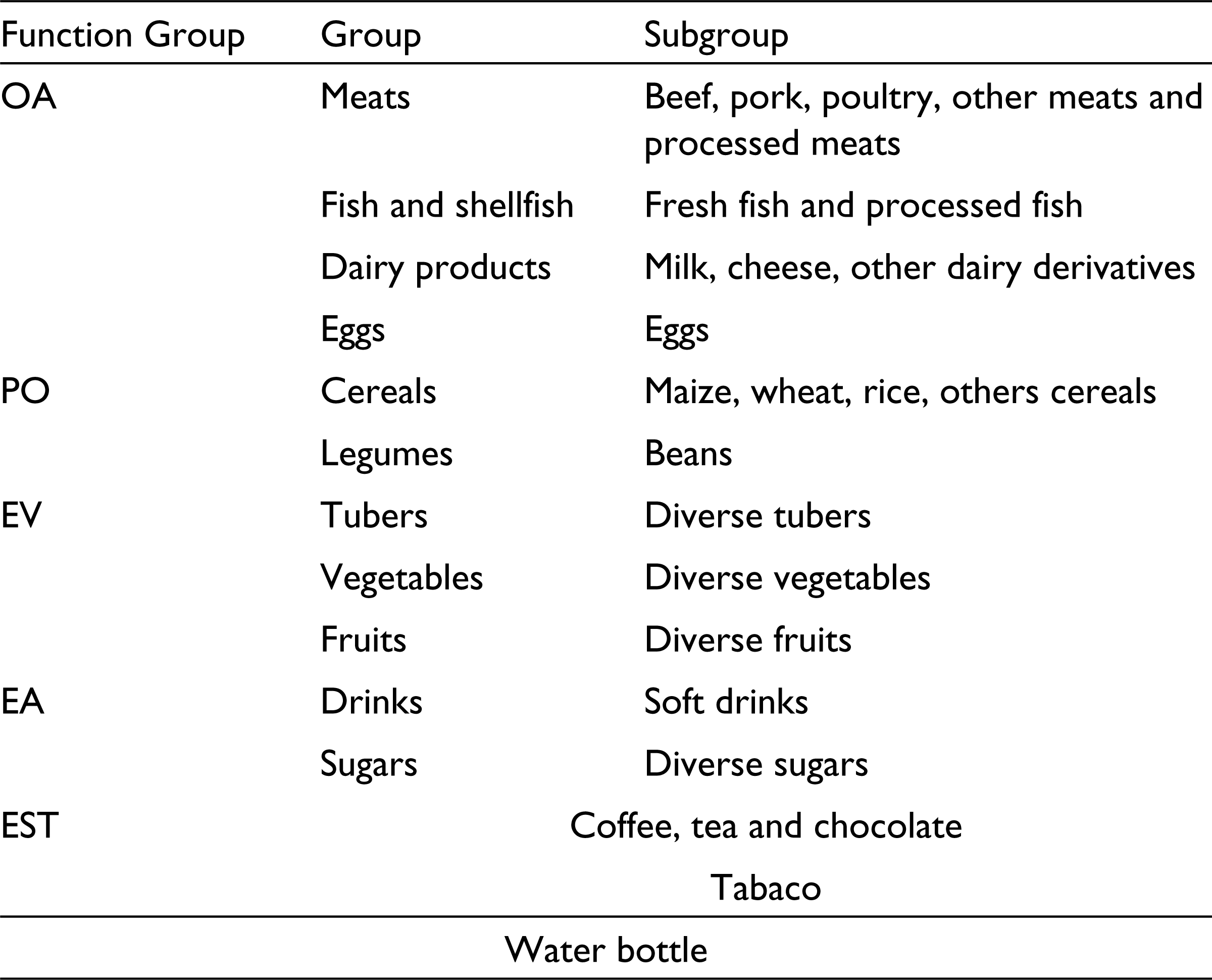
The food items purchased from inside the household’s consumption are organized into five groups according to the main nutritional function, following the work by Ocampo and Flores (1994). The groups are: animal origin energy-protein foods (AO), plants origin energy-protein foods (PO), energy-vitamin foods (EV), energy-additives (EA) and stimulants (EST). The foods included in the AO group are a source of proteins and their energy contribution is mainly in the fats they contain. The food of the PO group provides energy, especially in the form of carbohydrates, and its protein content is also important. The EV group comprises foods that are important sources of vitamin, fiber and minerals, in addition to carbohydrates. EA foods are characterized by providing ‘empty’ calories to the diet, that is, their participation consists solely in contributing energy. The EST group includes foods whose function is to excite the functional activity of various organs of the body, mainly the nervous system (Ocampo & Flores, 1994, p. 165). For the specific foods included in each group see Table 1.
Food Items Grouping
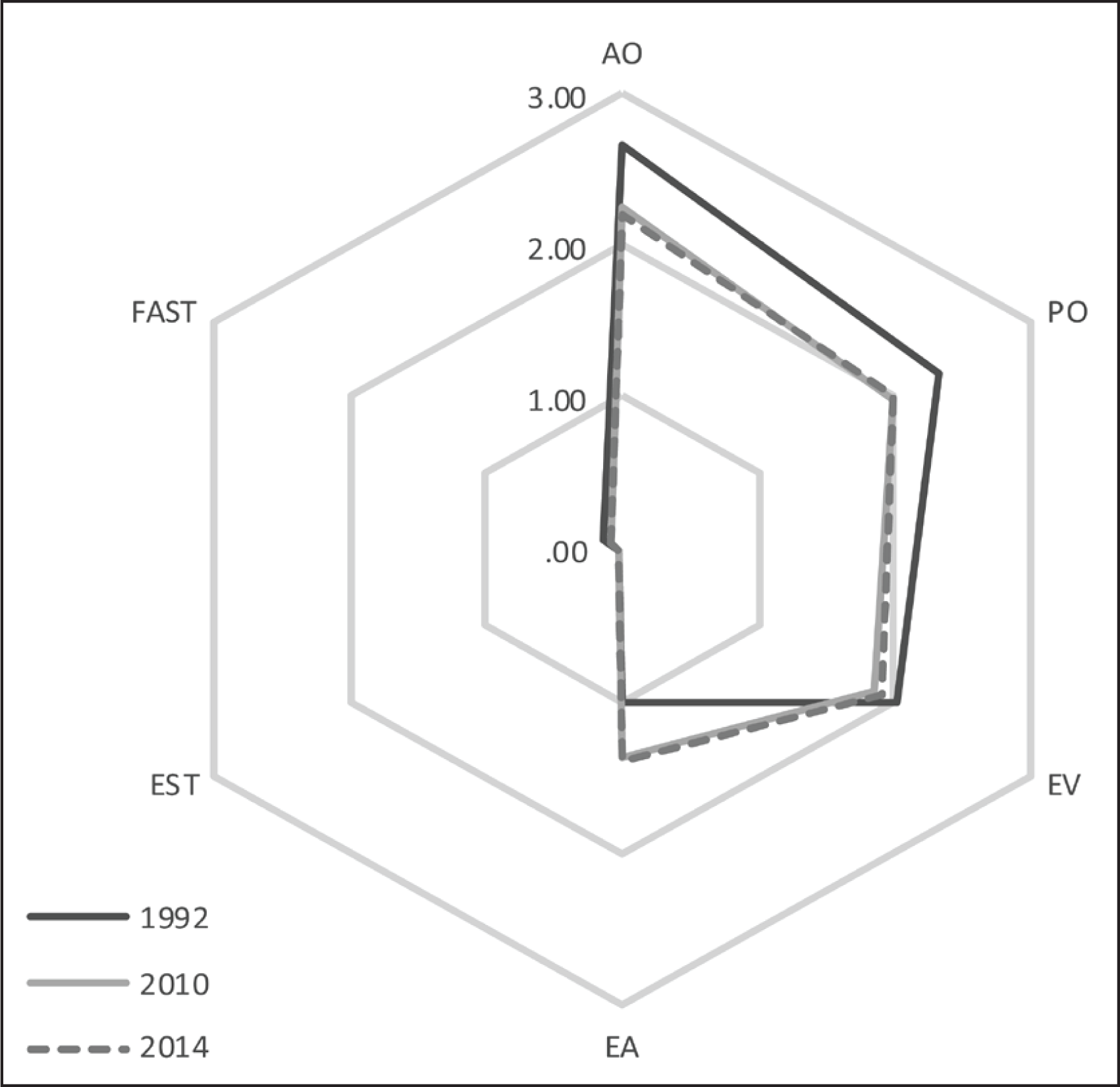
Although we cannot speak of a food transition, significant changes are observed. There is a modification in terms of a substitution between food groups, marked by the increase in EA and reduction in AO energy-protein foods, plant origin energy-protein foods and EV foods (see Figure 1).
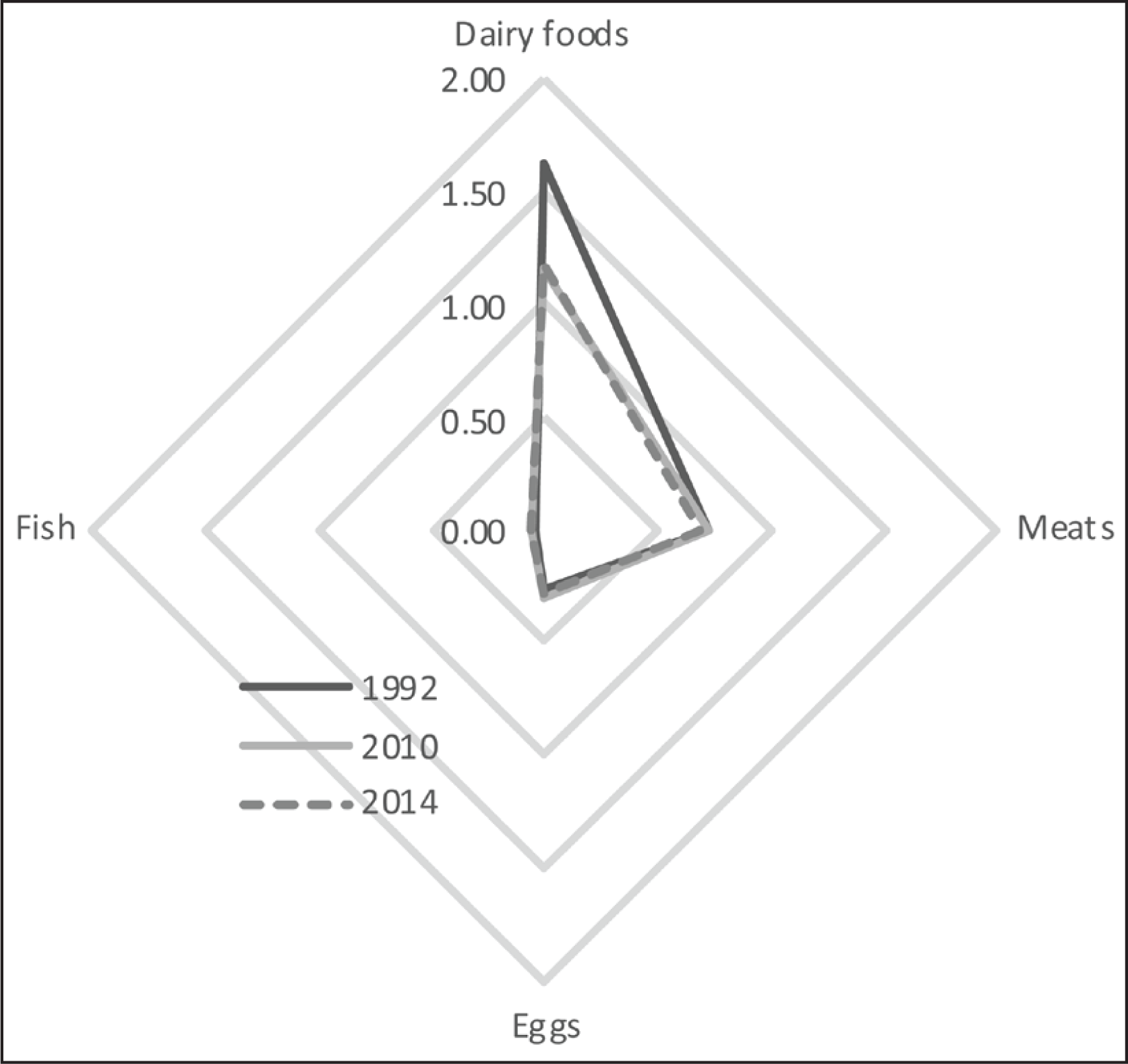
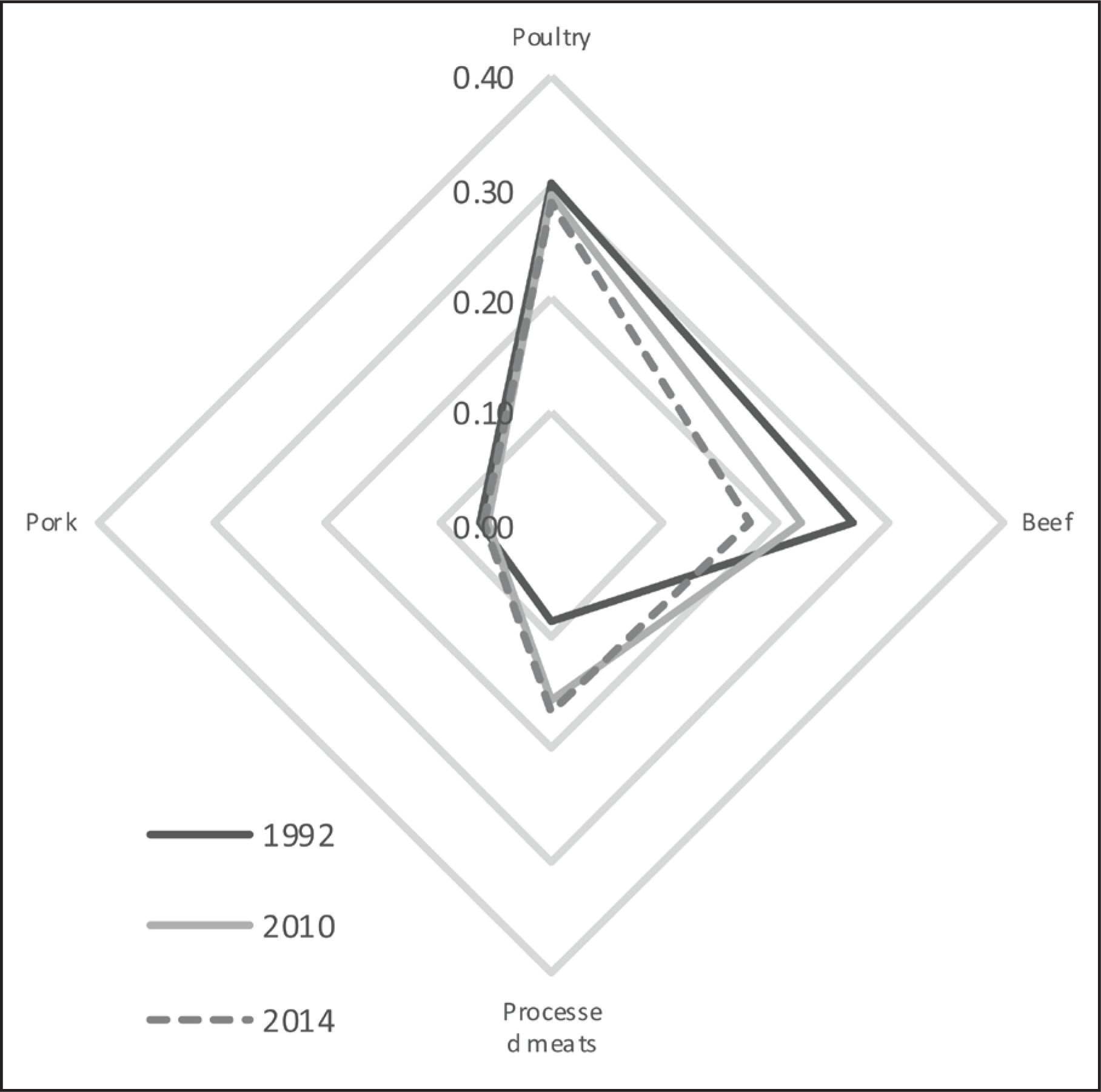
The overall consumption of AO foods decreased, but this reduction is explained basically by the reduction in consumption of dairy products, specifically milk (see Figure 2). The case of meats is especially interesting. The results suggest that the pattern of meat consumption is modified without altering the total amount of meat consumption. The consumption of poultry meat dominates, but a kind of substitution occurs between beef and processed meats. Due to this substitution and the lower price of processed meats, the expense for meat is reduced (see Figure 3).
The PO foods lose importance within the food pattern, in correspondence with the trends related to the so-called nutrition transition (Bermudez & Tucker, 2003). This trend is explained by the reduction in the consumption of both cereals (11 per cent) and legumes (25 per cent) in 1992–2014. Within cereals, maize is still the most consumed, but it is the one that accounts for the reduction in cereal consumption with a fall of 17 per cent in 1992–2014. Wheat, the second most important cereal, is consumed in quantities significantly lower than those of maize, and its consumption slightly increased from 2010 to 2014, although this cereal is considerably more expensive than maize and its price also increased in this period (see Figure 4).
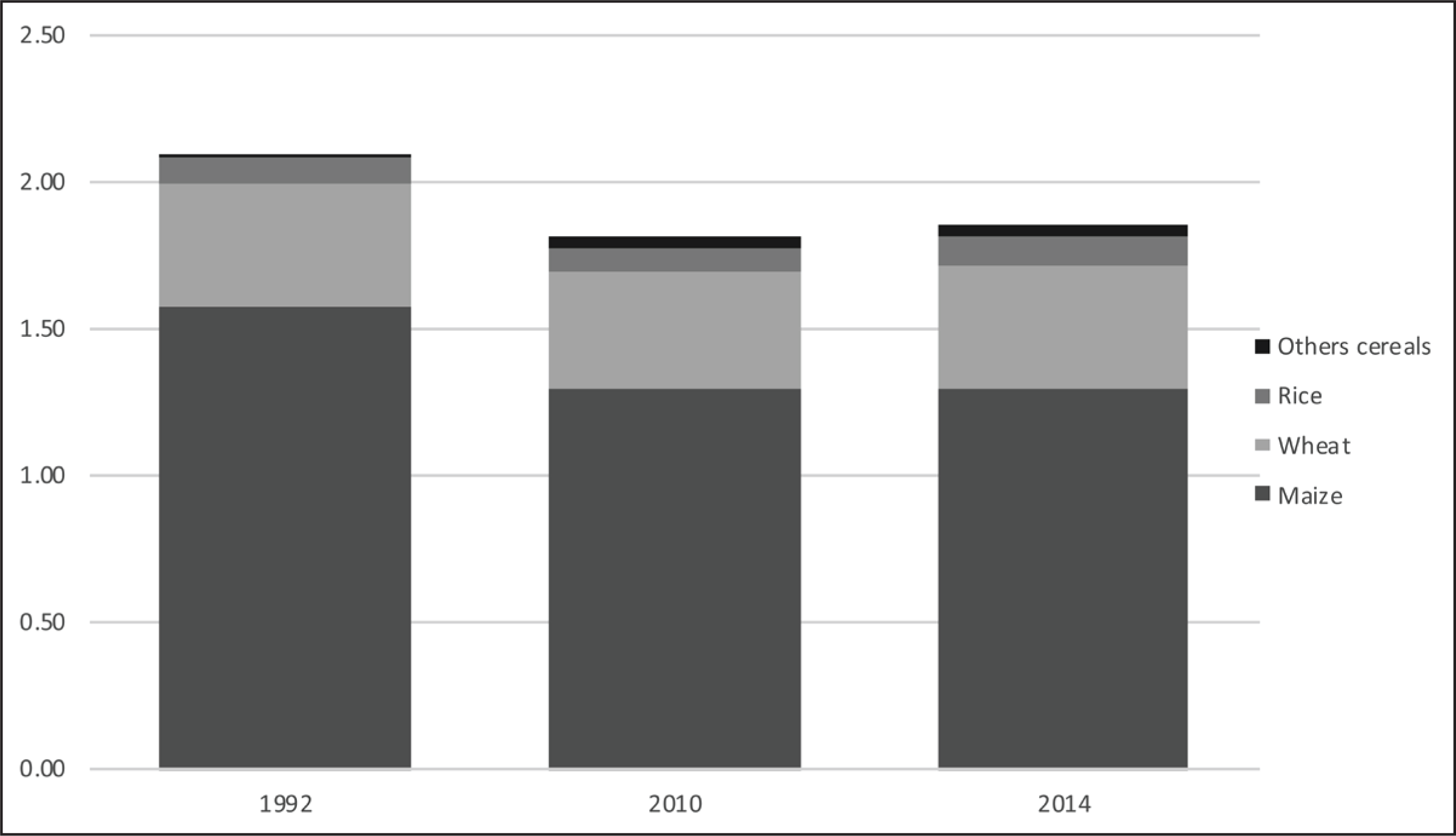
The average consumption of EV foods (tubers, legumes and fruits) are lower than the recommended quantity of 400 g per person/day. In the three years, the overall consumption was around 280 g. In addition, from 1992 to 2010, there was a reduction in the consumption of fruits from 0.76 to 0.60 kg, but, in 2014, it returned almost to the 1992 level. The energetic-additive food group gained importance within the dietary pattern of Mexican households. It is relevant to note that it is the only food group whose consumption increased by 46 per cent. This increase is explained by the considerable growth in the consumption of non-alcoholic beverages, especially soft drinks and processed juices and nectars.
It is interesting to contrast these results with the general trends identified by other studies. For example, there is a tendency to replace calories of PO with calories of animal origin (Bermudez & Tucker, 2003; Regmi, 2001). In the case of the Mexican households studied, the substitution that occurs is of calories of animal and vegetable origin for empty foods or EA foods, with high sugar contents. Nor does there occur a targeted substitution of cheap calories (cereals and tubers) for expensive agricultural calories (animal products, fruits and vegetables) (Regmi, 2001), but, on the contrary, there is a growing importance of cheap and empty sugar calories. The trend observed is of a substitution of agricultural calories by agro-industry or processed calories, with the increase in the consumption of processed meats, other dairy products, processed beans, juices and soft drinks (Santos, 2014). Finally, the trend that identifies that fruits and vegetables are substitutes for cereals (Regmi, 2001) is relatively identified by the data. The results obtained indicate a reduction in the consumption of cereals, mainly explained by the fall in the consumption of maize, but the expected increase in the consumption of fruits and vegetables did not happen. The foods that seem to be the substitutes of cereals are the energetic-additives, or empty foods.
Considering the results obtained, it is not necessary to have advanced knowledge in nutrition to identify a qualitative deterioration of the food pattern in the increase of processed foods, with the result of lowering the total cost of the food pattern. In the next section, the main transformations of the Mexican food system are presented for the period of free-market liberalization and, specifically, after the signing of NAFTA.
The Free Market and Food Consumption Patterns: Maize Subsumption Under the Capitalist Agri-food System
A key element for understanding the changes in food consumption is the configuration of food markets. Previous work (Santos, 2014) sought to identify the critical relationship between the deterioration of the Mexican food consumption pattern and the socio-economic modifications derived from the implementation of free-trade policies since 1980. This research rowed against the dominant perception of the effects of free markets on food consumption. Then, as now, the general perception prevailed that the free market is conducive to national food and nutritional security because it increases the availability and variety of food, as well clearing the markets: ‘when domestic production is more than sufficient to meet the sub-regional demand, food is exported… and when the circumstances are the opposite, and internal production cannot cope with domestic demand, food is imported’ (FAO & PAHO, 2017, pp. 27–32). As mentioned earlier, only recently have the possible negative consequences of the increase in the availability of ultra-processed foods been recognized.
It is necessary to link the phenomena of consumption and production and the food consumption choices and the non-automatic or neutral construction of markets. With this objective, this section presents the general characteristics and pressures to which the Mexican food supply was subjected after the reforms of commercial opening. Finally, these transformations will be connected to the maize subsumption under the process of development and consolidation of the capitalist agri-food system.
The Mexican Food System Under NAFTA
Today, Mexico is one of the most open economies in the world. In the period 1970–2016, the degree of openness quintupled, from 13 per cent in 1970 to 71 per cent in 2017. Since 1990, Mexico negotiated 14 free trade agreements with 42 countries on three continents, more than any other country in the world. Before the Trump presidency, successive Mexican governments prioritized and supported the free-market strategy, also serving as the promoter of this strategy in the Latin American region.
Regarding the degree of economic openness, the Mexican agricultural sector surpasses the already high degree of openness of the economy as a whole. The Mexican state initiated a unilateral liberalization of the agricultural sector as part of an ambitious ‘modernization program’ in the 1980s. In the post-war period, Mexico, as many others Latin American countries, adopted the import-substitution industrialization strategy, in which agriculture was subordinated to the needs of this urban-industrial growth model with a compensatory policy supporting the agricultural sector with a considerable intervention of the state. In the mid-1960s, Mexico achieved food self-sufficiency. However, this favorable scenario did not last long, as two problems arose in the 1970s: the impoverishment of the rural population and the insufficient production of basic foods against increasing demand. In 1973, Mexico became an importer of maize, the heart of the agricultural economy and food culture; in 1982, the debt crisis exploded; in 1986, the country joined the General Agreement on Tariffs and Trade (GATT); and, thereafter, open market came into effect.
NAFTA was the decisive step towards the free market. In 1990, the Mexican government asked the United States to include Mexico in its free-trade agreement negotiated with Canada in 1988. NAFTA is a highly asymmetric free-trade agreement, by its North–South character. It comprises considerably different economies, and in agriculture, these differences are even more significant. Canada, the United States and Mexico agreed that there would not be any special treatments or compensatory mechanisms for Mexico, the less developed member as established in the GATT.
For Mexico, one of the central objectives of NAFTA was the transformation of the agricultural sector, by modifying employment and land use, and generating the reallocation of productive resources from activities, which were unable to compete with US imports to those that have export possibilities. NAFTA set separate bilateral agreements in agri-cultural trade and eliminated most non-tariff barriers in agriculture, with sensitive products, such as sugar and maize, receiving, in theory, the longest transition periods. Approximately one-half of US–Mexico agricultural trade became tariff-free when the agreement went into effect (Villarreal & Fergusson, 2018, p. 17). A decisive step towards the productive resource reallocation was the modification of Article 27 of the Mexican constitution, meant to ‘release’ land from the ejido communitarian property regime that had been established after the Mexican Revolution. In general, the Mexican government promoted NAFTA by means of a discourse, which claimed that it would generate a positive balance for Mexican society: although it would tend to harm some agricultural producers, the uncompetitive, all individuals would benefit as consumers. It also argued that the United States, being the leading agri-food exporter in the world, could become the ‘best and permanent food supplier in Mexico’ (Fritscher, 1996).
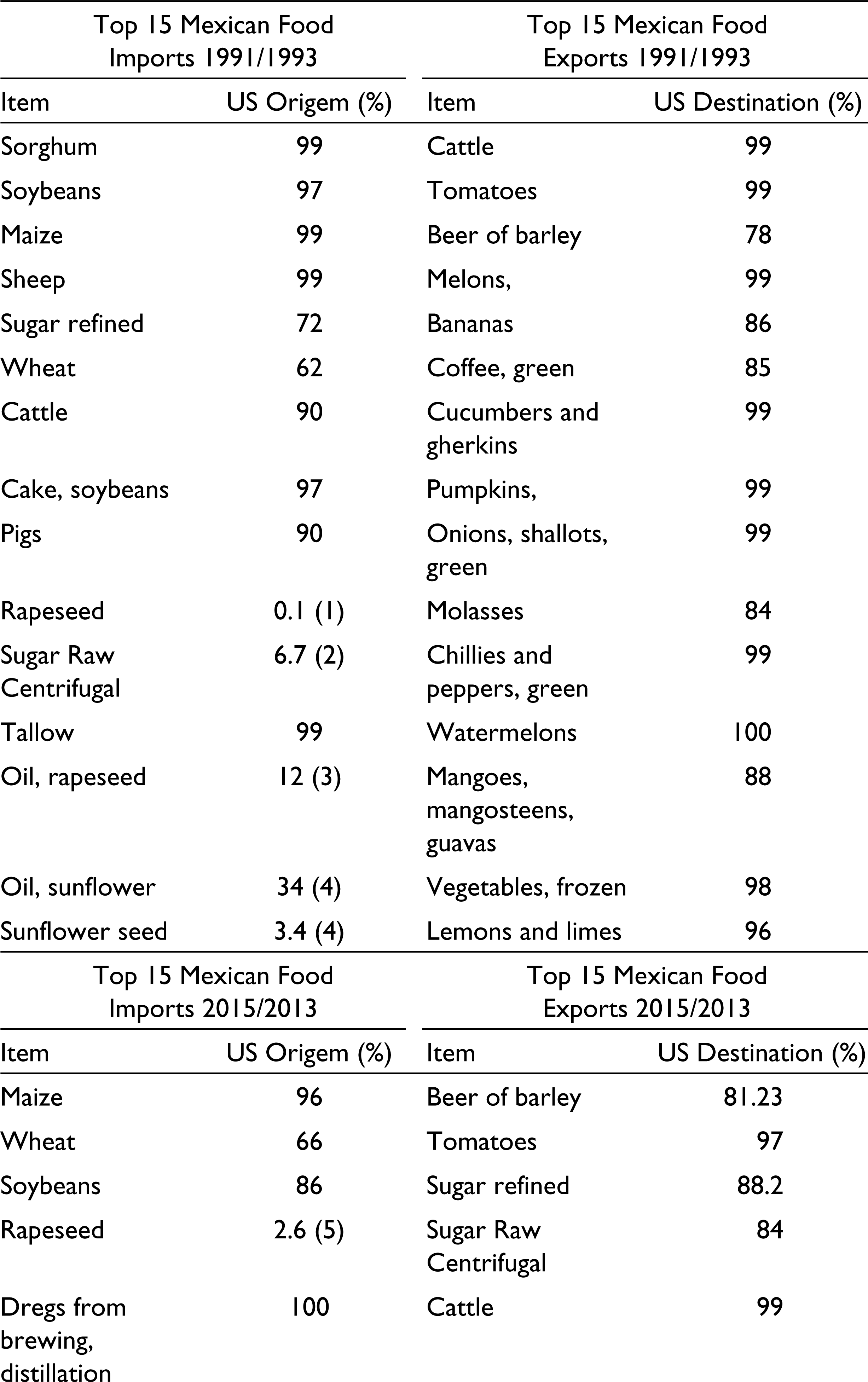
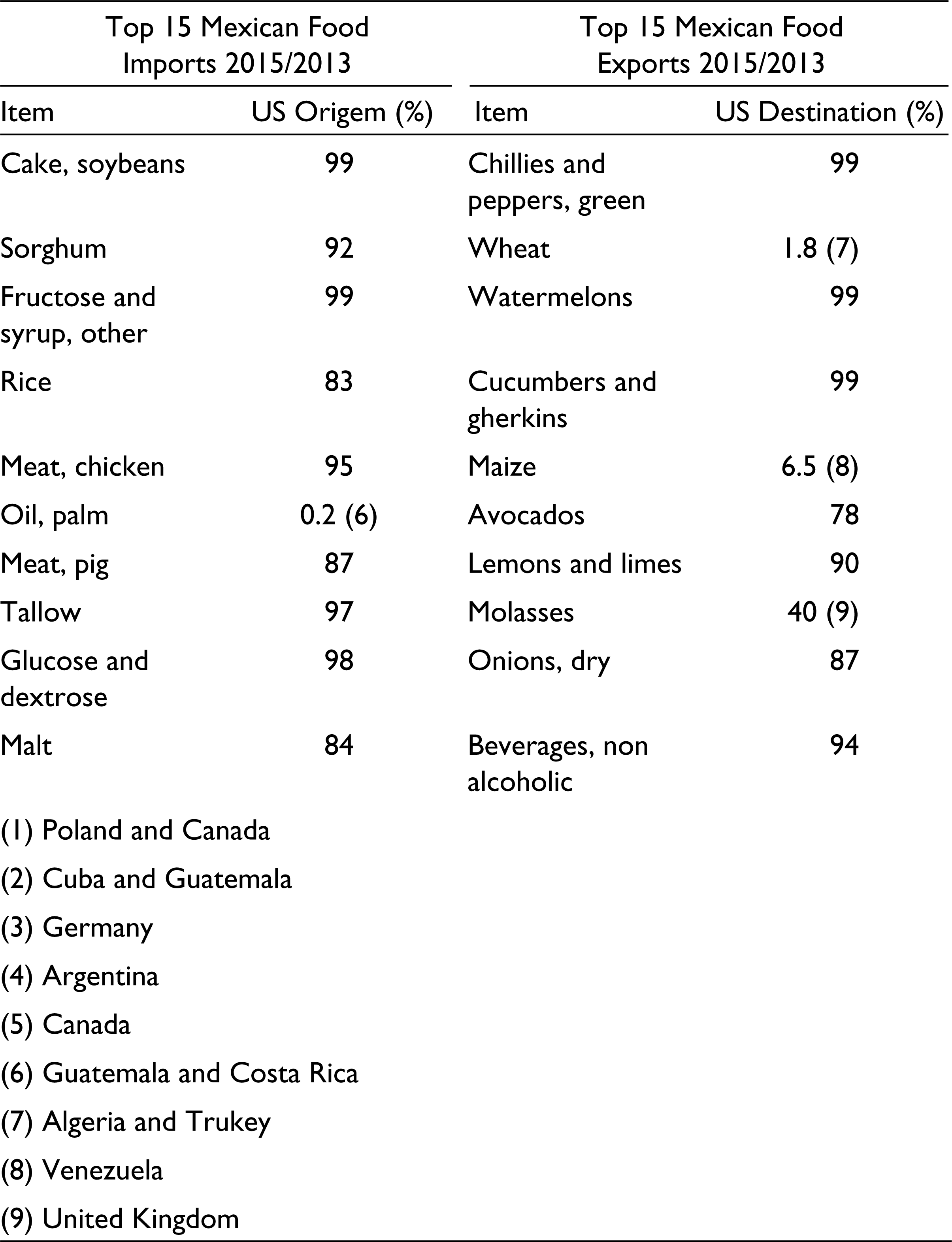
After more than 20 years of NAFTA, the free market realized successfully the intention to integrate the agri-food markets between Mexico and the United States. Trade among NAFTA partners has more than tripled since the agreement entered into force and the Mexican market was the fastest-growing major export market for US goods at the time (Villarreal & Fergusson, 2018, p. 15). Trade liberalization has allowed the entry of food imports (cereals and meats), feeds (sorghum and soybeans) and inputs for the processing industry (dregs for brewing, fructose and syrup, oil palm, glucose and dextrose and malt), while it has enabled the growth in Mexican agri-foods exports, principally beverages (beer and non-alcoholic), vegetables and fruits (tomatoes, chilies, and peppers, watermelons, cucumbers, avocados and onions; see Table 2).
Import and Export Trade Matrix US-Mexico
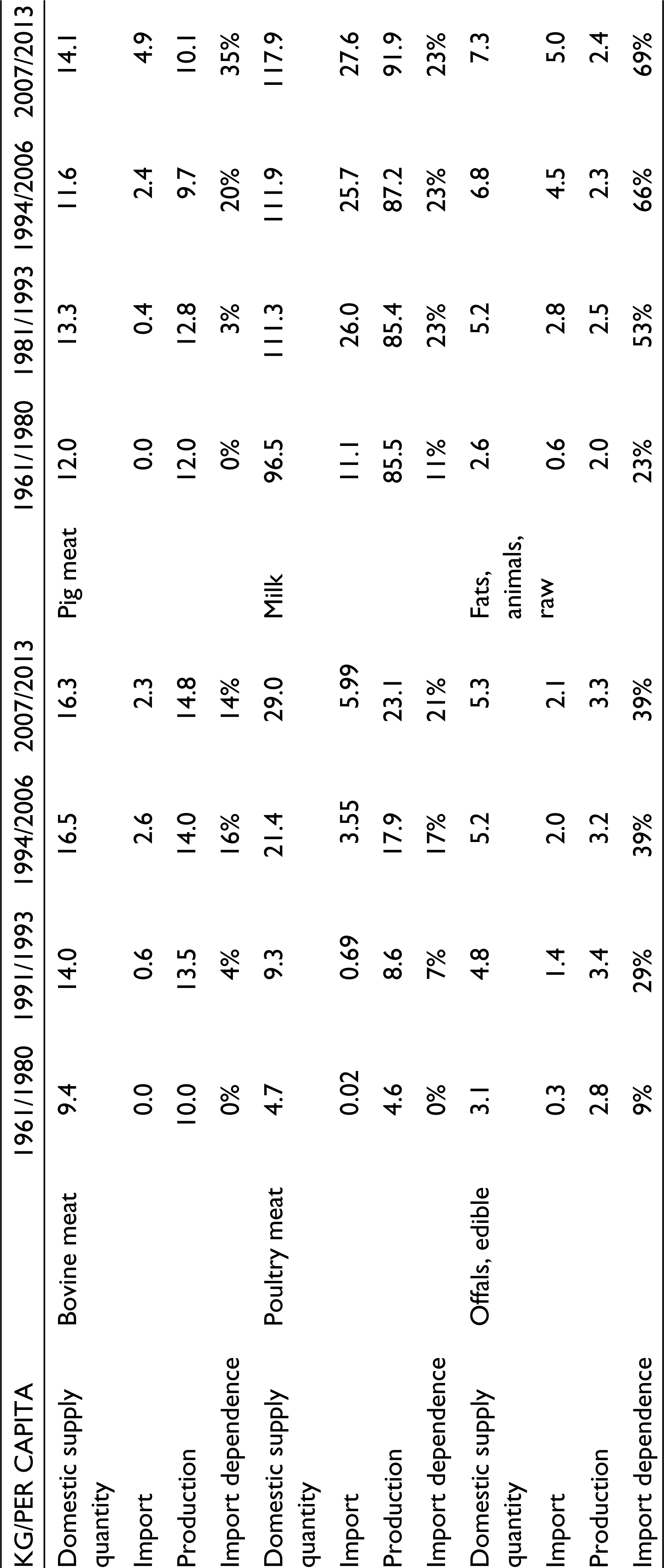
About animal origin foods, the United States is by far the leading supplier of Mexican livestock imports. Domestic supply data show that import dependence has increased for all AO foods in the period from the 1980s to 2013, with the exception of eggs: bovine meat from 0 to 14 per cent; pig meat from 0 to 35 per cent; poultry meat from 0 to 21 per cent; milk from 11 to 23 per cent; offal from 9 to 39 per cent; and animal fats from 23 to 69 per cent (see Table 3). Animal origin imports are mostly waste, sometimes dairy cows that have finished their productive cycle (Ruiz et al., 2008, pp. 157–171). The products that have little demand in the US market are exported to Mexico at a low price, as is the case with cuts of poor appearance, meats that remain too long in refrigeration or offal and other products that have no market demand in the United States (Ruiz et al., 2008, pp. 183–184). The United States was already the leading supplier of milk and derivates to the Mexican market, before NAFTA came into effect, but with market opening, the imports structure was modified and production of dairy derivates, such as cheeses and yogurts, increased (Mariscal et al., 2008, p. 64).
Animal Origins Foods Domestic Supply Structure
PO foods, or basic grains, are the food group most affected by trade liberalization. As mentioned before, the Mexican government explicitly intended to deactivate the production of basic grains by stimulating their replacement by US supply. Another fact of relevance is the enormous capacity of the United States in establishing the prices of these products, while Mexico remains a price taker.
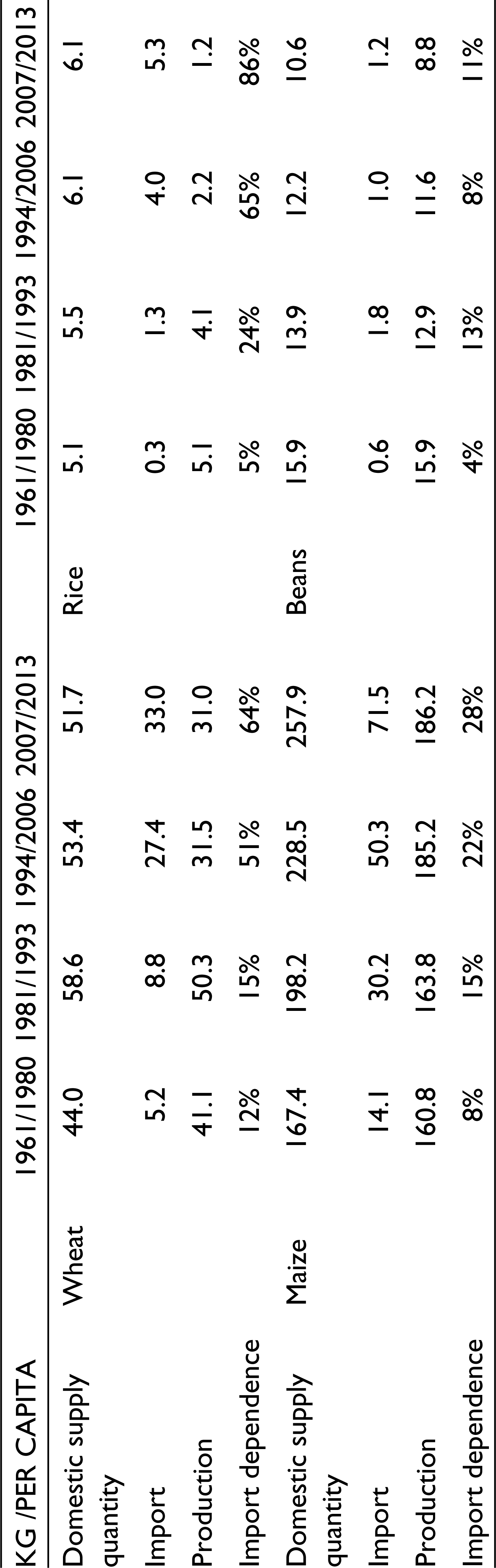
Maize is the essential food product for Mexico, the staple food; it is the second most important product produced in tons after sugarcane, and the first in terms of cultivated area and rural employment. This cereal was central in the debate initiated by the free-market reforms for being a sensitive product and, consequently, it received the most considerable transition period in liberalization (15 years). However, in 1997, the government suspended this measure, appealing to food security reasons, and thus massive maize imports entered the country without any tariffs. This decision benefited transnational corporations (Cargill, Archer Daniels Midland, Maseca), the main importers, exporters and distributors of the product, as well as manufacturers of livestock feeds and the livestock agroindustry.
Domestic supply data show that maize import dependence increased from 8 per cent to 28 per cent, with a significant rise in supply in the Mexican market. The production of rice, wheat and beans plummeted during the NAFTA period, especially in the case of the first two. In fact, for wheat and beans, the rise in import dependence translated into a reduction in the total domestic supply, from 58.6 kg to 51 kg per capita, and from 13 to 12 tons per capita/year, respectively. In other words, the growth in food imports did not compensate the national production collapse, although wheat imports multiplied six-fold. For rice, the fall in domestic production was more than offset by imports, as supply increased by 30 per cent (see Table 4).
Basic Grains Domestic Supply Structure
Concerning FDI, data from the Mexican Ministry of the Economy indicate that in the period 1999–2011, of the total FDI that arrived in the country, 10.4 per cent went to the agri-food sector. It was directed to the livestock sector (poultry and pig production), the cultivation of high-value vegetables (broccoli and asparagus) and in industries that process food and beverages. FDI from the United States is present throughout the food supply chain in Mexico, from production and processing to restaurants and retail sales. Transnational firms control 35 per cent of the pork industry, and Mexico is the third largest recipient of US FDI in processed foods and beverages (Clark et al., 2012, p. 60).
It is possible to identify some critical links between these results and the deterioration of Mexican food consumption patterns of the last section. Also, it is possible to perceive that the consequences of free-market policies are not reduced to merely a change in food origin and the replacement of national producers for foreign. Despite the relevance of these results, it is important not to confuse the effects of the free market, as a specific and, therefore, limited historical period, and the long-term trends of the capitalist agri-food system.
The Mexican Maize Food System Under the Capitalist Agri-food Tendencies
The imposition of the free market on the agri-food sector does not mean that most of the production and consumption of food is necessarily carried out through the world market and much less that it is a free market, in which the free flow of goods predominates. Only 15 per cent of world agricultural production crosses national borders. However, what free market means is the subjection of the rest of the 85 per cent of domestic production to the prices and trends that govern the world market (Van Der Ploeg, 2010, p. 101). In addition to the increase in import dependence, which leads to market vulnerability, the dominant tendencies of the capitalist agri-food system have imposed themselves on the Mexican agri-food system. The fate and role of maize within the capitalist agri-food system, its subsumption under capital, is one of these long-term trends, as discussed in the work by Santos (2018).
Although a whole set of production practices (monocultures and intensive use of water) and chemical inputs (fertilizers, pesticides and herbicides) has characterized capitalist agriculture, a crucial moment in its development seems to have occurred when seeds were modified in a conscious and controlled way. The manipulation of seeds is as old as agriculture but acquired a very particular meaning in the United States in the last decade of the nineteenth century. The ‘maize revolution’ initiated the production of hybrid seeds with the objective of producing cheap maize for livestock and the food industry complex, and not for human consumption.
The development of capitalist agriculture was carried out by the degradation of maize. This ‘plant of civilization’, as coined by Fernand Braudel, was massively converted into cattle feed, a food industry input, and just considered direct human food for poor and peripheral populations, for example, indigenous peoples. This fate for maize has been emerging since the sixteenth century when it was identified by Europeans ‘as food suitable only for desperate humans or pigs’ (Messer, 2000, p. 104). In the nineteenth century, while England imported wheat for its population, it turned to maize for alleviating hunger in Ireland and as a ‘feed’ for workers in its African colonies (Messer, 2000, p. 105). For Americans, maize was from the beginning a vehicle to obtain a profit, unlike its purpose for the indigenous populations of the continent, for which maize constitutes, until today, the heart of their civilization.
Simultaneous to the maize reconfiguration, or degradation, wheat acquired the status of the most important cereal in the world. This importance is not derived from its nutritional content, or from its productivity (it is the most expensive cereal), or world consumption—rice is the most consumed, as it is the primary staple among populous Asian societies. The importance of wheat, its recognition as the cereal par excellence, has more to do with its colonial past. The world consumption of wheat is the only one that has grown and will continue to grow, especially among the countries of the capitalist periphery, where its consumption expands, replacing other cereals (Food and Agricultural Organization [FAO], 2003, p. 51).
This difference between the destinies of wheat and maize within the capitalist food system also finds expression in the path taken by the development of transgenic seeds, specifically the failure of transgenic wheat. At the beginning of the first decade of the twenty-first century, Monsanto tried to repeat the great success of maize and soy transgenic seeds that are tolerant to the Roundup herbicide and presented applications in Canada and the United States for the approval of Roundup Ready Wheat. However, only two years later, the company was forced to withdraw these requests and to publicly declare its intention to stop the research and development of transgenic wheat. The leading cause of this prohibition was merely that the primary use of wheat is human consumption, which generated rejection among consumers in the United States and Europe (Falkner, 2009, pp. 239–241). Nowadays, transgenic wheat is still illegal, although Monsanto has not abandoned its technological innovation. In the past months, Canada suffered from blockages to wheat export because transgenic wheat pollution was found. In a recent article published in the journal Science, this exclusion of wheat from transgenic transformations is noted with some surprise, even calling it the transgenic technology orphan (Wulff & Dhugga, 2018).
The fact that maize is the primary objective of biotechnology and currently the most cultivated transgenic crop in the world followed by soy (also used mainly as livestock feed) is not a random or just some natural propensity. The International Service for the Acquisition of Agri-biotech Applications (ISAAA) reports 426 events (successful transgenic modifications) in 29 different food plants. Maize headed the list with 165 events, followed by cotton (58) and potatoes (47). Regarding wheat, there is only one record (the one mentioned made by Monsanto) and seven for rice. 1
This versatile incorporation of maize into the main agri-food sector has an important effect on food consumption (see Table 5). It is not only the confrontation between humans and other animals for maize but also its appropriation by agri-food industrial corporations with the objective of using them as foods, as inputs, as feeds and as agro-fuel, depending on where the highest profit is to be obtained.
Maize Uses
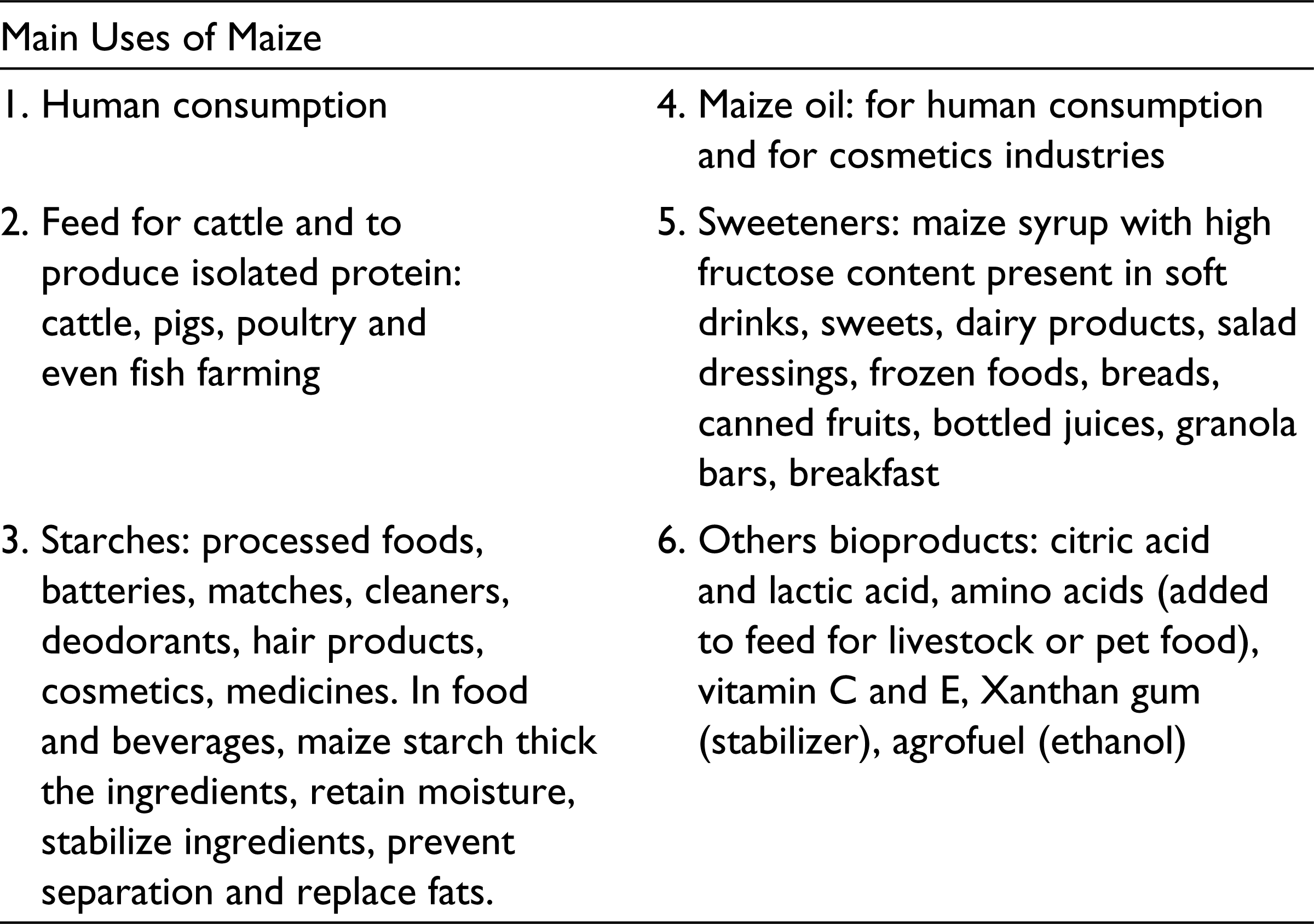
The link between the uses of maize and the growing noxious characteristics of the capitalist food pattern are clear. The American way of eating is based on one or other version of maize as an input present in soft drinks, fried potatoes flour, hamburgers, sauces and salad dressings, baked goods, breakfast cereals, in almost all poultry and even most fish and, more recently, even in cars. The increase in ultra-processed food production is a direct result of maize subsumption under the capitalist logic.
Conclusion
‘After 20 years of NAFTA’, Subcomandante Marcos of the EZLN once said, ‘Mexican agriculture seems as if a package of atomic bombs would have destroyed it’, and he was not wrong. Similarly, it was not an exaggeration when in 1994, on the first day of NAFTA operations, the EZLN movement denounced the death sentence given to the Mexican population, in the form of that free-trade agreement.
The data presented here allow us to question critically the veracity of claims to that ‘the free market benefits everyone as consumers by proving cheap imports’, or ‘helps to attain food and nutritional security by raising the variety and quantity of food availability’. Lower prices do not necessarily accompany food import dependence, but on the contrary, the latter makes the food system much more sensitive to the rise in international prices, as happened in 2008. The free market does not merely change the origin of food but also affects its quality and the structure of the food consumption and production patterns. The effects of the free market are much broader and even worse if we consider them in relation to the Mexican malnutrition crisis.
The NAFTA effect includes a restructuring process of the food system, which strikes at the heart of the Mexican food system. The nutritional richness of maize, and its versatility and high adaptability and productivity, which are in some way the result of the millennial activity of indigenous communities, are now subsumed under capitalist logic and turned against these same communities. On the side of consumption, the richness of maize is disfigured into input for noxious foods, related to NCDs, and the populations that get sick for consuming are blamed for their own misfortune, be it by genetic heritage, low educational level, or cultural inertia. On the side of production, producers are displaced from their lands and thrown into unequal competition with massive US maize imports with no state support other than conditional cash-transfer programs for the consumption of noxious processed foods. As the anti-NAFTA movement argued in 2003: ‘Without Maize, No Country’.
Footnotes
Declaration of Conflicting Interests
The author declared no potential conflicts of interest with respect to the research, authorship and/or publication of this article.
Funding
The author received no financial support for the research, authorship and/or publication of this article.