



Abstract
Tuan Haji Mohamed Taib bin Ibrahim, chairman of Muhibbah Engineering Bhd (MEB), called a meeting of the board of directors to discuss the issue of Asia Petroleum Hub (APH) project on 27 July 2012. The construction works for APH were stopped as APH financier of CIMB Bank Bhd, suspended its financing in 2009. Asia Petroleum Hub was later wound up under a winding-up petition filed by a creditor in October 2012. Muhibbah board decided to pay net debt exposure of RM 245 million certified claims from APH keeping Muhibbah’s right to pursue recovery. Mac Ngan Boon, the managing director, suggested drastic changes in the company’s structure, roles, responsibilities and organizational culture to put the company on a path to sustainable profits. Datuk Zakaria bin Abdul Hamid, vice chairman and independent non-executive director, and Abd Hamid bin Ibrahim, another independent non-executive director, endorsed Mac Ngan Boon’s suggestions. The board has to decide the way forward.
The Company
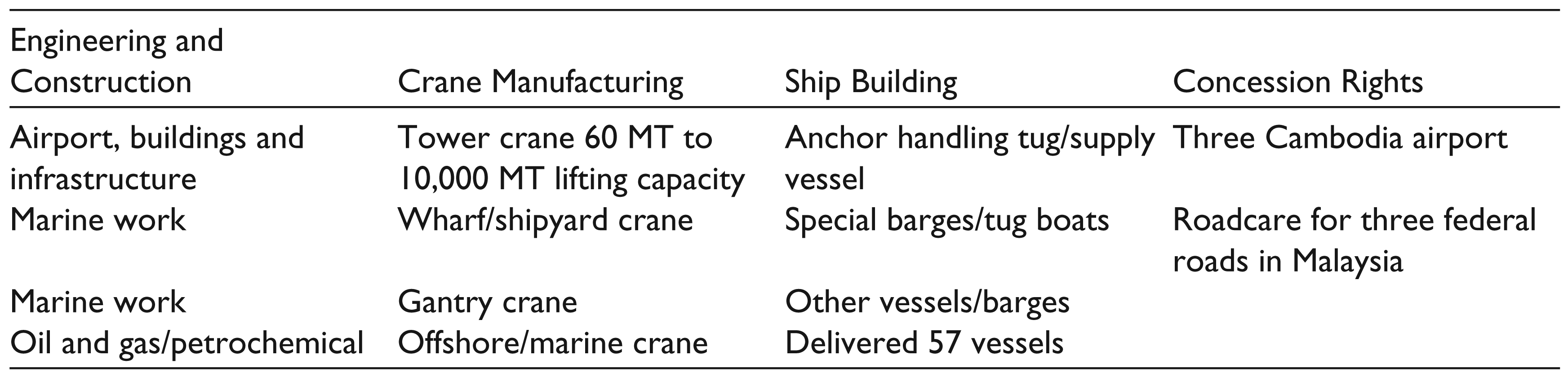
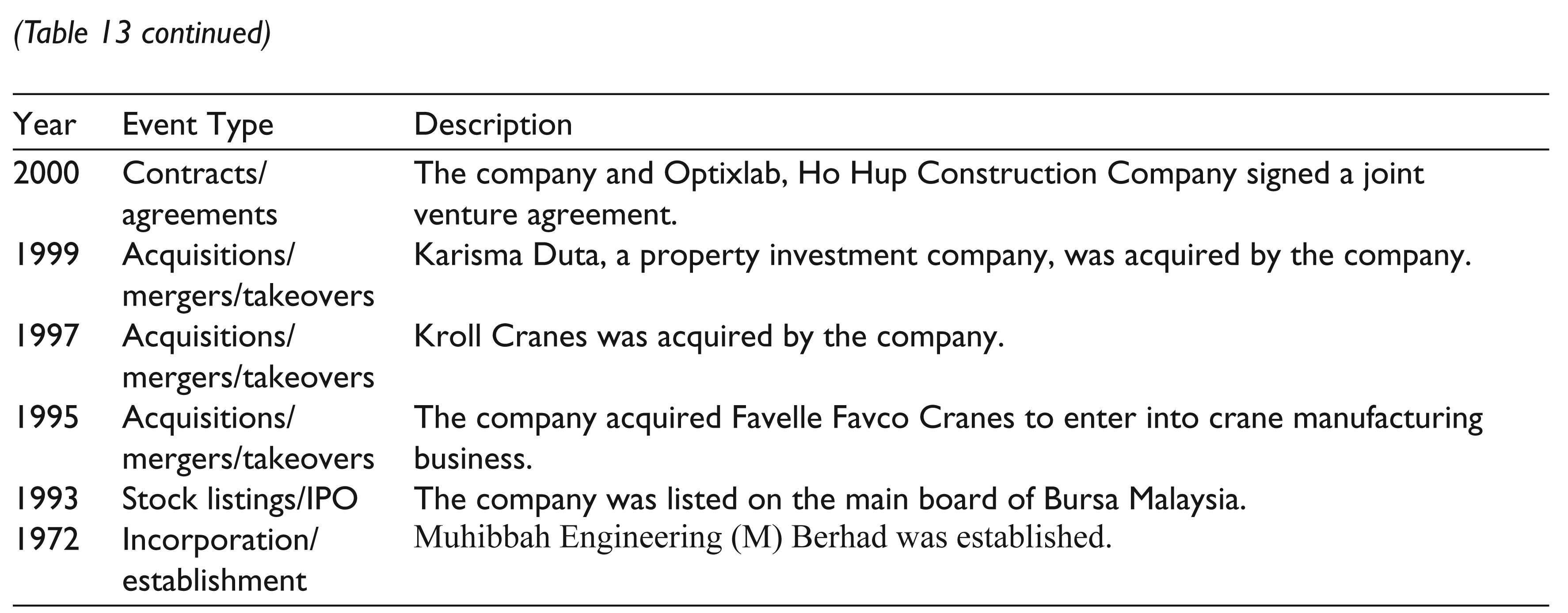
Muhibbah Engineering Bhd (MEB) was established in 1972 by a Chinese engineer, Mac Ngan Boon. With a Malay entrepreneur Mohamed Taib Ibrahim as its partner, MEB prospered and got listed on the main board of Kuala Lumpur Stock Exchange (KLSE) in 1994. Muhibbah Engineering Bhd built its presence in infrastructure, civil, marine, steel fabrication, construction of petrochemical facilities, crane manufacturing, shipyard development and airline support equipment manufacturing. The company ventured into airports and road concessionaire contracts with other construction partners for both local and overseas projects (Table 1). Muhibbah got ISO 9002 certification in 1995 in the construction sector. It also qualified for ISO 14001:2004, OHSAS 18001:2007, and API SPEC Q1 and APISPEC 2C. Guided by the vision ‘forging ahead with globalization and focussed on diversification in the pursuit of excellence’, the company has transformed itself from an ordinary engineering company to a highly specialized player in the marine engineering and construction field in the past three decades. It is among three companies worldwide with the capacity to install wind turbines, a source of renewable energy. Muhibbah Engineering Bhd is relied upon as a total service provider of design and system integration; supply of port equipment, cranes and barges; and construct a specialized airport equipment. Muhibbah is one of the public-listed companies on Bursa, Malaysia that qualify the edge-billion-ringgit club 2014 with the stock market capitalization of RM 1 billion and above on 31 March 2014 (Annual Report, 2013).
The main competitors of Muhibbah are IJM Land Bhd, IREKA Corporation Bhd, Dialog Group Bhd, Kencana Petroleum Bhd, Pembinaan Mitra Jaya Sdn, Scomi Group Bhd, Setegap Bhd, Wah Seong Corporation Bhd among others.
Business Sectors
Major Divisions of the Company
Construction and Engineering Division
Construction and marine division is the major driver of the group. It consists of civil, marine and infrastructure projects. The division is engaged in the construction of petroleum hub and bunkering facilities, marine ports, bridges and dams, airport terminals and facility support buildings, heavy concrete foundations and other similar construction works. The oil and gas (O&G) sector is among the 12 National Key Economic Areas (NKEAs) in the Economic Transformation Programme (ETP) in Malaysia. Muhibbah Petrochemical Engineering (MPE) Sdn Bhd is engaged in engineering, procurement, construction and commissioning (EPCC) of facilities for O&G, power and petrochemical industries.
Cranes Division
Cranes division is engaged in design, manufacture, supply, trading and service provider of offshore O&G pedestal cranes, tower cranes, shipyard cranes and other heavy lifting equipment cranes. The crane’s division via Favelle Favco Cranes (M) Sdn Bhd (FFCM) signed a 5-year distribution rights agreement with Karacharovsky Mechanical Plant (KMZ) in Russia to sell its cranes to the Russian market. The FFCM group designs and manufactures tower construction cranes, offshore pedestal crane, multipurpose cranes, crawler cranes and winches. Favco cranes were used to build world’s tallest buildings such as Petronas Twin Tower (Malaysia), World Trade Twin Tower (USA) and many others. Muhibbah is one of the top 10 crane manufacturers in the world.
Shipyard Division
Muhibbah Marine Engineering (MME), a wholly owned subsidiary of MEB, is involved in shipbuilding, conversion and repair. It is involved in the design, engineering, and building and providing service of anchor handling tug boats, supply vessels mainly for the offshore O&G exploration and production works. It has got a dry dock facility and maintaining existing Muhibbah’s fleet of specialized marine engineering equipment.
Muhibbah Steel Industries (MSI) undertakes structural steel works including construction of steel jackets, topsides trestle trusses, steel pipes, aircraft workshop hanger, cement silos and steel roof trusses.
Concession Contract Division
Concession contract division is mainly engaged in international airports and federal roads. Concession contract division represents revenue generated from Societe Concessionnaire de l’aéroport (SCA) and road care (M) Sdn Bhd (road care). Societe Concessionnaire de l’aéroport secured 25 years concession to develop and manage the three airports in Cambodia—Phnom Penh International Airport, Siem Reap-Angkor International Airport and Sihanoukville International Airport as well as 15 years road concession for the maintenance of the federal roads in Malaysia.
Petrochemical
Muhibbah Petrochemical Engineering was set up to provide engineering and construction facilities for the O&G, petrochemical and other process industries.
Specialized Airport Equipment
Muhibbah Airline Support Industries (MASI) is specialized in designing and manufacturing of aircraft passenger boarding bridges and Aircraft Parking Guiding System (APGS).
Corporate Organizational Development
In 2005, MEB expanded its business into the wireless industry by subscribing for 40.60 per cent equity interest in Bsmart Technology Sdn Bhd and Bsmart solutions Sdn Bhd (BSMART). BSMART is a supplier and also subcontractor of ITS Konsortium Sdn Bhd, a subsidiary of MEB involved in the integrated transport information system. BSMART provides innovative wireless services such as proactive anti-car theft services, advanced bus monitoring services, intelligent automated taxi dispatching services and commercial vehicle operation automation services. In December 2012, the company bought the design, business and assets of CiTECH Energy Recovery Systems UK (CiTECH) from Tanjung CiTECH offshore Bhd for UK pounds 460,000 (1 GB Pound = 5.6 RM). CiTECH was a manufacturer of a package waste heat recovery systems for the offshore platform O&G market.
As of 15 May 2014, the group’s total outstanding order books stand at approximately RM 1.86 billion, out of which 49 per cent come from construction and engineering, 31 per cent from the cranes and 20 per cent from shipyard division. Approximately, 60 per cent of the total outstanding order books are from works related to the global O&G industry. In 2013, Tan Sri Zakaria bin Abdul Hamid took over as chairman of board of directors of Muhibbah from Tuan Haji Mohamed Taib bin Ibrahim, who had been the chairman for 42 years.
Financials of Muhibbah
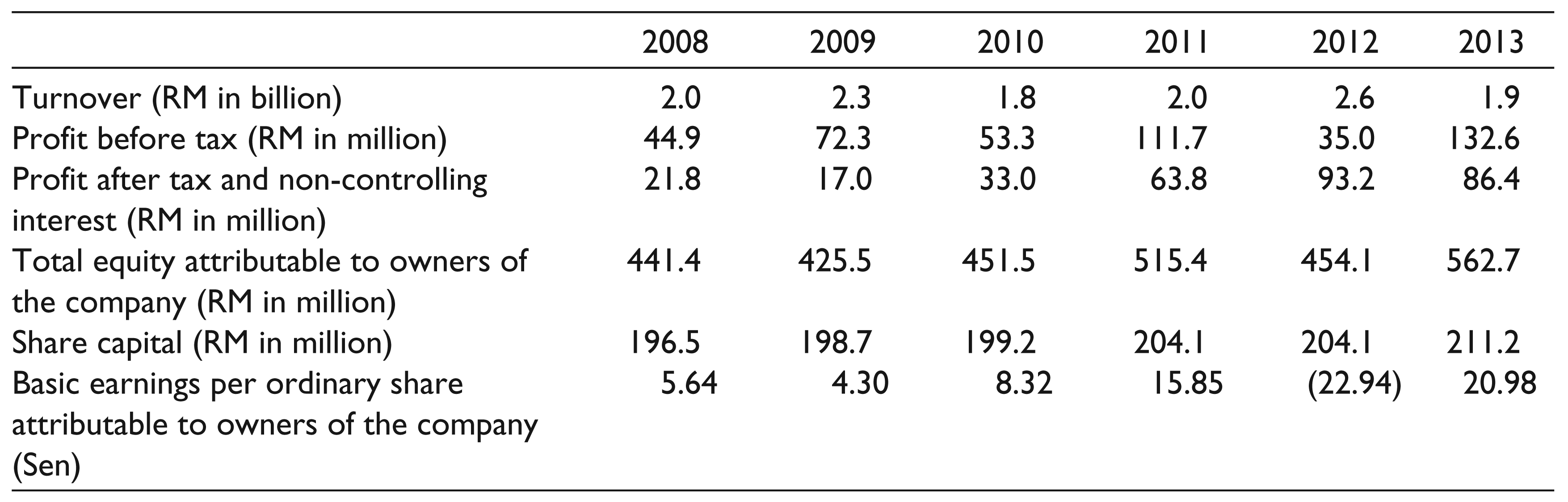
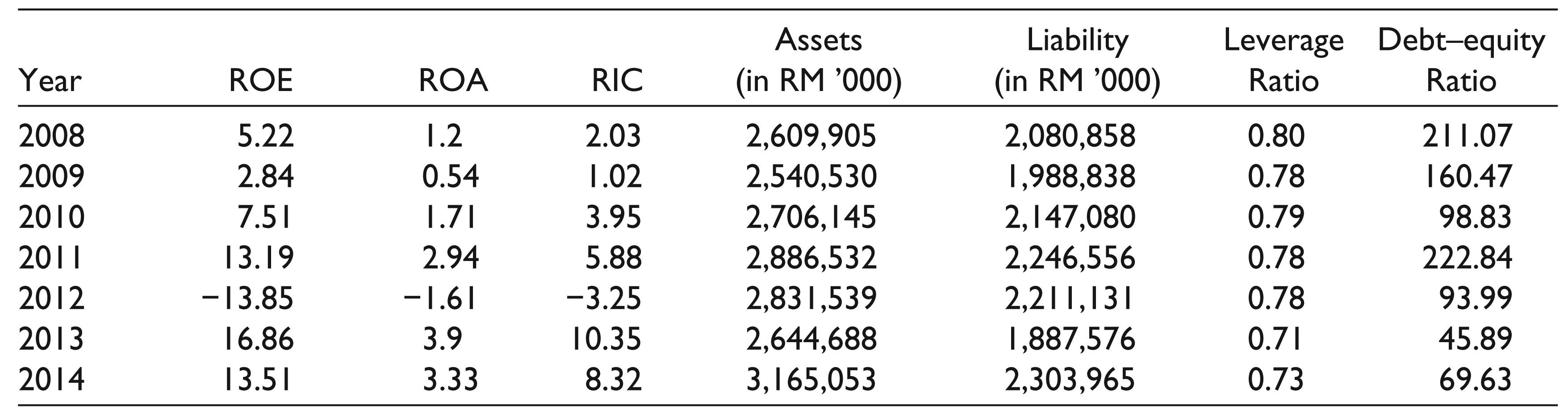
Muhibbah’s turnover has increased from RM 1.1 billion in 2006 to RM 2.3 billion in 2009, but fallen to RM 1.8 billion in 2010 but increased to RM 2.6 billion in 2012 and fallen again to RM 1.9 billion in 2013 (Table 2). Profit after tax and non-controlling interest has fallen from RM 70 million in 2007 to RM 17 million but increased significantly to RM 63.8 million in 2011. However, there was a loss of RM 93.2 million in 2012 owing to which the group made a full provision of the remaining net exposure of debt of RM 245 million for Asia Petroleum Hub (APH). Basic earnings per ordinary share have increased to 0.15 (from 0.08 previous year) in 2011, but there were negative earnings per share in 2012 due to the same reason as mentioned earlier. Return on equity (ROE) was −13.85 in 2012 but improved significantly to 16.86 in 2013 (Table 3). Return on assets (ROA) and return on capital investment (RCI) were high in 2013. The debt–equity ratio has fallen from its peak of 160.47 per cent in 2008 to 45.89 per cent in 2013 but increased to 69.63 per cent in 2014. A comparison of the performance of Muhibbah engineering with other companies in the construction sector is given in Figures 1–3. It can be seen from tables that performance of Muhibbah was below most of the companies listed in the tables in terms of ROE, ROA and RIC. Some of the companies, such as Mudajaya Group, WCT Holdings, Ajiya Bhd, Astino Bhd, Dominate Enterprises, Gamuda, Lafarge and ENGTEX Group Bhd, have shown better performance.
Financial Highlights of Muhibbah Group
Performance of Muhibbah Engineering
The company recorded a market capitalization of US$253 million in 2015, which was lower than its close competitors, Wah Seong Corporation Bhd and Dialog Group Bhd, which recorded market capitalization of US$311 million and US$2,730 million, respectively. The price/earnings ratio (P/E ratio) of Muhibbah was 9.58, which was lower than that of Wah Seong Corporation (31.48), Scomi Group Bhd (54.68) and Dialog Group Bhd (45.18) in 2015. The operating margin of Muhibbah was 4.44 per cent that was less than that of Wah Seong (4.8 per cent), Scomi (7.49 per cent) and Dialog (9 per cent) in 2013. Return on equity of Muhibbah was 15.4 per cent in 2013, which was above that of Dialog (14.3 per cent), Wah Seong (3.3 per cent and Scomi (−11.1 per cent). The debt–equity ratio of Muhibbah was 0.46 that was less than that of Wah Seong (1.09), Scomi (1.63) and Dialog (0.59) in 2013. These figures have been downloaded from the World Market Intelligence (WMI), reported by Pro Quest on 22 March 2015.
Mergers, Acquisition and Joint Ventures for Global Diversification and Growth
Muhibbah acquired FFC, an Australian tower crane manufacturer in 1995 through its wholly owned subsidiary Maxi Impact Sdn Bhd. The acquisition included all the assets and business and its Singapore entity Favelle Favco (SEA) Pte Ltd. The acquisition would streamline and rationalize operations of the companies of Australia, Singapore and Malaysia to better serve the existing and future customer of Favco cranes. Since the acquisition of Favelle Favco, an office and manufacturing facilities were set up in USA. They built in Malaysia TD 133 tower crane, which is a new design targeted at the conventional market for standard construction use. It then bought the Manitex offshore crane business from Manitowoc in 1996 and Danish tower crane manufacturer Kroll in 1997 for US$2.6 million. Until the Kroll deal, Muhibbah’s tower crane concerns concentrated on the design, manufacture and supply of Australian made Favelle Favco diesel-hydraulic and electric-hydraulic luffing boom tower cranes. The Kroll acquisition added a line of all-electric hammerhead cranes, including pedestal, ship, wharf and special purpose cranes. The Kroll crane range includes the world’s largest tower cranes with lift capacities of 10,000 tm. Muhibbah acquired a 57.4 per cent stake in Rolf Knigge GmbH of Germany, which specializes in manufacturing paper conversion and laminating machines. The acquisition was made to complements the group’s paper conversion business, which is undertaken by its subsidiary Ann Bee (Malaysia) Sdn Bhd. The company acquired Karisma Duta, a property investment company in 1999. Cambodia Land and Delta Field from Bumiputra-Commerce Corporation Services were acquired by MEB the company in 2007. Muhibbah acquired a 35 per cent interest in Freyssinet PSC (Malaysia) Sdn Bhd, which manufactures pre-stressed concrete structures. Muhibbah entered into a 50:50 joint venture with Monadelphous Group Ltd via Monadelphous Muhibbah Marine JV (MMIMJV) and got a contract of RM 1.24 billion for the construction of the approach jetty and ship berth and ship loader associated with the Wiggins Island Coal Export Terminal Pty Ltd (WICET) project at Gladstone in Queensland, Australia. In 2013, the company vide Muhibbah–SV–Samjung consortium, a tri-party joint venture with Samjung of Korea and SV Teknik of Malaysia lead by Muhibbah was awarded a contract by the Mass Rapid Transit Corporation Sdn Bhd for the design, supply, installation, testing and commissioning of noise barriers and enclosures for RM 202 million. During the financial year ended 31 December 2012, the company got the design, business and assets of CiTECH energy recovery systems UK (CiTECH) from Tanjung CiTECH offshore Bhd for GBP 460,000 (1 GBP = RM 5.6).
Change Initiative at Muhibbah Engineering (M)
In the year 2012, the turnover of Muhibbah engineering jumped to RM 2.63 billion, an increase of 29.6 per cent over 2011. However, the group reported an after-tax loss of RM 82.5 million in 2012. This is because the group made a full provision of the remaining net exposure of debt of RM 245 million for APH during the financial year 2012.
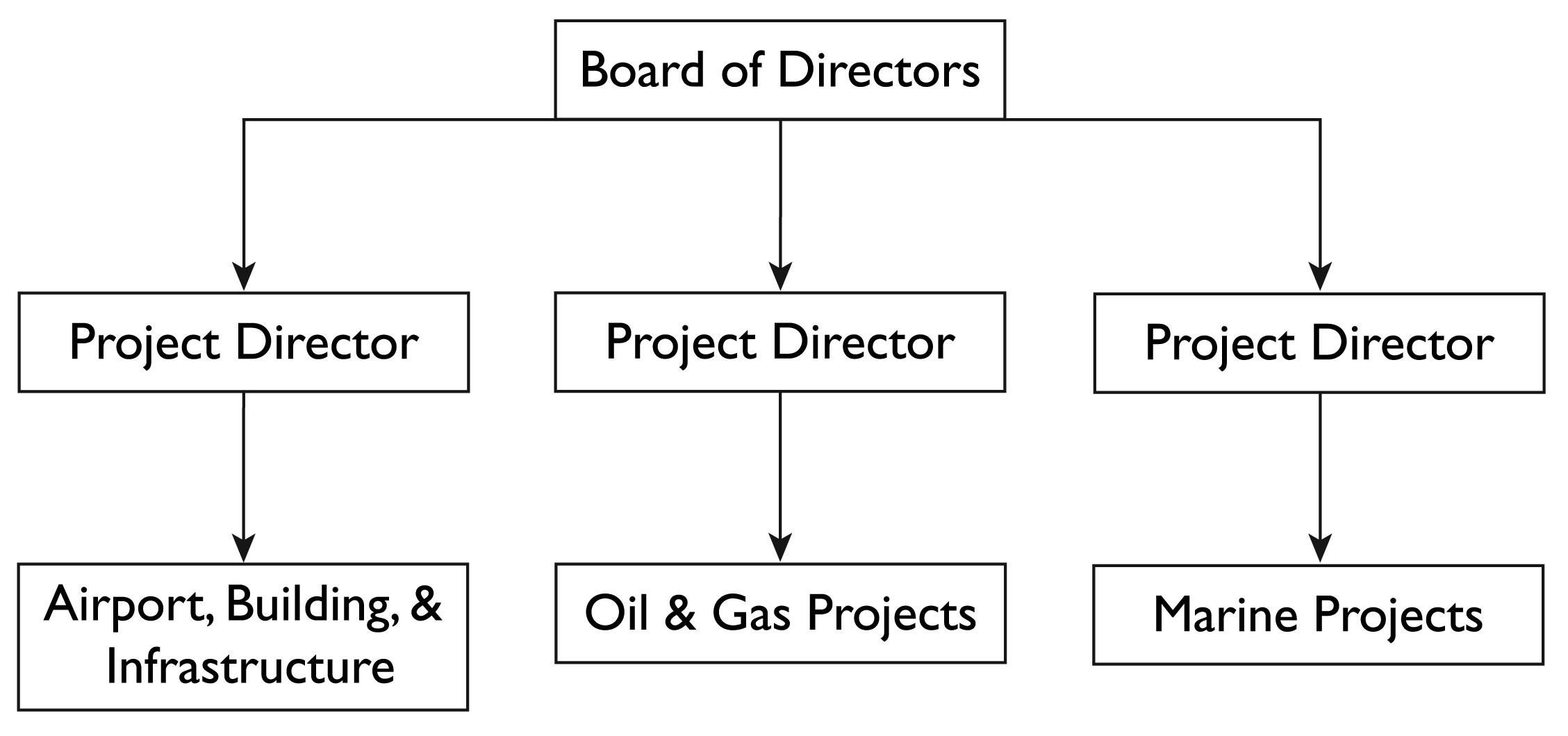
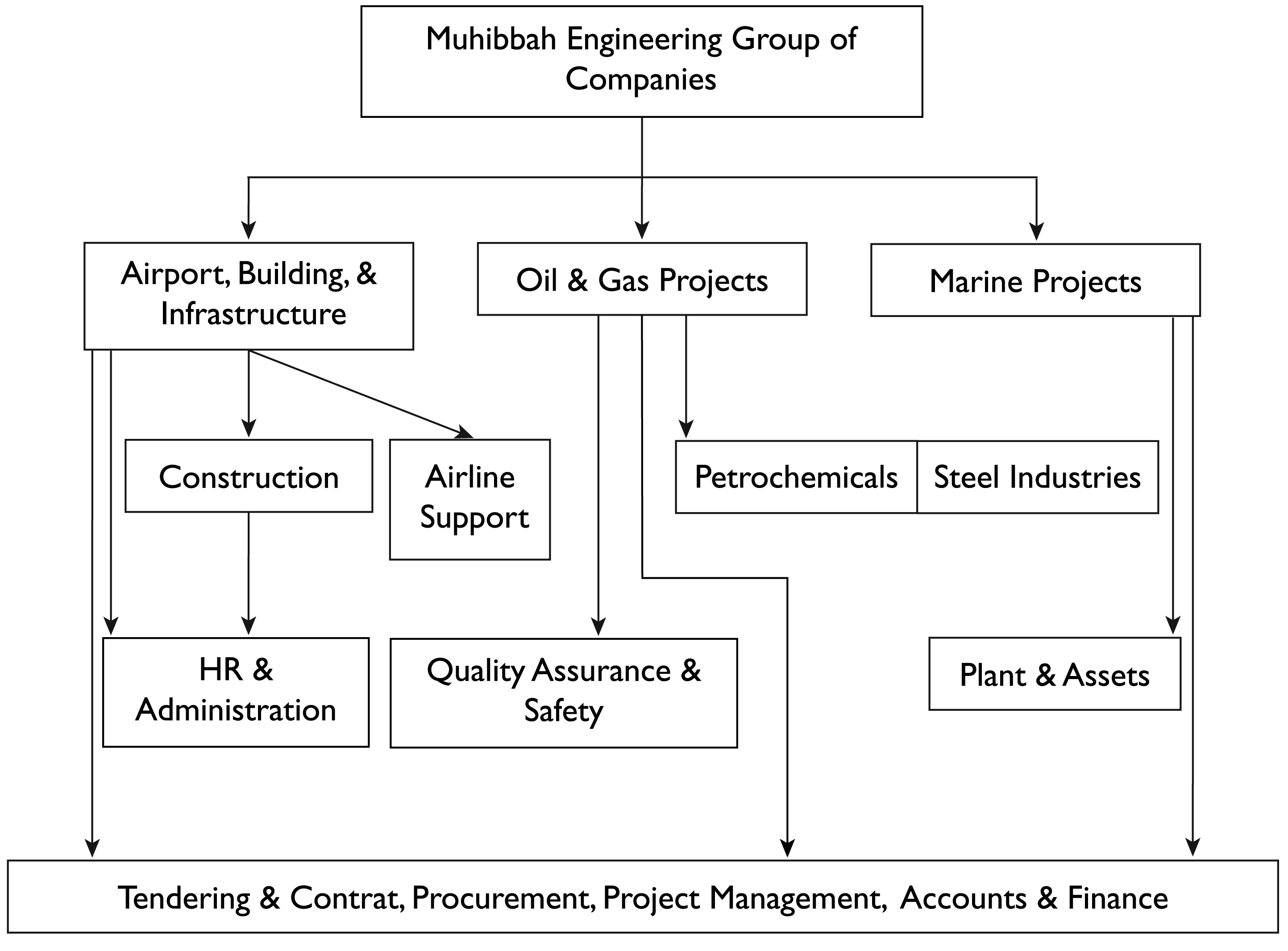
The loss in APH project in 2012 had triggered change initiative at Muhibbah. Mac Ngan Boon, the managing director of Muhibbah Engineering (M) has made a structural change in the organization. He recast the business into three groups—airport, building and infrastructure (ABI), O&G projects and marine projects. Each group was headed by a project director with independent responsibility (see Figure 1). Mac Ngan Boon offered 1 million shares of Muhibbah to each of the three directors as an incentive to make them compete with global players. The core process human resource (HR) and administration and information technology (IT) were put under the supervision of ABI division, quality assurance and safety were under O&G division, and plant and assets were under marine division. Tendering and contracts, procurements, project management accounts and finance were under the combined supervision of all the three divisions (Figure 2).
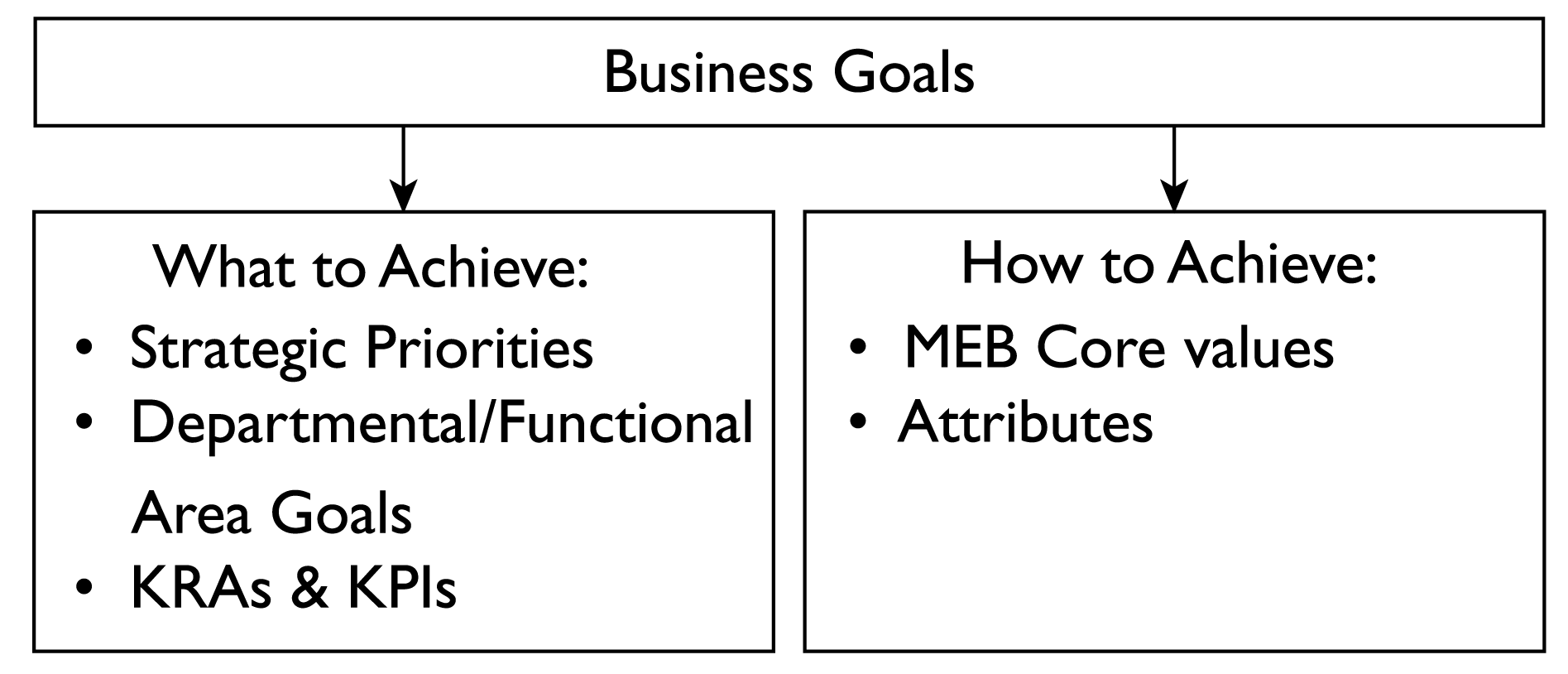
Mac Ngan Boon, managing director, wanted to introduce far-reaching changes to energize employees in the company. He convened a meeting of senior managers to discuss a new system to streamline policies of the company and new guidelines to improve the quality of human capital. It was decided that the HR team would come up with a new idea and prepare a comprehensive guideline for the improvement of the existing system and development of employees. The HR department consists of experienced and professional people drawn from internal and other multinational companies. The head of the HR department proposed a new performance management system (PMS) for the company and received the support of the managing director. The new PMS had mainly four components–performance management system guidelines; MEB business and project key results areas (KRAs) and key performance indicators (KPIs); employees’ critical areas attributes, and performance appraisal form. It introduced self-appraisal process and appraisal by the divisional head in the individual performance appraisal report. Performance-based promotion and incentive were introduced, so that an individual may stretch to achieve. Under PMS, clear indication was given of ‘what is to be achieved’ and ‘how it is to be achieved’. Strategic priorities, departmental and functional area goals, KRAs and KPIs are to be achieved while maintaining the core values of the company (see Figure 3). It would also measure employees’ critical area attributes by observing their routine key actions and reactions in achieving the results. Key attributes of employees were personality management, connectivity and exploration.
The HR department has embarked on an initiative to define the KRAs and KPIs needed for different roles and functions and competencies needed to achieve them.3 They help the individual functional group to set specific, measurable, achievable, relevant and time-bound (SMART) goals.
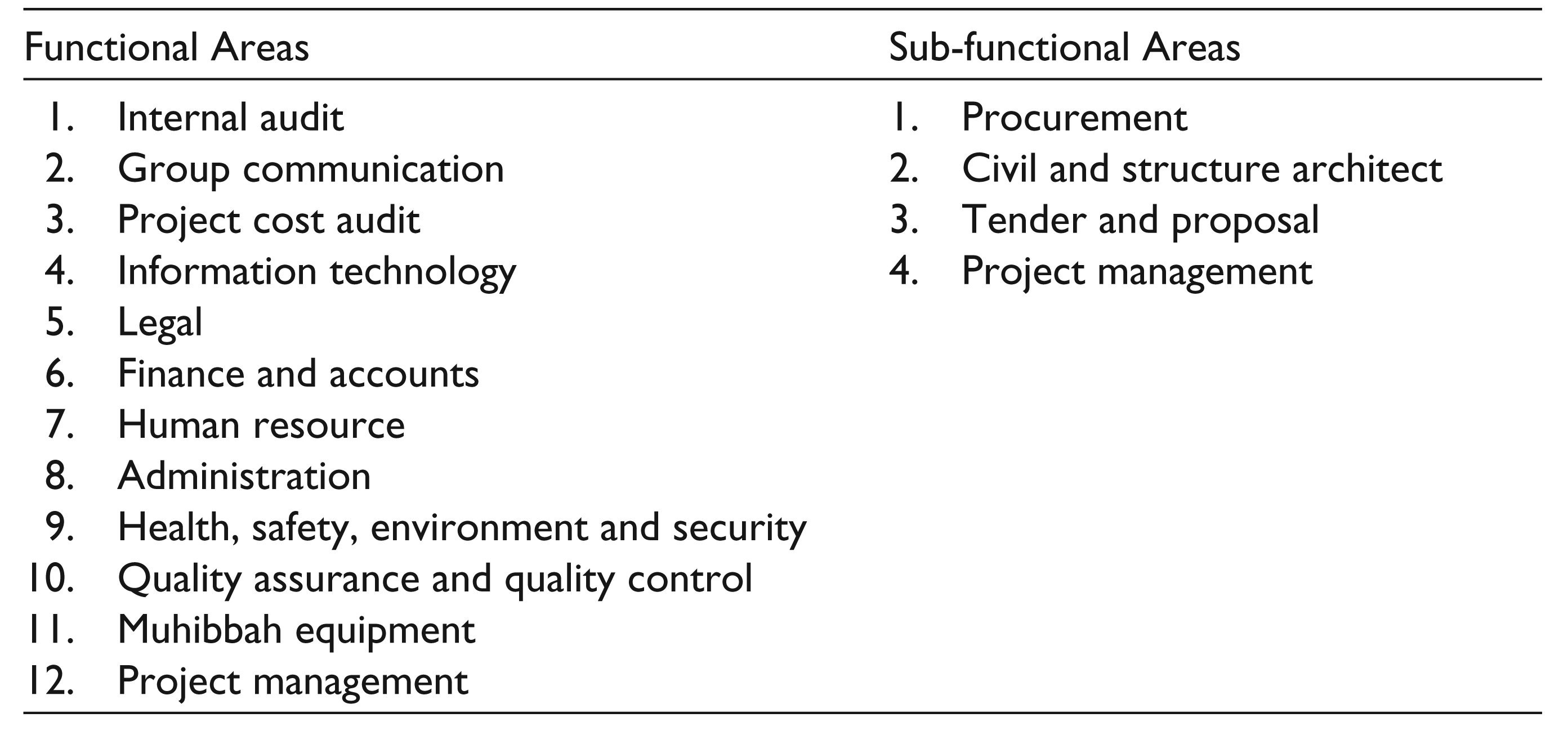
Key result areas are the functions of the job. They define the areas in which the employees are expected to focus on his efforts and important results those employees must achieve. Key performance indicators are the specific measurement of achievements in terms of quantity, quality, cost, timeliness and safety. There are 12 functional areas and 4 sub-functional areas (see Table 4). Under each functional area, KRAs and KPIs are proposed and KPIs corresponding to KRAs are expected to achieve.
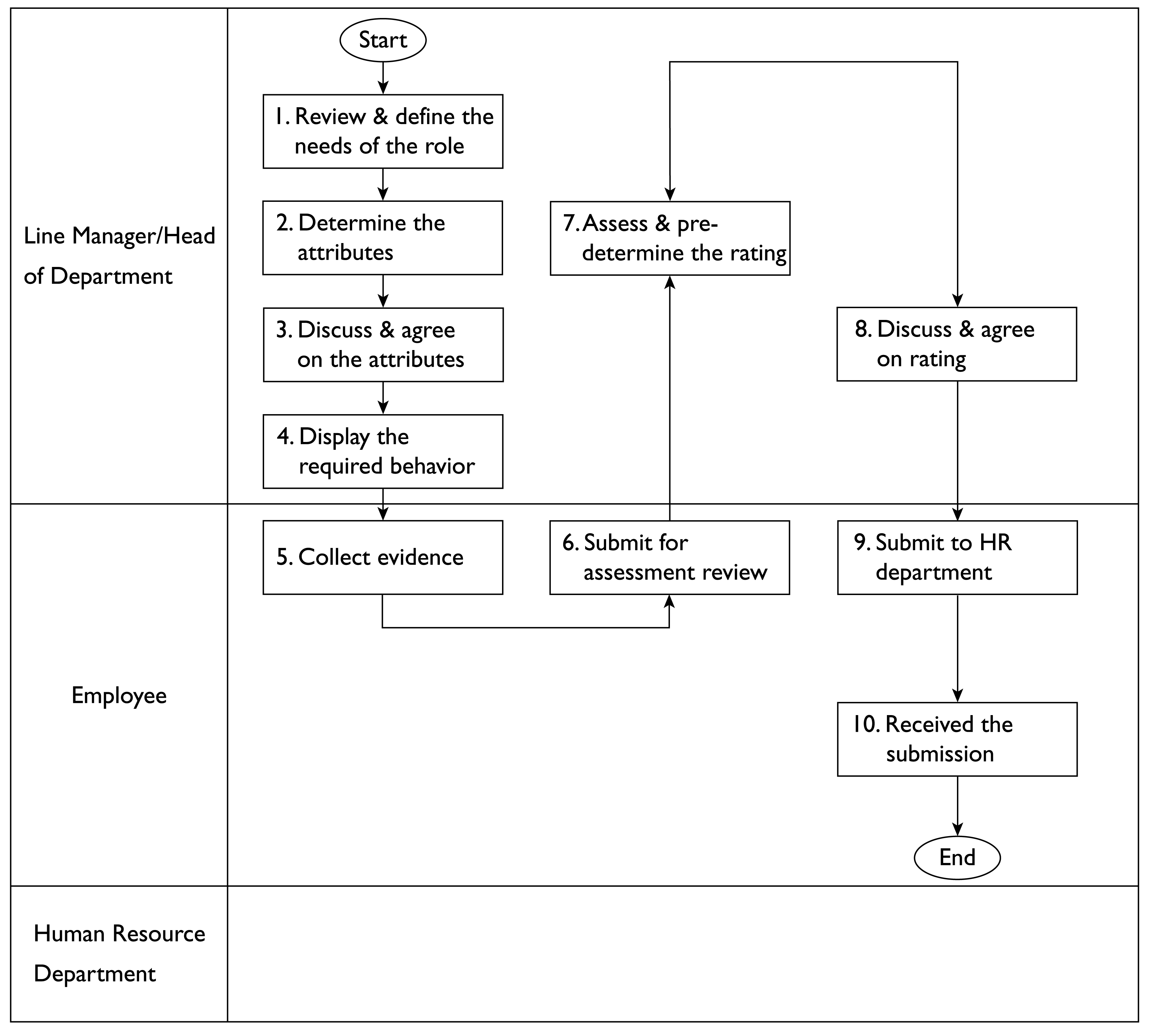
The employee’s critical attributes framework is to help identify the skills and behaviours of the employees to do their jobs to the highest standards (Table 5). The framework defines attributes as ‘the required behaviors to perform effectively in a given job, role and situation’(ibid). Attributes indicate how an individual meet the needs of their role. Each attribute has five sets of behaviours containing statements describing the skills, knowledge and behaviours needed to perform effectively at each level (Figure 4).
Functional Areas and Sub-functional Areas
Employees Critical Area of Attributes

Emphasizing the importance, the PMS was communicated to all employees at all levels. Mac Ngan Boon took feedback of employees about PMS, so that necessary amendments could be incorporated. Few workshops were conducted to train employees on PMS and help its implementation. Initially, few employees were apprehensive about the suitability of their existing skills to perform some of the targets given in the PMS system. The HR department arranged small group discussion to allay their fears. There were regular training programs and workshops to educate employees and improve their skills.
Senior managers were sent to executive development programs to learn new management practices around the world. They were also made aware of the ‘best practices’ employed by the global companies. Mac Ngan Boon asked directors and senior managers to speculate industry’s future in terms of technological requirements and client needs.
The company introduced employee stock ownership plans (ESOPs) as one of the incentives to make the employee feel that they are part owners of the company. Yearly performance-based bonus, education scholarships and health schemes were other benefits given to the employees. To ensure the safety and health of its employees, Muhibbah implemented best practices in accordance with the British Standard for Occupational Health and Safety Management System (OHSAS 18001).
Project cost audit department was headed by a general manager, who directly reported to the deputy CEO. The project audit department was made responsible for controlling the cost of the project against planned expenditure, to identify the irregularities and to compare the cost with selected companies as the benchmark.
Reporting directly to the board of directors, there is also an internal audit department that assesses risks across all projects, subsidiaries and business units.
Innovation and Information Technology
The company introduced a new culture of innovation and IT to create and update the repository of knowledge and technology. They adopted electronic data management system (EDMS) and process automation. For critical processes, proven software tools were adopted. The focus on innovation was to achieve quicker completion of projects. The company considered the employees as most valuable assets. The average age of about 2,500 employees was 38 years. The ratio of male to female employees was 4:1. There are more than 110 senior managers supported by over 500 engineers and other technical staff, who were trained on the job using the teamwork approach. Wherever possible, Muhibbah adopted innovative solutions to construction and other activities.
Future Strategy of the Company
The Malaysian economy is expected to grow at the rate of 5–6 per cent per annum and construction sector 9–10 per cent in the years to come. Economic Transformation Programme is expected to achieve a gross national income (GNI) of RM 1.7 trillion (US$523 billion) by 2020. Oil, gas and energy (OGE), one of the four largest NKEAs, will generate RM 241 billion by 2020 which is more than 20 per cent of GNI. Muhibbah expects its fair share of the growth of the economy and OGE sector. The launch of Refinery and Petrochemical Integrated Development (RAPID) project would enable Malaysia to become a major global player in the O&G downstream industry. Economic Transformation Programme has given high priority to O&G sector to make Malaysia hub of Asia Pacific O&G by 2020. Muhibbah as a player to many of the projects related to OGE could take this opportunity to grow faster and achieve high income for the company.
Teaching Aids and Background Reading
To facilitate the discussion about change management at Muhibbah Engineering (Tables 6–13), see Beer and Nohria (2000) and Kotter (1995).
ROE: Comparison with Other Engineering Companies

ROA: Comparison with Other Engineering Companies
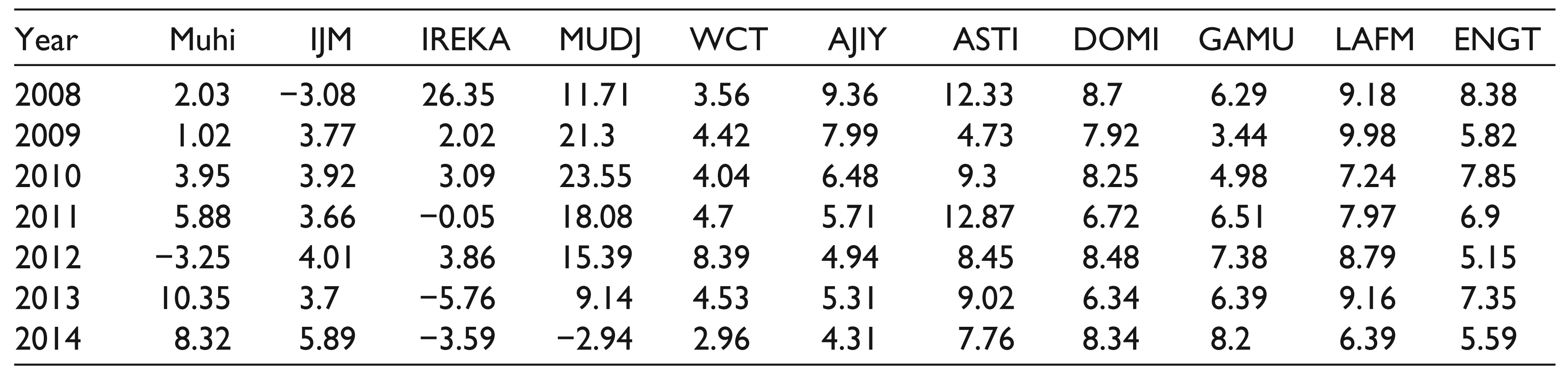
RIC: Comparison with Other Engineering Companies

Assets (in RM billion): Comparison with Other Engineering Companies
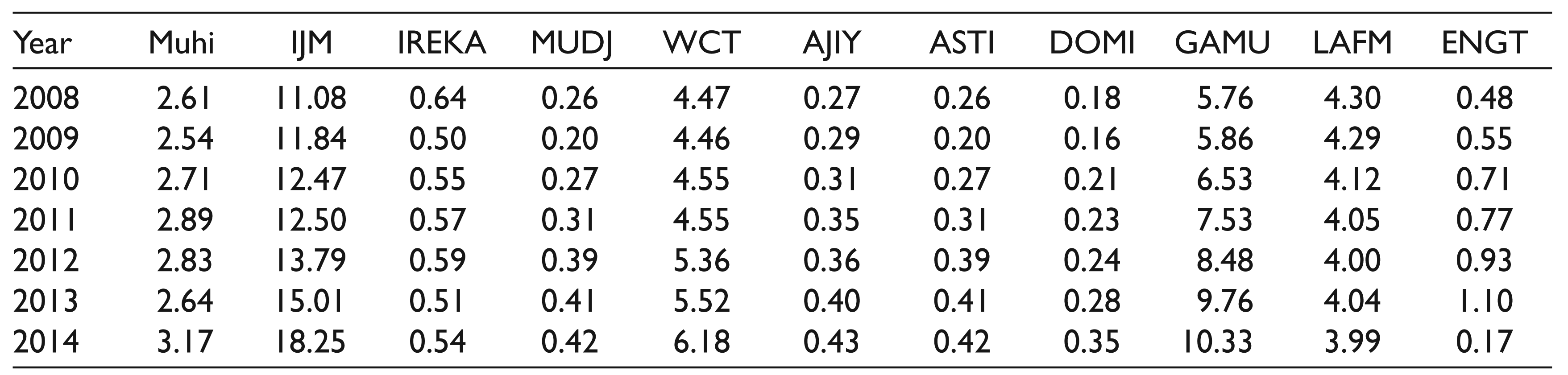
Leverage Ratio: Comparison with Other Engineering Companies
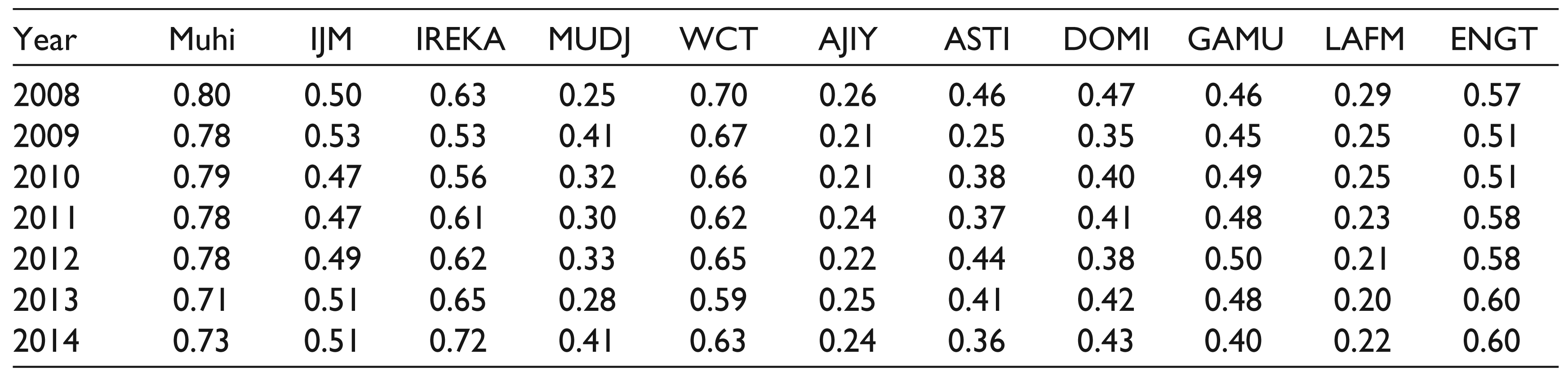
Debt Equity Ratio: Comparison with Other Engineering Companies

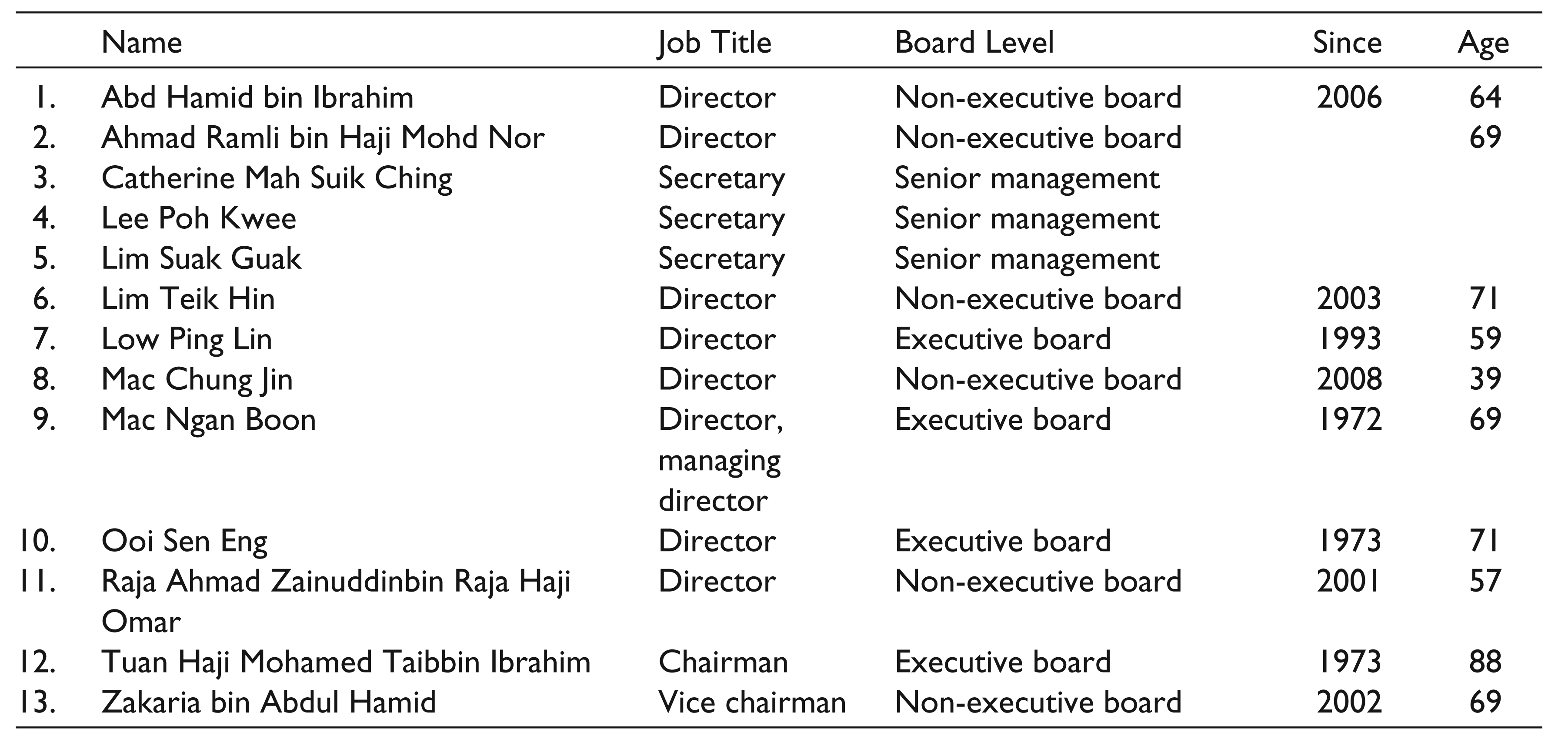
Muhibbah Engineering (M) Bhd-Key Employees
Muhibbah Engineering (M) Bhd-key Events

Footnotes
Acknowledgements
The case study is funded by Othman Yeop Abdullah Graduate School of Business and the authors acknowledge the professional guidance received from the Dean, administrative help provided by Noorhana Binti Ramli and other staff members. Authors acknowledge the professional help extended by Sekar Gopal, DBA student at Kuala Lumpur.
The authors are indebted to two anonymous reviewers for their constructive comments that helped improve the manuscript.