Abstract
In this Fourth Industrial Revolution (4IR), sustainable development for business firms depends on maintaining sustained performance and environmental sustainability to a great extent. The current study discovers the impact of green supply chain management (GSCM) practices on business performance and the environmental sustainability of a developing country, Bangladesh. Cost and profit are the two important indicators of business performance. On the other hand, environmental sustainability is expressed by waste disposal, resource consumption, and greenhouse gas emission. Primary data were collected through the distribution of web links and direct interaction with the participants of different firms practicing GSCM practices in Bangladesh. A structured questionnaire was used for data collection. Hypotheses were formulated and evaluated accordingly. This study found that the impact of implementation of GSCM practices differs with respect to cost, profit, waste disposal, resource consumption, and greenhouse gas emission. GSCM practices have a statistically significant impact on cost, waste disposal, resource consumption, and greenhouse gas emission. The impact of GSCM practices on profit was statistically insignificant. It was found that lack of IT implementation, high cost of waste disposal, uncertainty and competition in the market, resistance to change, and lack of top management support are the major barriers to implement GSCM practices in Bangladesh.
Keywords
Introduction and Background
Supply chain management includes operations beyond its boundary involving raw material extraction and conversion, production, and delivery to wholesalers, retailers, and to final consumers (Chopra & Meindl, 2007). Supply chain management became popular in the 1980s (Lummus & Vokurka, 1999). With the rapid growth in globalization, business organizations started to maintain supply chain management for greater coordination and integration. The management of material, funds, and information ensures integration among all members involved in the supply chain. Planning, monitoring, and controlling the flow of material from product design to manufacturing to consumption and disposal add a competitive advantage for businesses (Stevens, 1989). Multinational companies need to focus on their products and services as well as the products and services of other players in the supply chain. Maintaining the supply chain increases overall profit for all members of the supply chain without compromising others’ profit. Besides, the supply chain also improves response time for customers. As a result, customers become more satisfied (Rasool et al., 2016). Based on the types and characteristics of products, different supply chains are used for maintaining harmony with product design, production, marketing, and delivery to end customers (Vonderembse et al., 2006).
The green supply chain differs from the traditional supply chain as it considers ecological impact in decision-making. All supply chain activities such as raw material extraction, production, distribution, storage, and packaging are accomplished to reduce carbon emission (Seman et al., 2012). The world is trying to address environmental problems, which is a global concern. GSCM practices contribute to solving environmental problems and improve business performance (Seman et al., 2012). Maintaining environmental sustainability is a global concern. Combating climate change is one of the goals of Sustainable Development Goals (SDGs) (Sachs, 2012). Environmental sustainability focuses on maintaining the natural resources needed for economic activities. This concept requires using renewable and non-renewable resources and reducing waste and pollution (Goodland, 1995). In 2015, among all South Asian countries, Bangladesh had the highest death rate amounting to 27.7% due to environmental risks (World Bank, 2018). Bangladesh had to pay a high price for environmental degradation.
Business activities affect environmental sustainability by emitting greenhouse gases (GHGs), yielding waste, and consuming resources. Due to business activities, public health gets affected (UNICEF, 2011). Besides, economic development and growth of trade and commerce negatively affect environmental sustainability (Aşıcı, 2013). To reduce the impact on environmental sustainability, companies are adopting GSCM practices.
Objectives of the Study
Specific objectives of this research are stated as follows:
To investigate the impact of GSCM practices on the economic performance of business and to determine the impact of GSCM practices on maintaining environmental sustainability.
Although many research studies on the green supply chain and its various aspects have been conducted over the world, only a few research studies have been conducted in Bangladesh on this topic. For this reason, this article aims at assessing the impact of green supply chain management (GSCM) practices on business performance and environmental sustainability.
Research Questions
This study has the following research questions:
Does the implementation of GSCM practices have a significant impact on business performance? Does the implementation of GSCM practices have a significant impact on environmental sustainability?
Literature Review
Significance of Maintaining Environmental Sustainability
Member states of the United Nations (UN) agreed to work to address global issues in 2000. Maintaining environmental sustainability is one of the important global issues to be addressed (Sachs, 2012). Strategies along with a model for sustainable blue economy have been introduced to maintain environmental sustainability (Jafrin et al., 2016). According to the Environmental Performance Index (EPI), Bangladesh ranked 179 among 180 countries. EPI assesses performance based on 24 indicators to rank countries. These 24 indicators are categorized into two major classes—environmental health and ecosystem vitality. It is national demand for Bangladesh to formulate policies to maintain environmental sustainability, especially to reduce GHG emission and to clean air (Wendling et al., 2018).
Environmental education for sustainability (EEFS) creates awareness among people to improve the environment. Environmental education for sustainability among people has a positive impact on environmental sustainability (Tilbury, 1995). Chapter 36 of Agenda 21 of UNESCO on education, awareness, and training also emphasizes environmental education for all. The integration of environmental and developmental concepts into education becomes essential for sustainable development. Hence, environmental regulation has a significant impact on the innovation of green technology to get a market opportunity and to survive in a highly competitive market (Lee, 2010).
Major Reasons for Destroying Environmental Sustainability and Its Effects
Climate change is scientifically related to GHGs. The most notable GHGs are carbon dioxide, methane, nitrous oxide, and hydrochlorofluorocarbon (Stern, 2008). First, people emit GHGs through production and consumption. Then GHGs get stored in the atmosphere and the stock of GHG traps heat and results in global warming (Stern, 2008).
A report on the Economic Effects of Climate Change reveals that emission of GHGs is mainly responsible for climate change. Businesses, individuals, and households are responsible for the emission of GHGs. Although low-income countries contribute less to the emission of GHGs, these countries suffer most from climate change due to GHGs (Tol, 2009). Climate change affects the global ecosystem. Using the global climate model, a simulation was conducted where humidity surface and warmth index were used as parameters for simulation of forest type. Due to climate change, the humidity surface moved upward and lost cloud contact. On the other hand, increased warmth in weather increased evapotranspiration. Jointly upward movement of humidity surface from cloud touching base and increased evapotranspiration endangered the life of many species (Still et al., 1999). Climate change affects the balance between photosynthesis and respiration (Ryan, 1991).
Countries all over the world are trying to reduce GHG emissions. In this process, countries set a target for limiting temperature rise to 2°C by 2050. If GHG emission is 1,000 GT, there is a 25% probability of exceeding temperature rise of 2°C. On the other hand, GHG emission of 1,440 GT leads to a 50% probability of exceeding temperature rise of 2°C (Meinshausen et al., 2009). Due to rapid development in economic performance, world temperature is increasing gradually. World temperature will increase by 2°C–4°C, about 30%–40% of animal species will vanish, most parts of coastal wetlands will submerge, and people will suffer from food and water shortages by 2100. The abatement of GHG emissions is a crying need for survival in a sustained world (Gupta & Palsule-Desai, 2011). Disposal of waste in various stages of supply chains has been considered as the major contributor to environmental deterioration and global warming (Kumar & Chandrakar, 2012).
Green Supply Chain Management Practices Adopted in Various Countries and Their Impact
Businesses implement the supply chain for ensuring integration, alignment of activities, and planning and coordination (Power, 2005). To cope with changing customer preferences and differences in product life cycles, different types of supply chains have emerged. A standard supply chain has emerged to deal with the changing needs of customers (Lummus & Vokurka, 1999). A traditional supply chain is a chain where all parties collectively conduct all activities from raw material extraction to manufacturing to delivery to end consumers (Beamon, 1999). The green supply chain has originated from reversed logistics as reversed logistics focuses on only one aspect of the supply chain (Van Hoek, 1999). GSCM approach considers all stakeholders of a chain and works together with various shareholders to reduce environmental impact in all activities of a chain (Sarkar, 2012). A sustainable supply chain considers environmental impact in all decisions across the chain (Gupta & Palsule-Desai, 2011). Firms adopting GSCM practices have been able to improve both business and environmental performance (Shah & Muraduzaman, 2013).
A study has been conducted by collecting data from 200 urban areas of 11 countries of Europe to analyze adaptation and mitigation plans regarding climate change. It was found that 72% of areas had no adaptation plan and 37% of areas had no mitigation plan. One-third of the cities studied had adaptation and mitigation plans along with specific targets to reduce GHG emissions. Aggregately in Europe, 27% GHG reduction can be possible by 2050. Actions taken were considered insufficient to achieve GHG reduction (Reckien et al., 2014). Manufacturing firms’ impact on the environment is classified into three classes. They are waste, energy use, and resource use. But designing a green supply chain is difficult (Beamon, 1999). Sarkis (2003) suggested a framework for the improvement and management of the green supply chain.
The adoption of GSCM practices enables manufacturing firms to achieve a balance between environmental performance and economic development and performance (Zhu & Sarkis, 2004). Environmental performance and economic performance can also be developed by ensuring a long-term buyer–supplier relationship which results in adopting a green supply chain (Kumar & Chandrakar, 2012). Firms focus on identifying green suppliers while developing relationships and selecting suppliers because green suppliers ensure commitment to adopting GSCM practices. Besides, green suppliers emphasize reducing, recycling, and reusing materials and resources used for production through proper design. Green suppliers also ensure the reduction of toxic element use and abide by environmental laws (Kannan et al., 2014). Therefore, trust and relationship with suppliers ensure environmental sustainability (Chin et al., 2015).
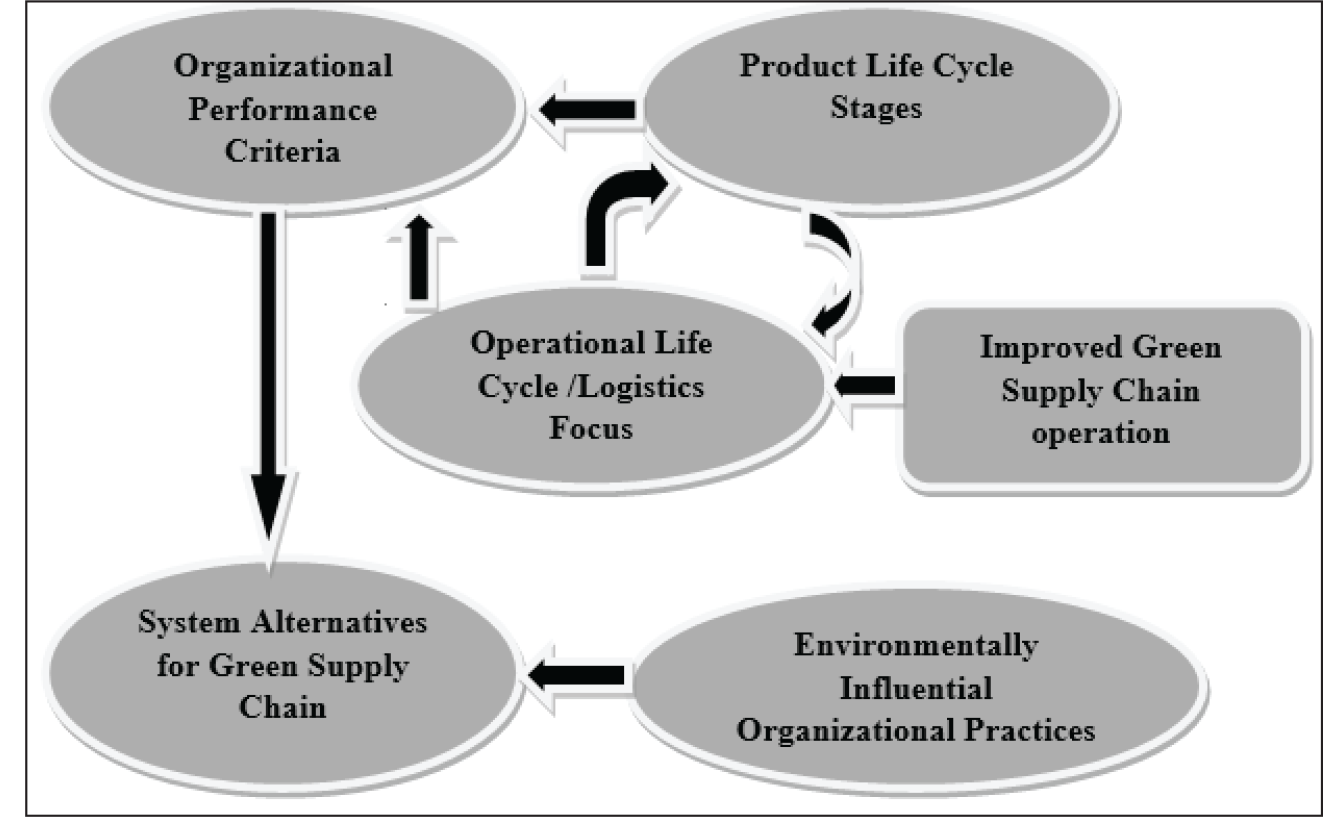
There are five areas where purchasing decisions contribute to improving environmental practices in the supply chain. These are eco-friendly material for product design, processes for product design, value-added supplier processes, supplier evaluation before selection, and inbound-logistics. Strong management commitment and taking proactive actions to environmental practices have a positive impact on the environment (Walton et al., 1998).
A case study has been conducted on Hyundai Motor Company to investigate the integration of carbon footprint into the supply chain of the automobile industry. Identification and measurement is the first step to mitigating the carbon footprint in the supply chain (Lee, 2010). Another study identified five enablers of the green supply chain in the Indian textile industry using interpretive structural modeling. These enablers influence suppliers to adopt GSCM practices. These enablers are applying green practices in the supply chain, taking economic welfare initiatives for communities, setting and complying with safety standards, considering health and safety issues, and ensuring employment stability (Diabat et al., 2014). Consumers, pressure from competitors, government regulations, and internal management are major motivational factors for adopting GSCM practices in Korea (Choi et al., 2017). Another study on suppliers of shipbuilding companies reveals that social responsibility awareness among business organizations, gaining competitive advantage, and abilities to adopt green practices drive suppliers to participate in GSCM practices (Caniëls et al., 2016). Besides, pressure from customers inspires producers to motivate suppliers in adopting green manufacturing practices and it positively affects environmental issues. In contrast, maintaining collaboration with customers positively affects the financial results of business (Laari et al., 2016).
Business organizations affect the environment by consuming resources randomly and pollute the elements of the environment. Hence, governmental regulation and customer issues force them to incorporate environmental issues into decisions. Environmentally conscious manufacturing in product design, material selection, production, and supply of an end product to customer premises improve environmental performance (Gungor & Gupta, 1999). Environmental collaboration with suppliers encourages business organizations to invest in technologies for pollution prevention (Vachon, 2007). A comparative study has been conducted on some Japanese and Chinese manufacturing firms to determine the correlation between consciousness about environmental protocols and their subsequent impact on the implementation of GSCM practices. Sample organizations have been classified into three classes. It has been found that awareness of environmental regulation has different levels of impact on different groups of organizations (Zhu et al., 2017).
Companies can profitably reduce GHG emissions both directly and indirectly. Firms encourage supply chain partners, especially suppliers and customers, to work on reducing GHG emissions by offering rewards, collaborative initiatives, and integrating vertically. A case study on Walmart discloses that energy efficiency yields profit for Walmart through cost reduction. Walmart also contributes to the reduction of GHG emission of of 400,000 tons. Energy efficiency in turn increases revenue. Due to the supply of green products, Walmart is now able to charge a higher price to its customers. Companies of the electric and electronics industry situated in Taiwan and the USA adopted GSCM practices to comply with social and environmental pressures. Agents of this industry focus on securing GSCM certification and invest in GSCM to improve their manufacturing performance (Plambeck, 2012).
A study has been conducted on Chinese manufacturing companies to assess the impact of GSCM practices on performance. Using structural equation modeling, a comprehensive model has been theorized and assessed, which links GSCM practices with suppliers and customers (Green et al., 2012). Firms should adopt environmental sustainability as their mission. By incorporating environmental sustainability in strategic decisions, management cascades goals for developing processes and delivering products (Green et al., 2012). Employees trained in green practices enable organizations to reduce obstacles in implementing GSCM practices, especially in green purchasing. Besides, green training leads to maintaining a good relationship with customers and suppliers and to improve organizations’ environmental performance (Teixeira et al., 2016). A study has been directed at employees of Malaysian companies to assess their perception of GSCM practices on environmental performance. Five GSCM variables have been identified and their impact on the environment has been measured. Variables are rules and protocols, environmentally friendly production, environmentally friendly packaging, reverse flow of logistics, and environmentally friendly purchasing. Among these variables, only rules and protocols have a significant impact on the improvement of environmental performance (Jaaffar & Kaman, 2020).
Firms should identify the critical points in the supply chain. Critical points indicate where the environment has the greatest burden and what should be improved. Then firms need to identify their position in the supply chain and determine the best responsive practices (Zhu et al., 2019). Innovation in goods and processes to produce the goods contribute to better implementation of GSCM (Zhu et al., 2019). Trained staff, top management support, maturity, and nature of the relationship among supply chain parties and size of the organization have a significant impact on GSCM implementation (Agi & Nishant, 2017; Singh et al., 2016). But due to cost implications, incompatible administrative culture and policies, absence of proper technology, and improper knowledge, firms face obstacles in implementing GSCM (Kumar et al., 2018; Rahman et al., 2019).
Due to globalization and intense competition, organizations relying only on profit face difficulties in long-run survival. Therefore, today, organizations need to take care of people and the planet. GSCM practices enable businesses to take care of all these factors: profit, people, and the planet.
Research Model for the Study
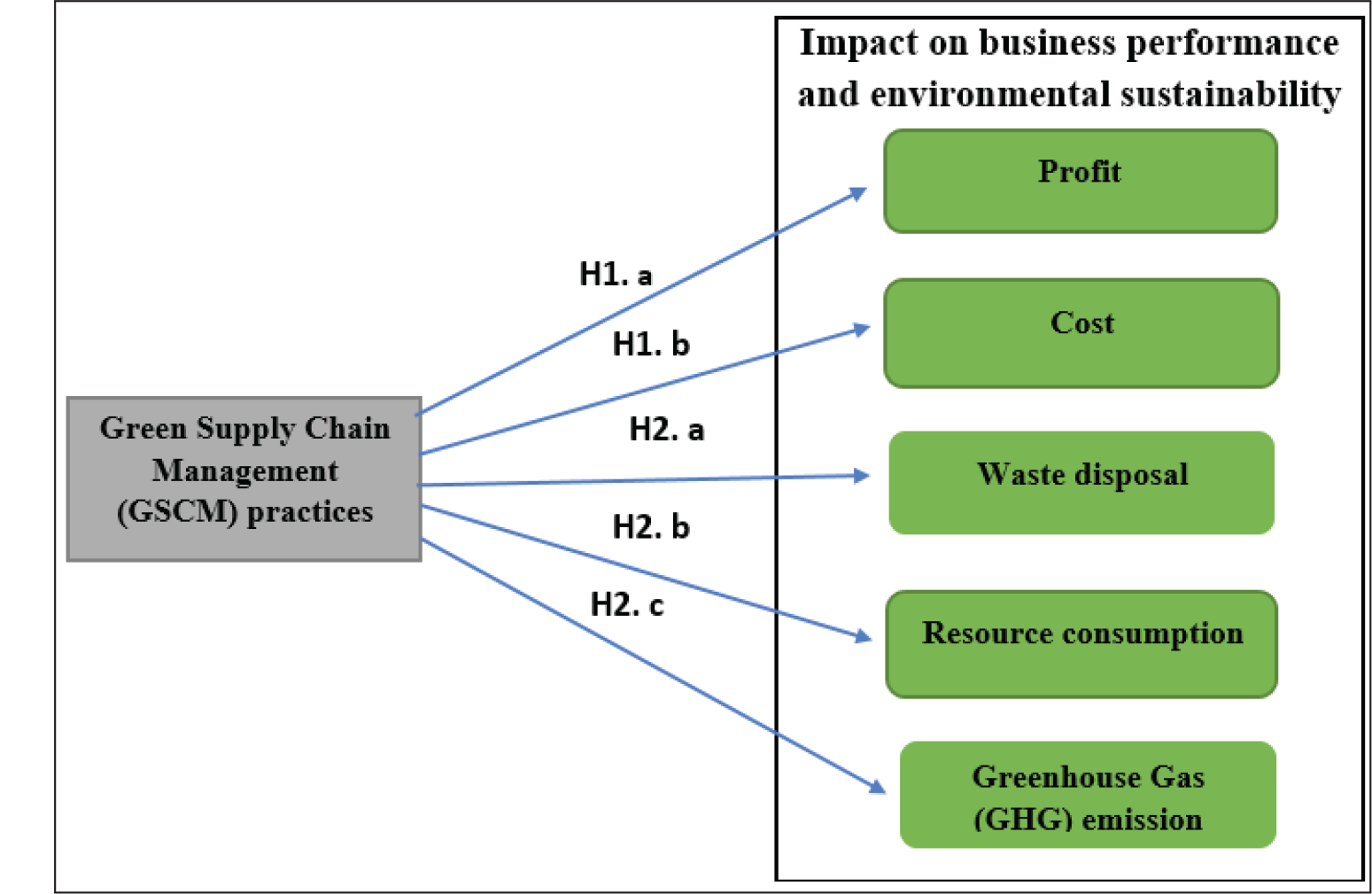
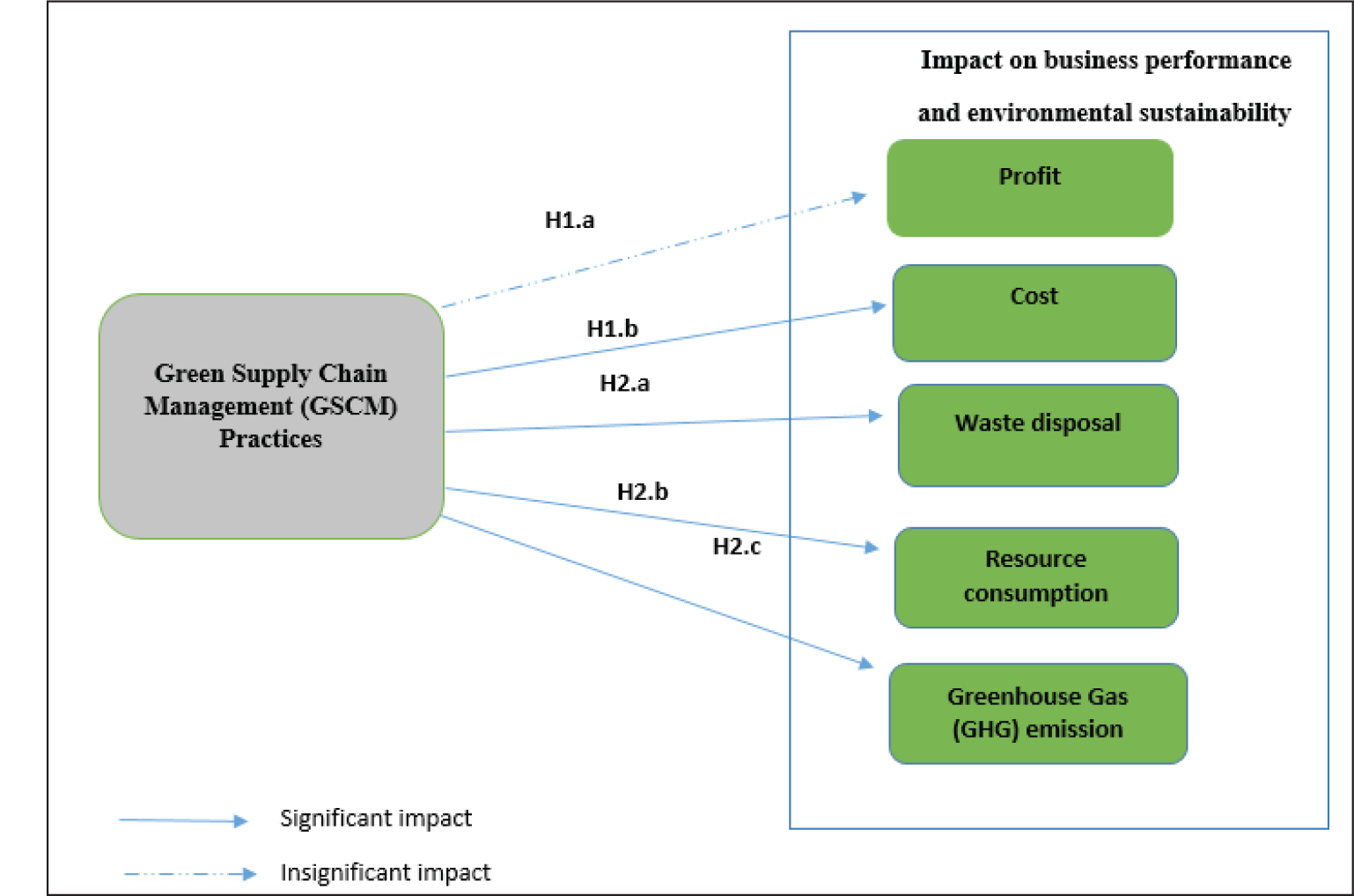
Based on the pieces of literature reviewed, a conceptual model is developed for answering the following research questions.
Does the implementation of GSCM practices have a significant impact on cost? Does the implementation of GSCM practices have a significant impact on profit? Does the implementation of GSCM practices have a significant impact on waste disposal? Does the implementation of GSCM practices have a significant impact on resource consumption? Does the implementation of GSCM practices have a significant impact on GHG emissions?

Hypothesis Development
Green Supply Chain Management Practices
GSCM practices are internal environmental management, green purchasing, collaboration with customers, investment recovery, and eco-design (Green et al., 2012; Zhu & Sarkis, 2006). GSCM practices have been classified into three classes based on practices for the upstream partners, practices for the focal company, and practices for the downstream partners. Environmentally friendly purchasing and collaboration with customers, suppliers, and product designers are applicable for upstream players of the supply chain (Azevedo et al., 2011). Focal firms emphasize minimizing waste disposal, using toxic elements, and ensuring ISO 14001 certification. Reverse logistics, environmentally friendly packaging, and collaboration with customers apply to downstream players. Green supply chain incorporates environmental thinking in all activities including material sourcing, manufacturing, delivery to customers, and management of end products (Srivastava, 2007). GSCM practices are adopted to improve financial performance and environmental performance (Zhu & Sarkis, 2004).
Economic Performance of Business
Economic performance is measured by the profit and cost of goods sold by firms. Implementation of environmental practices, especially purchasing, leads to improvement in economic performance (Carter et al., 2000). A green supply chain helps firms reduce costs and eliminate the most costly activities of the business (Rao & Holt, 2005). Eco-design and internal environmental management have a significant impact on economic and environmental performance (Kumar & Chandrakar, 2012). A study in India revealed that the adoption of GSCM practices contributes to the development of environmentally conscious products. Indirectly, these environmentally conscious products result in improvement in a competitive position and economic performance. Therefore, there exists a positive relationship between GSCM practices and the improvement of economic performance (Mitra & Datta, 2014). But based on the nature and type of industry, the relationship between GSCM practices and economic performance varies across countries (Winter & Knemeyer, 2013).
There is a positive relationship between proactive environmental initiatives and better financial performance, while environmental management fails to lead to such a direct impact on financial performance (Burgos-Jiménez et al., 2013). In Korea, GSCM practices positively affect manufacturing performance (Choi et al., 2016). Besides, a positive correlation exists between green initiatives and financial results (Li et al., 2017). Information sharing among suppliers and buyers improves collaboration. This collaboration along with green alignment results in cost reduction and improved performance for firms (Woo et al., 2016). The financial performance of a company can be improved through the adoption of environmental practices. There is a positive relationship between environmental practices and financial performance (Gil et al., 2001).
Environmental Sustainability
Environmental sustainability is usually maintained through three ways: reducing waste disposal, reducing pollution, and consuming non-renewable resources at a rate at which it is regenerated, and searching alternatives for non-renewable resources (Goodland & Daly, 1996). Firms should consider environmental impacts from new product development to final product delivery to the management of the life cycle of products. This consideration is driven by a widespread increase in waste and pollution and a decrease in non-renewable resources (Gungor & Gupta, 1999). The green supply chain forms collaboration with suppliers, customers, and other parties involved across the chain (Mitra, 2014). Through the integration of activities among chain members, a green supply chain helps firms to make environmentally friendly decisions. As a result, overall waste disposal gets reduced and environmental performance gets improved (Rao & Holt, 2005). Environmentally friendly management of logistics improves environmental performance since environmentally friendly logistic management leads to use of renewable energy sources (Khan et al., 2020). Efficiency in resource utilization and reduction in waste disposal are considered as a direct benefit of adopting a green supply chain (Eltayeb et al., 2011). The green supply chain affects the environment positively, while the lean supply chain results in an abatement of waste disposal (Azevedo et al., 2012). A two-objective model has been developed for designing a green supply chain. These two objectives are to optimize the economic cost of the supply chain and the cost of transportation in terms of carbon dioxide emission (Mtalaa & Aggoune, 2009).
Carbon emission reduction and ecological balance maintenance are the two major goals of implementing a sustainable supply chain. Supply chain stages that contribute to carbon emission and ecological balance are manufacturing, delivery of goods to intended parties, consumption, and final disposal of goods. The manufacturing stage contributes to combat carbon emission by adopting technological initiatives (Laari et al., 2016). But environmentally friendly logistics management does not have any significant relationship with carbon emission (Khan et al., 2020). Besides, reducing the rate of using toxic elements in manufacturing goods leads to a positive impact on ecology. In the consumption phase, the carbon footprint is improved by curbing the consumption period and by being energy efficient (Laari et al., 2016).
Research Methodology
Research Philosophies and Approaches Used
Research philosophies reflect the assumptions and beliefs of researchers (Thornhill et al., 2009). Positivism philosophy has been used for this study. Positivism philosophy is chosen for this study from the viewpoint that this study aims at collecting measurable data. For this study, a structured questionnaire has been used. A set of hypotheses have been developed based on existing theories on GSCM practices and these hypotheses are tested accordingly. Another reason for relating positivism philosophy for this study is that here, objectivity is given the highest priority. Data and participants are detached from personal opinion and interest (Crowther & Lancaster, 2012; Thornhill et al., 2009).
Research Population and Sample Size
The research population includes employees of the supply chain management and production department of various companies in Bangladesh. All companies of Bangladesh that belong to garments and textile, automobiles, pharmaceuticals, consumer goods, food and beverage, and construction industries have been considered for this study.
The total number of firms that do fully practice GSCM is around 27 in Bangladesh. Here, applying the convenient sampling technique, 65 respondents (employees of the respective department) were reached. After validation, 60 respondents have been included in this study. Seventeen companies have been targeted for this study. From each company, at least three respondents have been reached.
Sampling Method
The sample for this study comprises of the employees of Bangladeshi companies that do adopt GSCM. A non-probability sampling method has been used. Respondents have been selected based on some subjective criteria. Criteria that have been considered in selecting respondents for this study are people who work in the supply chain management department of Bangladeshi companies of garments and textile, automobile, pharmaceuticals, consumer goods, food and beverage, and construction industries.
Data Collection Method
A quantitative method has been used for this study. For this study, a questionnaire has been used to collect primary data at the source. Questionnaires have been sent to target respondents through email, Facebook, and direct interaction. Most of the data have been collected through direct interaction with the respondents. This provides more fruitful results.
The following strategies are used for this study:
Different kinds of surveys (online survey, phone survey, and paper survey) and face-to-face interviews.
Data Analysis Method
Data have been analyzed quantitatively. Shapiro–Wilk test and Kolmogorov–Smirnov test have been used for testing normality. Each hypothesis is tested using the chi-square test. Results presented in the chi-square table have been analyzed for further understanding. Chi-square test fits well with the categorical or nominal variable. For better results with the chi-square test, the sample size needs to be greater than 50 (VanVoorhis & Morgane, 2007). Furthermore, power calculation for chi-square test has been performed to validate the reliability. Descriptive analysis has been conducted using SPSS and graphs have been produced using Microsoft Excel.
Analysis and Findings
Table 1 shows that 48.33% of firms in Bangladesh have already adopted GSCM practices and most of them are pharmaceutical companies.
Type of Industry and GSCM Practices Adopted.

Business Activities That Affect Environmental Sustainability
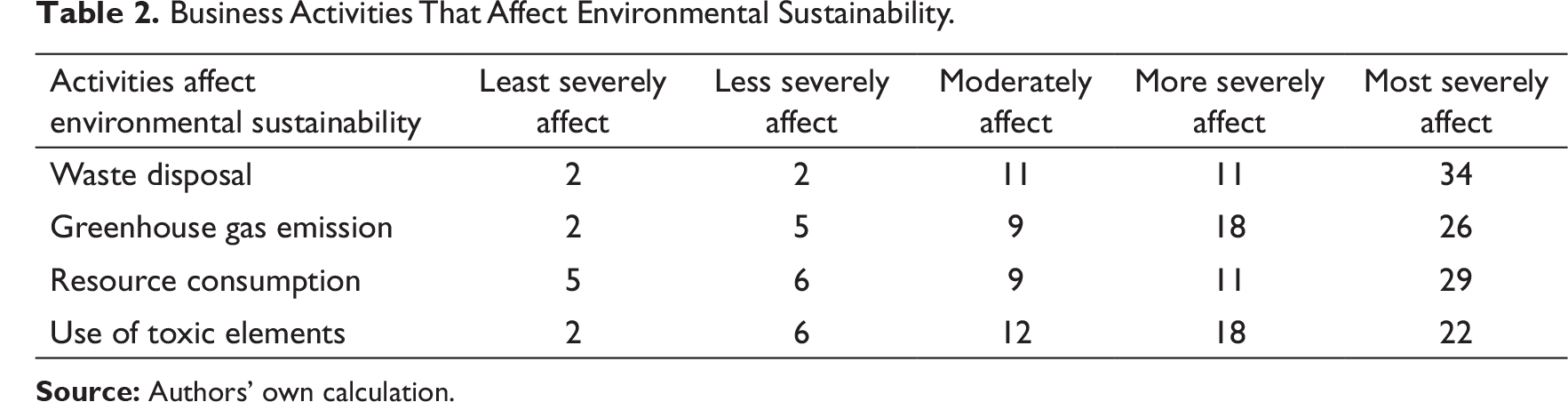
Respondents have been asked about their perceptions about to what extent businesses affect environmental sustainability in terms of waste disposal, GHG emission, resource consumption, and the use of toxic elements. The majority opines that GHG emissions most severely affect environmental sustainability.
Hypothesis Testing
Pearson chi-square test has been conducted to test hypotheses. For each hypothesis, two sub-hypotheses are proposed: the null hypothesis and the alternative hypothesis. The null hypothesis assumes that GSCM practices have no impact on business performance and environmental sustainability. The alternative hypothesis assumes that GSCM practices have a significant impact on business performance and environmental sustainability. The null hypothesis cannot be rejected if p-value is greater than the level of significance (0.05). The null hypothesis can be rejected if p-value is less than the level of significance.
Business Activities That Affect Environmental Sustainability.
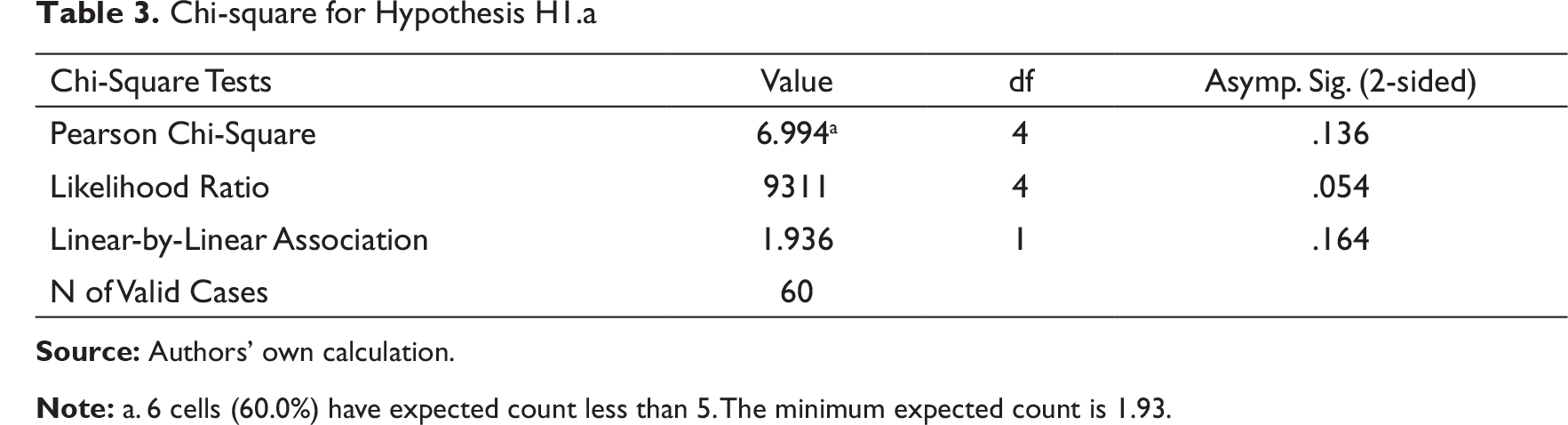
Chi-square for Hypothesis H1.a
Power Calculation for Chi-Square Test
At α = 0.05, the power of the test is 0.8616 though with effect size w = 0.48.
The result of the power test is greater than the minimum acceptance level (80%); hence the result is reliable.
H1.b: Implementation of Green Supply Chain Management Practices Has a Significant Impact on the Cost
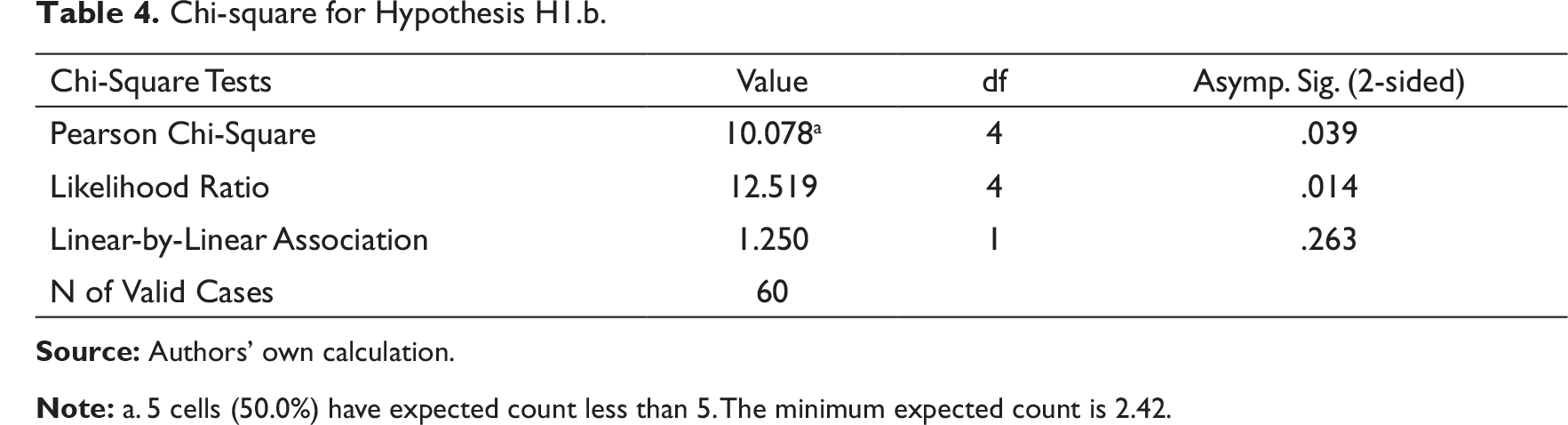
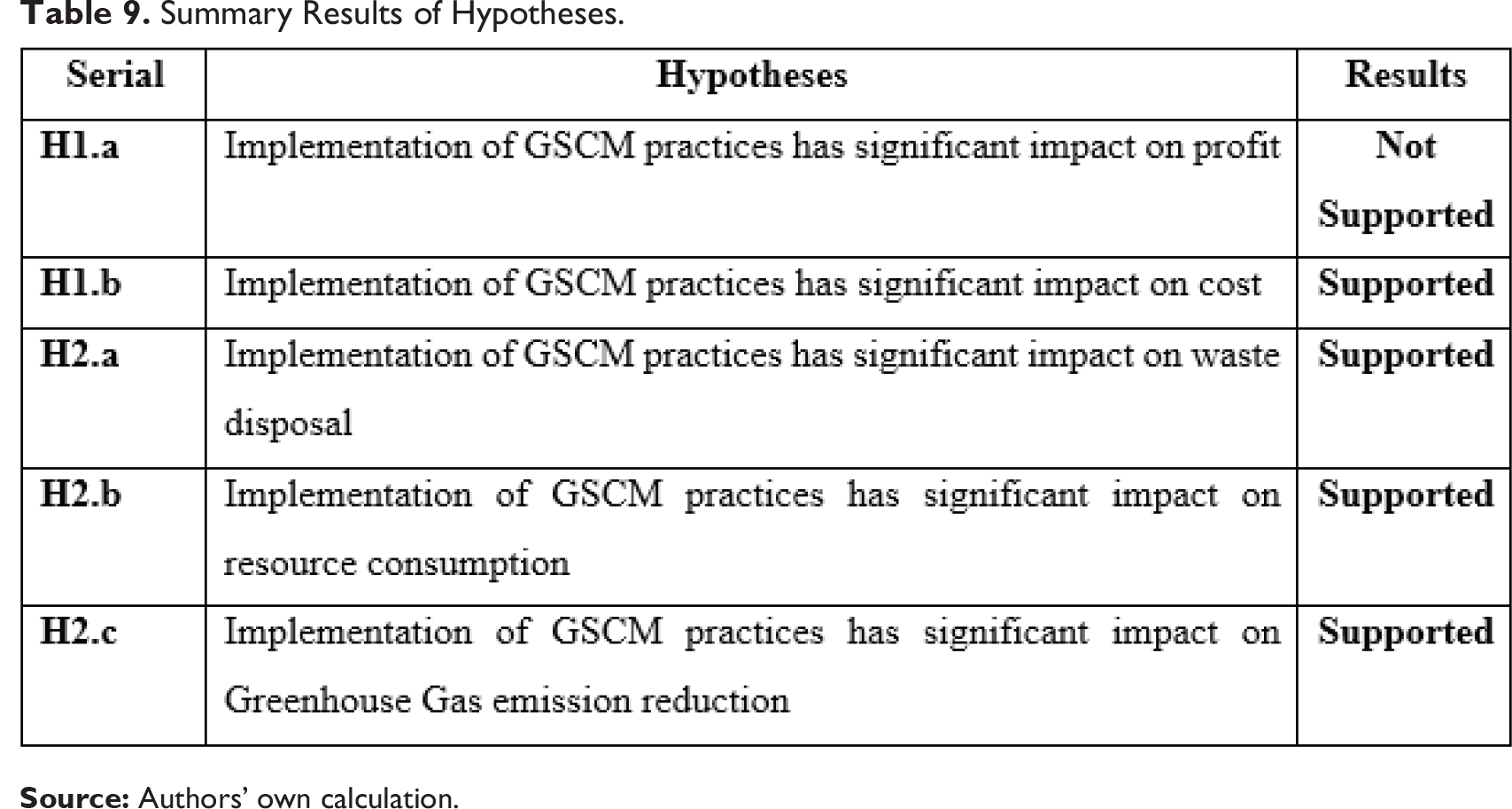
Table 4 shows the chi-square test of GSCM practices and cost. As p-value is less than 0.05, the null hypothesis is rejected. GSCM practices have a significant impact on the cost of business. H1.b is accepted and supported.
Power Calculation for Chi-square Test
At α = 0.05, the power of the test is 0.827 though with effect size w = 0.46.
The result of the power test is greater than the minimum acceptance level (80%); hence, the result is reliable.
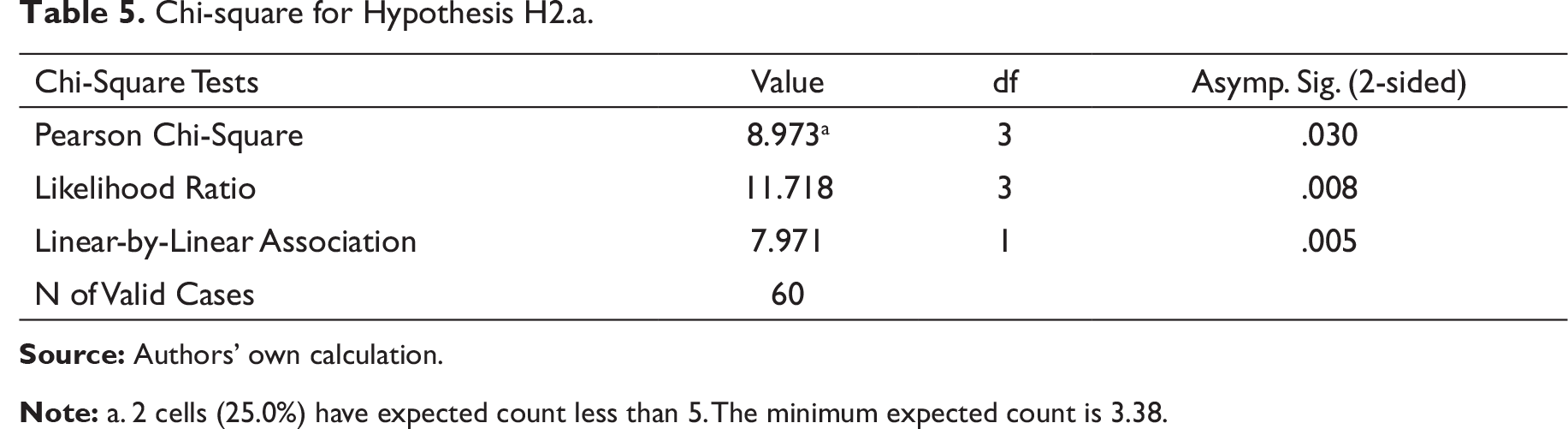
H2.a: Implementation of Green Supply Chain Management Practices Has a Significant Impact on Waste Disposal
Chi-square for Hypothesis H1.b.
Power Calculation for Chi-square Test
At α = 0.05, the power of the test is 0.827 though with effect size w = 0.44.
The result of the power test is greater than the minimum acceptance level (80%); hence, the result is reliable.
H2.b: Implementation of Green Supply Chain Management Practices Has a Significant Impact on Resource Consumption
The chi-square test of GSCM practices shows that p-value is less than 0.05. Hence, the null hypothesis is rejected, and the alternative hypothesis is accepted. It can be inferred that GSCM practices have a significant impact on resource consumption. H2.b is accepted and supported.
Power Calculation for Chi-Square Test
At α = 0.05, the power of the test is 0.8469 though with effect size w = 0.451.
The result of the power test is greater than the minimum acceptance level (80%); hence, the result is reliable.
H2.c: Implementation of Green Supply Chain Management Practices Has a Significant Impact on Greenhouse Gas Emission Reduction
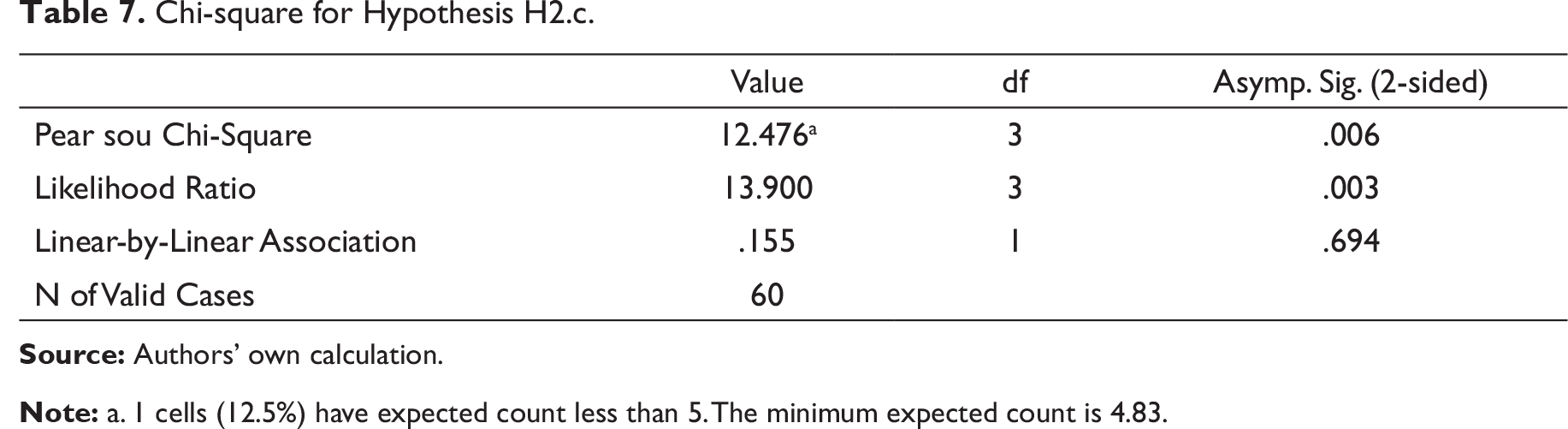
The p-value for H2.c is less than 0.05. For H2.c, null hypothesis is rejected, and the alternative hypothesis is accepted. Hence, adopting GSCM practices has a significant impact on GHG emission.
Power Calculation for Chi-square Test
At α = 0.05, the power of the test is 0.862 though with effect size w = 0.46.
The result of the power test is greater than the minimum acceptance level (80%); hence, the result is reliable.
Independent Variable: Impact of Green Supply Chain Management Practices
Chi-square for Hypothesis H2.a.
Chi-Square for Hypothesis H2.b.

Chi-square for Hypothesis H2.c.
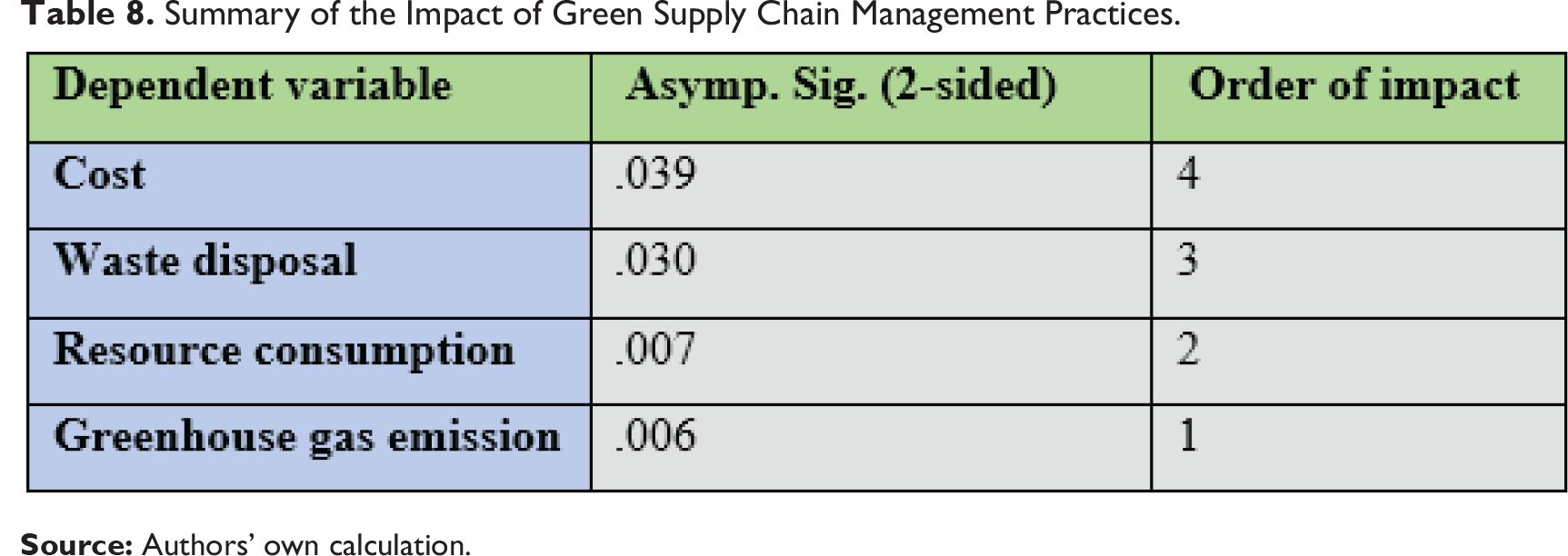
Summary of the Impact of Green Supply Chain Management Practices.
Summary Results of Hypotheses.
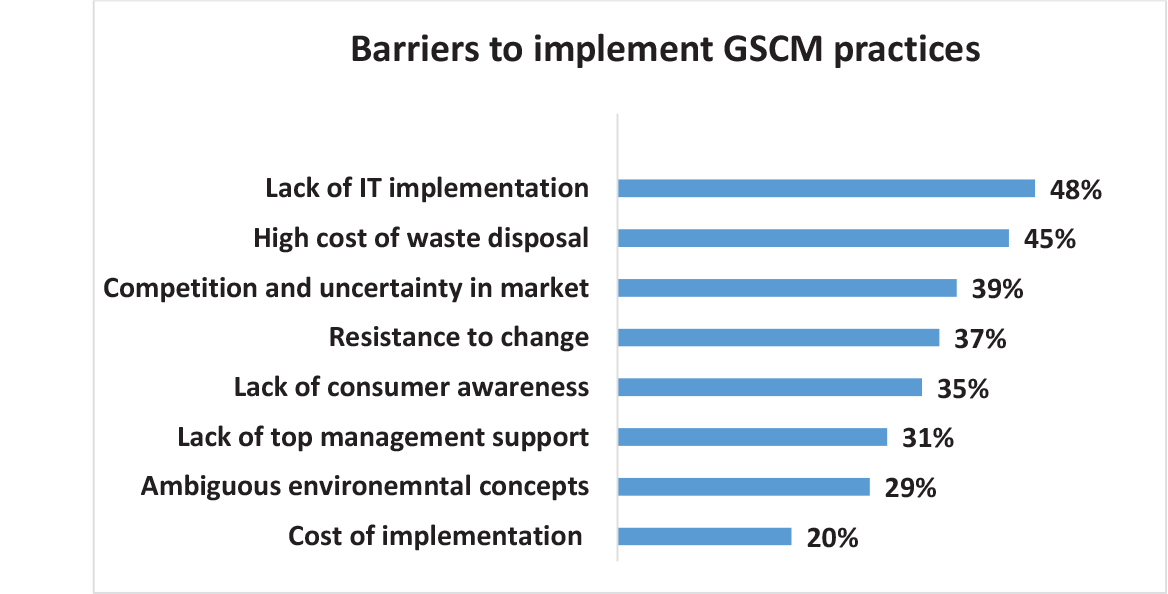
Barriers to Implement Green Supply Chain Management Practices in Bangladesh
Although the implementation of GSCM practices has a significant impact on the reduction of waste disposal and resource consumption, the abatement of GHG emission, and cost reduction, GSCM practices are not widely implemented in most of the companies of Bangladesh.
The most significant barriers to implement GSCM practices are presented in Figure 6.
Figure 6 shows the barriers to implement GSCM practices in Bangladesh according to their significance. It has been observed that lack of IT implementation (48%) in firms, high cost of waste disposal (45%), competition, and uncertainty in the market (39%) have more effect on implementing GSCM practices. The cost of implementation (20%) has less impact on implementation.
Discussions and Analysis
It has been observed that various companies of Bangladesh have already adopted GSCM practices either partially or fully. Full adoption means considering environmental impacts in all stages of the supply chain such as environmentally friendly product design, raw material procurement and purchasing, outbound logistics and marketing, final consumption, and disposal of goods (Shah & Muraduzaman, 2013). Partial adoption implies adopting any one of the above-mentioned functions. In Bangladesh, the construction industry and garments industry have adopted GSCM practices mostly (Mazumder et al., 2014; Shah & Muraduzaman, 2013). Several barriers are liable for not adopting GSCM practices by different companies in Bangladesh. Lack of IT implementation, high cost of waste disposal, competition and uncertainty in the market, resistance to change, and lack of consumer awareness have been considered as the most significant barriers to implementing GSCM practices in organizations (Mangla et al., 2018; Oelze, 2017).
Assessing the impact of GSCM practices on business performance is one of the research purposes for this study. Business performance is measured in terms of profit and cost. Hypothesis H1.a postulates that GSCM practices have a significant impact on profit. This is the alternative hypothesis. An alternative hypothesis will be accepted if p-value is less than the level of significance (0.05); as p-value is 0.136 which is greater than the level of significance, alternative hypothesis cannot be accepted. It means GSCM practices do not have a significant impact on profit. H2.b assumes that GSCM practices have a significant impact on the cost of business. For this hypothesis, the p-value is 0.039 which is less than the level of significance. Hence, GSCM practices have a significant impact on cost.
It has been found that the implementation of GSCM practices has a significant impact on cost and no impact on profit. The cost of implementing GSCM practices is very high initially. Therefore, firms need time to recover their initial investment for GSCM practices. Most of the firms in Bangladesh that have adopted GSCM practices have not been matured enough in such practices. Due to immaturity in the implementation of GSCM practices, Bangladeshi firms lack a significant relationship between GSCM practices and profit. But initially, firms can save costs by implementing GSCM through savings on resource consumption.
Assessing the impact of GSCM practices on environmental sustainability is another research purpose for this study. Environmental sustainability is measured in terms of reduction of waste disposal, resource consumption, and GHG emission. The p-values for H2.a, H2.b, and H2.c are 0.030, 0.007, and 0.006, respectively. As p-values for H2.a, H2.b, and H2.c are less than the level of significance, hypotheses H2.a, H2.b, and H2.c can be accepted. Therefore, the implementation of GSCM practices has a significant impact on waste disposal reduction (H2.a), reduction of resource consumption (H2.b), and GHG emission (H2.c).
Recommendations
In Bangladesh, only a few organizations have adopted GSCM practices at least to some extent. Most organizations face problems in implementing GSCM practices. To overcome such problems in implementing GSCM practices in business organizations of Bangladesh, the following recommendations can be made.
Enforcing law regarding the implementation of GSCM practices, especially in manufacturing firms can help in maintaining environmental sustainability. Creating awareness among consumers regarding the green operation, green product design, and green organization will motivate consumers to buy products from environmentally conscious firms. As a result, firms will adopt GSCM practices to survive in competitive markets. To reap proper benefit from GSCM practices, firms must ensure coordination and integration among all participants of the supply chain. Support from top management can make the implementation of GSCM practices easier and more fruitful. Although resistance to change is a major internal barrier, communication and top management support can reduce this resistance for implementing GSCM practices.
Future Research Directions
This study may contribute to conducting further research in any developing country including Bangladesh. Further research can contribute more by increasing the sample size. For a better-extended contribution to this research, more industries can be explored to improve its applicability to a wider range.
Conclusion
The impact of GSCM practices on business performance and environmental sustainability has been explored in this research. GSCM practices have a significant impact on cost, waste disposal, resource consumption, and GHG emission. The implementation of GSCM practices mostly contributes to reducing GHG emissions. But the impact of GSCM practices has an insignificant impact on business profits that happen in the long run. Initially, due to the high cost of implementing GSCM practices among different parties involved in the supply chains, companies may adjust selling prices to maintain a profit. Another reason for the insignificant impact on profit is that the payback period for an initial investment in GSCM is high. Although the implementation of GSCM practices has a significant impact on business and the environment, several barriers hinder its widespread implementation among firms in Bangladesh. If those hindrances are eradicated accordingly, the sustainability of firms in a developing country like Bangladesh will be ensured. Hence, to move toward the achievement of SDGs by 2030, this research will aid similar other countries to grasp the benefits of specific goals like Goal 7 (ensuring affordable, dependable, maintainable, and modern energy for all) and Goal 13 that calls for immediate attention to combat climate change.
Appendix A: Questionnaire
Name of respondent: Designation of respondent: Name of business organization: Type of industry:
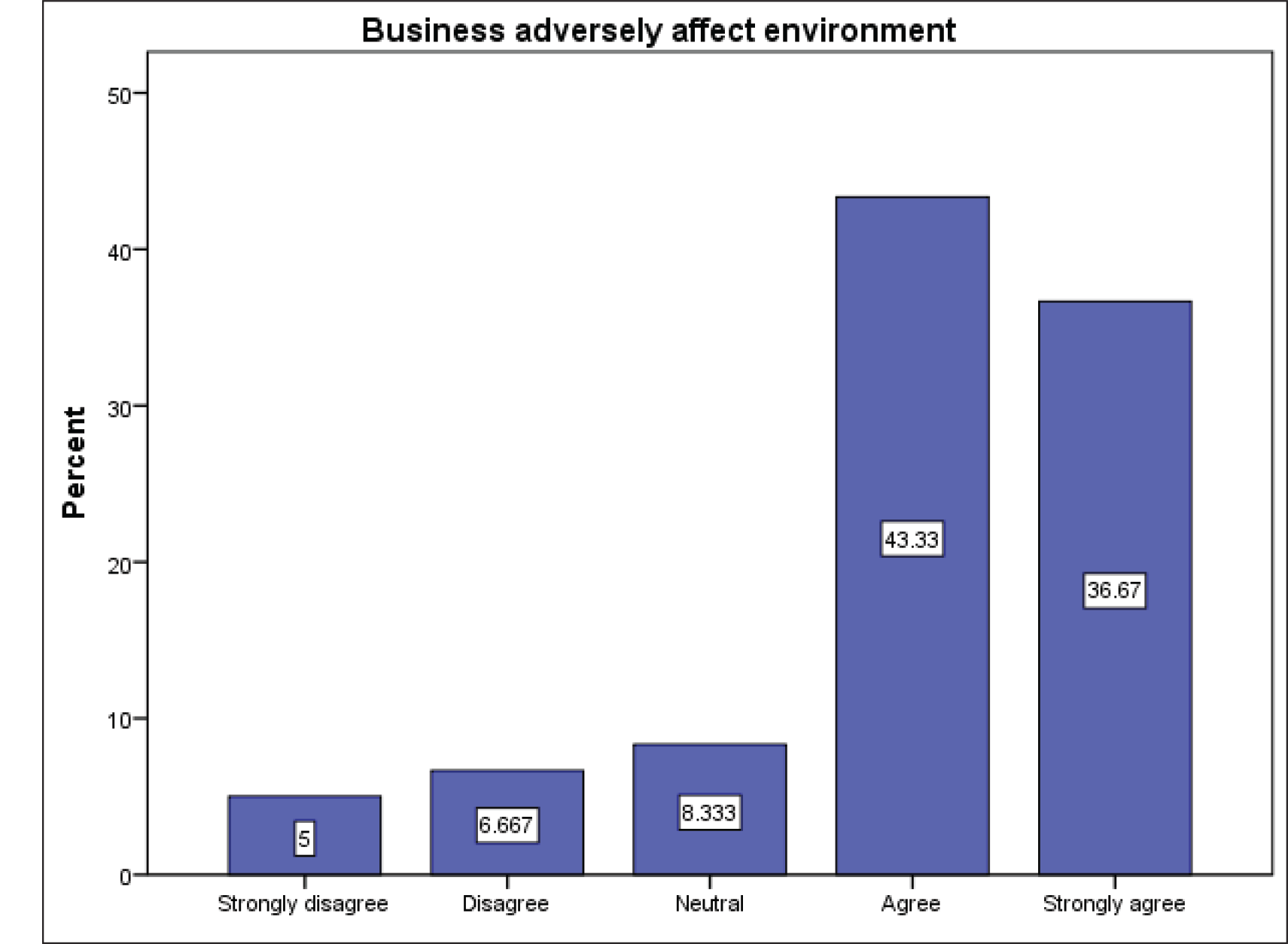
Textile industry Automotive industry Construction industry Consumer goods industry Food industry Pharmaceuticals industry Service industry Others (please mention) Do you agree with the statement that business organizations adversely affect the environment?
Strongly agree Agree Neutral Disagree Strongly disagree Rank on a scale of 1 to 5 for business activities that affect environmental sustainability. Here, 1 being least and 5 being most.

Have your organization adopted green supply chain practices?
Yes
No
Do you think that adopting green supply chain practices can help in maintaining environmental sustainability?
Strongly agree
Agree
Neutral
Disagree
Strongly disagree

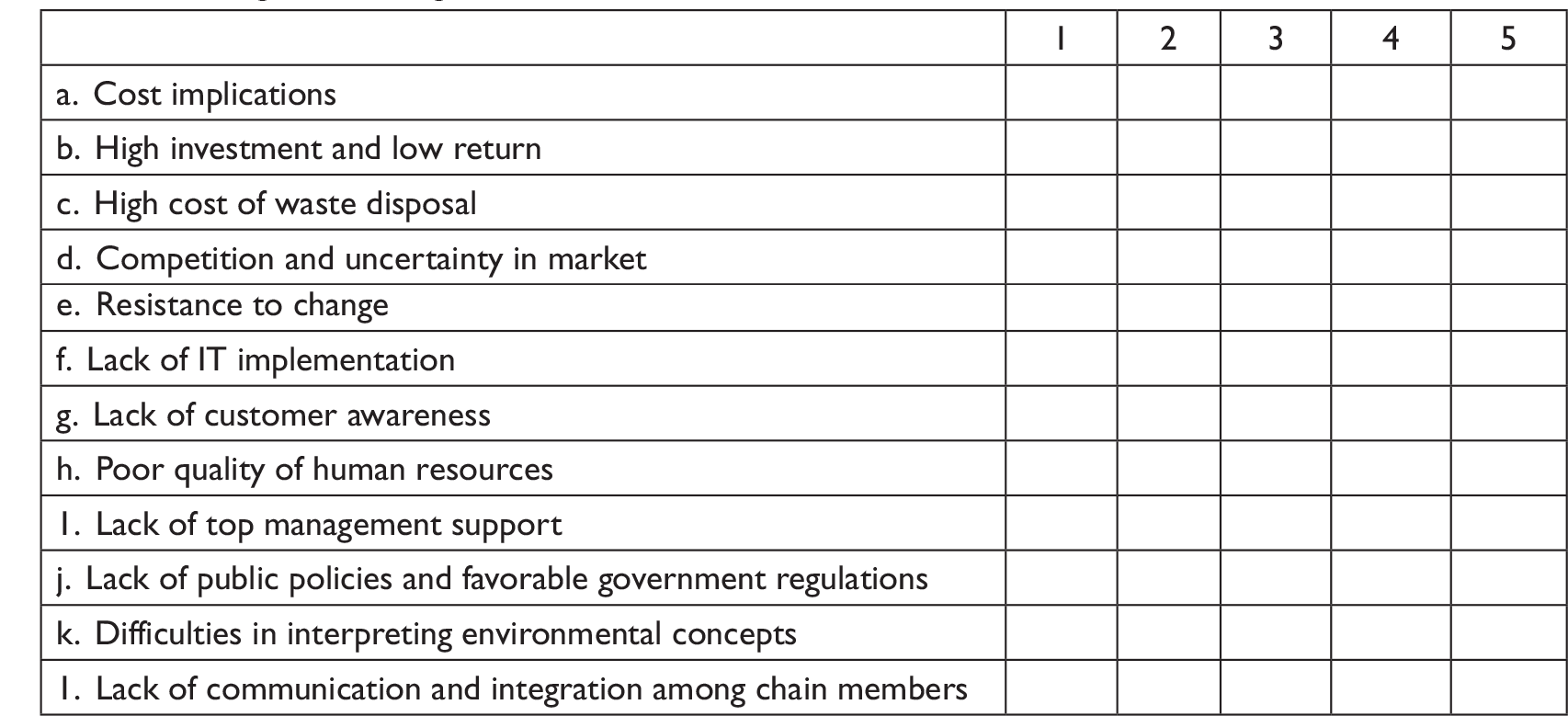
Rank on a scale of 1 to 5 for barriers of implementing GSCM in Bangladesh. Here, 1 is the least significant, and 5 being the most significant.