




Abstract
This article investigates the empirical association between role clarity and organizational citizenship behavior and how this relation is moderated by gender. The data of 272 executives have been collected from management development programs conducted in various public and private Indian organizations. Chi-square difference test (Bonferroni method), latent mean approach, sub-group analyses, and multiple group confirmatory factor analysis have been used to analyze the responses. Results indicate that role clarity is positively related to all dimensions of organizational citizenship behavior. Out of five, four dimensions show signs of gender’s moderation; women scored higher in role clarity’s relation with altruism, courtesy, and conscientiousness and men showed higher role clarity–civic virtue relationship. Implications and future scope are also discussed.
Keywords
Introduction
Organizational citizenship behavior (OCB) which has been described by Organ (1988) as “individual behaviour that is discretionary, not directly or explicitly recognized by the formal reward system, and in the aggregate promotes the efficient and effective functioning of the organization” is a widely read subject. Its popularity can be judged from the fact that from the time when Organ and colleagues (Bateman & Organ, 1983; Smith, Organ, & Near, 1983) coined this term for the first time in the early 1980s, more than 700 studies have been conducted on OCB and related constructs such as pro-social behavior, extra-role behavior, organizational citizenship performance; antecedents of OCB-like employee attitude, personality traits, leader behavior, and also the effect OCB put on organizational and individual outcomes (Organ, Podsakoff, & MacKenzie, 2006). Also, during this period, the reach and demand of OCB-like behavior has spread from field of organizational behavior to a variety of disciplines like human resource management, health administration, marketing, industrial relations, military psychology, leadership, and economics (Podsakoff, MacKenzie, Moorman, & Fetter, 2000). Consultants and practitioners have also incorporated OCB into organizations, which are hence impacting evaluation processes and even recruitment.
One of the important antecedents of OCB is “role.” OCB is also being associated with role clarity of employees. Role clarity has become an important variable for study because of multiple role sets to be performed by employees in every organization. Clarity in expectations of inter-roles and intra-role needs to be at the foundation of every work output. There has been a specular debate over the acceptance of the definition of OCB. This is because of the confusion of the type of behavior OCB possess, that is, in-role or extra-role. This gap has also been identified (Organ, 1997), hence it needs research for finding out the former.
OCB orientation has an outsized literature which stated about gender differences (Kidder & Parks, 2001). The existing literature and researches on OCB cannot be held true for other cultures apart from where they have actually been conducted, that is, North America and Europe. More researches are needed to observe the differences among other cultures. OCB study was done on the basis of role clarity and demographic along with gender difference to find out the outcome. This study is basically to understand effects of gender that forms a constraint on understanding Indian context relationship of role clarity and OCB. For this study, data are collected from organizations’ management development programs (MDPs) that enable employees of different industries with management concepts. Therefore, the aim of the study is to investigate the effect of role clarity on OCB and to examine the moderating effect of gender on the relationship between role clarity and OCB (Figure 1). To achieve the aim of the study, various hypotheses are developed and a series of tests are performed. The outcomes of the study show how both genders behave in highly demanding organizational setup.
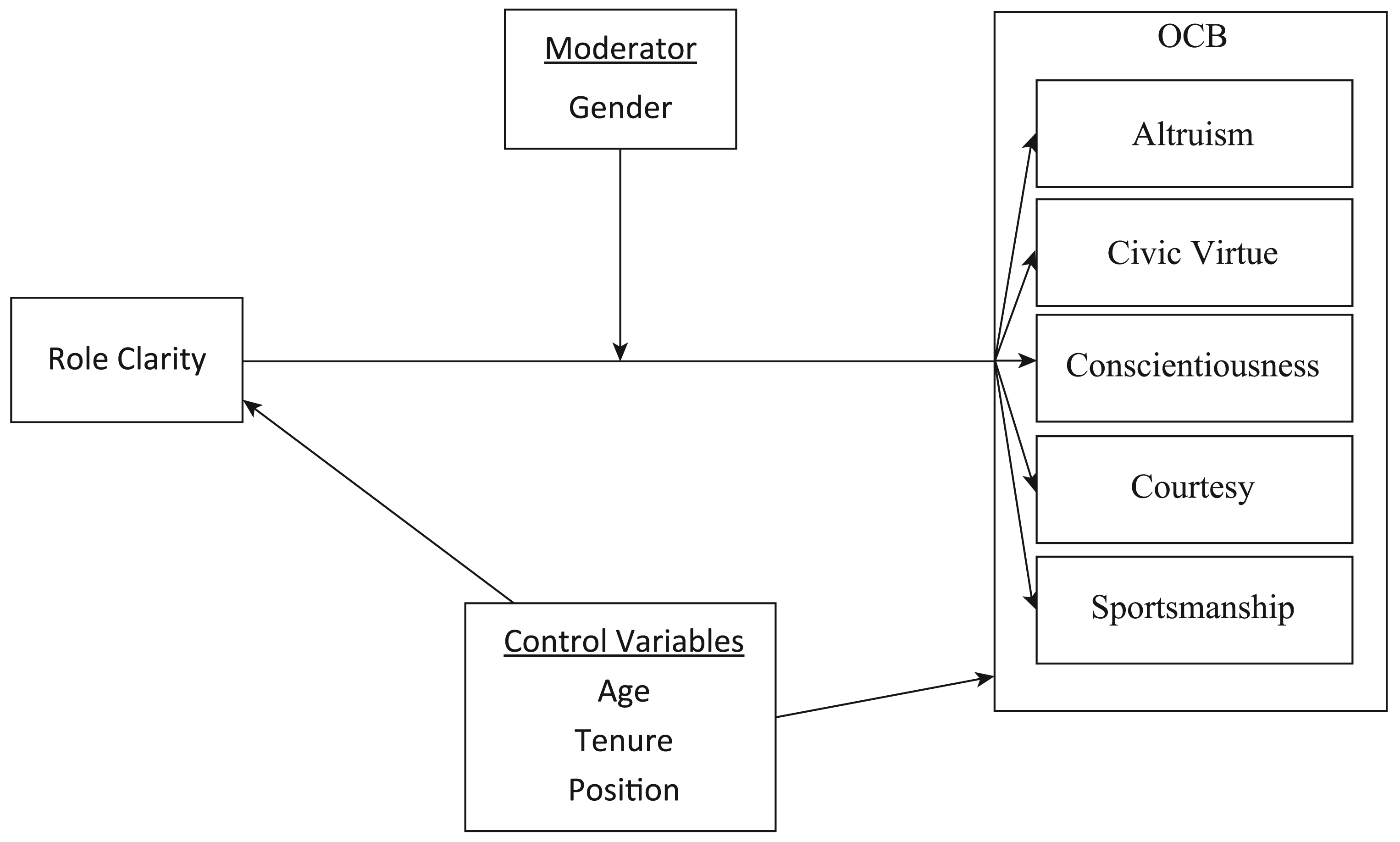
The study is distributed into five parts. The first part gives the introduction of the study. The next section is literature review of the variables studied. The third part portrays the method followed for conducting the study. The subsequent part is results acquired from method employed, and the final section is discussion and conclusion of the study.
Literature Review
Organizational Citizenship Behavior
OCB is a concept as defined by Organ (1988) that engages employees and promotes effectiveness of an organization even though they are not rewarded explicitly by the organization. Moreover, literature on OCB and its involvement in achieving organizational effectiveness is largely available in organizational behavior. The recent studies are finding out the occurrences and significance of OCB across different cultures and industry. Employee behavior is supposed to have played a crucial role in stimulating positivity at workplace and lead to the increase in motivation from the supervisors and managers for their subordinates for encouraging OCB which would further increase organizational efficiency and effectiveness as a part of improved workplace outcomes and ambitions (Farh, Zhong, & Organ, 2004). The relationship between OCB and similar concepts is also observed like extra-role behavior (Van Dyne, Cummings, & Parks, 1995), pro-social behavior (Baruch, Fenton, Hind, & Vigoda-Gadot, 2004), contextual performance (Motowildo, Borman, & Schmit, 1997), civic citizenship (Graham, 1991), and organizational spontaneity (George & Brief, 1992). OCB has been also contemplated in the field of economics, education, HRM, marketing, etc. (Lievens & Anseel, 2004) on individual, group as well as organizational levels. These studies have revealed OCB as a spontaneous, effective, productive, self-initiated behavior that expected to enhance the effectiveness of the organizational workplace. Adding to it, some studies have also prompted that impression management, and other non-humanitarian motives are also involved to OCB (Bolino, 1999; Organ, 1997). Thus, the common argument constituted that OCB supports positivity and enhance productivity of an organization. As a deduction, the argument till date which is supported by studies on OCB suggests that it has beneficial, high involvement with individuals as well as multiple levels of an organization and a positive image which intensify the performance of a workplace. OCB can be looked from two prospective: an aggregate concept and through various dimensions (Tziner & Sharoni, 2014). In 1988, Organ projected five dimensions of OCB. They are altruism, courtesy, conscientiousness, sportsmanship, and civic virtue. Vey and Campbell (2004) established that the conscientiousness and courtesy dimensions of OCB are considered as in-role and altruism and civic virtue dimensions are considered as extra-role more frequently.
Role Clarity and OCB
Role clarity is the concept where a practice of figuring out the priorities is done along with assigning appropriate trainings for the same. This assures a person of what is being expected out of him from the job (Shoemaker, 1999). Clarity level is correlated with a person’s achievement and work. Moreover, if an individual is having a fair understanding about the role then he/she would be more dedicated toward achieving it (Braxton, 2008). Role clarity is also a position wherein an employee can easily foresee the outcomes of what specific duties been completed by him/her (Mukherjee & Malhotra, 2006). This helps in enhancing the competencies of an individual, as they get to know what are they capable and competent of and how can they achieve the same (Baron & Armstrong, 1998). A sense of apathy prevails when individuals are not clear of what duties they take up and what is expected out from them. This discrepancy between the expectance and performances of an individual creates uncertainty and conflict among the employees of the organization (Fields, 2002).
Organ (1997) while making out clear about the composition of OCB, concentrated on judgmental actions of the employee which are not legitimate or proper by the role or job description. He also centralized on the conception of “role” and “job.” When comprehended about roles and jobs, characterization of duties by employees during the time of employment wherein the duties are clearly and tightly stated is considered as job whereas when these duties comes with unrestricted power they are stated as roles. “The End of the Job,” a Fortune magazine’s cover story underlined that job is no longer the finest way to proceed with a perfect way to perform the work throughout the environmental change, team size changes, team change etc. As per Smith et al. (1983), OCBs are condition wherein you have to do what your immediate boss is asking you to do, even though your boss has no clue of how to get the work done with no rewards attached to it. These behaviors thus come under role clarity regarding high-caliber position. From an investigation conducted by Morrison (1994), 18 out of 20 elements have been classified by most of the respondents as “in-role.” Moreover, he also stated that OCB fluctuates among employees within same as well as different levels, that is, between supervisor and employee.
H11: Role clarity will relate positively with altruism.
H12: Role clarity will relate positively with courtesy.
H13: Role clarity will relate positively with conscientiousness.
H14: Role clarity will relate positively with sportsmanship.
H15: Role clarity will relate positively with civic virtue.
Gender as Moderator
Gender differences among employees have been considered in recent years by observing the behavior, attitude, and outcomes. From the perception of the job-related employees it has come to an impression that there is continuation of gender differences (Yadav & Rangnekar, 2015). Gender differences have seen to affect not only the employees’ working condition but also how they behave and infer (Cooper & Lewis, 1995). It has been observed that gender when considered as a trait belonging to an individual it has affected the image of an organization, the attitude toward work and others and even themselves (Mathieu & Zajac, 1990). The consideration that has surfaced from the studies that analyzes the impact of gender in managerial perceptive and marketing states that men are more aligned toward completing more goal and tasks, whereas women on the other hand are more focused toward maintaining relationship within a community (Babin & Boles, 1998; Iacobucci & Ostrom, 1993). Wiersma (1990) indicated that male and female employees have different role perceptions, leading to different levels of role ambiguity and role conflict and hence, role clarity from the work place. It has been observed by Gilbert (1992) that expectations due to responsibilities of a parent, culture, and society, women are more inclined toward family responsibilities, whereas men are job-oriented and keeps it as their first priority. The expectations of men and women are observed to be different from each other as well as the outcomes from the working conditions are seen to be different demanding as per the role on which they serve as suggested by Boles, Wood, and Johnson (2003).
The correlation between OCB and gender is not seen to have contributed much from the past studies. As specified by Lovell et al. (1999) that attribute of OCB on the basis of its understanding, kind, devotion to others, and helpful to individuals are congruent to feminine behaviors. In a working environment, the interpersonal directed jobs are more adopted by women, which are seen to be a compromising factor on the basis of making friends, being kind to others (Konrad et al., 2000). There are limited surveys till date which have identified and supported that women are inclined to high level of benevolence and have high helping nature than men (Yadav et al., 2016). As per the observed literature discussed above led us to hypothesize the following:
H21: The positive effect of role clarity on altruism is significantly stronger among female employees than among male employees. H22: The positive effect of role clarity on courtesy is significantly stronger among female employees than among male employees. H23: The positive effect of role clarity on conscientiousness is significantly stronger among female employees than among male employees. H24: The positive effect of role clarity on sportsmanship is significantly stronger among female employees than among male employees. H25: The positive effect of role clarity on civic virtue is significantly stronger among female employees than among male employees.
Method
The population of the study comprised full-time employees from both public and private Indian organizations. The responses are taken during MDPs conducted across the Uttaranchal region and within IIT Roorkee campus. Out of 12 MDPs conducted, eight are for public organizations and remaining four are for private organizations. To get valid responses, variables taken are discussed in detail in a one-hour session and then questionnaires are distributed. Out of 320 distributed questionnaires, 48 were returned incomplete, leading to 85 percent response rate.
Measures
Role Ambiguity: Role Clarity Questionnaire by Udai Pareek (2002), 15 items on 5-point Likert scale is used to measure role clarity. The sample items include “What your colleagues/peers expect from your role,” “Resources (financial) available for completing your tasks,” and “Appraisal system to assess how well you perform in your role.” The OCB scale by Podsakoff, MacKenzie, Moorman, and Fetter (1990) on 5-point Likert scale with 1 for “strongly disagree” to 5 for “strongly disagree” and sample items include “I help others who have heavy workloads,” “I keep abreast of changes in the organization,” and “I take steps to try to prevent problems with other workers” was taken to measure OCB. For gender, categorical variable is being measured by using 2-point categorical scale: 1 represents female and 2 to represent male respondents. After literature review, three demographic variables, that is, age, tenure, and position were decided to be controlled for.
Data Analysis
Confirmatory factor analysis is performed using AMOS 21 for measurement model. Discriminant validity is checked by chi-square difference test using Bonferroni method (Simes, 1986). To check the causal relation, path coefficient is used; and moderation effect of gender is tested with Multiple Group Confirmatory Factor Analysis (MFCGA).
Results
Profile of Sample
In the sample of 272 respondents, 207 males (76.10 percent) and 65 females (23.9 percent) respondents participated. About 188 (69.12 percent) responses are from public sector employees and rest from private sector employees. The mean age is 40.5 years. Around 54.14 percent respondents are from the middle level, 30.14 percent from junior level, and rest from senior positions. The respondents were having high work experience with average tenure of 16.1 years.
Measurement Model
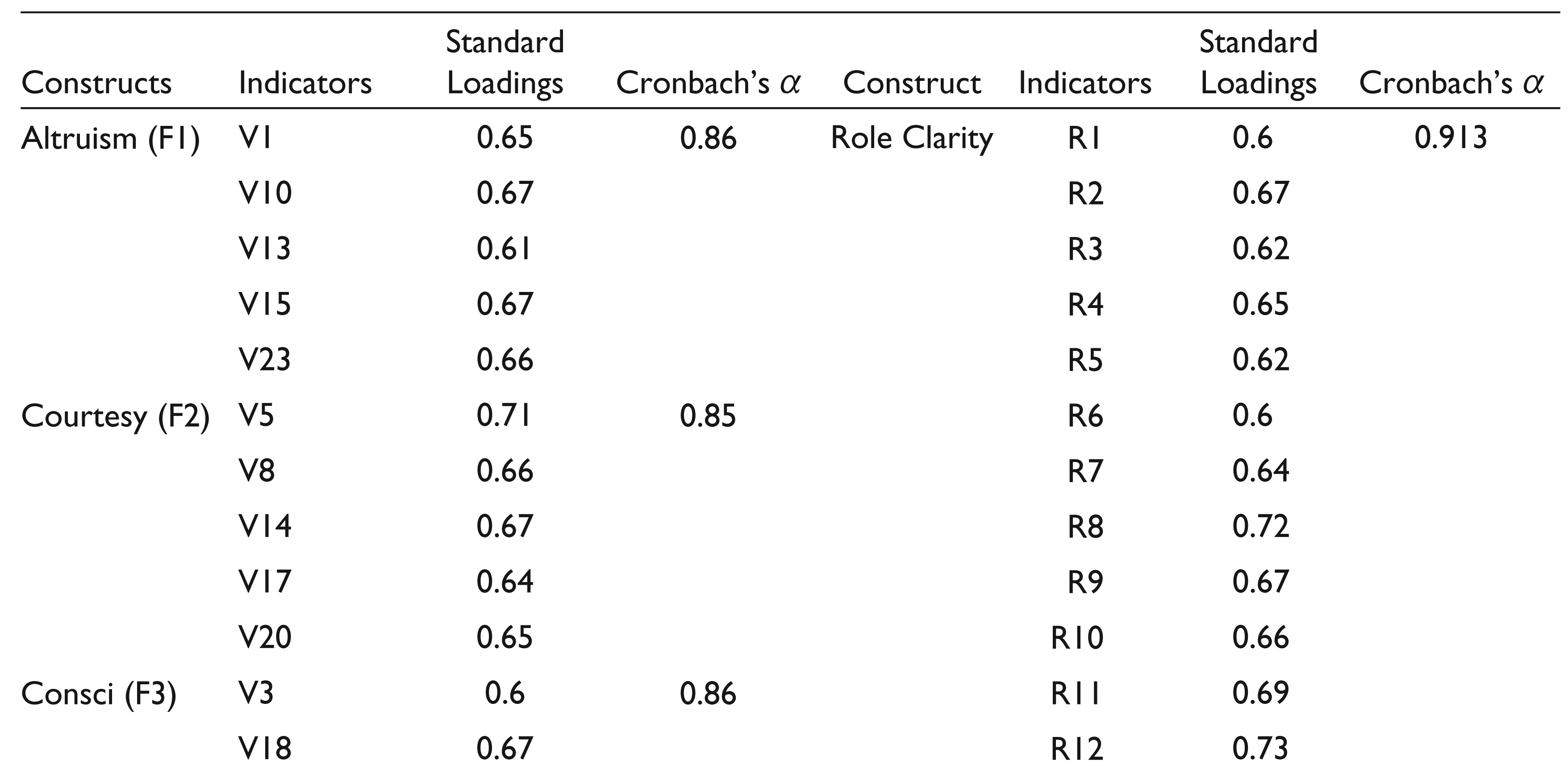
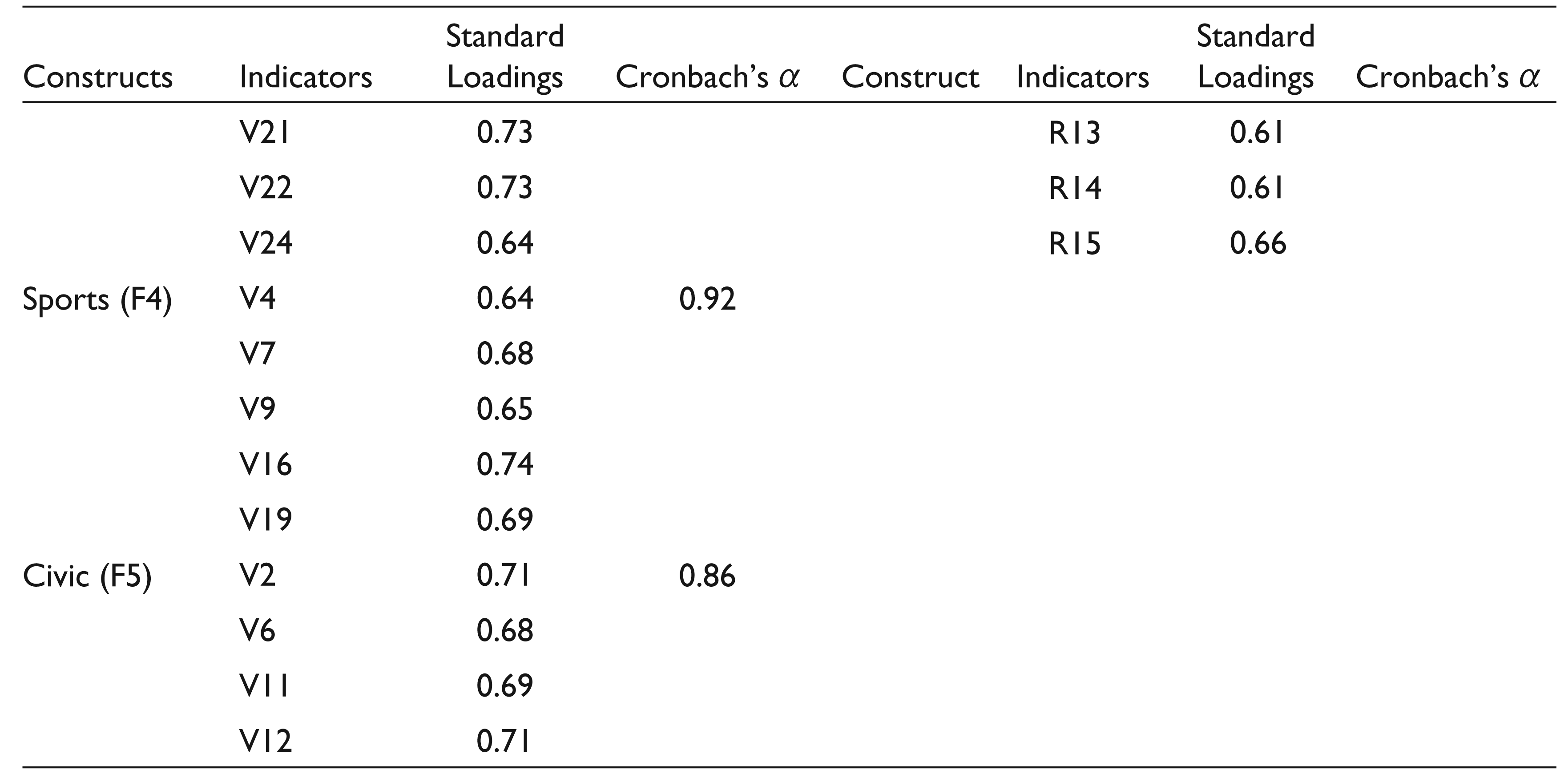
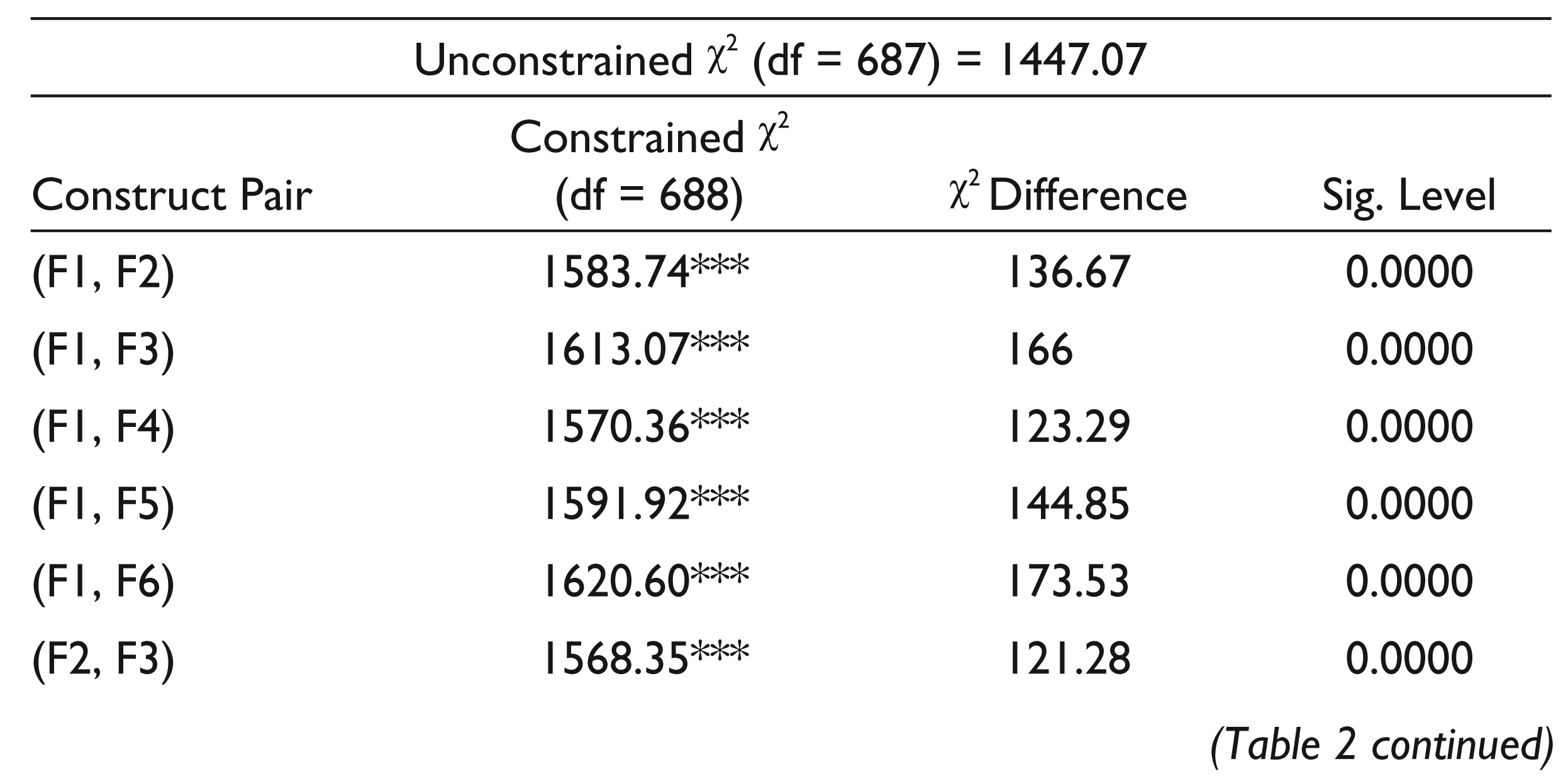
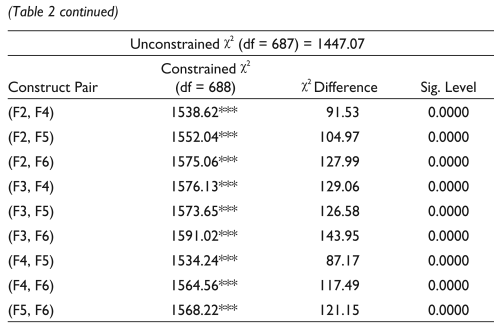
For data analysis, structural equation modelling is applied. Model testing is done by two-step approach proposed by Anderson and Gerbing (1988). Two indicator variables, that is, standard loadings and Cronbach’s α value are selected after continuous filtering to be used to measure all the constructs in the measurement model (Table 1). The overall goodness-of-fit indices are also calculated. The χ2/df less than 3, NFI (Normed Fit Index), NNFI (Non-Normed Fit Index), CFI (Comparative Fit Index), AGFI (Adjusted goodness of fit index), GFI (Goodness of Fit Index) with value greater than 0.9, RMR (root-mean-square residual) value at 0.05 and RMSEA (Root Mean Square Error of Approximation) less than 0.07 shows satisfactory model fit. Reliabilities of instruments are checked through internal consistency measurement, and convergent validity has been verified according to recommended criteria by Hatcher (2005). All loadings are above 0.7 (Table 1). Discriminant validity of the measurement model has been checked according to recommended criteria by Bonferroni method (Simes, 1986). All paired construct’s χ2 difference exceeded critical χ2 value (Table 2), and also all pairs showed the significance value below 0.000067 and supported the discriminant validity.
Standardized Loadings and Reliability
Chi-square Difference Test for Discriminant Validity
Structural Model
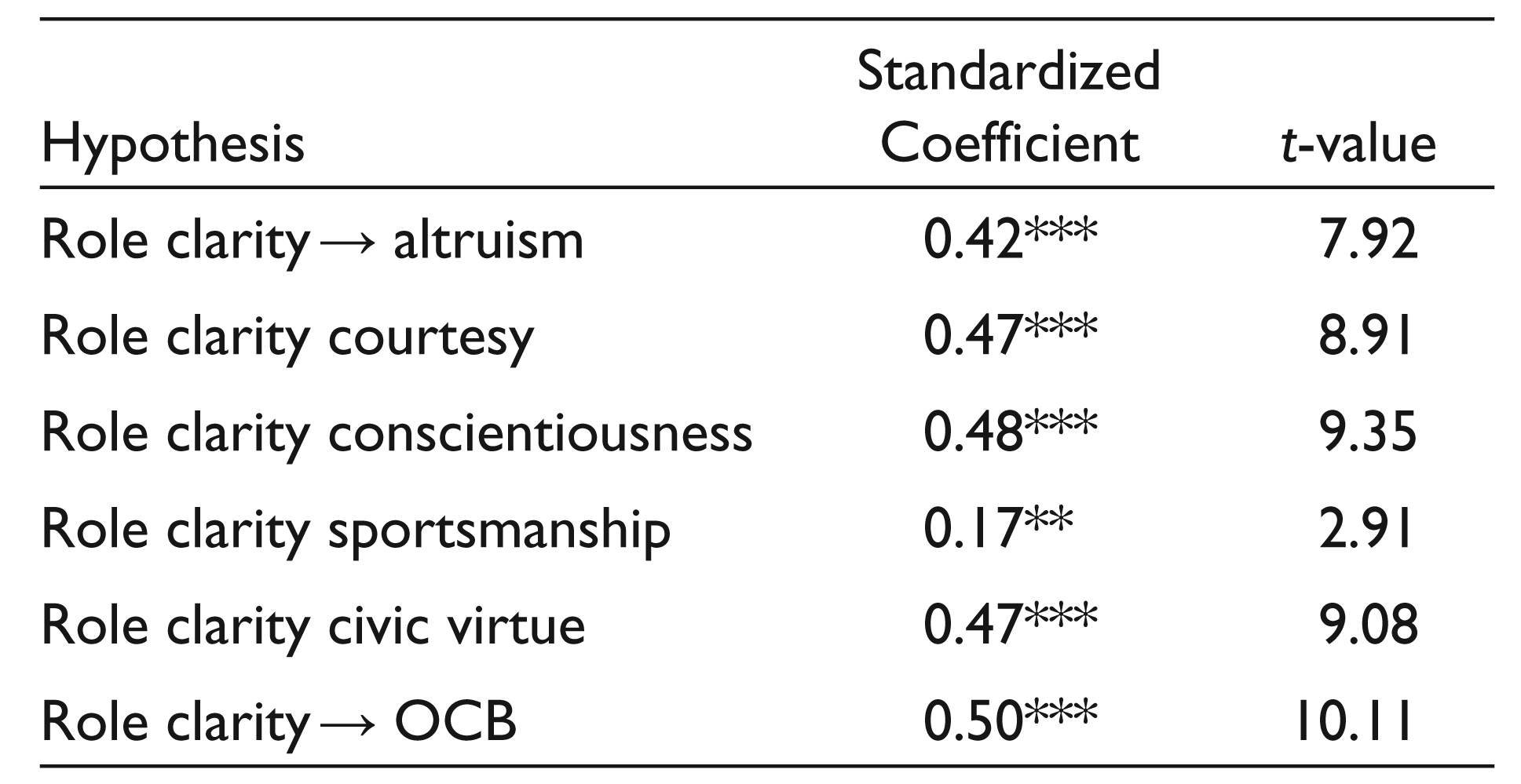
To avoid making any wrong inference, age, tenure, and position are taken as control variables. Structural model result shows that H11, H12, H13, H14, and H15 are significantly supported as shown in Table 3. To check the moderating effect of gender, the sample is divided on the basis of gender.
Path Coefficients and t-value based on Total Sample
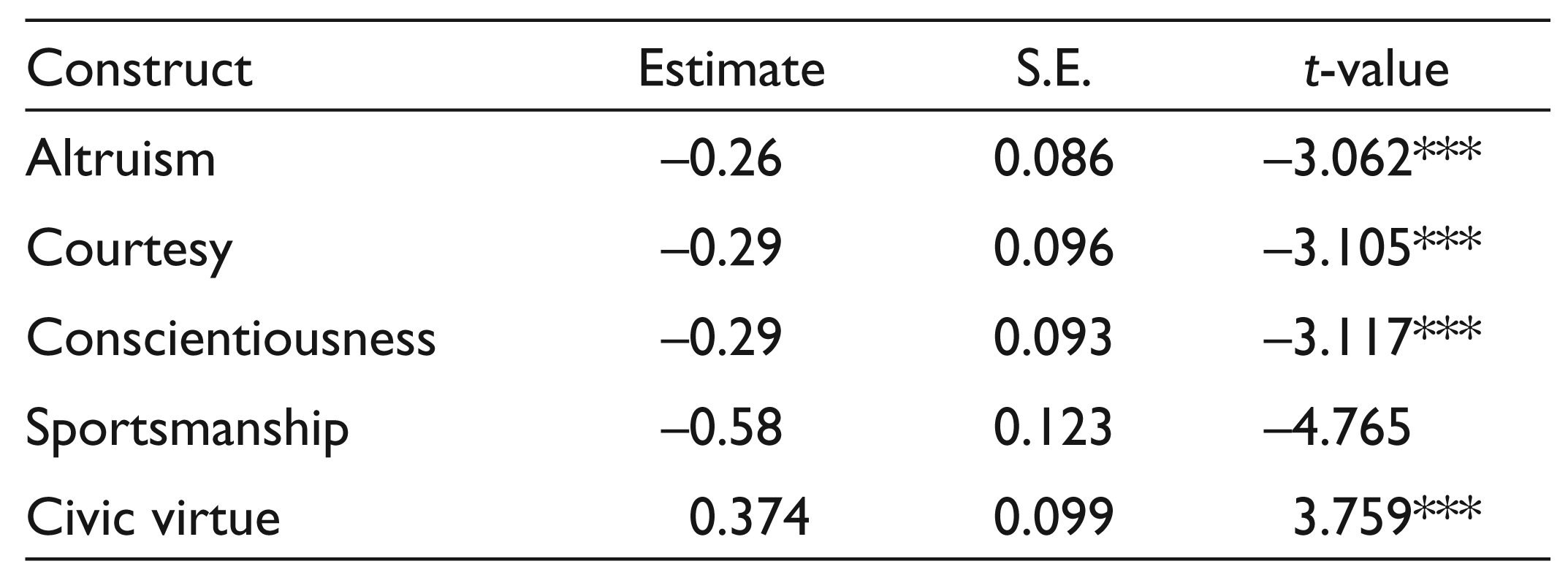
Latent means testing (Byrne, 2013), as shown in Table 4, shows a significant negative estimate between male and female respondents, signifying high score of altruism in female compared to male respondents. Courtesy and conscientiousness also reported a significant negative estimate of latent means difference between male and female respondents. This signifies that high level of courtesy and conscientiousness are shown by female compared with male respondents. Civic virtue reported positive mean score thus signifying a high level of civic virtue in male compared with female respondents. Sportsmanship failed to report a significant estimate showing that sportsmanship is portrayed by male and female respondents equally.
Latent Means Difference between Female and Male Respondents
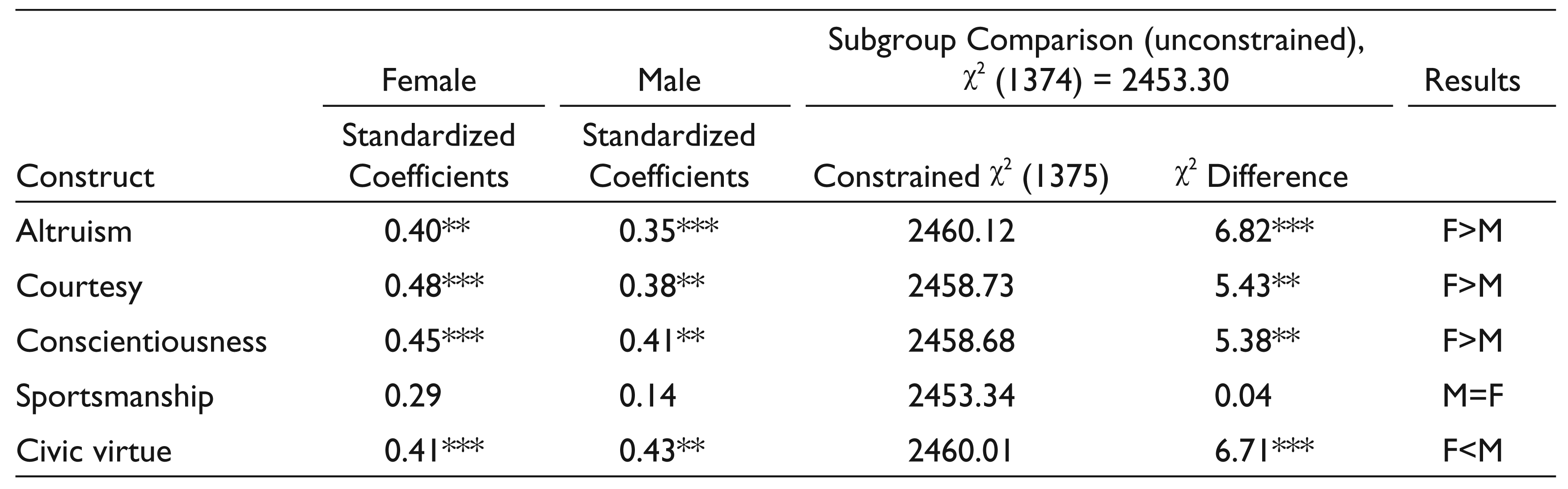
Subgroup analyses (Byrne, 2013; Singh, 1995) are performed with the help of MGCFA technique to test for the moderating effect of gender on structural model. The tests are run on various paths. The results with path coefficients as well as subgroup comparison are mentioned in Table 5.
The threshold limits of χ2 values are 2456.01 (0.1 significance level), 2457.14 (0.05 significance level), and 2459.94 (0.01 significance level). The test of the moderating effect of gender on OCB dimensions and role clarity portrays that influence of role clarity on altruism is stronger for female than male individuals. Also, courtesy and conscientiousness showed similar results with higher score for female than male respondents. Hence, supporting hypotheses H21, H22, and H23. Also, effect of role clarity on civic virtue is found stronger for male than female individuals, leading to rejection of hypothesis H25. The influence of role clarity on sportsmanship is similar among man and woman leading to rejection of hypothesis H24.
Path Coefficients between Female and Male Respondents with Role Clarity as Independent Variable
Discussion and Managerial Implications
The unique contribution of the study is to ascertain the potency and course of gender in relationship of role clarity and OCB. No past reported study has analyzed these relationships. In confirmation with research hypotheses, findings demonstrated that role clarity positively with OCB dimensions and role clarity–OCB relationship is high for female employees compared to male for three out of five dimensions. Our empirical research is in synchronization with theories that supports the importance of demographic and personal variables in role clarity and OCB also. Altruism, which is also referred as helping behavior is found to be higher in women, compared to men and is highly predicted by role clarity. Also, women with high role clarity are found to express superior altruistic behavior compared to men. These results are in synchronization with the historic view that women have high level of altruism (Kark & Waismel-Manor, 2005; Lovell et al., 1999; Morrison, 1994). Clear role expectations make women more confident in what they do and less hesitant in helping in similar work. These outcomes also bring certain massage for management. Since, women give great emphasis on informal collaborative relationships compared to men, which often leads to greater cooperation among employees at the workplace also. Also, women are easily approachable for help then men (Farell & Finkelstein, 2007). Being helped or asking for help generally go against masculinity norms, so, helping other by men will go against reciprocity norms (Parks, 1997). Therefore, even with the presence of role clarity, male employees’ scores low on altruism. Management should consider female employees as key to creating a cooperative environment. Women being soft spoken generally will also help in keeping positive and well-behaved environment at the workplace where the organization is facing trouble in employee behavior.
Women also scored high on courtesy and conscientiousness mean scores over men. Both OCB dimensions are predicted by role clarity, higher in women than men. These mean scores are in confirmation with Lin’s (2008) findings. Since role clarity involves related aspect of clarity of colleagues’ expectations as well (Yadav & Rangnekar, 2013), it influences courtesy and conscientiousness at a higher level. Management may take advantage of the results to create a positive environment in the organization. Since women are highly thoughtful and considerate about colleagues; they take extra care of their actions influencing colleague’s work. This will lead to low maintenance of machines and organization’s property. Orderly and punctual work behavior will bring positive change in an organization’s culture, because these women will be taken as role models by other employees irrespective of the gender. Knowledge sharing is also fostered by using the co-operative and helping environment. Civic virtue, which means being concerned about the well-functioning of the company; undertaking personal responsibility toward participation is political life of organization (Shragay & Tziner, 2011); has been found more in men than women, is highly predicted by role clarity in men than women. The results are not in consistency with Diefendorff, Brown, Kamin, and Lord (2002) which showed women as having a high civic virtue score. As female employees are expected to show less civic virtue (Chiaburu et al., 2014), pressure gets created for male employees to perform higher on civic virtue. Male employees as sole earners in most of Indian families have much more at stake on the job, so they are more concerned about well-being of the organization and want to have a constant check on improvements in organizations. The managerial implication of these findings could be helpful for organization. This concerned behavior in employees can be used in empowering them with more control of their work, greater, and conscious participation of employees in management decisions could help the organization to grow and pass through turbulent times. Participation instruments like quality circles, representation on the Board of Directors, etc., can be created to harness this potential in a positive manner.
Results of sportsmanship, having similar scores for both men and women and also role clarity predicted sportsmanship equally for men and women is interesting. Sportsmanship, which is usually seen higher in men (Diefendorff et al., 2002), gave equal results for both the genders on Indian sample. It is a good sign for management as it shows resilience and loyalty in employees. Management can go ahead with risky steps like expansion or structural change with otherwise becomes quite difficult in opposition and distrust from employees.
Conclusion
While concluding, it can be said that both the genders play a crucial role in organization’s growth and development through different dimensions of OCB through clarity of role and task to be performed by them. Mixed results achieved here regarding the influence of role clarity on OCB dimension is indeed happy news for the organization as it opens doors for all round development. The organization should have a balanced employee base of both men and women. Since, women showed higher scores on altruism, courtesy, and conscientiousness, they can act as a lubricant of sound interpersonal relations in the organization. Conflict management or organizational change will become smooth because of the roles performed by them. Knowledge sharing culture can be created and also team work increases. Men generally are stoic and unemotional can lead the organization on the right path in turbulent times. Men high on civic virtue will provide much needed decentralized command channel.