Abstract
The experience with COVID-19 underscores a classic public policy choice problem: how should policymakers determine how to allocate constrained budgets, limited equipment, under-resourced hospitals and stretched personnel to limit the spread of the virus. This article presents an overview of the general literature on resource allocation in epidemics and assess how it informs our understanding of COVID-19. We highlight the peculiarities of the pandemic that call for a rethinking of existing approaches to resource allocation. In particular, we analyse how the experience of COVID-19 informs our understanding and modelling of the optimal resource allocation problem in epidemics. Our delineation of the literature focuses on resource constraint as the key variable. A qualitative appraisal indicates that the current suit of models for understanding the resource allocation problem requires adaptations to advance our management of COVID-19 or similar future epidemics. Particularly under-studied areas include issues of uncertainty, potential for co-epidemics, the role of global connectivity, and resource constrained problems arising from depressed economic activity. Incorporating various global dimensions of COVID-19 into resource allocation modelling such a centralized versus decentralized resource control and the role of geostrategic interests could yield crucial insights. This will require multi-disciplinary approaches to the resource allocation problem.
Introduction
The COVID-19 pandemic has challenged some of the basic assumptions of resource allocation literature on epidemics and demonstrated that despite recent experience with Ebola and various types of influenza pandemics, the understanding of the problem of resource allocation continues to lag within policy-making circles. This is evident in the initial responses to COVID-19, where competition for equipment stretched the bounds of price discovery mechanisms and research and development strategies often implied discarding basic tenets of diplomacy (Die Welt, 2020; Okello, 2020; AFP, 2020). The limited resources and competing needs in the response to COVID-19 underscore a classic public policy choice problem: how should policymakers determine how to allocate constrained budgets, limited equipment, under-resourced hospitals and stretched personnel to limit the spread of the virus. This article provides an overview of the general literature on resource allocation in epidemics and its relevance to understanding COVID-19. We emphasize the peculiarities of the virus that call for the need to rethink existing models of resource allocation in order to enhance public policy’s capacity to address similar pandemics in the future. Resource allocation in epidemic control is different from the standard resource allocation in the economics literature in a number of ways, primarily in that epidemics tend to be complex, can be characterized by high degree of uncertainty, and involve more decision-making rules as well as stakeholders. The analysis of this article revolve around two key questions. First, what are the theoretical and practical formulations of the solutions to resource allocation in epidemics in the literature? Second, how useful are they to understanding COVID-19 or how can they be adapted to enhance our understanding of it?
Our objective in this article is not to undertake an extensive review of the models of resource allocation in epidemics, but rather to contextualize them in the current COVID-19 pandemic. Thus, we pay special attention to the literature on resource allocation approaches that have important implications for COVID-19. For the sake of simplicity, we eschew the technical formulations of the resource allocation problem. Our approach is in line with the emerging forms of reviews where the goal is to ‘critique and synthesize representative literature in an integrated way’ (Grant & Booth, 2009). For further literature on emerging forms of review, see Patriotta (2020) and Torraco (2005). In this regard, we simply aim to provide analysis of models for resource allocation and make it a valuable and accessible tool to policymakers for understanding the resource allocation problem in epidemics. We assess the degree to which current literature helps us understand the various complexities of COVID-19. This approach allows us to delineate our search and review strategies of the literature, using resource constraint as our limiting variable.
Our review yields a number of insights. Notably, interesting and crucial aspects of emerging epidemics (including COVID-19, Ebola and various types of influenzas) remain underappreciated in the current literature. First, an important lesson from the experience with COVID-19 has been the importance of acquisition, coordination and altruistic behaviour among countries and/or jurisdictions. The goodwill demonstrated during this pandemic illustrates that countries perceive the mitigation of the virus in other countries in self-interested terms. Altruistic behaviour in cross-border resource allocation may increasingly gain momentum as countries anticipate global pandemics and their responses to them. This implies that interdisciplinary approaches with varying levels of complexity to the problem of resource allocation in epidemics will increasingly become important; for example, the incorporation of game theoretical approaches may be useful in understanding the behaviour of different jurisdictions in pandemics. Second, a related and equally under-appreciated issue in the literature is the role of third-parties in the allocation and management of resources in epidemics. While the role of the World Health Organization (WHO) remains controversial in the current COVID-19 pandemic, there is no doubt that its position has highlighted the importance of a body that can effectively play a role in addressing public health threats across the world. On these two preceding related points, there is already some evidence that the global loss of economic output can be substantially larger when the manufacturing and distribution of vaccines are not done in a global context (Cakmakli et al., 2021). The issue of resource allocation in epidemics is likely to gain renewed attention from this perspective. Third, a notable feature of the current resource allocation in epidemics is that there is limited modelling of resource allocation in co-epidemics. But we now know from the experience with COVID-19 that the potential for the emergence of related epidemics is high and this impacts the effectiveness of a given resource allocation. For example, Yaesoubi and Cohen (2013), in a study of HIV/TB co-epidemics, conclude that dynamic resource allocation outperforms more static intervention policies. While severe co-epidemics associated with COVID-19 have not yet been confirmed, emerging reports of the potential are concerning. For example, the resurgence of childhood inflammatory disease associated with COVID-19 in North America has been concerning enough for WHO to constitute a working group on it (WHO, 2020). Fourth, another potential area for further exploration in the resource allocation problem in epidemics is allocation modelling as a stochastic process, where uncertainty about the reproduction or impacts of the epidemic may necessitate the assignment of some probability functions that reflect the uncertainties of outcomes. This is different from assigning weights, as practiced in parts of the current literature. Even so, there remains the fundamental problem of uncertainty, as illustrated by the experience with COVID-19: there is a lot we do not yet know. Addressing issues of uncertainties increases the complexity of the resource allocation problem. As a result, simulations are increasingly being used to study these issues, including in complex systems—see the Brockmann Lab 1 initiative for example. Fifth, relative to other health crisis over the last century, a unique feature of the response to COVID-19 has been the shut downs that precipitated severe economic, social and even political consequences. The resulting recession, leading to a fall in output (Fernandes, 2020), obviously has implications for the resource allocation problem in the pandemic itself. There is little to no literature pre-dating COVID-19 on how to address the allocation problem in this context. The pandemic has brought this to the fore—see Andersson et al. (2020) and the associated short list of related literature. However, even this emerging literature, due to issues of complexity, only models the allocation problem indirectly: evaluating the trade-off between economic activity and health measures.
The rest of this article is organized as follows: we outline the characteristics of epidemics and how they affect the resource allocation problem in the second section, analyse approaches to the resource allocation problem in the third section and provide conclusions in the fourth section.
Characteristics of COVID-19 and Implications for the Resource Allocation Problem
The difficulty with containing the spread of COVID-19 is in no small part due to limitations largely associated with resource constraints. While the early introduction of mitigation measures to contain the spread of the virus have shown to be effective, cost considerations and resource constraints have been major drivers in the timing of such measures. The cost considerations include economic as well as social and political implications—for example see Atlas et al. (2020) and Glanz and Robertson (2020) for analysis on costs of shutdowns and motivations for resistance to shutdowns as a mitigation strategy. The cost considerations negatively impacted policy responses (see Philipson (1999) for a theoretical and analytical illustration of the negative impact of delayed intervention in an epidemic). Subsequent consequences of the poor response to COVID-19 have helped to raise the public’s awareness on the importance of disease control while also exposing the limits and inefficiencies of existing health infrastructure. It has also highlighted the need for expanded capacity in research and development (R&D) given the controversial technology development and acquisition strategies observed in the course of COVID-19 pandemic (Die Welt, 2020; Okello, 2020; AFP, 2020).
The problem of resource allocation in a pandemic like COVID-19 is complicated by the very nature and dynamics of such a pandemic (Brandeau, 2005, 2002). First, it can be difficult to accurately predict the benefits of expending resources on a health intervention and it is still not well established if there is a linear or non-linear relationship between expended resources on interventions and the benefits of such interventions. Second, global scale epidemics like COVID-19 make resource allocation exceedingly difficult, even with border closures, since there remains inherent self-interest in sharing the burden of the control of the epidemic—policy-making in such a scenario grows in scale, making it difficult to accurately determine efficient resource allocation solutions. Third, an epidemic may also constraint resource space (as in the case of COVID-19 precipitating a recession) and this makes the problem of resource allocation dynamic in nature. In addition, the epidemic itself may be, as is often the case, inherently dynamic or nonlinear. In this regard, the shortages and the subsequent incremental flows of personal protection equipment (PPE), ventilators, ICUs and other hospital equipment as countries scoured the globe for necessities may have considerably worsened the spread and impact of COVID-19 compared to the scenario where such supplies are being pulled from stockpiles. Fourth, policy often can be affected by the political environment, which may complicate the resource allocation problem. For example, it has been documented that minorities, already disadvantaged in health outcomes, have been heavily impacted by COVID-19 (see Garg et al., 2020). If the returns to resources are linear in epidemics, then this vulnerable group would be expected to be assigned a greater share of mitigation and recovery resources. However, political considerations may prevent this.
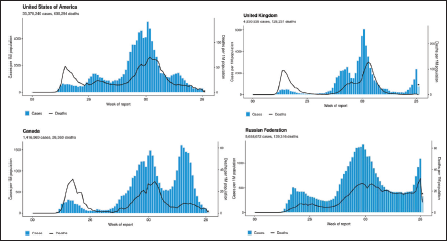
Epidemics are complex phenomena, and thus, resource allocation in them is complex and intricate. As seen in the experience with COVID-19, the complexity arises from its non-linear and dynamic reproduction rates of infectious, likelihoods of mutations and co-morbidity impacts. Brandeau (2005) generalizes the path of epidemics to an S-shaped curve. By contrast, though still an evolving phenomenon, COVID-19 has tended to follow a bell-shaped curve (see Figure A.1, based on data across different countries, showing the patterns of deaths and infections in a country). Control measures so far have affected only the size and shape of the curve in variance terms but not the growth path. The trends exhibit some of the major characteristics common to epidemics: complex and dynamic, non-linear and time-dependent (Brandeau, 2005). As the experience with COVID-19 has shown, timely mitigation measures have been shown to make a significant difference in the shapes of the curves in Figure A.1. In general, the evidence in Figure A.1 and similar data across many countries suggest that the late deployment of limited resources in the fight against COVID-19 has been inefficient compared to deploying the same resources early in the pandemic. Delays in the implementation of mitigation measures have turned out to be more costly in places such as the United States and the United Kingdom. Thus, the time horizon is crucial in the efficient allocation of resources. As seen in Figures A.1, A.2a and A.2b, the curve of infections and deaths rises, flatten, and then declines. The rising, flattening and falling portions of the curve depend on a country’s response to the pandemic. Early detection, rapid and strict mitigation measures explain the small and short curves while slow responses and ineffective mitigation measures explain the large broad curves.
Another characteristic of epidemics that makes resource allocation difficult is the non-linearity of infections and morbidity. It has been established that COVID-19 is more deadly to certain segments of the population than others. Specifically, age has been a reliable discriminant, with the elderly more at risk (see Figures A.2a and A.2b in the appendix on the distribution of deaths by age and gender)—the CDC data indicates that females have been infected at higher rates but COVID-19 death rates are higher among males. Race and socio-economic class have been other discriminants, particularly in the United States where minorities are over-represented in COVID-19 deaths and infections relative to whites (Garg et al., 2020). Studies on influenza, especially the H1N1, have established that like COVID-19, factors such as age and ethnicity exacerbate the dynamics of the epidemic (Greer et al., 2010) and thus methods of resource allocation in such contexts may be substantially different relative to baseline models. It is worth noting that these vulnerable groups have also disproportionately borne the negative economic impacts of COVID-19, notably in job losses (Gezici & Ozay, 2020). Job loss itself has been shown to result in unhealthy behavioural tendencies (Deb et al., 2011), including drinking and poor diets that exacerbate the obesity problem and other related problems that may permeate society via social norms (see Mathieu-Bohl (2020) for example). Evidence suggests that COVID-19 impacts have been particularly high among the obese (Gao et al., 2021). In addition to resource allocation prioritizing vulnerable groups, there may also be the need to incorporate the potential effects of mutation. Recent reports of COVID-19 variants and mutations have been observed in the United Kingdom (Gallagher, 2020) and Denmark (Reuters, 2020).
Moreover, in the presence of incomplete information on the exact channels of transmission and impacts, any resource allocation is likely to obscure other health complications or the emergence of co-epidemics. For example, childhood inflammatory disease associated with COVID-19 has been reported to be on the rise in North America (WHO, 2020). The simultaneous occurrence of variants, mutations and co-epidemics considerably complicates the problem of resource allocation. These complexities of resource allocation problem in epidemics inherently derive from the difficulty of treating epidemics as independent of other less severe but malign health complications. Thus, resource allocation itself may affect other health outcomes (Brandeau, 2005).
Approaches to Resource Allocation
Resource allocation in epidemics and traditional resource allocation models differ in a number of ways. Traditional resource allocation models aim to maximize outputs of physical products subject to budget constraints, and thus not directly useful for studying resource allocation in epidemics. However, in health economics, an indirect approach has been adopted to study resource allocation through cost–benefit analysis (Finkelstein et al., 1981). Explicit modelling of the resource allocation problem has been widely popular in the field of operations research, with the help of linear and/or integer programming, optimal control, optimization and heuristics. Each of these approaches makes crucial assumptions about the nature and behaviour of the epidemic for which the resource allocation problem is being modelled. In this section we review some of these assumptions, their strengths, weaknesses and more importantly, the relevance and usefulness of these approaches to understanding and mitigating COVID-19.
Specificities of Resource Allocation Models in Epidemics
Models of resource allocation in epidemics have to contain with several basic but difficult elements of resource allocation, namely the treatment of returns to scale in input or resource use, the divisibility of health intervention programmes and the independence of interventions. The independence of programme interventions is concerned with the extent to which allocating a certain fraction of the total budget or resources affect the outcomes in the rest of other interventions in the programme set. For example, in the context of COVID-19, the fervent rush to establish a stable supply of ventilators shifted the focus to those already severely infected but may have moved policy focus away from early testing and detection to prevent further spreads. This changed the effectiveness of resources allocated to prevention.
The problem of divisibility is related to the difficulty of treating an intervention as discreet or continuous, where investing in a programme is treated either as binary choice of nothing and all, or in perfectly divisible portions of the programme. For example, what does it mean to invest in only 10% of a masks acquisition programme as a mitigation strategy in COVID-19? Would this yield 10% benefits as well? The latter question relates to the issue of returns to scale—how to treat constant, increasing, or decreasing returns to scale. These, in addition to the characteristics of epidemic control outlined in the second section, are some of the major issues that distinguish various modelling approaches to resource allocation in epidemics. With few exceptions, existing resource allocations in epidemics tend to assume perfect divisibility, constant returns to scale and independence of interventions. The experience with COVID-19 indicates such assumptions would yield sub-optimal outcomes in the allocation of limited mitigation and treatment resources. In particular, it is evident that investments in prevention or early detection reduce the need for expanded capacity (for example, intensive care units) at hospitals because patients can be quarantined at home or at specialized facilities. A dollar investment in prevention yields exponentially higher returns compared to a half dollar one. A resource allocation problem that assumes constant returns to scale in this case would underestimate the benefits and inflate the costs of an intervention. Brandeau and Zaric (2009) evaluate these assumptions in the context of HIV prevention programmes.
Linear Programming Models of Resource Allocation in Epidemics
Regardless of the model or programme, a resource allocation problem defines a set of health intervention benefits or effectiveness to be maximized subject to intervention cost constraints (relationship between costs and budget). The benefits to be maximized can be specified over levels of the same programme or over different programmes. The simplest linear programming formulation of the resource allocation problem indirectly solves for optimal resource allocation via the comparison of cost-effectiveness ratios (see Brandeau (2005) for a simple mathematical illustration), where resources are allocated to interventions in increasing order of the ratios. It is in fact a reformulation of the cost–benefit analysis, where costs and benefits of health intervention programmes are compared (as in Gold et al., 1996). Gollier (2020) applies cost–benefit analysis to study confinement strategies in the context of COVID-19. The study uses calibrations to analyse the effect of age-specific confinement and testing strategies. Results of the study suggest that the cost of both policy options is minimized if the goal is to flatten the curve by confining only a fraction of the young but allowing the working age population back to work while sheltering the elderly. An alternative formulation is to maximize the quality-adjusted life years (QALYs) subject to budget constraints and equity considerations in a cost-effectiveness framework (Earnshaw et al., 2002). In a resource allocation problem in four type 1 diabetes interventions, Earnshaw et al. (2002) uses this approach to show that there exist diminishing marginal returns to health benefits of resource allocation.
Indeed, a linear programming formulation only yields optimal solution under the assumptions outlined in the third section (notably, returns to scale, divisibility, independence, etc) but such assumptions also make solutions extremely limited in their usefulness to not just COVID-19 but epidemics and even less severe health related problems. The limitations imposed by such assumptions have been addressed in various ways in the literature. For example, see Wanying et al. (2016) on optimizing anthrax distribution and Birch and Gafni (1992) and Torrance et al. (1972) on divisibility of health intervention programmes—they specifically address the divisibility problem in the resource allocation problem by reducing the health intervention programme to a binary choice of all or nothing—that is, zero or 1. This is often referred to as integer linear programming. However, this does not address many of the issue of returns to scale, nor does it address the characteristics of epidemics outlined in the second section. Stinnett and Paltiel (1996) address the same divisibility problem by instead considering various proportions (between 0 and 1) of the health intervention programme—an approach generally referred to as mixed integer linear programming (Ren et al., 2013), in reference to the use of integer constraints. In addition, Stinnett and Paltiel (1996) also address the assumption of constant returns to scale by introducing approximations of cost-effectiveness functions. However, like others, these approaches do not take into account the case of epidemics characterized by non-linearities in spread, cost and benefits of interventions. This is a feature that is modelled in optimal control approaches to resource allocation in epidemics.
Integer programming approaches have been used to study static resource allocation in epidemics as well. For example, Murali et al. (2012) consider this approach to examine resource allocation by maximizing the demand for resources over multiple geographic regions and Drake et al. (2017) models the specific case of malaria policy. A similar static allocation model is used to study resource allocation problem in the outbreak of cholera during the Haiti earthquake (Anparasan & Lejeune, 2019) and Ren et al. (2013) use mixed integer programming to study resource allocation in the case of smallpox.
Optimal Control and Equilibrium Models
A distinguishing feature of optimal control approaches is the focus on a single epidemic. The typical objective function involves minimizing the cost of a health intervention programme, often in a single epidemic and a single homogenous population. These costs tend to be linear in the number of infections, but it is the case that non-linearities in infections generate cost functions that are non-linear. Such approaches also seek to determine optimal resource allocation in an epidemic over a time period, and are easily applied to quarantines (Greenhalgh, 1988; Hansen & Day, 2011) and other programmes such as vaccination (Greenhalgh, 1986; Müller, 1998). Optimal control approaches are applicable to COVID-19 in their ability to evaluate the individual control programmes but given that many mitigation programmes operate simultaneously, evaluating them individually may lead to sub-optimal outcomes. Also, such an approach is limited by its applicability to a single homogenous mixing population. The experience with COVID-19 so far indicates that models of this type are unsuitable given the heterogeneous impacts of the virus on different population segments and the potential long term implications.
Optimal control is useful when the ultimate objective of the intervention programme is focused on controlling the short-term dynamics of the epidemic. The spread or reproduction of a pandemic, as with the experience of COVID-19, can be age-dependent. Lee et al. (2013) formulate an optimal control problem that minimizes the incidence of influenza outbreaks while minimizing intervention costs, to examine the effects of delays in vaccine production, seasonal forcing and age-dependent transmission rates on the optimal control. They conclude that an effective control strategy involves higher vaccination rates early in the pandemic, focusing on high-transmission groups and tailoring treatment to the most infectious populations. This is consistent with Toxvaerd and Rowthorn (2020) who, in the context of COVID-19, find that optimal treatment involves early intervention but that optimal vaccination defers intervention to later stages of the pandemic. This result is similar to that of Kruse and Strack (2020) on the implementation of social distancing as a COVID-19 mitigation measure. A long-term strategy would include planning for the elimination of the virus from the population, or at least the long-term state of the virus if complete eradication is not possible. Such long term planning is typically the focus of equilibrium models of resource allocation. A common objective function in the model is to minimize an allocation such that an epidemic is eliminated or contained (Brandeau, 2005)—for example, how many people would need to receive the COVID-19 vaccine such that the virus is eventually eliminated 2 . This approach has been used by Jung et al. (2009) to study the prevention of the pandemic influenza by evaluating the time-dependent optimal prevention policies, which are associated with elimination and quarantine policies, for certain levels of its execution cost. This approach has also been used to study other health crisis. For example, Hethcote and Van Ark (1987) and May and Anderson (1984) apply it to evaluate immunization programmes. In such models, resource allocation can be optimized for specific segments of the population and complimented with numerical techniques (Longini et al., 1978). Equilibrium analysis have also been applied in the case of the distribution of influenza vaccine to determine the levels that must be distributed in different segments of the population in order to achieve some equilibrium level of reproduction (for example, see Longini et al. 1978). A major shortcoming of equilibrium resource allocation models is the assumption of an extended time horizon for disease eradication or stabilization in the growth of infection. The trend depicted in Figure A.1 indicate that COVID-19 can be short-lived but with devastating consequences, such that resource allocation in the immediate term becomes a crucial element of policy relative to long term containment or eradication.
A shortcoming of and the current approaches to resource allocation modelling in general is the failure to incorporate the potential or impact of a shrinking base of resources from which epidemic control is drawn. As seen in the case of COVID-19, limited resource pools were further exacerbated by a contracting economy resulting from widespread shutdowns. The resulting recession imposes resource constraints. Modelling the effect of a shrinking pool or resources might offer insights into the allocation problem. To the best of our knowledge, there exist no pre-COVID-19 attempts to model this, as well as economy-wide economic activity in the field of epidemiology, either in the domestic or global modelling frameworks. After all, we have not had to deal with any COVID-19 type pandemic in a century. However, the pandemic has motivated a number of authors on this theme. For example, Andersson et al. (2020) adapt an epidemiology model to study a social planner’s trade-off between reduced economic activity and population health, in a framework that is much simpler than the one adopted by Jones et al. (2020) to study a similar problem. Eichenbaum et al. (2021) examine the interaction between economic decisions and epidemics, concluding that reduced economic activity exacerbates the recessionary tendencies but also reduce the severity of the epidemic. Similarly, Alvarez et al. (2020) model the economic costs of lockdowns and control of COVID-19 in a social planner’s optimal control problem. Other literature specifically related to this theme of trade-offs between economic activity and healthcare system issues include using optimal control or equilibrium approaches, include Miclo et al. (2020) as well as Gonzalez-Eiras and Niepelt (2020). It is worth noting that even this emerging literature, due to issues of complexity, only models the allocation problem indirectly: evaluating the trade-off between economic activity and health measures.
One feature of COVID-19 is its cross-border reproduction and limited mitigation resources that resulted in the competition among countries and jurisdictions for such resources. As such, the global interconnectivity and the reproduction of COVID-19 imply that mitigation, and thus resource allocation has had to take a global dimension as well. This exposes major limitations of existing models to provide useful insights that guide international cooperation in the allocation of resources in epidemics. Recent and largely nascent attempts to incorporate multidisciplinary analyses into optimization and equilibrium models to study resource allocation in epidemics are a recognition of the potential of these perspectives to improving optimal resource allocation solutions. This includes the use of game theory to study a country’s resource allocation strategies relative to other countries’ resource endowment and strategies in Nash Equilibrium. In such a model, the optimization problem is to minimize the average number of infections given the allocation strategies of other countries (Sun et al., 2009; Wang et al., 2009). However, cross-border transmission is often assumed to be limited but the experience with COVID-19 shows that cross-border infection rates may have highly exacerbated the spread of the virus, necessitating border closures at the onset as a mitigation strategy. Sun et al. (2009) reformulate the international resource allocation problem as that of central planner like the World Health Organization (WHO) but given the role, importance and controversy of this feature in the current COVID-19 pandemic, it is an opportunity to further explore the nature of resource allocation solutions in epidemics under these conditions. They also consider an alternative objective: allocating resources to minimize the probability of cross-border infections. However, ignoring the design of the central planner in this context may be too simplistic, given the role played by power imbalances in the decision rules of such bodies. In this case, the integration of network and game theories to study resource allocation can provide useful insights for policy design in pandemics. Another important aspect of the allocation problem in the global context addressed in Sun et al. (2009) is the free-rider problem—they identify conditions under which the free-rider problem is resolved in a global pandemic. Mamani et al. (2013) illustrates that such a problem can also be resolved in a contract via a third-party such as WHO. As an alternative, Mamani et al. (2013) use a numerical procedure in a contractual mechanism that reduces inefficiencies in the cross-border allocation of influenza vaccines. It is worth noting that optimizing resource allocation in a pandemic with long-term horizon may be untenable politically—policymakers may be more concerned with ‘showing results’ by eradicating an epidemic within the shortest time possible. This makes other resource allocation approaches such as simulations and numerical techniques more practical and tractable.
Simulations and Numerical Techniques for Resource Allocation Models
The models discussed in the second and third sub-sections of the third section generally require restrictive assumptions, making them operationally difficult to solve for optimal solutions. Simulations allow for a consideration of more realistic resource allocation scenarios in an epidemic model, they simplify the analysis by relaxing some of the limiting assumptions. For example, different realistic resource allocation alternatives can be evaluated and compared and these alternatives can be analysed for different populations within compartmental epidemic models in which the population is split into different segments—a feature suitable for studying the observed differential impacts and reproduction rates of infections of COVID-19. Simulation-based techniques combine optimization and easily allow for the evaluation of an infinite set of alternative combinations of resources in the model and provide opportunities to use more realistic representation of the resource allocation problem facing the policymaker (Kasaie & Kelton, 2013). Allocation strategies via simulations in optimization models can be derived by using agent-based simulation or compartmental model. Dalgıç et al. (2017) does a comparison of both in the resource allocation in an influenza pandemic and conclude that the agent-based simulation results in up to 70% decrease in total cost and 34% reduction in the number of infections compared to the strategies derived by using the compartmental model.
Simulations also provide opportunities to model the dynamics of epidemics in the solution to resource allocation. For example, Ndeffo Mbah and Gilligan (2011) deploy mathematical formulations and analysis to derive solutions to the optimal resource allocation problem in the case of an epidemic that evolve over time and use simulations to evaluate these solutions—finding that such optimal solutions require shifting resources to populations with larger carriers of the infections. Similar findings have been obtained from simulations in the studies of resource allocation in the spread and treatment of HIV (Bernstein et al., 1998; Richter et al., 1999; Robinson et al., 1995). Other simulation techniques incorporate geospatial analysis, which could be useful in modelling pandemics of the COVID-19 and Ebola types. For example, Gerberry et al. (2014) use simulations with linear programming in an optimization framework to study HIV interventions in Sub-Sahara Africa. Ferguson et al. (2005) uses a similar model in Thailand and neighbouring countries, Longini et al. (2005) employs the same approach to study influenza-A and Lee et al. (2013) examine vaccine production. Miller et al. (2008) apply an algorithmic procedure to project age-specific years of life lost (YLL) in the case of vaccination against influenza and concludes that prioritizing the younger populations results in better outcomes.
The issue of shifting priorities over time in the resource allocation in health interventions has been addressed via simulations using simple decision rules, for example, Tebbens and Thompson (2009) implement simulations via cost-effectiveness approach to demonstrate that cost-effectiveness decreases with increases in priority shifting and emphasizes the importance of long-term dynamics in resource allocation to eradicate an epidemic. Sun et al. (2009) consider a numerical approach to optimization in a game theoretic model to study resource allocation between countries in a pandemic. It is worth noting that Trotter et al. (2020) represent a recent example of the use of simulations to study economic growth and COVID-19 in a global context. Their results are similar to those obtained under optimal control and equilibrium approaches: early intervention is most effective.
Optimization Models for Resource Allocation in Epidemics
Optimization models offer solutions to some of the intractable modelling problems identified above. Focusing on resource allocation in mitigation strategies, the objective of a typical optimization model is to minimize the total number of infections (as in Patel et al., 2005), or maximize the number of infections averted (IA), quality-adjusted life years (QALYs) lived or simply to minimize the reproductive rate of infection or infections subject to budget constraints. These constraints are defined by the relations between available resources and maximum possible benefits of expending them (Alistar et al., 2014; Brandeau, 2009; Brandeau et al., 2003; Dasaklis et al., 2017; Hansen & Day, 2011; Rachaniotis et al., 2012; Zaric & Brandeau, 2007). The advantage with resource allocation optimization models include the compartmentalization of the population into various heterogeneous segments and the ability to expand the set of alternative allocations, often in a finite time, not just in a long term horizon as in the case of equilibrium models discussed in the second sub-section of the third section. They can also be formulated to account for nonlinearities and as a linear programming problem, as done in (ReVelle et al., 1969), or semidefinite programming by making use of the spectral properties of the network (Ottaviano et al., 2018). Also, different health interventions can be applied to different compartments or independent populations with differential infection rates (Brandeau, 2003). In the latter, optimization can be complimented with numerical search procedures to solve the optimal resource allocation, as done in Richter et al. (1999) for HIV prevention and Zaric and Brandeau (2001b) in more generalized prevention programmes with interacting populations in a linear programming. One common theme with optimization resource allocation modelling, as well as those discussed in the second and third sub-sections of the third section, is the static allocation of resources over the time horizon of the epidemic. It is clear from the experience with COVID-19 that shifts in resource allocation would need to occur as policymakers receive more information, particularly on its impacts. Wang et al. (2009) partly addresses this problem of time-varying demand for resources by constructing a model with multi-objective stochastic programming for allocating resources in an epidemic. Even assuming the existence of an equilibrium state, it might not be feasible to predict it in the presence of an emerging epidemic about which little is known. Similarly, Zaric and Brandeau (2002; 2001a) relax this assumption by developing a resource allocation model with interventions for multiple populations that allows for epidemic control to be allocated over multiple time periods. Updating allocation of resources would require changes in the assumed production functions as well as other model inputs. Models appropriate for this type of updating generally fall under a class of modelling that makes use of heuristics. Other optimization techniques include spatial features in the resource allocation programme, along with prioritizing disease risk factors such as age—see for example Venkatramanan et al. (2019) in the case of seasonal influenza vaccine.
Heuristic Approaches to Resource Allocation in Epidemics
A resource allocation with interventions for multiple populations that allows for epidemic control to be allocated over multiple time periods implies some element of an updating mechanism. Such updating would require changes in the assumed production functions as well as other model inputs. Models appropriate for this type of updating generally fall under a class of modelling that makes use of heuristics. As the patterns of COVID-19 emerge and are better understood, it is essential that such knowledge also inform how resources should be allocated at various phases of mitigation and recovery. Thus, it is expected that resource allocation at the epidemic outbreak phase in the left tail of the curves in Figure A.1 will be different from the allocation in the phase represented by the right tail of the distribution. Introducing the dynamics of an epidemic itself and incorporating resulting dynamic resource allocation features can often make optimization solutions to the resource allocation unattainable. The models discussed above do not provide solutions to dynamic resource allocation problem. The approach most commonly used in these cases involve varying degrees of heuristics—an important feature that is quite useful from a policy design and implementation perspective. In heuristic approaches, the typical objective is to maximize infections averted subject to a limited budget that can be shifted within operational programmes, as well as the ability to reach the targeted and different segments of the population. The model can be formulated with linear or non-linear production functions of the epidemic, mixed or homogenous populations, and whether or not programmes are independent (Kaplan, 1998; Zaric & Brandeau, 2001b). Such models have been used to understand and design resource allocation in HIV prevention efforts to maximize averted infections. More sophisticated approaches involve coupling heuristic algorithms with software mathematical solver to derive solutions to dynamic optimization model for allocating epidemic control resources (Liu & Liang, 2013). Other areas in which mixed modelling approaches and heuristics have been applied to study resource allocation include smallpox outbreak (Ren et al., 2013).
Conclusion
Motivated by the experience of policymakers’ experience with COVID-19, we seek to provide a brief synthesis on the state and nature of the literature on resource allocation in pandemics. The goal is to assess the extent to which such literature enhances our understanding and ability to mitigate the pandemic. COVID-19 offers opportunities to fill crucial gaps and update model approaches to resource allocation in epidemics. Our assessment yields useful insights on the resource allocation problem that can enhance our understanding of the complexity of this problem in the dynamics of COVID-19 and its variants. First, a notable feature of the current literature on resource allocation in epidemics is that there is little to no modelling of resource allocation in co-epidemics. However, we now know from the experience with COVID-19 that there exist the potential for the emergence of other epidemics precipitated by the virus. This is in addition to pre-existing health problems that are exacerbated by the virus—the reason for the high number of COVID-19 deaths and infections concentrated in the elderly who tend to have weak immune systems and those with diabetes (Hillson, 2020). Second, equally important in the resource allocation in epidemics is the often multi-level decision-making through which interventions often traverse. For example, in the United States the Federal government may provide relief resources during a disaster or pandemic but the states or local authorities largely make the decisions on how such resources are distributed. The controversy around the acquisition and distribution of ventilators during the COVID-19 pandemic is an example of this problem. Resource allocation models addressing this multi-level decision-making remain limited. Third, pandemics in the nature of COVID-19 imply resource allocation models would also be concerned with multi-level decision-making across borders as well. In this regard, the integration of network and game theoretic approaches into a framework for studying resource allocation can provide useful insights for policy design in pandemics. Fourth, the current literature is the limited treatment of uncertainty in general. Resource allocation solutions in the presence of high uncertainty in the reproduction rate of an epidemic can yield significantly different outcomes. In the case of COVID-19, there is high uncertainty on transmission. It was generally known that asymptomatic patients can easily transmit the virus but doubts have begun to emerge on this—which potential introduces uncertainties in the deployment of limited resources (see Padula, 2020) for a brief outline of the case of the United States). One way to incorporate uncertainty is to treat allocation as a stochastic process, where uncertainty about the reproduction or impacts of the epidemic necessitates the assignment of some probability functions that reflect the uncertainties of outcomes. This is different from assigning weights, as practiced in parts of the current literature. There is, of course, the fundamental uncertainty problem of information on such probabilities. Also, progress registered in computing and artificial intelligence may help to enhance the ability of professionals to derive efficient solutions to the resource allocation problem. The incorporation of artificial intelligence into various platforms across the fight against pandemics is likely to be increasingly applied in this field as a way of dealing with the complex issues that make simple analytical solutions intractable. This has the potential to have significant positive impacts on the outcomes of health interventions (Schwalbe & Wahl, 2020).
Appendix