




Abstract
While extant research has identified several determinants of the Bharatiya Janata Party (BJP)’s unprecedented victory in the 2019 general election, they have overlooked the party’s populist radical right (PRR) nature, particularly under the leadership of Narendra Modi. Based on the demand side of PRR voting, this article examines the effect of Indian voters’ populist attitudes on their voting choices for the BJP during the 2019 election. Using binary logistic regression (BLR) and conducting a robustness check, this article identifies that the variable of individuals’ populist attitudes does indeed exert a significant effect on their vote choices for the BJP during the 2019 election. In addition to this main variable, a number of controls that were included in the analysis were also found to be significantly correlated with the dependent variable. In light of the findings, the article proposes some theoretical implications.
Keywords
Introduction
Narendra Modi and the Bharatiya Janata Party (BJP) secured an overwhelming triumph in the 2019 general election. This electoral outcome holds profound importance within the realm of Indian politics, as the BJP obtained 303 seats in the 17th Lok Sabha (lower house of parliament), surpassing its 2014 tally of 282 seats. This marked the highest vote share by the BJP since the 1989 general election, consolidating its substantial majority even further.
Many studies have attempted to explain the reasons behind the BJP’s landslide victory in the 2019 Indian general election. For instance, some have emphasized Narendra Modi’s charismatic leadership (Shastri, 2019) or the ideological shift in Indian politics and the BJP’s broadened social coalition (Chhibber & Verma, 2019).
Despite their substantial contributions, these works have neglected to consider the fundamental nature of the BJP as a populist radical right (PRR) party, particularly under the leadership of Narendra Modi (Ammassari et al., 2022; Chacko & Jayasuriya, 2018; Chatterji et al., 2019; Leidig & Mudde, 2023; McDonnell & Cabrera, 2019). Hence, it would be imperative to interpret the electoral outcome in the 2019 general election through the lens of populism.
In contemporary times, there has been a notable surge in right-wing populist parties as well as leaders, not only in India but also globally. The rise of these political entities implies that they are frequently favoured by a significant proportion of voters worldwide. Regarding this intriguing global phenomenon, numerous studies have investigated the diverse factors that prompt voters to choose PRR parties. While these debates have exhibited varying perspectives, they are primarily rooted in either the supply-side or demand-side approaches to PRR voting (Spruyt et al., 2016).
The scholarship grounded in a supply-side framework highlights the significance of contextual factors in explaining the vote choice for PRR parties (Medeiros, 2021). Scholars in this strand depict the public as a passive entity easily mobilized by various contexts conducive to populism, including socio-economic crises, political party strategies, or shifts in the political landscape (Mounk, 2018; Rico et al., 2017). In this context, they assume that individuals’ voting choices in favour of PRR parties are spontaneously shaped by these contextual elements.
While such conceptualization has merit, its limited generalisability poses a challenge to adequately explaining real-world scenarios. This constraint becomes apparent in situations, where populist demand and voting preferences for PRR parties are observable in countries that lack contextual elements associated with PRR voting choices (Mudde & Rovira Kaltwasser, 2017).
To fill this conceptual gap, recent scholarly works highlight the importance of examining PRR vote choices from the perspective of its demand side (e.g., Bakker et al., 2016; Medeiros, 2021; Spruyt et al., 2016). These discussions argue that, while contextual factors may play a role in shaping people’s voting choices for PRR parties, the primary influence comes from individual-level factors. Among these individual-level determinants, a significant portion of academic research specifically focuses on voters’ populist attitudes (Mudde & Rovira Kaltwasser, 2017; Spruyt et al., 2016).
Populist attitudes refer to a set of populist ideas that manifest as specific attitudes at the individual level, underlying populist proclivities and a potential populist vote (Silva et al., 2022; Van Hauwaert et al., 2020). The scholarship centred on this perspective views the public as an active agent capable of contributing to the rise of populism, assuming that individuals’ vote choices in favour of PRR parties are largely influenced by their populist attitudes.
Among these two mainstream approaches, this article adopts the demand-side perspective due to the following considerations. First, while the supply-side explanations have primarily been introduced and regarded as a robust framework, they seem to exhibit limited generalisability, as previously described. Second, and of greater significance, a specific case in this article, namely, the Narendra Modi-led BJP, provides an ideal opportunity to explore whether the existing demand-side theories on PRR, largely derived from European contexts, can be applicable beyond Europe (Ammassari et al., 2022).
With this background, this article seeks to identify whether there exists a significant statistical correlation between Indian voters’ populist attitudes and their voting choices for the BJP in the 2019 general election and, if so, to explore the manner in which the former influences the latter. To achieve this research purpose, a binary logistic regression (BLR) model is employed in this article. The article will elaborate on the rationale behind employing this specific methodology in the third section.
The remainder of this article is structured as follows: the second section presents an in-depth discussion of the core concepts of populism and populist attitudes. In this section, the article elaborates on the theoretical connection between individuals’ populist attitudes and their voting preferences in favour of the PRR party. In the third and fourth sections, the article details the data and methodology, followed by the execution of empirical analyses and a robustness check. Following this, the fifth section offers a comprehensive discussion of the findings. Finally, the sixth section concludes with a summary of the findings, implications, and limitations of this article. 1
Theoretical Backgrounds
Populism
Populism is a frequently used term in twenty-first century politics, yet there is no consensus on its precise meaning and scope. In this context, scholars have made efforts to provide a systematic definition of populism, resulting in the identification of four main categories: (a) a political strategy approach; (b) a political style approach; (c) the Laclauan approach; (d) an ideational approach.
In the context of a political strategy approach, populism is defined as ‘a political strategy through which a personalistic leader seeks or exercises government power based on direct, unmediated, uninstitutionalized support from large numbers of mostly unorganized followers’ (Weyland, 2001, p. 14). Despite its conceptual simplicity, this definition falls short by not accounting for the role of institutionalized political parties in the origin of populism. This omission poses challenges in understanding recent cases, such as the rise of right- and left-wing populist parties (Plagemann & Destradi, 2019).
In a political style approach, populism is defined as the leader’s political demeanour, encompassing elements such as an appeal to the people, addressing crises, breakdowns, threats, and displaying what may be considered bad manners (Moffitt & Tormey, 2014). However, critics point out that this approach identifies these core elements through an inductive approach (Laclau, 2005) and overlooks the ideational aspects shared by populists across different political spectrums (Plagemann & Destradi, 2019).
Third, the Laclauan approach views populism not only as a fundamental aspect of politics but also as a liberating force (Laclau, 2005). Proponents of this approach assert that populism, by mobilizing marginalized segments against dominant elites, acts as an emancipatory force in society. While this insight is significant in highlighting the constructive aspects of populism (Kim, 2019), it has also faced criticism for neglecting the deeply illiberal tendencies driving the rise of populism (Mounk, 2018).
Lastly, the prevailing approach in scholarly literature is the ideational perspective, which sees populism as a thin-centred ideology perceiving society as fundamentally divided into two homogeneous and antagonistic groups, the pure people versus the corrupt elite or ‘the other’ (anti-elitism and a Manichean worldview) and emphasizing the general will of the (pure) people in politics (people-centrism) (Mudde, 2004; Schulz et al., 2018; Van Hauwaert et al., 2020). A crucial aspect of this approach lies in recognizing populism as a thin-centred ideology that often aligns itself with other thick-centred ideologies, including fascism, nationalism, and others (Mudde & Rovira Kaltwasser, 2017).
Among these four definitional approaches, the ideational perspective has become a dominant viewpoint in populism studies due to its relative theoretical advantages (Hawkins & Rovira Kaltwasser, 2017; Van Hauwaert et al., 2020). This approach enables scholars to understand populism as a thin-centred ideology and to cover a broader range of observable contexts, where populism is closely connected with other thicker-centred ideologies, such as Hindu nationalism in India.
Considering this conceptual merit, this article embraces an ideational perspective to define populism. The article thus conceptualizes populism as a thin-centred ideology that encompasses core constructs such as anti-elitism, people-centrism, and a Manichean worldview and usually appears in combination with other thick ideological features.
Populist Attitudes
One notable advantage of the ideational approach is its ability to provide a theoretical basis for examining not only the supply side of populism, which includes political parties advocating populist ideas, but also its demand side, involving the electorate adhering to populist discourses. Consequently, the ideational approach to populism can generate novel insights into the micro-foundations of populism, an aspect that has often been overlooked (Hawkins & Rovira Kaltwasser, 2017).
Nevertheless, existing research grounded in this ideational approach has predominantly concentrated on the supply side of populism, overlooking the demand side, specifically the ideational orientations of voters (Akkerman et al., 2014). Yet, it is crucial to note that for populism to gain traction through political parties or mass social movements, there must be a demand for its messages at the individual level, which hinges on citizens’ ideational orientations towards populism (Mudde & Rovira Kaltwasser, 2017). Given this context, it is essential and timely to shift our research focus towards the demand side of populism to address existing research gaps and achieve a more nuanced understanding of the global rise of populism.
Populism, defined here as a thin-centred ideology encompassing anti-elitism, people-centrism, and a Manichean worldview, pertains to an organized set of beliefs, values, and ideas in nature. Therefore, this definition can be applicable at the individual level, taking the form of an attitude (Van Hauwaert et al., 2020; Van Hauwaert & Van Kessel, 2018). As such, the concept of ideational orientations towards populism at the individual level can be known as populist attitudes, indicating the extent to which individuals align themselves with populism (Marcos-Marne et al., 2023). Drawing from this perspective, this article defines populist attitudes as individuals’ specific set of ideas and attitudes aligning with the three core elements of populism.
Populist Attitudes and PRR Voting
Based on the conceptualizations mentioned above, this article aims to investigate the correlation between individuals’ populist attitudes and their voting choices for the BJP during the 2019 general election in India. However, before proceeding with this empirical analysis, the article first needs to identify whether these two variables are related to each other in a theoretical manner, even though it seems obvious at first glance that those who hold more populist attitudes will be more likely to support a PRR party.
Voting behaviour involves a decision-making process shaped by the interplay between the ideological orientations of individual voters and various social factors. However, in current literature, the impact of individuals’ ideological orientations on their voting behaviours has been neglected, impeding our understanding of electoral preferences for populist parties (Bornschier et al., 2021).
In this context, a theory that can fill this research gap is the subjective ideological orientations model (Lee, 2009). This model explores how a person’s ideological orientation relates to their voting choices. According to this theory, individuals’ voting decisions are often shaped by their subjective ideological orientations. Therefore, individuals with liberal or left-wing ideological orientations tend to vote for liberal or leftist parties or leaders, whereas those with conservative or right-wing ideological orientations are more likely to support conservative parties or leaders.
As implied by its theoretical premise mentioned earlier, the model was initially designed to cover the left-right ideological spectrum of voters. However, since populism is defined as a (thin-centred) ideology in this article, as mentioned before, we can consider a set of ideational orientations towards populism at the individual level (i.e., populist attitudes) as one of the individuals’ subjective ideological orientations. From this perspective, this article can reasonably assume that individuals with stronger populist attitudes are more likely to vote for populist parties, including the PRR parties, compared to those with lower levels of populist attitudes. 2
Based on these arguments, this article derives the following hypothesis.
H1: Individuals with more populist attitudes are more likely to vote for the BJP, whereas those with less populist attitudes are less likely to cast a ballot for the party.
Data and Methodology
For analysis, this article opts to examine the context of the 2019 general election in India. This selection is grounded not only in the fact that the 2019 general election stands as the most recent electoral event at the time of writing in 2023 but also in the assertion that, in contrast to the 2014 general election, the 2019 election signifies the ascendancy of the BJP as a nationwide trend rather than an isolated one-off occurrence. This rationale aligns with the viewpoint upheld by several scholars who argue that this particular election is significant in that it denotes not only the dominance of the BJP (Schakel et al., 2019) but also the emergence of a right-wing hegemony in Indian politics (Kumar, 2020b).
Next, in order to operationalize the variables at hand, this article employs the data sourced from Module 5 of the Comparative Study of Electoral Systems (CSES). The CSES serves as not only a nationally representative face-to-face post-election survey dataset, encompassing a substantial number of observations (over 40,000) across the countries, but also distinguishes itself through the recent publication of heretofore unavailable Indian data in other comparative surveys. This distinctive attribute of the CSES affords the opportunity to access individual-level data pertaining to voters’ electoral behaviour and populist attitudes within New Delhi. 3
As for the measurement of the main independent variable, that is, populist attitudes, this article uses the battery for populist attitudes presented in the fifth module of the CSES, following an extensive set of earlier studies by Akkerman et al. (2014), Silva et al. (2020), Silva et al. (2022), Spruyt et al. (2016), and others. These batteries comprise seven distinct items that are designed to assess respondents’ three dimensions of populist attitudes using a 5-point scale from 1 (strongly agree) to 5 (strongly disagree). The original wording of the questions and their corresponding dimensions are presented in Appendix A. 4 Since most items, except Q4c, are inversely coded so that lower scores signify higher populist attitudes, this article recodes those items to facilitate interpretation; higher scores correspond to higher levels of populist attitudes.
Subsequent to the initial selection of the items, this article conducts a preliminary factor analysis to test the construct validity of this measure using the varimax rotation method. To do so, the article first performs both Bartlett’s test of Sphericity and the Kaiser-Meyer-Olkin (KMO) test to see how suitable the data is for factor analysis. Both of these respective preliminary tests suggest that all seven items are suitable for factor analysis, as evidenced by the p value from Bartlett’s test being less than 0.05 (p = 0) and a high KMO value above 0.90 (0.911).
After conducting a factor analysis, this article found substantial interrelationships among most items. Nevertheless, one particular item, Q4c, stood out as notably dissimilar from the remaining items, displaying both a low commonality value (0.442) and a negative factor loading (–0.665). Thus, the article opts to eliminate Q4c from further consideration, although the factor loading for this item surpasses the threshold of 0.4, indicative of a moderate correlation between the item and the underlying factor. 5
Finally, in quantifying populist attitudes among Indian voters, this article aggregates the scores of items reflecting the threefold populist dimensions for each respondent instead of utilizing individual items separately. This approach finds its grounding not only within the theoretical framework positing that the combination of these elements underpins the specific populist logic, notwithstanding the individual significance of distinct ideational components (Spruyt et al., 2016), but also aligns with empirical evidence signifying the high reliability of the scale as an entirety (Cronbach’s α = 0.883). 6
To measure the outcome of interest, this article employs the CSES’s item designed to ascertain whether or not the respondent cast a ballot for the outgoing incumbent party, that is, the BJP in this case. This particular item is structured by using a binary response format in measurement, with two possible values ranging from 0 (did not vote for the BJP) to 1 (voted for the BJP).
Along with the main (in)dependent variables under consideration, this article includes a set of control variables. These controls include a series of sociodemographic and politics-related variables known to significantly influence voter decisions (Abi-Hassan, 2017; Ammassari et al., 2022; Ha, 2018; Silva et al., 2022; Spierings & Zaslove, 2017). They encompass age, gender, education, caste, income, marital status, and religions, as well as political indicators such as political interest, political efficacy, political ideology, political preferences for the BJP, and political preferences for Narendra Modi. A description of the variables used in this article is presented in Appendix B.
Moving forward, this article uses a BLR technique to examine the effect of populist attitudes on vote choice in favour of the BJP. This particular model is an extension of conventional linear regression, designed for scenarios, where the dependent variable assumes categorical and dichotomous properties. Considering that the nature of the dependent variable under consideration presents itself in a binary way, employing the BLR methodology appears suitable for this article.
A basic econometric model to be estimated in this article is as follows:
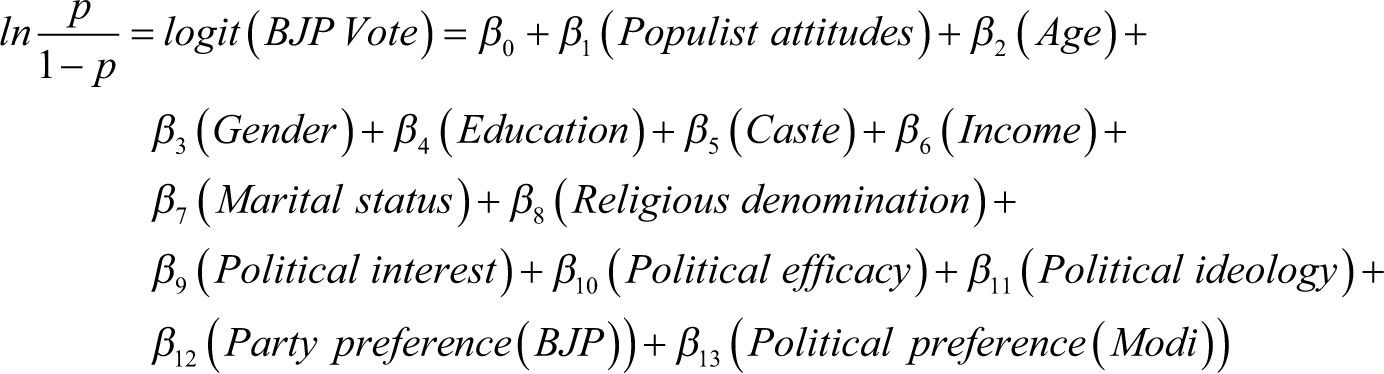
Here, the left-hand side of the equation refers to the probability of occurrences of individuals’ vote choices in favour of the BJP (denoted as p) relative to instances, where such choices do not occur. In this case, the impact of independent variables is explained in terms of odds. The right-hand side of the equation includes the parameters β0 and β1, β2 … β13 representing the intercept and coefficients of independent variables, respectively.
Analysis and Results
Before conducting further analysis, this article first presents descriptive statistics in Table 1.
Descriptive Statistics.
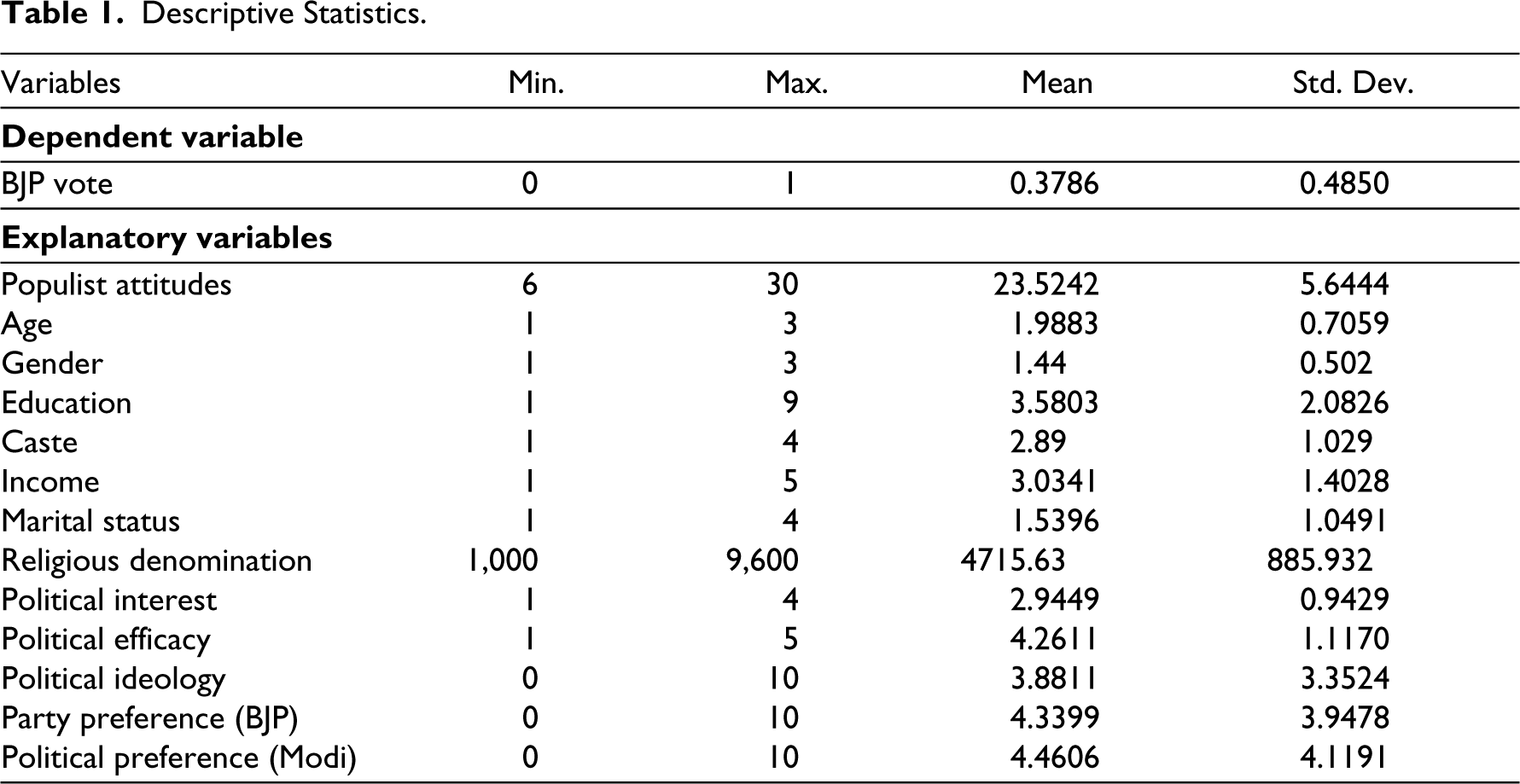
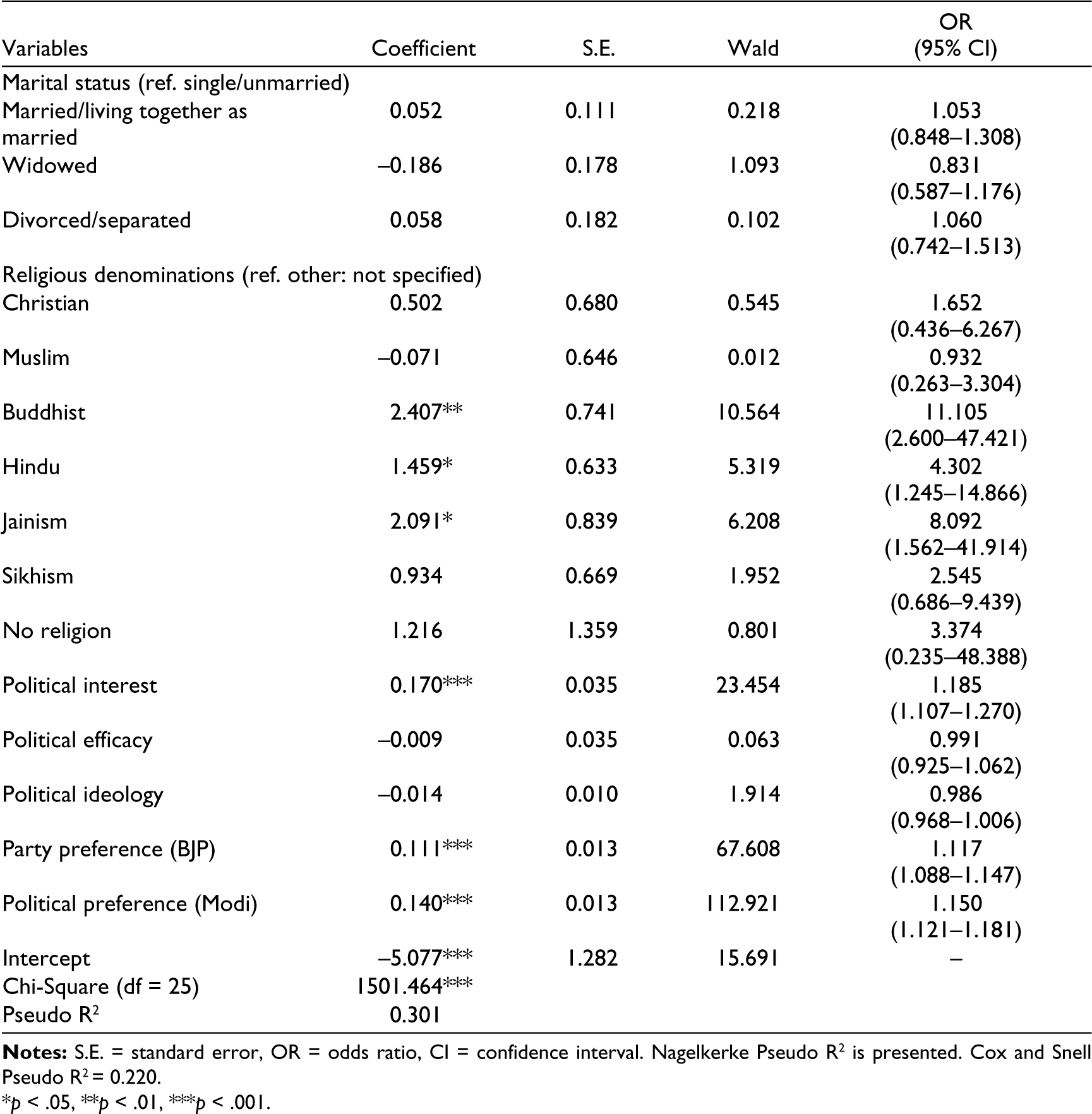
Table 2 presents the outcomes of estimations utilizing the BLR model. It is important to highlight that, initially, the sample size was 13,963; however, during the actual analysis and a subsequent robustness test, the sample size dropped to 6,043 and 5,943, respectively. This reduction was due to the exclusion of entire records if any single value contains missing data, non-responses, or responses marked as ‘don’t know’ or ‘refused’.7,8
Results of BLR Analysis.

*p < .05, **p < .01, ***p < .001.
The analysis reveals that when accounting for other predictors, a one-unit increase in the populist attitudes variable corresponds to a 4.8% increase in the odds of choosing the PRR party. It indicates that during the 2019 general election, Indian voters exhibiting greater populist attitudes demonstrated an increased propensity to cast a ballot in favour of the BJP (p < .001). This empirical evidence stands as robust support for H1.
Additionally, this article found that the controls associated with individuals’ caste categorizations (particularly the variables of SC and OBC), religious denominations (encompassing the variables of Buddhism, Hinduism, and Jainism), and degrees of political interest and preferences for the BJP and the persona of Narendra Modi himself are found to exert significant impacts on the dependent variable.
Concerning the caste variable, the analysis suggests that when adjusted for the other predictors, a one-unit increase in the caste variables results in a 43.2% and 18.2% decrease in the odds of the PRR voting choice. This finding indicates that Indian voters who identify as SC or OBC show a decreased inclination to vote for the BJP in the 2019 general election compared to the reference group identifying as general or other caste categories (p < .001 and p < .01, respectively).
Next, in comparison to individuals professing their adherence to ‘other’ religious beliefs, Indian voters identifying themselves as adherents of Buddhism, Hinduism, or Jainism exhibit a heightened likelihood of voting in favour of the BJP in the 2019 general election. The coefficients associated with these three religious variables achieved statistical significance at levels of 1% (Buddhism) and 5% (Hinduism and Jainism), respectively. In terms of percent change, it can be stated that a one-unit increase in the variables of Buddhism, Hinduism, and Jainism is linked with a 1,010.5%, 330.2%, and 709.2% increase in the odds of opting for the BJP. However, the validity of the relationship is questionable due to the exceptionally high odds ratio.
Finally, this article found that for every unit increase in individuals’ levels of political interest, there is an 18.5% increase in the odds of their voting for the BJP. This finding implies that Indian voters with a higher level of political interest are more likely to vote for the BJP. Likewise, the analysis indicates that when adjusted for the other predictors, a one-unit increase in individuals’ preferences for the BJP and Narendra Modi is associated with a 11.7% and 15% increase in the odds of their BJP vote, respectively. It indicates that those who strongly favour the BJP and its prominent figure, Narendra Modi, are inclined to support the party with their votes. The importance of these findings is underscored by their substantial significance, as evidenced by achieving statistical significance at the 0.1% level. 9
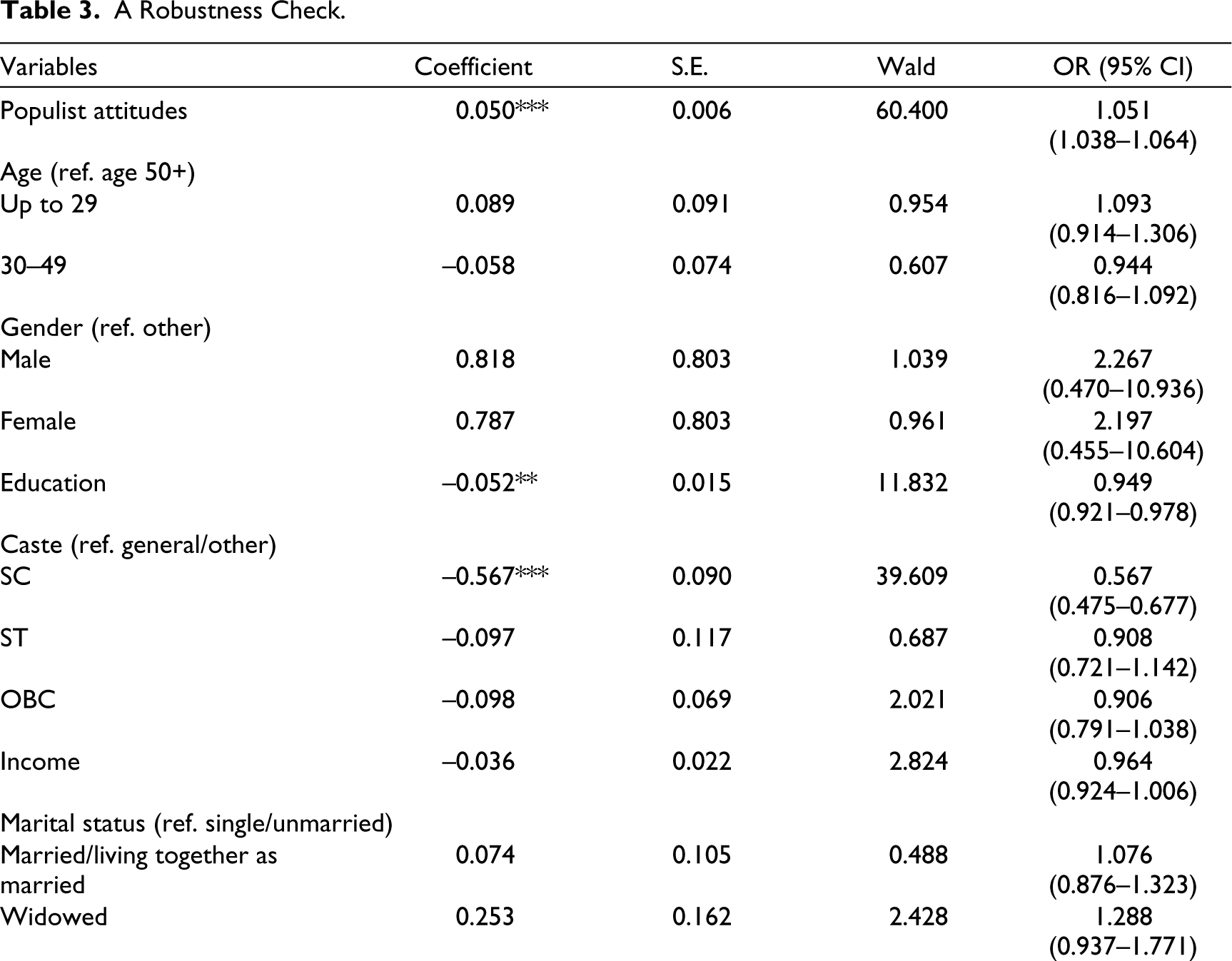
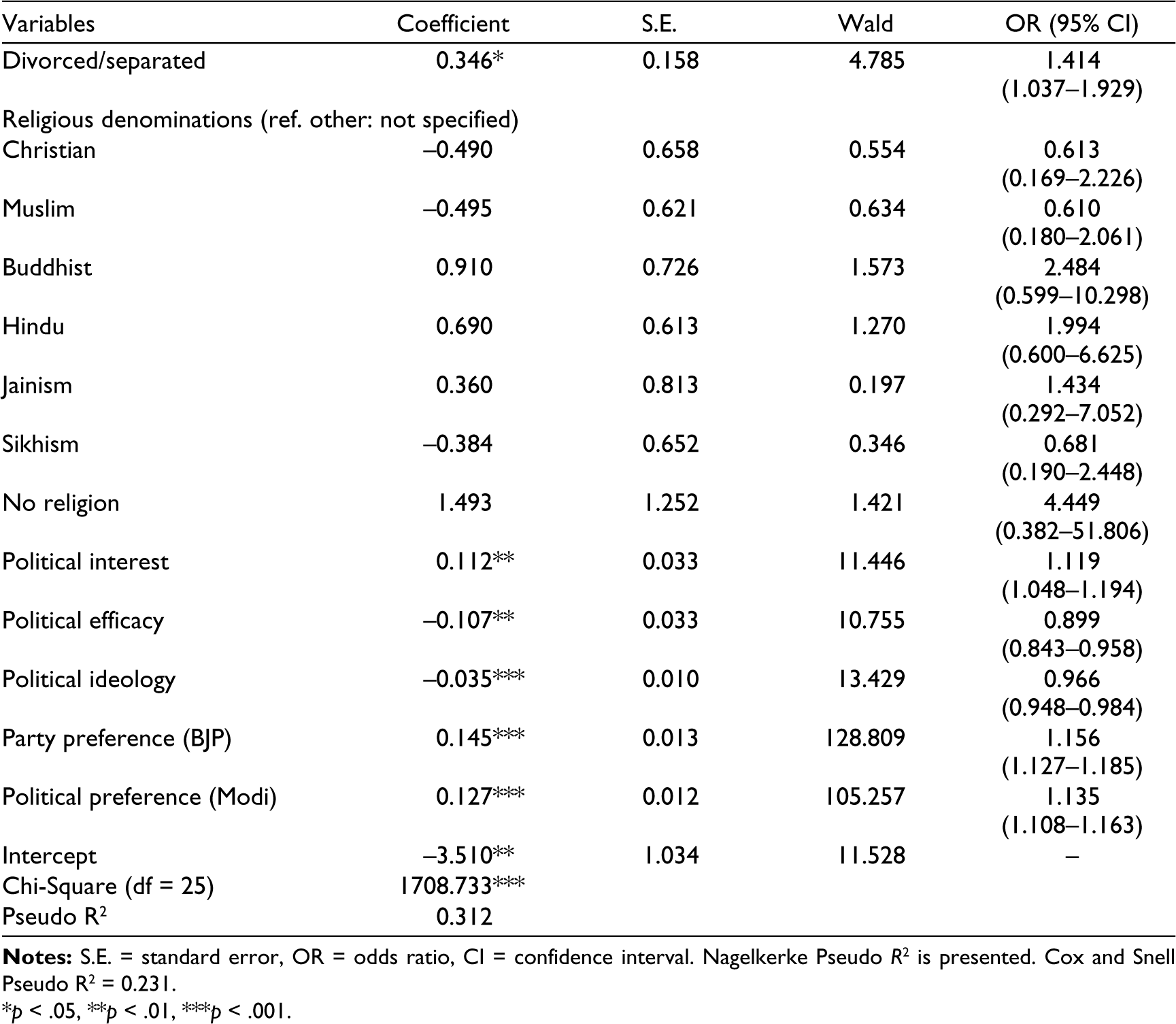
Subsequently, in order to ascertain the robustness of the aforementioned findings, this article proceeds to re-evaluate the models reported in Table 2 by employing an alternative indicator for the dependent variable. This indicator captures respondents’ voting choices for the BJP during the 2014 general election. For the analytical process, this article transforms this dependent variable into a binary scale comprising two extreme values (1 and 0), where 1 signifies a vote for the BJP and 0 signifies no vote for the BJP. The results of this robustness check are presented in Table 3.
A Robustness Check.
*p < .05, **p < .01, ***p < .001.
In this robustness check, it is noteworthy that even when an alternative dependent variable is considered, the outcome related to individuals’ populist attitudes remains consistent. In addition, the coefficient associated with the variable of populist attitudes exhibits the same pattern as identified in the previous regression analysis. Based on this finding, the article asserts that the earlier identified finding remains unaffected by the specific operationalization of the dependent variable; therefore, the influence of populist attitudes on PRR voting choice is confirmed to be steadfast and robust.
In addition to populist attitudes, other variables of individuals’ caste categorization (i.e., SC) political interest, preferences for the BJP and Narendra Modi remain significant in this robustness check. The odds ratio for these variables reveals that a one-unit increase in each variable is associated with a 43.3% decrease (for SC), as well as an 11.9% increase (for political interest), a 15.6% increase (for preference for the BJP), and a 13.5% increase (for preference for Narendra Modi) in the likelihood of choosing the BJP.
On the other hand, this article found that certain independent variables that were initially identified as either statistically significant or insignificant in the previous regression demonstrated a reversal of significance in this robustness check. Specifically, controls related to education, marital status (i.e., divorced or separated), political efficacy, and political ideology, initially considered irrelevant, now display significant correlations with the dependent variable. The odds ratio for these variables indicates that every unit increase in marital status, education, political efficacy, and political ideology is associated with a 41.4% increase, as well as a 5.1% decrease, a 10.1% decrease, and a 3.4% decrease in the odds of casting a ballot in favour of the BJP, respectively. Conversely, the variables associated with OBC, Buddhism, Hinduism, and Jainism, which were originally significant, lose their statistical significance in the robustness check.
Discussion
In summary, the findings derived from both the main analysis and robustness check confirm that the variable of voters’ populist attitudes does indeed exert a significant effect on their PRR voting behaviour. Moreover, the direction of this influence aligns cohesively with the hypothesis (H1). These results suggest that during the 2019 general election, voters with a stronger exhibition of populist attitudes are more likely to cast a ballot in favour of the BJP.
Alongside populist attitudes, the main analysis indicated the significance of various control factors. These factors include individuals’ caste categorizations (i.e., SC and OBC designations), religious affiliations (i.e., Buddhism, Hinduism, and Jainism), political interest, and political preferences for the BJP and Narendra Modi. However, in the subsequent robustness test, the variables associated with OBC, Buddhism, Hinduism, and Jainism, initially considered relevant in the main regression, were found to be insignificant to the dependent variable. On the contrary, controls related to individuals’ education, marital status, political efficacy, and political ideology, initially deemed irrelevant, exhibit significant correlations with the dependent variable in the robustness check.
Concerning the caste variable, both the main regression and its supporting robustness test align in suggesting that Indian voters identifying within the SC caste category are less likely to vote in favour of the BJP. Given the lack of significance demonstrated by the income variable in this article, it is reasonable to assert that these outcomes emphasize the diminishing explanatory power of class—a crucial determinant in understanding voting patterns in the Indian context. Conversely, another significant variable, namely caste, persists in demonstrating its relevance for explaining voting behaviour, particularly in favour of the PRR party during the 2019 general election (Jaffrelot, 2019). 10
Furthermore, a close look at the negative coefficients of the SC variable reveals that although the BJP has been attempting to expand its support base and accomplished the intended goal to some degree (Kumar, 2020c), the party is still suffering electoral losses among SC voters. This trend potentially underscores the meaningful role that caste plays in the landscape of Indian politics.
Next, among various sociodemographic controls, this article primarily focuses on the results obtained from the religion-related variables. This emphasis is driven not only by their profound significance in Indian politics but also by the notable differences between the results in the main analysis and those in the subsequent robustness check. The main analysis revealed that those who self-identify as adherents of Buddhism, Hinduism, or Jainism manifest an elevated likelihood of voting in favour of the BJP. Beyond the evident correlation between Hindu religious affiliation and BJP voting tendencies, the finding that individuals who identify as Buddhists or Jains also exhibit an increased propensity to cast their votes for the BJP provides empirical support for the party’s successful efforts to expand its support base during the 2019 election, particularly in the religious domain.
Yet, it is important to highlight that these religion-related variables lose their significance in the subsequent robustness check. This article proposes two possible interpretations for these inconsistent findings. First, it could suggest that individuals’ religious affiliations may not be explanatory for their voting behaviour, including PRR voting choices. In practice, the influence of religious voting has been considered marginal in explaining national-level election outcomes in Indian politics (Sircar, 2022). 11 Second, it might be a reflection of the BJP’s efforts to broaden its support base not yielding tangible results during the 2014 general election, as this article uses 2014 general election data as an alternative proxy for the dependent variable. This interpretation may be supported, in part, by the fact that, although these religion-related variables were dismissed due to reduced significance levels in the robustness check, their directions were consistently positive both in the main regression and the subsequent robustness test. However, these hypotheses require further investigation in future studies.
Meanwhile, both the main analysis and the subsequent robustness check consistently confirmed the significance of the political interest variable for the dependent variable. This finding suggests that Indian voters with heightened degrees of political interest are more likely to make PRR voting choices. Considering that this result contradicts observations in existing research, primarily within the European framework (Spruyt et al., 2016), it is plausible to argue that political interest could have varying impacts depending on the specific context (Ha & Gil, 2020).
Theoretically, political interest prompts individuals to deliberate upon ideological stances, meticulously evaluate the advantages and disadvantages, and ultimately establish their political identities (Rebenstorf, 2004). In this context, it is conceivable that voters exhibiting heightened political interest are inclined to have solid political identities, consequently being more likely to be politically polarized. This expectation is buttressed by insights from scholarly works that highlight the propensity of politically engaged individuals to exhibit heightened ideological polarization and bias (Abramowitz, 2011; Ha & Gil, 2020).
In light of this theoretical context, the positive correlation between voters’ political interest and their tendency to vote for the PRR party may be interpreted as an outcome of a discernible pattern of ideological polarization among politically engaged voters. Nevertheless, it is still uncertain whether these politically engaged voters lean towards supporting other left-wing populist parties instead of the PRR party. Therefore, a more comprehensive and thorough investigation of this research agenda is needed.
In contrast to the political interest variable, other variables related to individuals’ political efficacy and political ideology exhibited inconsistent results. In the main analysis, they were deemed insignificant to PRR voting, while in the subsequent robustness check, they were found to be significantly negatively correlated with the dependent variable. Regarding the political efficacy variable, it is reasonable to assume a negative relationship between individuals’ political efficacy and their PRR vote, as a lack of political efficacy has often been empirically associated with support for populism (Spruyt et al., 2016).
On the other hand, what should be noted here is the negative correlation between individuals’ self-reported political ideology and their PRR voting choices. Remarkably, this suggests that individuals who identify as far rightist (or far leftist) are less (or more) likely to support the PRR party, particularly during the 2014 general election in India.
This article interprets this intriguing finding as a reflection of the conceptual distinction between the ‘extreme right’ or ‘far right’ and PRR. While there is a consensus that they belong to the same political family, the term ‘populist radical right’ refers to an ideology not just encompassing right-wing extremism but also nativism, authoritarianism, and populism. Therefore, it is reasonable to assume that the left-right ideological spectrum of voters does not always align with the spectrum of the PRR, or populist radical left (PRL). This interpretation is partially supported by the negative coefficients between the variable of political ideology and PRR vote observed in the main analysis using the 2019 general election data as well, although it lost its significance in the same analysis.
Finally, this article found a positive association between the variables of Indian voters’ preferences for the BJP and Narendra Modi and their voting choices for the BJP in both the main analysis and the subsequent robustness check. These findings serve as compelling evidence affirming the influential roles that party and leader preferences play in shaping individuals’ electoral decisions (Bølstad et al., 2013), even within the Indian context.
Conclusion
The outcome of the 2019 general election held profound significance in the Indian political landscape. It marked a momentous transformation in the annals of Indian party history in that the resounding victory of the BJP could be interpreted as a manifestation of its dominance (Kumar, 2020a). However, the significance of the electoral outcome in the 2019 general election extends beyond its impact on the Indian party system. This instance is particularly remarkable because it represents one of the rare moments when the PRR party achieved a resounding victory in an electoral contest (Ammassari et al., 2022).
While numerous scholarly investigations have explored various factors explaining the substantial support for the BJP among the electorate, few have examined the electoral outcome of the 2019 general election through the lens of populism. Considering the BJP’s association with the PRR party category, particularly under the leadership of Narendra Modi, it becomes imperative to scrutinize the determinants underlying voting choices for the BJP within the purview of the discourse on PRR.
With this background, this article sought to investigate whether Indian voters’ populist attitudes influenced their voting choices in favour of the BJP during the 2019 general election in India, thereby addressing a research gap. Using a BLR analytic technique, this article found that individuals’ populist attitudes significantly and positively influenced their PRR voting choices in the 2019 general election, This finding was supported by a robustness check, which employed an alternative measure of the dependent variable. Thus, it can serve as robust evidence supporting the affirmation of H1.
In addition to the variable of populist attitudes, other variables included as controls were found to be relevant to the PRR vote in both the main analysis and the subsequent robustness check. For instance, this article found a statistically significant and negative association between the caste variable (i.e., SC) and the vote for the BJP. The article interprets this finding as an indication of the enduring and significant role that caste continues to play in the dynamics of Indian politics.
Moreover, the variables of individuals’ levels of political interest and their preferences for the BJP and Narendra Modi were discerned to exhibit statistically significant and positive associations with the dependent variable. While the outcomes related to Indian voters’ preferences for both party and leadership candidates are intuitively obvious and empirically consistent with previous works, the positive correlation between individuals’ political interests and their PRR vote merits attention due to its notable departure from established scholarly discourse.
This article construes this unexpected finding as indicative of ideological polarization, particularly noticeable within the segment of electorates that display heightened political interest. However, it still remains an open question whether politically engaged voters tend to cast their ballots in favour of alternative left-wing populist parties rather than supporting the PRR party in India. Addressing this question should be considered a crucial agenda for future studies.
In light of these findings, this article may have significant theoretical implications. While prevailing demand-side research and theories concerning PRR have made noteworthy contributions, their applicability has been somewhat restricted due to their Eurocentric foundation. In this context, the outcomes of this article, which concentrate on the Indian context, may hold substantial theoretical import by substantiating the potential for the extension of existing theories on PRR across diverse political and cultural contexts.
Despite its theoretical implications, this article is subject to certain limitations. For example, owing to the nature of the CSES dataset—a post-election survey conducted across diverse national elections within a specific timeframe—it is unable to accurately reflect the outcomes of the 2019 general election without potential inaccuracies. Additionally, the dataset is not free from potential misreporting issues that may result from the questions related to sensitive topics, including respondents’ voting preferences, political preferences, etc. Therefore, respondents often exhibit hesitancy in candidly answering these delicate items, and there is even an increased likelihood of providing false or socially desirable responses. Thus, it would be prudent for prospective researchers to consider supplementing the dataset with more in-depth interviews, thereby identifying whether the association between voters’ populist attitudes and their PRR voting identified in this article will remain robust in the Indian context.
Footnotes
Declaration of Conflicting Interests
The author declared no potential conflicts of interest with respect to the research, authorship and/or publication of this article.
Funding
The author disclosed receipt of the following financial support for the research, authorship, and/or publication of this article: This work was supported by the National Research Foundation of Korea Grant funded by the Korean Government (NRF-2017S1A6A3A02079749).
Appendix
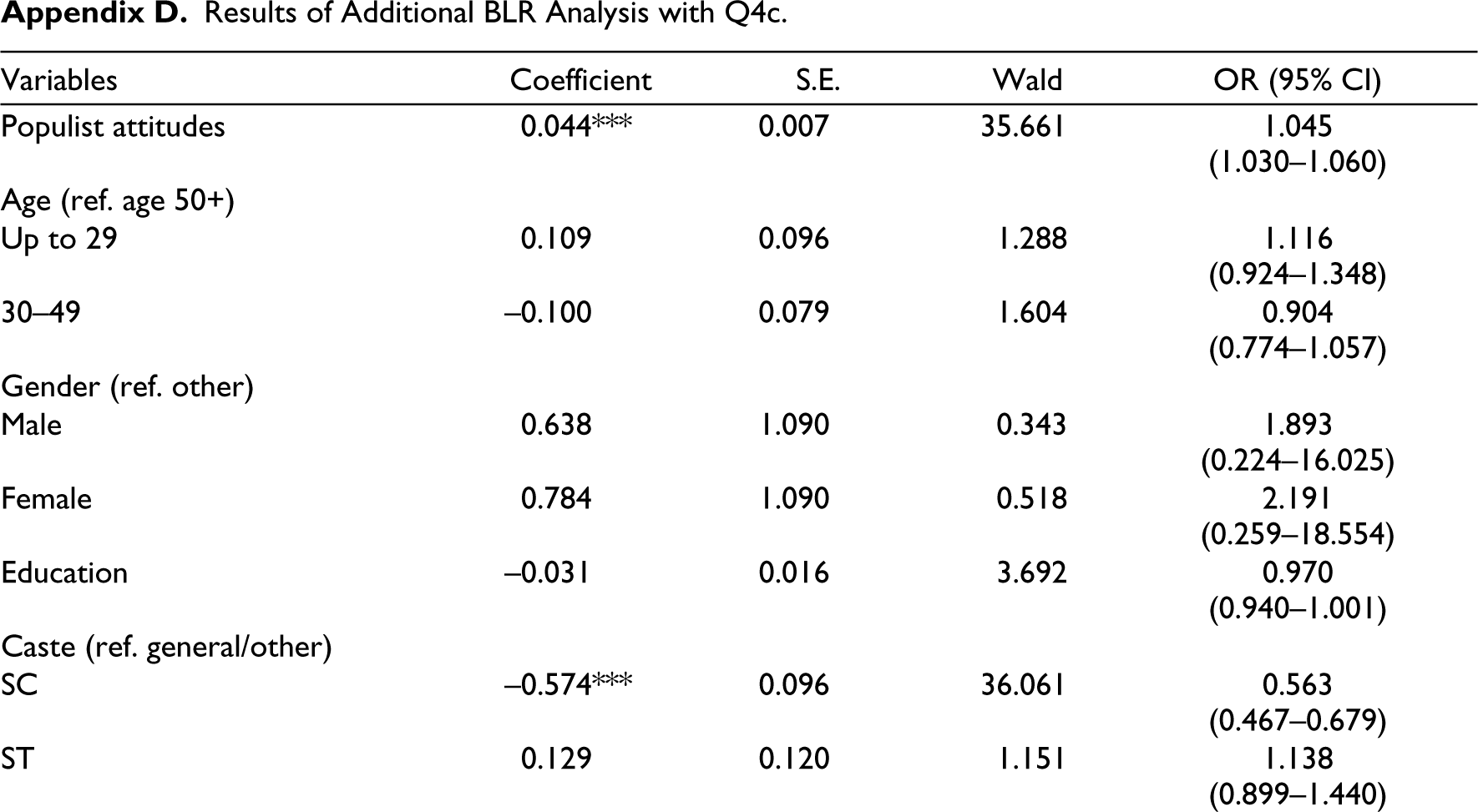
Results of Additional BLR Analysis with Q4c.
| Variables | Coefficient | S.E. | Wald | OR (95% CI) |
| Populist attitudes | 0.044*** | 0.007 | 35.661 | 1.045 (1.030–1.060) |
| Age (ref. age 50+) | ||||
| Up to 29 | 0.109 | 0.096 | 1.288 | 1.116 (0.924–1.348) |
| 30–49 | –0.100 | 0.079 | 1.604 | 0.904 (0.774–1.057) |
| Gender (ref. other) | ||||
| Male | 0.638 | 1.090 | 0.343 | 1.893 (0.224–16.025) |
| Female | 0.784 | 1.090 | 0.518 | 2.191 (0.259–18.554) |
| Education | –0.031 | 0.016 | 3.692 | 0.970 (0.940–1.001) |
| Caste (ref. general/other) | ||||
| SC | –0.574*** | 0.096 | 36.061 | 0.563 (0.467–0.679) |
| ST | 0.129 | 0.120 | 1.151 | 1.138 (0.899–1.440) |
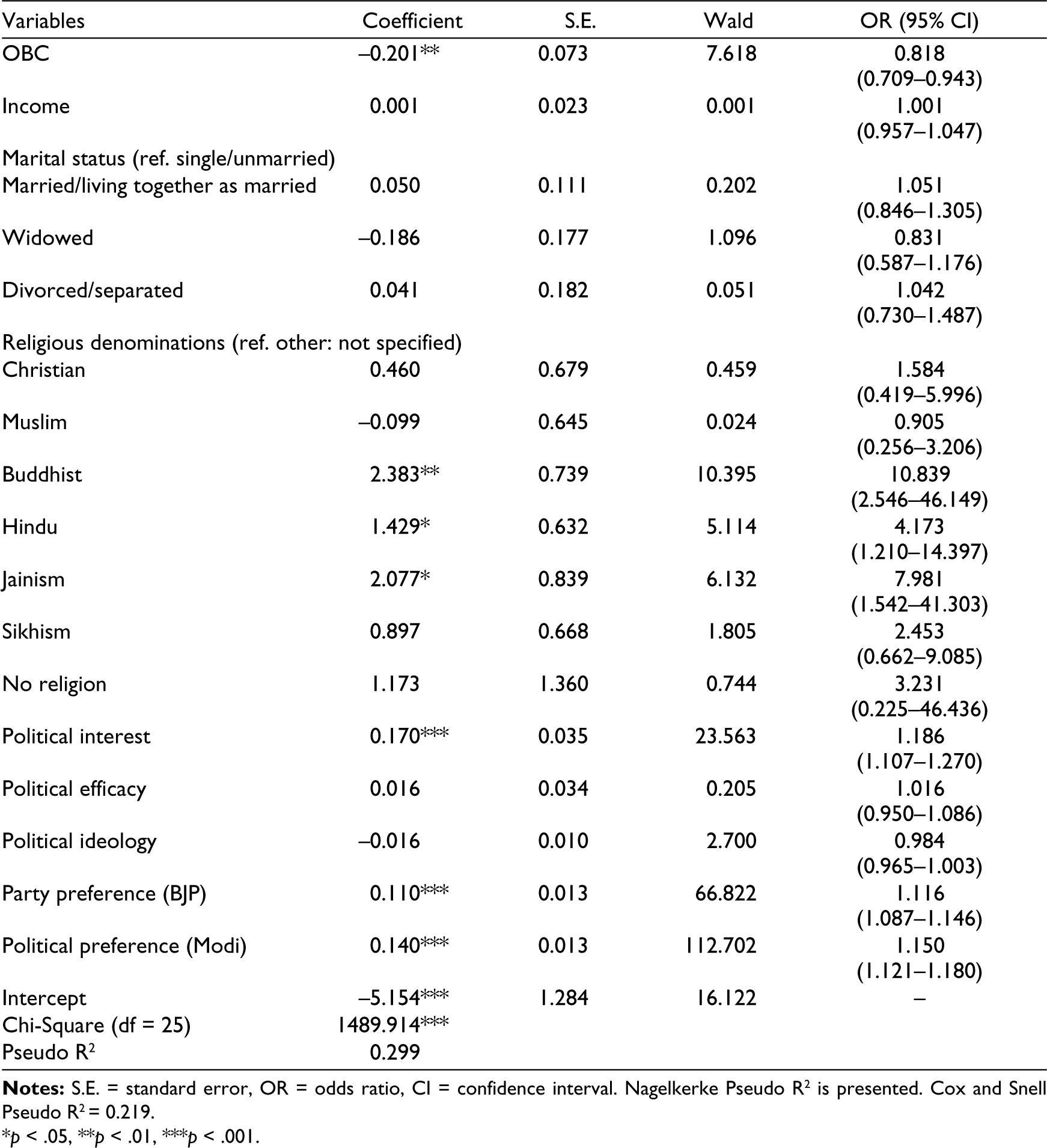
| OBC | –0.201** | 0.073 | 7.618 | 0.818 (0.709–0.943) |
| Income | 0.001 | 0.023 | 0.001 | 1.001 (0.957–1.047) |
| Marital status (ref. single/unmarried) | ||||
| Married/living together as married | 0.050 | 0.111 | 0.202 | 1.051 (0.846–1.305) |
| Widowed | –0.186 | 0.177 | 1.096 | 0.831 (0.587–1.176) |
| Divorced/separated | 0.041 | 0.182 | 0.051 | 1.042 (0.730–1.487) |
| Religious denominations (ref. other: not specified) | ||||
| Christian | 0.460 | 0.679 | 0.459 | 1.584 (0.419–5.996) |
| Muslim | –0.099 | 0.645 | 0.024 | 0.905 (0.256–3.206) |
| Buddhist | 2.383** | 0.739 | 10.395 | 10.839 (2.546–46.149) |
| Hindu | 1.429* | 0.632 | 5.114 | 4.173 (1.210–14.397) |
| Jainism | 2.077* | 0.839 | 6.132 | 7.981 (1.542–41.303) |
| Sikhism | 0.897 | 0.668 | 1.805 | 2.453 (0.662–9.085) |
| No religion | 1.173 | 1.360 | 0.744 | 3.231 (0.225–46.436) |
| Political interest | 0.170*** | 0.035 | 23.563 | 1.186 (1.107–1.270) |
| Political efficacy | 0.016 | 0.034 | 0.205 | 1.016 (0.950–1.086) |
| Political ideology | –0.016 | 0.010 | 2.700 | 0.984 (0.965–1.003) |
| Party preference (BJP) | 0.110*** | 0.013 | 66.822 | 1.116 (1.087–1.146) |
| Political preference (Modi) | 0.140*** | 0.013 | 112.702 | 1.150 (1.121–1.180) |
| Intercept | –5.154*** | 1.284 | 16.122 | – |
| Chi-Square (df = 25) | 1489.914*** | |||
| Pseudo R2 | 0.299 | |||
*p < .05, **p < .01, ***p < .001.