



Abstract
In rural areas, agriculture is the primary source of income, and the income depends on the primary factor of production, land. The higher the productivity of the land, the higher the income and general prosperity and lower the levels of poverty. However, it may not always be true if the benefit from the higher productivity accrues to a certain section of large farmers, bypassing the small ones. The study found that, the introduction of irrigation in a poverty-stricken region has promoted advanced capitalist farming and raised the level of output per unit of land. On the other hand, it has led to greater landlessness and inequality among various farm size groups. The benefit is concentrated among few farmers. In this process, there is greater ‘proletarianisation’, which needs to be stopped from worsening the situation further.
Introduction
The agrarian structure in an area reflects, among others, the distribution of the most important means of production, land. It is particularly important when in a rural area it is the dominant source of income directly for the cultivators and indirectly for the landless through labour activities. To understand the agrarian economy, it is important thus to understand the agrarian structure. The importance of land and its structure is well mentioned by Rawal (2008) as, land is the fundamental means of production in an agrarian society without which no agricultural production can take place. An understanding of the pattern of ownership and operational holdings of land is, therefore, of central importance to an understanding of the agrarian class structure.
The Green Revolution, under the rapid technological changes, has brought about significant improvement in productivity and income levels of all farm size groups. The profitability of agriculture, particularly under the Green Revolution area, led agricultural households except the marginal farmers—and to some extent the small farmers—to improve their ownership status by purchasing more land. The marginal farmers thus could not improve their ownership status and were left too far behind and chose to opt out of cultivation.
Poverty in Kalahadi and Nuapara

2. Kalahandi and Nuapara (2011): Directorate of Economics and Statistics, Government of Odisha.
3. Odisha and India: Odisha Economic Survey, 2014–2015.
The Land and the People
The biggest challenge for Odisha is its high poverty ratio, which has grappled the state for many years. It is manifested in various forms such as low per capita income, low level of nutritional intake, high illiteracy rate, low life expectancy and various other forms of low levels of living. The Kalahandi district of Odisha has attracted attention worldwide due to its recurring droughts and consequently poverty, hunger, out-migration, outbreaks of serious diseases and in some cases distress sale of children. Despite the huge injection of funds in the worldwide known region of Kalahandi-Bolangir-Koraput (KBK), known for its chronic poverty, nothing has changed substantially (see Table 1).
Village Profile
All the unirrigated villages fall under the Boden block of Nuapara district. The villages are rainfed in nature, without any irrigation facility. The main source of income is agriculture and dependence on forest products. A substantial number of households also resort to migration (distress) as a livelihood opportunity primarily to kiln factories of Andhra Pradesh during the lean season. The irrigated villages on the other hand fall under Jayapatna block of Kalahandi district. The villages are irrigated by canal since 1997, after the Indrāvati river dam project. It shows the character of advanced capitalist agriculture. The main source of income is agriculture, both as owner cultivator and agricultural labourer.
Objectives
It has been observed that small farmers, particularly in the irrigated land, are being deprived of their land and cultivation and being shifted to the ranks of a landless labourer or to the rank of a proletariat. In other words, there is a growing tendency of inequality in the distribution of land and tenancy (particularly reverse tenancy) in the irrigated region. In this context, this article seeks to study the following:
The variations in the agrarian structure—ownership and distribution of land and tenancy structure among the various categories of cultivating households The distribution of land among the various caste groups The income and expenditure inequalities among the various groups of farmers What possible change an external factor in the name of irrigation (led Green Revolution) brings in, in the agrarian relations of a poverty-stricken region.
Methodology and Data Sources
The study is comparative in nature among the various groups of farmers and between two different agricultural conditions in the same undivided district. The land distribution and income distribution among the rural households—cultivators and workers—is estimated through Gini coefficient and Lorenz curve, the popular statistical tools used for capturing inequality. Gini ratio is estimated as follows:

where X n is the largest number.
Lorenz curve is estimated as follows:

Where X k is the cumulated proportion of the population variable, for k = 0,…, n, with X0 = 0, Xn = 1.
Y k is the cumulated proportion of the income variable, for k = 0,…, n, with Y0 = 0, Yn = 1.
The exercise of calculating farm expenditure, receipts and income is undertaken using the NSSO method. The farm income is estimated as follows: Farm income of cultivating households = (gross value of output) – [all material costs (purchased or home produced) + paid out labour cost + rent payment + interest payment of borrowed capital + depreciation cost of machinery + hired machinery charges + irrigation charges].
The following functional relation between land productivity in terms of value and farm size (size of operational holding) is used:

where Y = gross value of output per acre

The primary data was collected in the year 2011, by using door-to-door interview method, with the help of a structured questionnaire. The fieldwork is based in few villages (Temri, Maharajor, Dandeibasa and Makarbirli) of the Boden block in Nuapara district (undivided district of Kalahandi), mostly rainfed and backward in nature. For the purpose of comparison, four irrigated villages (Karmeli, Butiguda, Dhutiguda and Banipara) of the Jayapatna block from Kalahandi (under the Indravati project) were selected. The study is based on the response of 300 sample households: 150 from the rainfed villages of Nuapara and the same number from the irrigated villages of Kalahandi. The samples were selected from various strata of land holdings through stratified random sampling method.
Landlessness and Distribution of Holdings
Size Class-wise Distribution of Ownership Holdings in Sample Villages
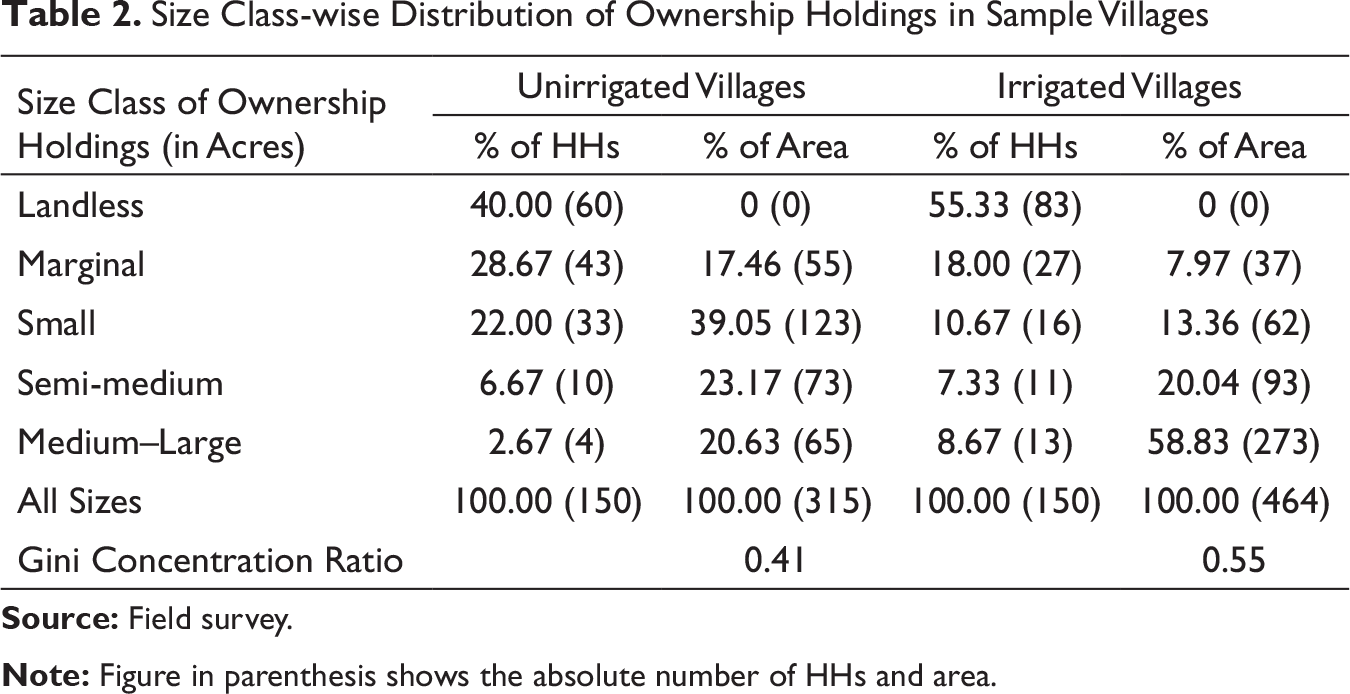
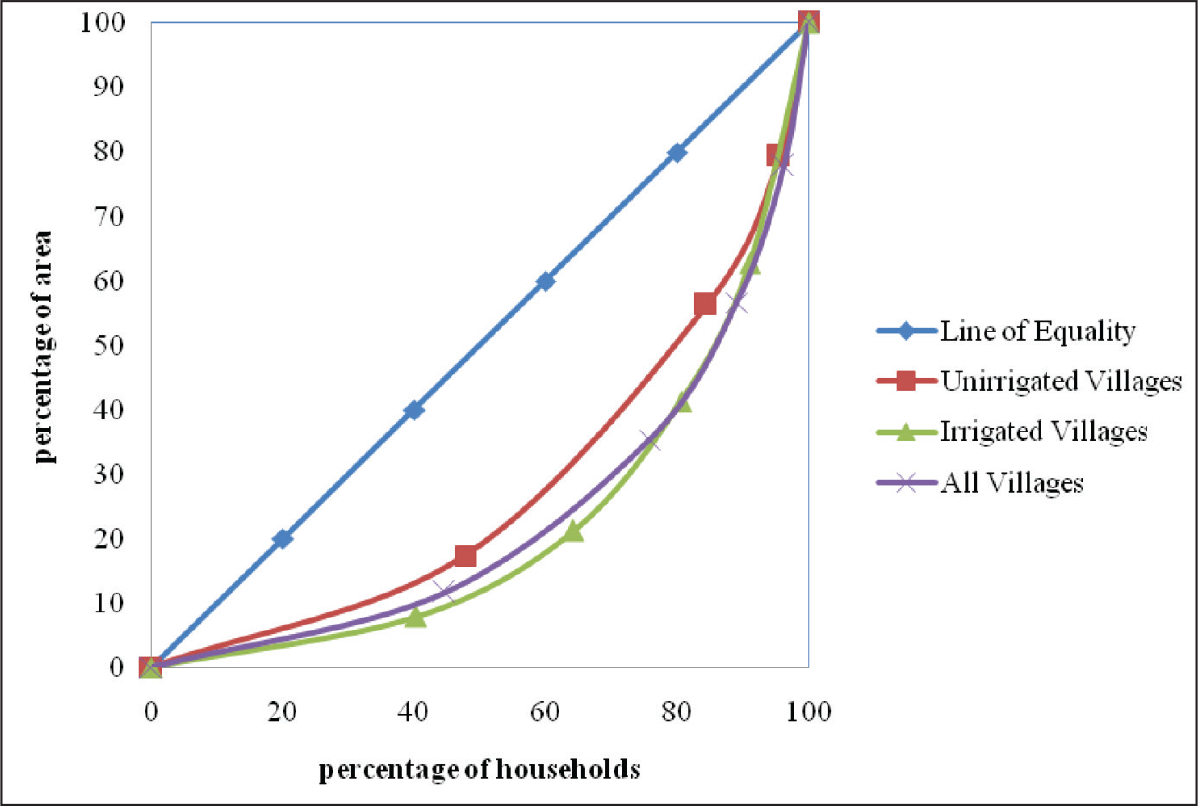
Second, there is a greater degree of inequality of distribution of land in the irrigated villages as compared to the unirrigated villages, reflected from the Figure 1. The same is also reflected from the Gini concentration ratio (see Table 2), where the ratio is 0.41 for the unirrigated villages against 0.55 for the irrigated villages. The higher level of inequality of land distribution in the irrigated region is also revealed from various independent studies of Mishra (2004), Rawal (2008) and Rawal et al. (2008). Rawal (2008) found that inequality in ownership of land was the highest in Tamil Nadu, Punjab, Haryana and Andhra Pradesh, and in many states, a substantial share of land continues to be in the hands of large landowners (having more than five hectares of land). The study of Bardhan (2003) from farm management data for two different time periods of 1956–1957 and 1969–1970 of four different regions found that Ferozepur, the agriculturally developed irrigated village, shows a marked increase in land inequality in comparison to other (rainfed) regions.
Rawal et al. (2008) from their study in Andhra Pradesh found that crop production in the irrigated developed agriculture village was highly profitable to some of the households but loss making for the asset poor three lowest groups of farmer households. On average, crop production resulted in losses. Agriculture is a source of prosperity for some but not all the households. There are enough possibilities that might have caused the forced selling of land by the small and marginal farmers owing to the unviability of their farm size under the capital-intensive Green Revolution technology that favours the large farmers and mostly bypasses the small farmers. It is because the new agricultural technology is not only size biased but also resource biased. Harris (1986) argues the new agricultural technology has been mostly beneficial to the rich peasantry and sections of the landlord class.
This indicates that the small and marginal farmers have sold their small pieces of land to the bigger farms, owing to their unviability. This increased marginalisation of Indian agriculture was termed by Bardhan (2003) as ‘agricultural proletarianisation’. He explained the phenomenon of increased agricultural proletarianisation among other things as ‘a rise in the cost and credit intensity of cultivation’ in agriculture. The higher inequality of land in irrigated villages is also evident from the farm size and productivity relationship.
Farm Size and Productivity
The unviability of small farmers and profitability of big farmers particularly in the irrigated region is reflected in the farm size productivity relationship. The relationship between farm size and productivity has been observed to be inverse, indicating the relatively higher productivity of smallholder agriculture, in varying agro-climatic conditions and production relations in India ( Sen, 1962, 1964; Bardhan, 1973). It is the ‘class relations of exploitation in a relatively backward agriculture exert forces of economic compulsion on the poor peasantry to intensify cultivation, thus generating an inverse relationship’ (Dyer, 1996, p. 104). It has been argued that with the deepening of capital in capitalist farms and dominance of capitalist relations in production and exchange, the inverse relationship gradually weakens or breaks down as large farms tend to reap economies of scale associated with the new technology (Rudra, 1968; Chadha, 1978; Deolalikar, 1981). The inverse relationship between farm size and productivity is thought to be widely, though not universally, prevalent in Indian agriculture (Rudra & Sen, 1980).
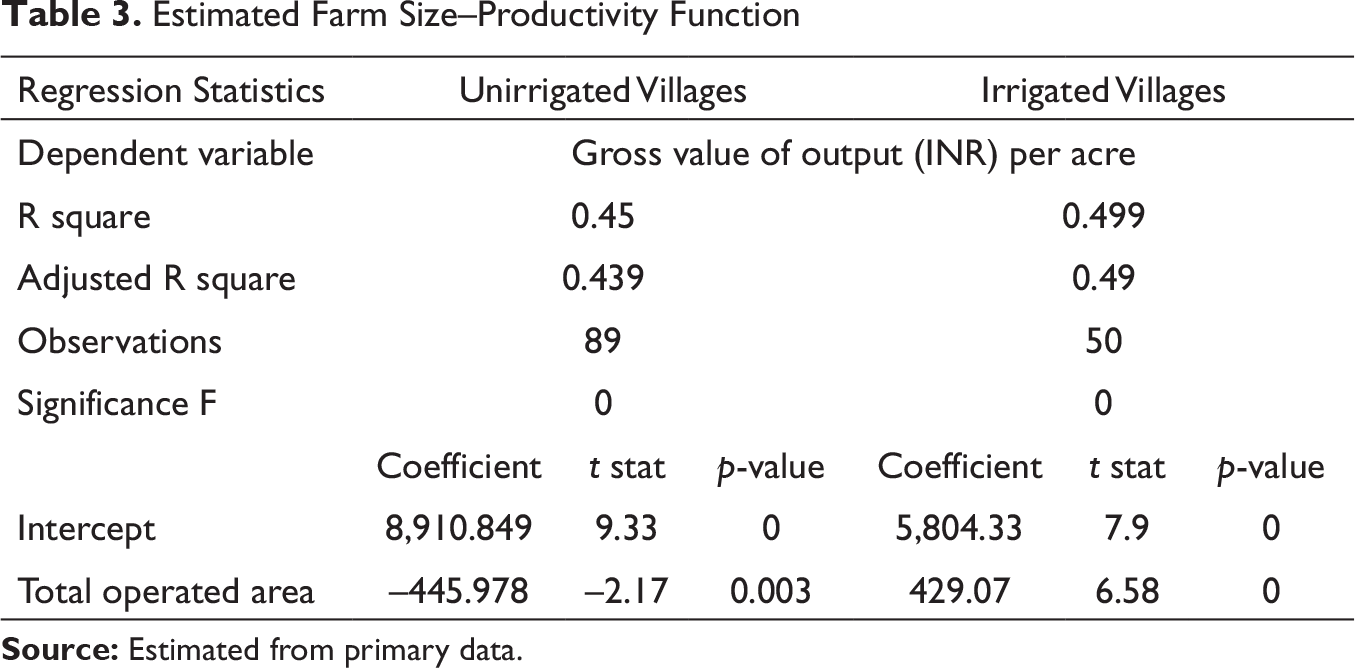
The same is captured in Table 3. It reveals that in the unirrigated villages, the gross value of output per acre is affected negatively at 1 per cent level of significance by total operated area, indicating thereby the presence of an inverse relationship between farm size and productivity. However, the relationship between the same variables comes out to be significantly positive at 1 per cent level in the irrigated villages, suggesting changes in the farm size and productivity relationship with the advent of irrigation. The result shows that in the unirrigated villages 45 per cent and in the irrigated villages 49.9 per cent of the variation in agricultural productivity is accounted for by the independent variables.
It implies that the purely hired labour-based farms use capital and other non-labour inputs at a higher intensity than purely family labour-based farms (Chattopadhya & Rudra, 1976). There is a much higher use of high-yielding variety (HYV) technology in the irrigated villages, resulting in higher productivity. The proposition that the introduction of the HYV technology is breaking down the inverse relationship in those areas where the new technology has penetrated most deeply is also evident from the study of Chadha (1978) and Roy (1979). Two important points need mention here: first, land is more productive and better utilised in the irrigated villages, and second, bigger farm sizes are more efficient in the irrigated villages in comparison to the unirrigated villages. Because of easy access to formal credit market, ownership of enough land and economies of scale of agricultural machineries, large farmers are more likely to adopt new technology, which benefits them more than the smaller ones.
Estimated Farm Size–Productivity Function
Caste Group-wise and Size Group-wise Distribution of Holdings
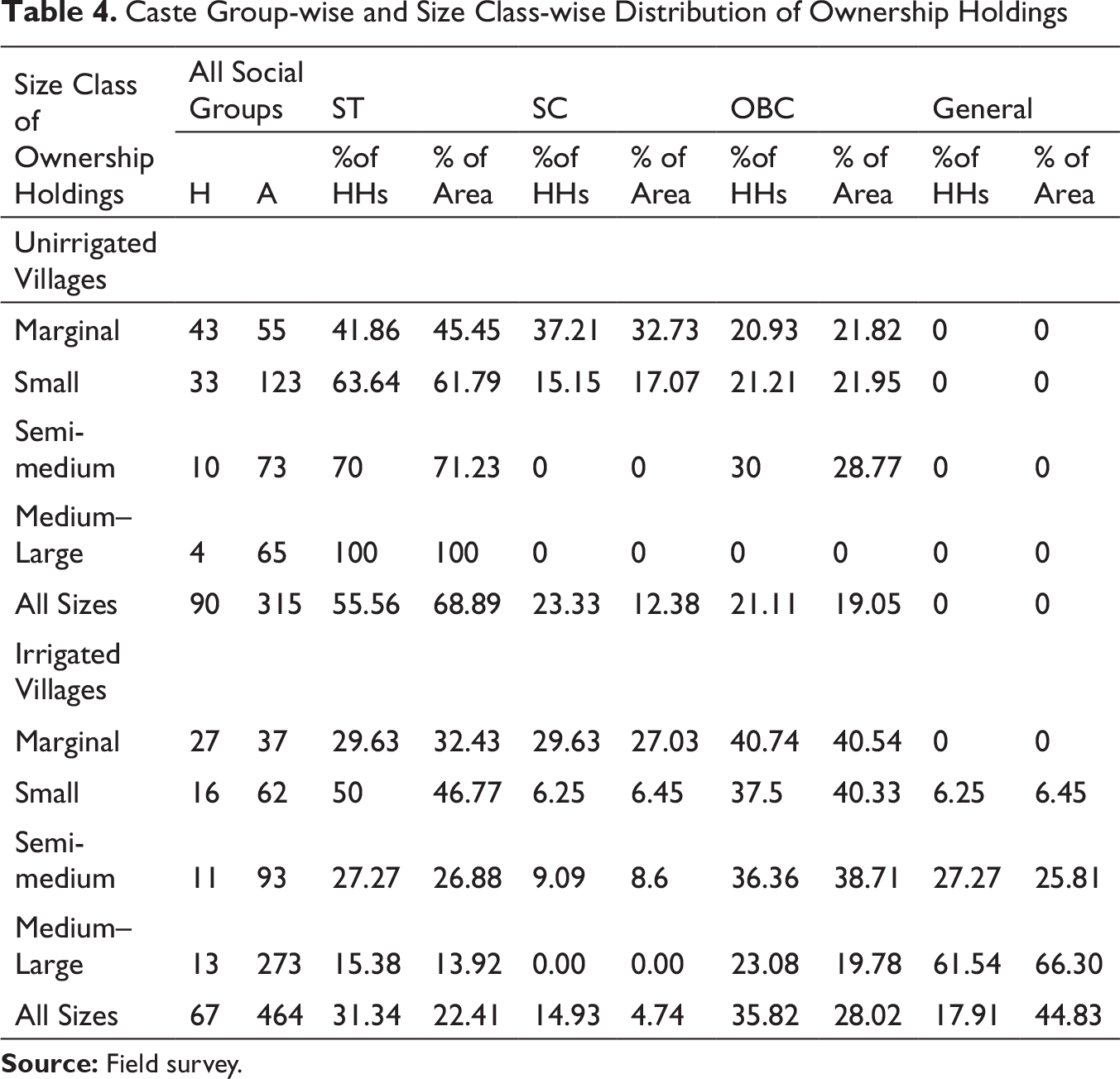
To get a better insight into the social composition of landholders of different categories, the caste-wise and size class-wise distribution of ownership holdings is presented in Table 4. In the unirrigated villages, schedule tribes (ST) households are in better position than the other two social groups. The other backward castes (OBCs) constitute 21.11 per cent of the population but own only 19.95 per cent of the land, whereas it is the schedule castes (SCs) where the land ownership is highly unfavourable, who despite composing 23.33 per cent own only 12.38 per cent of the total land area.
Caste Group-wise and Size Class-wise Distribution of Ownership Holdings
Tenancy: Extent and Types
Tenurial relations in the study region show significant variations across size classes. The extent and types of tenancy existing in the study villages have been discussed in this section.
Extent of Tenancy
It is generally believed that the developed agricultural regions have lower incidence of tenancy and higher incidence of self-cultivation and vice versa (Bhalla & Chadha, 1983; Sen, 1981). It is because tenancy generally prevails—particularly in the rainfed backward agricultural regions—as the large landowners lack labour resource, cannot arrange enough labour for self-cultivation, find difficulties in supervision and finally prefer their land to be leased out. On the other hand, the small farmers who own labour but lack land prefer to lease in. Through lease-out and lease-in, both the parties settle down in the second-best option that is mutually beneficial to both of them. But in an advanced irrigated region, because of the capital-intensive Green Revolution technology, that is, less labour using, the large farmers enjoy upper hand in self-cultivation and reclaim their leased-out land. Now self-cultivation is profitable than leasing out the land. Thus, these regions are supposed to have lesser incidence of lease-in and lease-out, a fact mentioned by Sen (1981). Bharadwaj (1994) mentions that with the investment of agriculture turning out to be profitable enterprise, the patterns of land leases might alter; possibly, large owners may gradually shift towards leasing in instead of leasing out their land.
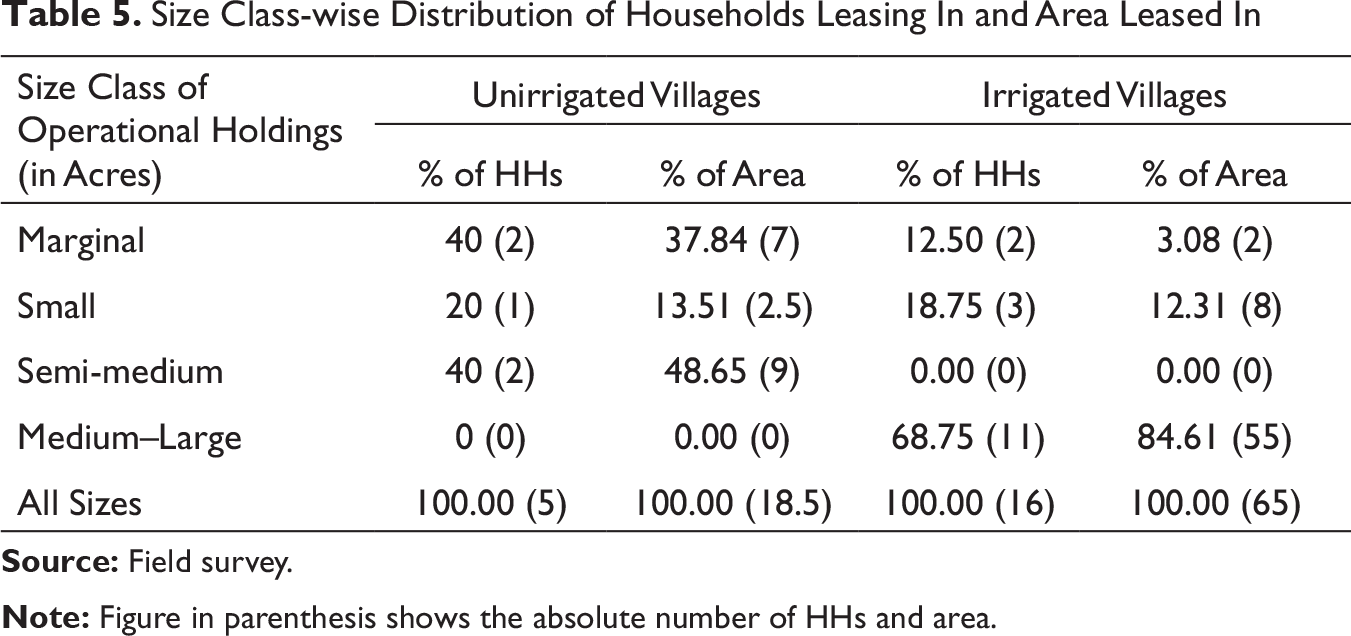
Size Class-wise Distribution of Households Leasing In and Area Leased In
Size Class-wise Distribution of Households Leased Out and Area Leased Out

In the rainfed villages total number of households leasing in land is only 5 and the area leased in is 18.5 acres. Whereas in the latter villages the same figures are three times than that of the former with 16 number of households with 65 acres of land. In the unirrigated villages, there is no marginal holder leasing out land, whereas only one small farmer and one semi-medium farmer from the small farm sizes have leased out land (see Table 6). The rest of the lease-out has been reported from the higher farm sizes (medium). The percentage as well as the number of households leasing out is higher at the small categories in the irrigated villages. Secondly, the incidence as well as the area for lease-out is much lesser in the rainfed villages in comparison to the developed irrigated villages. It shows that tenancy is more important in the irrigated village than in the unirrigated villages.
The state wise analysis of Swain (1999) shows, there is a higher level of tenancy in the agriculturally developed states. She explains the high incidence of tenancy has resulted from, initially the lower incidence of tenancy. Initially tenancy declined because the large farmers reclaimed their leased out land and cultivated of their own, whereas at a later stage they not only cultivated their own land but also started leasing in from the small farmers, who because of the unviability of their farm size prefer leasing out in large scale.
Bhalla (2007) observed a new phenomenon of reverse tenancy since 1981–1983 and found in 1992 for the first time that this trend got reversed and the percentage of tenant holdings and area leased in by both the medium and large farmers was higher than the lower class categories. In other words a process of reverse tenancy has started and the incidence of tenancy is higher in these regions that are revealed not only from the NSSO data but also from various other studies (Bharadwaj, 1994; Rao, 1998; Swain, 1999; Mishra, 2004; Bhalla, 2007). Singh (1989) mentions that in agriculturally advanced states like Punjab, Haryana and Tamil Nadu, fixed tenancy is the form of leasing in land from small farmers on fixed rent basis, ‘often christened as reverse tenancy.’
The reason for reverse tenancy is because of greater access to capital resources by the big landowners than small farmers (Rao, 1998) and increasing capitalisation and tractorisation in agriculture (Bhalla, 2007). According to Rawal et al. (2008), these are landless households that leased in land for cultivation, and made losses after the payment of rent. Because agriculture in irrigated villages require huge capital, unlike the unirrigated villages. The small farmer most of the time may not be able to spend that much and might be incurring losses. Thus, with the introduction of irrigation and the shift from traditional farming to capitalist farming, there occurs reverse tenancy, a situation where the small and marginal farmers start leasing out their land to the big farmers and the latter further raises its operation and position. It is because it becomes unviable for the small and marginal to operate the land in a new situation of commercial farming, requiring huge investment.
Types of Tenancy
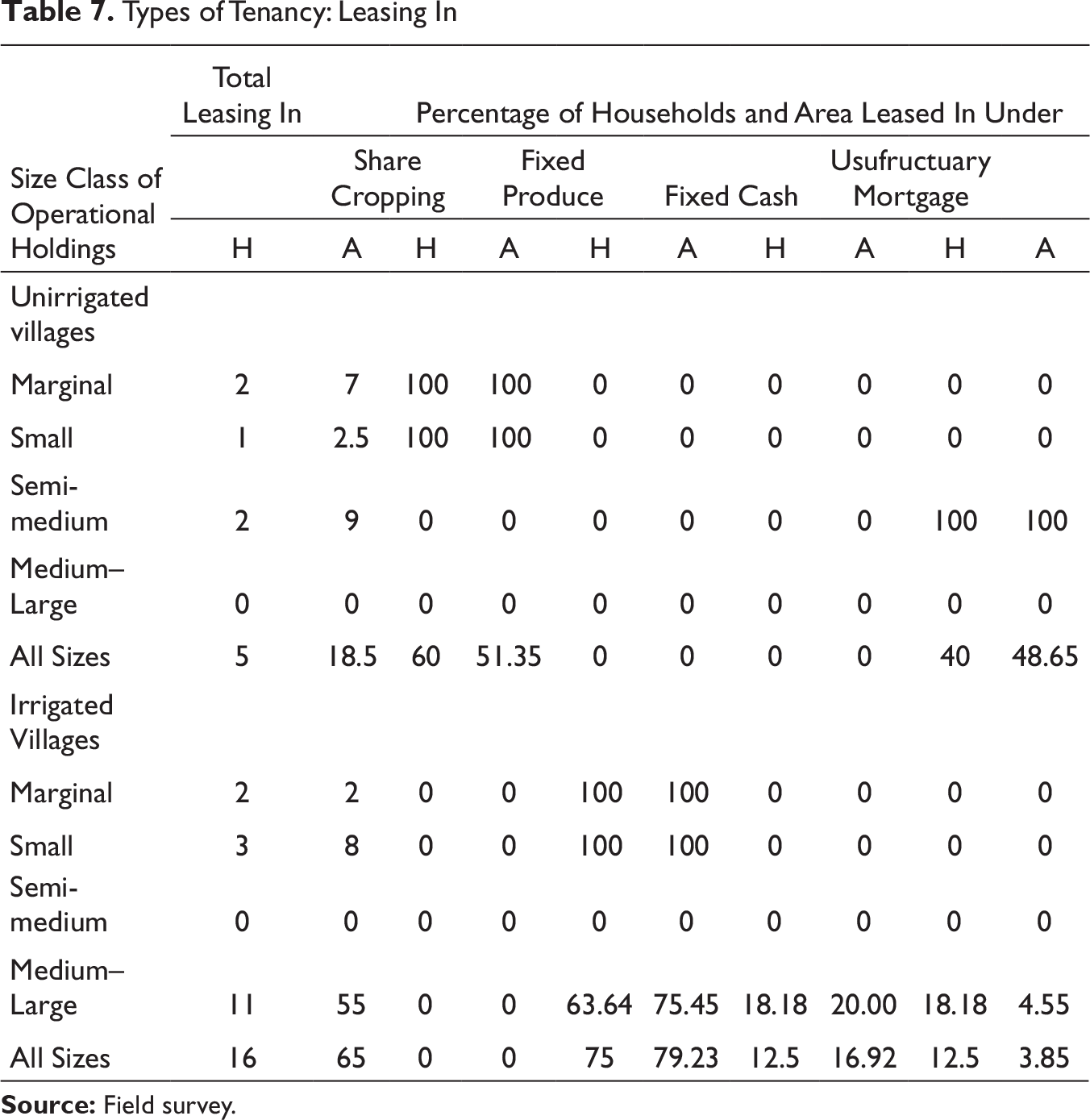
Types of Tenancy: Leasing In
Sen (1981) argues that under monopsonistic labour market behaviour and/or supervisory problems, large owners would find it attractive to extend more land and credit to poor peasants through personalised arrangements which allow some easing of the ‘safety’ and other considerations that seem to limit the ratio of operated to owned assets on poorer farms and in this case sharecropping is probably best seen as such a response and, if so, it is at least partially equilibrating.
The reason of sharecropping explained by Bardhan (2003) as, it is a compromise between the necessity of a system of incentive payment for unmonitored effort and for risk-sharing. When the landlord cannot monitor the tenant easily, the latter will put in the most effort if, after paying a given rent, he can keep the residual output for himself. On the other hand, the problem with a fixed rent is that when the crop fails, the tenant bears the whole brunt of the risk. The frequency of crop failure is quite high in rain fed regions that puts heavy burden on the leased in households. Thus sharecropping comes out to be the best option for both of them. Swain (1999) puts, the widespread nature of share-tenancy is because of its versatility and adaptability to different agro-ecological regions and diverse socio-economic conditions. She further mentions the importance of share-tenancy in a backward state like Odisha where production risk is significant due to erratic monsoon and inadequate irrigation facility. The landowners, as well as the tenants are naturally risk averse and share-tenancy is the predominant form of lease arrangement. Tenancy arrangements in general and sharecropping contracts in particular, can serve a variety of useful purposes in an environment in which markets for land, labour, credit, information and entrepreneurial and managerial skills are underdeveloped and imperfect; and in which risk is endemic, transaction costs are high, and indivisibilities and fragmentation of holdings present major problems. Under these circumstances, sharecropping, which appears economically inefficient in a ‘perfect’ world, becomes a realistic second best solution (Singh, 1989).
On the other hand, fixed rent (both fixed produce and fixed money) is more prevalent in the irrigated region. Fixed produce is the dominant mode of leasing in in these villages with 75 per cent of households leasing in 79.23 per cent of the area, whereas fixed cash and usufructuary mortgage, though exists, but with lesser percentage. There is complete absence of sharecropping in these villages (Table 7). The comparison between the two villages show that, in the first villages sharecropping is the dominant mode of lease-in and in the second villages fixed produce and fixed cash is the dominant mode, with the existence of usufructuary mortgage in both villages.
Types of Tenancy: Leasing Out
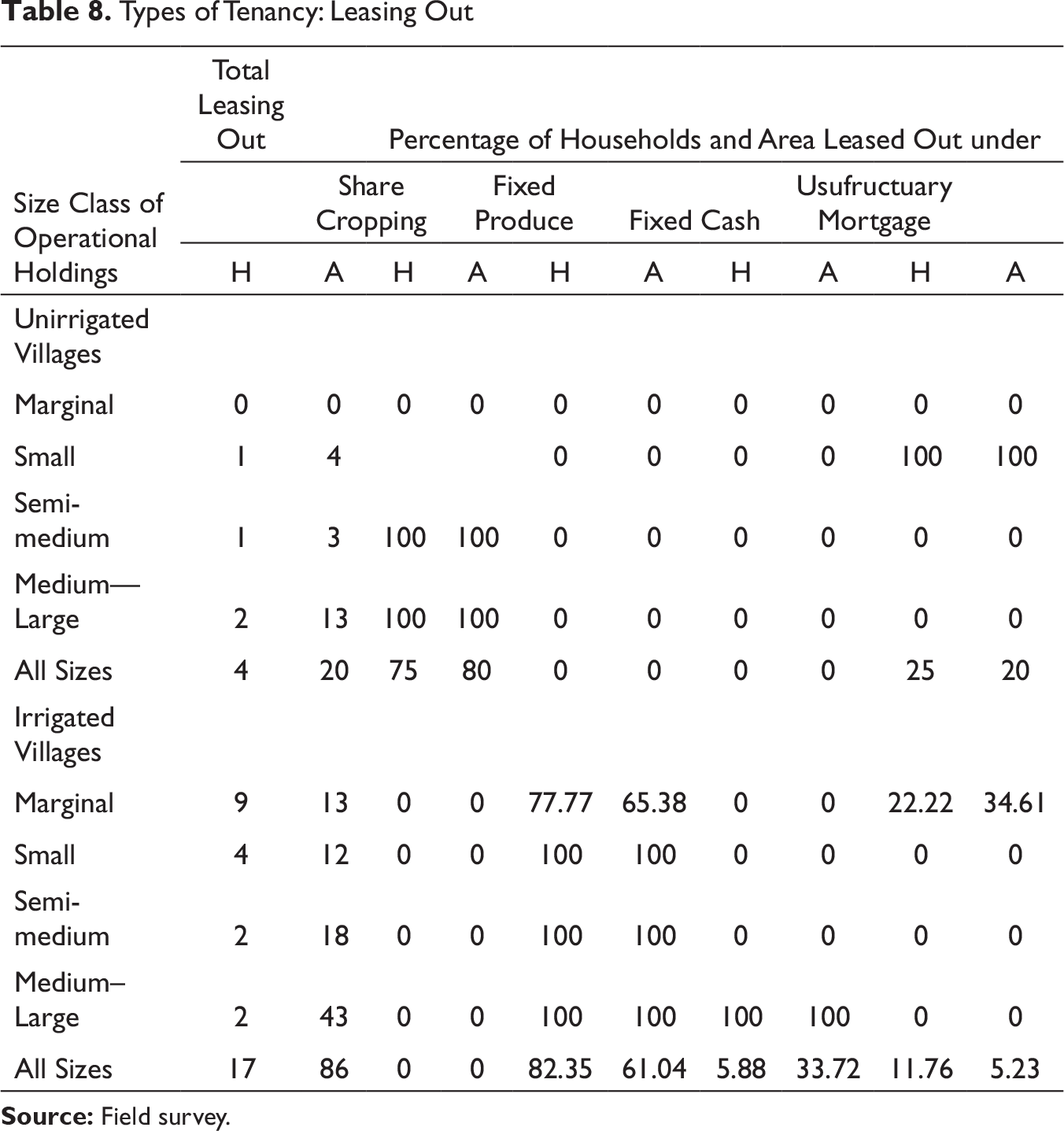
Bharadwaj (1985) found, in backward agriculture the agricultural surplus instead of being reinvested in agriculture productively, is diverted to unproductive channels like usury and rent seeking activities as long as a class of deficit households continue to exist. However lesser incidence of usufructuary tenancy in the rain fed villages refutes the claim that was earlier observed by Bharadwaj. This is explained by Swain (1999) as in today’s Odisha, large farmers having substantial reinvestible surplus are rarely found. Due to the law of inheritance, disintegration of joint family system, population growth and sub-division of land holdings, the average size of holding has substantially decreased.
Reasons for Lease-in and Lease-out
The reason for lease-in and lease-out will further make the tenancy pattern in particular and agrarian structure in general more clear.
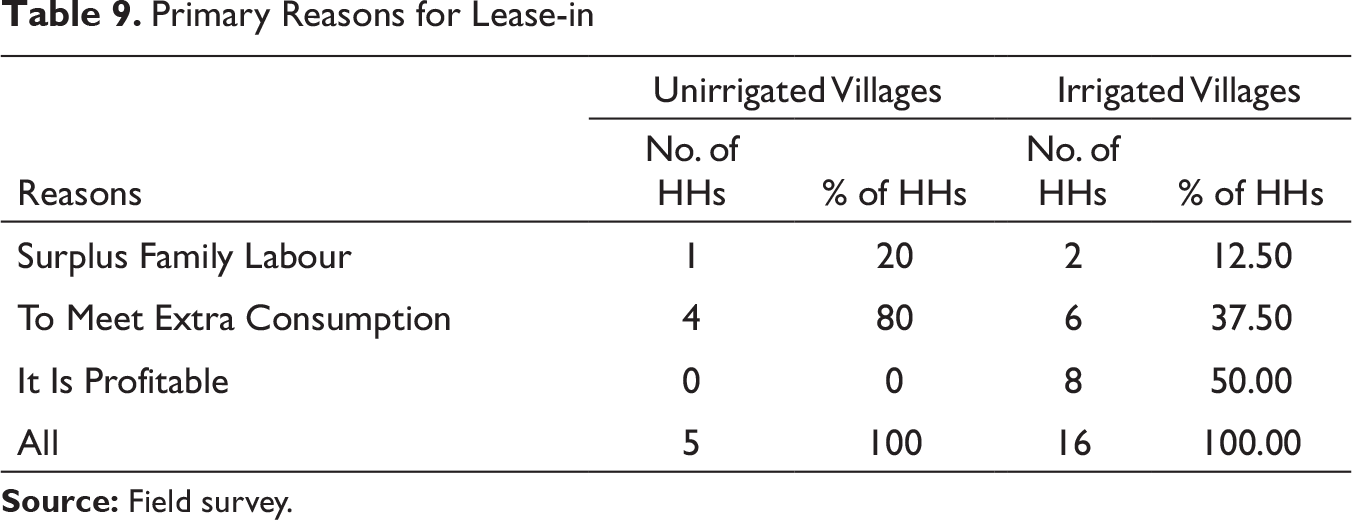
Primary Reasons for Lease-in
Primary Reasons for Lease-out

Half of the households in unirrigated villages reported lack of resources as the primary reason for lease-out, whereas for 25 per cent it is not profitable and the same percentage said they are employed outside (Tables 10). In the second villages as well the primary reason for lease-out is lack of resources (47.06 per cent). The second most important reason is low profitability, followed by employed outside and labour shortage during peak agriculture season, particularly during transplantation. Swain (1999) mentions, although both subsistence tenancy as well as capitalist tenancy are found in Odisha, subsistence tenancy is a feature of unirrigated backward agriculture, whereas the latter is a feature of developed irrigated agriculture.
Inequality
In the advanced irrigated villages, there is a prevalence of high inequality in all respects, be it land distribution, income or consumption expenditure, reflected in Table 11. However, the inequality is not equal in all the cases; it is more visible in farm business income (FBI) and other income in comparison to the total income and total expenditure. In case of the former, the concentration ratio in unirrigated villages is 0.24 as compared to a higher 0.60 in irrigated villages. It is because the Green Revolution does not equally benefit all, since it may be resource neutral but not size neutral. So, the income of the big farmers is higher than the other categories. This phenomenon is explained by Bhalla et al. (1990) as, though there is gain of new agricultural technology to all segments of population, these gains are distributed more or less in proportion to the initial landholding position, and the landholding distribution is much skewed and the distribution of gain has been inequitable. Griffin (1976) was of the view that HYV technology must necessarily have regressive distributional effect, as the new varieties are landlord biased and tend to exclude the peasant from the benefits of technical change.
Distribution of Land, Income and Expenditure
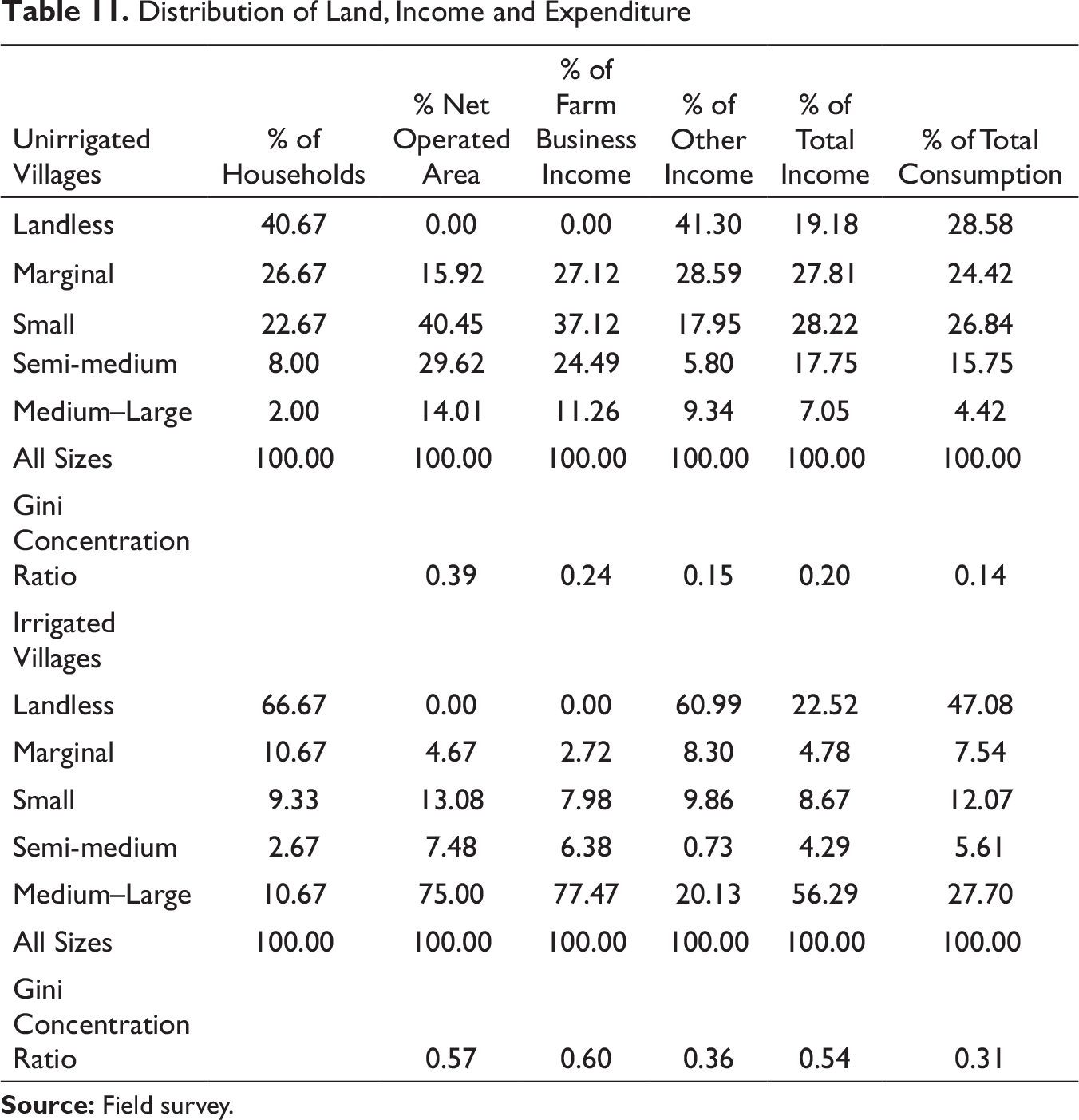
Singh (1973), from the study of western Uttar Pradesh concluded that it is the differential rates of adoption of new technology as characterised by the relative variance of the per farm expenditure for the new technology which is directly related to the income inequality. Critics of the Green Revolution suggest that improved technology and the accompanying commercialisation of production generate increased disparities in rural income, and this implies that land will flow increasingly into the hands of those who obtain the larger incomes (Griffin, 1976).
The inequality between the total income and total expenditure between the two categories of villages shows that it is reported much higher in case of the former in comparison to the total expenditure (Figures 2 and 3). The same was also the finding of Bhalla and Chadha (1983) that inequality of consumption expenditure is less than the total income. The reason of inequality is elaborately explained by Rao (2005) in the following lines. The distribution of gains from technological change among farms of different sizes would be determined by the latter’s relative access to capital resources. The relative growth of different firms depends essentially on their initial wealth position because, among other things, the ability of a firm to borrow on reasonable terms in the market depends on its ‘credit-worthiness’. Also, since large farmers save a greater proportion of the increment in their income than the small farmers do, they can augment their investable resources at a higher rate than the small farmers.

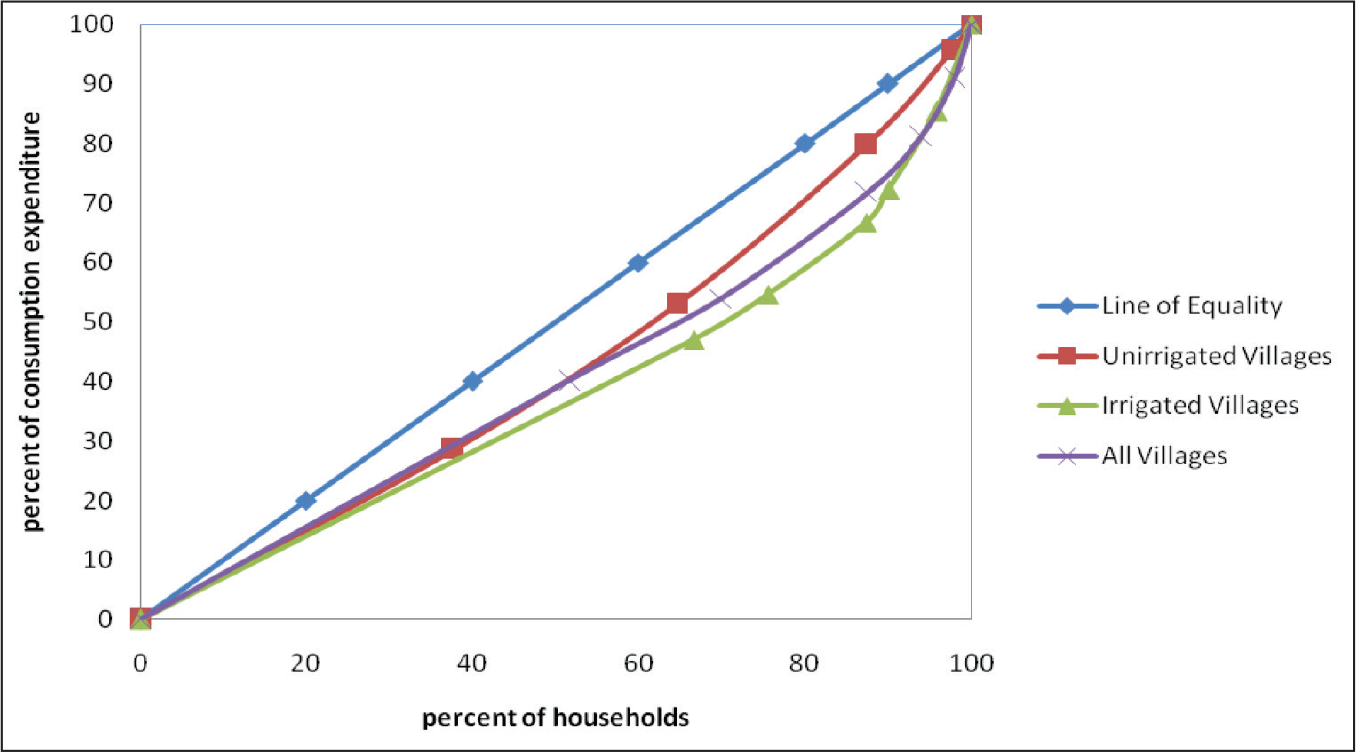
Byres (1994) opined that the Green Revolution technology is not scale-neutral; rather, it is scale biased. It has been the rich peasantry and section of the landlord class who have benefited, and they have further strengthened their positions. Eshwaran and Kotwal (1994) further mentioned that skewed distribution of benefit of government’s agricultural support (price-support) further accentuated the issue of skewed distribution of income.
Conclusions
Compared to the unirrigated villages, the irrigated villages have proportionately higher percentage of landlessness, greater inequality of distribution of land and, lastly, greater proliferation of small and marginal farmers in comparison to unirrigated villages. In terms of the social groups, scheduled tribes are the major owner of the land, followed by the general castes and other backward castes. The scheduled castes possess the least land in both the villages. The inequality of distribution of land however is lowest among the SCs and the General castes, whereas it is highest among the STs and the OBCs.
As far as the incidence of lease-in and lease-out is concerned, it is highest in the agriculturally developed villages, as compared to the latter. Moreover all the households leasing in land in the backward villages are the small or the marginal farmers, on the other hand this is quite reverse in the irrigated villages where the lease-in households are mostly the upper group of farmers. The terms of tenancy between the two villages show that, sharecropping is the dominant mode of tenancy in the unirrigated villages and fixed produce and fixed cash are the dominant modes in the irrigated villages.
Majority of households in the unirrigated villages reported survival motive in leasing in land, whereas it is mostly for profit motive in the irrigated villages. On the other hand, lack of resources and unprofitability are the primary reasons for leasing out land in both the villages.
The experience of two regions suggests that, the unirrigated backward villages are placed much better in terms of distribution of asset (land), income and consumption expenditure. On the other hand, the irrigated villages have higher unequal distribution of land, income and consumption expenditure.
Policy Implications
The unequal distribution of land and the resulting skewed distribution of income led many to suggest land reform as a measure to solve the problem of inequality, inefficiency and poverty simultaneously, and to restore social justice. Prominent among them are Griffin (1976), Bharadwaj (1974) and Bardhan (2003).
Land reform usually refers to redistribution of land from the rich to the poor. More broadly it includes regulation of ownership, operation, leasing, sales and importance of land (Ghatak & Roy, 2007). Griffin et al. (2002) make a strong case for the redistribution of property rights in cultivable land. The case for land reform rests on the argument that the concentration of landownership results in the exercise of monopsony power by the landlords in labour markets. The control that landlords have over labour is the root of production inefficiency and rural poverty. Redistribution of land has multiple benefits in terms of the reduction of poverty, economic inequality and greater economic growth. Ramachandra and Swaminathan (2002) argues that the task of land reform, with all its complex variations, remains central to the agrarian agendas of backward economies to reduces land concentration and to bring in higher and equal distribution of income. Moreover, it will promote labour intensity of cultivation and increase employment. The resulting impact thereby would be an end to poverty.
The persistence of traditional agrarian structures and production relations is believed to be one of the root causes of mass poverty in rural India (Shergill, 1989). According to Ahluwalia (1978), a highly skewed land distribution, proletarianisation of sizeable sections of rural population, widespread share-tenancy and interlocked factor markets are some of the more regressive features of the existing agrarian production relations that are supposed to not only inhibit the transition to a more progressive agriculture but also block even the ‘trickle-down’ of benefits to the rural poor of whatever little increase in farm production occurs in such a socio-economic milieu.
According to Utsa Patnaik, distribution of land and assets are the manifestation of a particular socio-economic order from historical situations and that cannot be changed without great social upheavals. Under such conditions the estimation of rural poverty without referring to property structure is a myth rather than a reality. Such an approach to do away with poverty is superfluous having no connection between poverty and wealth. Since poverty for many is wealth for a few, these are the two sides of the same coin, an effective elimination of one is conditional for the elimination of the other (Mallik, 1988).
Land reform could make a major contribution to reduce both rural and urban poverty. In the rural areas poverty would decline, in part because average incomes should rise as a result of increased efficiency in the allocation of resources and in part because the distribution of income should become much more equal. In the Seventh Five-Year Plan there was a clear statement linking land reforms with other major programmes of the plan. It stated clearly, land reforms have been recognised to constitute a vital element both in terms of the anti-poverty strategy and for modernisation and increased productivity in agriculture. This document though late in the day, acknowledges the centrality of land reform in the whole process of rural development and poverty alleviation (Bandhopadhya, 2008).
This is the policy in which the Indian government first resorted to remove its poverty, inequality and social justice. However, the government is not talking about land reform or land redistribution policy and so are the policy makers, now a day, despite its above highlighted positive contributions and despite it not been implemented except in few states. In the absence of such policy and in the absence of any pressure on the government, at least it is suggested that the agricultural policies should be targeted towards the small and marginal farmers in terms of easy and cheap availability of credit, various other inputs like fertilisers, seeds and pesticides, and proper marketing facilities. These policies though cannot reverse the unequal distribution of land but at least maintain the status-quo, from further deteriorating the situation and check further transfer of land from the small and marginal farmers to the big farmers in the form of sell or tenancy (reverse). Instead of making small farmers unviable, efforts must be made to sustain small holdings, so that they do not loose further land (Chand et al., 2011).
Footnotes
Declaration of Conflicting Interests
This paper was presented in the Tenth Anniversary Conference on Agrarian Issues, Foundation of Agrarian Studies (2014), Cochin. The author is thankful to Professor R. K. Sharma, Professor Deepak K. Mishra, Professor Prabhat Patnaik, Professor V. K. Ramachandran and Professor Ravi Srivastava for their comments, suggestions and encouragement. It is based on the PhD thesis submitted to the JNU, New Delhi.
Funding
The author received no financial support for the research, authorship and/or publication of this article.