



Abstract
Integrating strategic internal communication research with organizational change literature and organizational support theory, this study proposes a theoretical model to understand the influence of symmetrical internal communication on employees’ cognitive and affective experiences and organizational identification in a COVID-19 pandemic-induced change situation. A quantitative online survey was conducted with 490 full-time employees in the United States in mid-April 2020. Results indicate that symmetrical internal communication during organizational change contributes to employees’ perceptions of change communication quality. In addition, symmetrical internal communication, along with perceived quality of change communication, enhances employees’ perceptions of organizational support and positive emotions during organizational change, which in turn leads to stronger organizational identification. Theoretical and practical implications of the findings are discussed.
Keywords
Introduction
Organizational crises and resulting changes have become common challenges that employees have to face in today’s work environment (Carnevale & Hatak, 2020). Events from external crises such as natural disasters and terrorism to internal crises such as mergers and acquisitions all induce certain types of change within organizations. The coronavirus (COVID-19) outbreak is one of the examples that produce extraordinary crisis-induced changes for organizations. The worldwide crisis significantly affects the workplace, exposing organizations to ambiguity, uncertainty, and operational challenges that threaten the organizations’ viability (Wade & Bjerkan, 2020). Many organizations have initiated and implemented changes in response to COVID-19, such as digitalization, launching new business models, redeploying talent, and cutting costs to survive the unprecedented crisis and adapt to the fast-changing environment (De Smet et al., 2020). However, the crisis-induced changes may not always deliver the desired outcomes. One of the primary reasons for such failure is employee resistance (Scoblic, 2020) because organizational changes often put employees in a vulnerable situation and create various levels of uncertainty among them (Bordia, Hobman, et al., 2004).
Given that employees play a central role in effective organizational change (Fugate et al., 2012; Holt et al., 2007), to make organizational change efforts successful, it is important to empower employees to participate in the change process (Chiang, 2010); participation can give employees a feeling of control over the change, foster employees’ commitment to change, and minimize their resistance to change (Holt et al., 2007). One way to empower employees to take an active role during the change process is by practicing participative communication. The participative communication approach in organizational change literature mainly emphasizes opening ways to solicit employees’ input (e.g., employees’ opinions, feedback, and reactions) during a change process (Lewis & Russ, 2012; Lewis et al., 2006). However, Lewis and Russ (2012) indicated that participative communication in the form of input solicitation sometimes might merely create an appearance of participation and lack genuine employee empowerment, as the primary goals of input solicitation during organizational change are often to clarify change processes, mitigate misgivings, and garner employee support for the original change plans. How to incorporate employees’ input to adapt and improve change plans is rarely considered in such a form of participative communication (i.e., input solicitation; Lewis & Russ, 2012). This points to a need to understand how a genuinely empowering participative communication, through which employees are able to affect primary organizational decision-making processes, can affect employee experiences in the organizational change process.
Drawing on research in the public relations discipline, we are particularly interested in the role of symmetrical internal communication in organizational change. Symmetrical internal communication upholds the principle of employee empowerment and advocates a balance of power and interest between organizations and employees (Grunig & Grunig, 2011). Thus, symmetrical internal communication is not just about two-way communication and active listening but also about changing organizational behaviors by considering and incorporating employees’ opinions and feedback. Such communication may make employees truly feel empowered and thus actively engage in organizational changes. In light of the profound influences that symmetrical internal communication may have during change, this study sets out to investigate the role of symmetrical internal communication in crisis-induced organizational change, the COVID-19 outbreak in particular. Specifically, this study examines how symmetrical internal communication shapes employees’ cognitive (i.e., perceived organizational support) and affective experiences (i.e., employee emotions) during crisis-induced change and thereby influences employees’ identification with their organizations. Toward these purposes, this study conducted an online survey of 490 full-time employees in the United States in mid-April 2020, during COVID-19.
Literature Review
Internal Communication During Crisis-Induced Change: Symmetrical Communication
Organizational crisis refers to “a low-probability, high-impact event that threatens the viability of the organization and is characterized by ambiguity of cause, effect, and means of resolution” (Pearson & Clair, 1998, p. 60). These crises can be change-inducing events that force organizations “to adjust and behave differently to accommodate new contingencies, technologies, values, processes and personnel” (Seeger et al., 2005, p. 80). Crises can drive organizational changes in many aspects, such as formal structure, work routines, job design, and work environment (Carnevale & Hatak, 2020). Although such changes are inevitable, organizational changes are not always successful, as changes have been shown to create uncertainty, anxiety, and fear among employees (Eisenberger & Stinglhamber, 2011). Employees’ unfavorable reactions to organizational change, such as resistance and disengagement, often result in the failure of the change interventions (Oreg et al., 2018). To make organizational changes successful, effective internal communication during the organizational change process is essential (Christensen, 2014; Yue et al., 2019). As Witherspoon and Wohlert (1996) noted, “Communication is the process on which the initiation and maintenance of organizational change depends. . . Ultimately the success of any change effort depends on how effectively the strategy for and the substance of the change is communicated to those who are the targets of change” (p. 378).
Poor change communication has been found to result in rumors, increasing employees’ resistance to change, and exaggerating organizational change’s negative aspects (Smet et al., 2016). In contrast, effective communication can facilitate organizational change by conveying the vision and goals of the change, which makes employees better understand the rationale and necessity of the change (Luo & Jiang, 2014; Petrou et al., 2018). Among many ways to communicate with employees during change, such as one-way information dissemination or using key opinion leaders to carry change messages, scholars have highlighted the importance of participative communication approaches in bringing successful organizational change (Lewis & Russ, 2012; Neill et al., 2019). Through participative communication, organizations can prevent workplace rumors, equip employees with a sense of control, and reduce their uncertainty and resistance to changes, thereby fostering readiness, openness, and commitment to organizational changes (Lewis et al., 2006; Neill et al., 2019; Puyod & Charoensukmongkol, 2021). Considering the importance of practicing participative communication during organizational change, this study pays special attention to symmetrical communication, a form of participative communication with strong senses of empowerment.
Symmetrical communication is suggested as a key concept of public relations research (Grunig, 1992; Men & Bowen, 2017). The essence of symmetrical communication is “how organizations, individuals, and the public use communication to adjust their thinking and behavior in order to create mutually beneficial relationships instead of seeking to control or manipulate other parties” (Men & Yue, 2019, p. 3). That is, symmetrical communication puts great emphasis on mutual understanding, mutual adaptation, responsiveness, collaboration, and a balance of power and interest (Grunig et al., 2002; Kang & Sung, 2017). As such, scholars have regarded symmetrical communication as the most ethical and effective approach to public relations (Colquitt & Greenberg, 2003).
Symmetrical communication has also been recognized as one of the most effective communication strategies to communicate with the internal publics (i.e., employees; Men & Yue, 2019). Symmetrical internal communication is employee-centered, emphasizing active organizational listening, equal and open communication between organizations and employees, tolerance for different viewpoints, and negotiation (Grunig, 1992). In terms of power distribution, the notion of symmetrical internal communication advocates “collaborating to increase the power of everyone in the organization, for the benefit of everyone in the organization” (Grunig, 1992, p. 564). Hence, when organizations practice such communication, organizations listen to employees’ opinions and address their concerns by making a corresponding alteration to organizational behaviors. As such, a symmetrical internal communication system can truly empower employees to participate in and influence the decision-making process (Men, 2014). Previous research has shown that symmetrical internal communication leads to several positive employee outcomes, such as quality employee-organization relationships (Men & Sung, 2022), employee engagement (Mishra et al., 2014), and employee organizational citizenship behaviors (Men & Yue, 2019). While many studies have expounded the benefits of practicing symmetrical internal communication, the understanding of its impact on the organizational change process has been limited. This study thus sets out to examine the role of symmetrical internal communication in a crisis-induced organizational change situation.
Symmetrical internal communication and perceived quality of change communication
Although adequate change communication can facilitate employee adjustment during change processes (McKay et al., 2013), more recent research argued that simply providing change-related information may not be sufficient to reduce employees’ negative reactions to change; rather, it is employees’ perceived quality of such communication contributing to their favorable evaluation of organizational change (Biggane et al., 2017; Kim & Scott, 2019). Scholars suggested that employees define high-quality change communication by considering whether the change-related information “is delivered in a timely manner so as to provide employees with accurate information, allowing them to deal with change” (Allen et al., 2007, p. 200). Namely, employees expect change communication to be timely, credible, and useful, enabling them to deal with organizational change effectively (Bordia, Hobman, et al., 2004; Bordia, Hunt, et al., 2004). High-quality change communication has been found to reduce employees’ organizational change-related uncertainty (Neves & Eisenberger, 2012). Given the vital role of high-quality change communication in change management, this study first examines how symmetrical internal communication can shape employees’ perceptions of change communication quality.
The relationship between two-way communication and perceived change communication quality has been suggested by previous studies. Mohr and Sohi (1995) argued that bidirectional communication (i.e., two-way information exchange) between communication partners can increase the assessments of communication quality because bidirectional communication enables message receivers to ask questions and seek clarification, which in turn can overcome ambiguity and enhance the perception of communication quality. Allen et al. (2007) found that two-way communication between managers and employees improves employees’ appraisal of the quality of the received change-related information. As in two-way communication, employees can ask questions, voice concerns, and make suggestions about organizational changes, which also enables managers to provide timely and useful change-related information to address their concerns. Considering that symmetrical internal communication is two-way by nature and featuring active listening and timely responses to employees’ needs and concerns, such a communication practice during crisis-induced organizational change thus can effectively prevent and/or clarify workplace rumors during change (Puyod & Charoensukmongkol, 2021) and enhance employees’ perceived quality of change communication.
Employee Cognitive Experience During Crisis-Induced Change: Perceived Organizational Support
Organizational support theory posits “to determine the organization’s readiness to reward increased work effort and to meet socioemotional needs” (Rhoades & Eisenberger, 2002, p. 698), employees develop an overall perception concerning the degree to which their organizations value their contributions and care about their well-being (i.e., perceived organizational support). In organizational crisis and change situations, perceived organizational support encompasses employees’ general beliefs regarding organizations’ willingness to provide substantial and useful resources to help them cope with stressful situations and effectively carry out their jobs (Rhoades & Eisenberger, 2002).
As suggested by organizational support theory, perceived organizational support is developed based on many aspects in terms of how the organizations treat employees, including “the frequency, extremity, and judged sincerity of statements of praise and approval . . . pay, rank, job enrichment, and influence over organizational policies” (Eisenberger et al., 1986, p. 501). Scholars indicated that among many possible factors, communication could be part of employees’ evaluations of organizational support (Allen, 1992; Neves & Eisenberger, 2012). When assessing support offered by the organizations, employees have to collect and interpret information from their organizations through various means (Eisenberger et al., 2004) because such information can contain clues about the values and the actions that will be taken by the organizations (Neves & Eisenberger, 2012).
Symmetrical internal communication and perceived organizational support
Particularly through symmetrical internal communication, which advocates transparency and openness (Grunig, 1992), employees can gather enough information that helps them evaluate the extent to which their organizations value their efforts and are willing to offer aids to help them carry out their jobs. Besides this, symmetrical internal communication enables organizations to provide the information that employees need to accomplish their work on a timely basis (Allen et al., 2007). Such an employee-centered communication system may become even more important during organizational change, as it can provide reassurances and useful resources to help employees concentrate on their work and get their jobs done (Eisenberger & Stinglhamber, 2011). Given that symmetrical internal communication shows organizations’ “employee-centric values and organizations’ genuine care and concern for employees’ interests” (Men & Bowen, 2017, p. 174), such a communication system should be effective in shaping employees’ positive impressions of organizational support (Eisenberger & Stinglhamber, 2011).
Perceived quality of change communication and perceived organizational support
Likewise, during organizational change, the timely, understandable, and useful change-related information provided by organizations can be considered a type of organizational support (Neves & Eisenberger, 2012). High-quality change communication from management can inform employees about upcoming change events and reduce their change-related uncertainty (Eisenberger & Stinglhamber, 2011), which in turn, may increase employees’ perceptions of the support received from their organizations (Neves & Eisenberger, 2012). Kim and Scott (2019) found that perceived quality of change communication negatively associates with employees’ support-seeking via anonymous social media. One possible reason could be that employees’ perceptions of change communication quality enhance their perceived organizational support, thereby reducing support-seeking through anonymous social media. Thus, we propose the following hypothesis:
Employee Affective Experience During Crisis-Induced Change: Employee Emotions
When faced with organizational changes, employees express various emotional reactions (Helpap & Bekmeier-Feuerhahn, 2016). Scholars suggested that employees’ adaptive behavior toward organizational changes are primarily driven by their emotions during the change process (Klarner et al., 2011). Previous studies on employee emotions during organizational change often characterize emotions along the dimension of hedonic tone and classify emotions into two categories based on their valence: positive emotions and negative emotions (e.g., Agote et al., 2016; Liu & Perrewé, 2005). Positive emotions, such as hopeful and joyful indicate employees’ trust in organizational change (Agote et al., 2016). Conversely, negative emotions, such as anger and fear show employees’ cynical attitudes toward organizational change (Saunders & Thornhill, 2003).
Compared to research on negative employee emotions in organizational change processes (e.g., Kiefer, 2005; Rafferty & Jimmieson, 2017), positive employee emotions have received relatively less scholarly attention (Avey et al., 2008); which requires more research to investigate positive employee emotions during change (Agote et al., 2016). Positive emotion is one important indicator of a person’s psychological wellbeing (Rana & Nandinee, 2016). As employees have been facing multiple stressors during COVID-19, understanding how to make employees experience positive emotions in this crisis-induced change process can bolster employees’ psychological well-being. Thus, this study pays specific attention to employees’ positive emotions during change.
Fostering employees’ positive emotions during change benefits the organization in many aspects. Helpap and Bekmeier-Feuerhahn (2016) found that employees with positive emotions have a higher commitment to change, more positive expectations of change outcomes, and are more confident in their ability to cope with challenges related to change. While the consequences of employees’ positive emotions during organizational change have been demonstrated, identifying the antecedents of employees’ positive emotions during change is important to capitalize on these findings. Therefore, this study investigates how effective internal communication and perceived organizational support may shape employees’ positive emotions during crisis-induced organizational change.
Symmetrical internal communication and employee positive emotions
Recent research has shown that effective organizational communication during COVID-19 can help to ease employees’ uncertainties about the impact of COVID-19, thereby reducing the emotional exhaustion experienced by employees (Charoensukmongkol & Phungsoonthorn, 2022; Li et al., 2021). In light of the crucial role played by organizational communication in supporting employees’ psychological wellbeing during crises (Agarwal, 2021; Zito et al., 2021), in this study, we are particularly interested in how symmetrical internal communication—one type of participative organizational communication strategy—shapes employees’ positive emotions during COVID-19.
Contrary to the one-way, top-down asymmetrical communication approach, symmetrical internal communication is employee-centered (Grunig, 1992). Such communication practice requires the management to set up recurring dialogs with employees, listen to employees’ ideas, and respond to their concerns (Lee, 2022). These communication efforts can help lessen employees’ fear and anxiety about change (Neves & Eisenberger, 2012) and boost employees’ confidence in organizational change (Yue et al., 2021), thereby fostering positive emotions related to organizational change. In addition, empirical studies have found symmetrical corporate communication can foster a positive emotional culture characterized by companionate love, joy, pride, and gratitude in an organization (Men & Yue, 2019). Employees working in organizations embedded with a positive emotional culture are more likely to experience positive emotions, such as joyful, grateful, hopeful, and proud. Thus, we expect that symmetrical internal communication can enhance employees’ positive emotions, particularly in a crisis-induced organizational change situation.
Perceived quality of change communication and employee positive emotions
In addition to symmetrical internal communication, high-quality change communication may also contribute to positive emotions among employees. The timely, understandable, relevant, and accurate change-related information that organizations provide to employees has been shown to reduce employees’ uncertainty about organizational changes (Allen et al., 2007). Moreover, high-quality change communication allows employees to better understand the rationale, necessity, and content of organizational change (Yue et al., 2019) and thus may encourage their confidence in the change. Research has suggested when employees are confident about the success of proposed organizational changes, they are more likely to experience positive emotions, such as hopeful and joyful in the change processes (Klarner et al., 2011). As such, high-quality change communication is very likely to elicit employees’ positive emotions during organizational change.
Perceived organizational support and employee positive emotions
Besides effective internal communication, we expect that perceived organizational support can make employees experience positive emotions during change. As organizational support theory suggested, perceived organizational support makes employees feel a sense of self-worth and being valued by their organizations (Rhoades & Eisenberger, 2002). When people feel valued, they are more likely to feel good about themselves and experience positive emotions (Eisenberger et al., 2001). In line with this reasoning, Arnold and Dupré (2012) have shown that perceived organizational support results in positive employee emotions at work in a regular organizational context. Therefore, we expect that employees’ perceptions of organizational support can also elicit positive emotions during organizational change.
Employee Outcome of Crisis-Induced Change: Organizational Identification
Organizational identification, an essential element to organizational effectiveness, refers to “the perception of oneness with or belongingness to an organization, where the individual defines him or herself in terms of the organization(s) of which he or she is a member” (Mael & Ashforth, 1992, p. 104). When employees identify strongly with their organizations, they will internalize organizational beliefs, values, and goals as their own (Brammer et al., 2015), act in line with those beliefs, values, and goals (Cheema et al., 2020). Empirical studies have linked organizational identification with a variety of positive employee outcomes, such as job satisfaction (Karanika-Murray et al., 2015), employee retention (Nakra, 2006), organizational commitment and organizational citizenship behavior (Reed et al., 2016). However, organizational change and its related uncertainty and ambiguity have been found to lessen employees’ organizational identification (Kovoor-Misra, 2009). Maintaining and strengthening employees’ organizational identification is thus recognized as an important challenge that organizations face in times of organizational crisis and change (Kim et al., 2013).
Perceived organizational support and organizational identification
This study argues that perceived organizational support during organizational changes may boost employees’ organizational identification. Organizational support theory assumes that perceived organizational support can satisfy employees’ socioemotional needs (e.g., approval, esteem, and affiliation), thereby leading employees to “incorporate organizational membership and role status into their social identity” (Rhoades & Eisenberger, 2002, p. 699). In addition, organizational support theory also invokes social exchange theory proposing that perceived organizational support should elicit the reciprocity norm (Kurtessis et al., 2017). That is, perceived organizational support makes employees believe that their organizations are willing to provide resources and rewards, which in turn creates a felt obligation among employees that they must reciprocate from their end (Panaccio & Vandenberghe, 2009). Such a feeling of obligation may encourage employees to identify with the organizations more strongly. Moreover, according to social identity theory, people are more willing to link themselves with the group membership that is rewarding and can increase self-esteem (Ashforth & Mael, 1989). Hence, when employees feel that they are cared for and valued by their organizations, they will be more likely to identify themselves with their organization (Zagenczyk et al., 2021). Based on the above reasoning, we expect during crisis-induced organizational change, employees who perceive that their organizations are providing support for them to cope with the change are more likely to identify with their organizations.
Employee positive emotions and organizational identification
Although abundant research has investigated the antecedents of employees’ organizational identification (e.g., Bartels et al., 2019; Yue et al., 2021), relatively fewer studies have examined the role of employees’ emotions. Numerous studies have documented that employees’ positive emotions in the workplace can contribute to various positive organizational and employee outcomes, such as work engagement (Goswami et al., 2016) and affective organizational commitment (Semedo et al., 2019). In addition, employees’ positive emotions have been found negatively associated with job burnout (Zhun et al., 2018) and turnover intention (Aboobaker et al., 2019). As suggested by these previous studies, employees’ positive emotions in the workplace can strengthen their overall connectedness with their organizations. Thus, we assume when employees experience positive emotions during crisis-induced organizational change, they will be more willing to identify themselves with their organizations.
In addition to the direct effects of perceived organizational support and positive emotions on employees’ organizational identification, these two factors may also function as mediators between symmetrical internal communication and employees’ organizational identification and between perceived quality of change communication and organizational identification. According to the above reasoning, symmetrical internal communication can express organizations’ genuine care for employees’ wellbeing, stimulate employees’ confidence in organizational changes, and foster a positive emotional culture (Men & Bowen, 2017; Yue et al., 2021). Similarly, employees’ perceptions of high-quality change communication can enhance their perceived organizational support and ease their uncertainties about crisis-induced changes (Charoensukmongkol & Phungsoonthorn, 2022; Neves & Eisenberger, 2012). Therefore, we argue that symmetrical internal communication and perceived quality of change communication can improve employees’ perceived organizational support and positive emotions. Such enhanced organizational support perceptions and positive emotions, in turn, will increase employees’ organizational identification:
The conceptual model is presented in Figure 1.
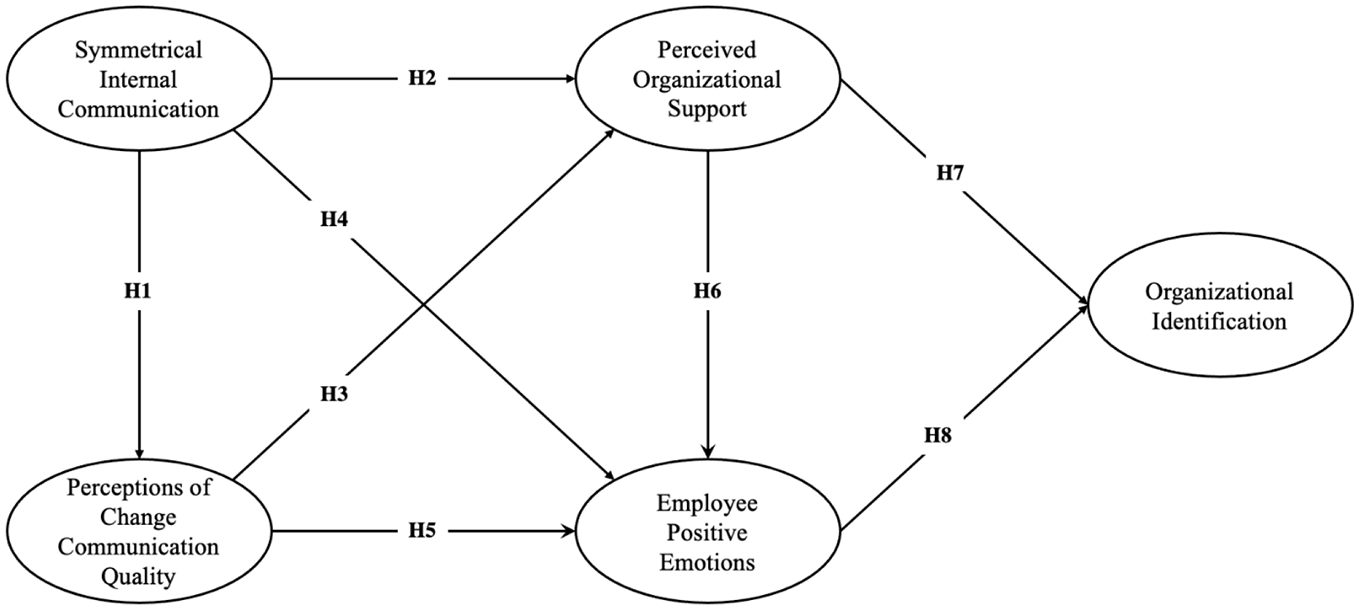
Conceptual model.
Method
Sampling and Participants
To test the proposed model, an online survey was conducted during the second and third weeks of April 2020. This study’s population consisted of full-time U.S. employees with different levels of job positions at small, medium, and large corporations. To recruit qualified participants, we employed the employee panel pool from Qualtrics, a global provider of survey services with access to 2 million panel participants. A stratified random sampling strategy was adopted based on the most recent U.S. census data in terms of gender, age, and ethnicity categories to obtain a representative sample of U.S. employees. Before administrating the main study, we conducted an online pretest with 60 full-time employees working in the U.S. through Amazon Mechanical Turk to test the validity and reliability of the measurements. We also asked the pretest participants to provide feedback in terms of wording, thematic clarity, and survey format. Based on their feedback, we reworded a few measurement items. Participants from the pretest were not included in the final sample. A final sample of 490 full-time employees was retained after removing invalid responses (e.g., failed attention check questions). These participants came from companies across more than 20 industries. 1 Table 1 presents the demographics of the survey participants.
Demographic Characteristics of the Sample.
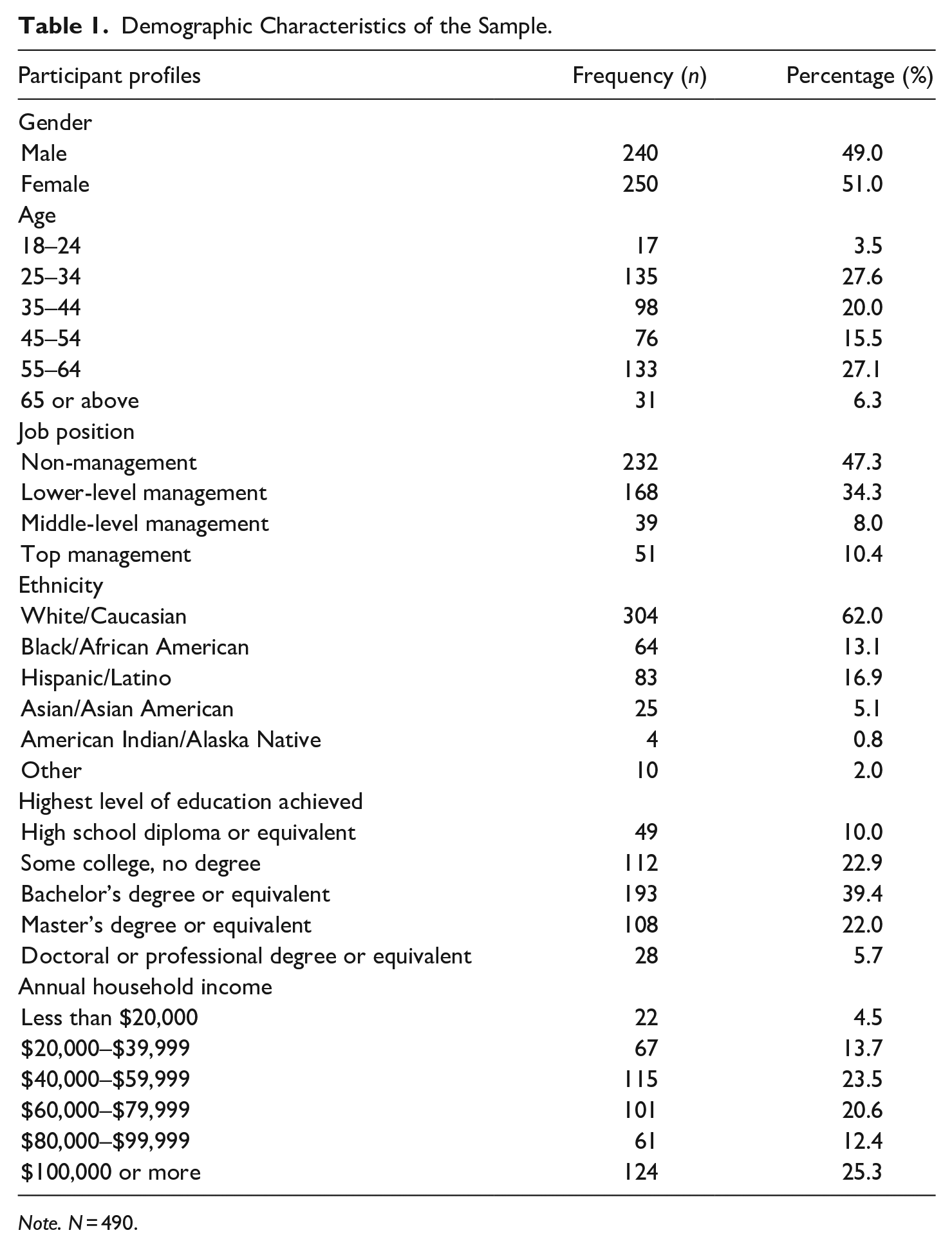
Note. N = 490.
Note at the time of the survey, the coronavirus pandemic had drastically interrupted business operations and precipitated changes across industries in the U.S. President Trump had issued a national emergency declaration, and most states had implemented restrictions to curb the spread of COVID-19. Regarding the COVID-19 related company information, results revealed that most of the participants reported that their companies offered the option to work from home (73.3%) and altered the sick and leave policy (61%). In addition, around one-fourth (25.9%) of the participants reported that there were confirmed cases of COVID-19 among employees in their companies.
Measures
All measurement items (see Table 2) were adopted from established studies and then adapted to fit into the context of this study—the COVID-19 outbreak. The scale reliabilities were all satisfactory as the values of Cronbach’s α ranged from .83 to .96.
Measurement Items and Standardized Factor Loadings.
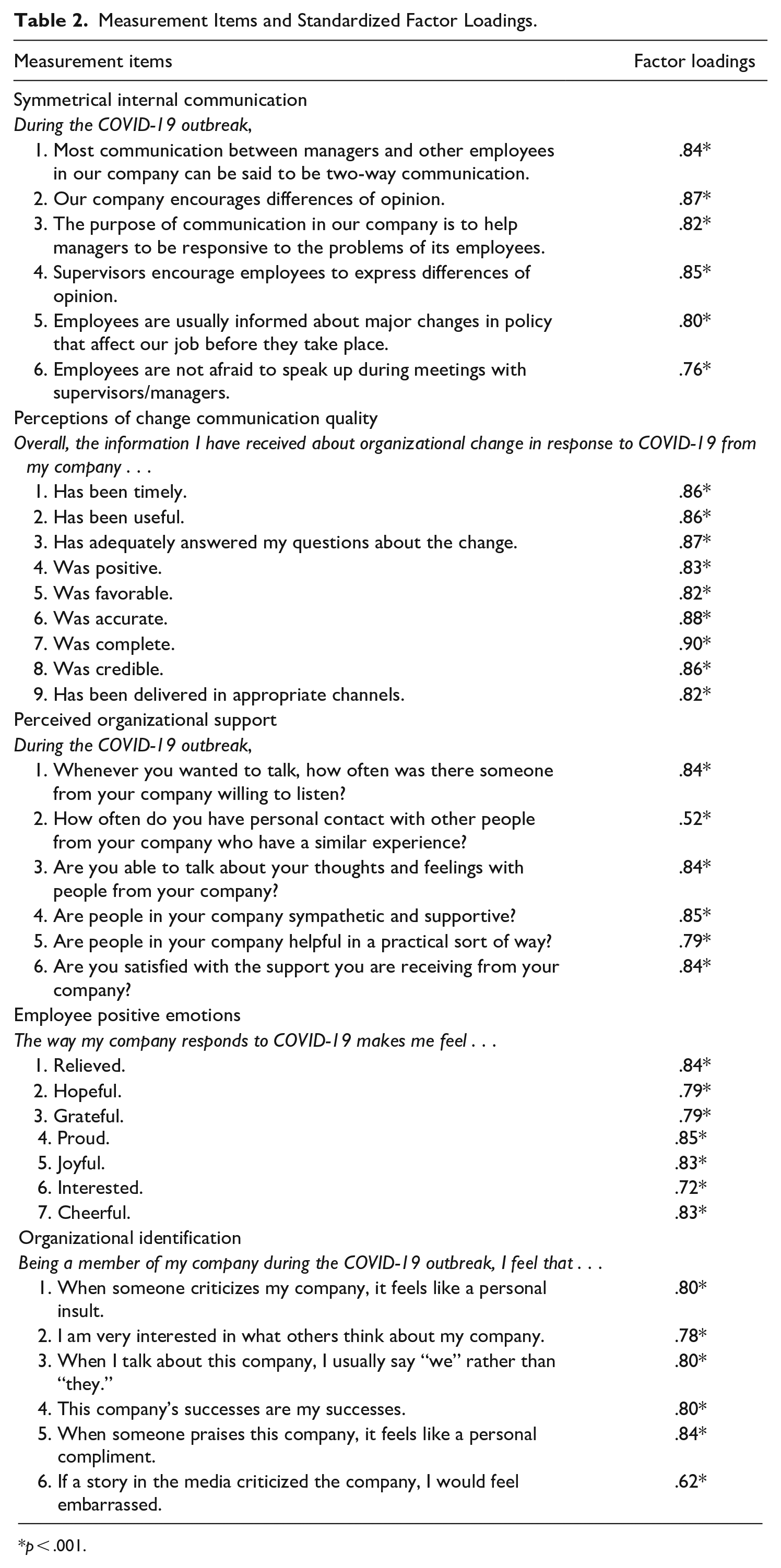
p < .001.
Symmetrical internal communication
Symmetrical internal communication was measured by a six-item scale (α = .93) developed by Dozier et al. (1995). Employees were asked to indicate the extent to which they agreed with the statements describing their organizations’ internal communication efforts during COVID-19. Responses were made on a 7-point scale (1 = strongly disagree to 7 = strongly agree).
Perceptions of change communication quality
Perceptions of change communication quality were measured by a nine-item scale (α = .96) adopted from the previous literature (Bordia, Hobman, et al., 2004; Miller et al., 1994; Mohr & Sohi, 1995). Employees were asked to rate the communication that they received from their companies about organizational changes in response to COVID-19 on various dimensions, such as usefulness, timeliness, and accuracy. Responses were made on a 7-point scale (1 = strongly disagree to 7 = strongly agree).
Perceived organizational support
As we were interested in employees’ perceptions of support received from organizations in an organizational crisis context, the crisis support scale consisting of seven items (α = .83) was adopted (Joseph et al., 1992). Employees were asked to evaluate the degree of support that they received from their organizations during the COVID-19 outbreak. Responses were made on a 7-point scale (1 = never to 7 = always).
Employee positive emotions
Employee positive emotions were measured by a seven-item scale adapted from the literature on employees’ emotions during organizational crisis and change (α = .93; Agote et al., 2016; Zhang & Shay, 2019). Employees were first instructed to recall how their companies responded to COVID-19. They were then asked to indicate the extent to which they agreed with the words describing their feelings regarding the way their companies respond to COVID-19, such as relieved, hopeful, and grateful. Responses were made on a 7-point scale (1 = strongly disagree to 7 = strongly agree).
Organizational identification
Employees’ organizational identification was measured by a six-item scale (α = .90) from Mael and Ashforth (1992). Participants were asked to rate the extent to which they identify themselves with their organizations during the COVID-19 outbreak. Responses were made on a 7-point scale (1 = strongly disagree to 7 = strongly agree).
Common Method Variance
Common method variance (CMV) is a potential threat in single-respondent surveys. Therefore, two procedural remedies suggested by Podsakoff et al. (2003) were adopted to control for CMV. First, we carefully examined the measurement items before data collection to ensure that vague or ambiguous terms were not included and that the measures were simple, concise, and specific. Second, respondents’ anonymity was assured by stating that explicitly at the beginning of the survey.
The extent of CMV was also evaluated after data collection by performing multiple tests. First, we performed Harman’s single-factor test through confirmatory factor analysis (CFA; Kock et al., 2021; Podsakoff et al., 2003). CMV is likely to exist when a single general factor is loaded by all items of all variables in the study. The results of CFA indicated that the one-factor measurement model poorly fit with the data: χ2 (629) = 6,393.579; RMSEA = .137 [.134, .140]; CFI = .624; TLI = .602; SRMR = .107. In addition, a more conservative approach for CMV detection, proposed by Kock (2015), relying on model-wide collinearity assessment was also employed. Variance inflation factors (VIFs) for all the latent variables were generated through a full collinearity test. The highest VIF was 2.80, less than the threshold of 5 (Hair et al., 2018). Moreover, none of the correlations between constructs (see Table 3) in this study is higher than .74, while CMV usually results in correlation higher than .90 (Bagozzi et al., 1991). In summary, these tests indicated that CMV was unlikely to pose a serious threat in this study.
Descriptive Statistics and Correlations for Study Variables.
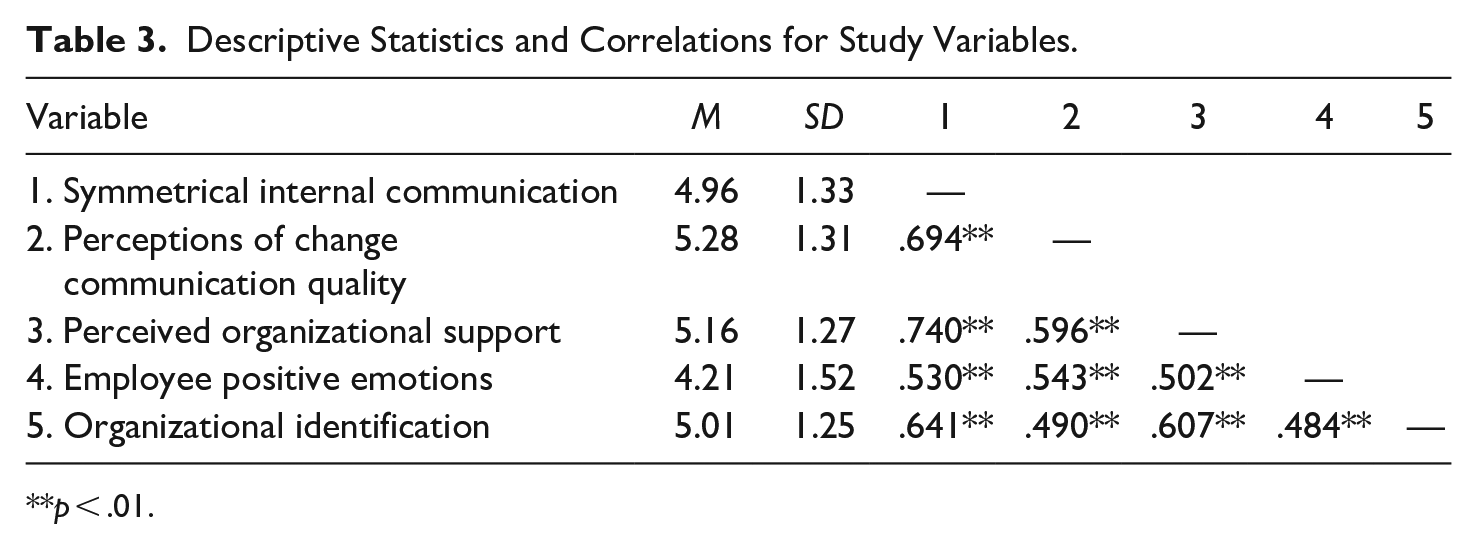
p < .01.
Data Analysis
A two-step approach to structural equation modeling (SEM) suggested by Anderson and Gerbing (1988) was conducted to test the hypotheses in this study. With Mplus program, we first assessed the measurement model and then the structural model. The following criteria was adopted to evaluate the model fit: root mean square error of approximation (RMSEA) < .08; comparative fit index (CFI) > .90; Tucker-Lewis index (TLI) > .90 (Hair et al., 2018), and standardized root mean square residual (SRMR) < .08 (Hu & Bentler, 1998). The coefficients showed in the model and reported in the test are all standardized path coefficients. The descriptive statistics and correlations of the variables are presented in Table 3.
Results
Model Testing
CFA was first conducted. The test of the measurement model revealed a good fit to the data: χ2 (550) = 1,291.158; RMSEA = .052 [.049, .056]; CFI = .948; TLI = .943; SRMR = .040. However, the standardized factor loading of one item (Do people in your company who you expected to be supportive let you down at any time?”—reverse coded) was less than .50, so we dropped this item from the measurement model (Hair et al., 2013). The final measurement model fit the data adequately: χ2 (517) = 1,197.582; RMSEA = .052 [.048, .056]; CFI = .952; TLI = .948; SRMR = .038. All factor loadings were significant at p < .001 level. The standardized factor loadings of the retained measurement items were also reported in Table 2. We then proceeded to test the structural model.
The structural model demonstrated a good fit to the data: χ2 (519) = 1,229.929; RMSEA = .053 [.049, .057]; CFI = .950; TLI = .946; SRMR = .041. We then compared the baseline model (Figure 1) with other alternative models. First, the direct effect of symmetrical internal communication on organizational identification was added in the first alternative model. This alternative model (χ2 (518) = 1,199.242; RMSEA = .052 [.048, .056]; CFI = .952; TLI = .948; SRMR = .038) had significantly better fit than the baseline model (Δχ2(1) = 30.687, p < .001). Next, the direct effect of perceived quality of change communication on organizational identification was added in the second alternative model. The second model (χ2 (518) = 1,228.407; RMSEA = .053 [.049, .057]; CFI = .950; TLI = .945; SRMR = .041) did not show a significantly better model fit than the baseline model (Δχ2 (1) = 1.522, p = .21). Finally, in the third alternative model, two direct effects of symmetrical internal communication and perceived change communication quality on organizational identification were added. The third model (χ2 (517) = 1197.582; RMSEA = .052 [.048, .056]; CFI = .952; TLI = .948; SRMR = .038) had significantly better fit than the baseline model (Δχ2(2) = 32.347, p < .001). After model comparison, we selected the third alternative model (including all paths) as our final model based on the significance of chi-square differences and interpreted the path coefficients (see Figure 2).
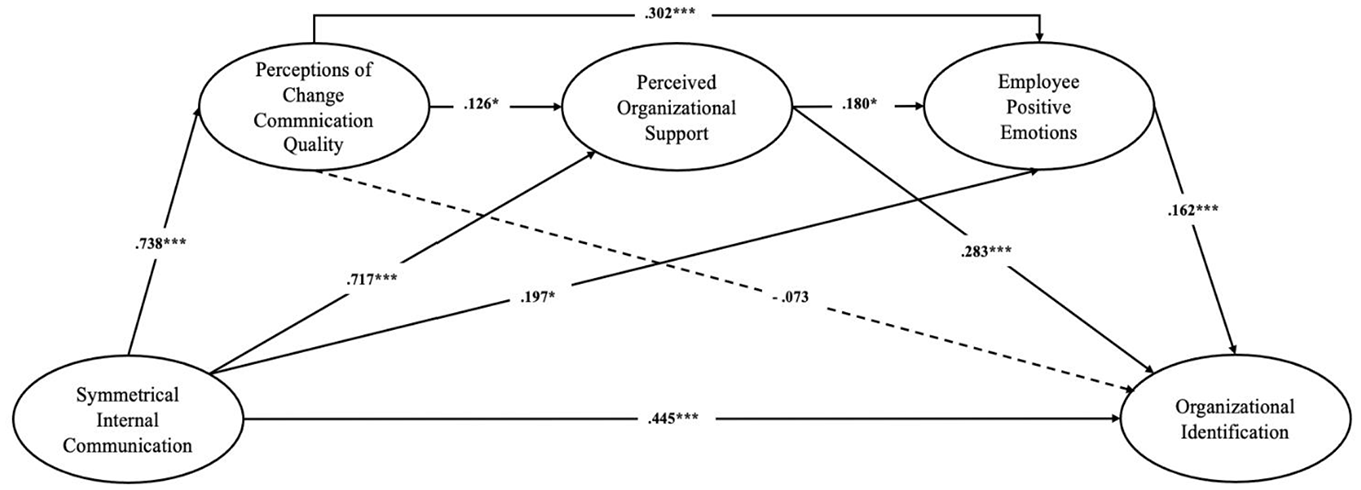
Results of the hypotheses testing.
The results from the SEM analysis indicated that the exogenous variable, symmetrical internal communication, explained 54.5% of the total variance of perceived quality of change communication. Symmetrical internal communication and perceived quality of change communication accounted for 66.3% of the variance of perceived organizational support. Furthermore, symmetrical internal communication, perceived quality of change communication, and perceived organizational support together explained 38% of the variance in employees’ positive emotions. Last, symmetrical internal communication, perceived change communication quality, perceived organizational support and employees’ positive emotions together accounted for 55.5% of the total variance of organizational identification.
Hypotheses Testing
H1 proposed a positive relationship between symmetrical internal communication and employees’ perceived quality of change communication. As shown in the results, the effect was positive and significant (.738, p < .001). Therefore, H1 was supported.
H2 examined the relationship between symmetrical internal communication and employees’ perceptions of organizational support. The results showed that symmetrical internal communication was positively and significantly related to perceived organizational support (.717, p < .001), supporting H2.
H3 investigated the impact of perceived quality of change communication on employees’ perceptions of organizational support. A significant and positive relationship was found between perceived change communication quality and perceived organizational support (.126, p = .011), supporting H3.
H4 proposed a positive association between symmetrical internal communication and employees’ positive emotions. The path was positive and significant (.197, p = .022), supporting H4.
H5 investigated the relationship between perceived quality of change communication and employees’ positive emotions. The results found a positive and significant relationship between perceived change communication quality and employees’ positive emotions (.302, p < .001), supporting H5.
In H6, a positive relationship between employees’ perceptions of organizational support during crisis-induced change and employees’ positive emotions was proposed. The results indicated that this relationship was positive and significant (.180, p = .018). H6 was thus supported.
H7 tested the relationship between employees’ perceptions of organizational support and employees’ organizational identification. The results showed the relationship was positive and significant (.283, p < .001). Thus, H7 was supported.
Finally, H8 predicted a positive relationship between employees’ positive emotions and employees’ organizational identification. A positive and significant relationship was found between employees’ positive emotions and their organizational identification (.162, p < .001), supporting H8.
Indirect (mediation) effects
To test hypotheses 9 and 10, we performed mediation analysis using Mplus to identify whether symmetrical internal communication and perceived quality of change communication can lead to employees’ organizational identification through perceived organizational support and positive emotions in the context of crisis-induced organizational change. The results (see Table 4) showed significant indirect effects in paths from symmetrical internal communication to organizational identification via perceived organizational support (.203, p < .001) and positive emotions (.032, p = .044). Therefore, H9 was supported. The results also indicated significant indirect effects in paths from perceived quality of change communication to organizational identification through perceived organizational support (.036, p = .035) and positive emotions (.049, p = .005), supporting H10. In addition, the results suggested that there were sequential mediation effects. The influence of symmetrical internal communication on employees’ organizational identification can be first mediated by the perceptions of change communication quality and then mediated by perceived organizational support (.026, p = .035) or positive emotions (.036, p = .005) respectively. As the results showed a significant direct effect of symmetrical internal communication on organizational identification (.445, p < .001), the mediation effects depicted in H9 were thus partial mediation. However, the direct path from perceptions of change communication quality to organizational identification was insignificant (−.073, p = .197). Therefore, the mediation effects depicted in H10 were full mediation.
Mediation Effects in the SEM Model.
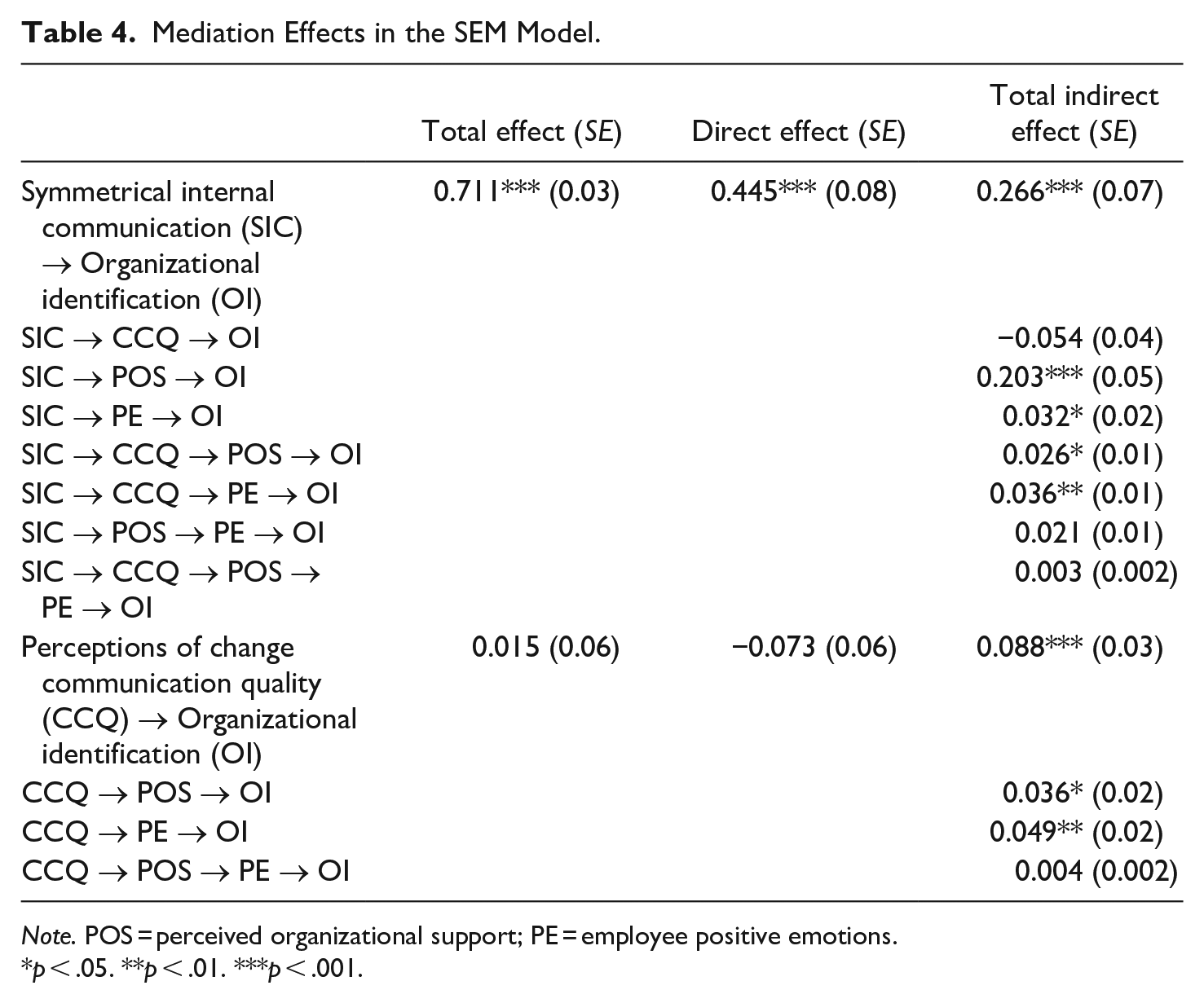
Note. POS = perceived organizational support; PE = employee positive emotions.
p < .05. **p < .01. ***p < .001.
Discussion
Based on organizational change and strategic internal communication literature and organizational support theory, this study proposes and tests a model, which expounds on the role of symmetrical internal communication in shaping employees’ experiences and organizational identification during crisis-induced organizational change, specifically in the context of COVID-19. Results of an online survey indicated that symmetrical internal communication positively influences employees’ perceptions of change communication quality. In addition, symmetrical internal communication and perceived change communication quality enhance employees’ perceived organizational support and positive emotions during change, which in turn leads to stronger organizational identification. These findings highlight the crucial role of symmetrical internal communication in managing employee experiences and bringing positive employee outcomes during crisis-induced organizational change. The theoretical and practical implications of this study are discussed below.
Theoretical Implications
The current study contributes to the existing public relations and organizational change literature in several ways. First, this study echoes previous research that highlights the important role of communication during organizational change. Effective internal communication has long been regarded as a critical approach to facilitate employees’ readiness and commitment to organizational change (e.g., Elving, 2005; Luo & Jiang, 2014). Among various approaches to communicate with employees during organizational change, the participative communication approach has been highly advocated in the literature (Lewis & Russ, 2012; Lewis et al., 2006). Such practice is generally believed to offer employees a sense of control and reduce their uncertainty toward changes, thereby improving their commitment to organizational change efforts (Holt et al., 2007). However, even though scholarly conclusions have agreed on the importance of practicing participative communication in organizational change, empirical studies investigating specific participative communication strategy and the related effects are still needed (Elving, 2005; Lewis & Russ, 2012). This study answers the call by demonstrating the crucial role of symmetrical internal communication—one type of participative communication strategy with a strong feeling of empowerment—in enhancing employees’ cognitive and affective experiences and organizational identification during crisis-induced organizational change. The findings not only advance the understanding of the role of symmetrical internal communication in facilitating successful organizational change but also expand the repertoire of participative communication strategies in the context of organizational change.
Second, this study advances the strategic internal communication scholarship by extending the application of symmetrical internal communication strategy into the crisis-induced organizational change context. The results of this study confirm our theoretical reasoning that symmetrical internal communication matters not just in increasing employees’ perceptions of the quality of change communication but also in enhancing employees’ cognitive and affective experiences during change. In addition, this study also contributes to strategic internal communication research by mapping out the underlying process through which symmetrical internal communication affects employees’ organizational identification during crisis-induced change. Specifically, the results of the mediation analyses indicate that during crisis-induced change, symmetrical internal communication can boost employees’ organizational identification by first increasing employees’ perceived change communication quality and then improving perceived organizational support and eliciting positive emotions. As such, this study provides important theoretical insights into the impact of symmetrical internal communication in shaping organizational identification in a crisis-induced change situation.
Third, the empirical evidence from this current study also advances organizational support theory by linking it to strategic internal communication and organizational change scholarship. Since this study shows perceived organizational support significantly mediates the impact of symmetrical internal communication and perceived quality of change communication on employees’ positive emotions and organizational identification in a crisis-induced organizational change setting, it not only confirms the role of perceived organizational support to produce positive employee outcomes but also extends the understanding of the factors that can affect perceived organizational support during organizational change. Moreover, when comparing standardized path coefficients (see Figure 2), perceived organizational support is revealed as a stronger predictor of organizational identification compared to employees’ positive emotions. Such a finding adds another piece of evidence attesting to the strong explanatory power of organizational support theory in the crisis-induced organizational change context.
Fourth, recognizing organizational change is an emotionally charged process, this study also highlights that employees’ emotions are an essential part of organizational change (Helpap & Bekmeier-Feuerhahn, 2016) and suggests positive employee emotions during change bring favorable employee outcomes. Existing studies have focused more on the outcomes of employee emotions during change rather than on their antecedents. Agote et al. (2016) have called for more research to investigate the factors that shape employee emotions during change. This study addresses this call by showing that symmetrical internal communication and employees’ perceived change communication quality and organizational support beneficially influence employees’ positive emotions during change, which contributes to understanding the role of employee emotions during change.
Finally, as this study is situated in the context of the COVID-19 pandemic, it also extends the knowledge on the role of organizational communication in supporting employees’ psychological wellbeing during COVID-19. Although the importance of organizational communication on employees’ psychological wellbeing during COVID-19 has been suggested in recent studies (e.g., Charoensukmongkol & Phungsoonthorn, 2022; Zito et al., 2021), two important questions remain underexplored: what specific internal communication strategy can be used by organizations to support employees, and how employees’ psychological wellbeing can contribute to organizational effectiveness. Thus, this study moves beyond existing research that examined the relationship between communication and employees’ psychological wellbeing. It provides a more comprehensive understanding about the profound influence that symmetrical internal communication can cultivate during COVID-19.
Practical Implications
This current study also provides important practical implications for organizational leaders, change implementers, and internal communication professionals regarding how to communicate effectively with employees and manage employee experiences in a crisis-induced organizational change situation. According to the results of our study, we recommend that organizations develop an internal communication system that is employee-centered, two-way, open, and responsive. For instance, change managers and internal communication professionals can set up recurring conversations with employees to understand their opinions and feelings toward the organizational crisis and change. In addition to this, change managers and internal communication professionals can also carefully review and analyze employees’ feedback because their feedback may pinpoint the internal contradictions and the limitations of the original change plans that may beset effective organizational changes in dealing with crises. Moreover, to elicit employees’ positive emotions and ease their anxiety in crisis and change situations, organizations should deliver timely, useful, understandable, and accurate organizational change-related information to employees. For example, change implementers can provide information about what changes will occur in the organization to deal with the crisis, or why the organization decides to implement certain organizational changes.
Given the vital role of perceived organizational support demonstrated in this study in fostering employees’ positive emotions and organizational identification during crisis-induced change, we suggest organizational leaders and managers demonstrate genuine care for employee’s well-being and showcase the willingness to reward employees’ work efforts in times of crises and changes. In addition, leaders and managers need to identify employees’ needs and concerns during change and provide substantial and useful emotional, informational, or practical support to help employees carry out their jobs and cope with stressful situations. For example, during crisis-induced change, internal communication practitioners can share inspiring messages with employees, such as the stories of individuals who learn and grow from dealing with significant changes in work and life. The organizational support received by employees during change can elicit confidence and gratitude among them, which will lead them to identify themselves with their organizations better.
Limitations and Future Research
This study has several limitations that should be addressed. First, as the survey data are cross-sectional, our study cannot provide unequivocal proof of the causal relationships among the variables. However, despite such a limitation of using cross-sectional data, we consider it is appropriate to use a cross-sectional survey design to address the purpose of this study. In this study, we are particularly interested in the role of symmetrical internal communication during COVID-19 on important employee outcomes (e.g., emotions, organizational identification). Prior research has suggested that to effectively assess whether an organization practices symmetrical internal communication, this concept needs to be measured as individual perceptions toward corporate-level communication practices (e.g., Kim & Rhee, 2011; Lee, 2022; Men, 2014). This is because if corporate-level communication is not perceived as symmetrical by employees, this communication practice then is not real symmetrical communication. Second, symmetrical internal communication is not a discrete event but a cumulative, long-lasting practice followed by organizations. Hence, it may be difficult in determining and justifying the selection of arbitrary time points to measure, track, and report the effect of symmetrical internal communication on employees’ cognitive and affective experiences during COVID-19, if a longitudinal design was employed. In addition, despite its advantage in revealing causal connections among the variables of interest, a longitudinal design still bears the risk of introducing erroneous inference (Spector, 2019) and thus may not guarantee definitive evidence on the theorized causal relationships (Spector, 2019). Taking these factors into consideration, cross-sectional survey design was considered appropriate and efficient.
In addition, as this study is situated in the context of COVID-19, it raises concern about the generalizability of the research findings. Given that COVID-19 is significantly different from other types of organizational crises in terms of responsibility attribution, intensity, and scope, future research can test the applicability of the proposed model in other organizational crisis contexts to increase the model’s explanatory power. Furthermore, as this study was conducted in the U.S., later research can conduct comparative studies to investigate the similarities and differences regarding the effects of symmetrical internal communication on employees’ experiences during crisis-induced organizational changes across different cultural contexts.
Footnotes
Declaration of Conflicting Interests
The author(s) declared no potential conflicts of interest with respect to the research, authorship, and/or publication of this article.
Funding
The author(s) received no financial support for the research, authorship, and/or publication of this article.
