



Abstract
Social media are an ubiquitous, technological phenomenon, permeating both personal and professional lives. Increasingly, business professionals use social media at work, yet it is often omitted from the business curriculum. This qualitative study investigated business communication faculty members’ perceptions and usage of social media in classroom and business contexts. Data were collected via interviews and course syllabi review. Interviews were transcribed and coded using an adapted technology acceptance model. Overall, participants accepted social media’s importance as a business tool but did not reach a consensus about its inclusion in the curriculum. Guidelines for addressing social media in the business communication classroom are presented.
Today’s colleges and universities place great importance on learning and mastering learning technologies. Researchers at Educause (Dahlstrom & Bichsel, 2014) found that today’s students generally have favorable attitudes toward technology and remain very connected to the world around them through a variety of digital devices and tools. Students are bringing a working knowledge of technological tools and digital content to colleges, and they expect that the undergraduate learning environment implement such digital elements. The lecture and note-taking style may no longer be effective in engaging this generation of students.Hutchings, Huber, and Ciccone (2011)suggested implementing a “learner-centered” style of teaching that is continually adapting and improving. In spite of this seemingly sound working relationship that students have with technology, faculty can, and must, play an important role: Although technology is omnipresent in the lives of students, leveraging technology as a tool to engage students is still evolving. . . . Students still have a complex relationship with technology; they recognize its value, but they still need guidance when it comes to using technology in meaningful and engaging ways for academics. (Dahlstrom & Bichsel, 2014, p. 5)
Many colleges of business already require students to learn word processing, spreadsheet, and database software to better prepare themselves for communicating and performing in today’s job market. But despite the emergence of social media as a key business communication tool, the business curriculum has had limited content dedicated to addressing social media’s proper place and usage in the business world.
In theNational Survey of Student Engagement’s (2014)annual report, social media is presented as both a tool for students to communicate and collaborate for coursework and extracurricular activities and for administration and faculty to communicate additional learning and employment opportunities to students. Students commonly use various forms of social media for personal purposes, but communication among friends is governed by starkly different rules than communication between businesses and customers (Woodley & Silvestri, 2014).
Existing research on social media and businesses emphasizes its value (Henry & Venkatraman, 2013), rooted presence (Lewis, 2014), and use as an up-and-coming job search and application tool (Han, 2013), but little discussion exists on how social media is to be extended from personal use to business and professional use and how social media should be addressed in the college business curriculum. While social media definitively can be categorized as a communication tool, the question that arises is whether it has a place within the business communication curriculum.Henry and Venkatraman (2013)stressed the need to infuse social media into business communication courses, as well as other business courses, and gave suggestions on how to do so, such as incorporating assignments on viewing Twitter accounts to evaluate communication styles. A more recent study advocated for creating a special course within the business curriculum that is solely dedicated to teaching students how to use different types of social media in business (McHaney, Warkentin, Sachs, Pope, & Ormond, 2015). It seems that social media technologies have powerfully emerged onto the business scene and will not be disappearing any time soon; therefore, faculty have the opportunity to play an important role in preparing students for the changing, technology-focused workforce.
Literature Review
In order to intentionally evaluate how social media is being used in higher education, it is important to understand how businesses utilize it. This literature review includes a review of (a) business use of social media and the skills employers need, (b) how social media are used and taught in the college classroom, and (c) a discussion of needs in the business curriculum.
Social Media in the Business Setting
Social media has become an increasingly popular and relevant communication tool in the business setting. Companies use social media both to engage customers and to engage employees. They create virtual customer environments in order to establish an online presence, increase their availability for support purposes, and build a customer community (Culnan, McHugh, & Zubillaga, 2010); ultimately, the company can benefit from the interactive and real-time nature of social media for reaching their customers.Henry and Venkatraman (2013)highlighted social media as an important tool for the aspiring young businessperson’s skill set due to the increasing relevance of social media within the business setting. Effective communicators who are skilled in both traditional business communication channels and in emerging social media channels are in demand (Henry & Venkatraman, 2013). Because communication methods are becoming more technology based, a graduate who can master multiple forms of communication, including social media and other technologies, will be better poised in the market.
Distinct from traditional face-to-face and static written communication methods, social media poses a new challenge for businesses—one that requires not only familiarity with the technologies used but also a special level of critical thinking to consider potential roadblocks, pitfalls, and problem areas, as well as opportunities. The increasing presence of social media tools in businesses places an “obligation on educational institutions to facilitate for their students the development of the critical, creative, collaborative, and communicative capacities” required by employers (Duffy & Bruns, 2006, p. 37).Rodriguez (2011)suggested working to “enhance students’ media literacy” by including assignments that incorporate social media and pose challenges in related areas, such as privacy and intellectual property, which serve to simulate real-life business challenges. Social media allows for conversations that “travel in random paths across management hierarches . . . [short-circuiting] established power dynamics and traditional lines of communications” (Deiser & Newton, 2013, p. 63). Businesses can use social media for both communication among employees and for communication with customers and potential customers.Deiser and Newton (2013)described social media in the business setting as a “disruptive force” and suggested that future business leaders embody a set of six social media skills, presented inTable 1, in order to foster competitive advantage.
Six Social Media Skills Every Leader Needs.

Source. Deiser and Newton (2013, February). Copyright (2018) McKinsey & Company. All rights reserved. Reprinted with permission.
Businesses can use social media to attract not only customers but also talented potential employees. The “connected” generation of today may be best reached for employment opportunities via social media channels. Talent managers are using social media to network with, build relationships with, and engage prospective employees (Dery, Tansley, & Hafermalz, 2014).
Ethics and Professionalism in Social Media
With the advent of new academic and professional communication technologies comes new guidelines that must govern proper usage. Interestingly, specific usage policies for social media in academia and the workplace are not common. It appears that the newness of social media may be the cause for this.Kimball and Kim (2013)proposed a suitable set of questions to guide professionals in the field of social work when using social media, which can be applied to other fields:
What information do you want to share?
Why do you want to share this information?
Who needs to see this information?
Where do you want to share this information?
How [do] the . . . organizational policies guide sharing this information?
In the absence of set organizational policies, practicing appropriate social media use must be guided by an internal decision-making process.Woodley and Silvestri (2014)aptly stated that a “different set of knowledge and skills” (p. 136) is needed for social media than for traditional communication methods and that “the blurring of personal and professional identities in social media creates hazards for both professionals and students” (p. 131). These skills may be learned through experience or through trial and error, but formal learning may give aspiring young businesspersons an advantage, so that they may be “aware of the great potential dangers of using social media and . . . [already have] the necessary experience and skills for leveraging social media in their jobs” (Henry & Venkatraman, 2013, p. 184). Incorporating ethical training and discussions related to social media usage will help students gain perspective before encountering associated challenges.
Deiser and Newton (2013)termed the knowledge and discernment of proper social media usage as “social media literacy,” which they suggested “has not yet found its way into the curriculum of business schools” (p. 7). Social media is commonly used today to support customer relations in businesses through an intimate and ongoing online presence, and integrating its usage into the business curriculum would help students stay up to date on its professional use (Henry & Venkatraman, 2013). In order to be critical consumers of social media, students must gain familiarity with its nuances and become able to discern fiction from reality. AsRheingold (2010)suggested, the “digital natives” may not be as “fluent in the use of social media” as one might think (p. 20); they may very well need assistance in learning how to apply what has heretofore been an informal social tool and in transferring it to a professional setting.
A significant part of transitioning from personal to professional use of social media is being able to distinguish and compartmentalize the differences. Businesses must develop and maintain their professional digital identities to safeguard their online reputation, which is increasingly vital to professional endeavors, such as job searches, professional networking, and customer retention.Woodley and Silvestri (2014)stressed exercising caution concerning the potential danger of online behavior “[creating] reputational risk” (p. 132). What is placed on the Internet, whether via personal or private accounts, may be difficult or impossible to erase; therefore, students and professionals must be cognizant of the reactions that may come from what they share and how those reactions could affect their professional lives.
Additionally, e-professionalism must be practiced by employees both on and off the job.Yap and Tiang (2014)highlighted the importance of teaching e-professionalism during the early years of the undergraduate experience and encouraging faculty to have students develop their own personal social media policies based on what they learn.Yap and Tiang (2014)also recommended urging students to use privacy settings in order to limit public access to their profiles, be aware of what impressions they may be making on future employers, and accept accountability for their actions.
Social Media in the General College Setting
Today’s students enter the postsecondary phase of their education with more technological knowledge and familiarity than ever before. The majority of college students, nearly 92%, own two Internet-capable devices (Dahlstrom & Bichsel, 2014). Not only do students own these devices, but they also regularly use them and quickly adapt to related advancements and new versions of the technologies as they come available.Junco and Cole-Avent (2008)called the current generation of college students “the most wired generation in history” (p. 3), which was no overstatement given the ease with which many students navigate the plethora of digital technologies and devices available to them.
Yang and Brown (2015)recommended using social media to assist students in adjusting to college life, as “successful college adjustment requires strong peer support” (p. 245). What better way is there to ease the adjustment than by leveraging the communication tools with which they are most familiar? With social networking tools, new students who may feel isolated or alone may connect with other students either in advance of their arrival to the campus or once on campus. This early networking can positively affect students’ adjustment to college life (Yang & Brown, 2015).Wang (2013)found that Facebook “[helped] students to merge their social and academic lives” (p. 191).
In another example of social media’s positive implications on new students,Junco, Heiberger, and Loken (2011)studied the effects of utilizing Twitter for class communication (discussions, reminders, etc.) in place of a previously used tool. Utilizing control and experimental groups, the researchers found a significant positive difference in Twitter’s use as an engagement tool.
Conversely, social media use on campus must be approached with caution, as negative impacts have also occurred. One example is the recent case of Yik Yak, a social media application through which students anonymously post information about their educational institution, being used for threats of violence, posing a distraction to concerned administrators and faculty members (DeNisco, 2015). Not only does student-to-student social media interaction have positive implications for the college experience, but staff-to-student and faculty-to-student social media interaction has also been found to have a positive impact. It is important that higher education professionals become familiar with how they can use social media technologies to influence and support student adjustment and needs (Junco & Chickering, 2010, p. 13). Student affairs professionals can create programming and offer mentoring for students addressing social media conflict resolution, cyberbullying, and cleaning up a student’s online image (Junco & Chickering, 2010, p. 14).
Social Media in the Classroom Setting
Adopting new technologies in the classroom setting has proven to be a continuous and unremitting effort in recent years with the advent of many new technologies for facilitating learning. Social media has emerged on the scene as one of these many technologies, and it has been proven to have many classroom benefits. Because social media is so deeply rooted in the lives of today’s students, it has proven to be “a more powerful distraction” than other temptations for students; thus, addressing it must be a high priority for faculty (Abe & Jordan, 2013, p. 17). Business courses are now experiencing a transitionary period in which social media challenges, benefits, and implications are starting to emerge in the curriculum.
Faculty
TheStudy of Faculty and Information Technologyby Educause (Dahlstrom & Brooks, 2014) revealed that more than 40% of faculty view social media as a potential teaching and learning tool. This figure is likely to increase as the newness of social media wears off and its familiarity in both education and the professional world becomes rooted.Tinti-Kane (2013)suggested that social media in the classroom is beneficial for engaging, interacting with, and supporting students through sharing content, creating learning communities, and encouraging deeper learning.
Some faculty members have been slow to adopt social media usage in the classroom despite its potential benefits.Reid (2014)suggested that understanding the many barriers to acceptance of new instructional technologies is the key to helping faculty successfully implement new technologies—including social media. These barriers to faculty technology use include (a) knowledge of how to effectively use the technology, (b) resistance to change, (c) self-efficacy and background related to technology use, (d) perception of the new technology’s effectiveness, and (e) participation in professional development concerning the new technology. If faculty are unable to master the technology, are unwilling to adjust their existing teaching methods, do not view themselves as capable of mastering the technology, do not see utility in the technology, or do not engage in sufficient training or instruction concerning the technology, the chance that the faculty member will adopt the new technology is low.
Tinti-Kane (2013)suggested eight faculty concerns that serve as barriers to adoption: (a) integrity of student submissions, (b) concerns about privacy, (c) separate course and personal accounts, (d) grading and assessment, (e) inability to measure effectiveness, (f) lack of integration with the learning management system, (g) the amount of time it takes to learn or use the technology, and (h) lack of support at the institution. Concerns about the time it might take to learn and use social media are also represented inReid’s (2014)barriers related to effective use, resistance to change, and self-efficacy. Additionally, the perception of a lack of institutional support in implementing social media in the classroom mirrorsReid’s (2014)barrier concerning adequate professional development.
In spite of the challenges associated with faculty adoption of new technology, laying a foundation for successful adoption is possible.Giacomini, Lyle, and Wynn (2012)suggested that a preexisting level of technical expertise, or literacy, greatly increases the chance of adoption of new educational technologies; knowing the level of expertise on a campus will help administrators target efforts to increase technology adoption. As previously mentioned, supplying adequate and continuous professional development opportunities will help in many ways; faculty members will learn about the many applications of the technologies, become more familiar with it via hands-on experience, and have the ability to ask questions while learning. If “important others” at the departmental or division levels promote the value of social media, this might encourage faculty members to adopt social media (Hanson et al., 2011).
An alternate approach to faculty implementation of new technologies in the classroom comes from a dated example that is easily transferable to social media use. In discussing the advantages of adopting laptops in the classroom,Hall and Elliott (2003)acknowledged that there will be a divide between the early and the late adopters of classroom laptop use but suggested using instructors as facilitators and having advanced students act as “technical advisors” to bridge the gap. The same approach can be applied to social media adoption. A two-way street approach to teaching and learning could create a more integrated and cohesive classroom environment, which could even provide additional, unexpected benefits.
In general, faculty “think they could be more effective instructors if they were better skilled at integrating various kinds of technology into their courses” (Dahlstrom & Brooks, 2014, p. 4). Addressing this area for improvement is a sound step in the direction of efficiency and effectiveness in the long run.
Students
Students often have a head start on faculty when it comes to social media use, but they can still benefit from faculty guidance. Merging what many students perceive as only a social tool with their academic livelihood can prepare students to use social media professionally.Cain and Policastri (2011)described a learning strategy in which students were required to incorporate the use of Facebook in class and benefited from the transition to a more professional style, which would be useful after graduation.
Junco and Chickering (2010)highlighted the “conceptual and technological difficulty” of social media (p. 13), as well as the necessary guidance that must be provided to help students manage their online presence responsibly. By promoting “rhetorically and critically thoughtful negotiations with social media” (Hurley & Kimme Hea, 2014, p. 66) in the classroom, students gain knowledge and skills that they can apply professionally in the future. These “sophisticated consumers of digital content” (Epper, Derryberry, & Jackson, 2012, p. 8) will become better prepared to encounter situations that require them to transition from their traditional, informal use of social media to their formal, business use of social media.
To integrate social media into the business communication curriculum, faculty must consider how they can best meet students’ needs, including guidance in understanding the differences between personal and professional use of social media, issues in oversharing, long-term implications of sharing personal information, and privacy issues.Junco and Chickering (2010)charged educational professionals with teaching students to critically evaluate what they find online. Students may be accustomed to viewing and contributing to a seeming surplus of information at their fingertips, but they may not always clearly discern and reason through the differences in the value and authenticity of the many sources of information. Additionally, students may not thoroughly consider the implications of placing personal information on the Internet for public viewing.
Junco and Cole-Avent (2008)suggested that although students are capable of wielding a wide range of tools for digital and online communication, they may have trouble “differentiat[ing] between real-world and online communication” (p. 7) and the rules that govern various communication channels. For example, face-to-face conversations and email messages must be managed by different sets of rules; facial expressions, tone, inflection, and other nonliteral communication aspects can greatly affect a face-to-face conversation, while aspects such as word choice, punctuation, and response timing can affect how email messages are received.Jansen and Janssen (2013)highlighted differences between voicemail and email by describing voicemail as having vocal cues and high emotional transparency and email as having no vocal cues and low emotional transparency. With voicemail, it becomes more challenging to leave a perfectly polished message due to the inevitability of pauses, restarts, distractions, and other common issues of verbal communication. Understanding the strengths and weaknesses of the various communication channels (including social media) will help students choose the best channel on which to convey their messages. Educational professionals can play an important role to help them learn which channels to use based on the situation.
Purpose, Theoretical Overview, and Research Questions
The purpose of this research was to explore business faculty’s acceptance of and recommendations for educating students on the use of social media technologies. Students who are adequately instructed in the professional use of social media technologies may be better prepared to utilize them in their careers (Duffy & Bruns, 2006;Rodriguez, 2011).
Theoretical Framework
Three main theories structured our research:
The technology acceptance model (Davis, 1985), which posits that technology usage is influenced by the user’s attitude, which is influenced by the user’s perceptions of usefulness and ease of use, which are both influenced by external factors
The concept of students as digital natives whose “academic use of technology is widespread but not deep” (Dahlstrom & Bichsel, 2014, p. 4)
Junco and Chickering’s (2010)notion of educators being responsible for helping students critically evaluate how they use the Internet
Research Questions
This study attempts to answer the following research questions:
Ethical Considerations
In order to conduct this study ethically and responsibly, the process and purpose of the study was made known to participants through an informed consent process prior to the scheduled interviews, and openness and transparency were maintained throughout the data collection period. After the data were collected, participants’ identities were made confidential, with true names being replaced with the pseudonyms in data analysis and written reporting. Confidentiality was also maintained by storing raw data, transcripts of data, submitted documents, and interview notes in a password-protected 256-bit Advanced Encryption Standard cloud-based archive. Finally, the participants were reminded that they were free to terminate their participation at any point during the study.
Method
The research design was qualitative in nature, involving a phenomenological study focused on the acceptance and use of social media technologies by business communication faculty. The phenomenon in focus was current business faculty who teach business communication courses at the undergraduate level.
Conceptual Framework
The conceptual framework for this study was adapted fromDavis’s (1985)technology acceptance model. Due to its simplicity and efficacy when applied to social media usage, Davis’s first version of the model was used as opposed to the more complex later versions or to more recently developed theory of planned behavior and theory of reasoned action (Chuttur, 2009).Figure 1posits that social media usage is influenced by the user’s attitude, which is influenced by the user’s perceptions of usefulness and ease of use of social media technologies, which are both influenced by external factors.
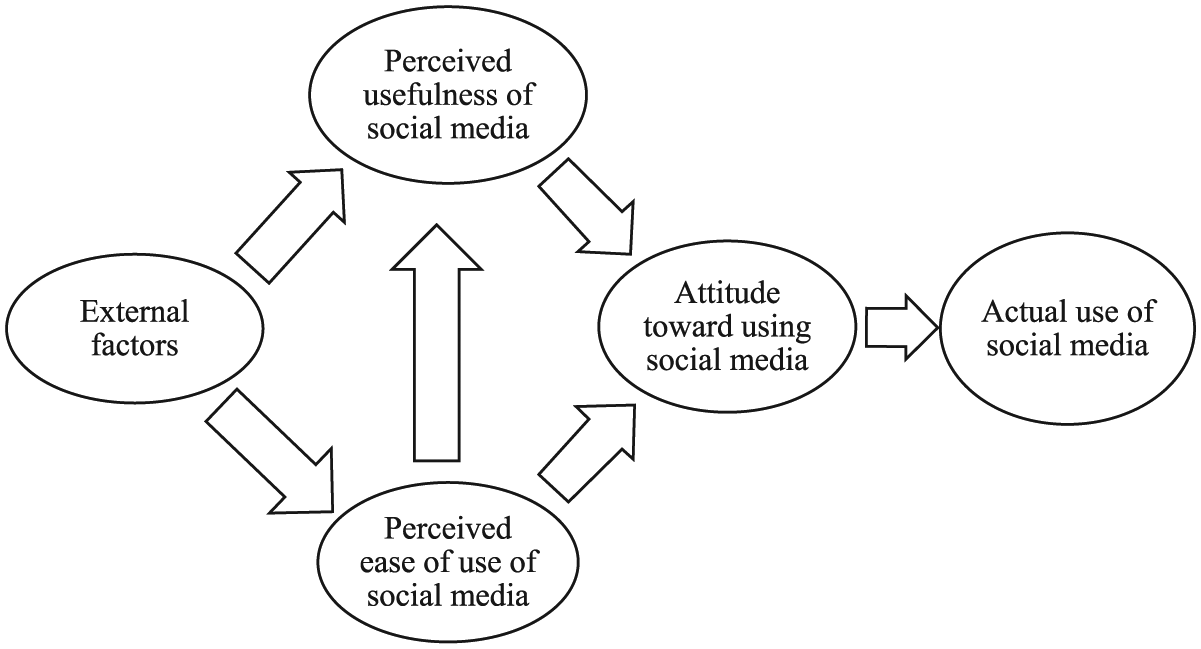
Social media technology acceptance model.
Sampling
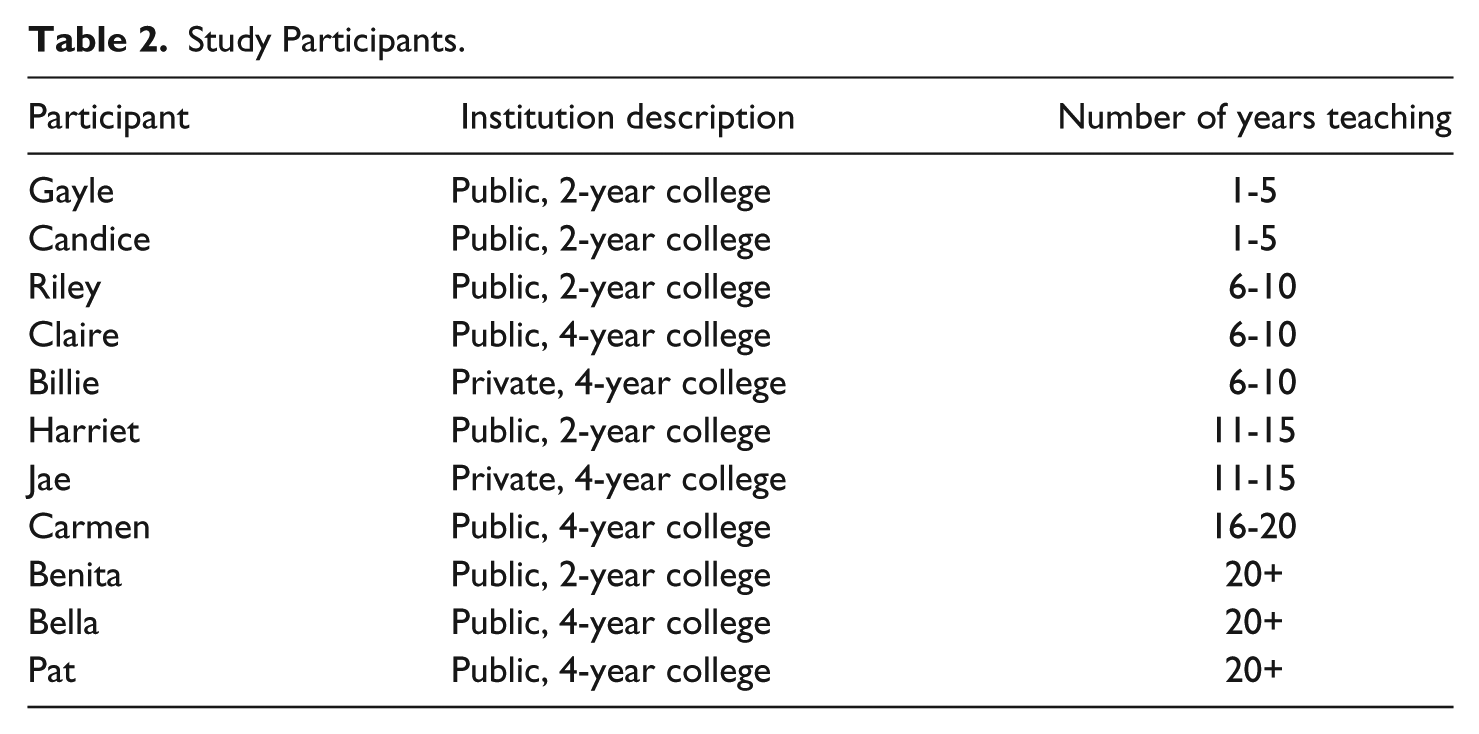
Participants in the study were actively recruited via emails (seeAppendix A), phone calls, and LinkedIn messaging. Potential participants were identified using purposive sampling after reviewing the course offerings at 10 higher education institutions in the Southeast United States to identify faculty who taught business communication. Potential participants from both 2-year and 4-year colleges and universities were contacted. Follow-up contact was made 2 or 3 days after the initial email and phone call. Eleven participants were scheduled for interviews. The study participants, using pseudonyms, are described inTable 2.
Study Participants.
Data Collection
Data were collected at the respective institution of each faculty participant via recorded interviews and document collection for triangulation purposes. Each participant was interviewed at a date, time, and location of his or her convenience for a period of 45 to 60 minutes; these interviews were tape-recorded and later transcribed. Interviews were limited to a 1-hour-or-less time frame in order to prevent participant (and interviewer) fatigue, as well as to prevent capturing an overload of superfluous data. Setting a time limit required a focused interview protocol to maintain efficiency (Miles, Huberman, & Saldaña, 2014). The interview protocol (seeAppendix B) was used to guide the interviewer’s questions and to stay on task. Questions and topics were based on the technology acceptance model conceptual framework.
Additionally, as a requirement of participation in the study, each participant submitted a copy of his or her most recent business communication course syllabus in either a paper or an electronic format.
Data Verification
Data verification and reliability were monitored using triangulation of data collected via participant interviews and course syllabi. Data and resulting themes were analyzed for commonalities and patterns, as well as for conflicts and discrepancies.
Results
Data analysis was completed in two stages using QSR International’s NVivo 11 qualitative analysis software. The first stage involved reviewing participants’ business communication course syllabi for commonalities in course structure and for evidence of social media incorporation. The second stage involved three levels of coding the interview transcriptions.
Stage 1: Review of Course Syllabi
Course syllabi were collected from each of the 11 participants. Because one syllabus collected was not from a business communication course, but rather from a social media marketing course, that syllabus was not included in this analysis. Analysis of the remaining 10 syllabi yielded 10 total initial (Level 1) codes, which were further condensed into five category (Level 2) codes, as displayed inFigure 2. Deductive coding was used to identify preset codes based on the literature review (Miles et al., 2014): (a) written communication, (b) oral communication, (c) use of technology, and (d) communication channels. Additional emergent codes were derived from topics contained in the syllabi in an inductive, organic manner in order to examine the syllabi in an unconstrained manner (Miles et al., 2014). Coding was completed in two rounds, with a period of time strategically spaced in between, in order to ensure that important emergent codes were not overlooked due to fatigue or repetition. The first round of Level 1 coding yielded only nine codes, but a repeated round was completed for diligence and yielded a final code of “cross-cultural considerations.”
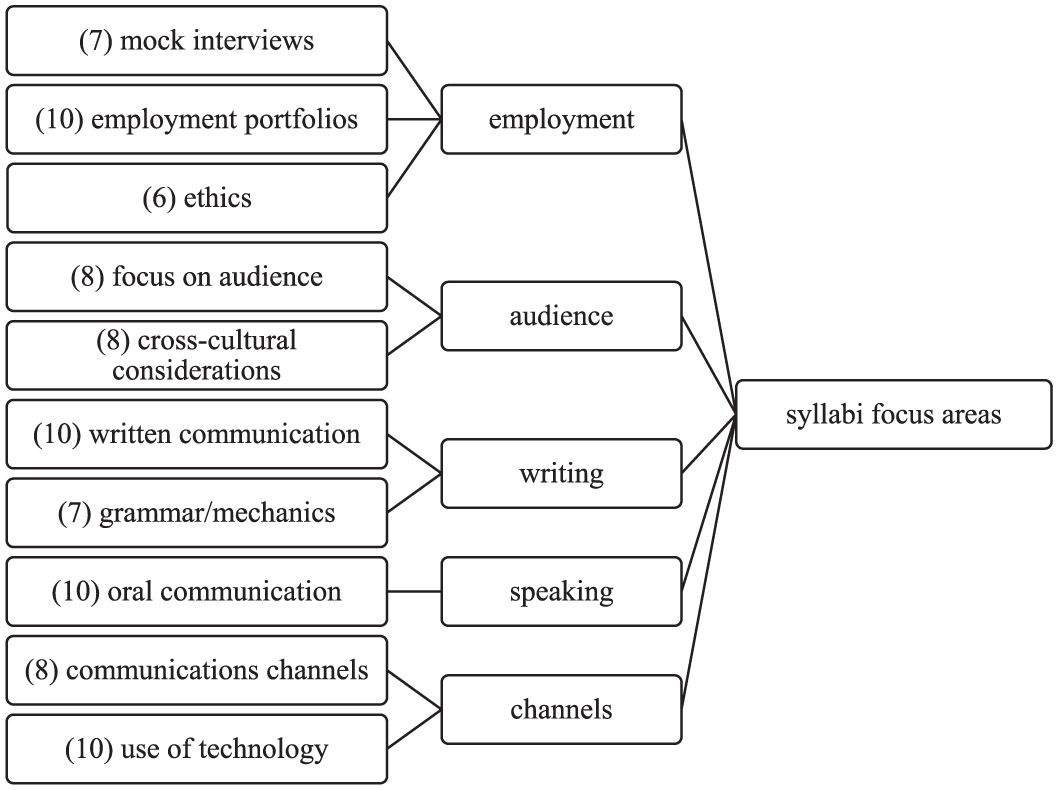
Level 1 and Level 2 coding of business communication course syllabi.
The Level 1 codes were easily categorized into five Level 2 codes to derive foci for the business communication courses. The 10 syllabi under review generated an expected number of similarities. Emphasis placed on tailoring communication toward a specific audience, developing expertise in business writing and speaking, choosing the appropriate channel to use among several options, and gaining future employment provide an overview of the participants’ content, as well as the context to evaluate where social media technologies integration might be appropriate.
Stage 2: Coding of Interview Transcriptions
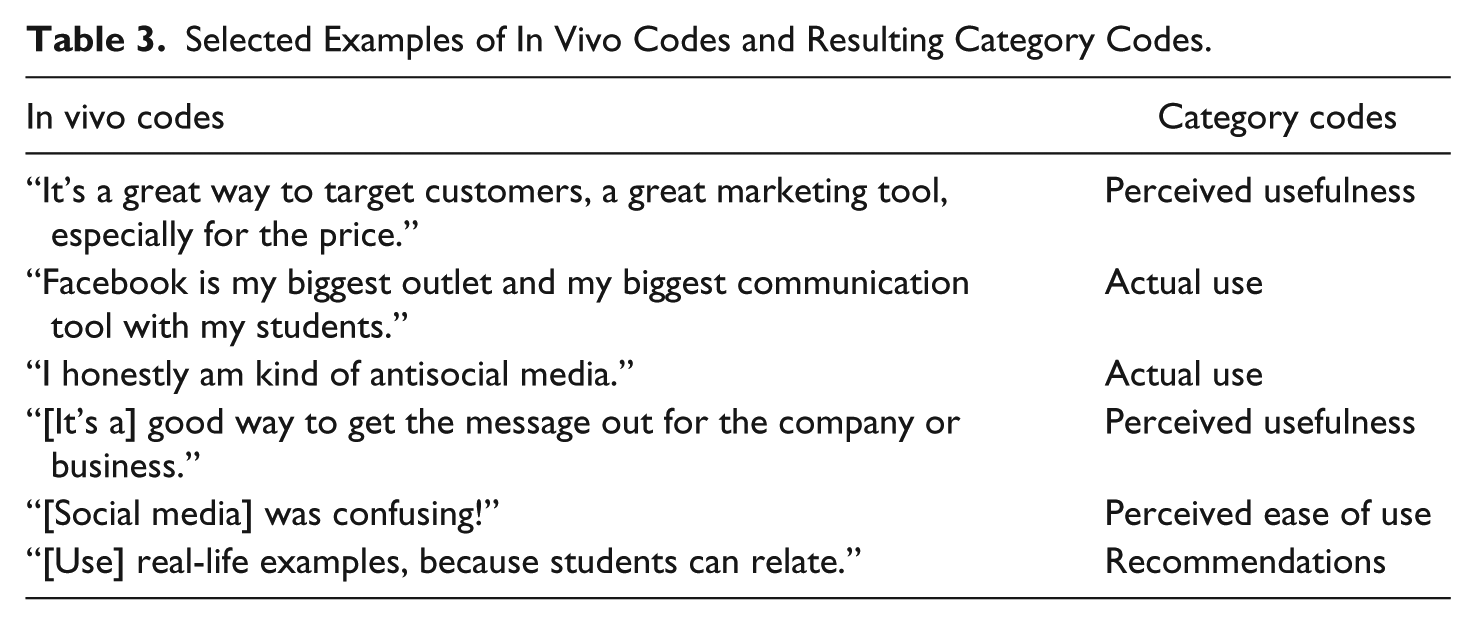
After the interviews were transcribed, phrases were extracted from each of the 11 transcriptions to be used for in vivo coding, which maintains the participants’ own word structure (Yin, 2011). As each in vivo code was extracted, it was coded using category codes derived from the study’s conceptual framework—the technology acceptance model (Davis, 1985). An additional category, recommendations, was added in order to capture specific curriculum and topic suggestions from participants; therefore, each in vivo phrase was assigned to one of the following categories:
External factors
Perceived usefulness of social media in business course
Perceived ease of use of social media in business course
Attitude toward using social media in business course
Actual use of social media in business course
Recommendations for addressing social media in business course
Table 3provides examples of in vivo codes and resulting initial codes in order to demonstrate the coding process. Coding was completed using QSR International’s NVivo 11 qualitative analysis software, which allowed for codes (known asnodesin the software package) to be added, altered, and otherwise manipulated as the analysis progressed.
Selected Examples of In Vivo Codes and Resulting Category Codes.
External Factors
External factors include circumstances, experiences, and outside influences that can affect a faculty member’s acceptance of social media technologies. As presented inTable 4, participants identified five external factors related to social media usage in the business classroom.
External Factors Affecting Technology and Social Media Use in the Business Classroom.

Five of the 11 participants made references to how distracted students appear when attending class. One lamented that “education isn’t students’ main focus anymore; now they have two jobs and distractions.” Another participant tied this distractedness to always being “connected,” suggesting that students’ continuous attachment to their digital devices amplified the issue of distractedness. This continual connectedness supportsJunco and Cole-Avent’s (2008)label of today’s students as being “the most wired generation in history.” While this connectedness may appear to be a hindrance, alternatively it could prove to be an opportunity.
All of the participants appeared to benefit from the presence of technologies in the classroom. One instructor, Benita, stated that she taught all of her business communication courses online, using various videoconferencing and recording technologies. Another participant, Billie, stated that the use of online course management tools benefited both faculty and the students, because the students had ready access to their grades and their assignments in case they misplaced their hard copies. The use of e-books benefited students, who enjoyed using these digital devices. Billie said, “[Most students] were getting [e-books], because they were so much cheaper . . . portable and cheaper.”
Finally, faculty members’ use of social media in their personal lives must be considered. Each of the participants discussed having a personal relationship with social media—either through their own direct use or indirectly through an immediate family member. Each was aware that a variety of social media tools exists and had a basic knowledge of the function of some of these tools. Benita acknowledged the presence of social media and its uses, but she stated that it was not as integral a part of her life as it is to others. Likewise, Jae discussed having been a user in the past but deciding to stop using it due to the amount of time it consumed. Candice, Gayle, and Pat described their respective interactions with social media as a slow adoption. Billie was an avid user of many types of social media and suggested that her initial curiosity began with Facebook. Bella, Carmen, Harriet, and Riley began using social media as a result of pressure from friends and/or family members, and Claire marveled that she “didn’t realize [she] needed it till [she] used it and discovered how useful it is.”
Perceived Usefulness of Social Media in Business Courses
Perceived usefulness describes the participants’ sense of how relevant social media is to the business communication curriculum. All participants highlighted the importance of strong foundational skills in speaking and writing, which was also reflected in their course syllabi. Each of the participants agreed that social media can be useful in the business setting (in marketing, in particular), but they were not all in agreement concerning its use in the business communication classroom. Benita felt that social media was not “needed [in order] to be an effective communicator,” but rather, the previously mentioned foundational skills were most important. Billie felt that social media needed a course of its own, suggesting that “one chapter is not enough.” Ten of the 11 participants stressed the importance of helping students clean up and maintain their online image, being careful of what they post and disclose online. This concept of guiding a student through appropriate technology use is a responsibility thatJunco and Chickering (2010)suggested may appropriately fall on the shoulders of college and university employees.
Perceived Ease of Use of Social Media in Business Courses
Perceived ease of use refers to the participants’ comfort with using social media. Six of the participants suggested that they were working to improve their social media skill sets, stating, “I am integrating pieces by pieces” (Claire), and “There are so many more ways [that] I can get in touch with [the students] now” (Harriet). This “room to improve” mind-set parallels the finding reported byDahlstrom and Brooks (2014)that faculty felt that they could increase the value of their teaching performance through the integration of more technologies.
Participants were divided over whether social media made their jobs easier (i.e., as a communication tool to reach students) or whether it took too much time to learn and implement in order to be of value. Three participants praised social media as an easy alternative to traditional communication channels: “You can learn tools on your own” (Gayle), “It’s easy to get immediate feedback” (Harriet), and “[There’s an] ease in which we have so many options for communicating” (Pat). Not to be discounted, though, is the time that learning social media and other online tools takes, which can be a barrier to implementation (Tinti-Kane, 2013).
Bella, Benita, Billie, and Claire felt that this barrier was too high and stated the following concerning the time-draining nature of online tools: There’s just so much of it. (Bella) I just don’t have time to do [social media]. (Benita) I don’t have time to mess with [social media], so I really need to find things that are efficient or make my life a little more streamlined. (Billie) I just don’t have time for all the technology. (Claire)
Overall, perceived ease of use of social media seemed to be dependent on the time required to learn how to use it, as well as the mastery of it as a tool to improve classroom communication. Those faculty members who understood the intricacies of social media could utilize it to make their daily tasks more effective, thus decreasing their workload; but those faculty members who did not have a foundational knowledge of social media struggled with the high barrier to entry that it posed, thus perceiving it as difficult to learn.
Attitude Toward Using Social Media in Business Courses
The participants’ attitudes toward using social media in the business communication course were somewhat conflicted. Benita cited the need for more focus on foundational communication skills, as opposed to the “bells and whistles” of social media, but later stated that she may be more open to learning social media technologies in the future given an appropriate amount of time. Five of the other participants shared the same opinions, thus not utilizing social media in their classrooms but often mentioning it in passing.
Alternatively, Billie had a strong positive attitude toward teaching about and using social media in the business classroom, but she also mentioned that teaching the topic well would require an investment of time during the semester. Bella, Gayle, and Pat were each reluctant or slow to adopt social media, due to lack of understanding of its potential on the front end; ultimately, each participant adopted it in their curriculum.
Actual Use of Social Media in Business Courses
Actual use of social media was also mixed among participants. Social media usage by type for the participants is listed inTable 5. All but one participant used at least one type of social media, though not all of them used it for their courses.
Actual Use of Social Media Among Participants.
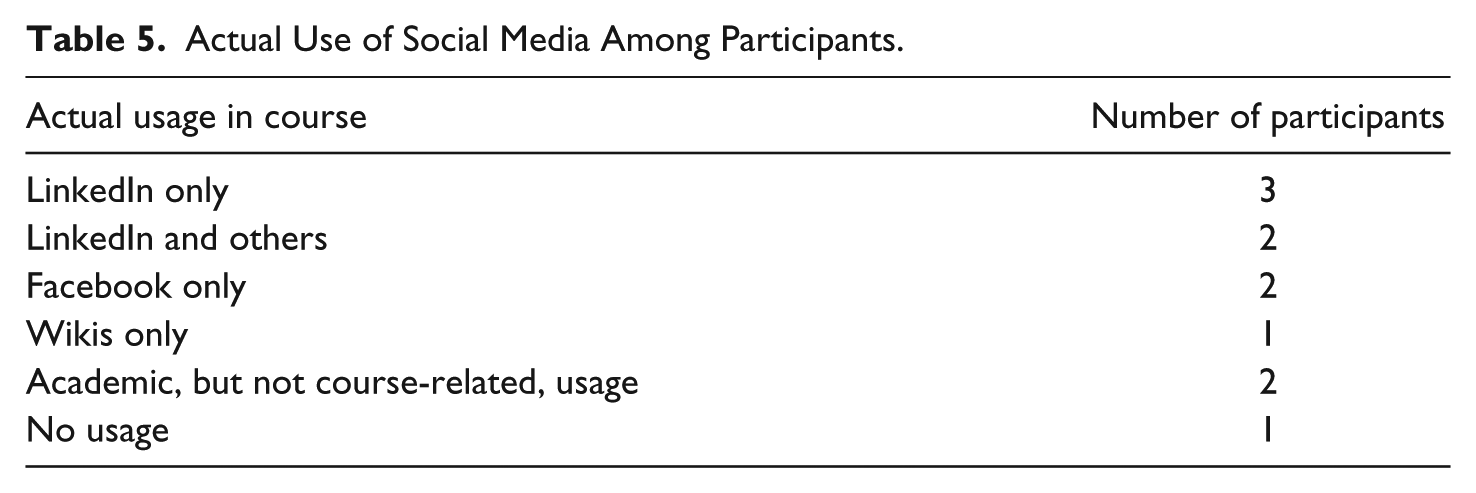
Social media usage by participants fell into one of three major categories: (a) incorporation into in-class assignments, (b) usage as a communication tool (as a complement to campus email and learning management systems), or (c) no usage. In-class assignment usage ranged from the creation of Facebook learning communities for each course section (Claire) and the use of wikis for group work (Billie) to using group discussion forums (Benita) and creating and maintaining LinkedIn accounts (Benita, Carmen, Candice, Harriet, and Riley).
Alternatively, social media was often used as a communication tool in addition to the university’s existing means of communication. Bella and Pat discussed social media usage in their classes, but they utilized it only for departmental activities, such as making alumni contacts, disseminating departmental announcements, and maintaining student organization activities. Harriet and Claire used social media tools, such asRemind.com, to communicate with students outside of class—answering questions and reminding the students of due dates. Meeting students “where they are” to support their needs and to influence success is an important element of working with college students (Junco & Chickering, 2010). Billie planned to use either Remind.com or GroupMe in the future, both of which allow faculty to send messages directly to students’ phones or tablets, similar to text messages. Benita and Jae were interested in using social media reminder tools, but neither had made the decision to adopt them yet.
Recommendations for Addressing Social Media in Business Courses
The results from the analyses of Stage 1 (the syllabi) and Stage 2 (the interviews) were reviewed in conjunction in order to create the following list of recommendations for addressing social media in the business communication course.
Foundational communication skills
Participants stressed the importance of teaching and discussing writing style, formatting, spelling, and punctuation in the business communication course. The mastery of these skills is a prerequisite for using social media in business. Students’ widespread use of technology (including social media) is helpful, but application of these technologies in the business context requires a deeper understanding of the technologies through foundational skills, such as formulating messages and meanings, which can be addressed in the classroom (Dahlstrom & Bichsel, 2014).
Target audience
The target audience of a social media message will determine what constitutes proper use. Critically evaluating to whom the message will be going and the accompanying characteristics is the key.
Appropriate communication channel
Similarly, evaluating one’s options for communication channels is important, as social media might not always be the right choice for the message to be conveyed or for the type of business. Being capable of wielding a wide array of communication channels appropriately and effectively should be at the forefront of communication courses.
Customer engagement
Treating social media as a two-way street is an important mantra for engaging and interacting with customers. Customers who are not engaged may easily become disinterested in a company’s digital presence.
Personal versus professional social media use
Students must learn to compartmentalize personal and professional social media usage. Knowing the dangers of intertwining the two (Henry & Venkatraman, 2013), as well as the reputational risks (Woodley & Silvestri, 2014), will help students realize the differences.
Self-disclosure
The difficulty of controlling the reach of content once it is shared online must be stressed. Participants’ cautions of “think twice before you post” served as a resounding warning.
Consumer posting power
Faculty must address the importance of consumer acceptance on social media channels and the necessity of frequently monitoring business social media accounts and posting responses in a timely manner. Consumer posts have a powerful pull on a business’s online presence.
Provide real-life examples
Whether or not they used social media in their classrooms, all participants agreed that providing real-life examples of social media usage (both appropriate and inappropriate) helped students to better understand professional social media usage.
Discussion
The purpose of this study was to illuminate how faculty members who teach business communication courses perceive social media’s utility in both the classroom context and in the business context and how these faculty members address or use social media in their courses. Additionally, a set of guidelines, or recommendations, for addressing social media in the business communication classroom resulted.
Social media use has become firmly rooted in everyday life and is becoming increasingly more so prevalent in professional life.Jannett (2013)even suggested that social media is “the primary way people receive news and share it” (p. 8). Businesses today maintain a social media presence for more than just advertising; they offer product advice, participate in discussion and support of current issues, and even attempt to connect with customers on a personal level. Businesses that choose not to adopt may fall behind competitively.
It is becoming increasingly important for graduates to firmly grasp how to use social media technologies in both personal and business settings. Just as foreign language speakers code switch, young professionals of today must learn to switch from personal to professional social media usage. Social media technologies in the college classroom “may offer distinct advantages for teaching today’s students” (Cain & Policastri, 2011, p. 1), especially upon graduation.
Study participants acknowledged social media as an increasingly important business tool (perceived usefulness of social media), but they did not agree on the relevance and value of including it in the business communication curriculum (attitude toward using social media; perceived ease of use of social media). Ten of the 11 participants used at least one social media technology (actual use of social media), and several indicated interest in learning and possibly implementing more (attitude toward using social media). This broad, yet by no means uniform, integration of social media into the business communication curriculum suggests that faculty are slowly integrating social media practices into the curriculum—a practice not common across the business curriculum, according toDeiser and Newton (2013).Hemmi, Bayne, and Land (2009)also found a tendency toward cautiously paced integration of new technologies in the classroom, citing that faculty members “rein in . . . potentially radical and challenging effects of new media” (p. 29).
By analyzing the participants’ business communication course syllabi and their responses during one-on-one interviews, a list of common guidelines for business communication faculty members was created. When addressing social media within the business communication curriculum, faculty members should ensure that students (a) master foundational communication skills, (b) know their target audience, (c) choose the appropriate communication channel, (d) continually engage their customers, (e) distinguish between personal and professional social media use, (f) are aware of what personal information they disclose, (g) consider the impact consumers can have on a business’s social media presence, and (h) provide real-life examples. By using these recommendations as a foundation, faculty members will prepare students to succeed in the workplace, providing a sense of e-professionalism prior to graduation (Yap & Tiang, 2014). This set of guidelines may be extended to other courses within the field of business.
The changing face of business requires a parallel changing face of instruction, including more focus on technologies and innovations. While only a small piece to the bigger puzzle of business success, familiarity with and understanding of social media should not be ignored. Regardless of the extent to which each of the study participants used social media in their personal lives, professional lives, or classrooms, each one recognized its benefits and accompanying challenges. Barriers to usage, such as the amount of time required to learn new technology (Dunlap & Lowenthal, 2009;Tinti-Kane, 2013), self-efficacy (Reid, 2014), and perceived personal abilities (Reid, 2014), were reinforced by the results of this study. Addressing these issues of time, confidence, and technical ability may serve as the key to empowering faculty members to utilize social media and other technologies in their classrooms. Those faculty members who successfully integrate new technologies will be poised to reap the benefits they offer and embrace new challenges and opportunities.
Limitations and Other Considerations
While this study sheds light on some useful considerations and recommendations, a few key modifications may have provided a more robust set of results. A larger sample size may have allowed for additional insight and greater reliability of results, but the authors felt that saturation was reached with the 11-participant sample. Though more is notalwaysbetter, additional participant interviews may have provided added benefits. At the same time, only one researcher reviewed and coded the data; an additional coder may have lent more broadness and credibility to the study (Yin, 2011).
Incorporating an additional triangulation tool, such as a preinterview questionnaire, may have been beneficial in that participants would be better acquainted with the study’s intricacies before the interview. Additionally, with responses from an initial questionnaire, the interviewer may have been able to focus questions on specific areas of interest or on areas needing further clarity. This additional tool would provide further means of validity in the study.
Future studies may opt to capture insight on social media from the perspective of the student; this would allow a helpful comparison of student and faculty perceptions, as well as an insightful evaluation of the list of considerations when teaching social media from the student’s perspective. Studies can examine students’ preferred means of communication for course-related contact and the legitimacy ofTowner and Klemz’s (2016)finding that students often resist social media use for classroom purposes initially but then prefer it during the following semesters. Additionally, narrowing the study to focus, for example, on marketing students or international business students may provide important insight into additional subject-specific considerations.
Footnotes
Appendix A
Appendix B
Authors’ Note
This study was approved by the Institutional Review Board of the University of Arkansas at Little Rock. Student comments are reproduced by permission. This article is based on a paper presented at the annual meeting of the American Educational Research Association, Washington, DC, 2016.
Declaration of Conflicting Interests
The author(s) declared no potential conflicts of interest with respect to the research, authorship, and/or publication of this article.
Funding
The author(s) received no financial support for the research, authorship, and/or publication of this article.
Author Biographies