



Abstract
The article discusses the impact of text-generative AI in business communication pedagogy. The onset of open AI, such as ChatGPT, has the potential to transform the way faculty and students approach oral and written professional business communication. Through focus group discussions and netnography, the study employs content analysis to evaluate the strengths, weaknesses, opportunities, and threats (SWOT) of integrating AI in the teaching-learning process of business communication in a postgraduate management program. The article strives to reimagine the pedagogical tools and techniques regarding pre-reading assistance, classroom materials, assignments, evaluation, and other learning aids of business communication courses in response to the developments in text-generative AI.
Introduction
Generative AI can have major consequences for business, according to a McKinsey & Company report published in August 2023. A 2022 McKinsey survey shows that the adoption of AI models has more than doubled since 2017, and organizations are using it for several purposes: from producing credible writing to responding to user critiques, from generating code to creating more technical materials (Chui et al., 2023). It is believed that a range of functions will continue to develop as AI emerges, and it will also change the way humans communicate and collaborate in the workplace (Getchell et al., 2022). The advancing inclusion of generative AI in the workplace will have significant implications for business communication and, therefore, in its pedagogy.
Business communication pedagogy focuses significantly on being relevant to the changing times. The course structure is always dynamic, encapsulating the changes, challenges, and opportunities that time and technology bring. One example is how the realization of digital competency and proficient crisis communication was supreme during the pandemic—conducting online meetings to delivering an online Zoom presentation required specific communication characteristics (Willem et al., 2022). The business communication courses, therefore, modified the curriculum considering these changes.
Similarly, one of the recent developments impacting business communication is the widespread implementation of AI in the contemporary landscape. Newly developed AI technologies offer to support, mediate, and facilitate business communication (Hancock et al., 2020). One of the turning points in the utility of AI is the conversational text-generative AI that utilizes natural language processing (NLP) and deep learning to generate responses for the user. Implementing the text-generative AI in business potentially changes the approach to business communication. Text-generative AI like ChatGPT can assist managers in most writing tasks. Worldwide, professionals are using it for generating business documents and communicative texts like emails, letters, project reports, market study summaries, and related documents. These AIs can also be used in business to benefit, for example, customer support and documentation tasks, allowing companies to respond to customer inquiries efficiently and consistently (Baber et al., 2023; Takuho, 2023).
The business communication syllabus will, therefore, have to ponder upon the use of text-generative AI in the classroom as well. On the one hand, professionals and academicians are positive about the utility of text-generative AI, and on the other, several organizations and academic institutes have either banned it or proposed it to be banned owing to privacy and plagiarism issues (Ray, 2023). Considering this ambiguity about the adoption of generative AI, we studied the pedagogical impact of generative AI tools like ChatGPT on the business communication area. The research questions for the present study are as follows:
How does text-generative AI impact faculty and students in the teaching-learning process of business communication?
What are the perceived strengths and weaknesses of incorporating text-generative AI during the teaching phase, particularly in terms of enhancing lecture delivery, providing examples, and facilitating interactive activities to improve students’ understanding of business communication concepts?
How does the text-generative AI influence the quality of assignments, evaluations, and feedback processes in business communication education, and what opportunities and threats does it present for faculty and students in this context?
Since generative AI is a novel concept, we used descriptive research methods and qualitative data collection tools like focus group discussions (FGDs) and netnography to develop an understanding of the concept. We analyzed the content of group discussion and manually studied posts and comments from the netnographical study and employed a SWOT (strengths, weaknesses, opportunities, and threats) framework to study the data. Based on the analysis, the article provides various implications for business communication faculty and students to the use of text-generative AI in their teaching-learning process.
Literature Review: Business Communication Skills and Technological Advancements
Teaching business communication skills has been characterized by stability (continually looking to find better and more appropriate ways to communicate) and change (adapting to the challenge of communicating in an expanding and increasingly complex, diversified, and fragmented global multidisciplinary communication environment) (Du-Babcock, 2006). Business communication instructors, therefore, need to continuously contemplate the ways emerging technologies can disrupt and transform communication across stakeholders in an organization and keep updating the course structure in consultation with industry requirements, thus maintaining the relevance of the course (D. Sharma, 2022, 2023).
The gradual evolution of communication tools with its large language model has now brought text-generative AI into the scene. These are machines that can learn at scale, based on large amounts of data, and thus conduct tasks that humans are incapable of doing in the same time frame (Bearman & Ajjawi, 2023). Increasingly, AI technologies are used to improve team processes and collaborative performance (Cardon et al., 2021; Fleischmann et al., 2020; Webber et al., 2019). Developers continue to explore the use of AI to listen to meetings, find information for participants, and automatically create action items. These tools are far from perfect but continue to develop in accuracy and usefulness (McGregor & Tang, 2017).
Email platform autofill features and grammar and tone checker tools such as Grammarly are frequently used tools for efficient writing. Machine learning and NLP technologies support Grammarly (Markovsky et al., 2021) and other simple forms of these tools. Another remarkable example is GPT-3 (Generative Pretrained Transformer 3) and the recent ChatGPT 4. ChatGPT 4 is an updated version of the AI of GPT-3. Since no technical expertise is needed to use ChatGPT, the tool has become widely accessible and user-friendly, thereby enhancing its utility (Singh & Singh, 2023). It has been used for a wide range of tasks, from creating software to generating business ideas to writing wedding toasts. It is said that the businesses that understand the significance of this change and act on it first will be at a considerable advantage (Mollick, 2023).
AI-assisted tools can also act as proactive search agents by listening to conversations and providing missing or useful information to meeting participants. These tools primarily help in simple conversations but will increasingly support more complex conversations (Andolina et al., 2018). In the areas of curating content and ways of using it on different platforms, AI can help a student to customize their tasks in less time. Students should also know how to optimize text-generative AIs by feeding appropriate prompts to the system. The major assistance for users to aptly utilize such text-generative AI would include the understanding of prompts. It is only on the basis of prompts that ChatGPT and similar platforms provide the required answers.
Academicians and researchers have also taken a profound interest in the implications of text-generative AI, and research on teaching, learning, and research pedagogies is ongoing and increasing (Burger et al., 2023; Fuchs, 2023). The perceived usefulness and its impact on students’ behavior have been explored by Fuchs and Aguilos (2023). In another study, Twitter data and public sentiments were analyzed to discuss prominent themes regarding AI in the educational sphere (Fütterer et al., 2023). Media discourse analysis has also been undertaken to understand the impact of AI on STEM fields (Nam & Bai, 2023). The studies have also focused on the usage of prompts by students for the better utilization of ChatGPT (Wiley et al., 2023). Researchers have agreed that the field is evolving and requires an analytical approach to discuss the utility of AI for young learners (Dwivedi et al., 2023; Kumar et al., 2024).
Despite the apparent univocal benefits of text-generative AI, it is quite evident that educational institutions have not been able to provide clarity to the students for the optimum usage of ChatGPT (Michel-Villarreal et al., 2023). Among the available research, the discussion on using text-generative AI at the university level has yet to be explored (Dianova & Schultz, 2023). Concerns such as security breaches, legal regulations, and technical malfunctions were some of the barriers explored by researchers. Plagiarism issues, lack of originality in content, and lack of updated information are additional challenges in integrating AI in the education sector (Kumar et al., 2024). Bearman and Ajjawi (2023) discuss the conundrum regarding using generative AI; they mention, “In the broad context of a particular interaction, a computational artifact provides a judgment about an optimal course of action, and this judgment cannot be tracked. Therefore, by definition, AI must always act as a ‘black box.’” Like operations behind any black box, it becomes challenging to accurately interpret the complex workings surrounding AI. Therefore, instead of arguing with the mystery generated by AI, the present article discusses the avenues of developing a pedagogy reflecting the intertwined relationship of people and technology in an AI-mediated world. In this context, the pedagogical impact of text-generative AI and ChatGPT on business communication is argued and discussed in the following pages.
It can be easily surmised from the literature review that the rapid, widespread implementation of AI technologies in workplaces will impact the process of organizational communication and, therefore, will have implications for business communication (Getchell et al., 2022; Mancha et al., 2020). Therefore, business schools, particularly, are responsible for educating students about personal responsibility and ethics in digital transformation because of their ability to affect entrepreneurial ventures and organizational change. Irrespective of possible uses in business communication and collaboration, the capabilities of AI technology need to be considered alongside the known, emerging, and potential challenges (Getchell et al., 2022).
The analysis of the literature review leaves a caveat for business communication instructors and learners to research the impact of AI in business and professional communication courses in management education. Therefore, the present study attempts to understand the application of text-generative AI in the pedagogy of the business communication course. Through focus group discussions and netnography, the study employs content analysis to evaluate the SWOT associated with integrating text-generative AI tools like ChatGPT into the course curriculum of business communication and the teaching-learning process of both faculty and students.
Research Methodology, Data Collection, and Analysis
Generative AI tools are novel concepts. The most used text-generative AI tool, ChatGPT4, was released in March 2023. However, within months, about 100 million users registered on the platform, and about 1.8 billion users visited the platform every month (Milmo, 2023). Descriptive research methods that are applied to describe, explain, or understand such novel concepts are well suited to study the understanding of text-generative AI by business communication faculty members and researchers (Creswell & Poth, 2016). The data were collected through two methods: focus group discussions and netnography study of a Facebook community page. The data were further analyzed through content analysis in a SWOT framework.
Data Collection Tool 1: FGDs
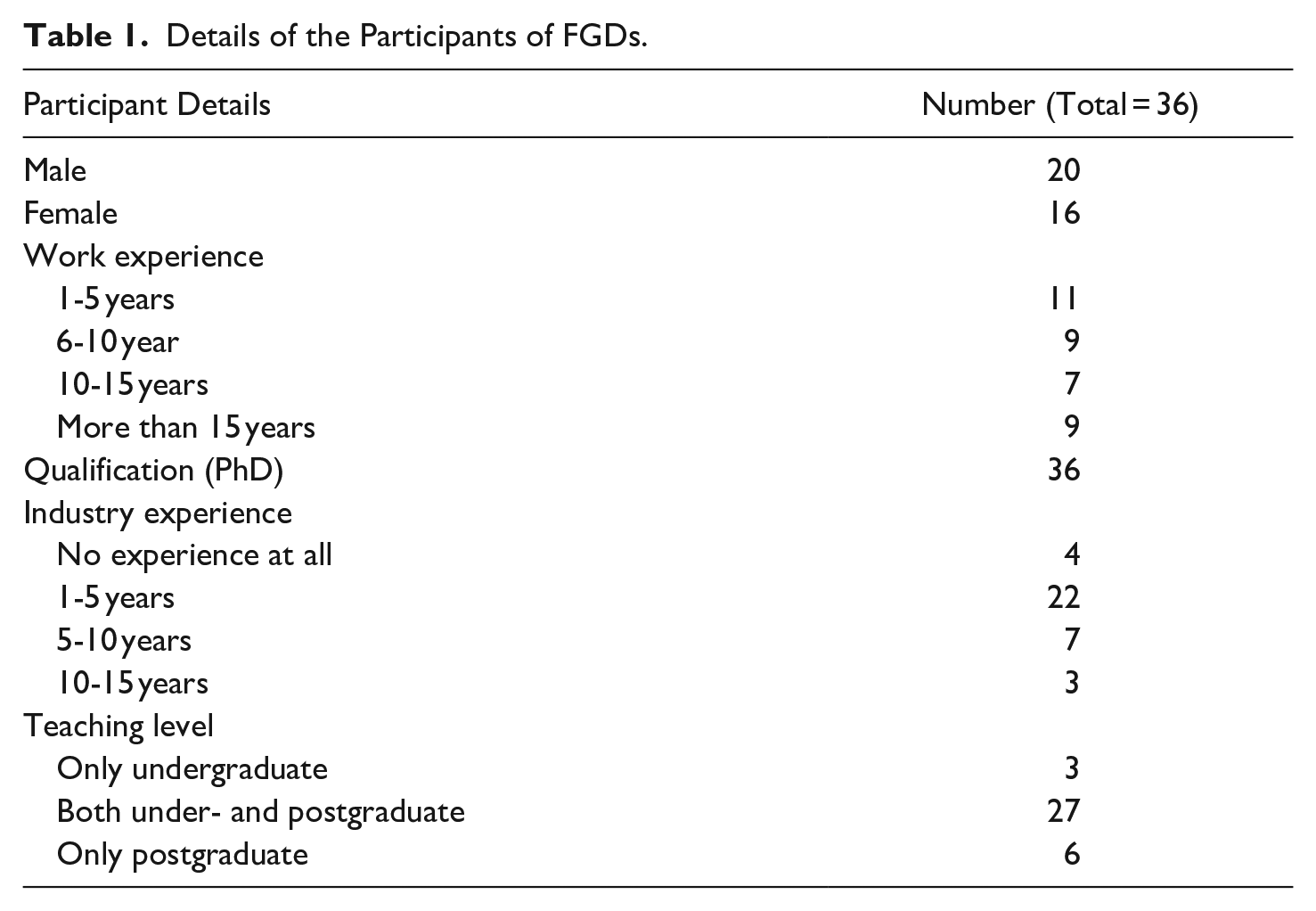
The first study was a qualitative data collection tool, focus group discussions. FGDs are the most suitable tool to develop an understanding of emerging concepts like generative AI. Instead of survey questionnaires, FGDs allow researchers to dive deep into the participants’ understanding of a concept (Krueger & Casey, 2015). Five FGDs were conducted with 36 participants who were business communication faculty from business schools across India. The participants’ details are given in Table 1. Snowballing and purposive sampling techniques were used to recruit participants. Participants were contacted through email. For each FGD, 8 randomly selected participants were invited. In two FGDs, two participants each from two groups could not attend. Hence the total number of participants was 36. The FGDs were conducted via the ZOOM platform. Post-pandemic, online platforms have been used to collect data through FGDs and interviews (D. Sharma & Pankaj, 2022). Questions for the FGDs were composed around the SWOT framework. The ZOOM meetings were recorded and transcribed for data analysis. For analyzing the opinions of 36 faculty, we integrated content analysis with the group discussion to analyze the comprehensive understanding of strengths, weaknesses, opportunities, and threats of the impact of text-generative AI on the pedagogy of the business communication course.
Details of the Participants of FGDs.
Data analysis method
Content analysis is a useful exploratory tool to identify advertising content usage and trends, create a new theory, or test existing theory (Lai & To, 2015). The methodological approach of content analysis started with integrating discussions generated by answering research questions emerging from FGD. The questions discussed in the FGDs were based on SWOT. The four questions were: What are the strengths of text-generative AI in the teaching-learning process? What are the weaknesses of text-generative AI in the teaching-learning process of business communication? What are the threats of text-generative AI in the teaching-learning process? What are the opportunities of text-generative AI in the teaching-learning process? The content analysis helped look for themes that emerged as important to describe the phenomenon (A. Sharma & Mahim, 2018). The research analysis was an iterative and reflexive process. The process involves the recognition of themes by reading and rereading the transcript carefully (A. Sharma & Mahim, 2018). It is a type of pattern identification within the data, where emerging themes become the categories for further analysis. This process demonstrates how analysis of the raw data from focus group transcripts progressed toward identifying themes that captured the phenomenon of text-generative AI and its strengths, weaknesses, threats, and opportunities in the teaching-learning process of business communication to management students. The themes from the discussion were categorized into pre-, during, and post-teaching. The pre-teaching part included collecting classroom materials, preparing content, and its distribution to the class by the faculty for preparation for classroom or pre-teaching activities. During teaching, lecturing about concepts, examples, and activities to help users learn different aspects of business communication. The last part of post-teaching includes assignments, evaluations, and feedback. The content analysis of the discussion highlights different areas of strengths, weaknesses, opportunities, and threats of using text-generative AI by faculty and students in the above areas. The detailed analysis of the FGD is discussed in the next section of the paper, that is, Findings and Discussion. The discussion is also mapped with the data acquired by the netnography study from a teachers’ group on Facebook.
Data Collection Tool 2: Netnography
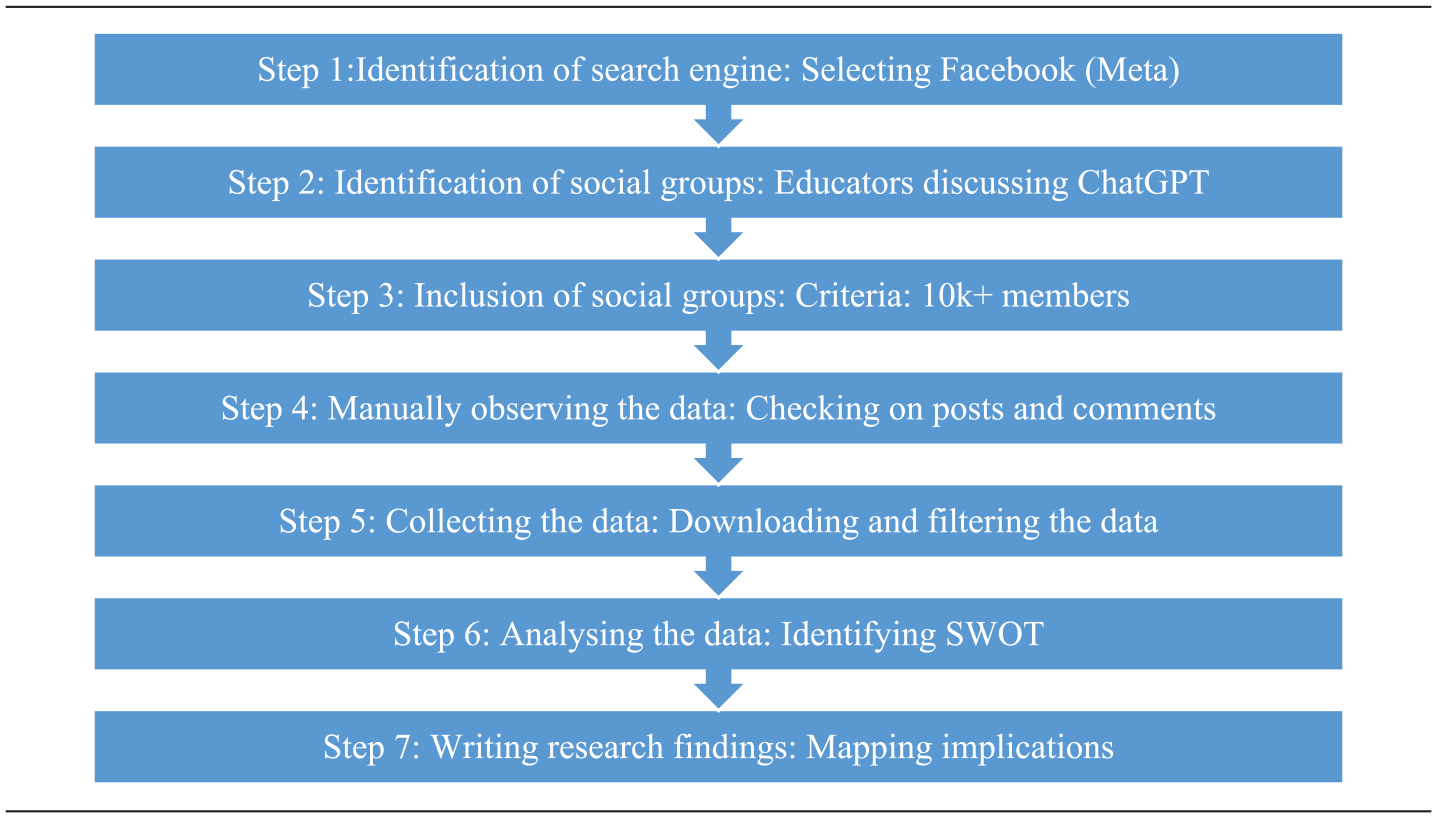
We conducted a second study to triangulate our FGDs’ findings with a netnography method. Netnography is “doing ethnography online” (Discetti & Anderson, 2023). Netnography is distinctive from ethnography and studies social impacts and discussions of emerging concepts in digital spaces (Morais et al., 2020). Through netnography, immersive data generated on the Internet and digital spaces is explored and utilized to conduct research (Jeacle, 2021). In today’s world, discussion forums on the Internet and social media platforms provide in-depth perceptions of people about emerging technologies and phenomena. Owing to the widespread and highly democratic nature of the Internet, studying perceptions of emerging technologies and phenomena through netnography is highly practical and flexible (Gaitán & Ramírez-Correa, 2023). Netnography is used widely in diverse fields like accounting (Jeacle, 2021), human resources (Discetti & Anderson, 2023), mobile app updates (Fu et al., 2023), and telemedicine (Gaitán & Ramírez-Correa, 2023). We used a netnography research tool to capture the academic fraternity’s perception of generative AI and ChatGPT. We extracted academicians’ perceptions from a Facebook community page “ChatGPT for Teachers.” The community page is a public group with 215.05k members as of June 2023. The group is highly active with around 1,000 posts being shared every month. The group is almost 6 months old and has about 6,000+ posts. The posts generated a high level of discussion, as there were about 50+ comments on many posts. We manually studied 1,166 posts and the comments on these posts. Our post selection criteria were the number of comments and likes on a post. We included posts that had about 100+ likes and 50+ comments. The netnography flowchart is presented in Table 2.
Netnography Flowchart.

Data analysis method
The content analysis of the posts and comments was further codified into a SWOT framework. We used a SWOT framework and categorized the posts and their comments in terms of SWOT of generative AI and ChatGPT. In similarity with the studies by Kusumasondjaja (2019) and Touchette (2015), this study developed a comprehensive coding sheet. We utilized an immersive approach by monitoring discussion threads of 1,116 posts and searching for key themes (Kozinets, 2019). We used these traces to determine how discussions were produced, modified, and adjusted. Findings are organized into SWOT that help provide answers to research questions. We used manual coding because it is easy to perform in short conversational exchanges of posts (Ayer & McCarville, 2021). The content was coded into four categories of SWOT (Benzaghta et al., 2021): (a) Strength, referring to internal factors that give an organization or project a competitive advantage or the capability to achieve its objectives. In the study, mention of technology integration, reduction of human labor, etc. in the teaching-learning process is linked to strengths of text-generative AI. (b) Weakness, referring to the internal factors that hinder an organization or project’s ability to achieve its objectives or compete effectively. Lack of collaboration, disruption in Internet connectivity, challenges in work ethic, etc. are weaknesses for the present study. (c) Opportunities refer to external factors that present possibilities for growth, innovation, or positive change for an organization or project. Text-generative AI acting as an assistant and mentor is coded as an opportunity for the paper. And (d) threats refer to external factors that pose risks or challenges to an organization or project’s success. Limiting creativity, curiosity, and negatively impacting academic integrity are areas of threat for the present study.
Before the formal coding, this study examined an initial draft of the coding unofficially by independently coding 10 Facebook posts and their comments. Based on this test, coding problems were discussed and revised. To avoid subjective bias, two trained coders, who were mass communication graduate students with no knowledge of the research hypotheses, were recruited to classify the posts (Han et al., 2020). They have already conducted the content analysis and coding process before. After coding all 1,166 Facebook posts, we checked the intercoder reliability by coding randomly selected 30 comments and posts. In the first round itself, our intercoder reliability was up to the standard (Cohen’s kappa (κ) = .899).
The triangulated findings and implications of the FGDs and the netnography study are presented in the following sections.
Findings and Discussion
Strengths and Opportunities of Text-Generative AI
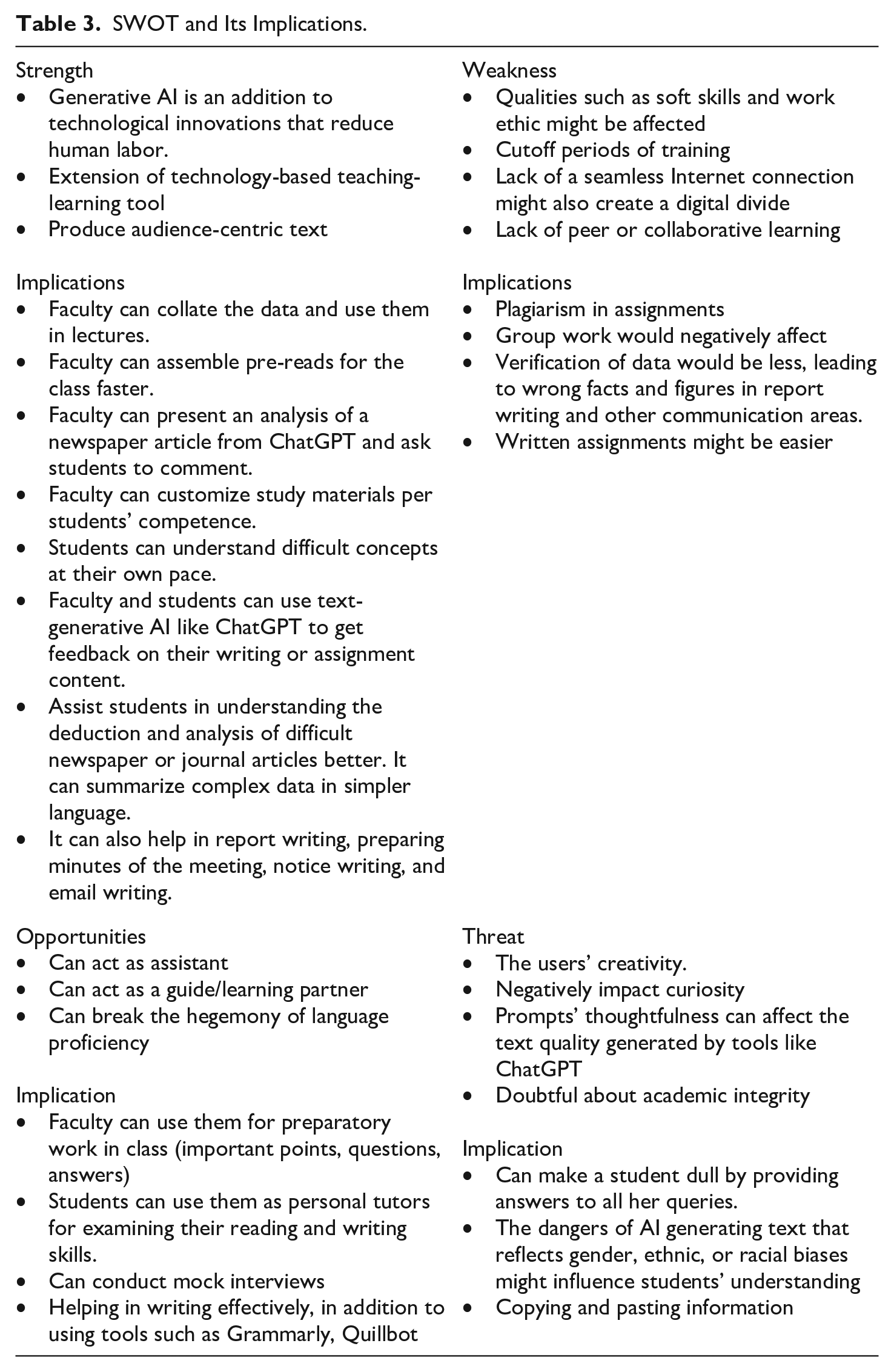
Largely, the management faculty recognized and accepted the strengths of generative AI in helping both the faculty and students in their teaching-learning process (Table 3). Many participants considered text-generative AI an addition to technological innovations that reduced human labor and placed them along with previous software innovations like Microsoft Office, search engines like Google, and hardware like printers, iPod, or Apple iPad. One participant explains this acceptance as follows: We, as teachers or as citizens of a society, must accept and modify our behavior according to technological innovations. I clearly remember how my friends and I used to wait for a book to be returned to the library so that we could get it issued. Today, a simple laptop and internet access can facilitate reading millions of books through platforms like Google Books and Amazon Kindle. Generative AI is in line with these innovations. It will make our task easier and faster. (FGD participant no. 11, group 6, M, 39)
SWOT and Its Implications.
Now subsequently, the citation of the participants in FDGs would be inside parentheses. The order will be the participant’s number, group, sex, and age. One of the users in the netnography study related it to the past when calculators and computers were first introduced to academia. “People realized that it is just a tool, and the same will happen with generative AI” (Hill, chatGPT for Teachers, 2023).
Another participant in the focus group study compared the reaction toward generative AI with the reaction toward computers and the Internet in the early 2000s.
When there were talks in the early 2000s that computers and the Internet would be introduced in schools, and the students would be able to access any book or information within a few seconds by clicking some buttons, the teachers thought that they would become redundant. I clearly remember this feeling of redundancy was discussed informally in the corridors, in newspapers, and union meetings. However, today, most teachers require computers, the Internet, Google, etc., to teach. Similarly, soon generative AI will become a part of the new normal (FGD participant no. 14, group 4, M, 45).
The faculty participants have extensively used Google, YouTube, and other Internet-based platforms and tools in their classrooms, and therefore, generative AI is majorly seen as an extension and a tool that can make life “easier and faster.” Participants had a general idea of how and what generative AI can do for them, their students, organizations, and common people. Within months of its launch, one generative AI, ChatGPT, has reached one million users (Milmo, 2023), and there are a lot of discussions related to it in magazines, newspapers, and online forums. A participant summarizes the discussion on the strengths of generative AI as follows: There is a limit to what humans can read, analyze, and write. Whatever text we generate has a great scope for improvement as we have limited memory to store what we read. This new technology can read, process, and analyze thousands of sources at a go and can generate text based on such vast reading. This is somewhat like Google. Now, we don’t have to deal with daunting, heavy encyclopedias to know, for example, who was the 10th president of the US. Similarly, soon, we wouldn’t be required to read a great number of texts to produce an essay or any kind of writing. The reading and analyzing part can be done in seconds or minutes with this new technology. (FGD participant no. 5, group 1, F, 51)
This discussion has led to an awareness of the tremendous potential of generative AI and its assistance to both students and faculty members. The participants focused on its positive impact on the teaching and learning of the subject of business communication in management education. The graduate and post-graduate curricula of business communication often require students to conduct research on several topics from journals, newspapers, books, and blogs. Research requires delving deep into the available materials on the concerned topic. Generative AI can help assemble those materials so the researcher can skim and scan to find the relevant content. Generative AI can also aid in data interpretation besides the literature review part. Only some students might be adept at handling and analyzing data and assessing its implications. Generative AI can assist students in understanding the deduction and analysis of data better. It can summarize complex data in simpler language, benefiting all students. A post in the netnography study mentioned: I think kids might try to take the easy way out and cheat with ChatGPT if given the chance. But as teachers, it’s important for us to explain why this will end up hurting them in the long run. Instead, we can show them how to make the most of ChatGPT for studying. For instance, students can hand in a section of their readings and use ChatGPT to create multiple-choice questions that will help them reinforce what they’ve learned. (Cao, chatGPT for Teachers, 2023b)
Creative reading and writing is one of the significant areas in a business communication course. In this part, a student is typically asked to read several articles, book chapters, and blogs on a relevant topic and present a report or a presentation. With the assistance of ChatGPT, a student can easily find suitable materials related to the assigned topic. The process of filtering and selecting information would get less complicated. Students can use this tool in the classroom and create a list of works or references to be read on different topics.
Another strength highlighted in the netnography study was the ability of generative AI like ChatGPT to produce audience-centric text. It can explain complex systems, concepts, and theories in plain, understandable text with lots of interesting examples (Hill, 2023). This strength of generative AI was discussed in depth in all three FGDs. One participant related it to the writing style and discussed generative AI’s strength to produce text in numerous styles.
Normally, we humans develop one writing style, academic or business-like, after a lot of practice. We have to struggle sometimes to generate text that explains management concepts or theories to students in simple words. Additionally, we need to dig into our lived experiences or Google for practical examples to explain these concepts and theories. Generative AI, like ChatGPT, can explain concepts in numerous styles. I can keep on asking ChatGPT for more and more examples of crisis communication, and it gave me about 10 practical examples to choose from. (FGD participant no. 17, group 2, F, 34)
Users can keep asking questions related to the generative AI’s answers as they do with chatbots. This interaction feels like talking to a human being who has read thousands of sources (books, articles, webpages, etc.) on the topic. One of the members of the Facebook forum also commented: A new era of learning is coming, where the emphasis will be on applying knowledge in live, interactive problem-solving situations that are sensitive to the social environment rather than checking who did their homework and how they wrote it. What will be interesting is how students can use what they have learned individually and in a personalized way with the help of ChatGPT and their future peers to engage in constructive thinking and collaborative activities in school (Arató, chatGPT for teachers, 2023a).
Generative AI can, therefore, reduce the gap between the learning requirements and the customized abilities of a student. All the queries would be recorded and be present whenever required, like a smartboard. A student can go back and analyze previous doubts and challenges. Generative AI can also provide feedback on personal work. The smart use of generative AI can act like a personal tuition teacher for each student. A participant mentioned: “It also acts as a possibility engine. AI generates alternative ways to express an idea. Students write queries in ChatGPT and use the regenerate response function to examine alternate responses” (FGD participant no. 16, group 3, F, 47).
It would peruse difficult documents for the students and provide explanations. In a business communication classroom, a text-generative AI can facilitate learning by simplifying jargon-loaded documents. Especially in a modular class setup of 3-4 hours, a faculty can divide the class into groups and ask each group to discuss and write a comprehensive report on companies. The mining of relevant data in the form of annual reports, news bites, and journal articles can be done using text-generative AI. The students would then discuss the significant points and prepare a report. The report can be further streamlined in a presentation, and groups can make a PowerPoint presentation in front of the entire class.
Another opportunity that the participants visualized for generative AI was using it as a learning partner for their students. Participants could foresee several contexts and opportunities where students could use generative AI like ChatGPT to enhance and supplement their classroom learning. One such context is idea generation. Students must search for relevant topics and ideas for assignments like essay writing, projects, classroom presentations, etc. Generative AI can analyze a large number of documents and can give relevant ideas. A participant explains this aspect in the following words: Soon, students would utilize the power of AI to connect the dots in thousands of documents, generate ideas, and prepare outlines for any topic. For example, in my macroeconomics course, I ask students to write essays on the future of the economy. They can choose what aspect of the economy they want to write about. Generally, they read a lot of newspaper and magazine articles, web pages, books, etc. Out of curiosity, I asked ChatGPT what issues the world economy or US economy will face in the future, and it gave me some very interesting and relevant topics. When I enquired further, it gave a proper outline and pointers on one of the topics. I think students will use these AI tools as a buddy who generates ideas for various tasks and assignments. (FGD participant no. 2, group 7, M, 41)
Further, the participants also looked at this aspect of learning buddies from another angle. A post in the netnography study mentioned: I do accept that AI is here to stay. The question is, what and who are we as “education”? For a student to do a paper, it isn’t simply to write, research, format, etc. It is also about problem solving, perseverance, accepting constructive criticism, and coming up with an end product one can take pride in. It’s the soft skills and work ethic. This is a game changer for sure and as we learn to use it, it will change faster than we can adapt to AI. (Coleman, chatGPT for Teachers, 2023)
In the present scenario, there is no dearth of information regarding an idea or a topic. Sometimes, for example, on Google search, it takes a lot of time and effort to filter what is relevant and necessary for a topic to be discussed. In such scenarios, when a student or a student team has a topic, they can go one step further from the conventional Google search and use generative AI to find out what suits their requirement from the existing literature. Students may have already started using it, as discussed by one participant: I follow some pages on social networking sites like Facebook dedicated to ChatGPT. On these pages, people share their experiences with ChatGPT. For example, I could see a lot of people were using ChatGPT to understand the complex system of cryptocurrency by asking questions about how it works. Students would use this feature to prepare initial drafts of their assignments and presentations. The quality of oral presentations and speeches would be immensely improved with these AI tools’ assistance. (FGD participant no. 1, group 1, F, 33)
Further, apart from the preparatory stages, the students can also use generative AI once they have finalized their writing. The participants discussed that as students use grammar- and language-checking web tools like Grammarly.com, they would use generative AI like ChatGPT to get feedback on their writing or assignment content. Generative AI can also aid students in writing by suggesting grammatical corrections and structure formations. Students used paraphrasing tools such as Quillbot and Spinbot to paraphrase and edit their writings. Grammarly and Wordle are also used to polish writing for a formal professional presentation. Generative AI would take this one step further, where paraphrasing and grammar checks can happen simultaneously. This is not to say that one uses a platform such as ChatGPT mindlessly; in fact, one can improve their writing prowess by identifying gaps and analyzing solutions provided by the platform. This feature would greatly help in report writing, preparing minutes of the meeting, notice writing, and email writing. However, the user must keep in mind the elements of persuasion and negotiation, especially in email or proposal writing.
Another way a text-generative AI can be utilized by students in a business communication classroom is to act as a mock interviewer. While preparing for job interviews, students can prepare a wide range of answers to the questions generated by AI in the form of an interview setup.
Several participants also visualized using generative AI as a teaching assistant for preparing lectures. For delivering lectures, faculty needs to read, analyze, and sometimes summarize several texts. The preparation takes a long time to complete. Generative AI like Chat GPT can do tasks like these in minutes. One faculty shares her experience: I was developing a new course and needed a summary and outline of a large text on the topic “persuasion on social media communication.” I asked my teaching assistant and gave her 2 months to go through various texts. She returned within a week with quite satisfactory work. When I complimented her on her speed of work, she introduced me to ChatGPT. I started exploring it. Now, for a lot of my preparatory work, I use ChatGPT. It can summarize a lot of text and present the key points or outline most topics. (FGD participant no. 9, group 8, F, 42)
A few participants also shared that they had used generative AI like ChatGPT to do various minor tasks related to their preparatory work. One participant used it to prepare multiple-choice questions on some topic; another used it to make bullet points from a large text for her class presentation. One comment on a post in the netnography study mentioned how one can use chatGPT for searching materials for the classroom: “It has been wonderful not to have to spend time rewriting and creating as well as not having to spend ridiculous amounts of time searching. Just have to spend time being responsible in making sure the new product is accurate and appropriate for the grade level. I enjoy the time-saving aspect of ChatGPT!” (Cole, chatGPT for Teachers, 2023).
Almost all participants were amazed by the speed of AI in reading and analyzing large texts. Considering the strengths of generative AI, faculty are already exploring the opportunities to use it for facilitating their teaching preparation work. The ongoing dialogues on generative AI in newspapers and magazines persuaded the participants.
A participant in the FGD discussed using case studies in the classroom and asking the students to engage in a conversation with the generative AI, discussing their approach and methodology to solve the presented dilemma. The evaluation can be done considering the depth and insight generated by the generative AI in a unique style.
Another side of the argument between participants in the FGD and posts on the Facebook group of teachers is the ability of generative AI to help faculties in assessment. Generative AI can check short answers and reports based on the criteria entered by the faculty, such as language proficiency, references used, etc. One of the teachers in the netnography study tried it for the feedback session. She mentioned: “If you can identify the issues in work and ask AI to provide you some insight, action points on the needed improvement point, you would be using AI to broaden your feedback and get a different perspective. You can also edit your comment to give more positive feedback to your students as well” (Kilciler, chatGPT for Teachers, 2023).
Amid the discussion, participants also reflected on the importance of foregrounding a proper regulatory guide for using text-generative AI in academia. A post in the netnography mentioned: UNESCO has published a clear and helpful “Quick Start Guide to ChatGPT and AI in Higher Education,” including how to get started, safe use, challenges, and innovative teaching in English and Spanish. It includes an extended version of Mike Shables’ table on how generative AI can support teaching, learning, and assessment. (Molero, chatGPT for Teachers, 2023)
The guideline is yet to be studied and followed in higher education. However, it gives satisfaction to the academics that some regulation is on the way.
Weakness and Threats of Text-Generative AI
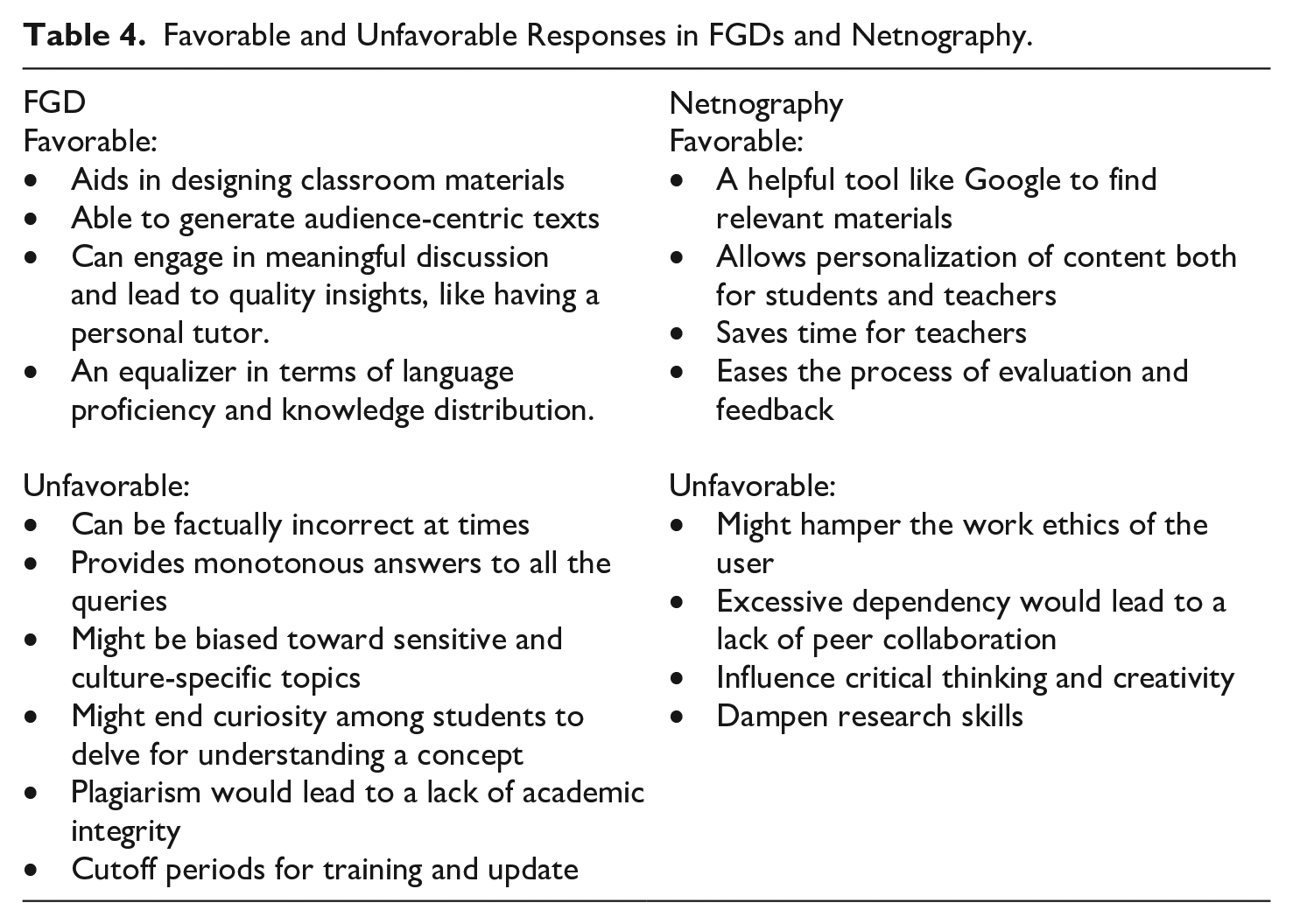
Along with the strengths and opportunities, the participants in the FGDs also discussed the weaknesses and threats of text-generative AI and their implications on the teaching-learning process of the subject of business communication (Tables 3 and 4). The discussions align with the netnography study and are explained further in this section. The first major weakness discussed by the participants was the generic weakness related to any tool. Participants discussed that, like any other tool, this tool also depends upon human intention and proficiency. The basic principle of “garbage in, garbage out” (GIGO) applies to generative AI, as it applies to any other technology or tool. One participant ponders over this weakness as follows: Like with Google or YouTube, it depends on how you use it to ask destructive questions like how to make a bomb or to use constructively, like watching meaningful, educational content on YouTube. Generative AI tools require humans to put inputs in the form of prompts. These prompts’ thoughtfulness can affect the text quality generated by tools like ChatGPT. At the end of the day, a human being has to be smart to use these artificial intelligence tools. (FGD participant no. 23, group 2, M, 45)
Favorable and Unfavorable Responses in FGDs and Netnography.
Another human-related weakness of generative AI is that it is trained by humans based on the text available. This text for training also includes Internet webpages and online articles. One of the posts in the netnography study mentioned that “generative AI is not a ‘knowing machine’; it is a ‘learning machine.’ It does not possess knowledge inherently; instead, it acquires knowledge from texts and other media” (Arató, chatGPT for Teachers, 2023b).
There has been no fact-checking at the training level. This often leads to a “hallucinating” generative AI, which gives factually incorrect answers with complete confidence. Though companies can hire fact-checkers to double or triple verification of the content generated from AI tools, students submitting their assignments at the last minute might put less effort into verifying the provided answers. A participant in the FGD warns against the unmindful and rampant use of generative AI.
We have often seen people quoting misleading facts and false information from the Internet with unwavering confidence. In a world of fake news and misinformation, these generative AI tools can be highly misleading as they generate factually incorrect text in highly professional language. If a student or a professional uses the text as it is without critically examining it, it can lead to grave situations. (FGD participant no. 21, group 7, F, 43)
Moreover, the users of ChatGPT need to understand that these answers are mostly predictions from certain pattern recognitions. Ideally, these predictions are meant to guide the users, not decide for them. The answers are usually monotonous, lacking rhythm and coherence in places. In fact, a participant goes on to compare it to the straight line of an ECG. The participants in the focus group discussion were wary about the behavioral change this might lead to among the users in the era of false gratification and instant, convenient options.
The generative AI also has cutoff periods for training. For example, the most popular generative AI, ChatGPT or GPT4, has a cutoff date of September 2021. Any event occurring after this cutoff date will not be considered in the answers given by the GPT4. Participants discussed that users (students) who are not mindful of these weaknesses of the generative AI tools might create documents (assignments, business texts) that are factually incorrect.
Generative AI requires a flawless Internet connection to run the program. In developing countries, the Internet connection is rapidly expanding but has its own challenges. Unstable connection and lack of bandwidth are experienced by almost each of the participants in their Zoom meetings or classrooms. The lack of a seamless Internet connection might also create a digital divide among students where materials are not uniformly available to everyone. This hindrance is seen across all education campuses in India. A faculty participant in group 6 shared an incident where she used quizzes on Kahoot to enliven the business communication class. Though the quiz is invigorating, many times, due to network problems, the impact of real-time quizzes lessens when only a sizeable amount of students reap the benefits of such tools.
Apart from the concerns related to facts, the participants also discussed the dangers of AI generating text that reflects gender, ethnic, or racial biases. One widely popular response of generative AI ChatGPT is that when asked to joke about women, it responds that it is not morally right to make jokes about women. In contrast, when it is asked to tell a joke about men, it responds with very derogatory jokes about men.
Further, generative AI relies on natural language processing, which learns from text data and patterns and structures from language. It is primarily trained on English texts. While it also provides information in Arabic, Chinese, Spanish, etc., it is not effective in recognizing different dialects. The upgradation of generative text in such languages might require huge amounts of data to be provided. The training might require more time and understanding. In such a scenario, this inefficiency or gap in knowledge of several languages acts as a barrier to that researcher or student availing knowledge in their first language. This would go against the so-called function of democratization that a generative AI stands for. Like any language model designed to generate text based on recognizing patterns arising from heavy data structures, these data structures might contain prejudiced or biased language. For example, the availability of data on stereotypes and orthodox norms will remain the same in the answers. The knowledge can also be missing because of the inadequacy of the generative AI to understand deep-rooted cultural connotations. These biases could lead to a wrong or inaccurate interpretation of the questions. Though, in most cases, especially in a business communication class, the medium is the English language. However, in areas of studying intercultural communication aspects, these incorrect biases might affect a user’s learning. This is a major barrier to relying completely on text-generative AI. Text generative can be friendly but never a friend, which means one can listen but not trust completely. Therefore, students must be extra wary in utilizing text-generative notes to develop their understanding of a topic.
The use of generative AI might also influence the teaching-learning process inside and outside the classroom. Business communication classes focus on all areas of communication in a particular language: listening, reading, writing, speaking, and nonverbal communication. Students practice these skills via assignments such as essay writing, blog writing, video creation, listening to podcasts, group discussions, personal interviews, etc.
One post in the netnography study mentioned a significant point behind these assignments. He mentioned, “Essay writing skills are something to learn to improve your critical thinking. You cannot have essay writing skills developed without enhancing your thinking. In this process, you need to focus on thinking first and starting with not essay-like sentences. Sometimes you start with words, fragments of thoughts, bullet points, etc., because that is all you have from the learner’s side. Or you can meet with a lack of information or the presence of disinformation. In this case, you need to teach thinking skills first, then writing. Beyond all this, improving their articulation of knowledge, beliefs, questions, arguments, etc. (Arató, chatGPT for Teachers, 2023c)
Most of these assignments are given in the form of homework. Teachers provide essential formats and content of the assignments, and students are supposed to submit them within a deadline. With generative AI, participants pondered that the days of homework are over. They discussed going to the old days of end-term examinations, where students were supposed to answer questions within a given period under the scrutiny of invigilators.
A participant in the netnographic study mentioned: “Or we will just have to accept that the era of unsupervised/out of class/homework activities—call it what you will—for students, is finally at an end (it has been dying since the birth of school libraries, never mind Alta Vista/Google, etc.).”
Forget trying to outwit chatGPT and all of its friends/versions; forget finding out/tracking down the plagiarising users etc. etc. You are wasting your time. The software is evolving far too rapidly. The only student work which you will definitively know has been carried out solely by them is that which is completed under your direct supervision. So we will have to adapt. (Soutien, chatGPT for Teachers, 2023)
It would be difficult to find personalized content on written assignments. Conceptual clarity will be missing on the part of students. “The problem of plagiarism is going to increase” was a comment on the same thread. Students would not put effort into locating the source of the content, thus limiting their understanding. Another major concern shared by most participants in the respective discussions was that the generative AI might lead to a lack of critical thinking in the users. Calling out the hypocrisy of the popular names associated with such innovations, a post in the netnography mentioned a quirky story.
Steve Jobs himself famously kept his own household and kids fairly tech-free, and a parallel Times story published at the same time and by the same reporter, Nellie Bowles, found more tech celebrities doing likewise. Why? (Arató, chatGPT for Teachers, 2023c)
Critical thinking is an important part of the holistic development that academia promises. It requires accepting new challenges and viewing a story from different perspectives. These require emotional intelligence, intuition, situational awareness, and nuance. An AI-generated text can barely provide such complex deduction and manifest any problem. The predictions by generative AI will be a shallow understanding of a subject and, thus, hinder critical thinking skills. A post in the netnography study mentioned: “We need to shift the focus to teaching critical thinking and research skills. We know sometimes AI-generated text includes false information. Very soon, we won’t be able to take any information at face value. It’s going to be more important than ever to know how to research and fact-check” (Gunn, chatGPT for Teachers, 2023).
One of the implications of a lack of critical thinking would be reflected in the users’ creativity. Designing a postgraduate curriculum takes into consideration the aspect of creativity very seriously. Students are expected to conduct research and solve dilemmas in case studies involving ingenious thinking. It is believed that in order to internalize knowledge, a student has to understand, analyze, and apply the concepts to different scenarios. Generative AI would make this process of comprehension and internalization a nonexistent one by simply providing existing answers to students’ queries. It would also go against the intuitive and abstract thinking skills especially required to resolve intricate challenges. In a business communication class where students need to understand and analyze a topic before submitting a report, relying solely on text-generative AI and summarizing would not stimulate her critical thinking. Students might not learn the basics of reading, comprehension, and writing skills. One of the participants in the discussion mentioned: Great inventions and discoveries happened through out-of-the-box thinking. People focused on a problem and related it to every possible domain to generate an answer to the queries. The quest for the search was important, and at times, it led to significant research or novelty. Generative AI will stop this process of search and rambling. (FGD participant no. 20, group 8, M, 37)
Postgraduate students are expected to negotiate complex issues and provide amicable solutions. There are various attributes that come in tune with the preparation of persuasion and negotiation in the way of delivering solutions. The process requires an in-depth background study, a psychographic study of the parties, nuances of the market trends, and many more. Navigating these factors also stimulates the students’ brains to look for further dots and makes them more inquisitive. The participants worry that dependence on generative AI will smash this curiosity, a very important marker of the learning process.
The participants in the study are also doubtful about academic integrity concerning the tools of generative AI. In addition to carrying out diurnal activities, ethics guides everyone to make the world a better place. Ethics in business is just as important as ethics in personal life. They reiterated the notion that business leaders have a unique role and a great responsibility in shaping the ethical culture of their businesses and thereby influencing their broader communities as well (Ethics in Life and Business, 2019). Copying and pasting is not a new phenomenon in academia. Using generative AI might increase vulnerability to cheating, compromising the integrity of the assessment. Therefore, it is important to understand that even after using text-generative AI to do the assessment, the end goal will not change if the generative AI is used only as a helper but not entirely. However, a comment in the netnography study mentioned: Just a thought: What if we encouraged students to cite the AI conversations they utilized for their assignments? Platforms like aiarchives.org can generate a URL for these interactions, making them citable in MLA or APA format. (Cao, chatGPT for Teachers, 2023a)
The participants also discussed the lack of transparency or accountability that will be reflected in tasks such as report writing or proposal writing. Another comment in the group, chatGPT for teachers, mentioned that “‘true learning’ involves actively engaging with the material, taking the time to understand concepts, and applying them to new situations. This process requires effort, persistence, and intellectual honesty. It is essential for personal growth and developing the skills needed to succeed in the real world. Therefore, while cheating may seem like an easy shortcut, it ultimately undermines the integrity of the educational system and can have serious consequences for both the individual and society as a whole” (Avery, chatGPT for teachers, 2023).
Another point of discussion was around the quality of ethical accountability and its easy detection in the assignments submitted by the students, especially the use of paraphrasing tools such as Quillbot or Spinbot. As far as AI tools such as ChatGPT4 are concerned, they are doubtful. One participant said: However, despite the awe-inspiring results the OpenAI might generate, the problem of ethics and values will be there. In today’s scenario of multiple software helping users to decrease plagiarism, it has become all the more important to understand the importance of academic honesty. The users have to be clear about the goal of an assignment or classroom study. It is to learn new concepts and understand their contemporary utility. Copying materials from an unreliable source and presenting them as one’s work is not fruitful in the longer term. (FGD participant no. 3, group 5, F, 40)
Another important challenge that generative AI might bring is in lack of peer or collaborative learning. As it is, students today face greater issues of human social interaction, one of the reasons being the unmindful use of social media. The cases of anxiety and fear of missing out syndrome are reportedly increasing in adolescents with more online interactions and less in-person interaction (Twenge et al., 2019). In such a scenario, group and collaborative assignments are used where students interact with peers from different backgrounds, opinions, and cultures. Students come together to write a report or prepare a presentation. They make a collective effort to do field research and argue the analysis and results. In the process of a team effort, they learn team dynamics and collaboration. The participants in the FGDs feared that once students started using chatGPT for their assignments, knowledge dissemination between peers would suffer. They will not pay enough attention to creating a meaningful bond with other students in the group, primarily because adequate answers will be easily available in the desired English. One of the participants mentioned: Students learn to a greater degree from peer-to-peer interaction. In a postgraduate course, human interaction is critical for learning and collaboration, especially using one’s emotional quotient to understand behaviors, nonverbal cues, and attitudes. Networking is one of the critical learnings in an MBA program, and customized communication plays an important role in creating meaningful relationships. Dependency on generative AI will definitely increase the already wider gap between people these days. (FGD participant no. 6, group 6, M, 46)
These shortcomings and weaknesses are seen as threats to text-generative AI. The business communication faculty agreed that an area-level deliberation should be done to figure out a way to incorporate generative AI as a pedagogical tool in classrooms. The different ways it can aid in achieving more classroom engagement and innovative assessment can be discussed and implemented.
A comment in the netnography study mentioned: Furthermore, education is not solely about transferring knowledge and information, but also about fostering human connections, building relationships, and providing guidance and mentorship. These aspects of teaching are highly valued by students and are unlikely to be replaced by AI systems. Instead, it is more likely that AI will continue to be used as a tool to support teachers in their work, such as by providing personalized learning experiences, automating routine tasks, and analyzing student performance data. This could free up teachers’ time and enable them to focus on more meaningful and impactful aspects of teaching. (Kemp, chatGPT for Teachers, 2023)
Limitations and Future Research Directions
The present study uses FGDs and netnography to explain and understand an emerging phenomenon, generative AI. The framework to analyze and present the data was based on content analysis and organized in a SWOT framework. However, this is a preliminary study. Generative AI tools like ChatGPT are going to have a far-reaching impact on pedagogies and assessment processes. Future research studies can consolidate the present study’s findings by using quantitative research methods like survey questionnaires.
Additionally, the impact of generative AI might differ according to contexts, backgrounds, and levels of the students and academic institutions. Further research can explore the perceptions of academicians from these perspectives also. Other stakeholders of academic processes, like regulatory bodies, students, parents, and industry professionals, can also be taken into the research purview to analyze the impact of generative AI on pedagogies and evaluation processes. The impact of generative AI on pedagogies can also be assessed and researched through experimental designs, where teachers are asked to explore and use AI tools in their teaching-learning processes and then share their perceptions. The present study has explored the generative AI tools and their impact on pedagogies at the initial level. Future studies can study the impact in more detail and varied contexts and cultures.
Conclusion
Text-generative AI has the potential to unleash a new wave of productivity in different aspects of business, and management colleges imparting education to the future workforce are aware of its substantial impact and capabilities. Owing to generative AI’s increasing ability to understand natural language, its influence on communication is enormous. Therefore, it is only reasonable for the area of business communication to discuss the important repercussions of including text-generative AI tools in the curriculum. The research article discussed the impact of text-generative AI in the pedagogy of business communication. Using focus group discussions and netnography, the article employs content analysis to structure the data into a SWOT framework. The data suggested that the majority of the participants were able to cite various strengths of text-generative AI in the teaching-learning process, stating that tools such as ChatGPT can be used as an assistant or helper to the students and faculty. Customized prompts can help users prepare content for activities such as writing persuasive reports, proposals, and presentations. However, a strong concern was also stated, implying the weakness and threats of using text-generative AI in the classrooms. One such concern was over the relevance and fact-checking part by the students. Some participants voiced concerns over cheating, lack of critical thinking, creativity, etc. The singular tone of text-generative AI and its limited understanding of cultural connotations might impact the training and research skills of the users. Considering the various advantages and barriers, participants, at large, were vocal about the utility of text-generative AI in business communication pedagogy. The article also discussed its use cases in pre-classroom activities, classroom engagement, and post-classroom learning in the form of homework assignments, feedback, evaluations, and other implications in the teaching-learning process of business communication courses in a postgraduate management program.
Footnotes
Declaration of Conflicting Interests
The author(s) declared no potential conflicts of interest with respect to the research, authorship, and/or publication of this article.
Funding
The author(s) received no financial support for the research, authorship, and/or publication of this article.
