




Abstract
In today’s workplace, supervisors often communicate with direct reports using technology that could influence the perceived relationship employees have with their managers. The purpose of this convergent mixed methods study was to describe the perception of how media richness, when using technology to communicate, influences the relationship direct reports have with their supervisors. To address the research question, a survey was used with a sample of 100 direct reports who frequently receive communication from their supervisors in different technology formats. The results from the study suggest that technology media influences the perceived relationship between direct reports and their supervisors. According to the results of this study, technology media may be especially helpful in bolstering the availability of supervisors, which may positively influence other elements of the supervisory relationship. The results further suggest that it may be important for all leaders to choose technology media that is personalized and preferred by the employee while also using the most effective media for the type of message. Finally, leaders should understand the concerns that employees may have around privacy and overuse of technology media.
Introduction
As communication is an essential element for building positive working relationships between supervisors and direct reports (Bass & Avolio, 1994; Men, 2014), it is important to understand the dynamics of communication in the workplace. Communication between supervisors and their direct reports is increasingly being facilitated through technology media as a means for workplace dialog (Bailenson, 2021; Colbert et al., 2016). Technology media refers to tools used in the workplace such as email, text messages, group chats, and video conferencing (Ishii et al., 2019). Because of the high prevalence of technology media used to communicate in the workplace, it is important for supervisors to understand how technology media can influence interactions with their direct reports (Hambley et al., 2007).
Supervisors who engage in more collegial relationships that foster participation and support autonomy are a factor in employee retention (Muteswa & Ortlepp, 2011). The Bureau of Labor Statistics (n.d.) reported that the quit rate in the United States reached an all-time high of 2.9% in August of 2021. Muteswa and Ortlepp (2011) explained that a poor relationship with one’s supervisor is one of the main causes of voluntary employee turnover. Agovino (2019) asserted that employee engagement and retention may be influenced by management behaviors by as much as 70%. The Work Institute reported that in 2019, 11.3% of employees indicated they resigned due to supervisory behavior (Mahan et al., n.d.). Another survey of over 10,000 job seekers found that 42% had left their previous roles due in part to their displeasure with their supervisors (Reina et al., 2018). In a survey published by the Achievers Workforce Institute Engagement and Retention Report (Achievers Solutions Inc., n.d.), 52% of employees planned to look for a new job in 2021. In that same survey, 19% reported that having a great relationship with their supervisor would be enough to retain them (Achievers Solutions Inc., n.d.).
To counteract turnover, research suggests that leaders who use more inspirational behaviors to motivate employees can positively impact retention (Reina et al., 2018). Communication is often utilized by supervisors to facilitate behaviors that influence engagement and satisfaction in the workplace (Brunetto et al., 2013; Divleli & Ergun, 2015; Imran & Khattak, 2019; Othman et al., 2017). More specifically, supportive dialog and open communication are techniques that augment a supervisor’s ability to build positive relationships with their direct reports (Brunetto et al., 2013; Divleli & Ergun, 2015; Imran & Khattak, 2019; Othman et al., 2017; Wang et al., 2016; Yue, 2019). Because of the reliance on communication to build positive working relationships, it is important to understand the tools supervisors use to communicate with their employees. With the high prevalence of technology media used to communicate in today’s workplace (Colbert et al., 2016), the purpose of this study was to describe the perception of how media richness, when using technology to communicate, influences the relationship direct reports have with their supervisors.
Theoretical Background
The relationship employees have with their supervisors based on day-to-day interactions is one critical element that can positively influence retention, engagement, and satisfaction (Anitha, 2014; Ariani, 2015; Muteswa & Ortlepp, 2011; Reina et al., 2018). To identify more specific supervisory behaviors that could influence relationships with employees, the transformational leadership style offered a theoretical approach that has been shown to be an effective supportive leadership approach for supervisors (Breevaart et al., 2014; Long et al., 2014; Purvanova & Bono, 2009). Transformational leadership is described as a proactive style seeking to use influence over authority while meeting the needs of individuals to bolster performance (Bass & Avolio, 1994). Based on some studies, elements of transformational leadership have been determined to lead to higher employment satisfaction and performance (Breevaart et al., 2014; Long et al., 2014).
Communication tactics reflective of transformational leadership may bolster engagement and retention in the workplace (Divleli & Ergun, 2015; Othman et al., 2017). Under transformational leadership, communication should be tailored in a way that fosters individual consideration (Bass & Avolio, 1994) and an openness to feedback (Wang et al., 2016). Specifically, research suggests that supportive dialog and two-way open communication are behaviors supervisors can engage in to build positive relationships with their direct reports (Brunetto et al., 2013; Divleli & Ergun, 2015; Imran & Khattak, 2019; Othman et al., 2017). Because of the prevalence of technology media used to communicate in the workplace (Hambley et al., 2007), it is important to understand the tools available to supervisors to engage in the types of supportive and open dialog offered by the transformational leadership style.
The media richness model (Daft & Lengel, 1986) suggests that supervisors have several choices of media to use when communicating with employees. The model describes levels of richness for communication tools based on whether elements such as visual cues or auditory components are available (Ishii et al., 2019); the greater the number of elements present in a communication medium, the richer it is. Though some technology may be better suited for specific situations, individuals may choose the most convenient media instead of the most appropriate (El-Shinnawy & Markus, 1997). Sheer and Chen (2004) determined that the complexity of messaging was a greater predictor in choice of media richness rather than equivocality, whether the message was positive or negative. A supervisor’s choice of communication may also be driven by other goals related to relationships and self-presentation (Sheer & Chen, 2004). Men (2014) suggested that richer communication media may be used more readily by transformational leaders. However, technology that is less rich may be the preferred choice of supervisors when communicating with their teams as supervisors rely more on technology media than having in-person conversations (Colbert et al., 2016; Lee, 2010). While face-to-face communication is not a technology medium, the media richness model shown in Figure 1 ranks face-to-face communication as the richest form of communication, followed by the technology media of video conferencing, phone conversations, voice mail, and written formats. Though the model proposes a ranking, the intended assertion from the model is the importance of choosing the right medium for the right message (Ishii et al., 2019).
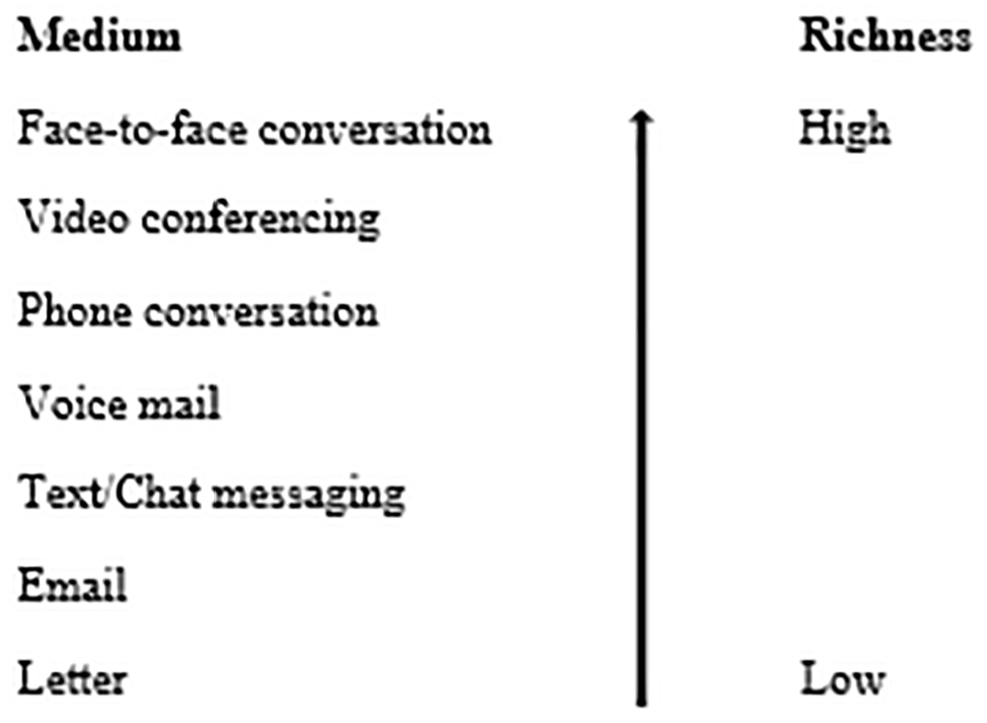
Media richness model.
Another approach used to further classify technology media used to communicate is the synchronous media model. The synchronous media model (den Otter & Emmitt, 2007; Dennis et al., 2008) describes communication media by categorizing media into either synchronous or asynchronous communication media. Synchronous media refers to media that more closely mirrors in-person communication versus asynchronous technology that has a delay in the feedback between ongoing communication (Carlson & George, 2004). den Otter and Emmitt (2007) found that synchronous communication media is not always the most effective as would be assumed under the media richness model. Both categories of media aid in fostering effective communication (den Otter & Emmitt, 2007). den Otter and Emmitt suggested an outline for different communication media and the value offered to work teams. Table 1 provides an overview from this study showing different attributes for various communication media tools in the workplace and the value each tool presented for diverse types of workplace communication.
Properties of Synchronous and Asynchronous Technology Media.
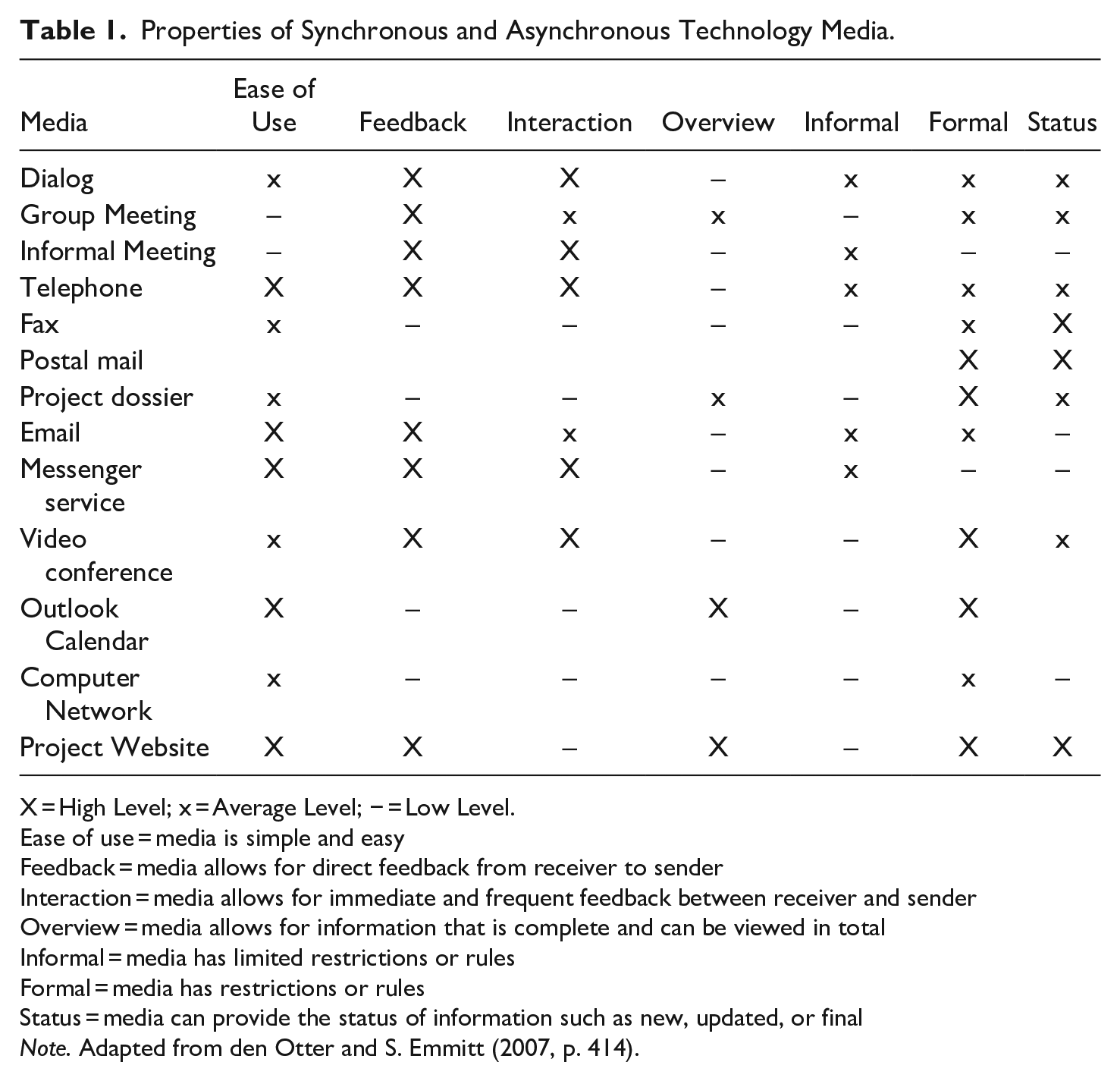
X = High Level; x = Average Level; − = Low Level.
Ease of use = media is simple and easy
Feedback = media allows for direct feedback from receiver to sender
Interaction = media allows for immediate and frequent feedback between receiver and sender
Overview = media allows for information that is complete and can be viewed in total
Informal = media has limited restrictions or rules
Formal = media has restrictions or rules
Status = media can provide the status of information such as new, updated, or final
Note. Adapted from den Otter and S. Emmitt (2007, p. 414).
Previous studies have explored the relationship between synchronous and asynchronous technology and the ability to engage in transformational leadership styles. Studies have presented conflicting results related to the benefits and challenges of different media and effective transformational leadership communication. The results from prior research are important in understanding the opportunities for this study in gleaning additional insights into media richness and supervisory relationships.
Synchronous Technology Media
Purvanova and Bono (2009) found that supervisors maintained consistent transformational styles when working with virtual teams using video conferencing technology and in-person interactions. Supervisors adjusted their style with different teams, regardless of whether they were communicating in person or virtually. Supervisors who used transformative behaviors with virtual teams seemed to influence better outcomes (Purvanova & Bono, 2009). Salter et al. (2010) examined the relationship between the transformational language leaders use and how this differs when using synchronous video technology. The premise behind the research was that supervisors who adapted their style were better able to motivate their work teams. Salter et al. found that the various words and terms potentially associated with the transformational leadership style were effective in both in-person and virtual work environments.
In contrast to other assertions, Hambley et al. (2007) found differences in the effectiveness of supervisory behaviors associated with the transformational leadership style and different synchronous technology media. The authors examined the relationship between leadership style and the behaviors of work teams using three different methods of communication: chat, video, and face-to-face. The results of their study reflected that different communication media influenced different behaviors. More specifically there was higher group interaction and greater team cohesion between supervisors and direct reports in face-to-face communication than dialog that used video conferencing or chat. Interaction was also higher between supervisors and direct reports in video conferencing than chat. The results of the study reflected that communication media can influence a supervisor’s ability to build a cohesive work team and bolster interaction with employees (Hambley et al., 2007).
Asynchronous Technology Media
An important component in engaging behaviors with the transformational leadership style is the accompanying body language and tone that comes with richer forms of media (Ruggieri et al., 2013). However, Ruggieri et al. (2013) found that while transformational leadership behaviors led to greater satisfaction, there was no difference in the influence of these behaviors between asynchronous and synchronous technology media. Neufeld et al. (2010) further asserted that asynchronous technology does not inhibit the use of leadership behaviors aligned with the transformational leadership style; reliance of media to communicate, to include asynchronous and synchronous technology, has no influence on leadership effectiveness. Neufeld et al. also found that leaders who engaged in effective communication, whether face-to-face or through technology media, were better able to influence their effectiveness as a supervisor.
In contrast, Stich et al. (2018) asserted that it is more difficult for humans to engage in dialog using less rich media that is absent of visual and auditory cues. Less rich media such as written emails create conflicts when equivocality is present as messages could be misinterpreted without immediate dialog, vocal tone, or body language (Stich et al., 2018). This conflict also creates barriers to developing and maintaining positive relationships in the workplace (Stich et al., 2018). The use of asynchronous technology that is less rich inhibits the ability to develop supportive relationships in the workplace that increase employee satisfaction and motivation (Lee, 2010; Savolainen, 2014) which are important outcomes facilitated by the transformational leadership style (Breevaart et al., 2014; Long et al., 2014).
Summary
It is reasonable to state that supervisors positively influence the workplace through their behaviors and ability to build positive working relationships using many of the leadership strategies provided under the transformational leadership style (Breevaart et al., 2014; Long et al., 2014 Salter et al., 2010), which can be further expanded through supportive and caring behaviors (Adams et al., n.d.; Brunetto et al., 2013; Imran & Khattak, 2019). Communication is a specific area where supervisors can exhibit various behaviors that support the positive leadership influences that are provided for within the transformational leadership style (Bass & Avolio, 1994; Men, 2014). However, in many workplaces, communication between employees and supervisors is being facilitated through technology media (Colbert et al., 2016). Some studies have suggested both challenges and benefits when supervisors use technology media to communicate and are seeking to build positive relationships (Huang, 2002; Lee, 2010; Savolainen, 2014; Stich et al., 2018). This suggests a need to better understand how different technology media may influence supervisory relationships from the perspective of the employee.
Method
Understanding the diversity of technology media available in the workplace, the goal of the study was to categorize the technology media supervisors use to communicate with their direct reports and identify if direct reports perceived an influence of these media on the relationships with their supervisors. The study further aimed to capture why direct reports perceive a specific technology medium influences the relationship with their supervisors. To accomplish this goal, a convergent mixed methods research study was used to describe the perception of how media richness, when using technology to communicate, influences the relationship direct reports have with their supervisors. Individual respondents were presented with a mixture of descriptive quantitative questions and qualitative questions using a semistructured questionnaire accessed through a web-based survey. Quantitative questions were used to capture the respondents’ perceptions of various elements of the relationships with their supervisors to support and categorize the qualitative responses (Svensson, 2001). Qualitative questions were used to further capture the respondents’ perceptions of the potential influence of technology media on the relationships with their supervisors based upon their experience.
Respondents
The respondents were obtained from a sample of individuals provided through a professionally sourced online panel obtained through Qualtrics, a third-party survey company. Online sampling was selected for its efficiency and ability to bolster access to a representative sample of the target population (Heen et al., 2014). To determine an appropriate sample size for the target population, an a priori power analysis (Cohen, 1988) was conducted with G*Power 3.1.9.4 software. Assuming a two-tailed test, a small effect size (d = .30), and an alpha of .05, the analysis indicated a necessary sample size of at least 64 total respondents. By using a professionally sourced panel, the survey company was able to guarantee a sample size of 100 for the study. The survey company recruited respondents from a variety of sources including customer loyalty portals and social media. Respondents from the panel received incentives or payment from the survey company for participation as agreed upon prior to entering the survey. This is the process used by the survey company to recruit survey respondents. Using a focused research panel through a survey company assisted in the collection of relevant data by having access to a professional recruitment process for respondents.
The respondents were required to meet the criteria of having a supervisor who uses a minimum of two different technology media to communicate, with at least one being a written format such as email, text messages, or chat messages. Respondents were also required to have worked for their supervisor for at least 1 year. Respondents also needed to indicate that they have a positive working relationship with their supervisor. This criterion was used to minimize factors other than technology media that could influence the results.
Instrumentation
It was important to utilize an assessment that could measure supervisory relationships with direct reports for the purpose of this research. Gonsalvez et al. (2017) conducted a study with the goal of designing a scale to evaluate the competence of supervisors. The goal in measuring supervisory competence was to glean insight into how effective the supervisor is at the “professional development, improvement in skills, time for reflection, and the quality of the supervisory relations” (Gonsalvez et al., 2017, pp. 95-96). The intent of the research was to also determine key supervisory competencies that would be an improved indicator for overall supervisory evaluation tools from existing assessments. The authors suggest that most tools only assess supervisory satisfaction and only look at perception without consideration of impact upon the supervisor and employee relationship. The SE-SC scale seeks to measure 25 competencies across six factors. The relationship with one’s supervisor is one of the factors contained within the assessment as measured through questions that seek to assess openness, caring, and support shown by the supervisor.
For this study, a 5-point scale was used to measure the supervisory relationship elements based on questions from the SE-SC scale (Gonsalvez et al., 2017) to capture and describe the respondents’ perceptions of the relationship with their supervisors. A copy of the permission to use the SE-SC scale is found in online Appendix A. The elements measured in this scale are reflective of key competencies found in the transformational leadership style such as caring and supportive behaviors (Adams et al., n.d.; Brunetto et al., 2013; Imran & Khattak, 2019) and transparent open communication (Wang et al., 2016; Yue, 2019). The 5-point scale offered a range of perceptions from extremely displeased through extremely pleased. This allowed the respondents to express their perceptions without forcing them to select a strong opinion by offering a neutral option as one of the responses (Joshi at al., 2015).
After completing the questions related to the supervisory relationship elements, the respondents were asked if any of the various technology media influenced their ratings. The responses were a simple yes or no such that a yes response would then prompt the respondent to explain how the technology media influenced their rating for each of the six supervisory relationship elements. These qualitative questions were used to understand how any technology medium influenced the respondents’ quantitative ratings of their supervisors based upon their experience when their supervisors communicate with them using various technology media. Finally, the survey included additional qualitative questions asking the respondents to describe which technology media the respondents perceived to be most effective and which technology media the respondents perceived to be least effective in building a positive relationship with their supervisors. A copy of the survey instrument can be found in online Appendix B.
Data Analysis
The final sample size was n = 100. Results from the quantitative questions were analyzed to determine statistical themes that described the participants’ relationships with their supervisors. These themes were used to help categorize the qualitative findings from the study.
The qualitative data were interpreted using a general inductive approach to identify emergent ideas from the experiences described by the respondents (Alase, 2017). A codebook was developed using the description of themes that emerged from the results. To further analyze the data, these themes were categorized in alignment with the quantitative statistical themes that described the participant’s relationship with their supervisors (Svensson, 2001).
Results
Social Desirability
Social desirability refers to the tendency for individuals to minimize attributes that may be considered unfavorable while also maximizing attributes that are considered more favorable (Hays et al., 1989). To address the potential for social desirability bias, questions were added to the survey as a control measure. Before examining the data related to the research questions, the results of the social desirability questions were analyzed to determine any correlation with other variables. If a significant bias was reflected in the data, the effects of social desirability were removed from the overall data. An analysis of the descriptive statistics reflected that the third question that related to being a good listener had a scale mean that was lower than the other two questions (Question 1 M = 2.40, Question 2 M = 2.60, and Question 3 M = 1.90). Question 3 also had a lower standard deviation (Question 1 SD = 1.34, Question 2 SD = 1.26, and Question 3 SD = 0.89). When analyzing the intercorrelations between the three social desirability questions, the results reflected that the third question around listening did not correlate with the first question (r = −0.09, p = n.s.) or the second question (r = −0.03, p = n.s.). A reliability analysis reflected that the internal consistency for the entire scale was α = .55. Removing the third question adjusted the reliability to α = .78. Reliability may be considered sufficient (α > .70) depending upon the type and stage of the research (Iacobucci & Duhachek, 2003). The question around listening being reverse coded may explain the divergence between it and the other two social desirability questions. Based on these results, only the effects from the first two social desirability questions were analyzed to determine any influence on the overall responses to the survey instrument. A composite score was created and used in the subsequent analysis.
Relationships Between Supervisory Relationship Elements and Technology Influence Questions
The analysis of potential relationships between supervisory relationship elements and technology influence questions is found in Table 2. The results of the analysis (n = 100) reflected a significant correlation (r = 0.22) between the supervisor using email to communicate as having an influence on professional development, and the rating of supervisory interest in professional development. Significant correlations were also found between approachability when the supervisor uses text/chat and the rating of supervisory interest in professional development (r = 0.23), openness to hearing new ideas when the supervisor uses email and the rating of professional development (r = 0.21), getting along with the supervisor when they use email and the rating of comfort level discussing professional inadequacies (r = .20), getting along with the supervisor when they use email and the rating of professional development, and the caring and support when the supervisor uses email and the rating of supervisory interest in professional development (r = 0.22). Two additional correlations were also reflected at p <.01, two-tailed, between supervisory approachability when using video conferencing and comfort level discussing professional inadequacies (r = 0.27) and supervisory approachability when using video conferencing and interest in professional development (r = 0.26). It should be noted that the results of the partial correlation analysis, using a two-tailed criterion, reflected significant correlations between the six supervisory relationship elements (p < .01). A reliability analysis also reflected high internal consistency for the six supervisory relationship elements (α = 0.94) (Iacobucci & Duhachek, 2003).
Correlations Between Supervisory Relationship Elements and Technology Influence Questions.
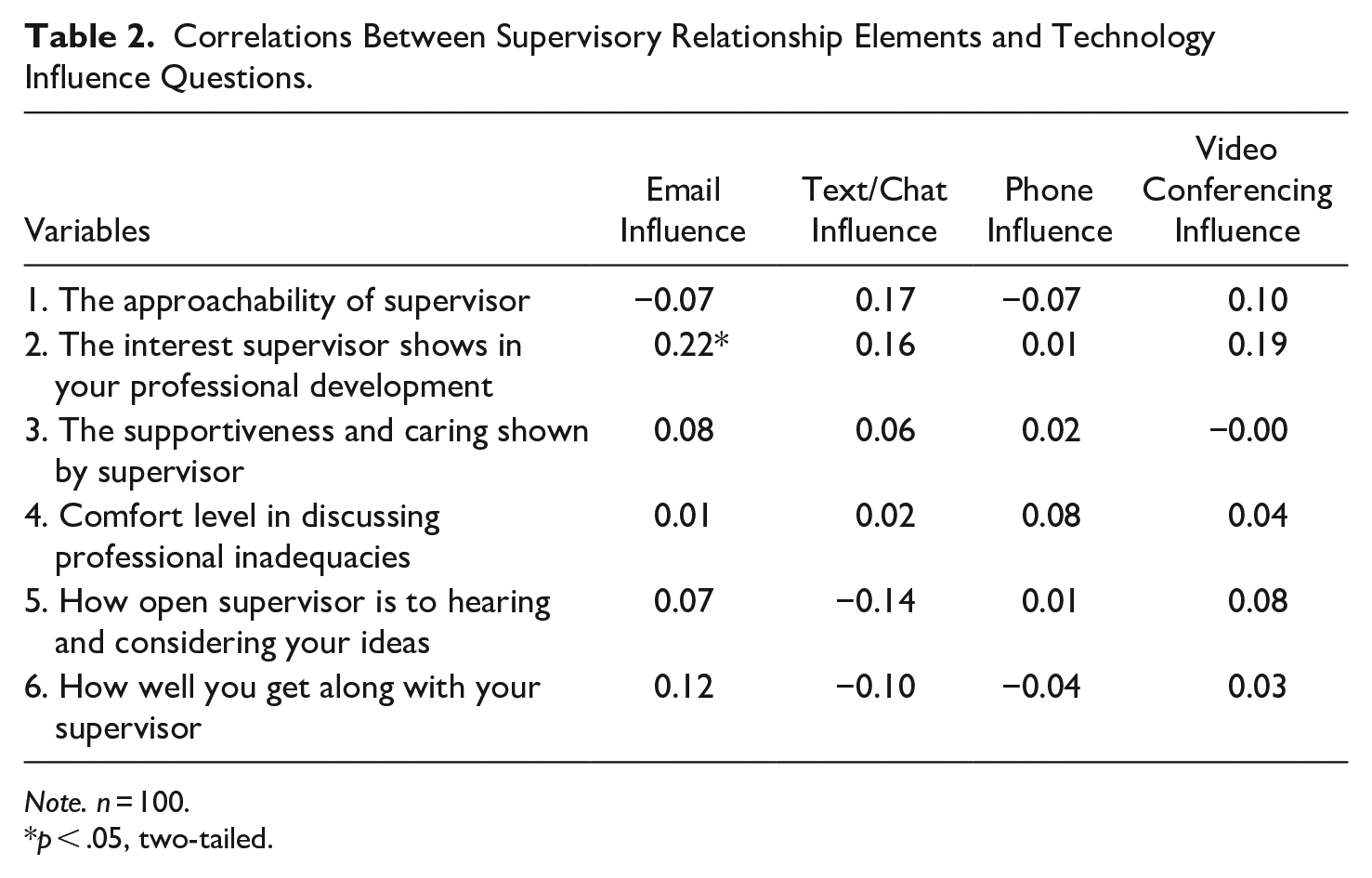
Note. n = 100.
p < .05, two-tailed.
Frequency Statistics
The frequency statistics reflected in Table 3 report the percentage with which the responses indicated a perception that different technology media influenced various aspects of the relationships with the respondents’ supervisors. Phone conversations, email, and text/chat messages received over 70.00% yes responses as an influence on perception of approachability. Within the other areas of supervision, phone conversations were the only technology medium to receive more than 70.00% yes responses specifically related to professional development and caring and supportiveness. Phone conversations also reflected the highest percentage of overall yes responses as having an influence on the various elements of supervision. All technology media responses reflected at least 50.00% of yes responses on average and as an influence on the various elements of the supervisory relationship with the exception of video conferencing and how well one gets along with their supervisor.
Frequency Results of Technology Media and Supervisory Relationship Elements.
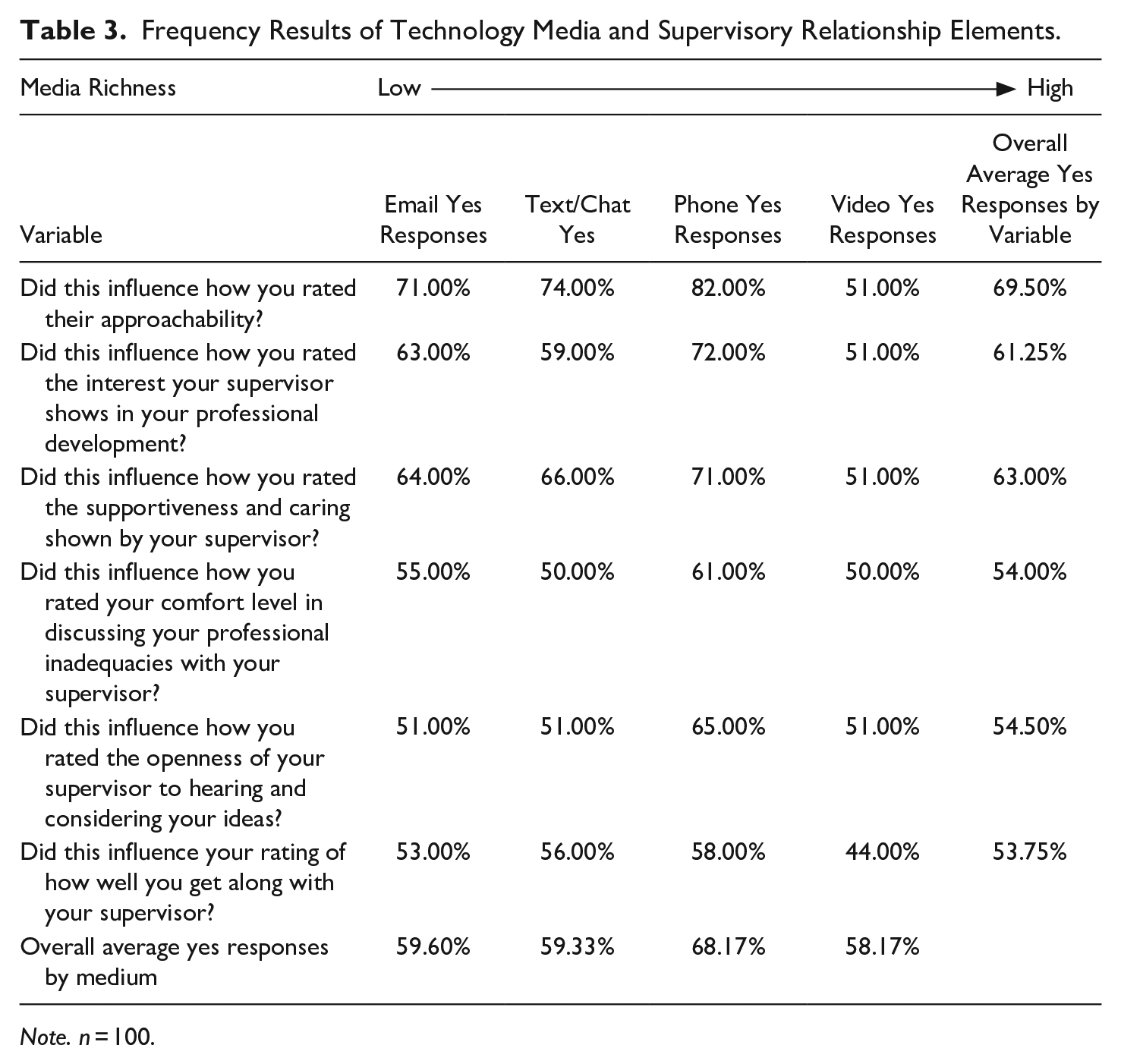
Note. n = 100.
Qualitative Findings
Specifically related to email, the overall theme from the responses documented that it is helpful when emails are positive and friendly. Several responses referenced email as a medium that shows more personal concern and that is more private. A respondent specifically stated they appreciate that “the emails from my supervisor are friendly and helpful.” Other responses discussed the convenience of emails. As an example, one response suggested that it makes it “harder when the supervisor does not use email to communicate” while another response suggested a preference for email because “it can be kept and acted upon later.” More specifically a response stated that email allows one “to take the time to gather thoughts and respond later which is very comfortable.” Some responses asserted email as the least preferred way to receive a message. As an example, one response expressed the perception that email “allows my supervisor to hide behind the medium instead of being open.” In relation to the quantitative results, email received the second highest overall average of yes responses to a perception of influence when compared with other technology media, with the highest being around approachability. This finding was further documented by the qualitative results that documented the benefits of friendly emails and the convenience of being able to reach the supervisor through email.
Phone
One overall theme from the responses offered how communication by phone conversations feels personal and builds opportunities toward a better relationship. Within this theme, some responses further explained that phone conversations are more personal and bolster accessibility. Other responses within this theme offered the perception that phone conversations foster friendlier conversation that is more personal. As an example, one response expressed the perception that phone conversations reflect “a more caring attitude.” Another response suggested phone conversations as “better for me to share ideas.” An additional theme from the responses documented the privacy benefits of communication through the phone. One respondent stated that “I can be more relaxed with a phone conversation because it feels more private.” There was also a theme from the responses that suggested there are benefits in hearing the tone of the supervisor, and that hearing the voice of the supervisor builds trust. As an example, a respondent stated that they “don’t need translation when they can hear the tone.” An additional theme from the responses offered a perception that phone conversations are better for problem solving. As an example, one respondent shared that it is “easier to solve problems by phone with the opportunities for back-and-forth dialog.” Phone conversations received the highest overall average of yes responses to a perception of influence when compared to the other technology media. The highest response was related to the perception of approachability. In connection with the quantitative data, the themes around personalized communication that feels private and bolsters accessibility offered a description for the phone’s influence around approachability.
Text/chat
One theme identified from the responses offered a perspective that texting feels more personal, especially when the supervisor gives out their phone number. As an example, one response stated that “texting feels more one on one, not shared with the entire company.” Another theme from the responses suggested that texting fosters a more casual and friendly approach. As an example, one response stated that texting makes “me feel like I get along with my supervisor.” Another example was portrayed in a response that shared that texting is a useful technology media for communication when you “are not in the best mood to dialog.” Another theme also referenced the notion that texting offers more instant feedback. One respondent suggested that texting is an “easy and convenient way to reach my manager.” This may further explain the quantitative results that reflect a high percentage of yes responses as to the perception of the influence of text/chat messages on approachability. In addition, being able to receive instant communication as well as having access to the supervisor’s number further described the perception of approachability that was identified in the quantitative results. There was also a theme from the responses that asserted it is problematic when texts are used for lengthy communications that should be in an email. Within this theme it was also suggested that texting is a concern when the supervisor is trying to present an idea. As specific examples, several responses shared the perception that texting can influence miscommunication when not “properly” used. One respondent described texting as “an opportunity for misunderstandings.”
Video conferencing
One overall theme from the responses referenced the benefits of seeing the supervisor’s body language and hearing the tone to bolster relationships. As an example, video technology was described in some responses to be a “more innovative approach that is most like an in-person discussion.” Another respondent described video technology as “helpful to see and hear” when communicating. Some respondents expressed negative views toward video technology. One respondent referred to the medium as “awkward.” Other respondents wondered about the overuse of video technology with statements such as “I don’t need to see them to communicate” and “why not just have the meeting in person.” Fewer respondents suggested video conferencing media as an influence than other technology media. Video conferencing also received the least overall average of yes responses as to a perception of influence in the quantitative data when compared to the other technology media. This may be further affirmed by the theme from the qualitative results that considered video conference communication as similar to an in-person experience.
Relationship elements
Within the different relationship elements, the quantitative data reflected the highest perception of technology media influence on approachability. This perception was further expanded through the qualitative experiences described by the respondents that discussed the perception of technology media use allowing for greater supervisor availability as an influence on several elements within the relationship including approachability and professional development. An additional theme from the responses was the perception that all technology media allows for easier and more comfortable opportunities to receive communication about performance deficiencies. Within this theme some responses specifically shared the perception that more personal technology media such as phone conversations are preferred when discussing performance issues. There was a perceived experience documented from the study of the supervisor being open to hearing ideas across all the technology media along with the perception that phone conversations specifically offer the most opportunity for a positive experience when sharing ideas because the supervisor can ask questions.
Summary
Both the quantitative and qualitative data reflected a perception that technology media influences the relationship employees have with their supervisors. The determined partial correlations and frequency of yes responses offered some statistical data to reflect a perception of technology media influence on supervisory relationships. This was further expanded through the descriptions from the respondents that offered several examples of the perceptions of how each of the different technology media influences the relationships with their supervisors.
Literature has suggested that the use of technology media has the ability to influence the relationship between direct reports and their supervisors (Colbert et al., 2016; Lee, 2010; Savolainen, 2014; Stich et al., 2018). However, supervisors may not understand how using technology media may influence their ability to foster positive working relationships. Technology media can be used to effectively communicate with employees (Neufeld et al., 2010) and there are benefits associated with an increased use of technology media by supervisors (Huang, 2002). Even so, employees may perceive digital communication less favorably than face-to-face interactions, underscoring the importance for supervisors to recognize how changes in the digital workplace influence relationships (Mackenzie, 2010). This can be especially problematic when technology media is chosen based on convenience versus effectiveness (El-Shinnawy & Markus, 1997) or when managers select technology media that are least preferred by their direct reports (Lee, 2010).
The purpose of this convergent mixed methods study was to describe the perception of how media richness, when using technology to communicate, influences the relationship direct reports have with their supervisors. The results of this study suggested that personalized messaging across any technology media can positively influence the perception of getting along well with the supervisor. More specifically, the responses offered a perception that communication that is friendly, regardless of the technology media used, bolsters a positive relationship with the supervisor. This aligns with studies that have asserted that media richness does not influence the ability for supervisors to use leadership behaviors categorized under the transformational leadership style to help build relationships (Neufeld et al., 2010; Purvanova & Bono, 2009; Ruggieri et al., 2013; Salter et al., 2010). The key takeaway for anyone in a leadership role is the opportunity technology media has in fostering positive supervisory relationships when employee preferences are considered along with ensuring that messages are personalized and that the type of message is compatible with the selected media.
General Discussion
Study Summary
This study aimed to understand how employees perceive different technology media influence on various aspects of supervisory relationships. The results of the study reflected a perception that technology media, regardless of media richness, influences the relationship supervisors have with their direct reports. The important finding is that communication using technology media may have a positive influence, regardless of media richness, when the message is personalized to the employee. The data further underscored the potential benefits of all technology media in bolstering access to the supervisor, which may also influence other areas of leadership. It may be prudent to further note that within this assertion, communication is most effective when the medium works well with the specific type of communication and the preferences of the individual employee. Most media can be perceived as being both positive and negative forms of communication; the determining factors relate to the type of message, and the recipient’s personal preference for that type of communication.
Email was described in several responses as an effective technology medium mainly because it is convenient. El-Shinnawy and Markus (1997) discussed the notion that technology media may be selected for its ease of use rather than its appropriateness. In contrast to the other less rich technology media, in this study, email was perceived as better because of its ability for more thorough and professional messages.
Some responses spoke to a perception of the inefficiencies of email because of the delayed back-and-forth dialog. Some data reflected a perception that this delay can lead to miscommunication. This characteristic was also reflected in literature (Carlson & George, 2004), with similar findings around the potential issues that arise from asynchronous media such as email.
Phone
Within the media richness model, the traditional phone is described as a richer technology media bolstered by the ability to hear the tone (Ishii et al., 2019) and engage in two-way dialog (Carlson & George, 2004). Research also suggests the benefits of phone conversations as a synchronous medium that avoids opportunities for miscommunication (Stich et al., 2018). Data from this study revealed the perception that phone conversations are the most effective technology media for building relationships with supervisors. The insights offered in the responses reflected the ability to experience tone and voice inflections. Additional responses also referenced the ability for back-and-forth dialog as being more effective in resolving problems and avoiding miscommunication. Another theme from the responses related to the positive perception of phone conversations reflected a perception that they feel more private and secure.
In contrast, phone conversations were suggested by some data to be least effective. The results from this study demonstrated a perception that the phone may not be convenient or efficient to use. This aligns with literature that suggests there are benefits of using technology media that allows for frequent and convenient communication (El-Shinnawy & Markus, 1997; Huang, 2002).
Text/chat
Some data from this study reflected a preference for a more casual medium such as texting for shorter and more informal messages and a perception that this fosters a friendly relationship with the supervisor. This connects to a theme from the responses that offered a perception that less rich media is more effective. This further aligns with research that suggests any technology media that is friendly and personalized can have a positive influence on the overall relationship with one’s supervisor (Lee, 2010; Neufeld et al., 2010).
However, overall, contrasting results of this study reflect a perception that texting or chat messages are least effective. The most shared perception from the results was a concern around the limited written space to provide thorough communication and the opportunities this creates for miscommunication. Texting was also described in several responses as unprofessional. Additional data expressed the concern that tone and body language are missing from text messages. This aligns with research that suggests text messages as being a lesser rich medium that lacks the benefits of visual and auditory elements (Ishii et al., 2019).
Video conferencing
Some data demonstrated a perception of video as being most effective because it is more like an in-person meeting. Video was also discussed as working well for different situations with the benefit of tone and body language. These same findings have been reflected in literature as characteristics of the media richness model where video offers the most opportunities for visual and auditory elements (Ishii et al., 2019).
In contrast, some data supported the perception that video conferencing was least effective. The results from this study reflected concerns related to the pervasive use of video conferencing, especially in lieu of a meeting that could take place in person. These data resonate with literature that has suggested an overprevalence of the use of video technology could lead to stressors in the workplace (Bailenson, 2021).
Approachability and accessibility
Research has highlighted the potential for a supervisor’s availability as a means toward enhancing relationships and employee engagement (Ariani, 2015). Within accessibility, the ability to frequently communicate has also been discussed as a potential benefit for building positive supervisory relationships (Huang, 2002). The results of this study reflected that being able to access the supervisor easily through technology media bolsters perceptions of approachability, supportiveness, caring, and interest in professional development.
Another consistent theme identified from the responses is the notion that having access to a supervisor’s phone number influences a positive relationship. This was an interesting finding in the study in that there was a perception gleaned from the data that supervisors sharing their phone number leads to a perception of approachability. There was also data from the study to suggest that accessibility, or being able to contact the supervisor easily, has a connection to other elements such as supportiveness, approachability, and interest in one’s personal development. This suggests that employees perceive having access to their supervisor through technology media as a positive influence on several aspects of the relationship.
Professional development support
A correlation was determined between the responses rating the influence on approachability when the supervisor uses text/chat and the rating of supervisory interest in professional development. Another correlation was found between the influence on a supervisor’s openness to hearing new ideas when the supervisor uses email and the rating of professional development. Additional correlations were found between the perception of influence of getting along with the supervisor when they use email and the rating of comfort level discussing professional inadequacies, getting along with the supervisor when they use email and the rating of professional development, and the caring and support when the supervisor uses email and the rating of supervisory interest in professional development. The correlations that existed between different supervisory relationship elements and technology media questions may be the result of the internal consistency of the six supervisory relationship elements.
However, these relationships were also gleaned from the qualitative data that reflected an influence between the different supervisory relationship elements where respondents discussed accessibility and approachability through technology media influencing a perception of supervisory caring, supportiveness, and interest in professional development. These findings may connect to the results from the study by Huang (2002) that found increased technology media use may bolster relationships with supervisors because of the ability to allow for frequent communication.
Convenience
Consistent with the literature, the data also suggested a preference for communication from the supervisor using less rich media such as email or text messages due to convenience, casualness, and an ability to not have to engage with supervisors using visual or auditory elements. Literature has highlighted the notion that supervisors may choose media based on convenience (El-Shinnawy & Markus, 1997; Huang, 2002). The findings from this study suggest that employees may also view convenience as a benefit toward supervisory relationships. As an example, some responses suggested that email is the easiest way to share ideas and that it lends to a perception that the supervisor is open to hearing new ideas.
Caring communication
The high number of yes responses for phone conversations align with the qualitative data from the study that suggests phone conversations are perceived to be more caring. This may be due to the opportunities for hearing the supervisor’s tone that was described in several responses. This aligns with literature that offers, based on the media richness model, the benefits of communicating when using media where tone is present (Ishii et al., 2019).
Transformational leadership
A final consistent theme was determined from the study to suggest that when technology media are used, there is a positive influence when the communication is personal. These results from the study align with elements within the transformational leadership style. In the study by Long et al. (2014), within the transformational leadership, individualized consideration reflected a significant relationship to job satisfaction. The study by Long suggests that it is important for supervisors to tailor their actions and communication to the specific employee. This notion is further reinforced in the study by Ruggieri et al. (2013) that determined personalized communication using technology media can be effective in using transformational leadership behaviors whether it is asynchronous or synchronous.
Key Implications and Recommendations for Workplace Communication
The key takeaway for anyone in a corporate leadership role is the opportunity technology media has in fostering positive supervisory relationships, especially when employee preferences are considered. The contrasting results of this study offer further evidence toward the notion of considering the preferred medium for each employee (Lee, 2010) and the medium that is best for the type of communication (den Otter & Emmitt, 2007; Ishii et al., 2019). Based on the results from the study, there are specific recommendations for leaders to consider when using technology media in the workplace to communicate with their direct reports. It is imperative that leaders consider the significance of being easily accessible to employees and how technology media could be used as a means toward bolstering the supervisory relationship through availability in the workplace. It is also important that when leaders are using technology media to communicate with direct reports, that they consider the technology media preferences for each employee in order to bolster the opportunities to build a positive relationship. Leaders should also consider which technology media is most appropriate for the type of message being communicated. Also, all leaders should consider the potential benefits of using richer media for specific communications when tone may be important to foster a caring and supportive message. It is also prudent to understand that when using technology media to communicate, personalizing the message, regardless of the technology media, may augment supervisory relationships with direct reports. Leaders should also recognize that employees may have concerns about the privacy and security of communication that takes place using technology media. Finally, it is important for all leaders to understand that some employees may become stressed by the pervasive use of certain technology media, especially video conferencing.
There are key insights for training leaders on how to best use technology media to communicate with their work teams. When offering training and development tools for leaders, media technology may be considered a tool that can enhance effective communication. An important area for leaders to understand is the helpful role technology media has in the perception of being available to their work teams and the role this may have in building relationships. However, with that understanding, supervisors should also be instructed to seek to understand the preferences of each individual employee and overall technology preferences in different workplace sectors. In seeking to personalize the medium of choice to communicate, leaders may be able to further bolster the interpersonal relationships with their direct reports. Supervisors and managers should also be guided in recognizing the effectiveness each medium has on delivering different types of communication such as the model proposed by den Otter and Emmitt (2007; Table 1). This may augment the ability for effective and efficient workplace communication that also supports an engaged workforce.
Limitations and Recommendations for Future Research
An obvious limitation is that participants may have responded to the questions in a manner that is perceived to provide a more favorable view of themselves. To address the potential for social desirability bias, questions were added to the survey as a control measure (Hays et al., 1989). A statistical analysis was performed to analyze the data. In addition, using an online survey with minimal collection of identity or demographic data may have helped respondents feel more comfortable in providing honest responses (Creswell & Creswell, 2018). Several respondents offered descriptions of their experiences with their supervisors to include both positive and negative attributes. Some respondents also provided specific examples related to their experiences with their supervisors. However, future research could intentionally collect demographic data to understand differences between different sectors or industries, workplace tenure, generations, and gender.
Second, to mitigate participant responses potentially being influenced by unique experiences outside of technology-based communication media, the sample for this study limited the respondents to only those who indicated they had a good relationship with their supervisor; however, this may have influenced the supervisory relationship elements. Future research may want to broaden the sample, which may offer additional insights into how technology media influences the relationship with the supervisor, especially where there may be factors that have influenced relationships negatively. This would allow the researcher to expand upon some of the potential detractors of a positive relationship as identified in other research studies but with a more recent analysis to understand how technology is potentially influencing supervisor and direct-report relationships in both positive and negative manners.
Third, the questions based on the SE-SC scale (Gonsalvez et al., 2017) that were used to measure elements of the supervisory relationship had a high internal consistency. Future research may want to identify supervisory relationship elements with less internal consistency to better identify differences between technology media influence and different aspects of supervision. This would allow for the opportunity to explore how different media influences different elements of supervisory relationships.
A fourth limitation was the lack of ability to clarify written responses from the survey respondents. To mitigate, the questionnaire included some descriptive quantitative questions to support the open-ended questions and capture perceptions (Svensson, 2001). To gain further insight, researchers may want to conduct interviews with a sample of participants. This may allow for richer data to be gathered around the perceptions and experiences of employees who receive communication from their supervisors using technology media. This would also allow the researcher to ask clarifying questions and gain more insight from specific employee experiences.
As a consideration for future research, several responses suggested concerns around the privacy and security of communication through technology media. This may be a helpful factor to further explore in order to understand how these concerns could influence relationships between supervisors and direct reports. As an example, does the concern around privacy and security influence honesty, transparency, or the regularity of communication.
Finally, several responses referenced the influence of the availability and accessibility of the supervisor through technology media as an influence on the relationship. This element could be further researched specifically to understand its importance in building positive relationships and employee engagement. It may be important for leaders to understand how the potential benefits of technology media could outweigh the potential negative influences to enhance relationships with their direct reports. Additional research could glean more specificity around the types of media that employees view as most helpful in bolstering accessibility to their managers.
Supplemental Material
sj-docx-1-bcq-10.1177_23294906241301413 – Supplemental material for Exploring Employee Perceptions of Technology Media Influence on Supervisory Relationships
Supplemental material, sj-docx-1-bcq-10.1177_23294906241301413 for Exploring Employee Perceptions of Technology Media Influence on Supervisory Relationships by Jennifer E. Fairweather and Julie Bilodeau in Business and Professional Communication Quarterly
Footnotes
Declaration of Conflicting Interests
The author(s) declared no potential conflicts of interest with respect to the research, authorship, and/or publication of this article.
Funding
The author(s) received no financial support for the research, authorship, and/or publication of this article.

Author Biographies
References
Supplementary Material
Please find the following supplemental material available below.
For Open Access articles published under a Creative Commons License, all supplemental material carries the same license as the article it is associated with.
For non-Open Access articles published, all supplemental material carries a non-exclusive license, and permission requests for re-use of supplemental material or any part of supplemental material shall be sent directly to the copyright owner as specified in the copyright notice associated with the article.
