



Abstract
Africa has witnessed an increase of clergy who favor faith healing but have little appreciation for modern medicine. The intersection between African traditional healing and faith healing remains unclear, with most curricula in theological and Bible schools failing to address these fundamental issues. Research was conducted to establish the intersection between faith, traditional, and biomedical healing. The findings show that faith healing is practiced by nearly three-fourths of the respondents and that African Instituted Churches give relatively more attention to practices of faith healing than do other denominations.
Issues of poverty, disease, and ignorance continue to plague the African continent. Health problems caused by traditional diseases such as malaria have been compounded by the massive health problem of HIV/AIDS, with approximately 25.6 million people currently infected by the virus. 1 The church in Africa clearly needs to pursue a healing ministry if it means to take seriously the promise of Jesus about bringing life in all its fullness (John 10:10). The key challenge, however, is agreeing on what form this ministry should take and how the ministry of healing will integrate faith, traditional, and biomedical healing.
Background and significance
Disease or sickness is a perennial problem whose impact has devastated millions of people across the continent because of limited access to modern medical treatment. Consequently, many people seek relief through other means such as prayer and traditional means of healing. There has been an increase in the use of other forms of healing among Christian communities in Africa, particularly among the poor. Coupled with faith healing is the use of herbal or traditional medicine, which has its roots in traditional healing practices and beliefs. Christians, however, are ambivalent about the appropriateness of African traditional healing, often feeling that it contravenes the tenets of Christian faith. Some would argue that “Christian doctrines usually condemn alternative medicine as a means of curing ailment. The use of herbal medicine seems not to be encouraging to the Christian practice, due to the belief that it has attachment to occult powers. . . . Those who are involved in it are seen not to be Christians.” 2
Studies done on the use of traditional medicine indicate that “traditional medicine had suffered a declining reputation, and some Christians altogether deprecate the use of any form of medicine (traditional or western). However, at present, substantial transformations are taking place in Africa in the practice of traditional medicine and many educated Africans now supplement western with traditional medicine.” 3 While biomedicine has brought tremendous relief to the range to ailments suffered in Africa, there still remains a major gap in its effectiveness and acceptability, mainly because of social and emotional reasons. Evidently, many Christians in contemporary Africa have not severed ties with their ancestors, with spirits, and with other cultural beliefs and practices considered to be healing agents. Those still deeply entrenched in these practices consult traditional experts for healing, besides turning to biomedical care and prayer. They often persist in traditional healing rituals, which may involve animal sacrifice and often the use of herbs, leaves, and the bark or roots of trees. An appropriate “integration of biomedicine, traditional healing, western medicine (integrative approach) can yield extensive results in healing the physical body and psychological illnesses if applied in a knowledgeable manner.” 4
The intersection or boundaries of faith healing, traditional healing, and biomedical healing remain unclear to many African Christians, including religious leaders. As used in this discussion, “faith healing” entails reliance on the exercise of faith for treatment of illnesses through prayer, sometimes accompanied by rituals involving anointing with oil, holy water, or other consecrated items. This type of healing is associated with religious leaders, acclaimed spiritual healers, or experts who offer prayers or spiritual guidance to those seeking healing. Traditional healing, in constrast, entails the use of ethnomedicine, which may include roots, leaves, or the bark of trees, shrubs, or herbs to treat illnesses. In certain cases, this healing involves consulting a traditional expert or healer (mganga), whose expertise and knowledge are believed to be passed down from one generation to another. Such consultation may involve animal sacrifice, a practice that many Christians find contrary to biblical teachings. “Biomedical healing” refers to the employment of modern means of healing by trained medics in hospitals or medical facilities. These personnel employ their scientific training, including in chemistry and biology, to carry out empirical processes of diagnosis and treatment of diseases and sicknesses.
In the recent past a proliferation of faith leaders has propagated faith healing through “miracles” associated with special items such as holy water or salt. These leaders fervently proclaim healing by faith. 5 Indeed, their healing services and evangelistic campaigns in African cities are almost always filled to overflowing by those seeking the physical health that they have not found elsewhere. It is unfortunate that some of these leaders advise their followers not to use any modern medicine, declaring such use to be against God`s will. Also in the recent past, the media have reported many cases of families who refuse to have their children vaccinated, in the belief that only God can protect them. Harriet Hall notes that “many of these believers reject all medical treatment in favor of prayer, anointing with oils, and sometimes exorcisms. Some even deny the reality of illness.” 6
These groups of Christians fail to recognize that science and spirituality are not in conflict but work to complement each other in healing. Research has shown that spirituality plays a prominent role in the lives of most patients, irrespective of their formal adherence to a specific religion or system of belief. 7 Public health research, through the use of epidemiological methods and tools, has shown that positive relationships exist between religious and spiritual practice and health outcomes under a variety of conditions. 8
The intersection between African traditional healing practices and faith healing also remains unclear. The lack of clarity perhaps stems from the colonial times, when the authorities imposed a Western worldview on the people of Africa without an attempt to determine the validity of the African worldview on issues such as traditional African healing and traditional African religion or spirituality, which in most cases cannot be neatly separated. The theology curricula that have long been used to train African Christian leaders are primarily based on models that show only a minimal appreciation of African cultural values and practices. As a result, many religious leaders find themselves at a crossroad, not knowing how to deal with the two worldviews. Furthermore, most curricula in theological and Bible schools have remained silent on these fundamental issues, leaving the religious leaders with little or no source of reference on how to reconcile them. This situation calls for a study that would help religious leaders to address claims of conflicts between traditional healers, Christian healers, and biomedical professionals in a way that honors both the Great Physician and these varying bodies of knowledge about healing.
Our research sought to achieve the following three objectives:
to establish the extent of integration among faith, traditional, and biomedical healing practices among African Christians;
to determine the differences in practices of healing among the various denomi- nations;
to understand the views of African Christians on the three approaches to healing.
Research design and methodology
The study employed a descriptive research design, administering questionnaires to African Christians in Kenya to establish which approaches and practices of healing were followed. Stratified and systematic random approaches were applied to identify churches and congregants to survey. Data were collected from 517 Christians from the eight different regions in Kenya. Most of the data were collected from urban or suburban areas. The data were downloaded in Excel format and were converted to the Statistical Package for Social Sciences (SPSS) format for analysis. Descriptive statistics were then generated.
Study findings
The Christians surveyed were drawn from the various regions of Kenya: Coast, Eastern, Northeastern, Western, Nyanza, Rift Valley, Nairobi, and Central, as shown in table 1. The greatest number of respondents were from the Coast; the fewest came from the Nairobi and Central regions.
The respondents’ location in Kenya


Demographic information
Questions on the demographics of respondents are usually designed to help researchers determine some of the individual factors that might influence the respondents’ answers, views, opinions, interests, or perceptions on the phenomenon under study. For this study, the respondents’ demographic information that was of interest was gender, age, marital status, and level of education.
Gender was the first demographic question that the respondents were asked. Of the 517 people, 258 (49.9 percent) were female, 233 (45.1 percent) were male, and 26 (5.0 percent) did not indicate their gender.
As for the age of the respondents, 236 (45.6 percent) were 20–25 years old; 66 (12.8 percent) were 26–30 years old, 64 (12.4 percent) were 31–35 years old, and 151 (29.2 percent) were older than 35. That is, most of the respondents (70.8 percent) for this study were relatively young (between 20 and 35 years of age).
As for marital status, 290 (56.1 percent) of the respondents were single, and 227 (43.9 percent) were married. These figures are consistent with the relatively youthful age of the study group.
Regarding level of education, 15 (2.9 percent) had a master’s degree, 203 (39.3 percent) had an undergraduate degree, 151 (29.3 percent) had a diploma level of education, and 148 (28.6 percent) had a certificate level of education. The relatively high level of education reflects the data being collected primarily from urban areas in Kenya.
Frequency and place of church attendance
One of the ways of measuring the intensity of Christian faith is the frequency with which people go to church. This behavior is in line with the Bible, which encourages Christians to regularly meet for fellowship for spiritual growth (Heb. 10:24–25; Matt. 18:20; Eph. 4:11–13). This study therefore asked the respondents how often they attended church. As is evident in figure 1, a strong majority always or very often went to church, and thus it can be assumed that they had a good understanding of the faith healing practices of their churches.
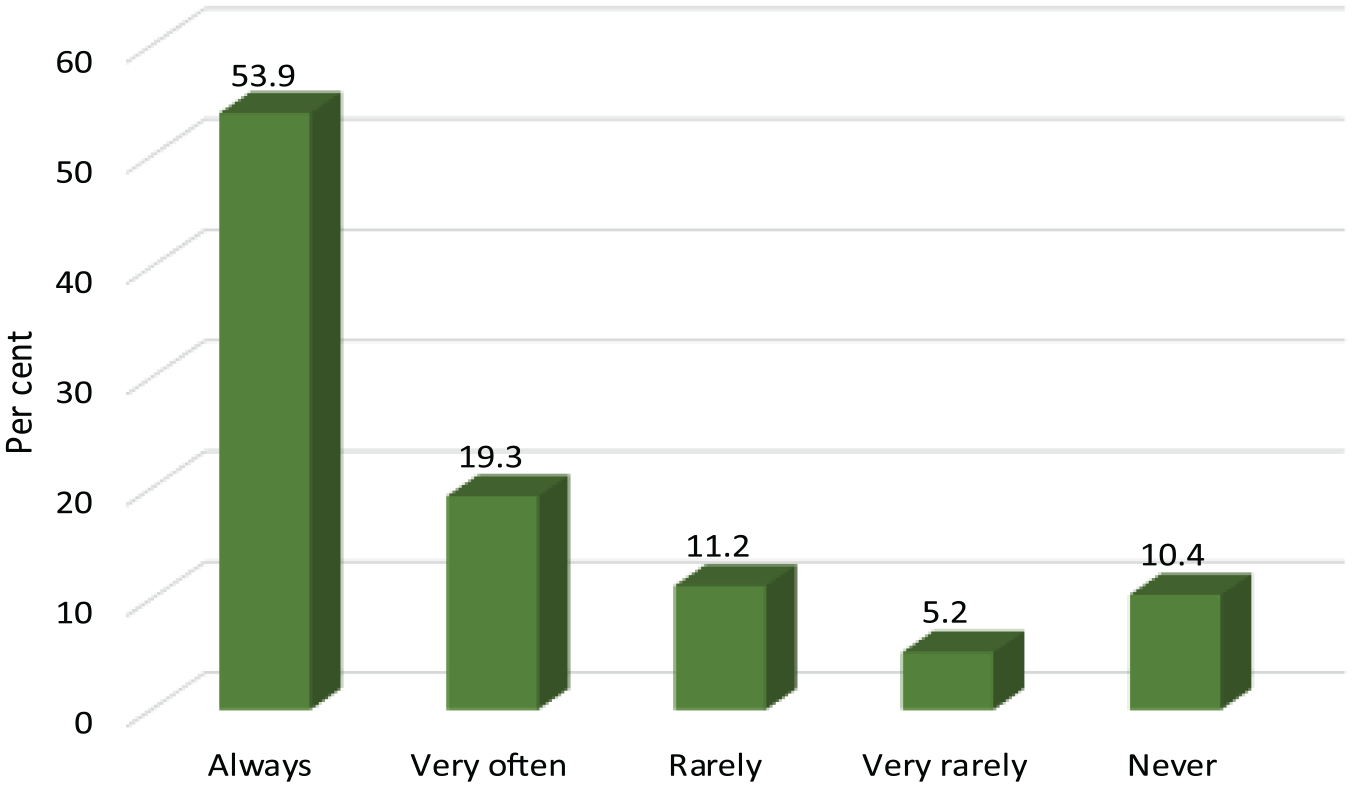
Frequency of church attendance.
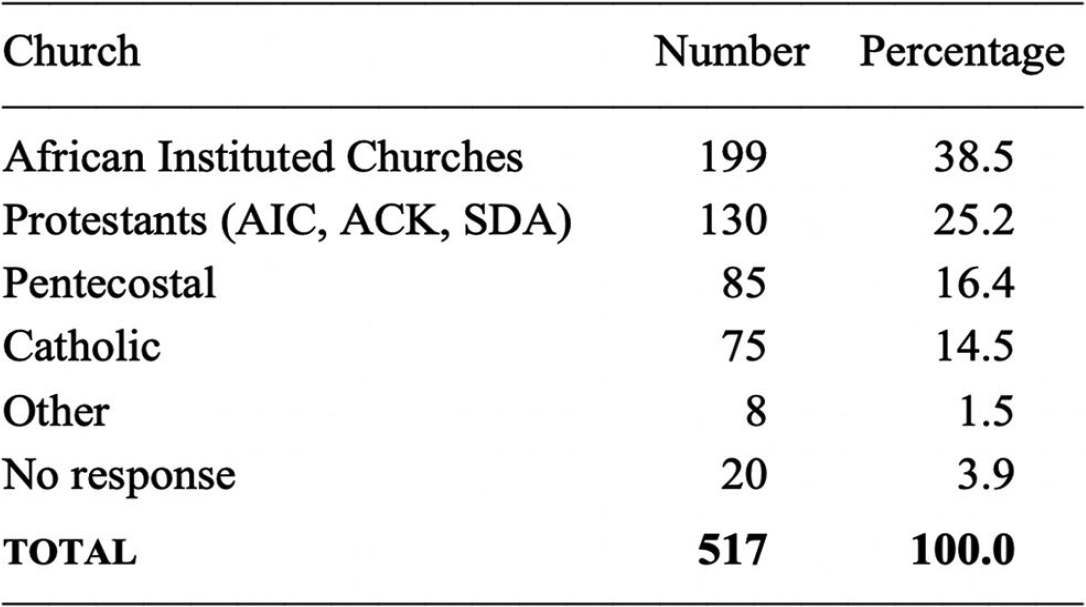
The respondents were further asked to tell what church they attended. Their responses were as shown in table 2.
Church attended by the respondents
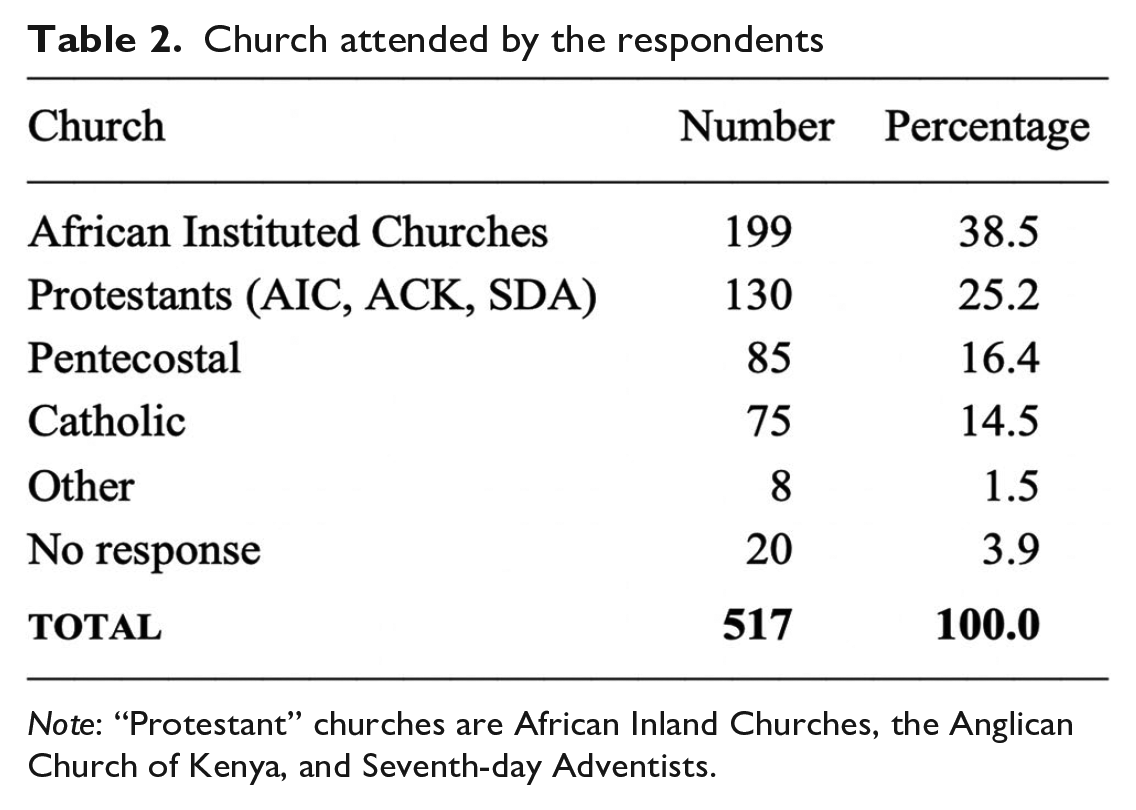
Note: “Protestant” churches are African Inland Churches, the Anglican Church of Kenya, and Seventh-day Adventists.
Frequency of faith healing among the churches
The Bible records cases of people healed through the work of Jesus Christ and faith in God. We therefore believe that the Lord is able to provide healing now for people and their loved ones. When a person is overwhelmed with health problems, the Word of God is a source of solace. Furthermore, the Bible encourages Christians not to give up. God promises greater things in store, including a future filled with promise and hope (Jer. 17:14; Jas. 5:14–15; Exod. 15:26; Isa. 41:10). This study therefore asked respondents to indicate how often their respective churches practiced some form of faith healing. According to figure 2, nearly three-fourths of the churches of the respondents always or very often practiced some kind of faith healing.
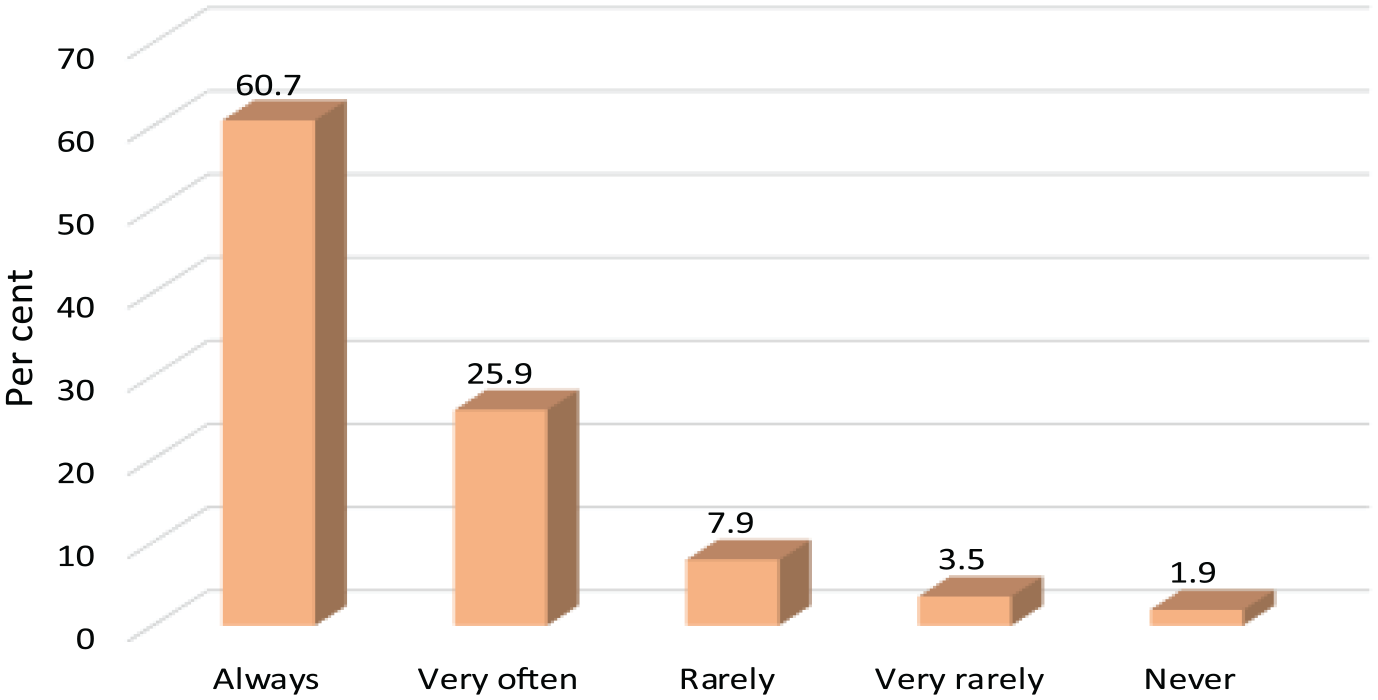
Frequency of churches practicing faith healing.
Further findings, shown in table 3, revealed that close to half of the respondents (132 out of 270) who indicated that their churches always turned to faith-healing practices attended African Instituted Churches. In contrast, 41 out of 51 respondents who indicated that their churches never used faith-healing practices attended Protestant (18), Catholic (13), or Pentecostal (10) churches.
How often the churches practice faith healing
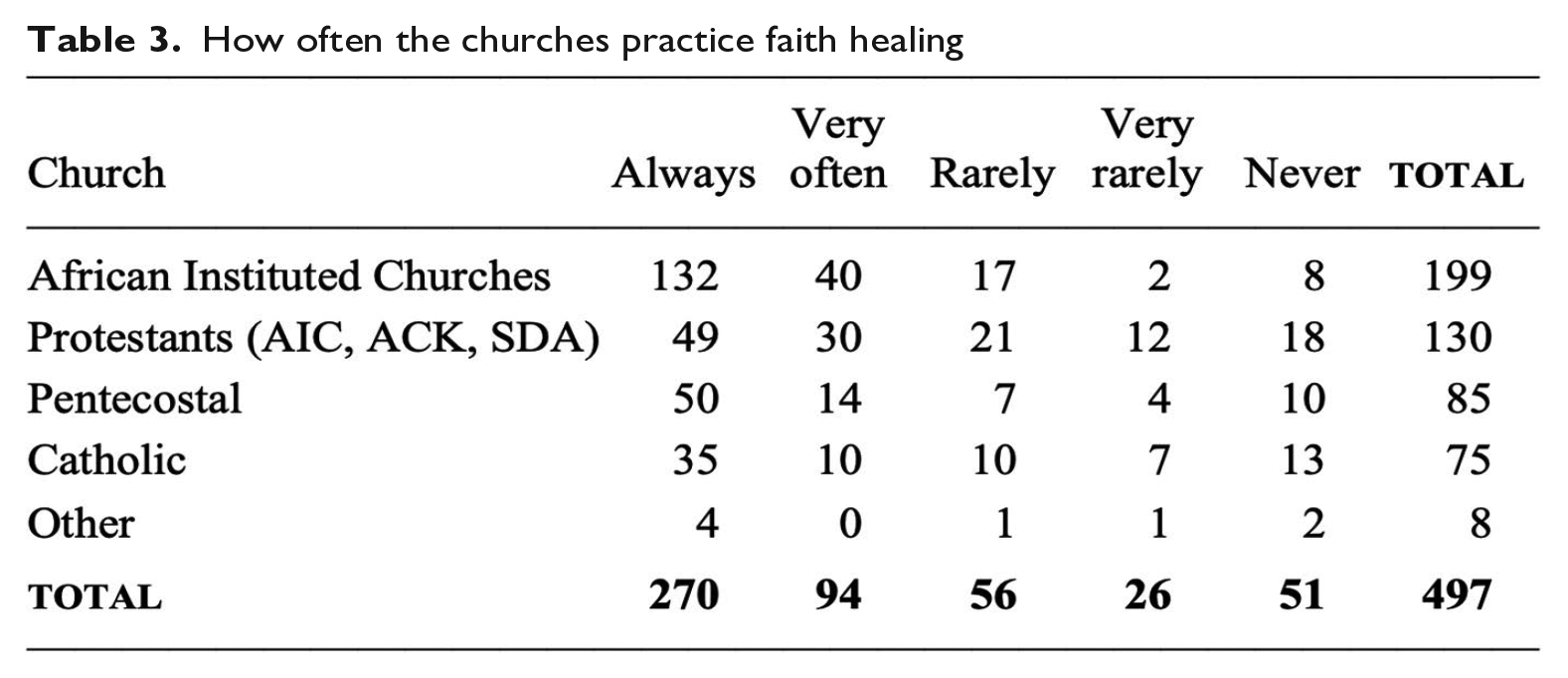

The findings above suggest that faith healing is practiced frequently in more than half of the churches in Kenya. However, it is worth noting that the study indicates that quite a number of churches in Kenya (26.8 percent) never, very rarely, and rarely practice faith healing. The findings further indicate that African Instituted Churches exercise a stronger belief in faith-healing practices than do international instituted churches such as Catholics, Protestants, and Pentecostals.
The study asked respondents what kind of treatment for an illness they would likely choose to receive. The data are presented in table 4 below.
The kind of treatment the respondents would preferably choose to begin receiving
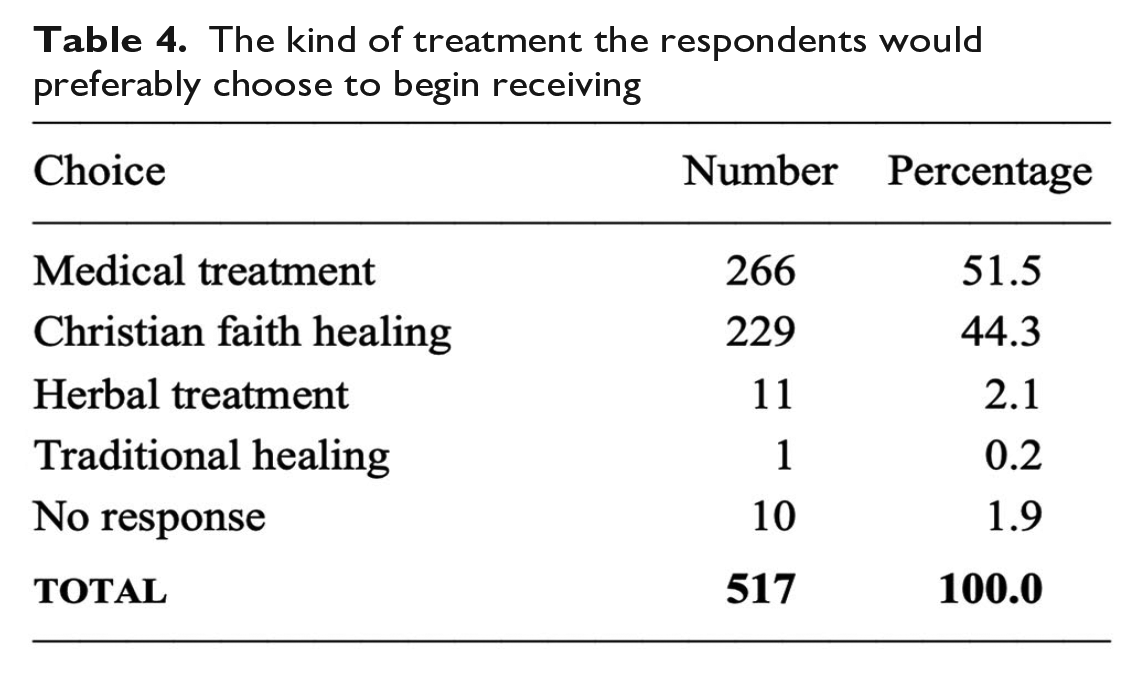
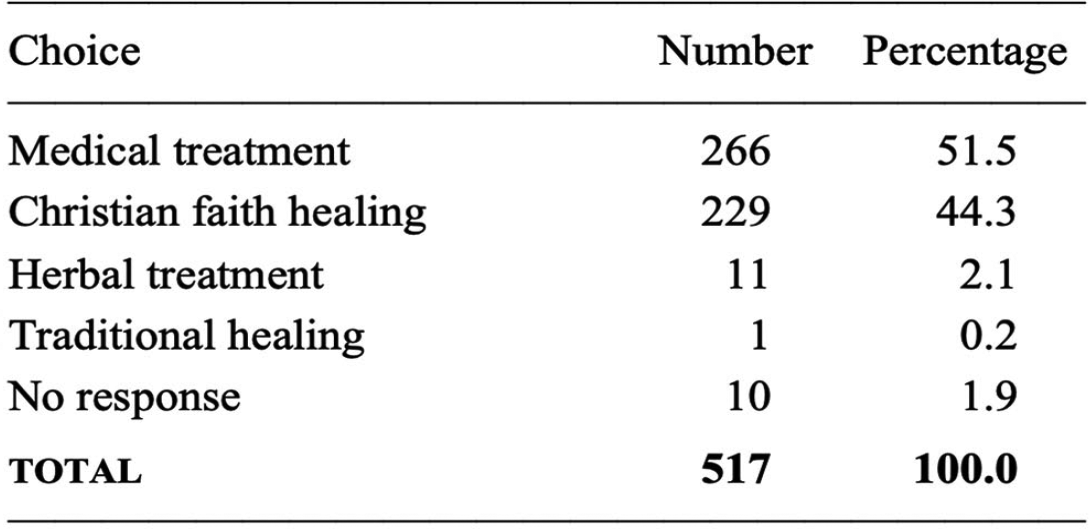
The results show that a slight majority of the respondents would start with medical treatment. Only 12 respondents (2.3 percent) would begin with herbal or other traditional means of healing.
Christians’ beliefs about the treatment of diseases through prayer and the practice of faith
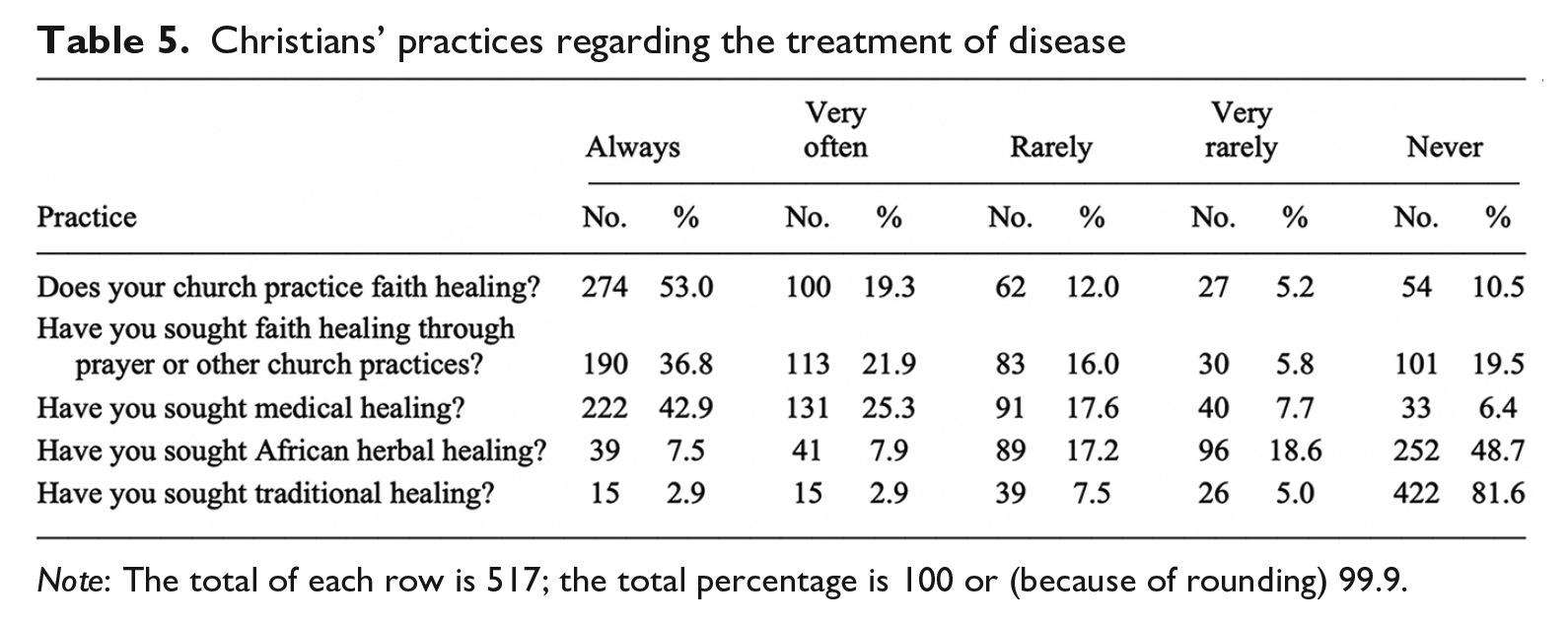
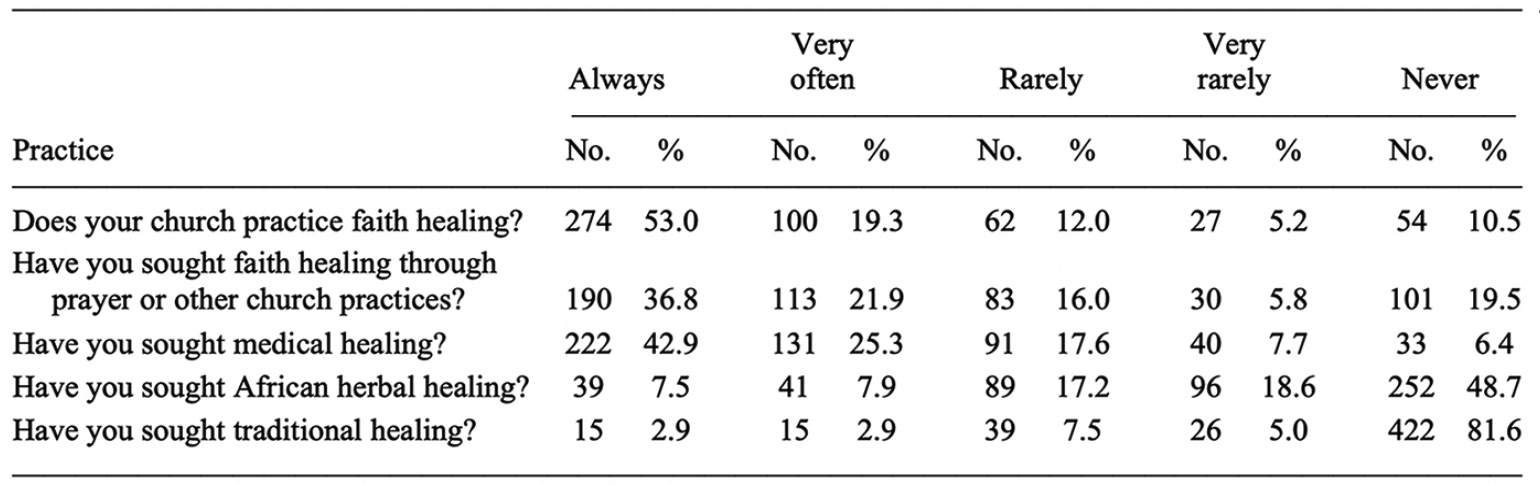
This study sought to establish the status of belief in faith-healing practices among Christians in Kenya based on prayer and faith. Therefore, six questions in relation to various types of healing were presented to respondents, three of them asking them about their knowledge and experience of faith healing, and three asking about other types of healing. Findings were as shown in table 5.
Christians’ practices regarding the treatment of disease
Note: The total of each row is 517; the total percentage is 100 or (because of rounding) 99.9.
From table 5 we see that 374 of the 517 respondents (72.3 percent) stated that their churches always or very often practiced faith healing; nearly as many (366, or 70.8 percent) stated that their pastor did likewise. Furthermore, 303 (58.6 percent) admitted that they always or very often had personally sought faith healing through prayer or other church practices. In addition, 353 (68.2 percent) agreed that they personally had always or very often sought medical healing.
With regard to the other types of healing addressed in this study, 348 out of the 517 respondents (67.3 percent) stated that they had very rarely or never sought African herbal healing. Similarly, 448 (86.7 percent) had very rarely or never sought traditional healing. The percentage of Kenyan Christians surveyed who have turned to African herbal healing or to traditional healing, at least rarely, is correspondingly low (32.7 and 13.3 percent, respectively).
In addition, the respondents were asked if they truly believed that faith healing actually takes place. A strong majority (86 percent) of the respondents said yes, they agreed that faith healing takes place; only 12 percent said that they did not believe in faith healing, while 2 percent did not give an opinion on this question.
Respondents were also asked whether they themselves had ever received healing through prayers and faith in God for relief from a difficult, stubborn health problem. The results were quite evenly divided: 48 percent said that they had received such healing; 49 percent said that they had not.
Christians’ beliefs in traditional healing practices
This study sought to establish what Kenyan Christians knew or believed about how other Christians dealt with various means of healing. To start with, respondents were asked whether they knew persons who had lied about or faked having experienced a faith healing. A large majority (77 percent) said that they knew such persons; a much smaller number (18 percent) did not know any.
Respondents were also asked to indicate whether they thought that there were Christians who visit traditional healers (mganga). Again, 77 percent said that they thought some Christians had visited traditional healers. This finding contradicts earlier findings indicating that most Christians had never or had very rarely sought African herbal or traditional healing. The discrepancy can be due to respondents in this study being asked whether they “thought” there were such Christians, as opposed to whether they “knew” such Christians. Another factor could be that Christians might wish to avoid being seen or labeling other Christians as weak in their faith by admitting that they pursue traditional healing.
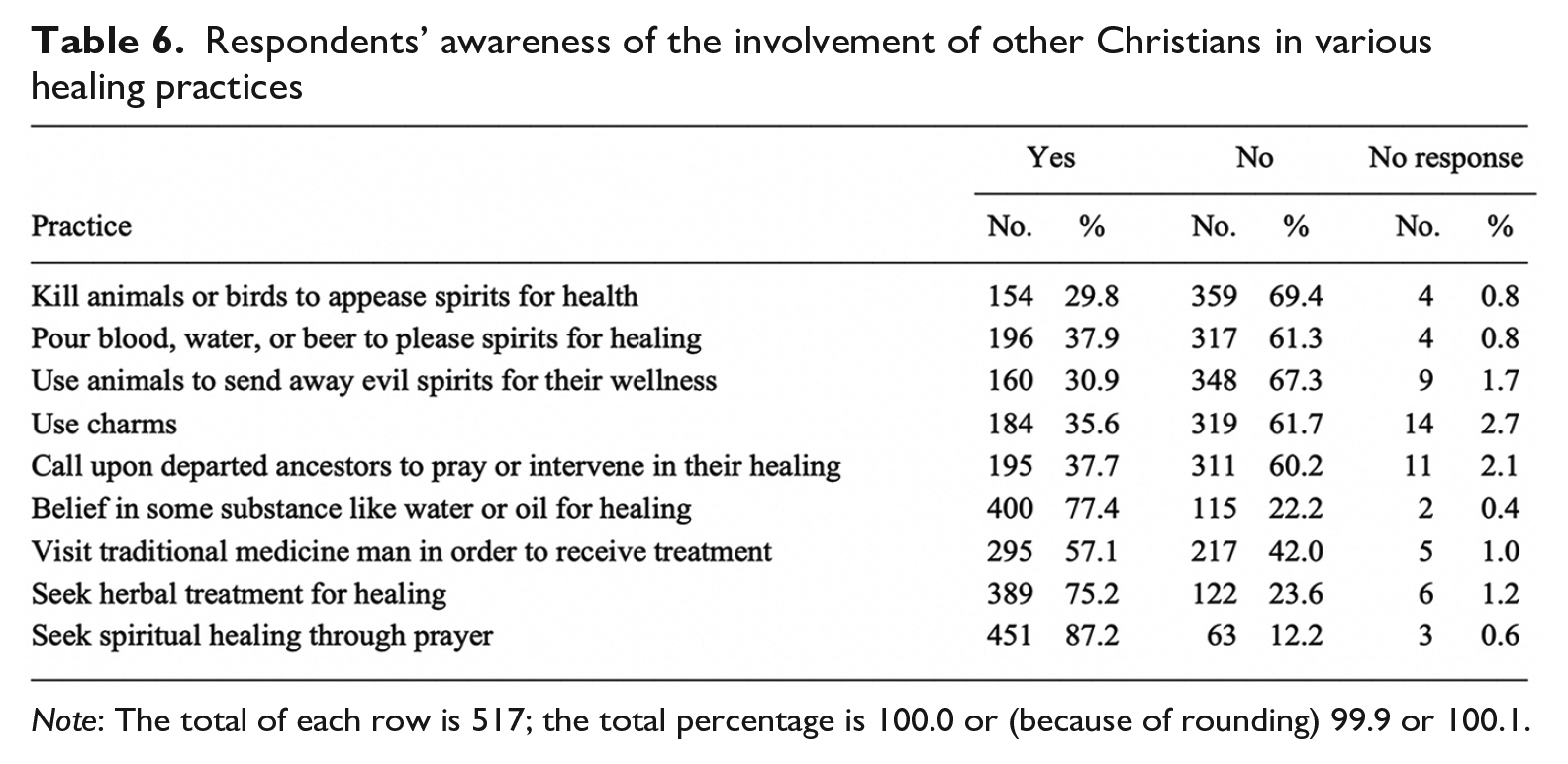
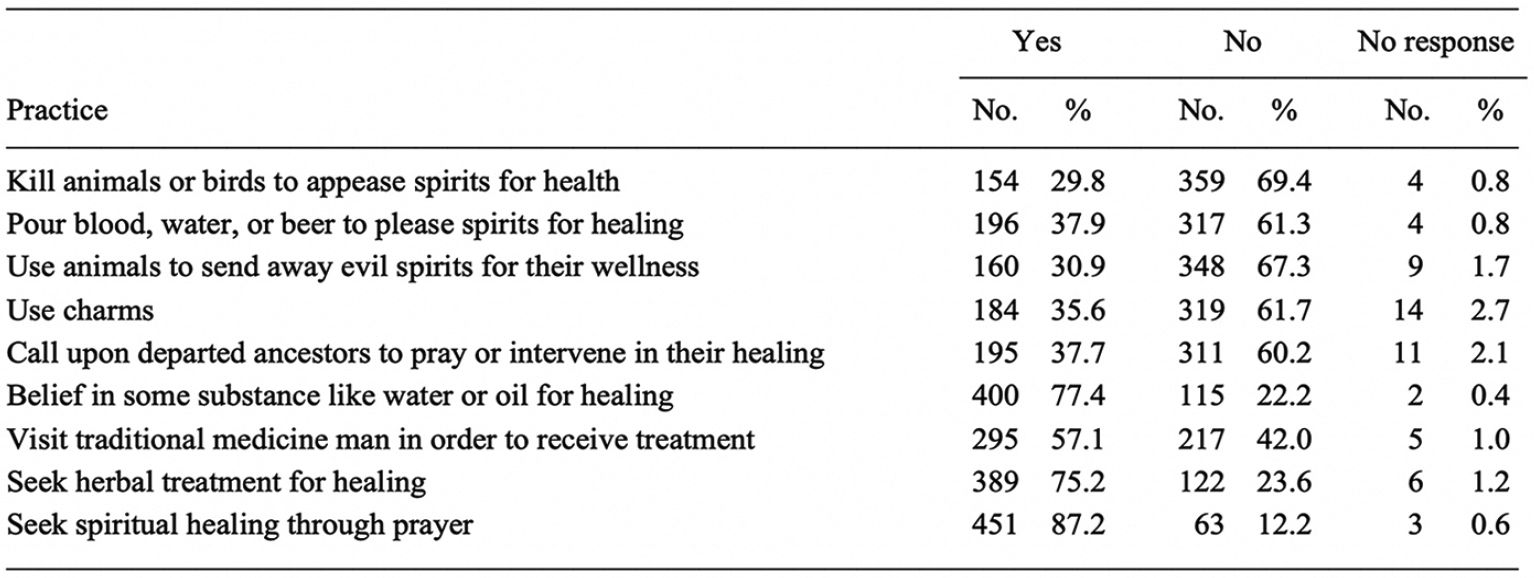
The study also sought to know whether respondents were aware of Christians having been involved in various healing practices. Yes-no questions were asked about nine specific practices. The findings appear in table 6. Most respondents (60–70 percent) said that they did not know Christians who in the past or by the time this study was conducted had been involved in five traditional healing practices. Also, a strong majority (at least 75 percent) said that they knew Christians who had used some substance like water or oil for healing, had sought herbal treatment for healing, or had sought healing through prayer. On the question of whether respondents knew Christians who had visited traditional medicine men in order to get treated, a modest majority said they did.
Respondents’ awareness of the involvement of other Christians in various healing practices
Note: The total of each row is 517; the total percentage is 100.0 or (because of rounding) 99.9 or 100.1.
Integration of biomedical healing, faith healing, and traditional healing
In the survey, the respondents were asked what type or types of healing they practice. The majority indicated that they practice more than one kind. Table 7 indicates the percentage of respondents who practice only a single type, as well as the percentage of those who practice more than one type of healing. A little over one-tenth (11.1 percent) of all respondents indicated that they practice all three kinds.
Type(s) of healing practiced by the respondents (all figures are percentages)
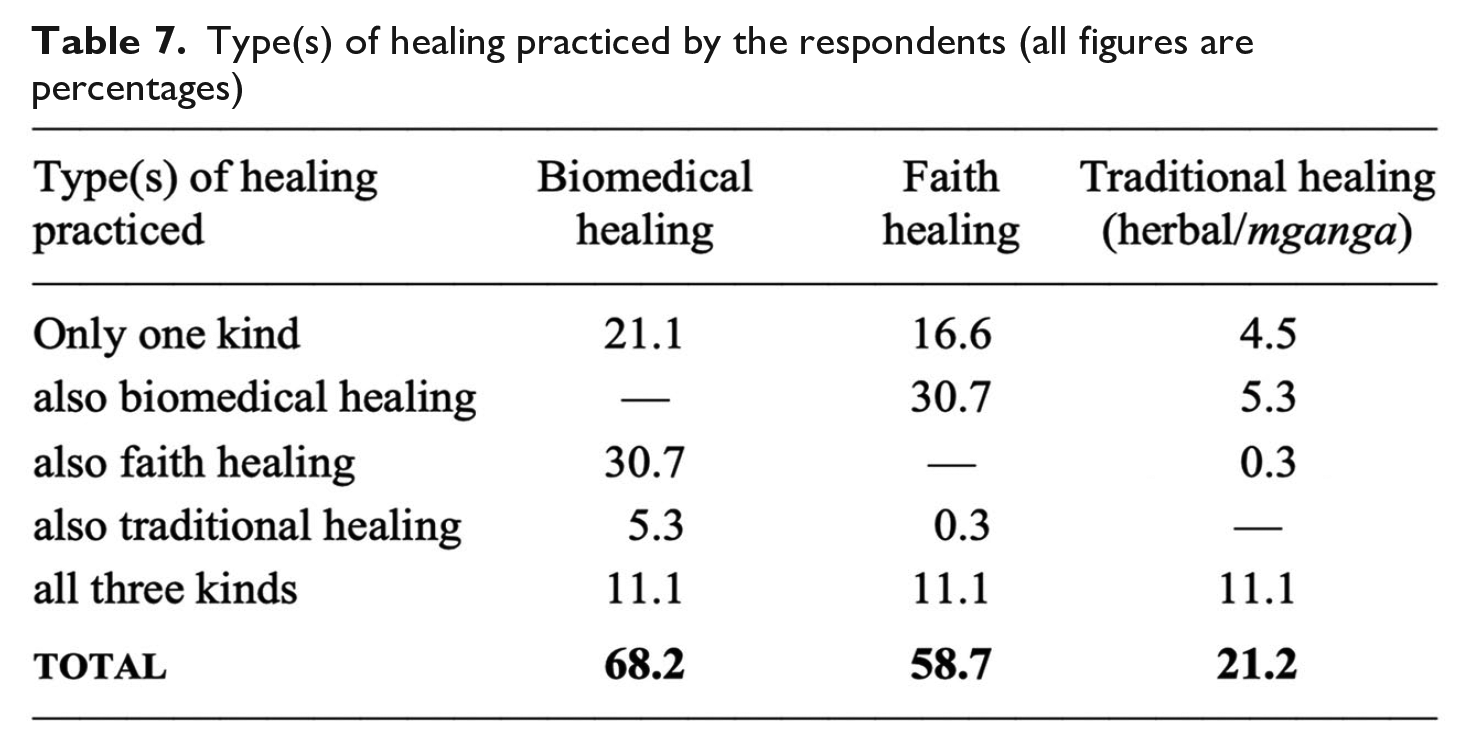
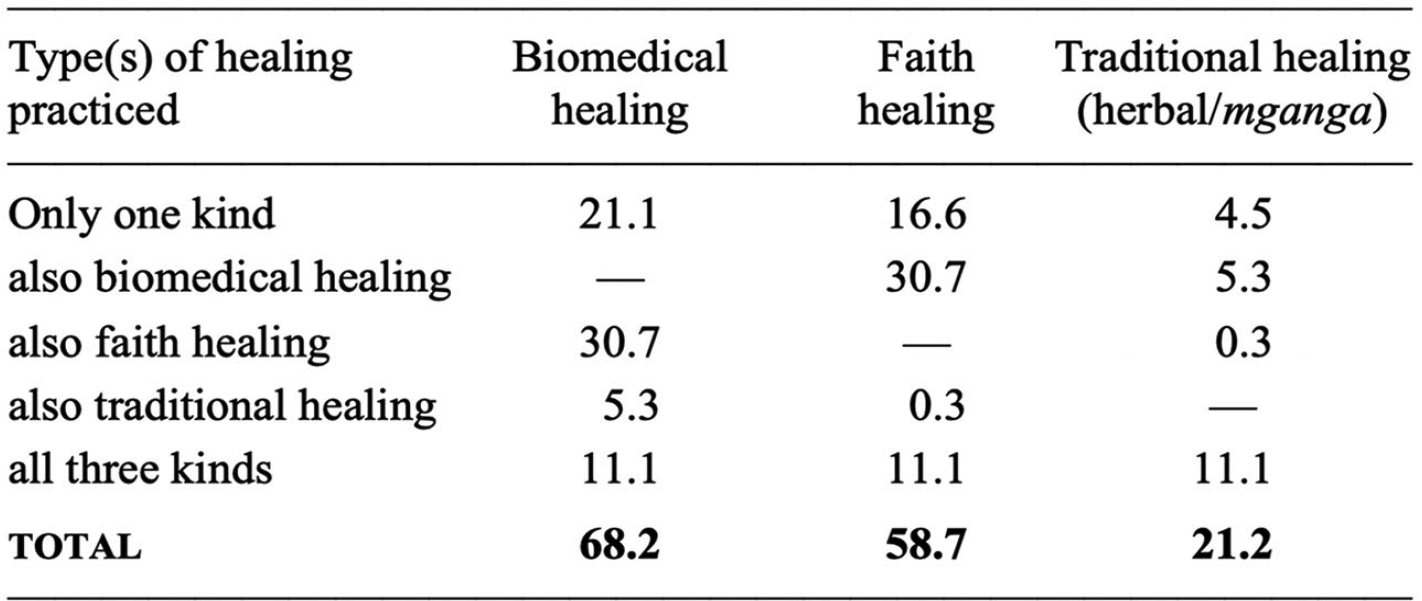
Overall, it may be somewhat surprising that not more than 68.2 percent of respondents say that they practice biomedical healing (alone or with other kinds of healing). It may also be surprising, in light of what we know about African worldviews, that only 21.2 percent of respondents admit that they practice traditional healing (alone or with the other kinds).
Conclusion and recommendations
The data show that faith healing is always or very often practiced by 73.2 percent of Christians surveyed, as shown in table 3. It remains to be seen whether this practice is demand driven from the Christians or supply driven from the clergy or Christian leaders. This is an area that warrants more research.
Furthermore, the findings indicate that, as a group, the African Instituted Churches are stronger believers in faith-healing practices than those in Catholic, Protestant, and Pentecostal churches. This finding may be due to the African heritage, where every ailment or problem is typically attributed to some spiritual cause and therefore needs some spiritual intervention.
Of all respondents, 86.0 percent believe that faith healing actually takes place. Given the percentage of African Christians who practice faith healing (73.2 percent), it means that another 12.8 percent have not practiced faith healing but nevertheless still believe in it. These facts support the overall conclusion that African Christians overwhelmingly accept faith healing.
In a previous survey of theological schools, the authors showed that the various curricula do not address faith healing. 9 The findings of this survey indicated that of the selected theological institutions in three East African countries—Kenya, Uganda, and Tanzania—none had a curriculum that included healing. The main purpose of the survey was to find out how training in theological schools in the three countries affects the attitude and practice of healing. The data in the present study, however, show that healing is of much interest to African Christians. We therefore suggest that theological schools would be well advised to expand their curricula to address all the various forms of healing.
Footnotes
Funding
The research project received a grant from the Nagel Institute for the Study of World Christianity, Calvin University, Grand Rapids, MI, USA, which was funded for the African Theological Advance initiative by the Templeton Religion Trust, Nassau, Bahamas.
Notes
Author biographies
(Left to right) Bernard Boyo, Michael Bowen, Scholastica Kariuki-Githinji, James Kombo.