



Abstract
Pushbacks have become a key feature of EU migration controls since 2015. As this article argues, practices of pushbacks stretch from EU spaces, such as Croatia, to its external borders and neighbouring countries, reaching as far as Iran. Although pushback tactics and their consequences are widely discussed in public, activist, policy debates, and by refugees themselves; academic literature has a limited engagement with pushbacks and their effects. To address this gap, we set up the concepts of “push” and “back” to question the ripple effect of informal and violent border controls that occurs transversely in multiple geopolitical contexts and timelines of migratory journeys. The article draws on ethnographic fieldwork in two border locations: the Croatian border with Bosnia-Herzegovina and the Turkey-Iran border. We argue that the EU’s governance of its external border encourages identical practices of “push” to different locations. We show that “pushes” generate multi-layered violence enmeshed in the local security (and at times militarized) contexts when people are “back”; or forcibly returned to their starting locations. The analysis of “push” and “back” contributes to the literature on the EU externalisation of migration governance and border violence, which we examine through informal and violent border practices inside and outside of the EU.
Introduction
“The border wall, beatings and pushbacks do not exist because Turkey does not want us. It is because no one wants us”, said Amir 1 from Afghanistan, seated in a small flat in Van (Kurdish region in Turkey) and recounting his and other people’s experiences of informal and violent controls. This was the cold winter of 2021, and Amir was sitting on a thin mattress. Occasionally, the lights of a police car would reflect on the windows of the flat, making everyone fall silent. Most people in the room were not registered as international protection applicants in Turkey and were unsure whether to stay or move further West. Nonetheless, they considered themselves lucky. They all managed to cross from the Iranian mountains to Turkey despite the pushbacks that had first emerged at the border in 2016, alongside the EU-Turkey Deal, and that had further intensified in the wake of Europe’s fear of a “new refugee crisis” (Aljazeera, 2021), following the Taliban’s take-over of Afghanistan in the summer 2021.
Amir’s comments speak to the argument that post-2015 migration controls are not exceptional, nor the result of a “crisis” occurring at specific borders, but rather, are violent dynamics emerging within the border regime established by the EU (Zoppi and Puleri, 2021). Existing research shows that migration discussions between European leaders and their key partners have resulted in a push towards formal deals (i.e., EU-Turkey Agreement), as well as informal ones (i.e., the Budapest Process) that extend border controls into fragmented zones of pushback and violence (De Vries and Guild, 2019). Nonetheless, far less attention is paid to analysing pushbacks across EU and non-EU borders as a result of externalization.
Most findings on pushbacks are based on research around EU borders (Isakjee et al., 2020; Koros, 2021; Noori, 2020; Schindel, 2019) and pay limited attention to “pushes” and “back” as a complete process. Current research suggests that the EU physical frontiers are particularly violent (Jones, 2016). These findings can be partially explained by more accessible research around EU borders in comparison to other locations. As the literature on the external dimension of Justice and Home Affairs suggests, border controls are similarly outsourced across EU and non-EU borders (Andersson, 2016), and in the process, generate informal and violent border deterrents (Aulsebrook et al., 2021). Concurrently, we conduct an analysis of the symbiotic process of border controls taking place along internal and external borders to understand why and how pushbacks occur and affect people across multiple geographies.
As documented by activist and advocacy organisations, pushbacks are widespread despite being illegal (Amnesty International, 2019; BVMN, 2023; UNHCR, 2019). The evidence-driven and legal perspectives on pushbacks highlight asylum refusal, followed by expulsion - a forced push over a border, often with the use of violence - which violates the principle of non-refoulmen. 2 However, we follow Mann and Keady-Tabbal (2021) who suggest that this conceptualisation is linked to refugee law, and thus obscures the ostensible violence that targets anyone attempting to cross borders without authorisation. To this end, some critical border scholars (Isakjee et al., 2020; Tazzioli & De Genova, 2020; Robertson, 2019) suggest that tough border controls are foregrounded by the notion of “irregular migration”, which is a homogeneous racialized and gendered category for diverse people who have no legal way to travel. The concept of pushbacks in this article is used to examine the transversality of informal and violent border measures that those classed as “irregular migrants” face throughout their journeys, which can last months or years and span thousands of kilometers.
The article is structured as follows: it starts by introducing the literature on EU Justice and Home Affairs externalisation and how it intersects with pushbacks. The second section outlines why the border between Croatia and Bosnia-Herzegovina 3 and the Iran-Turkey border matter in the analysis of externalised borders, and outlines methodology. The main arguments of this article are then presented in two empirical sections: one focusing on how identical practices of “push” occur across borders between Croatia and Bosnia, as well as Iran and Turkey; and the second discussing what happens to people after the “push”, when they are “back”, both in terms of the agency of non-EU states and the geopolitical diversity of their borders. This approach allows us to examine border measures that “push” people over a border, as a product of the process of EU externalisation, as well as to understand the diverse multi-layered migration controls enmeshed in local security contexts, which govern the “back” phase of pushbacks.
Externalisation of border controls and pushbacks
The past two decades have witnessed an intensification of a EU security-driven agenda that has resulted in the shift of migration governance from the realm of domestic politics to the foreign policy one. This shift has been characterised by a gradual focus on regulating and reducing mobility from non-EU citizens by reinforcing the EU external border, developing stricter border controls, externalising part of those controls to non-EU countries, and integrating migration controls into traditional foreign policy instruments (Wolff et al., 2009; Leonard and Kaunert, 2019). In the late 1990s, the EU proposed at the Tampere Summit that the most efficient way to develop its Justice and Home Affairs policies was to integrate internal security objectives into the EU’s external relations (European Council, 1999). The decision was based on the perception that insecurity mainly originated outside of the EU, and that in order to more effectively protect its infrastructure, institutions and freedom of movement for EU citizens, the EU would need, not only to reinforce its external border, but also encourage non-EU countries to adopt Justice and Home Affairs policies that would mimic those of the EU (Carrapico and Trauner, 2013). This trend has been particularly visible in the externalisation of border controls that aims to manage migration before it reaches EU borders. The EU argues it has achieved this objective by creating what it considers to be forms of refugee protection close to the country of origin and by introducing readmission and return clauses into agreements with third countries (Zaiotti R, 2018).
The external dimension of EU Justice and Home Affairs (JHA) has been widely explored in the academic literature, with theoretical approaches engaging with this area stemming from European Integration Studies, Foreign Policy Studies, Law, International Political Sociology, and Critical Security Studies (Trauner and Carrapico, 2012). The existing studies have mainly addressed the questions of how the EU’s influence is exercised beyond its borders (Wolff et al., 2009), through the use of conditionality, socialisation, and policy networks. This literature underlines that the EU’s externalisation initiatives first and foremost reflect the EU’s political and economic interests and priorities, resulting in a large range of similar instruments, which are then applied to countries with heterogeneous contexts, with vastly differing results (Lavenex et al., 2010).
Pre-Enlargement relations with Central and Eastern European countries enabled the EU to understand its capacity for influence through soft law instruments (including Partnership and Cooperation Agreements). The relationship with Turkey, following its acceptance as an EU candidate in 1999, was instrumental in the development of the EU external strategy. The nature of JHA relations with partner countries, however, has varied considerably from conditionality-based to socialisation-based, with acceding countries required to integrate the EU acquis into their national legislation as a necessary condition for accession, and neighbouring countries and beyond being asked to sign up to cooperation agreements based on mutual interest (Pastore, 2002).
Specifically in the field of migration, the EU has developed, over the past 20 years, an extensive network of bilateral and multilateral political, legal and financial instruments aimed at supporting the management of migration through cooperation with partner states. This growing strategy known in 2005 as the Global Approach to Migration and Mobility (GAMM) is a key element of the external migration policies (Carrera et al., 2019) and aims to strike what the European Council (2005) sees as a balanced approach between addressing “irregular migration” and promoting the mobility of those individuals considered economically valuable. However, Parkes (2009) and Reslow (2015) suggest that most of the initiatives focus on restricting the circulation of individuals from non-EU countries into the EU. Among other issues is the unequal cooperation: mobility partnerships are primarily driven by EU migration interests (Andersson & Keen, 2019).
These dynamics and issues of external partnerships became even more reinforced during what the EU designates as the 2015- 2016 “refugee crisis”, presented as both an endogenous and an exogenous crisis (Ripoll Servent, 2019). From an endogenous perspective, the EU was framed as incapable of responding to large population influxes due to limited infrastructure, unable to collectively reach an agreement about how to reform the Common European Asylum System, and unwilling to act in solidarity with those MS located at the external border and that were disproportionately affected by the migrant and refugee movements. From an exogenous perspective, the “crisis” was presented as being the result of external factors, such as conflicts in Syria, Libya, Afghanistan, Iraq, and Eritrea (Zaragoza-Cristiani, 2015), and people fleeing were framed as a “wave” or “flood” which the EU needs to protect itself from (von Der Leyen, 2020).
Migration was also attributed to an increased activity of organised crime groups involved in migrant smuggling (Vaughan-Williams, 2015). The representation of the 2015-2016 migrant and refugee movement as both a political, societal, and economic crisis, and as an event the EU was not responsible for, further reinforced the framing of displaced people as potential security threats, as “irregular”, “unwelcome”, and “undeserving of assistance”, but also, at the same time, as victims of smugglers whose deaths the EU needs to pre-empt (Vaughan-Williams, 2015). The mainstreaming of this narrative allowed for further emphasis to be put on the externalization of border controls: (1) the increased militarisation of non-EU borders (Campesi, 2018); (2) further reliance on surveillance technology (Jumbert et al., 2022); (3) the re-orientation of search and rescue operations towards anti-smuggling missions (Johansen, 2017); (4) an increased focus on return and readmission for those individuals not deemed to qualify as asylum seekers (Cassarino, 2018); and (5) informal partnerships with Afghanistan, Bangladesh, Ethiopia, Guinea, Gambia and the Ivory Coast (Carrera and Stefan, 2020; Kassoti and Idriz, 2022; Kaya, 2020).
Pushbacks in the context of border externalisation
It is in the context of the EU’s “crisis” narrative, securitisation of displaced people and the resulting five counter-migration policy trends, that pushback practices arise. As shown above, there is a rich multidisciplinary literature that analyses the EU’s efforts to export its migration norms and priorities beyond its borders, and that reflects on the effectiveness of these initiatives. In particular, emphasis is put on the fact that the instruments within the external dimension of JHA transfer the responsibility for migration control to partner countries through a mix of conditionality and socialisation processes.
Research suggests that border controls are not in line with formal external agreements and have harmful consequences (Faist, 2018) that prevent displaced people from arriving in Europe (Weber and Pickering, 2011). Pushbacks are analysed as one of the tools of border deterrents (Schindel, 2019), alongside the construction of physical border fences, the deployment of high-tech surveillance (Sadik and Kaya, 2021), the enforcement of restricted migration laws (Menjivar & Abrego, 2012), and the use of dangerous geography to harm people (Schindel, 2019). However, other scholars (Tazzioli & De Genova, 2020; Tazzioli and Stierl, 2021) suggest that border controls reinforce each other when migrants are kidnapped, seized, confined, detained and contained. Pushbacks are therefore more than “just” border patrols turning people away from their territories (Tisdell and Regmi, 2000). Rather, pushbacks combine diverse strategies of controls that share the objective of excluding “irregular migrants” from the EU.
The literature on pushbacks, can be dated back to Italy’s pushbacks of Albanian migrants in the 1990s; it often focuses on EU borders (Tisdell and Regmi, 2000), and discusses diverse practices of border controls that are specific to the geography of each border. In the maritime context, Schmalz (2022) discusses ‘drift-backs’, which refer to coast guard interceptions of migrants, causing them to drift back to waters on the other side of the border in boats often without fuel (i.e., the Aegean Sea). Chambers (2015), for instance, highlights ‘turn arounds’ and ‘tow backs’ of migrant boats, which are specific to water operational border security. Pushbacks and violence at sea therefore happen both through active participation of coastguards - such as in Greece – as well as through a more indirect reliance of authorities on the ‘natural’ hazards of open seas (Schindel, 2019).
Scholars including Isakjee et al., (2020) and Beznec and Kurnik (2020) draw attention to the use of direct force at land borders – physically pushing migrants back over a border line. As Isakjee et al. (2020, p 2) argue, “fists and batons against flesh and bone” function as the main border deterrents along land borders of the EU. Moreover, Davies et al. (2022) point out, the attempts of pushback survivors to publicise their experiences, are denied, trivialised or ignored by state authorities, thus constituting epistemic border-work of pushbacks, in addition to physical violence. Pushbacks at land borders and drift backs, tow backs and turnarounds at sea, may differ at times in their practices and use of human and non-human agents; however, they are all a part of the same exclusionary and violent border enforcement.
The practices of pushbacks correlate directly with migration externalisation. As Cortinovis (2021), Koros (2021), and Sardo (2021) suggest, pushbacks are directly linked to the policy and legal framework that has been shaped by EU-non-EU collaboration on migrant controls. These include the EU-driven “closure” of the “Balkan Route”, as well as the 2016 EU-Turkey Agreement (Aulsebrook et al., 2021). Although the EU is not always directly involved in actions along external borders, it orchestrates border controls there via ‘assistance’, ‘endorsement’, ‘convening’ and ‘coordination’ that allow European policy makers to govern external borders indirectly (Muller & Slominski, 2021, p 803). This governance results in severe human rights violations (Cortinovis, 2021; Sardo, 2021; Stanford and Borelli, 2014). The EU, however, evades responsibility as externalisation also offshores the blame for human rights violations to third states (Lemberg-Pedersen, 2019).
Despite growing evidence that externalisation and pushbacks are interconnected, externalisation as a theoretical approach has been side-lined in analysing pushbacks in a comprehensive way. Specifically, there is little knowledge on how and why identical tactics of pushbacks are implemented across EU and non-EU borders. Moreover, most literature on border violence and externalisation places the EU as a normative power at the centre of its analysis. Such an approach follows the same logic as externalisation, which de-centres the role of the EU’s external partners in border controls. This is a significant research gap given that many (Cuttitta, 2020; Karadağ, 2019; Léonard and Kaunert, 2021) argue that non-EU countries actively shape external border governance, and intervene in pushbacks.
Externalisation has therefore much to reveal about pushbacks when focused on how the international and the national overlap in border controls. Before we turn to these points, the following section will discuss why the Bosnian-Croatian border and the Iran-Turkey border present rich case studies for the pushback and externalisation analysis, as well as describe our methodological approach.
Case studies selection and methodology
To understand pushbacks and examine the range and variation of practices they entail, we use the Croatian-Bosnian border and the Iran-Turkey border as case studies. Although these borders are embedded within different geopolitical contexts, they both feature EU migration interventions (Andersson, 2016); both are seen as geostrategic locations of migratory transit and, therefore, as key EU locations for migration collaboration (Bobić and Šantić, 2020; Dimitriadi et al., 2018).
The European Commission has developed external efforts to control borders that mark migration land route from Iran to the EU (Croatia). Croatia received EUR 32.55 million in financial aid from the European Commission to reinforce border controls along its border with Bosnia-Herzegovina in 2018, in addition to EUR 68.94 million it receives in the context of the Internal Security Fund (European Commission, 2021a). Following the same trend, EU policy makers also focused on migration controls in Turkey (Çetіn, 2020). This includes supplying Eastern Turkey with surveillance vehicles and masts, thermal cameras, hardware and software, border training (i.e., through Pre-Accession-Assistance), as well as funds to build removal centres (i.e., EU-Turkey Agreement) and a border wall with watchtowers (Augustova, 2021).
What further connects our case studies is the Euro-centric imagining of both spaces as inherently unstable or violent due to their histories or/and presence of armed conflicts (see e.g. El-Shaarawi and Razsa, 2019; Bird et al., 2020). The Bosnian-Croatian border was a key site of violence and displacement during the Yugoslav Wars in the 1990s. The wars were used to reinforce the external perceptions and racialised discourse of the “Balkans” and later, the “Balkan Route”, as inherently violent (Bird et al., 2020; El-Shaarawi and Razsa, 2019; Hatzopoulos, 2003). Importantly, pushbacks were also used against civilians during the 1992-1995 war, thus showing that pushbacks as a practice have long-standing historical precedents in the region and beyond. In the 1990s, the Croatian army pushed civilians back into Bosnia-Herzegovina, as they were trying to escape the conflict, and soldiers did not hesitate to shoot those who resisted (Lischer, 1999).
South-eastern Kurdish region of Turkey is a site of conflict between Turkey’s security forces and the Kurdistan Workers Party (PKK) (1980s – today). Tough border controls have been used by the Turkish state to prevent the movement of PKK members (Aksel and Danis, 2013). Such contexts feed into narratives and imaginings of places as ‘chaotic’ and violent and thus necessitating EU interventions (Bird et al., 2020). As we discuss below, international and national contexts of these borders foreground how informal and violent border controls are outsourced to different borders, although such practices fail to be understood as connected to European migration controls due to the “brutality as usual” associated with these locations.
This article draws on ethnographic multi-sited fieldwork that took place at the Bosnian-Croatia border between 2018 and 2019, and at Turkey’s Eastern border with Iran in 2020 and 2021. Fieldwork in Bosnia-Herzegovina was a part of 8 months of scholar activism, including volunteering in makeshift refugee camps and being involved in the Border Violence Monitoring Network. Fieldwork in Turkey was carried out across a number of repeat trips from Istanbul to the border, for security reasons. The research at these borders resulted in the collection of 133 semi-structured interviews, mainly with displaced people who navigated pushbacks, as well as with NGOs and state authorities.
At the Iran-Turkey border, we talked to people fleeing Afghanistan, Pakistan, Iran, Bangladesh and Syria. We interviewed people from the same countries at the Bosnian-Croatian border, as well as people from Palestine, Algeria and Morocco, who also navigated pushbacks trying to enter EU territory. We talked about their attempts to cross the borders and how these attempts were prevented through pushbacks. We spoke with EU officials, border police, NGOs and volunteers about specific tools of externalisation deployed at the borders and how they were used by local state authorities to deter people’s movement. The interviews were conducted in English or in respondents’ languages (i.e., Pashto, Urdu, Arabic, Turkish) and translated to English by participants’ family relatives, paid interpreters, and research interns.
Externalising identical “Push” practices
The Bosnian-Croatian border
The Croatian-Bosnian border marks one of the entry points to the EU and the near end of people’s intended journeys. Various routes across Bosnia-Herzegovina have historically been used as the transitory point for migration and smuggling to Western and Northern Europe (Jovanović, 2018), shaped by broader global economic and geopolitical contexts (Hozic, 2004). In 2018, larger numbers of people started arriving at this border, in search for an alternative passage after having been stuck in transit for months or years in Greece and Serbia, or in order to find alternative crossing points after existing regional routes became more dangerous and violent. However, in July 2018, soon after the Northern Bosnian border became known as the ‘newest’ branch of the ‘Balkan Route’, the neighbouring EU country, Croatia, received funds for border surveillance including watchtowers, thermal vision cameras, drones, and helicopters to assist Croatia with ‘interception operations’ (Isakjee et al., 2020). Border management technology acquired with support of EU funds has thus been the context against which informal and violent pushbacks of refugees from Croatia reemerged, having been previously seen during the 1990s Yugoslav wars (Lischer, 1999).
At the makeshift camp in Trnovi in Bosnia, near the Croatian border, people lined up every morning to use the improvised showers set up by volunteers. The camp served as a makeshift shelter for people who had been pushed back whilst attempting to cross the Bosnian border to Croatia. Many of them had dirty or torn clothes after walking for days or weeks in the forest and mountains to reach the camp. In the queue for the camp’s improvised washing facilities, some people struggled to stand up due to injuries inflicted during the “push” by Croatian patrols the previous night. Some had black eyes and visible bruises, open bleeding wounds, and fractured or broken bones from attacks by border police. One of them was Abdullah from Syria, who was cleaning his scratched face after being pushed down a hill by the Croatian police the previous night. “I rest and sleep and in 2 days, again to Croatia!”, Abdullah said. His experience shows how people attempt border crossings continually and navigate “pushes” for weeks, months or years, whilst avoiding detection by border patrols and succeeding. On a different day, a man from Palestine, Saad, said that he struggled to stand up and kept falling. “Croatian police kicked me in the chest [during the push] … I keep vomiting blood. Maybe, I have internal bleeding from so many kicks”, explained Saad. While Saad was treated by medical volunteers, his friend Mahmout, who had been pushed with him the previous night, explained that he feared further attacks, but was going to have a rest for a few days before trying to cross the border again. According to Mahmout, “it is worth risking beatings and pushbacks
4
because otherwise, I could not reach my destination”. Dozens of people were recounting the “pushes” weekly. These individuals and groups said that they could often hear drones or helicopters before their interception by border patrols who verbally assaulted them, physically attacked them with batons, kicks, punches, shot around them with guns, and damaged their phones and stole their money. Phones with broken screens were a more common sight than functional ones in makeshift camps (viz. Figure 1). One of the people interviewed in a Bosnian camp was Ali, a twenty-year-old man from Afghanistan. Ali said that he had walked for almost a week to Croatia with a group of 18 people but the group was detected by the Croatian police, transported to the Bosnian border, and pushed: They [border patrols] asked who has money and who has phones. All boys gave them telephones and money … When we were being deported at the border, I said, “give me my mobile and give me my money back”. He [police] said, “No, go!”. The police told three people to come out of the car. We came outside and they created a circle and we were in the middle and they were beating us. And after it finished, another three persons. They were beating us outside of the car, three by three. They had very bad behaviour, telling us: “Go! Fuck you!”. Damaged phone by border police in Croatia (Photo by Karolina Augustova).
The above narrative provides an insight into border controls that people navigate as their move to Croatia is often punctuated by “pushes” to Bosnia. Our eight month-long observations, coupled with 65 interviews with people stranded in Bosnia, suggest that “push”-based strategies were used as migration controls daily at the Bosnian-Croatian border. While Frontex (2022) suggests that more than 60,500 people were detected when illegally crossing the “Balkan Route” to the EU, there is no publicly available information on what happens to them afterwards. Pushbacks have been generally denied by Croatian state authorities, although the former Croatian President Kolinda Grabar-Kitarovic asserted during an interview (in Kreizer, 2019) that “of course, a little bit of force is needed when doing pushbacks”.
Migration control in Croatia has been driven by the broader pattern of EU externalisation. As Andrej Plenkovic, Prime Minister of Croatia (in Miner, 2019), pointed out: “we can only praise police efforts for guarding not only the Croatian border but also guarding the border of the EU”. Yet, the comments by Ali, Abdullah, Saad and Mahmout, among dozens of others interviewed, demonstrate that efforts for guarding borders rely on violent ‘pushes’ that emerge alongside externalisation processes. However, partner states are not passive recipients of externalisation policies (Karadağ, 2019), as they undertake the push-controls in exchange for material and political incentives. Croatia is set to become the newest member of the Schengen Area for fulfilling the “highest standards” of police behaviour at the EU’s external borders (Miner, 2019). The Croatian border controls that are securing the external border with Bosnia are, therefore, supported by the EU’s efforts to synchronise border controls across member states, but enforced by the state’s authorities.
The Iran-Turkey border
Almost three thousand kilometres away from the Croatian-Bosnian border lies Turkey’s Eastern border with Iran, where many of those seeking to use the “Balkan Route” begin their journeys. While sitting in a shisha bar in Van, a city near the Iran-Turkey border, Musa (from Afghanistans) was trying to count on his fingers how many times his older brother tried to enter Turkey but was “pushed” over the border by Turkey’s border patrols, the Gendarmerie General Command and the National Police. This was August 2021, and many people from Afghanistan were trying to enter Turkey - after the Taliban had taken control of Afghanistan - while navigating various measures against “irregular migration”. Musa said that he was lucky to have arrived in Turkey before the EU-Turkey Agreement was enforced in 2016. According to Musa, at the time of his arrival, Turkey’s border patrols did not consider non-Kurdish border crossers as “criminals”: they were rarely targeted through the use of surveillance, and the border had not yet been divided by the EU-funded concrete wall. Currently, however, Afghans, among other nationals who travel to the Iran-Turkey border, encounter more physical obstacles and informal violent deterrents, as Musa explained: My brother is now in Iran and keeps trying to cross the border to Turkey. But it is so difficult now. The Turkish Army keeps shooting around people and beating them if they want to cross [from Iran to Turkey]. This was not the case six years ago [when I arrived]. … My brother tried to cross the border six times, but always, he was beaten and pushed back by the Turkish Army to Iran.
As Musa pointed out, people, including himself, used to transit from Iran to Turkey with fewer restrictions. The mountainous terrain between Iran and Turkey has historically been a transit point for people fleeing conflicts in the region since the 1980s (i.e., the Iran-Iraq War, the Afghan-Soviet War, the Gulf War) (Çetіn, 2020, Icduygu, 2020), but push-controls had been absent until the externalisation agreement in 2016. This development also came up in the interview with Raja (Pakistani) who had crossed the border in 2015 and said that then, “it was safe to cross to Turkey. But I keep hearing many stories about pushbacks now, including my cousin who was pushed a few months ago”. Informal and violent border measures therefore came into force after the intensification of the EU-Turkey migration negotiations that aimed to prevent migration across Turkey to the West, and the EU specifically.
The patterns of “pushes” in Turkey do not differ from those encountered at the Bosnian-Croatian border. Verbal assaults, physical attacks, shootings, damage or/and theft of people’s private possessions (phones and money) carried out by Turkey’s border patrols were ubiquitous in the interviews conducted with people. These included an Afghan family with four children who said that they were detected by the Gendarmerie General Command (Jandarma in Turkish) when they arrived at the newly constructed border wall in the summer of 2021. “They [Jandarma] were running towards us and started beating all the men. They took our phones and shouted at us to go back to Iran and never come back to Turkey”, Jansher, the father of the family, recounted in Van. During their third attempt, the family managed to find a section of the wall that was not completed yet, avoid detection by state authorities, and arrive in Van.
The above interviews offer only a small glimpse into the recent reinforcement of the Iran-Turkey border through “push” practices. According to the data compiled by the Turkish Government (in Varol, 2021), “Turkish security forces prevented more than 120.000 irregular migrants from entering the country through the border with Iran in 2021”. During the interview with a member of Jandarma, we learned that “pushes” over Turkish borders were prioritised as a form of migration control due to the delegation of formal responsibilities over migration from the EU to Turkey. “Push” practices intensified further after the summer of 2021, when deportations from Turkey to Afghanistan were halted due to security reasons. Interviewed NGO workers explained that “pushbacks were called into action in Eastern Turkey to stop Afghan migration amid the fear of a “new migration crisis” in Turkey and Europe”.
The interviews with Musa, Raja and Jansher, among others, highlight that formally negotiated controls from the EU to Turkey encourage border surveillance targeting all those classed as “irregular migrants”. Yet, border patrols use this negotiated border architecture to enact informal and violent controls, pushing people further away from Turkey and the EU border. As Mehmet Emin Bilmez, governor of the Van Province, also explained when commenting on the border enforcement (Stamouli/Politico Stamouli, 2022): “Europe’s security problem doesn’t start with Greece and Bulgaria, it starts from here [the Iran-Turkey border].”
The encounters with “pushes” from Turkey to Iran are therefore identical to those observed at the Bosnian-Croatian border. Tactics including beatings and destruction of people’s phones constitute the main “strategy of non-arrival” (Weber and Pickering, 2011) along borders marking the land migratory route from Iran to Croatia. The same fear of being constantly subjected to this violence accompanied people from the moment they embarked on their journey in Iran all the way until they entered the EU in Croatia, and beyond.
The near-identical push practices and physical marks on migrant bodies at multiple land borders are not coincidental. Pushes are constituted through and practiced within externalised border policies that share a common objective - to keep migrants outside of the EU – and rely on broadly similar instruments of externalised support (Lavenex et al., 2010). The EU’s political, legal and financial instruments create a context in which various states implement border enforcement policies which mirror the practices of EU’s own border controls (Carrapico and Trauner, 2013).The EU’s assistance offers material support and disseminates approaches of border control through socialisation (Lavenex et al., 2010), which include “push”-controls. This EU-driven assistance constitutes “externalisation through orchestration” (Muller & Slominski, 2021, p 813), which, we argue, leads to a ripple effect of informal and violent controls of “push” across internal and external EU borders and their neighbourhood. Croatia’s and Turkey’s deployment of “pushes” therefore draws on the post-1990s JHA policies and the 2015-2016 crisis controls that integrate internal security objectives to halt “irregular migration”. By referring to ripple effect, we suggest that externalisation creates the impetus for push practices to spread at land borders, where nature alone fails to act as migration deterrent (Schindel, 2019).
This ripple effect of “pushes” - as used by state authorities at multiple borders and at different times of the migratory journey - foregrounds what Tazzioli and De Genova (2020, p 870) call the “transversality of bordering tactics and technologies”. In the border contexts discussed here, the “push” is transversal in terms of the informal and violent nature of border controls that are homogeneously outsourced to the EU’s internal and external borders. However, we cannot forget that people are “pushed” “back” to a specific location. While migration externalisation often ignores the local context of each border (Andersson & Keen, 2019), domestic dynamics determine the continuing process of whether and how people’s movement is controlled further, as we examine next.
Being forced “back”
Having argued that externalisation creates a ripple effect of near-identical informal and violent border controls across multiple locations, we next examine the consequences of the “push” for when people are “back”. As Karadağ (2019), Léonard & Kaunert (2021) and Raineri and Strazzari (2019) argue, non-EU states participate actively in externalisation. EU border management funds and practices within a country intersect with local political and financial interests and shapes how the externalisation is put into practice (Bird et al., 2020). Moreover, externalised migration controls also instrumentalise the physical environment (Schindel, 2019). With this in mind, we now examine the process of “push” and “back” in its entirety, as it is engendered by European-driven externalisation efforts and local geopolitics of each border.
The land border in Northern Bosnia consists of a hilly landscape bisected by the river Glina that produces additional naturally created border controls (Schindel, 2019). As people suggested in their interviews, Croatian border patrols commonly stole their clothes and shoes when pushing them, sometimes into the river. As a result, they had to walk for hours barefoot and underdressed in the snow when being “back” in Bosnia. Others recounted being lost in Bosnian forests during the night after the push, and spending “hours searching for injured friends in darkness”, as Hameed from Palestine suggested.
Once “back” in Bosnia-Herzegovina, the legacies of the former Yugoslav conflicts continue to shape the living conditions of people pushed at the Croatian border. For instance, the border area is marked by live landmine fields that have not been cleared since the wars (viz. Figure 2). Further, the economic and sociopolitical legacies of the 1990s conflicts, such as weakened state healthcare and welfare systems, have had a direct impact on the limited infrastructure of formal camps, and on the lack of humanitarian aid. After the “push”, most people returned to makeshift camps (viz. Figure 3). Official camps designated for refugees were often full or otherwise not accessible by people pushed back. Makeshift camps receive no formal support and any immediate aid required is provided by volunteers or organisations such as MSF. People often reported cold, hunger, and poor hygiene. We commonly observed pushed people struggling to clean their injuries, bandaging their wounds with old bandages, and suffering infected injuries. As Usama, a Moroccan man in his twenties, said while bandaging his bleeding wound after the “push” “back” in the camp: “Doctor here can give me only pain killer and hospital does not want to treat me. If I get injured, I treat myself. I take tramadol to not feel pain, clean injury with water and use bandage”. Warning sign near 1990s mine fields in the North-Western Bosnia-Herzegovina (Photo by participant). Makeshift camp in Velika Kladusa, Bosnia-Herzegovina (Photo by Karolina Augustova).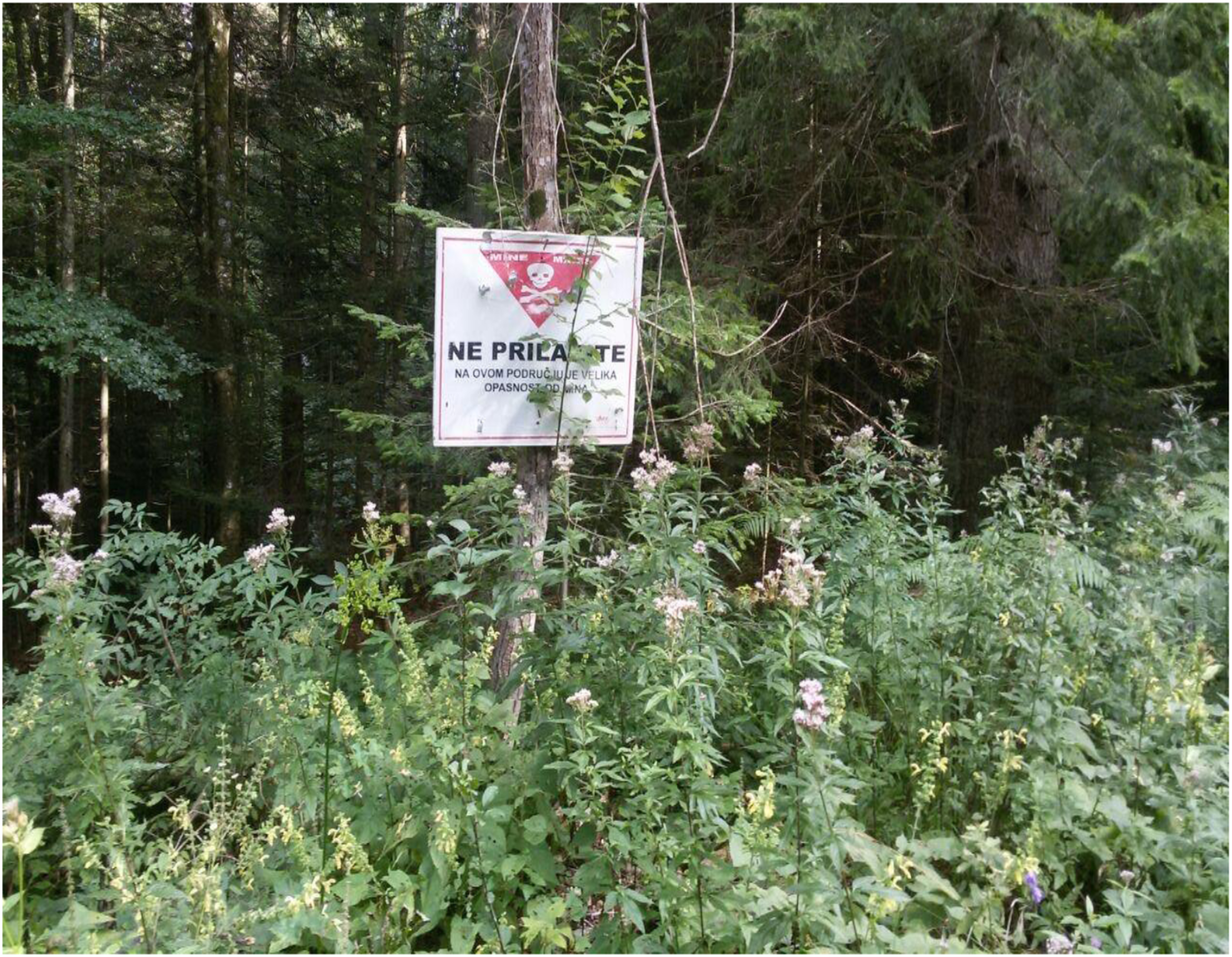

The landscape of the Iran-Turkey border exposes “pushed” people to even more harmful situations. People reported that they had nowhere to go after being pushed to an inhabitable mountain range (with peak heights of 3800 m) with extreme weather. With the exception of two Turkish ‘removal centres’ run by the local authorities and established and refurbished with EU funds, displaced people typically have no accommodation. After being pushed, one family from Afghanistan told us that they had been lost in the mountains for 45 days. Getting lost in the mountains carries its own specific risks of harm, including death, frostbite in the winter and heat exhaustion in the summer. As a clinician in Van pointed out: One week ago, I treated a family from Afghanistan who spent a week in the mountains in freezing weather. Their hands froze so much that we had to amputate them. One family member is still missing.
Residents living in a village near the border also said that they commonly found dead bodies of people who froze when crossing in the winter or were torn apart by wild animals. Towards the West of Turkey, respondents said they were smuggled on small fishing boats across the Van Lake (viz. Figure 4), which resulted in hundreds of drownings. Landscape around the Van Lake in the near proximity of Turkey’s border with Iran (Photo by Karolina Augustova).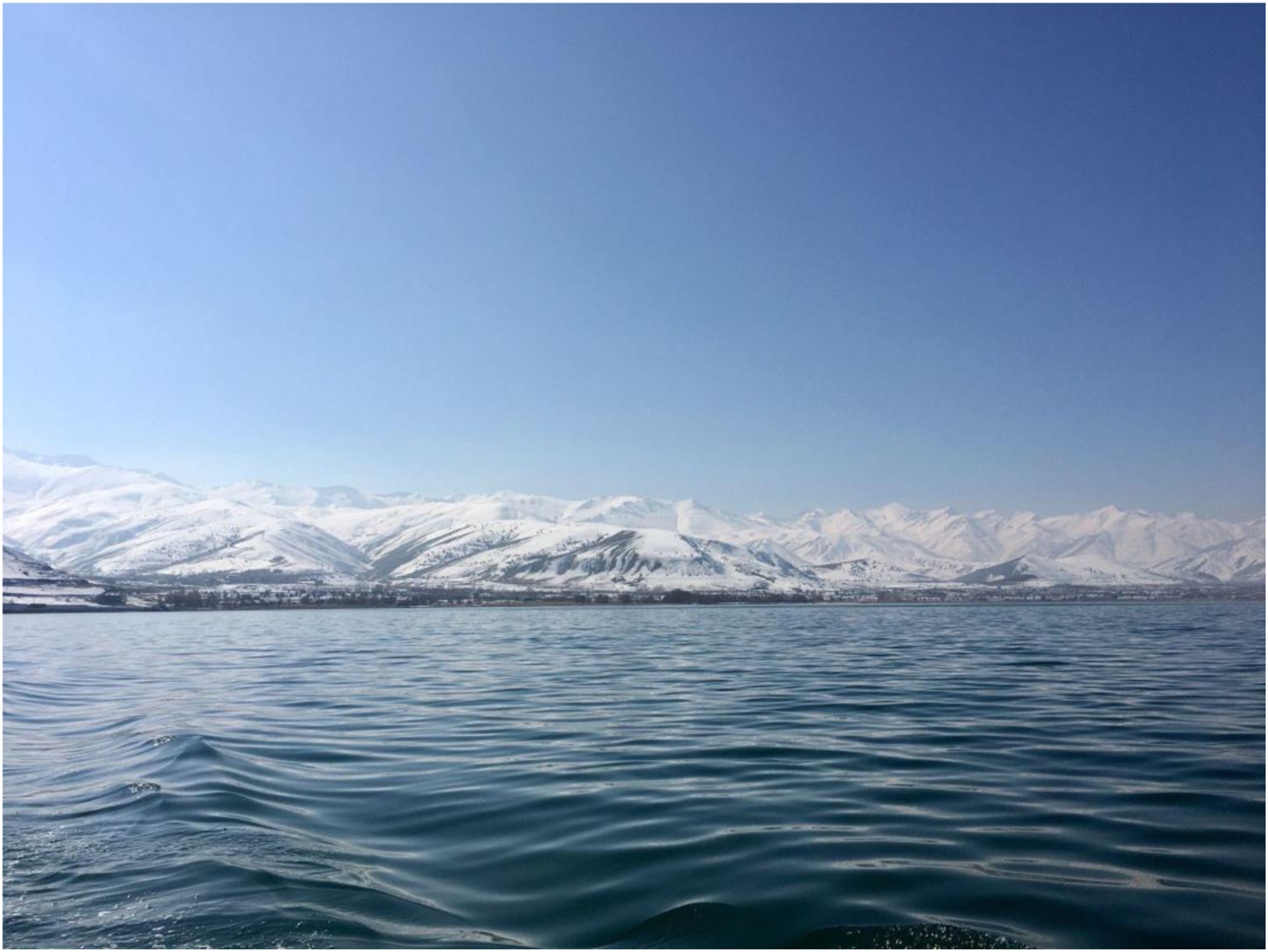
These journeys across mountains speak to Schindel’s (2019) argument that geographic factors are included in the strategies of border control. Whilst local geography plays a harmful role when people are “back” in the mountains, these forms of violence are triggered by the “push” to places from where people depart (De Genova, 2017; Garelli and Tazzioli, 2018; Stierl, 2019), which are, in turn, produced by human decision-making to externalise controls to multiple borders and enforced by border patrols. The interplay of the local geography with broader techniques of externalisation is at the core of pushbacks.
Displaced people at the Iran-Turkey border face further challenges shaped by local security concerns. Journeys across the border take place against the background of the armed conflict between Turkey’s security forces and the PKK. The conflict moved from urban to rural border regions in 2016 (International Crisis Group, 2021), which simultaneously marked the signing of the EU-Turkey Agreement and the rise of “pushes”. Border crossers commonly move across military zones and minefields and risk being abducted, interrogated or killed by security forces if they are mistakenly accused of being affiliated with the PKK. As suggested by a member of Jandarma during the interview, “the East of Turkey is a military zone. In some border military areas, the military can open fire against any people … it sometimes happens that the military targets civilians”. Local security issues, therefore, shape further the consequences of being “back”. Similar dynamics of direct violence are likewise a threat in Iran, as suggested by several interviewees, including Abdula (Afghanistan):
When the Iranian police saw my friend with his group on the other side of the border (Iran), they started shooting. They killed 14 people. My friend was shot in the leg but survived and eventually managed to get to Van [Turkey].
Such consequences of “pushes” demonstrate that EU bordering countries (Bosnia-Herzegovina, Turkey) and their neighbours (Iran) actively shape externalised border deterrents when people are “back”. Pushbacks are therefore relationally co-constituted by human and geographic processes(Gonzalez-Oliveras, 2022), in which the international and national/local intersect. Thus, we agree with scholars (Cuttitta, 2020; Karadağ, 2019; Léonard and Kaunert, 2021; Raineri and Strazzari, 2019) acknowledging the agency of EU partner states in migration externalisation processes although the externalized agreements are unequal. Further, we suggest that tactics of “pushes” offshored through the European external border management systems, cannot be understood without locating them within the local contexts of the external borders, which mainly determine what happens to people when they are “back”.
Local border contexts of non-EU states prove useful to offshore security practices and violence as migration controls (Davies et al., 2021), as well as to conceal the consequences of “pushes” (Isakjee et al. 2020). EU authorities view Northern Bosnia and Kurdish region in Turkey as unstable places and characterised by the common occurrence of human rights violations (European Commision, 2021b; Bird et al., 2020). The imagining of external border regions as the “Badlands” (Bird et al., 2020) allows for the re-allocation of responsibility over people’s harms and deaths to the (post-)conflict states because these borders are normalised as inherently insecure and violent (Bialasiewicz & Maessen, 2018; Norman, 2020). As a member of the EU Parliament suggested during our interview - reflecting on migration externalisation - “we [European authorities] do not take responsibility for those who are subjected to these [externalisation] agreements because they [displaced people] are in another country so, we are not responsible for them”. Local political and security dynamics - “back” - therefore complete the process of externalised controls - “pushes” - as well as giving the appearance of informal and violent border deterrents being disconnected from European migration enforcement.
Conclusions
This article offers an analysis of “push” and “back” as two co-constitutive processes of migration control that occur as the result of EU externalisation interconnecting with the local geopolitics of external borders. Building on the critical border studies literature and adopting an externalisation theoretical approach, we suggest that the rise of pushbacks as one of the main strategies of non-arrival (Weber and Pickering, 2011) stems from externalisation. The logistics and structure of pushbacks would not exist without the EU’s border policies (Push-Back Map Collective, 2020), outsourced to multiple external borders, where they orchestrate multiple controls of “push” and “backs”.
As we argue, pushbacks are transversal (Tazzioli & De Genova, 2020), as they spread across borders marking the land route from Iran to the EU. Pushbacks can mark the beginning of people’s journeys at the Iran-Turkey border, as well as its possible near end at the Bosnian-Croatian (EU) border. This spatial and temporal stretch is generated by the delegation of the EU’s political, legal and financial instruments to third countries that further disseminates approaches of border control to other countries through socialisation (Lavenex et al., 2010). Within the broader context of externalization, partner states mimic the EU’s informal controls that force people over a border with the use of violence. Externalisation therefore results in a ripple effect of “pushes” against “irregular migrants” at borders that are thousands of kilometres apart. Understanding informal and violent border controls as a ripple effect of externalisation therefore allows us to move beyond the understanding of pushbacks solely as a consequence of EU borders. Instead, we suggest that pushbacks spread from the EU borders (Croatia) to non-EU states (Iran) as the continuum of externalized agreements.
While the EU’s political interests are commonly analysed as priorities in externalisation literature, we argue that the local geopolitics in partner countries, which has been largely ignored within the EU externalisation studies, determines further controls when people are “back”. We examine the border control of “back” through dangerous geographies (Schindel, 2019) and local insecurities that vary at borders and determine further border controls after the “push”. To this end, the complete process of pushback arises from international and domestic border controls that are interconnecting and producing complex harms against all classed as “irregular migrants”. This local geopolitics in politically unstable countries proves useful in externalisation as it creates a responsibility vacuum for the human rights violations that take place far away from the EU (Muller & Slominski, 2021).
The ongoing movement of people, despite the suffering they repetitively endure during the different stages of their journeys, shows that externalisation does not only generate pushbacks. Hope and perpetual search for possibilities to move are therefore equally present dimensions at borders (Brambilla & Jones, 2020), which should be analysed in the future research on externalisation of “push” and “backs”.
Footnotes
Acknolwedgments
We would like to thank to Aston University, the Istanbul Policy Centre, Mercator Stiftung, and Border Violence Monitoring Network for supporting this research. Importantly, thank to people on the move who helped with interview interpretations and the research on the ground but whose names must stay anonymous to protect their identities. Without them, it would be impossible to navigate the border between Iran and Turkey. We are also grateful to the Istanbul Policy Centre interns for their help with participant recruitment and interviews in Turkish.
Declaration of conflicting interests
The author(s) declared no potential conflicts of interest with respect to the research, authorship, and/or publication of this article.
Funding
The author(s) disclosed receipt of the following financial support for the research, authorship, and/or publication of this article: This work was supported by the Stiftung Mercator and Aston Prize PhD Studentship.