



Abstract
Interactions between cities play a significant role in the development of metropolitan regions. Although these interactions and their role in the urban growth modelling have already been investigated, there is still room for more studies. In this research, in addition to conventional urban growth factors, spatial interactions between the cities (SIBC) are incorporated into urban growth modelling. This causes directional trends in urban growth (DTUG). Therefore, first the DTUG of each city was measured using a developed indicator based on the history of urban growth that was extracted from satellite images and spatial statistics. The SIBC was then estimated by integrating the DTUG of the cities. Finally, the SIBC and other driving forces, including the physical suitability, accessibility and neighbourhood effects, were integrated using a cellular automata-based model. The accuracy of the model in the Tehran metropolitan region was increased by 6.44% after considering the SIBC. The analysis of the DTUG and SIBC in the Tehran metropolitan region during 1991–2000–2007–2014 revealed specific patterns as the spatial interactions intensified over time and usually peaked in the periphery of the central business districts and intense interactions existed between the metropolises and other major cities. These findings could help urban managers with strategic decision-making in the metropolitan regions and adjust the science and practice relation in this field.
Keywords
Introduction
Over the last decade, urbanization has increased in both developed and developing countries (Al-Shalabi et al., 2013). Along with dramatic urbanization, metropolitan regions continue to emerge as regions comprising a number of large and small cities/towns (Taubenböck et al., 2014). The complexity of issues in metropolitan regions, along with a multiplicity of contributing factors, has inevitably led to the need to find innovative solutions and novel approaches to comprehensive planning and the management of land-use in these regions (Lalehpour, 2016; Li et al., 2013).
In a metropolitan region, cities have not been considered as isolated entities but, rather, as systems of interdependent cities/towns that are closely linked through a transportation network and interact with each other (Favaro and Pumain, 2011). These interactions often occur alongside urban flows such as the interflow of populations, information, material, capital and technologies (Seto et al., 2012; Zhu and Yu, 2002). The interactions between the cities play a key role in the evolution of the metropolitan region and the spatiotemporal analysis of their influences reveals various development policies (Favaro and Pumain, 2011; Fragkias and Seto, 2009; He et al., 2013).
Researchers who have focused on measuring the spatial interactions between the cities (SIBC) have mostly used Newton’s theory of gravity (He et al., 2013; Liang, 2009; Wang et al., 2011). According to this theory, the interaction strength between two cities depends on their socio-economic strength and their distance apart (He et al., 2013). The socio-economic strength of cities has often been calculated using parameters such as employment, population, gross domestic product (GDP) and basic services (Wang et al., 2011). Some researchers have modelled urban growth by incorporating the spatial interactions using gravity theory (He et al., 2013; Lin and Li, 2015; Weber and Puissant, 2003). Lin and Li (2015) measured the interactions between cities based on the co-occurrences of the cities’ names (toponyms) on significant web pages and Xiao et al. (2013) estimated the gravitational attraction of major cities based on air passenger data and calculated the interactions between cities using the reverse gravity model.
Previous studies have used socio-economic data to measure the SIBC. However, these data are rarely available or may be difficult or impossible to access, especially in developing countries. On the other hand, the expansion of remote sensing data has provided cost-effective and updated data (Sarvestani et al., 2011; Taubenböck et al., 2014). Therefore, the history of urban growth, extracted from satellite images, along with the analysis of the spatial distributions of urban growth is used for measuring the SIBC and its influence on urban growth.
In this paper, in addition to conventional urban growth factors, the SIBC is incorporated into the urban growth modelling. The SIBC is calculated based on the directional trend of the urban growth (DTUG) of cities. In the proposed approach, a spatial indicator was first developed to improve the measurement of the DTUG using urban growth histories derived from remote sensing data. This indicator is based on a spatial statistical tool known as the standard deviational ellipse (SDE). The SDE is a GIS tool for delineating the bivariate distributed features (Myint, 2008) which was firstly proposed by Lefever in 1926 and has extensive applications in various fields. It is used for showing the spatial distribution trend of the features concerned by summarizing both of their dispersion and orientation (Wang et al., 2015). Second, the cities within the region were categorized into four groups and the DTUG of each group was calculated. The SIBC was then estimated in respect of the DTUG of all categories. Finally, the SIBC was incorporated into the urban growth modelling.
The modelling was based on cellular automata (CA), a traditional urban growth simulation model (Karimi et al., 2017; White et al., 2012). In this model, the SIBC is integrated into the urban growth factors (including accessibility, environmental suitability and neighbourhood effects) using the CA-based logistic regression model (Logistic_CA_SIBC). To validate the proposed model we compared the Logistic_CA_SIBC model with a Logistic-CA model (without considering the SIBC). In addition, to compare the proposed model with a gravitational-based model that uses socio-economic data, we used the gravitational field model (GFM; He et al., 2008, 2013) that is based on the population data of cities to model the SIBC. We then incorporated it into the urban growth modelling and compared the results with the Logistic_CA_SIBC model.
The proposed methodology was applied on the Tehran metropolitan region (TMR), Iran with a population of more than 14.5 million, containing 53 large and small cities during 1991–2000–2007–2014. In the next section, the detailed descriptions of the developed model structure and methods used are explained. In the third section, the study area is presented and pre-processing of the data is expressed. The fourth section presents results of implementation of the developed model in the study area including calibration, validation and prediction phases. The final section concludes and discusses the results.
Methods
The directional trend of urban growth (DTUG)
Based on research by Dietzel et al. (2005), that inspired other researchers such as Chen et al. (2013) and Liu et al. (2014), the theory of urban growth phases is revealed through changes in urban landscapes and a general oscillation between the phases of diffusion and coalescence. According to this theory, the diffusion phase is defined as the dispersion of urban patches and coalescence refers to the fusion of the patches into one patch (Dietzel et al., 2005). Spatial interactions play a key role in these evolutions. The SIBC appears as trends in the distribution of urban growth around the cities. The SDE, fitted to the urban growth around each city, can provide a GIS tool to detect the meaningful trends in the growth history of that city.
SDE is an ellipse that is centred on the mean coordinate of point data. The angle of rotation and deviation along the major and minor axes of the SDE reveal the directional distributions in the point data (Myint, 2008). To produce the SDE, we first derived the urban growth history from satellite images that are arranged as cells. We then converted the urban grown cells into points. We used buffer analysis to understand the urban growth trends around each city. We assumed that the DTUG might change at different distances around a city. Therefore, we created buffers at different distances around each city and SDEs were fitted onto the urban growth points inside each buffer. In locating the buffers, we tested a number of different distance intervals, such as 500 m, 1 km, 2 km, and 5 km, and we finally decided that 1 km intervals (1 km, 2 km, 3 km, etc.) would best reflect the DTUG in the study region. Therefore, buffers were constructed at 1 km intervals around the core urban areas (CUA) of each city. The SDEs were then fitted to the growth points inside each buffer (Figure 1(a)). In addition, an example of the SDEs at different distances from the CUA of one city is shown in Figure 1(b).
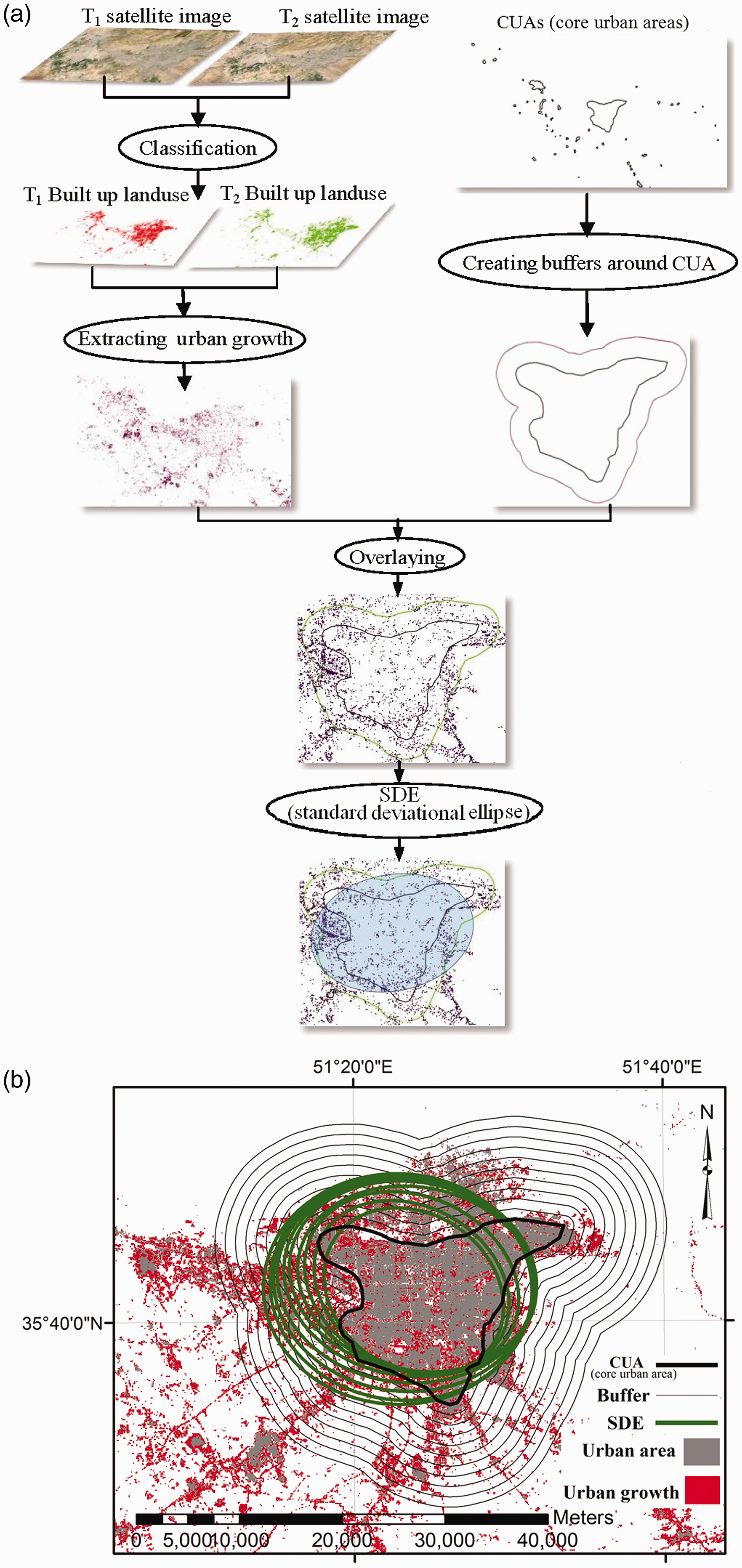
(a) Stages of fitting a standard deviational ellipse (SDE) on grown points around the core urban area (CUA) and (b) Fitting the SDEs on urban grown points in the interval buffers around the CUA of a city.
Based on the SDE parameters, the following equation is proposed to measure the DTUG that is due to the influence of city m on the urban growth of city n at a distance of d from city n


Consider SDEn,d as the SDE fitted on the urban points inside a buffer zone at distance d around the city n. Accordingly,
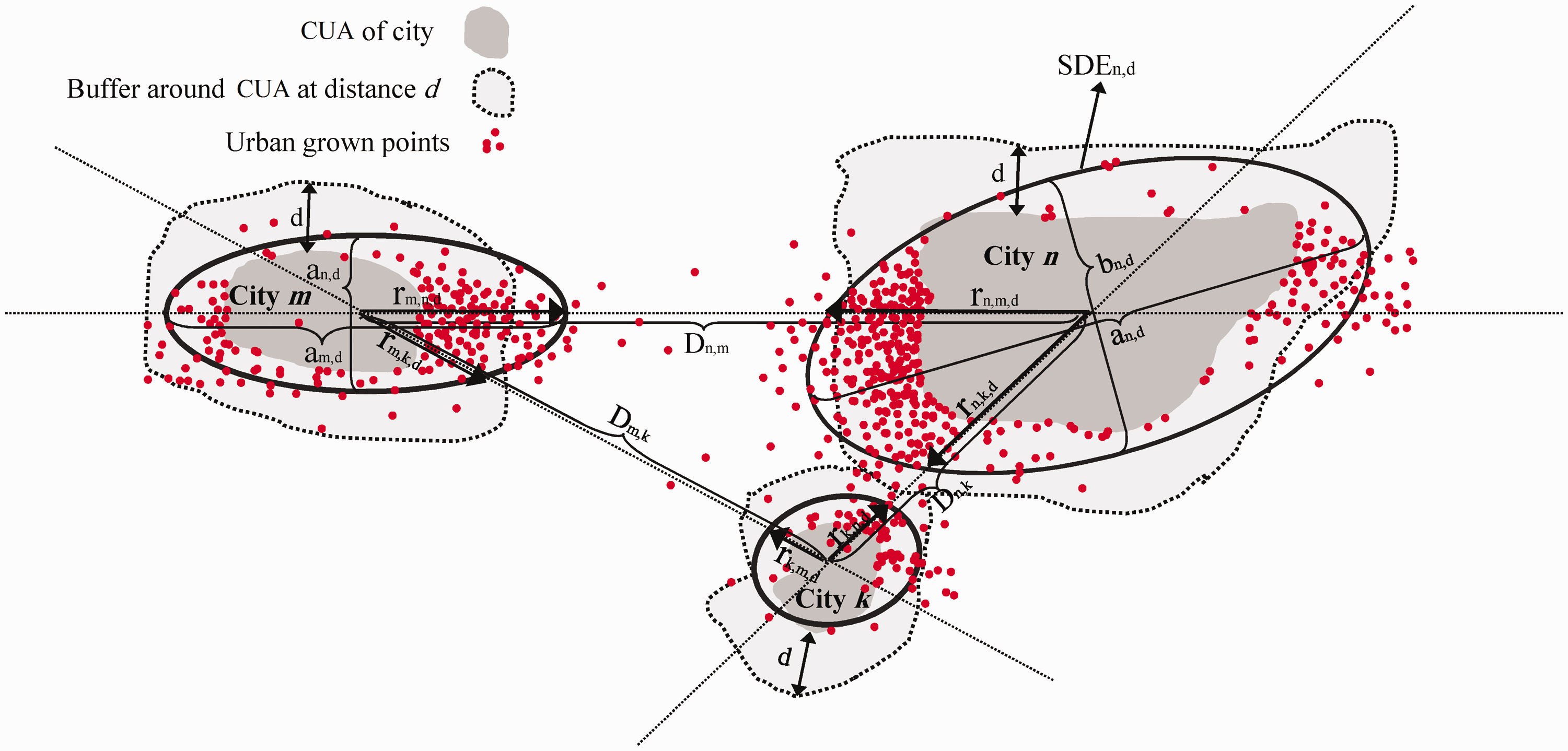
The parameters of the DTUG indicator.
The four main parameters for measuring the

The relative values of the DTUG in various scenarios.
The spatial interactions between the cities
In the study area, a location i is affected by the spatial interactions among the surrounding cities. The DTUG of different cities was integrated to measure the SIBC. It was supposed that i was at a distance of d from the city n. We then measured the total influence of other cities on the urban growth of city n at location i as follows


In addition, comparison of the results of the SIBC was calculated based on a GFM as follows (He et al., 2008, 2013)

Modelling the urban growth
Logistic-CA is one of the popular CA models for simulating urban land-use dynamics (Van Dessel et al., 2011) that was employed to simulate the urban growth in this study using the following equation


The demand for urban land was estimated based on a linear regression of the historical data of the urban growth areas and the population. The urban growth map was then obtained according to the following equation (Lin and Li, 2015)

If
The study area and materials
The study area
The TMR is located in the north of the central plateau of Iran, and it includes Tehran as the capital of Iran and one of the cities with the largest annual growth in Asia (World Gazetteer, 2012; Figure 4). The study area consists of Tehran and Alborz provinces, and covers a total area of 18,102 km2, and the population reached 14.5 million in 2013. This region houses approximately 20% of Iran’s population and is the most industrialized region in Iran. Job opportunities, health and education services, and social welfare have led to widespread migration from all over the country to Tehran and the other cities in the study region (Sintusingha and Mirgholami, 2013; Tayyebi et al., 2011). Tehran’s population has overflowed in the last few decades into the surrounding cities due to high costs of living, severe traffic jams and air pollution in Tehran (Lalehpour, 2016).

The limit of the TMR and counties.
Data collection
Land-use/cover maps for 1991, 2000, 2007 and 2014 were produced from the classification of Landsat 4, 5, 7 and 8 satellite images. The images were classified into six land-use/cover classes (built up, forest, water, arid, farmland, and mountain) using ENVI. To classify the images we selected 300 training samples and 300 test samples from the study area. Each sample formed a polygon around an area with a specific land-use. Therefore, each sample contained many cells. Classification was used for the training samples. We then reclassified the classes into two categories: urban and non-urban. Test samples were used to test the accuracy of the classification. The Kappa coefficient was calculated by comparing the land-use of the test samples with the land-use in the reclassified image. The Kappa coefficients were 0.84, 0.86, 0.85 and 0.87 for the years 1991, 2000, 2007 and 2014, respectively.
The CUA of the cities were manually plotted on the map with the help of expert knowledge. The neighbourhood effect map was obtained based on the number of urban land-uses in a window around the cells. Three-by-three, five-by-five and seven-by-seven window sizes were applied to examine the robustness of the logistic regression coefficients to window sizes. Moreover, the vector map of the transportation network and the parcel land-use map of the TMR were used to produce a highway, streets, major industrial and growth restrictions map. The rasterized digital terrain map (prepared by the National Cartographic Center of Iran) was used to prepare the slope and height maps. Figure 5 displays the factor maps. Based on previous studies and on the testing of different pixel sizes, a cell size of 100 m was considered to be best.

The factor maps of urban growth, (a) proximity to CUAs, (b) proximity to highways, (c) proximity to streets, (d) proximity to major industries, (e) height, (f) slope and (g) local neighbourhood effect.
Implementation
Measuring and analysing the DTUG
The cities in the TMR were divided depending on their populations into four categories. (1) Tehran, (2) Karaj, (3) major cities (with a population more than 200,000 people) and (4) small cities (with a population less than 200,000 people). The DTUG values were obtained at various distances for each category using equation (1). Results have been displayed as graphs in Figure 6. In these graphs, the DTUG values at various distances from cities of each category are presented comparatively. For instance, a, b and c graphs illustrate the DTUG due to the effect of different cities on Tehran. Moreover, d, g and k graphs cover the influence of Tehran on the growth of other cities. In the calculation of DTUG of Tehran due to the major cities, the mean value of the DTUGs of four nearest major cities was considered. Similarly, the mean value was applied to other categories that have more than one city.
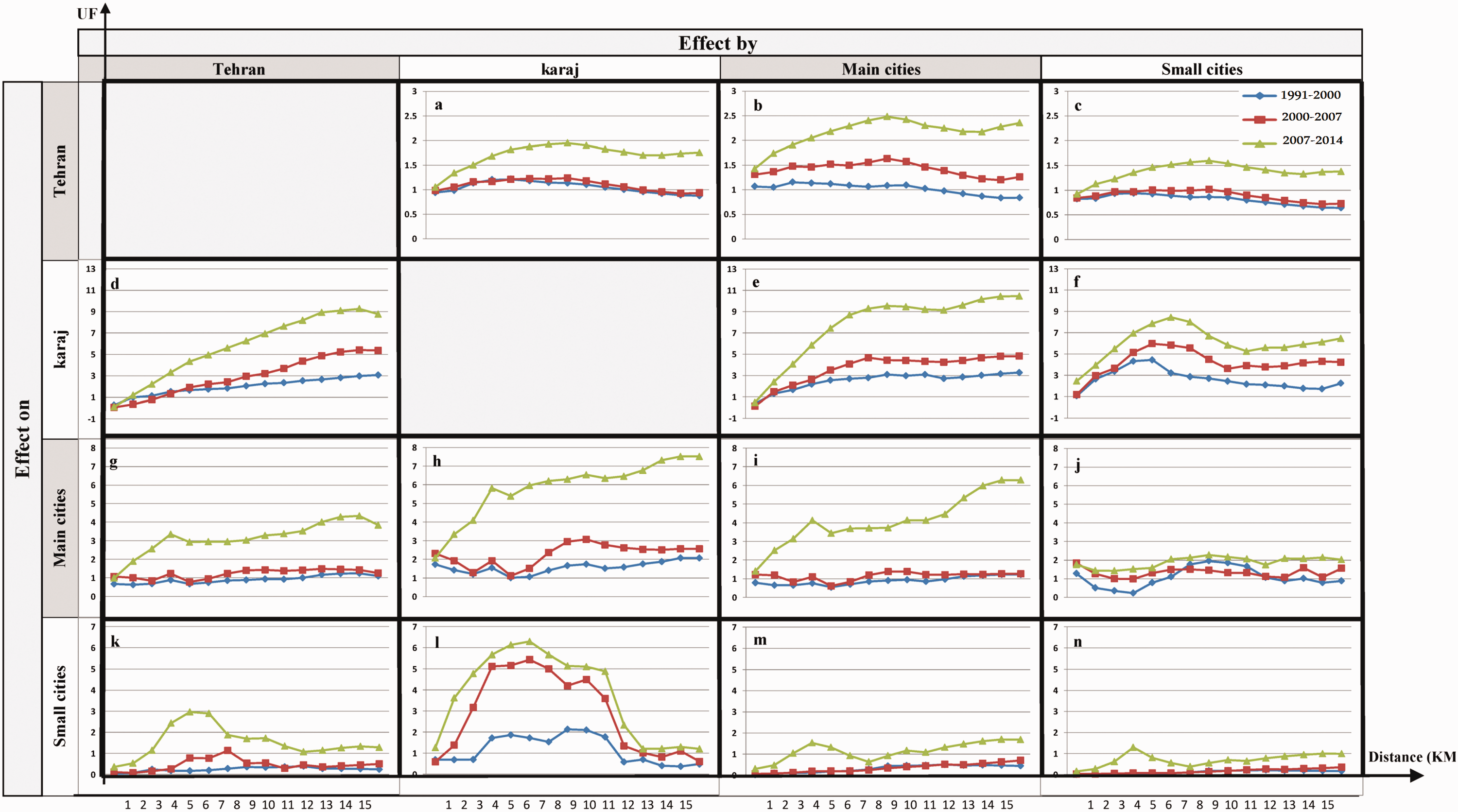
Spatio-temporal variations of the DTUG of four categories of the cities in the TMR.
In accordance with the graphs a, b and c, the expansion of Tehran tended toward the major cities. Such influence initially intensified farther away from the core area of Tehran and then gradually diminished. According to graphs d, g and k, Tehran had the greatest impact on Karaj and other major cities. Urban growth in Karaj was heavily influenced by Tehran and the neighbouring major cities. Karaj greatly affected the growth of major and small cities, where the most intense interactions in the region can be found. The major cities grew quite independently during 1991–2000 and 2000–2007 but, over time, they were influenced by their neighbouring cities. The periphery areas of small cities grew rather intensely toward Tehran, and Karaj, which was approximately independent of the surrounding major and small cities.
The graphs indicate that the interactions between the cities are asymmetric. However, a common feature shown in the graphs is that the DTUG increases over time. Moreover, the DTUG often intensifies on the periphery of the CUAs and overall growth has taken a southeast-northwest trend, and urban growth has further intensified toward the southern part of the region.
Calculating the SIBC
Using equations (3) and (4), the SIBC was calculated. First, to calculate the TDTUG, the DTGU values were extracted from the graphs that were based on the distance of a location from the cities. The TDTUG map derived for each category of cities is illustrated in Figure 7(a) and (b). Second, the maps of the SIBCs were derived using equation (4) (Figure 7(c)).

The TDTUG map of each category of cities in (a) 2000–2007, (b) 2007–2014 and (c) the factor map of the SIBC.
These maps are more realistic than those derived from previous studies (He et al., 2013; Liang, 2009). As shown in Figure 7, in contrast to the results of previous methods, the influence of a city may not be identical in various directions around it or may not follow the distance decay relationship. In addition, the intensity of the SIBC generally increased between 2007 and 2014 compared to 2000 and 2007. During 2000–2007, the most intense SIBCs were found on the southern edge of Tehran and the central area of Karaj, whereas there were no significant interactions in other regions. However, during 2007–2014, the SIBC covered a wider area. Over the same period, the SIBC tended to be more intense in the southern half of Karaj and the west and southwest of Tehran, as well as the periphery of major and smaller cities. There were intense interactions between Karaj and its surrounding cities, as well as those that surround Tehran.
Model calibration and urban growth simulation
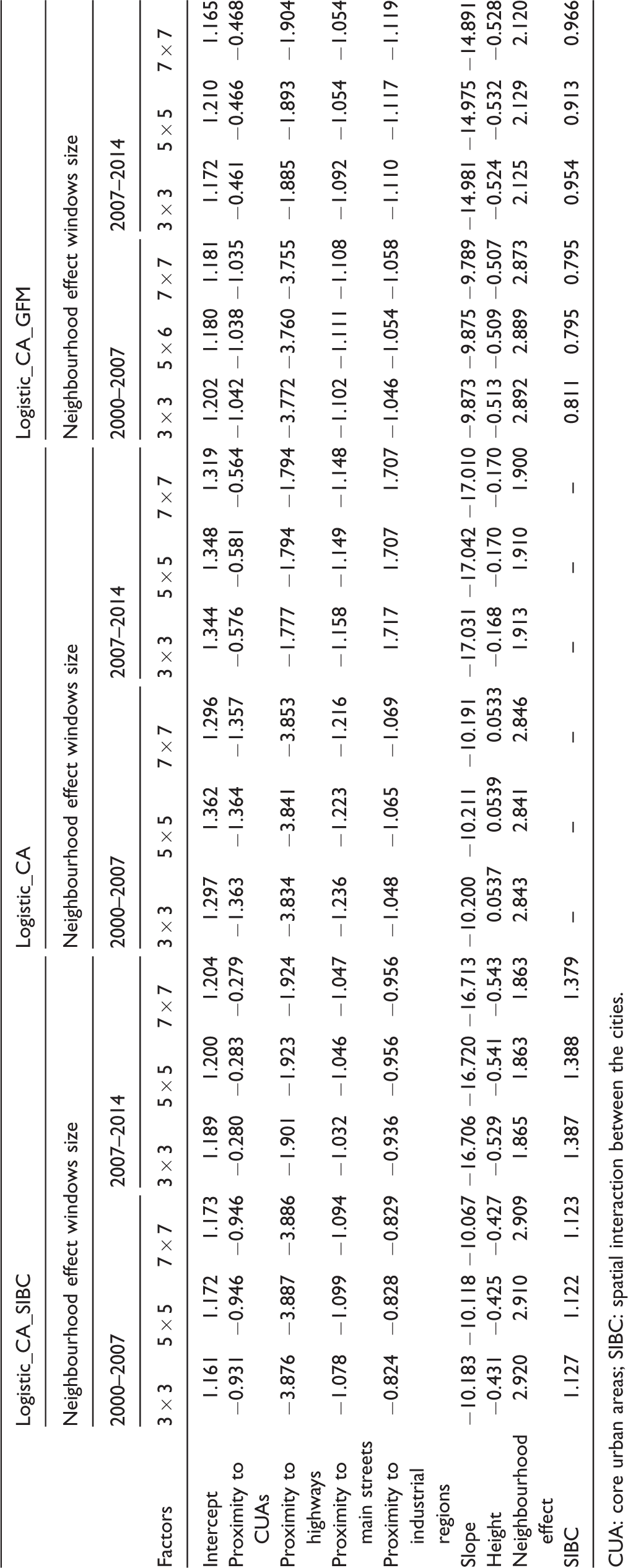
The coefficients of the models were calibrated using training samples for the two periods of 2000–2007 and 2007–2014. The coefficients were calibrated based on 5000 urban points and 5000 non-urban points as training data developed in each period. A training sample includes the value of the dependent variable (in this study it is 0 or 1 for urban or non-urban, respectively) and the values of the independent variables (in this study, distance to CBD, highways, slope, etc. in the location of the sample point). A 100 × 50 grid was fitted to the study area and for each cell of the grid one random urban growth point and one random non-urban point were selected. We used Pearson correlation coefficients to test the correlation between the factors (Table 1). The coefficients show that there were no significant correlations between the factors. Therefore, we were able to use all the factors in the modelling. The coefficients are presented in Table 2.
The Pearson correlation coefficients for the urban growth factors.
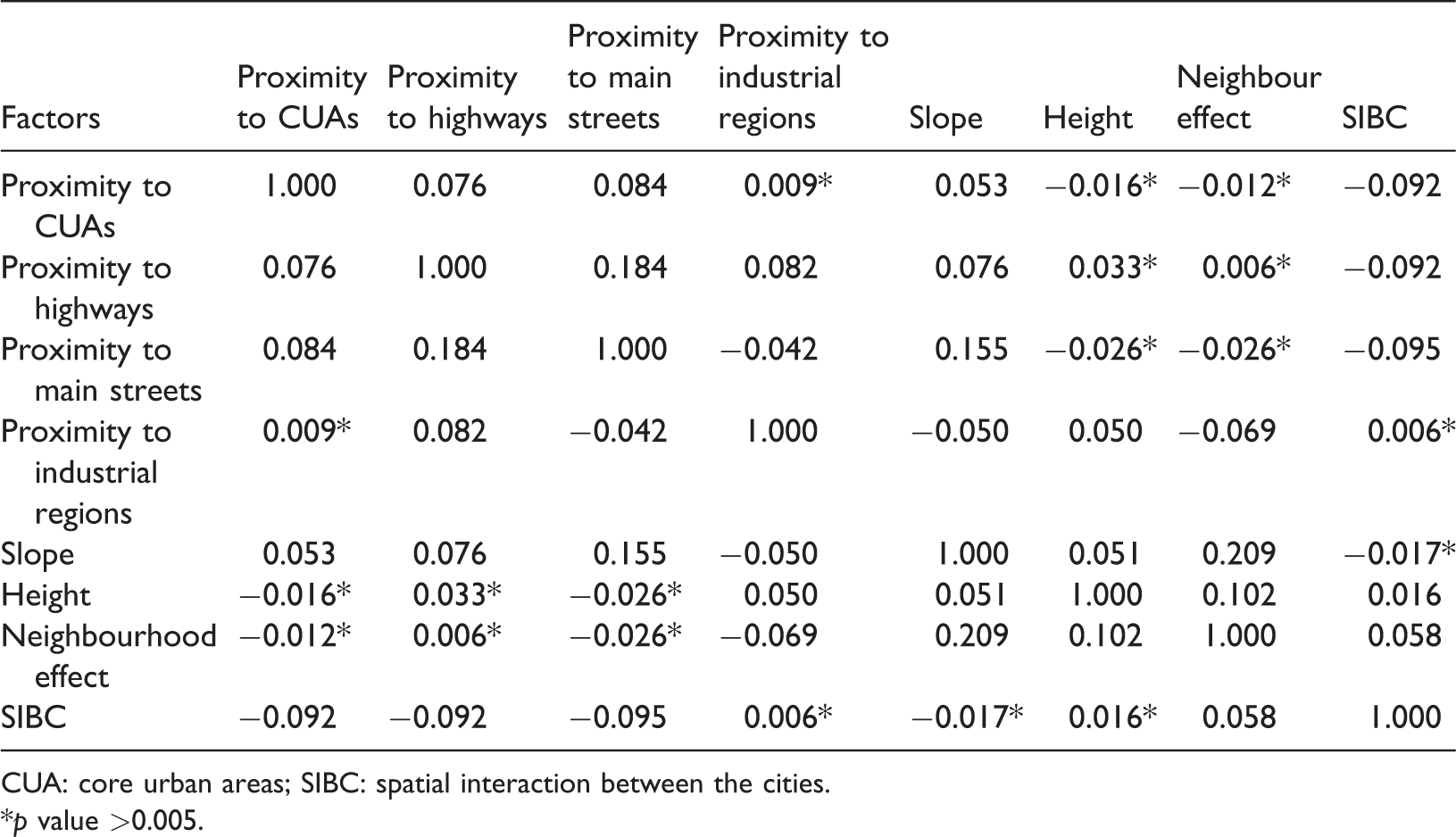
CUA: core urban areas; SIBC: spatial interaction between the cities.
*p value >0.005.
The coefficients of Logistic_CA_SIBC, Logistic_CA and Logistic_CA_GFM models.
CUA: core urban areas; SIBC: spatial interaction between the cities.
As shown in Table 2, the SIBC is one of the important driving forces. This factor significantly increased during 2007–2014 compared to 2000–2007. We used the calibrated coefficients of the models in the 2000–2007 period to simulate urban growth in 2014. The potential for urban growth was calculated using equations (6) and (7). On the other hand, the urban demand area in 2014 was extracted from the classified images of 2014. The demand area is 353.75 km2. We then selected a threshold for classifying the urban growth potential map into two, urban and non-urban classes using equation (8). The potential threshold was adjusted based on a trial/error method by considering the demand area. The simulated urban growth maps were produced using Logistic_CA, Logistic_CA_SIBC and Logistic_CA_GFM models and all three different window sizes for the neighbourhood effect were taken into account. Figure 8 shows the simulated urban growth maps in 2014 using the window size of 5 × 5 for the neighbourhood effect.
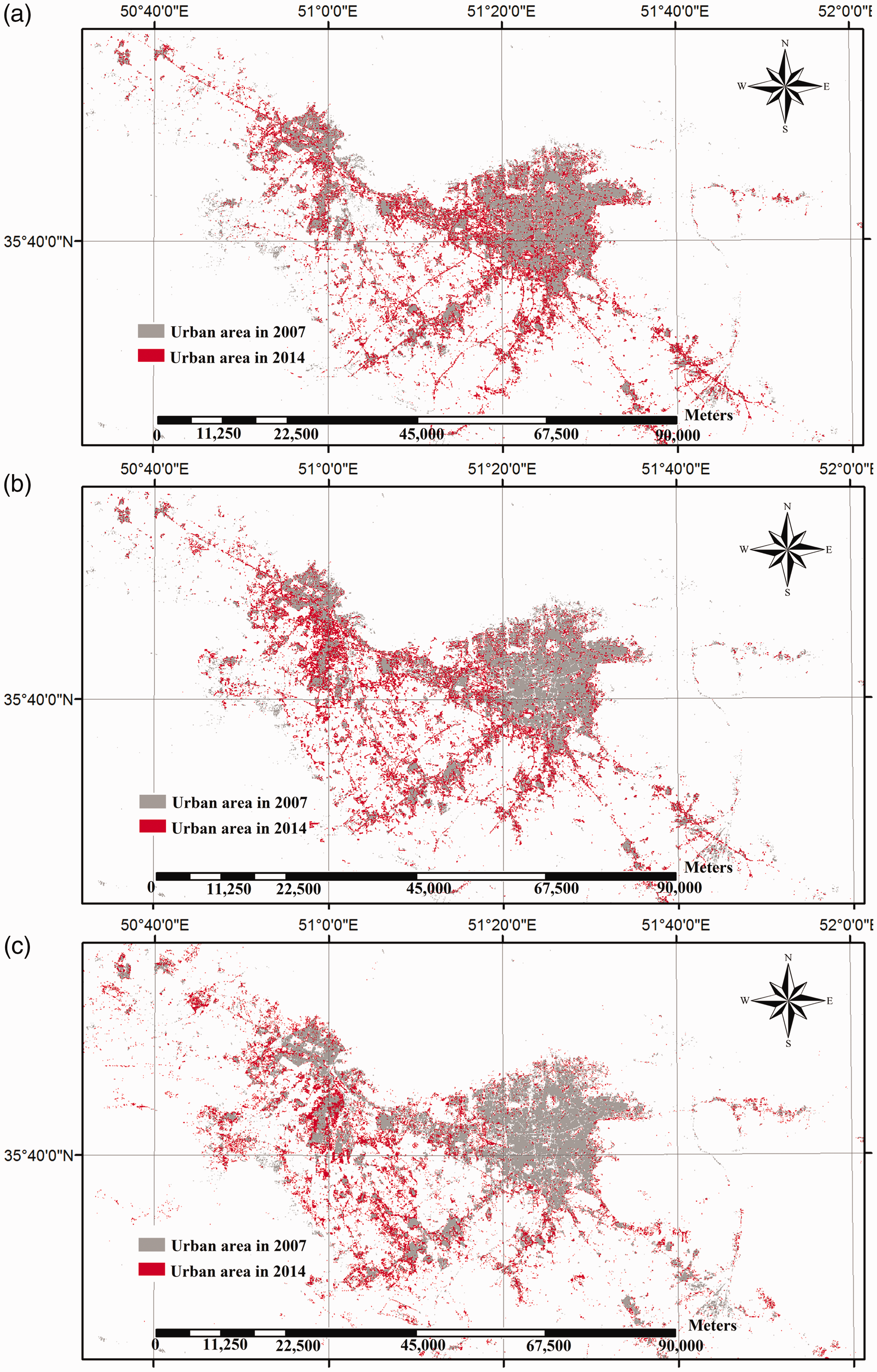
The simulated urban growth map (a) using the Logistic_CA, (b) using the Logistic_CA_SIBC and (c) the actual urban growth in 2014.
The validation results and prediction of urban growth
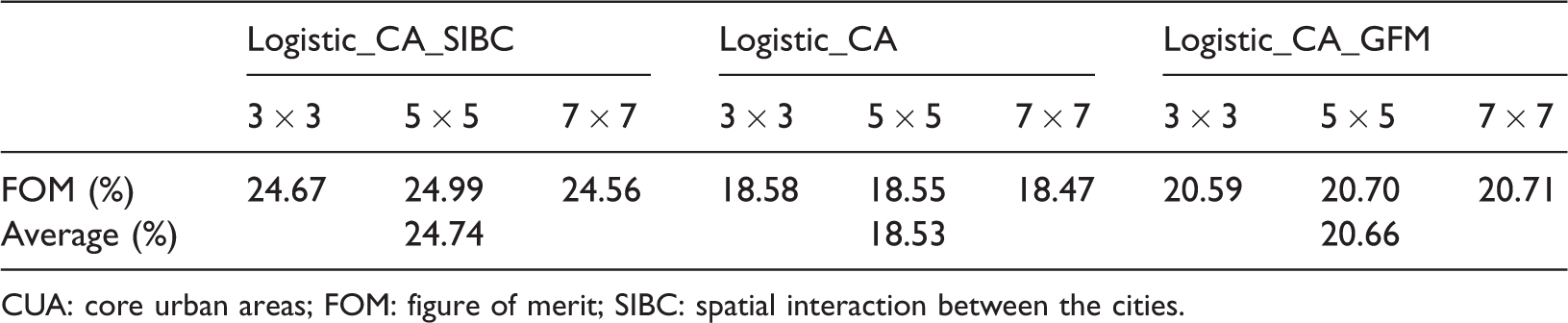
We compared the urban growth maps produced with the Logistic_CA, Logistic_CA_SIBC and Logistic_CA_GFM models with actual urban growth up to 2014. The FOM values were then calculated. The FOM values for the models at three different window sizes are presented in Table 3. The window size of 5 × 5 results was best for the FOMs. The FOM values for the Logistic_CA, Logistic_CA_SIBC and Logsitic_CA_GFM models were 18.55%, 24.99% and 20.70%, respectively. The above values represent more accurate results of the urban growth modelling (6.44%) by including the SIBC factor developed in this study and 2.15% better results by including the SIBC calculated on the basis of GFM.
The FOM values for results of Logistic_CA_SIBC, Logistic_CA and Logistic_CA_GFM models.
CUA: core urban areas; FOM: figure of merit; SIBC: spatial interaction between the cities.
For predicting urban growth in 2021, the urban demand area was estimated. Assuming the existing growth rate will continue, a linear regression was employed to calculate the total urban areas by 2021. The urban growth map for the TMR is simulated using the Logistic_CA_SIBC as shown in Figure 9. According to this map, the urban growth trend is to the south and southwest. There is a remarkable growth found in cities located in the southern and south-western areas of Tehran and southern and southeast of Karaj. It is seen that the process of urban development in this region is in the diffusion phase. If the current trend persists, the farmlands and green spaces across the southern areas of Karaj will vanish one after another. Another urban growth wave will be initiated in south-eastern Tehran forming a corridor trend near the main road. Moreover, the growth rate of Tehran will be greater in suburban areas.
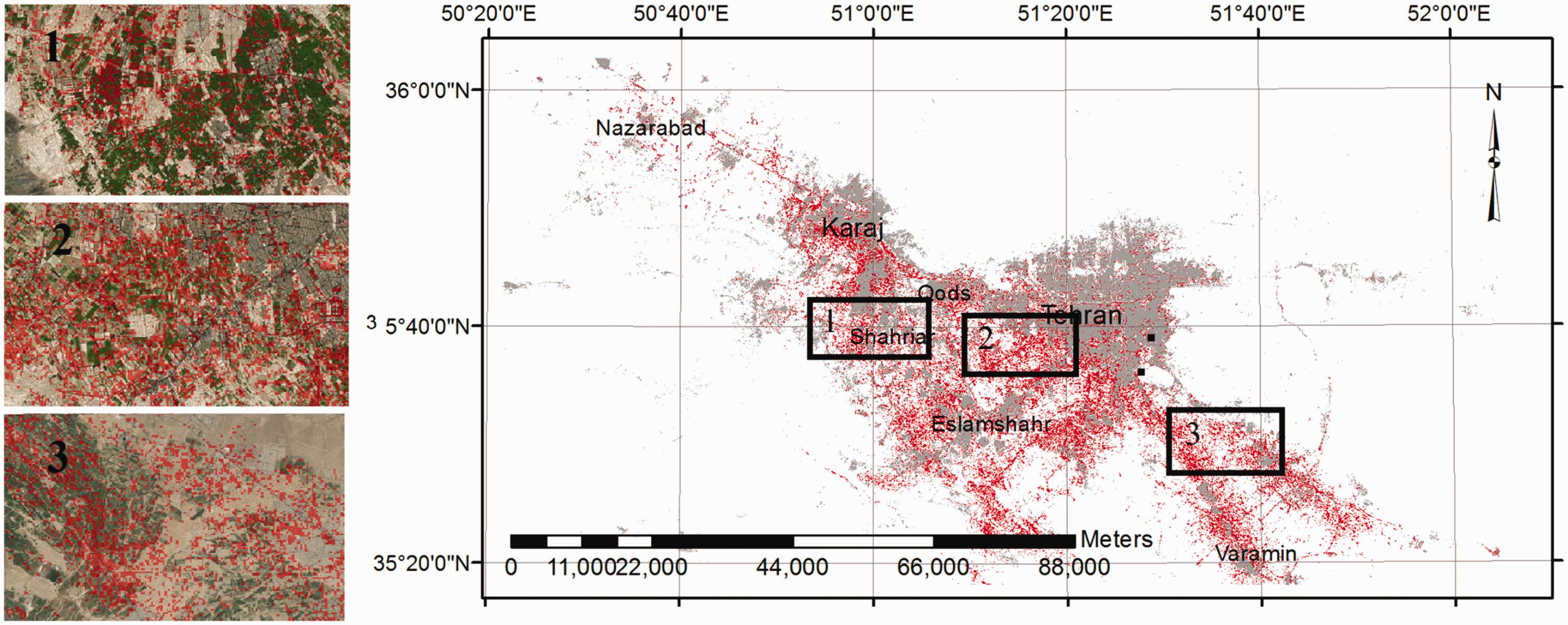
Urban growth prediction of the TMR in 2021.
Conclusion and discussion
In this study, we try to measure the SIBC based on measuring the DTUG using spatial statistics and the history of urban land change extracted from satellite images. Then, we consider it in the urban growth modelling.
The spatiotemporal analysis of the DTUGs characteristics in the TMR during the periods 1991–2000, 2000–2007 and 2007–2014 provided the potential to explore the urban growth pattern and processes. The overall growth trend of the study area covers the southeast-northwest alignment of the Tehran–Karaj–Qazvin axis. The results indicate that DTUG mostly peaked on the periphery of the CUAs. The expansion of Tehran tended toward the surrounding major cities. Moreover, due to the influence of Tehran on major cities, the DTUG peaked in its suburbs. Tehran had the greatest effect on the expansion of Karaj and major cities. Karaj largely led the growth of its surrounding small and large cities and the most intense SIBC can be found in this area. The expansion of the major cities was quite independent during 1991–2000 and 2000–2007. However, they were affected by their surrounding cities over time. The small cities expanded rather intensely toward Tehran, and particularly Karaj, and were almost independent of the surrounding major and small cities.
Unlike previous studies (He et al., 2013; Lin and Li, 2015), the results indicate that the SIBC varies in terms of direction and distance around the cities. This is because the influence of a city on the urban growth of its surrounding cities does not necessarily follow the distance decay effect (Tiefelsdorf, 2003), and may not necessarily be the same in the different directions of a city (radial effect; Lin and Li, 2015). Figure 8 demonstrates there are intense spatial interactions across the middle and southern parts of Karaj. Over time, the SIBC accelerated and expanded over the region.
A CA-based logistic regression model was used to evaluate the role of the SIBC in urban growth modelling. By considering the SIBC factor, the FOM of the results increased by 6.44%. The results show the SIBC increase the urban growth potential and its role in modelling becomes more important over time. In addition, we used the GFM to model interactions between the cities based on the population data of cities, which was incorporated into the Logsistic_CA model. The results show that the accuracy of this model increased by 2.15%. The difference between the two values of improved accuracy (6.5% and 2.15%) confirmed that the SIBC reflects the influence of some socio-economic factors, such as population, growth domestic product (GDP) and the level of service, which considering just one of them in the modelling slightly increased the accuracy. Instead, the directional trends of urban growth are considered as the consequence of these interactions between the cities for reflecting its influence of it.
The results indicate that the proposed methodology can provide a tool for planning the development of metropolitan regions. Moreover, analysing the spatiotemporal characteristics of the DTUG will reveal the results of development policies and help urban managers to make better decisions for the future of the metropolitan regions. For example, this may be useful when developing policies that determine land-use, such as facilities with a regional function that serve more than one city, making decisions about issues related to the urban flows or determining the cities’ sphere of influence.
It is recommended that future research implements the proposed model in other metropolitan regions and simulates urban growth in different scenarios. In addition, because of the experimental nature of the proposed indicator for the quantification of the SIBC, it is suggested that future research should involve a sensitivity analysis by changing its parameters. Finally, the size and shape of the CUA may impact on the ellipse parameters. So, we propose to investigate the relation between them in future research.
Footnotes
Declaration of conflicting interests
The author(s) declared no potential conflicts of interest with respect to the research, authorship, and/or publication of this article.
Funding
The author(s) received no financial support for the research, authorship, and/or publication of this article.