



Abstract
Due to the scarcity of water, frequent crop failure and low returns from cultivation, agriculture in the state of Maharashtra is in a distressed condition. With a semi-arid topography, below average rainfall and limited irrigation infrastructure, Beed—a predominantly rural district—subsists through rainfed agriculture and wage employment. Every year, during dry season (November to May), villages in the district are face with severe seasonal unemployment. To tide over the lean season, thousands of small and marginal peasant households migrate to other districts of the state, and even outside the state, to work in sugar factories and brick kilns. The social experience and consequences of migration are far from uniform, but shaped by class, caste and gender. Drawing connections between seasonal migration and rural crisis, our narrative show how seasonal migration compensates for the lack of employment opportunities and reduces seasonal income variability of the poor households in Beed district. At the same time, this article also explains how seasonal migration traps these households in the vicious cycle of economic and social backwardness.
Introduction
Seasonal migration is often perceived as a response to poverty and environmental change. It has long been a part of the livelihood strategy of the people of rural areas (de Haan, 2002; Haberfeld et al., 1999; Rao, 1994; Rogaly, 1998; Rogaly et al., 2001). The ability of seasonal migration to increase the livelihood security of the poor is widely recognized (Black et al., 2011; Scheffran et al., 2012; Tacoli, 2009). Studies have found that people belonging to remote rural areas, the chronically poor, landless and with low educational attainments are more likely to migrate seasonally or temporarily (Deshingkar & Farrington, 2009; Jan Breman, 1978, 1985, 1994, 1996; Keshri & Bhagat, 2012).
Seasonal migration is widespread in rural Maharashtra where agriculture is entirely rainfed (Breman, 1978; Teerink, 1995). After sowing the Rabi crops, the villagers face the prospect of a lengthy period of unemployment. To tide over the lean season, thousands of small and marginal peasant households migrate to work in sugar factories. Their destinations may be other districts of the state, or even beyond state boundaries. Households take up seasonal migration in anticipation of the adverse effects of seasonal unemployment on livelihood and to prevent or minimize the damage they can cause. This article aims to describe the characteristics of seasonal migrant households, causes and pattern of their migration and its economic and social consequences on their families.
We conducted a cross-sectional survey of seasonal migrant households in Beed district of Maharashtra state between September and November 2014. To identify seasonal migrant households, a complete household listing was done in 14 randomly selected villages of the district. From the village-wise list of seasonal migrant households, we selected 350 (25 households from each village) households by using simple random sampling. A seasonal migrant household is defined as a household having, at least, one member who stayed away from the village for the purpose of employment for at least one month and not more than six months during the dry season (November to May) of the year 2013. An interview schedule for obtaining social, economic and migration details was administered to the selected households.
The interviewers sought verbal consent from all the participants before conducting the interviews. In this way, information was collected from 340 seasonal migrant households (10 households did not give consent). We also collected qualitative data through in-depth interviews with 20 seasonal migrants.
Contextualizing Seasonal Migration from Beed District
Beed district is in Aurangabad division of Maharashtra. The district has often drawn media attention for drought and farmer distress. With a semi-arid topography, below average rainfall and limited irrigation infrastructure, the predominantly rural district subsists through rainfed agriculture and wage employment. The climate is marked by the alternation of a wet and dry season with annual rainfall confined to three to four months from June to August/September with a peak in July. During our field work, people reported a late onset of the rainy season and more worryingly, its shortened duration. There are more and longer dry spells, as well as increase in extreme weather events. For many households, at the end of the rainy season, there is hardly any possibility of earning a living. Households deal with the situation of severe unemployment, through a bundle of short-term coping and long-term adaptation strategies, such as the sale of assets (especially livestock), reduction in food consumption, diversification of crops (shifting to cotton and sugarcane, and abandoning the traditional crops), borrowing money and taking up seasonal migration. Overall magnitude of seasonal migration was 16% from the surveyed villages. The magnitude of seasonal migration was not uniform across villages (ranging from a lowest of 4% to a highest of 90%). The larger villages had a fewer number of seasonal migrant households than the smaller villages. The dominant community in the larger villages were mostly Marathas (upper castes) and smaller villages were mostly of Adivasis and Dalits. More importantly, 75% of these households had migrated in all the five dry seasons during last five years (2009–2013). A total of 1,881 persons (from 340 households) were covered by the survey. The average household size was 5.5 and the average number of seasonal migrants per household was 3.6. Of the 1,881 persons in the sample, 54% were males and the remaining were females. Among them 32% were children (0–14 years), 61.5% were in the working group (15–59 years) and 6.5% were elderly (60 years or above). Out of every 100 persons from the seasonal migrant households, 65 migrated during the dry season of 2013. Of every 100 working age people, 80 (78 out 100 males and 82 out of 100 females) had migrated out. Therefore, seasonal migration is a significant event for these households. Of every 100 who migrated during the dry season of 2013, 20 were children (12 from 0 to 5 years and 8 from 6 to 14 years), 75 were working-age population and 5 were elderly. Likewise, of every 100 who stayed back in villages, 55 were children, 35 were from the working-age group and 10 were elderly.
Characteristics of Seasonal Migrant Households
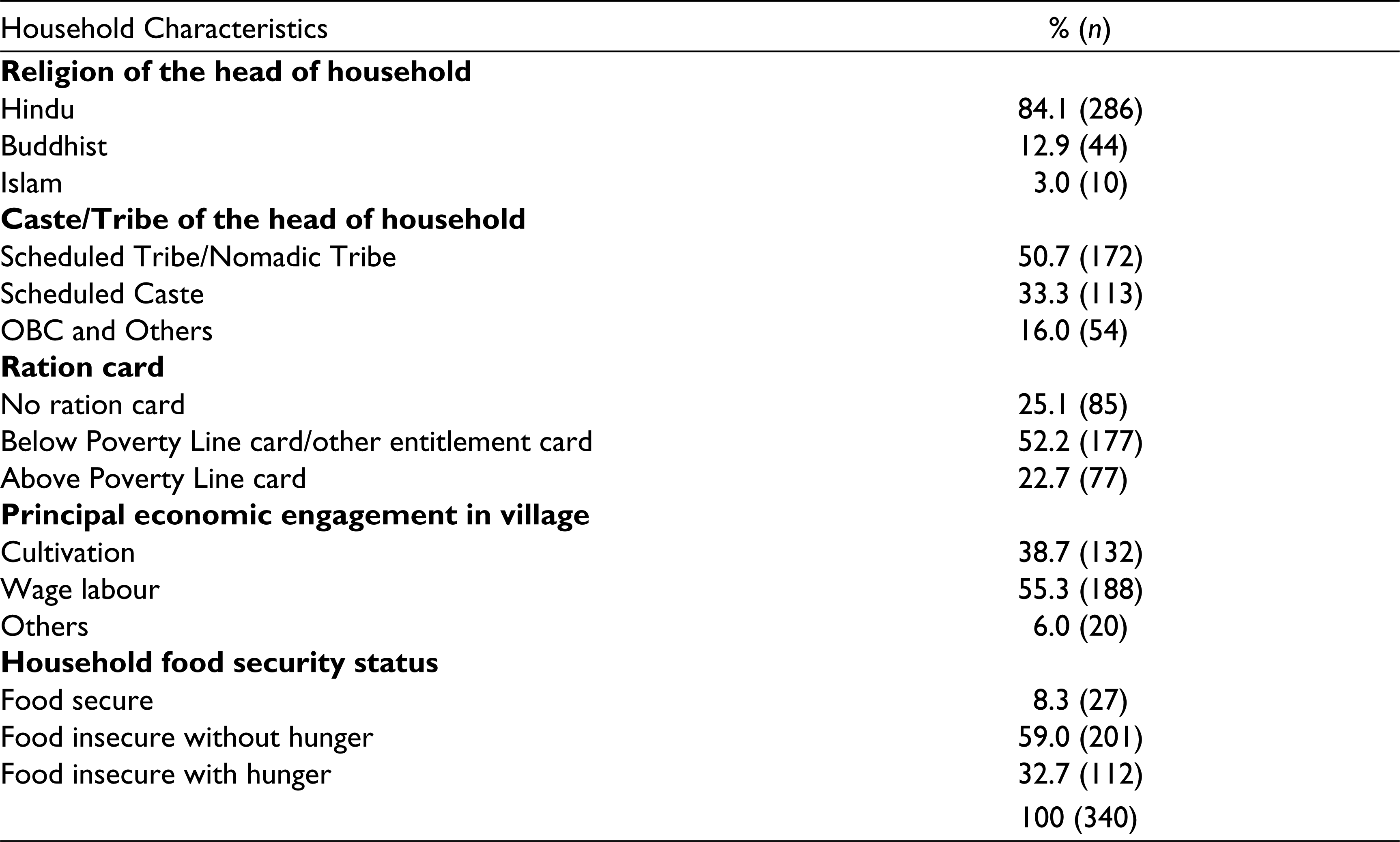
Table 1 shows the socio-economic characteristics of the seasonal migrant households. The sample households consisted of 84% Hindus, 13% Buddhists and 3% Muslims. The majority (84%) of them belonged to either the Scheduled Tribe/Nomadic Tribe or Scheduled Caste groups. Regarding access to amenities, 72% of the households had electricity, 24% had access to improved sources of drinking water and 14% had improved sanitation facilities. Only 4% had access to clean cooking fuel. Seasonal migration is found as a coping mechanism of the landless (58%) and households with marginal land holdings (11%). In the villages, wage work is the important means of livelihood (as is the case with 55% of the surveyed households) for these households. This study found that 39% of the households were engaged in subsistence agriculture, predominantly using traditional farming methods. Only 6% derived the major portion of their income from small trade or other economic activities. Household food security is at stake, particularly during the lean season. Our data show that only 8% of the seasonal migrant households had food security, 59% were food insecure without hunger and 33% were food insecure with moderate or severe levels of hunger. Socially disadvantaged communities (Dalits and Adivasis) who are also economically poor (in terms of landholding and dependency on wage work for livelihood) are disproportionately higher among the seasonal migrants from the district.
Socio-economic Characteristics of Sampled Seasonal Migrant Households.
Government’s response to protect the livelihoods of these people is almost non-existent. During 2012–2013, only one-fifth of the seasonal migrant households received employment under the Mahatma Gandhi National Rural Employment Guarantee Act (MGNREGA). When asked about MGNREGA and its functioning in the village, a young male seasonal migrant replied: ‘two years back, I got 10 days of work. I received my wages after several months. What is the point of going for such jobs? Payment needs to be made immediately. Otherwise, how can one survive’. A woman stated: ‘we have no hope and now we don’t wait to be given jobs’. These statements indicate the lack of regularity and assurance of wages from the scheme. From the discussions with the gramsevaks and surpanch, it appears that there is no will among the local self-governments, as well as the bu-reaucracy to realize the potential of MGNREGA in enhancing the livelihood resource base in these villages. Many of the seasonal migrant households were aware of only about the scheme and not its details, such as the right to work and unemployment allowance.
Pattern and Causes of Seasonal Migration
Seasonal migration flows from the study area reveal a dominant pattern of seasonal rural-to-rural migration. During the dry season of 2013, people from 90% of the sampled households left their villages in October and 87% returned to their villages in April 2014. The migration is reckoned to be seasonal because, the migrants return home just before the pre-monsoon showers hit and agricultural activity gains momentum. The main destinations for the migrants of Beed district are Karnataka (58%) and other districts within Maharashtra (42%), particularly the agriculturally developed districts in western Maharashtra. The migrants are engaged in sugarcane harvesting. Of the sampled households, 75% had migrated during all the dry seasons of last five years (from 2009 to 2013), confirming that seasonal migration is an annual routine act for majority of these households.
Seasonal migration is a dry season event primarily because of the changes in the village economy. To understand the causes of seasonal migration, several questions were asked to migrant households about their economic circumstances and employment opportunities in the village. Nine out of 10 seasonal migrant households reported that they were forced to choose the migration option. The main reasons for migration were ‘seasonal unemployment’ (76%), ‘less wages in village’ (20%), ‘need of a large amount of money to meet emergency expenditure’ (4%). Around 60% of the households reported to have outstanding debts or loans (mostly informal). Hence, by and large, seasonal migration is integral to the struggle for survival of the rural poor. The reasons reported by majority of the households are driven by a situation where they are unable to earn sufficiently in their villages to meet basic needs. Thus, it is economic hardship that drives people out of the village to offer their labour for a wage. The situation is a pointer at the fragile nature of the livelihood opportunities available to the Dalit and tribal households in the district. Thus, it can be said that seasonal migration is largely distress-driven.
Sugar factories in Maharashtra and Karnataka start operation from November to April/May every year. Once the factories are set for operation, uninterrupted supply of sugarcane is essential. The factories ensure continues supply of canes through giving daily supply targets to contractors. For this, each contractor recruit labourers. Knowing the poverty and unemployment status during the dry seasons, the labour contractors (mukhadam) of sugar factories approach people of Beed district to offer them work in sugar factories. Seasonal migration from Beed district is based on advance paid to the migrants. Many poor households accept the work offer by taking an advance amount from the labour contractor. Advance is given to work unit which is called koita comprising a husband, wife and one child or two children. Once they receive the advance money, it is a commitment to seasonal work in the sugarcane harvest and they would become bonded to the labour contractor. However, this advance help them to survive in the lean period. A woman responded: ‘a koita is paid ₹25,000 in advance for working in a dry season, this advance help to keep us alive when we are jobless’.
Consequences of Seasonal Migration
Seasonal migrants are offered work and onsite residence. Work at the destination entails long working hours, averaging about 12 hours daily. Based on the amount of work, mukhadam deduct the amount from the advance money on a weekly basis. Once, the repayment of advance through labour is completed, they are paid a part of their wages during the employment period. The remaining amount is settled at the end of the season. After six months of work in the dry season of 2013, only 54% of the migrant households could repay the advance amounts taken from the labour contractor and have a surplus. The remaining could not even repay the advance amount they had taken. This binds the worker to the labour contractor, a relationship that is ‘fixed’ through loans or debt. It denies the migrants various freedoms, including the freedom to negotiate the terms and condition of his or her contract. This indicates the vicious cycle of debt the seasonal migrant households are trapped into. The share of income from seasonal migration makes 80% of the annual wage income of a work unit (koita), confirming the necessity of seasonal migration for ensuring a livelihood for these households.
Seasonal migration has significant negative consequences, such as poor living conditions in the destination locations, loss of school days for the children, fear and insecurity by the women migrants, and adverse impact on health. In almost all (99%) instances of seasonal migration, whole family migrate. At the destination areas, most of the migrants (97%) live in temporary shelters near their workplace; 98% reported that there is no provision for toilets and 49% of the respondents reported that they do not have access to safe drinking water. When asked about life at the destination areas, a seasonal migrant woman replied: ‘all these [the living conditions] come after food; there is no meaning in having a good place to stay without anything to eat. We have been living this life for years and are now adapted to these conditions’.
Seasonal migration takes a severe toll on the education of their children as they are never at one location throughout the academic year. Most households of seasonal migrants keep their school-going children in villages so that they would not miss school. In the koita system, children are essential (though informal) part of a work unit. They are made to do hard labour that jeopardizes their lives, safety and physical development. When asked about her work, a 14-year-old girl who was working with her parents for a sugar factory in Ahmednagar district replied: ‘my sister and I help my mother in her work because the volume of work matters to us. If we work more, we are paid more’. While talking to a schoolteacher on the reason why many children in the villages were out of school during dry season, she replied: ‘many migrants take their young children to their workplaces so that they can look after their younger siblings while the parents are working. These children miss school and eventually, many leave schools in the middle to become labourers’.
There were 604 children (aged 0–14 years) in the sample population of which 360 (60%) stayed back in villages during the dry season of 2013. It is found that 3 out of 10 children aged 6−14 years (school-going age) had migrated; and 6 out of 10 children of school-going age were found working at the destination. These children usually help their parents in their work and look after their younger siblings. Many children begin doing small chores at the work sites and eventually become absorbed into the labour force. In the overall population, among the children of school-going age, 14% had never been to schools or had dropped out. Of the 277 children of school-going age, 113 (40.8%) were found to be studying in a grade that was lower than what was appropriate for their age. ‘My daughter is in the eighth standard. After we go back, she will resume her studies’ said by a woman seasonal migrant upon asking the studies of her daughter accompanied her to the work place. Such responses were common. Out of 95 children who were aged 16–19 years, only 18% had successfully completed 10 years of schooling. Thus, there is sufficient evidence to show that the migrant community will remain deprived of educational opportunities and be stuck in a vicious cycle of economic backwardness. Although the Right of Children to Free and Compulsory Education Act (2009) guarantees education to all children up to the age of 14 years, the children of seasonal migrants remain largely excluded.
Another negative aspect of seasonal migration is the fear and insecurity of women migrants in the destination areas. The decision on women’s migration is usually taken by other members of the household, mostly the husbands or fathers/fathers-in-law (94%). A woman seasonal migrant said ‘… it is all decided by my husband. He runs the house. He takes money from the Mukhadam and spends it for us. When he asks me to move, I follow him. It has been the way of our life’. When asked about her prior knowledge of the destination and the nature of work there, a first-time seasonal migrant woman working for a sugar factory of Ahmednagar said: ‘I was not aware of the place I was going to, nor about the work I would be doing and the wages I will be getting. I have not travelled so far from my home. We move our workplaces every day. Today we are working here. Tomorrow it will be someplace else. We go wherever we are told to by the Mukhadam’. Most (87%) of the women workers reported that they feel safer in their home villages than the places they were working in. Many of them (45%) said that they were afraid of living at the workplaces. When asked about life at the workplace, a seasonal migrant woman responded: ‘like everybody else, we also wish to stay and earn in our village. But what can we do? We have to live’. It is found that women migrant workers are forced to live in vulnerable circumstances.
Sugarcane harvest is a labour-intensive job. The work includes cutting of sugarcane, removing shred, making bundles, and loading and unloading. Exposure to dust and grime, lack of minimum basic facilities and the drudgery of their work cause severe health risks among the seasonal migrants. They face unique health challenges due to their work environment, poverty status, inadequate housing, limited availability of clean water and sanitary facilities, inadequate access to healthcare, and lack of insurance. Table 2 shows the current health status (medically diagnosed non-communicable diseases, NCDs) reported by the seasonal migrant women. This information was obtained through the question: whether the migrant women were medically diagnosed with any NCDs during the last 12 months. For this, they were asked to select from a list of NCDs (cancer, hypertension, diabetes, cholesterol, joint pain (rheumatism or arthritis), back pain, lung disease (bronchitis or asthma), heart disease (angina), stroke, tuberculosis, cataract, depression and other diseases) that was prepared from past studies.
Current Health Status of the Seasonal Migrant Women.

Overall, the prevalence of NCD was 36.5% among seasonal migrant women workers engaged in sugarcane harvesting. The prevalence of other NCDs was back pain (23.2%), joint pains (18.5%), hypertension (2.4%), depression (2.1%), stroke (1.8%), lung diseases (1.5%), cholesterol and cataracts (1.2%), and heart disease (0.6%). Of the total number of reported NCDs, 80% were ailments like back and joint pains whose high prevalence is most likely due to the hard-physical nature of the work they do during migration. Combined with aggravating factors like repetitive lifting of heavy loads in awkward postures, the workers may get affected by musculoskeletal disorders (MSDs). Thus, a substantial number of women seasonal migrant workers engaged in sugarcane harvesting are suffering from MSDs. Among the women suffering from NCDs, 67% were diagnosed with one NCD, 27% with two NCDs and the remaining 6% were diagnosed with more than two NCDs. Ability to access healthcare is crucial for determining the health status and health-seeking behaviour of a population. Health insurance is one mechanism for ensuring better access to quality health care. Given its importance, we assessed the coverage of health insurance among seasonal migrants. Only 3% of the women reported that they were covered by medical insurance.
Discussion and Conclusion
To sustain during the dry season, thousands of small and marginal peasant households from rural areas of Beed district migrate to work in sugar factories. The majority (84%) of them belonged to either the Scheduled Tribe/Nomadic Tribe or Schedule Caste groups and had limited access to basic amenities (24% had access to improved sources of drinking water and 14% had improved sanitation facilities and only 4% had access to clean cooking fuel). Socially disadvantaged communities (Dalits and Adivasis) who are also economically poor (69% were either landless or with marginal land holding and 92% were food insecure) are disproportionately higher among the seasonal migrants from the district. The data exemplify the differential effect of a distress on people of different social and economic positioning. At the face of a distress, the socially and economically poor are the most vulnerable. Hence, those households who do not have the economic, social and political ability to positively alter their livelihood prospects are forced to take up low-cost short-term actions such as seasonal migration. Seasonal migration from the district reveals a dominant pattern of seasonal rural-to-rural migration. The main destinations for the migrants of Beed district are Karnataka and other districts within Maharashtra. The migrants are mainly engaged in sugarcane harvesting. Work at the destination entails long working hours, averaging about 12 hours daily. After six months of backbreaking work, only half of the migrant households could gain a surplus. This indicates the vicious cycle of debt these households are trapped into.
Seasonal migration causes much discomfort, and the conditions at work sites are difficult. The vulnerable living and working conditions put a greater burden on the women and children among the seasonal migrants. The extra hardships and insecurity that fall on women are important aspects of seasonal migration. High prevalence of NCDs, especially of MSDs is a major concern. The most critical social cost borne by seasonal migrants is their inability to send their children to schools. Many eligible children of the seasonal migrant households were found to be out of school because they are compelled to travel with their parents. As consequence, they are deprived of educational opportunities, thus perpetuating the vicious cycle social and economic backwardness. Yet, paradoxically, the earnings from seasonal migration can be the only means of an income that is available to the poor households. The social experience and consequences of migration are far from uniform, but shaped by class and gender. Overall, for the majority of these households, migration is a defensive coping strategy covering existing debts and extreme economic vulnerability. Seasonal migration from Beed district, in the short term, helps people to just ensure their survival; however, in the long term they are at a disadvantage. One may thus conclude that seasonal migration from the villages of Beed is a compromise where the households knowingly bear the social cost for ensuring that their immediate material needs are taken care of. As policy recommendation, we propose a regular review and monitoring of wage and working conditions of seasonal migrants. We also propose health insurance coverage for seasonal migrant workers employed by sugar factories and brick kilns. Most importantly, the water conservation activities have to be taken with utmost priority in the arid regions of the state.
Footnotes
Declaration of Conflicting Interests
The authors declared no potential conflicts of interest with respect to the research, authorship and/or publication of this article.
Funding
The authors received no financial support for the research, authorship and/or publication of this article.