



Abstract
Indian society is still dominated by the patriarchal system where women get less importance. A majority of households in India are headed by a male member of the family. According to Census 2011, only 10.78% of households are headed by a female member, and they are marginalized compared to the households headed by the male counterpart. Indian society is stratified into several groups based on language, religion, castes and tribes. Scheduled Tribes (ST) are the most marginalized among these social groups. From this perspective, the study focuses mainly on two marginalized sections, that is, female-headed households (FHHs) of ST and their counterpart of non-ST families. This comparative study mainly describes the well-being disparity between the ST and non-ST FHHs based on the housing condition, presence of basic amenities and household assets possession. The study also emphasizes the regional disparity of economic well-being in the FHHs between ST and non-ST community in India. It is a secondary database work based on Census of India 2011. Descriptive statistics, cross-tabulation, paired sample t-test and disparity index have been used to obtain empirical outcome. The results indicate that though the proportion of FHHs is higher in ST community, in all the fields they are lagging behind the non-ST FHHs at the national level. In most of the states, non-ST FHHs are well off in terms of economic well-being compared to the ST FHHs, and it creates a well-being disparity between the two groups. Further, the study found that the magnitude of well-being also differs within its own community.
Keywords
Introduction
In the second half of the twentieth century, households headed by a female member became a worldwide important phenomenon (ICRW, 1988), and this phenomenon in developing countries deserves special attention since they are typically disadvantaged regarding the access to land, labour, credit and insurance markets, discriminated against by cultural norms (Klasen et al., 2011). According to Zarhani’s estimation in 2011, households headed by a female are rising in number and proportion in most developing countries. Even in India, it has increased by 0.5% in 2011 from 2001, while the proportion of male-headed households has declined by 0.6% during the same period (The Hindu, 2012). Still, this is very unfortunate that the patriarchal system dominates Indian society. Generally, in Indian patriarchal society, women do not have the right to take any major decision (Yadav et al., 2011). ‘Women were seen as secondary to men in inheritance and rights, as is in all patriarchal societies, including India’ (Singh & Sebastian, 2018, p. 3). In the globalized era, India is focussing only on economic growth by increasing GDP without paying enough attention towards economic development and equality issues. Jean Drèze and Amartya Sen in their book An Uncertain Glory criticized that although per capita income and GDP have grown impressively (Thottam, 2013), at the same time, India has started falling behind every other neighbouring country in terms of indicators of gender development.
Indian society has been suffering from the social disease of the caste system since the Vedic era. The society has been divided into several social strata based on caste, religion, language and also on sex, and the most ill-fated fact is that a socio-economic disparity prevails among these social groups across the country. Census of India 2011 reveals that 8.6% of the population (about 10 million) belongs to the Scheduled Tribe (ST) community. In spite of reservations in government services; 7.5% for STs and public initiatives to protect and improve the socioeconomic conditions of the scheduled population, till date they suffer colossal material hardship, prejudice and poverty (Mistri & Das, 2014). In India, only 10.78% of households are female-headed (Census of India, 2011). In the ST community, the percentage of households headed by a female is 12.13%, while it is 10.65% in non-ST communities. Several studies have found that households headed by a female member are poorer as compared to its counterparts (Gangopadhyay & Wadhwa, 2004; Lastrapes & Rajaram, 2016) and face higher risk of poverty (Dreze & Srinivasan, 1997), especially by the marginalized sections. Kumar (2015a) opined that socially backward and the weaker sections have lesser accessibility to basic amenities and assets. The rate of socioeconomic development is very low in comparison to its counterpart. Connecting to this issue, this article aims to analyse the level of disparity based on the housing condition, presence of basic amenities and household assets possession between the FHHs in ST and non-ST in India. The study also has focussed on the regional disparity of economic well-being in the FHHs between ST and non-ST communities among the states in India. Five states and UTs, that is, Punjab, Haryana, Chandigarh, Puducherry and NCT of Delhi, are excluded from the study, as according to Census of India, 2011, none of the households belongs to ST community.
Data Sources
Household economic well-being has been measured through different approaches at different time. The conventional approach for measuring the economic well-being is money metric, and usually per capita income and per capita expenditure are commonly used indicators. However, in recent years, the asset index approach has gained popularity, which is applied to analyse the data of the Demographic and Health Surveys (Filmer & Pritchett, 1998; Sahn & Stifel, 2000). The present study is also based on housing conditions and possession of physical assets which are collected from the Census of India, 2011. Although Census of India does not provide the database of female-headed non-ST household amenities, these data have been calculated by deducting the ST FHH database from the entire FHH database. Since 1960, the Census of India began to collect the household information especially on the quality and quantity of housing stocks and quality of housing in the country (Kundu, 2011). With the growing demand, its scope has broadened and basic amenities, as well as assets possessed by the households, were gradually brought under the ambit of house listing and housing census.
Research Techniques
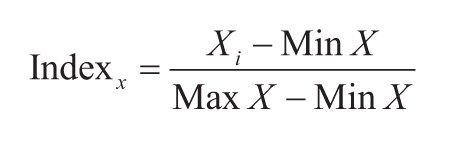
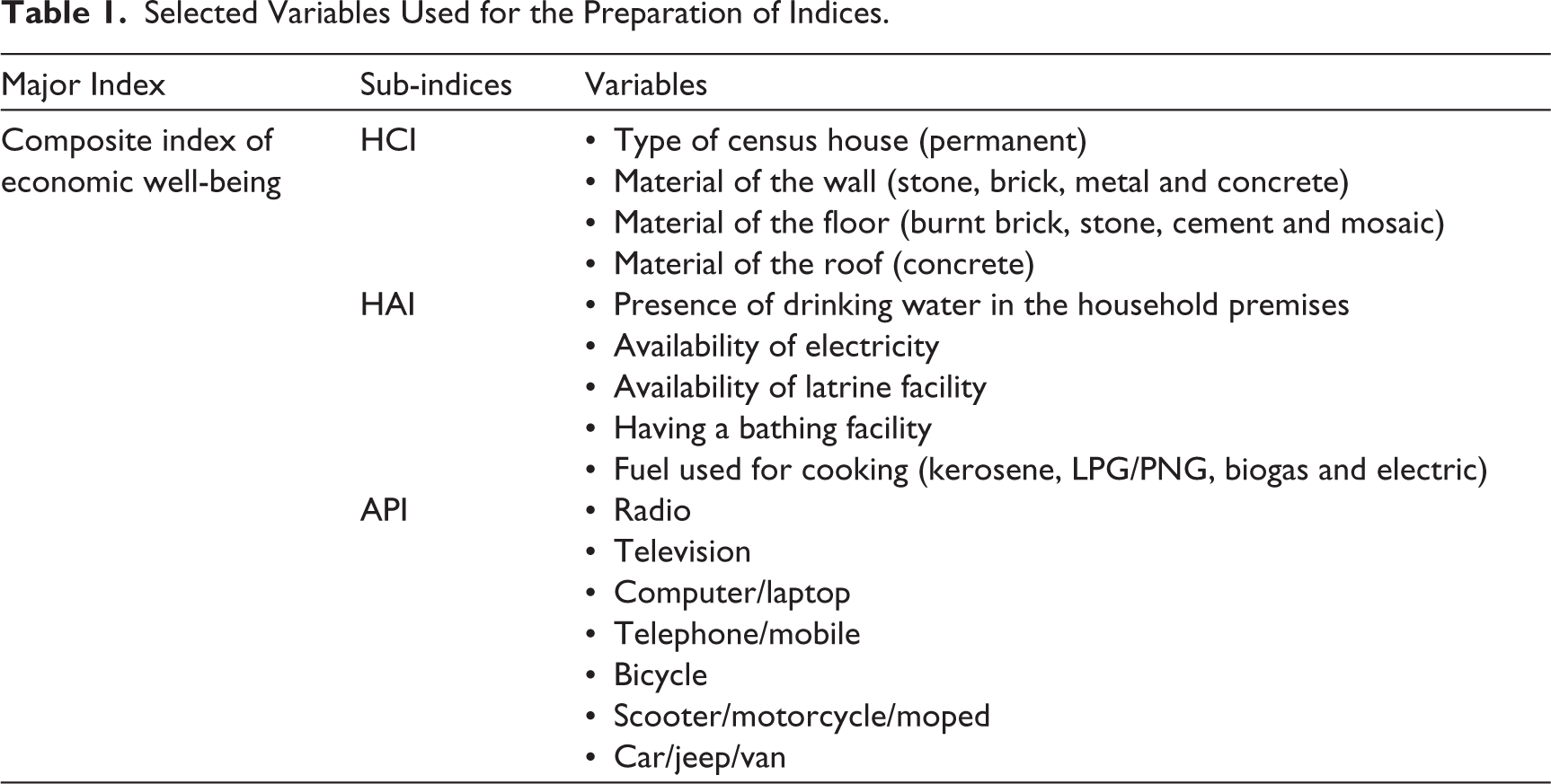
Descriptive statistics and cross-tabulation have been used for better representation of the datasets. Apart from this, parametric tests like paired sample t-test have been executed to compare the two social groups, that is, ST FHHs and non-ST FHHs. The present study also analyses the economic well-being of the two social groups by preparing an index of economic well-being which is the composite score of housing condition index (HCI), housing amenities index and asset possession index. These three indices comprise of several variables separately (Table 1), and these indices were made with the help of range equalization (normalization) technique which has been already used for calculating Human Development Index by eminent economist Mahbub ul Haq. Here, the difference from observed to the minimum value (observed – minimum) is divided by the range (maximum–minimum) to normalize all the variables. The following formula of normalization has been used to calculate the HCI, household amenities index (HAI) and assets possession index (API):
Selected Variables Used for the Preparation of Indices.
where Xi is the actual value of the variable; Min X is the minimum value of the variable; and Max X is the maximum value of the variable.
In equation (1), equal weights have been given for all the variables using a simple approach, and calculated scores of a variable vary from ‘zero’ to ‘one’. After adding all the scores of different variables of a particular observation, the summed-up value is divided by the number of variables, and finally, it creates the index. In this way, all the indices are scaled from 0 to 1 and the better condition of the households represents by the higher index score. The value of the composite index of economic well-being is the average score of the three indices, that is, HCI, HAI and API.

The study has also applied modified Sopher’s disparity index (DI) given by Kundu and Rao (1986) to measure the well-being disparity between ST and non-ST FHHs. The DI has been prepared by using the following formula:

where x2 is the value of non-ST FHHs, and x1 is the value of ST FHHs.
Results and Discussion
Housing Condition
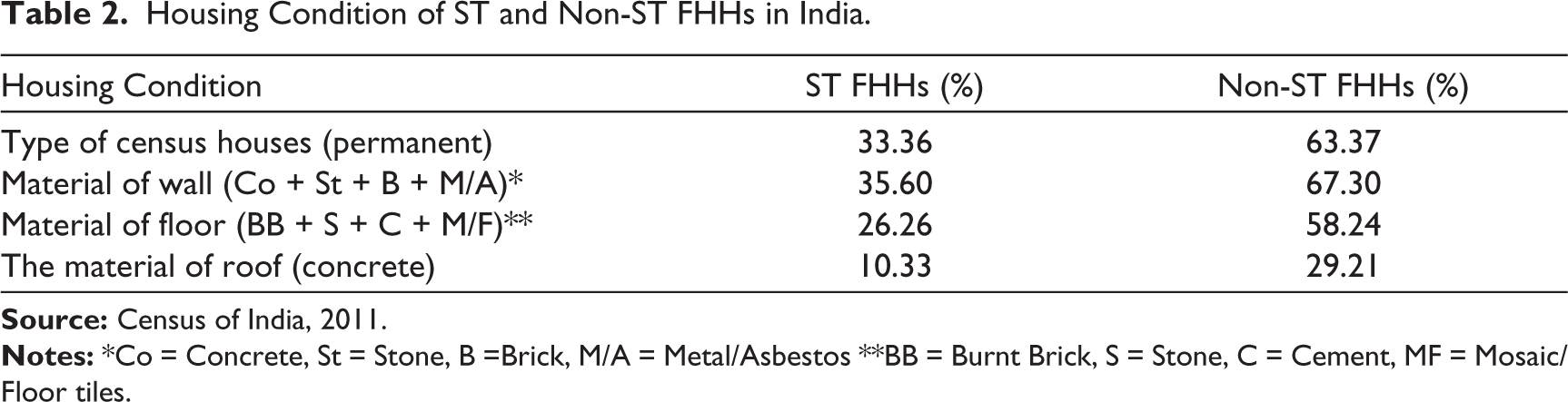
As per the National Sample Survey Organization survey conducted by the Government of India on housing conditions and amenities in 2008–09, the disparities between the general population and marginalized communities such as Scheduled Castes (SC) and ST continue to exist (Kumar, 2015a). So the quality of housing really matters to the human being for living a standard life. The quality of housing condition depends on materials of the roof, wall and floor. Type of houses is another important variable to examine the condition of the house. This is a very pathetic situation that even in the twenty-first century, around two thirds of total ST FHHs are living in either semi-permanent or non-permanent houses, while the same proportion of non-ST FHH are living in permanent houses because tribal communities are isolated in the remote areas, mainly in forest and hilly areas. As per Census 2011, most of the tribal female-headed houses are made by bamboos, mud and also other non-durable materials. Thus, the percentage of households living in non-permanent houses is higher in ST FHH community, because of a large number of tribal societies belong to the nomadic and semi-nomadic community (Government of India, Draft List of Denotified Tribes, Nomadic Tribes and Semi-Nomadic Tribes of India). Census data also reveal that only 35.60% ST FHHs construct their wall of houses using permanent materials while this share is 67.30% for non-ST FHHs. Similar result is observed regarding the material of the floor where only 26.26% ST FHHs are able to build the housing wall using resistance materials, while the share is 58.24% for its non-ST FHH counterparts. The percentage of FHHs of ST is higher (89.67%) than the non-ST (70.79%) who cannot afford to cover the roof of their house by concrete (Table 2). It is true that house roofs are not uncovered, but a large percentage of them are covered by grass, plastic, tiles, asbestos sheets and other material which fails to protect heavy rainfall and storms. The overall analysis of housing condition of ST FHHs presents the poor housing condition in comparison with the housing condition of non-ST FHHs. This result also indicates that the ST FHHs have inadequate accessibility of durable housing materials than the non-ST FHHs.
Housing Condition of ST and Non-ST FHHs in India.
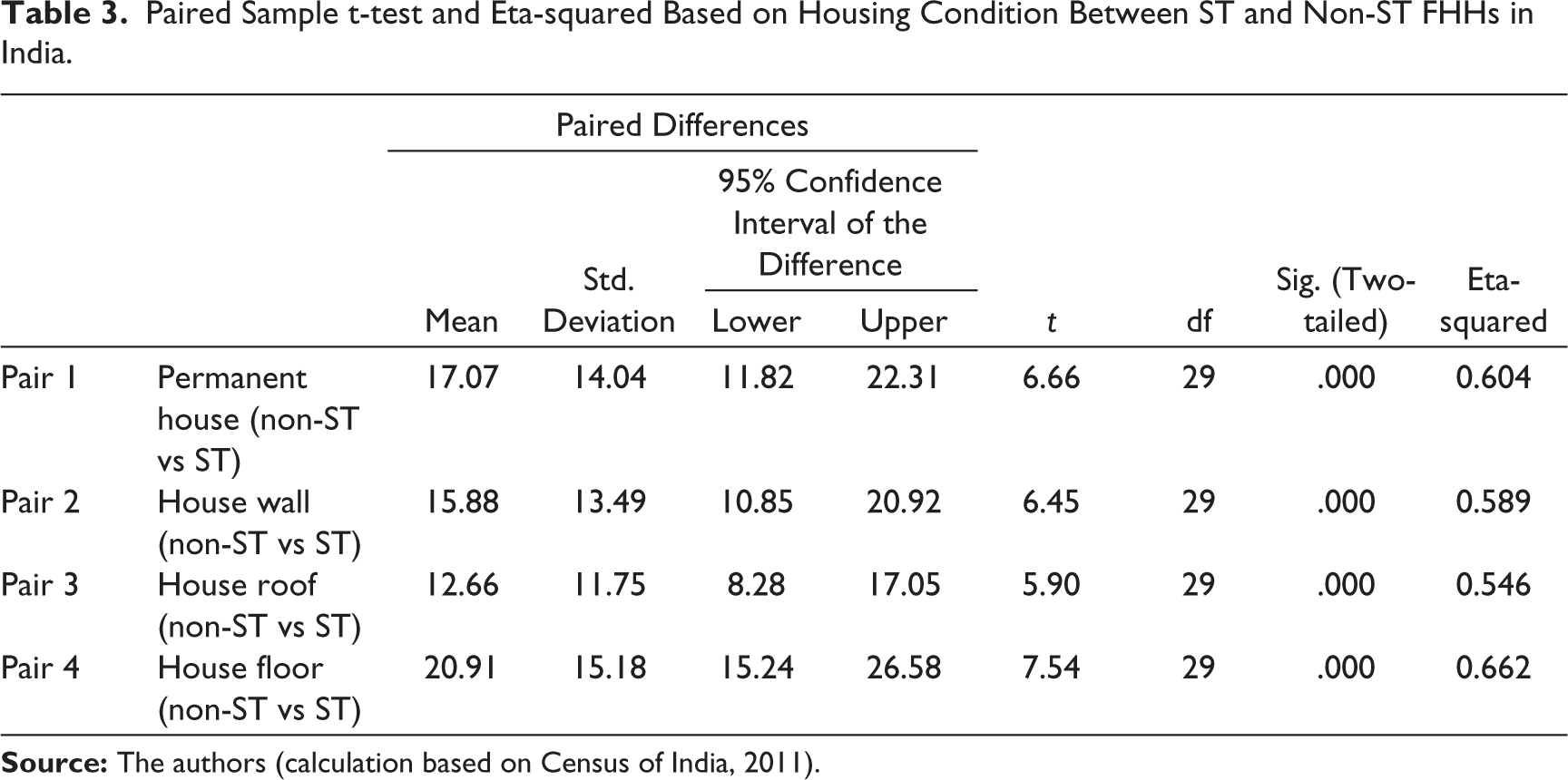
The study has also executed a paired sample t-test to compare the housing condition of ST FHHs and non-ST FHHs (Table 3). There is statistically significant difference in all the four variables of housing condition between ST FHHs and non-ST FHHs as p value is <.05 (two-tailed) for the type of houses, material of the wall, material of floor and material of the roof. The eta-squared statistic for all the four variables of housing condition indicates the large effect size as the value is >0.14 in each case.
Paired Sample t-test and Eta-squared Based on Housing Condition Between ST and Non-ST FHHs in India.
Housing Condition Index
Food, clothes and shelter are the three basic needs of humans. Shelter is an essential component of people’s daily life. It is the place where they feel safe and secure. In the ancient period, man lived in the cave of the hills, on the branches of the trees but in modern civilized society, the form of shelter has been changed into a durable house which is well constructed and built up by the long-lasting materials and this form of houses can protect the dwellers from the natural as well as artificial hazards. Generally, the quality of a house depends on materials used for making the housing wall, roof and floor. These not only show the housing quality but also represent the economic condition of that household. Dwellers who are economically well off, build their houses by modern artificial housing materials (i.e., stone, brick, metal, concrete and others) which are more hazard resistant (e.g., rain, storm and others). On the other hand, those who failed to make their houses by the modern housing materials mostly build kuccha houses depending on the natural or non-durable materials, that is, mud, grass, bamboo, tile, tin, polythene and also other material which is non-durable and more vulnerable to resisting the hazards.
In this study, housing condition has been considered as an important indicator to compare the economic status of FHHs in ST and non-ST communities through HCI. Four variables, that is, type of census house (permanent), material of the wall (stone, brick, metal and concrete), material of floor (burnt brick, stone, cement and mosaic) and material of roof (concrete), have been used to measure the HCI. The lower value of the index indicates the worse quality of houses and higher score refers to the better housing quality. In India, the score of HCI of FHHs in ST category is 0.25, which is less than half of non-ST FHH (0.54) category. The overall housing condition of both the social groups is not satisfactory, but the condition of ST FHHs is worst. Because of the poor economic condition, most of them cannot afford modern equipment and materials to build their shelters.
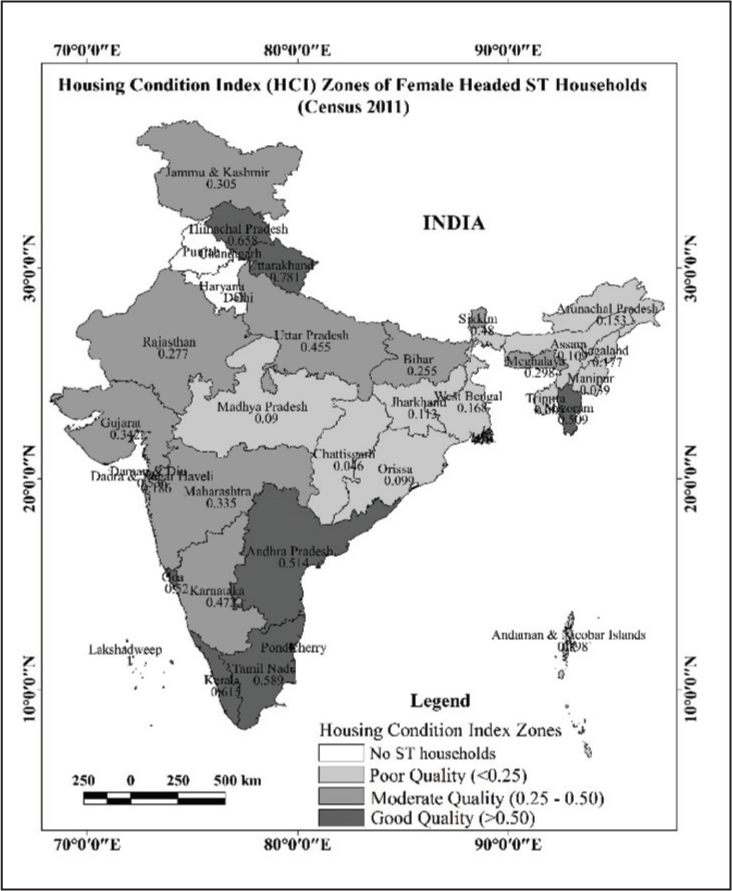
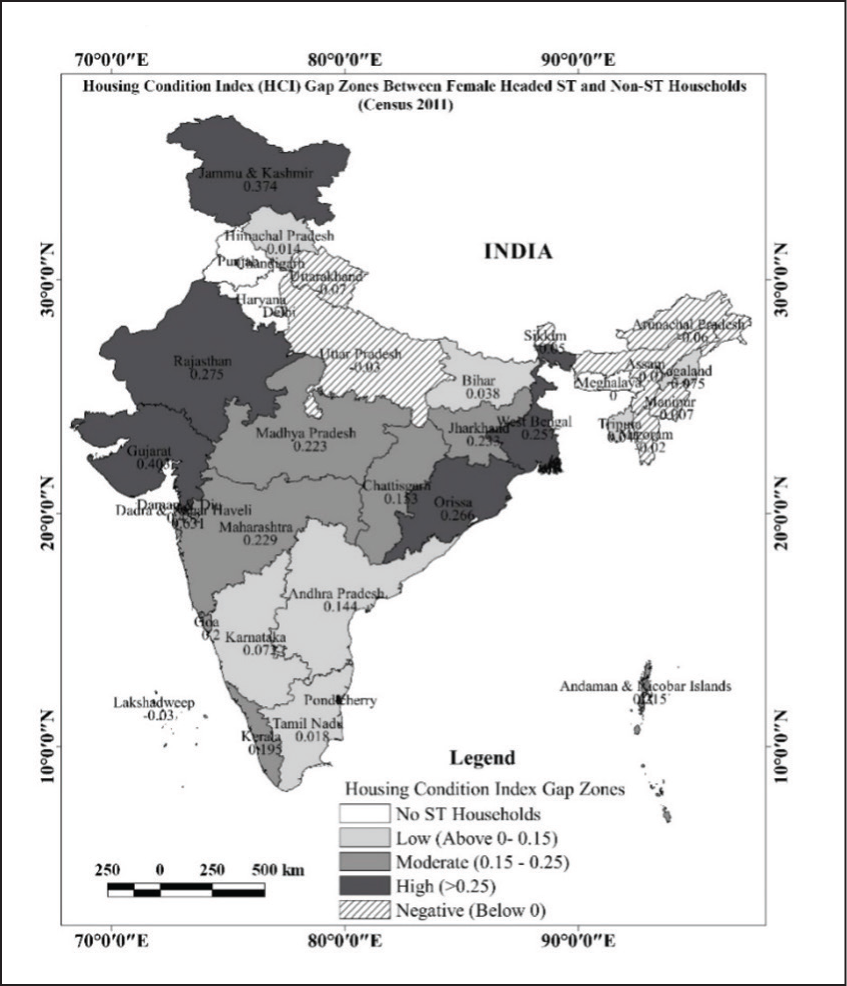
For showing the regional pattern of housing quality in both the social groups, all the states and UTs have been categorized into three zones, namely good quality (>0.50), moderate quality (0.25–0.50) and poor quality (<0.25), of housing based on HCI score. Out of 30 states/UTs, ST FHHs in 12 states are living in poor housing conditions while only in 5 states non-ST FHHs have poor quality of housing. The 12 states/UTs with deplorable housing conditions of ST FHH community are mostly concentrated in the north-eastern, eastern and central parts of India (Figure 1). Most of the states of central and east India, which are in the poor HCI zone of the ST FHHs category, are in the moderate HCI zone of non-ST FHHs. This result represents that in these states, affordability of the modern durable materials used to build the house by the ST FHHs is much less compared to the non-ST FHHs. The good quality of housing condition of ST FHHs is concentrated in nine states/UTs which includes Kerala, Tamil Nadu and Andhra Pradesh from south; Himachal Pradesh and Uttarakhand from north; Mizoram from north-east; Goa from west of India and in two UTs, that is, Lakshadweep and Daman and Diu. In almost half of the states/UTs (14), non-ST FHHs have the score of good quality in HCI as they build their houses with durable materials. Most of the states are from the west and south India. Himachal Pradesh and Uttarakhand from north India are also in this zone for both the categories while in Jammu and Kashmir from north good housing condition of the non-ST FHH category (Figure 2). None of the states from north-east and east India is in the zone of good HCI for both the communities which reflect worse condition of housing condition of north-eastern states except Mizoram, where the ST FHHs are in a good position. The overall result represents a higher regional disparity among the states for the accessibility and affordability of better housing condition of ST and non-ST FHHs.
At the national level, the gap of HCI score between non-ST FHHs and ST FHHs is 0.29, which indicates immense inequality of satisfactory housing conditions between the aforesaid social groups, and the gap score also refers that the housing condition of non-ST FHHs is much better than the ST FHHs. This gap has been measured by deducting HCI value of ST FHHs from non-ST FHHs. The value of gap may be either positive or negative, which designates the better housing condition of non-ST FHHs and ST FHHs, respectively. The value of HCI gap has been categorized into four zones, that is, high (>0.25), moderate (0.15–0.25), low (above 0–0.15) and negative (below 0), to reveal the differences of housing conditions between the two social groups (Figure 3). The highest HCI gap has been found in two UTs, that is, Dadra and Nagar Haveli (0.63) and Daman and Diu (0.45). Among the larger states, a higher HCI gap is found in Gujarat (0.40) and Rajasthan (0.28) from the west; Jammu and Kashmir (0.37) from the north; Odisha (0.27) and West Bengal (0.25) from the east. In these states, the housing condition is better in non-ST FHHs than in ST FHHs. Out of 30 states/UTs, the lowest positive gap is held by Himachal Pradesh (0.01). Sikkim from the east; five states, namely Assam, Arunachal Pradesh, Meghalaya, Manipur and Mizoram, from the north-east; two from north, that is, Uttar Pradesh and Uttarakhand, and one UT Lakshadweep, where the overall housing conditions of ST FHHs are better than the non-ST FHHs as they have a negative gap score. Among these states, Arunachal Pradesh (–0.06) holds the highest negative gap value of HCI. Manipur (–0.007), Uttarakhand (–0.007) and Meghalaya (–0.007) are holding a negligible gap value, which indicates that in these states the housing condition of FHHs is about similar in both the ST and non-ST communities.

Household Amenities
Basic amenities is an important factor to assess the household quality of living (Das & Mistri, 2013). According to Kumar (2015b), access to basic amenities such as drinking water, sanitation, electricity, housing, drainage and others is crucial for the overall well-being of a household. Agreed with Kumar, availability of drinking water facility within household premises, having the connection of electricity, bathing and latrine facility and non-conventional fuel used for cooking have been taken into consideration as the measures of basic housing amenities in this study. In 2013, Bhagat already established the fact that STs have been at the lower end in all indicators of living conditions in comparison with the SCs and general population. Our study expands the above fact with special attention to ST FHHs in compassion with non-ST FHHs.
Water is the most important amenity among all other amenities. There is no alternative of it. It is necessary to have safe drinking water facility in the household premises. Monitoring of the safe drinking water and sanitation is a part of ‘Millennium Development Goal’ taken by WHO and UNICEF in 2015. In India, the Eleventh Five-Year Plan (2007–2012) tried to ensure social equity in the distribution of assets for drinking water so that the SC/ST population and other poor and weaker sections are covered fully. Later, the Twelfth Five-Year Plan (2012–2017) aimed to tackle the issue of the social system and priorities moving towards household piped water connections in SC and ST households, as has been envisaged in the Strategic Plan for the drinking water sector. In spite of all these plans, the Census 2011 data reveal that around half of the total non-ST FHHs have the availability of drinking water within their household premises, and it is most unfortunate fact that only one-fifth of the total ST FHHs can access drinking water within their household premises. These figures indicate intense inequality between ST FHHs and non-ST FHHs (Table 4).
Household Amenities of ST and Non-ST FHHs in India.

Electricity is the source of energy for technological gadgets, light and other electrical goods which are used in the household as well as in our day-to-day life. In this postmodern era, people cannot imagine their daily life without electricity. Only 53% of ST FHHs have electricity facility as compared to 73% of non-ST FHHs, which reflects a wide gap between these two communities. Sanitation facility is another important basic need of livelihood/quality of life. The gap of access to toilet facilities between the two groups is much higher than that of electricity facility. Census of India 2011 reveals that about 53% of the total households do not have a latrine facility. In this study, Census data show that ST FHHs do have the bathing and latrine facility of just half of the non-ST FHHs (Table 4). It is found that 74.43% ST FHHs and 49.25% of non-ST FHHs do not have the facility of the latrine at their household premises. Only a few of them use the public toilet. Most of them practice open defecation, which is harmful to their health as well as for the environment. It is more detrimental to health for children and pregnant women. Not only does open defecation lead to the health-related diseases but some times it also leads to eve-teasing, rape and other social crimes. Absence of a latrine facility is also a blow on the dignity of women.
In the modern era, a large share of households in India depends on conventional energy for cooking as evidenced from Census 2011 (firewood 49% and cow dung cake 7%). In case of FHHs, the maximum share goes to firewood, cow dung cake, coal, charcoal and other primitive fuels for cooking, and this practice is more common in ST FHHs. Census 2011 reveals that in India there are only about 32% of households who have used the modern type of fuel, that is, kerosene, LPG/PNG, biogas and electricity for cooking. Due to lack of access to clean fuel like LPG/PNG, STs are heavily dependent on woods, crop residue and cow dung for cooking fuel purposes in both rural and urban areas (Bhagat, 2013). A similar picture is also found for the ST FHHs. The FHHs share using LPG and other non-conventional sources of energy for cooking is only 13% among STs compared to 34% among non-ST FHHs in 2011 (Table 4).
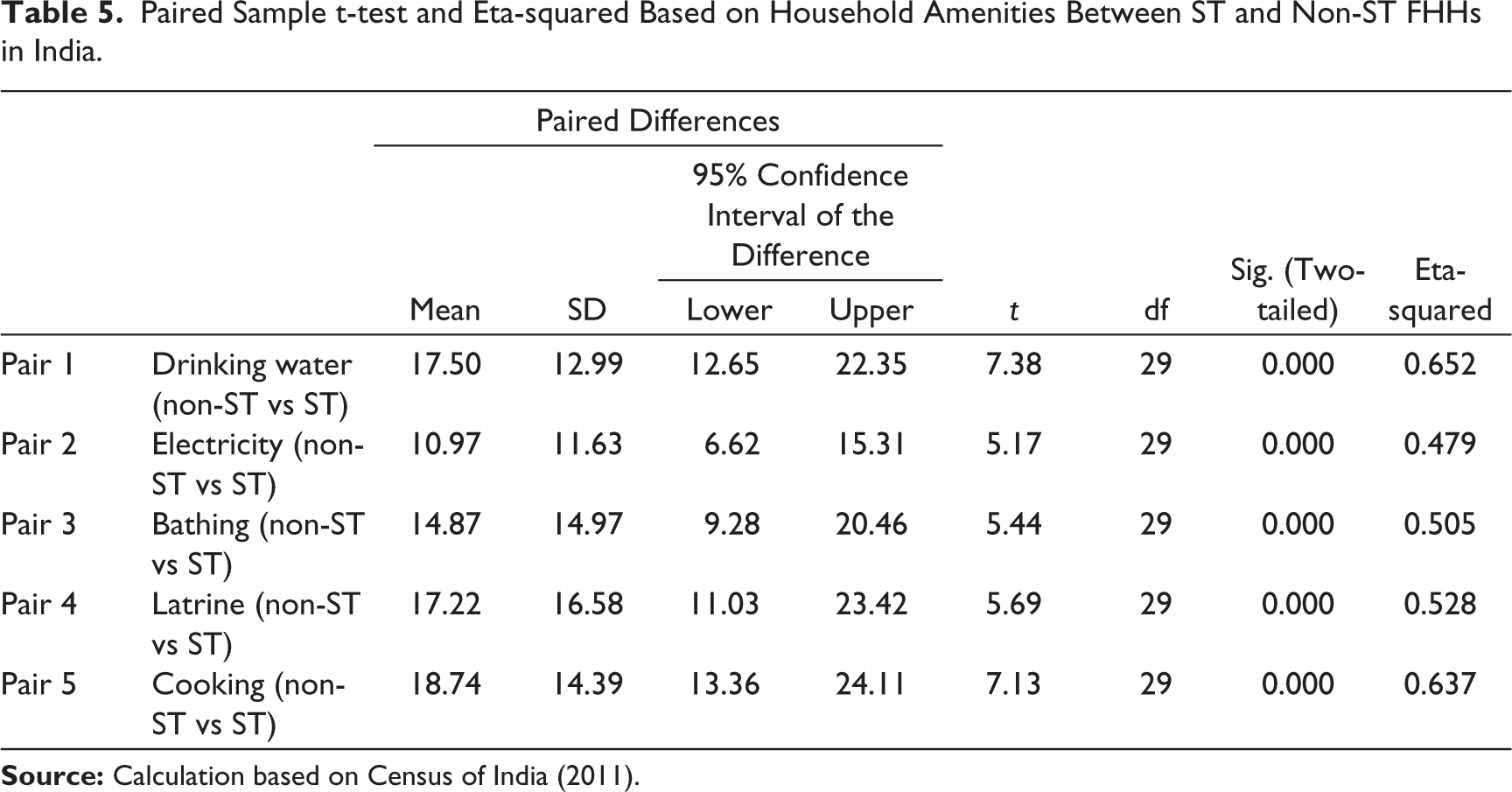
Paired-sample t-test has been conducted to evaluate the significant differences of accessibility of basic amenities within household premises between ST and non-ST FHHs (Table 5). The results reveal that statistically significant differences exist between the two social groups in each variable considered for analysing basic amenities because the probability value is less than 0.05. This means the non-ST FHHs are accessing significantly better basic amenities within their houses in comparison with ST FHHs. There is not only significant difference but the values of eta-squared indicate the large effect size, as the statistics are greater than 0.14 in each case.
Paired Sample t-test and Eta-squared Based on Household Amenities Between ST and Non-ST FHHs in India.
Household Amenities Index
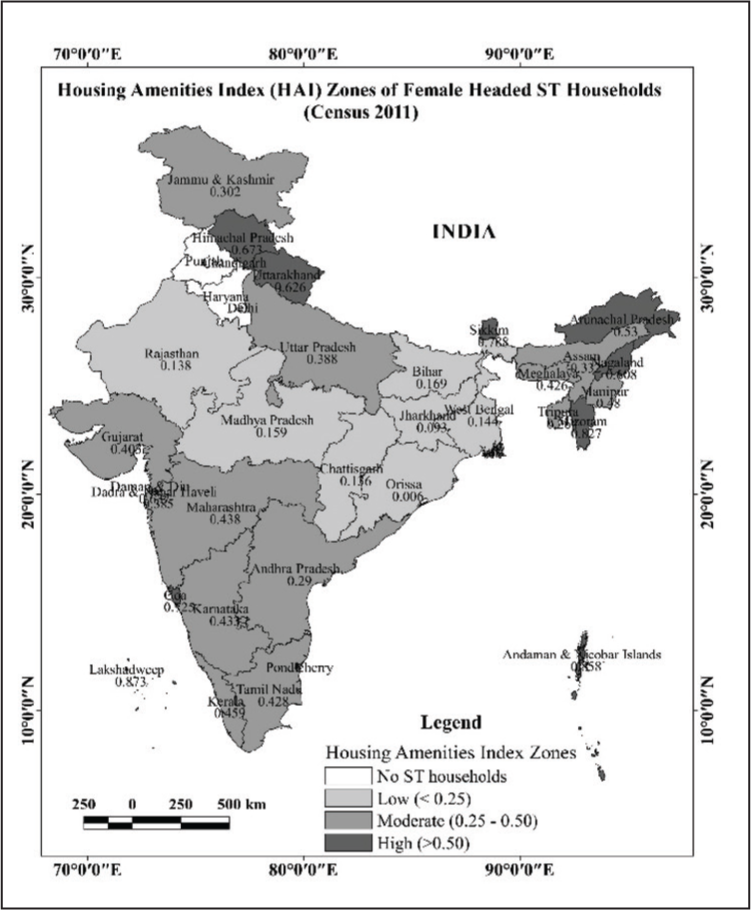
The well-being of the household cannot be imagined without the presence of basic household amenities. These play an important role in our daily life and leave their footprints. To analyse the overall basic amenities services, HAI has been prepared considering five variables, that is, presence of drinking water in the household premises, availability of electricity, presence of bathing facility, latrine facility and the fuel used for cooking (kerosene, LPG/PNG, biogas and electric). Without these amenities, it is not possible to achieve the goal of a sustainable livelihood. At the national level, the HAI scores for the ST FHHs and non-ST FHHs are 0.28 and 0.45, respectively. This result indicates that most of the ST FHHs fail to afford the basic amenities, and they are lagged far behind the non-ST FHHs community. Lakshadweep (0.87), Andaman and Nicobar (0.86), Mizoram (0.83), Sikkim (0.79) and Goa (0.73) are holding the higher HAI value of ST FHHs. On the other hand, the non-ST FHHs have the highest HAI value in Goa (0.88) and Dadra and Nagar Haveli (0.88). Odisha holds the lowest HAI, that is, 0.01 and 0.09, for both the ST and non-ST FHHs, respectively.
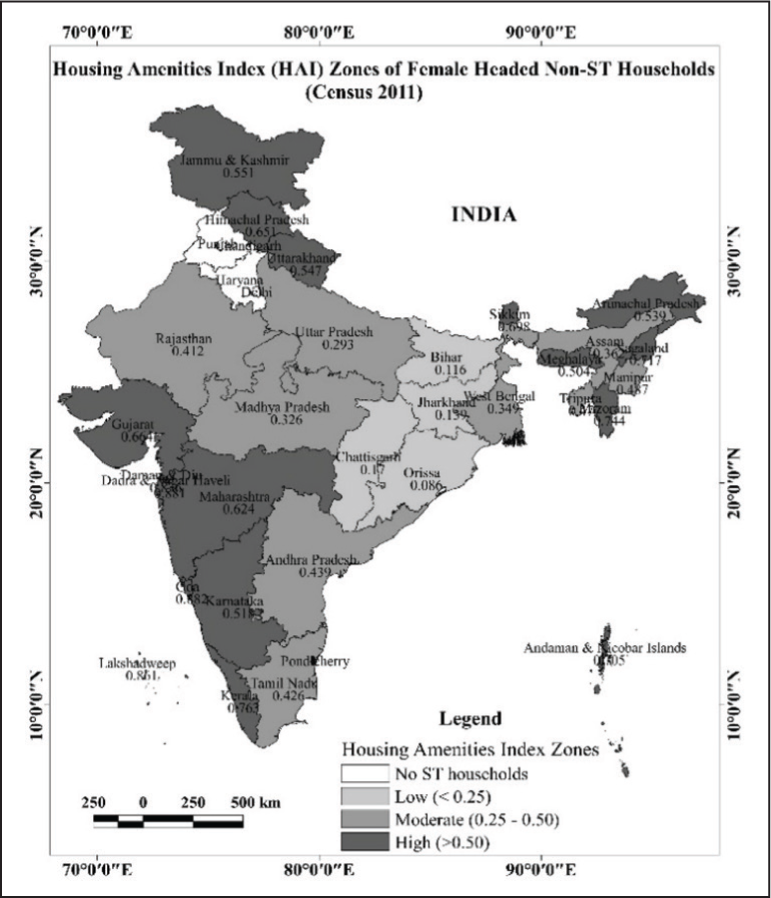
Among the states of India, the degree of availability and accessibility of household amenities is not uniform even for the same social group. The range of HAI is 0.86 and 0.79 in ST and non-ST FHHs, respectively. This higher range value shows the greater inequality of the accessibility of basic amenities in FHHs for both the categories. Based on HAI range, the states have been categorized into three zones, that is, high (>0.50), moderate (0.25–0.50) and low (<0.25). Excluding Sikkim, all the states from east India and central India and Rajasthan from western India are in the low HAI zone of ST FHHs category, while there are only three states, that is, Jharkhand, Bihar and Odisha, where non-ST FHHs community belongs to the low HAI zone. This result reveals that most of the FHHs belonging to ST community are not in a position to avail at least the basic household amenities in comparison with non-ST FHHs. The high HAI score of ST FHHs is in 10 states (Figure 4); on the other hand, non-ST FHHs have a high HAI score in 16 states (Figure 5).
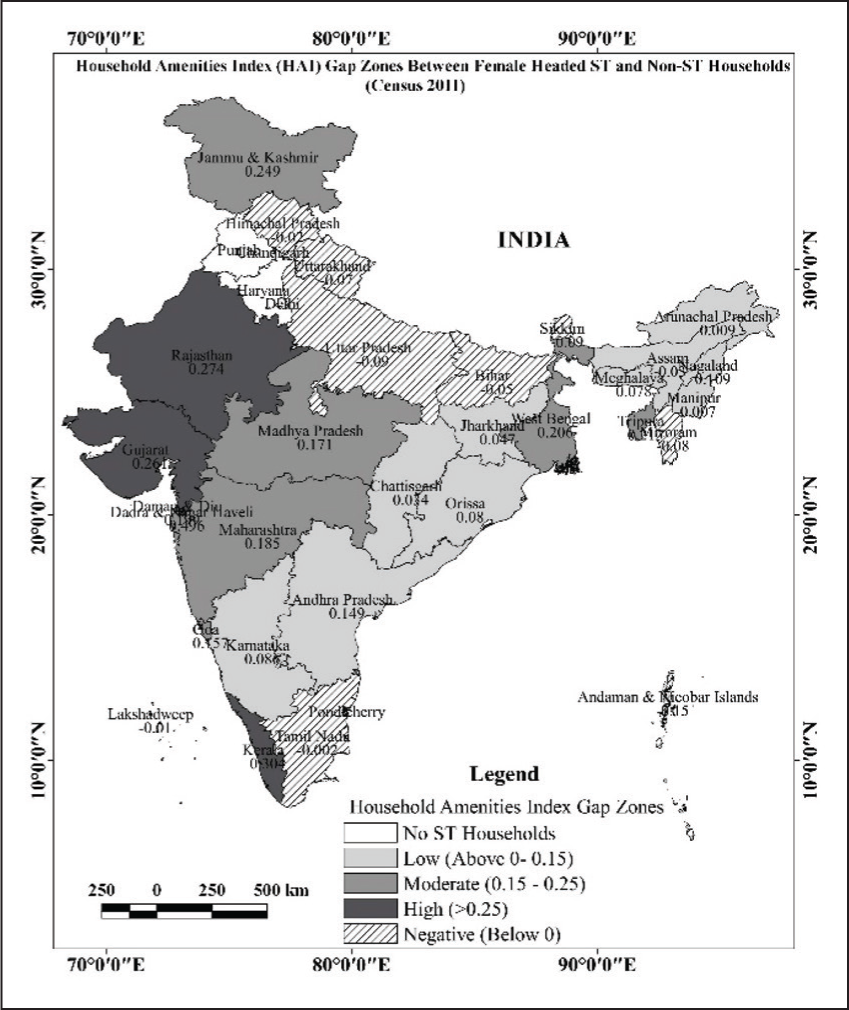
The state-level analysis depicts the picture that there is discrepancy between ST FHHs and non-ST FHHs to avail the basic amenities within their housing premises. Like the gap of HCI, again a discrepancy of HAI between the two social groups has been measured by deducting HAI value of ST FHHs category from non-ST FHHs. The value of gap may be either positive or negative, which designates the better housing condition of non-ST FHHs and ST FHHs, respectively. At the national level, the HCI gap is 0.17, showing unequal accessibility and affordability between the two groups. Dadra and Nagar Haveli (0.50), Kerala (0.30) from south India and two states from western India, namely Rajasthan (0.27) and Gujarat (0.26), hold higher gap values and belong to the high HCI gap zone. This result reveals that in these states, ST FHHs are very much poor to access the basic household amenities compared to non-ST community. There are seven states, that is, Tamil Nadu, Himachal Pradesh, Bihar, Uttarakhand, Mizoram, Sikkim, Uttar Pradesh, and two island states, namely Lakshadweep and Andaman and Nicobar, where the presence of household amenities in ST FHHs is higher compared to non-ST FHHs (Figure 6). Andaman and Nicobar (–0.15) is holding the highest negative HAI gap. From the states of northeast, only in Mizoram, ST FHHs are in a better position to access amenities in comparison with the other group. Tamil Nadu (–0.002) holds a negative value, but the value is negligible. Thus, in this state, there is about similar conditions of both the communities in terms of availing basic amenities.
Specified Assets
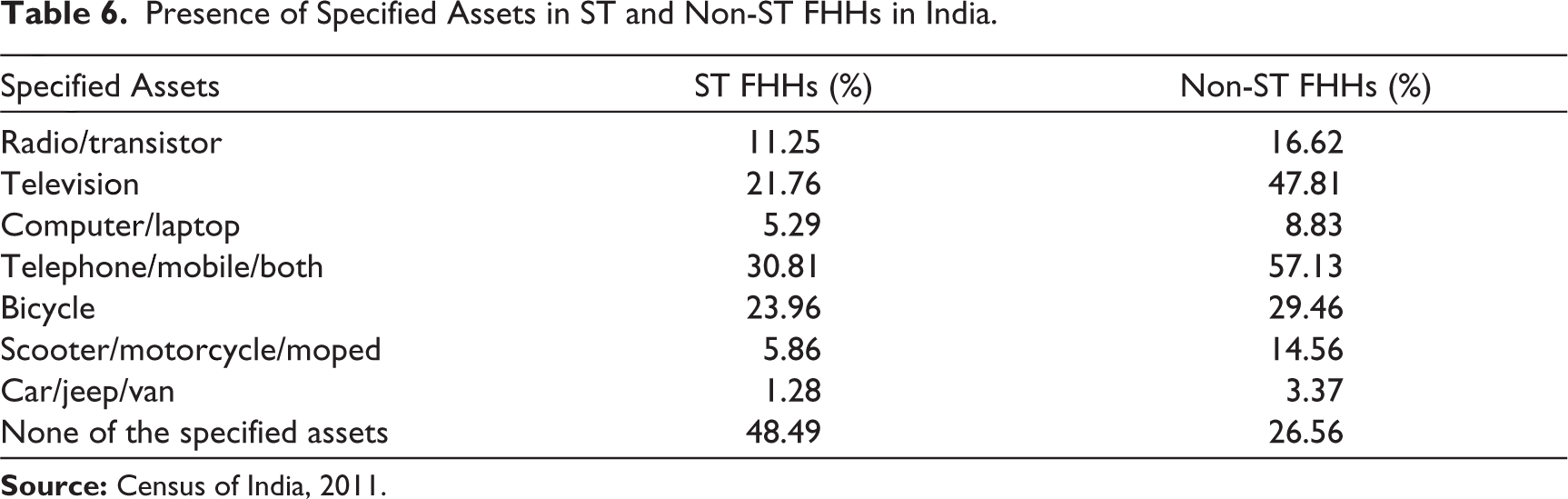
Asset is an important indicator to determine the well-being of any household (Sarma et al., 2017). The economic condition of the households and the lifestyle of the dwellers can be easily portrayed from the presence of physical capital. It also represents the social status and economic class of the household. Presence of specified assets raises the standard of living of the household. Monetary values of the assets which are present in the house represent the affordability level of that household. In general, household having low level of assets ownership indicates the poor economic condition, lower level of consumption and savings as well as less investment on the household. Ownership of luxury goods represents the higher investment which indirectly shows the higher income level and greater wealth of that household. Generally, people belonging to the economically poor category do not have the ability to afford luxury goods. There is the presence of inequality to access the basic assets among the social groups in Indian society. Mainly STs, popularly known as ‘Adivasi’, have lesser accessibility of the physical capital than the non-ST community. In this study, seven specified assets, that is, radio/transistor, television, computer/laptop, telephone/mobile, bicycle, scooter/motorcycle/moped and car/jeep/van, have been taken into consideration to compare the well-being between the female-headed ST and non-ST households. The percentage share of the household having the specified assets is higher in non-ST FHHs compared to the ST FHHs. Even about 69% of ST FHHs cannot afford mobile, a common asset in the modern age (Table 6). About half of the ST FHHs and one-fourth of non-ST FHHs do not have any specified assets. So, overall analysis regarding the assets possession reveals that ST FHHs are economically distressed than the non-ST FHHs.
Presence of Specified Assets in ST and Non-ST FHHs in India.
Again a paired sample t-test has been conducted to examine the difference in specified assets possession between ST and non-ST FHHs (Table 7). The p value for all the specified assets excluding radio and bicycle is less than .05, which proves the presence of statistically significant difference of assets affordability between the two social groups. The significant difference of telephone/mobile and computer/laptop also clarified the existence of the digital divide between these two groups. In all the cases, eta-squared values are more than 0.14, which reveals the large size effect. On the other hand, for the two cheapest assets, that is, radio and bicycle, the p value score is more than .05, indicating there is no significant difference between ST and non-ST FHHs. Eta-squared value is >0.06 but <0.14 for these two variables indicating the medium effects. The paired sample t-test also reveals the presence of a significant difference between the ST and non-ST FHHs who do not have any specified assets at their household. In this case, eta-squared value also indicates a large effect size which >0.14.
Paired Sample t-test and Eta-squared Based on Asset Possession Between ST and Non-ST FHHs in India.

Asset Possession Index (API)
Economic class, as well as the social status of a household, can be determined by the presence and quality of assets. It reflects the lifestyle of the dwellers in a household. It also helps to cope up with the vulnerable situation whenever it emerges, as Nam et al. (2008) noted that assets are stocks of resources which are accumulated over time and these provide for future consumption and source of security against contingencies. In general, economically well-off households have the higher level of asset ownership which is also an indirect approach for assessing the poverty level. Census of India in 2011 released data regarding some physical assets, which are already enlisted in Table 1, are used to prepare API.
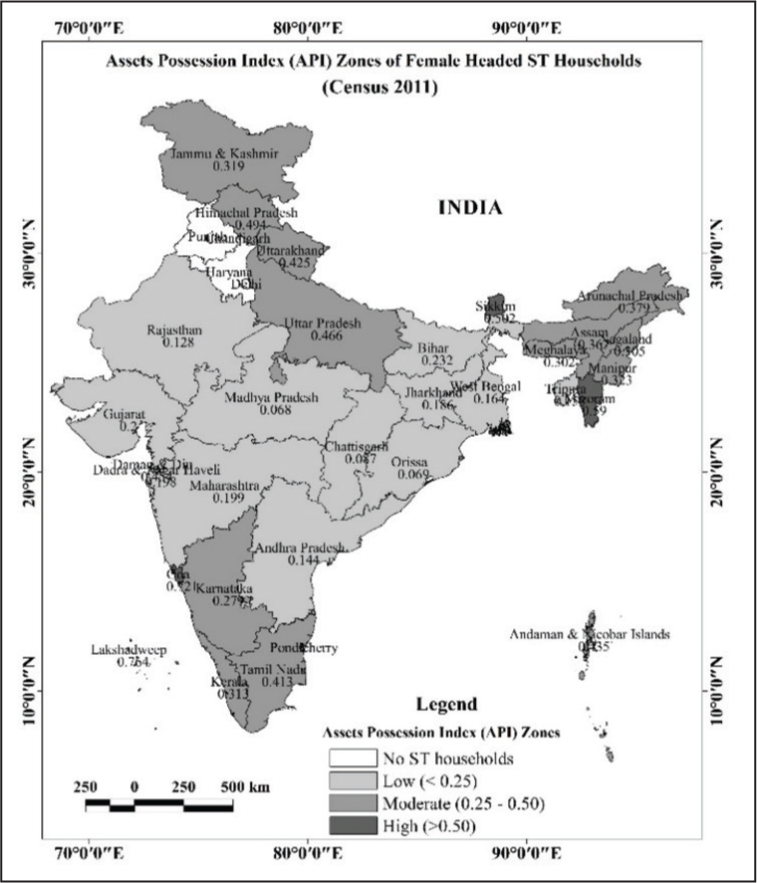
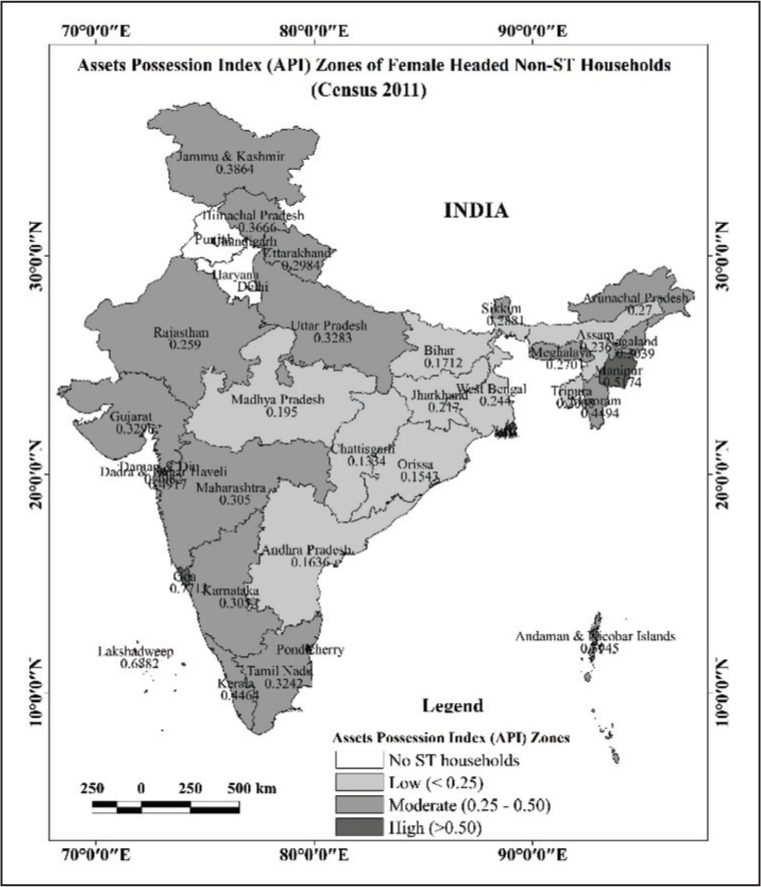
The data analysis reveals that most of the FHHs from both the communities are unable to afford the specified assets at a satisfactory level. At the national level, the API values for ST and non-ST FHHs are very low, that is, 0.19 and 0.30, respectively. Based on the API score, all the states/UTs have been categorized into three zones namely high (>0.50), moderate (0.25–0.50) and low (<0.25) to portray the spatial distribution of assets owned by the ST and non-ST FHHs (Figures 7 and 8). There are four common states, that is, Jammu and Kashmir, Himachal Pradesh, Uttarakhand and Uttar Pradesh, reporting a high API score for both the categories of ST and non-ST FHHs. Goa from western India for non-ST FHHs and Lakshadweep for ST FHHs ranked top in API. The affordability of assets is much higher in ST FHHs in Sikkim and Mizoram compared to the non-ST FHHs. Regional imbalances of assets owned by the FHHs among the states come out from the API zonation. It can be observed that the ownership level of the specified assets in the FHHs for both the ST and non-ST communities is in very poor condition in the states of eastern India.
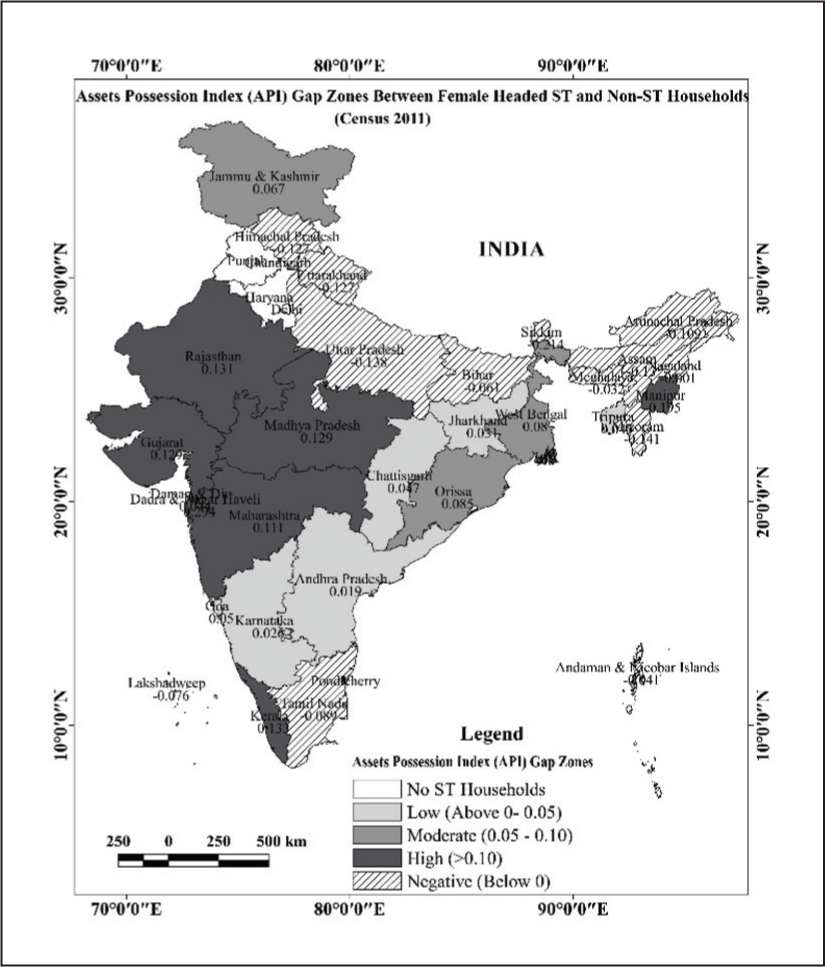
At the national level, the gap of API score between non-ST FHHs and ST FHHs is 0.11 (–0.21 to 0.29) which is relatively low in comparison with HCI (–0.06 to 0.63) and HAI (–0.15 to 0.49). This is also pointing towards the fact that the housing condition of non-ST FHHs is well off compared to the ST FHHs. To represent the regional variation of the gap of API, a similar method which applied for HCI and HAI has been adopted here. The value of API gap has been categorized into four, that is, high (>0.10), moderate (0.05–0.10), low (above 0–0.05) and negative (below 0), to show the different levels of inequality to possess the assets between the two social groups (Figure 9). In all the states of western India, a very high level of inequality to possess the assets prevails between the two groups as the gap of API score is >0.10. Kerala and Manipur also have been fallen in this zone. On the other hand, Chhattisgarh, Daman and Due, Tripura, Jharkhand, Karnataka and Andhra Pradesh have a low gap score (above 0–<0.05), which indicates negligible inequality regarding the asset ownership between the ST and non-ST FHHs. On the other hand, a negative gap score has been found in 11 states which are mostly from the north and north-east India and two UTs, that is, Lakshadweep and Andaman and Nicobar. In these states, FHHs belong to the ST are having more assets accessibility as compared to the non-ST FHHs.
Composite Index (CI)
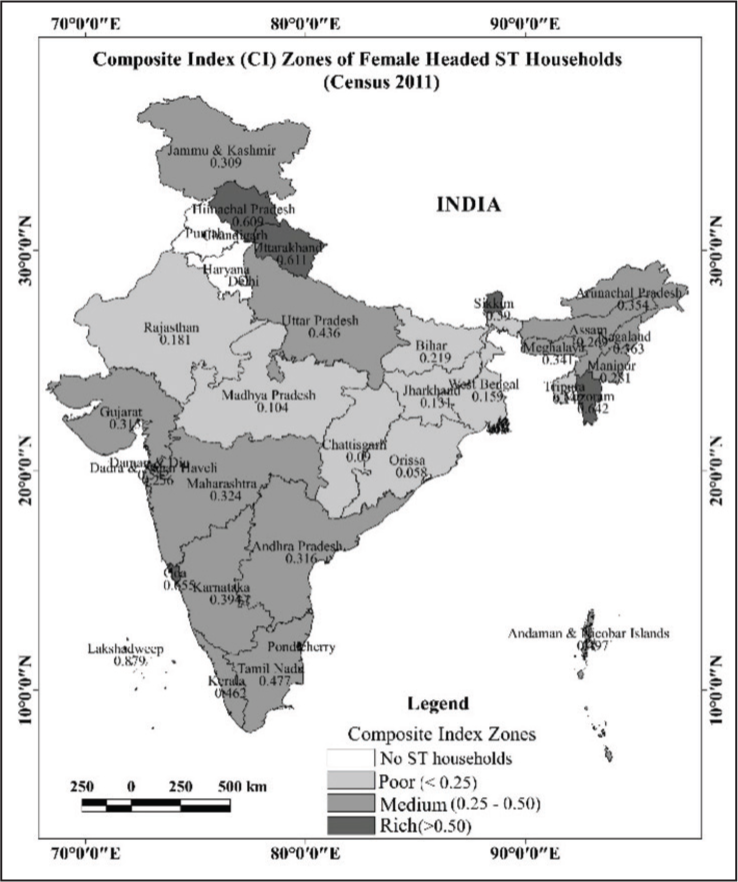
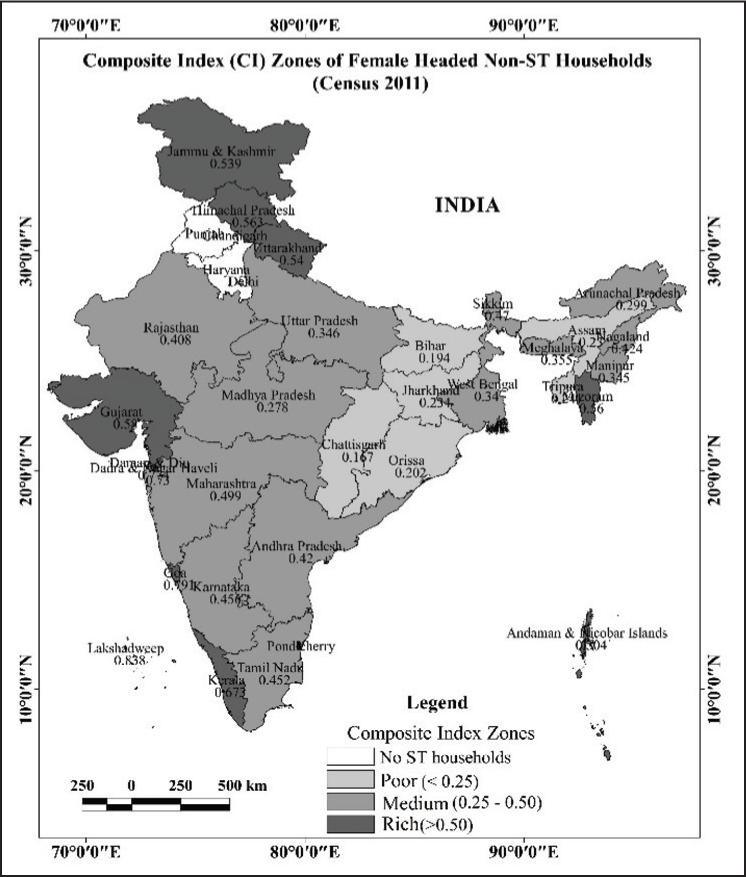
In this study, the CI has been measured based on three indices, that is, HCI, HAI and API. These indices are individually showing the condition of ST and non-ST FHHs based on selected variables in the respective categories. In addition to these, the overall status of the well-being of both the communities has been represented by the CI score. States which have reported a higher value of CI indicate a better status of the well-being of the FHHs, and similarly a lower value reflects the worse status of well-being. At the national level, the average score of CI of ST FHHs is 0.24, which represents worse economic conditions in comparison with the non-ST FHHs having an average CI score of 0.43. These figures are demarcating the backward position of ST FHHs as compared to the FHHs who belong to non-ST community.
The CI range of ST and non-ST FHHs is 0.82 and 0.67, respectively, which points towards the prevalence of inequality of economic well-being among the states. To show the regional pattern of overall economic well-being, the range has been categorized into three zones, that is, poor (<0.25), middle class (0.25–0.50) and rich (>0.50). In Lakshadweep, Goa, Daman and Diu, Himachal Pradesh, Mizoram and Uttarakhand, FHHs represent the rich and prosperous economic condition in comparison with other states for both the ST and non-ST communities, and these states are placed in the rich economic zone. A surprising fact is that only in Sikkim, the ST FHHs represent rich economy while non-ST FHHs have the mediocre economic condition. Thus, in total, there are seven states where ST FHHs are performing better economic well-being while this figure is 11 for non-ST FHHs. Besides the above-mentioned six states, non-ST FHHs in Dadra and Nagar Haveli, Kerala, Gujarat, Andaman and Nicobar and Jammu and Kashmir also have the score to be representative of a rich economy but at the same time, the CI score of ST FHHs puts these states in the middle-class economic well-being zone (Figure 10). Like the individual indices, concentration of poor FHHs from both the social groups is in the states of eastern India. In addition to the eastern states, the central states also represent the poor economic condition of ST FHHs, while this community is in a better position in north-eastern states in comparison with its counterpart.
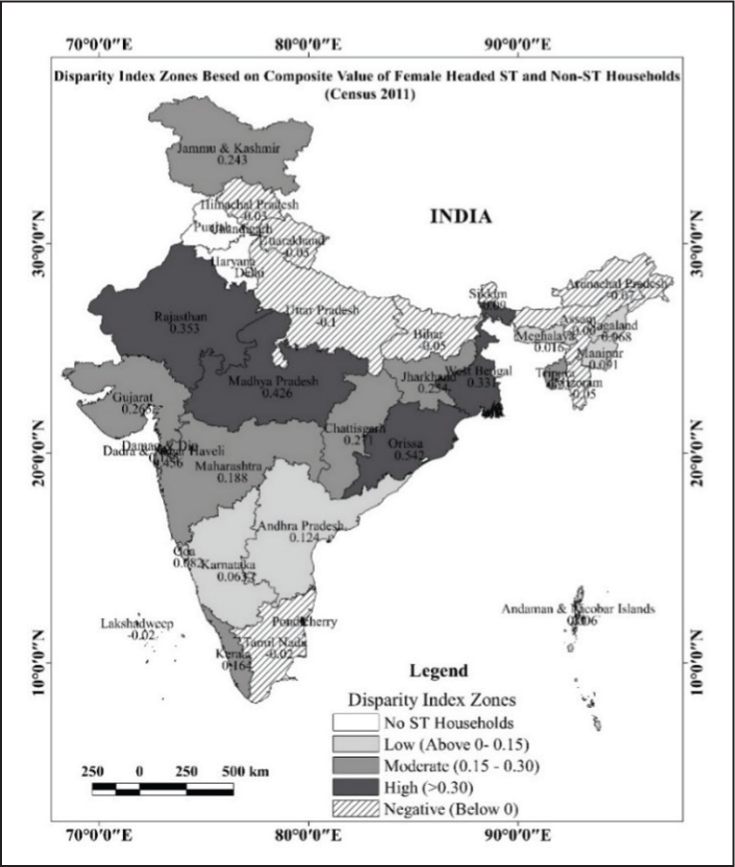
Disparity Index
In this study, to find out the well-being disparity of CI between ST and non-ST FHHs, the modified Sopher DI formula has been applied, which was given by Kundu and Rao in 1983. Unequal development and regional imbalance of well-being between ST and non-ST FHHs are best understood by the DI. Imbalanced growth among the social groups is indicated by the higher DI. On the other hand, balanced growth and development processes help to decrease the DI. From the Census of India 2011, it has been found that the DI of CI value between ST and non-ST FHHs is 0.26 at the national level, indicating the condition of non-ST FHHs is well enough than the ST FHH community. In most of the states, the overall well-being is in a better position of non-ST FHHs as compared to ST FHHs. There are a few exceptions where the condition of ST FHHs is better off. For this reason, both the positive and negative DI have been found. The positive value of DI indicates that the condition of non-ST FHHs is better than those of ST FHHs, and the negative value shows its reverse condition. The greater the value, higher is the magnitude of well-being disparity between ST and non-ST FHHs. On the other hand, a zero value of DI indicates the absence of well-being disparity between the two categories, which means both the social groups have equal accessibility and affordability of selected variables. In India, in no state a zero value of DI has been found.
The disparity between ST and non-ST FHHs is the highest in Odisha (0.54) and least in Andaman and Nicobar (0.01). On the other hand, the highest negative DI was found in Uttar Pradesh (–0.10) and lowest in Lakshadweep (–0.02). DI range between ST and non-ST FHHs has been classified into four DI zones, that is, low (above 0–0.15), moderate (0.15–0.30), high (>0.30) and negative (below 0). Odisha, West Bengal, Madhya Pradesh, Rajasthan and Dadra and Nagar Haveli are the states/UTs where the gap of DI between non-ST and ST FHHs is higher and has fallen in the high zone. On the other hand, lower DI has been found in Andhra Pradesh, Manipur, Goa, Nagaland, Karnataka, Meghalaya and Andaman and Nicobar. Excluding Tripura, all the north-eastern states are either in the low or negative zone. There are seven states where the overall condition of ST FHHs is better than the non-ST FHHs and this creates a negative gap of DI. Himachal Pradesh, Uttarakhand and Uttar Pradesh from the north; Tamil Nadu from the south; Bihar and Sikkim from the east; Assam, Arunachal Pradesh and Mizoram from north-east and a UT, that si Lakshadweep, have been fallen in this zone.
Conclusion
The overall development of any region or any country starts from the household level. Inequalities, poverty, imbalanced development, inadequate support of the government, lack of facilities and amenities are the barriers in the path of development. The status and position of the ST population in India has been historically deplorable, and again this study proves that ST FHHs are no exception from this. Presence of assets, amenities and quality of house ensures the household’s well-being. The overall analysis of housing conditions of ST and non-ST FHHs is representing the poor housing situation of ST FHHs in comparison with the housing condition of non-ST FHHs. From the study, it is cleare that the FHH condition for both the ST and non-ST communities is very poor at the national level. The situation varies state to state, but in most of the states, they are in bad conditions, especially the condition of ST FHHs is worst. In the twenty-first century, most of the houses in the FHHs are made by non-durable materials and they fail to access the modern, durable housing materials. Like the household condition, basic amenities are also necessary for household well-being. Water is one of the essential basic amenities. Safe drinking water is most important for being alive. Only one-fifth ST FHHs have the accessibility of a drinking water facility within their household premises. Even a large number of families do not have the accessibility of the toilet facility. About two-third ST FHHs are suffering from this situation. A large section of FHHs spend their night in darkness, because they do not have the availability of electricity. In the modern civilized era, it is woeful that about 90% ST FHHs and 65% non-ST FHHs are using primitive fuel for cooking. On the other hand, specified assets play a significant role as the indicators of standard of living. A large portion of FHHs fail to have specified assets.
Regional inequality of asset accessibility by FHHs is highly present in India. In the modern digital world, computer and laptop are a necessary technology, but it has been found that fewer than 10% FHHs for both the communities can afford it. Even a common gadget for communication, that is, mobile, is not afforded by more than two thirds of ST FHHs. The proportion of asset less FHHs has been found in both the communities, but it is very high in the ST community as compared to non-ST. From this study, it is also found that asset disparities exist within the community for both the ST and non-ST FHHs among the states. In the perspective of the present situation, the Indian economy is growing faster. However, this growth will be incomplete and meaningless if people from all sections of society do not get benefited. Policies and programmes are made for the empowerment and upliftment of the socially and economically backward sections in the country. However, these policies and programmes fail to achieve their targeted goals at the ground level. Loopholes in the policy and its implementation fail to diminish social inequalities. It should be kept in mind that the condition of FHHs is not equal in all the states as there are wide regional disparities among the states in India. Therefore, there is an urgent need to ensure the provision of basic social and economic opportunities to these backward households to maintain social equality and improve the standard of living. For the betterment of well-being, it is necessary to properly implement and ensure equal access to different government policies, such as ‘Sarva Shiksha Abhiyan’, ‘Beti Bachao, Beti Padao’, ‘Swachh Bharat Abhiyan’, ‘PMAY’, ‘PMUY’, ‘MENREGA’, for all, especially for the distressed communities of our society, especially the ST FHHs, as this study finds that the conditions of ST FHHs are worse than those of non-ST FHHs.
Footnotes
Declaration of Conflicting Interests
The authors declared no potential conflicts of interest with respect to the research, authorship and/or publication of this article.
Funding
The authors received no financial support for the research, authorship and/or publication of this article.