




Abstract
While progress has been made recently in understanding food systems per se, much less is known about policies around those food systems. In this paper, we aim at understanding the food system policy context with the specific objective to look at policy dynamics—defined as the way policy agendas are identified, justified, and framed by decision-makers, and how they interact. Vietnam is used as a case study. Primary data were generated through face-to-face interviews complemented by an online survey. A policy framing approach was used to structure the research. The analysis reveals how the policy agenda is considered by many actors to be only partially evidence-based and highlights the extent to which the state government remains the most powerful actor in the setting of that agenda. The research also reveals the diffusion of the food safety crisis narrative beyond its original technical domain into a larger number of policy framings related to other issues of food systems, thus making it de facto the “center of gravity” of the current agenda on food systems in Vietnam. Yet, a comparison with data from other countries challenges this narrative, and reveals instead how the (legitimate) public concern about food safety is being instrumentalized by certain groups of actors to advance their own agenda. The implication of this “distorted” framing is the risk for the decision-makers to “overfocus” their attention on this short-term issue and lose sight of some other longer-term structural trends such as the emergence of obesity in Vietnamese urban population.
Introduction
The concept of food system has gained prominence in recent years to become an integrated tool to analyze interconnected food issues and a subject of interest for national and international policy-makers. Food system can be conceptualized as “all the elements (environment, people, inputs, processes, infrastructures, institutions, etc.) and activities that relate to the production, processing, distribution, preparation and consumption of food, and the outputs of these activities, including socio-economic and environmental outcomes” (HLPE, 2017: 23).
While important progress in understanding the nature of food systems has been made (e.g. Ericksen 2008; Herforth and Ahmed, 2015), much less is known about the dynamics of policies around food systems. Several decades of research have generated a very rich body of literature on food, trade, and agriculture policies (see e.g. Anderson, 2010; Pingali, 2015), but less attention has been paid on food system policies and their agenda setting. As a consequence, many dimensions of this policy agenda are still poorly understood. For instance, what factors influence food system policies, who or what are the drivers or “shapers” behind these policies, how are the agendas defined, advocated, contested, and by whom, are questions that remain unanswered.
The present paper aims to address those questions, with the objective to improve our understanding of policy dynamics—defined as the way policy agendas are identified, justified, and framed by decision-makers, and how they interact (reinforce, annul, or contradict each other)—in the case of food systems. The overarching question which underpins this research is: “What drives the policy agenda around food systems?” Underlying this main question was a series of related questions regarding (i) the extent to which the agenda as we observed it, is (or is not) “in sync” with the reality on the ground; (ii) the role of scientific and robust evidence in shaping this agenda, versus the influence of lobbying and advocacy groups/actors; and (iii) the winners-and-losers dimensions of such current agenda.
Analytical approach
In this paper, we follow Jenkins’s definition of policy. Policy is “a set of interrelated decisions (…) concerning the selection of goals and the means of achieving them within a specified situation” (1978: 15). As such policies are not the exclusivity of official policy- and law-makers and are not restricted to the public spheres. They also include private sector’s and other non-governmental actors’ decisions in relation to strategic objectives.
To conduct this research, we used Vietnam as a case study. 1 Over the past two decades, Vietnam experienced remarkable economic development (Anwar and Nguyen, 2010) and became a rapidly urbanizing middle income country (World Bank, 2004). Combined with increasing income, urbanization led to important changes in people’s life style (Thang and Popkin, 2004), and more structurally in the food systems (Mergenthaler et al., 2009). Over the period 2001–2009, for instance, the sale values of modern retailers increased 20-fold (Reardon et al., 2012). At the same time, Vietnam became a major exporter of agricultural products. While the production of rice (the traditional staple food in Vietnam) had been exclusively oriented toward the domestic market until the late 1990s, Vietnam is now the second-largest rice exporter in the world, after Thailand (Bui and Chen, 2017). All those different changes (increase in income, rapid urbanization, shift in diet 2 and trade policies) are known to be critical drivers of food system transformation. As such they make Vietnam a particularly interesting case study when it comes to food system policy.
In line with the general literature on policy agenda and policy narrative (Dearing and Rogers, 1996; Roe, 1994), a series of postulates guided our research. We first acknowledge that decision-makers (as individual agent and as staff of specific institutions) usually pay more attention to particular issues than to others. This selective pattern, which is shaped by a multitude of factors, including institutional incentives (Baumgartner and Jones, 2009), advocacy/influence by groups or network of actors (Jones, 2011; Smith, 2000), and personal beliefs and values, is usually reflected in the way these actors identify and prioritize issues. This means that the deliberative processes of individual actors involved in policy agenda are rarely based only on the rational consideration of all available information and in particular of (scientific) evidence (see below) and instead that receptiveness to information is often based on alignment with personal ideologies, values or vested interests (agency), mitigated by other influences, such as institutional inertia and official positions (structure) (Clay and Schaffer, 1984; Weiss, 1977).
The existing literature on policy also indicates that these same policy-makers are likely to be more sensitive to crisis-type (negative) headlines than to positive ones (Grimmer, 2013; Soroka, 2006), essentially due to the ways media frame issues and seek to impact public opinion (Graber and Dunaway, 2014; McCombs 2002). We would therefore expect that the policy agenda on food systems (like many other agendas) would appear in some cases driven by short-term reactive decisions—what Iyengar (1991) identifies as “episodic frames” focused on specific incidents or cases—as opposed to longer-term, strategic drivers—or “thematic frames” in Iyengar’s definition—focused on larger trends or context.
A subsequent consideration deriving from these observations is the questioning of the role of science in the policy agenda setting. In particular, empirical evidence challenges the long-lasting model (so often advocated by researchers themselves) that science-based argument is effective at shaping and influencing policy agenda. Instead, it seems that research-based and other forms of evidence are just one among many factors influencing the policy framing and are more likely to contribute to it when they fit within the political and institutional limits of policy-makers, and resonate with their current narratives (Powell, 2006).
In parallel, one would expect to see some common narratives emerging across a large number of policy-maker groups under certain circumstances, especially when the context is such that a particular issue is perceived as of high priority. For example, one usually observes a pervasive adoption of a more economic agenda during periods of recession and high unemployment (Neuman et al., 1992) or an increase in political narratives across the board during election periods (e.g. Iyengar et al., 2004). The emergence of immigration as a central element in general policy debates—from food security to economic growth or terrorism and national security—is another case in point (Boswell et al., 2011). The last postulate that guided our research was therefore the recognition that certain issues which may have initially been exclusively dealt with by a particular group of actors or experts, can “percolate” or diffuse among the other groups or networks of policy-makers, especially when these issues are presented as a major national-level event or crisis.
Beyond the occurrence of policy diffusion, the possibility of policy incoherence also needs to be considered. Recognizing ambiguity in policies is not a novelty in the interpretive tradition of policy analysis (Yanow, 1996). However, when they are observed, those ambiguities are not generally connected to the construct of policy itself but instead are presented as a property of linguistic expressions (Hajer and Wagenaar, 2003). As a consequence, a key assumption in that literature is that policies are by nature coherent in terms of problem definition and proposed policy actions (Hajer and Laws, 2006). As will be shown below, the analysis of the situation in Vietnam reveals that this assumption of coherence is not always satisfied.
To account for these different postulates and to structure our analysis, we adopted an analytical framework derived from policy framing (Van Hulst and Yanow, 2016). In the policy analysis literature, policy framing is largely situated in the post-positivist literature that uses interpretive and critical approaches to analyze policy agenda and policy-making as a contested meaning-making enterprise (Fischer, 2003). Generally, policy frame is used in policy analysis to offer insight into the nature of policy debates (Schön and Rein, 1994; Van Hulst and Yanow, 2016). Policy framing, as both a theory and a method, provides a slightly different insight as it seeks to understand the factors that influence the process of policy-making. In doing so, it recognizes that policy is a social construct that usually imply and involve different legitimate value considerations (Hajer and Wagenaar, 2003; Koon et al., 2016). In that sense, the literature makes a useful distinction between frame and framing. Frames highlight certain aspects of a situation and obscure others, in order to define problems, diagnose causes, make moral judgments, and suggest remedies (Entman, 1993). As such, frames determine what the actors in the policy community will consider relevant or important and how the definition of competing problems leads to normative prescriptions for action (Rochefort and Cobb, 1994). Policy frame is therefore relevant as a framework to understand how different and sometimes diverging policy interpretations may emerge from the same initial situation.
But frames are also conceived as static objects. In contrast, the idea of policy framing, as developed by Van Hulst and Yanow (2016), acknowledges the fact that policy process is dynamically built and altered in and through the actors’ interactions. In van Hulst and Yanow’s view, framing refers, therefore, to the interactive, intersubjective processes through which frames are constructed, in ways that put emphasis on the more process-oriented, politically nuanced and power-sensitive understanding of the policy agenda setting. Framing appears therefore particularly appropriate as a framework to explore policy dynamics as defined in the introduction.
Adopting an interpretive analytic approach (Yanow, 1996), we first identified the narratives and story-lines (Roe, 1994) adopted by the different actors we interviewed in relation to food systems. The term “narrative” is used here in a relatively generic manner, to emphasize the constructed nature of the framings of the “stories” around food systems. “Story-lines” are characterized by a beginning, middle, and end (Kaplan, 1993; Roe, 1994). In the context of our analysis, this means we looked specifically at these different experts’ story-lines around “what the main problem(s) is/are in relation to Hanoi/Vietnam’s food system” (the policy problem = the beginning), “what the process/policy proposed to solve/fix the problem is?” (the policy discourse = the middle), and finally “what (technical or political) tool is proposed to implement the approach” (the way to fix the problem = the end).
As part of the framing analysis, we were also interested to investigate the power/political dimension of the policy problem (Buse et al., 2009; Keeley and Scoones, 1999). Two dimensions of power were specifically investigated. First, the level of influence in society and social structures, that is, the respondents’ interpretations about who benefits from a particular policy and who are excluded or marginalized because of it, and whether those aspects of (in)equity were implicitly or explicitly part of the policy framing process. The second aspect of power we explored was the influence in decision-making processes: whose ideas are taken up and what are the underlying motivations. For example, land-use policy is believed to be closely associated with private sector actors who may approach government officials with money. In those cases, those policies may end up being formulated not based on social and economic considerations by different stakeholders but by policy-makers with the power to pursue their own interests. Series of questions were therefore incorporated in the questionnaires that explored the winner/loser component of the policy problem, and the degree to which this winner/loser component was itself part of—or acknowledged in—the policy discourse.
Methodology
Case study approach
The choice of the case study-based approach (Bennet and Elman, 2006; Gillham, 2000) adopted in this research reflects the need to account for the highly context-specificity of both policy agenda setting and food systems. The context-specificity of the policy agenda has already been highlighted in the previous section (Dearing and Rogers, 1996, see also Grindle and Thomas, 1991) and will not be reasserted here. As for food systems, although some basic typologies distinguishing several steps along a broad food system “modernization” gradient have been proposed (see, e.g. HLPE, 2017; IFPRI, 2015) suggesting the possibility of some generic food system development path, empirical analysis reveals that the food systems and food system environments of a given country are characterized by specific features and dynamics that usually distinguish them from these found in neighboring countries or even in countries with the same level of GDP, and as such make both these food systems and their outcomes unique (see e.g. Herforth and Ahmed, 2015; Vellema et al., 2013).
Data collection
The research was based on primary data collected in Vietnam from August to September 2017, complemented by secondary information from peer-reviewed articles and gray literature. The primary data were obtained through two sources: (i) a series of face-to-face open-ended interviews conducted with 37 key-informants and (ii) an online semi-quantitative survey administered to a larger group of 91 key-informants (including the 37 who had been included in the initial face-to-face interviews). The participants to those two surveys were purposively sampled among the pool of national/international decision-makers and actors who are thought to shape and contribute to the current policy agenda setting around food system in Vietnam. More specifically, those stakeholders were part of one of the four following groups: (a) government officials from relevant ministries; (b) key-actors from the private sectors (e.g. owners of local supermarkets established in Hanoi); (c) representatives of civil society or local/international non-governmental organizations, and (d) technical experts from national or international research or development institutions.
For the face-to-face interviews, the questionnaire was structured around an “Actors – Discourses – Interest” (ADI) framework (Keeley and Scoones, 1999) with the aim to unpack and reveal the main stakeholders, narratives, and power-relationships existing around the current legislations, practices, regulations, and policies related to food systems. The ADI framework was chosen because the type of information it helps to collect is particularly relevant for the framing policy analysis to be implemented as part of the analysis.
For the online survey, a semi-quantitative questionnaire focusing on the beliefs, attitude, skills, and knowledge (BASK) of the key-actors was administrated in relation to the main issues characterizing the food systems in Vietnam. The questions, structured around the four components (beliefs, attitudes, skills, and knowledge), were based on psychometric techniques (self-evaluation) and a “semi-quantified” coding system using a closed 1–7 score Likert scale 3 was used to assess the level of agreement (“strongly disagree” …“strongly agree”), awareness (“fully aware” …“not aware at all”), or knowledge (“very low” …“very high”), etc. of the respondents in relation to the questions under consideration. The BASK questionnaire was used to complete and triangulate the qualitative information collected through the face-to-face survey and provides an insight into the views of these key-actors.
A preliminary workshop had been organized at the start of the research with a group of nine technical experts, with the objective to identify the issues that are thought to be important with regard to Hanoi/Vietnam’s food systems. Relying on a two-step selection process (production of an initial comprehensive list of issues, followed by a prioritization process), the experts identified five key issues (in no particular order): (i) food safety and its implications on human health; (ii) trade policies and their impacts on food security and food systems; (iii) climate change and its impacts on food systems activities; (iv) change in agrobiodiversity and its links with diets; (v) urbanization and its implications on food systems’ actors. 4
Opening analysis
General knowledge on, and engagement in, the food system debate
A first step in the analysis was to check the (self-assessed) level of current engagement and knowledge of the different decision-makers/actors in relation to the food system agenda. The assumption was that these levels would vary, depending on the domains of expertise of these respondents. The analysis of the data confirmed this general assumption, but with some nuances—see Figure1(a) and (b). Overall, while the respondents considered their own knowledge and the knowledge of their colleagues to be acceptable (that is, above the mid-range value of 4.0), 5 two groups of experts admitted that their level of engagement with the food system debate has so far been relatively weak: the experts on urbanization and those on climate change. In contrast, the experts on trade, food safety, and to a lower extent agrobiodiversity considered that they have already engaged with the food system debate(s) in Vietnam. The data also indicate that there is no clear correlation between the level of knowledge and the intensity of engagement (compare Figure 1(a) with (b)).

(a) Level of engagement of the respondents in relation to food systems and the five key issues listed on the left-hand side of the graph. (b) Level of technical knowledge of the respondents (in blue) and their institutions (in green) on the links between food systems and the five issues. The vertical blue dotted lines represent the mid-range value (4.0) among the combination of possible coded answers (from 1 to 7). Responses below that mid-range value are indicated in red (N = 91).
Evidence-based versus lobbying?
An important interrogation around policy agenda setting relates to the prevalence of science and evidence versus advocacy and lobbying, and their respective influence on this agenda. A series of questions had been therefore included in the online survey to assess the perceptions of the decision-makers on this aspect. Here again, we expected to observe differences in the responses reflecting the background of the respondents and also, possibly, the nature of the issues (assuming that certain issues may be more subject to lobbying group pressure than others, but also that certain groups of actors may be more sensitive to evidence than to lobbying). The results only partially confirm this expected pattern. While private sector actors display the highest score for lobbying/advocacy influence (Figure 2(a)) and the lower score for evidence-based decision (Figure 2(b))—a result which was somewhat expected— the respondents from research/development agencies did not display a higher score for evidence-based decision than their fellows from the private sector did, suggesting that, in their view, the policy setting in Vietnam is not necessarily based on evidence. Officers from government agencies or civil society/NGOs activists, in contrary, seemed to consider that the policy agenda is still based on evidence. They however also gave a relatively high score to advocacy and lobbying (Figure 2(a)). 6 Overall, the average scores obtained across the four groups is higher for lobbying than for evidence (evidence average = 4.51; lobbying average = 4.78). In this context, it is also interesting to notice that all respondents, irrespective of their backgrounds, consider that the current food system policy agenda reflects only poorly the reality on the ground (Figure 3). For all five key-issues, the average scores were below the mid-range 4.0.
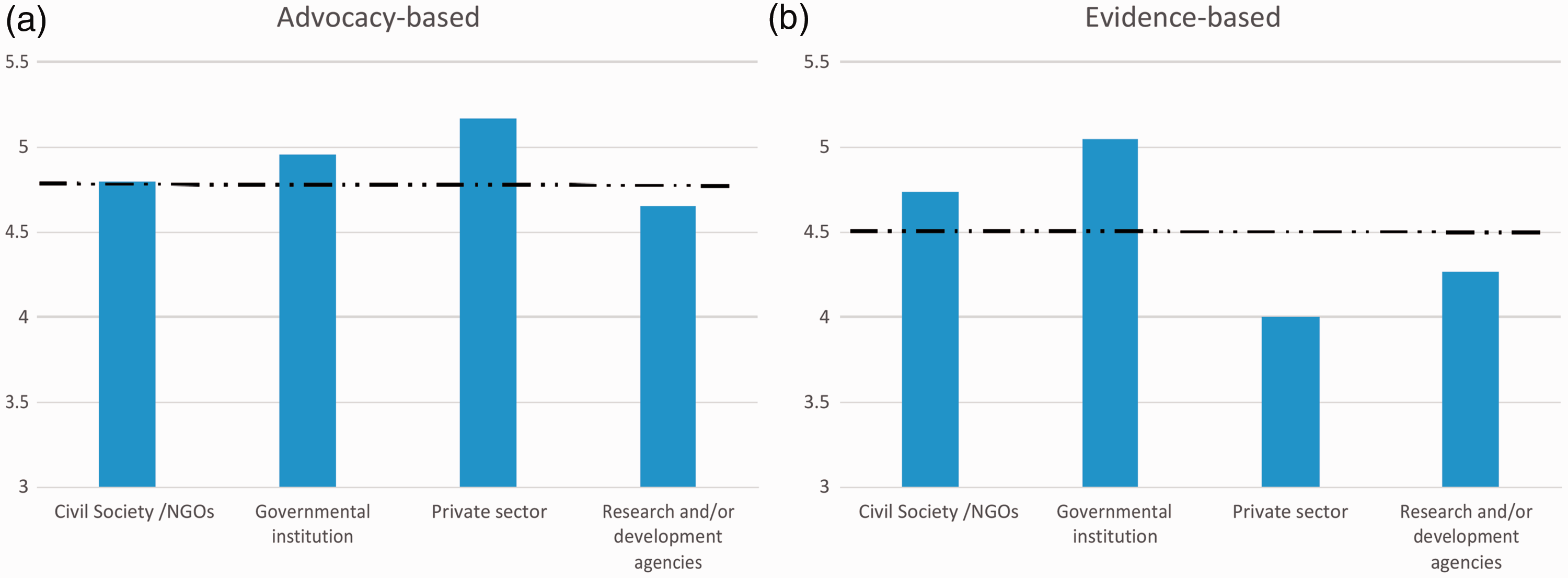
(a) Levels of advocacy influencing the policy agenda on food system as perceived by the four different groups of actors included in the surveys: civil society/NGOs; government institutions; private sector; and research/development agencies. (b) Levels of evidence-based policy-process as perceived by the same groups of actors. The horizontal black dotted lines represent the average values across the four groups for the two series: 4.78 for advocacy, and 4.51 for evidence (N = 91).
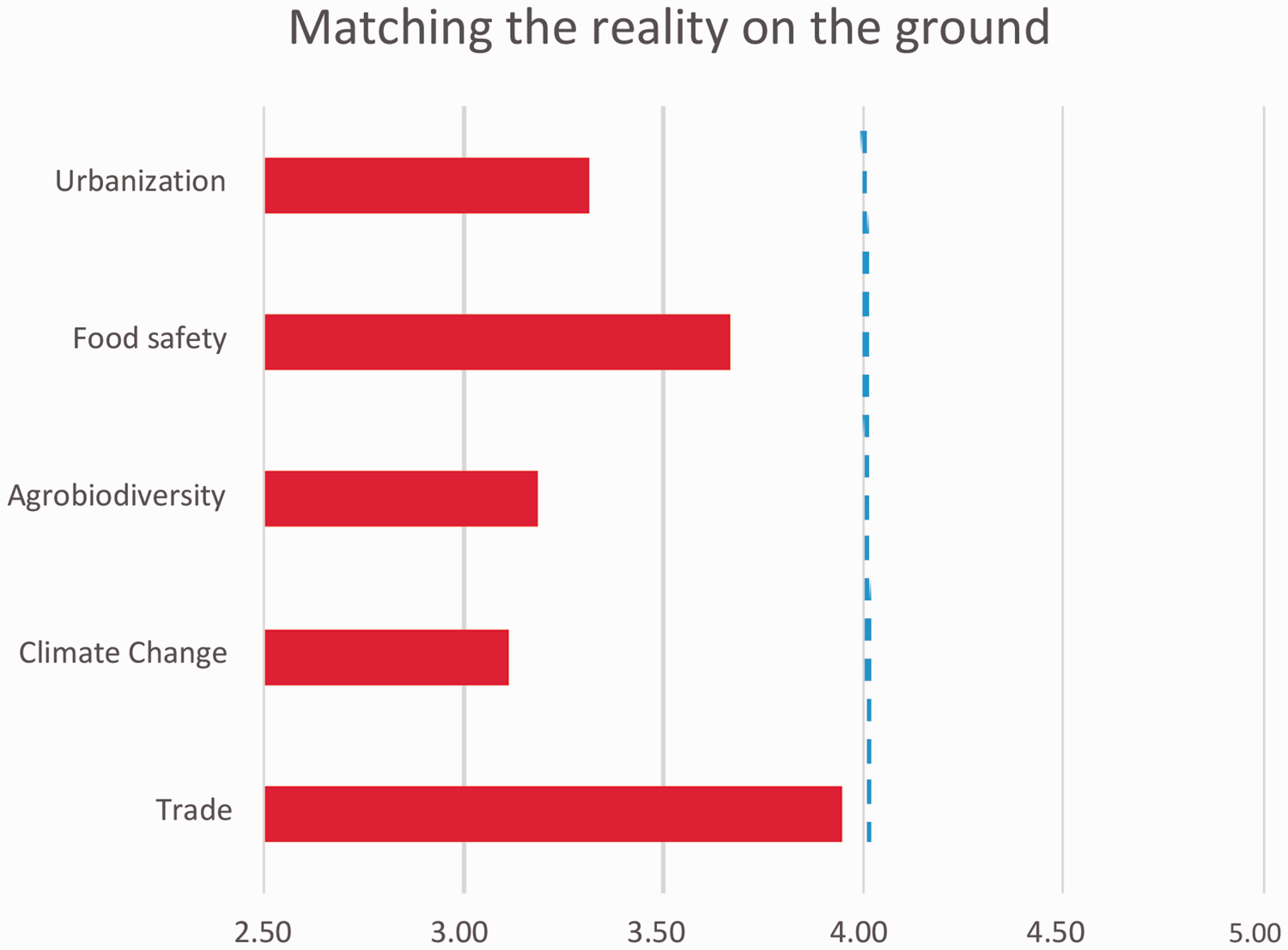
Extent to which respondents consider that the current agenda of food system matches the reality on the ground in the case of the issues listed on the left-hand side. The vertical dotted line represents the mid-range value (4.0) among the combination of possible coded answers (from 1 to 7). Responses below that mid-range value are indicated in red (N = 91).
What drives the policy agenda in Vietnam in relation to food systems?
We then explored the key-informants’ respective opinion on the main policy problems related to food systems policy in Vietnam. In line with the literature (Baumgartner and Jones, 2009), our initial assumption was that their responses would be reflecting the agenda of their own institution and/or their own professional interest.
The data depict a completely different situation. For the vast majority (65%) of the respondents across the four groups, the main issue is related to food safety (Figure 4). 7 When disaggregated by institutional affiliation, the overall picture remains the same (Table 1). Most actors considered food safety as the key problem, irrespective of their affiliations. This is the case for three-quarters of the respondents from research/development agencies, and for 46% of the actors from civil society/NGOs. For another 33% of those, however, the main problem is environmental health. Finally, it is worth noticing that there is no apparent denial from the governmental agencies about the food safety issue. Fifty-two percent of them also identified this as the problem no.1, even if the government is often presented as partially responsible for the situation (see below).
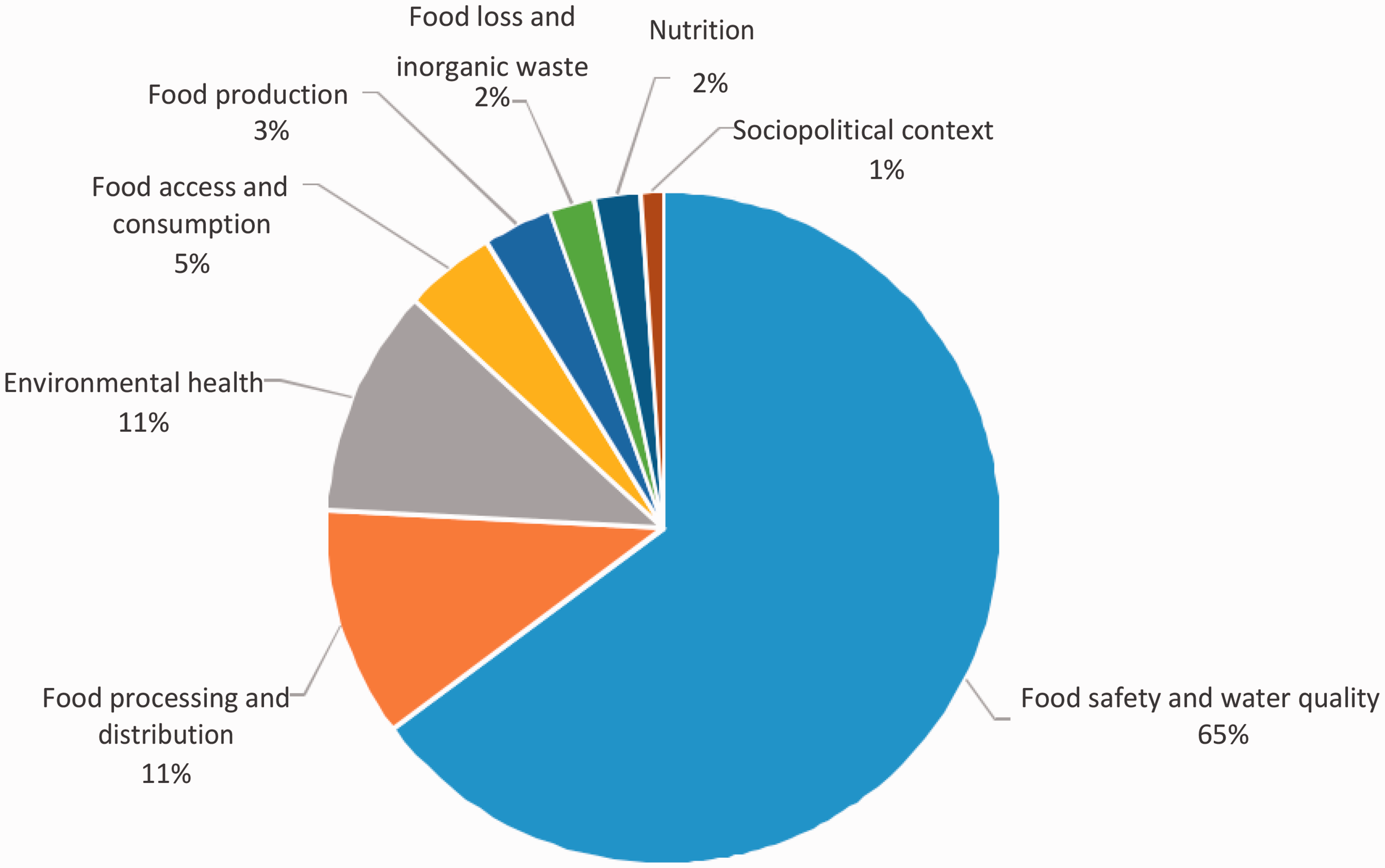
Main areas of issues related to food system in Vietnam, as identified by key-actors (N = 91).
Main issues related to food system in Vietnam, as identified by key-actors (N = 91) grouped according to their institutional affiliations.

Food system policy framing
This section presents the key findings of the framing analysis, starting with the results for one of the five key issues—urbanization—as an illustration and then summarizing the results obtained for the other four issues. 8
Urbanization policy and food system
Framing narratives
Several policy problems were identified by the key-informants in relation to urbanization and food systems. Although those problems varied in their nature and scope, they can be broadly grouped into two main framing narratives: (i) technical problems related to the process of urbanization per se and the impacts that this (physical) process have on various dimensions and actors of the food systems and (ii) problems related to the governance and decision-making process around urbanization and the implications that this (social and/or political) process (“political” used in its etymological sense, that is, “the art or science of government”) has on the local food systems and their actors.
In parallel to this technical-versus-political dimension of the narrative, another element that emerged as a structuring component in the framing of those key-actors is the scope of the problem. While some policy problems remain confined to the initial domain/sector where they originated (in this case urbanization), others are presented as having spillover implications on one, or sometimes, two other sectors. In the case of urbanization, the two sectors that were most frequently mentioned as being affected (in the context of food systems) were the environment and consumer food/diets. Some urbanization problems would affect one sector—for instance, the concentration of business and residential areas resulting from a poor urban planning was mentioned by Informant UR4 as having negative externalities on the environment—while the traditional silo effect that generally leads to poor collaboration between ministries was reported to affect not only the process of urbanization itself, but also the policies related to environment or agriculture, as well as those related to diet and food (informant UR7). Likewise, the change in life-style induced by urbanization—“people now are busy, they have no time for cooking, no time for eco-friendly life”—was presented in some of the narratives as “contributing to the current (negative) urban food systems which are not sustainable, not eco-friendly, not healthy, [and] supporting the big corporations rather than small-scale farmers” (Informant UR2).
Figure 5 offers a graphical representation of the main urbanization-food system policy problems and the way they were framed by the decision-makers. The vertical axis captures the technical versus political dimension of the policy narratives, while the arrows along the horizontal axis reflect the scope, that is, the extent to which the problems as they were framed by the respondents spill over other domains.
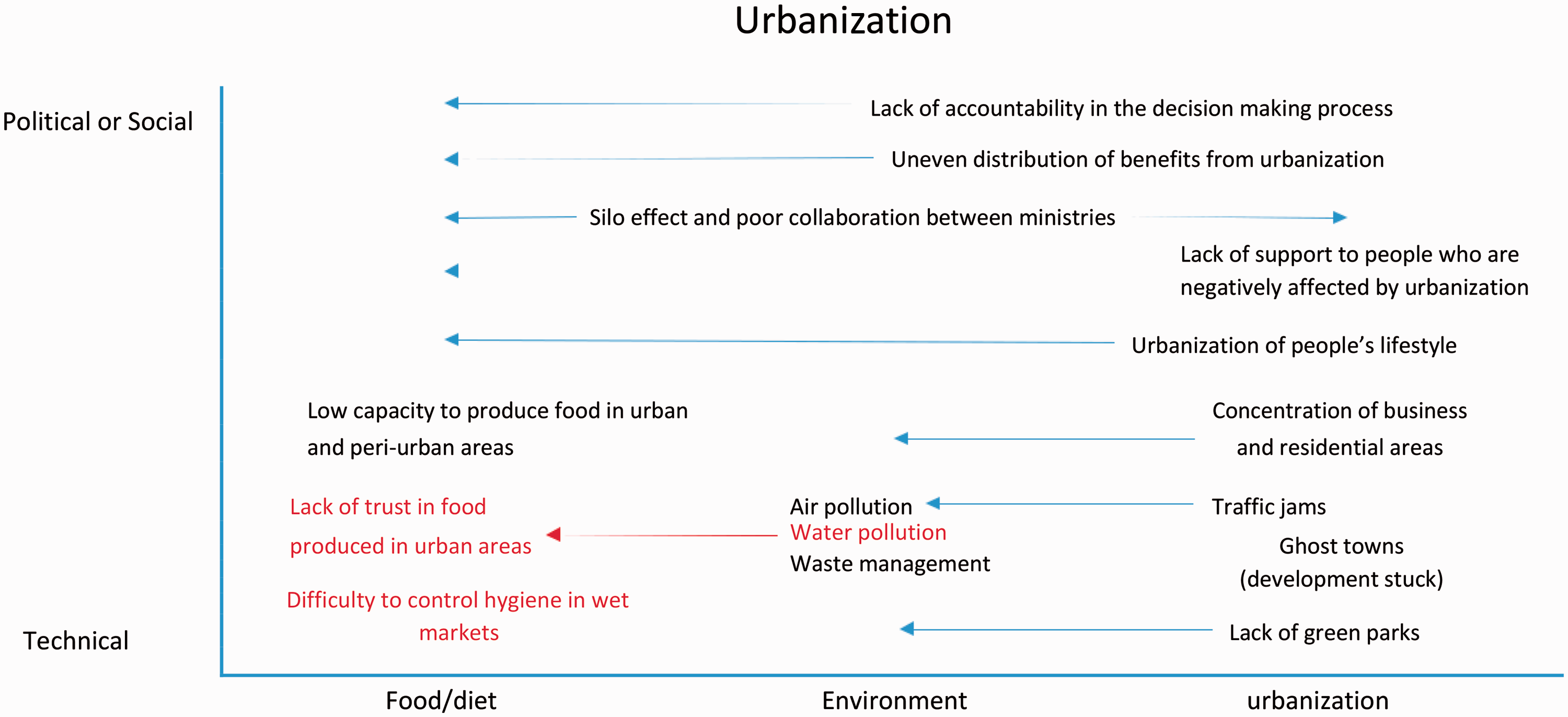
Framing of the food system policy problems as identified by the respondents in relation to urbanization. Blue arrows indicate spillover/diffusion effects on other sectors (estimated by the extent to which a specific problem initially considered in relation to the main theme— urbanization—was also mentioned as part of the framing narrative of other themes (here food/diet or the environment)). Problems identified as the respondents as being related to food safety are indicated in red.
In addition, several other major unwanted consequences of urbanization on food systems were identified. Those include the declining capacity of the urban centers to maintain food security due to the imbalance of agriculture and non-agricultural land; the creation of “ghost towns” (resulting from urban development implemented without necessarily responding to demand) which exacerbates the low food production capacity of the areas by utilizing some of the most fertile land suitable for agriculture; and the lack of infrastructure whereby basic physical systems have not been developed, including waste management or transport, which has severe consequences on the functioning of the local food systems. Addressing those different problems would require a strong collaboration among the different ministries and a cross-sectoral planning approach. This is a major challenge in the current government structures, which—like in many other low and middle income countries (LMICs)—are characterized by a severe silo syndrome.
Finally, in Figure 5, policy problems which were mentioned by experts in the context of urbanization but which eventually appear to be linked to food safety are indicated in red. In the present case, two problems were mentioned: one was the difficulties of the authorities to control hygiene in urban wet markets (due to low human capacities in the relevant ministries). The second was the growing lack of trust of the consumers in food that is produced in urban or peri-urban areas (due to the high level of pollution affecting the quality of the water).
Power, interest, and influence
To complete this first component of the policy framing analysis, the political economy (winners/losers) dimensions of each of the narratives told by the respondents were explored. Figure SI1 in Supplementary Material shows the map that was constructed in the case of the urbanization policy framing. The state government appears to be very influential in setting policies at national level. Interviewees frequently mentioned the Ministries of Construction (MoC), Industry and Trade (MoIT), and Planning and Investment (MoPI) as well as the communist party. Although the Ministry of Agriculture and Rural Development (MARD) shares its information with other ministries, it is the MoC that decides whether to consider other ministries’ views. In this respect, the MoC appears as the dominant actor in urban planning at national level.
On the other end of the influence gradient, Hanoi residents are perceived to have only limited influence over the priority-setting. Interestingly, this limited influence was said to come through a non-conventional channel: media, and in particular, social media. As one junior government officer admitted, “The government cannot ignore people’s voices in the social media and the traditional media” (Informant UR6). This influence differs from the official process of people’s participation in policy planning 9 and seems to be more effective. Some respondents pointed out, however, that the traditional media are not paying attention to everyone in the same way. In particular, it seems that the voice of the public opinion is more likely to be heard if it is perceived to contribute to the agenda of (food system) modernization.
Summary of the framing analysis across the four other key issues’ sectors
The policy framings around the four other key issues (agrobiodiversity, climate change, food safety, and trade) were analyzed using the same approach as the one presented above for urbanization. Due to space limitations, the finding of the framing analyses for those four issues are not detailed here. 10 Instead only the salient points that emerge from the four framing analyses are presented here.
Influencing actors in the food system policy arena
As far as key actors and influence mapping are concerned (cf. Maps SI2, SI3, SI4, and SI5 in Supplementary Material), the data show that like for urbanization, the most influential actors in the policy agenda are found among central ministries and members of the communist party. Those include MARD for agrobiodiversity; the MoIT and the Political Bureau of the Party for trade; the Ministry of Natural Resources and Environment (MoNRE) for climate change; and the Ministry of Health (MoH) and MoIT for food safety. The lower-level actors (provincial or municipal level authorities) on the other hand were generally presented as weak, lacking resources, competence, or even awareness. A particular case is climate change. Even if local authorities were acknowledged to be (in theory) the key actor in implementing policies, they were systematically presented as the weak link in the policy cycle: “Many policies have been issued but implementation is poor because of lack of resources and guidance at local level” (Informant CC1). 11
The private sector appears as the second main actor in this landscape, but usually far behind the central authorities. In fact, with the exception of urbanization, the contribution of private actors to the policy agenda setting remains limited to some large-scale private companies, either national or international—for instance the poultry raising industry in Vietnam is controlled by foreign large enterprises. These companies, which usually have a large share of the market in urban areas, were said to have some say in the current debates on food safety and food distribution.
The strongest influence of the private sector is in relation to the urbanization issue, however. In that domain, the relative lack of financial resources of the government in comparison with the scale of the investments required means that the central and municipal authorities—who want quick solutions and visible (physical) outcomes to show progress in urban development—have no choice but to rely on the private sector to implement urban projects. The scale of the investments also means that collusion and corruption are high in this sector.
Smaller-scale enterprises on the other hand were generally presented among the less influential groups, along with small-scale farmers and members of ethnic minorities. The situation of the civil society and NGOs is more contrasted. While they were recognized to have some degrees of influence in relation to agrobiodiversity and climate change, they were not mentioned in relation to urbanization and trade, and only to a limited degree in relation to the food safety debate.
Overall, what seems to emerge from the analysis is a common pattern across all key sectors related to food system policy, in which the government remains the major player while other actors influence the agenda only marginally. This observation should not come as a complete surprise for a country characterized by a socialist-oriented market economy, where the central government is still resolutely decided to try to keep control of the development process and plays a powerful interventionist role in many of the key sectors of the economy (Thayer, 2009). In that sense, the analysis demonstrates that this locked situation is also observed in the case of the food system policy agenda.
Framing analysis of the food system policy agenda
Figure 6 shows the results of the framing analysis which was conducted for agrobiodiversity, climate change, food safety, and trade, following an approach similar to the analysis completed for urbanization (Figure 5). Only key findings are presented here. 12
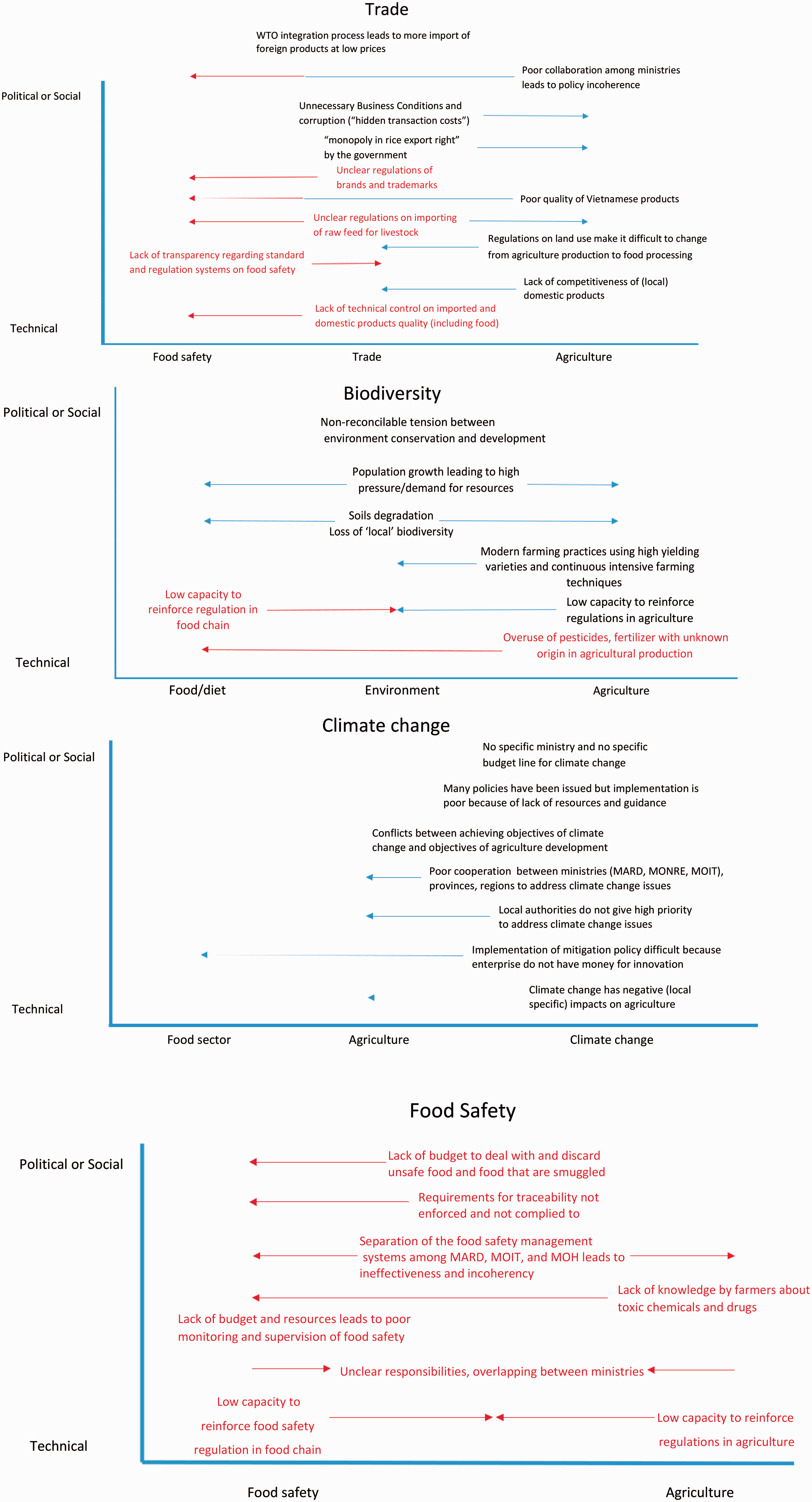
Framing of the food system policy problems as proposed by the respondents in relation to trade, (agro)biodiversity, and climate change. Framing of the food system policy problems as proposed by the respondents in the context of food safety. Blue/red arrows indicate spillover/diffusion effect on other sectors. Problems related to food safety are indicated in red.
Cross-sectoral issues and framing diffusion. The first key finding relates to the scope (cross-sectoral nature) and systematic interlinkages of the policy problems. Like for urbanization, the policy problems identified by the key-informants under each of the four other issues were not limited to the initial domain/sector where they originated, but appeared to have spillover implications for one or sometimes two other sectors. In the case of trade policy, the two domains affected by spillover were agriculture and food safety; for agrobiodiversity: consumers’ food/diet diversity and agriculture; for climate change: agriculture and the food sector; and finally for food safety: agriculture. Those different domains appear on the horizontal axis of their respective graphs in Figure 6.
Figure 6 also shows that, as with urbanization, the different framings display various degrees of diffusion of food safety issues. Those are indicated by red arrows in the respective graphs. Trade displays a relatively large number of these links (6 were identified among the 11 main narratives proposed by the experts in relation to trade issues), suggesting a relatively strong “diffusion” of the food safety issues in the different framings involving trade. 13 In comparison, agrobiodiversity seems to be characterized by a slightly lower degree of frame diffusion with only two links with food safety. 14 No clear diffusion of food safety issues were identified in relation to climate change.
Framing incoherence: We recall that framing incoherence refers to cases where the construct of the policy framing appear illogical or potentially incorrect. In our case, a possible occurrence of framing incoherence concerns the modernization of the food retail distribution sector (the supermarketization of the Vietnamese food system) as an attempt to address the current food safety issue—see details below. Supermarket expansion, along with the reorganization and reduction of traditional markets, is being persistently advocated by the authorities as a critical step toward the improvement of food safety in Vietnam (e.g. Informants FS2; see also Wertheim-Heck et al., 2015: Table 3 for a selection of statements made by officials in the media). This policy narrative, however, does not simply claim to reorganize and modernize the food system. It also expects to induce a shift in shopping practices on the consumer side, assuming that aspirations for modern lifestyles and concerns about food safety will be the major driver for the adoption of supermarket as the main food supply source by individual consumers.
However, this part of the authorities’ narrative seems to ignore important elements of the ground reality and what the literature tells us about Vietnamese consumers. In Vietnam (like in many other countries in South East Asia), wet market retails and informal street vending are still the primary access point of fresh vegetables, fruits, fish, and meat for city residents, with over 95% of vegetables for instance distributed through those (Wertheim-Heck et al., 2014a). This has been sustained through residents’ strong demands and preferences (Geertman, 2010) including for street vending (Kawarazuka et al., 2018). In this context, the typical modern retail model remains a small niche, with supermarkets in Hanoi contributing just over 2% of total vegetable consumption (Wertheim-Heck et al., 2014a). This situation is not specific to Vietnam though. The literature suggests that shoppers in LMICs still do not automatically integrate supermarkets into their daily practice, especially for fresh foods (Humphrey, 2007). Minot et al. (2013) for instance found that virtually all (99%) urban consumers in large and medium size towns in Indonesia still use traditional food outlets as their main source of food supply.
Beyond this consumer behavior, the supermarketization narrative also seems to ignore evidence according to which the assumption that supermarkets are safer and could help addressing the food safety issues does not always hold true—see e.g. Roesel et al. (2014) in the case of milk in Kenya, and Tanzania, and meat in Vietnam and Kenya. In the wider context of LMICs, a recent global review on food safety concluded that “so far agro-industrial production and modern retail have not demonstrated clear advantages in food safety and disease control” (Grace, 2015: 10490). In Vietnam, the report published by the World Bank on food safety management concluded that there is “little evidence that workers and stakeholders in these larger scale infrastructures adopted better practices to ensure safer food, or that real enforcement of these practices was conducted by the government’s inspectors” (World Bank, 2017: 42). Part of the challenge is that in Southeast Asia, fresh foods sold in supermarkets often do not have traceability as they are sourced from wholesale markets and not from farms.
Finally, evidence also challenge the “universality”—or the social equity—of the benefits derived from this supermarketization. Based on a recent survey conducted in Hanoi, it appears that only around 40% of Hanoi’s urban population is currently reached by the retail modernization process (Wertheim-Heck et al., 2015). Several reasons explain this, including the fact that lower income households cannot afford to purchase large amounts of food due to budget constraints and therefore rely more on the informal outlets. Supermarkets are also generally located outside the action radius of lower income groups. Those elements mean that, even if the development of supermarkets and the reorganization/modernization of the retail sector was an effective measure to address food safety, 15 the majority of the urban population (essentially the lower income groups) would still not necessarily benefit from this “transformation.”
Those different findings raise questions about the coherence of the construct of the narrative around food safety and retail modernization. Although policy-makers must have been aware of these different pieces of evidence, they still promote supermarketization as the way to address food safety. Their insistence on using this particular policy narrative suggests a deliberate choice of ignoring those evidence and information. This brings us back to the earlier result regarding the degree to which the decision-makers interviewed in this research consider the current agenda to be influenced by advocacy and lobbying—as opposed to being informed by evidence (Figure 2)—and the extent to which the food system policy agenda itself does (or does not) reflect the reality on the ground (Figure 3). We propose to revisit those different points in the discussion section below.
Putting the pieces together
Various levels of engagement in the food system
To conduct this research, we first started by investigating the level of current engagement and knowledge of the different groups of experts and decision-makers in relation to the food system agenda (Figure 1). Results indicated that the different groups are characterized by variable levels of engagement. While most consider their knowledge and that of their colleagues to be acceptable, two groups of experts disclosed that their engagement with the food system debates have so far been relatively weak: the experts on urbanization and those on climate change. In contrast, the experts on trade, food safety, and agrobiodiversity stated that they have already been engaging substantially with the food system debate(s). To some extent, these results are in line with what could be expected. Urbanization and climate change are broader in scope and more indirectly related to food issues while the links between food safety and food systems are inherent to the system (Grace, 2015). So are the links between trade and food systems (Brown et al., 2017), even if the outcomes that are considered are distinct: while food safety relates directly to health and possibly to nutrition (HLPE, 2017), trade is generally related to food security—at least on the current debates found in the literature (Brown et al., 2017). In both cases, however, it was not surprising to see that the decision-makers feel that they are already engaging in the food system discussion. It was also informative to observe that the decision-makers involved in urbanization were the group with the lowest self-perceived engagement in food system debate. The policy framing analysis (Figure 5) nuances this finding, however, by identifying at least two narratives where food safety (a key dimension of food systems) was linked to urbanization.
Overemphasize of the food safety “crisis” narrative: Evidence and policy implications
Our analysis also shows how food safety has emerged in the last few years as the most visible issue among the policy agenda on food system in Vietnam (Figure 4 and Table 1). To summarize the current discourse widely promoted among the decision-makers, we borrowed a quote from the latest World Bank report on Food Safety in Vietnam: Media reports, scientific literature, official communications and consumer complaints demonstrate that food safety is perceived as a major problem by consumers, industry and the government in Vietnam and there is emerging evidence that a relatively large share of food in Vietnam may be considered unsafe according to widely accepted food safety norms and standards. (World Bank, 2017: 15)
To establish this possible policy framing distortion, we compared Vietnam with a counterfactual made of two groups of countries—the group of neighboring countries (Thailand, Laos, Cambodia) and the group of countries with a similar GDP per capita (Nicaragua, Nigeria, Ukraine, Uzbekistan, and Laos 18 )—using the poisoning score of the UL Safety Index and the food safety score of the Global Food Security Index.
The analysis shows that for both indicators Vietnam is actually doing quite well. With the exception of Nicaragua, Vietnam displays a higher score than all the other countries with a similar GDP per capita in terms of poisoning and is also doing better than any of these same countries in terms of food safety score (Table 2 top part). A similar conclusion emerges from comparing Vietnam with countries of the same region: with the exception of Thailand in terms of poisoning score, the data show that Vietnam is doing better than all the countries in the same region (including Thailand) in terms of food safety index (Table 2 bottom part).
Comparison between Vietnam and countries with comparable GDP per capita and neighboring countries for two indicators: the poisoning score from the 2016 UL safety index™, and the 2017 food safety score from the Global Food Security Index.

aCountry with 2016 GDP per capita comparable to Vietnam.
bCountry from the same region
cThe higher the score, the better.
GFSI: Global Food Security Index.
Yet, food safety remains firmly at the top of the list of issues related to food systems in Vietnam, and very little dissidence is heard among the main stakeholders. The only exception is Wertheim-Heck et al. (2015), not so much because they challenge the predominance of food safety in this general policy discourse, but because they enrich the analysis by looking at how the food safety crisis narrative is being instrumentalized by the government as part of their push for the modernization and supermarketization of Vietnamese food systems: the government plays a powerful interventionist role in the modernization of food markets by promoting ‘supermarketization’ as a generic path and replicable model suitable for all consumers. In various policy documents and media statements, the Vietnamese government presents supermarkets as important instruments and drivers for the transformation of the country into a modern society (MoIT, 2004, 2009). (Wertheim-Heck et al., 2015: 96)
This focus on food safety has several implications. First, it has diffused into other policy domains of the food systems. The policy framing exercise (Figures 5 and 6) illustrates this dynamic of diffusion from the food safety domain into a large number of other policy framings related to urbanization, trade, and agrobiodiversity. Overall, this observation is in line with the literature which predicts the possibility for certain issues to “percolate” into other groups or networks of policy-makers in the case of particular circumstances, such as when they are perceived to be a major national-level crisis (Boydstun et al., 2014; Pacheco, 2012).
This high profile given to food safety further means that the overall agenda on food systems is currently driven essentially by a short-term crisis narrative—what Iyengar defines as an “episodic frame”—as opposed to longer-term, strategic drivers—or “thematic frames” (Iyengar, 1991). The prevalence of this episodic frame is consistent with the established literature on policy setting which indicates that, when they occur, policy-makers are more likely to be sensitive to crisis-type headlines than to positive narratives (Soroka, 2006), essentially due to the use of sensational frames in news coverage (e.g. Graber and Dunaway, 2014; McCombs, 2002). In the case of Vietnam, it is correct that food scares have been all over the national news (Nguyen-Viet et al., 2017; Wertheim-Heck et al., 2015) and are a constant topic of discontent and resentment in social media.
The implication is that with the diffusion of this episodic frame on food safety into the other policy domains and its de facto selection as the driver of the entire food system policy agenda, the majority of the policy-makers are now affected by a “tunnel vision” and appear unable to identify and engage in longer-term thematic frames. The fact that nutrition for instance was mentioned by only 2% of the policy-makers as a priority (Figure 4) even if at the same time the prevalence of overweight among children under 5 years of age in urban areas increased by more than 160% between 2000 and 2014 (and represents now more than 8%), and the rate of obesity among the urban adult population has also increased by 126% in 20 years—passing from 5% in 1993 to 22% in 2015 (Nguyen and Hoang, 2018)—is a perfect illustration of this tunnel vision. This raises some serious concern about the ability of the policy-makers to move away from the current reactive dynamic in which they seem to be looked, and to re-orientate the discussion toward the longer-term structuring issues of the food systems and their underlying drivers.
Is science really influencing policy agenda?
Another important aspect of the policy agenda dynamics that was investigated in this research was the role of science and evidence—as opposed to advocacy and lobbying—in the food system policy agenda. Although we were initially expecting to observe contrasted high/low scores combinations (i.e. high score on evidence-based decisions associated with low scores on lobbying, or vice versa), the data indicate otherwise, with for instance the officials from governmental institutions showing high scores for both evidence-based and advocacy-based agenda setting (Figure 2). Those initially counterintuitive results provide in fact important information about the policy agenda setting. First, the fact that the average scores obtained across the four groups of actors were higher for lobbying than for evidence suggests that the food system policy agenda in Vietnam may be predominantly influenced by lobbying and advocacy. In that context, the high score obtained by evidence-based agenda among the staff of ministries may simply reflect the need for this group of key-actors to also reassert officially that the agenda is—or should be—also based on evidence. In contrast, researchers and experts from development agencies seem to have a more pessimistic (or realistic?) view when they scored evidence the lowest values after the private sector (Figure 2(b)).
Interestingly, this latter view may be supported by some recent analyses carried out in other domains than food system, which suggest that presenting evidence-based policy process as a leading element of the policy agenda may be somewhat misleading (Liverani et al., 2013). Du Toit (2012) for instance shows how the assumption of evidence-based policy agenda relies on an oversimplistic understanding of the policy process as being rational and linear—see also Broadbent (2012) and Igwe (2011). Apart from the social and cultural aspects of how the understanding of evidence affects the relationship between research and policy, du Toit’s research also demonstrates how political considerations weigh heavily upon policy-makers in their use of research when making decisions. In that regard, the alignment of evidence with predominant values or existing political agendas seems to be one of the key factors explaining the uptake of research findings by policy-makers (Béné, 2005; GDN, 2013). Despite the fact that these other cited analyses were not implemented in the context of food system policy, there is no particular reason to imagine that the situation regarding the way evidence is used (or ignored) in the food system agenda is different from that in those other domains.
On the integrated and cross-sectoral nature of the policy agenda
Although some of us, scholars and researchers, may be tempted to believe that a situation where evidence does not appear to be the main driver of policy agenda is not desirable, Liverani et al. (2013) offer some element for a more nuanced discussion. Based on a systematic review of policy in public health, they conclude that our own tendency to evaluate the “quality” of the policy process simply by determining whether, how much, or how quickly pieces of evidence are taken up by policy-makers, is too simplistic and could be dangerous. For these authors, simply calling for the policy agenda setting to be “evidence-based” encourages decision-makers to prioritize those issues where a large or more coherent body of evidence is available—as opposed to more complex social and structural interventions for which it is not always easy to identify direct causal mechanisms or gather evidence of immediate effect. They conclude: unreflective acceptance of over-simplified concepts of ‘evidence based policy’ is not conducive to good governance practices (….), [P]olitical pressures may encourage a selective use of evidence as a rhetorical device to support predetermined policy choices or ideological positions, or may delay decision-making on contentious issues while less contentious topics with clearer, uncontested evidence bases are followed. (Liverani et al., 2013: 6—our emphasis)
On the other hand, we could argue that the absence of evidence-based process in an agenda setting leaves room for pure political, arbitrary, or even ideological decision-making process, with some serious risk of poor governance as well. In this context, the responses provided by the key-actors regarding the extent to which they consider that the current agenda on food system reflects or not the reality on the ground in Vietnam raises some serious concern. Figure 3 reveals indeed that for none of the five main issues identified in relation to food system (urbanization, food safety, agrobiodiversity, climate change, and trade), the respondents consider that the present policy agenda is in tune with the current situation.
This issue also resonates quite well with the case of framing incoherence discussed earlier in this paper. We saw there that policy-makers (in particular from the central and municipal authorities) tend to present the modernization/formalization of the food supply chains and retail distribution as the solution to the food safety issues—despite the existence of several sources of evidence which challenge this narrative on different fronts (consumer behavior, effectiveness, and social equity). This incoherence confirms our findings that lobbying and advocacy predominate over evidence-based approach in shaping the agenda on food system policy in Vietnam (cf. Figure 2), and in that sense illustrates perfectly some of Janet Weiss’ early work on problem definition, when she remarked that frames can also play the role of “weapons of advocacy” (Weiss, 1989: 117).
Conclusion
The underlying rational of this research was the recognition that we need to improve our understanding not only of food systems per se but also of policy and policy dynamics around food systems if we want to contribute more effectively to the transformation of those food systems toward the delivery of more sustainable and equitable outcomes for all.
This paper therefore sets out to explore and analyze this policy dynamics using Vietnam as a case study. Although there is no “typical” emergent country's food systems, Vietnam displays some characteristics that are common to a large number of middle-income countries: rapidly growing middle class with higher income, subsequent change in life style and fast nutritional transition, rapid urbanization, drop in undernutrition paralleled with an explosion in overweight and obesity prevalence, especially in urbanized populations. The food system in Vietnam is also characterized by several important commonalities shared with other emergent countries: agriculture intensification, concern about food safety, food supply chains modernization and rapid supermarketization, etc. While we insisted in the introduction about the “highly context-specificity of both policy agenda setting and food system” in Vietnam (partially due to its still highly centralized economy planning), these commonalities with other countries and their food systems also mean that the methodology and the results presented here offer some possible points of reference for researchers interested in similar questions in other middle (and possibly low) income countries.
Our analysis, structured around a policy framing approach, revealed a series of key findings. First was the recognition by many actors that the policy agenda on food system in Vietnam is informed only partially by evidence and that the state government remains the most powerful actor in the setting of that policy agenda. The research also revealed the diffusion of the food safety crisis narrative beyond its original technical domain into a larger number of policy framings related to other issues of food systems, thus making de facto food safety the “center of gravity” of the current policy agenda on food systems in Vietnam. The implication of this framing is the risk for the decision-makers to “overfocus” their attention on this short-term crisis and lose sight of some other longer-term structural trend such as the emergence of obesity in the urban population. Exploring the question of whether those findings are also observed in other middle-income countries would be an important contribution to food system policy analysis at a global level.
At a more analytical level, the paper demonstrated the relevance of “policy framing” (Van Hulst and Yanow, 2016) as a robust and potent approach within the wider interpretive literature (Hajer and Wagenaar, 2003; Rein and Schön, 1996; Roe, 1994), which helps deconstruct the policy-making process and explore its nature as social construct. In doing so, the analysis revealed the highly contested but also cross-sectoral and interdependent nature of the policy process. Food system policy analysis will need to recognize and embrace this socially constructed, integrated, and dynamic process and be based on a more appropriate conceptualization of the process, one that not only acknowledges food systems themselves as complex and heterogeneous entities replete with linear and non-linear feedbacks (Béné et al., 2019b, 2020; Ericksen, 2008), but also one that is capable of accounting for, and integrating, this multi-causality of food systems agendas resulting from the interplay of influences and politics among different groups of actors and decision-makers (Béné et al., 2019a).
Highlights
The policy dynamics of the food system in Vietnam is analyzed. Data show that the policy agenda is only partially influenced by evidence and science. The central government remains the most powerful actor in the agenda setting. Food safety is the center of gravity of the current agenda on food systems in Vietnam. There is a risk of oversight of other structural issues such as the emergence of obesity.
Supplemental Material
sj-pdf-1-ene-10.1177_2514848620941515 - Supplemental material for Policy framing and crisis narratives around food safety in Vietnam
Supplemental material, sj-pdf-1-ene-10.1177_2514848620941515 for Policy framing and crisis narratives around food safety in Vietnam by Christophe Béné Nozomi Kawarazuka, Huong Pham, Stef de Haan, Huynh Tuyen, Duong Thanh Thi and Chien Dang in Environment and Planning E: Nature and Space
Footnotes
Acknowledgements
Comments by Peter Oosterveer (Wageningen University) on an earlier version of this paper are gratefully acknowledged.
Declaration of conflicting interests
The author(s) declared no potential conflicts of interest with respect to the research, authorship, and/or publication of this article.
Funding
The author(s) disclosed receipt of the following financial support for the research, authorship, and/or publication of this article: This research was supported by the flagship program “Food System for Healthier Diets” funded under the CGIAR Research Program “Agriculture for Nutrition and Health” (A4NH).

Notes
Supplemental material
Supplemental material for this article is available online.
References
Supplementary Material
Please find the following supplemental material available below.
For Open Access articles published under a Creative Commons License, all supplemental material carries the same license as the article it is associated with.
For non-Open Access articles published, all supplemental material carries a non-exclusive license, and permission requests for re-use of supplemental material or any part of supplemental material shall be sent directly to the copyright owner as specified in the copyright notice associated with the article.
