




Abstract
A widespread energy crisis is the result of the current global situation, which is characterized by high-energy needs and finite resources. Nonrenewable energy sources are fast depleting while green energy options are still being ignored. Alternative energy generation techniques are desperately needed. Recently, there has been a lot of interest in microbial fuel cells (MFCs) due to their favorable operating conditions and the affordability of a variety of eco-friendly fuel substrates. Bioelectricity is created by microorganisms actively breaking down substrates, providing a long-term answer to the growing energy problems. Numerous investigations have yielded fresh insights into MFCs, demonstrating that a broad range of microorganisms can be effectively employed with a broad range of carbon sources, including waste materials. Therefore, the microbial transformation of waste through advanced bioremediation processes such as MFCs, which provide a potentially attractive alternative to conventional methods utilized in wastewater treatment, enables the immediate generation of bioelectricity. This not only keeps up with the latest technological advancements but also reduces overall process expenses. The current status of MFCs, their setup and mode of operation, factors for optimizing MFCs, the range of waste kinds, and microorganisms suitable for generating bioelectricity are all objectively assessed in this review. The review comprehensively focuses on MFC’s processes as applied in bioelectricity generation and environmental sustainability.
Introduction
The present world increasingly depends on electricity generation to power industries, houses, gadgets, and automobiles, which must be frequently provided. To meet the increased demand for energy, an ample production capacity must be installed, which will tally with carbon emission standards. 1 In their search for sustainable solutions, humans have devised several methods of generating energy, including solar, hydropower, wind energy, and biological alternatives such as biomass, biogas, and microbes. Microbial fuel cells (MFCs) remain a distinctive and practical technology among other renewable options because they employ both organic and inorganic materials to produce bioelectricity. 2 The exhaustion of nonrenewable resources and the environmental implications caused by their use are significant global issues in today’s technologically advanced world. Excessive use of energy sources results in serious problems such as climate change, global increase in temperature, and the elevation in greenhouse gas emissions. The necessity to create alternative technologies and energy sources that can assist in striking a balance between environmental preservation and our energy requirements is highlighted by our reliance on fossil fuels and the harm they cause to the environment. Additionally, many regions are facing a growing challenge with managing wastewater that contains harmful contaminants.3,4
Many traditional methods have been employed to degrade contaminants such as photocatalytic degradation, adsorption, chemical precipitation and electrochemical processes.5–7 Although these techniques have made good progress in eliminating organic contaminants from wastewater and soil coupled with their unique disadvantages. These include high costs, high-energy consumption, environmental concerns, and difficulties in handling. As a result, it is important to source more eco-friendly options for degrading organic pollutants. The most commonly used biological treatment technique is activated sludge, although membrane bioreactors and sequential batch reactors are also efficient substitutes. 8 Conventional techniques for treating wastewater and resource recovery are often expensive and energy-intensive because of their complicated operational and maintenance needs. To solve the problems linked to scarce resources and environmental conservation, there is a growing emphasis on creating eco-friendly approaches for bioelectricity generation and the treatment of wastewater. 9 This has raised concerns about MFCs, which have a lot of potential for significant applications, particularly in energy production and environmental cleanup. MFCs are a cutting-edge technology that uses microbes as catalysts to remediate waste and produce bioelectricity simultaneously. A diverse waste material such as agricultural and food processing residues, brewery by-products, household waste, and reduced carbohydrates can function as fuel for this process. MFC employs electroactive bacteria to transform the chemical energy stored in organic materials into electrical energy while eliminating the contaminants in the waste. 10
The introduction of the MFC technique in wastewater treatment has been found efficient in the reduction of chemical oxygen demand (COD) and in removing several pollutants, making it a reliable alternative to traditional treatment processes. 11 Additionally, MFCs can be employed to remediate different types of wastewater by making use of the microbial communities and the operational parameters. 12 They are a viable alternative for sustainable waste management and energy recovery since they can produce renewable energy and treat wastewater at the same time. 13 It has been found that a tremendous amount of energy utilized by the wastewater treatment industry is actually a renewable resource that can be harnessed to help manage problems related to energy production, treatment processes, and nutrient recovery. 14
The anaerobic anode chamber and the aerobic cathode chamber are the two primary components of a conventional MFC. As seen in Figure 1, the cathode chamber may be placed in an aerated solution or left open to the air. A proton exchange membrane (PEM) divides these two compartments and makes it easier for protons to go from the anode side to the cathode side. The anode and cathode terminals are connected to a circuit externally, which facilitates easier electron flow. Water is created when oxygen in the cathode chamber combines with protons and electrons produced by the catalytic degradation of substrates in the anode chamber. Proton release at the anode and energy absorption at the cathode are the essential elements of MFC, assuming that both reactions are thermodynamically possible. 15 Efforts to enhance the efficiency of MFCs primarily focus on cultivating exoelectrogenic bacteria, developing new electrode materials that are compatible, and improving the exchange membranes. 16 All things considered, the variety of organic materials accessible for MFCs helps with waste management and supports the sustainability of energy production in MFC systems. 17
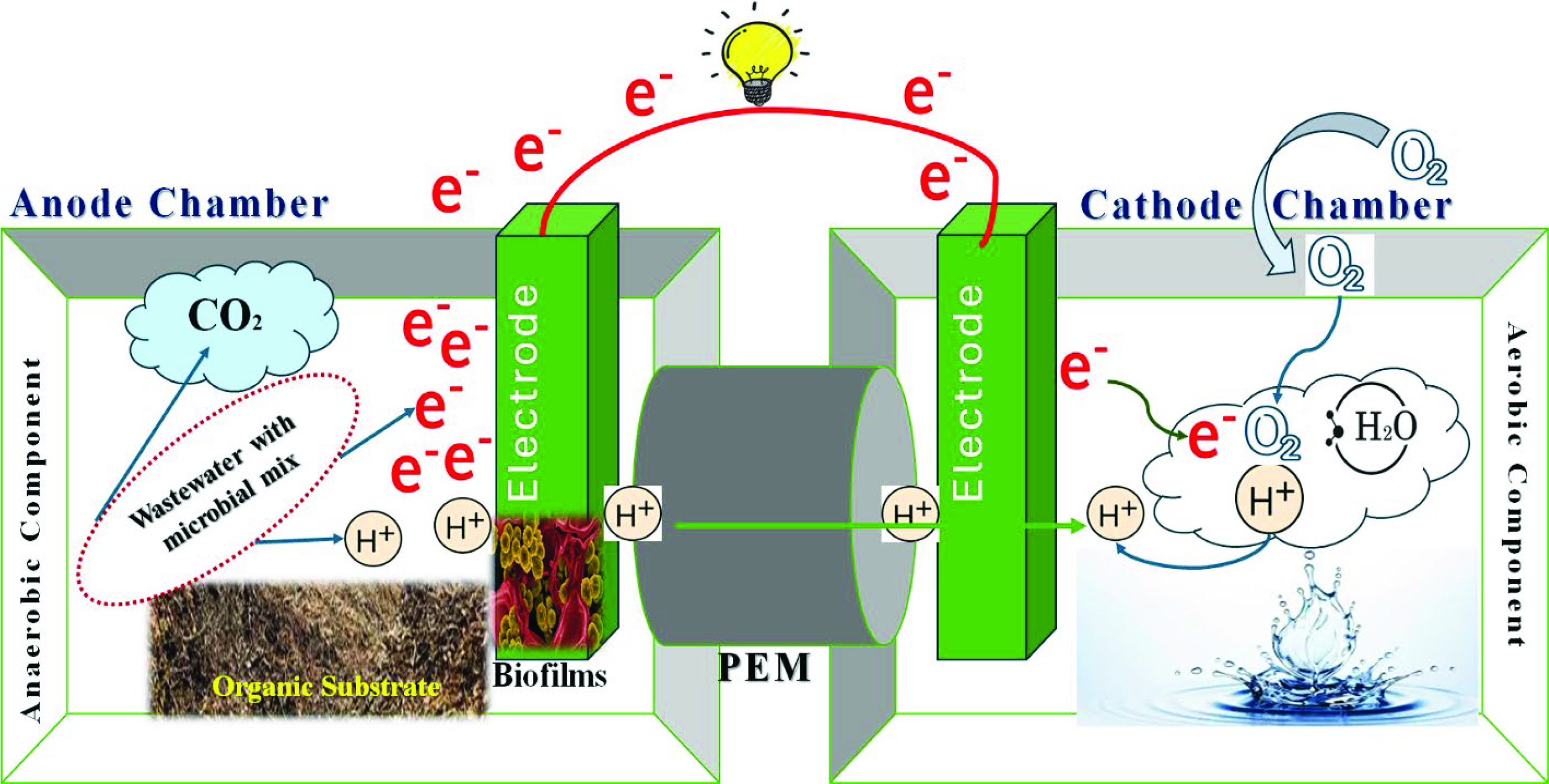
The various components of MFCs. MFCs, microbial fuel cells; PEM, proton exchange membrane.
While numerous review articles on MFCs have been published, particularly regarding their components, including electrode materials, organic substrates, and membranes, there has been less emphasis on studying their mechanisms, the interactions between microbes and substrates, and the emerging configurations. This review article aims to provide a more in-depth discussion of these areas that lack sufficient literature. Consequently, this review dwells on the state-of-the-art progress of MFC, its configuration and operation, and parameters for the optimization of MFC. The review focuses on the mechanistic understanding of how microbial community structure, substrate complexity, and electron transfer pathways together influence the performance of MFCs. By critically synthesizing advancements in both anodic and cathodic microbial metabolism, as well as substrate utilization dynamics and their relationship with electrochemical behavior, the review goes beyond a typical technology survey. It integrates biological, electrochemical, and environmental perspectives to identify performance-limiting factors and optimization strategies. This approach provides a comprehensive understanding that is crucial for advancing MFCs toward scalable bioelectricity generation and environmental remediation applications.
MFCs Configuration and Operation
Various laboratory-based MFC designs have been designed to achieve different research goals, each with its own unique features. To ascertain which of these concepts is most appropriate for expanding to larger, practical applications, several are presently undergoing testing. Recently, investigations are ongoing to explore hybrid and stacked MFCs for commercial expansion. This section explains the different types of MFC configuration and their uses.
Single- and double-chambered MFCs
Single-chamber MFCs (SCMFCs) consist of a single compartment where all the components such as electrodes and substrate are inserted. 18 This type of system can also be presented in the form of an air cathode MFCs. 19 Due to their strong power output and the ease of manufacturing process, air cathode MFCs are a common area of research. Additionally, when increasing in size, SCMFC tend to perform better than dual-chamber ones.20,21 In the dual-chamber MFC, an ion exchange membrane separates two chambers for the anode and cathode in a dual-chambered MFCs. 22 Dual-chambered MFCs are often made in spherical form. They are commonly used in laboratory research on MFCs. The major setback is the continuous aeration of the solution cathode and supply of oxygen to the cathodic region. 23
Tubular and stacked MFCs
This type of MFC is characterized by having a tubular structure in its design. The system promotes efficient substrate distribution, larger surface area, and shorter electrode distances. For instance, research showed that the introduction of carbon brush into tubular MFCs as an electrode boosted their efficiency and productivity. 24 Similarly, researchers have explored different composite electrode materials and wastewater to improve the efficiency of MFCs. The connection of several MFC systems in series can boost bioelectricity generation by overcoming the low output from individual units. The total power is expected to be the sum of what each cell produces. Copper wires are used to link all the cells together. Stacked MFCs have garnered a lot of research interest because of their great power density and useful applications. Research utilizing domestic wastewater to compare series and parallel configurations of stacked MFCs has demonstrated that series connections typically produce better current and power densities. 25 Different topologies, reversal of voltage control, and plant operations employing stacked MFCs have been the focus of research. 26 Compared to single MFCs, the results demonstrate higher power output and less stress on the cathodic region, suggesting the potential for large-scale applications in the future.27,28
Upflow and paper MFCs
This is a type of MFC that involves glass wool being inserted at the top of a cylindrical MFC to keep the cathode apart, while the anode is placed at the bottom. From the bottom, the substrate travels in three directions: first to the cathode chamber, then to the anode chamber, and last to the other end. The gradient produced by the barrier separating the electrodes is what makes these fuel cells so effective. Neither catholyte nor anolyte has been supplied separately. 29 Paper MFCs provide various benefits primarily in the aspect of cost-effectiveness, resistance to chemicals, and easy disposal. Their design features electrodes derived from graphite particles, which are placed on the paper surface using four pencil strokes. A PEM constructed from parchment paper is utilized, and crayons can be applied to significantly enhance the paper’s hydrophobic properties. Microorganisms like Shewanella oneidensis can be inserted in the anodic region, coupled with necessary growth media. 30 The different types of MFCs are outlined in Figure 2.
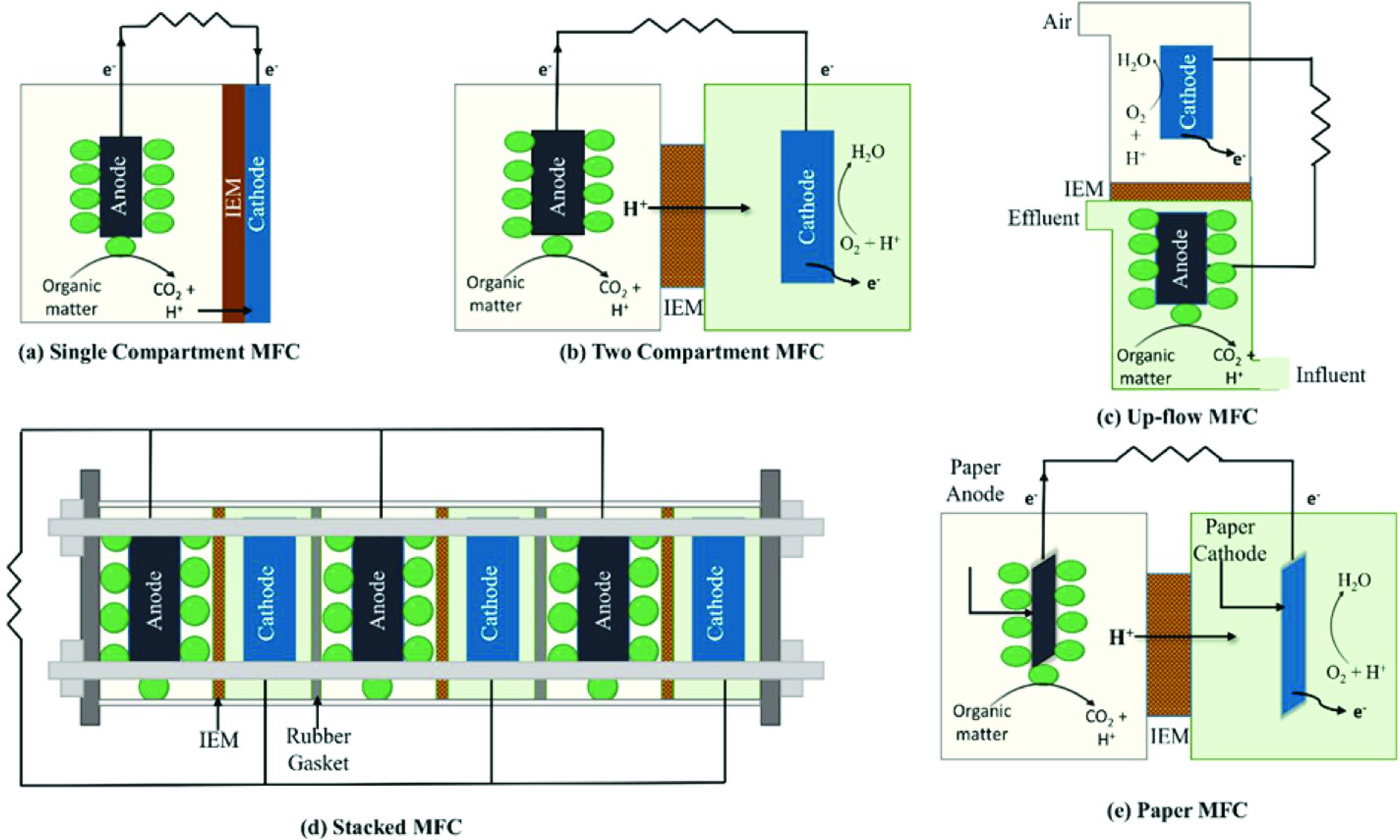
Different types of MFCs;
Parameters for the Optimization of MFC Reactor
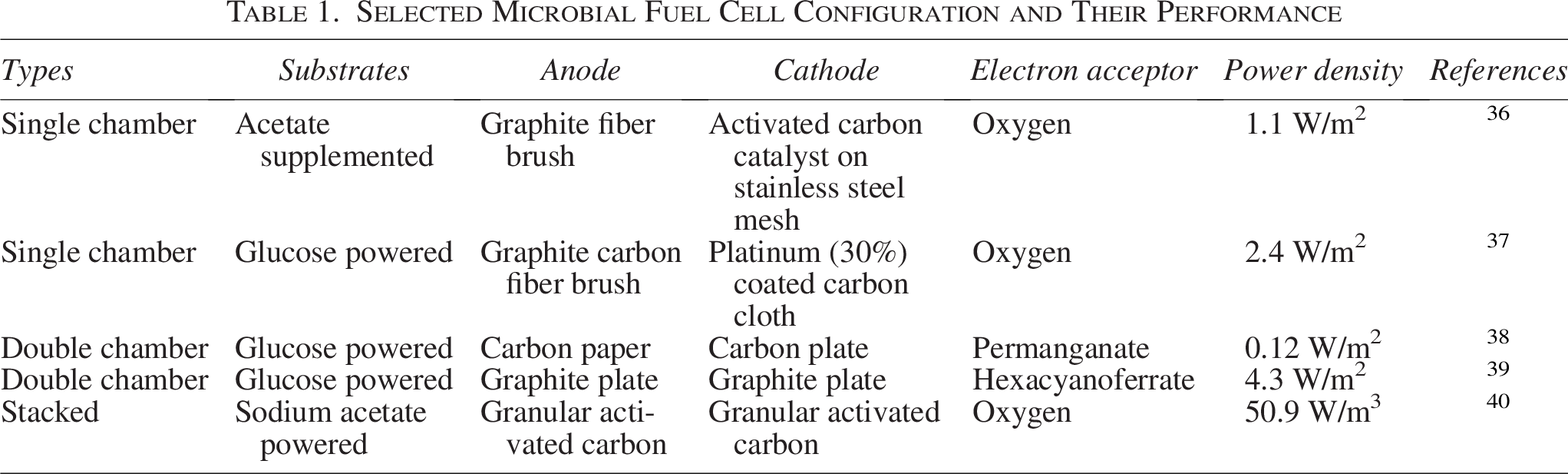
To compare the bioelectrochemical nature of various MFC systems and electrode types, several parameters and experimental methods have been established. First, the average produced by the cell should be normalized based on a relevant geometric characteristic of the reactor, such as the surface area of the electrodes or the volume of the anodic chamber, especially when working with a SCMFC. 32 The polarization curve allows for the estimation of electrode overpotentials and the internal resistance of the cell. The curve essentially reflects the total internal voltage losses within the cell. To assess the use of MFCs in wastewater treatment, the substrate conversion rate of an MFC is measured in terms of COD, by determining either the COD removal efficiency or, more effectively, its removal rate. 33 Substrates are vital in the operation of MFCs because they provide the nutrients needed by microbes and the energy that microbes need. MFCs can utilize substrates derived from several wastewater sources, which include industrial, pharmaceutical, agricultural, and animal waste, alongside domestic wastewater.34,35 However, there is a limit to how much substrate the microbes can utilize in the MFC. 16 Once a certain concentration is reached, substrate availability may no longer be the main factor limiting power production. Table 1 illustrates how different configurations impact performance.
Selected Microbial Fuel Cell Configuration and Their Performance
Microbes and Substrates Utilized in MFCs
Microbes play a crucial role in the transformation of chemical energy into bioelectricity within the MFC system. The term MFC stresses the importance of microbes in power production. In the MFC, microbes utilize their metabolic processes to degrade organic compounds present in wastewater within the anodic region. 41 These microorganisms carry out their metabolism process utilizing substrates and producing protons and compounds like Flavin Mononucleotide, Nicotinamide Adenine Dinucleotide, Flavin Adenine Dinucleotide, and other reducing equivalents. The reduction equivalents generated then move to the final electron acceptor, primarily oxygen, which results in the formation of a proton motive force.42,43 Microorganisms can be classified into two groups depending on their ability to generate electricity: electrogenic bacteria and nonelectrogenic bacteria. Among pure strains, Shewanella oneidensis is notable due to its activity when used in conjunction with other microbes found in wastewater. 44 Electroactive bacteria are capable of transferring electrons directly to an anode. However, most bacteria rely on mediators to help move electrons more effectively to the surface of the anode. For direct electron transfer, there must be interaction with the anode. To transfer electrons from the anode to the final acceptor, bacteria often rely on synthetic mediators like quinones and flavins or use soluble redox chemicals to facilitate electron transfer. 45 The mechanism and roles of microbes are shown in Figure 3. Furthermore, in their recent work on MFC, Idris et al. identified various strains of electrogenic microbes responsible for the robust performance of these systems. They used MEGA 11 software to construct a phylogenetic tree to analyze the identified microbial strains. Figure 4 illustrates the phylogenetic tree from their study.

Schematic diagram of a conventional MFC showing the

Phylogenetic tree of anodic microbial isolates using MEGA 11. 47
The impedance investigation of two extremely active electroactive bacteria, Shewanella oneidensis and Geobacter sulfurreducens, revealed significant variations in their electron transport mechanisms. 48 Since intracellular impedance accounted for roughly 80% and 95% of the total resistance, respectively, the intracellular process was determined to be the limiting step in both strains. Because flavins have complex diffusion and redox activities, they promoted electron transport in Shewanella oneidensis, resulting in an external resistance that was 40 times higher. The overall impedance of Geobacter sulfurreducens was considerably decreased by electron transfer via nanowires, reaching around 10% of that of Shewanella oneidensis. Together with bacteria, microalgae have recently drawn interest for their possible use in MFCs. 49 Various microorganisms including the substrate and the current produced in the MFC are summarized in Table 2
Some Selected Substrates and Microbes Used in Microbial Fuel Cell
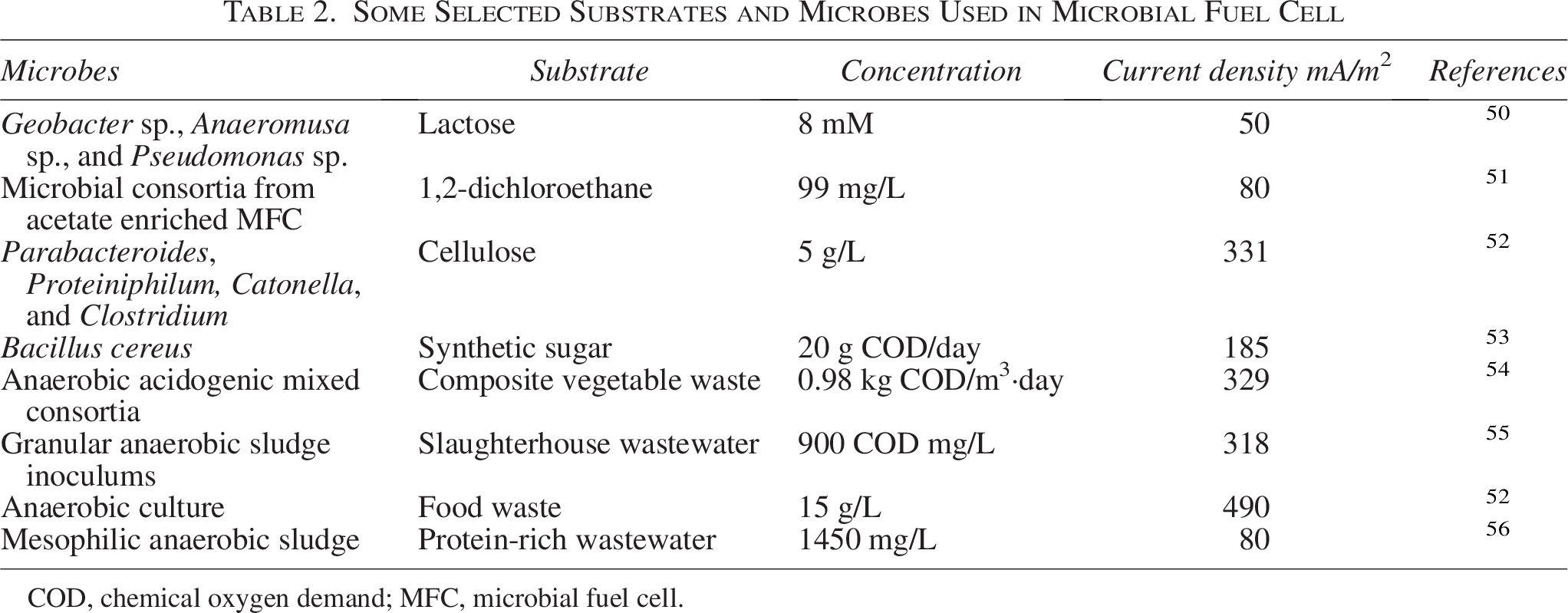
COD, chemical oxygen demand; MFC, microbial fuel cell.
Simple substances like amino acids and others are considered synthetic substrates, and initial studies mainly focused on them. 57 However, because many industries generate a large amount of waste and contain significant organic content, the emphasis has moved toward treating wastewater and recovering energy from it to meet acceptable standards.58,59 Biomass pretreatment offers a practical way to solve this issue. The main types of pretreatment methods are chemical, enzymatic, and physical treatments. 60 The kind of biomass used greatly influences the effectiveness of pretreatment, which has resulted in many studies exploring the optimal pretreatment conditions for various types.
MFC in Bioelectricity Generation
MFCs can utilize various types of fuels or substrates to generate energy and have the potential to be widely adopted in regions lacking electricity infrastructure. 61 High conversion rates and efficiencies are now possible for both simple carbohydrates like glucose and complex carbohydrates like starch and cellulose due to recent advancements. 62 Although MFCs generate less energy than hydrogen fuel cells, MFCs can either use electron transfer mediators or operate without them. Additionally, during the process, electrons generated in the anode chamber migrate through an external circuit to the cathodic region, producing an electric current. 63 The efficiency of the electron transfer and biodegradation processes determines how much bioelectricity can be produced from MFCs. Compared to conventional anaerobic digestion, MFCs show greater promise due to their higher efficiency in recovering energy from waste. 64 Thus, MFCs can utilize a variety of low-quality solid waste types as feedstock to produce power. Furthermore, the safety profile of MFCs for the production of energy is improved by their ability to operate efficiently at room temperature and neutral pH levels. 65 Additionally, the excellent cost-effectiveness of MFCs is demonstrated by its low construction costs and great efficiency, further activates its numerous functions in bioelectricity production. 66 Because of the aforementioned benefits, MFCs attract a lot of scientific recognition, seeking to achieve environmental benefits and enable sustainable energy generation from organic waste. 67 To enhance biological stability, mixed cultures composed of various bacteria sourced from marine environments and soil sediments can be employed. 68 Significant advancements have been made in improving the production of bioelectricity using MFCs. Accordingly, MFCs inoculated with different kinds of waste materials can achieve high-power output. Notably, a SCMFC infected with anaerobic sludge, which made an outstanding inoculum, achieved the highest power density measuring 2203 mW/m2. 69 A graphite brush served as the anode in this configuration, and the cathode was made of modified materials such as platinum/carbon and graphite-based nanomaterials. Among the numerous bacteria utilized in MFCs, Shewanella oneidensis and Geobacter sulfurreducens are the most studied exoelectrogens that produce energy from organic materials near the anode. 70 Furthermore, it has been observed that algae perform better as a substrate to enhance MFCs ability to recover valuable compounds from wastewater and bioelectricity generation. 71 Algae-based MFCs show a great deal of promise for improving energy efficiency, eliminating pollutants, recovering heavy metals, and eliminating nutrients. Furthermore, it was noted that the maximum current density attained was 36.84 mA/m2, utilizing potato wastewater as an electron donor to biodegrade pollutants in benthic MFCs. 72 In general, Figure 5 shows the waste sources for the production of bioelectricity from MFC.

MFC for producing bioelectricity from several types of waste.
MFC in Wastewater Treatment
The applications of MFCs are primarily linked to wastewater treatment. It offers a workable strategy for addressing energy scarcity and water pollution. Thanks to the action of microorganisms, the commonly employed aerobic digestion process currently effectively breaks down organic contaminants in wastewater into carbon dioxide. 73 This procedure, like many other conventional wastewater treatment techniques, does not, however, effectively use the chemical energy present in organic contaminants. These organic materials found in wastewater are thought to be readily available food sources for many microorganisms. 74 The MFC system may effectively carry out both the degradation of organic pollutants and the simultaneous generation of electricity since microorganisms can use these organic pollutants to power their metabolic processes and generate electrons.75,76 Additionally, the often high-energy consumption linked to traditional aerobic wastewater treatment technologies is reduced with the implementation of MFC-based anaerobic digesting technology. 77
A variety of materials found in wastewater from residential, commercial, and agricultural sources can be utilized as a viable fuel source for MFCs. These systems can be made to function as independent wastewater treatment systems that can produce energy on their own without the need for outside power. The ability to recover valuable products like nutrients and electricity from wastewater, reduced sludge production or the use of anaerobic digestion, minimal or no harmful by-products, simple operation, and viable technology are just a few of the many economic benefits that come with this approach.78,79 Many factors affect MFC performance, but the main ones are biological, physicochemical, electrochemical, and operational. The quantity, kinds, and catalytic activity of the microbes present are biological parameters that affect MFC performance. These microbes decreased electrochemical activity, and the transport losses brought on by anode overpotential are both responsible for the energy wasted at the anode. 80 Electrolytic resistance and electrode surface area types and efficacy are two physicochemical parameters that can interfere with MFC performance. 47 External resistance is built across the electrodes, a reduction process at the cathode, and the proton transfer rate through the PEM. 81 Electrochemical parameters that affect the activity of MFCs are ohmic resistance, internal resistance, and diffusion resistance, among others.78,82
There have been important advancements in enhancing the performance and applications of MFCs, including significant research into separators, electrode materials, reactor design, and different methods for wastewater analysis beyond just power generation and cost efficiency. 83 The concepts of oxidation and reduction are fundamental when it comes to eliminating COD and producing bioenergy in MFCs. Usually, exoelectrogens facilitate the COD oxidation and migration of electrons through an electrode in the anodic region. Over the past 30 years, there has been extensive research into using MFCs for wastewater treatment. The most common configurations are SCMFC and dual-chamber MFC. Additionally, the arrangement of MFCs can be series or parallel depending on the system. 84 An ambient temperature is usually suitable for the treatment of wastewater. Selection of suitable electrodes is essential for achieving high power and coulombic efficiency. Reducing COD levels while simultaneously generating energy is the principal objective of employing MFCs in wastewater remediation. Wastewater from many industrial sources, including coking wastewater, can be treated using a variety of MFC setups, 85 textile industries, 86 rice processing industries, 87 paper manufacturing process, 88 petrochemical industries, 84 sugar processing industries, 89 and dairies. 90 MFCs can be employed for the removal of ammonia from different wastewater streams. 22 Additionally, it has been shown that MFCs can remove phenolic compounds, oils, sulfides, and color from wastewater. 86 Microbes present in both the anodic and cathodic regions are essential for reducing COD levels in wastewater. The most frequently detected microbes in the anodic compartment belong to Proteobacteria, Firmicutes, and Bacteroidetes.85,91 Researchers have employed MFCs to generate energy from a variety of wastewater from municipal waste, food processing industries, and starch processing industries. Table 3 highlights some of the most popular wastewaters along with their performance ratings.
Applications of Microbial Fuel Cells in the Treatment of Selected Wastewater
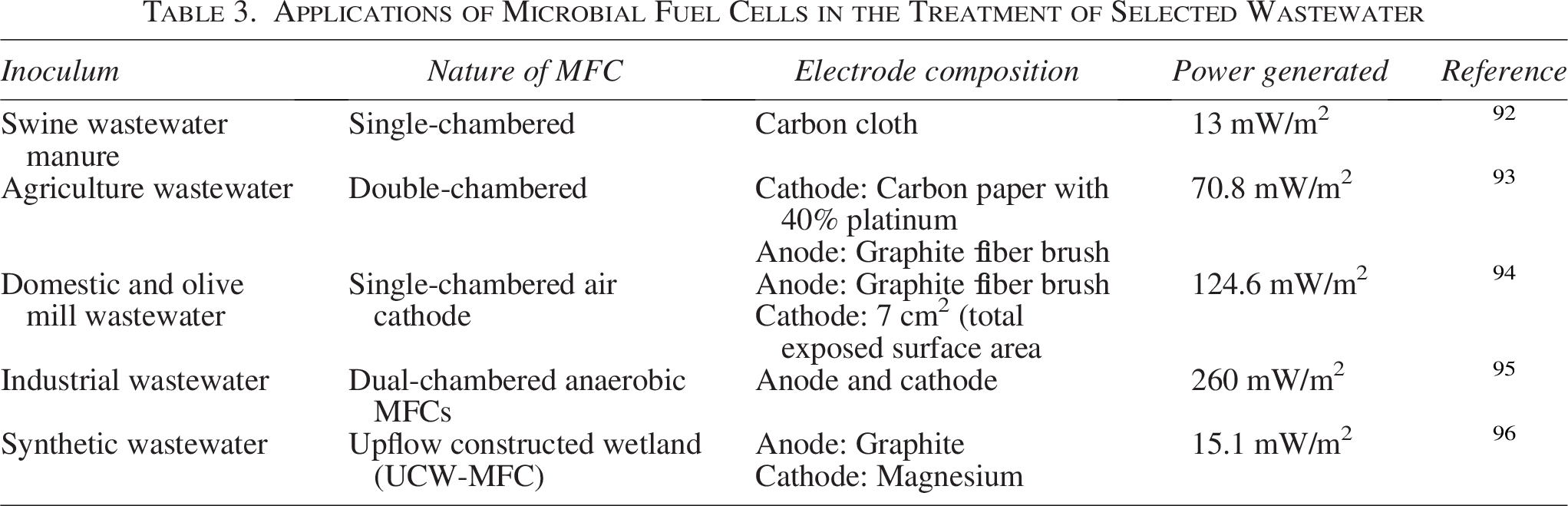
Redox reactions in MFC systems have effectively enabled the combined removal of COD and the production of electricity from wastewater. The main measures of how well an MFC system performs in treating wastewater are its COD removal efficiency and the highest achievable power density. At the moment, MFCs with one or two chambers are both effective at lowering COD levels. COD removal rates from dual-chamber MFCs can reach about 79.8%, 89 83%, 97 and 94.6% 98 wastewater from breweries, seafood processing facilities, and sugar factories, respectively. Similarly, MFCs with a single chamber can eliminate up to 88% of COD, 99 90%, 100 and 96%. 101 The significance of using MFCs in the treatment of wastewater can be summarized in Figure 6.
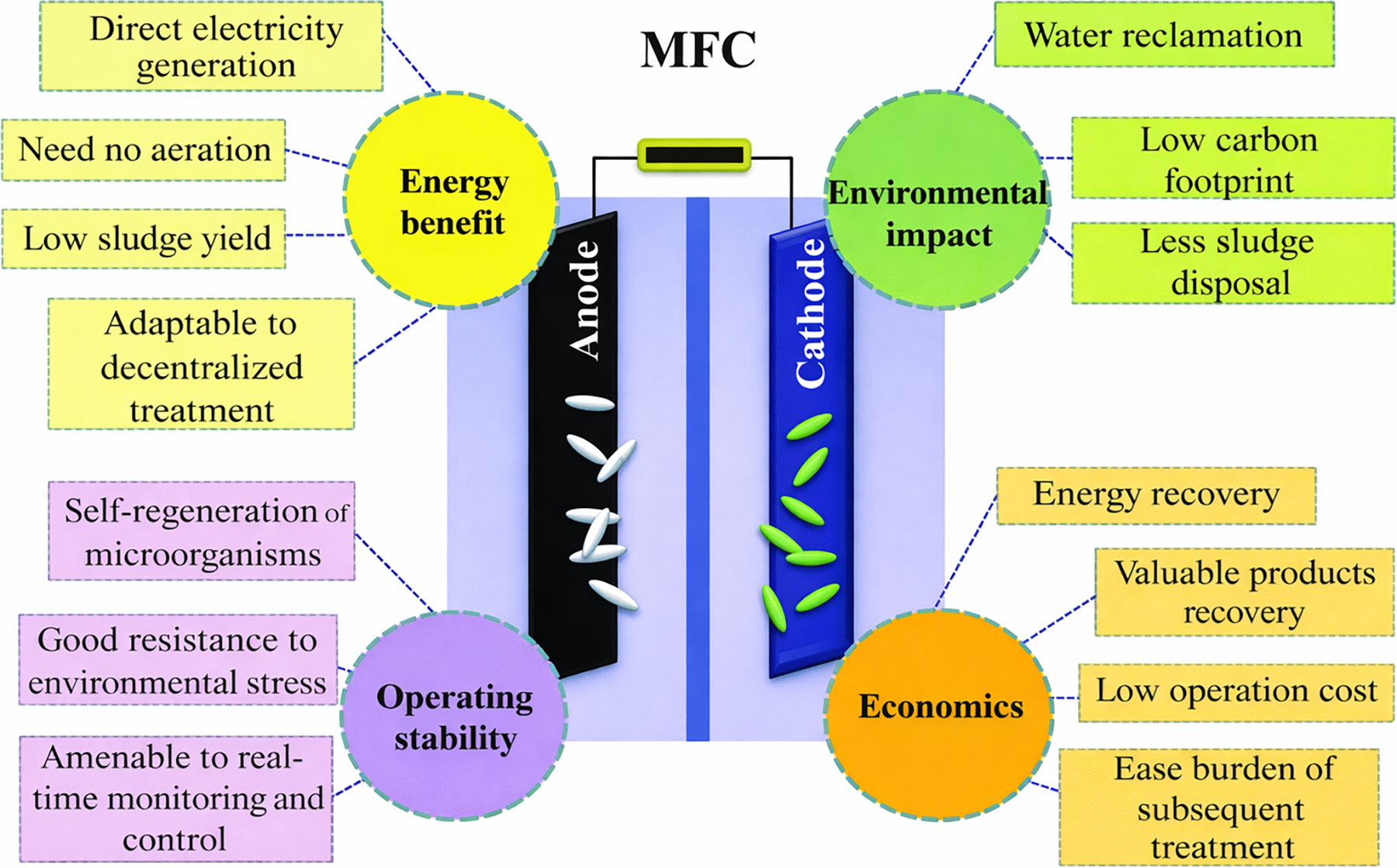
Merits of MFC technology for treating wastewater. 102
Recent Advancement in MFC Technology
MFC technology is an emerging and attractive method for cleaning wastewater and producing renewable energy. Although it offers many advantages, there are still significant challenges that limit its wider adoption and application in various fields. Recent progress in MFC research has focused on developing new materials for key system parts, such as the anodes, cathodes, and separators, to address issues like low-power output from wastewater sources. Nanostructured materials have gained considerable interest for making advanced electrodes and separators because of their enhanced features, including larger surface areas, faster transfer rates, and often lower costs and easier fabrication.103,104 Metal nanomaterials like copper, gold, metal oxides, carbon nanotubes (CNTs), and nanocomposites are electrode materials that can enhance the performance of MFCs. 105 Nanocomposites are made up of multiple phases, with at least one component being smaller than 100 nm. To function effectively as an anode in MFCs, nanocomposites are designed to improve the unique properties of the materials involved. 106 The power densities of MFCs can be enhanced to over 2000 mW/m2 by using nanocomposite materials like graphene oxide and stainless steel-based nanocomposites as anode. 107 Scientists are very interested in CNTs, a new kind of carbon derivative. Their peculiar one-dimensional nanoscale form, high strength and toughness, vast surface area in relation to their size, remarkable stability at high temperatures, chemical inertness, and exceptional electrical conductivity are the major reasons. 107 Multi-walled CNTs were used in the creation of a novel anode to enhance the MFC’s performance. When compared to ordinary carbon fiber anodes, Escherichia coli grew more efficiently on anodes doped with MWCNT, MWCNT-COOH, and MWCNT-NH2. The highest power density recorded with an MWCNT-COOH-modified anode was 560.4 mW/m2. 108 Consequently, these kinds of modifications aid in enhancing MFC stability and power output. Since MFCs can generate electricity by treating wastewater, using nanomaterial electrode materials provides an effective method for producing high amounts of hydrogen. Figure 7 shows the benefits and advancements in MFC technology using nanomaterials as the cathode.

Advancement in MFC technology using metal nanomaterials. 109
Challenges, Future Prospects, and Industrial Relevance
MFC is a technology capable of generating electricity from various organic materials. However, certain drawbacks have limited its practical use in real-world situations. The main challenge is its low-power density, but this can be addressed in two ways: by isolating strong microbes that can efficiently transfer electrons to the anode strains. It has also been found that many bacterial strains can produce mediators that facilitate effective electron transfer to the anode. Extensive research has been investigated to identify strategies to enhance MFC reactor performance, resulting in the development of more efficient laboratory-scale designs. These include innovations such as air cathodes, stacked reactors, and cloth electrode assemblies. 61 Efforts have led to the development of compact laboratory MFCs, roughly 20 mL in anode volume, that can generate electrical outputs exceeding 1000 W/m3. However, challenges remain in building larger-scale MFCs that maintain consistent performance and high-power output. To make this technology economically feasible, it is important to combine MFCs with other effective processes. The drawbacks and the possible solutions to the problems of MFC are summarized in Figure 8.
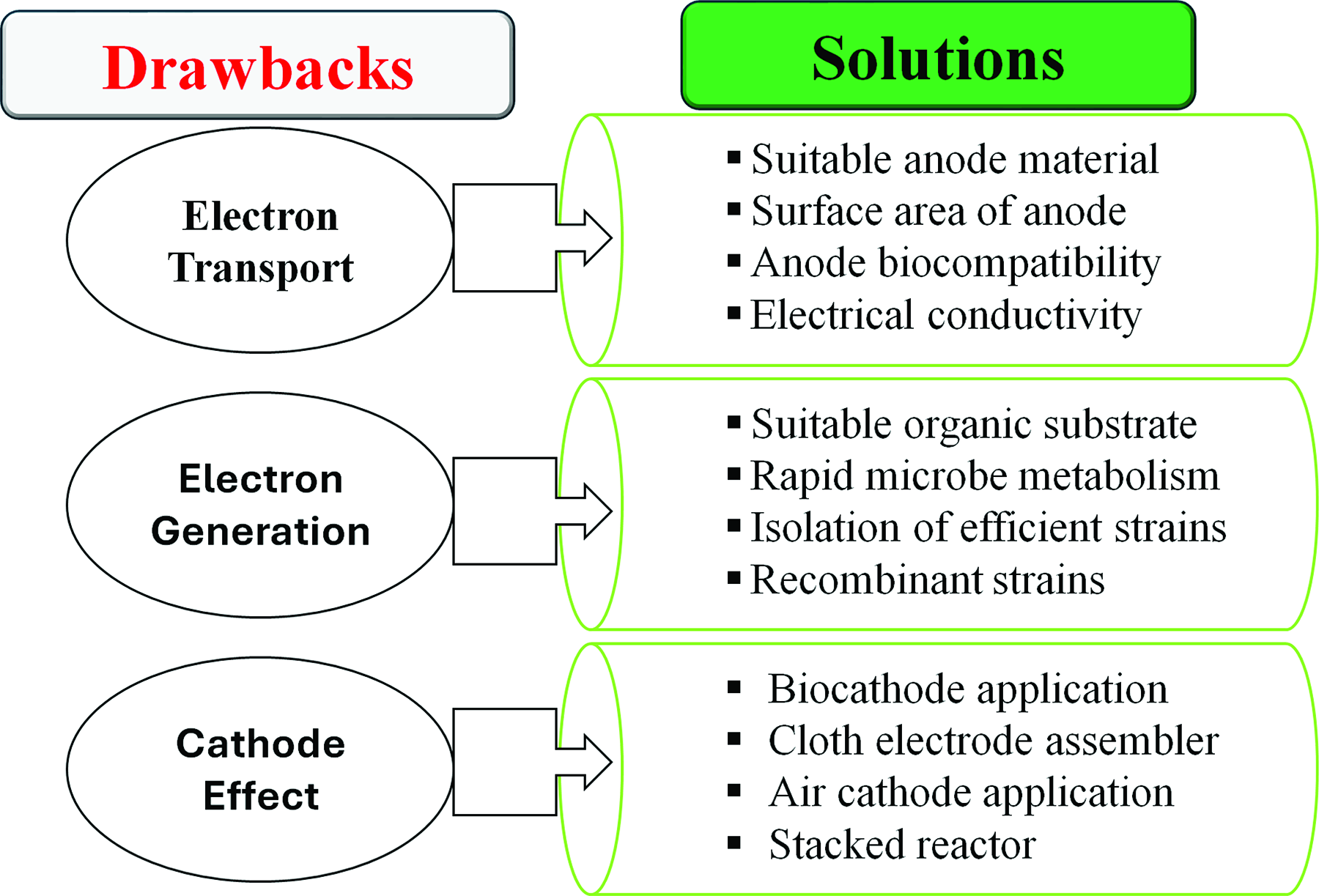
Drawbacks and possible solutions to enhance MFC efficiency.
The industrial relevance of this article can be highlighted through three key concepts: energy generation, waste treatment, and environmental impact. While the energy generation capacity of MFCs is still under investigation for large-scale applications, their ability to use industrial waste streams as substrates and as sources of inoculum makes them relevant to industries. By converting waste materials into bioelectricity and lowering overall treatment costs, MFCs provide an environmentally friendly and sustainable approach to managing industrial waste. Despite significant advancements in laboratory research, low-power density remains a key challenge for the large-scale commercialization of MFCs.17,110 Scaled-up or pilot MFC systems generally achieve power densities between a few mW/m2 and tens of mW/m2. This output is considerably lower than that of traditional energy sources and falls well short of the energy produced by full-scale wastewater treatment plants. In contrast, traditional activated sludge processes prioritize treatment efficiency over energy recovery, whereas anaerobic digestion systems generate much more valuable energy in the form of methane.111,112 This disparity illustrates that, in their current form, MFCs are better suited as complementary or niche technologies for energy-neutral wastewater treatment rather than as stand-alone power production systems. Furthermore, high capital costs remain a major impediment to large-scale MFC implementation, with PEMs being one of the most expensive components of the system. The use of commercially available membranes, such as Nafion, dramatically raises upfront costs and limits economic competitiveness. Long-term stability poses a significant challenge for the operation of MFCs, especially under real wastewater conditions where electrode and membrane fouling are inevitable. 113 The buildup of biofilms, inorganic scaling, and organic matter on the surfaces of the electrodes can hinder electron transfer. Additionally, membrane fouling leads to increased internal resistance and reduces the efficiency of ion transport.
Conclusions
This review thoroughly examines recent advancements in MFC technology for integrated wastewater treatment and sustainable bioelectricity generation. It focuses on reactor configurations, microbial communities, substrate utilization, and key operational parameters that impact system performance. Significant progress has been made in understanding the biological and electrochemical mechanisms that govern MFC operation. These systems are increasingly recognized as environmentally friendly platforms that can address both energy recovery and wastewater remediation simultaneously. However, despite their demonstrated potential, MFCs remain largely limited to laboratory and pilot scales, primarily due to challenges with power density, economic feasibility, and long-term operational stability. To expedite the transition of MFCs to commercial viability, future research should concentrate on several high-impact areas. First, developing advanced, low-cost electrode materials such as nanostructured carbon composites, metal-organic framework (MOF)-derived carbons, and durable biocathode structures could significantly enhance electron transfer kinetics and power output. Second, reactor engineering efforts should focus on scalable stack and modular designs that reduce internal resistance, prevent voltage reversal, and support stable operation under realistic wastewater conditions. These designs are essential for translating laboratory-scale performance improvements into practical, large-scale systems. Third, advancements in microbial ecology and metabolic engineering present transformative opportunities. This includes enriching or genetically modifying highly electrogenic microorganisms, constructing synthetic microbial consortia, and optimizing microbe–substrate interactions to maximize electron recovery. Last, integrating MFCs with complementary technologies, such as anaerobic digestion or resource recovery systems, may further enhance overall energy efficiency and economic competitiveness. Together, these targeted research areas provide a clear and actionable roadmap for overcoming current challenges and advancing MFCs toward sustainable, industrial-scale applications in wastewater treatment and renewable energy generation.
Footnotes
Author Disclosure Statement
The authors do not have any financial or nonfinancial conflicts of interest to declare.
Funding Information
No funds, grants, or other support was received.
Data Availability
Data sharing is not applicable to this article, as no datasets were generated or analyzed during the current study.