



Abstract
Background and Objective:
Herpes zoster (HZ), also known as shingles, is caused by reactivation of the latent varicella-zoster virus. HZ commonly manifests as a painful rash but may lead to more severe complications. An estimated 1 million cases of HZ occur annually in the United States, with adults aged ≥50 years, women, and individuals living with certain underlying conditions at increased risk compared with the general population. This narrative review aims to support the provision of comprehensive HZ-preventive care to female patients through consolidating evidence on risk factors for HZ and current prevention practices.
Risk Factors for HZ:
Evidence shows that women are at an increased risk of developing HZ and related complications. A variety of risk factors may contribute to this increased risk among women. Some are specific to women, including certain cancers. Other risk factors include chronic conditions and immune diseases with increased prevalence among women, such as rheumatoid arthritis and systemic lupus erythematosus.
HZ Prevention Practices:
Gaps in HZ prevention persist, including in recombinant zoster vaccine uptake and disparities in vaccination uptake by race and ethnicity. Various methods have been proposed that aim to address gaps in prevention, including approaching vaccination outside of the traditional primary care setting and considering the educational and resource needs of women’s health providers.
Guidelines and resources from the Centers for Disease Control and Prevention and medical societies are among the tools available to primary care providers and specialists in the women’s health space, such as obstetricians/gynecologists and oncologists, to support the incorporation of HZ-preventive care into clinicians’ practices.
Introduction
Herpes zoster (HZ), also known as shingles, is caused by the reactivation of latent varicella-zoster virus (VZV). 1 HZ commonly manifests as a rash with pain, itching, or tingling, and may result in complications such as pneumonia, hearing or vision loss, encephalitis, or postherpetic neuralgia, a long-term nerve pain that can be severe.1,2
Approximately 99.5% of people in the United States (U.S.) who were born before 1980 have been infected with VZV, placing them at risk for HZ. 1 About one in three people in the United States will develop HZ during their lifetime, with an estimated one million cases of HZ occurring annually. 1 Adults aged ≥50 years and adults with immunosuppression or chronic underlying conditions (e.g., chronic obstructive pulmonary disease [COPD], asthma, diabetes, chronic kidney disease, and cardiovascular conditions) are at an increased risk for HZ.1,3
Women have an elevated risk for developing HZ1,3 and are also disproportionately affected by chronic conditions placing them at an additional HZ risk, such as heart disease, COPD, diabetes, autoimmune diseases, and certain cancers.3–5 Among women, the annual incidence rate of HZ has been reported as 10.1 per 1000 person-years for those aged ≥50 years, with incidence increasing from 8.4 per 1000 person-years in women aged 50–59 years to 13.6 per 1000 person-years in women aged ≥80 years. 6 The U.S. Advisory Committee on Immunization Practices of the Centers for Disease Control and Prevention (CDC) recommends two doses of the recombinant zoster vaccine (RZV) for all adults aged ≥50 years and adults aged ≥19 years who are or will be immunodeficient or immunosuppressed.7,8 While RZV is available for protection against HZ, women in the United States are negatively impacted by disparities in health care access, which may contribute to challenges in vaccination and prevention; 9 U.S. women also live longer lives in poorer health. 10
Gender disparities in HZ risk may be further compounded by existing gender disparities in health care; women are more likely to report delays in health care access and experience financial barriers to receiving care. 9 Health education and promotion in this population are also of increasing importance as women in the United States make up the majority of adults in a caregiving role 11 and make the majority of health care decisions for their families. 12 Despite the barriers to health care faced by women in the United States, they are more likely to engage in health-seeking behaviors, 13 highlighting a need for a focus on the promotion of women’s health and resources specific to this population, including for the prevention of HZ.
Given the aging population in the United States, of which women comprise a large proportion (a projected 52.7% of adults aged ≥50 years in 2025), 14 as well as the established rise in chronic conditions with increasing age, such as heart disease, diabetes, cancer, and stroke, 15 the intersection of older age, female sex, and chronic conditions as risk factors for HZ are of particular importance in HZ prevention. To that end, this narrative review aims to consolidate the evidence on risk factors for HZ and current practices surrounding the prevention of HZ, with a particular focus on how these factors affect women, to aid in the provision of comprehensive HZ-preventive care to female patients.
Literature Search Methodology
A preliminary literature search was conducted for English language clinical studies, comments, editorials, guidelines, and letters that have been indexed in PubMed since 2015. A full list of included search terms can be found in Table 1. Articles that reported results relevant to risk factors for HZ or guidelines, recommendations, and best practices for HZ prevention were included for review. Supplemental searches were performed to identify additional publications pertinent to the risk and prevention of HZ among women, which were not identified within the original search parameters, and articles were selected for inclusion based on relevance to the review as determined by the authors to ensure coverage and inclusion of relevant and high-quality publications. A narrative synthesis of the included studies was conducted to leverage available global and U.S.-specific data and position findings within the context of U.S. health care.
Search Termsa

Asterisks represents truncation of search terms.
Supplemental searches included review articles and geographies outside the United States.
Overview of Identified Studies
Publications and guidelines identified in the literature search and identified by the authors or during supplemental searches were included (Tables 2 and 3). Of the 51 studies and guidelines identified for inclusion, 27 evaluated risk factors for HZ and HZ outcomes and 25 examined vaccination, preventive care, and other health care practices or guidelines relevant to HZ care.
Characteristics of Included Studies
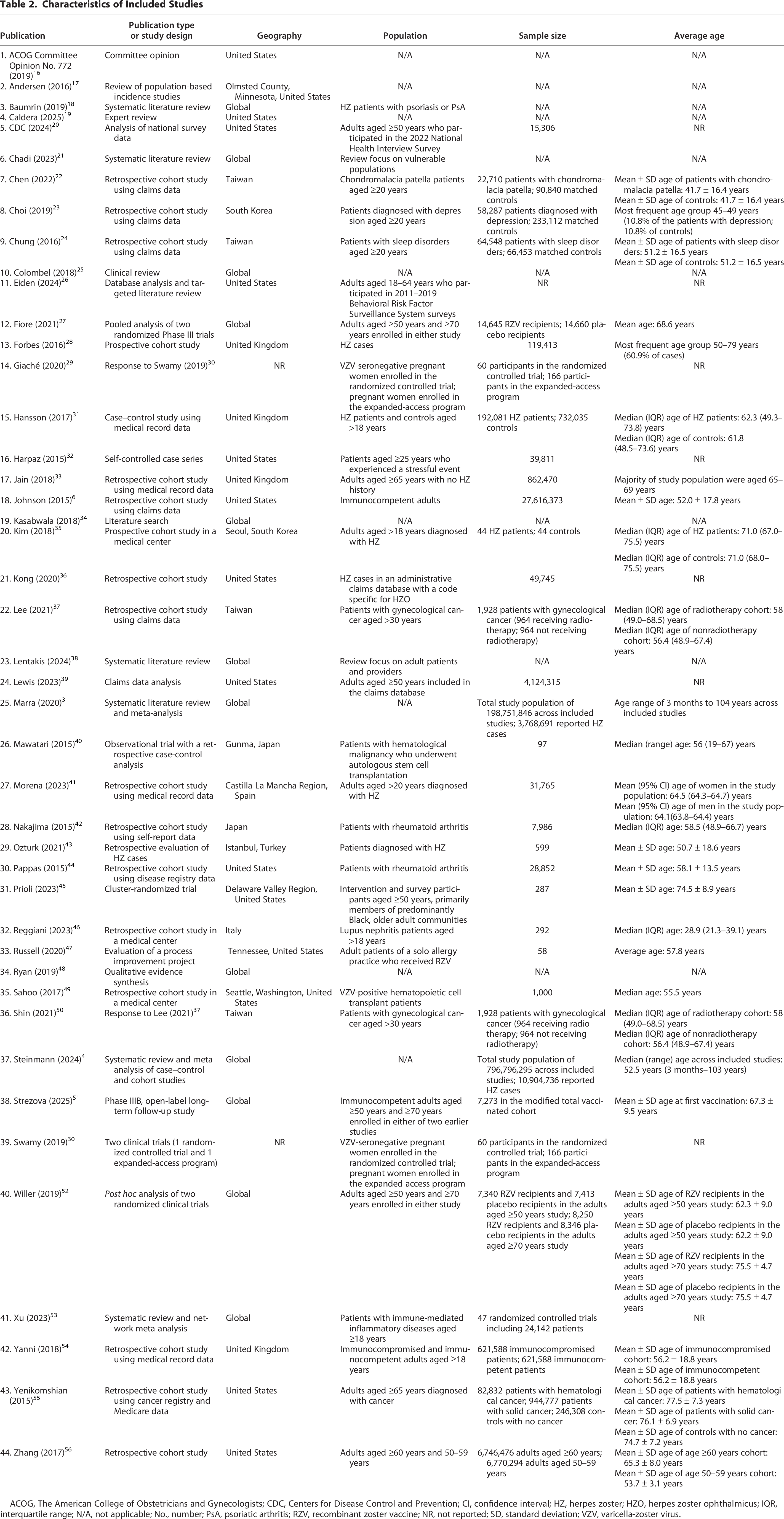
ACOG, The American College of Obstetricians and Gynecologists; CDC, Centers for Disease Control and Prevention; CI, confidence interval; HZ, herpes zoster; HZO, herpes zoster ophthalmicus; IQR, interquartile range; N/A, not applicable; No., number; PsA, psoriatic arthritis; RZV, recombinant zoster vaccine; NR, not reported; SD, standard deviation; VZV, varicella-zoster virus.
U.S. HZ Vaccination Guidelines by Organization

ACG, American College of Gastroenterology; ACOG, American College of Obstetricians and Gynecologists; ACR, American College of Rheumatology; AGA, American Gastroenterological Association; AHA, American Heart Association; ASCO, American Society of Clinical Oncology; CDC, Centers for Disease Control and Prevention; HZ, herpes zoster; IBD, inflammatory bowel disease; RZV, recombinant zoster vaccine; U.S., United States.
Risk Factors for HZ and Related Complications
Twenty-seven of the included studies reported risk factors for HZ as well as outcomes of HZ, spanning a spectrum of sociodemographic and clinical characteristics (Table 4). Risk factors for HZ may be difficult to discern among biological sex effects and gender-related differences in disease exposure or prevalence, as sex-specific analyses are not consistently available. The included studies and supporting data, such as prevalence of certain risk factors among women, examine the interplay of these factors in HZ risk for this population.
Identified Risk Factors for HZ and HZ Outcomes Among Women

aHR, adjusted hazard ratio; AIDS, acquired immune deficiency syndrome; aIR, adjusted incidence rate; aOR, adjusted odds ratio; BID, twice a day; CHF, congestive heart failure; CI, confidence interval; CNS, central nervous system; COPD, chronic obstructive pulmonary disease; HIV, human immunodeficiency virus; HZ, herpes zoster; IC, immunocompromised; IR, incidence rate; IRR, incidence rate ratio; NR, not reported; OR, odds ratio; PYs, person-years; QD, once a day; RI, relative incidence.
General risk for HZ and HZ complications among women
Identified studies highlighted the increased risk for HZ among women,3,6,17,33,43,54 with one meta-analysis reporting a pooled relative risk (95% confidence interval [CI]) of 1.19 (1.14–1.24) for women. 3 One study evaluating HZ frequency by age group and sex observed increases in HZ cases with increasing age, and suggested that the perimenopausal time period may represent a period of increased risk for HZ among women; however, direct evidence linking menopausal hormonal changes to VZV reactivation remains unavailable. 43
Additional studies demonstrated that women had an increased incidence of certain HZ complications, including postherpetic neuralgia (adjusted odds ratio [aOR] for women compared with men [95% CI]: 1.19 [1.10–1.27]), 28 and HZ ophthalmicus (incidence rate ratio for men compared with women [95% CI]: 0.74 [0.72–0.76]). 36
Sociodemographic factors
In addition to differences in HZ risk by sex, other sociodemographic factors, such as care home residence and race and ethnicity, have been associated with HZ risk.3,33
Chronic conditions
Meta-analyses examining a broad range of risk factors for HZ identified chronic conditions which place patients at a higher risk for HZ, including diabetes, COPD, asthma, cardiovascular diseases, renal disease, and depression.3,4 While these studies do not all provide sex-specific analyses, several of the chronic conditions identified as risk factors for HZ in the meta-analyses are also prevalent among adult women in the United States, including COPD (7%), 64 chronic kidney disease (14%), 65 and cardiovascular disease (44%). 66 This highlights the importance of understanding the impact that chronic disease can have on women’s risk of developing HZ.
Additional respiratory diseases have also been identified as risk factors for HZ, with an increased HZ risk among women. 41 A higher risk of HZ in women compared with men was observed for all respiratory conditions assessed, including those with COPD (aOR for male compared with female 0.81 [95% CI: 0.80–0.82]), obstructive sleep apnea (aOR 0.75 [95% CI: 0.74–0.76]), asthma (aOR 0.77 [95% CI: 0.76–0.78]), and lung cancer (aOR 0.77 [95% CI: 0.76–0.78]). 41
One identified study found that, for both men and women, risk of HZ increased with sleep disorders (adjusted hazard ratio [95% CI]: 1.23 [1.17–1.30]), excluding apnea. 24 While no significant difference in risk was found between men and women, sleep disorders such as insomnia and nonrestorative sleep have been found to be more prevalent among women compared with men.67,68
Depression was found in one study to be a risk factor for HZ in both women and men, with subgroup analyses showing that the increased risk was only significant in women aged <60 years (adjusted hazard ratio for women aged <40 years [95% CI]: 1.13 [1.02–1.25]; adjusted hazard ratio for women aged 40–59 years [95% CI]: 1.11 [1.04–1.17]). 23 Stress has also been identified as a potential risk factor for HZ, although the data are mixed, with one identified study reporting a relative HZ incidence (95% CI) of 0.76 (0.54–1.06) during the 90 days following diagnostic code identification of stress compared with a 3-month control period before the stressor, 32 and another reporting an odds ratio (95% CI) of 17.87 (4.43–72.10) using self-reported assessment of stress. 35 A meta-analysis reports a pooled risk ratio (95% CI) of 1.47 (1.03–2.10) for the association of stress and HZ, similarly suggesting mixed findings. 3 Surveys conducted in the United States and globally have demonstrated an increased prevalence of stress among women, indicating the particular importance of stress-related health risks in this population.69,70
Lastly, chondromalacia patella (runner’s knee) has been associated with an increased risk of HZ in women, 22 although the potential causes linking these two conditions are currently unclear.
Autoimmune and immune-mediated conditions
Human immunodeficiency virus/acquired immune deficiency syndrome (HIV/AIDS), rheumatoid arthritis (RA), systemic lupus erythematosus (SLE), and inflammatory bowel disease (IBD) were identified HZ risks in a meta-analysis. 3 Of these immune conditions, HIV/AIDS and SLE were associated with the highest risk: risk ratios 3.22 (95% CI: 2.40–4.33) and 2.08 (95% CI: 1.56–2.78), respectively. 3 While sex-stratified data on these conditions and HZ risk are limited, several of the immune conditions identified as risk factors for HZ have also been found to have a high prevalence among women in the United States, including RA, SLE, and IBD.71–75 RA has also been associated with an increased risk of HZ across multiple studies,3,42,44 with a risk ratio of 1.51 (95% CI: 1.31–1.75) estimated in one meta-analysis. 3 Another study that investigated HZ prevalence among patients with lupus nephritis, a complication of SLE, 76 reported an HZ prevalence of 22.6% in this patient population. 46 Additionally, psoriasis patients were found to have a higher risk of HZ than the general population and healthy controls, with moderate-to-severe psoriasis contributing to most of this HZ risk. 18 Among U.S. women, psoriasis prevalence has been estimated at 3.2%. 77
In addition to these immune conditions prevalent among women, some therapies utilized in treating immune-mediated diseases were also associated with an increased risk of HZ, such as Janus kinase (JAK) inhibitors peficitinib, baricitinib, and tofacitinib.25,53 These treatments are used by patients for several types of immune-mediated inflammatory diseases, such as IBD, psoriasis, psoriatic arthritis, and RA.25,53
Cancers
Two meta-analyses identified various malignancies as increasing the risk of HZ.3,4 In a separate study of Medicare patients, female patients diagnosed with hematological cancers or solid cancers were at an increased risk of HZ. 55 Another study evaluating specific types of cancer found that certain head and neck, gastrointestinal, lung, breast, ovarian, prostate, kidney, bladder, and central nervous system cancers, as well as lymphoma, leukemia, and myeloma, were associated with increased odds of HZ. 31 Although sex-specific analyses were not reported for each cancer type, in 2022, breast, lung, and colorectal cancers were the most common cancer types (i.e., with the highest number of new cases) among women in the United States. 78
Immunosuppressive cancer treatments have also been identified as risk factors for HZ. One study evaluating patients with gynecological cancer undergoing radiotherapy with chemotherapy found that they had an increased risk of HZ compared with patients with gynecological cancer not on radiotherapy or chemotherapy.37,50 Two additional studies reported an increase in the risk of HZ following hematopoietic stem cell transplant, but with conflicting results as to whether women are at a further increased risk.40,49
HZ Prevention Practices
Current practices and guidelines
The search identified 18 studies that examined current practices in HZ prevention. The efficacy of RZV for the prevention of HZ has been studied in a phase 3 randomized clinical trial in a population of adults aged ≥50 years. In post hoc analyses, RZV had a 97.0% efficacy against HZ in women. While efficacy against postherpetic neuralgia was numerically higher in women than in men, the difference was not significant. 52
While data on the long-term effectiveness of RZV remain limited, a clinical study reported that the long-term duration of protection from HZ by RZV remains high through 11 years after vaccination. 51 There are gaps in the evidence landscape regarding real-world effectiveness data of RZV in specific subgroups of women, such as women with chronic conditions (diabetes, COPD, asthma, etc.), women going through menopause, women undergoing cancer treatment, and women with certain cancers. There is evidence to support that RZV has a clinically acceptable safety profile, although a post hoc analysis showed that the incidence of local and general adverse events (all grades and grade 3) was higher among women than men. 27
The identified studies were accompanied by seven U.S. guidelines for HZ vaccination set by organizations including the CDC, 57 the American College of Obstetricians and Gynecologists (ACOG), 58 the American College of Rheumatology, 59 the American Heart Association, 60 the American College of Gastroenterology, 61 the American Society of Clinical Oncology (ASCO), 62 and the American Gastroenterological Association 63 (Table 3). Guidelines across organizations follow the CDC guidance of two RZV doses for adults aged ≥50 years and two RZV doses for immunodeficient or immunosuppressed adults aged ≥19 years.7,8 In one guideline from the National Psoriasis Foundation, experts recommended HZ vaccination for psoriasis and psoriatic arthritis patients aged ≥50 years and younger patients at increased risk. 18 HZ vaccination is also recommended as a best practice for patients with IBD aged ≥19 years on, or with plans to initiate, immune-modifying therapies.19,61 Because RZV is a recombinant vaccine, with no live virus, the vaccine was studied in immunocompromised and immunodeficient populations and is indicated and recommended for use in these populations.61,62 In pregnant women, postexposure prophylaxis is recommended after exposure to VZV or HZ.29,30
Gaps in prevention
Several studies identified gaps in HZ prevention, including in HZ vaccination uptake in the United States.26,56 As of 2022, uptake of ≥2 doses of RZV was 17.1% among U.S. adults aged ≥19 years with an indication for vaccination. For U.S. adults aged ≥50 years, uptake was 25.6% and 18.1% for ≥1 RZV dose and ≥2 RZV doses, respectively. 20
Another study demonstrated HZ vaccination disparities by race, with HZ vaccination rates particularly low in Black communities. 45 Additionally, an analysis of claims data reported that Black (OR [95% CI]: 0.72 [0.71–0.72]) and Hispanic (OR [95% CI]: 0.78 [0.77–0.78]) patients were less likely to receive RZV compared with White patients. 39 While women were generally more likely to be vaccinated for HZ, 39 disparities in vaccination coverage by race may provide important context for subgroups of women less frequently protected against HZ. These disparities may have a significant medical impact due to other risk factors, such as SLE, that have an increased prevalence in Black and Hispanic female patients. 79
HZ vaccination disparities have also been identified by insurance type, 80 income,81,82 and education level81,82 and have been described among other clinical populations, including those with certain conditions, such as some cancers and asthma.83,84 These prevention disparities highlight the importance of vaccination strategies that reach patients in the communities that are most impacted by these disparities.
A presentation from the CDC identified barriers to vaccination broadly, such as low awareness of most vaccines, missed opportunities for primary care providers to assess patients’ vaccine needs or offer vaccines recommended for adults, and patients often seeing more than one medical provider. 85 Similar barriers, such as low provider awareness of vaccine recommendations among both primary care providers and specialists, have been found in studies specific to HZ vaccination.86,87 To address these barriers, the CDC recommends routine assessment of patient vaccination status; tailored, well-timed recommendations of vaccines by providers; and acknowledging and addressing patients’ uncertainties. 85
In addition to the above recommendations to address barriers to vaccination, uptake could be improved by addressing hesitations regarding vaccination among women. While some evidence suggests women are more likely to be vaccinated for HZ, 39 women are also likely to have hesitations toward vaccination more broadly, which has been demonstrated for coronavirus disease 2019 (COVID-19) and influenza.88,89 A study addressing COVID-19 vaccine hesitancy among Black women in the United States noted the importance of addressing past instances of medical exploitation, transparency regarding safety information, and culturally respectful communication and promotion of vaccines. 90 Another study looking at vaccine hesitancy in a broader population highlighted the importance of patient trust in a health care system; 91 lower educational attainment was also associated with hesitations surrounding vaccination.88,92 As vaccine hesitancy has increased, 93 providers should be aware of and ready to address concerns regarding HZ vaccination that may arise among their patients, such as conversations surrounding a patient’s risk for HZ and guidelines for vaccination.
Methods to address gaps in prevention
While not investigated specifically in the context of HZ, digital communications have been used to improve vaccination rates. However, the use of targeted digital communications must be mindful of accessibility, equity and resource limitations, and technical barriers. 48 Digital communications may also be utilized through electronic medical records, as this interface is increasingly accessible and utilized by patients for interactions with providers. 94
Atypical approaches to vaccination outreach, such as vaccination outside of the typical primary care setting, have also been explored for vaccinations broadly and specific to HZ.21,26,38 In one review of interventions to improve vaccination coverage, a multifaceted approach of vaccine education and reminders with reinforcement at the point of care was highlighted as an effective way to improve vaccination rates among adults. 26 Other forms of outreach included targeted promotion and vaccination in nontraditional vaccination sites such as community pharmacies, workplaces, faith-based organizations, and schools.21,38,95
In a qualitative interview study of health care providers and others with expertise in vaccines, positive views of alternative vaccination processes were reported, including vaccination at nontraditional sites and vaccines delivered by nonphysician health professionals. Participants noted that these methods helped increase vaccine access during the COVID-19 pandemic and have shifted attitudes regarding nontraditional vaccine delivery. 95 These studies highlight evolving areas of nontraditional delivery of health care that can be utilized for increasing HZ vaccine uptake.
While identified literature did not find current inclusion of HZ prevention in women’s health practices, studies have explored how HZ prevention has successfully been incorporated into other specialty practices, including urology, and allergy and immunology practices.34,47 Incorporating zoster vaccination delivery into clinical settings where at-risk patients may be most likely to receive care (or otherwise supplying these providers with tools to refer their patients for vaccination if in-office immunization is not available) could be an effective method of reaching patients for adequate HZ prevention. In the oncology space, a more active recognition of the role of immunizations has taken place in recent years, with ASCO issuing immunization guidelines for patients with cancer in 2024. 62 Additionally in this field, nurse navigators (nurses who help guide patients through a health care system) have addressed barriers to care and improved treatment adherence, 96 and can help integrate vaccination into oncology practices. Given their skillset and number of touchpoints with the patient, there is an opportunity for the navigator to provide education on preventive medicine and help integrate vaccination into the patient’s care as they assist with the coordination of vaccine timing around cancer treatment schedules. This is especially important as there are timing considerations for when to receive vaccinations during cancer treatments, such as chemotherapy cycles.97,98 This role in the treatment process places oncology nurse navigators in a unique position to identify patients at risk for HZ and optimize vaccination in this population, exemplifying for other specialties how nurse navigators or other patient care navigators may improve HZ prevention in at-risk populations.
For gynecological care, an ACOG Committee Opinion provided immunization implementation strategies tailored to obstetricians/gynecologists (OB/GYNs), which have the potential to be emulated in other provider settings. These include the development of a standardized process for assessing and documenting vaccination status and educating all staff members on the immunization process. 16 These studies highlight the potential role of OB/GYNs, and other health care providers with a focus on women’s health, in improving health care access and HZ prevention in this population.
OB/GYNs are uniquely positioned to provide preventive care for women as they maintain longitudinal health care relationships that span both the reproductive and postreproductive years. In one study, the majority of patients noted that routine primary care services were available at their OB/GYN office and that they were comfortable receiving routine services from their OB/GYN. 99 Additionally, OB/GYNs increasingly act as primary care providers for many women, 100 and well-woman visits have been highlighted as key opportunities for preventive medicine. 101
Provider vaccine recommendations are a key determinant of subsequent uptake; 102 thus, encouraging OB/GYNs to view themselves as routine vaccinators or advocates for vaccination and ensuring they are knowledgeable about which of their patients may be at increased risk for HZ and eligible for vaccination may help to further improve HZ prevention among females. Currently, the vaccines routinely provided to nonpregnant patients by OB/GYNs are human papillomavirus, influenza, and tetanus, diphtheria, pertussis (Tdap) vaccines. 103 A cooperative agreement led by ACOG working with 19 OB/GYN practices to improve immunization processes identified key strategies for implementing immunizations into the OB/GYN practice workflow, which led to increases in immunization rates and decreases in missed immunization opportunities during the cooperative agreement. These included developing a standard process for assessing and documenting patient vaccination status and periodically assessing immunization rates to determine areas where progress is needed. 104 An ACOG webinar in conjunction with the CDC also reiterated the importance of routine assessments of vaccination needs at every clinical encounter, strong provider recommendations, administration of the vaccine or referral at the time of recommendation, and documentation of vaccination. 105
The National Vaccine Advisory Committee has developed Standards for Adult Immunization Practice, which include administering vaccines, if available in-office, or referring patients to a vaccination provider. If a provider does not have a vaccine available in-office, it is advised that they refer patients to private doctor offices, pharmacies, workplaces, community health clinics, health departments, or other community centers, such as schools and faith-based organizations, 106 as recommendation from a provider is one of the strongest predictors of vaccine uptake. 102 For OB/GYN practices that are unable to provide vaccinations in-office, ACOG recommends developing a referral system that includes the following: a referral or prescription for a specific vaccine within a specific timeframe, identified locations that offer the vaccine and accept the patient’s insurance, and a plan to follow up with the patient and document their vaccination status. 107 The implementation of these approaches in an OB/GYN practice setting demonstrates the opportunities for practice-level systematic changes that can make HZ vaccination more accessible for at-risk patients; the broad nature of these approaches also indicates feasibility for other specialty practice settings to foster vaccination and disease prevention for the patients most at risk for HZ.
Limitations
Limitations of this review include those which are inherent to conducting a nonsystematic literature search, including potential incomplete study identification and reviewer bias. As a narrative review, there were no predefined protocol or systematic search methods applied, potentially increasing the risk of bias and reducing reproducibility. Additionally, subsequent syntheses of the identified literature were descriptive in nature and did not involve quantitative analyses. However, these qualities are intrinsic to narrative reviews, which aim to provide overarching summaries of available evidence and extract insights that advance future research and discussions in their respective fields.108,109
Comparability of the findings may be limited by differences in study design (with most included studies using an observational design), populations, sample sizes, geographies, and outcomes of the included studies. Further, identified outcomes from studies conducted outside of the United States may have limited generalizability to U.S. women, given regional epidemiological differences in the conditions analyzed here, as well as variations in health care systems and access. Last, gaps in women’s health research exist, with emerging or limited data available explicitly examining the connection between gender and HZ as well as on underlying disease mechanisms, such as hormonal influences on HZ risk.
Conclusions
This review consolidates recent literature on risk factors for HZ among women, as well as considerations for the prevention of HZ in women. This synthesis can assist in the identification of female patients who may benefit most from vaccination as a preventative measure against HZ and provide clinicians with insights and strategies to reach and protect these women.
Sociodemographic factors, chronic conditions, and certain medical treatments were identified as risk factors that place women at an increased risk for HZ. Gaps in women’s health care and in HZ prevention exist, and health disparities may have a particularly negative impact on women who are disproportionately affected by certain conditions that are risk factors for HZ.
Through understanding risk factors for HZ and expanding clinical practices to include HZ prevention, women’s health care providers, such as primary care providers and OB/GYNs, can play a crucial role in preventing HZ in women.
Data Sharing Statement
Data sharing is not applicable to this article as no datasets were generated or analyzed during the current study.
Authors’ Contributions
Substantial contributions to study conception and design: R.C.; substantial contributions to analysis and interpretation of the data: R.C., J.C., N.E., J.S., S.K., F.C., C.H., C.R., and C.C.; drafting the article or revising it critically for important intellectual content: R.C., J.C., N.E., J.S., S.K., F.C., C.H., C.R., and C.C.; and final approval of the version of the article to be published: R.C., J.C., N.E., J.S., S.K., F.C., C.H., C.R., and C.C.
Footnotes
Acknowledgments
The authors acknowledge Justin Gatwood, David Singer, and Nikita Stempniewicz,
Author Disclosure Statement
R.C. is employed by
