




Abstract
Background:
Periorbital edema and ecchymosis are common early postoperative findings after rhinoplasty.
Objective:
The aim of this study was to evaluate and compare postoperative periorbital edema and ecchymosis between patients who underwent primary rhinoplasty with a transnasal drainage cannula placed through the osteotomy site and those without, using photographic analysis and patient-reported outcomes.
Methods:
Seventy-two patients undergoing primary rhinoplasty were randomized to drainage group (16G intravenous cannula inserted through the osteotomy site for 24 h [n = 36]) or no drainage [n = 36]. Blinded raters graded edema and ecchymosis on days 1, 7, and 28. Standardized Cosmesis and Health Nasal Outcomes Survey (SCHNOS) was completed preoperatively and on day 28.
Results:
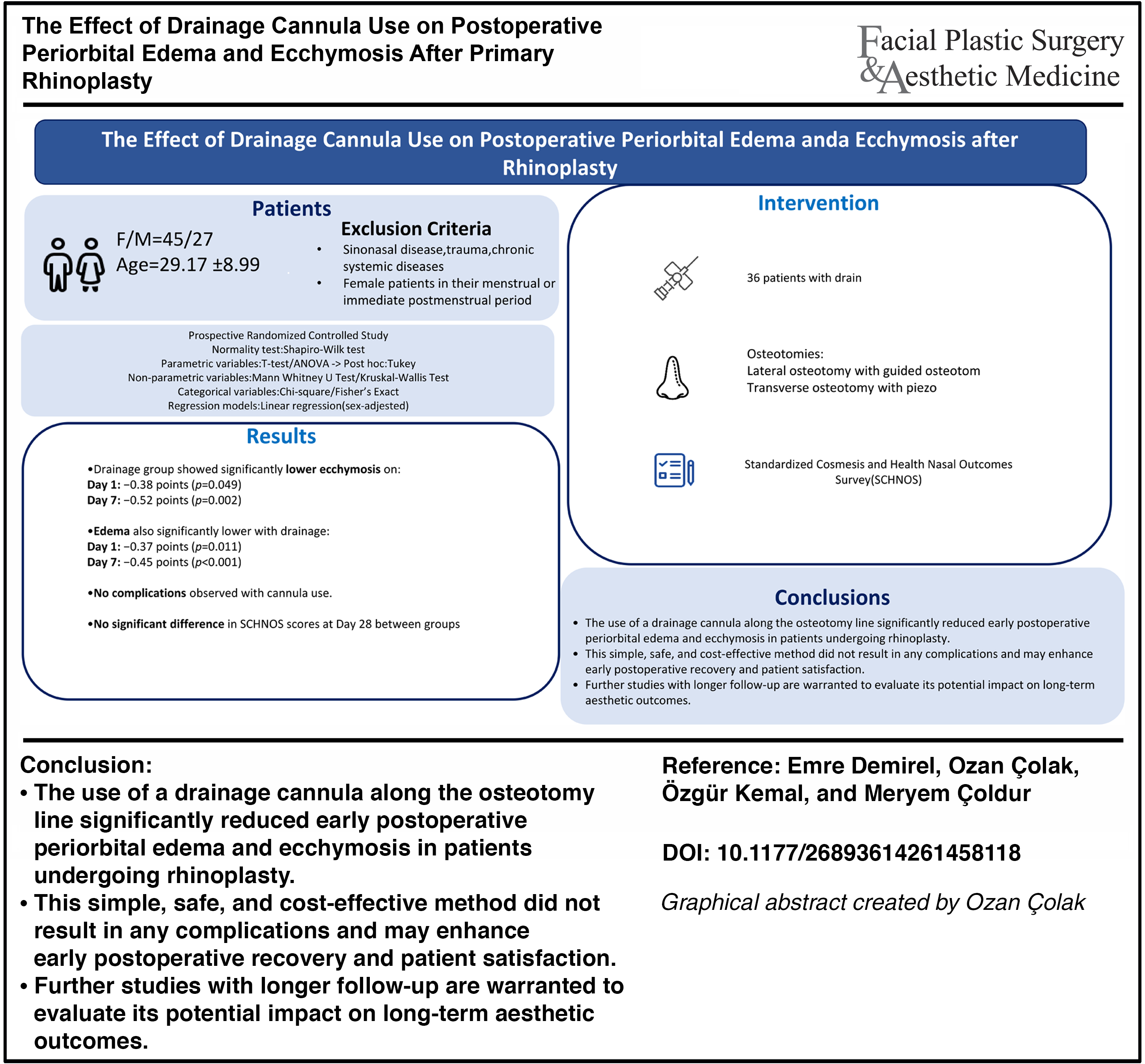
The mean age was 29.2 ± 9.0 years in the cannula group and 26.3 ± 9.7 years in controls; 66.7% and 58.3% were female, respectively, and all patients completed 28-day follow-up. The cannula group demonstrated less edema and ecchymosis on days 1 and 7 compared with controls (p < 0.05). No significant differences were observed on day 28. Day-28 SCHNOS total scores were similar between groups (cannula: 11.00 [95% confidence interval (CI), 8.40–13.60] vs control: 13.86 [95% CI, 10.33–17.39]).
Conclusion:
Temporary transnasal cannula drainage after primary rhinoplasty with osteotomies was associated with less early periorbital edema and ecchymosis with no difference by postoperative day 28.
Graphical abstract
Get full access to this article
View all access options for this article.
References
Supplementary Material
Please find the following supplemental material available below.
For Open Access articles published under a Creative Commons License, all supplemental material carries the same license as the article it is associated with.
For non-Open Access articles published, all supplemental material carries a non-exclusive license, and permission requests for re-use of supplemental material or any part of supplemental material shall be sent directly to the copyright owner as specified in the copyright notice associated with the article.
