




Abstract
For more than 20 years, distance education has provided an option for prospective special education teachers to achieve licensure and a graduate degree. The program began as a two-way interactive television endeavor located at area community college sites. Over time, the program evolved to include online coursework with synchronous class meetings. In addition, changes in licensure and the graduate program have affected the schedule and offerings. Although changes are part of the story, the mission has remained the same, to provide quality graduate instruction to teachers of students with disabilities in a convenient, connected manner. This article includes a reflection on the original program and highlights of four major transitions over the 20 years of the program.
Shortages of qualified personnel in special education (SPED) continue to plague school systems of all types and sizes. In districts with highly diverse populations, shortages are at critical levels (Goldhaber, Krieg, Theobald, & Brown, 2015). A different crisis exists in rural areas, where barriers of time, travel, and isolation exacerbate challenges of delivering quality instruction to prepare teachers for SPED classrooms. As a rule, school administrators view filling SPED teaching positions as more difficult than filling other licensure areas (Goldhaber et al., 2015). The shortages are multiplied by the “revolving door” of SPED teachers. Attrition continues to thwart the progress of teacher preparation in SPED, as teachers leave the profession as rapidly as new teachers enter (Goldhaber et al., 2015). This leads to instability in the profession, whereas school enrollments continue to grow (Goldhaber et al., 2015). The perception that SPED teaching is considered by many to be more difficult (Fore, Martin, & Bender, 2002; Miller, Brownell, & Smith, 1999) dampens efforts to recruit prospective SPED teachers.
On a more optimistic note, teacher candidates in SPED enjoy healthy prospects for getting a job quickly. Moreover, SPED teachers who remain continue to be in high demand as they continue in their careers (Goldhaber et al., 2015). Many universities have contributed to the supply of well-trained SPED teachers through distance education programs, and our university has maintained SPED distance education programs for more than 20 years (Jordan et al., 1999).
Distance education continues to be an attractive option for education at the postsecondary level, as supported by findings from the National Center for Education Statistics (NCES; 2016). Their 2016 Digest of Education Statistics revealed that of the 20 million students enrolled in degree-granting postsecondary institutions, 15% enrolled in at least one distance education course as part of their program. An additional 14% of the total number of students completed a distance education program. Graduate students enrolled at a higher rate in distance education programs; 26% of graduate students at postsecondary institutions completed distance education programs.
SPED teacher preparation via distance provides an attractive option for current and prospective SPED teachers, especially those living and working in rural areas, in two important ways. First, the teachers and teacher candidates do not have to drive to campus to attend classes, and this allows them to spend less time on the road and more time engaged in their communities. The schedule of courses, coursework, and class meeting time(s) may be conducive to current and prospective teachers managing their otherwise busy lives. Because teachers are often overextended due to work and home demands, reducing the time spent traveling to and from class may contribute to the stability of the schools in which the teachers serve. In addition, the design of effective distance courses often includes an asynchronous component of “permanent” (at least for the semester) information and resources that teachers can access “on demand.” The permanent information includes resources such as course readings, relevant media, and example lesson plans, Individualized Education Programs (IEPs), and behavior plans. These items collected in one convenient location can become an important resource to teachers throughout the semester.
In North Carolina, diversity prompts thoughtful consideration of distance education technologies for instructional delivery by education providers such as Institutions of Higher Education (IHEs). Faculty planning new programs must consider the diverse characteristics of the entire state and its expanded service area. The purpose of this article is to reflect on the original program at the University of North Carolina–Charlotte (UNC Charlotte) and highlight four major transitions over the 20 plus years it has been in existence (interactive TV to Internet-based coursework, one master’s degree to two master’s-level programs [MEd and Master of Arts in Teaching; MAT], category-based program to student curriculum-based program, and student demographics). Before we begin to address the big changes over the 20-year period, it is important to lay the groundwork with the program description of the original distance endeavor in 1997.
Project Description
In 1997, the Department of Special Education, Counseling and Child Development (now Department of Special Education and Child Development) at UNC Charlotte went live with the first courses in the distance education master’s degree (MEd) in learning disabilities (LD). Creation of the distance education master’s (MEd) in LD was in direct response to a request by the provost to capitalize and expand on the success of the established distance education master’s (MEd) in severe and profound disabilities (Spooner, Jordan, Algozzine, & Spooner, 1999; Spooner, Knight, Lo, & Wood, 2007). The provost also considered the many requests for SPED coursework at extension sites. The UNC Charlotte Office of Continuing Education, Extension, and Summer Programs compiled a summary of all requests for extension courses in SPED from 1994 to 1997 and found the most frequent requests came from counties in our surrounding area (i.e., Iredell, Gaston, Cabarrus, and Stanly). The counties served were (and still are) significantly rural in their composition according to U.S. Census maps, although one source, the North Carolina Rural Center currently identifies them with a new classification, suburban (Pennington, 2015; U.S. Department of Agriculture, 2010).
Community college sites were chosen as the best possible locations for our distance cohorts. UNC Charlotte has enjoyed a positive relationship with community colleges in the surrounding area for many years. For example, we have many transfer students who begin their studies at community colleges and then finish their bachelor’s degree with us. In the initial program, healthy connections with strategically and conveniently located community colleges were critical to recruiting and keeping students for the duration of their studies. Community college sites were selected based on the interest expressed in the area, and in an attempt to achieve geographical balance around Charlotte.
Coursework in the early program was provided via the North Carolina Information Highway (NCIH), which uses fiber optic transmission to deliver broadcast audio and video. The clear audio and full-motion video provided two-way interaction in real time. The system allowed for a professor to teach from any one of the distance classrooms on campus at UNC Charlotte or at any one of the community college campuses. Students at the other sites could talk to the professor without perceptible delay between questions asked at one site and responses given at other sites. The NCIH had well more than 100 sites throughout the state that could be connected. However, we used a guiding principle of, “Too many sites can equal too many problems.” As sites are added, there are more opportunities for technical issues, especially when signal transmission is stressed or overloaded by additional users. Therefore, our program connected four sites at once, and a quad-split screen was used to view all the classrooms at once.
Telecourses
The televised courses originated from an 82-seat teleclassroom facility equipped with a control room. Two cameras were present in the room, one to record students and one to record the instructor. The instructor used an overhead camera to project information and had access to a video monitor that showed each of the distance sites. Presentations on the instructor’s computer were converted for classroom-wide viewing. The instructor wore a wireless microphone for communicating with students, and microphones for students were placed between every two seats. All classes were recorded on Video Home System (VHS) videocassettes, and a dedicated phone line connected site-based program coordinators with the technical producer/director at UNC Charlotte in case troubleshooting was needed during the class. Thus, a high-quality production required significant support in terms of technology and people.
Website
The courses were supplemented with a program website where instructors could post learning materials for students to access anytime. This included course syllabi, Microsoft® PowerPoint® slides from class presentations, and an electronic bulletin board. Once established in the second semester of the program (spring 1998), student traffic at the website began slowly, but grew considerably over time.
Training
Because the interactive television technology was new to both instructors and students, training was needed. Our Center for Teaching and Learning provided professional development for faculty slated to teach in the program. Professional development focused on design of an interactive environment using audio/video instruction and use of interactive technologies.
Student training was imbedded in class meetings. The instructor demonstrated the technology at the beginning of the semester and reviewed as necessary. Students learned how to use the microphones and identify themselves as they started speaking, so the camera could be trained on them. Distance classroom management became a point of interest because the microphones were sensitive to noises (e.g., whispering, paper rattling) that would go unnoticed in a traditional classroom, but were disruptive in a distance classroom.
Personnel
Long before their first distance class, students benefited from the work of various personnel across the university community. The Office of Distance Education served students from recruitment through graduation. Program coordinators were hired to serve as liaisons between students, the university, and the community college site. A project director coordinated the academic side of the program, which included advising students and coordinating with faculty. Faculty prepared their courses in SPED for the new distance environment, with the assistance of course design consultants. A technical producer/director coordinated the production of the interactive television courses.
Office of Distance Education
As the university made preparations for an extended stay in distance education, an Office of Distance Education was established to coordinate efforts across the university, market to school districts, and establish agreements with community colleges that would serve as distance sites. A number of offices (e.g., registrar, graduate school, library) were tasked to provide dedicated time and resources to distance education courses. Personnel from these offices prepared to assist students to handle university business without traveling to campus. The offices’ experience with continuing education programs and students laid the groundwork for distance education services, and the coordination of the Office of Distance Education supported the university efforts. Within the Office of Distance Education, site-based program coordinators handled the integration of services.
Program Coordinators
Under the leadership of our department chair, program coordinators conducted intensive follow-up with community contacts, especially SPED coordinators and prospective students in the months before the fall 1997 launch. The program coordinators also made presentations before civic and other community organizations to promote the program, and submitted advertisements to newspapers, newsletters, radio public service announcements, and direct mail. Our early efforts targeted prospective students for graduate programs, a group that has shown a strong response to distance education initiatives (NCES, 2015). Program coordinators tracked all inquiries and coordinated the appropriate follow-up with academic and administrative resources at the UNC Charlotte campus. When students inquired about enrollment, their inquiry would go to the program coordinator for follow-up. At that time, students would receive pertinent information about the program (e.g., fees, course schedules, application requirements). If the student decided to apply, the program coordinator would assist with the process from application to enrollment. Once the student was admitted, the program coordinator would assist with enrollment and identification cards. Once classes began, the program coordinator was on-site for class meetings and maintained a system for checkout of VHS videocassettes of classes in case a student missed class. The program coordinator collected and distributed course materials for students and faculty.
Student course evaluations reflected an appreciation for the program coordinators and their willingness to help students navigate the program. The interactive television classroom was designed to be comparable with a traditional on-campus classroom in terms of access to course instructors and related information. Program coordinators facilitated this access by fulfilling some of the duties typically belonging to the course instructor (e.g., taking attendance, answering questions about university procedures, answering questions about navigating the distance site). Program coordinators introduced students to the program, verbally (and nonverbally) encouraged them during classes, and talked with them on the way to the parking lot. Students reported that they viewed their program coordinators as leaders, supporters, and advocates, and their role provided a vital connection to our SPED program.
Project Director
The program coordinator connected the student with the project director (first author), who would be their academic advisor. Interactions with the advisor included student advisement regarding courses, internship application and subsequent supervision, and master’s project advisement. The project director’s role was to coordinate the program for the department, to teach courses, and to ensure the program ran smoothly. The project director, with the help of a half-time graduate assistant, also supported faculty teaching in the program by assisting with student issues and serving as a liaison to campus resources.
Faculty
When the semester began, students traveled to their distance sites and met their professor for the course. The distance education course schedule ran parallel to the traditional face-to-face course schedule, and SPED faculty who taught an on-campus section of a course also taught the distance sections, resulting in four class sections. At the UNC Charlotte site, the course instructor was matched with a technical producer/director who was experienced in instructional telecourses and proficient in directing live broadcasts. The instructor and producer/director communicated before the course to identify course needs and remained in contact throughout the semester.
Technical Producer/Director
The technical producer/director established the flow of the class by switching cameras, highlighting specific information, and bringing up distance sites to full screen as students spoke. In the control room, the technical producer/director coordinated the equipment that displays and transmits all activities (e.g., activation of graphics or photo displays, insertion of video segments). The technical producer/director also controlled the mixing console and activated microphones as the instructor, students, or guests spoke. The technical producer/director stepped out of the control room to speak to the instructor as needed. Finally, the technical producer/director made video copies of the class to send to each distance site, in case a student requested a copy. Sometimes, faculty would teach from a distance site. When that occurred, designated community college personnel or program coordinators handled the production. Having the right personnel in place and offices ready to accommodate students were critical components of student service. Another major concern was that we maintained the integrity of our existing academic program.
Description of the Academic Program
The academic program was comprised of content and skills taught to students who pursued initial (A level) licensure in SPED, with an option to pursue graduate (G level) licensure and a master’s degree. The graduate program in LD required completion of 18 to 21 credits for licensure. Students who successfully completed the licensure phase could pursue a master’s degree by taking additional elective credits (total of 36 credits). The program included practical activities completed in classrooms (clinicals) and a full-time student teaching experience (internship). By providing a path to initial licensure via graduate coursework, we have been able to offer both licensure and a master’s degree to students who have completed an undergraduate degree, including undergraduate degrees outside of SPED, prior to entering our program.
Student Characteristics
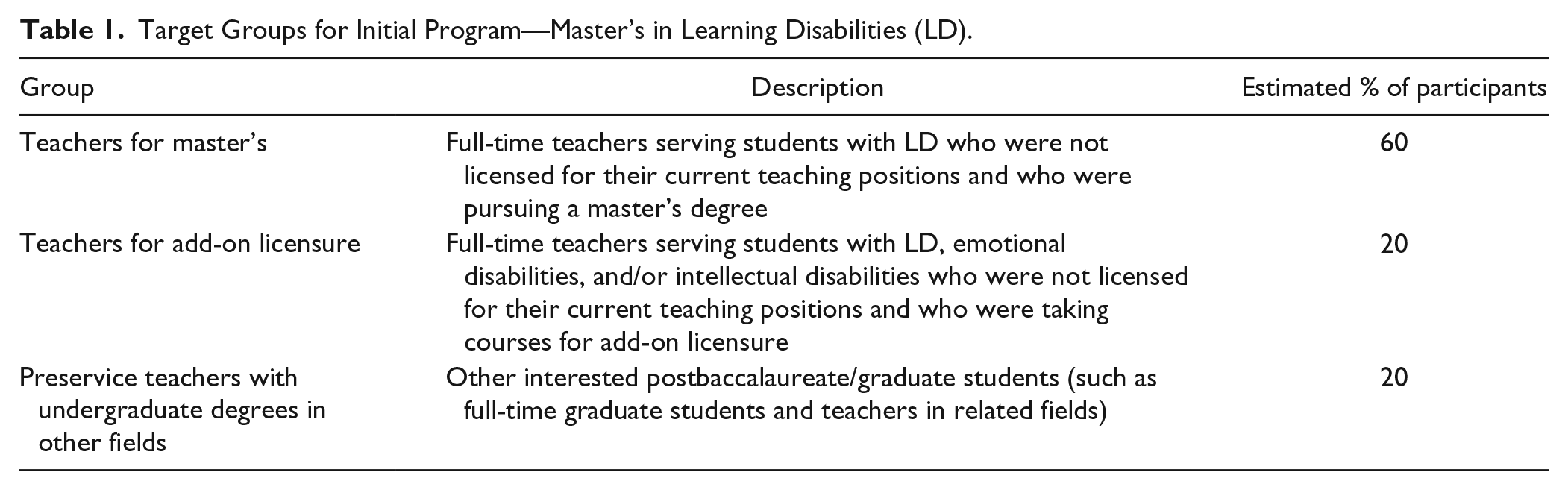
The graduate-level personnel preparation program was designed to provide intensive knowledge and field-based supervised experience to students in three categories (see Table 1 for a list of target groups). The first category and primary target group included full-time teachers serving students with LD who were not licensed for their current teaching positions and who were pursuing a master’s degree. The second category included full-time teachers serving students with LD, emotional disabilities, and/or intellectual disabilities who were not licensed for their current teaching positions and who were taking courses for add-on licensure. At the time, SPED teachers who were teaching out of field were required to fulfill licensure within a 6-year time frame and were required to complete at least six semester credit hours of coursework each year until licensure requirements were met. There are shorter timelines to licensure in North Carolina and across the nation today. Progress toward licensure was required for these teachers to retain their positions. The third focus category was other interested postbaccalaureate/graduate students (such as full-time graduate students and teachers in related fields).
Target Groups for Initial Program—Master’s in Learning Disabilities (LD).
Courses
The master’s (MEd) in LD was comprised of 33 hr including internship. The distance education portion included eight telecourses of three semester credit hours each. These eight courses included six of the required courses in the program and two elective courses. Two courses were offered in each academic semester for two academic years on two separate nights (Monday and Wednesday) from 4:00 to 7:00 p.m. (see Table 2 for a list and schedule of courses). Summer courses were offered on campus each year to the distance education cohort, and students took other courses on campus as needed. This schedule allowed a student to complete all necessary licensure coursework within five semesters (plus summers) or 2.5 academic years. The last semester was spent in internship.
Original Course Offerings in the Distance Education Program (Three Credits Each).
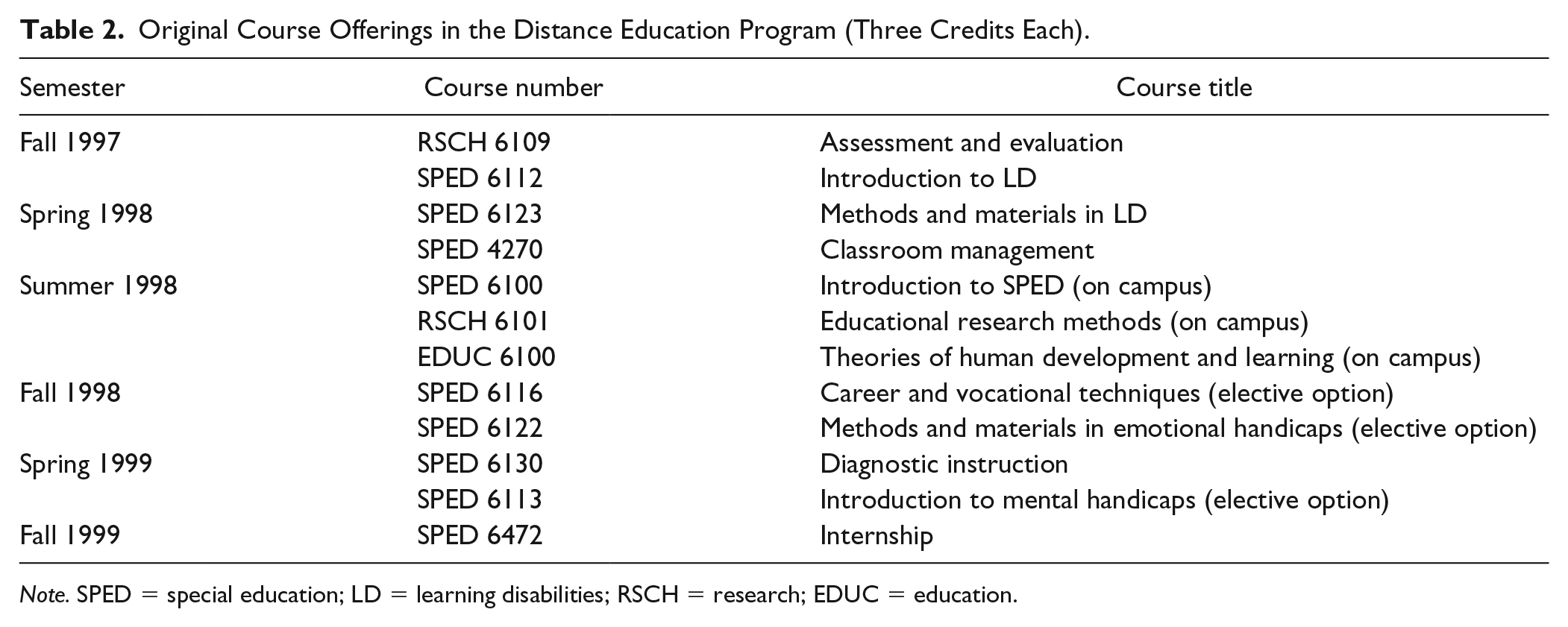
Note. SPED = special education; LD = learning disabilities; RSCH = research; EDUC = education.
The courses were offered once per year, and new students could join as long as they had the necessary prerequisite courses. After the launch with the initial cohort of students, we found that we needed to use a combination of distance and traditional on-campus courses for most students’ individual programs. Students had the option to wait for the second cycle of courses that began after the first cycle was completed, but most did not want to wait that long, so they registered for traditional on-campus courses. For example, students who joined the program after the first semester missed two courses delivered in the distance format, so these students typically made up those missed courses when they were offered on campus. The on-campus courses also were offered in the evenings to accommodate teachers’ schedules.
Courses delivered during the academic semester included 16 class sessions, whereas courses delivered during the summer sessions included 45 contact hours. The broadcast incorporated lecture, demonstrations, audiovisual presentations, and guest interviews. Individual and group activities such as discussions, case studies, role-plays, and simulations were used to emphasize concepts and ensure student interaction.
Students purchased a textbook and received content outlines, relevant handouts, and activities for each class session through a courier service. The courier service also delivered materials to faculty at the university. In addition, the students received directions and forms for assignments and exams and guidelines for distance education. Course assignments and tests were left to the discretion of the faculty teaching the course. Over the course of the program, faculty experimented with team teaching and group projects across sites. The large number of students across four class sections at distance sites prompted professors in those courses to use opti-scan tests where students could “bubble in” answers to multiple choice or true–false questions.
Internship Experiences
The distance education master’s (MEd) in LD culminated in an internship upon completion of all required coursework. Students who taught in SPED classrooms were allowed to complete their internship in their SPED classrooms; therefore, they did not have to leave their current position to complete an unpaid internship in another SPED classroom, which was the typical internship experience in our state at the time. Being able to complete internship “on the job” was a major selling point of the program, and this option was a reasonable one in light of the circumstances at the time. North Carolina districts were hiring SPED teachers who had no SPED license or a teaching license in another area of SPED and placing them in SPED classrooms with students with disabilities. These teachers were working in their own classrooms while attending distance courses. It made sense to allow our students to remain in their classrooms for internship. Approximately 80% of our first cohort were employed in SPED classrooms and completed internships in their classrooms. The intern employee option helped us realize a major goal of the program, which was to make the program accessible in important ways to teachers.
Four important benefits are derived from allowing SPED teachers to complete their internship in their place of employment, and these benefits connect to the perceived value of the distance program as a whole: cost savings, time savings, and convenience (Jordan et al., 1999; Spooner et al., 2007; Spooner, Spooner, Algozzine, & Jordan, 1999). These benefits affect not only the teacher but also students, colleagues, and community. First, teachers do not have to sacrifice their income by leaving their current jobs to complete their internship. Second, teachers do not have to leave their professional support system at their current jobs to complete their internship, thus promoting stability of experienced faculty, which is a benefit to colleagues and administration. Third, teachers do not have to leave their students to complete their internship. Finally, teachers do not have to leave their rural communities to complete their internship, which encourages stability and discourages attrition. Each of these outcomes contributes to stability in the classrooms and schools served by the distance program. Moreover, completion of the master’s degree was contingent upon a successful internship, so removing barriers to internship supported the teachers in their pursuit of a professional and personal goal.
Internships were supervised by a university supervisor who traveled to individual school sites and observed the candidates during the internship semester. The university supervisor scheduled three visits to each candidate’s classroom during the course of the student teaching semester. The internship allowed the teacher to demonstrate proficiency in several important areas: assessment; program planning, development, and operation; delivery and evaluation of instructional programs’ disability accommodations and adaptations; family/professional collaboration and management of individual and group behavior. Students submitted a variety of products to demonstrate performance in their internship, including written observations of other teachers’ teaching activities, assessment reports, teacher-made materials, student progress data, parent contact summaries, lesson plans, unit plans, and behavior management plans. Most of the students who began the distance education program in the fall of 1997 completed their internships within 2 years and within their own SPED classrooms.
Program Outcomes
Course Enrollment
Average enrollment per course in the first cycle of 2 years was 16 students per site (i.e., an average of 48 students for three sites). Course enrollments ranged from six to 32 students at the various sites. This range is due to the fact that not all courses offered were necessary for all students. For example, the methods and materials in emotional handicaps and introduction to mental handicaps were considered electives. Totals for all the sites in the first cycle of the project included 128 students: 68 students at Gaston College, 31 students at Mitchell Community College, and 29 students at Rowan-Cabarrus Community College.
Program Completion
Our initial impact was centered in our primary service area of surrounding counties, as new special educators became licensed and available for staffing SPED and disability services programs. Students who completed graduate degrees graduated in the fall or spring semesters of the 1999–2000 academic year. Student satisfaction with course delivery as measured by standard university course evaluations was comparable with typical on-campus courses (Beattie, Spooner, Jordan, Algozzine, & Spooner, 2002). Course grades also were comparable. These findings aligned with the earlier research of Moore and Thompson (1997), who found no differences when they compared learning outcomes and attitudes of students participating in distance learning experiences with those from traditional learning settings.
Other research available at the time was not as promising. When other factors (e.g., student satisfaction with the course, comfort, convenience, interaction with instructor, communication and collaboration between students) were examined, the outcomes were mixed (e.g., Kuramoto, 1984; Pirrong & Lathen, 1990; Ritchie & Newby, 1989). For example, students liked physical proximity to the instructor and preferred the interactions with the teacher and fellow students in traditional formats (Davis, 1984; Koch, 1988; Pirrong & Lathen). A response from one of the students in the UNC Charlotte program reflects the Moore and Thompson (1997) assertions and the mixed results of various studies. When asked about the merit of distance education, the student commented, “Although it was harder to participate and I prefer the traditional format, the convenience of these classes far outweigh any concerns.” Although we understood the distance format was not perfect, we were encouraged that key student outcomes in the distance education setting were comparable with the traditional setting and by the feedback from our students regarding the merits of our particular program. Finally, we considered the number of teachers we were able to assist with licensure, and we felt it was worth it to plan and offer more distance courses.
Twenty Years of Growth and Change
Our program has continued for over 20 years, and much has changed in that time. Since those first course offerings, this personnel preparation program has provided graduate training to approximately 375 SPED teachers in the Charlotte region and across the state, based on estimates from our teacher licensure office. Through distance education, UNC Charlotte provides professional preservice preparation to teachers who otherwise would not have access to quality coursework. The use of distance education technologies addresses teacher shortages and the challenges of a diverse state and population by providing convenience and connection. Both are needed to maintain student engagement and success.
In those early days, our students attended courses at distance sites located within a 50-mile radius of UNC Charlotte. We could expect students to come to campus and/or we could go to them. We could provide resources at the community college sites (e.g., books and journals on reserve at the community college library) or arrange for electronic access to these resources. Examples of technology shared by on-campus and distance students at the time included the following: a telephone registration system, electronic access to the UNC Charlotte library catalog, email for correspondence with faculty and each other, list serves, and faxes. The use of these technologies, which were considered current at the time, laid a foundation for the first of a series of changes our program has undergone in our story of two decades, the move from interactive television to an Internet-based program.
BIG Change 1—Interactive Television to Internet-Based Coursework
One of the biggest changes has been in the technology used to deliver courses. We began with two-way interactive television delivered over a statewide network, but focused on a proportionately small area of the state. Our preparation and activities were very close to those of a traditional classroom. However, as technology evolved, synchronous or asynchronous Internet-based instruction that students could access via computer at convenient locations became increasingly popular at our university and across the nation.
With support from the Office of Distance Education, we prepared for a move to a web-based online program, where students could stay at their home, office, or some other convenient spot (e.g., library, community center) to complete coursework. Synchronous components of the program included online class meetings in real time and the opportunity for group work using the same web meeting technology. Asynchronous components included use of an online course management system where students could complete course activities and quizzes. Some professors had limited experience in online courses at that time, but the move to offer all of our courses online created a sea change in the way we thought about course delivery. We secured extra funding for the start-up, and in 2008, we began our work in earnest to deliver an online program. Our first step was to hire a consultant (third author) with experience in online course design. We wanted to present a program that had consistency and reflected the unique contribution of each course. We knew that the course(s) would be delivered via Blackboard, a course management system that offered the standard online course tools of discussion forums, chatrooms, assignments, whiteboards, and a file management system where professors could organize content. We also knew that we would have a synchronous component to our courses, using Centra, an online classroom and conferencing system. Beyond these common course tools, we determined certain areas of the courses that would remain consistent, such as the background of the homepage (sky blue with clouds) and specific icons for specific tools, such as chat and discussion. We chose items to provide students with some familiarity as they worked across courses. We also designed student resources such as frequently asked questions (FAQs), survival guides, and basic technical assistance documents. Consistency in course design afforded a foundation for an online course community.
It was equally important to honor the expertise and creativity of our faculty who would design and subsequently teach the online courses. A move to online instruction challenged professors to think of their instruction in new ways. Our consultant met with faculty individually to discuss course content, teaching activities, evaluation activities, and course transformation to an online setting. As content experts, faculty had the advantage of having previously taught their course(s), and they knew how activities worked best in the face-to-face (or distance via interactive TV) setting. The consultant worked with the faculty to identify which course activities, routines, assignments, and evaluations should be kept, modified, or abandoned. This was a process where the consultant was available on campus for a period of days. In those 4 days, she scheduled initial and follow-up meetings with each professor. At the initial meeting, the professor would talk about the general vision for the course. The professor would bring the syllabus and other important class documents, such as major assignments. Questions such as “How can I do this online?” or “How can I manage this online?” were discussed. The consultant, having design experience, could advise the professor on ways to make activities, grading, or planning more efficient. The consultant used online course quality standards to guide planning. Once the consultant and professor identified items for “homework,” they would bring the discussion to a close until the follow-up meeting. In the interim, the consultant added some tools and other design features to the professor’s course to show the professor at the next meeting. The professor would come back with more ideas for the course. This iterative process continued via email as the course was built and refined.
In addition to the collaborative work of consultant and faculty, technical, graduate assistant, and clerical support were critical to the development of the online program. Under the direction of the project director, the team developed videos for portions of all the courses, included video welcomes from key administrators, and developed a separate advising “course” to serve as a hub of information and advising for students.
Synchronous Components
We knew early in the process that we would have the option of a synchronous component to our courses, so we scheduled online class meeting times. Up to 25% of a course could be considered synchronous, with 75% completed asynchronously. All courses had a synchronous component, but faculty could decide whether they needed more or less synchronous time. We maintained a class meeting time in the schedule to be able to gather students consistently during the weeks of the semester. For faculty who were leaving the live interactive television setting, this option served as a “cyber bridge” from the site-based distance classes that would end. The ability to gather our students together online in real time was appealing to our faculty because it allowed us to interact with our students at one time, and to have our students interact with each other, as we do in traditional classes. This technology (Centra) also was new but afforded us a means of communication with our students that would have some familiar components (e.g., speaking with students, students raising hands). With that synchronous component in mind, we continued our work in course design.
In most instances, class discussions and examinations needed modifications. In addition, we found we needed to provide a great deal of specificity from the beginning about assignment directions and expectations in an online environment. In a traditional classroom, assignments can be clarified during the class meeting; students can ask questions and get responses immediately. In contrast, in an online course, everyone (professor and students) depends first and primarily on the written information provided about an assignment. Being specific about expectations for assignments, and providing guidelines, templates, examples, and nonexamples can elevate the quality of students’ work and effort. Faculty found that increased specificity helped students complete tasks successfully.
For example, students were assigned a Know, Want to Know, Learned (KWL) activity regarding various disability areas and/or concepts. The professor adjusted the assignment to a KWLA by adding “Apply” to the assignment and gave directions for the assignment in writing at the course platform. In addition, she provided a table for the students to complete and submit at the course. She was disappointed at how sparse the responses were and reviewed the responses to look for gaps. In a traditional class, questions about upcoming assignments were often a part of the natural flow within the class meeting time. In contrast, she did not spend as much time talking about assignments in the distance class, often because of a perceived shortage of time. For subsequent semesters, the professor decided to try talking with students more often about assignments in class meetings, expanding the details of directions, adding guiding questions on the table template, providing examples. She was pleased with the improvements in student products.
Over the years, we have worked with the course platforms of WebCT, Blackboard, Moodle, and currently Canvas. Course platforms provide online course tools for students and professors to manage course material and interactions. Our synchronous class meeting tools have included Centra, Wimba, Saba, and now Webex. Regardless of the tools used, access to the course platforms has shaped our teaching, as technology has provided options for how we control student access to information, how students demonstrate learning, and how students engage and participate in their learning. For example, professors can conduct online discussions by releasing information at a certain time and determining the span of time in which students can participate, and quizzes can be timed, automatically graded, and recorded in a course gradebook. A high level of professor planning, interaction, and decision making is required, and overall preparation, especially in new courses, exceeds that of traditional courses (Visser, 2000).
The more we advanced in this technology, the more students who we would not have considered “distant” in the traditional sense (i.e., living far from campus) became interested in our distance program. Although rural settings obviously qualify as distance settings, there are other qualities and circumstances that create “distance” for students. Traffic and congestion in busy urban areas can create “distance.” Responsibilities for child care or elder care, work demands, and church and civic responsibilities make distance education an attractive option. The label “distance programs” gave way to “online programs,” as a new group of students began to view themselves as distance students. Our program still serves students in the Charlotte metropolitan area and surrounding rural counties primarily, but the move to online courses has freed us to offer our program to students across the state.
Our distance program, both in its interactive television and online formats, had grown from a strong traditional preparation program. We were committed to maintaining a rigorous on-campus program while growing the distance program. For many years, we had adequate number of students in both on-campus and distance courses to support both programs. However, in recent years, the popularity of online courses has overtaken the attraction of traditional instruction, and enrollment in our on-campus graduate initial licensure course offerings decreased in number to a point where our university could not support them. Therefore, our on-campus graduate-level initial licensure programs were discontinued, and our programs are 100% online. A change in state guidelines has prompted development of “residency models,” which will place heavy emphasis on classroom coaching for intern employees. This move is shortening initial licensure coursework by about 30%, and students will be expected to complete initial licensure coursework in one calendar year. The redesign benefits our program, in that, we are revisiting standards and how we currently address them in an effort to streamline our courses. In-class coaching will use technology where the coach can observe in the classroom and provide feedback in real time.
BIG Change 2—One Master’s Degree to Two (MEd and MAT)
In 2000, our college began offering a new degree that incorporated initial licensure into a graduate degree, the MAT. The MAT was offered in all of our teaching programs (i.e., SPED, elementary education, middle and secondary education). With this change, our SPED master’s program (i.e., the MEd program) became the degree for students whose undergraduate degree was in SPED, and who would be pursuing advanced (G level) licensure. The MAT in SPED became the degree for students who were new to SPED and who were pursuing initial (A level) licensure, with an option to pursue advanced licensure later. The MAT was further divided into two parts—Phase 1 and Phase 2. Phase 1 was the graduate certificate and led to initial licensure. Students who were successful in Phase 1 could apply to Phase 2, which led to advanced licensure. Because of the need for initially certified teachers and the courses already in place, Phase 1 of the MAT was the program chosen to continue in the distance format.
This change in degree affected the program in significant ways. The obvious impact was a decrease in our numbers due to the split, which was about 10%. At the time, we also were experiencing a decline in students majoring in SPED, so we did not have large numbers of SPED teachers with SPED undergraduate degrees applying to our programs. Another impact affected our teaching and course planning. Whereas before our courses had a percentage of students with SPED backgrounds plus on the job experience, now those students were taken out of our original mix and placed in the MEd program. We now had a group of students pursuing initial licensure without the SPED background that could form scaffolds for new information and skills. As faculty, we needed to consider this new grouping of students in the activities, presentations, assignments, and expectations we had of our students. We found we needed more time to build background for professionals new to SPED. We also found a need for greater explicitness in our teaching. In many ways, the MAT program (Phase 1) became more like an undergraduate program, and at the same time, we were challenged to capitalize on the life experiences and learning of our students.
BIG Change 3—Category-Based Instruction to Adapted Versus General Curriculums
In 2004, the state of North Carolina assigned exceptional students to one of two curriculum programs, adapted or general. This was in addition to their exceptional children identification. Students in the adapted curriculum in North Carolina public schools (K–12) require more significant modifications and adaptations to access the general curriculum. Students in the adapted curriculum often include students with intellectual disability, autism spectrum disorders, emotional/behavioral disorders, and other health impairments and disabilities. Regarding prospects for diploma, exceptional students in the adapted curriculum may not be candidates for college prep, career prep, or college/tech prep diplomas (Appalachian State University, n.d.-a).
Students in the general curriculum in North Carolina public schools (K–12) are expected to complete general curriculum requirements for a college prep, career prep, or college/tech prep diploma. Students in the general curriculum often include students with LD, emotional/behavioral disabilities, mild intellectual disability, traumatic brain injury, and other health impairments or disabilities (Appalachian State University, n.d.-b). Note that students with emotional/behavioral disabilities and other health impairments may be served in either curriculum based on individual needs.
This change for K–12 students precipitated a change in initial licensure (A level) programs. New initial licensure tracks were developed and also named adapted and general. Because we are an initial licensure program, we needed to make a swift response to adequately prepare our candidates for North Carolina classrooms, and we began a significant review and remodeling of our courses. Where we had previously had courses that included a “disability label” in their names (e.g., introduction to LD, methods and materials in LD), we were now charged to create courses that responded to the two licensure tracks. In addition, four initial courses, introduction to SPED, diagnostic assessment, classroom management, and instructional planning, were developed to be taken by students in either track.
Rather than a disability focus, our focus in the new licensure courses in the general curriculum track shifted to academic subject areas. For the general curriculum track, we looked first at “the basics” of reading, mathematics, and written expression. Courses (i.e., teaching reading to elementary learners with special needs, teaching reading to secondary learners with special needs, teaching math to learners with special needs, and teaching written expression to learners with special needs) were developed to prepare students in learner development within each area, as well as to provide strategies for teaching in both SPED and general education (inclusive) settings. Another course, content-area instruction for students with special needs, was designed to have a secondary focus and to assist our candidates in inclusive environments. In this course, students spend time learning strategies to teach content and to modify content presentation using Universal Design for Learning (UDL) principles. Initially, this course was taken by students in either track, general or adapted, but was later discontinued in the adapted track.
For the adapted curriculum track, we renamed one of the original courses, career and vocational techniques as transition planning and service delivery. In addition, two new courses were developed, systematic instruction and general curriculum access and adaptations. The purpose of these courses was to prepare our candidates to design effective instruction for students in the adapted curriculum, and to navigate the general curriculum in such a way that students who are in the adapted curriculum can be effectively educated in inclusive environments. Upon review, our program decided to replace two courses in the adapted curriculum (instructional planning and content-area instruction) with two new courses that would address planning and implementation, but with a greater focus on the adapted curriculum (instructional planning for students in the adapted curriculum and multiple disabilities). See Table 3 for a list of current courses in the revised graduate certificate program.
Current Course Offerings in the Distance Education Program—Adapted and General Tracks (Three Credits Each).
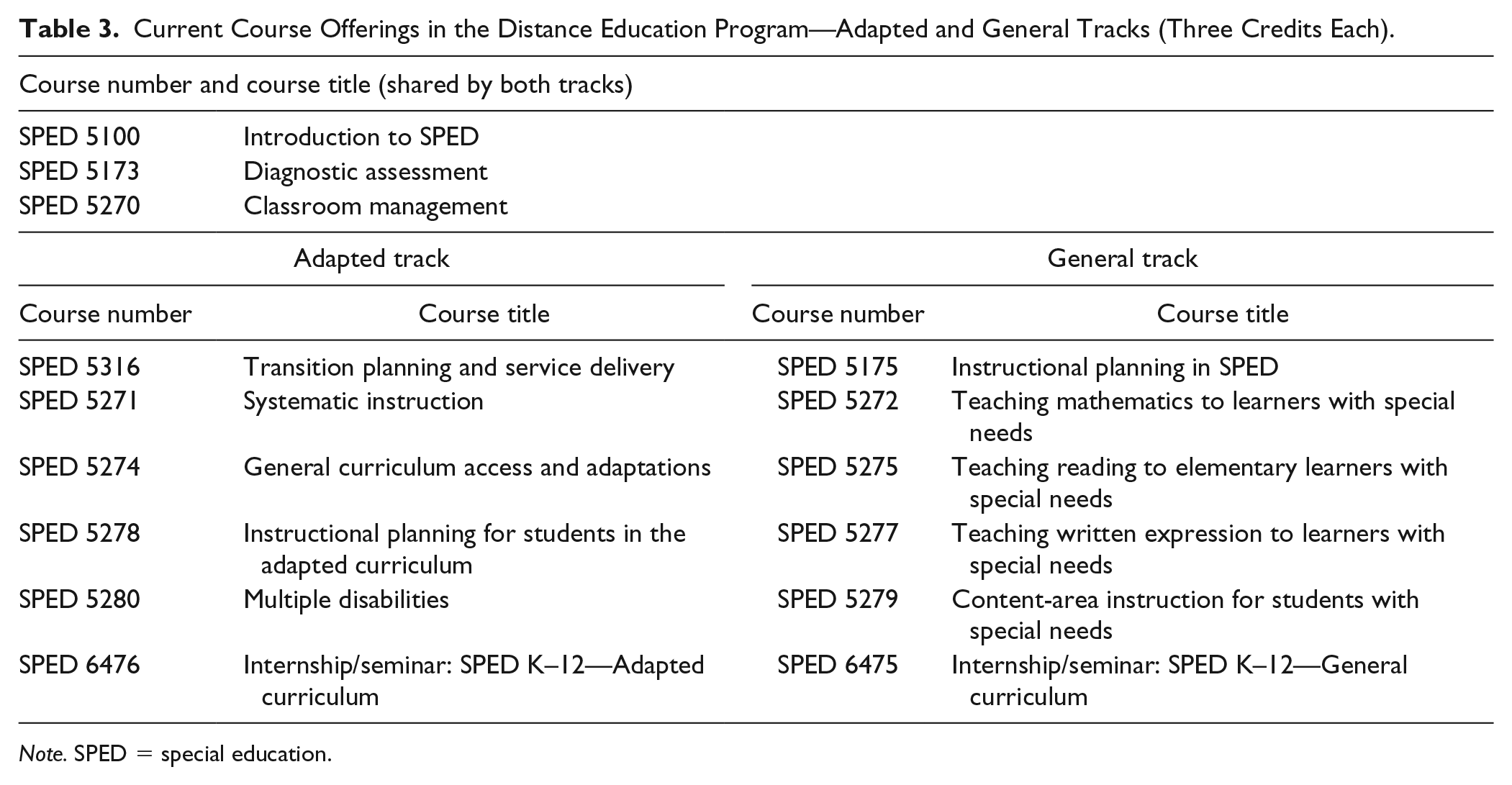
Note. SPED = special education.
For each track, students finish their work toward initial licensure (A level) in Phase 1 with a full-time internship. Just as in previous programs, an internship “on the job” is an option, and is taken in the final semester of Phase 1 as the only course of the semester. As in the previous program that marked the creation of the MAT, this program is divided into two degrees, a graduate certificate (27 hr), followed by an additional 12 hr that results in an MAT (see Tables 3 and 4 for course lists in the two phases). Students can choose to stop their program after Phase 1 and with the graduate certificate. During the internship semester, students can apply for Phase 2, which is 12 additional semester hours of coursework. Successful completion of Phase 2 leads to an MAT in SPED, and a recommendation for advanced licensure (G level license). In total, our current master’s program (MAT) is 39 hr. At first, only Phase 1 was offered online, but in more recent years, Phase 2 also has moved online. When these phases were developed, North Carolina’s salary scale for teachers rewarded teachers with a master’s degree with additional pay. Our state currently does not offer extra pay for the master’s degree, which has affected recruitment. Many students who earn their graduate certificate consider taking the additional 12 hr a smart move, to have the degree in hand, and in case the state restores pay for the advanced degree.
Phase 2 Courses Leading to Master of Arts in Teaching.
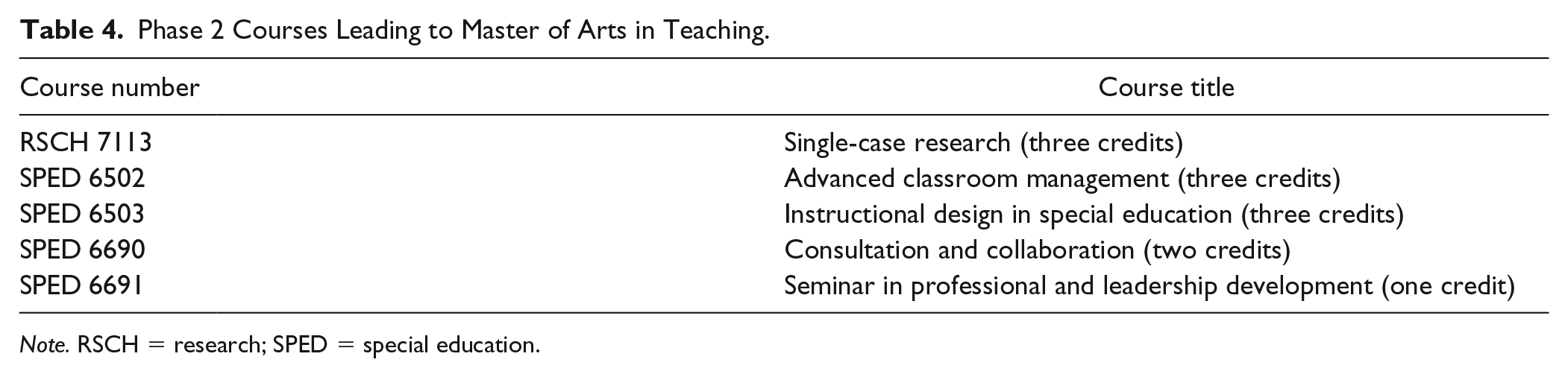
Note. RSCH = research; SPED = special education.
BIG Change 4—Student Demographics
Another significant transition in the program has been the overall shift in the type of students we serve. In the beginning, most of our students were full-time SPED teachers who were looking to complete their master’s degree, obtain initial licensure if they were teaching “out of field,” or add licensure. We had anticipated and planned for this type of a student. Moreover, part of the support for our proposal was lists of names of teachers who needed licensure in LD and who would comprise our student cohorts at the three distance sites. The fact that at the time, teachers had 6 years to earn licensure gave teachers more time to earn licensure plus their degree. Over time, as the national economy changed and licensure rules changed in the state, including the introduction of the “highly qualified” classification, we started seeing an increase in the number of students who were interested in SPED, but who did not hold teaching positions. This affected our program in several ways.
First, we saw more students who were interested in full-time graduate study (at least nine credit hours per semester). These students typically expressed a desire to move through the program efficiently and as quickly as possible. That was not easily accomplished. Our program was designed to accommodate those full-time teachers we welcomed in the initial program, and our schedule was built around two courses per semester (six semester hours). With limited resources, we could not offer every class in the licensure programs each semester. We addressed these issues with individual advising, but this was one of our first indications that our candidate population was changing.
Second, we had a common language of experience in the initial program, where most of the students also were teachers and engaged with SPED students on a daily basis. These students were ready with current, relevant examples, and a professor could bring up an issue and quickly have two or three illustrations being shared in the class. In this new phase, where many of our teachers were employed elsewhere but were planning transitions to SPED after their coursework, the culture changed dramatically. Interest and commitment were just as strong, but the background experience was lacking. Faculty adjusted to this new culture, in the ways we provided examples in class and the types of clinical experiences we designed. We also needed to adjust our expectations at times to account for the wealth of life experiences our students may have, while lacking SPED experience. We learned to work toward an inclusive balance between the current teachers and future teachers in the way we presented information, questions, and activities. Videos and case studies helped to “level the playing field” and provide our students with a class setting where all can contribute.
The assignment called “More Than a Label” was designed to challenge students whether they were teaching or not to gain valuable understanding of people with disabilities. Students were asked to identify a person with a disability and then plan an interactive activity for no less than 2 hr. The activity was to be conducted within the community rather than at a school, as this was not an observation. The community element took our students outside of an academic context and provided equal opportunity to all to accomplish the task. As follow-up, students wrote a narrative where they addressed specific topics (i.e., person’s disability label, description of the activity, person’s level of independence and support system, reflections). The professor placed heavy emphasis on planning a meaningful activity that would be interactive and enjoyable for the person with a disability as well as the student. Over time, this assignment format has changed to a PowerPoint presentation to allow for more visuals and use of technology. Course products are kept in a password-protected course.
We asked our students to report their job status via a quiz in their advising hub in February 2018. Eighty-five students responded. Of those 85, 46 (54%) reported that they are teaching SPED. Fourteen candidates (16%) reported that they are working as teacher assistants, and another 10 (12%) reported themselves as another type of school employee. Fifteen candidates (18%) reported that they are not employed in the schools. That group could include students employed in jobs outside of schools, and/or full-time students.
The students also were asked when they got their SPED teaching jobs (i.e., before they started the program, since they have started the program). Of the 46 who had reported that they are teaching SPED, 26 (57%) of those teachers reported that they had their jobs before they started their program. Twenty (43%) reported that they were hired after they started the program. These data reflect that for students who come into our program without jobs, there is a point where they feel confident enough in their preparation to begin applying for jobs, and they are getting those jobs.
Additional Considerations for New Initiatives
Twenty years provides extended time to learn, and we have certainly run into challenges along the way that have informed our work. Some of these have been described in the big changes sections above. Additional issues that challenged and/or limited our program are the composition of the group, prerequisites, and internship supervision.
Distance and On-Campus Blending
The composition of the student group affects the generalization of our narrative to other distance programs. Students in our distance program attended community college sites that were within 50 miles of campus; therefore, we had reasonable expectations that students could travel to campus. Students traveled to campus for two required courses (see Table 2 for specific courses). These design decisions were made in consideration of the relative proximity of our students to UNC Charlotte, and the fact that other programs offered some of our required courses, but not in a distance format. This created a “hybrid” group, as students completed their program through a mix of distance and on-campus courses. Based on this mixture of distance and on-campus students, data from our distance program do not reflect a true pool of distance students. A related limitation is that data on student completion have not been systematically tracked over the 20 years of the program, especially as related to changes in the program (i.e., one master’s degree to two master’s-level programs [MEd and MAT], category-based program to student curriculum-based program).
Prerequisites
Faculty determine prerequisites for various courses to give students a sequence of learning that is logical and developmentally appropriate. Faculty report that students who do not follow the prescribed course sequence may be less successful in terms of grades and ability to participate in class. Distance courses were offered once per year, and the availability of courses eventually could pose problems for students who joined after the first semester of the program, especially if later courses had prerequisites. Rather than waiting for the course cycle to begin again, students usually opted to take on-campus courses to address deficits. Thus, our number of true distance students continued to decrease. As our program expanded across the state through web-based courses, we no longer asked students to come to campus, but the program schedule and prerequisites still created challenges. For any new initiative, we suggest faculty evaluate current prerequisites to see whether there is any flexibility possible while maintaining the integrity of the academic program. Another approach to preventing prerequisite issues is a strict adherence to a cohort model, which would assure that students get courses in order. However, for programs that are susceptible to attrition, a cohort model may not be feasible.
Internship Supervision
In our original program, students’ internship sites were located in our service area. Internship supervisors traveled to the schools, and we hired a number of supervisors who lived closer to the schools than the university. Some of these were retired administrators and master teachers, and they made excellent supervisors. As our program expanded into a web-based program, we began to offer courses across the state. This change necessitated agreements with local districts who had limited experience with our college. Some districts did not have agreements or procedures set up, and it took time to make arrangements for students to do their internships on the job. We investigated web-based supervision, and this also meant new types of agreements. If internships are going to be a part of any initiative with a broad service area, we suggest that procedures for supervision and obtaining agreements be given much consideration before coursework begins. Items to be clarified include delineation of expectations, procedures to ensure that on and off campus internships are equivalent, guidelines for use of cameras or audio in the classrooms, and the Family Education Rights and Privacy Act (FERPA) protections as well as any other legalities.
In this article, we described our original distance education program, which launched in the fall of 1997 to offer initial licensure and a distance education master’s degree (MEd) in LD. We have highlighted four major transitions over the 20 plus years it has been in existence (interactive TV to Internet-based coursework, one master’s degree to two master’s-level programs [MEd & MAT], category-based program to student curriculum-based program, and student demographics). In 1998, Spooner et al. pressed for “creative, practical, and productive personnel programs” (p. 122). When we wrote that, we were barely off the ground, and we did not know that we would have 20 years to achieve and learn. With about 400 teachers and counting, we are thankful that we have been able to participate for so long, and we hope the next years will be the most creative (oh yes and practical).
Footnotes
Declaration of Conflicting Interests
The author(s) declared no potential conflicts of interest with respect to the research, authorship, and/or publication of this article.
Funding
The author(s) received no financial support for the research, authorship, and/or publication of this article.
