




Abstract
Introduction
Handwriting For Heroes is a six-week hand dominance transfer intervention for adults who sustain injuries that result in permanent loss of dominant hand function. While used in military treatment facilities, the efficacy of this intervention has not been established. The purpose of this study was to examine the efficacy of Handwriting For Heroes.
Methods
A single-subject research design was utilized with replication across five non-impaired right-hand dominant participants (N = 5). A leftward transfer of hand dominance for handwriting skill was simulated utilizing Handwriting For Heroes. Multiple probes were taken across baseline, intervention and maintenance phases to measure performance during five functional handwriting tasks. Visual and statistical analysis was performed on variables related to the writing process (pressure, velocity, time and displacement) and the written product (letters-per-minute and legibility).
Results
All participants improved one grade-level in writing speed. Four of five participants improved in handwriting legibility. Following the intervention, participants achieved greater than 50% of their dominant hand's writing ability.
Discussion
Handwriting is a functional task that was shown to be transferable to the non-dominant limb using a commercially available, six-week intervention. Positive results, replicated across five non-impaired participants during this efficacy study, warrant a clinical effectiveness study.
Introduction
Extremity injuries, including limb amputations, comprise 60–75% of injuries in military personnel. 1 Amputation of a dominant hand drastically impairs daily function and necessitates a comprehensive rehabilitation programme. One component of the programme is facilitating hand dominance transfer for participation in fine motor, dexterity activities that cannot be replaced by a prosthesis, such as handwriting. 2
Handwriting is the activity most often associated with hand dominance 3 and is therefore the focus of a hand dominance transfer programme. Handwriting captures the essence of dexterity and hand dominance in two primary ways. First, dexterity generally implies an interaction with a tool or object needed to accomplish a goal. Handwriting captures the hand's interface with a commonly encountered tool and accomplishes the goal of written communication. Secondly, handwriting captures the hand's unique link to the brain for planning and executing purposeful movements,4, 5 and in so doing, handwriting provides a link between the peripheral manifestation of dexterity and the origin of dominance in the brain.
Handwriting is a graphomotor skill that is multidimensional and highly dependent upon sensory, motor and cognitive processes.6–8 Also, handwriting is purported to be the highest form of unilateral hand dexterity skill attained by the general population. 9 Handwriting is viewed as a necessary skill for an injured service member who leaves the military and enrols in college or seeks employment that requires handwriting skills. 2
Although many diagnoses potentially lead to permanent loss of dominant hand function, a limited body of literature exists related to rehabilitative management of patients facing injury-induced hand dominance transfer (I-IHDT). This gap in the literature likely reflects a research and rehabilitation focus on restoring or augmenting function and improving outcomes for the amputated or impaired side, whereby hand dominance transfer is left to emerge naturally over time through daily use of the remaining limb for activities of daily living (ADL).
For example, Chan and LaStayo, 10 in their description of management of mutilating hand injuries, recommend early instruction in ADL, specifically if a dominant hand is injured; however, no intervention methods are described. Another relevant study investigated effects of upper extremity trauma on hand dominance. Researchers used patient surveys and chart reviews at two regional hand centres 11 and discovered that sustained precision dexterity tasks of writing, drawing and cutting with scissors were most frequently transferred to the non-dominant (unimpaired) hand. Eggers and Mennen 12 discuss the phenomenon of hand dominance transfer as a product of functional adaptation to accomplish ADL when motion and sensation are traumatically lost in the ‘main executor’ arm and hand following brachial plexopathies. They conjecture that skilled actions beyond those of an eight-year-old child require extensive deliberate practice to facilitate dominance transfer because of necessary proficiency, speed and agility. However, again, no rehabilitation methods are described. The lack of clearly defined practice guidelines leaves rehabilitation professionals with clinical questions of how best to facilitate hand dominance transfer.
Background
Handwriting For Heroes 13 is one of two published rehabilitation programmes commercially available to facilitate handwriting skill development in adults. In contrast to Callirobics: Handwriting Skills for Adults, 14 which was developed for adults with central nervous system (CNS) dysfunction such as stroke, Alzheimer's or Parkinsons Disease, brain injury, or developmental disability, Handwriting For Heroes was developed for adults with peripheral nervous system dysfunction that results in permanent loss of hand function. Handwriting For Heroes is a six-week programme with four main sections: (1) Daily exercises, (2) Homework, (3) Therapist's Tips and (4) Website companion (www.handwritingforheroes.com). It was specifically developed for combat-wounded, military service members who face I-IHDT following mutilating hand injuries to a dominant upper extremity, and subsequently undergo limb salvage or amputation.
Handwriting For Heroes was developed based on knowledge and experience of occupational therapists in military treatment centres and was utilized immediately after publication. Immediate use of new interventions is often done in behavioural and rehabilitation 15 settings to foster efficiency and standardization; however, these interventions should eventually undergo efficacy and effectiveness trials.
Efficacy relates to whether an intervention works under ideal conditions, whereas effectiveness relates to whether the intervention works under routine clinical conditions. 16
Patients with multiple clinical issues often receive many interventions simultaneously and these co-interventions may overlap and influence the one intervention being scientifically evaluated, so it is often easier to conduct efficacy research prior to intervention studies. Moreover, many medical and behavioural health scientists suggest establishing efficacy prior to effectiveness trials because of limited resources, constraints on busy rehabilitation professionals, and if an intervention does not work under ideal conditions it likely will not work under ‘real-world’ conditions. The importance of efficacy and effectiveness research is fundamental to rehabilitation because the most necessary question asked is ‘Does this intervention work?’ The purpose of this current study was to evaluate the efficacy of Handwriting For Heroes with non-impaired participants.
Methods
Design
This study used a single-subject research design (SSRD) with non-concurrent replication across five non-impaired participants. Multiple probes were taken across baseline, intervention and maintenance phases.
Participants
Participants were recruited through two local universities. All participants signed informed consent approved by the local institutional review board. No compensation was provided for volunteering for this study. No participants withdrew. Five (4 men, 1 woman) healthy, right-hand dominant adults (mean age 33 years) completed the Handwriting For Heroes intervention using his/her left (non-dominant) hand. Participants completed the intervention programme independently in the same fashion that a client might complete a home programme.
Procedures
Hand dominance was evaluated with The Edinburgh Handedness Inventory, 17 a laterality questionnaire. Cognition was measured by The Short Blessed Test, 18 a valid and reliable cognitive screening tool that evaluates orientation, memory, central processing speed and attention. A visual-motor integration assessment was administered at the first and final probe using the Beery-Bruktenica Visual Motor Integration (Beery™ VMI), 19 a reliable and valid measure of visual-motor integration that has been standardized on 1021 adults age 19–100.
Handwriting samples collected during each probe were written on a 3.4 × 6.8 inch piece of white, lined paper taped to a digitizer tablet (Wacom Intuis 3.0) controlled by a Lenovo Thinkpad notebook computer (Lenovo, Morrisville, NC, USA). Participants were free to angle the digitizer according to preference.
During each probe, participants completed the following handwriting tasks, in cursive, onto the digitizer: (1) Copy Date: the dates were random dates to allow variation of numbers to be copied, (2) Copy Alphabet: the 26-letter alphabet copied in cursive form without spaces between letters, (3) Copy Sentence: copy a 24-letter sentence and (4) Draw Circles: participant drew four circles within boundaries provided by double-lined circles pre-printed onto the paper.
Draw Circles and Copy Alphabet remained the same at each probe, whereas Copy Sentence and Copy Date were purposefully varied at each probe to diminish effects from memorization. Each activity was presented visually on a 4.5 × 2.0 inch card mounted on blue cardstock placed in front of them. The card contained the instructions (which also were read to them) and an example of the completed activity in cursive (generated by the same handwriting font, School Script, used in the intervention workbook).
MovAlyzeR (Neuroscript, Tempe, AZ, USA) was used to set up, run the experiment and capture the output of x, y and z coordinates at a sampling rate of 200 Hz. The IntuiS3 inking-pen was used as the wireless writing instrument. This apparatus design offered a pen-on-paper feel with benefits of direct digital input to a Wacom tablet interactive screen (Wacom Technology Corporation, Vancouver, WA, USA). Customized code written with Matlab (Mathworks, Natick, MA, USA) software calculated the following kinematic and kinetic properties: (1) pen pressure (Newtons), (2) velocity in the x axis (mm/second), (3) velocity in the y axis (mm/second), (4) on-paper time (second), (5) displacement in the x axis (cm) and (6) displacement in the y axis (cm).
An additional handwriting sample was collected to calculate letters-per-minute and legibility variables. The following endurance handwriting activity was used to obtain the sample: participants opened the book The History and Power of Writing 20 to any page and copied text onto a standard lined piece of paper, not attached to the digitizer. A pre-set option on an ULTRAK dual-timer clock system signalled an auditory cue to stop writing when five minutes elapsed. The total number of written letters divided by five generated the letters-per-minute variable. To calculate a legibility percentage score, 21 the number of readable words was counted and divided by the total number of written words and then multiplied by 100.
To measure legibility, the first author met with two graduate students (raters) who read each word of all handwriting samples obtained at each probe for all participants. The instructions for scoring legibility were standardized and read to each rater prior to reading the writing samples. To prevent learning, no performance feedback was given regarding accuracy of reading the words. The results of rater 1 were concealed from rater 2. Each word was presented individually, moving backwards across the text, using an adjustable view-window tool created out of cardstock for the purpose of shielding the reader from the other words on the page. This controlled the raters’ ability to decipher the writing based on context clues traditionally available to a reader. Additionally, the samples of all participants were mixed together and presented randomly so the individual writing style of each participant did not become predictable. The raw number of readable words per rater was entered into SPSS (v.16, SPSS Inc., Chicago, IL, USA) and a Pearson r statistic was performed to determine inter-rater reliability (consistency between the two raters).
Dexterity was measured by the Grooved Pegboard test, a standardized, time-based pegboard test with established reliability and validity. 22 Compliance with the Handwriting For Heroes intervention was considered an outcome as well as a contributing factor to the outcome since handwriting does not improve without direct practice.23–26
A compliance score was calculated by visually examining the participant's workbook each week. A score of one point was given for each completed daily exercise, and a score of zero for partially or not completed exercises. There were 12 exercises and one homework assignment for each day of the week, so a score between 0 and 91 ([13 exercises × 7 days/91] × 100) was recorded for a weekly compliance percentage.
Data collection
Five baseline probes occurred over a 10-day period. All measurements were taken in the same order at each probe by one researcher. Based on scheduling availability of each participant, one to two probes occurred weekly throughout the six-week long intervention phase. Maintenance phase began two weeks after the intervention ended and consisted of four additional probes. At the final maintenance probe, each participant completed all graphomotor activities and the pegboard dexterity assessment with their dominant hand.
The location in which handwriting samples were collected varied between participants. Additionally, to accommodate one participant, the investigator met him at two locations (school and home); however, the tables were the same height (29′) at both locations. The other four participants were consistently seen at the same location (in their homes) for all probes. Table heights varied between 29′ and 30′ for all participants. Time of day for each probe ranged from 8:30 to 20:30 hours.
Analysis
Data were sorted by phase and presented graphically, and analysed visually for trend, variability and level. 27 These graphical depictions were created by plotting data for (1) letters-per-minute, (2) legibility percentage scores and (3) scores on the Grooved Pegboard dexterity test.
The letters-per-minute score was recorded and equated to a grade-level. The grade-level equivalence was based on research published on writing competencies of 900 school-aged students, first to ninth graders. 28 This grade-level score was compared with the participants’ dominant and non-dominant hand writing speed.
Visual analysis was augmented by statistical analysis of individual performance change over time. To contrast the effect of behaviour change for letters-per-minute, legibility and dexterity (as per Grooved Pegboard) between the three phases of this experiment, a magnitude of effect was calculated. This statistical method is described for single-subject research as the improvement rate difference (IRD). 29 The IRD is done by dividing the total number of improved data points from one phase by the total number of data points for the entire phase and then comparing as differences in the in-phase ratios: IRD = ([# of improved points in phase x/# of total points in phase x] – [# of improved points in phase y/# of total points in phase y]) × 100. (Phase x and phase y represent generic terms for any of the three phases of this experiment.) An IRD equal to or under 50% is considered to reflect chance-only improvement between phases, and a negative IRD reflects a possible between-phase performance deterioration. 29 When data collected during one phase are markedly different from another phase, as would be expected when a treatment is effective, the IRD will be high.
Kinematic and kinetic data in Matlab (Mathworks, Natick, MA, USA) were trimmed to 90% to cater for extreme pen movements (e.g. when dotting an i). Statistical significance was determined using analysis of variance (ANOVA) with a least square difference post hoc analysis to analyse changes in kinematic and kinetic variables across phase (sorted by task) for each participant. Post hoc analysis was only performed if the overall one-way ANOVA was significant. 30
To assess task difficulty of the five-minute (endurance) writing task, each sample was scored on Flesh-Kincaid scale, a widely used tool to assess reading and writing complexity. 31 The samples were rated and revealed a range of reading difficulty levels, as would be expected in every day exposure to a variety of texts.
Results
All participants completed the study, accomplishing, to different degrees, a leftward transfer of handwriting skill. Compliance with the intervention varied across participants, ranging from 28% (Participant 1) to 100% (Participants 3 and 4). Pre- and post scores on the Beery™ VMI were stable across all participants except one (Participant 4), who improved 26 points in scaled score (Table 1).
Demographic and baseline information of participants
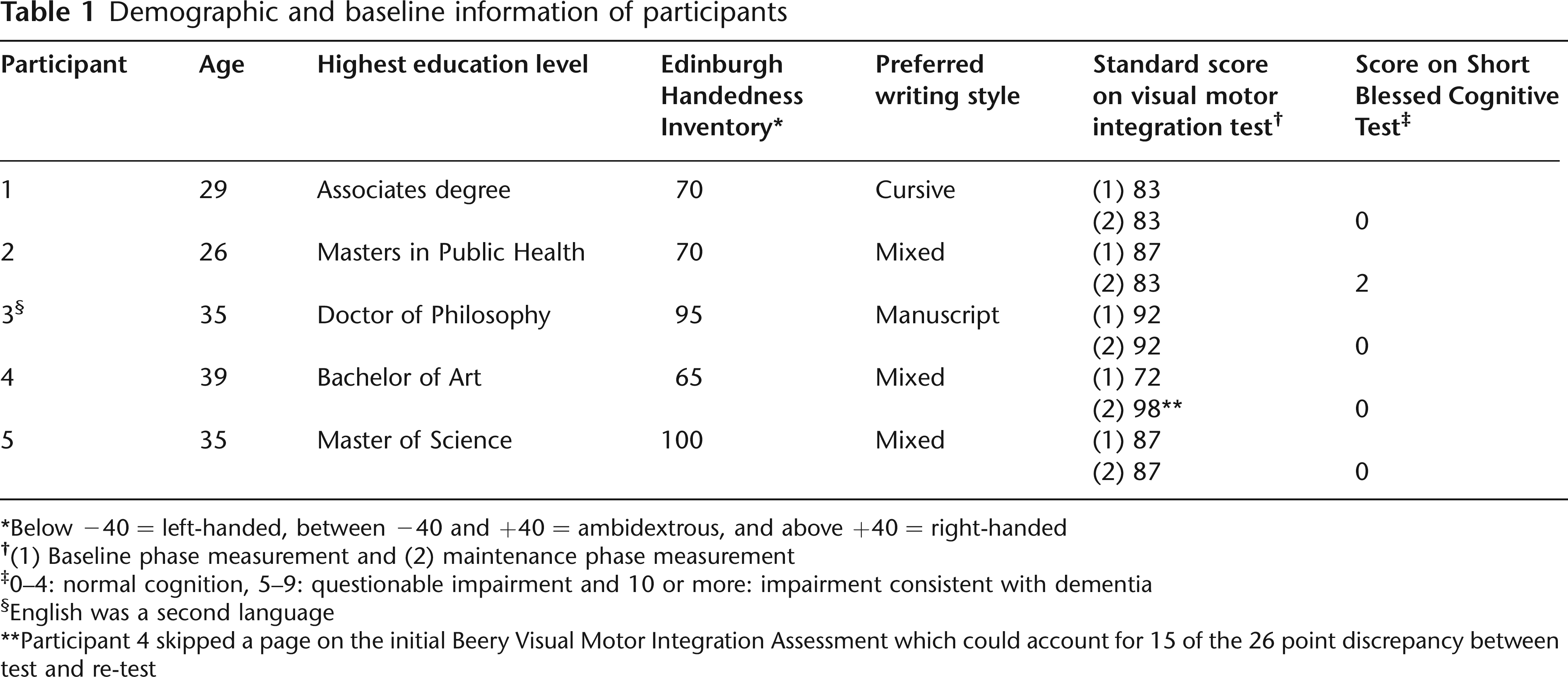
Below –40 = left-handed, between –40 and +40 = ambidextrous, and above +40 = right-handed
(1) Baseline phase measurement and (2) maintenance phase measurement
0–4: normal cognition, 5–9: questionable impairment and 10 or more: impairment consistent with dementia
English was a second language
Participant 4 skipped a page on the initial Beery Visual Motor Integration Assessment which could account for 15 of the 26 point discrepancy between test and re-test
Examination of the mean values per phase, percentage of non-overlapping data and effect sizes show varying levels of positive results for all participants (Table 2). The IRD scores showed that, during the intervention phase, letters-per-minute and legibility increased, whereas scores on the Grooved Pegboard did not improve across any phase, except for Participant 3 (Table 3).
Improvement rate difference percentages for intervention and maintenance phases for Grooved Pegboard Test, LPM and legibility plus inter-rater reliability of legibility evaluation
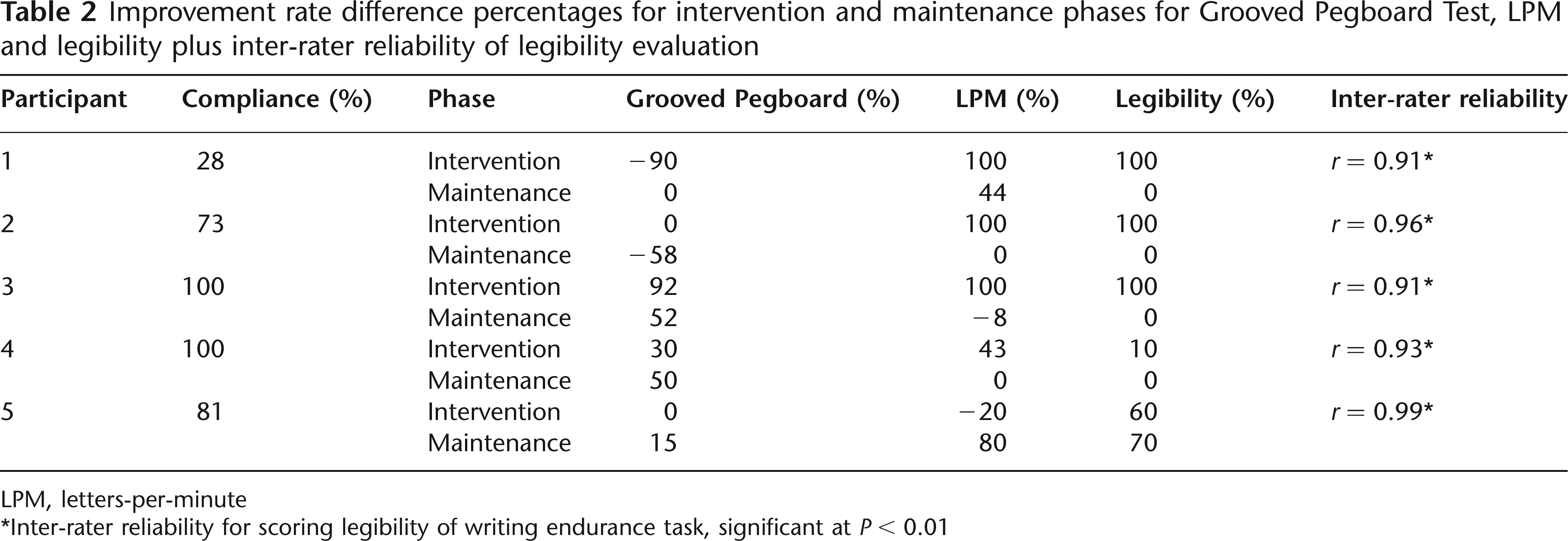
LPM, letters-per-minute
Inter-rater reliability for scoring legibility of writing endurance task, significant at P, 0.01
Mean values (B = baseline, I = intervention, M = maintenance), percentage of non-overlapping data (PND) and effect sizes for Grooved Pegboard and letters-per-minute (LPM) outcomes
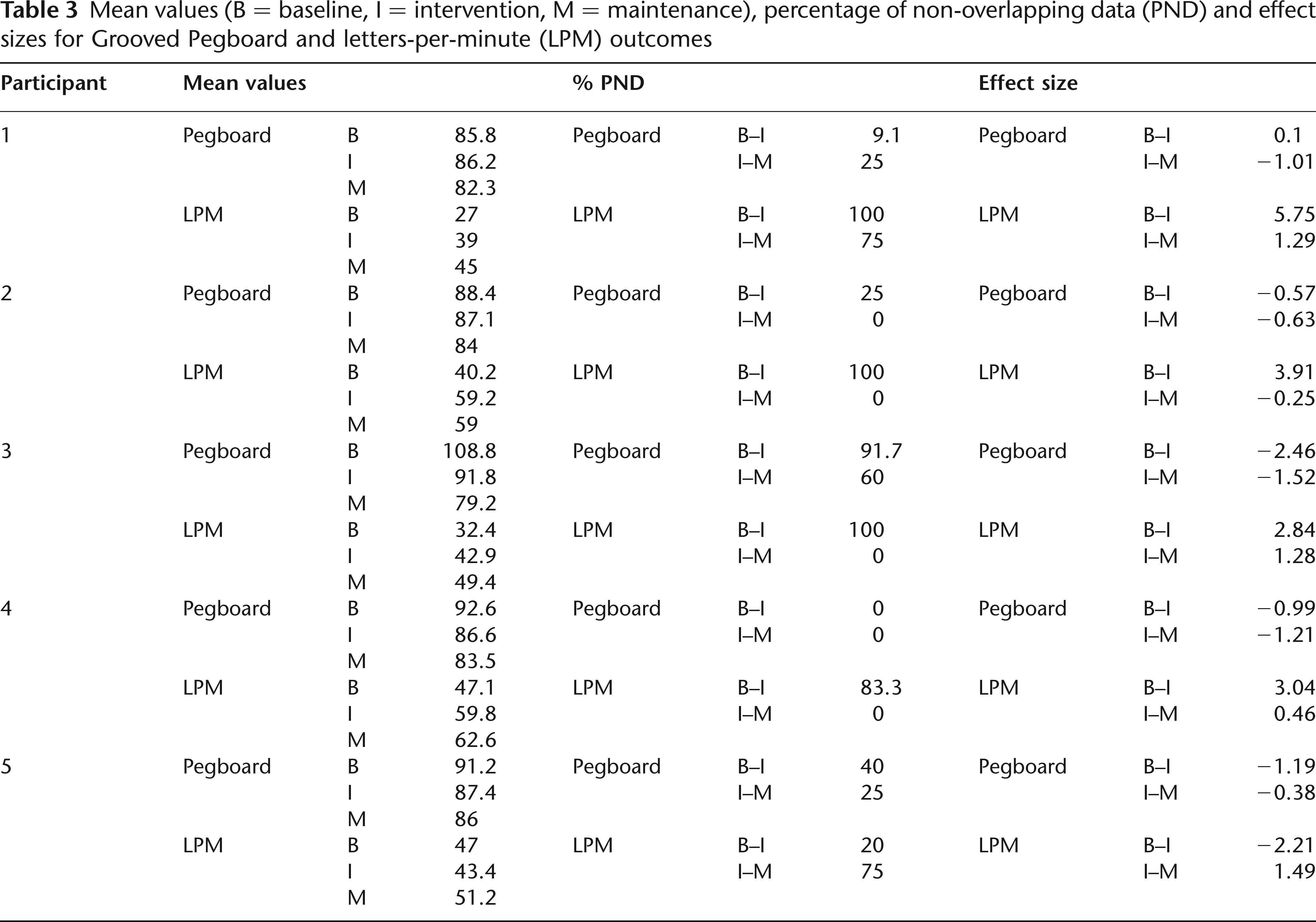
Letters-per-minute changes demonstrated a grade-level improvement for all five participants. Participant 5 showed improvement between the intervention and maintenance phases, another participant (Participant 3) improved a grade level between each phase, and all other participants improved between baseline and intervention phases only (Figures 1 and 2).
Grooved Pegboard Scores for each participant across baseline, intervention and maintenance phases (a lower number denotes faster dexterity) Letters-per-minute for each participant across baseline, intervention and maintenance phases (higher numbers indicate faster handwriting)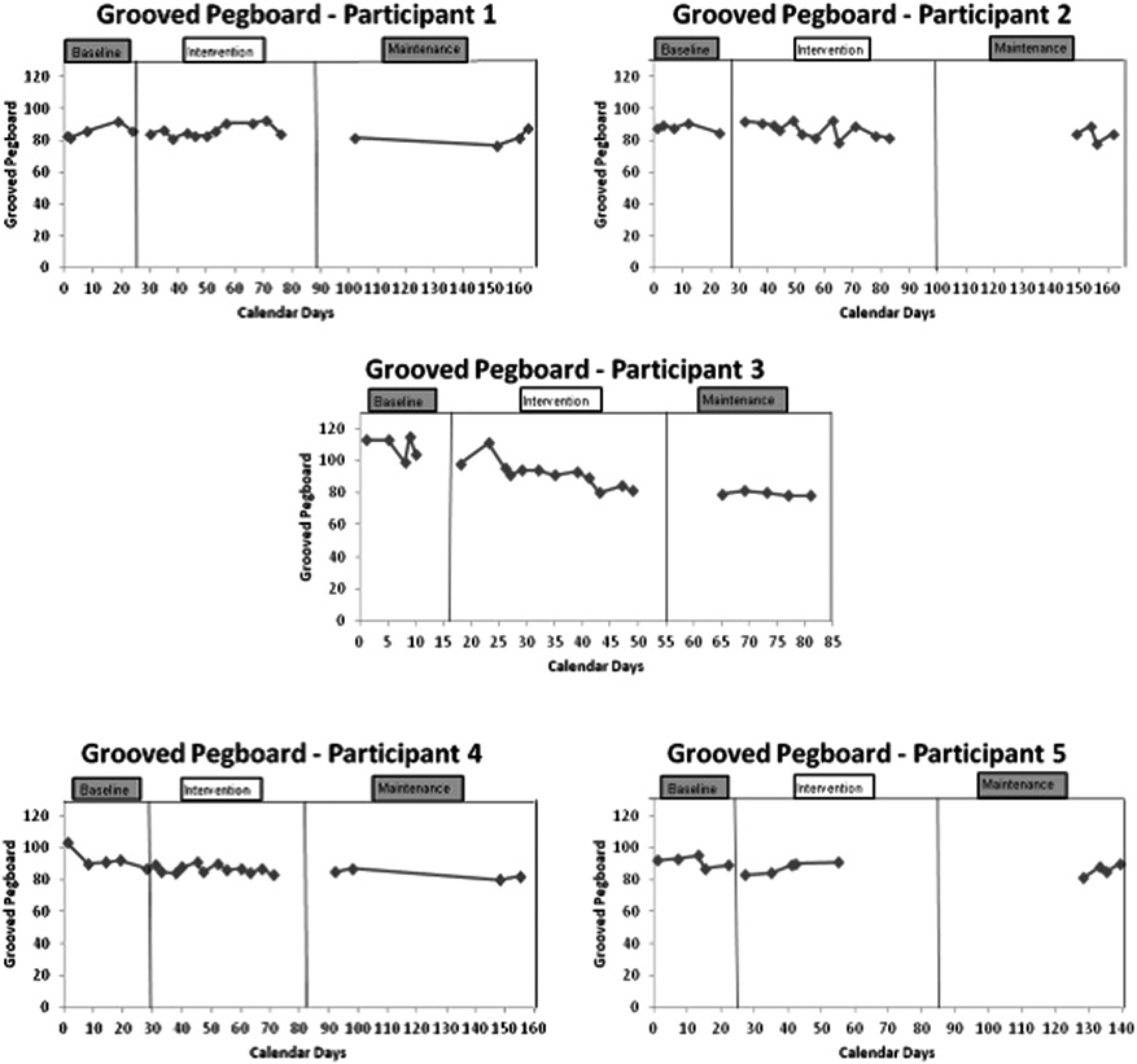
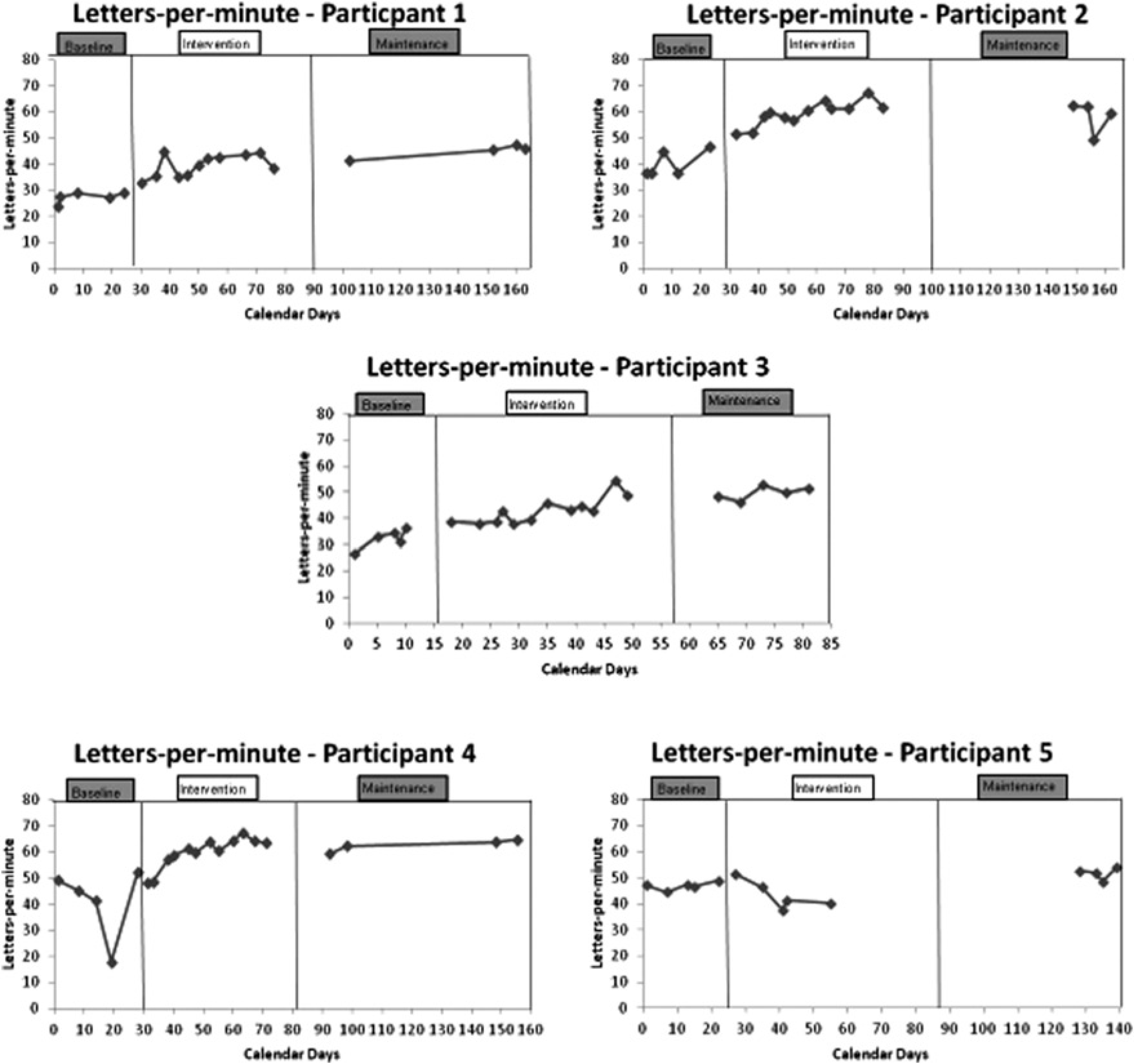
Legibility improvements for four of five participants were noted by IRD > 60%. The participant who did not improve during the intervention wrote legibly during the baseline phase which affected calculation of IRD; in other words, his writing was quite legible at baseline, thereby leaving minimal room for improvement. Participant 5 continued to improve in writing speed (letters-per-minute) and legibility after the withdrawal/completion of the intervention. Inter-rater reliability of the raters evaluating legibility ranged from 0.91 to 0.99 across participants (P < 0.01) (Table 2).
Participants 2, 3, 4 and 5 showed correlations of varying strengths between legibility, letters-per-minute, time of day and text difficulty (Table 4). Participants 3 and 5 showed a decrease in legibility when text difficulty increased. Participants 2, 4 and 5 showed correlation with an increase in letters-per-minute and an increased score for legibility. Participant 4 also showed a positive correlation between text difficulty and letters-per-minute. Participant 5 showed a correlation between time of day and letters-per-minute.
Each participant's significant correlations between LPM, legibility, text difficulty and time of day
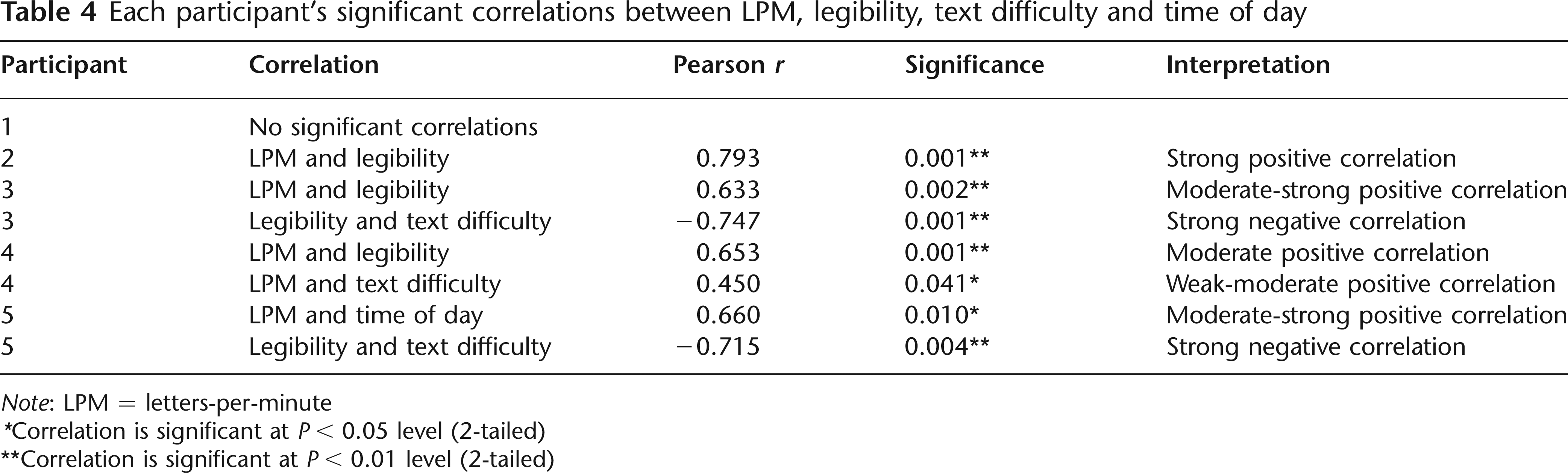
Note: LPM = letters-per-minute
Correlation is significant at P < 0.05 level (2-tailed)
Correlation is significant at P < 0.01 level (2-tailed)
Comparison between non-dominant and dominant hand performance showed no participant achieving performance levels that met or exceeded dominant hand function (Table 5). When comparing letters-per-minute from the highest score obtained during the intervention phase to the letters-per-minute of their dominant hand, the following were calculated as percentages of dominant hand performance: Participant 2, 71%; Participant 1, 63%; Participant 5, 52%; Participant 3, 80%; and Participant 4, 63%. Comparing kinematic and kinetic variables between the dominant and non-dominant hands, handwriting showed smaller values for X and Y displacement, meaning all writing samples with the non-dominant hand were consistently larger in height and width.
Letters-per-minute (LPM) and grade level equivalence for dominant and non-dominant hands
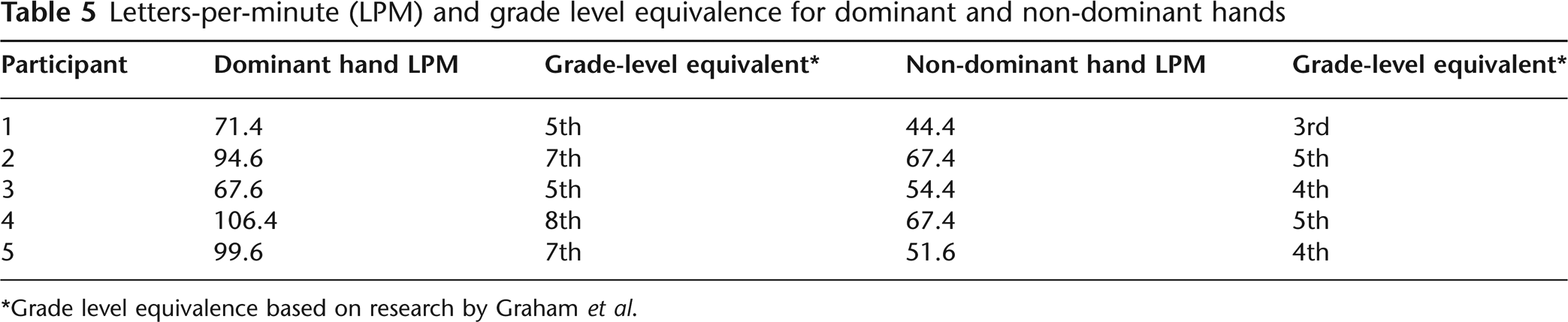
Grade level equivalence based on research by Graham et al.
Examining mean scores across each phase of the experiment for all kinematic variables demonstrated the following results: (1) Copy Date task showed the least change in kinetic and kinematic properties, (2) Copy Alphabet task showed the most change, (3) Mean X and Y displacement were the most stable parameters across all tasks for all participants, (4) pressure was the most variable kinetic property across all tasks for all participants, (5) most significant changes were found in the pair wise comparison between the baseline and intervention phases and (6) Participant 5 had the least amount of change in graphomotor performance (2 variables changed within 3 tasks) whereas Participant 3 had the most amount of change in performance (6 variables changed within 2 tasks) (Table 6). A final, notable result emerged from looking at kinematic variation across the four handwriting tasks performed onto the digitizer. All participants used the least amount of pressure when writing the numbers in Copy Date task than any other task, and conversely used the most pressure in Trace Circles task.
Pairwise comparisons between baseline (B), intervention (I), maintenance (M) phases, and P values for kinematic and kinetic variables per task for each participant
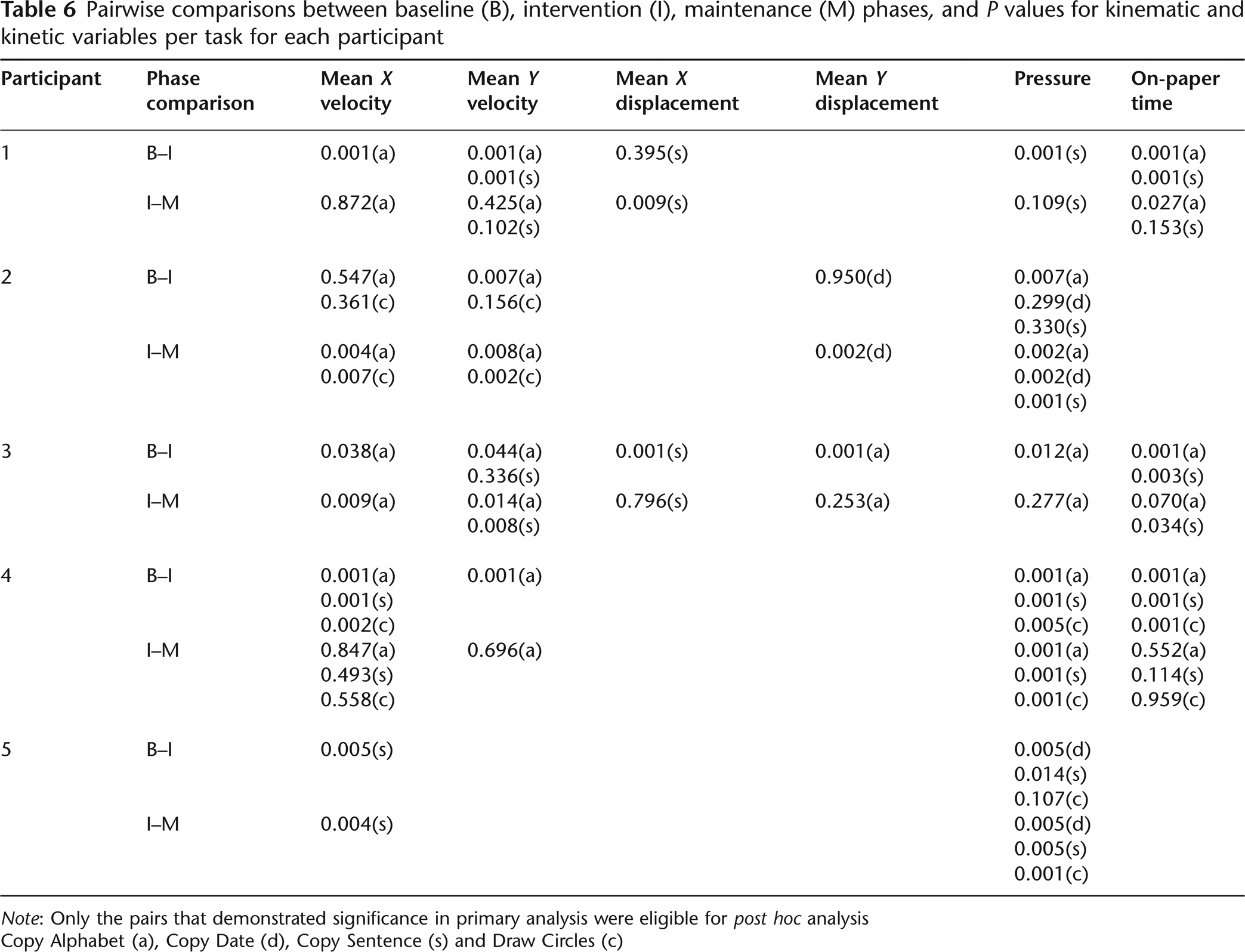
Note: Only the pairs that demonstrated significance in primary analysis were eligible for post hoc analysis Copy Alphabet (a), Copy Date (d), Copy Sentence (s) and Draw Circles (c)
Discussion
Results of this trial with non-impaired participants show a strong relationship between the intervention and the targeted outcome of improved handwriting skill. The large effect sizes, high percentage of non-overlapping data, differences in means per phases, and large IRD for legibility and for letters-per-minute variables suggest that the intervention contributed to the change in handwriting performance. Furthermore, except for Participant 5, the end of the intervention marked performance stabilization. Looking closer at Participant 5's data reveals a plausible explanation for the difference in his results as compared with the other four participants. He began the intervention on 12 May and, because of scheduling difficulty, his fifth and final probe in the intervention phase was 9 June, which was the completion of the third week of the intervention. Because he had an overall compliance rate of 81%, Participant 5's improved performance in the maintenance phase is likely a reflection of the gains he made during the last three weeks of the intervention that went undetected because no handwriting samples were collected during those weeks.
The legibility percentages of the participants show more variability in the baseline phase as compared with both the intervention and maintenance phases. Legibility is foundationally important in writing because, combined with writing speed, it contributes to writing automaticity. Writing automaticity, in turn, contributes to text-generation needed in compositional tasks and in converting auditory language into text as done in transcription. 32
Writing automaticity was seen in the dominant handwriting samples obtained at the final probe. Each participant had a 100% legibility score and high-level speeds (letters-per-minute) for their dominant hand. No participant's non-dominant handwriting met performance levels of their dominant hand. This was expected because the intervention is only six weeks long and because the dominance transfer was merely a simulation, no participant used their non-dominant hand for handwriting tasks outside the confines of the experiment. It is interesting, however, that the participants sustained their writing level performance with minimal decline into the maintenance phase. This supports the conclusion that learning, a permanent change in behaviour, occurred.
The positive correlations that Participants 2, 3 and 4 showed between letters-per-minute and legibility were counter-intuitive and not in line with previous research that shows a negative correlation between legibility and (writing speed) letters-per-minute (faster writing is less legible). A possible explanation for this finding is that participants were developing handwriting skills for speed and neatness simultaneously, thereby revealing a positive correlation between these sub-components (legibility and speed) of writing.
Participants 3 and 5 showed strong, negative correlations between text difficulties and letters-per-minute (writing speed slowed as text difficulty increased). This finding is supported in the literature related to handwriting development in children; 33 however, care is taken in linking the findings because Participant 3 was not a native English speaker which could account for her increased difficulty in copying the text, and Participant 5 has too few data points in the intervention phase. The final reason that caution is taken in drawing conclusions from this correlation is that while collecting the data during the experiment, the first author noted that participants were copying the text letter by letter, as opposed to a more mature cognitive strategy which is to read several words, hold them in one's working memory and then write several words at a time.
The procedures used in this study offer sensitive ways to measure graphomotor performance change over time. The notion of measuring handwriting as a specific, functional dexterity task rather than using traditional dexterity assessments is supported by the overall lack of change in dexterity as measured by the Grooved Pegboard test. In other words, participants improved in a functionally dexterous task of handwriting that was not consistently detected by changes in their ability to move pegs in a pegboard: only Participant 3 had an IRD above 50% (chance level) for Grooved Pegboard scores between baseline and intervention phases. This finding can be interpreted as support for a clear effect of the intervention rather than just exposure to the testing procedures of the probes.
Support for the efficacy of the intervention is also reflected by the stability of scores for four participants on the visual motor integration assessment. Looking closely at the Beery™-VMI of the Participant 4 who improved at the re-test revealed that he had skipped a page on the baseline assessment, which could account for a 15 point difference in scaled scores. These results could be interpreted to mean that the change in handwriting performance was from learning rather than from a change in visual motor integration ability.
The analysis of kinematic and kinetic variables also offered important findings about the change of the process of learning to write with the non-dominant hand. The X and Y displacement values showed minimal change in level, demonstrating stability in performance for writing size (space used to perform writing task). This was expected as each page was lined thereby providing spatial boundaries for the writing text, and offers confidence in interpreting the variation in the other kinematic variables. The majority of change detected for kinematic variables (for all tasks) occurred between the baseline and intervention phase, suggesting that the intervention, rather than just the passing of time or additional probes, influenced the change (Table 6). Pressure was the least stable variable, a finding that is consistent with earlier research by scientists who measured writing parameters over time. 34 The participants who had the highest intervention compliance scores (Participants 3 and 4) had the greatest change in kinematic and kinetic variables across the four tasks, even in spite of Participant 3's obstacle of not being a native English speaker or writer.
Limitations
This study was limited by convenience sampling, a non-concurrent baseline, and a narrow demographic (all participants were educated, right-handed professionals). Another weakness was scheduling difficulties for Participant 5 limited the number of data points in his intervention phase. One limitation in the experimental procedures is notable. The researcher who collected the data is the co-author of the Handwriting For Heroes, and may have influenced participants toward compliance. Offsetting this possible source of bias, however, were the methods of ensuring procedural fidelity, academic oversight/accountability and data sharing between authors.
Implications for rehabilitation
Results of this study are similar to findings from the Walker and Henneberg 35 study, which demonstrated how 21 non-impaired adults who wrote daily for four weeks were able to gain handwriting skills in the non-dominant hand. Together, both studies demonstrate hand dominance transfer in adults and support efforts being made to create assessments and build an intervention base for adults with handwriting deficits. 36
Results also support initiatives to use technology and advance methods to measure functional performance (handwriting) rather than only measuring a component of a motor skill (dexterity). This study described methods to measure functional performance that were more sensitive in detecting dexterity change that would be possible using only a traditional pegboard test.
Results support the use of SSRD to track change across time before, during and after introduction of an intervention. This is relevant to busy practitioner-scientists who face obstacles to conducting large-scale clinical trials, such as resource constraints on time and funding. 37 Also, this type of process research is useful for measuring response to treatment over time. 27 Overall, findings from this study affirm the use of Handwriting For Heroes as a useful rehabilitation intervention.
Conclusion
Not surprisingly, participants who engaged in the intervention improved their non-dominant handwriting over time. The purpose of this study was reached because the findings establish foundational knowledge for rehabilitation professionals by quantifying gains in non-impaired adults which is beneficial to know when working with injured/impaired adults. Efficacy trials done in non-impaired populations set the threshold of expectations by informing clinicians of what the intervention response is under normal, controlled conditions.
Data-driven decision-making is of increasing necessity because the current climate of health-care reform requires demonstration of clinical and cost-effectiveness. This study was a starting point toward building an evidence-based practice for rehabilitation professionals working with adults facing I-IHDT. Handwriting is a functional task that was shown to be transferable to the non-dominant limb using a commercially available, six-week intervention. Positive results, replicated across five non-impaired participants during this efficacy study, warrant a clinical effectiveness study.