Abstract

Sir: A 16-year-old British woman attended a sexual health clinic with a plastic container. It contained a number of ‘maggots’, which she reported to have found in her underwear two days earlier. The only other history of note was that she had retained a vaginal tampon in her genital tract three days eight weeks previously. This had been associated with an offensive odour until removal. On examination the genital tract appeared normal, other than for the presence of a small amount of white, ‘curdy’ discharge. Vaginal swabs cultured Candida species, but there were no other positive microbiological findings.
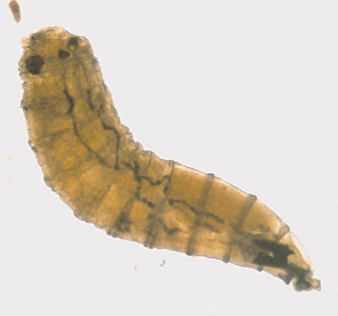
The container was found to hold 42 larvae probably originating from a facultative green bottle (Figure 1) ‘blowfly’ species in the genus Lucilia, most likely Lucilia sericata (Diptera Calliphoridae). This fly is attracted to and subsequently deposits an egg batch near putrefying material. Larvae of this species, well documented in medical and veterinary science, are also capable of initiating lesions and invading the tissue of the living host1,2,3 but, on the other hand, is the major species used in larvae therapy.
4
Assuming the reported history to be genuine, the degree of larval development (second instar) would suggest that feeding on vaginal exudate had occurred for at least 48 hours, but whether the eggs had been deposited while the patient was wearing the underwear is unknown. No specific management was required in this case, which represented a curious and very unusual presentation to our walk-in service and raises the awareness of potential fly infestations.
Second instar larva of Lucilia sericata demonstrating darkly sclerotized cephalopharyngeal skeleton below the cuticle of the narrow anterior end and paired posterior spiracles on the terminal segment at the blunt posterior end