




Abstract
Genital warts (condylomata acuminata) are caused by human papillomavirus (HPV) and are usually transmitted sexually. We present an atypical case of a vaginal wart presenting as a single pedunculated mass protruding outside the vagina in a pregnant woman in labour. On examination of the vulva, a soft, pink papilliferous growth of 6 × 4 cm size was seen hanging outside the vaginal introitus. Speculum examination revealed that the growth was attached to the posterior and lateral vaginal wall near the fornix. Genital warts can proliferate during pregnancy due to altered immunity and increased blood supply, as seen in this case. Vaginal warts can also cause problems during delivery, since they prevent the vagina from stretching appropriately.
INTRODUCTION
Genital warts (condylomata acuminata) are caused by human papilloma virus (HPV) and are usually transmitted sexually. The general prevalence of HPV infection in the form of visible genital warts estimates to about 1% of sexually active adults. Approximately 15% of all sexually active women have a subclinical or latent infection and at least 80% have been infected with one or more genital HPV types at some point in their lives. These lesions often increase in size during pregnancy, and can pose problems in management and expose the new-born baby to the risk of perinatal transmission of HPV (estimated at 4%). 1 We present an atypical case of a vaginal wart presenting as a single pedunculated mass protruding outside the vagina in a pregnant woman in labour.
CASE REPORT
A 25-year-old primipara with 38 weeks of gestation presented at gynaecological casualty with complaints of labour pain since the previous night and a pedunculated growth coming through the introitus for the last 15 days. There was no history of associated pain, bleeding or vaginal discharge.
On abdominal examination, the uterus was 34 weeks in size with a single fetus lying longitudinally in cephalic presentation. On examination of the vulva, a soft, pink papilliferous growth of 6 × 4 cm size was seen hanging outside the vaginal introitus (Figure 1). Speculum examination revealed that the growth was attached to the posterior and lateral vaginal wall near the fornix. The pedicle of the growth was long with a prominent vessel seen running along one side. The base of the pedicle was 2 cm broad. One more small growth present in the vagina was attached to the same pedicle. The rest of the vagina and cervix were healthy. In view of likely difficulty during delivery, the pedicle was clamped, cut and ligated. The patient delivered vaginally within a few hours on the same day. On histopathological examination of the excised tissue, it was found to be a condyloma acuminatum.
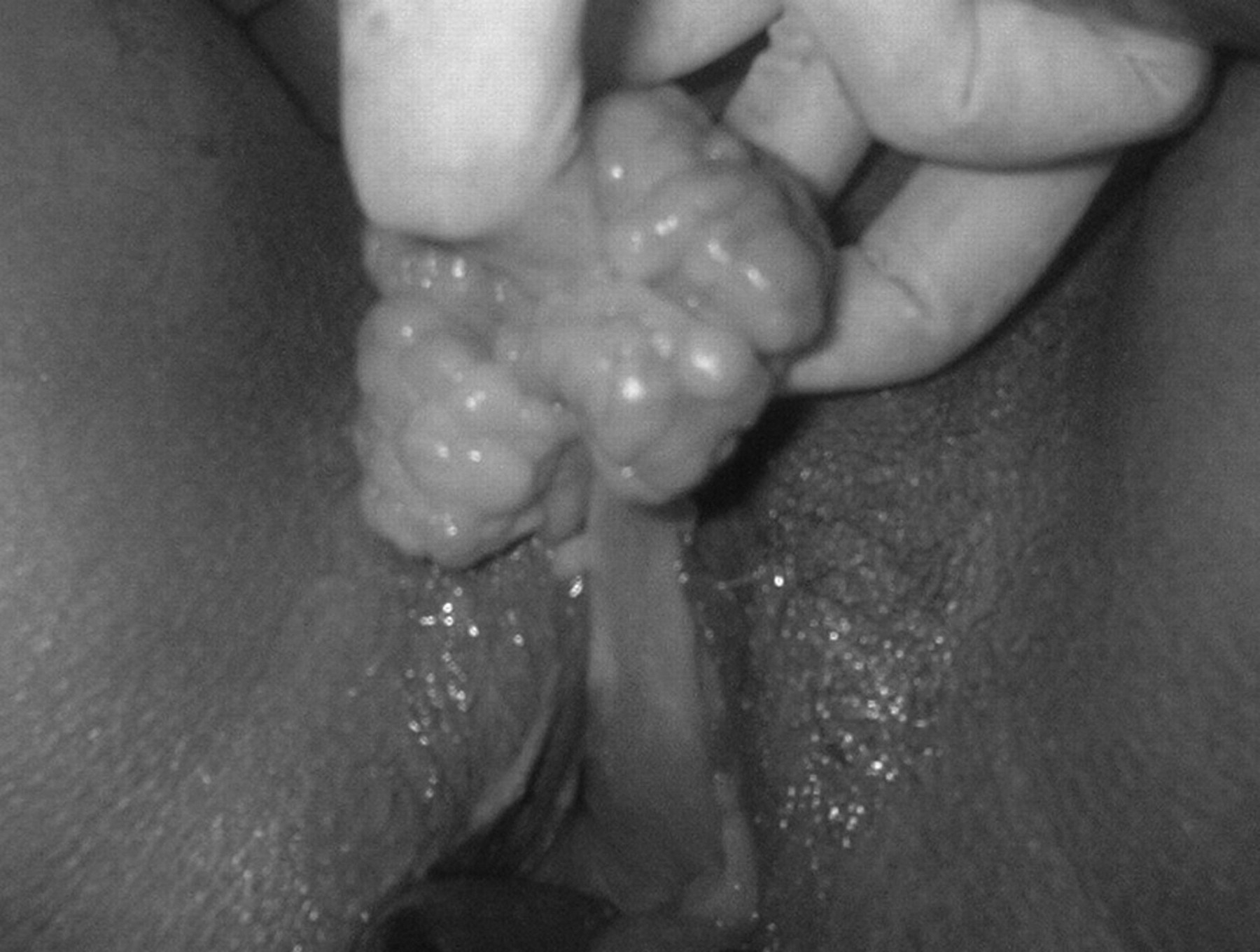
Vaginal wart protruding outside the vagina with a long pedicle
DISCUSSION
The prevalence of anogenital warts in India has been reported to be 5.1–25.25% of patients attending clinics for sexually transmitted infections. 2 Vaginal warts arise from the mucosa within the vagina but, unlike common warts, are caused by HPV types 6 and 11. These strains of HPV are almost always spread through sexual contact. Women are likely to develop genital warts on the cervix and vulva, around and in the anus, as well as in the vagina. Some people also develop infections in their mouths or throats, possibly from HPV transmitted when performing oral sex.
Vaginal warts look like small swellings or flat patches in the vagina. They vary in colour and can be flesh-toned, grey, pink or red. Vaginal warts can grow and spread very quickly, occuring singly or in large cauliflower-like formations. Sometimes they are barely visible, at other times conspicuous and exophytic. In a literature review we could not find a case report of a condyloma with such a long pedicle (5 cm) as in this case.
Vaginal warts are usually painless, but may be a source of irritation and embarrassment for some women. Such warts can also cause bleeding, especially during sexual intercourse.
Sometimes, anogenital warts manifest or get worse during pregnancy due to altered immunity and increased blood supply, 3 as in the present case. Vaginal warts can complicate vaginal delivery, since they may prevent the vagina and vulva from stretching appropriately. In rare cases, symptomatic HPV infection can occur in infants due to HPV transmitted during vaginal delivery. Resultant laryngeal papillomatosis may require surgery in order to keep airways clear.
This case is notable because of its atypical presentation: a large sized wart with a long pedicle; rapid growth in the two weeks preceding labour; successful immediate management of the condyloma and uncomplicated vaginal delivery despite its large size.